Preparation is the key to success in any interview. In this post, we’ll explore crucial Incident Reconstruction interview questions and equip you with strategies to craft impactful answers. Whether you’re a beginner or a pro, these tips will elevate your preparation.
Questions Asked in Incident Reconstruction Interview
Q 1. Describe your experience using various measurement tools in accident reconstruction.
My experience with measurement tools in accident reconstruction is extensive. I’m proficient in using a variety of equipment, each chosen based on the specifics of the accident scene and the information needed. This includes:
- Total Stations: These are highly accurate electronic instruments used for precise distance and angle measurements. I often utilize them to create detailed site plans, mapping vehicle positions, skid marks, and other crucial evidence. For example, in a multi-vehicle intersection collision, a total station allows me to accurately determine the pre-impact positions of each vehicle, crucial for reconstructing the events leading to the accident.
- Tape Measures: While seemingly simple, accurate tape measure readings are foundational. They’re essential for measuring skid mark lengths, distances between impact points, and the dimensions of vehicles and debris. Proper technique, accounting for sag and ensuring a straight line, is vital for accuracy.
- Digital Cameras and Photogrammetry Software: Detailed photographic documentation is critical. I use high-resolution cameras, often coupled with photogrammetry software, to create 3D models of the accident scene. This enables a virtual reconstruction, allowing for more detailed analysis and better visualization for presentations and reports.
- Accelerometers and GPS Devices (in some cases): In more complex cases involving high speeds or specific vehicle dynamics, accelerometers can be used to record forces experienced during the event. Similarly, GPS data can reveal a vehicle’s path before and during the accident.
The selection and use of these tools always adhere to strict protocols, ensuring data accuracy and reliability, crucial for building a robust and defensible reconstruction.
Q 2. Explain the difference between static and dynamic friction.
The key difference between static and dynamic friction lies in the state of motion of the objects involved. Imagine pushing a heavy box across the floor.
- Static Friction: This is the force that resists the *initiation* of motion. It’s the force you need to overcome to get the box moving from rest. The maximum static friction is usually higher than kinetic friction.
- Dynamic (Kinetic) Friction: This is the force that resists motion *once the object is already moving*. Once you’ve overcome static friction and the box is sliding, dynamic friction is the force slowing it down. It’s generally less than static friction.
In accident reconstruction, understanding this difference is crucial. For instance, the length of a skid mark depends heavily on the dynamic friction coefficient between the tires and the road surface. Factors like road conditions (wet, dry, icy), tire type and wear, and vehicle speed all influence the value of this coefficient, significantly impacting our calculations of vehicle speed.
Q 3. How do you determine the speed of a vehicle involved in an accident?
Determining the speed of a vehicle in an accident involves several methods, each relying on different types of evidence:
- Skid Mark Analysis: The most common method. Using the length of the skid marks, the friction coefficient (dependent on road surface conditions), and physics principles, we can calculate pre-impact speed. This calculation usually involves solving for initial velocity using the equation:
v² = u² + 2as, where ‘v’ is the final velocity (0 m/s at the end of the skid), ‘u’ is the initial velocity (pre-impact speed, what we’re solving for), ‘a’ is the deceleration due to friction, and ‘s’ is the skid mark length. - Crush Analysis: Examining the damage to the vehicles provides clues. The extent of deformation helps estimate the impact speed. Specialized software and databases of crush data from controlled experiments are used to aid this process.
- Witness Statements and Video Evidence: These can provide corroborating evidence, but are generally less reliable than physical evidence and should be treated cautiously. Independent confirmation is essential.
- Vehicle Data Recorders (Event Data Recorders or EDRs): Modern vehicles often have EDRs that record various parameters before, during, and after a crash, including speed, braking, and seatbelt usage. This data provides a critical piece of the puzzle.
It’s important to remember that these methods often provide estimates, not exact figures. A reconstruction integrates data from multiple sources to provide the most probable speed range.
Q 4. What are the different types of skid marks and what information do they provide?
Skid marks offer valuable insights into vehicle dynamics prior to impact. Different types reveal different information:
- Yaw Marks: These are sideways skid marks, indicating a loss of directional control. They often show a vehicle rotating. Analysis of their shape and length can reveal information about vehicle speed and steering input.
- Skip Skid Marks: These are interrupted skid marks, showing a series of short skids separated by gaps. These usually indicate the vehicle’s tires momentarily regained traction before losing it again. This commonly happens on uneven road surfaces or if the driver was attempting to regain control.
- Scuff Marks: These are short, often curved, marks left by tires that are still rotating while locked. They occur just before the wheels fully lock up during hard braking, offering a glimpse into the braking process.
- Tire Squeal Marks: These marks are not always visible but are related to the high-frequency sound produced by tires slipping on a hard surface. Their presence implies tire lockup and can be confirmed through witness statements or other evidence.
Analyzing skid mark patterns, lengths, and types in conjunction with other evidence, such as damage patterns and vehicle dynamics, allows for a more complete picture of the accident sequence.
Q 5. Describe your experience with accident reconstruction software.
I have extensive experience with various accident reconstruction software packages, including industry-standard programs like PC-Crash and CRASH3. These software packages facilitate the creation of highly detailed 2D and 3D models of accident scenes. This involves inputting data such as vehicle dimensions, tire characteristics, road geometry, and measured distances from the scene investigation. The software then applies physics equations, allowing for the simulation of the collision and the calculation of various parameters, such as vehicle speeds and impact forces. Beyond the computation, these programs are invaluable for creating professional-quality reports and visualizations which are crucial for presenting findings clearly and convincingly.
My expertise extends beyond simple input and analysis. I am proficient in calibrating the software with data from the actual accident, validating models through sensitivity analysis, and critically interpreting the software’s output to ensure that results are realistic and consistent with all available evidence.
Q 6. How do you account for human error in your accident reconstruction analysis?
Accounting for human error is crucial and arguably the most challenging aspect of accident reconstruction. Human factors can significantly influence accident scenarios. My approach involves a multi-faceted strategy:
- Critical Review of Witness Statements: Witness accounts are often unreliable due to factors such as stress, limited visibility, or memory biases. I meticulously analyze witness statements, comparing them against physical evidence to identify inconsistencies and potential inaccuracies.
- Driver Behavior Analysis: I consider factors such as driver fatigue, impairment (alcohol, drugs), distraction, and pre-existing medical conditions that could have influenced their actions. This may involve examining driving history or medical records where appropriate.
- Probabilistic Modeling: In some cases, it’s impossible to definitively determine the precise actions of the drivers. In these instances, I utilize probabilistic modeling techniques, quantifying uncertainties and creating ranges of possible scenarios based on different levels of driver error. This acknowledges the limitations of the data and reduces the possibility of overconfidence in a single reconstruction.
By rigorously considering human factors and their variability, I ensure that my reconstruction is realistic and avoids simplistic assumptions about driver behavior.
Q 7. Explain your understanding of conservation of momentum in accident reconstruction.
The principle of conservation of momentum is fundamental in accident reconstruction. It states that in a closed system (no external forces), the total momentum before a collision equals the total momentum after the collision. In simpler terms, the total amount of motion remains constant, though it may be redistributed amongst the involved objects.
In a two-vehicle collision, for example, the total momentum of both vehicles *before* the impact (mass1 x velocity1 + mass2 x velocity2) will equal the total momentum *after* the impact (mass1 x velocity1′ + mass2 x velocity2′), though individual velocities will be different following the impact. This principle helps determine post-impact velocities of the vehicles based on their pre-impact velocities and masses. This is often used in conjunction with other data (damage analysis, skid marks) to refine the reconstruction and ensure consistency across multiple lines of evidence. Deviations from perfect conservation of momentum might hint at external factors (e.g., significant friction forces not fully accounted for) that need further investigation.
Q 8. What are the limitations of using only witness statements in an accident reconstruction?
Witness statements are invaluable in accident reconstruction, providing crucial context and perspectives. However, relying solely on them is inherently limited due to human fallibility. Several factors significantly impact their reliability:
- Memory Distortion: The stress and trauma of an accident can distort memories, leading to inaccurate details of speed, timing, and events. Witness accounts often change over time.
- Observational Bias: Witnesses may focus on specific aspects of the event, neglecting others, leading to incomplete or skewed information. Their personal experiences and expectations can also color their perception.
- Limited Perspective: A witness might have only a fleeting or obstructed view of the accident, preventing them from accurately observing all crucial elements. For instance, a witness from a distance may misjudge speed or distances.
- Subjectivity: Witness accounts are subjective; different individuals interpret events differently, leading to conflicting descriptions. What one witness deems ‘fast’ another might describe as ‘moderate’.
Therefore, while witness statements form a vital part of the investigation, they must be corroborated with objective physical evidence like skid marks, vehicle damage, and road conditions for a comprehensive and reliable reconstruction.
Q 9. How do you handle conflicting evidence from multiple sources in accident reconstruction?
Conflicting evidence is common in accident reconstruction. Handling it requires a methodical and unbiased approach:
- Thorough Examination: Each piece of evidence, regardless of its source, needs careful scrutiny. Consider the source’s reliability, potential biases, and the limitations of the methodology used to obtain the evidence. For example, witness statements should be critically assessed for memory biases, while measurements should be checked for accuracy.
- Cross-Referencing: Identify overlaps and discrepancies between the various sources. Look for evidence that supports or contradicts specific accounts. Physical evidence can often help resolve conflicting witness statements. For example, skid mark length can corroborate or refute claims about speed.
- Prioritization of Objective Evidence: In case of persistent conflicts, prioritize objective evidence like vehicle data recorders (black boxes), tire marks, and damage patterns over subjective witness testimonies. These objective findings provide the strongest evidence for reconstructing the sequence of events.
- Statistical Analysis: In scenarios with numerous conflicting accounts or uncertain data points, statistical analysis can help identify the most probable sequence of events and resolve inconsistencies using probability distributions.
- Expert Consultation: If conflicts cannot be easily resolved, seeking consultation from other experts in related fields (e.g., accident reconstruction engineers, forensic specialists) can provide additional insights and perspectives.
Ultimately, the goal is to construct a cohesive narrative that accounts for as much of the available evidence as possible, acknowledging the limitations and uncertainties where they exist. The report must clearly articulate any unresolved conflicts and the reasoning behind the chosen reconstruction model.
Q 10. Explain your process for documenting an accident scene.
Documenting an accident scene meticulously is paramount. My process involves the following steps:
- Initial Safety Assessment: Ensure the scene is safe before starting the documentation process.
- Photography: Take a comprehensive series of photographs from various angles, including overall views, close-ups of damage, tire marks, debris, and road features. Use a scale or reference object in some photos to provide context for size and distance.
- Videography: Video recording the scene offers a dynamic view of the environment, supplementing the static images.
- Measurements: Precise measurements of crucial distances, such as skid marks, vehicle positions, and distances to reference points, should be recorded.
- Sketches and Diagrams: Create detailed sketches of the scene showing the location of vehicles, debris, road markings, and other relevant features. A scaled diagram incorporating measurements further enhances visualization.
- Witness Information: Collect contact information, statements, and sketches from any witnesses. Note down their location during the accident.
- Vehicle Information: Document the make, model, year, VIN, and any damage to each vehicle involved. Record the position of the vehicles and collect any data from Event Data Recorders (EDR).
- Environmental Factors: Note weather conditions (rain, snow, fog), lighting, road conditions (pavement type, surface defects), and traffic volume.
- Chain of Custody: Maintain a complete record of the handling and preservation of evidence to ensure its integrity and admissibility in court.
All data is meticulously organized and stored securely. The detailed documentation ensures the reconstruction is based on reliable information and allows for later review and analysis.
Q 11. What methods do you use to reconstruct the sequence of events in an accident?
Reconstructing the sequence of events involves a combination of scientific methods and logical deduction:
- Evidence Analysis: This is the cornerstone of the process. I analyze physical evidence like skid marks (length, direction, presence of yaw marks), damage patterns on vehicles, debris distribution, and witness statements. Tire marks analysis can help determine vehicle speed and direction.
- Vehicle Dynamics: I utilize specialized software and calculations based on physics to model vehicle motion, considering factors like speed, braking, momentum, and vehicle characteristics.
- Computer Simulation: Advanced software allows me to create simulations that replicate the accident based on the available data. These simulations offer a dynamic visualization of the events, enabling testing of different hypotheses about the sequence of events.
- Timeline Creation: By correlating the various pieces of evidence, a comprehensive timeline of the accident is built. This timeline should account for all actions of the drivers and the sequence of impacts.
- Mathematical Modeling: Using mathematical equations and principles of physics, I can determine velocities, accelerations and forces involved in the accident. These calculations often involve complex physics concepts.
The goal is to create a scientifically sound and logically consistent sequence of events. The process is iterative, with new findings often leading to revisions in the reconstruction until a comprehensive and coherent narrative emerges.
Q 12. How do you determine the point of impact in a collision?
Determining the point of impact (POI) is crucial. Several methods are employed:
- Damage Pattern Analysis: Examining the damage to the vehicles is crucial, particularly the crush patterns, gouges, and scrapes. The location and severity of damage provide clues to the POI.
- Debris Distribution: The location and spread of debris can offer insights. For example, a concentration of debris might indicate the POI.
- Tire Marks: The presence of tire marks, especially those leading to the point of final rest of the vehicles, can guide the determination of the POI. The direction of skid marks and yaw marks (marks left when a vehicle is skidding and rotating) can point towards the POI.
- Witness Accounts: While subjective, witness accounts might provide hints about the collision location. This information is primarily used to cross-validate other findings.
- Vehicle Dynamics Software: Advanced software packages, incorporating data from EDRs (if available) can simulate the accident and pinpoint the probable POI. This provides a precise location based on physics principles.
Often, the POI isn’t a single point but rather an area. The methods described above, used in conjunction, narrow down the likely area of initial contact.
Q 13. Describe your experience with creating accident reconstruction reports.
I have extensive experience creating accident reconstruction reports, ensuring they’re comprehensive, accurate, and legally sound. My reports consistently include:
- Executive Summary: A concise overview of the accident and key findings.
- Methodology: A detailed description of the methods used for data collection and analysis.
- Data Presentation: Clear and concise presentation of all data, including photos, diagrams, measurements, and calculations. Use of visual aids makes the report more accessible.
- Analysis and Interpretation: A thorough analysis of the data, including discussion of uncertainties and limitations.
- Sequence of Events: A detailed reconstruction of the sequence of events leading to the accident, supported by evidence.
- Conclusions and Opinions: Clear and concise conclusions based on the analysis, avoiding speculation.
- Appendices: Supporting documentation like witness statements, photographs, and technical specifications.
I adhere to strict standards for data accuracy and integrity. Each report is reviewed for clarity and completeness before finalization. I’ve prepared reports for various stakeholders, including insurance companies, law enforcement agencies, and legal professionals.
Q 14. How do you handle complex accident scenarios involving multiple vehicles?
Multi-vehicle accidents are significantly more complex, requiring a systematic approach:
- Individual Vehicle Analysis: Each vehicle’s trajectory and damage must be examined independently, identifying its role in the chain of collisions.
- Sequential Reconstruction: Establish the sequence of impacts by analyzing evidence from each collision. This often involves determining which vehicle struck which first, second, and so forth.
- Multiple Point of Impacts: Identify the point of impact for each collision within the sequence.
- Witness Coordination: Consolidate and cross-reference witness statements to gain a holistic understanding of the multiple perspectives of the accident.
- Advanced Simulation Software: Employing sophisticated simulation software is critical in multi-vehicle scenarios. These tools can model complex interactions between multiple vehicles, providing a dynamic representation of the sequence of events.
- Expert Collaboration: For extremely complex scenarios, it is often valuable to collaborate with other experts like biomechanists (to assess injuries) and forensic engineers (to evaluate vehicle structural failure).
The reconstruction process is iterative and requires careful attention to detail to ensure accuracy and consistency. The final report must clearly illustrate the sequence of impacts and the role of each vehicle.
Q 15. Explain your understanding of vehicle dynamics.
Vehicle dynamics is the study of how a vehicle moves and responds to forces. It encompasses a wide range of factors, including the vehicle’s mass, speed, acceleration, braking, steering, and tire-road interaction. Understanding vehicle dynamics is crucial in accident reconstruction because it allows us to determine what happened before, during, and after a collision. Think of it like this: a car isn’t just a rigid box; it’s a complex system of interacting parts affected by gravity, friction, and momentum. Analyzing this system lets us recreate the accident sequence.
Key aspects include:
- Inertia: A body in motion tends to stay in motion unless acted upon by an external force. This is why a car continues to move after braking or colliding.
- Friction: The resistance between the tires and the road affects acceleration, braking, and cornering. Wet roads, for example, have significantly lower friction than dry ones.
- Gravity: Acts on the vehicle, influencing its movement, especially on inclines or declines.
- Forces: Understanding the forces involved – braking force, impact force, centrifugal force during a turn – is crucial in determining the sequence of events.
By analyzing these factors and using mathematical models, we can reconstruct the vehicle’s path and movement leading up to and after a collision.
Career Expert Tips:
- Ace those interviews! Prepare effectively by reviewing the Top 50 Most Common Interview Questions on ResumeGemini.
- Navigate your job search with confidence! Explore a wide range of Career Tips on ResumeGemini. Learn about common challenges and recommendations to overcome them.
- Craft the perfect resume! Master the Art of Resume Writing with ResumeGemini’s guide. Showcase your unique qualifications and achievements effectively.
- Don’t miss out on holiday savings! Build your dream resume with ResumeGemini’s ATS optimized templates.
Q 16. How do you determine the pre-impact and post-impact speeds of vehicles?
Determining pre- and post-impact speeds involves several techniques, often combining data from multiple sources. Pre-impact speed is the speed of the vehicle immediately before the collision, while post-impact speed refers to the speed immediately afterward. We rarely have direct measurements; instead, we use indirect methods.
- Tire marks: Skid marks (locked wheels) and yaw marks (spinning tires) can indicate the vehicle’s speed before braking. We use formulas that account for friction coefficients to estimate speed. For instance, the length of a skid mark on dry pavement will yield a higher estimated speed than the same length on a wet surface.
- Vehicle damage: The extent and nature of the damage to the vehicles (crumple zones, impact points, etc.) can provide clues about the forces involved and the relative speeds of the vehicles. Specialized software and databases help assess this information.
- Witness statements: While less reliable than physical evidence, witness statements can be useful, especially when corroborated by other findings.
- Computer simulations: These use physics-based models to simulate the collision and test different scenarios to help determine plausible pre- and post-impact speeds.
- Event Data Recorders (EDR): EDRs in modern vehicles record data about speed, braking, and acceleration before and during a crash, providing crucial data for reconstruction.
It’s important to note that these methods often provide a range of possible speeds rather than a single precise value, as uncertainties are inherent in the process.
Q 17. What is your experience with analyzing tire marks and other vehicle damage?
Analyzing tire marks and vehicle damage is fundamental to accident reconstruction. Tire marks tell a story about braking and maneuvering, while vehicle damage indicates the forces and direction of impact.
- Tire marks: I’m experienced in identifying different types of tire marks (skid marks, yaw marks, scuff marks, etc.), measuring their lengths and angles, and using specialized formulas to estimate vehicle speed before braking. The characteristics of the road surface (type of pavement, condition, presence of debris) heavily influence the interpretation of tire marks.
- Vehicle damage: I’m trained in assessing the extent and location of vehicle damage, identifying the primary impact points, and determining the direction and intensity of the forces involved. This includes analyzing crumple zones, deformations of the vehicle body, and the location of broken components. I utilize various software and databases to compare the observed damage to known impact patterns and vehicle characteristics.
I’ve worked on numerous cases involving different types of vehicles and collision scenarios, requiring me to interpret diverse patterns of damage and tire marks. For instance, I once worked a case where a subtle scuff mark provided the key to understanding the vehicle’s path before a collision, a detail that wasn’t readily apparent.
Q 18. What is your experience with analyzing roadway geometry and conditions?
Roadway geometry and conditions significantly impact the outcome of a collision. I routinely analyze these factors to understand how they contributed to or influenced the accident.
- Roadway geometry: This involves measuring and documenting the roadway’s features like curves, gradients (inclines and declines), intersections, lane markings, and the presence of any obstructions. This analysis is often done using laser scanning and other surveying techniques, as well as photographs and maps.
- Roadway conditions: Assessing the condition of the roadway is critical. Factors include pavement type (asphalt, concrete), surface conditions (dry, wet, icy, presence of gravel or debris), visibility, and lighting.
I use specialized software to model the roadway geometry and simulate the vehicle’s motion under various conditions. For example, the radius of a curve directly affects the centrifugal force acting on a vehicle, and the steepness of a grade influences braking performance and speed.
Q 19. How do you incorporate environmental factors (weather, lighting) into your analysis?
Environmental factors such as weather and lighting significantly affect visibility, traction, and vehicle handling. Therefore, they are critical factors in my analyses.
- Weather: Rain, snow, fog, or high winds can dramatically reduce visibility and affect tire-road friction, impacting braking distance and vehicle control. I consider weather conditions at the time of the accident, consulting weather reports and witness testimonies to establish the relevant environmental factors.
- Lighting: Poor lighting conditions, such as darkness or insufficient street lighting, can significantly impair visibility, increasing the risk of accidents. I take into account the level of ambient lighting and the presence of any other light sources at the time of the collision.
These environmental factors are incorporated into my analysis by adjusting the friction coefficients used in speed calculations and by accounting for the impact on driver perception and reaction time. I regularly utilize meteorological data to corroborate witness statements and other evidence.
Q 20. Describe your experience testifying in court as an expert witness.
I have extensive experience testifying in court as an expert witness in accident reconstruction cases. This includes providing expert opinions, presenting evidence, and undergoing cross-examination.
- Preparation: Thorough preparation is essential. This involves reviewing all available evidence, creating detailed reports, preparing visual aids (diagrams, photos, animations), and anticipating potential questions from opposing counsel.
- Presentation: Clear, concise, and objective communication is key. I aim to present complex technical information in a way that is easily understandable to a non-technical audience. My goal is to convey my findings and opinions in a credible and unbiased manner. Using visuals like charts and animations helps greatly.
- Cross-examination: I’m prepared for rigorous cross-examination, maintaining my composure and responding accurately and professionally to challenging questions.
In one notable case, I successfully refuted a claim of excessive speed by demonstrating the influence of road conditions (heavy rain) on braking distance, leading to a favorable outcome for my client.
Q 21. Explain your familiarity with relevant legal standards and regulations.
I’m well-versed in relevant legal standards and regulations concerning accident reconstruction. This includes:
- Rules of evidence: I understand the rules of evidence governing the admissibility of expert testimony and the standards for scientific evidence (e.g., Daubert Standard in the US).
- Accident investigation procedures: I’m familiar with established best practices and guidelines for conducting accident investigations, including proper documentation, evidence collection, and chain of custody procedures.
- Relevant statutes and regulations: I’m aware of local, state, and national regulations concerning traffic laws, vehicle safety standards, and other relevant legal frameworks that may influence an accident reconstruction.
Maintaining up-to-date knowledge of legal standards and regulations is crucial to ensure the reliability and legal defensibility of my work.
Q 22. How do you handle challenging situations or unexpected findings during an investigation?
Unexpected findings are the norm, not the exception, in accident reconstruction. My approach is methodical and relies heavily on a structured process. First, I meticulously document the unexpected finding, including photos, sketches, and detailed notes. Then, I brainstorm potential explanations, considering all possibilities, even those seemingly improbable. This involves consulting relevant literature, reviewing similar cases, and even seeking expert opinions from other fields if necessary. For example, if I find evidence suggesting a previously unknown mechanical failure, I would consult a mechanical engineer. The key is to remain objective, avoid premature conclusions, and rigorously test every hypothesis until the most likely explanation is identified and supported by evidence.
Let’s say I’m investigating a single-vehicle rollover and discover tire marks indicating a sudden swerve. My initial assumption might be driver error, but I wouldn’t stop there. I’d thoroughly examine the vehicle for mechanical issues, look for external factors like road hazards, and even consider environmental conditions. Only after systematically eliminating alternative explanations would I reach a final conclusion.
Q 23. What software and hardware are you proficient with (e.g., CAD, photogrammetry software)?
My expertise spans a wide range of software and hardware used in accident reconstruction. I’m highly proficient in CAD software such as AutoCAD and MicroStation for creating detailed diagrams and 3D models of accident scenes. I also utilize photogrammetry software like Agisoft Metashape and RealityCapture to create accurate 3D models from photographs, allowing for precise measurements and analysis. My hardware proficiency includes the use of total stations and laser scanners for accurate data acquisition, as well as high-resolution cameras and drones for capturing detailed photographic evidence. Furthermore, I am adept at utilizing various simulation software to model vehicle dynamics and reconstruct accident scenarios.
Q 24. Describe a situation where you had to overcome a technical challenge in an accident reconstruction.
During an investigation involving a motorcycle accident on a rain-slicked road, I faced a significant challenge in accurately determining the motorcycle’s pre-impact speed. The standard skid mark analysis methods proved unreliable due to the presence of standing water, which significantly altered tire friction characteristics. To overcome this, I employed advanced techniques including momentum analysis using the damage sustained by the motorcycle and the surrounding environment, and combined this with tire dynamics modelling taking into account the reduced friction coefficient due to wet asphalt. This multi-faceted approach allowed me to produce a reliable estimate of the motorcycle’s speed, which was crucial for determining liability.
Q 25. How do you ensure the accuracy and reliability of your findings?
Accuracy and reliability are paramount in accident reconstruction. I employ a multi-layered approach to ensure these qualities. First, I meticulously document every aspect of the investigation, meticulously recording data and preserving the chain of custody for all evidence. Second, I cross-reference data from multiple sources – witness statements, physical evidence, vehicle data recorders (EDR), and scene measurements – to identify and eliminate inconsistencies. Third, I apply rigorous analytical techniques, adhering to established standards and best practices. Finally, I employ peer review, seeking feedback from other experts in the field to ensure objectivity and identify potential biases or errors.
For instance, I might use multiple methods to determine the point of impact. Measurements from the scene can be compared with data from the vehicles’ damage patterns and witness statements. Any discrepancies are further investigated to understand their cause.
Q 26. Explain your understanding of different types of collisions (e.g., head-on, rear-end, side-impact).
Understanding collision types is fundamental. Head-on collisions involve vehicles traveling in opposite directions impacting each other directly. Rear-end collisions occur when one vehicle strikes the rear of another. Side-impact collisions involve vehicles striking each other on the sides. These are the most common collision types, but others include angle collisions, rollovers, and multi-vehicle collisions. Each type exhibits distinct damage patterns, occupant kinematics (how the bodies move during the impact), and contributing factors which inform the investigation and reconstruction. The severity of injuries and the degree of vehicle damage often varies considerably between these types, necessitating different analytical approaches.
Q 27. How do you prioritize different tasks and manage your time effectively during an investigation?
Effective time management is crucial. I prioritize tasks based on their urgency and importance using a combination of techniques including creating detailed timelines and to-do lists. I also use project management software to track progress and deadlines. For example, securing the accident scene and collecting initial evidence are high priorities, while detailed analysis of vehicle data might come later. Regular communication with clients and stakeholders helps avoid unnecessary delays and ensures everyone remains informed. Understanding the available resources, including budgets and personnel, is critical to a successful project and efficient time management.
Q 28. Describe your approach to maintaining professional ethics and integrity.
Maintaining professional ethics and integrity is foundational to my work. I adhere to strict codes of conduct, ensuring objectivity, impartiality, and transparency in all my investigations. This includes accurately reporting findings, disclosing any potential conflicts of interest, and protecting the confidentiality of sensitive information. I prioritize thoroughness and accuracy over speed, ensuring that all analyses are properly validated and documented. My commitment to ongoing professional development through attending conferences, workshops, and staying updated on the latest technologies ensures I consistently deliver the highest standard of work.
Key Topics to Learn for Incident Reconstruction Interview
- Collision Reconstruction Physics: Understanding principles of momentum, energy conservation, and friction in relation to vehicle collisions.
- Accident Scene Investigation Techniques: Mastering procedures for documenting the scene, collecting evidence (measurements, photos, witness statements), and creating accurate diagrams.
- Data Acquisition and Analysis: Proficiency in using various tools and software to analyze vehicle data recorders (EDR), GPS data, and other relevant information.
- Reconstruction Software and Tools: Familiarity with industry-standard software packages used for 3D modeling, simulation, and report generation.
- Legal and Regulatory Aspects: Understanding relevant laws, regulations, and legal procedures related to accident investigations and reporting.
- Human Factors in Accidents: Analyzing driver behavior, contributing factors such as fatigue or impairment, and incorporating human error into reconstruction models.
- Presentation and Report Writing: Clearly and concisely communicating complex technical information to both technical and non-technical audiences through detailed reports and presentations.
- Advanced Reconstruction Techniques: Explore specialized areas like motorcycle or pedestrian accidents, heavy vehicle collisions, or accident reconstruction using advanced mathematical modeling.
Next Steps
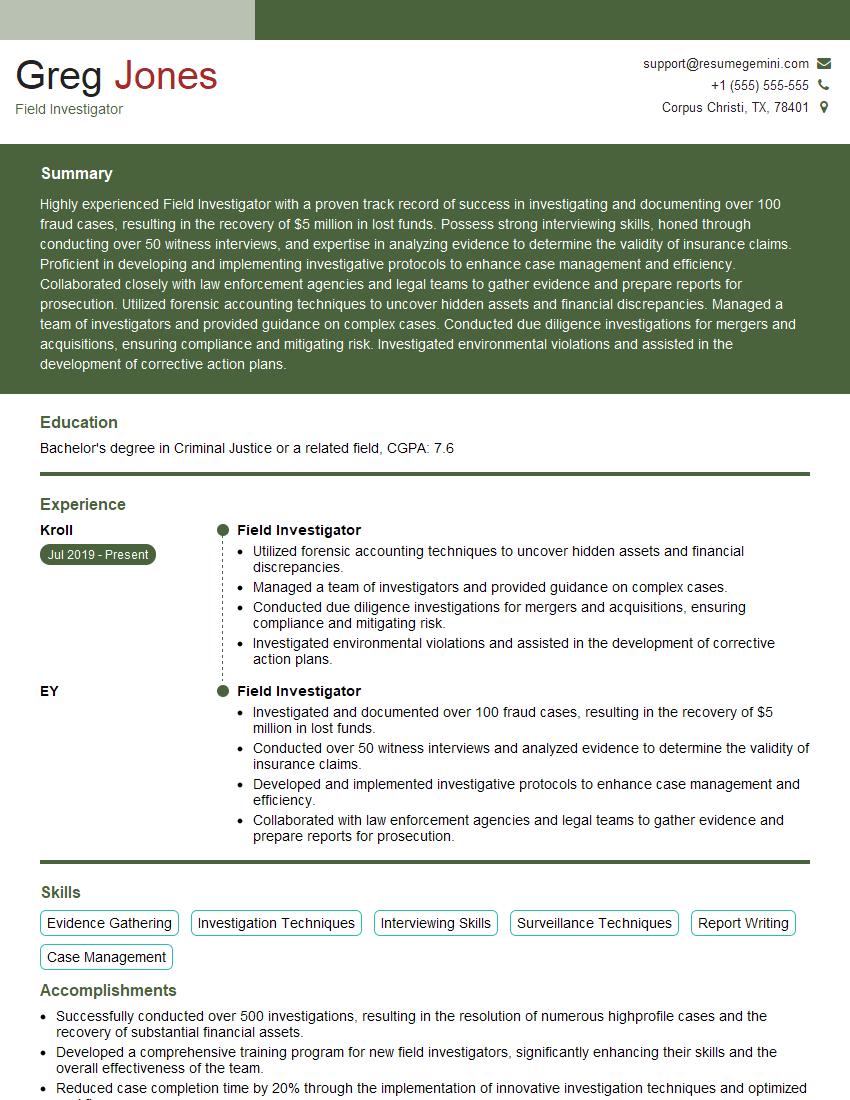
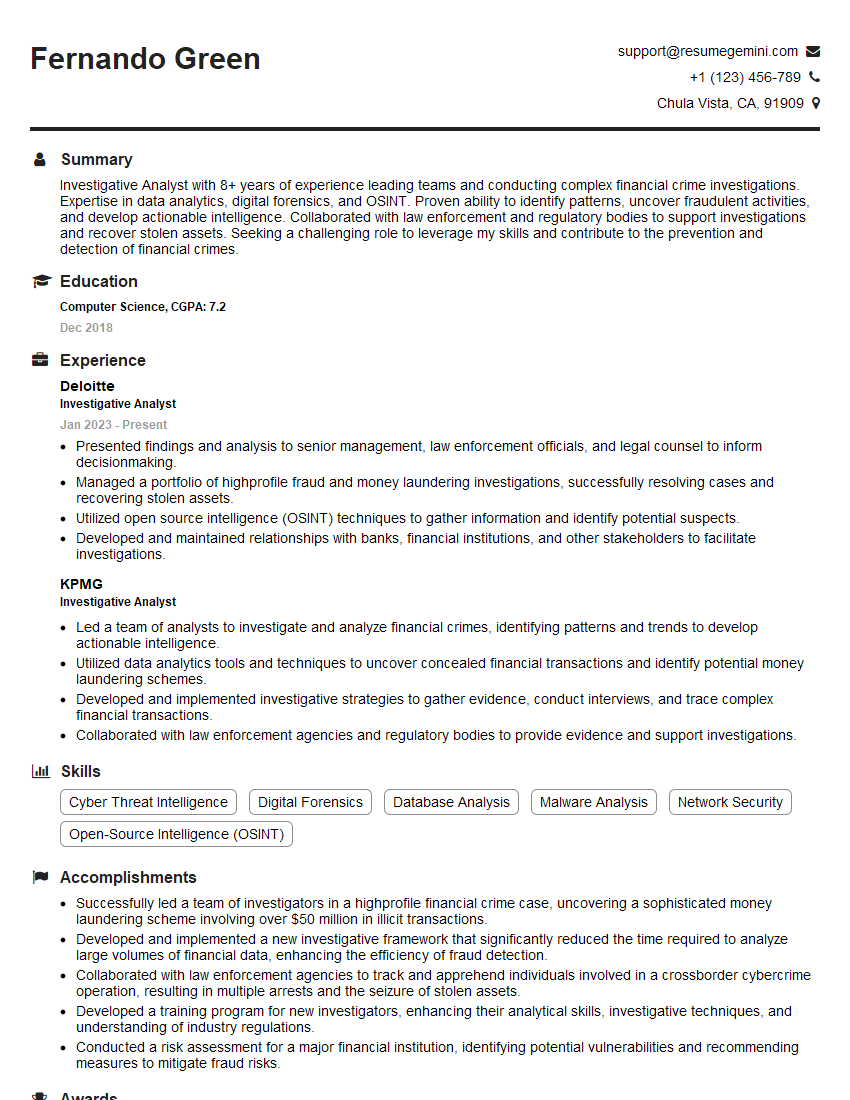
Mastering Incident Reconstruction opens doors to exciting career opportunities in law enforcement, insurance, engineering, and more, offering a rewarding path for those with a passion for problem-solving and analytical skills. To significantly increase your chances of landing your dream role, crafting a compelling and ATS-friendly resume is paramount. ResumeGemini is a trusted resource that can help you build a professional resume that highlights your skills and experience effectively. We offer examples of resumes tailored specifically to Incident Reconstruction to help you get started. Take the next step towards your career success today!
Explore more articles
Users Rating of Our Blogs
Share Your Experience
We value your feedback! Please rate our content and share your thoughts (optional).
What Readers Say About Our Blog
Very informative content, great job.
good