Interviews are more than just a Q&A session—they’re a chance to prove your worth. This blog dives into essential Incident Resolution and Closure Procedures interview questions and expert tips to help you align your answers with what hiring managers are looking for. Start preparing to shine!
Questions Asked in Incident Resolution and Closure Procedures Interview
Q 1. Describe your experience with the ITIL incident management process.
My experience with the ITIL incident management process is extensive. I’ve been involved in every stage, from initial incident logging and categorization to resolution and closure. I understand the importance of adhering to the best practices outlined in ITIL, focusing on minimizing disruption to services and ensuring timely resolution. This involves working closely with various teams, like service desk analysts, technical support teams, and even end-users. For example, in a previous role, I implemented a new incident logging system based on ITIL principles, which resulted in a 20% reduction in incident resolution time. This system improved our ability to track incidents efficiently, analyze trends, and improve our overall service delivery.
- Incident Logging and Categorization: Accurately recording all relevant details, ensuring proper classification for efficient routing.
- Initial Diagnosis and Resolution: Performing basic troubleshooting and escalating complex issues to the appropriate teams.
- Communication and Updates: Keeping stakeholders informed about the incident’s status and progress.
- Root Cause Analysis: Investigating the underlying causes of recurring incidents to prevent future occurrences.
- Incident Closure: Ensuring the incident is formally closed after verification of resolution and recording lessons learned.
Q 2. Explain the difference between an incident and a problem.
The key difference between an incident and a problem lies in their scope and impact. An incident is an unplanned interruption to an IT service or reduction in the quality of a service. It’s a specific event with a clear start and end time. Think of it like a sudden power outage – it’s disruptive but often has a readily identifiable cause and solution. A problem, on the other hand, is the underlying cause of one or more incidents. It’s a persistent issue requiring deeper investigation and often involves multiple incidents with a similar root cause. Imagine repeatedly experiencing slow internet speeds (incidents) – the underlying problem might be network congestion or outdated hardware.
To illustrate: Let’s say users are repeatedly unable to access a specific application (multiple incidents). A problem investigation would uncover that the application server requires a software update or has a configuration error that leads to these intermittent outages.
Q 3. What is your approach to prioritizing incidents?
Prioritizing incidents is crucial for ensuring that the most critical issues are addressed first, minimizing business impact. I use a combination of factors to determine priority, often using a matrix that considers:
- Impact: How severely is the incident affecting business operations or users? A system outage affecting critical financial processes would have a higher impact than a minor visual glitch on a non-essential application.
- Urgency: How quickly does the incident need to be resolved? A production system crash requires immediate attention, while a minor reporting issue might have a lower urgency.
- Business Priority: Alignment with the overall business objectives. Certain applications or systems are critical for core operations and require faster resolution.
For example, using a simple scale of 1-5 for both impact and urgency, a critical system crash with high impact (5) and high urgency (5) would have a priority score of 10 (5+5), taking precedence over a low impact (1), low urgency (1) issue with a score of 2.
Q 4. How do you determine the root cause of an incident?
Determining the root cause of an incident involves a systematic and thorough investigation. My approach typically involves these steps:
- Gather Information: Collect detailed information from various sources, including incident logs, user reports, and system monitoring tools.
- Analyze Data: Examine the collected data to identify patterns, trends, and potential causes.
- Interview Stakeholders: Talk to users and technical staff involved to get firsthand accounts and perspectives.
- Use Root Cause Analysis Techniques: Employ methods like the “5 Whys” technique, fishbone diagrams, or fault tree analysis to drill down to the underlying cause.
- Verify the Root Cause: Confirm the identified root cause is accurate by implementing corrective actions and verifying that the issue doesn’t recur.
For instance, if multiple users report intermittent network connectivity issues, I would investigate network logs, check for hardware faults, and interview users to ascertain if the problem is related to specific devices, locations, or times of day. This methodical approach helps avoid treating symptoms and instead addresses the underlying problem.
Q 5. What tools and technologies have you used for incident management?
Throughout my career, I’ve utilized various tools and technologies for incident management, including:
- ServiceNow: A comprehensive ITSM platform for incident logging, tracking, and resolution.
- Jira Service Desk: A flexible and popular tool for managing and tracking incidents and service requests.
- Zabbix/Nagios: Monitoring tools that provide real-time visibility into system health and performance, helping to identify and respond to incidents quickly.
- Splunk/ELK Stack: Log management solutions that facilitate analysis of logs to identify and troubleshoot issues.
My proficiency in these tools allows me to efficiently manage and analyze incident data, collaborate with team members, and provide timely resolutions.
Q 6. Describe your experience with incident escalation procedures.
Incident escalation procedures are critical for handling complex or high-impact situations that require expertise beyond the initial support team. My experience involves establishing clear escalation paths and communication protocols. These typically involve defining escalation criteria (e.g., severity, duration, lack of progress), identifying escalation points (e.g., team leads, senior engineers, management), and establishing communication channels (e.g., email, phone, instant messaging). I have experience creating and maintaining escalation documentation which clearly outlines the process and contact information for each escalation level. A successful escalation should involve proper handover of information and context to ensure a smooth transition and prompt resolution. In my previous role, I streamlined our escalation process, resulting in a 15% reduction in resolution time for high-priority incidents.
Q 7. How do you ensure accurate and timely incident communication?
Ensuring accurate and timely incident communication is paramount for maintaining transparency and trust with stakeholders. I utilize a multi-faceted approach to achieve this:
- Establish Communication Channels: Employing appropriate communication channels based on the urgency and audience (e.g., email for updates, phone for urgent issues, internal ticketing system for detailed communication).
- Develop a Communication Plan: Defining communication strategies based on incident severity and impact, ensuring consistency in messaging.
- Use Templates and Standard Formats: Standardizing communication to ensure clarity and efficiency.
- Provide Regular Updates: Keeping stakeholders informed about the progress of the incident, including estimated resolution times (ETAs) and any potential workarounds.
- Use Visual Aids: Employing visual aids such as dashboards and reports to convey key information effectively.
For example, during a major service outage, I would immediately communicate the impact to key stakeholders, provide regular updates through email and an internal communications portal, and use a dashboard to track resolution progress and communicate ETA for restoration.
Q 8. How do you document incident resolution steps?
Documenting incident resolution steps is crucial for accountability, knowledge sharing, and continuous improvement. I follow a structured approach using a ticketing system that allows for detailed logging. This typically involves:
- Detailed description of the initial incident: This includes the impact, symptoms, and initial reports. I ensure accuracy and completeness, often using screenshots or logs as supporting evidence.
- Steps taken during troubleshooting: Each step, whether it’s checking logs, contacting a vendor, or restarting a service, is meticulously documented, along with the timestamp and the outcome. I even note unsuccessful attempts, as this information is valuable for future problem-solving.
- Resolution details: This clearly outlines the root cause of the incident and the specific actions that resolved the issue. It might include configuration changes, code updates, or hardware replacements.
- Post-incident verification: Documentation includes steps taken to verify the problem is resolved and that systems are operating as expected. This might involve running tests or checking monitoring dashboards.
- Closure notes: A summary of the entire incident, highlighting key learnings, lessons learned, and any preventative measures taken.
Think of it like a detective’s case file – every detail is important to understand the ‘crime’ (the incident), how it was solved, and what measures can prevent it from happening again.
Q 9. How do you measure the effectiveness of your incident management process?
Measuring the effectiveness of incident management goes beyond just looking at resolution times. I use a multi-faceted approach to assess the overall health of our processes. Key aspects I evaluate include:
- Mean Time To Resolution (MTTR): A lower MTTR indicates quicker resolution times, showing improved efficiency.
- Mean Time To Acknowledgement (MTTA): This metric demonstrates the responsiveness of our team to reported incidents.
- Incident frequency: A decrease in incidents suggests improvements in prevention strategies and system stability. We track this over time to spot trends.
- Customer satisfaction: We actively solicit feedback to understand the impact of incidents on our users and their experience. This includes surveys or post-incident communications.
- Root cause analysis effectiveness: We analyze the success rate of identifying and addressing the root causes of incidents, preventing recurrences.
By analyzing these metrics together, we gain a holistic understanding of our incident management effectiveness and identify areas for improvement. For example, a low MTTR but high incident frequency suggests we’re good at solving problems, but we need to focus more on prevention.
Q 10. What metrics do you use to track incident resolution time?
Tracking incident resolution time involves several key metrics, each providing a different perspective on the speed and efficiency of the process. I commonly use:
- Mean Time To Resolution (MTTR): The average time taken to resolve an incident from initial report to final resolution.
- Mean Time To Acknowledgement (MTTA): The average time taken to acknowledge an incident and confirm it is being addressed.
- Mean Time To Restore (MTTR): Focuses specifically on the time it takes to restore service for affected users.
- Resolution time per incident category: This allows us to identify areas where certain types of incidents consistently take longer to resolve, requiring more focused attention.
These metrics are usually tracked using monitoring tools and our ticketing system. We can visualize these metrics using dashboards to identify trends and areas for improvement. For example, a consistently high MTTR for a specific type of network issue might suggest a need for additional training or improvements in our network infrastructure.
Q 11. Explain your experience with knowledge base management for incident resolution.
Effective knowledge base management is the cornerstone of efficient incident resolution. It’s like having a well-organized library where we can quickly find answers to common problems. My experience involves:
- Contributing to and maintaining the knowledge base: After resolving each incident, I meticulously document the steps, root cause, and solution within our knowledge base, ensuring it’s easily searchable using appropriate keywords and tags.
- Using the knowledge base for self-service: I encourage users to search the knowledge base first for solutions. This reduces the workload on the support team and empowers users to solve issues quickly.
- Regularly reviewing and updating articles: To ensure accuracy and relevance, I regularly review and update articles, removing outdated information and adding new solutions.
- Categorization and tagging: Proper organization of the knowledge base is crucial. We use categories and tags to make it easy to search and find relevant information.
- Using a collaborative platform: The platform we use enables version control and ensures multiple people can contribute to the knowledge base effectively.
A well-maintained knowledge base significantly reduces resolution time, minimizes repetitive incidents, and empowers users to solve problems independently, freeing up our team to address more complex issues.
Q 12. How do you handle multiple incidents simultaneously?
Handling multiple incidents simultaneously requires a structured approach and effective prioritization. I use a combination of techniques, including:
- Prioritization matrix: I assess each incident based on its impact and urgency, assigning priorities (e.g., critical, high, medium, low). This ensures that the most critical incidents are addressed first.
- Effective communication: I keep stakeholders informed about the status of each incident and set clear expectations for resolution times. This might include regular updates and escalation procedures as needed.
- Task delegation: If possible, I delegate tasks to other team members based on their expertise and availability, ensuring efficient workload distribution.
- Time management: I utilize time management techniques, like timeboxing and the Pomodoro Technique, to allocate focused time blocks to work on individual incidents.
- Use of tools: Ticketing systems and collaboration platforms are invaluable in tracking and managing multiple incidents concurrently.
Think of it as juggling – each incident is a ball, and the goal is to keep all the balls in the air without letting any drop. Prioritization, communication, and delegation are key to successful ‘juggling’.
Q 13. Describe a challenging incident you resolved and what you learned from it.
One challenging incident involved a widespread database outage during a peak usage period. The initial symptoms were vague and pointed to several potential causes. The pressure was high as many critical business processes were affected. My approach involved:
- Rapid assessment of the situation: I quickly gathered information from various sources, including monitoring tools, logs, and user reports.
- Collaboration with different teams: I brought together database administrators, network engineers, and application developers to tackle the problem collaboratively.
- Systematic troubleshooting: We ruled out potential causes methodically, starting with the most likely culprits and working our way down.
- Escalation to higher levels: When faced with an issue beyond my expertise, I escalated it to senior engineers for further assistance. This involved clearly communicating the issue, progress made, and potential solutions explored.
- Root cause analysis: Once the issue was resolved, we performed a detailed root cause analysis. We discovered a previously unknown vulnerability in our database security configuration.
The key learning was the importance of proactive security measures and comprehensive documentation of database configurations. We implemented improved security protocols, strengthened our disaster recovery plan, and increased the frequency of vulnerability scans. This incident highlighted the need for constant vigilance and proactive threat mitigation.
Q 14. How do you ensure all relevant stakeholders are involved in incident resolution?
Ensuring all relevant stakeholders are involved is crucial for efficient and effective incident resolution. My approach includes:
- Identifying stakeholders: I identify all affected parties, including end-users, application owners, development teams, and management, depending on the nature and impact of the incident.
- Clear communication plan: I establish a communication plan outlining how and when updates will be provided to stakeholders. This includes regular updates on progress, any potential impact, and estimated resolution time.
- Utilizing appropriate communication channels: I use various channels like email, instant messaging, and phone calls to reach different stakeholders effectively.
- Centralized communication platform: A ticketing system or collaboration platform provides a central repository for information and updates, ensuring everyone is on the same page.
- Regular meetings and updates: For major incidents, I schedule regular meetings or conference calls to coordinate efforts and update stakeholders on progress.
Imagine a well-coordinated orchestra – each musician (stakeholder) plays their part, guided by a conductor (incident manager) to produce harmonious resolution. Effective communication and a clear understanding of roles are key to success.
Q 15. What is your process for closing an incident?
Closing an incident isn’t simply marking it as ‘done’; it’s a structured process ensuring the problem is truly resolved and lessons learned are captured. My process begins with verifying the resolution with the end-user – did the implemented fix actually resolve their initial problem? I then gather feedback on the resolution process itself: Was it timely? Easy to understand? This information helps improve future responses. Next, I update the incident ticket with all relevant details including the root cause, steps taken, and any workarounds implemented. Finally, I perform a final check of the ticket for completeness and accuracy before formally closing it. This ensures that all information is readily available for future reference and analysis, contributing to a robust knowledge base for preventing similar issues.
For example, if an incident involved a network outage, closing it would involve confirming the network is restored and functional, gathering user feedback on the downtime impact, documenting the cause (perhaps a faulty router), the steps taken to replace it, and any temporary workarounds deployed. This complete record is crucial for future troubleshooting and prevention efforts.
Career Expert Tips:
- Ace those interviews! Prepare effectively by reviewing the Top 50 Most Common Interview Questions on ResumeGemini.
- Navigate your job search with confidence! Explore a wide range of Career Tips on ResumeGemini. Learn about common challenges and recommendations to overcome them.
- Craft the perfect resume! Master the Art of Resume Writing with ResumeGemini’s guide. Showcase your unique qualifications and achievements effectively.
- Don’t miss out on holiday savings! Build your dream resume with ResumeGemini’s ATS optimized templates.
Q 16. How do you verify the successful resolution of an incident?
Verification of successful incident resolution is paramount. It goes beyond simply confirming the initial reported problem is gone. I employ a multi-faceted approach. First, I directly interact with the end-user to confirm the problem’s resolution and its continued absence. I then cross-check this feedback against system logs and monitoring tools to validate the resolution from a technical perspective. This ensures the solution not only works for the affected user but also resolves the underlying issue for everyone. If the issue has broader system-wide implications, I’ll also perform regression testing to ensure the fix doesn’t create new problems. Think of it like testing a patch on a game: you want to make sure it doesn’t break other features in the process.
For instance, if a server crash was resolved, I wouldn’t only confirm the server is back online; I would check its resource utilization, error logs for any lingering issues, and, if it’s a database server, perform data integrity checks to ensure no data corruption occurred. This thorough approach minimizes the risk of recurrence.
Q 17. How do you handle incidents outside of your area of expertise?
When faced with incidents outside my direct area of expertise, I employ a collaborative approach. This involves immediately escalating the incident to the appropriate team or individual while providing all relevant context and information. I don’t attempt to fix something I don’t understand; instead, I focus on ensuring a smooth handover to the correct experts. This often includes detailed documentation of the initial steps I’ve taken (if any), a clear summary of the problem, and maintaining clear communication with both the requesting user and the team responsible for resolution. Effective communication and collaboration are key to timely resolution of escalated issues.
Imagine a situation where a user reports a problem with a specific software application – if that’s not my area, I’d forward the ticket to the software application support team, including details like error messages, the user’s environment, and the steps leading up to the problem. This ensures the correct team has all the information to resolve the issue quickly.
Q 18. What is your approach to preventing recurring incidents?
Preventing recurring incidents is a proactive approach focused on root cause analysis and process improvement. My approach starts with thoroughly investigating the root cause of each incident, going beyond the surface-level symptoms. This involves analyzing logs, reviewing system configurations, and interviewing relevant stakeholders to understand the entire sequence of events. Based on the root cause, I then propose and implement preventative measures. This could involve updating software, implementing improved security protocols, refining operational procedures, or even providing additional training to users. Finally, I leverage metrics and trend analysis to identify patterns and address systemic weaknesses. This allows me to anticipate and prevent future issues before they impact users.
For example, if multiple users report the same login issue, I wouldn’t just reset their passwords. I would investigate the underlying system configuration or authentication process for vulnerabilities, implementing a fix to prevent the issue from affecting others in the future.
Q 19. How familiar are you with different incident severity levels?
I’m very familiar with incident severity levels. Typically, these are categorized based on impact and urgency, and they usually range from critical (immediate, high impact) to minor (low impact, can wait). Understanding the severity level determines the priority and urgency of the response. Critical incidents – like a complete system outage – require immediate attention, while minor incidents, like a misspelled word on a webpage, can be addressed later. The categorization often follows a standardized system like the one outlined in ITIL frameworks. Accurate severity classification is essential for resource allocation and efficient incident management, ensuring the most critical issues are handled promptly.
A critical incident, such as a major database failure, will have a much higher priority and demand more immediate action from the team than a minor incident like a slow network connection.
Q 20. Describe your experience with incident reporting and analysis.
My experience with incident reporting and analysis is extensive. I’ve used various ticketing systems (e.g., Jira, ServiceNow) to track and manage incidents from initial reporting to resolution. I am proficient in analyzing incident data to identify trends, patterns, and root causes. This analysis involves using data visualization tools to present findings in a clear and concise manner, which assists in identifying areas for process improvement and proactive measures. I also have experience in developing and refining reporting mechanisms to provide management with insights into incident trends, resolution times, and overall system stability. This helps organizations prioritize resources and improve their overall incident response capabilities.
For instance, by analyzing recurring incidents involving a specific application, I’ve identified a need for enhanced user training or updated software documentation to prevent future occurrences.
Q 21. What are some common challenges you face in incident resolution?
Some common challenges in incident resolution include: unclear initial problem descriptions from users, difficulty in reproducing issues in test environments, insufficient logging or monitoring data to determine root causes, lack of communication and collaboration between teams, and insufficient access rights or permissions to resolve issues effectively. Additionally, dealing with incidents impacting many users at the same time can be particularly challenging requiring careful orchestration of resources and communications.
For example, if a user reports a vague ‘system problem,’ it’s challenging to pinpoint the root cause without more specific details. Similarly, a lack of proper logging might make it impossible to trace the origin of a software error. Addressing these challenges requires a structured approach involving clear communication, detailed documentation, and the use of appropriate monitoring and logging tools.
Q 22. How do you balance speed and accuracy in incident resolution?
Balancing speed and accuracy in incident resolution is crucial. It’s like being a surgeon – you need to be swift but precise. Rushing can lead to misdiagnosis and prolong the issue, while excessive caution can cause unacceptable downtime. My approach involves a structured methodology:
- Prioritization: First, I assess the impact. Critical incidents requiring immediate action are handled with urgency, while less severe ones can be addressed methodically.
- Root Cause Analysis (RCA): Instead of quick fixes, I focus on understanding the root cause. This might involve analyzing logs, reviewing configurations, or interviewing affected users. This prevents recurrence.
- Standard Operating Procedures (SOPs): Adhering to established SOPs ensures consistency and reduces errors. This provides a framework for both speed and accuracy.
- Collaboration: Involving the right people quickly is key. If I’m unsure, I consult with senior engineers or specialists. A second pair of eyes can often identify issues I might miss.
- Verification and Validation: Before closing an incident, I meticulously check that the solution has resolved the root cause and not just masked a symptom. Thorough testing prevents future escalations.
For example, imagine a website outage. Quickly restoring service is vital, but without understanding the cause (e.g., a server failure, a network issue, a code bug), the outage could recur. A rapid, but incomplete, fix is worse than a slightly slower, but thorough one.
Q 23. How do you maintain a positive attitude during stressful incident situations?
Maintaining a positive attitude during stressful incident situations is paramount. It’s easy to get overwhelmed, but panic is the enemy of effective problem-solving. My strategies include:
- Deep Breaths and Mindfulness: Taking a moment to center myself helps manage stress and improves focus.
- Positive Self-Talk: I remind myself of my skills and experience. This boosts confidence and reduces anxiety.
- Organized Approach: Following a structured process (e.g., a checklist or troubleshooting guide) provides a sense of control and prevents feeling overwhelmed.
- Effective Communication: Keeping stakeholders informed helps alleviate tension and fosters collaboration. Transparency builds trust.
- Teamwork: Leaning on my colleagues for support and expertise creates a sense of camaraderie and shared responsibility.
During a major incident, it’s easy to feel pressure. However, focusing on clear communication and systematic troubleshooting helps keep me calm and enables me to lead the team effectively. Remember, even a minor error in high-pressure situations can have major consequences.
Q 24. Explain your understanding of Service Level Agreements (SLAs) related to incidents.
Service Level Agreements (SLAs) are formal contracts outlining the expected performance of IT services. In incident management, they define response times, resolution times, and other key metrics for different incident severity levels.
For example, a critical incident (e.g., complete system outage) might have an SLA requiring acknowledgment within 15 minutes and resolution within 1 hour. A less critical incident (e.g., slow website performance) might have longer response and resolution times. SLAs are crucial for measuring the effectiveness of incident management and ensuring customer satisfaction. They’re like a compass, guiding our efforts to meet the agreed-upon standards. Failure to meet SLAs can lead to penalties or reputational damage. Therefore, understanding and adhering to SLAs is integral to effective incident management.
I’m experienced in tracking SLA performance using monitoring tools and reporting dashboards. This enables proactive identification of areas for improvement in our processes to consistently meet or exceed our SLAs.
Q 25. How do you utilize automation in incident management?
Automation plays a vital role in improving incident management efficiency. It reduces manual intervention, speeds up resolution, and minimizes human error. I’ve utilized automation in several ways:
- Automated Alerting: Systems automatically trigger alerts when incidents occur, notifying the appropriate teams immediately.
- Automated Diagnostics: Tools can automatically identify potential causes of incidents based on predefined rules or machine learning models.
- Automated Response: Simple incidents can be automatically resolved through automated scripts or workflows (e.g., restarting a service).
- Automated Reporting: Reports on incident trends, SLA adherence, and other key metrics are generated automatically.
For instance, Ansible or Puppet can be used to automate server restarts or configuration changes. Monitoring tools like Nagios or Zabbix can automatically trigger alerts based on predefined thresholds. This automation frees up human resources to focus on complex issues requiring more advanced troubleshooting.
Q 26. How do you handle customer communication during an incident?
Customer communication during an incident is crucial for managing expectations and maintaining trust. My approach involves:
- Prompt Acknowledgment: Customers need to know that their issue is being addressed promptly. A quick acknowledgement, even if I don’t have an immediate solution, sets a positive tone.
- Regular Updates: Providing consistent updates on progress, including estimated resolution times, keeps customers informed and reduces anxiety.
- Clear and Concise Communication: Using plain language, avoiding technical jargon, and focusing on the impact on the customer helps maintain understanding.
- Empathy and Professionalism: Showing empathy and understanding helps build rapport and minimize frustration.
- Multiple Channels: Offering multiple channels for communication (e.g., email, phone, chat) allows customers to choose their preferred method.
During a major incident, a centralized communication channel, like a dedicated webpage or social media post, helps ensure consistent messaging to all affected customers. This approach ensures everyone receives accurate, timely updates about the situation and its resolution.
Q 27. Describe your experience with post-incident reviews.
Post-incident reviews (PIRs) are essential for continuous improvement. They are a structured process to analyze what happened, why it happened, and how to prevent it from happening again. My experience includes facilitating PIRs that follow a systematic approach:
- Fact-Finding: Gathering all relevant information from involved parties.
- Root Cause Analysis: Identifying the underlying cause(s) of the incident, going beyond the immediate symptoms.
- Corrective Actions: Developing and implementing actions to prevent recurrence.
- Process Improvements: Identifying areas where processes or procedures could be improved.
- Documentation: Clearly documenting the incident, analysis, and corrective actions for future reference.
I’ve led numerous PIRs, leveraging techniques like the ‘5 Whys’ to drill down to the root cause of incidents. This systematic approach ensures that each incident contributes to a safer, more resilient system. Thorough documentation and communication of findings to relevant teams ensures these lessons are incorporated into future practices.
Q 28. What are your strategies for improving incident management processes?
Improving incident management processes is an ongoing effort. My strategies focus on several key areas:
- Proactive Monitoring: Implementing comprehensive monitoring tools to detect potential issues before they become incidents.
- Automation: Automating repetitive tasks to reduce manual effort and improve efficiency.
- Improved Documentation: Ensuring clear and up-to-date documentation of systems, procedures, and knowledge bases.
- Training and Development: Providing regular training to staff on incident management procedures and best practices.
- Regular Reviews and Feedback: Conducting regular reviews of incident management processes and incorporating feedback from stakeholders.
- Data Analysis: Analyzing incident data to identify trends and patterns that indicate areas for improvement.
For example, analyzing incident reports might reveal a recurring problem with a specific application or system. This allows us to proactively address the underlying issue, preventing future incidents. The key is a continuous cycle of improvement, driven by data analysis and a commitment to enhancing our processes.
Key Topics to Learn for Incident Resolution and Closure Procedures Interview
- Incident Classification and Prioritization: Understanding the criticality of incidents and applying appropriate escalation procedures. Practical application: Differentiating between a minor service disruption and a major outage requiring immediate attention.
- Troubleshooting Methodologies: Mastering systematic problem-solving techniques, including root cause analysis and effective diagnostic steps. Practical application: Demonstrating your ability to use a structured approach to isolate and resolve complex issues.
- Incident Documentation and Reporting: Maintaining accurate and comprehensive records, adhering to organizational standards and communicating effectively with stakeholders. Practical application: Creating clear, concise, and informative incident reports that accurately reflect the event and resolution.
- Service Level Agreements (SLAs): Understanding the importance of meeting SLAs and the impact of exceeding or failing to meet them. Practical application: Explaining how you’d manage an incident to ensure timely resolution within agreed-upon SLAs.
- Communication and Collaboration: Effectively communicating incident updates to stakeholders and collaborating with team members to resolve issues efficiently. Practical application: Describing your experience working in a team environment to resolve complex IT incidents.
- Post-Incident Review (PIR): Analyzing incidents to identify areas for improvement in processes and prevent recurrence. Practical application: Explaining your role in conducting PIRs and implementing preventative measures based on findings.
- Incident Management Tools and Technologies: Familiarity with various ticketing systems and monitoring tools used in incident management. Practical application: Demonstrating experience with common ITSM platforms and their capabilities.
Next Steps
Mastering Incident Resolution and Closure Procedures is crucial for career advancement in IT and related fields. It showcases your problem-solving skills, technical expertise, and ability to work effectively under pressure. To significantly boost your job prospects, create a compelling and ATS-friendly resume that highlights your relevant skills and experience. ResumeGemini is a trusted resource that can help you build a professional resume tailored to your specific career goals. Examples of resumes specifically tailored for Incident Resolution and Closure Procedures roles are available to guide you.
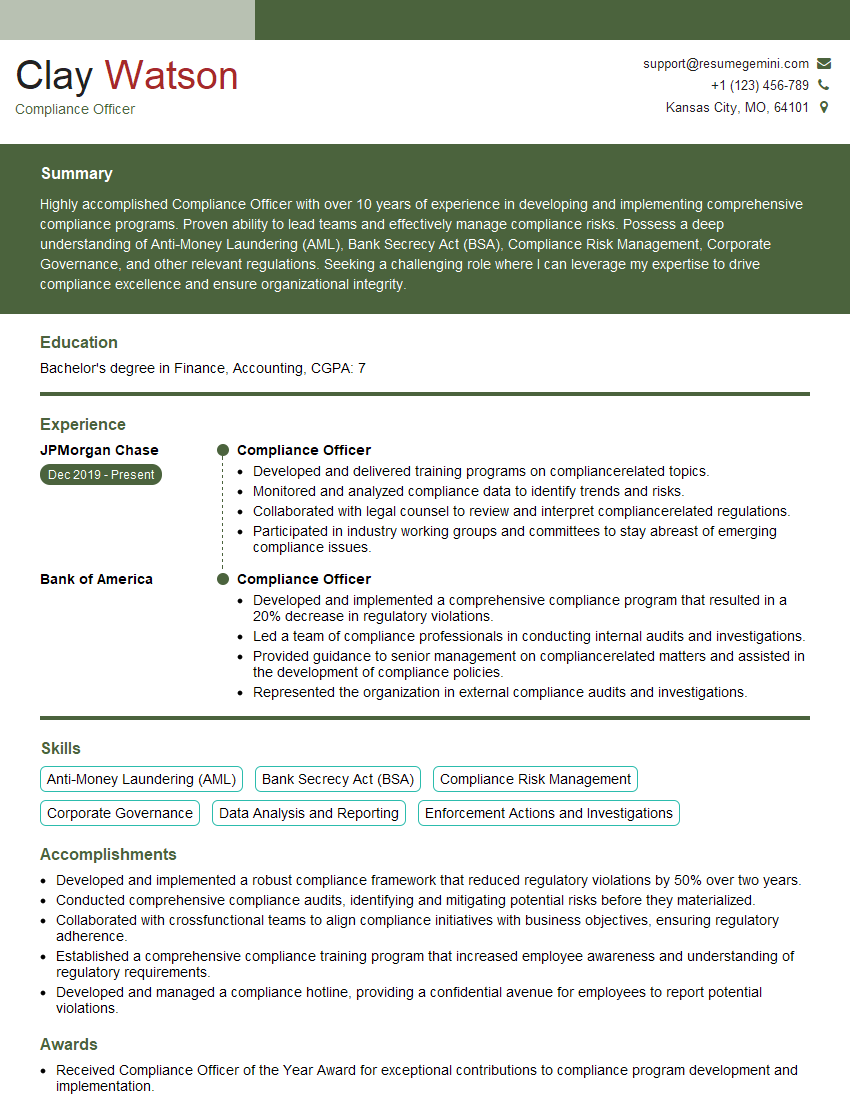
Compliance Officer Resume Sample
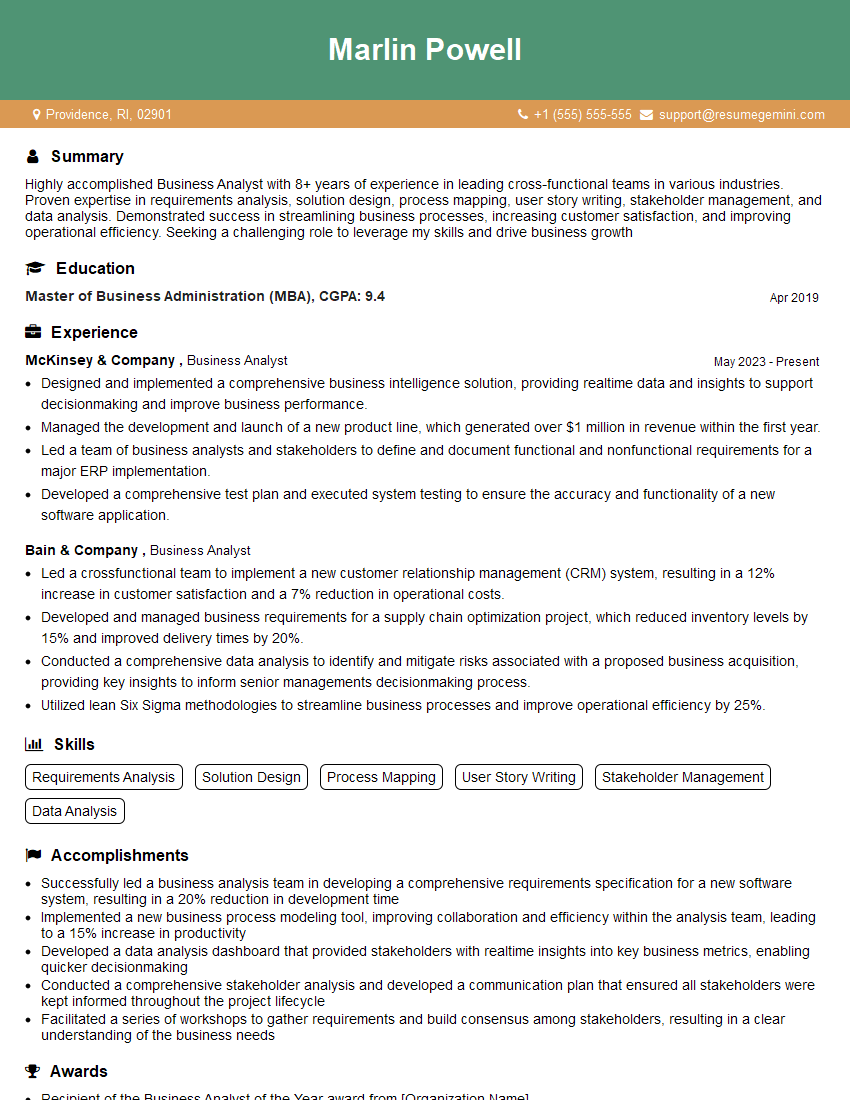
Business Analyst Resume Sample
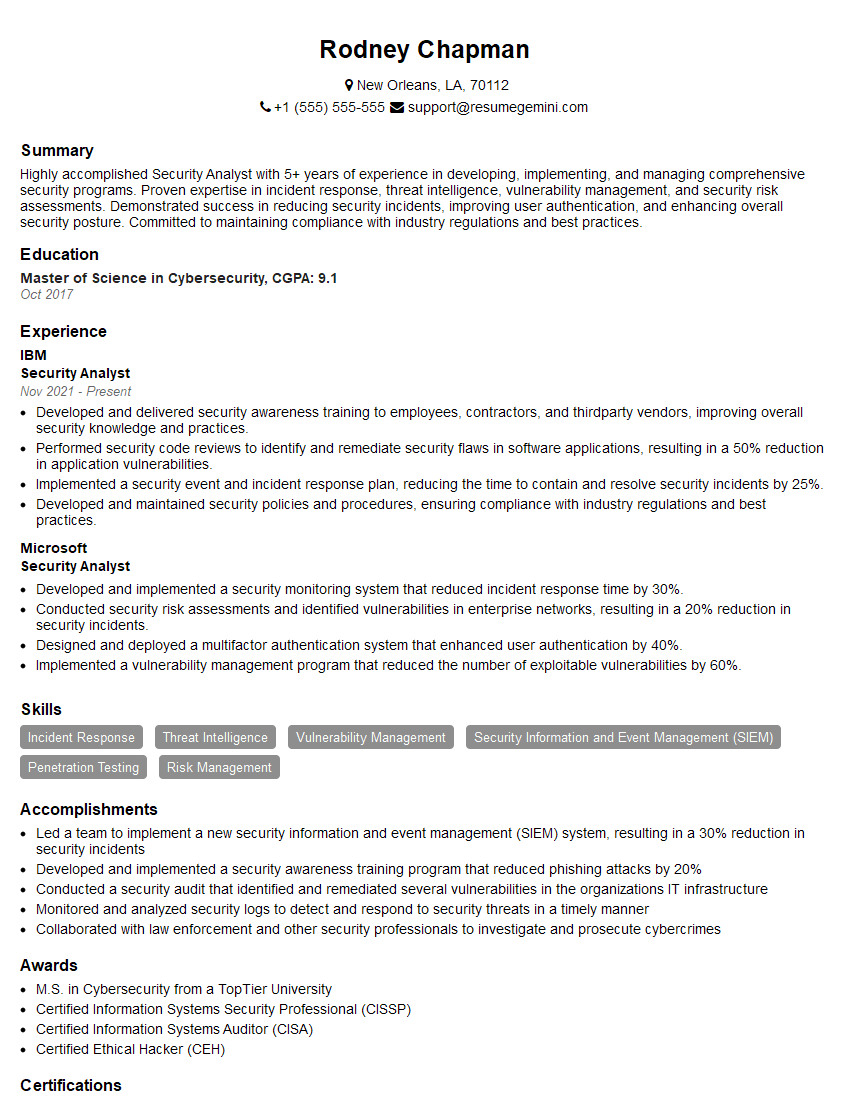
Security Analyst Resume Sample
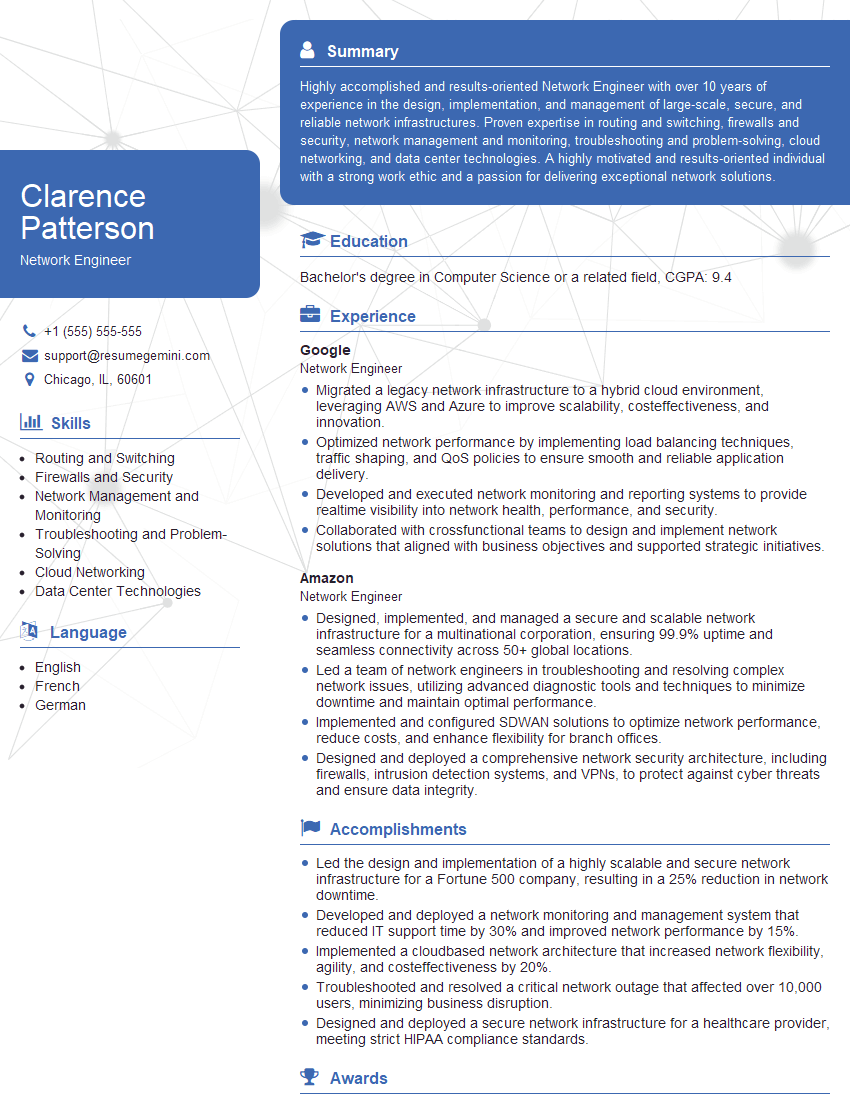
Network Engineer Resume Sample

Technical Support Engineer Resume Sample
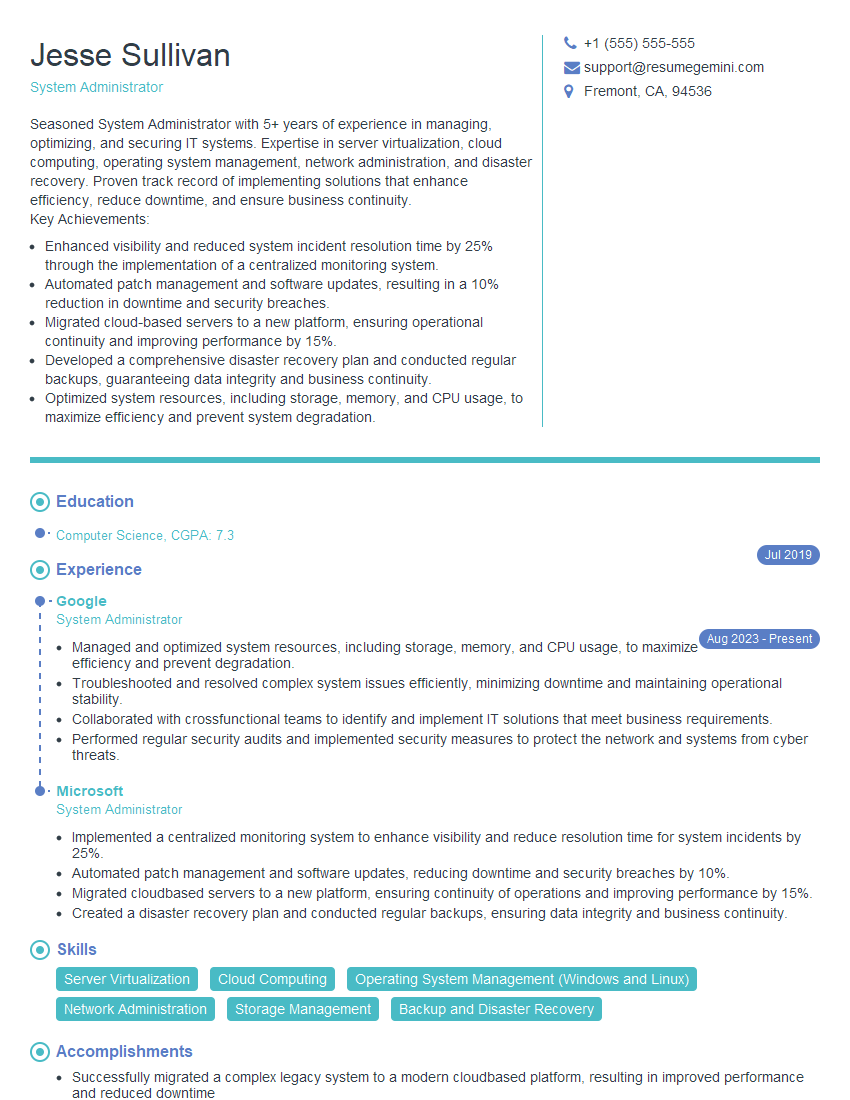
System Administrator Resume Sample
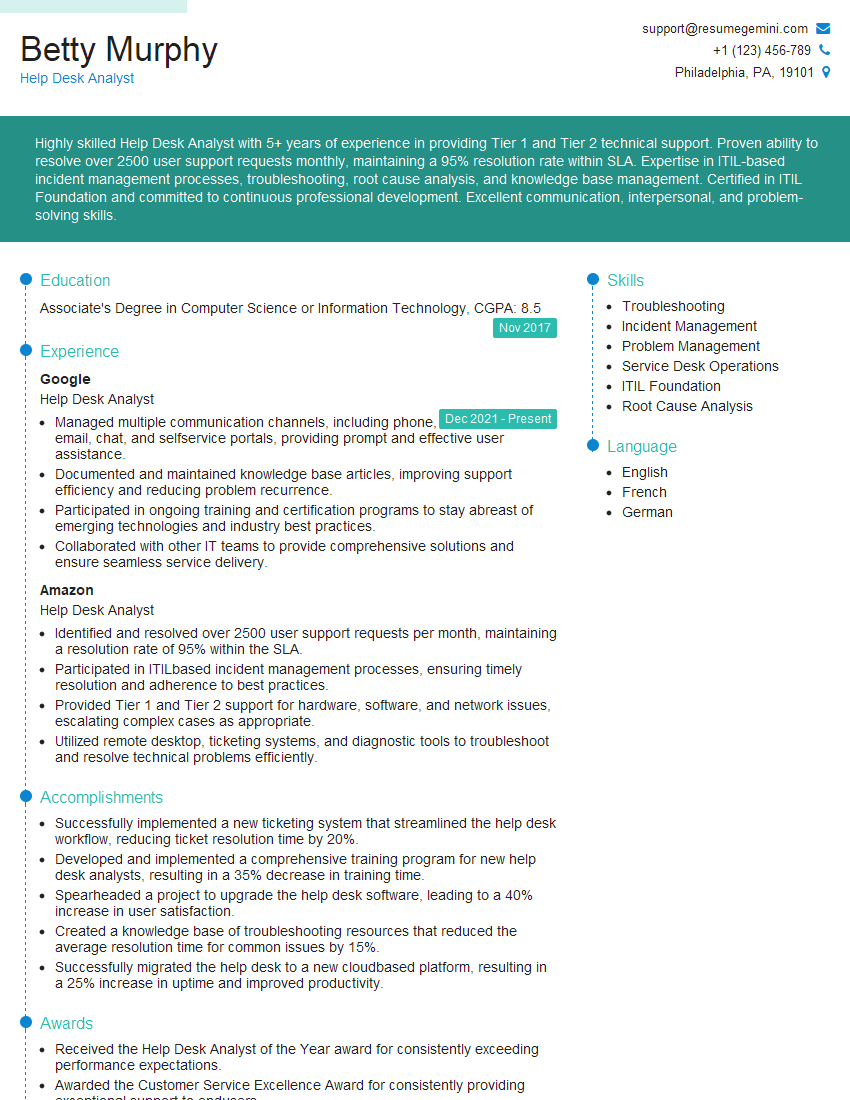
Help Desk Analyst Resume Sample
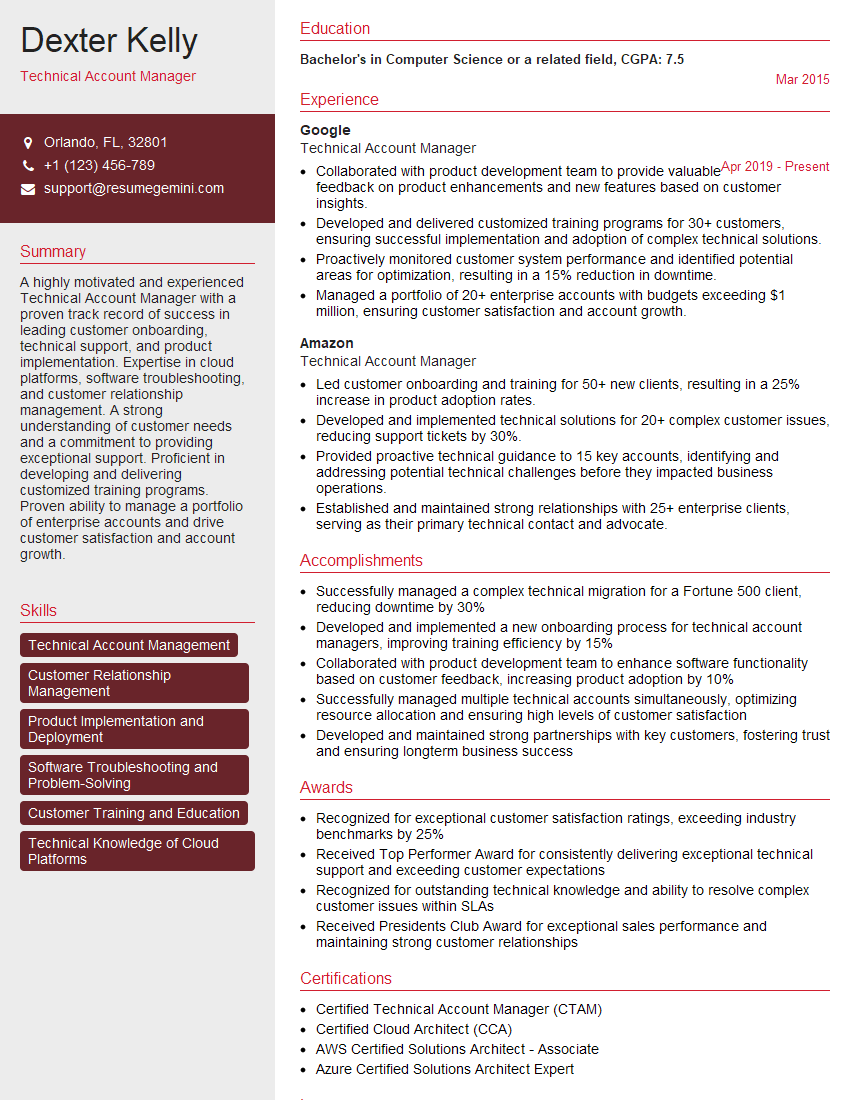
Technical Account Manager Resume Sample
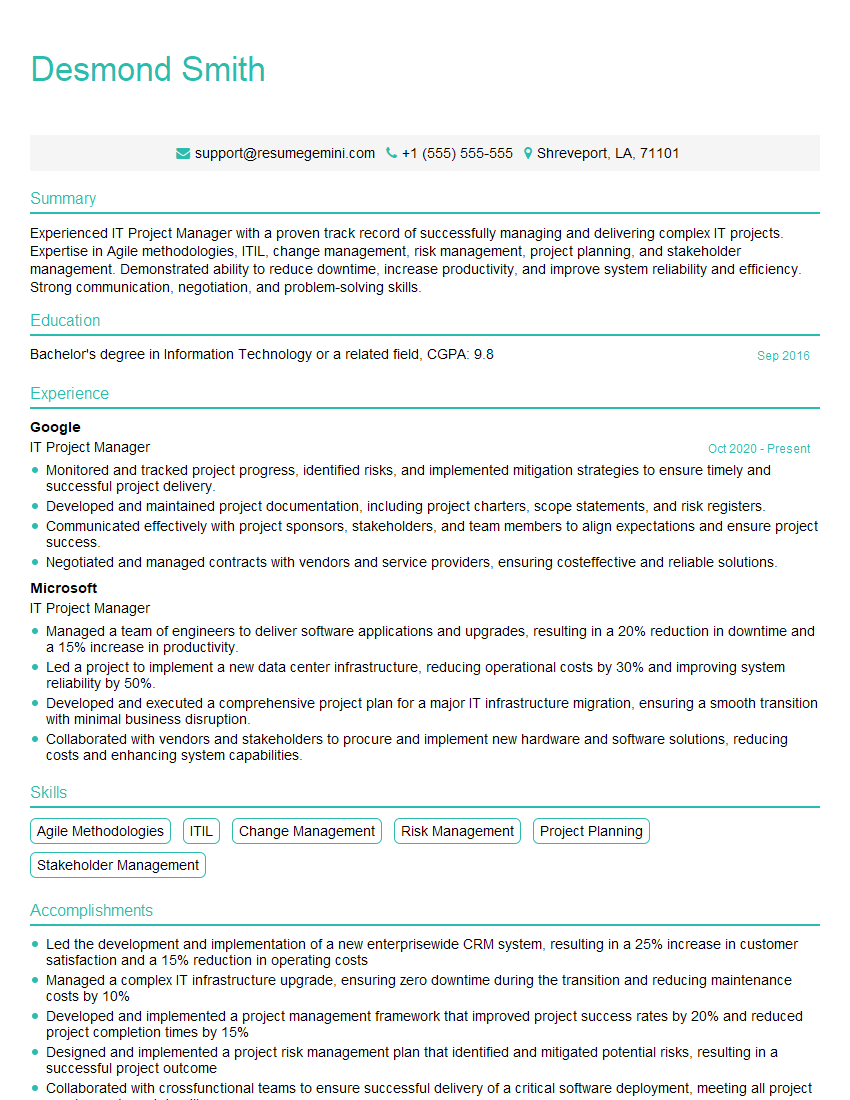
IT Project Manager Resume Sample
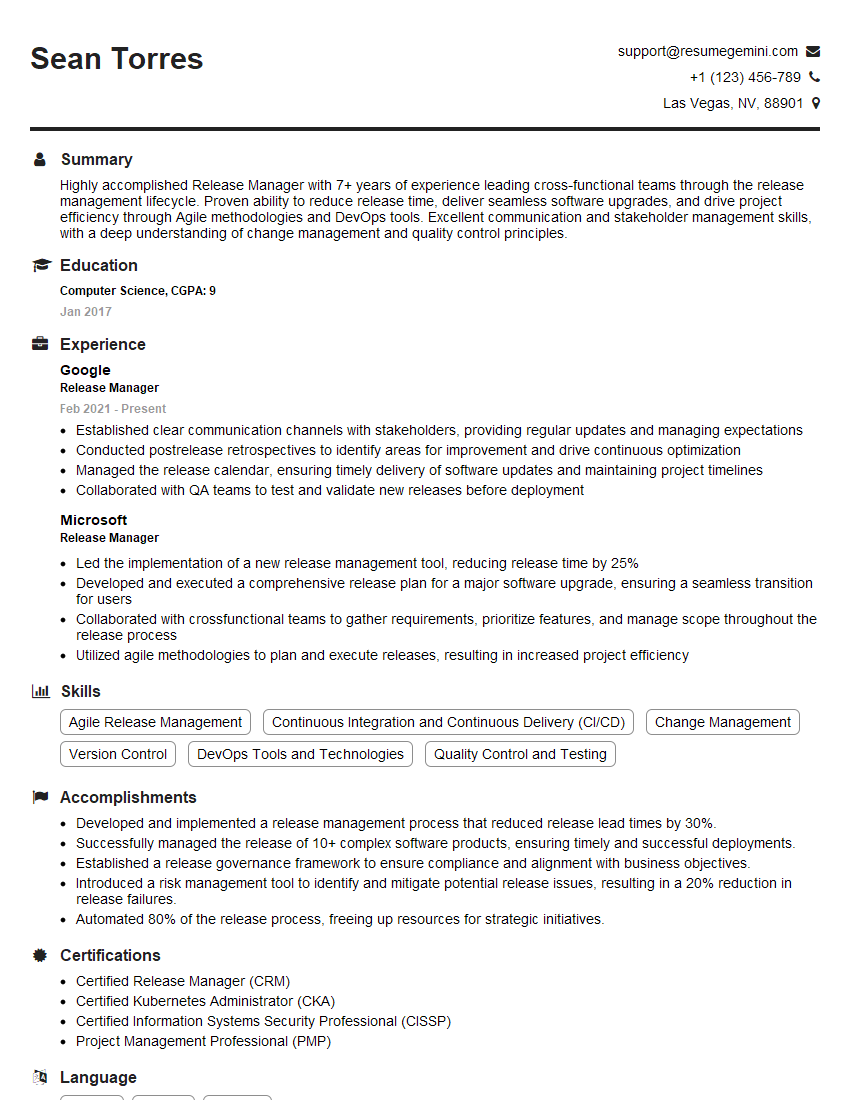
Release Manager Resume Sample

Technical Writer Resume Sample
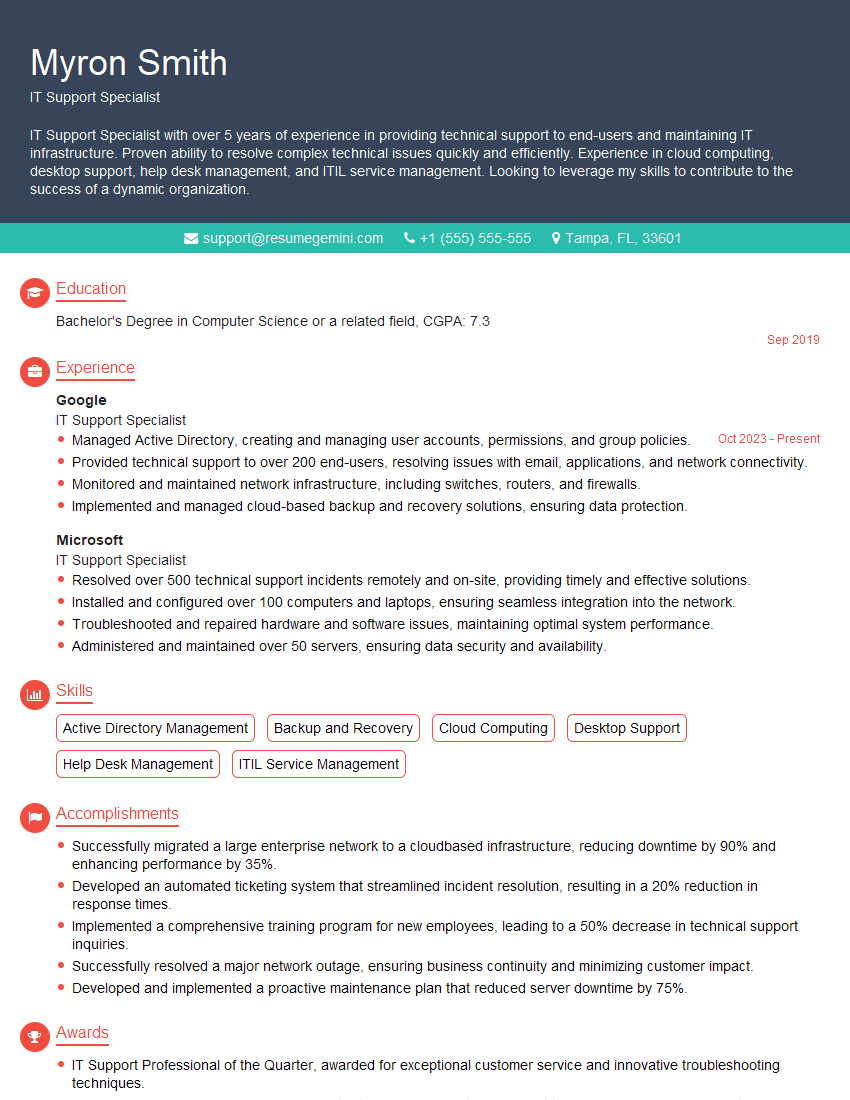
IT Support Specialist Resume Sample
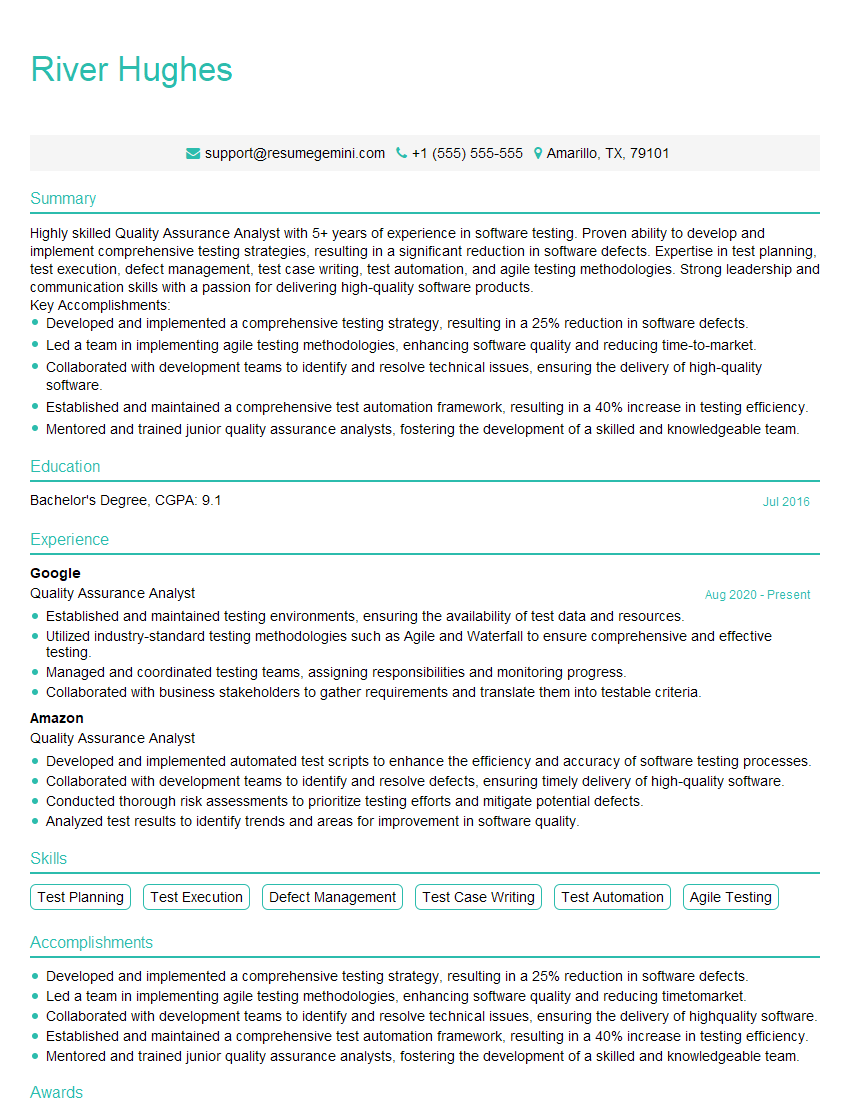
Quality Assurance Analyst Resume Sample
Explore more articles
Users Rating of Our Blogs
Share Your Experience
We value your feedback! Please rate our content and share your thoughts (optional).
What Readers Say About Our Blog
Very informative content, great job.
good