Are you ready to stand out in your next interview? Understanding and preparing for Infrastructure Configuration Management interview questions is a game-changer. In this blog, we’ve compiled key questions and expert advice to help you showcase your skills with confidence and precision. Let’s get started on your journey to acing the interview.
Questions Asked in Infrastructure Configuration Management Interview
Q 1. Explain the difference between Infrastructure as Code (IaC) and Configuration Management.
Infrastructure as Code (IaC) and Configuration Management are closely related but distinct concepts. Think of it like this: Configuration Management focuses on managing the state of existing infrastructure, while IaC focuses on managing the creation and provisioning of that infrastructure.
Configuration Management involves automating the process of configuring servers and applications. It ensures that systems are consistently configured according to predefined standards. Tools like Chef, Puppet, and Ansible excel at this, applying configuration changes to already existing servers.
IaC, on the other hand, treats infrastructure as code. You define your infrastructure—servers, networks, databases—in a descriptive language (like Terraform’s HCL or CloudFormation’s YAML), and then a tool automatically provisions it in the cloud or on-premises. IaC allows you to version, track changes, and recreate your entire infrastructure consistently.
In essence, Configuration Management manages what’s already there, while IaC manages what gets built. They often work together; you might use IaC to provision servers and then use Configuration Management to configure their software and applications.
Q 2. Describe your experience with popular IaC tools like Terraform, Ansible, Chef, Puppet, or SaltStack.
I have extensive experience with Terraform, Ansible, and Chef.
Terraform has been my go-to for managing multi-cloud environments and large-scale infrastructure deployments. Its declarative approach makes it easy to version and manage infrastructure as code, and its provider ecosystem is vast. For example, I recently used Terraform to provision a highly available application stack across multiple AWS regions, ensuring redundancy and disaster recovery.
Ansible is fantastic for managing the configuration of existing servers and applications. Its agentless architecture and simple YAML playbooks make it incredibly efficient for automating tasks like deploying software, configuring users, and managing network settings. I’ve used Ansible extensively for automating deployments in our production environments and streamlining our operational tasks.
Chef, which I’ve used in previous roles, offers a robust framework for managing complex configurations. Its focus on infrastructure automation through recipes and cookbooks is particularly valuable for large-scale deployments where maintainability is key. I particularly appreciate its ability to manage diverse infrastructure environments.
Q 3. How do you ensure idempotency in your configuration management scripts?
Idempotency means that applying a configuration script multiple times will always result in the same final state. This is crucial for avoiding unintended side effects and ensuring consistent infrastructure.
To achieve idempotency, I employ several strategies:
- Using desired-state configuration: My scripts describe the desired state of the system, rather than a sequence of actions. The tool (like Ansible or Puppet) then figures out the necessary steps to reach that state.
- Checking for existing resources: Before making any changes, my scripts always check if the desired resources or configurations already exist. If they do, the script should exit without making further changes.
- Using atomic operations: Where possible, I break down actions into atomic operations that cannot be interrupted. This prevents partial changes and ensures consistency.
- Version control: Tracking changes with Git allows easy rollback if a script produces unintended results. This provides a safety net if unexpected behavior occurs.
For example, in Ansible, using the state: present parameter for modules ensures that resources are created only if they don’t already exist.
- name: Ensure file exists ansible.builtin.file: path: /etc/myconfig.conf state: present mode: 0644 content: | some config
Q 4. Explain your approach to managing configurations across multiple environments (dev, test, prod).
Managing configurations across different environments (development, testing, production) requires a structured approach to avoid discrepancies and ensure consistency. I typically use a combination of techniques:
- Configuration variables: I parameterize my configuration scripts and use environment-specific variables to manage differences between environments. This could involve using environment variables, configuration files, or dedicated parameter stores.
- Version control branching: Separate Git branches can represent different environments (e.g.,
dev,test,prod). This allows independent development and testing before deployment to production. - Infrastructure as Code modules: I break down infrastructure into reusable modules that can be deployed in different environments with minimal changes. These modules could encapsulate individual components (databases, web servers) or whole application stacks.
- Configuration management tools’ built-in features: Tools like Ansible and Terraform offer features like inventory files or workspaces to manage environment-specific configurations.
This strategy allows for consistent configuration across all environments while maintaining independent management, reducing the risks associated with deploying code changes.
Q 5. How do you handle configuration drift?
Configuration drift occurs when the actual state of the infrastructure deviates from the desired state defined in your configuration management scripts. This can happen due to manual changes, unintended updates, or unforeseen circumstances.
To address this, I follow a multi-pronged approach:
- Regular audits: I schedule regular audits to compare the actual configuration against the desired state using tools provided by the configuration management system or custom scripts. This ensures early detection of any deviations.
- Automated compliance checks: Integrate compliance checks into your CI/CD pipeline to catch configuration drift early in the development cycle.
- Configuration management tools’ reporting features: Leverage built-in features for reporting and alerting to detect changes or compliance violations.
- Automated remediation: Implement automated remediation strategies that correct identified drift automatically. For example, you might automatically restart a service or re-apply configurations.
- Strict access control: Restrict direct access to production servers, minimizing the risk of manual changes that could lead to configuration drift.
Early detection and automated remediation are key to keeping configuration drift under control.
Q 6. What are some best practices for version control in Infrastructure Configuration Management?
Version control is absolutely essential in Infrastructure Configuration Management. It provides a history of changes, enables collaboration, and facilitates rollbacks. Best practices include:
- Use a Git repository: Store all infrastructure code (Terraform configurations, Ansible playbooks, etc.) in a centralized Git repository.
- Meaningful commit messages: Write clear and concise commit messages describing the changes made. This improves the audit trail.
- Branching strategy: Employ a well-defined branching strategy (e.g., Gitflow) to manage development, testing, and deployment. This helps to segregate changes and prevent unintended merges.
- Code reviews: Implement code reviews to ensure quality, consistency, and adherence to best practices. A second set of eyes catches potential issues early on.
- Regular backups: Regularly back up your Git repository to ensure data protection.
- Infrastructure-as-code-specific tools: Use tools built to manage infrastructure code within Git for additional security and best practices.
By following these best practices, you can ensure the integrity, maintainability, and security of your infrastructure code.
Q 7. Describe your experience with Git and its role in Infrastructure as Code.
Git is the cornerstone of my Infrastructure as Code workflow. It’s not just for source control; it’s the foundation for collaboration, tracking, and versioning everything related to infrastructure.
My typical workflow involves:
- Storing all IaC scripts in Git: Terraform configuration files, Ansible playbooks, Chef cookbooks—everything goes into a Git repository.
- Branching for different environments: Feature branches are used for development and testing. Once tested, the changes are merged into the main branch, and then into environment-specific branches (dev, test, prod).
- Pull requests for code reviews: Pull requests enable code reviews before merging changes, ensuring quality and consistency. This reduces the chances of errors in production deployments.
- Committing frequently with descriptive messages: Frequent commits make it easier to track changes and revert to previous versions if necessary. This greatly assists in debugging.
- Using Git tags for releases: Tags are used to mark specific releases, making it easy to refer back to specific configurations.
Essentially, Git is more than just version control; it’s integral to the entire infrastructure lifecycle, allowing for seamless collaboration, robust change management, and easy rollback in case of errors. It transforms managing infrastructure from a risky, manual process into a repeatable, auditable, and collaborative one.
Q 8. How do you troubleshoot configuration issues in a complex infrastructure?
Troubleshooting configuration issues in a complex infrastructure requires a systematic approach. Think of it like detective work – you need to gather clues, formulate hypotheses, and test them systematically. My process typically starts with identifying the impacted services and the symptoms. Then, I move through these steps:
- Isolate the problem: Is it a single server, a specific application, or a network-wide issue? Tools like network monitoring systems (e.g., PRTG, Nagios) and application performance monitoring (APM) tools (e.g., Dynatrace, New Relic) are invaluable here.
- Gather logs and metrics: Examine system logs, application logs, and performance metrics for clues. Correlations between events are crucial. For example, a sudden spike in error logs might point to a misconfiguration.
- Compare configurations: Compare the current configuration with known good configurations (e.g., from backups or previous working states). Configuration management tools (like Ansible, Puppet, Chef) greatly aid this process by enabling version control and diffing capabilities.
- Reproduce the issue (if possible): Try to reproduce the problem in a controlled environment (like a staging or test environment) to isolate the root cause without impacting production.
- Test changes incrementally: Once you have a hypothesis, test changes incrementally and verify their impact. Rollback mechanisms are essential to revert to a known good state if a change doesn’t resolve the issue or introduces new problems.
- Automate remediation: Once the root cause is identified and a solution is implemented, automate the fix to prevent recurrence. This might involve updating configuration management scripts or implementing better monitoring alerts.
For example, I once dealt with a performance bottleneck in a web application. Through meticulous log analysis, I identified a misconfigured database connection pool, leading to excessive connection timeouts. Correcting this configuration using our Ansible playbooks swiftly resolved the problem.
Q 9. Explain your understanding of different configuration management methodologies (e.g., push vs. pull).
Configuration management methodologies broadly fall into two categories: push and pull.
- Push-based configuration management: In a push model, the configuration management server actively pushes the desired state to the managed nodes. This is often easier to manage for simple deployments, but can be problematic in large or dynamic environments. Tools like Chef and Puppet often employ a push approach.
- Pull-based configuration management: In a pull model, the managed nodes actively pull the desired state from the configuration management server. This offers greater flexibility and scalability, making it better suited for complex environments where nodes might have intermittent connectivity. Ansible is a prime example of a tool using a pull-based approach. The managed nodes initiate the configuration process, making the system more resilient to server-side outages.
The choice between push and pull depends on factors like the size and complexity of the infrastructure, the desired level of control, and the network topology. Hybrid approaches are also possible, combining the strengths of both methods.
Q 10. How do you manage secrets and sensitive information in your infrastructure?
Managing secrets and sensitive information is paramount for infrastructure security. My approach involves a multi-layered strategy:
- Dedicated Secret Management Tools: I leverage tools like HashiCorp Vault, AWS Secrets Manager, or Azure Key Vault. These tools provide secure storage, encryption, and access control for sensitive data, such as API keys, database passwords, and SSH keys.
- Principle of Least Privilege: I strictly adhere to the principle of least privilege, granting only necessary access to sensitive data to specific users or services. Role-based access control (RBAC) is crucial for this.
- Rotation of Credentials: Regular rotation of credentials helps mitigate the risk associated with compromised secrets. Automated credential rotation features in secret management tools simplify this process.
- Encryption at Rest and in Transit: All sensitive data is encrypted both at rest and in transit, using industry-standard encryption algorithms and protocols (TLS/SSL).
- Avoid Hardcoding: Never hardcode sensitive information directly into configuration files or scripts. Instead, leverage environment variables or dedicated secret management tools to securely inject these values.
For example, when deploying a web application, instead of embedding database credentials directly in the application’s configuration file, we use environment variables that are pulled securely from our chosen secret management solution during deployment.
Q 11. What are your preferred methods for monitoring and logging configuration changes?
Monitoring and logging configuration changes are critical for maintaining infrastructure stability and auditing purposes. My preferred methods are:
- Configuration Management Tool Logging: Most configuration management tools (Ansible, Puppet, Chef) provide built-in logging capabilities. These logs track changes made to the infrastructure, including who made them, when, and what changes were implemented.
- Centralized Logging Systems: Tools like Elasticsearch, Logstash, and Kibana (ELK stack) or Graylog are used to aggregate logs from various sources, enabling comprehensive analysis and searching across different systems.
- Version Control Systems (e.g., Git): All infrastructure configurations are stored in version control systems. This enables tracking changes over time, reverting to previous versions if necessary, and conducting audits. Commit messages should always clearly describe the changes implemented.
- Change Management Processes: Formal change management processes (e.g., using a ticketing system) are crucial to ensure that all configuration changes are documented, reviewed, and approved before implementation.
For instance, if a misconfiguration leads to an outage, the version control history allows us to quickly pinpoint the change that caused the problem and easily roll back to the previous stable configuration.
Q 12. Describe your experience with infrastructure automation tools.
I have extensive experience with various infrastructure automation tools. My proficiency spans:
- Ansible: I’m highly proficient in Ansible, using its declarative approach to define infrastructure as code. I frequently leverage Ansible playbooks to automate tasks such as server provisioning, configuration management, and application deployment. Ansible’s agentless architecture simplifies deployments and reduces overhead.
- Puppet: I have experience with Puppet’s agent-based architecture, focusing on its strong features for managing complex, large-scale deployments. Puppet’s emphasis on declarative configuration is ideal for maintaining consistency.
- Chef: I’ve utilized Chef in projects requiring robust infrastructure as code, leveraging its focus on cookbook development and community-driven recipes.
- Terraform: For infrastructure provisioning and managing infrastructure as code across multiple cloud providers, Terraform is invaluable. Its support for multiple providers simplifies managing multi-cloud strategies.
My experience with these tools extends beyond basic configuration management; I have used them to build fully automated CI/CD pipelines that enable rapid and reliable application deployments.
Q 13. How do you ensure the security of your infrastructure configurations?
Ensuring the security of infrastructure configurations is a continuous process. My approach encompasses these key elements:
- Least Privilege: Only grant the minimum necessary permissions to users, services, and processes. RBAC is crucial for managing permissions effectively.
- Regular Security Audits: Conduct regular security audits to identify and address vulnerabilities. Automated tools can scan for known vulnerabilities and misconfigurations.
- Secure Configuration Management Practices: Store configurations securely using version control systems and encrypt sensitive data using tools like HashiCorp Vault.
- Network Security: Implement robust network security measures, including firewalls, intrusion detection systems, and network segmentation.
- Regular Patching and Updates: Regularly update operating systems, applications, and security tools to patch known vulnerabilities. Automated patching processes significantly reduce risks.
- Security Hardening: Implement security hardening best practices, disabling unnecessary services and strengthening system security settings.
- Regular Penetration Testing: Periodic penetration testing helps identify potential vulnerabilities and weaknesses in the infrastructure before attackers do.
For example, we regularly perform vulnerability scans on our servers using tools like Nessus and address any identified vulnerabilities promptly. We also use automated patching systems to ensure that our systems are always up-to-date with the latest security patches.
Q 14. Explain your experience with different cloud platforms (AWS, Azure, GCP) and their configuration management tools.
I have experience with the major cloud platforms—AWS, Azure, and GCP—and their associated configuration management tools:
- AWS: I’ve extensively used AWS services like EC2, S3, RDS, and IAM, along with configuration management tools like AWS Systems Manager (SSM) and CloudFormation for automating infrastructure deployment and management.
- Azure: My experience with Azure includes using Azure Virtual Machines, Azure Storage, and Azure SQL Database. I’ve utilized Azure Automation and Azure Resource Manager (ARM) templates for infrastructure-as-code.
- GCP: I’ve worked with GCP services like Compute Engine, Cloud Storage, and Cloud SQL, leveraging tools like Deployment Manager and Google Cloud SDK for infrastructure automation.
I understand the unique characteristics of each platform and leverage their respective configuration management tools to build efficient and reliable infrastructure. The choice of platform and tools depends heavily on the specific project requirements and organizational preferences.
Q 15. How do you approach automating infrastructure deployments?
Automating infrastructure deployments is crucial for efficiency, consistency, and reducing human error. My approach involves a multi-stage process starting with Infrastructure as Code (IaC). This means defining and managing infrastructure through code, using tools like Terraform or Ansible.
First, I define the desired state of my infrastructure in configuration files (e.g., YAML, JSON). These files specify everything from virtual machines and networks to databases and load balancers. Next, I use a version control system (like Git) to manage these configuration files, ensuring traceability and collaboration. Then, the IaC tool reads these configuration files and provisions the infrastructure in the cloud or on-premises environment automatically.
Finally, I integrate this IaC process into a CI/CD pipeline for continuous integration and delivery, enabling automated testing and deployment. For instance, I might use Terraform to provision AWS resources, with automated tests ensuring the network is correctly configured before deploying applications. This ensures that every deployment is consistent, repeatable, and easily auditable.
Career Expert Tips:
- Ace those interviews! Prepare effectively by reviewing the Top 50 Most Common Interview Questions on ResumeGemini.
- Navigate your job search with confidence! Explore a wide range of Career Tips on ResumeGemini. Learn about common challenges and recommendations to overcome them.
- Craft the perfect resume! Master the Art of Resume Writing with ResumeGemini’s guide. Showcase your unique qualifications and achievements effectively.
- Don’t miss out on holiday savings! Build your dream resume with ResumeGemini’s ATS optimized templates.
Q 16. Describe your experience with CI/CD pipelines and their role in Infrastructure Configuration Management.
CI/CD pipelines are the backbone of modern infrastructure configuration management. They automate the process of building, testing, and deploying infrastructure changes. My experience involves leveraging tools like Jenkins, GitLab CI, or Azure DevOps to create these pipelines.
A typical pipeline starts with code commit, triggering automated testing (unit, integration, and system tests). After successful testing, the pipeline automatically provisions the infrastructure using IaC tools (like the Terraform example above), deploys applications, and runs post-deployment checks. This entire process eliminates manual intervention, reducing errors and accelerating deployments significantly.
For example, in a recent project, we integrated SonarQube for code quality analysis into our CI/CD pipeline. This ensured our IaC code was robust and followed best practices before being deployed to production. This automated approach significantly improved our deployment speed and reduced the risk of errors, leading to fewer outages and improved system stability.
Q 17. Explain your understanding of compliance and auditing in relation to infrastructure configurations.
Compliance and auditing are paramount in infrastructure configuration management. It’s about ensuring our infrastructure meets regulatory requirements (e.g., HIPAA, PCI DSS) and internal policies. This involves implementing mechanisms to track changes, monitor security posture, and generate audit logs.
I typically use configuration management tools (Ansible, Chef, Puppet) with features for auditing and reporting. These tools allow me to track every change made to the infrastructure and generate reports demonstrating compliance with specific standards. Further, tools like CloudTrail (AWS) or Azure Monitor provide detailed logs of all activity within the cloud environment. These logs can be analyzed to detect anomalies and ensure adherence to policies.
Regular security scans and penetration testing are also critical for identifying vulnerabilities and ensuring ongoing compliance. We document all configurations, policies, and procedures to maintain a clear audit trail. This comprehensive approach makes it significantly easier to respond to audits and demonstrate our compliance posture.
Q 18. How do you handle rollbacks and disaster recovery in case of configuration failures?
Handling rollbacks and disaster recovery is a critical aspect of infrastructure configuration management. The key is planning ahead. My approach involves implementing automated rollbacks and robust disaster recovery plans.
For rollbacks, I utilize IaC’s version control capabilities. If a deployment fails, I can quickly revert to a previous known-good configuration, minimizing downtime. This requires versioning all infrastructure configurations and testing rollback processes regularly.
For disaster recovery, I employ techniques like infrastructure replication and failover mechanisms. We might replicate our infrastructure to a geographically separate region, allowing quick failover in case of a regional outage. Regular disaster recovery drills are crucial to validate our plans and identify areas for improvement. For example, I’ve used AWS’s disaster recovery services to replicate our database clusters to a different availability zone, ensuring high availability and quick recovery from failures.
Q 19. What are some common challenges you’ve encountered in Infrastructure Configuration Management and how did you overcome them?
One common challenge is managing the complexity of large-scale infrastructure. To overcome this, I leverage modularity and automation. Breaking down the infrastructure into smaller, manageable modules simplifies configuration and maintenance.
Another challenge is ensuring consistency across different environments (development, testing, production). To address this, I use IaC to ensure consistency across all environments. By applying the same configuration files, I eliminate configuration drift and ensure consistent behavior.
Finally, integrating new technologies and tools into existing infrastructure can be challenging. A phased approach, thorough testing, and proper documentation are essential to reduce risks and ensure a smooth integration. Using a well-defined change management process also minimizes disruptions during upgrades and deployments.
Q 20. How do you stay up-to-date with the latest trends and technologies in Infrastructure Configuration Management?
Staying current in this rapidly evolving field requires a multi-pronged approach. I actively participate in online communities (like Stack Overflow and Reddit), attend conferences (like AWS re:Invent or KubeCon), and follow industry blogs and newsletters.
I also dedicate time to hands-on experimentation with new technologies and tools. This involves setting up test environments to evaluate new features and explore their practical applications. I also actively contribute to open-source projects whenever possible, which not only boosts my skills but also allows me to network with other professionals.
Certifications also play a significant role. Certifications such as AWS Certified Solutions Architect or Google Cloud Certified Professional Cloud Architect demonstrate my commitment to continuous learning and validate my skills to potential employers.
Q 21. Explain your experience with different infrastructure monitoring tools (e.g., Nagios, Zabbix, Prometheus).
I have experience using several infrastructure monitoring tools, each with its strengths and weaknesses. Nagios is a powerful open-source tool that provides comprehensive monitoring capabilities. Its agentless nature simplifies setup, but scalability can become a challenge with a large infrastructure.
Zabbix offers a similar feature set to Nagios but boasts a more user-friendly interface and improved scalability. Its ability to monitor various metrics, including network performance, system utilization, and application health, makes it a versatile tool.
Prometheus, a modern, open-source monitoring system, excels in its scalability and flexibility. Its time-series database allows for granular data collection and powerful querying capabilities. I’ve used Prometheus extensively with Kubernetes environments, leveraging its integration with other tools in the ecosystem. The choice of tool depends on the scale and complexity of the infrastructure being monitored as well as integration with existing systems.
Q 22. How do you handle scaling and performance issues related to infrastructure configurations?
Scaling and performance issues in infrastructure are tackled through a multi-pronged approach focusing on both proactive measures and reactive solutions. Proactively, we utilize tools like monitoring systems (e.g., Prometheus, Grafana) to track key performance indicators (KPIs) like CPU utilization, memory usage, and network latency. These metrics allow for early detection of potential bottlenecks. When issues arise, we analyze the monitoring data to pinpoint the problem. For instance, if CPU consistently hits 100%, we might need to scale horizontally (add more servers) or vertically (upgrade server specs). This decision depends on the application’s architecture and cost considerations. Reactive solutions often involve techniques like load balancing (distributing traffic across multiple servers), caching (reducing database load), and database optimization (query tuning, indexing). Let’s say a website experiences slow load times. Monitoring reveals high database query times. We could then optimize database queries or implement a caching layer to significantly improve performance. In essence, it’s a continuous cycle of monitoring, analysis, and optimization.
Q 23. Describe your understanding of different network topologies and their impact on configuration management.
Network topologies significantly influence configuration management. Different topologies necessitate different strategies for managing devices and configurations. A simple bus topology (all devices connected to a single cable) is relatively easy to manage, while more complex topologies like star (devices connected to a central hub or switch) or mesh (multiple interconnected paths) require more sophisticated approaches. For instance, in a large mesh network, managing IP addressing, routing protocols (OSPF, BGP), and firewall rules across many devices becomes challenging. We utilize configuration management tools to automate tasks like deploying consistent configurations across all network devices, enforcing security policies, and managing routing tables. For example, Ansible or Puppet can be used to configure Cisco IOS devices, ensuring all routers are running the same security configurations and routing protocols. This drastically reduces the chances of human error and inconsistency, critical in larger, more complex network environments.
Q 24. How do you manage dependencies between different components in your infrastructure?
Managing dependencies between infrastructure components is crucial for efficient and reliable operation. We employ several strategies, including:
- Dependency visualization: Tools like graph databases can visually represent dependencies, highlighting potential conflicts or bottlenecks.
- Version control: Using Git or similar systems to track changes in configurations allows for rollback and easy understanding of the order of changes. This is essential to understand the impact of a change on dependent components.
- Infrastructure-as-code (IaC): Tools like Terraform or CloudFormation define infrastructure as code, specifying dependencies explicitly. These tools then handle the deployment, ensuring components are deployed in the correct order.
- Orchestration tools: Kubernetes or other orchestration tools are excellent for managing complex deployments with many dependencies, handling the starting and stopping of components in a predefined order.
Q 25. Explain your experience with containerization technologies (e.g., Docker, Kubernetes) and their integration with configuration management.
Containerization technologies like Docker and Kubernetes are integral to modern infrastructure management. Docker provides a consistent environment for applications, packaging them with their dependencies, ensuring they run the same way regardless of the underlying infrastructure. Kubernetes takes this further by orchestrating the deployment, scaling, and management of containers across multiple hosts. This creates a highly scalable, resilient, and efficient infrastructure. Configuration management tools work seamlessly with these technologies. For instance, we might use Ansible to deploy Docker images to a Kubernetes cluster, ensuring consistent configurations across all containers. We use Kubernetes manifests to define desired states, then deploy them with tools like kubectl. This ensures that containers are configured correctly, and the cluster is managed consistently across its nodes. For example, a microservices application might use Kubernetes to manage multiple containers, each performing a specific task; each container’s configuration could be managed via Ansible playbooks, ensuring consistency and efficient deployment.
Q 26. How do you ensure the maintainability and readability of your configuration management scripts?
Maintainability and readability are paramount for long-term success in configuration management. We achieve this through several techniques:
- Modularization: Breaking down scripts into smaller, reusable modules improves readability and simplifies maintenance.
- Version control: Using Git allows tracking changes, enabling rollbacks and collaboration.
- Consistent naming conventions: Using standardized names for variables, functions, and modules greatly improves code understanding.
- Extensive commenting: Adding clear and concise comments to explain the purpose and functionality of code sections is crucial.
- Code reviews: Having peer reviews helps identify potential issues and inconsistencies before deployment.
- Style guides: Adhering to established style guides for coding language used (e.g., PEP 8 for Python) ensures consistency and readability.
Q 27. Describe your experience with implementing and managing infrastructure as a service (IaaS).
My experience with IaaS (Infrastructure-as-a-Service) involves utilizing cloud providers like AWS, Azure, and GCP. I’ve implemented and managed virtual machines, networks, storage, and databases on these platforms. This encompasses tasks such as creating and managing virtual networks, deploying virtual machines using automation tools (Terraform, CloudFormation), configuring load balancers and firewalls, and setting up monitoring and logging services. A key aspect of IaaS management is cost optimization. We use tools to monitor resource usage and identify opportunities to reduce expenses without sacrificing performance. For instance, we might use auto-scaling to adjust the number of servers based on demand or utilize spot instances to significantly lower costs for non-critical workloads. Furthermore, security is paramount. We implement security best practices such as network segmentation, access control lists, and regular security patching to minimize vulnerabilities.
Q 28. How do you prioritize tasks and manage your time effectively when working on multiple infrastructure configuration projects?
Managing multiple infrastructure configuration projects efficiently involves prioritizing tasks and managing time effectively. I utilize a combination of techniques:
- Prioritization frameworks: Methods such as MoSCoW (Must have, Should have, Could have, Won’t have) or Eisenhower Matrix (Urgent/Important) are employed to prioritize tasks based on their urgency and importance.
- Project management tools: Tools like Jira or Trello are used to track tasks, deadlines, and progress.
- Timeboxing: Allocating specific time blocks to particular tasks improves focus and reduces context switching.
- Communication: Keeping stakeholders informed of progress and potential issues helps avoid conflicts and delays. Regular status updates and clear communication channels are crucial.
- Automation: Automating repetitive tasks through scripting reduces the overall time spent on manual processes.
Key Topics to Learn for Infrastructure Configuration Management Interview
- Version Control Systems (e.g., Git): Understanding branching strategies, merging conflicts, and collaborative workflows is crucial for managing infrastructure code effectively. Practical application: Describe how you’ve used Git to manage infrastructure as code changes and collaborate with a team.
- Infrastructure as Code (IaC) Tools (e.g., Terraform, Ansible, Puppet, Chef): Mastering at least one IaC tool is essential. Focus on understanding its core principles, managing configurations, and automating deployments. Practical application: Explain how you would use IaC to provision and manage a complex server environment, highlighting efficiency gains.
- Configuration Management Best Practices: Learn about idempotency, modularity, and the importance of testing and version control in maintaining consistent and reliable infrastructure. Practical application: Describe your approach to designing and implementing a robust and maintainable configuration management system.
- Cloud Platforms (AWS, Azure, GCP): Familiarize yourself with the core services and deployment models offered by major cloud providers. Practical application: Explain how you would leverage cloud services to improve the scalability and resilience of your infrastructure.
- Networking Fundamentals: A solid understanding of networking concepts like subnetting, routing, firewalls, and load balancing is critical. Practical application: Describe how you would design a secure and scalable network architecture for a specific application.
- Security Best Practices: Understand security implications of configuration management, including access control, vulnerability management, and compliance requirements. Practical application: Discuss your approach to securing an infrastructure environment managed through IaC.
- Monitoring and Logging: Learn how to monitor infrastructure health, identify potential issues, and implement effective logging strategies. Practical application: Explain how you would set up monitoring and alerting for a critical infrastructure component.
- Troubleshooting and Problem-Solving: Develop your ability to diagnose and resolve infrastructure issues efficiently and effectively. Practical application: Describe a challenging infrastructure problem you solved and the steps you took to resolve it.
Next Steps
Mastering Infrastructure Configuration Management opens doors to exciting and rewarding career opportunities in DevOps, Cloud Engineering, and System Administration. It’s a highly sought-after skillset that significantly enhances your value to any organization. To maximize your job prospects, it’s crucial to present your skills effectively. Creating an ATS-friendly resume is key to getting your application noticed. We highly recommend using ResumeGemini to build a professional and impactful resume that highlights your expertise in Infrastructure Configuration Management. Examples of resumes tailored to this field are available to guide you.
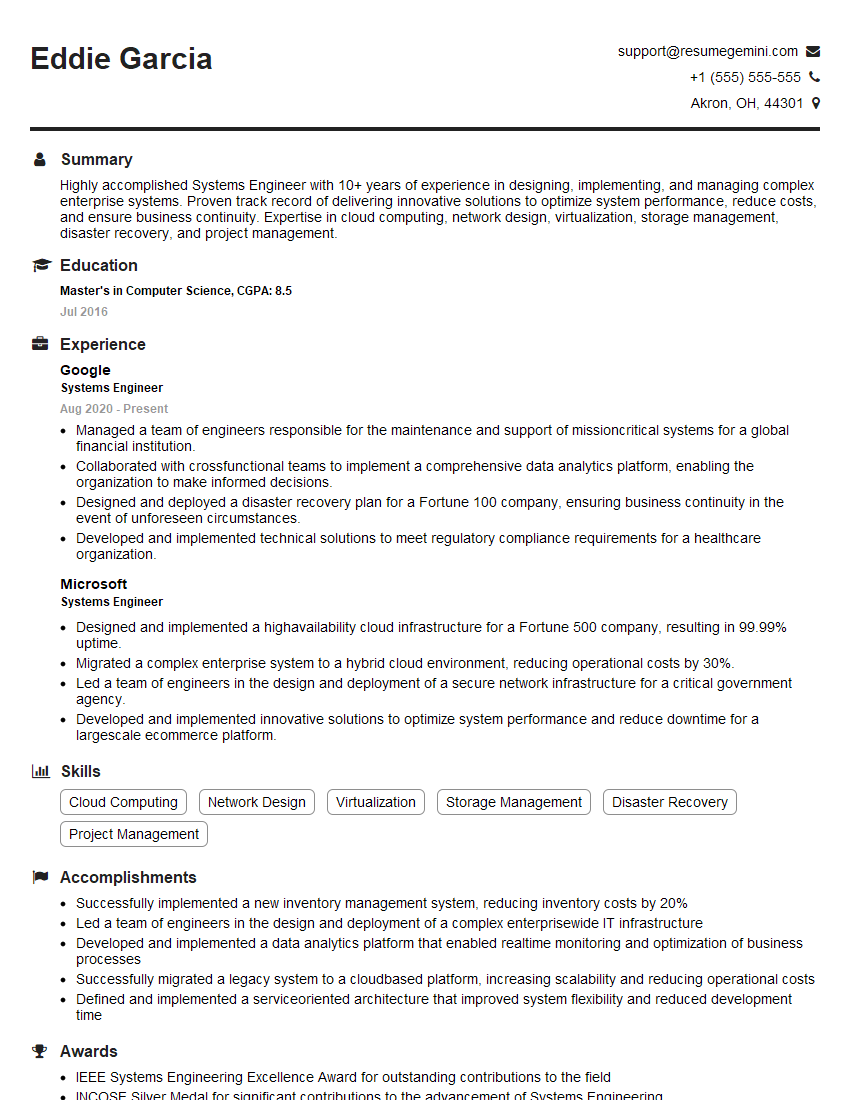
Systems Engineer Resume Sample
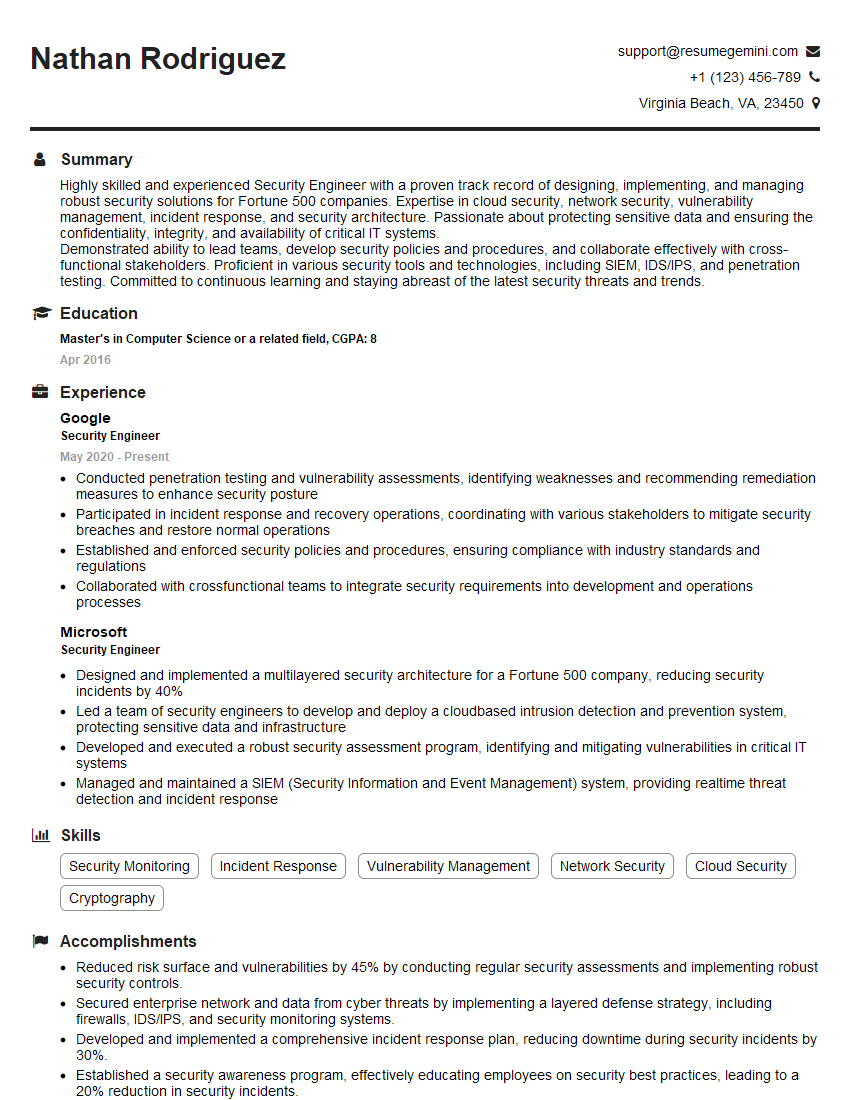
Security Engineer Resume Sample
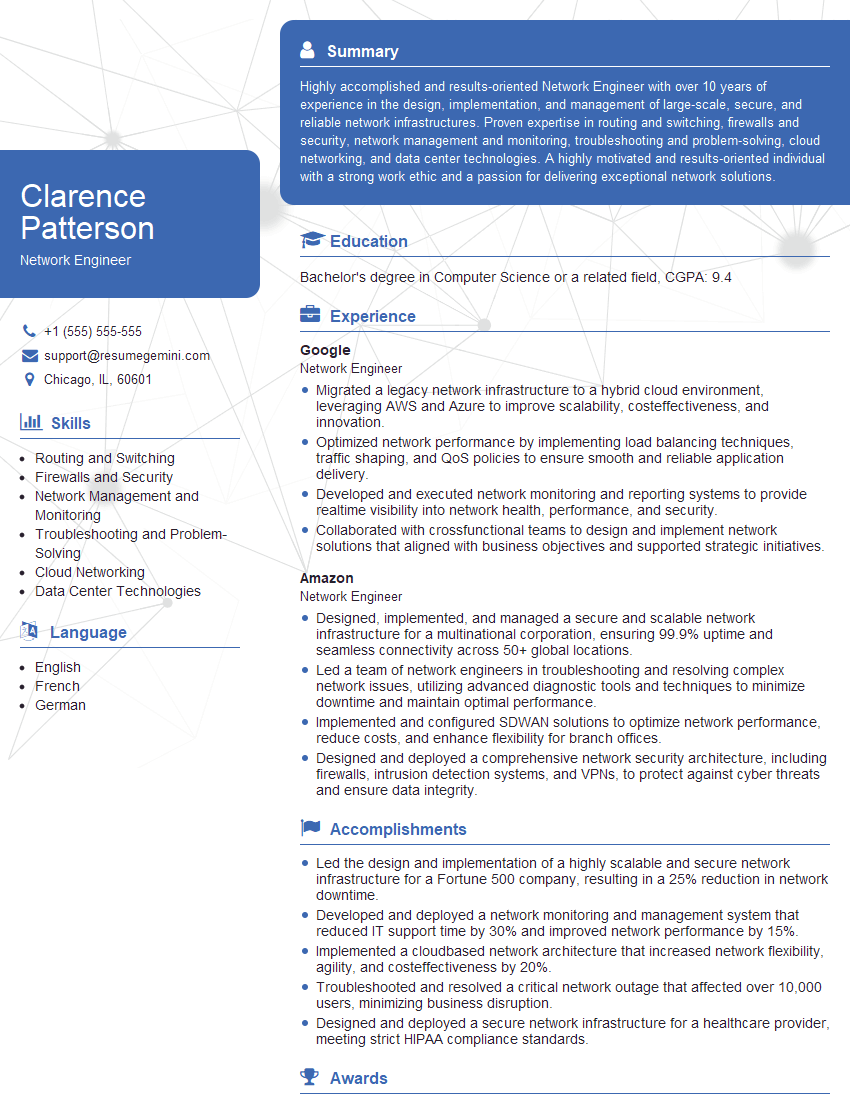
Network Engineer Resume Sample
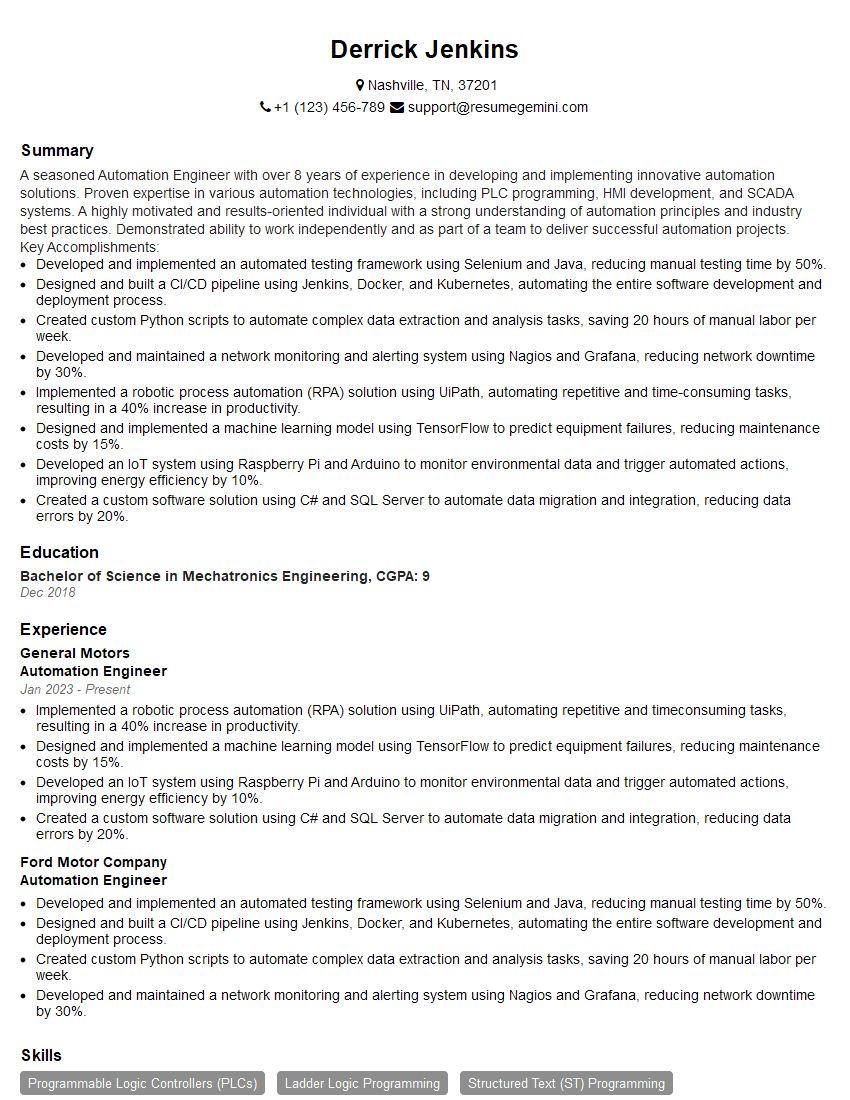
Automation Engineer Resume Sample
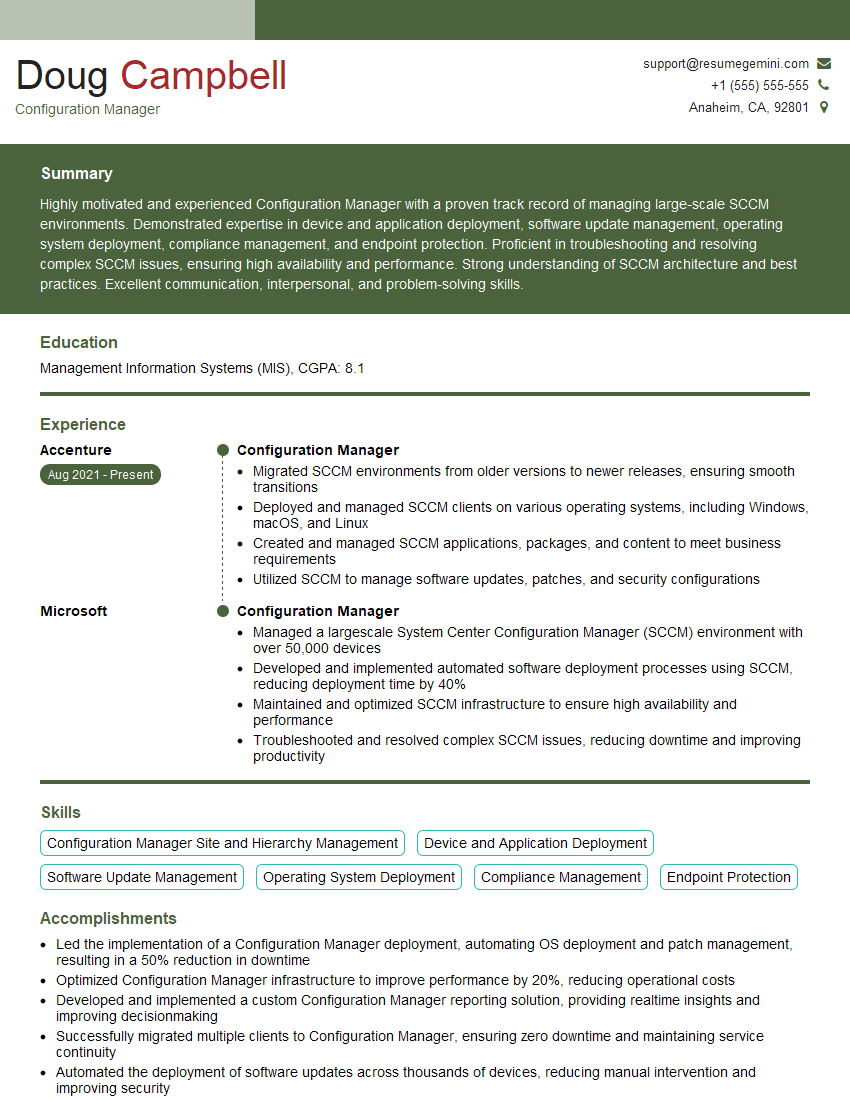
Configuration Manager Resume Sample
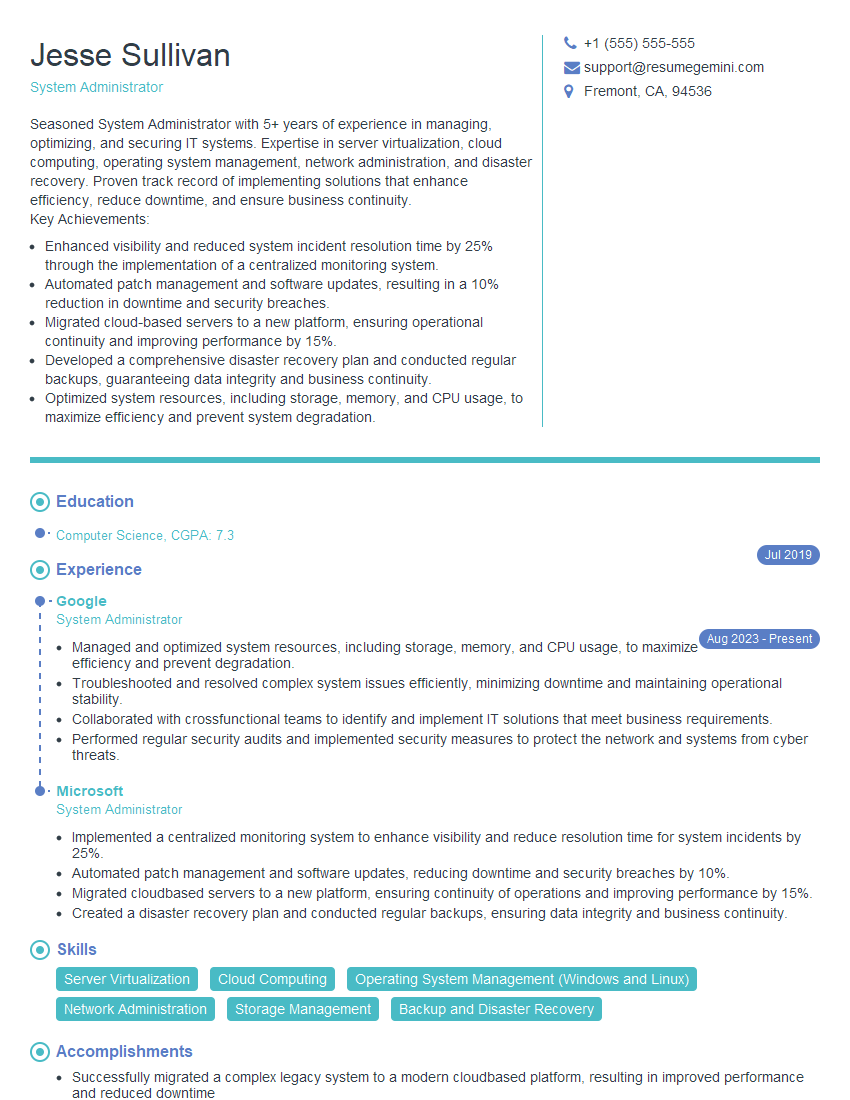
System Administrator Resume Sample
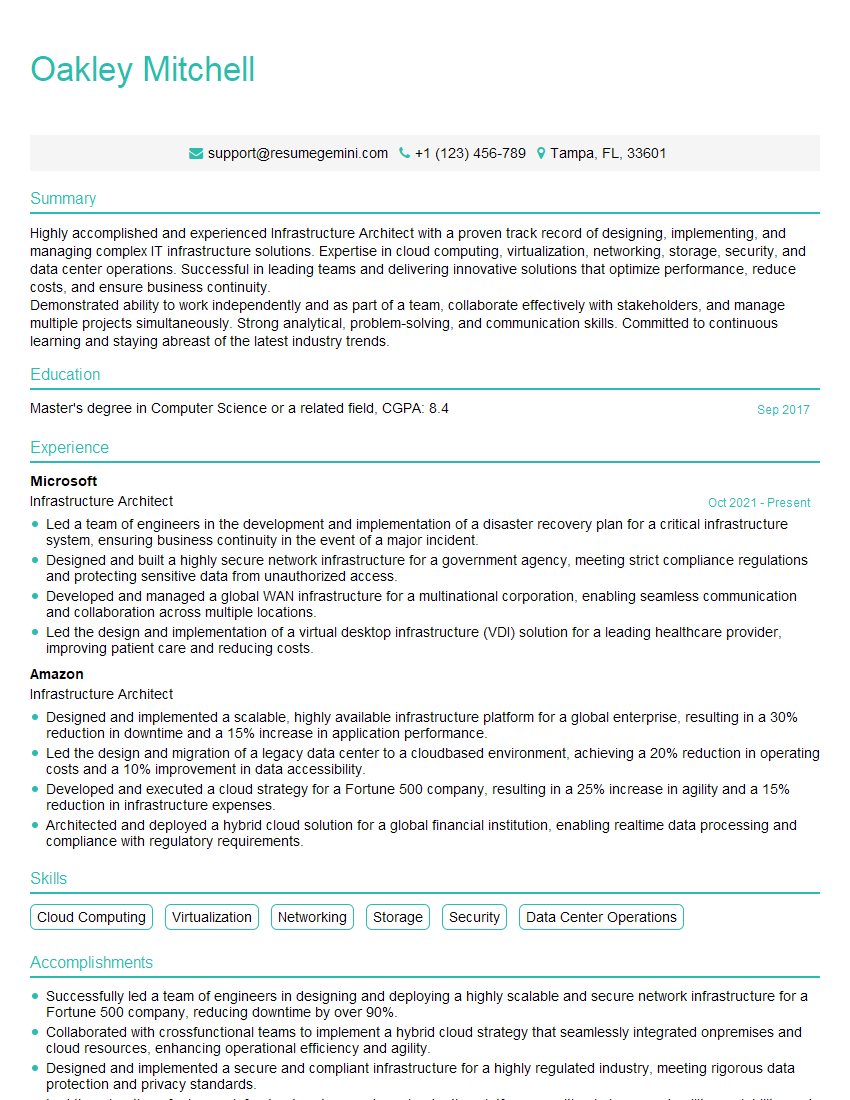
Infrastructure Architect Resume Sample
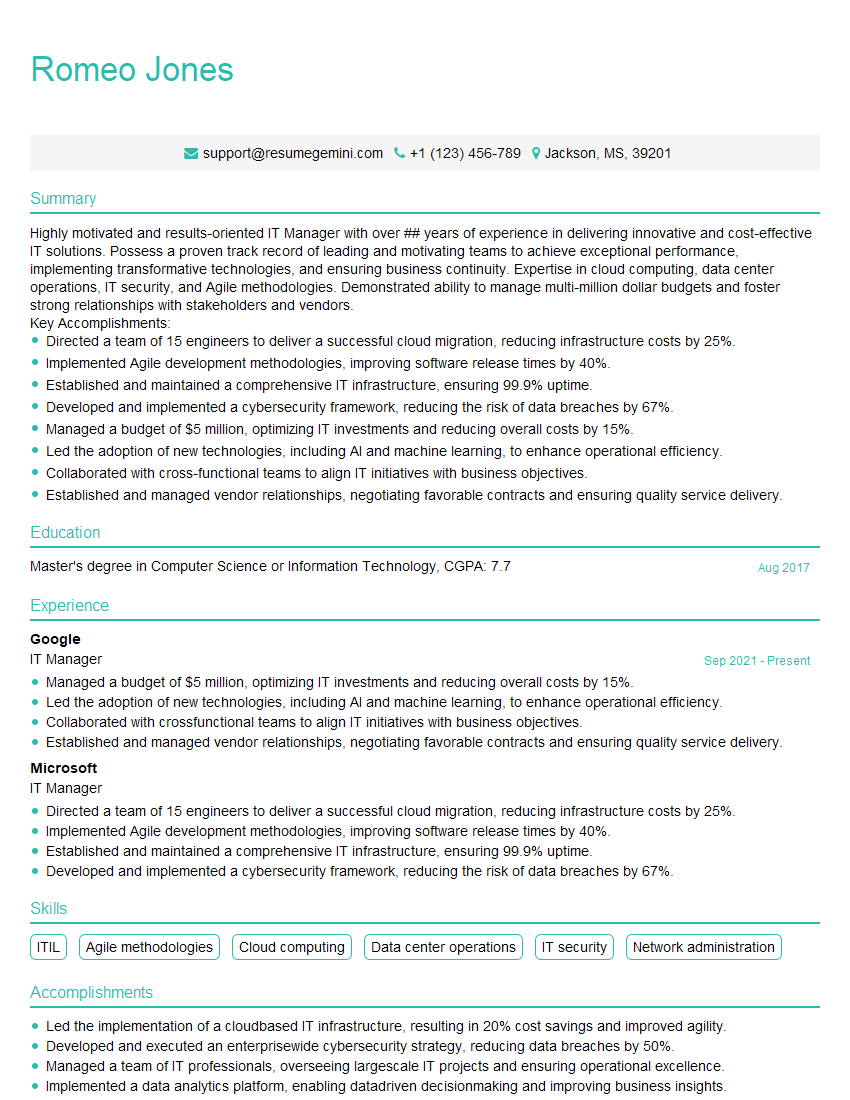
IT Manager Resume Sample
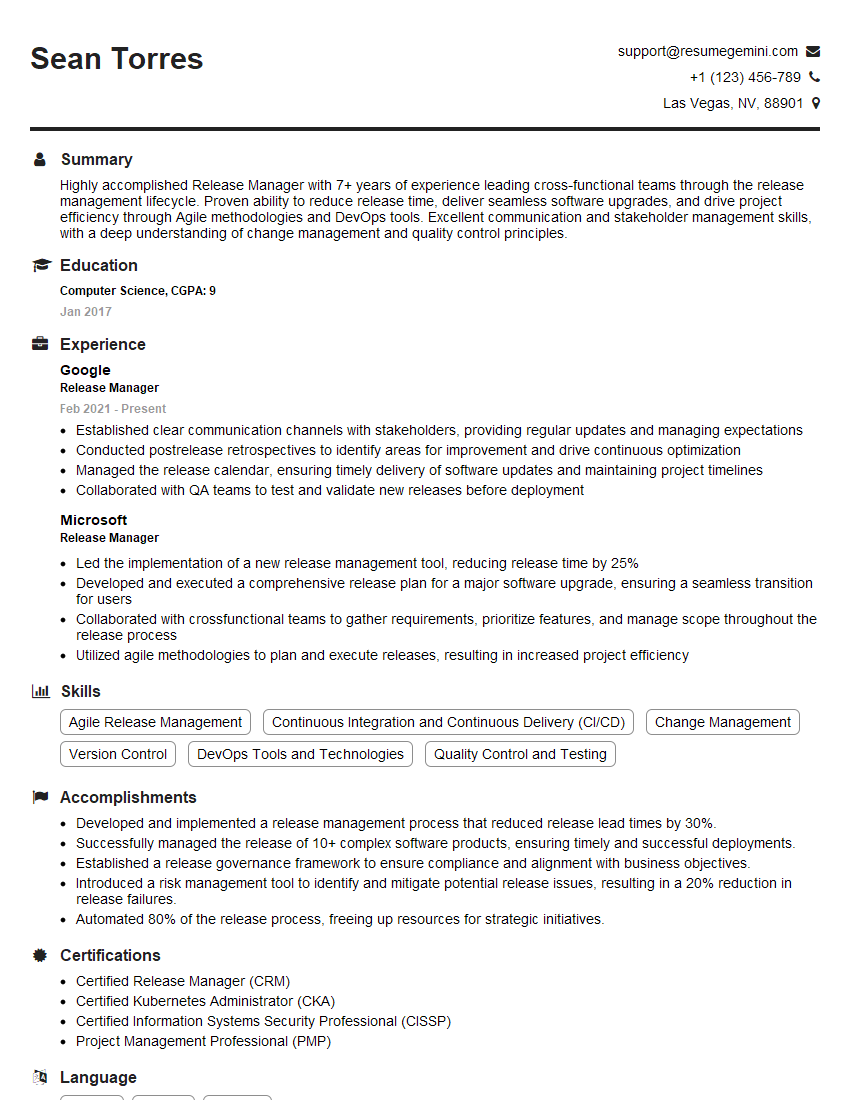
Release Manager Resume Sample
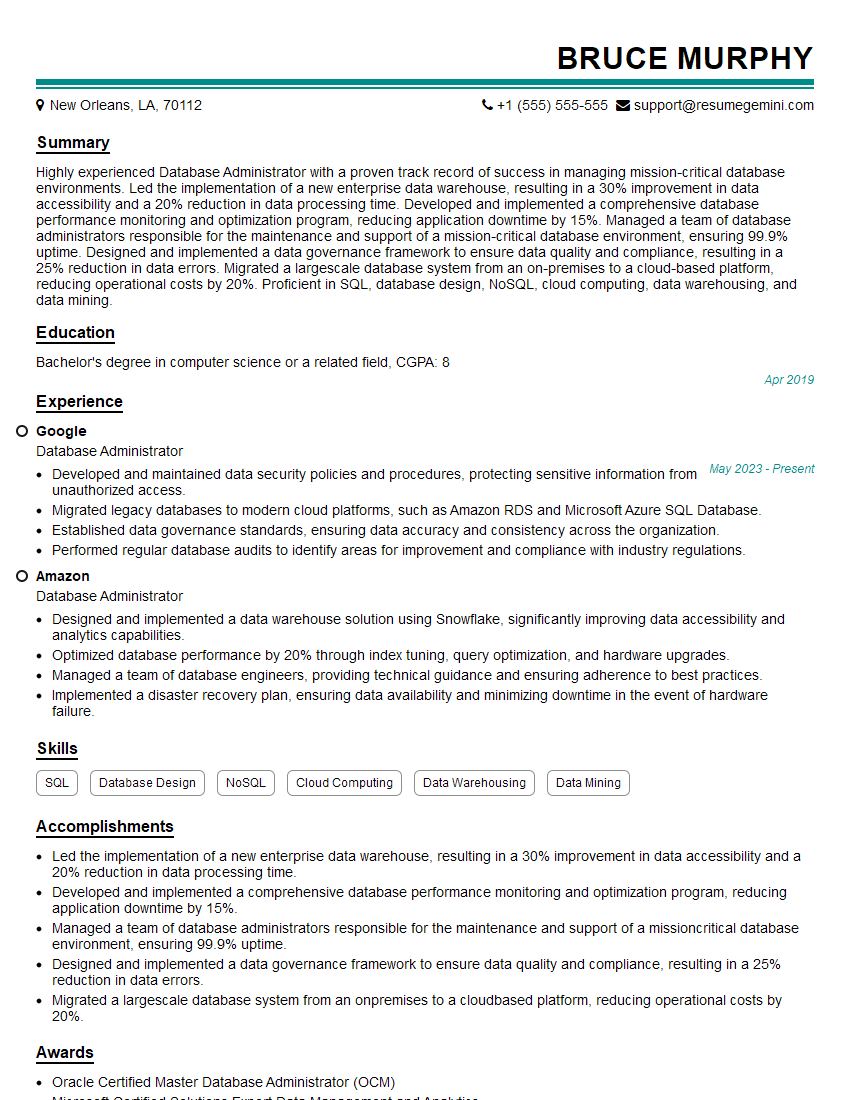
Database Administrator Resume Sample
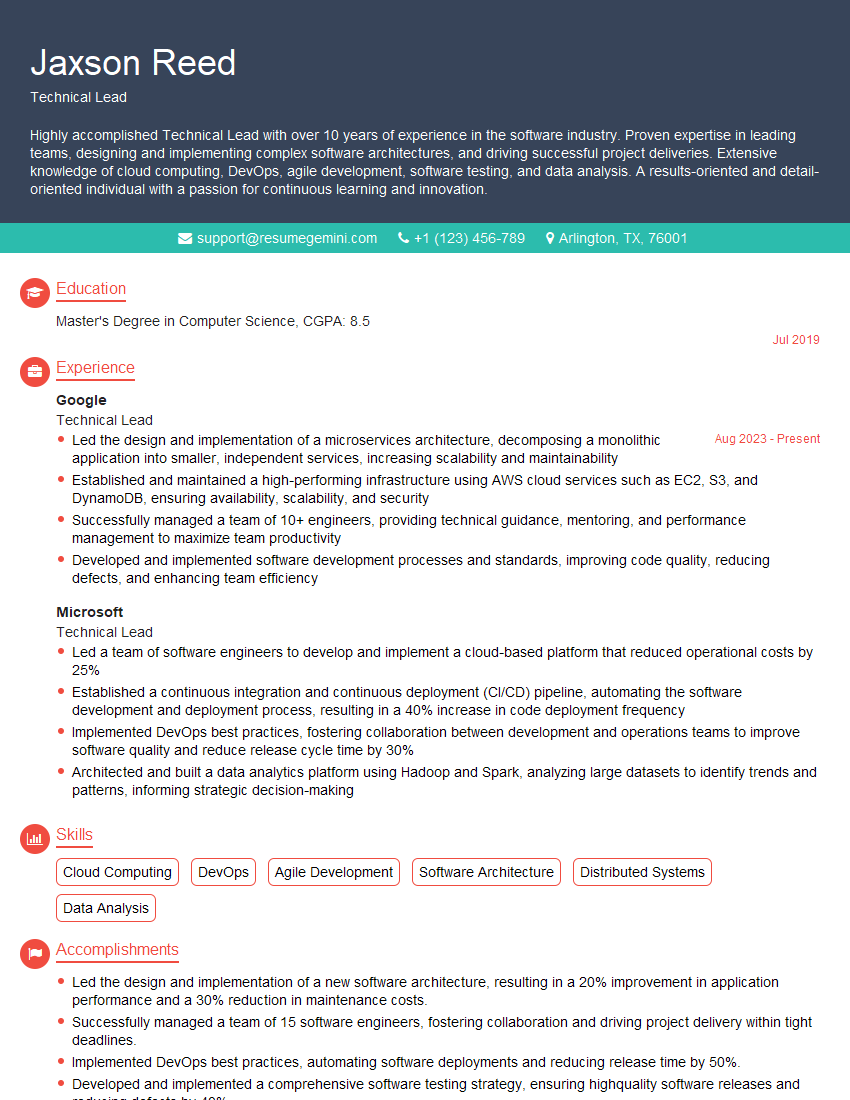
Technical Lead Resume Sample
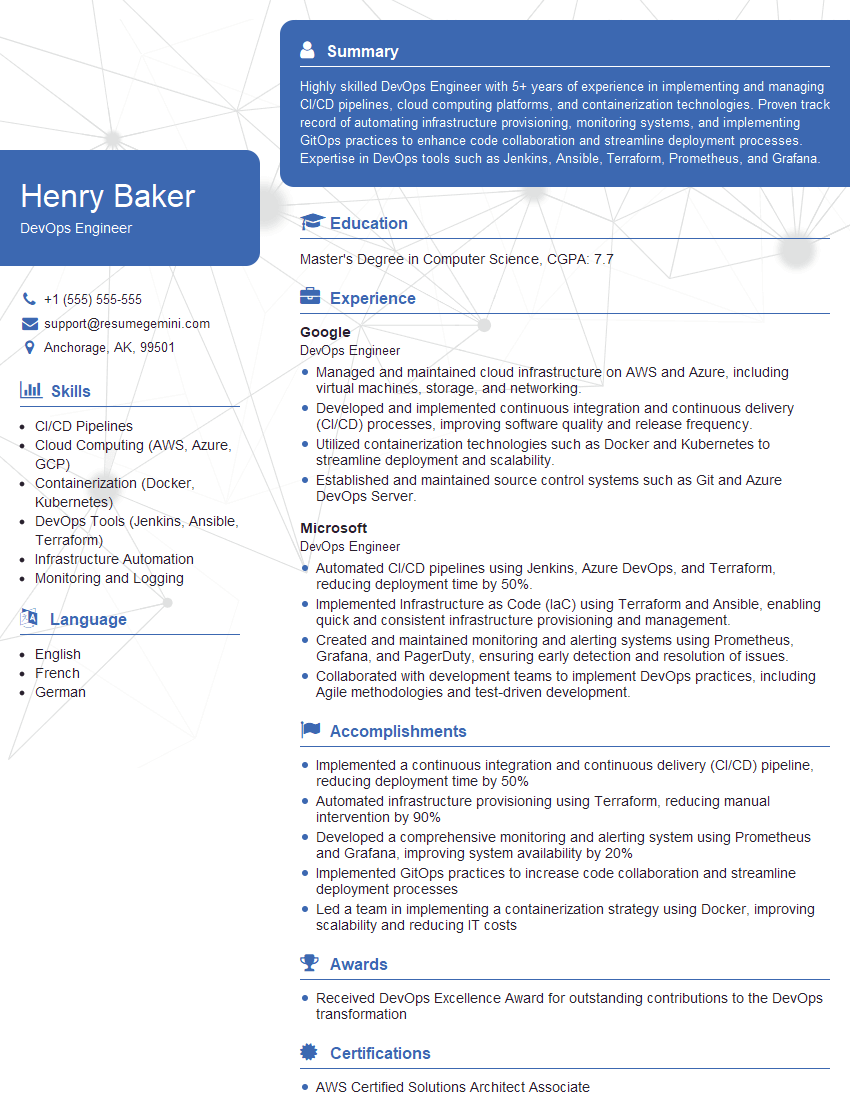
DevOps Engineer Resume Sample
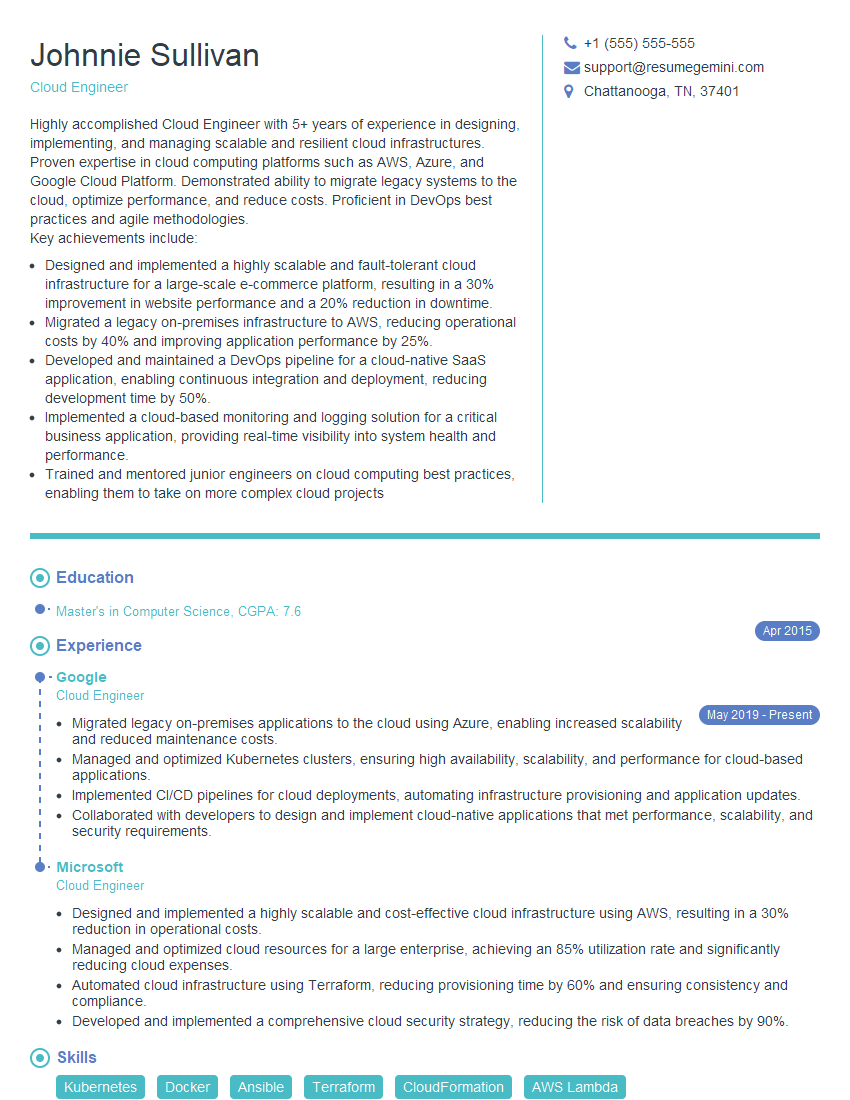
Cloud Engineer Resume Sample
Explore more articles
Users Rating of Our Blogs
Share Your Experience
We value your feedback! Please rate our content and share your thoughts (optional).
What Readers Say About Our Blog
Very informative content, great job.
good