Unlock your full potential by mastering the most common Innovation and Technology Development interview questions. This blog offers a deep dive into the critical topics, ensuring you’re not only prepared to answer but to excel. With these insights, you’ll approach your interview with clarity and confidence.
Questions Asked in Innovation and Technology Development Interview
Q 1. Describe your experience in identifying and evaluating emerging technologies.
Identifying and evaluating emerging technologies requires a multi-faceted approach combining technological understanding, market analysis, and foresight. I begin by actively monitoring industry trends through publications like MIT Technology Review, Gartner Hype Cycles, and specialized journals. I also attend industry conferences and webinars, networking with experts and innovators. Crucially, I utilize patent databases and research papers to understand the technological landscape and identify nascent innovations.
Evaluation involves a structured process. First, I assess the technology’s maturity level, considering its readiness for commercialization using metrics like Technology Readiness Levels (TRL). Then, I conduct a thorough market analysis to determine potential applications and the size of the addressable market. This includes competitive analysis to understand the existing landscape and potential disruptive capabilities. Finally, I assess the technology’s viability considering factors like cost, scalability, and regulatory hurdles. For example, when evaluating blockchain technology several years ago, I considered its potential applications beyond cryptocurrency, such as supply chain management and secure data storage, while also acknowledging the challenges related to scalability and regulatory uncertainty.
Q 2. Explain your approach to fostering a culture of innovation within a team.
Fostering a culture of innovation isn’t about dictating ideas; it’s about creating an environment where they can flourish. My approach is built on three pillars: empowerment, collaboration, and experimentation.
- Empowerment: I encourage risk-taking and celebrate failures as learning opportunities. This means providing team members with the autonomy to pursue their ideas and the resources to experiment. I actively listen to their suggestions and provide constructive feedback, fostering a safe space to share unconventional thoughts.
- Collaboration: I facilitate cross-functional collaboration, bringing together individuals with diverse skills and perspectives to brainstorm and solve problems collectively. This often involves employing techniques like design thinking workshops and hackathons to generate and refine ideas collaboratively.
- Experimentation: I encourage a ‘fail fast, learn fast’ mentality. This means prioritizing quick prototyping and testing of new ideas to validate assumptions and identify potential issues early on. This iterative approach allows us to adapt and refine our strategies based on real-world feedback rather than relying solely on theoretical predictions.
For instance, in a previous role, I introduced ‘Innovation Fridays,’ a dedicated time for team members to work on personal projects or explore emerging technologies, fostering experimentation and learning outside of regular project work.
Q 3. How do you prioritize competing innovation projects with limited resources?
Prioritizing competing innovation projects with limited resources requires a robust framework that combines strategic alignment, risk assessment, and return on investment (ROI) analysis. I typically employ a balanced scorecard approach, considering multiple factors rather than solely focusing on financial metrics.
Firstly, I align projects with the overall strategic goals of the organization. Projects that directly support key strategic objectives naturally receive higher priority. Secondly, I assess the risk profile of each project, considering potential downsides and mitigating factors. High-risk, high-reward projects might be prioritized based on their potential impact if successful. Thirdly, and crucially, I conduct a thorough ROI analysis, estimating the potential financial returns, market impact, and other relevant benefits. This often involves building financial models and market forecasts. Finally, I evaluate the resource requirements of each project, including personnel, budget, and time constraints. Using a weighted scoring system across these criteria, I can rank projects and allocate resources effectively. This ensures that resources are focused on projects with the highest potential for success and alignment with strategic goals.
Q 4. What metrics do you use to measure the success of an innovation initiative?
Measuring the success of an innovation initiative goes beyond simple financial metrics. A comprehensive approach necessitates a balanced set of qualitative and quantitative measures, reflecting different aspects of the innovation process and its impact.
- Quantitative Metrics: These include financial indicators like ROI, revenue generated, cost savings, market share gains, and efficiency improvements. They also include operational metrics like time-to-market, customer acquisition cost, and adoption rates.
- Qualitative Metrics: These capture less tangible aspects of success. They include customer satisfaction (measured through surveys and feedback), employee engagement, brand enhancement, and the development of new capabilities and skills within the organization. Qualitative data can be obtained from interviews, focus groups, and internal reviews.
For instance, when launching a new software product, success wouldn’t just be measured by sales figures, but also by user feedback, app store ratings, and the number of active users over time. This multi-faceted approach provides a more holistic understanding of the innovation’s overall impact.
Q 5. Describe a time you failed in an innovation project. What did you learn?
One notable failure involved a project aiming to develop a novel augmented reality (AR) application for the manufacturing industry. We invested heavily in developing a complex AR system which allowed technicians to access and interact with digital schematics overlaid onto physical equipment. The failure stemmed from a lack of thorough user research and an underestimation of the complexity of integrating the AR system into the existing manufacturing workflow.
The technicians found the system overly complex and cumbersome, hindering rather than improving their efficiency. They preferred simpler, more intuitive solutions. The key learning from this experience was the critical importance of deeply understanding the end-user’s needs and context before embarking on complex development. We should have invested more time in conducting user research, prototyping and iterative testing to ensure the solution genuinely addressed the user’s needs and was easily integrated into the workplace. This project taught me the valuable lesson that technology, no matter how innovative, is ultimately useless if it fails to solve a real user problem effectively.
Q 6. How do you manage risk in technology development projects?
Managing risk in technology development is a proactive and iterative process. My approach involves identifying potential risks early, analyzing their likelihood and impact, and developing strategies to mitigate them.
- Risk Identification: This involves brainstorming potential problems, using techniques like SWOT analysis and risk checklists. This includes technical risks (e.g., technology failure, integration issues), market risks (e.g., competition, changing customer needs), and financial risks (e.g., budget overruns, funding shortages).
- Risk Assessment: Once identified, risks are analyzed based on their probability of occurrence and potential impact. A risk matrix can be used to visually represent this. High-impact, high-probability risks require immediate attention.
- Risk Mitigation: Strategies are developed to mitigate identified risks. This might involve developing contingency plans, investing in robust testing, building buffer times into schedules, securing additional funding, or employing risk transfer mechanisms like insurance.
- Monitoring and Review: Throughout the project lifecycle, risks are continuously monitored and reassessed. This allows for timely adjustments to mitigation strategies as needed.
For instance, in a project involving the development of a new software platform, we identified the risk of unexpected technical challenges. To mitigate this, we implemented a robust testing and quality assurance process, including regular code reviews and automated testing. This helped us identify and fix bugs early on, reducing the risk of delays and cost overruns.
Q 7. Explain your understanding of Agile methodologies in the context of innovation.
Agile methodologies, particularly Scrum and Kanban, are ideally suited for innovation projects due to their iterative and adaptive nature. Traditional waterfall approaches are often too rigid for the uncertainty inherent in innovation.
Agile enables rapid prototyping and iterative development, allowing for quick feedback loops and continuous improvement. Instead of long planning cycles followed by lengthy development phases, Agile emphasizes shorter sprints, delivering working prototypes regularly. This allows for early identification of issues and adjustments to the product or strategy. The emphasis on collaboration and communication inherent in Agile frameworks ensures that the team remains flexible and responsive to changing circumstances. Furthermore, Agile methodologies provide a structured approach to managing risk, incorporating risk mitigation strategies throughout the development process.
For example, in a recent project, we used Scrum to develop a new mobile application. Each sprint involved developing a specific feature, followed by testing and feedback. This iterative approach enabled us to incorporate user feedback quickly and adapt to changing market needs. The result was a more user-friendly and successful application.
Q 8. How do you balance short-term needs with long-term innovation goals?
Balancing short-term needs with long-term innovation goals requires a strategic approach that integrates both perspectives. It’s like navigating a ship – you need to address immediate course corrections (short-term needs) while keeping your eye on the destination (long-term vision). This is achieved through a structured process:
- Prioritization Matrix: A matrix ranking projects based on urgency and strategic alignment. High-urgency, high-strategy projects are prioritized first, followed by those with either high urgency or high strategy. This ensures crucial short-term needs are met while still dedicating resources to long-term goals.
- Phased Approach: Break down long-term projects into smaller, manageable phases with tangible short-term deliverables. This allows for regular evaluation and course correction while demonstrating progress toward the larger goal. For example, the development of a new AI-powered diagnostic tool might be broken into phases: data collection, algorithm development, prototype testing, and finally, full-scale deployment. Each phase delivers a short-term achievement.
- Resource Allocation: Strategically allocate resources (budget, personnel, time) to balance short-term and long-term initiatives. This might involve a tiered system where a larger percentage of resources is allocated to short-term, critical projects, while a smaller but consistent portion is dedicated to long-term innovation.
- Metrics and KPIs: Establish clear Key Performance Indicators (KPIs) for both short-term and long-term goals to track progress and make data-driven decisions. This helps demonstrate the value of long-term investments even when short-term results might not be immediately apparent.
In practice, this often involves actively communicating the long-term vision to stakeholders and highlighting how short-term successes contribute to the overall strategic goals. For example, investing in a new software platform might seem expensive in the short-term but could drastically improve efficiency and reduce costs in the long run, justifying the upfront investment.
Q 9. What is your experience with intellectual property protection?
My experience with intellectual property (IP) protection spans over a decade, encompassing patent applications, trademark registrations, and copyright management. I’ve worked directly with legal counsel to secure IP rights for several innovative technologies. This includes:
- Patent Prosecution: I’ve actively participated in drafting patent applications, collaborating with patent attorneys to ensure claims are comprehensive and defensible. I understand the importance of meticulous documentation and claim drafting to protect the novelty and inventive aspects of an invention.
- Trademark Registration: I’ve helped establish and protect brand identities through trademark registrations, ensuring consistent brand representation and preventing infringement.
- Copyright Management: I’ve implemented copyright protection measures for software code, designs, and other intellectual outputs, ensuring compliance and safeguarding company assets.
- IP Audits & Portfolio Management: I have experience conducting IP audits to identify and assess the value of existing IP assets, contributing to a robust IP strategy.
A successful example involved securing a patent for a novel algorithm used in predictive maintenance software. This patent granted us a significant competitive advantage and generated substantial licensing revenue. The key is to proactively identify patentable inventions early in the development process and work closely with legal experts to ensure robust protection.
Q 10. How do you stay current with technological advancements in your field?
Staying current with technological advancements is crucial in my field. I utilize a multi-pronged approach:
- Industry Publications & Journals: I regularly read peer-reviewed journals and industry publications, such as Nature, Science, and specialized publications in AI, robotics, and materials science. This keeps me informed about groundbreaking research and new technological discoveries.
- Conferences & Workshops: I actively participate in industry conferences and workshops, presenting my work and engaging with other experts. This allows me to network and learn about the latest developments from leading researchers and practitioners.
- Online Courses & Webinars: Platforms like Coursera, edX, and various industry-specific online learning platforms provide access to high-quality educational resources and keep me abreast of emerging technologies.
- Networking & Collaboration: I maintain a strong network of contacts within the industry through professional organizations and collaborations. Discussing ideas and challenges with peers allows me to stay informed about cutting-edge developments and gain different perspectives.
- Patent Databases: Regularly reviewing patent databases (like Google Patents) helps understand the current technological landscape and emerging trends.
By combining these methods, I build a comprehensive understanding of the latest advancements in my field and identify opportunities to leverage these technologies for innovation.
Q 11. Describe your experience with design thinking methodologies.
Design thinking is an iterative problem-solving methodology that prioritizes user needs. My experience involves applying its five stages – Empathize, Define, Ideate, Prototype, and Test – in various innovation projects.
- Empathize: This involves deep user research to understand their needs, pain points, and motivations. Techniques such as user interviews, ethnographic studies, and persona development are employed.
- Define: Based on the user research, a clear and concise problem statement is formulated. This stage focuses on defining the core problem to be addressed.
- Ideate: This stage focuses on generating a wide range of potential solutions. Brainstorming, mind mapping, and sketching are commonly used techniques.
- Prototype: Low-fidelity prototypes are created to test and refine ideas early on, before significant resources are invested. This allows for quick iterations and feedback incorporation.
- Test: The prototypes are tested with users to gather feedback and identify areas for improvement. This iterative testing process leads to refinement and optimization of the solution.
For example, in developing a new medical device, we used design thinking to ensure the device was user-friendly and met the specific needs of both medical professionals and patients. The iterative testing process, incorporating feedback from both groups, resulted in a significantly improved device design.
Q 12. How do you measure the ROI of an innovation project?
Measuring the ROI of an innovation project isn’t always straightforward, as it often involves intangible benefits and long-term impacts. A comprehensive approach requires considering both tangible and intangible factors:
- Tangible ROI: This includes quantifiable metrics such as increased revenue, cost savings, improved efficiency, and market share gains. For example, the ROI of a new manufacturing process might be calculated by comparing the cost reduction per unit to the initial investment in new equipment.
- Intangible ROI: This encompasses benefits that are harder to quantify, such as enhanced brand reputation, improved customer satisfaction, increased employee morale, and competitive advantage. These can be assessed through surveys, focus groups, and market research.
- Time Horizon: Consider the time frame for realizing the ROI. Some innovation projects deliver quick returns, while others require longer-term investments. The evaluation period must be aligned with the expected payback period.
- Qualitative Assessment: Complement quantitative data with qualitative assessments to gain a holistic understanding of the project’s success. This might include feedback from stakeholders, customer reviews, and internal evaluations.
A balanced scorecard approach is often useful, incorporating both financial and non-financial metrics to provide a comprehensive evaluation. It’s important to establish clear metrics upfront and track progress throughout the project lifecycle to accurately assess the final ROI.
Q 13. Explain your understanding of the technology development lifecycle.
The technology development lifecycle (TDLC) is a systematic process for developing and launching new technologies. It typically involves several phases:
- Idea Generation & Concept Development: This initial phase involves identifying potential technological solutions, conducting feasibility studies, and refining the core concept.
- Research & Development (R&D): This phase involves detailed research, experimentation, and prototyping to develop a functional prototype. This often requires significant investment in resources and expertise.
- Design & Engineering: Once a viable prototype is developed, it undergoes detailed design and engineering to optimize performance, reliability, and manufacturability.
- Testing & Validation: Rigorous testing and validation are conducted to ensure the technology meets performance requirements and quality standards.
- Manufacturing & Production: This stage involves setting up manufacturing processes to produce the technology at scale.
- Launch & Commercialization: The technology is launched into the market, and marketing and sales efforts are employed to drive adoption.
- Maintenance & Support: Ongoing maintenance, support, and upgrades are provided to ensure the technology continues to function effectively and meet evolving customer needs.
Effective management of the TDLC requires a well-defined plan, clear communication, and robust risk management. Deviations from the plan should be managed proactively, and regular reviews should be conducted to track progress and identify potential issues.
Q 14. How do you effectively communicate complex technical concepts to non-technical audiences?
Communicating complex technical concepts to non-technical audiences requires simplifying the message without sacrificing accuracy. I utilize several strategies:
- Analogies & Metaphors: Relating technical concepts to familiar everyday experiences helps non-technical audiences grasp the essence of the technology. For example, explaining cloud computing as a shared utility service similar to electricity or water supply.
- Visual Aids: Using diagrams, charts, and infographics can significantly improve understanding, particularly for complex systems or processes. A picture is often worth a thousand words.
- Storytelling: Framing technical information within a narrative makes it more engaging and memorable. People often connect better with stories than abstract facts.
- Plain Language: Avoid jargon and technical terminology whenever possible. Use clear, concise language and define any necessary technical terms in a simple and understandable way.
- Interactive Demonstrations: Where feasible, interactive demonstrations or hands-on experiences can make the concepts more tangible and easier to understand.
- Active Listening & Feedback: Pay attention to the audience’s response and adjust the explanation based on their understanding. Encourage questions and actively seek feedback.
For instance, when explaining machine learning to a board of directors, I might use an analogy to a child learning to ride a bike – the machine ‘learns’ from data, just like the child learns from experience.
Q 15. Describe your experience working with cross-functional teams.
Throughout my career, I’ve consistently thrived in cross-functional team environments. I find the collaborative nature of these teams incredibly stimulating and believe diverse perspectives are crucial for innovation. My experience spans projects involving engineering, marketing, design, and product management. For example, in a recent project developing a new SaaS platform, I worked closely with engineers to refine technical specifications, ensuring they aligned with the marketing team’s go-to-market strategy and the design team’s user experience vision. This required constant communication, compromise, and a willingness to understand different viewpoints and priorities. We used Agile methodologies, including daily stand-ups and sprint reviews, to foster transparency and alignment. This collaborative approach not only streamlined development but also resulted in a product that was both technically robust and highly marketable.
Another instance involved a project where the initial design lacked scalability. By actively listening to the engineers’ concerns and engaging in constructive dialogue, we were able to adapt the design before significant development resources were committed, saving both time and money. This highlights the importance of actively seeking input from all team members, valuing their expertise, and using that collective intelligence to build a superior product.
Career Expert Tips:
- Ace those interviews! Prepare effectively by reviewing the Top 50 Most Common Interview Questions on ResumeGemini.
- Navigate your job search with confidence! Explore a wide range of Career Tips on ResumeGemini. Learn about common challenges and recommendations to overcome them.
- Craft the perfect resume! Master the Art of Resume Writing with ResumeGemini’s guide. Showcase your unique qualifications and achievements effectively.
- Don’t miss out on holiday savings! Build your dream resume with ResumeGemini’s ATS optimized templates.
Q 16. How do you handle conflicting priorities and competing deadlines?
Conflicting priorities and competing deadlines are inevitable in fast-paced innovation environments. My approach involves a structured prioritization framework. First, I clearly define project objectives and map out key milestones. Then, I employ a method similar to Eisenhower’s Urgent/Important matrix to categorize tasks. This helps to focus on high-impact activities first. For example, ‘critical’ tasks with imminent deadlines get immediate attention, while less urgent but strategically important tasks are scheduled accordingly.
I also champion proactive communication. When faced with conflicts, I initiate transparent discussions with stakeholders to clarify expectations and potential trade-offs. This might involve adjusting timelines, re-allocating resources, or even re-evaluating project scope if necessary. In one project, we were faced with a tight deadline and a newly discovered critical bug. By clearly explaining the impact of the bug to stakeholders, I secured additional resources and a slight extension to the deadline. This prevented a potential product failure and demonstrated the value of open and timely communication.
Q 17. How do you identify and address potential technical challenges early in a project?
Identifying and addressing potential technical challenges early is vital for successful project delivery. My strategy involves incorporating a robust risk assessment process at the outset of each project. This includes thorough requirements gathering, technical feasibility studies, and prototyping. I utilize tools like Failure Mode and Effects Analysis (FMEA) to systematically identify potential risks and their impact.
For example, before initiating a complex software development project, we conducted a thorough technology assessment, identifying potential compatibility issues and resource limitations. This allowed us to proactively address these challenges, making informed decisions about technology selection and resource allocation. Early prototyping helps validate assumptions and identify potential issues before they become major problems. This iterative process avoids costly rework and ensures we’re building a robust and reliable solution.
Q 18. What is your experience with various technology platforms and tools?
My experience spans a wide range of technology platforms and tools. I’m proficient in various programming languages (including Python, Java, and C++), software development methodologies (Agile, Waterfall), cloud computing platforms (AWS, Azure, GCP), and data analysis tools (SQL, Tableau). My experience also extends to project management software such as Jira and Asana, as well as collaborative platforms like Slack and Microsoft Teams. I’m also comfortable working with various databases, both relational and NoSQL. I’m always keen to learn and adapt to new technologies, staying updated on industry trends and best practices.
In my previous role, I led the migration of a legacy system to a cloud-based architecture. This involved learning new technologies and tools, collaborating with engineers, and ensuring a smooth transition with minimal disruption. This project required strong technical expertise and the ability to quickly adapt to new systems, demonstrating my commitment to continuous learning and development.
Q 19. Describe your experience with market research and competitive analysis.
Market research and competitive analysis are integral to successful innovation. I’ve extensive experience conducting both qualitative and quantitative market research using various methodologies. This includes surveying, focus groups, competitor analysis, and trend analysis. For example, before launching a new product, I conducted thorough market research to identify target customer segments, understand their needs, and assess the competitive landscape. This involved analyzing competitor offerings, pricing strategies, and marketing campaigns to identify opportunities and potential challenges.
Data analysis plays a key role in this process. I use tools like Tableau to visualize market trends and competitor performance. I also utilize various online resources and databases to collect and analyze market data. This comprehensive approach ensures our products are well-positioned to meet market needs and gain a competitive advantage.
Q 20. How do you build and maintain strong relationships with stakeholders?
Building and maintaining strong stakeholder relationships is essential for project success. I approach this by establishing clear communication channels, regularly providing updates, and actively seeking feedback. I aim to be transparent and honest in my communications, even when delivering difficult news. I also make a conscious effort to understand stakeholders’ needs and concerns, and to tailor my communication style to their preferences.
For example, in a challenging project involving multiple stakeholders with differing priorities, I implemented regular progress reports and one-on-one meetings to ensure everyone was informed and aligned. This proactive approach minimized misunderstandings and fostered a collaborative environment. By actively listening to their feedback, I managed expectations and built trust, which was crucial in navigating challenges and ultimately delivering a successful project.
Q 21. How do you adapt to changing priorities and unexpected events in a project?
Adaptability is paramount in innovation. My approach involves embracing a flexible mindset and utilizing agile project management techniques. This means being prepared to adjust plans, re-prioritize tasks, and even change course if necessary. I see unexpected events not as setbacks, but as opportunities for learning and improvement.
For instance, during one project, a key technology partner unexpectedly withdrew their support. Instead of panicking, we quickly evaluated alternative solutions, renegotiated timelines with stakeholders, and ultimately found a suitable replacement. This required quick thinking, decisive action, and a willingness to adapt our strategy. The experience underscored the value of having contingency plans and the importance of building strong relationships with alternative vendors. Open communication with the team and stakeholders throughout this process ensured everyone remained informed and committed.
Q 22. Describe your experience in developing and implementing a technology strategy.
Developing and implementing a technology strategy involves a multifaceted approach that goes beyond simply choosing the latest technologies. It requires a deep understanding of the organization’s strategic goals, market trends, and technological capabilities. My experience includes conducting thorough market research to identify emerging technologies relevant to our business objectives. This involved analyzing competitor strategies, identifying potential disruptions, and assessing the feasibility of integrating new technologies. I then developed a comprehensive roadmap outlining the phases of implementation, resource allocation, and key performance indicators (KPIs) to track progress. For example, at my previous role, we implemented a cloud-based solution for our data storage, moving away from an outdated on-premise system. This involved careful planning, employee training, and a phased migration to minimize disruption. The strategy also included contingency plans for unexpected issues and detailed cost-benefit analyses to ensure optimal resource utilization.
The success of this strategy hinged on clear communication across departments. We held regular stakeholder meetings to keep everyone informed of the progress, address concerns, and gather feedback. This collaborative approach fostered buy-in and helped smooth the transition. The results were a significant reduction in IT costs, improved data security, and increased operational efficiency.
Q 23. How do you ensure the scalability and sustainability of innovation initiatives?
Ensuring scalability and sustainability of innovation initiatives requires a proactive and holistic approach. Scalability refers to the ability of the innovation to adapt and grow as the demand increases, while sustainability focuses on its long-term viability and impact. My approach centers on several key strategies:
- Modular Design: Designing solutions with modular components allows for easier scaling and adaptation to changing needs. Think of Lego bricks – you can build different things by combining the same basic elements. Similarly, a modular software application can be easily expanded by adding new features or modules.
- Open Source & Collaboration: Leveraging open-source technologies and encouraging collaboration fosters community support, reduces long-term costs, and facilitates faster development and improvement. It’s like building a house with a team, where each member contributes their expertise to build a stronger foundation.
- Agile Methodology: Adopting an Agile development process allows for iterative development, flexibility, and quick response to changing requirements and feedback. It avoids the risks of a large, inflexible system designed in isolation.
- Sustainable Resource Management: This includes considering the environmental impact of the innovation and ensuring the efficient use of resources (energy, materials, etc.). It’s about building a long-lasting and responsible product or service.
- Continuous Monitoring and Evaluation: Regularly monitoring key metrics and evaluating the performance of the innovation allows for timely adjustments and prevents potential issues from escalating.
For instance, in a previous project, we developed a mobile application using a scalable cloud-based architecture. This allowed us to handle a substantial increase in user base without significant performance degradation. We also implemented regular performance testing and monitoring, allowing for proactive adjustments and preventative maintenance, thereby ensuring long-term sustainability.
Q 24. Explain your experience with data analysis and its role in decision-making.
Data analysis plays a crucial role in informed decision-making. My experience involves using various analytical techniques to extract insights from data, and use those insights to guide strategic decisions. This includes using descriptive statistics (mean, median, mode) to understand the basic characteristics of the data, inferential statistics (hypothesis testing, regression analysis) to make predictions or test hypotheses, and predictive modeling (machine learning algorithms) to forecast future trends.
I’m proficient in using tools like SQL, Python (with libraries like Pandas and Scikit-learn), and visualization tools such as Tableau and Power BI. For example, in a previous project, we analyzed user engagement data to identify patterns in user behavior. This analysis helped us optimize our product features, improve user experience, and ultimately, increase customer satisfaction and retention. We identified specific user segments and tailored marketing campaigns accordingly, leading to a significant improvement in conversion rates. The process involved collecting the data, cleaning it, analyzing it using statistical techniques, and then creating visualizations to communicate the findings effectively to stakeholders.
Q 25. How do you promote collaboration and knowledge sharing within a team?
Promoting collaboration and knowledge sharing is essential for fostering a culture of innovation. My strategies include:
- Regular Team Meetings: Structured meetings dedicated to brainstorming, knowledge sharing, and problem-solving. This includes informal ‘knowledge cafes’ where team members can share insights casually.
- Cross-functional Teams: Creating teams with members from different departments encourages diverse perspectives and expertise, leading to more creative solutions.
- Knowledge Management Systems: Implementing systems for documenting, storing, and sharing knowledge (e.g., internal wikis, shared repositories). This ensures that knowledge is not siloed within individuals but is accessible to the entire team.
- Mentorship Programs: Pairing experienced team members with newer ones to facilitate knowledge transfer and skill development.
- Open Communication Channels: Fostering an environment where team members feel comfortable sharing ideas, asking questions, and providing feedback.
In one project, we used a collaborative platform to track project progress, share documents, and facilitate discussions among geographically dispersed team members. This improved transparency, facilitated knowledge sharing, and accelerated the project timeline.
Q 26. Describe your experience in leading and motivating a team towards innovation.
Leading and motivating a team towards innovation requires a blend of leadership styles and strategies. I focus on creating a supportive and empowering environment where team members feel valued, respected, and encouraged to take risks. This includes:
- Setting a Vision: Clearly articulating the team’s goals and the impact of their work. This provides direction and purpose, motivating the team to work towards a shared objective.
- Empowering Team Members: Delegating responsibilities, providing autonomy, and trusting team members to make decisions. This fosters ownership and increases engagement.
- Providing Feedback and Recognition: Regularly providing constructive feedback and acknowledging achievements boosts morale and encourages continuous improvement.
- Promoting a Culture of Learning: Encouraging continuous learning, experimentation, and embracing failure as a learning opportunity. This fosters a growth mindset within the team.
- Celebrating Successes: Acknowledging and celebrating successes, both big and small, builds team spirit and reinforces positive behaviors.
In a past project, I led a team that was initially hesitant to adopt a new technology. By actively listening to their concerns, addressing them with clear communication and demonstrating the benefits of the new technology, and providing ample training and support, I was able to build trust and secure their buy-in. The result was a successful implementation that exceeded expectations.
Q 27. What are your strategies for overcoming resistance to change?
Overcoming resistance to change requires a thoughtful and empathetic approach. It’s crucial to understand the root causes of resistance, which can range from fear of the unknown to concerns about job security or perceived inconvenience. My strategies include:
- Communication & Transparency: Openly communicating the reasons for change, the benefits it will bring, and addressing potential concerns proactively. Transparency builds trust and reduces uncertainty.
- Active Listening & Empathy: Actively listening to and understanding the concerns of individuals and addressing them with empathy. Showing respect for their feelings is critical.
- Participation & Involvement: Involving individuals in the change process, seeking their input and feedback, and making them feel that they are part of the solution. This increases their sense of ownership and reduces resistance.
- Education & Training: Providing thorough training and support to help individuals adapt to the new processes or technologies. This reduces anxiety and increases confidence.
- Gradual Implementation: Implementing changes gradually, allowing time for adjustment and minimizing disruption. This allows individuals to adapt at a comfortable pace.
For example, when implementing a new project management software, I started with a pilot program involving a small group of users. This allowed us to identify and address any issues before a full-scale rollout, reducing resistance and enhancing acceptance.
Q 28. How do you measure the effectiveness of your innovation team?
Measuring the effectiveness of an innovation team requires a multifaceted approach that goes beyond simple output metrics. Key performance indicators (KPIs) should reflect the team’s contribution to the organization’s overall innovation goals. These can include:
- Number of Innovations Generated: Tracking the number of new ideas, concepts, or products developed by the team. However, it is important to note that quantity is not necessarily indicative of quality.
- Innovation Success Rate: Measuring the percentage of innovations that successfully reach the market or achieve their intended goals.
- Impact on Business Metrics: Measuring the impact of innovations on key business metrics such as revenue, customer satisfaction, or operational efficiency. This demonstrates the tangible value of the team’s work.
- Team Efficiency & Productivity: Measuring the team’s efficiency in terms of time to market, resource utilization, and overall productivity.
- Employee Satisfaction & Engagement: Assessing team member satisfaction, engagement, and morale. A highly motivated and engaged team is likely to be more productive and innovative.
- Patent Applications/Awards: For teams focused on research and development, this metric measures the success rate of research efforts.
A balanced scorecard approach combining qualitative and quantitative metrics is often most effective in capturing a holistic view of the team’s performance. Regular review and adjustment of KPIs are necessary to ensure alignment with evolving organizational priorities.
Key Topics to Learn for Innovation and Technology Development Interview
- Innovation Processes: Understanding methodologies like Design Thinking, Agile, and Lean Startup, including their practical application in developing new technologies and products.
- Technology Trend Analysis: Ability to identify emerging technologies and assess their potential impact on business and society. Practical application includes identifying opportunities for innovation and disruption.
- Intellectual Property & Patents: Understanding the legal aspects of protecting innovations, including patent applications and licensing agreements. Practical application involves strategizing IP protection for new technologies.
- Market Research & Analysis: Ability to identify market needs and opportunities for new technologies. Practical application includes conducting market research and developing business cases for new products or services.
- Project Management & Execution: Understanding project management methodologies (e.g., Waterfall, Scrum) and their application in bringing innovative technologies to market. Practical application involves managing timelines, budgets, and teams effectively.
- Data Analysis & Interpretation: Ability to collect, analyze, and interpret data to inform innovation decisions. Practical application includes using data to identify trends, assess risks, and measure success.
- Strategic Foresight & Future-Proofing: Understanding methodologies for anticipating future trends and developing strategies to adapt and thrive in dynamic technological landscapes. Practical application includes creating long-term technology roadmaps.
- Communication & Collaboration: Effectively communicating technical concepts to both technical and non-technical audiences. Practical application involves presenting project updates, securing funding, and collaborating with cross-functional teams.
Next Steps
Mastering Innovation and Technology Development is crucial for career advancement in today’s rapidly evolving technological landscape. It demonstrates a forward-thinking mindset and the ability to contribute significantly to organizational growth. To maximize your job prospects, focus on creating an ATS-friendly resume that highlights your skills and experience effectively. ResumeGemini is a trusted resource to help you build a professional and impactful resume. We provide examples of resumes tailored to Innovation and Technology Development to guide you through the process, ensuring your qualifications shine.
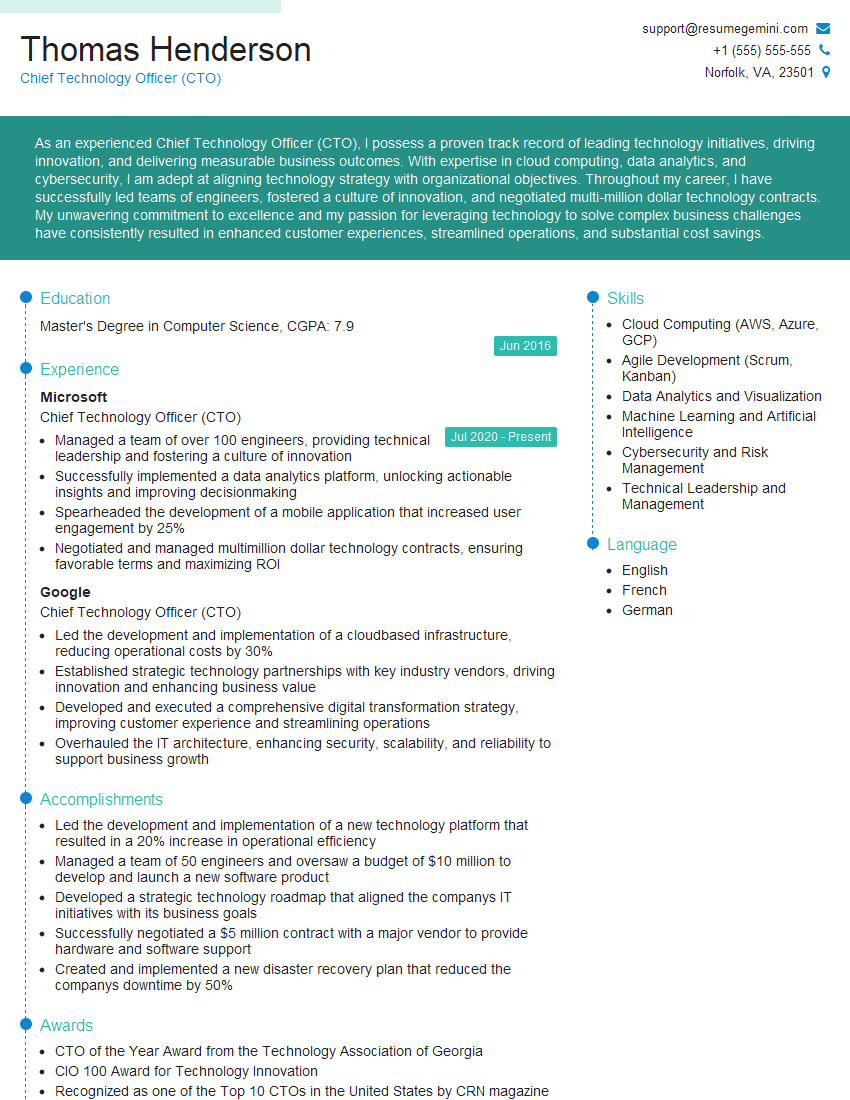
Chief Technology Officer (CTO) Resume Sample
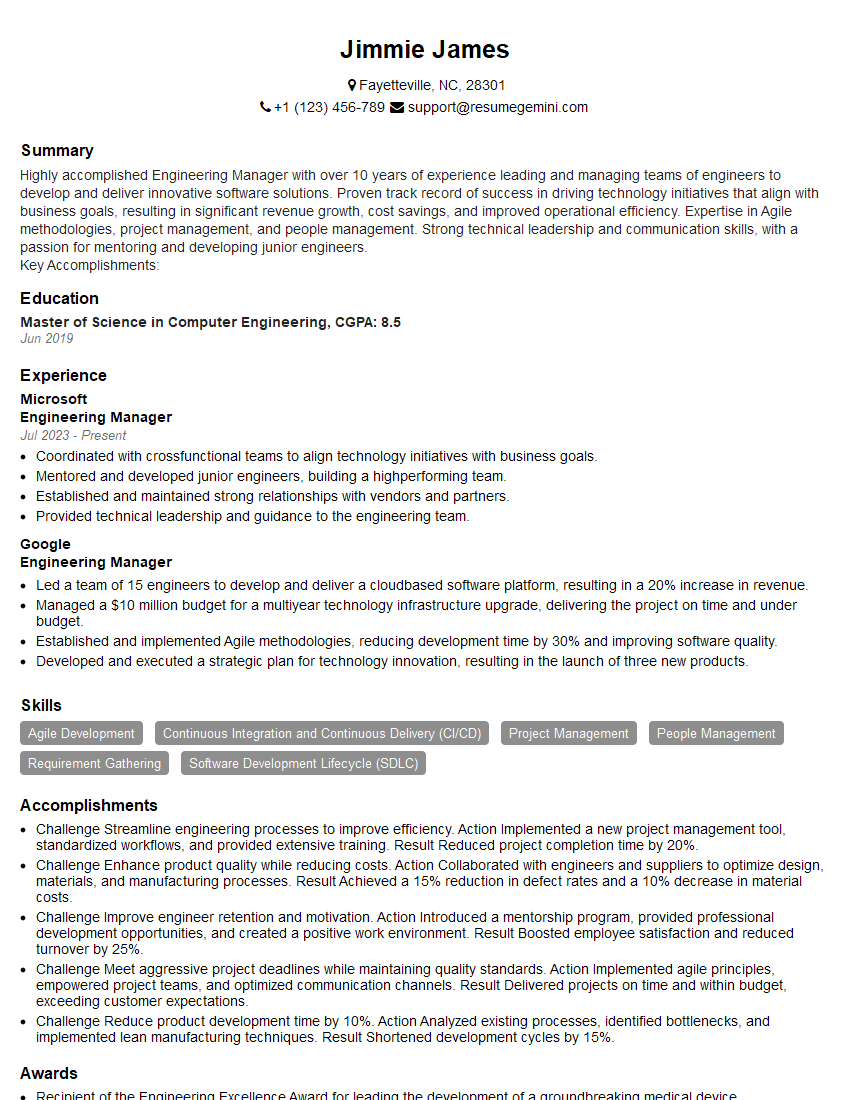
Engineering Manager Resume Sample
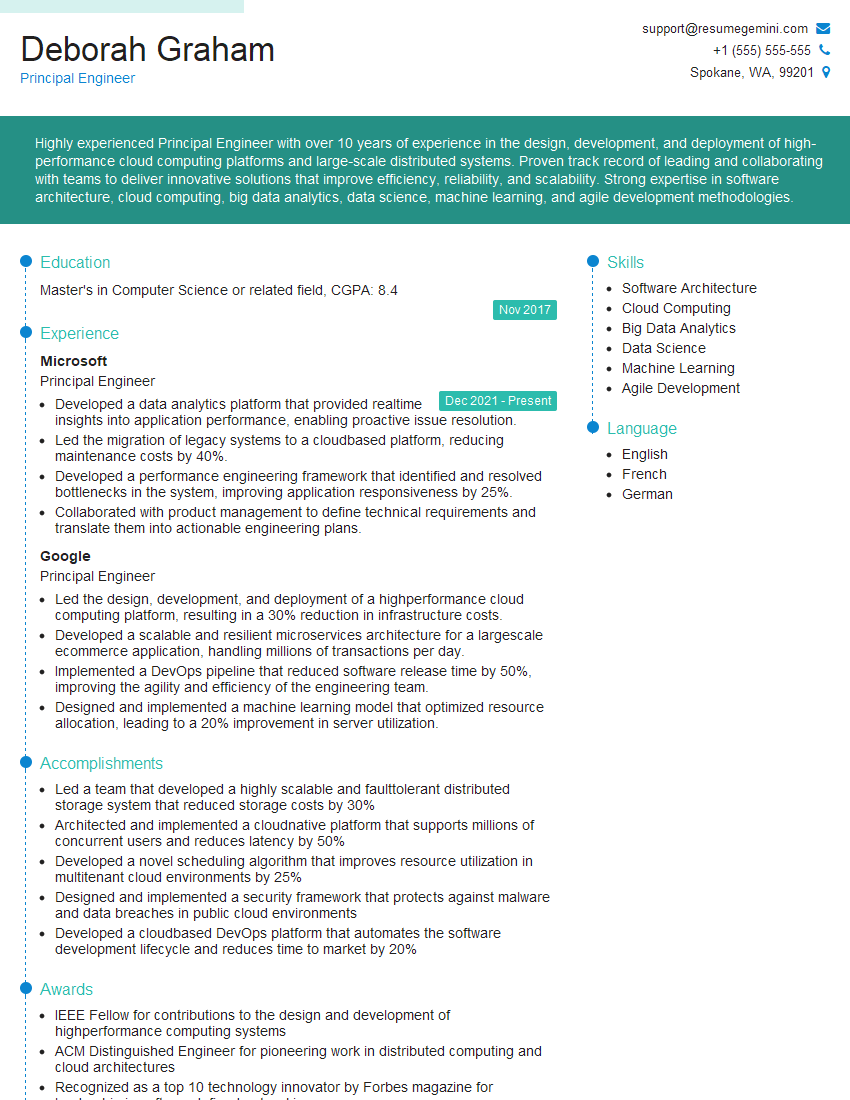
Principal Engineer Resume Sample
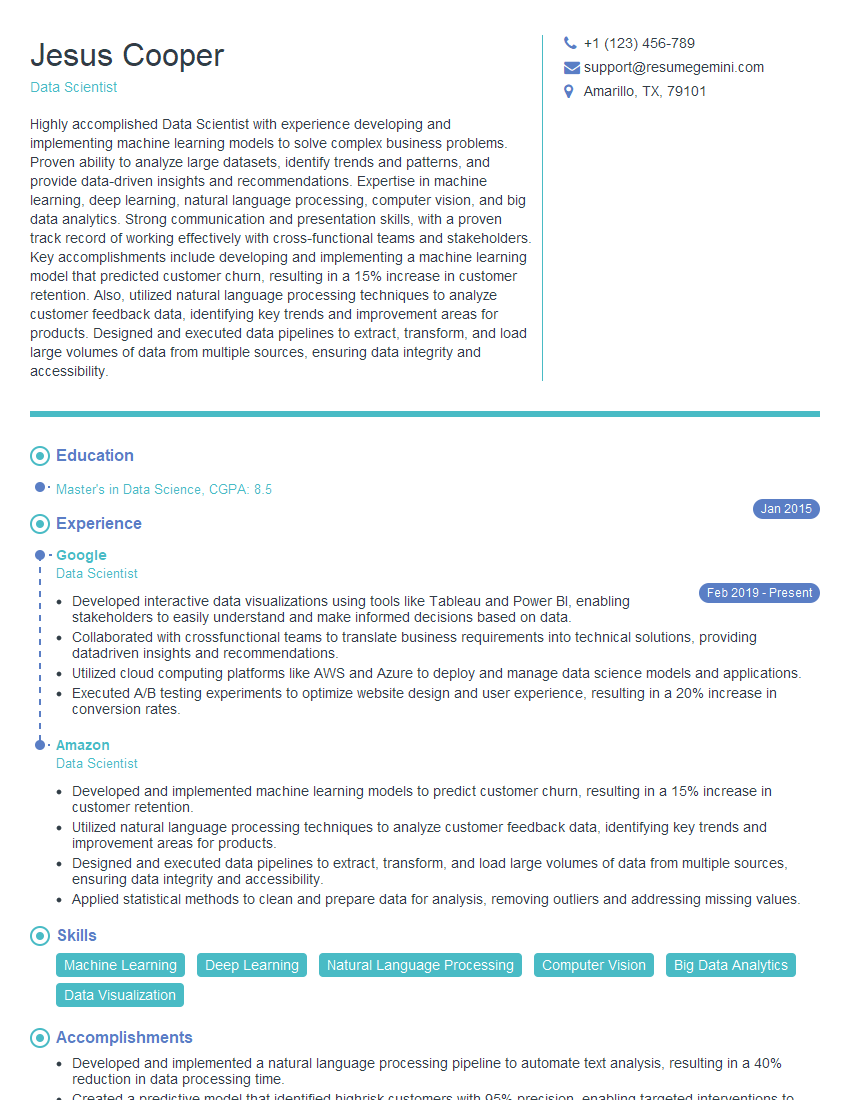
Data Scientist Resume Sample
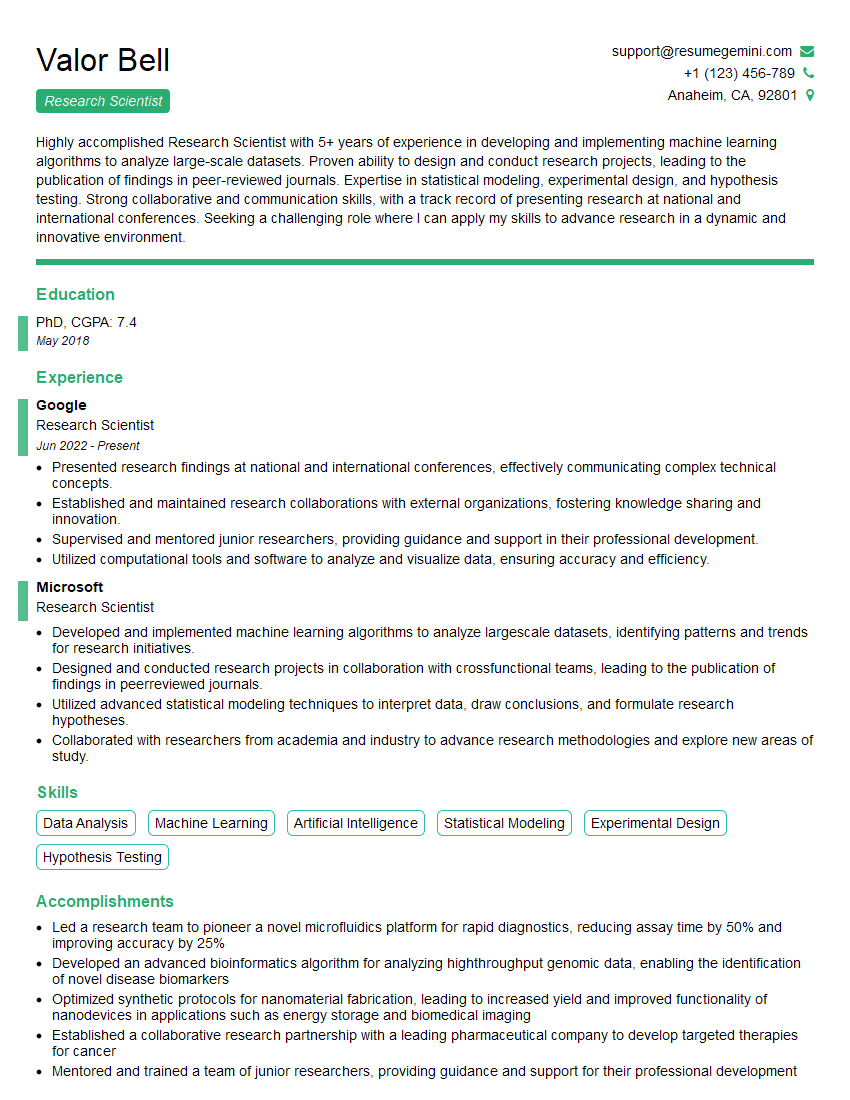
Research Scientist Resume Sample
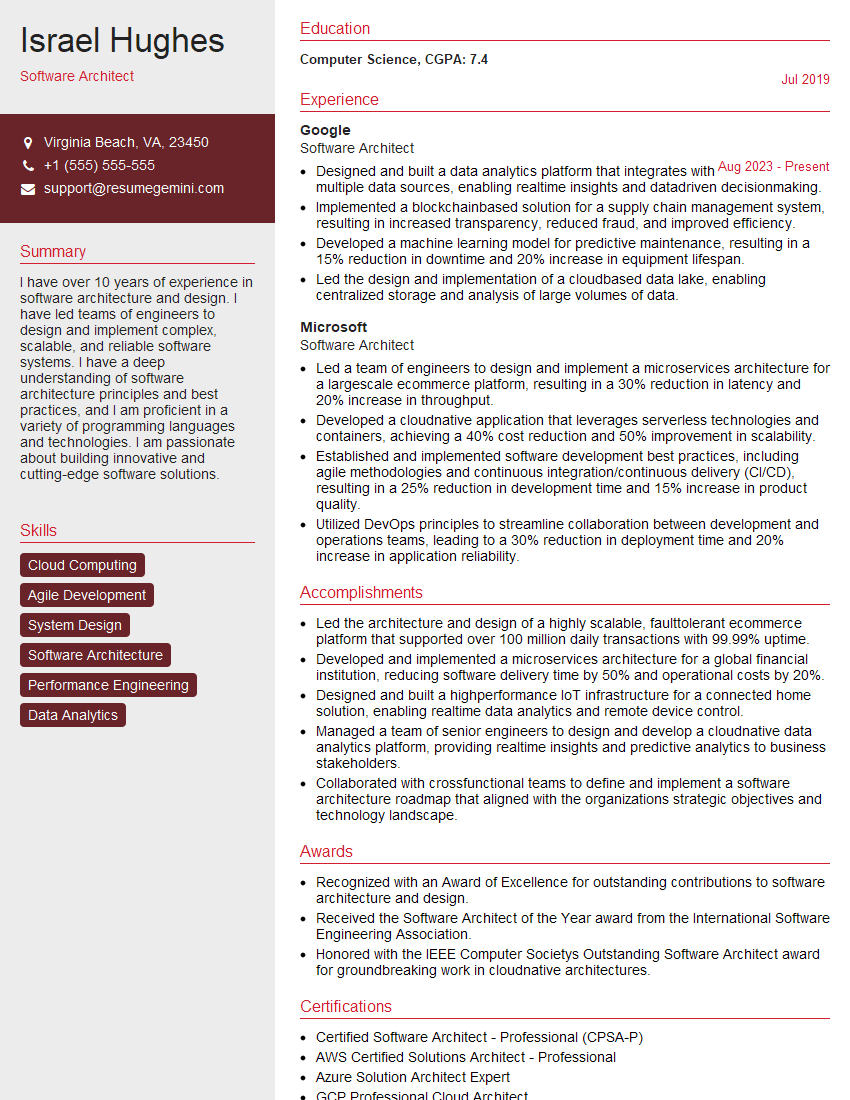
Software Architect Resume Sample
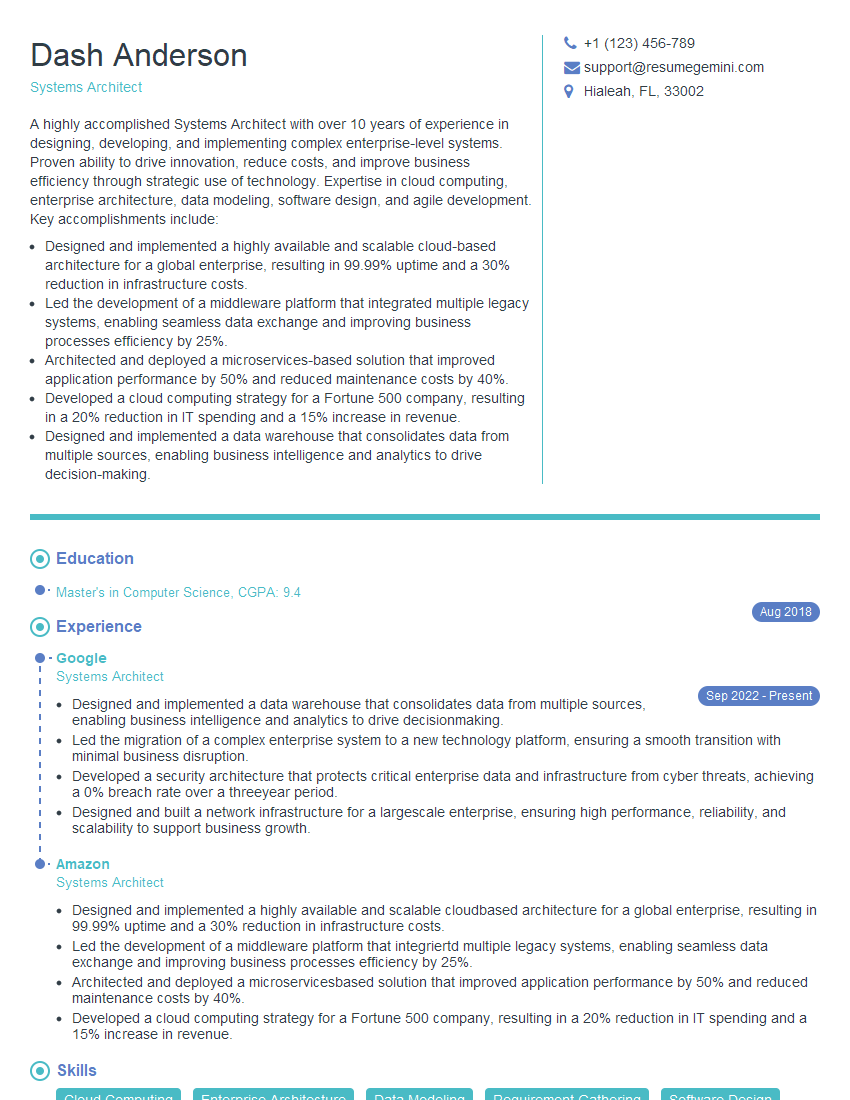
Systems Architect Resume Sample
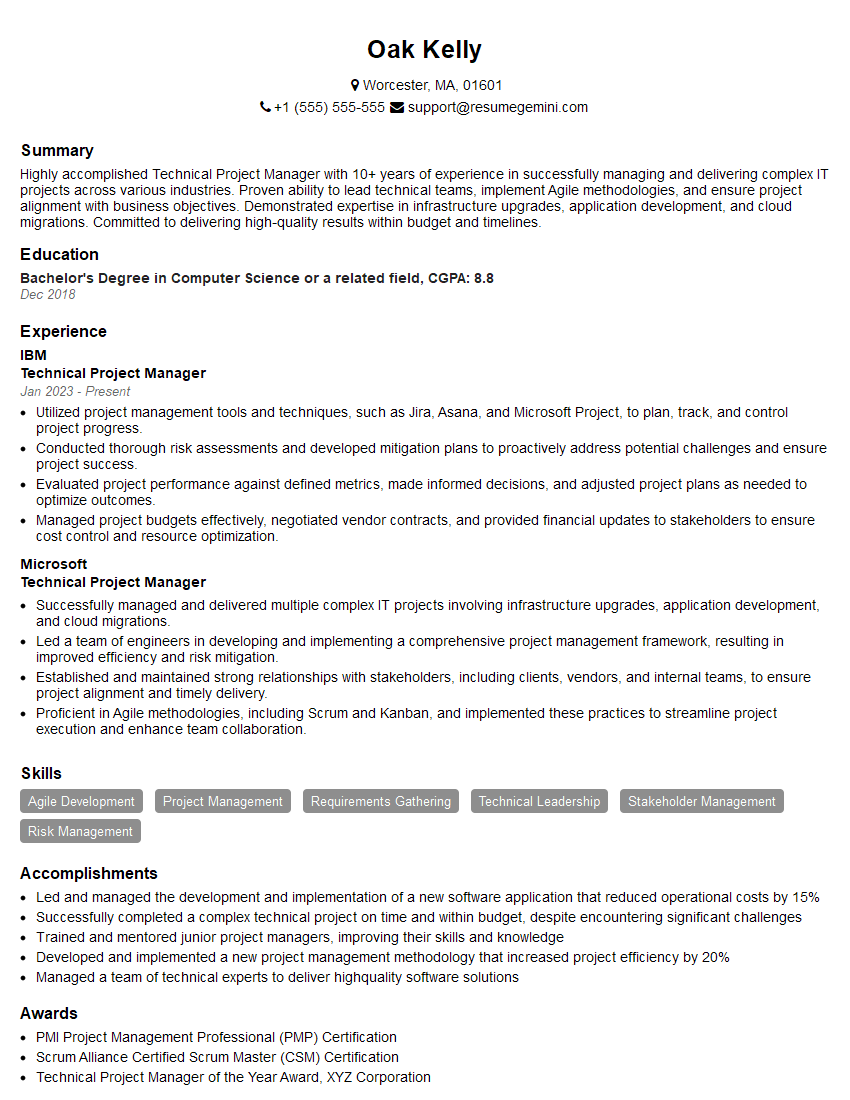
Technical Project Manager Resume Sample
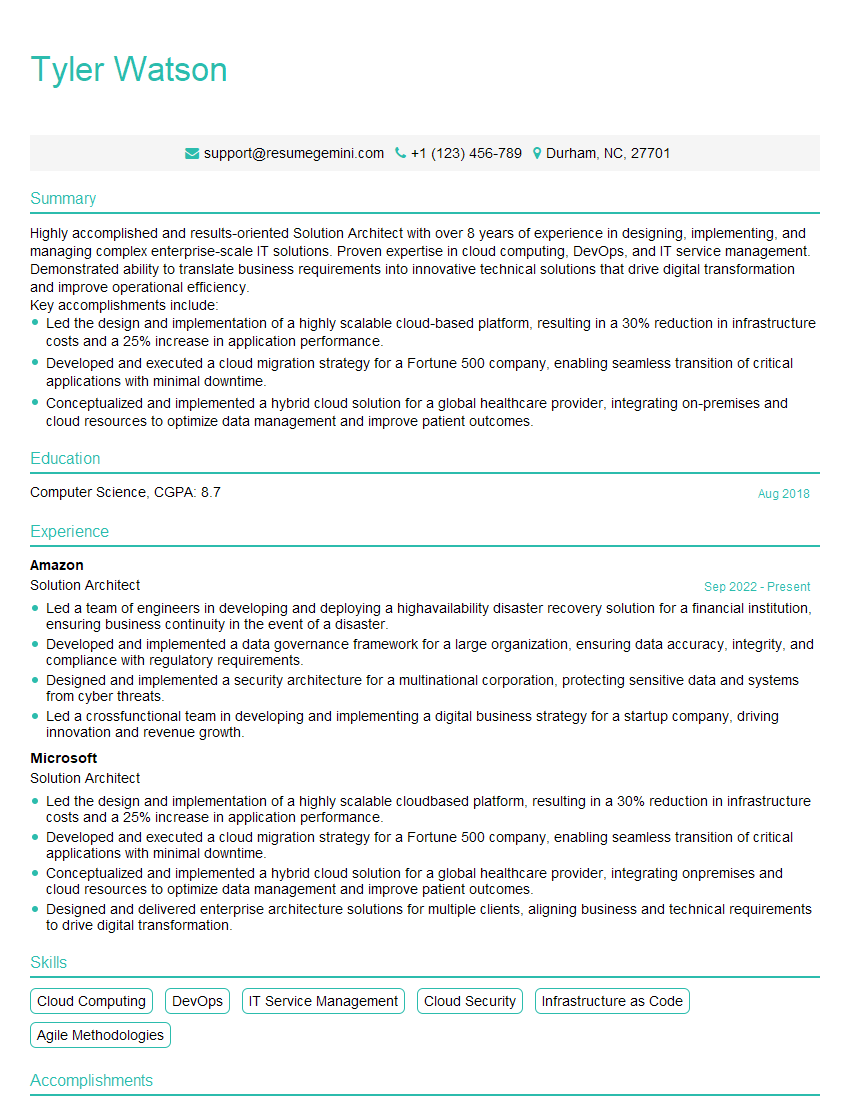
Solution Architect Resume Sample

Product Development Manager Resume Sample
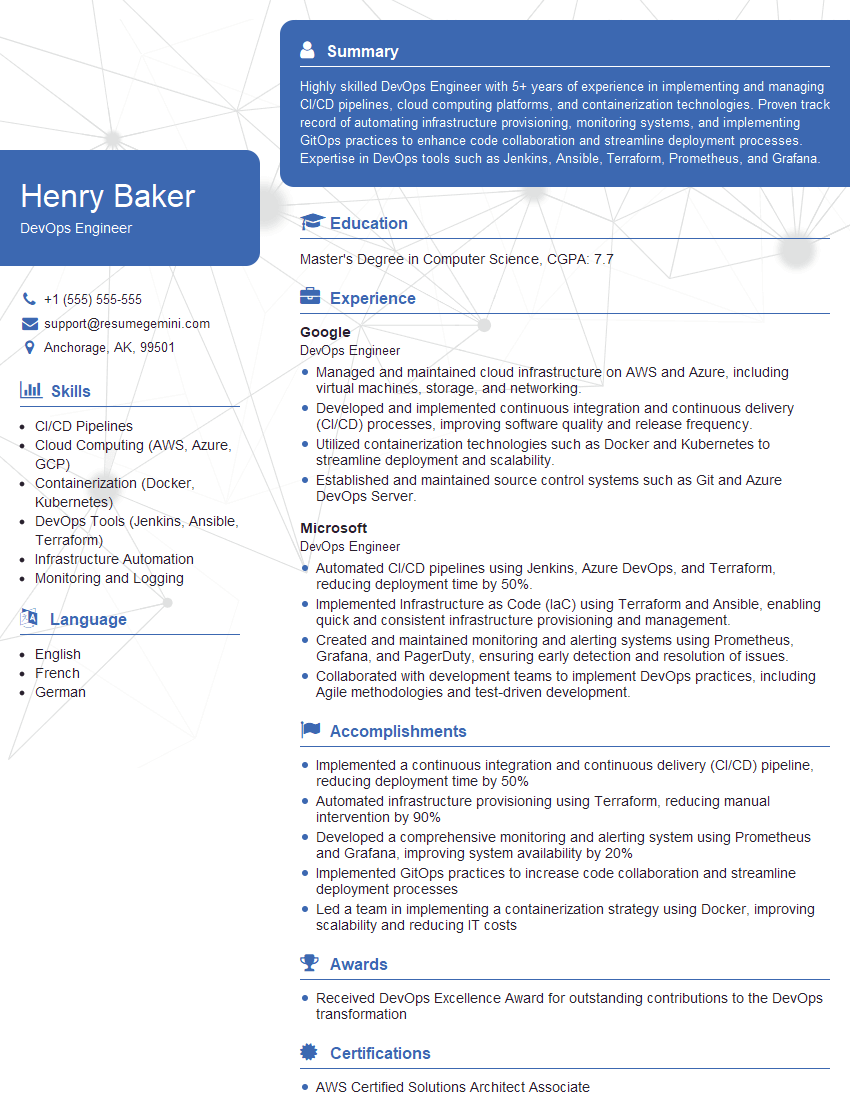
DevOps Engineer Resume Sample
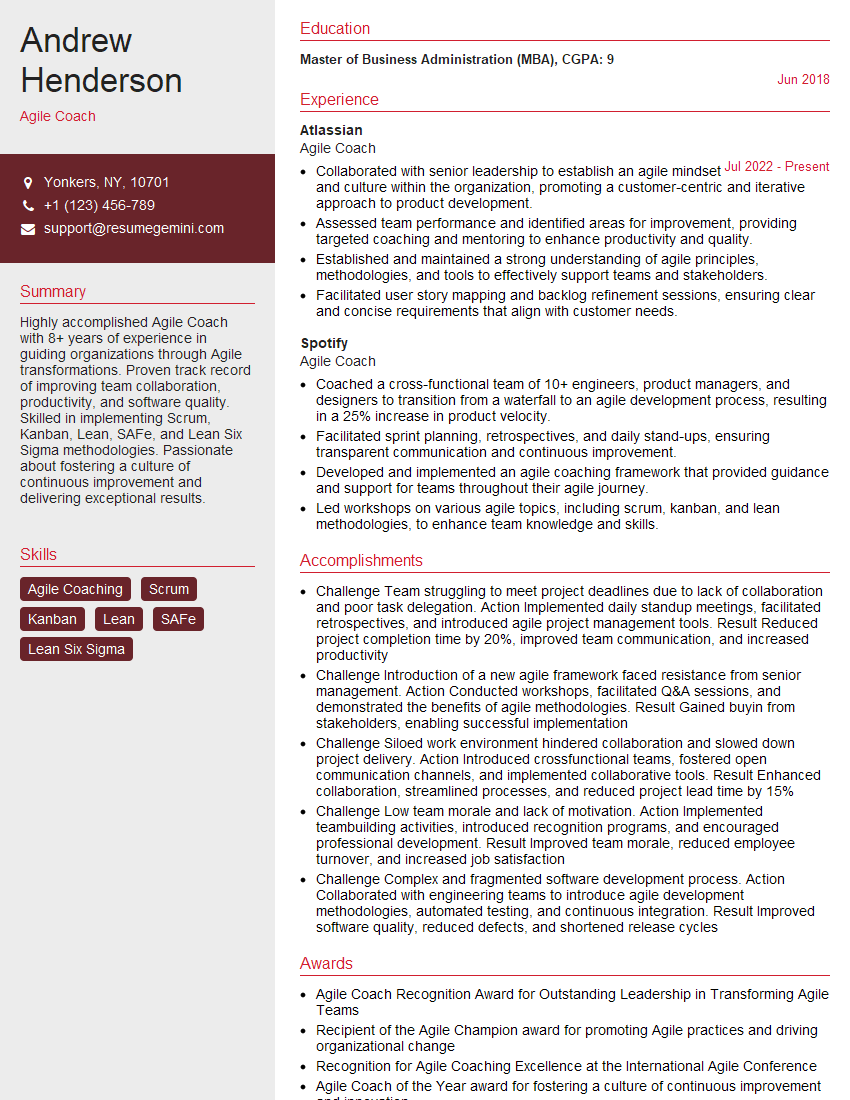
Agile Coach Resume Sample
Explore more articles
Users Rating of Our Blogs
Share Your Experience
We value your feedback! Please rate our content and share your thoughts (optional).
What Readers Say About Our Blog
Very informative content, great job.
good