The thought of an interview can be nerve-wracking, but the right preparation can make all the difference. Explore this comprehensive guide to InProcess Quality Control interview questions and gain the confidence you need to showcase your abilities and secure the role.
Questions Asked in InProcess Quality Control Interview
Q 1. Explain the importance of in-process quality control.
In-process quality control (IPQC) is crucial because it prevents defects from propagating through the entire manufacturing process. Think of it like building a house – catching a faulty foundation early is far cheaper and easier than demolishing the entire structure later. IPQC involves inspecting and testing materials and products at various stages of production to ensure they meet predetermined quality standards. This proactive approach minimizes waste, rework, and ultimately, customer dissatisfaction. Early detection allows for timely corrections, reducing the risk of large-scale failures and costly recalls.
For example, in a pharmaceutical manufacturing plant, IPQC might involve checking the purity of raw materials at the beginning of the process and verifying the correct dosage of active ingredients at intermediate stages. Failing to do so could lead to contaminated batches, rendering entire production runs unusable.
Q 2. Describe your experience with Statistical Process Control (SPC).
My experience with Statistical Process Control (SPC) spans over seven years, encompassing various manufacturing environments. I’ve extensively used control charts like X-bar and R charts, CUSUM charts, and p-charts to monitor key process parameters. I’ve been involved in setting up SPC systems, training production personnel, and analyzing data to identify trends and potential process shifts. This has involved working with software like Minitab and JMP to facilitate data analysis and visualization. A specific example involved a bottling plant where we identified a gradual increase in bottle breakage using an X-bar and R chart for fill volume. This seemingly unrelated metric alerted us to a subtle change in the filling machine’s pressure causing undue stress on the bottles, leading to a preventative maintenance schedule and preventing further losses.
Q 3. How do you identify and resolve quality issues during the manufacturing process?
Identifying and resolving quality issues is a systematic process. It starts with clear, defined quality standards and regular inspections using various tools like visual checks, dimensional measurements, and functional testing. When a non-conforming product or material is detected, I follow a structured approach:
- Immediate Containment: Segregate the affected items to prevent further processing or shipment.
- Data Collection: Gather detailed information regarding the defect, including the time, location, and quantity affected.
- Root Cause Analysis: Employ techniques like the 5 Whys, Fishbone diagrams, or Pareto charts to pinpoint the underlying cause of the issue.
- Corrective Actions: Develop and implement corrective actions to prevent recurrence. This may involve machine adjustments, operator retraining, or material sourcing changes.
- Verification: Monitor the process after implementing corrective actions to confirm effectiveness.
For example, if inconsistencies in the color of a painted product are observed, the root cause could range from inconsistent paint mixing to problems with the painting equipment or even environmental factors. A thorough investigation will reveal the source and guide the corrective actions.
Q 4. What are the key metrics you use to measure in-process quality?
Key metrics I use to measure in-process quality are tailored to the specific manufacturing process but generally include:
- Defect Rate: The number of defective units per total units produced.
- Yield: The percentage of good units produced relative to the total input.
- Process Capability (Cp/Cpk): Measures the ability of a process to meet specified tolerances.
- Cycle Time: The time taken to complete a single production cycle.
- Mean Time Between Failures (MTBF): For equipment, this metric indicates reliability.
- Customer Complaints: While not strictly in-process, feedback about final product quality provides crucial insights.
These metrics, when tracked over time and analyzed using control charts, provide a clear picture of process performance and highlight areas needing improvement.
Q 5. Explain your understanding of control charts (e.g., X-bar and R charts).
Control charts, such as X-bar and R charts, are graphical tools used in SPC to monitor process stability and identify variations. The X-bar chart displays the average (mean) of a sample group over time, while the R chart tracks the range (difference between the highest and lowest values) within each sample. These charts utilize control limits (typically three standard deviations above and below the central line), to identify points outside these limits, indicating potential process shifts that require investigation.
For instance, in a manufacturing process producing bolts, an X-bar chart would track the average bolt diameter, while the R chart would track the variation in diameter within each sample. Points outside the control limits might indicate a problem with the machine’s calibration or raw material inconsistencies, prompting corrective action.
Q 6. How do you handle non-conforming materials or products?
Handling non-conforming materials or products requires a structured approach that prioritizes safety and prevents further defects. The first step is immediate segregation and clear labeling to prevent accidental use or mixing with conforming materials. A thorough investigation follows to determine the cause of the non-conformance and whether the issue is isolated to a particular batch or represents a broader systemic problem. Depending on the severity and nature of the non-conformance, options include:
- Repair or Rework: If cost-effective and feasible, items might be repaired or reworked to meet specifications.
- Downgrading: Items might be downgraded to a lower specification and used for different applications.
- Scrap: In cases where repair or rework isn’t feasible or economically viable, items may be scrapped.
- Return to Supplier: If the non-conformance originates from a supplier, the material might be returned.
Documentation is crucial throughout this process, ensuring traceability and accountability. Each action taken is carefully recorded, including the reasons for the decision.
Q 7. Describe your experience with root cause analysis techniques.
I have extensive experience with various root cause analysis techniques, including the 5 Whys, Fishbone diagrams (Ishikawa diagrams), and Pareto analysis. The 5 Whys is a simple yet effective technique where you repeatedly ask “why” to drill down to the root cause of a problem. Fishbone diagrams help visualize potential causes, categorized by factors like people, methods, materials, machines, and environment. Pareto analysis focuses on identifying the vital few causes contributing to the majority of the problems.
For example, in a scenario with frequent machine breakdowns, the 5 Whys might uncover that worn-out bearings (root cause) led to increased vibration (Why 1), which resulted in component failure (Why 2), leading to a production stoppage (Why 3), which caused a delay in meeting customer deadlines (Why 4), resulting in a loss of revenue (Why 5). The Fishbone diagram would expand on this by illustrating other potential causes related to maintenance practices, operator training, etc.
Q 8. How do you ensure traceability in the production process?
Ensuring traceability in a production process is crucial for identifying and rectifying defects, managing recalls, and demonstrating compliance. It’s like leaving a breadcrumb trail, allowing you to follow the journey of a product from raw material to finished good. This is achieved through a robust system of documentation and identification at each stage.
Unique Identification: Each component or batch receives a unique identifier (e.g., serial number, lot number) that’s tracked throughout the entire process. Think of it as a product’s personal ID.
Detailed Records: We maintain meticulous records at every step: raw material sourcing, processing parameters, quality inspections, and final product packaging. This detailed history provides complete visibility into the product’s lifecycle.
Digital Traceability Systems: We often employ sophisticated software to manage and analyze traceability data, providing real-time insights into the location and status of products. This allows us to quickly pinpoint the source of any issue.
Barcodes and RFID: Using barcodes or RFID tags allows for automated data capture, minimizing manual errors and speeding up the process. Imagine scanning a product at every stage of production to instantly update its status.
For example, in a pharmaceutical setting, traceability is paramount. If a contaminated batch is identified, the complete traceability record allows us to swiftly isolate and remove all affected products from the market, preventing widespread harm.
Q 9. What are your experiences with quality management systems (e.g., ISO 9001)?
I have extensive experience working within the framework of ISO 9001, a globally recognized standard for quality management systems. It’s more than just a set of rules; it’s a structured approach to ensuring consistent product quality and customer satisfaction.
Internal Audits: I’ve actively participated in internal audits to assess our adherence to ISO 9001 requirements, identifying areas for improvement and ensuring consistent implementation of procedures. This is like a regular health check for our quality system.
Corrective and Preventive Actions (CAPA): I’ve been involved in developing and implementing CAPA plans to address non-conformances and prevent their recurrence. This is akin to creating a treatment plan and then proactively taking steps to avoid the same ailment in the future.
Documentation and Control: I understand the importance of meticulously maintained documentation, including procedures, work instructions, and quality records. This forms the backbone of our quality management system, providing a reliable source of truth.
Continuous Improvement: ISO 9001 fosters a culture of continuous improvement through regular reviews and the implementation of improvement projects. This is about constantly striving for excellence, not resting on past achievements.
In my previous role, we successfully implemented ISO 9001, resulting in improved efficiency, reduced waste, and enhanced customer satisfaction, ultimately leading to increased market share.
Q 10. Describe a time you identified a potential quality issue before it became a major problem.
During a production run of a precision component, I noticed a slight but consistent variation in a key dimension during routine inspection. Initially, it was within the tolerance limits, but my experience told me it was a warning sign. This wasn’t a major defect yet, but ignoring it could lead to serious issues.
I immediately initiated a root cause analysis, collaborating with the machine operators and engineering team. We discovered a minor misalignment in the manufacturing machine, causing this gradual drift in the dimension. By addressing this minor misalignment promptly, we prevented a larger batch of defective parts and avoided costly rework or potential customer complaints. This incident highlighted the importance of proactive monitoring and attention to detail, even when the issue isn’t immediately critical.
Q 11. How do you collaborate with different departments to improve quality?
Effective collaboration across departments is fundamental to achieving high quality. It’s not just about passing work between teams; it’s about building a unified approach to quality.
Cross-Functional Teams: I actively participate in cross-functional teams that include representatives from engineering, production, quality control, and sometimes even marketing and sales. This allows for a holistic view of the product and process.
Open Communication: Open and transparent communication is key. We utilize regular meetings, shared documentation systems, and feedback mechanisms to ensure everyone is aligned on quality goals and potential issues.
Shared Goals and Metrics: Defining shared quality goals and metrics helps align different departments and track progress collectively. This encourages collaboration and a shared sense of responsibility.
Training and Knowledge Sharing: We invest in training programs that educate employees across different departments about quality management principles and best practices. This fosters a shared understanding and commitment to quality.
For example, by working closely with the engineering team, we’ve been able to identify and resolve design flaws that were leading to production issues. This collaborative approach minimized waste and improved product reliability.
Q 12. What are your preferred methods for data collection and analysis in quality control?
My preferred methods for data collection and analysis in quality control involve a combination of techniques tailored to the specific needs of the process. The goal is to gather relevant, accurate, and timely data to gain actionable insights.
Statistical Process Control (SPC): SPC charts, such as control charts (X-bar and R charts, p-charts, c-charts), are fundamental tools for monitoring process stability and identifying potential problems. This allows us to proactively address variations before they become major defects.
Data Acquisition Systems: We use automated data acquisition systems connected directly to the production machinery to collect data on key process parameters in real-time. This provides continuous monitoring and reduces the reliance on manual data entry.
Database Management Systems: Data is stored and managed using database management systems, enabling efficient analysis and reporting. This ensures data integrity and accessibility.
Statistical Software: We utilize statistical software packages (e.g., Minitab, JMP) to conduct sophisticated data analysis, including hypothesis testing, regression analysis, and capability studies. These tools help us understand the data thoroughly.
For instance, using SPC charts on a particular machining process allowed us to pinpoint the root cause of fluctuating dimensions, leading to adjustments that drastically improved the consistency of the output.
Q 13. How familiar are you with different sampling techniques?
I’m familiar with various sampling techniques, each suited for different situations. The choice of sampling method depends on factors like the population size, the level of accuracy required, and the cost and time constraints.
Random Sampling: Every item in the population has an equal chance of being selected. This is the most straightforward method and ensures unbiased results if done correctly.
Stratified Sampling: The population is divided into subgroups (strata), and random samples are drawn from each stratum. This is useful when there’s variability within the population, ensuring representation from all segments.
Systematic Sampling: Items are selected at regular intervals from the population. This is simpler than random sampling but can be biased if the population has a cyclical pattern.
Cluster Sampling: The population is divided into clusters, and a random sample of clusters is selected. All items within the selected clusters are then included in the sample. This is efficient for large populations spread across different locations.
For example, when inspecting a large batch of electronic components, stratified sampling would be appropriate to ensure representative samples are taken from different production lines or batches.
Q 14. Explain your understanding of process capability analysis (Cpk, Ppk).
Process capability analysis, using metrics like Cpk (process capability index) and Ppk (process performance index), assesses whether a process is capable of consistently producing output within specified customer requirements or specifications. Think of it as a health check for your production process to determine if it’s up to the task.
Cpk measures the process capability relative to the specifications when the process is in a state of statistical control (i.e., stable and predictable). A Cpk value greater than 1.33 generally indicates a capable process, meaning it’s very likely to consistently meet the specifications. A Cpk below 1 suggests the process is not capable and requires improvement.
Ppk measures the process performance regardless of whether the process is in control. It reflects the actual performance over a period, considering both the variation and the centering of the process. Ppk is useful for assessing processes that may not be stable.
Both Cpk and Ppk are calculated using the process mean (average), standard deviation, upper specification limit (USL), and lower specification limit (LSL). The formulas are relatively complex, but statistical software readily computes these indices.
Cpk = MIN[(USL - X̄)/(3σ), (X̄ - LSL)/(3σ)]
Ppk = MIN[(USL - X̄)/(3σk), (X̄ - LSL)/(3σk)] where σk is the overall standard deviation.
In practice, a low Cpk or Ppk value would signal the need for process improvements, such as machine adjustments, operator training, or process redesign. For example, a low Cpk in a manufacturing process might indicate the need to recalibrate machinery to improve precision, or implement stricter quality checks to reduce variability.
Q 15. How do you utilize data to drive continuous improvement in quality control?
Data is the lifeblood of continuous improvement in quality control. We don’t just collect data; we analyze it to identify trends, pinpoint root causes of defects, and measure the effectiveness of corrective actions. Imagine a manufacturing process producing widgets. Instead of relying on gut feeling, we track metrics like defect rate per hour, material waste percentage, and machine downtime. This data is then visualized using control charts (like Shewhart charts or CUSUM charts) to monitor process stability and identify deviations from the target. Statistical process control (SPC) techniques help us determine if variations are random or due to assignable causes. For instance, a sudden spike in defects might indicate a machine malfunction, prompting immediate investigation and repair. By analyzing the data, we can proactively address issues before they escalate, resulting in a consistently high-quality product.
Further analysis might involve regression analysis to understand the relationship between various process parameters and the quality outcome. For example, we might find a strong correlation between the temperature of a certain machine component and the number of defective widgets produced. This insight allows us to fine-tune the process parameters to optimize quality. The data collected is fed back into the process, creating a closed-loop system for continuous improvement. This data-driven approach ensures that improvements are evidence-based, efficient, and sustainable.
Career Expert Tips:
- Ace those interviews! Prepare effectively by reviewing the Top 50 Most Common Interview Questions on ResumeGemini.
- Navigate your job search with confidence! Explore a wide range of Career Tips on ResumeGemini. Learn about common challenges and recommendations to overcome them.
- Craft the perfect resume! Master the Art of Resume Writing with ResumeGemini’s guide. Showcase your unique qualifications and achievements effectively.
- Don’t miss out on holiday savings! Build your dream resume with ResumeGemini’s ATS optimized templates.
Q 16. Describe your experience with corrective and preventive actions (CAPA).
Corrective and Preventive Actions (CAPA) are crucial for addressing quality issues systematically. My experience involves a structured approach that includes five key steps: 1. Problem Identification and Description: Clearly define the problem, including the extent of the issue, the affected products or processes, and any potential risks. 2. Root Cause Analysis: Employ techniques like fishbone diagrams (Ishikawa diagrams), 5 Whys, or fault tree analysis to determine the underlying cause(s) of the problem. For example, recurring issues with a specific component might lead us to examine the supplier’s quality control processes or our own receiving inspection procedures. 3. Corrective Action: Implement immediate actions to rectify the immediate problem. This might involve replacing defective parts, retraining staff, or adjusting process parameters. 4. Preventive Action: Develop and implement measures to prevent the problem from recurring. This could involve implementing new quality control checks, revising work instructions, investing in new equipment, or changing supplier relationships. 5. Verification and Follow-up: Monitor the effectiveness of the corrective and preventive actions implemented. This is often done using key performance indicators (KPIs) and regular audits to ensure sustained improvements and prevent future recurrence.
I’ve successfully implemented CAPA systems in various settings, significantly reducing defect rates and improving overall product quality. One notable instance involved a recurring issue with packaging defects. Through root cause analysis, we identified a faulty sealing machine. Corrective action involved repairing the machine. Preventive action included implementing a more robust preventative maintenance schedule and additional quality checks during packaging.
Q 17. How do you ensure the accuracy and reliability of quality control measurements?
Ensuring the accuracy and reliability of quality control measurements is paramount. This involves several key strategies: 1. Calibration and Validation: All measuring instruments and test equipment must be regularly calibrated against traceable standards to ensure their accuracy. Validation of test methods verifies that they accurately measure what they intend to measure. Think of it like calibrating a kitchen scale before weighing ingredients – you need to know your tools are accurate. 2. Measurement System Analysis (MSA): This statistical technique assesses the variability within the measurement system itself to separate measurement error from actual process variation. We use tools like Gage R&R studies to determine if the measurement system is capable of providing reliable data. 3. Proper Training and Procedures: Personnel conducting measurements must be properly trained in the use of the equipment and procedures to minimize human error. Clear, documented standard operating procedures (SOPs) minimize inconsistencies in measurement techniques. 4. Control Charts and Statistical Process Control (SPC): Employing control charts allows us to monitor the stability of the measurement process and detect any shifts in measurement accuracy over time. 5. Regular Audits and Reviews: Periodic audits and reviews of the measurement system ensure its ongoing accuracy and reliability. A documented audit trail provides a clear record of calibration, maintenance, and validation activities.
Q 18. How do you balance the speed of production with maintaining high quality?
Balancing speed of production with high quality requires a strategic approach that integrates quality control into every stage of the process, rather than treating it as an afterthought. It’s not an either/or situation; it’s about optimizing both. This involves: 1. Lean Manufacturing Principles: Implementing lean manufacturing principles, such as reducing waste, improving workflow, and eliminating bottlenecks, increases efficiency without compromising quality. Identifying and eliminating non-value-added activities frees up resources to focus on quality improvement. 2. Automation and Technology: Automating certain processes can improve speed and consistency, reducing human error. Technology like automated inspection systems can quickly and accurately assess product quality. 3. Preventive Maintenance: A robust preventative maintenance schedule for equipment ensures minimal downtime and consistent product quality. Addressing potential equipment failures proactively avoids production delays and defects. 4. Employee Empowerment: Empowering employees to identify and address quality issues at the source is crucial. This might involve implementing a system of visual management or providing them with the tools and training to perform simple quality checks at their workstations. 5. Continuous Improvement Initiatives: Regularly review and improve processes through data analysis and feedback loops. Kaizen events (continuous improvement workshops) are one way to focus on optimizing processes and improving overall efficiency and quality.
Q 19. Explain your experience with quality audits and inspections.
My experience with quality audits and inspections is extensive, encompassing both internal and external audits. Internal audits ensure compliance with company standards and identify areas for improvement. External audits verify compliance with regulatory requirements and industry standards. The process typically involves: 1. Planning and Scoping: Defining the scope of the audit, including the specific areas to be examined and the relevant standards or regulations. 2. Audit Execution: Conducting a systematic review of documents, processes, and facilities, collecting evidence to verify compliance. This can involve interviews with personnel, examination of records, and observation of processes. 3. Reporting and Findings: Documenting the audit findings, including both positive aspects and areas for improvement. Clearly outlining any non-conformances and their severity is crucial. 4. Corrective Action: Working with the audited area to develop and implement corrective actions to address any identified non-conformances. 5. Follow-up Audits: Conducting follow-up audits to verify that corrective actions have been effectively implemented and to assess the overall effectiveness of the audit process. This ensures that identified issues are resolved and prevent recurrence.
I’ve led numerous audits, identifying critical issues and supporting corrective action implementation, contributing to significant improvements in overall quality and regulatory compliance. For example, a recent audit identified a weakness in our documentation system, which was then rectified by implementing a new electronic document management system, improving traceability and reducing errors.
Q 20. Describe your experience using quality control software or tools.
I have extensive experience with various quality control software and tools, including statistical process control (SPC) software, enterprise resource planning (ERP) systems with quality modules, and specialized quality management systems (QMS) software. SPC software allows for the creation and monitoring of control charts, data analysis, and the generation of reports. ERP systems often include modules that track quality data, manage non-conformances, and support CAPA processes. QMS software offers a centralized platform for managing documents, audits, and training, supporting a comprehensive quality management system. For example, I’ve used Minitab for statistical analysis, SAP for integrated quality management within the ERP system, and a cloud-based QMS software for managing documents and audits. The choice of software depends on the specific needs and the size of the organization.
My proficiency extends to utilizing data analytics tools to visualize and interpret quality data, allowing for proactive identification of trends and potential quality issues. For instance, using data visualization tools, we can identify correlations between different process parameters and the occurrence of defects, helping us pinpoint areas for improvement.
Q 21. What is your experience with different quality control methodologies (e.g., DMAIC)?
I’m proficient in several quality control methodologies, including DMAIC (Define, Measure, Analyze, Improve, Control), a key component of Six Sigma. DMAIC is a structured problem-solving approach used to improve processes and reduce defects. Define: Clearly define the problem and project goals, including metrics for success. Measure: Collect data to understand the current state of the process, including key performance indicators (KPIs). Analyze: Analyze the data to identify root causes of the problem. Improve: Implement solutions to address the root causes and improve the process. Control: Implement monitoring systems to ensure that the improvements are sustained over time. I have also applied other methodologies like Lean manufacturing, Kaizen, and Total Quality Management (TQM) which complement DMAIC, offering a holistic approach to quality management.
In a past project, we used DMAIC to reduce the defect rate in a specific manufacturing process. Through meticulous data collection and analysis, we identified a faulty machine component as the root cause. After replacing the component and implementing improved maintenance procedures, we observed a significant reduction in defects, achieving the project goals.
Q 22. How do you communicate quality issues and findings to relevant stakeholders?
Communicating quality issues effectively is crucial for proactive problem-solving. My approach involves a multi-pronged strategy. First, I ensure the issue is clearly documented, including details like the defect type, location, frequency, and potential impact. Then, I tailor my communication to the audience. For technical teams, I’ll provide detailed reports with data analysis. For management, I’ll focus on the high-level impact and proposed solutions. I frequently utilize visual aids like charts and graphs to highlight trends and critical areas. For example, if we’re seeing an increase in weld defects, I might present a Pareto chart showing the most frequent causes. Finally, I always follow up to confirm that the issue is understood and appropriate action is being taken. This ensures transparency and accountability across all stakeholders.
Q 23. How do you manage and prioritize multiple quality control tasks?
Managing multiple quality control tasks requires a structured approach. I prioritize tasks based on their urgency and impact. I use a combination of tools like project management software (e.g., Jira, Asana) and visual aids such as Kanban boards to track progress. Tasks with high impact and imminent deadlines are prioritized. For instance, a critical defect impacting production would take precedence over a minor cosmetic issue. I break down large tasks into smaller, manageable steps to avoid feeling overwhelmed. Regularly reviewing my task list and adjusting priorities as needed ensures efficiency and prevents critical issues from being overlooked. This is similar to how an air traffic controller manages multiple flights – constant monitoring and dynamic prioritization are key.
Q 24. How do you ensure adherence to quality standards and regulations?
Adherence to quality standards and regulations is paramount. I ensure compliance through a combination of proactive measures and reactive responses. Proactively, I regularly review relevant standards (e.g., ISO 9001) and regulatory guidelines. I ensure all team members are adequately trained and understand their roles in maintaining quality. I implement rigorous process controls, including checklists, standardized procedures, and regular audits. Reactively, I establish mechanisms for identifying and rectifying deviations from standards. This includes thorough root cause analysis for any non-conformances and the implementation of corrective and preventive actions (CAPAs) to prevent recurrence. For example, if an audit reveals a lack of documentation, immediate corrective action would be to implement a new system and train personnel. Regular audits and internal checks ensure we stay compliant and improve processes continuously.
Q 25. Describe a situation where you had to make a difficult decision regarding quality control.
In a previous role, we faced a critical situation where a batch of components showed a higher-than-acceptable defect rate. The deadline for shipment was approaching, and releasing the batch risked significant financial and reputational damage. However, scrapping the batch entirely would result in substantial production delays and cost overruns. I led a team in a thorough investigation, identifying the root cause as a faulty machine setting. We decided to implement a rigorous inspection and rework process for the affected batch, followed by immediate corrective actions for the machine. This strategy allowed us to deliver the majority of the batch on time, minimizing losses, while the reworked components were shipped later. This highlighted the need for a balance between speed and quality, which is an important part of in-process quality control.
Q 26. How do you stay current with the latest advancements in quality control techniques?
Staying current in quality control requires a multi-faceted approach. I actively participate in professional development opportunities such as conferences, workshops, and online courses. I regularly read industry publications and journals to stay informed about the latest techniques and technologies. I also actively network with other quality professionals, both within and outside of my company, to share best practices and learn from their experiences. Further, I engage with online communities and forums to stay updated on emerging trends in the field. This commitment to continuous learning ensures I can effectively leverage the latest advancements to improve our quality control processes.
Q 27. What are your strengths and weaknesses in the context of in-process quality control?
My strengths lie in my analytical skills, attention to detail, and ability to effectively communicate complex technical information. I am highly organized and adept at managing multiple priorities simultaneously. I am also proactive in identifying potential problems and developing solutions. However, I am always striving to improve my delegation skills. Although I’m comfortable leading teams, I could further enhance my ability to effectively delegate tasks to empower team members while ensuring quality outcomes. I’m actively working on this by implementing structured delegation strategies and providing thorough training to my team.
Q 28. What are your salary expectations for this role?
My salary expectations for this role are in the range of [Insert Salary Range] annually. This is based on my experience, skills, and the requirements of this position, and is consistent with market rates for similar roles in this area. I’m flexible and open to discussing this further based on the comprehensive benefits package and the overall compensation structure.
Key Topics to Learn for InProcess Quality Control Interview
- Understanding Quality Control Principles: Grasp the fundamental concepts of quality control, including statistical process control (SPC), process capability analysis, and quality improvement methodologies like Six Sigma or Lean Manufacturing.
- In-Process Inspection Techniques: Familiarize yourself with various inspection methods used during the production process, such as visual inspection, dimensional measurement, and functional testing. Be ready to discuss the tools and techniques used in each.
- Data Analysis and Interpretation: Practice analyzing quality data, identifying trends, and drawing conclusions to make informed decisions about process improvements. Understanding control charts and their interpretation is crucial.
- Root Cause Analysis (RCA): Develop your skills in identifying the root causes of quality defects using tools such as the 5 Whys, fishbone diagrams, and Pareto analysis. Be prepared to discuss your approach to problem-solving.
- Quality Documentation and Reporting: Understand the importance of accurate and complete documentation of inspection results, non-conformances, and corrective actions. This includes knowledge of relevant quality management systems (QMS).
- Continuous Improvement Initiatives: Demonstrate your understanding of continuous improvement principles and your ability to contribute to improving processes and reducing defects. Discuss your experience with Kaizen or similar methodologies.
- Specific Industry Knowledge (if applicable): Research the specific industry and company you are interviewing with. Understanding their unique quality control challenges and best practices will significantly enhance your interview performance.
Next Steps
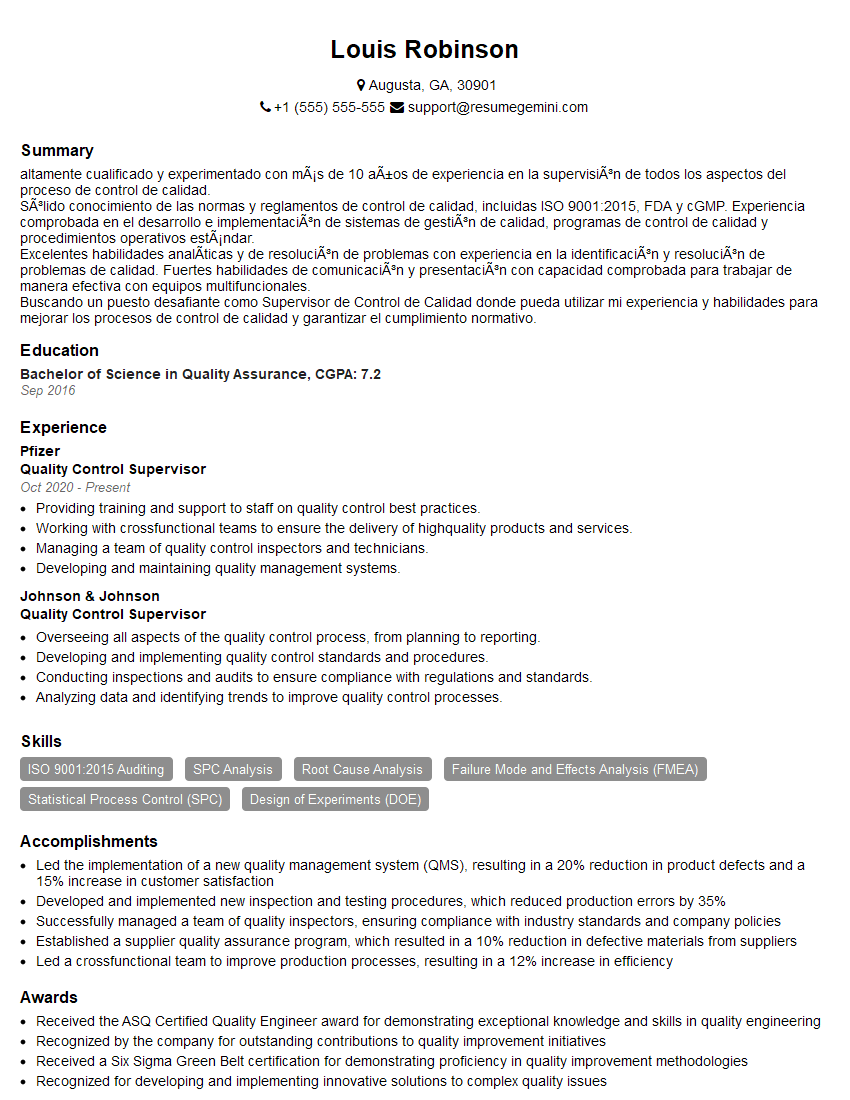
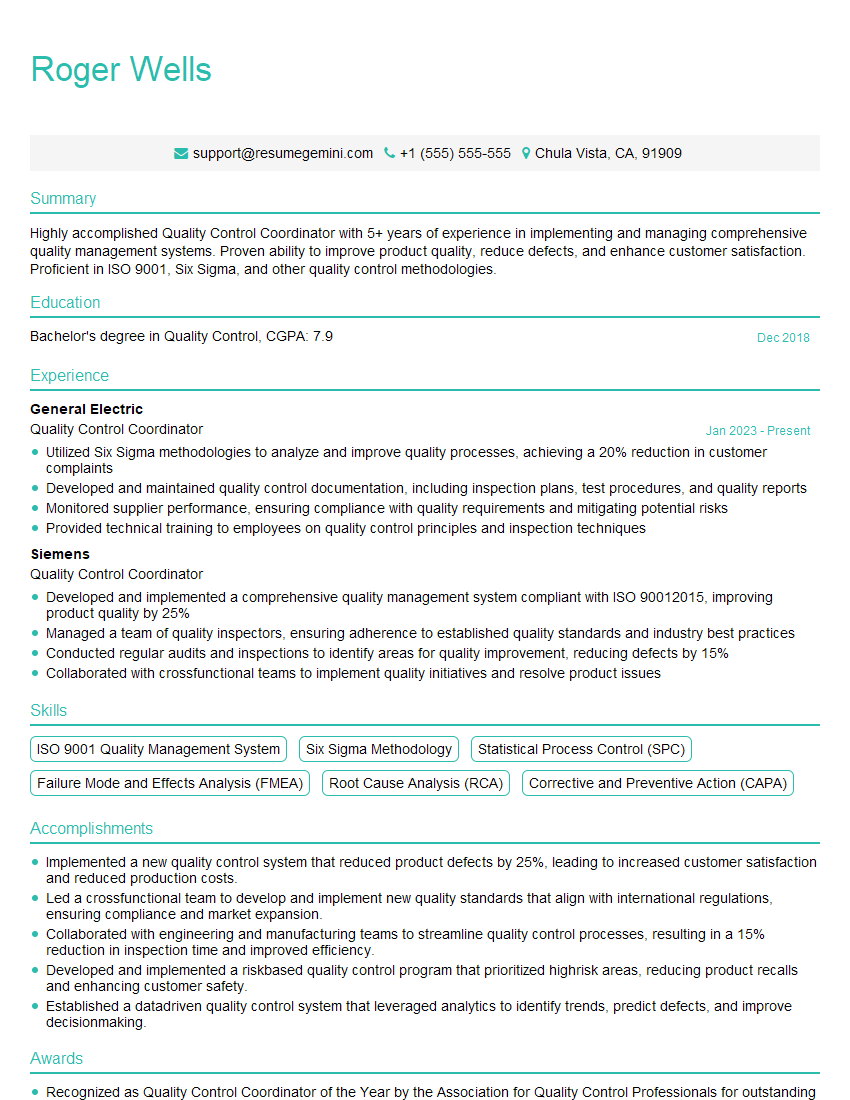
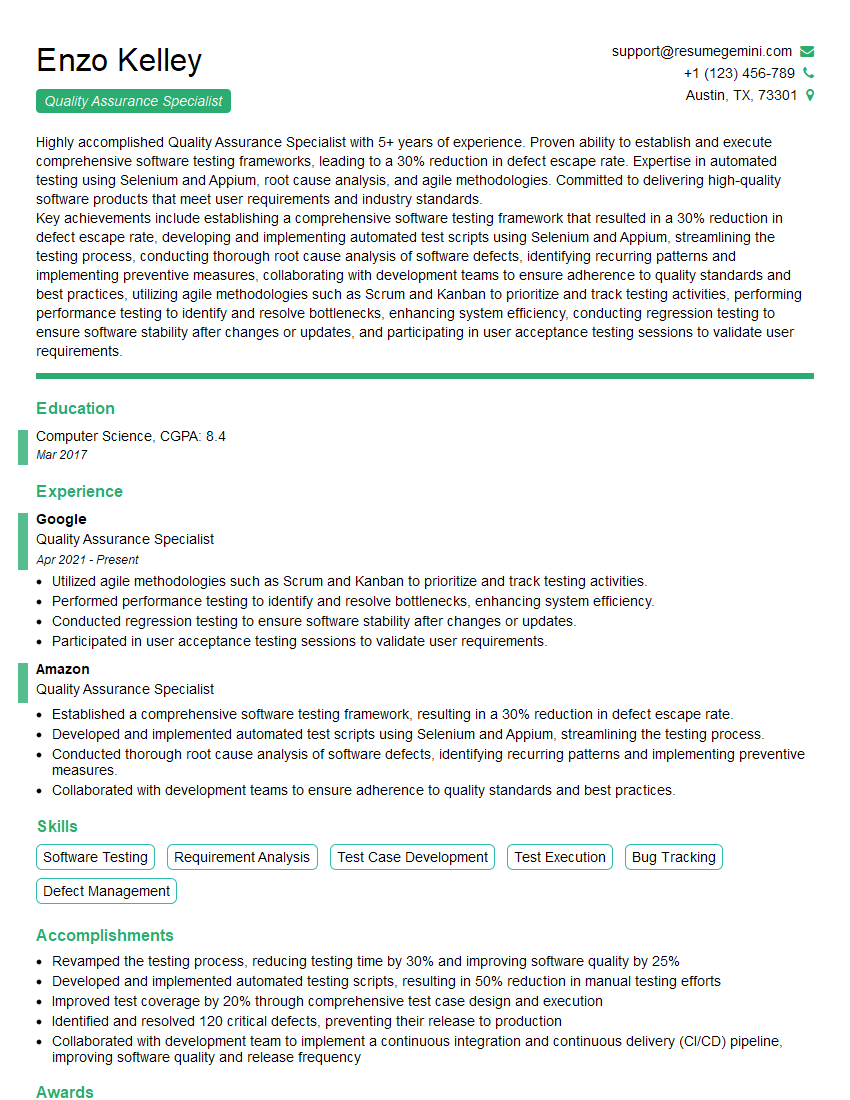
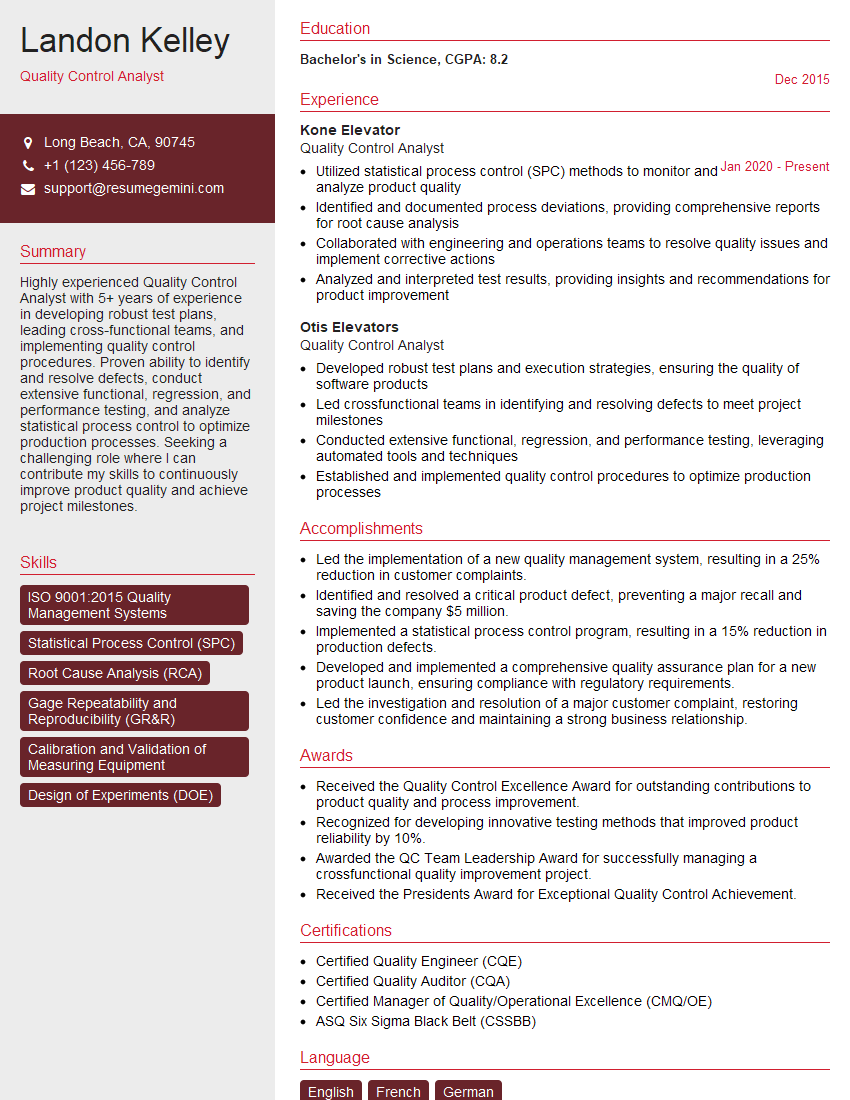
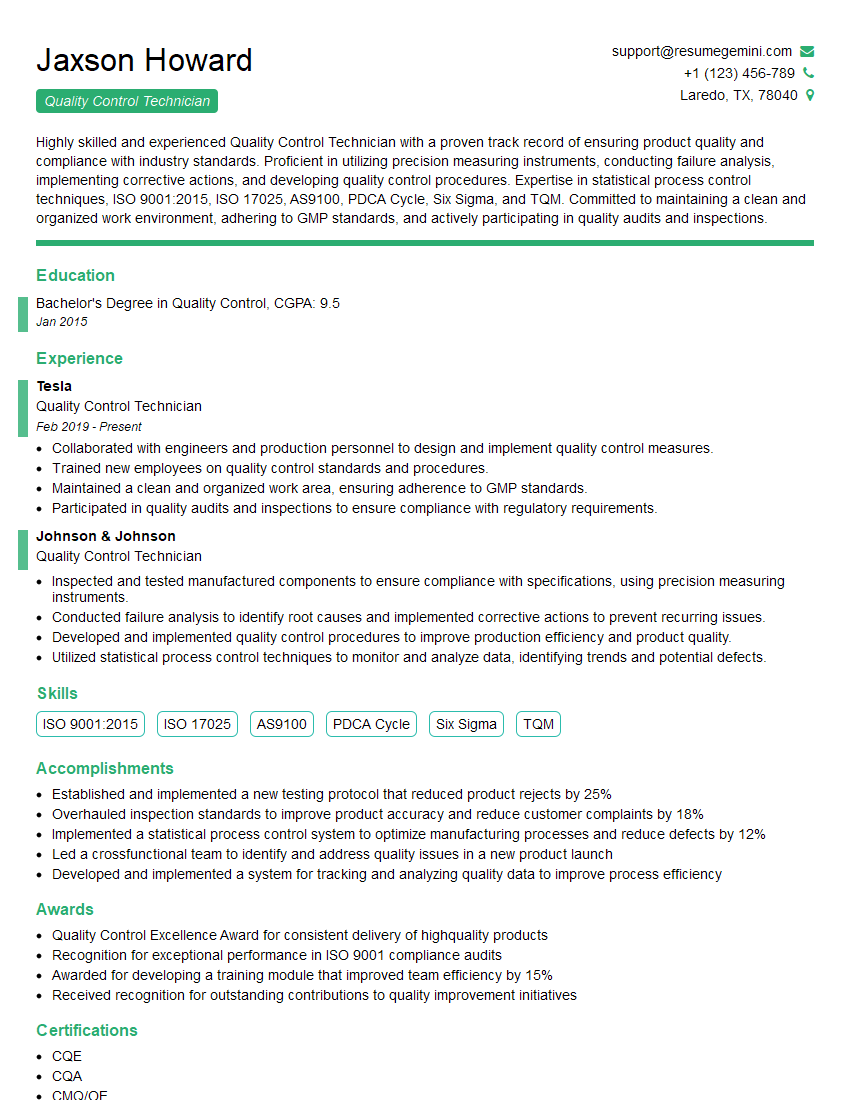
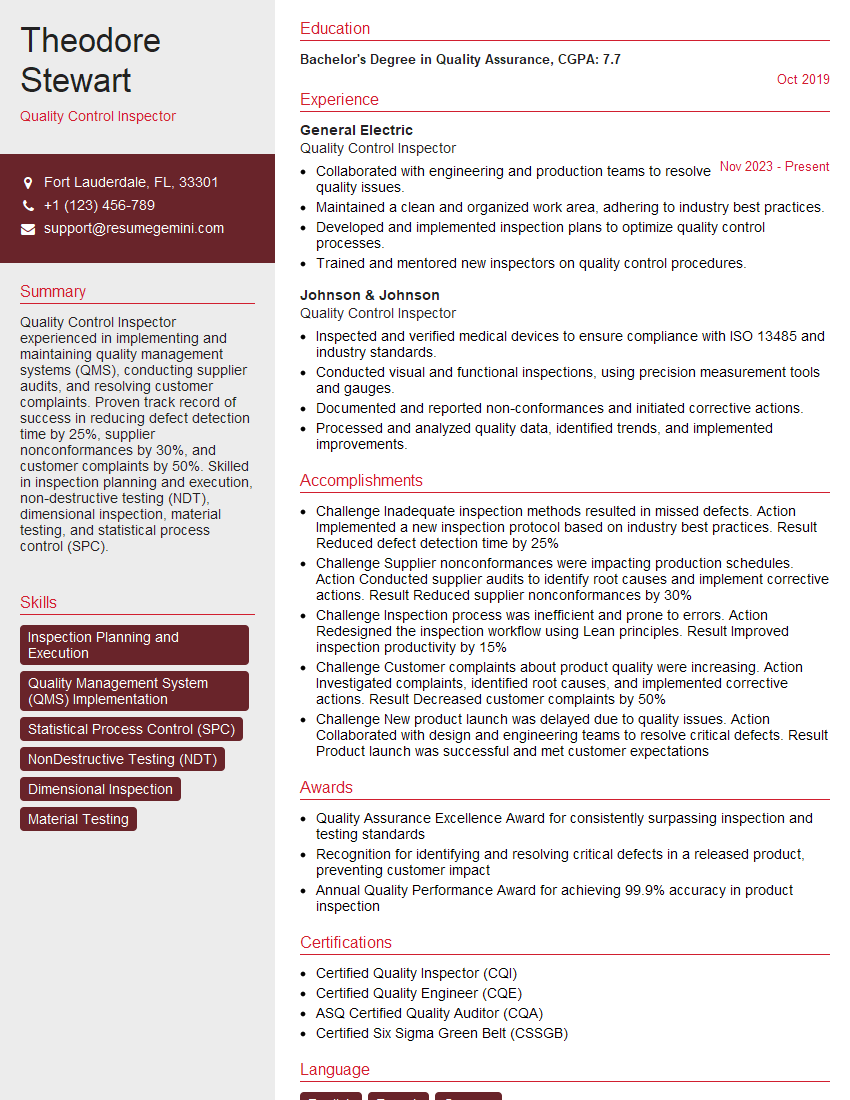
Mastering InProcess Quality Control opens doors to rewarding careers with excellent growth potential in various industries. To maximize your job prospects, creating a strong, ATS-friendly resume is essential. ResumeGemini is a trusted resource to help you build a professional resume that highlights your skills and experience effectively. Examples of resumes tailored specifically to InProcess Quality Control roles are available through ResumeGemini, allowing you to craft a compelling application that showcases your capabilities. Invest the time to build a resume that reflects your expertise – it’s a crucial step in securing your dream role.
Explore more articles
Users Rating of Our Blogs
Share Your Experience
We value your feedback! Please rate our content and share your thoughts (optional).
What Readers Say About Our Blog
Very informative content, great job.
good