The right preparation can turn an interview into an opportunity to showcase your expertise. This guide to Inspecting materials interview questions is your ultimate resource, providing key insights and tips to help you ace your responses and stand out as a top candidate.
Questions Asked in Inspecting materials Interview
Q 1. Describe your experience with various non-destructive testing (NDT) methods.
My experience with non-destructive testing (NDT) methods is extensive, encompassing a wide range of techniques. I’m proficient in visual inspection, which is the cornerstone of many NDT methods, allowing for the detection of surface flaws. I’m also highly skilled in ultrasonic testing (UT), using sound waves to detect internal flaws like cracks and voids. My expertise further extends to magnetic particle inspection (MPI), ideal for detecting surface and near-surface cracks in ferromagnetic materials. I have significant experience with liquid penetrant testing (LPT), which is excellent for identifying surface-breaking defects. Furthermore, I’m familiar with radiographic testing (RT), or X-ray inspection, for detecting internal flaws in various materials. Each method has its strengths and weaknesses, and selecting the appropriate technique depends heavily on the material type, its geometry, and the type of defects expected. For instance, UT is often preferred for thicker sections, while LPT is ideal for detecting fine surface cracks.
In my previous role at Acme Manufacturing, I used a combination of UT and MPI to inspect welded joints in high-pressure pipelines, ensuring structural integrity before commissioning. This involved meticulous calibration of the equipment, careful scanning, and detailed interpretation of the results to identify any indications of defects.
Q 2. Explain the difference between destructive and non-destructive testing.
The fundamental difference between destructive testing (DT) and non-destructive testing (NDT) lies in their impact on the material being tested. DT methods, such as tensile testing or impact testing, involve permanently altering or destroying the sample to obtain material properties. These tests provide precise data on ultimate strength, yield strength, and other mechanical characteristics, but they consume the tested sample.
NDT methods, conversely, do not damage the tested material. They enable the evaluation of material properties and the detection of flaws without compromising the sample’s integrity. This is crucial for ensuring product safety and minimizing material waste. Think of it like this: DT is like dissecting a frog to understand its anatomy; NDT is like using an X-ray to see the frog’s internal structure without harming it. Both provide valuable information, but serve different purposes.
Q 3. What are the common standards and codes used in materials inspection?
Material inspection relies on various standards and codes to ensure consistency, safety, and quality. These codes provide guidelines for inspection procedures, acceptance criteria, and documentation. Commonly used standards include ASTM (American Society for Testing and Materials) standards for various NDT methods, such as ASTM E1104 for liquid penetrant testing and ASTM E1106 for ultrasonic testing. Other relevant codes include ASME (American Society of Mechanical Engineers) Boiler and Pressure Vessel Code (BPVC), which dictates inspection requirements for pressure vessels, and API (American Petroleum Institute) standards for pipelines and other oil and gas infrastructure.
Specific standards are often referenced in contracts and project specifications, determining the acceptable levels of defects and the required inspection methods. Adherence to these standards is crucial for demonstrating compliance and ensuring the safety and reliability of inspected components.
Q 4. How do you identify and document material defects?
Identifying and documenting material defects is a systematic process that begins with a thorough visual inspection. I look for obvious surface imperfections like cracks, corrosion, or deformation. For subsurface defects, I employ NDT methods like UT or RT, depending on the material and the expected type of flaw. The location, size, and type of defects are precisely documented. For example, a crack might be described as a ’10mm long surface crack located at the weld toe of joint #3.’ Documentation also includes the NDT method used, equipment calibration data, and interpretations of the results. Photography or digital imaging is critical in documenting defect location and appearance.
In a recent bridge inspection project, I used UT to detect subsurface flaws in the structural steel. Each flaw detected was precisely located using coordinate systems on detailed drawings, allowing engineers to assess the structural integrity and plan repairs effectively.
Q 5. What are your preferred methods for documenting inspection results?
My preferred methods for documenting inspection results prioritize clarity, completeness, and traceability. I utilize a combination of digital and physical documentation. Digital documentation typically includes detailed inspection reports using standardized templates, supported by digital images and videos of the defects. These reports incorporate all relevant information, including the date, time, location of inspection, material identification, NDT methods used, and detailed descriptions of all observed defects with measurements and location coordinates.
Physical documentation involves creating hard copies of the inspection reports, along with labelled photographs or sketches of defects. This ensures that information is available even if digital systems fail. These records are maintained in a secure, organized manner following company guidelines and regulatory requirements, allowing for easy retrieval and review when needed.
Q 6. Describe your experience with different types of material flaws (e.g., cracks, porosity, inclusions).
My experience encompasses a broad range of material flaws. Cracks, one of the most critical defects, can be surface-breaking or internal, originating from fatigue, stress corrosion, or manufacturing processes. Porosity, common in castings and welds, represents small voids within the material, potentially reducing its strength and fatigue life. Inclusions are foreign materials embedded within the base material, which could cause weakness or initiate cracks.
I’ve encountered laminations in rolled materials, representing layers that haven’t bonded properly. Other flaws include lack of fusion in welds, where the weld material doesn’t properly join the base materials. The understanding of these flaws requires knowledge of the material’s properties, manufacturing processes, and the potential causes of these defects. This knowledge allows for appropriate selection of NDT methods and effective identification during inspection.
Q 7. How do you handle discrepancies found during inspection?
Handling discrepancies found during inspection requires a methodical and documented approach. The first step involves verifying the discrepancy by repeating the inspection using the same or a different NDT method. This helps confirm whether the initial finding was accurate. If the discrepancy persists, I thoroughly review the inspection procedures, ensuring adherence to relevant standards and codes. Calibration records of the equipment are also reviewed to rule out any equipment malfunction.
Once confirmed, the discrepancy is documented in detail, along with proposed corrective actions. This could involve repair, replacement, or further investigation. Depending on the severity of the discrepancy and its potential impact, I escalate the issue to appropriate management or engineering personnel. Open communication with all stakeholders is vital to ensure a timely and appropriate resolution.
Q 8. How do you prioritize inspections based on risk assessment?
Prioritizing inspections based on risk assessment is crucial for efficient and effective quality control. We use a systematic approach, typically involving a Failure Modes and Effects Analysis (FMEA). This involves identifying potential failure modes in a process, analyzing their severity, occurrence, and detectability, and assigning a risk priority number (RPN). Higher RPN values indicate higher-risk areas that require more frequent and thorough inspections.
For example, consider the manufacturing of aircraft parts. A crack in a critical component like a wing spar carries extremely high severity. Even if the occurrence rate is low, the RPN will be high, necessitating frequent and rigorous Non-Destructive Testing (NDT) like ultrasonic testing or radiography. Conversely, a minor cosmetic flaw on a non-critical part might have a low RPN and require less frequent inspection.
- Step 1: Identify Potential Failure Modes: Brainstorm all possible failures during the manufacturing or operational life of the product.
- Step 2: Assess Severity (S): Rate the severity of each failure on a scale (e.g., 1-10, with 10 being catastrophic).
- Step 3: Assess Occurrence (O): Estimate the likelihood of each failure occurring on a similar scale.
- Step 4: Assess Detectability (D): Rate how easily the failure can be detected through existing inspection methods.
- Step 5: Calculate RPN: Multiply S x O x D to get the Risk Priority Number. Higher RPNs are prioritized.
Q 9. Explain your experience using specific inspection equipment (e.g., ultrasonic testing, radiographic testing).
I have extensive experience utilizing various Non-Destructive Testing (NDT) methods. Ultrasonic testing (UT) is a key tool in my arsenal. I’ve used it extensively to detect internal flaws in metallic components, such as cracks, voids, and inclusions. The process involves transmitting ultrasonic waves into the material and analyzing the reflected signals to identify discontinuities. I’m proficient in using different UT techniques, including pulse-echo and through-transmission, and interpreting the resulting A-scans and B-scans. For example, I recently used UT to inspect weld seams in a pressure vessel, successfully identifying a small but critical porosity that would have otherwise gone undetected.
Radiographic testing (RT), or X-ray inspection, is another crucial technique I employ. RT allows me to visualize internal structures and detect flaws in various materials, including metals, composites, and plastics. I’m experienced in interpreting radiographs to identify imperfections like cracks, inclusions, and lack of fusion in welds. My experience includes using both film-based and digital radiography, ensuring adherence to safety protocols for radiation exposure. For instance, I utilized RT to inspect a complex casting for internal voids and successfully documented the findings for corrective action.
Q 10. What is your experience with statistical process control (SPC)?
Statistical Process Control (SPC) is fundamental to ensuring consistent product quality. I’m proficient in using control charts, such as X-bar and R charts, to monitor process variation and identify trends indicating potential problems. This involves collecting data from the production process, plotting it on control charts, and interpreting the results to determine whether the process is stable and within acceptable control limits.
I’ve used SPC in various applications, from monitoring the dimensions of manufactured parts to tracking the chemical composition of materials. For example, I implemented an SPC program in a manufacturing plant to reduce the defect rate in a specific process. By analyzing the control charts, we identified the root cause of the variation and implemented corrective actions, resulting in a significant reduction in defects and improved process efficiency. My understanding extends to the use of capability analysis to assess the ability of a process to meet customer specifications.
Q 11. How familiar are you with different types of materials (e.g., metals, plastics, composites)?
My experience encompasses a wide range of materials, including metals (ferrous and non-ferrous), plastics (thermoplastics and thermosets), and composites (fiber-reinforced polymers). My knowledge includes understanding their respective properties, strengths, weaknesses, and typical failure mechanisms. This allows me to tailor my inspection methods to each specific material. For example, I might use visual inspection and dye penetrant testing for surface cracks in metals, while ultrasonic testing would be more suitable for detecting internal flaws. For plastics, I’d consider methods like visual inspection, dimensional checks, and possibly destructive testing depending on the application.
With composites, the inspection challenges are greater due to their layered structure. I utilize techniques like ultrasonic C-scanning, thermography, and radiography, tailored to the specific composite material and structure. Understanding the material’s composition – for example, whether it’s carbon fiber reinforced polymer or glass fiber reinforced polymer – is vital in selecting appropriate inspection methods and interpreting results.
Q 12. Describe your understanding of material specifications and tolerances.
Material specifications and tolerances are critical aspects of quality control. Specifications define the required properties of a material, such as its chemical composition, mechanical properties (strength, hardness, ductility), and dimensional requirements. Tolerances specify the acceptable range of variation from the nominal value of these properties. Understanding these specifications and tolerances is paramount to determining whether a material conforms to the required standards.
For instance, a steel component might have a specified tensile strength of 500 MPa with a tolerance of ±10 MPa. My role involves ensuring that the inspected materials fall within these specified tolerances. Non-conformance necessitates further investigation and corrective actions, potentially involving rejection of non-compliant materials.
Q 13. How do you ensure the accuracy and reliability of your inspection results?
Ensuring the accuracy and reliability of inspection results is paramount. This involves a multi-pronged approach. First, calibration and verification of all inspection equipment are crucial. Regular calibration against traceable standards guarantees the accuracy of measurements. Second, rigorous adherence to established procedures and standards (e.g., ASTM, ISO) is essential. This ensures consistency and minimizes human error.
Third, employing qualified and trained personnel is critical. Inspectors must be properly trained in the use of specific inspection techniques and interpretation of results. Fourth, maintaining detailed records of inspections, including calibration records, equipment maintenance logs, and inspection reports, ensures traceability and accountability. Finally, periodic audits and interlaboratory comparisons help to validate the accuracy and reliability of our inspection processes and results. Using multiple NDT methods for the same component, where possible, provides redundancy and strengthens confidence in the findings.
Q 14. How do you manage inspection documentation and reporting?
Efficient management of inspection documentation and reporting is crucial for traceability, auditing, and regulatory compliance. We utilize a comprehensive system involving digital record-keeping and a structured reporting format. Inspection data, including images, test results, and any identified defects, are meticulously documented and stored in a secure database, accessible through a controlled system.
Reports are generated following standardized templates, clearly detailing the inspection scope, methods used, results obtained, and any non-conformances identified. These reports are reviewed and approved by authorized personnel before being distributed to relevant stakeholders. The system allows for easy retrieval of historical data for analysis, trend identification, and continuous improvement. Utilizing digital systems improves efficiency, reduces storage needs and enhances traceability. Furthermore, controlled access ensures data integrity and security.
Q 15. Describe a situation where you had to make a critical decision during an inspection.
During an inspection of a newly constructed bridge, I discovered a significant discrepancy in the concrete strength test results for one of the support pillars. The initial tests showed a strength far below the required specifications. This presented a critical decision: immediately halt construction and initiate a full investigation, potentially causing significant delays and cost overruns, or proceed cautiously, risking catastrophic failure. After carefully reviewing all available data, including the testing methodology, environmental factors during pouring, and the supplier’s certifications for the concrete mix, I decided to halt construction immediately. A more thorough investigation revealed a flaw in the concrete mixing process at the supplier’s facility. This ultimately prevented a potentially disastrous collapse. This decision highlighted the importance of prioritizing safety over schedule and cost, and underscored the need for meticulous record-keeping and thorough analysis before making crucial judgments.
Career Expert Tips:
- Ace those interviews! Prepare effectively by reviewing the Top 50 Most Common Interview Questions on ResumeGemini.
- Navigate your job search with confidence! Explore a wide range of Career Tips on ResumeGemini. Learn about common challenges and recommendations to overcome them.
- Craft the perfect resume! Master the Art of Resume Writing with ResumeGemini’s guide. Showcase your unique qualifications and achievements effectively.
- Don’t miss out on holiday savings! Build your dream resume with ResumeGemini’s ATS optimized templates.
Q 16. What are the common causes of material failure?
Material failure is a complex issue with various contributing factors. Common causes can be broadly categorized as:
- Material Defects: These include flaws introduced during manufacturing, such as porosity, inclusions, or cracks. Think of a poorly forged metal part with internal weaknesses.
- Design Flaws: Incorrect material selection for the application, inadequate stress analysis, or improper joint design can lead to failure. A classic example is using a material with insufficient tensile strength for a component subject to high tensile loads.
- Manufacturing Defects: Improper heat treatment, incorrect welding procedures, or surface damage during processing can significantly reduce material strength and reliability. For instance, a poorly welded joint in a pressure vessel can lead to a catastrophic failure.
- Environmental Factors: Exposure to corrosive chemicals, extreme temperatures, or cyclic loading can degrade material properties over time, eventually causing failure. Think of rust weakening a steel bridge component or UV degradation causing plastic parts to become brittle.
- Overloading: Exceeding the material’s designed strength limits will inevitably lead to failure. This is a straightforward cause, such as a crane lifting a load exceeding its rated capacity.
Understanding these factors is crucial for preventative maintenance and design improvements.
Q 17. How do you ensure the safety of yourself and others during an inspection?
Safety is paramount during any inspection. My approach involves a multi-layered strategy:
- Risk Assessment: Before starting an inspection, I conduct a thorough risk assessment identifying potential hazards, such as working at heights, exposure to hazardous materials, or confined space entry.
- Personal Protective Equipment (PPE): I always wear appropriate PPE, which may include hard hats, safety glasses, high-visibility clothing, respiratory protection, and fall protection gear, depending on the specific inspection environment.
- Lockout/Tagout Procedures: When inspecting machinery, I strictly adhere to lockout/tagout procedures to ensure that equipment is de-energized and secured before inspection.
- Training and Awareness: Ongoing training on safety procedures and emergency response is essential. I also ensure that all team members are aware of the hazards and the safety protocols.
- Communication: Clear and consistent communication with team members and supervisors is crucial to ensure everyone is aware of the inspection plan and any potential risks.
By diligently following these safety measures, I ensure the well-being of myself and my colleagues throughout the inspection process.
Q 18. Explain your experience with root cause analysis of inspection findings.
Root cause analysis (RCA) is a critical part of my inspection process. It involves systematically identifying the underlying causes of inspection findings, not just the symptoms. I typically use a combination of techniques, including the ‘5 Whys’ method, fishbone diagrams (Ishikawa diagrams), and fault tree analysis.
For instance, during an inspection of a pipeline, we discovered several instances of corrosion. Using the ‘5 Whys’, I asked:
- Why is there corrosion? (Insufficient coating)
- Why is the coating insufficient? (Poor application technique)
- Why was the application technique poor? (Inadequate training of applicators)
- Why was the training inadequate? (Lack of a comprehensive training program)
- Why was there no comprehensive training program? (Insufficient budget allocation for training)
This revealed that the root cause wasn’t simply a coating defect, but a systemic issue related to training and budgeting. This allowed us to address the root problem and prevent similar issues in the future. Through the careful application of these methods, I’ve consistently improved processes and materials to prevent recurrent failures.
Q 19. What software or tools do you use for data analysis in inspection?
Data analysis is an integral part of modern inspection. I utilize several software tools for this purpose:
- Spreadsheet software (Excel, Google Sheets): For basic data organization, analysis and reporting. This allows for initial trend analysis and data visualization.
- Statistical software (Minitab, SPSS): For more advanced statistical analysis, including hypothesis testing, regression analysis, and capability studies. This provides a rigorous approach to identifying correlations and making informed decisions.
- Database Management Systems (DBMS): To manage and store large datasets from multiple inspections. This is crucial for long-term trend analysis and tracking material performance over time.
- Specialized Inspection Software: Software tailored to specific inspection tasks, such as ultrasonic testing data analysis or image analysis software for visual inspections. This optimizes the process specific to material analysis needs.
The choice of tools depends on the complexity and nature of the data being analyzed. Data visualization is a critical aspect of presenting findings effectively to stakeholders.
Q 20. How do you stay current with the latest inspection technologies and techniques?
Staying current in this rapidly evolving field requires continuous learning. I employ several strategies:
- Professional Organizations: Active membership in professional organizations like ASME (American Society of Mechanical Engineers) or similar organizations provides access to publications, conferences, and networking opportunities.
- Industry Publications and Journals: Regularly reading industry-specific journals and publications keeps me abreast of the latest research and advancements in inspection technologies and techniques.
- Online Courses and Webinars: Many online platforms offer courses and webinars on various aspects of materials inspection, allowing for targeted learning based on specific needs.
- Conferences and Workshops: Attending industry conferences and workshops is invaluable for learning about new technologies, networking with experts, and gaining hands-on experience with the latest equipment.
- Manufacturer Training: Participating in training programs provided by manufacturers of inspection equipment ensures proficiency in using the latest technologies effectively.
A commitment to continuous learning is crucial to maintaining my expertise and ensuring the accuracy and reliability of my inspections.
Q 21. Explain your experience with different types of sampling methods.
Sampling methods are crucial for efficient and representative inspection. The choice of method depends on several factors, including the material’s characteristics, the inspection objective, and the available resources. I have experience with various sampling methods, including:
- Random Sampling: Every item in the population has an equal chance of being selected. This ensures unbiased representation but may not be efficient for large populations.
- Stratified Sampling: The population is divided into subgroups (strata), and samples are randomly selected from each stratum. This ensures representation from all subgroups, useful when dealing with heterogeneous populations.
- Systematic Sampling: Items are selected at regular intervals from the population. This is efficient but may be biased if there’s a pattern in the population.
- Cluster Sampling: The population is divided into clusters, and a random sample of clusters is selected. All items within the selected clusters are inspected. This is cost-effective for geographically dispersed populations.
- Acceptance Sampling: Used to determine whether a batch of materials meets pre-defined quality standards. This involves inspecting a sample from the batch and accepting or rejecting the entire batch based on the sample results.
Selecting the appropriate sampling method is critical for obtaining accurate and reliable inspection results that are representative of the whole material population.
Q 22. How do you handle conflicts or disagreements with other team members during an inspection?
Resolving conflicts during inspections requires a collaborative and professional approach. My strategy focuses on open communication and a shared goal of ensuring material integrity. I begin by actively listening to all perspectives, ensuring everyone feels heard and understood. This often involves asking clarifying questions to fully grasp the differing viewpoints. Once everyone’s concerns are understood, I facilitate a discussion to identify common ground and potential solutions. This may involve compromise, where we find a middle ground that satisfies everyone’s safety and quality concerns, or a process of reasoned argument where we weigh the evidence and data to reach a consensus. For instance, if there’s disagreement on the severity of a crack in a weld, I’d initiate a discussion, reviewing relevant codes and standards, potentially involving a third party expert if necessary. The focus is always on finding the best solution for the project, prioritizing safety and adhering to regulations.
Ultimately, maintaining a respectful and professional demeanor is key to navigating disagreements constructively. I believe in fostering a team environment where open dialogue is encouraged and differing opinions are viewed as opportunities for improvement and a more robust outcome.
Q 23. Describe a time you had to deal with a difficult or demanding client.
I once worked with a client who was extremely demanding and had unrealistic expectations regarding the inspection timeline for a large-scale construction project. They frequently changed requirements and were highly critical of our findings, often demanding immediate changes without providing sufficient justification. My approach involved maintaining calm professionalism while setting clear expectations and boundaries. I documented all communications meticulously, and I provided them with frequent updates, clearly explaining the process and the reasons behind any delays or findings. To manage their expectations, I proactively presented alternative solutions whenever possible, offering cost-effective and efficient methods for addressing concerns while staying within regulatory guidelines. I also made sure to clearly explain the technical aspects of our findings using simple, non-technical language where appropriate, which helped to build trust and understanding. The key was consistent, transparent communication and a focus on collaboration rather than confrontation.
Although it was challenging, the project was ultimately completed successfully. I learned the importance of proactive communication, clear documentation and the value of maintaining a positive working relationship despite difficult circumstances. It strengthened my skills in managing client expectations and navigating high-pressure situations.
Q 24. How do you ensure compliance with relevant safety regulations during inspections?
Ensuring compliance with safety regulations during inspections is paramount. My approach is multifaceted and begins with a thorough understanding of all relevant standards and codes applicable to the specific project and location. This includes reviewing site-specific safety plans, identifying potential hazards, and ensuring that all team members receive adequate safety training. Before each inspection, I conduct a comprehensive pre-inspection risk assessment, identifying potential hazards and implementing appropriate control measures. This might involve utilizing personal protective equipment (PPE), such as hard hats, safety glasses, and high-visibility clothing, as well as implementing procedures to mitigate risks associated with working at heights or handling hazardous materials. During the inspection itself, I maintain strict adherence to safety protocols, immediately addressing any safety concerns and ensuring that any identified hazards are reported and rectified promptly. Regular inspections of the equipment we use is also crucial; this includes checking the functionality of ladders, scaffolding and other equipment to avoid accidents.
Moreover, I meticulously document all safety procedures followed and any incidents or near misses. This thorough documentation helps to ensure ongoing compliance and provides valuable data for continuous improvement of our safety procedures.
Q 25. What is your experience with calibration and maintenance of inspection equipment?
Calibration and maintenance of inspection equipment are crucial for ensuring accuracy and reliability. Throughout my career, I have extensive experience with various types of inspection equipment, including ultrasonic testing (UT) devices, magnetic particle inspection (MPI) equipment, and liquid penetrant inspection (LPI) systems. I’m familiar with the calibration procedures and the importance of using traceable standards that are calibrated to national or international standards. I follow a rigorous schedule for calibrating all instruments, maintaining detailed records of calibration certificates and dates. This ensures that all equipment used meets the required accuracy levels. Routine maintenance is equally important. I regularly inspect the equipment for wear and tear, ensuring that it’s clean, properly stored, and in optimal working order. This includes performing preventive maintenance tasks such as cleaning probes, checking for any damage, and ensuring that batteries are functioning correctly. Any issues are immediately addressed, preventing potential delays and errors during inspections.
For example, I’m adept at using calibration software for UT equipment, ensuring consistent and accurate measurements. My experience ensures that our inspections meet the highest standards of precision and reliability.
Q 26. Describe your problem-solving approach when encountering an unexpected material issue.
My approach to problem-solving when encountering unexpected material issues is systematic and data-driven. First, I document the issue thoroughly, including photos, precise location, and any related observations. Then, I gather data from various sources—the original material specifications, manufacturing records, and any relevant testing reports. I consult relevant codes and standards, comparing the observed issue to acceptable limits and tolerances. Next, I analyze the data to pinpoint the root cause. This often involves eliminating possibilities, comparing my findings with established databases and engineering principles and, if needed, consulting with other experts.
For example, if I discovered unexpected corrosion in a pipe, I would systematically check factors like environmental conditions, the pipe’s material composition, and the presence of any protective coatings. Once the root cause is identified, I develop a recommended course of action, which may include further testing, repair, or material replacement. This is always communicated clearly and comprehensively to all relevant stakeholders. The goal is not just to solve the immediate issue, but to prevent similar problems from occurring in the future.
Q 27. How do you handle situations where you are unsure of the proper inspection procedure?
When unsure about the proper inspection procedure, my priority is to ensure safety and avoid any potentially damaging actions. My first step is to consult relevant codes, standards, and internal procedures. This might involve reviewing industry best practices or seeking clarification from more experienced colleagues or subject matter experts. If necessary, I will consult with professional organizations or regulatory bodies to obtain clarification. If a decision is needed quickly and seeking external guidance is too time consuming, I will use my best judgment based on my training and experience, but will ensure that I document the situation, my rationale, and my recommended course of action for later review. It’s crucial to understand that prioritizing safety and documenting all steps taken are essential to ensuring accountability and preventing potential errors.
Transparency and seeking guidance are key—it’s better to ask for help and ensure the inspection is conducted correctly than to proceed without complete confidence, potentially leading to errors or safety hazards.
Q 28. What are your salary expectations for this role?
My salary expectations are commensurate with my experience and qualifications in this field. Considering my extensive background in materials inspection, my proven track record of successful projects, and my commitment to safety and quality, I am seeking a competitive salary within the range of [Insert Salary Range]. I am confident that my skills and experience will bring significant value to your organization, and I am open to discussing this further based on the specific responsibilities and compensation package offered.
Key Topics to Learn for Inspecting Materials Interview
- Material Properties: Understanding material characteristics like strength, durability, density, and chemical composition. This includes knowing how to interpret datasheets and specifications.
- Inspection Techniques: Mastering various inspection methods, including visual inspection, dimensional measurement, non-destructive testing (NDT) methods (e.g., ultrasonic testing, magnetic particle inspection), and destructive testing techniques. Be prepared to discuss the advantages and limitations of each.
- Quality Control Standards: Familiarity with relevant industry standards and codes (e.g., ASTM, ISO) used in material inspection and quality control. This includes understanding how to interpret and apply these standards in practical situations.
- Defect Identification and Analysis: Developing the ability to identify common material defects (cracks, porosity, inclusions, etc.), understand their causes, and assess their impact on material performance and safety.
- Reporting and Documentation: Knowing how to effectively document inspection findings, complete detailed reports, and present your findings clearly and concisely.
- Safety Procedures: Demonstrating a thorough understanding of safety protocols and procedures relevant to material handling, inspection, and testing.
- Problem-solving and Decision-Making: Being able to apply critical thinking skills to analyze inspection results, identify potential problems, and propose effective solutions. Prepare examples demonstrating your ability to troubleshoot and make informed decisions based on available data.
Next Steps
Mastering the art of inspecting materials is crucial for career advancement in various industries. A strong understanding of material properties, inspection techniques, and quality control standards will open doors to exciting opportunities and higher responsibilities. To significantly boost your job prospects, it’s vital to present your skills and experience effectively. Creating an ATS-friendly resume is key. We encourage you to leverage ResumeGemini, a trusted resource for building professional and impactful resumes. ResumeGemini provides examples of resumes tailored to the Inspecting Materials field to help you craft a compelling application that stands out.

Quality Assurance Manager Resume Sample

Quality Control Manager Resume Sample
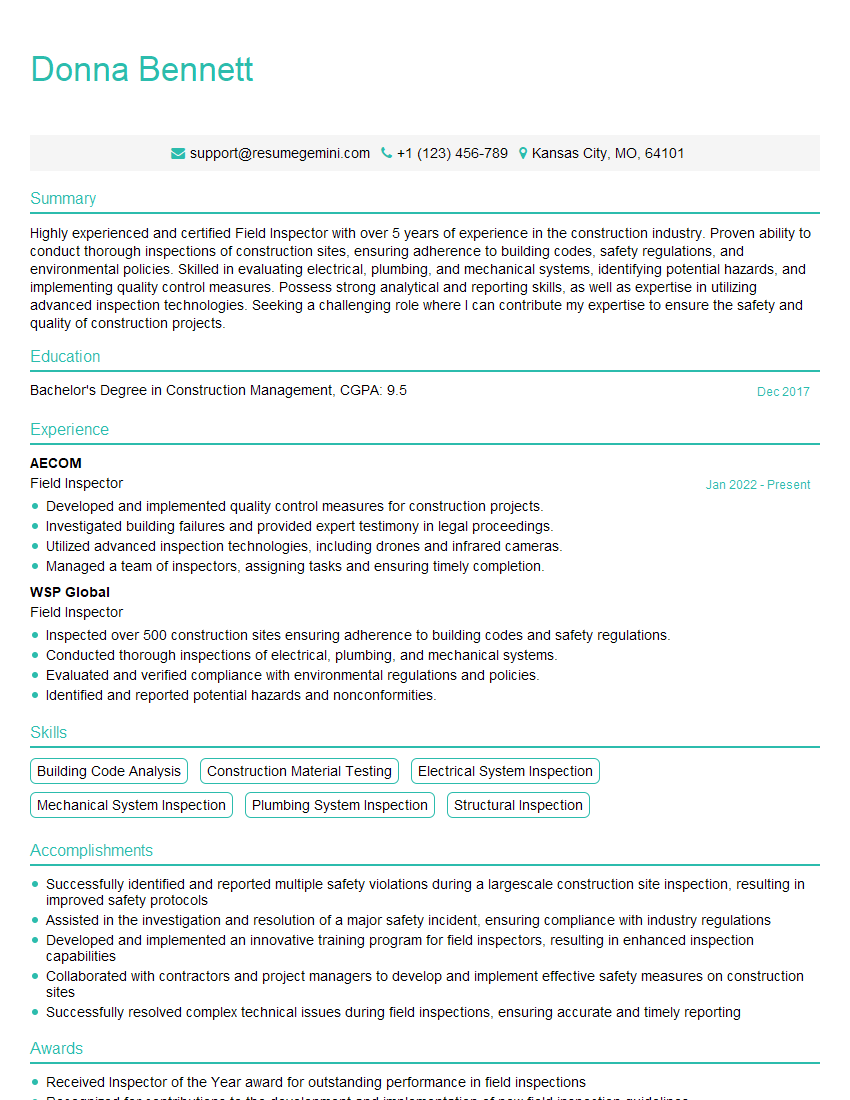
Field Inspector Resume Sample
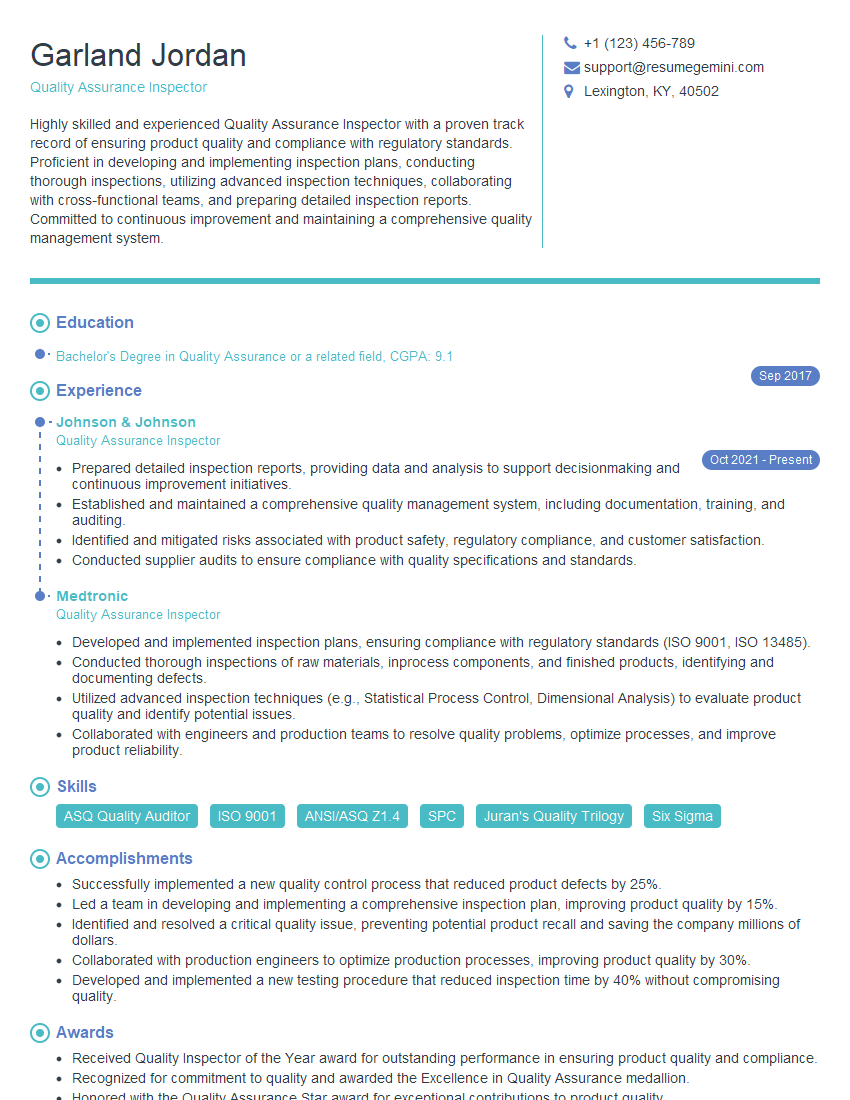
Quality Assurance Inspector Resume Sample
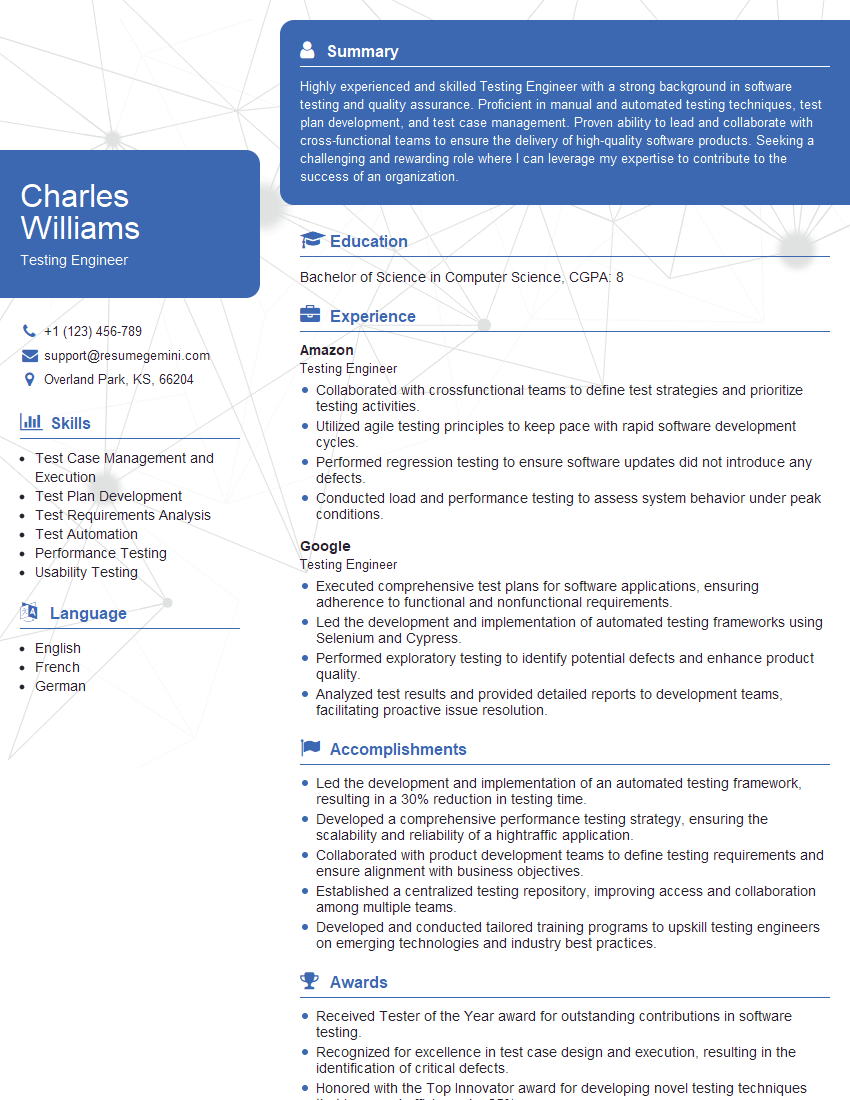
Testing Engineer Resume Sample
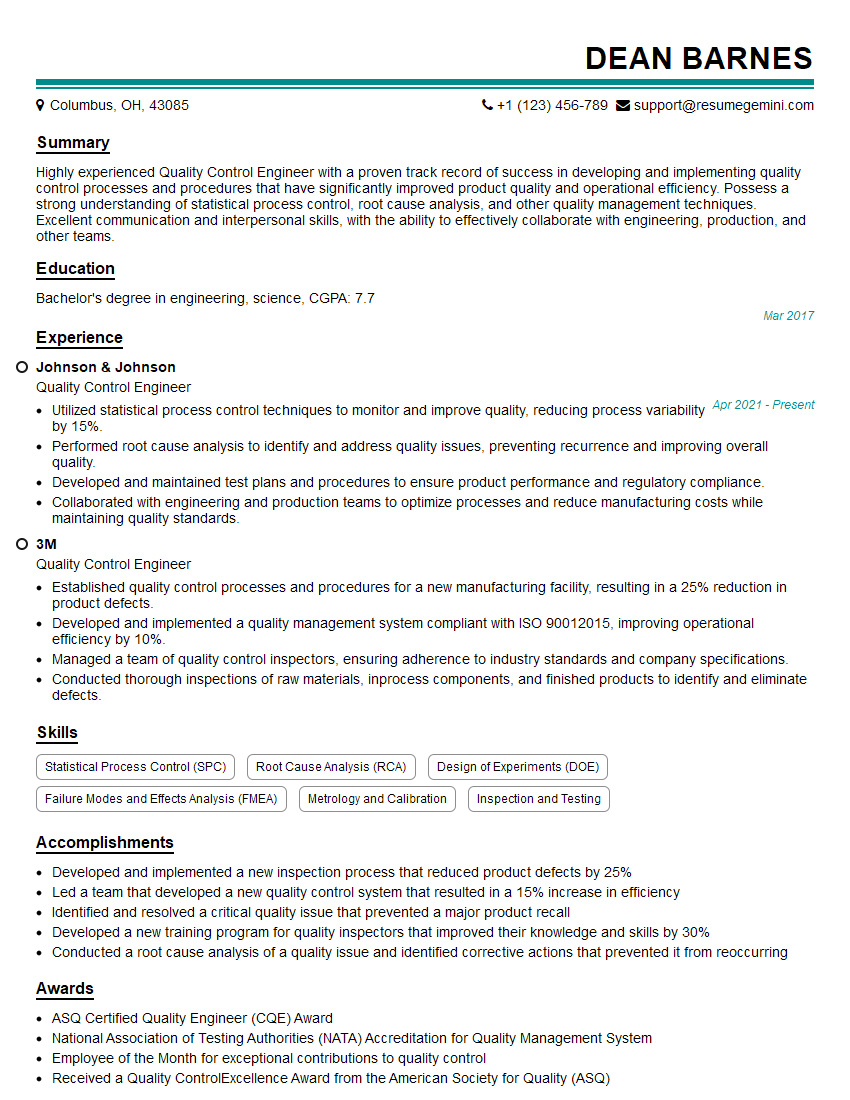
Quality Control Engineer Resume Sample

Materials Engineer Resume Sample
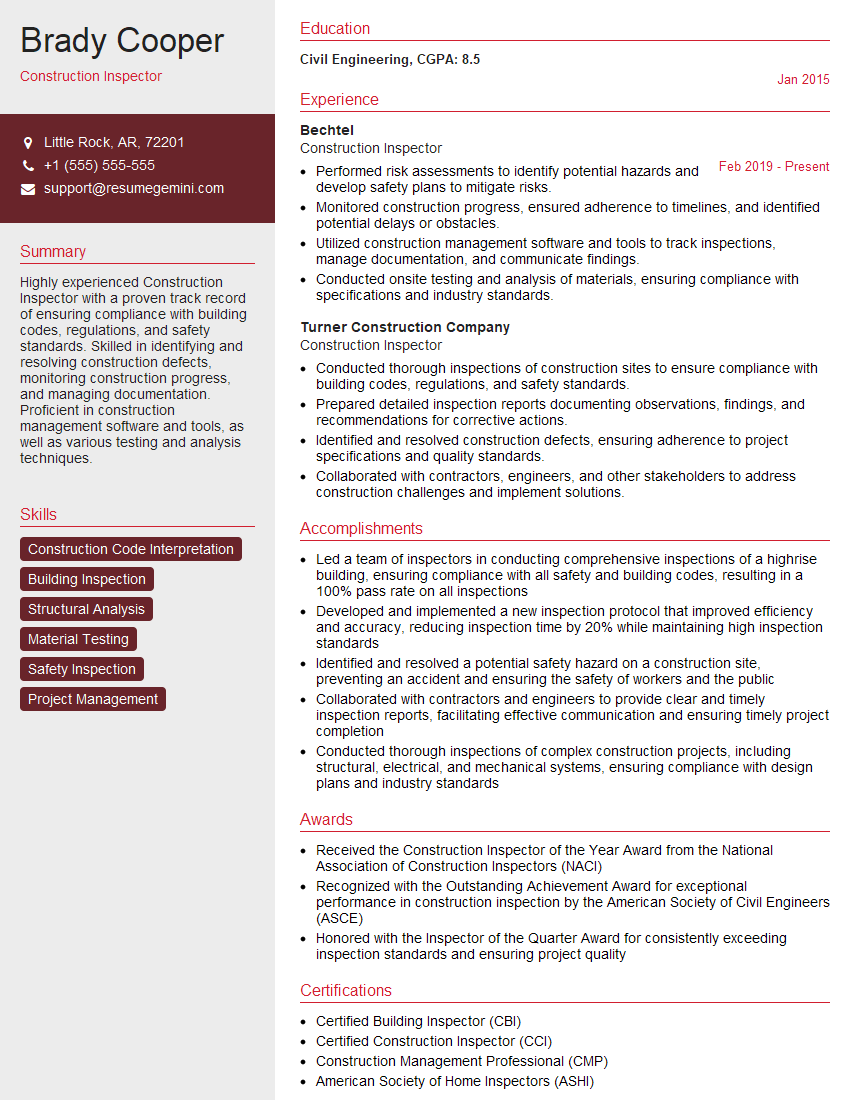
Construction Inspector Resume Sample
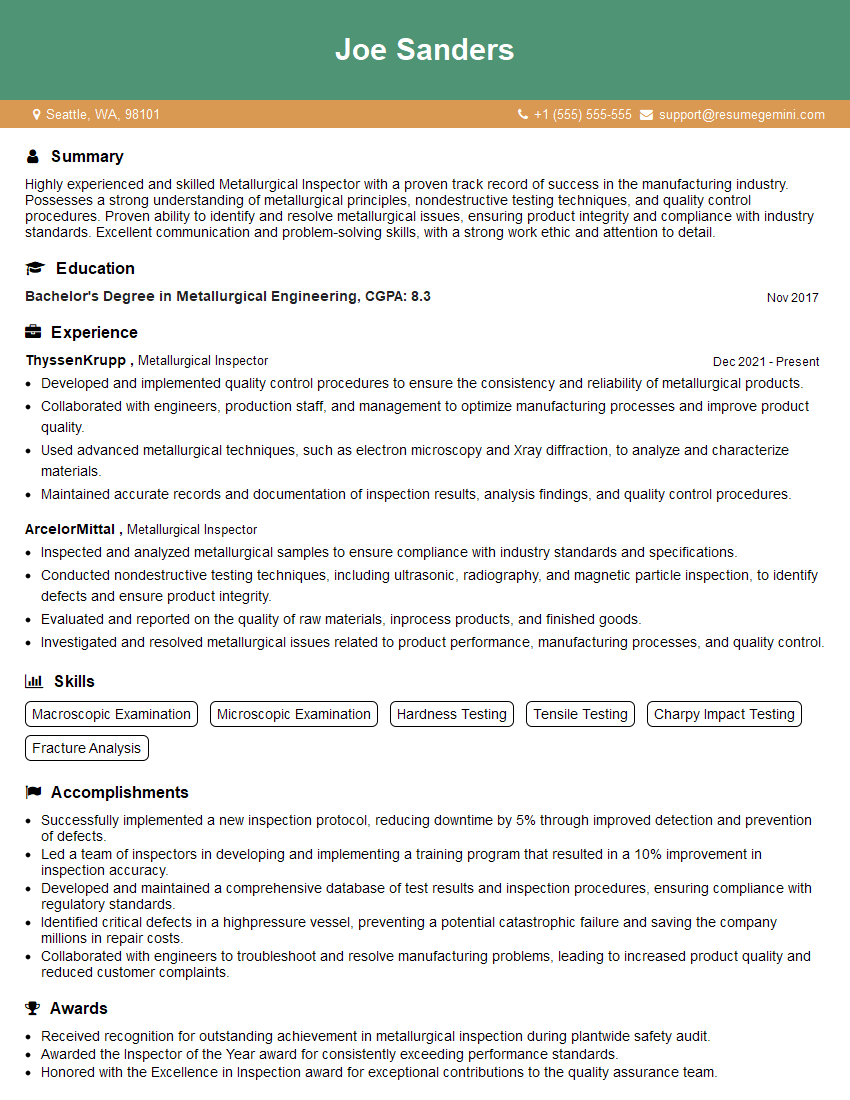
Metallurgical Inspector Resume Sample
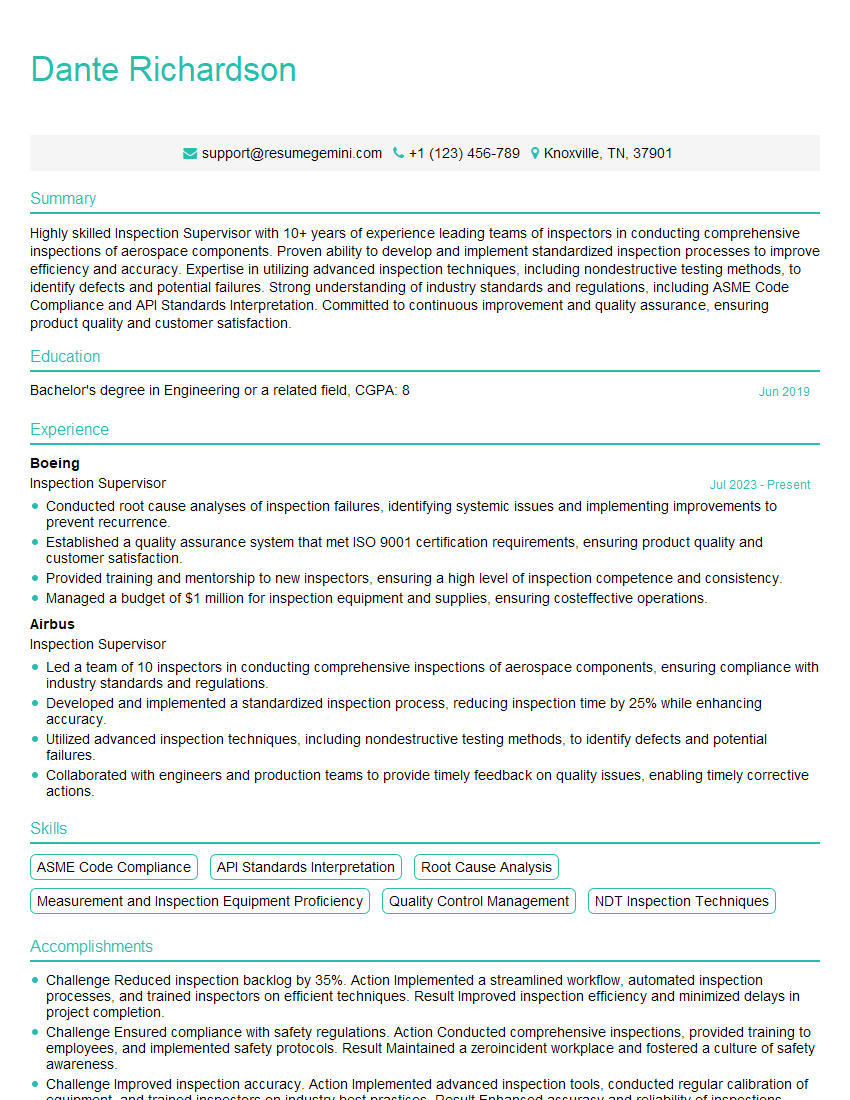
Inspection Supervisor Resume Sample
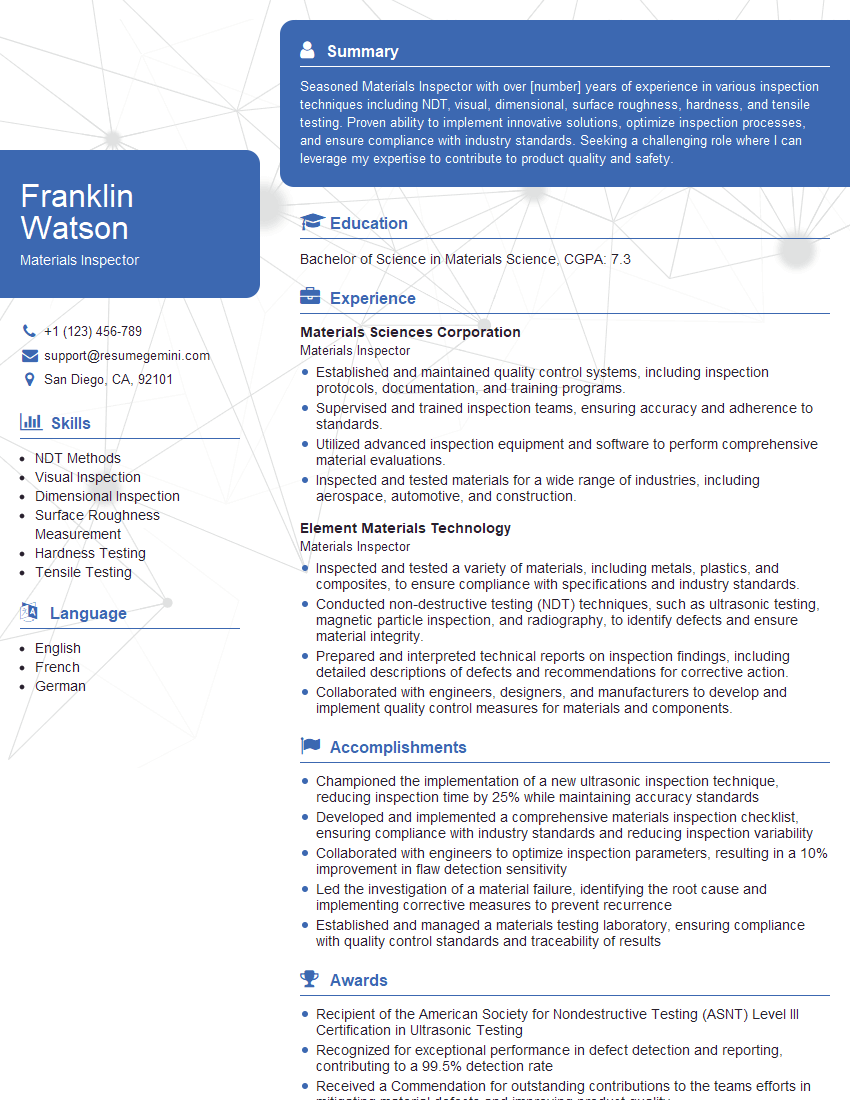
Materials Inspector Resume Sample
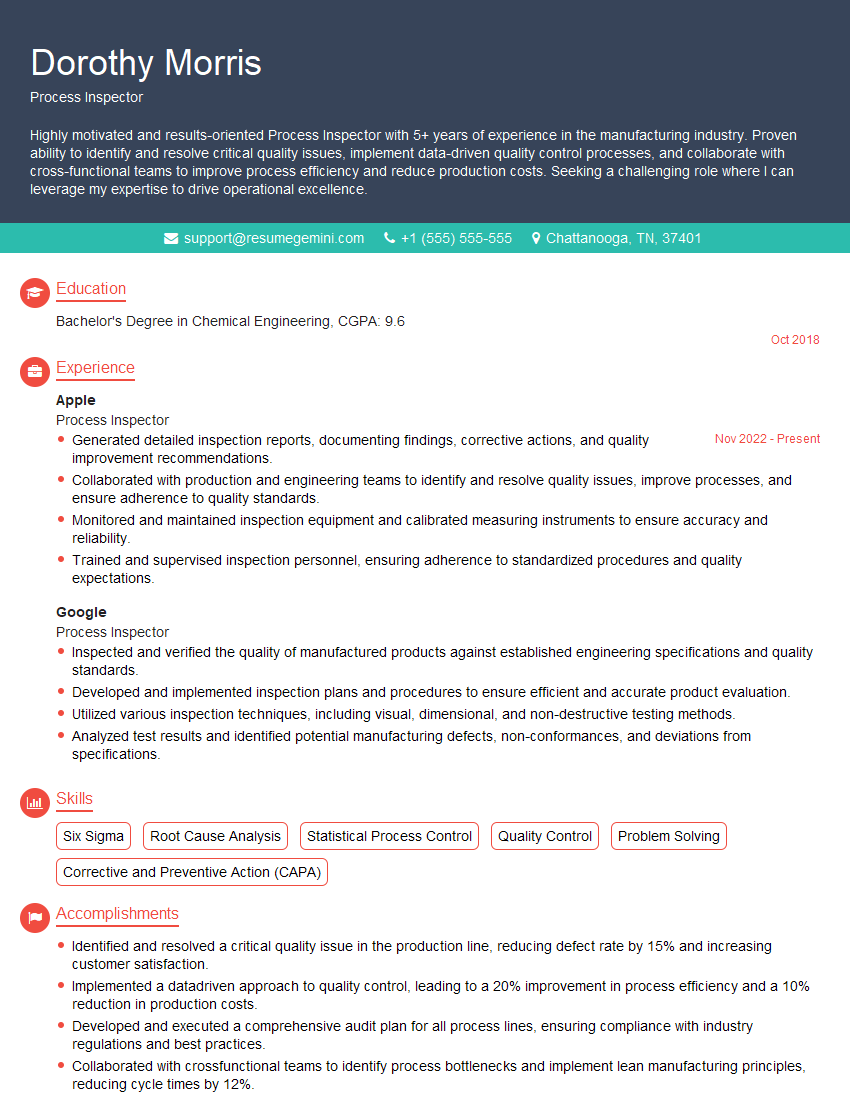
Process Inspector Resume Sample

Quality Control Inspector Resume Sample
Explore more articles
Users Rating of Our Blogs
Share Your Experience
We value your feedback! Please rate our content and share your thoughts (optional).
What Readers Say About Our Blog
Very informative content, great job.
good