Interviews are opportunities to demonstrate your expertise, and this guide is here to help you shine. Explore the essential Inspecting Printed Circuit Boards interview questions that employers frequently ask, paired with strategies for crafting responses that set you apart from the competition.
Questions Asked in Inspecting Printed Circuit Boards Interview
Q 1. What are the common defects found during PCB inspection?
Common PCB defects span a wide range, from minor cosmetic issues to critical failures. Think of a PCB as a complex city; each component is a building, and the connections are the roads. A defect is anything that disrupts the city’s functionality.
- Solder Defects: These are incredibly common and include bridges (excess solder connecting unintended traces), cold solder joints (poor solder connection, weak and unreliable), insufficient solder (insufficient to form a strong connection), tombstoning (one component leg being soldered while the other isn’t), and head-in-pillow (solder balls on the pad preventing proper soldering).
- Component Defects: This includes incorrect components, damaged components (physically broken or cracked), incorrectly oriented components, missing components, and components with incorrect polarity.
- Trace Defects: Open circuits (breaks in the conductive trace, like a broken road), short circuits (unintended connections between traces, like two roads merging unexpectedly), and damaged traces (scratches or etching issues).
- Manufacturing Defects: These can include delamination (layers of the PCB separating), improper plating (insufficient or uneven metal plating on the traces), and damage to the PCB itself (cracks, scratches, etc.).
- Foreign Objects: These could be anything from solder splashes to dust or debris that interfere with proper functionality.
Identifying and classifying these defects accurately is paramount to ensuring reliable product performance.
Q 2. Explain the difference between visual inspection and automated optical inspection (AOI).
Visual inspection and Automated Optical Inspection (AOI) are both crucial for PCB quality control, but they differ significantly in their approach and capabilities. Think of visual inspection as a seasoned detective carefully examining a crime scene, while AOI is like a sophisticated security system with multiple cameras and sensors providing comprehensive surveillance.
Visual Inspection: This is a manual process relying on the inspector’s keen eyesight and experience. They typically use magnifying glasses or microscopes to carefully examine the PCB for defects. It’s effective for finding subtle defects that automated systems might miss but is inherently slower and more subjective. The inspector’s expertise is crucial for interpretation.
Automated Optical Inspection (AOI): This utilizes advanced optical systems and image processing software to automatically inspect PCBs for defects. High-resolution cameras capture images of the board, and sophisticated algorithms compare these images to predefined standards to identify defects. AOI is much faster and provides consistent, objective results, but it may miss some subtle defects or require significant calibration and programming. It’s often used in high-volume manufacturing.
In practice, many manufacturers combine both methods to leverage the strengths of each. AOI handles the bulk of the inspection, while visual inspection focuses on complex areas or potential issues identified by the AOI system.
Q 3. Describe your experience with using various inspection tools (e.g., microscopes, magnifying glasses).
My experience with various inspection tools is extensive. I’ve used everything from simple magnifying glasses to advanced stereo microscopes and specialized inspection cameras.
Magnifying Glasses: Useful for initial assessments and identifying large defects. They provide a quick overview but lack the detail of higher-powered tools.
Microscopes (Stereo and Digital): These provide detailed, magnified views of the PCB, enabling the precise identification of smaller defects like cold solder joints, hairline cracks in traces, or subtle component damage. Digital microscopes, in particular, offer the added advantage of image capture and documentation.
Inspection Cameras: These provide high-resolution imaging with various lighting options. They help detect small defects in a broader context, easily capturing images for documentation and report generation. Some cameras even include measurement tools for precise defect sizing.
Proficiency in using these tools, combined with a solid understanding of PCB design and manufacturing processes, is critical for accurate and efficient inspection.
Q 4. How do you identify shorts and opens on a PCB?
Identifying shorts and opens requires a systematic approach, combining visual inspection with electrical testing. A short is like an unwanted shortcut in an electrical circuit, while an open is a break in the connection, disrupting the flow.
Visual Inspection: Carefully examine the PCB for any obvious signs of shorts (e.g., solder bridges) or opens (e.g., breaks in the traces). A microscope is often invaluable in this step.
Multimeter Testing: Use a multimeter to test continuity. For shorts, you’ll see a low resistance reading between unintended points. For opens, you’ll get an infinite resistance reading between points that should be connected. A careful, systematic approach is needed, testing traces and components individually.
Specialized Equipment: In more complex situations, specialized tools like in-circuit testers (ICTs) or automated test equipment (ATE) may be needed. These can automatically test connections, identifying shorts and opens with greater speed and efficiency.
Example: If I suspect a short between two traces, I’d use a multimeter to check for low resistance (ideally zero ohms) between them. If I find a low resistance, then I’ve likely identified a short circuit requiring repair.
Q 5. What are the IPC standards relevant to PCB inspection?
The IPC (Institute for Printed Circuits) standards are widely accepted benchmarks for PCB quality. Several standards are relevant to inspection, providing guidelines for acceptable levels of defects and inspection procedures.
- IPC-A-600: This is the most widely recognized standard, defining acceptable criteria for printed boards. It provides detailed classifications and acceptance levels for various defects.
- IPC-A-610: This standard addresses the acceptance criteria for electronic assemblies, including the solder joints and component placement.
- IPC-7095: Focuses on how to measure PCB quality through visual inspection.
These standards help ensure consistency and quality across the entire PCB manufacturing process. They are used by manufacturers and inspectors alike to define acceptable quality levels and to ensure that PCBs meet industry standards. Understanding these standards is critical for any PCB inspector.
Q 6. Explain your process for documenting inspection findings.
Documenting inspection findings is critical for traceability and problem-solving. My process involves a combination of visual documentation and detailed reports.
Visual Documentation: I use high-resolution digital images or videos to capture each defect. These images are annotated to highlight the specific issue and its location on the board. Clear labeling and consistent image capture practices are crucial for easy reference and comparison.
Detailed Reports: A comprehensive report summarizes the inspection findings, including the number and type of defects, their severity, and their location on the board. The report should be easy to understand, clearly listing the defects and any necessary corrective actions. It may include references to the relevant IPC standard acceptance criteria. I utilize software specifically designed for this purpose for consistent and efficient reporting.
This meticulous documentation process ensures that defects are properly identified, tracked, and addressed. It facilitates root cause analysis and prevents recurrence of similar defects in future production runs.
Q 7. How do you handle discrepancies between inspection results and production data?
Discrepancies between inspection results and production data indicate a potential problem that needs careful investigation. This requires a methodical approach to identify the root cause and resolve the issue.
Verification: First, I verify the accuracy of both the inspection results and the production data. This might involve re-inspecting the boards and reviewing the production records.
Root Cause Analysis: If the discrepancy is confirmed, a thorough root cause analysis is conducted. Possible causes could include errors in the inspection process, inaccuracies in the production data, or an actual quality control issue in the manufacturing process.
Corrective Actions: Based on the root cause analysis, appropriate corrective actions are implemented to address the discrepancy and prevent similar occurrences. This might involve recalibrating inspection equipment, updating production processes, or retraining personnel.
Example: If the production data shows zero defects, but inspection finds a significant number, I might investigate whether the inspection process was correctly followed, or whether the production data collection method was flawed. The goal is not just to resolve the immediate discrepancy but also to identify and correct underlying systemic issues.
Q 8. Describe your experience with different types of soldering defects (e.g., cold solder joints, bridging).
Soldering defects are a common issue in PCB manufacturing, significantly impacting functionality and reliability. I have extensive experience identifying and classifying various soldering defects. Two common examples are cold solder joints and solder bridges.
Cold solder joints: These occur when insufficient heat is applied during soldering, resulting in a weak, unreliable connection. They appear dull, grayish, and often lack the characteristic shiny, concave meniscus of a properly soldered joint. Think of it like trying to glue two pieces of wood together with only a tiny drop of glue – it won’t hold properly. In PCBs, this can lead to intermittent connections or complete failures.
Solder bridges: These are accidental connections between adjacent solder pads, caused by excess solder flowing between them. Imagine accidentally spilling glue between two pieces you were trying to glue separately. This shorts out the components, causing malfunction or complete failure of the circuit. Visual inspection, sometimes aided by magnification, is key to detecting these. I’ve experienced scenarios where bridging between fine-pitch components caused significant issues requiring rework.
Other defects I’ve encountered include tombstoning (where a surface mount component stands upright due to uneven solder), insufficient solder, and excessive solder (forming a solder ball or icicle).
Q 9. What is your experience with X-ray inspection of PCBs?
X-ray inspection is a crucial non-destructive testing method for PCBs, especially for complex assemblies and those with embedded components. My experience includes operating and interpreting X-ray images to detect hidden defects like internal shorts, cracks, voids within solder joints, and misaligned components. Think of it as a medical X-ray but for PCBs. It allows you to ‘see’ inside the board without damaging it.
I’m proficient in identifying various anomalies through X-ray imaging, which sometimes reveals defects invisible to the naked eye or even under magnification. For instance, I once used X-ray inspection to identify a hairline crack inside a BGA (Ball Grid Array) package that was causing intermittent connectivity problems – a defect impossible to detect using visual inspection alone. Understanding different X-ray densities and interpreting the resulting images is vital for this process.
Q 10. How do you prioritize defects during inspection?
Defect prioritization is critical in PCB inspection, focusing on defects that pose the greatest risk to functionality and safety. I use a risk-based approach, categorizing defects based on severity and their potential impact:
Critical Defects: These are defects that will immediately prevent the board from functioning or pose a safety hazard (e.g., shorts, open circuits in critical paths, missing components). These are always addressed first.
Major Defects: These significantly affect functionality but don’t immediately prevent operation (e.g., poor solder joints, component misalignment). These require immediate attention but might have a lower priority than critical defects.
Minor Defects: These are cosmetic or have minimal impact on functionality (e.g., minor scratches, excess flux). While not urgent, they can still be noted and potentially addressed to maintain quality standards.
This tiered approach allows for efficient allocation of resources and ensures that the most crucial issues are addressed first, minimizing downtime and production delays. For example, a short circuit is far more pressing than a slightly crooked component.
Q 11. What is your experience with different types of PCB components (e.g., surface mount, through-hole)?
I have extensive experience working with both surface mount (SMT) and through-hole components. SMT components are smaller, requiring more precise soldering techniques and inspection methods. Through-hole components, being larger and having leads that extend through the board, have different potential failure modes, such as loose connections or bent leads.
My experience spans various component types, including resistors, capacitors, integrated circuits (ICs), connectors, and various specialized components. Understanding the unique characteristics of each component type is crucial for effective inspection. For example, inspecting the solder joints on fine-pitch BGA packages requires high magnification and meticulous examination to detect tiny defects.
Q 12. How do you ensure accurate and consistent inspection results?
Ensuring accurate and consistent inspection results requires a multi-faceted approach. It’s about establishing and following standardized procedures, using calibrated equipment, and implementing a robust quality control system.
Standardized Procedures: I adhere strictly to predefined inspection checklists, ensuring all areas of the PCB are examined consistently across different boards and inspectors.
Calibrated Equipment: Regular calibration of inspection tools, such as microscopes and measuring instruments, is vital for obtaining reliable and accurate measurements.
Documentation: Detailed documentation of inspection findings, including photographs and detailed reports, is paramount to track defects and trace their root causes.
Regular Audits: Internal audits are conducted regularly to ensure consistent adherence to procedures and to identify areas for improvement.
In essence, it’s about building a systematic and repeatable process that minimizes human error and ensures high-quality inspection results consistently.
Q 13. Explain your process for reporting and escalating critical defects.
My process for reporting and escalating critical defects involves immediate notification of the relevant teams and clear documentation of the issue. Upon discovering a critical defect, I:
Document the defect: I meticulously document the defect’s location, type, severity, and any related observations using detailed reports, including photographic evidence.
Immediate notification: I immediately notify my supervisor and the appropriate engineering team. This could involve a formal defect report generated through our company’s quality management system.
Collaboration: I work collaboratively with the engineering team to understand the root cause of the defect and propose corrective actions.
Follow-up: I track the corrective actions implemented and verify that the issue is resolved.
The severity of the defect dictates how quickly the issue is escalated. Critical defects that affect safety or prevent functionality require immediate action and may involve halting the production line until the issue is resolved.
Q 14. How familiar are you with using a microscope for PCB inspection?
I’m highly proficient in using microscopes for PCB inspection. Different types of microscopes, such as stereo microscopes and video inspection systems, provide varying levels of magnification and capabilities for detailed examination.
My experience includes using microscopes to identify fine details such as hairline cracks in solder joints, tiny component defects, and even examining the internal structures of components under high magnification. I understand the importance of proper lighting and focusing techniques for obtaining clear, high-quality images. A microscope is an indispensable tool that enables efficient and accurate defect detection that the naked eye often misses.
Q 15. What are the key aspects of a successful PCB inspection process?
A successful PCB inspection process hinges on a multi-faceted approach ensuring both quality and efficiency. It begins with a clear understanding of the PCB design and specifications, including tolerances for component placement, solder joint quality, and trace integrity. Then, the inspection process itself needs to be meticulously planned, leveraging the right tools and techniques for the job. This includes selecting appropriate magnification levels, lighting conditions, and inspection methods (manual, automated optical inspection (AOI), or a combination). Finally, thorough documentation and defect tracking are crucial, not only for identifying issues but also for continuous improvement and preventing recurring problems.
- Clear Specifications: A well-defined set of acceptance criteria is paramount. Without this, ‘defective’ becomes subjective.
- Appropriate Methodology: Choosing between manual visual inspection, AOI, or X-ray inspection depends on the PCB complexity and required precision.
- Effective Documentation: Detailed records of inspected boards, identified defects, and corrective actions are essential for traceability and quality control.
For example, inspecting a high-frequency PCB requires a much stricter tolerance for trace width and spacing than a low-frequency board. A poorly defined inspection process might miss critical defects leading to signal integrity issues and product failure.
Career Expert Tips:
- Ace those interviews! Prepare effectively by reviewing the Top 50 Most Common Interview Questions on ResumeGemini.
- Navigate your job search with confidence! Explore a wide range of Career Tips on ResumeGemini. Learn about common challenges and recommendations to overcome them.
- Craft the perfect resume! Master the Art of Resume Writing with ResumeGemini’s guide. Showcase your unique qualifications and achievements effectively.
- Don’t miss out on holiday savings! Build your dream resume with ResumeGemini’s ATS optimized templates.
Q 16. Describe your experience with using AOI equipment and interpreting its results.
I have extensive experience using AOI equipment from various manufacturers, including [Mention specific brands if comfortable, otherwise omit]. My proficiency extends beyond simply operating the machines; I am adept at interpreting the generated reports and images to accurately identify and classify defects. This includes understanding the nuances of different AOI algorithms and knowing how to adjust parameters to optimize inspection sensitivity and minimize false positives.
For instance, I’ve used AOI to detect missing components, incorrect component orientation, solder bridging, and opens in high-density PCBs. The AOI system provides a visual representation of the PCB with highlighted potential defects. I then carefully review these highlighted areas, often using a microscope for closer examination to confirm the defect and its severity. I’m also proficient at creating and modifying AOI programs to match specific board designs and inspection requirements. This allows for customized inspection routines optimized for efficiency and accuracy.
Interpreting AOI results requires a keen eye for detail and a thorough understanding of PCB manufacturing processes. Sometimes, the AOI might flag a seemingly minor imperfection that upon closer inspection proves to be indicative of a more significant underlying problem.
Q 17. How do you maintain your calibration and ensure accuracy of your equipment?
Maintaining equipment calibration is crucial for accurate and reliable inspection results. I follow a rigorous calibration schedule, which is typically defined by the manufacturer’s recommendations and our internal quality control procedures. This usually involves using calibrated standards and test patterns to verify the accuracy of magnification, measurement, and image analysis functions of the equipment.
The process typically involves:
- Regular Calibration Checks: Daily or weekly checks using standardized test patterns to verify equipment performance.
- Formal Calibration: Periodic formal calibration by certified technicians, often annually or according to the manufacturer’s specifications. This involves using traceable standards.
- Documentation: Meticulous record-keeping of all calibration activities, including dates, results, and technician signatures.
Failure to maintain calibration can lead to inaccurate measurements and misinterpretations of defect severity, potentially resulting in the acceptance of faulty PCBs or the rejection of good ones. This could have significant cost implications and impact product reliability.
Q 18. What are the challenges of inspecting high-density PCBs?
Inspecting high-density PCBs presents several unique challenges. The smaller components, finer traces, and increased component density make visual inspection more difficult and require higher magnification and better lighting. Automated optical inspection (AOI) becomes almost essential for efficiently and reliably inspecting these boards.
Specific challenges include:
- Component Visibility: Small components can be obscured by adjacent components or solder mask, making defect identification challenging.
- Resolution Requirements: High-resolution imaging systems are necessary to accurately assess the quality of fine traces and solder joints.
- False Positives: The complexity of high-density PCBs can increase the likelihood of false positives from AOI systems.
- Shadowing Effects: Component height differences can create shadows that interfere with clear image interpretation.
To overcome these challenges, advanced AOI systems with high-resolution cameras, sophisticated algorithms, and specialized lighting techniques are needed. A skilled inspector also needs to be experienced in interpreting AOI results and using additional tools, such as microscopes, to verify potential defects.
Q 19. How do you handle situations where a defect is difficult to identify?
When encountering a difficult-to-identify defect, a systematic approach is essential. I start by carefully examining the area in question under various magnifications and lighting conditions. If the defect is still unclear, I might employ additional inspection techniques such as:
- Microscopy: Using a high-powered microscope to get a detailed view of the defect.
- X-ray Inspection: If the defect is suspected to be internal to the PCB, X-ray inspection can reveal hidden flaws.
- Cross-Sectioning: In cases of suspected delamination or internal shorts, carefully removing a section of the PCB for microscopic analysis can help.
- Consultation: Seeking input from colleagues or experts with more experience in similar defect analysis.
Proper documentation throughout this process is critical. Detailed images, notes, and measurements are important to communicate the issue effectively and to contribute to understanding the root cause. Sometimes, a difficult-to-identify defect can reveal a flaw in the PCB manufacturing process that needs to be addressed.
Q 20. What safety precautions do you follow during PCB inspection?
Safety is paramount during PCB inspection. I always adhere to the following precautions:
- Eye Protection: Wearing appropriate magnification eyewear to protect my eyes from potential hazards during microscope use.
- ESD Precautions: Using anti-static mats, wrist straps, and other ESD control measures to prevent electrostatic discharge damage to sensitive components.
- Proper Lighting: Using appropriate lighting to minimize eye strain and improve visibility.
- Ergonomics: Maintaining proper posture and working in a well-lit and comfortable environment to prevent fatigue and injuries.
- Handling Chemicals Carefully: If working with cleaning solutions or fluxes, appropriate gloves and safety equipment must be used.
Ignoring these precautions can lead to eye damage, static electricity damage to the PCBs, or workplace injuries. Safety is never compromised; it’s an integral part of the inspection process.
Q 21. Explain your experience with different types of PCB materials and their inspection requirements.
My experience encompasses various PCB materials, each with its unique inspection requirements. For example, FR-4 (fiberglass epoxy) is a common material, and inspection focuses primarily on component placement, solder joints, and trace integrity. High-temperature materials like polyimide require specialized handling and inspection techniques because they are more brittle and sensitive to heat. Flexible PCBs demand extra care during handling and inspection to avoid damage.
The inspection requirements differ depending on the material’s properties:
- FR-4: Standard visual and AOI inspections are usually sufficient.
- High-Temperature Materials (Polyimide): More delicate handling and perhaps specialized microscope techniques are necessary.
- Flexible PCBs: Inspection requires careful handling to avoid bends and creases; specialized equipment might be used.
- Metal-core PCBs: X-ray inspection is often critical to assess internal layer integrity.
Understanding these material properties and their impact on the inspection process is essential for ensuring accurate and reliable results. Ignoring material-specific considerations can lead to errors in defect identification and flawed conclusions.
Q 22. How do you contribute to continuous improvement in the PCB inspection process?
Continuous improvement in PCB inspection is crucial for maintaining high product quality and efficiency. My approach involves a multi-pronged strategy focusing on data analysis, process optimization, and team collaboration.
- Data-driven analysis: I meticulously track inspection data, identifying recurring defects and their root causes. This involves using statistical process control (SPC) charts to monitor key metrics such as defect rate per board, defect type frequency, and inspection time. For example, if I notice a spike in solder bridge defects on a specific board type, I’d investigate the assembly process for that board to find and rectify the issue.
- Process optimization: Based on the data analysis, I propose and implement process improvements. This could involve adjusting the AOI (Automated Optical Inspection) machine settings, refining the inspection checklist, or suggesting improvements to the manufacturing process itself. For instance, if a particular component is prone to misalignment, I might suggest using a more precise placement machine or revising the stencil design.
- Team collaboration: I actively engage with the manufacturing and engineering teams to share my findings and collaboratively implement corrective actions. This ensures that solutions are sustainable and address the underlying problems, not just the symptoms. Regular meetings and feedback sessions are key to this process.
By combining these approaches, I contribute to a culture of continuous improvement, leading to reduced defect rates, improved efficiency, and higher overall product quality.
Q 23. What are the key differences between inspecting single-sided and double-sided PCBs?
Inspecting single-sided and double-sided PCBs differs significantly in complexity and the techniques required. Single-sided PCBs are much simpler to inspect as all components and traces are accessible from a single side. Double-sided PCBs require a more comprehensive approach.
- Single-sided PCBs: Inspection is generally straightforward, focusing on component placement, solder joints, and trace continuity. A visual inspection with magnification, potentially aided by a simple magnifying glass or low-power microscope, is often sufficient. Automated optical inspection (AOI) can also be used for larger batches.
- Double-sided PCBs: Inspection is more challenging as components and traces are on both sides of the board. This necessitates the use of more advanced techniques, such as X-ray inspection to view internal layers and hidden defects. Manual inspection requires flipping the board and examining both sides meticulously. AOI systems capable of inspecting both sides are essential for efficient and thorough inspection.
Essentially, the difference boils down to accessibility. Single-sided PCBs offer easy visual access, while double-sided PCBs necessitate advanced tools and more complex inspection procedures to ensure thorough quality control. Imagine inspecting a simple sandwich versus a multi-layered cake – the latter requires more care and tools to ensure every layer is perfect.
Q 24. How do you deal with time constraints during the inspection process?
Time constraints are a common challenge in PCB inspection. My strategy involves prioritizing tasks, using efficient inspection techniques, and leveraging technology.
- Prioritization: I focus on critical components and areas known to be prone to defects first. For example, I prioritize inspecting high-value components or those with tight tolerance requirements. This ensures that the most crucial aspects of quality are addressed first, even under time pressure.
- Efficient Inspection Techniques: I utilize effective inspection methods, such as sampling techniques where appropriate, to optimize inspection time without compromising accuracy. The sampling strategy depends on the risk associated with the component or the past defect rate.
- Technology Utilization: I leverage automated systems wherever possible. AOI machines can drastically reduce inspection time for high-volume production. Using specialized software and tools for data analysis further accelerates the process by helping to focus on areas of higher risk.
Despite time pressure, thoroughness is paramount. I balance speed with accuracy, ensuring that critical defects are not missed. Effective communication with stakeholders about potential time constraints and adjusting priorities based on risk is also important.
Q 25. Describe your proficiency in using any specific PCB inspection software.
I am proficient in using several PCB inspection software packages, most notably Cogiscan and AutoVision. Cogiscan is excellent for tracking and managing the entire inspection process, providing detailed reports and analytics. Its data-visualization tools allow me to quickly identify trends and anomalies in the defect rates. I use its reporting features to generate detailed reports which are crucial for process improvements.
AutoVision, on the other hand, is powerful for image analysis and defect classification within AOI systems. I use its advanced algorithms to fine-tune the AOI parameters, ensuring high accuracy and minimal false positives. Its user-friendly interface facilitates quick adjustments for different PCB types.
My experience with these tools allows me to effectively manage and analyze inspection data, leading to quicker identification of defects and implementation of corrective actions. I’m also comfortable learning new software as technology evolves in this field.
Q 26. How do you ensure the traceability of your inspection results?
Traceability of inspection results is essential for accountability and quality assurance. I ensure traceability through a robust system that includes detailed documentation and unique identifiers.
- Unique Identification: Each PCB is assigned a unique serial number or identifier that is tracked throughout the inspection process. This number links to all inspection records, ensuring that every board’s inspection data is easily accessible.
- Detailed Documentation: Every inspection step, including the date, time, inspector, inspection method, and any identified defects, is meticulously recorded. This documentation forms an audit trail, enabling easy tracking and verification of the inspection process.
- Digital Data Management: I utilize software systems that store inspection data in a secure and accessible database. This digital record-keeping system ensures data integrity and ease of access for auditing and analysis purposes.
This comprehensive traceability system ensures that every stage of the inspection process is fully documented, making it easy to identify and address any quality issues that might arise.
Q 27. What is your experience with implementing and maintaining a quality control system for PCB inspection?
I have extensive experience in implementing and maintaining quality control systems for PCB inspection, adhering to industry standards like IPC-A-610. My approach is based on a structured framework that incorporates various aspects of quality management.
- Defining Quality Standards: I begin by defining clear and measurable quality standards, aligning them with customer requirements and industry best practices. This usually involves adopting a standard like IPC-A-610 and tailoring it to the specific needs of the project.
- Implementing Inspection Procedures: I then develop and implement detailed inspection procedures, incorporating visual inspections, automated optical inspections, and other relevant techniques. These procedures include clear instructions, checklists, and acceptance criteria.
- Process Monitoring and Improvement: I establish a system for monitoring the inspection process, collecting data on defect rates, identifying trends, and implementing corrective actions to improve quality and efficiency. This often involves the use of statistical process control techniques.
- Documentation and Record-Keeping: I maintain comprehensive documentation of all inspection activities, ensuring traceability and accountability. This includes inspection reports, defect logs, and corrective action reports.
Through consistent application and continuous improvement of this framework, I ensure high-quality PCB inspection, contributing to overall product reliability and customer satisfaction. My experience includes working with ISO 9001 certified environments, which further emphasizes my commitment to structured quality control.
Key Topics to Learn for Inspecting Printed Circuit Boards Interview
- Visual Inspection Techniques: Understanding different types of visual inspection methods (e.g., magnification, lighting techniques) and their application in identifying defects.
- Defect Identification and Classification: Knowing how to identify common PCB defects (e.g., opens, shorts, solder bridges, component placement errors) and categorize them according to severity.
- Testing and Measurement Equipment: Familiarity with common inspection tools like microscopes, multimeters, and automated optical inspection (AOI) systems.
- IPC Standards and Guidelines: Understanding relevant IPC standards (e.g., IPC-A-610) and their application in ensuring quality control during PCB inspection.
- Documentation and Reporting: Knowing how to accurately document inspection findings, including clear descriptions, photographic evidence, and detailed reports.
- Problem-Solving and Troubleshooting: Applying analytical skills to identify the root causes of defects and propose solutions to prevent future occurrences.
- Soldering Techniques and Defects: Understanding different soldering methods and the common defects associated with them (e.g., cold solder joints, insufficient solder).
- Component Identification and Specifications: Ability to identify various electronic components and understand their specifications, tolerances, and markings.
- Health and Safety Regulations: Awareness of relevant safety procedures and regulations related to handling electronic components and using inspection equipment.
- Understanding PCB Manufacturing Processes: A basic understanding of how PCBs are manufactured will provide context for defect analysis.
Next Steps
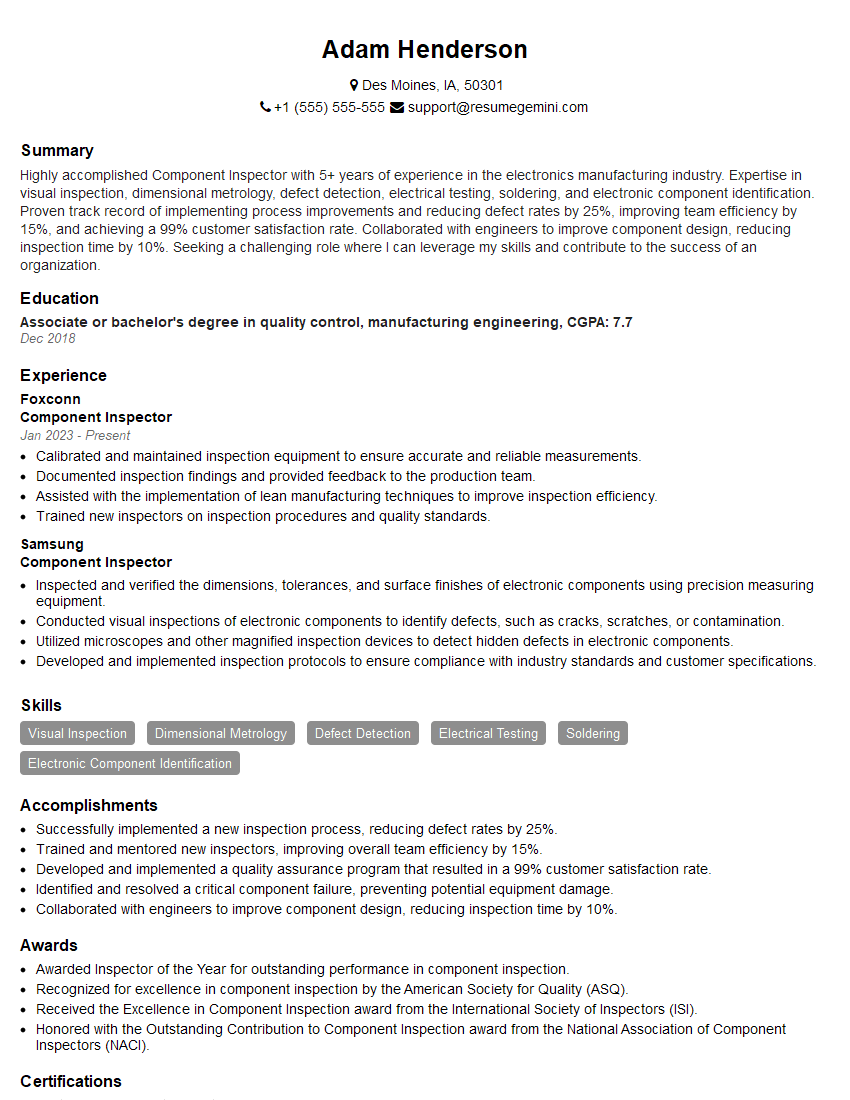
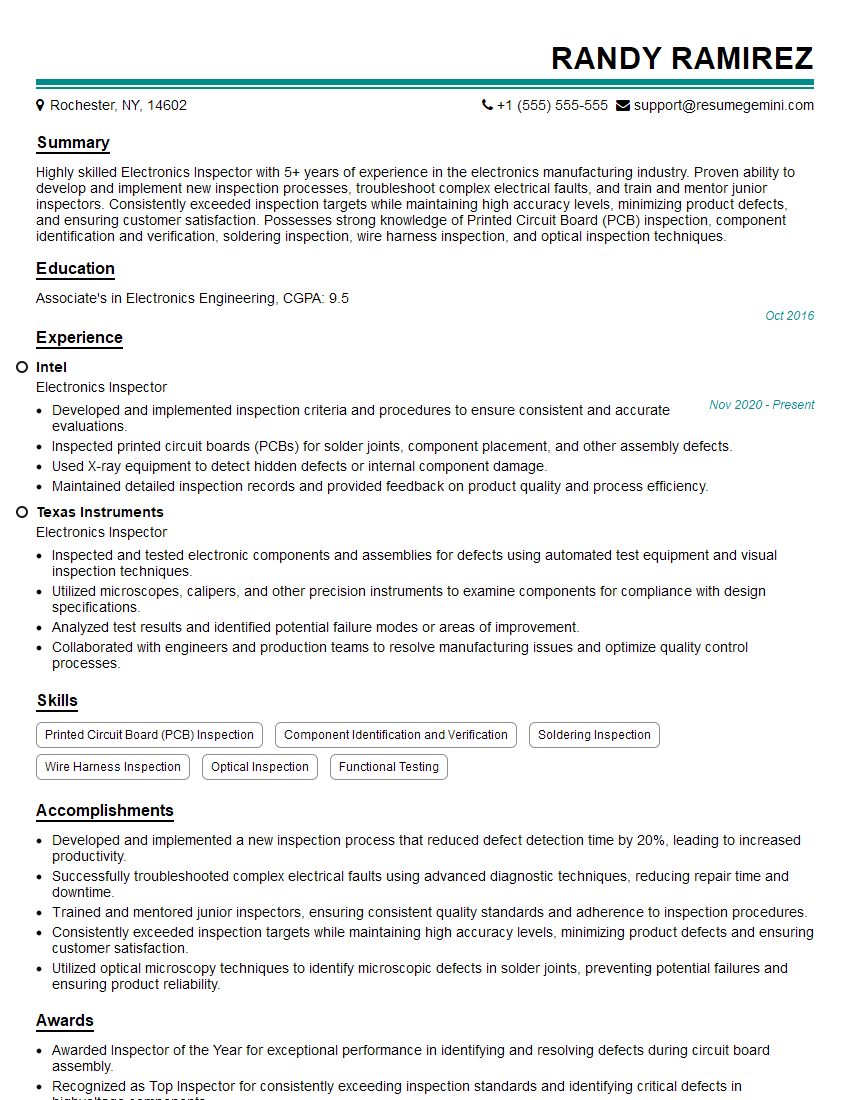
Mastering the art of Printed Circuit Board inspection opens doors to rewarding careers in electronics manufacturing, quality control, and technical support. Landing your dream role starts with a compelling resume that showcases your skills and experience effectively. Creating an ATS-friendly resume is crucial for getting past applicant tracking systems and landing an interview. To help you build a standout resume, we recommend using ResumeGemini, a trusted resource for creating professional and impactful resumes. ResumeGemini provides examples of resumes tailored to the specific needs of Inspecting Printed Circuit Boards professionals – giving you a head start in your job search.
Explore more articles
Users Rating of Our Blogs
Share Your Experience
We value your feedback! Please rate our content and share your thoughts (optional).
What Readers Say About Our Blog
Very informative content, great job.
good