The thought of an interview can be nerve-wracking, but the right preparation can make all the difference. Explore this comprehensive guide to Inspecting Shingles for Defects interview questions and gain the confidence you need to showcase your abilities and secure the role.
Questions Asked in Inspecting Shingles for Defects Interview
Q 1. What are the common types of shingle defects?
Common shingle defects significantly impact a roof’s lifespan and can lead to costly repairs. Think of your shingles as the roof’s armor; any damage weakens its defense against the elements. These defects range from minor cosmetic issues to serious structural problems. Let’s look at some of the most prevalent ones.
- Granule Loss: This is the most common defect, where small stones embedded in the asphalt begin to wear off, exposing the underlying material. Think of it like the paint chipping off a car – it eventually leads to more significant damage.
- Cracking and Blistering: Cracks appear as fissures in the shingle surface, while blistering involves the shingle lifting away from the underlying layers, often due to trapped moisture. Imagine a dried-up mud puddle cracking – similar to the cracking of shingles.
- Curling and Buckling: Shingles curl at the edges, or buckle and warp, compromising the weatherproofing of the roof. This can happen due to poor installation, age, or extreme temperatures.
- Wind Damage: High winds can tear shingles loose, causing missing shingles or lifting up edges.
- Hail Damage: Hailstones can dent or fracture shingles, making them vulnerable to leaks.
- Algae and Moss Growth: Organic growth can block sunlight and add weight, shortening the shingle’s lifespan. This growth is typically found in shaded areas.
- Punctures and Holes: These can be caused by falling debris, animals, or even faulty installation.
Q 2. Describe the different types of asphalt shingles.
Asphalt shingles are the most common roofing material, offering a variety of styles and price points. Think of them as coming in different flavors to meet different needs and budgets. Here’s a breakdown of the common types:
- 3-Tab Shingles: The most economical option, known for their simple, rectangular design with three tabs per shingle. They are easy to install and offer decent protection.
- Architectural Shingles (Dimensional Shingles): These offer a more textured and visually appealing look than 3-tab shingles. They are thicker and more durable and mimic the appearance of wood shakes or slate.
- Luxury Shingles: These are high-end shingles with enhanced features like thicker material, better granule adhesion, and enhanced protection against extreme weather conditions. They often boast longer warranties.
Choosing the right type depends on your budget, aesthetic preferences, and the climate you live in. For example, in a hurricane-prone area, you’d prioritize more durable, wind-resistant options like luxury shingles.
Q 3. How do you identify granule loss on shingles?
Granule loss is easily spotted. It’s like noticing a car losing its paint; you’ll see bare spots on the shingles. You can identify it by looking for:
- Bare patches of shingle: The asphalt backing is exposed, showing a dark, usually black, surface.
- Accumulation of granules in gutters or around the house: This indicates significant shingle wear. Think of it as a trail of breadcrumbs leading you to the problem.
- A dull or faded appearance of the shingle: Granules give shingles their color and texture; loss leads to a less vibrant, sometimes chalky look.
Inspect the roof from a safe distance, using binoculars if necessary. Close-up examination might require accessing the roof, which is always best done with safety equipment and appropriate precautions.
Q 4. What are the signs of wind damage to shingles?
Wind damage is often dramatic. High winds can be devastating to roofs; shingles can be ripped off completely or have their edges lifted. Signs include:
- Missing shingles: Obvious gaps in the roof’s surface, potentially exposing underlayment.
- Damaged or lifted shingles: Shingles might be curled, cracked, or entirely detached at one or more edges.
- Granule loss in specific areas: Areas facing prevailing winds often experience greater granule loss.
- Damaged flashing: Wind can force water under roofing components, such as flashing around chimneys, leading to water damage.
When inspecting for wind damage, pay close attention to the edges and corners of the roof, which are most vulnerable.
Q 5. How do you assess hail damage to shingles?
Hail damage can be subtle or severe. Hailstones, even small ones, can cause significant damage. Look for:
- Dents and bruises: Small indentations or depressions in the shingle surface, often circular.
- Cracks: Fissures or fractures in the shingle material.
- Granule loss in localized areas: Hailstones can knock off granules, leaving bare patches.
- Broken or missing shingles: Larger hailstones can cause complete shingle failure.
A systematic approach is crucial here, starting from the eaves and carefully examining each shingle for signs of impact. Remember, hail damage can be easily hidden, and a thorough inspection is key.
Q 6. Explain the process of inspecting a roof for leaks.
Inspecting a roof for leaks involves a methodical approach. Imagine yourself as a detective, carefully piecing together clues to find the source of the problem.
- Visual Inspection: Examine the roof from the ground using binoculars, looking for obvious signs like staining, moss growth, missing shingles, or damaged flashing. Stains often appear darker than the surrounding area.
- Interior Inspection: Check ceilings and walls for water stains, dampness, or bubbling paint – these are clear indicators of leaks. The location of the stain can often point to the leak’s location on the roof.
- Attic Inspection (if accessible): Inspect the attic for signs of moisture, such as water stains on the roof sheathing, damp insulation, or mold growth. This will pinpoint the leak location more accurately.
- Exterior Close Inspection: Once you’ve identified potential leak areas, climb onto the roof and carefully examine the shingles, flashing, and other components around that zone. This will confirm and provide details for repairs.
- Water Test (if necessary): In some cases, a controlled water test might be used to pinpoint a leak’s location – this should only be done by a trained professional.
Documentation is crucial. Take photos and detailed notes of your findings, including the location, type, and severity of any damage.
Q 7. How do you identify and document shingle curling or buckling?
Curling and buckling are signs of shingle deterioration. Imagine shingles as a team; if one member buckles, the entire team’s performance (waterproofing) is compromised. You can identify them by:
- Visual observation: Look for shingles that are lifting at the edges (curling) or have warped or uneven surfaces (buckling).
- Measurement: Using a ruler, measure the degree of lift or warp. Quantifying the damage helps in assessing the extent of the repair needed.
- Documentation: Take photos and note the location and severity of the curling and buckling. This information helps assess the impact on the roof’s performance and guide repair decisions.
Regular roof inspections, ideally twice a year (spring and fall), can catch curling and buckling early, preventing bigger problems down the line.
Q 8. What are the signs of algae growth on shingles?
Algae growth on shingles typically manifests as dark streaks or blotches, often black or dark green, on the shingle surface. Think of it like a moss or lichen growing on a rock. It starts as small spots that gradually spread, particularly on north-facing roofs that receive less direct sunlight and remain damp for longer periods. The algae doesn’t directly damage the shingle’s structural integrity, but it detracts significantly from the roof’s aesthetic appeal and can, over time, contribute to shingle degradation by retaining moisture. You’ll often see it concentrated in areas with poor ventilation or shaded spots where moisture lingers.
Identifying Algae: A simple water test can help confirm your suspicions. Spray a small area with water; if the dark discoloration lightens noticeably, it’s likely algae. If the discoloration persists, it might indicate other issues like staining or damage.
Q 9. How do you determine the age of asphalt shingles?
Determining the age of asphalt shingles isn’t always straightforward, but several clues can help. The most reliable method is to check the manufacturer’s information, often found on a label affixed to the shingles themselves or in accompanying documentation from the original installation. This label typically provides a date of manufacture or a batch number that can be traced. If that information is unavailable, you can use these indirect methods:
- Visual Inspection: Look for signs of significant wear and tear – such as cracking, curling, granule loss, or discoloration. These factors, while not precise, indicate a shingle’s age. More extensive damage suggests a greater age.
- Building Permits and Records: If the roofing was recently installed, you can check local building permits to obtain a date of installation.
- Homeowner’s Records: Consulting homeowner records (if accessible) may reveal previous roofing work and its date.
Remember, aging is a process and a visual assessment only provides an estimate. Various environmental factors influence the rate of shingle deterioration.
Q 10. What tools and equipment are essential for a thorough shingle inspection?
A thorough shingle inspection requires a combination of tools and equipment to ensure comprehensive assessment. Safety is paramount, so always use appropriate safety measures, such as fall protection when working at heights.
- Ladder: A sturdy ladder appropriate for the roof height is essential for safe access.
- Binoculars: These allow for closer examination of difficult-to-reach areas.
- Camera and Flashlight: Pictures document damage, and a flashlight helps illuminate shaded areas.
- Measuring Tape: Used for recording measurements of damaged areas or to assess the extent of shingle problems.
- Roofing Hook: A hook to gently lift and inspect shingles without causing further damage.
- Gloves: Protect hands from sharp shingle edges and debris.
For advanced inspections, you may need specialized tools like infrared cameras to detect moisture problems hidden beneath the shingles.
Q 11. How do you document your findings during a shingle inspection?
Thorough documentation is crucial for effective communication and future reference. I utilize a multi-faceted approach:
- Photographs: High-resolution photos, with clear indications of location and scale (using a ruler or other reference object), are essential for capturing the extent of damage. I label images systematically and include annotations where relevant.
- Detailed Written Report: This report should include the date of the inspection, address of the property, a description of the type of shingles, an overview of the roof’s condition, detailed descriptions of any identified defects (with locations and dimensions), and conclusions (whether repairs or replacement is needed). I frequently use tables to organize information clearly.
- Sketches or Diagrams: A simple roof sketch can help visualize the locations of damage, making the report more accessible.
- Digital Report: Creating a digital report that is easily shareable and printable is incredibly helpful.
Accurate documentation avoids misunderstandings and helps track issues over time.
Q 12. Explain your understanding of different shingle warranties.
Shingle warranties vary significantly by manufacturer and product type. Understanding these warranties is essential for both homeowners and contractors. They often cover defects in materials and workmanship, but the specifics vary widely.
- Material Defects: This typically covers flaws in the manufacturing process, such as imperfections in the asphalt or fiberglass components.
- Workmanship Defects: These relate to problems arising from improper installation, including incorrect nailing or flashing issues.
- Limitations: Warranties often exclude damage from external factors like hail, wind, or acts of God, or damage due to improper maintenance.
- Duration: Warranties range from a few years to decades, with some offering prorated coverage that decreases over time.
- Transferability: Some warranties are transferable to subsequent homeowners; others are not.
It’s crucial to carefully review the entire warranty document to understand its terms and conditions before making any decisions about roof repairs or replacements. I always recommend homeowners keep their warranty documents in a safe place.
Q 13. How do you determine if shingle damage is repairable or requires replacement?
The decision to repair or replace damaged shingles depends on several factors, including the extent and type of damage, the age of the roof, the overall condition of the shingles, and the cost of repair versus replacement.
- Minor Damage (Repairable): Small cracks, minor granule loss, or a few missing shingles are generally repairable. The repair process might involve patching, sealing, or replacing individual shingles. However, if many shingles in an area exhibit damage, replacement might be more cost-effective in the long run.
- Extensive Damage (Replacement): Widespread cracking, curling, significant granule loss, or large areas of missing shingles typically necessitate complete or partial roof replacement. This is often the case if the underlying decking is damaged. Replacing just a few shingles in a severely damaged area might not be cost-effective and could cause future problems.
I always consider the long-term implications before recommending a solution. Sometimes, a seemingly small repair might indicate more significant underlying issues needing attention.
Q 14. What are the common causes of premature shingle failure?
Premature shingle failure, meaning failure before the expected lifespan, can stem from various causes. It’s not always a sign of poor shingle quality.
- Poor Installation: Incorrect nailing, improper flashing, or inadequate underlayment are common culprits. Poor workmanship leaves shingles vulnerable to moisture and wind damage.
- Environmental Factors: Extreme weather conditions, such as hailstorms, high winds, or prolonged exposure to intense sunlight, can accelerate shingle degradation.
- Moisture Intrusion: Inadequate ventilation can lead to moisture buildup under the shingles, causing premature deterioration. Blocked gutters or damaged flashing can also contribute to this.
- Tree Branches and Debris: Accumulated debris or shading from tree branches can cause moisture retention and lead to algae growth and premature wear.
- Poor Quality Materials: Although less common, using sub-standard materials or shingles that are not suitable for a specific climate can result in earlier than expected failure.
A thorough inspection can pinpoint the cause of the premature failure and guide preventative measures for future roofing systems.
Q 15. How do you differentiate between manufacturing defects and installation defects?
Distinguishing between manufacturing and installation defects in shingles requires a keen eye for detail and understanding of the roofing process. Manufacturing defects originate from flaws in the shingle’s creation, while installation defects stem from improper handling during the roofing project.
- Manufacturing Defects: These are typically consistent across multiple shingles and often relate to the shingle’s composition. Examples include:
- Cracks or splits in the shingle material itself, often visible before installation.
- Uneven coloration or significant variations in texture across the batch.
- Missing granules or significant granule loss indicating a manufacturing problem rather than weather damage.
- Blistering or bubbling of the shingle surface due to issues in the manufacturing process.
- Installation Defects: These are usually localized and inconsistent across the roof. Common examples include:
- Shingles improperly aligned, overlapping, or secured (resulting in gaps or exposed areas).
- Damage to the shingles caused during installation, such as punctures or tears.
- Improper nailing leading to wind damage or early shingle failure.
- Buckling or curling of shingles due to improper underlayment or improper fastening techniques.
Identifying the source requires a thorough inspection, considering the pattern and consistency of the defect across the roof surface. For example, if I see cracking in a specific area, concentrated in a section laid by a particular crew member, that’s likely an installation issue, versus a whole roof with cracked shingles pointing to a manufacturing fault.
Career Expert Tips:
- Ace those interviews! Prepare effectively by reviewing the Top 50 Most Common Interview Questions on ResumeGemini.
- Navigate your job search with confidence! Explore a wide range of Career Tips on ResumeGemini. Learn about common challenges and recommendations to overcome them.
- Craft the perfect resume! Master the Art of Resume Writing with ResumeGemini’s guide. Showcase your unique qualifications and achievements effectively.
- Don’t miss out on holiday savings! Build your dream resume with ResumeGemini’s ATS optimized templates.
Q 16. Describe your experience with using drone technology for roof inspections.
Drone technology has revolutionized roof inspections, providing a safer and more efficient approach. I’ve used drones extensively to capture high-resolution images and videos of roofs, particularly large commercial or steep-slope residential roofs where traditional methods are hazardous or difficult.
The aerial perspective allows me to quickly assess the overall condition of the roof, identifying areas of concern such as missing shingles, damaged flashing, or significant granule loss. The high-resolution imagery allows for detailed examination of individual shingles, aiding in the differentiation between weather damage and manufacturing/installation defects. The data collected is then used to generate comprehensive reports. Drone use dramatically reduces the time needed for initial assessments and offers a detailed visual record of the roof’s condition, minimizing liability for both myself and the client.
For example, in one recent project, a drone revealed significant damage to a large commercial building’s roof that was not visible from ground level. This allowed for prompt repairs, preventing more extensive, costly damage.
Q 17. How do you handle difficult or challenging clients during inspections?
Handling challenging clients requires patience, clear communication, and a professional demeanor. My approach focuses on building rapport and providing clear, concise information.
- Active Listening: I start by actively listening to their concerns, even if they are expressing them emotionally. Understanding their perspective is crucial.
- Clear Explanation: I explain my findings in plain language, avoiding technical jargon. I use visuals (photos from the inspection, for instance) to illustrate points and enhance understanding.
- Transparency: I am upfront about the limitations of my assessment and any uncertainties. Honesty fosters trust.
- Empathy: I try to understand their anxieties – a damaged roof is a significant concern! Showing empathy goes a long way.
- Documentation: Maintaining detailed documentation of all communications and findings protects me and clarifies any misunderstandings.
For instance, I once worked with a client who was extremely stressed about potential repair costs. By patiently explaining the damage, providing a detailed cost breakdown, and outlining various repair options, I was able to de-escalate the situation and find a solution that satisfied them.
Q 18. Explain your experience in preparing reports for insurance claims.
Preparing reports for insurance claims requires meticulous attention to detail and adherence to specific formatting guidelines. My reports include comprehensive documentation to support the claim.
- Detailed Photographs: High-resolution images of the damage, clearly showing the extent and nature of the problem.
- Precise Measurements: Accurate measurements of damaged areas to aid in cost estimation.
- Clear Descriptions: Concise descriptions of the observed damage, including types of defects and potential causes (weather, manufacturing, installation etc.).
- Chronological Order: A chronological account of the inspection process, including date, time, and weather conditions during the inspection.
- Professional Tone and Language: Maintaining a professional and objective tone, avoiding speculation and subjective interpretations.
- Compliance with Insurance Requirements: Ensuring the report adheres to the specific requirements and formats of the relevant insurance provider.
These detailed reports provide the necessary evidence to support insurance claims, leading to faster and more successful claim resolutions. For example, providing clear photographic evidence of wind damage to shingles caused by a recent storm significantly accelerated the claim process in a recent case.
Q 19. What is your experience with different types of roofing underlayment?
My experience encompasses various types of roofing underlayment, each with its own properties and applications. Understanding their differences is crucial for assessing roof performance and identifying potential issues.
- Felt Underlayment: This traditional asphalt-saturated felt is relatively inexpensive but less durable and offers minimal protection against water penetration.
- Synthetic Underlayment: These are more expensive than felt but are stronger, more tear-resistant, and often offer better water protection and UV resistance. They come in various types, including polyethylene and polypropylene films.
- Rubberized Asphalt Underlayment: Offers a combination of the benefits of both felt and synthetic underlayments, balancing cost and performance.
During inspections, I assess the condition of the underlayment, noting any tears, punctures, or degradation that might indicate a need for repair or replacement. For instance, if I find significant degradation in the felt underlayment, even with seemingly intact shingles, it would be advisable to suggest replacement to prevent future leaks. The choice of underlayment greatly influences the overall lifespan of the roof.
Q 20. How do you prioritize repairs based on the severity of shingle damage?
Prioritizing repairs based on shingle damage severity involves a risk assessment approach. I focus on addressing areas that pose the greatest risk of water ingress and structural damage first.
- Critical Repairs (High Priority): These involve areas with significant damage that could lead to immediate leaks, such as large missing shingles, significant cracks near the ridge or valleys, or substantial damage to the flashing around chimneys or vents.
- Urgent Repairs (Medium Priority): These involve areas with moderate damage that could lead to leaks over time, such as numerous smaller cracks or curled shingles, or minor damage to underlayment.
- Routine Maintenance (Low Priority): These address minor cosmetic damage that doesn’t pose an immediate risk to the integrity of the roof, such as minor granule loss or slight discoloration that only affects aesthetic appearance.
This prioritization ensures that the most critical repairs are addressed promptly, mitigating risks of more extensive and costly damage in the future. I often provide clients with a prioritized repair list and cost estimates for each level, allowing them to budget accordingly. A phased approach allows addressing issues according to available budget and urgency.
Q 21. What safety precautions do you take while inspecting roofs?
Roof inspections inherently involve significant safety risks. My priority is always safety, and I follow strict protocols to minimize hazards.
- Proper Personal Protective Equipment (PPE): This always includes a safety harness, appropriate footwear with slip-resistant soles, gloves, and safety glasses. A hard hat is essential.
- Fall Protection System: I use a secure and properly anchored fall protection system, especially when working on steep roofs or tall structures.
- Weather Conditions: I never perform inspections during inclement weather (rain, snow, high winds). Wet roofs are exceptionally slippery.
- Site Assessment: Before commencing inspection, I conduct a thorough site assessment to identify potential hazards, such as broken tiles or unstable structures.
- Partner and Communication: I often work with a partner for higher levels of safety and will maintain communication with the client before, during, and after the inspection.
Safety is non-negotiable. Following these protocols ensures my well-being and the reliability of my inspections. A comprehensive understanding of the inherent risks and use of safety equipment are paramount in every inspection.
Q 22. How familiar are you with building codes related to roofing?
I possess a thorough understanding of building codes related to roofing, including those concerning shingle installation, minimum slope requirements, and wind resistance. My familiarity extends to both local and national codes, ensuring compliance in all my inspections. For example, I’m well-versed in the International Residential Code (IRC) requirements for shingle overlap and the importance of proper underlayment installation to prevent water damage. I regularly consult updated code manuals and attend continuing education courses to stay abreast of any changes or revisions.
Understanding these codes is crucial, as they dictate safety and longevity. A roof that doesn’t meet code can lead to significant problems, from leaks and premature shingle failure to more severe structural damage.
Q 23. How do you handle situations where you discover significant structural issues?
Discovering significant structural issues during a shingle inspection requires a methodical approach. My first step is to meticulously document the findings with photographs and detailed notes. This documentation is critical for communication with the homeowner and any involved contractors. Then, I’ll clearly explain the issue to the homeowner, emphasizing the safety concerns and potential consequences of neglecting the problem. I would never attempt to repair structural damage myself; that’s outside my scope of expertise.
Next, I recommend they consult with a qualified structural engineer. The engineer can perform a thorough assessment and provide recommendations for repair or remediation. I’m happy to assist by providing my documentation and offering any relevant information to help the homeowner navigate this process.
For example, if I detect significant roof sagging or evidence of substantial wood rot in the trusses, I’ll immediately advise against further use of the attic until a structural engineer can assess the situation. Safety is paramount.
Q 24. Describe your experience using moisture meters in roof inspections.
I have extensive experience utilizing moisture meters in roof inspections. I use both pin-type and pinless meters, selecting the appropriate tool based on the specific circumstances. Pin-type meters are effective for penetrating shingles to measure moisture levels in the underlying sheathing, while pinless meters offer a non-invasive approach for a general assessment of moisture content.
Understanding how to interpret the readings is crucial. A consistently high reading might indicate significant moisture intrusion, possibly due to a leak. I always correlate moisture meter readings with visual inspections for signs of water damage, such as discoloration, staining, or warping of the wood. Calibration and proper meter usage are paramount to getting accurate and reliable readings.
For instance, when I found elevated moisture readings near a chimney flashing, a visual inspection confirmed a damaged flashing allowing water penetration. This direct correlation between meter readings and visual findings helps provide conclusive evidence to support my assessment.
Q 25. Explain your process for estimating repair costs.
Estimating repair costs involves a detailed process. It starts with a thorough assessment of the damage, documenting the extent of the necessary repairs and material requirements. I then factor in the cost of materials, labor, and any associated permits or disposal fees. I break down the estimate into clear and concise line items to enhance transparency for the homeowner.
My estimates are always based on current market prices, considering the type and quality of materials required. I also account for potential unforeseen issues, adding a contingency to the estimate to allow for flexibility. I provide a range of cost options, potentially incorporating different material choices to suit the homeowner’s budget and preferences. Transparency and clear communication are key.
For example, an estimate for repairing a small section of damaged shingles would include the cost of the new shingles, underlayment (if needed), labor for removal and installation, and disposal of the old shingles. I’ll clearly outline each cost component to allow the homeowner to see exactly where their money is being spent.
Q 26. What is your approach to problem-solving when unexpected issues arise during an inspection?
My approach to unexpected issues during an inspection prioritizes safety and thorough investigation. Upon encountering an unforeseen problem, I pause to carefully assess the situation and determine its implications. I will always document it thoroughly with photos and notes.
I utilize my knowledge base to explore potential causes and solutions. If the issue is beyond my expertise, I’ll clearly communicate the situation to the homeowner, recommending consultation with a specialist, such as a structural engineer or electrician, as needed. For example, if I discover exposed wiring during a shingle inspection, I would immediately stop the inspection, inform the homeowner, and advise them to call a qualified electrician before any further work is done on the roof.
My goal is to provide a comprehensive and accurate assessment, even when faced with unexpected challenges.
Q 27. How do you stay up-to-date with the latest roofing technologies and techniques?
Staying current in the roofing industry is crucial. I achieve this through several methods. I actively participate in professional organizations dedicated to roofing, such as attending conferences and workshops. These events provide valuable insights into the latest technologies, best practices, and emerging trends. Furthermore, I subscribe to industry publications and online resources to stay informed about new products and techniques.
I also actively network with other roofing professionals, exchanging ideas and experiences. Learning from others’ successes and challenges helps to broaden my knowledge and refine my techniques. I prioritize continuing education courses to receive updated certifications related to roofing inspection.
Q 28. What are your salary expectations?
My salary expectations are commensurate with my experience, expertise, and the market rate for qualified roofing inspectors in this region. I am confident that my skills and knowledge will provide significant value and contribute positively to your organization.
I’m open to discussing a competitive compensation package that reflects my contributions. I would be happy to provide references and further detail on my qualifications during the next phase of the interview process.
Key Topics to Learn for Inspecting Shingles for Defects Interview
- Understanding Shingle Types and Composition: Learn to identify different shingle materials (asphalt, wood, tile, etc.), their typical lifespan, and common vulnerabilities.
- Identifying Common Shingle Defects: Master the recognition of curling, cracking, blistering, granule loss, algae growth, and other visible damage indicators. Practice differentiating between minor wear and tear and significant problems requiring replacement.
- Assessing Roof Damage Severity: Develop skills in evaluating the extent of damage, determining the cause (e.g., weather, age, poor installation), and estimating repair or replacement costs.
- Using Inspection Tools and Techniques: Familiarize yourself with the use of binoculars, drones (if applicable), and other tools to aid in thorough and safe roof inspections. Understand safe working practices at height.
- Documentation and Reporting: Learn to create clear, concise, and professional reports detailing findings, including photographic evidence and recommendations. Practice your communication skills in explaining complex technical issues to non-technical audiences.
- Safety Regulations and Best Practices: Understand OSHA (or relevant regional) safety regulations pertaining to roof inspections and working at heights. Demonstrate knowledge of safe work procedures and personal protective equipment (PPE).
- Problem-Solving and Critical Thinking: Be prepared to discuss how you would approach a complex roofing issue, considering factors like budget, weather conditions, and the homeowner’s needs. Practice analytical skills to determine the root cause of damage.
Next Steps
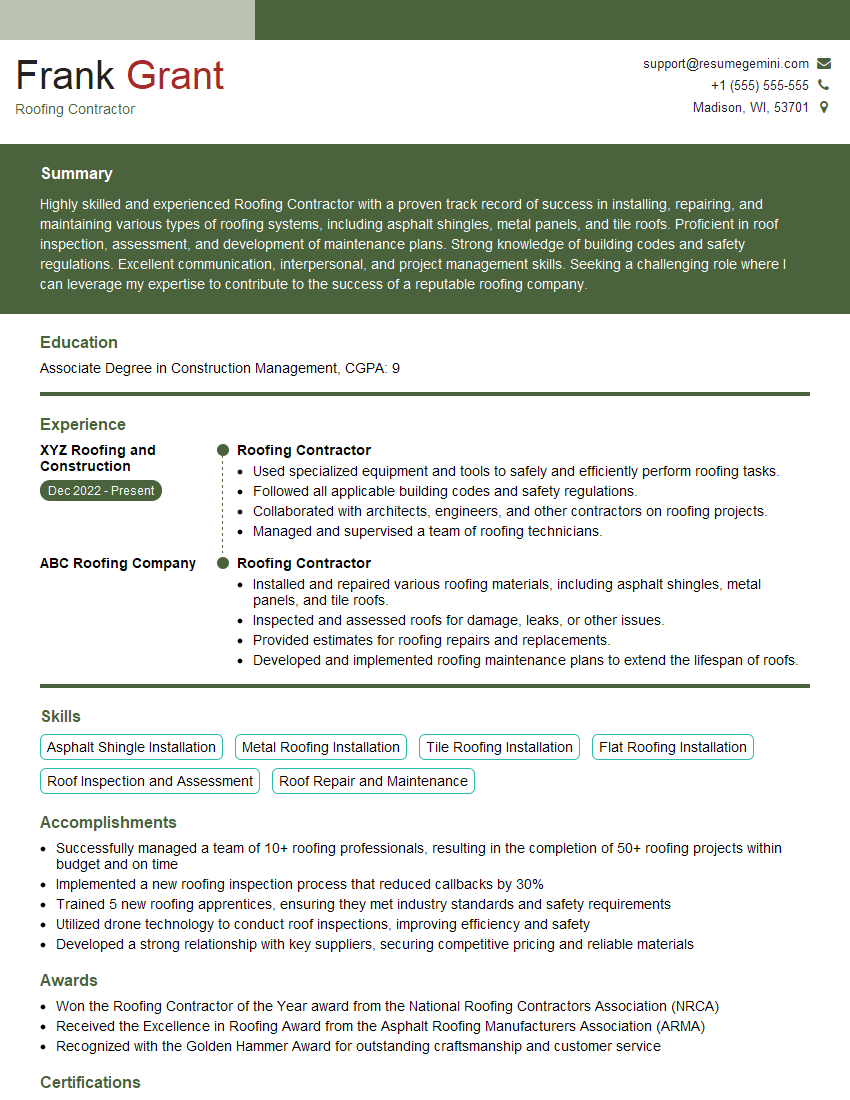
Mastering the art of inspecting shingles for defects is crucial for a successful career in roofing inspection, opening doors to diverse opportunities and higher earning potential. A strong resume is your key to unlocking these opportunities. Make sure your resume is ATS-friendly to ensure it gets seen by potential employers. We recommend using ResumeGemini to build a professional and effective resume that highlights your skills and experience. ResumeGemini provides examples of resumes tailored to the Inspecting Shingles for Defects field, helping you create a document that stands out from the competition. Take the next step towards your dream career – build a winning resume today!


Explore more articles
Users Rating of Our Blogs
Share Your Experience
We value your feedback! Please rate our content and share your thoughts (optional).
What Readers Say About Our Blog
Very informative content, great job.
good