Interviews are more than just a Q&A session—they’re a chance to prove your worth. This blog dives into essential Inspecting Vehicles and Equipment interview questions and expert tips to help you align your answers with what hiring managers are looking for. Start preparing to shine!
Questions Asked in Inspecting Vehicles and Equipment Interview
Q 1. Describe your experience with different types of vehicle inspections.
My experience encompasses a wide range of vehicle inspections, from routine pre-trip checks on commercial trucks to comprehensive annual inspections of passenger vehicles and specialized equipment like forklifts and aerial lifts. I’m proficient in performing both visual inspections and functional tests. For example, with commercial vehicles, I meticulously examine tires, brakes, lights, and steering mechanisms, checking for wear, tear, and leaks. With passenger vehicles, the focus might shift more towards emissions systems and overall mechanical functionality. For equipment, the inspection is highly specific to the operational requirements and safety features of that type of machine. This could involve checking hydraulic systems, safety interlocks, and emergency stop mechanisms. My inspections always adhere to relevant industry standards and regulatory requirements, ensuring thoroughness and safety.
- Pre-Trip Inspections: Daily checks ensuring vehicle readiness before operation.
- Annual Inspections: Comprehensive reviews covering all vehicle systems.
- Post-Accident Inspections: Detailed assessments after incidents to identify contributing factors.
- Specialized Equipment Inspections: Tailored inspections for forklifts, cranes, and other machinery.
Q 2. What are the key safety regulations you follow during equipment inspections?
Safety regulations are paramount during equipment inspections. My approach always prioritizes the prevention of accidents. Key regulations I adhere to include those outlined by OSHA (Occupational Safety and Health Administration) and relevant industry-specific standards. For instance, when inspecting forklifts, I meticulously check for operational safety devices, such as the seatbelt interlock, horn functionality, and emergency stop mechanisms. Failure of any of these features constitutes a serious safety violation. Similarly, during inspections of aerial lifts, the integrity of the suspension system, boom operation, and safety harnesses are critical areas of focus. Regular adherence to these regulations helps minimize risks and prevents potential accidents.
- OSHA Regulations: Compliance with all applicable OSHA standards for equipment operation and maintenance.
- Manufacturer’s Specifications: Adherence to the manufacturer’s guidelines for safe operation and maintenance.
- Industry Best Practices: Following industry-recognized best practices for safe inspection procedures.
Q 3. Explain your process for documenting inspection findings.
My documentation process is thorough and detailed. I utilize a standardized checklist specific to each type of vehicle or equipment. Each checklist item is assessed and marked accordingly (e.g., Pass/Fail/Needs Repair). I supplement the checklist with detailed written descriptions of any defects or issues identified. This includes clear photographic or video evidence. The documentation is time-stamped and includes my signature, ensuring accountability and traceability. Digital documentation is preferred; this allows for quick and easy access to inspection history. The completed inspection report is filed electronically in a central database, ensuring easy retrieval for future reference and analysis.
For example, if a brake line shows signs of corrosion, I would note: “Brake line on rear axle shows significant corrosion (see attached photo – IMG001). Immediate repair recommended.”
Q 4. How do you identify and report critical safety violations?
Critical safety violations are identified through a combination of thorough inspection and a clear understanding of relevant safety regulations. Examples include brake failures, significant tire wear, malfunctioning emergency stop mechanisms, or compromised structural integrity. Upon discovering a critical violation, I immediately take the equipment or vehicle out of service. My reporting process involves immediately informing the appropriate supervisor and filling out a detailed incident report. This report includes clear descriptions of the violation, its potential consequences, and recommended corrective actions. Depending on the severity, further steps might involve contacting regulatory authorities.
For instance, if a forklift’s mast is found to be bent, it’s immediately taken out of service. The report would include pictures, the location of the bend, a description of the potential hazard (e.g., tipping), and a recommendation to have the mast repaired or replaced by a qualified technician.
Q 5. What software or tools do you use to manage inspection data?
I utilize a cloud-based inspection management software that allows me to create and manage checklists, capture images and videos, and automatically generate inspection reports. The software provides a centralized database for all inspection data, allowing for efficient retrieval, analysis, and reporting. It also facilitates scheduling of inspections and tracking of repairs. In addition, I use handheld devices with cameras and apps that allow for on-site documentation. This technology significantly improves efficiency, accuracy, and data management compared to paper-based systems.
An example of such software would have features like automated report generation, real-time data synchronization, and customizable checklists for different equipment types.
Q 6. How do you prioritize repairs based on inspection results?
Prioritization of repairs is based on a risk assessment of the identified defects. Critical safety violations, those posing immediate hazards, are always top priority. For example, a brake failure is far more critical than a minor cosmetic defect. After addressing critical issues, I prioritize repairs based on operational impact and the potential for further damage or escalation. Repairs that prevent equipment from functioning properly, or those that may lead to further damage or safety concerns, are given higher priority than cosmetic repairs. This risk-based approach ensures that resources are allocated effectively and that potential safety hazards are mitigated quickly.
The software often uses a color-coded system: Red for immediate repair, Yellow for soon, and Green for later.
Q 7. Describe a time you discovered a significant defect during an inspection.
During a routine inspection of a delivery truck, I discovered a severely cracked chassis frame. It wasn’t immediately visible, but a closer examination revealed a deep crack hidden beneath the mud and dirt. This was a critical safety concern, as a chassis frame failure could lead to catastrophic accidents. I immediately reported the defect to the supervisor and had the truck taken out of service. The cracked frame was a significant violation and could have resulted in a serious accident if undetected. The prompt identification and reporting prevented further damage and potential loss of life or property. The truck was thoroughly repaired before being put back into service. This incident highlighted the importance of thorough and meticulous inspections, even when dealing with routine checks.
Q 8. Explain your understanding of preventative maintenance schedules.
Preventative maintenance schedules are the backbone of keeping vehicles and equipment in optimal working condition. They’re essentially a roadmap outlining regular inspections and servicing tasks designed to prevent breakdowns and extend the lifespan of assets. These schedules are tailored to the specific type of equipment and its usage, considering factors like operating hours, environmental conditions, and manufacturer recommendations.
For instance, a heavy-duty truck operating in harsh off-road conditions will require more frequent inspections and servicing of its suspension, brakes, and engine compared to a similar truck used primarily for highway driving. A preventative maintenance schedule might include tasks like oil changes, filter replacements, tire rotations, brake inspections, and fluid level checks, all performed at specified intervals. These schedules are often documented in a logbook, using software systems, or both, which facilitates tracking and ensures compliance.
- Frequency: Schedules specify how often tasks should be completed (e.g., daily, weekly, monthly, annually).
- Tasks: They detail the specific actions to be taken, including lubrication, cleaning, and part replacements.
- Record Keeping: Comprehensive records are crucial for tracking completed tasks and identifying potential issues early.
Q 9. How familiar are you with various types of diagnostic equipment?
My familiarity with diagnostic equipment is extensive. I’m proficient in using a wide range of tools, from basic hand-held diagnostic scanners to sophisticated onboard computer systems. This includes:
- OBD-II Scanners: Used for reading diagnostic trouble codes (DTCs) from electronic control units (ECUs) in vehicles.
- Specialized Scanners: These are manufacturer-specific tools providing deeper insights into vehicle systems, often needed for heavy machinery or specialized vehicles.
- Multi-Meters: Essential for measuring voltage, current, and resistance, helping diagnose electrical problems.
- Pressure Gauges: Used to check tire pressure, hydraulic pressure, and other system pressures.
- Infrared Thermometers: For quickly identifying overheating components or potential issues in electrical systems.
- Endoscopes/Borescopes: Allow visual inspection of hard-to-reach areas, like engine internals or pipework.
My experience spans various makes and models of equipment, and I’m always updating my knowledge to stay current with the latest technologies.
Q 10. How do you handle discrepancies between inspection reports and maintenance records?
Discrepancies between inspection reports and maintenance records are a serious concern and require careful investigation. They could point to incomplete maintenance, inaccurate record-keeping, or even potential fraud. My approach involves a systematic process:
- Verification: First, I would carefully review both the inspection report and maintenance records, comparing dates, tasks performed, and any noted observations.
- Data Reconciliation: I’d attempt to identify the root cause of the discrepancy. Was a task missed? Was the record-keeping incomplete or inaccurate? Was the inspection not thorough enough?
- Further Investigation: If the discrepancy is significant or cannot be readily explained, I would conduct a follow-up inspection. This might involve re-checking components mentioned in the inspection report, looking for signs of wear and tear, or reviewing any supporting documentation like work orders.
- Documentation: All findings, including steps taken to reconcile the discrepancy, are meticulously documented and reported to the relevant parties.
- Corrective Action: Based on the investigation, appropriate corrective actions are taken. This could include additional maintenance, retraining of personnel responsible for inspections or maintenance, or even disciplinary action if negligence is identified.
For example, if an inspection report notes worn brake pads but the maintenance records show no recent brake service, a thorough brake inspection is immediately required to ensure safety and avoid potential accidents.
Q 11. What are the common causes of equipment failure you’ve encountered?
Over my career, I’ve encountered numerous causes of equipment failure. The most common fall into these categories:
- Lack of Preventative Maintenance: This is the single biggest contributor. Ignoring scheduled maintenance, such as oil changes and fluid top-offs, leads to premature wear and tear.
- Operator Error: Improper operation or overloading equipment can significantly reduce its lifespan. Examples include exceeding weight limits or ignoring warning lights.
- Environmental Factors: Harsh weather conditions (extreme heat, cold, or moisture) can accelerate component degradation and cause premature failure.
- Component Wear and Tear: Even with regular maintenance, parts eventually wear out due to normal usage. This highlights the importance of replacement schedules.
- Manufacturing Defects: Occasionally, equipment may fail due to flaws in its original design or manufacturing.
A specific example is a forklift whose hydraulic system failed due to a lack of routine fluid checks and changes. The resulting damage was far more costly than regular maintenance would have been. This reinforced the vital importance of adhering to preventative maintenance schedules.
Q 12. How do you ensure accurate and consistent inspection procedures?
Ensuring accurate and consistent inspection procedures involves a multi-faceted approach.
- Standardized Checklists: Using detailed, standardized checklists ensures consistency between inspectors and across different inspections. These checklists cover all critical components and systems, eliminating the risk of overlooking crucial areas.
- Training and Certification: Inspectors should receive thorough training on proper inspection techniques, the use of diagnostic tools, and the interpretation of results. Certification programs help establish a baseline level of competency.
- Regular Audits: Internal audits help ensure that inspection procedures are being followed correctly. These audits can identify areas for improvement and rectify inconsistencies.
- Documentation and Reporting: Meticulous record-keeping is essential for tracing issues, identifying trends, and evaluating the effectiveness of preventative maintenance programs. Clear, concise reports simplify the communication of inspection findings.
- Use of Technology: Software and mobile apps designed for inspections can improve data collection, analysis, and reporting, boosting accuracy and consistency.
A simple example would be a standardized checklist for inspecting tires; this checklist would ensure that every tire on a vehicle undergoes the same level of scrutiny for tread depth, pressure, and damage, minimizing variations in inspection findings.
Q 13. Describe your experience with different types of inspection reports.
My experience encompasses a variety of inspection report formats, including:
- Simple Checklists: These are often used for basic inspections, noting simply ‘pass’ or ‘fail’ for each item checked.
- Detailed Reports: These include more comprehensive information about the condition of components, with detailed descriptions of any damage or issues found.
- Digital Reports: These leverage software or mobile apps to generate reports, often including images and videos, facilitating more thorough documentation.
- Regulatory Reports: Some inspections require reports that meet specific regulatory standards, ensuring compliance with safety regulations and legal requirements.
Each report type has its own advantages and disadvantages, and the choice depends largely on the complexity of the inspection and regulatory requirements. For example, a simple pre-trip inspection might use a simple checklist, while a post-accident inspection necessitates a far more detailed report.
Q 14. How do you manage your time effectively during multiple inspections?
Effective time management during multiple inspections is crucial. My strategy involves:
- Prioritization: I prioritize inspections based on urgency and risk. High-risk equipment or vehicles requiring urgent attention are tackled first.
- Planning and Scheduling: I plan my route to minimize travel time and group inspections geographically to optimize efficiency. Scheduling inspections during less busy periods also contributes.
- Efficient Inspection Techniques: I utilize standardized checklists and proven inspection methods, avoiding unnecessary delays.
- Delegation (when appropriate): If possible, I delegate routine tasks to qualified team members to increase efficiency.
- Technology: Mobile apps and software help streamline data collection and reporting, saving significant time.
Imagine a day involving inspections of five different trucks. By planning my route efficiently and using a mobile app for recording my findings, I can minimize the time spent on paperwork and maximize my time on-site. This improves the overall efficiency and productivity.
Q 15. Explain your approach to working independently and as part of a team.
I’m equally comfortable working independently and collaboratively. When working independently, I prioritize meticulous planning and execution. I meticulously review all relevant documentation, create a detailed inspection plan, and adhere strictly to safety protocols. For example, before inspecting a heavy-duty crane, I’d ensure I have all necessary safety equipment, understand the crane’s operational history, and thoroughly examine the site for potential hazards.
In team settings, I actively participate, offering my expertise while valuing the contributions of others. I believe in open communication and constructive feedback. I recently worked on a large-scale infrastructure project where our team inspected multiple pieces of heavy equipment simultaneously. Open communication, clear delegation of tasks, and regular progress updates were key to efficiently completing the inspection within the deadline.
Career Expert Tips:
- Ace those interviews! Prepare effectively by reviewing the Top 50 Most Common Interview Questions on ResumeGemini.
- Navigate your job search with confidence! Explore a wide range of Career Tips on ResumeGemini. Learn about common challenges and recommendations to overcome them.
- Craft the perfect resume! Master the Art of Resume Writing with ResumeGemini’s guide. Showcase your unique qualifications and achievements effectively.
- Don’t miss out on holiday savings! Build your dream resume with ResumeGemini’s ATS optimized templates.
Q 16. Describe your experience with different inspection methodologies.
My experience encompasses a variety of inspection methodologies, including visual inspections, dimensional checks, non-destructive testing (NDT), and functional testing. Visual inspections form the foundation of most inspections, involving a thorough examination for visible defects such as cracks, corrosion, and wear. I’m proficient in using precision measuring tools for dimensional checks, ensuring components are within acceptable tolerances. NDT techniques, such as ultrasonic testing and magnetic particle inspection, allow for the detection of subsurface flaws. Functional testing involves operating the equipment to assess its performance and identify malfunctions. For instance, in inspecting a vehicle, I’d combine visual checks of the tires and brakes with functional tests of the engine and transmission.
Q 17. How do you stay up-to-date with industry regulations and best practices?
Staying current is crucial in this field. I achieve this through continuous professional development. I regularly attend industry conferences and workshops, participate in online courses and webinars offered by organizations like ASME and SAE, and subscribe to relevant professional journals and newsletters. I also actively network with other inspectors, sharing knowledge and best practices. For example, I recently attended a workshop on the latest advancements in drone technology for infrastructure inspections, which will significantly improve efficiency and safety in my work.
Q 18. How do you handle conflicts or disagreements regarding inspection findings?
Disagreements are inevitable, but I approach them professionally and constructively. My first step is to thoroughly review the data and evidence, ensuring we’re all looking at the same information. Open dialogue is key; I encourage all parties to express their perspectives and concerns. If a consensus can’t be reached, I advocate for a third-party review or escalating the issue to a senior inspector or supervisor for an objective assessment. Transparency and clear documentation of the process are crucial. In a recent case, a disagreement arose regarding the severity of a crack found in a weld. A thorough re-examination, supported by photographic evidence, resolved the issue and led to the correct repair strategy.
Q 19. Describe your experience with root cause analysis of equipment failures.
Root cause analysis is critical for preventing future failures. I typically use a systematic approach like the ‘5 Whys’ technique to drill down to the underlying cause of an equipment failure. This involves repeatedly asking ‘why’ to understand the chain of events leading to the failure. For example, if a vehicle’s engine overheated, the initial ‘why’ might be insufficient coolant. Further questioning would uncover the reason for the coolant loss (leaking hose), then the reason for the hose failure (age and deterioration), and so on. This process helps identify systemic issues, such as inadequate maintenance procedures, rather than focusing solely on the immediate failure point. Combining this with a thorough review of maintenance records and operational logs helps pinpoint the root cause accurately.
Q 20. How do you communicate technical information effectively to non-technical audiences?
Communicating technical information effectively to non-technical audiences requires simplification and clear visualization. I avoid jargon and use plain language, explaining complex concepts with analogies and real-world examples. I often use visual aids such as diagrams, charts, and photos to illustrate my points. For example, when explaining the importance of regular brake inspections to a client who isn’t mechanically inclined, I’d show them pictures of worn brake pads and explain how they affect stopping distance, relating it to everyday driving experiences. Providing a clear, concise summary of my findings and recommendations ensures everyone understands the significance of the inspection results and the necessary actions.
Q 21. What is your experience with using checklists and other standardized inspection forms?
Checklists and standardized forms are indispensable for ensuring consistency and thoroughness in inspections. They provide a structured framework, minimizing the risk of overlooking critical items. I’m proficient in using various checklists and forms, tailored to specific equipment types. I also contribute to the development and improvement of these tools, ensuring they remain up-to-date with industry regulations and best practices. For instance, I regularly review and update our company’s vehicle inspection checklist to incorporate any changes in manufacturer recommendations or regulatory requirements. This ensures our inspection process is always accurate and efficient.
Q 22. How do you handle situations where you encounter resistance to recommended repairs?
Handling resistance to recommended repairs requires a delicate balance of firmness and diplomacy. My approach focuses on clearly communicating the safety and operational risks associated with delaying or ignoring necessary repairs. I begin by presenting the inspection findings in a clear, non-confrontational manner, using visual aids like photos or diagrams when helpful. I explain the rationale behind each recommendation, referencing relevant industry standards or regulations where applicable. For example, if a cracked weld is found on a critical component of a piece of heavy machinery, I’d explain how this compromises structural integrity and the potential for catastrophic failure.
If resistance persists, I document everything thoroughly, including the specific objections raised and my counterarguments. I might then involve a supervisor or senior engineer to mediate or provide a second opinion. The goal isn’t to force repairs but to ensure the client understands the potential consequences of inaction. In some cases, I might suggest phased repairs, prioritizing critical safety concerns first. Ultimately, the safety of the equipment operators and the public takes precedence.
Q 23. How do you ensure the safety of yourself and others during inspections?
Safety is paramount during inspections. My routine begins with a thorough risk assessment of the work environment. This involves identifying potential hazards like moving parts, high voltage equipment, confined spaces, or hazardous materials. I always wear appropriate personal protective equipment (PPE), which might include safety glasses, gloves, hard hats, high-visibility clothing, and steel-toed boots, depending on the inspection site and equipment. I also familiarize myself with emergency procedures and ensure that there’s readily available communication for contacting emergency services.
During the inspection, I maintain a safe distance from operating machinery and never attempt repairs myself unless I am specifically qualified and authorized to do so. I use lockout/tagout procedures to ensure equipment is de-energized before accessing electrical components. I clearly communicate my presence and intentions to anyone else working in the area, particularly when working near moving vehicles or equipment. Regular safety training keeps me up-to-date on best practices and hazard awareness.
Q 24. Describe your experience using specialized inspection tools (e.g., infrared cameras, ultrasonic testers).
I have extensive experience with various specialized inspection tools. Infrared cameras are invaluable for detecting heat signatures that indicate electrical faults, overheating components, or insulation problems. For example, I recently used an infrared camera to identify a faulty connection in a large motor, preventing a potential fire hazard. Ultrasonic testers are great for finding internal flaws in materials, such as cracks or corrosion, without damaging the surface. I’ve utilized ultrasonic testing to inspect welds on pressure vessels and identify stress cracks in structural steel.
Other tools I frequently use include boroscopes for visual inspection of hard-to-reach areas, thickness gauges for measuring material degradation, and digital multimeters for assessing electrical circuits. Proficiency with these tools enables me to provide comprehensive and accurate inspection reports, leading to timely and cost-effective repairs.
Q 25. How do you determine the severity of a discovered defect or malfunction?
Determining the severity of a defect involves a multi-faceted approach. First, I assess the nature of the defect – is it a minor cosmetic issue or a critical safety hazard? Then, I consider its location and function within the vehicle or equipment. A small crack in a non-critical part is less serious than a major crack in a load-bearing component. I also factor in the potential consequences of failure – will it lead to minor inconvenience, operational downtime, or a catastrophic accident?
My judgment incorporates relevant industry standards, manufacturer specifications, and regulatory guidelines. For instance, a certain level of corrosion on a brake line might be deemed critical and require immediate replacement, based on safety standards. I document all findings thoroughly, including photos, measurements, and a clear description of the defect’s severity and potential impact. This documentation helps to justify repair recommendations and facilitates communication with clients.
Q 26. What is your experience with different types of vehicles and equipment?
My experience spans a wide range of vehicles and equipment, encompassing automobiles, heavy-duty trucks, construction machinery, agricultural equipment, and industrial machinery. I’ve inspected everything from passenger cars and motorcycles to large cranes, excavators, and forklifts. This broad experience allows me to adapt my inspection techniques to the specific needs of each type of equipment, recognizing the unique challenges and safety considerations associated with each.
For example, inspecting a forklift requires a focus on the hydraulic system, mast, and forks, while an inspection of a large excavator requires a detailed examination of its hydraulics, undercarriage, and cab safety features. My understanding extends beyond basic mechanics to encompass electrical systems, pneumatic systems, and sophisticated electronic control systems found in modern equipment.
Q 27. How do you prioritize tasks during a high-volume inspection workload?
Prioritizing tasks during high-volume inspections requires a systematic approach. I typically start by categorizing inspections based on urgency and criticality. Inspections mandated by safety regulations or those involving equipment used in high-risk operations take precedence. I then use a combination of scheduling tools and checklists to streamline the process. Checklists ensure consistency and completeness in my inspections, and scheduling helps me manage time effectively.
Moreover, I focus on efficiency by performing inspections in a logical order, minimizing travel time between inspection sites. I might also delegate simpler tasks to assistants where appropriate, ensuring proper supervision and quality control. Communication with clients is key to managing expectations during peak workloads, ensuring transparency about potential delays and adjustments to schedules.
Q 28. Describe your experience with creating and implementing inspection procedures.
I have significant experience in developing and implementing inspection procedures. The process begins with a thorough understanding of the equipment being inspected, its operational context, and the relevant safety regulations. I identify critical components and potential failure points, then develop a comprehensive checklist that covers all aspects of the inspection. This checklist includes detailed instructions, safety precautions, and acceptance criteria for each component.
Once the procedure is developed, I conduct pilot inspections to test its effectiveness and identify any areas for improvement. This iterative approach allows me to refine the procedure, ensuring it is practical, efficient, and consistent. The final procedure is clearly documented and shared with all inspectors to ensure uniformity and high quality of inspections. Regular review and updates keep the procedures current with technological advancements and changes in industry best practices.
Key Topics to Learn for Inspecting Vehicles and Equipment Interview
- Vehicle Systems: Understanding the functionality and interdependencies of major vehicle systems (braking, steering, electrical, engine, etc.) and how malfunctions can impact safety and operation.
- Equipment Operation and Maintenance: Knowledge of the safe and efficient operation of various equipment, including preventative maintenance procedures and troubleshooting common issues.
- Safety Regulations and Compliance: Familiarity with relevant safety standards, regulations, and legal requirements pertaining to vehicle and equipment inspections. This includes understanding documentation processes and reporting procedures.
- Diagnostic Techniques: Practical skills in identifying and diagnosing mechanical, electrical, and hydraulic problems through visual inspection, testing, and the use of diagnostic tools.
- Record Keeping and Reporting: Understanding the importance of accurate and thorough documentation of inspection findings, repairs, and maintenance schedules. Proficiency in using reporting software or systems.
- Problem-Solving and Critical Thinking: Demonstrating the ability to analyze inspection results, identify potential hazards, and propose effective solutions to ensure safety and operational efficiency.
- Preventive Maintenance Schedules: Understanding the importance of preventative maintenance and the ability to interpret and follow scheduled maintenance procedures for various vehicles and equipment.
- Environmental Considerations: Awareness of environmental regulations and best practices related to the handling and disposal of fluids and other materials during inspections and maintenance.
Next Steps
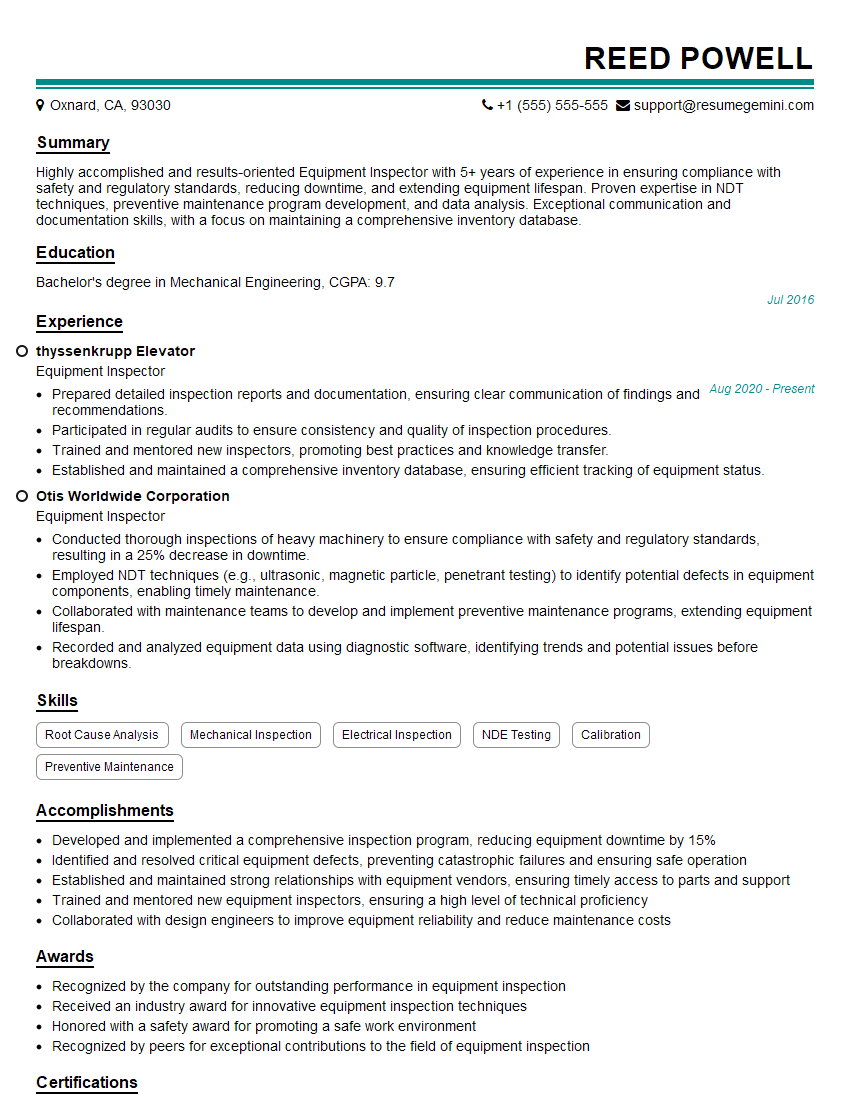
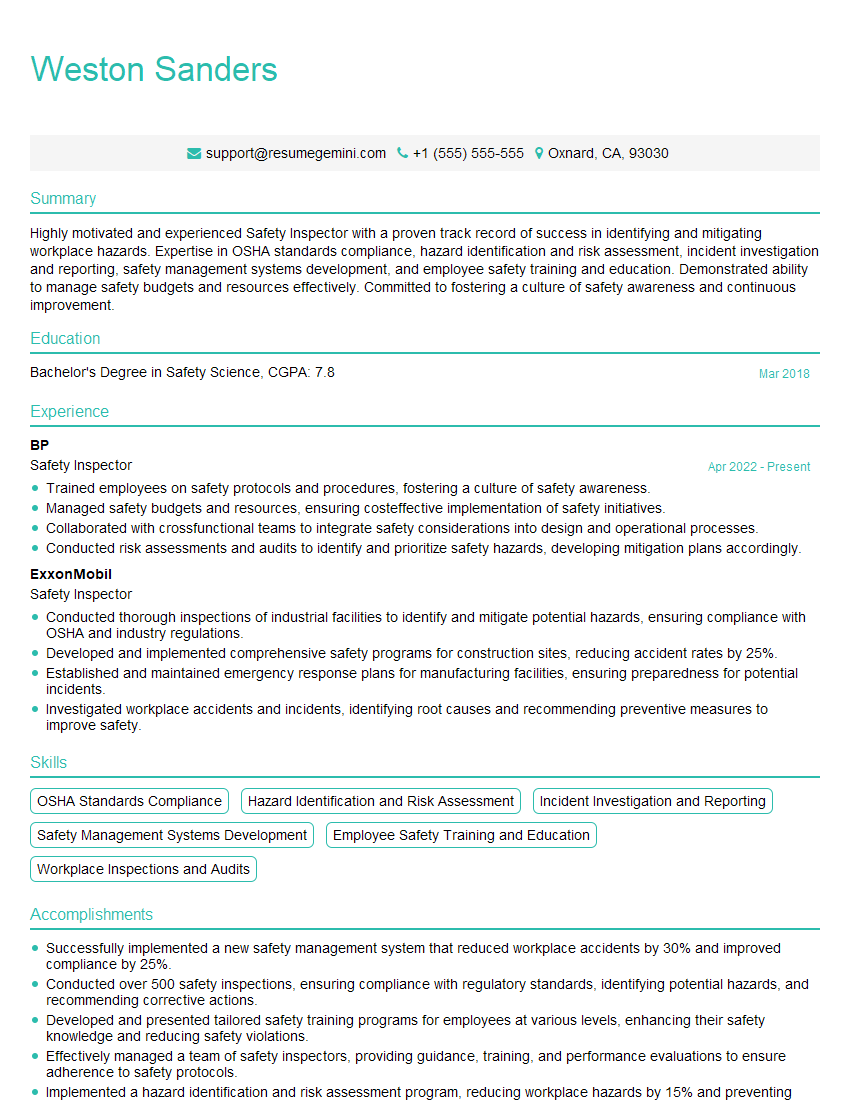
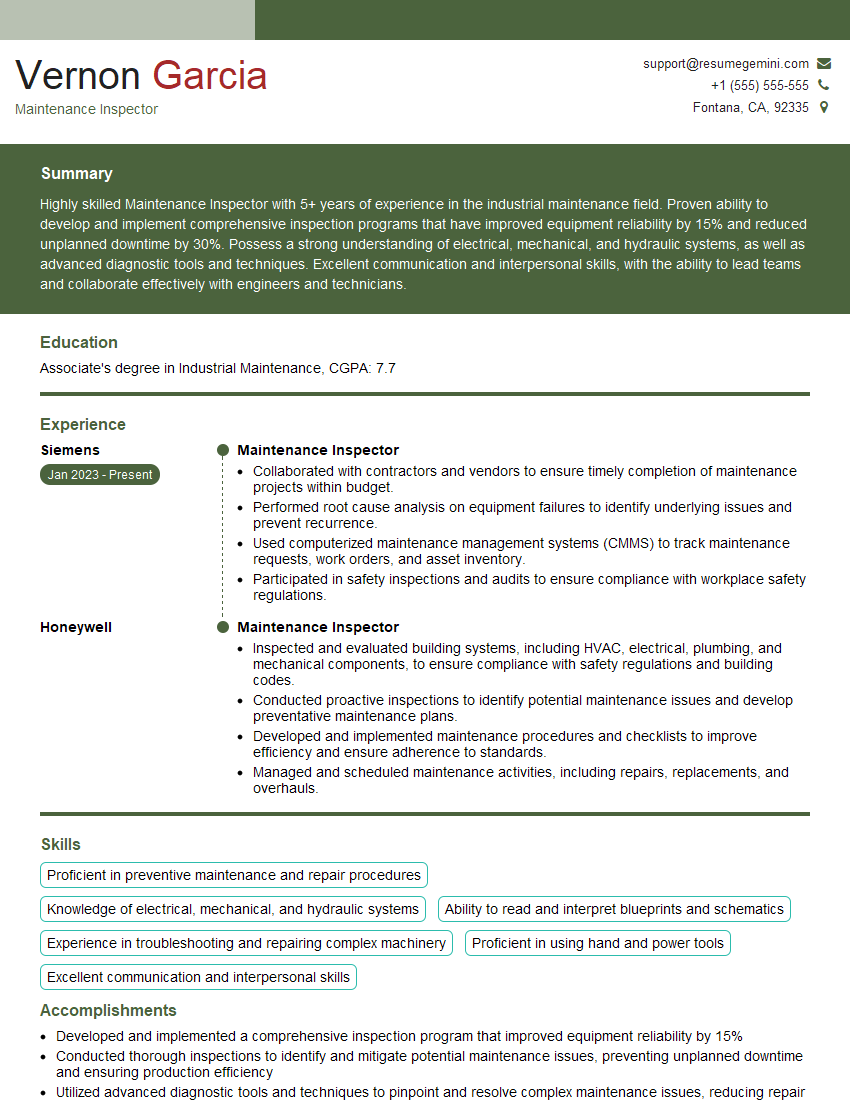
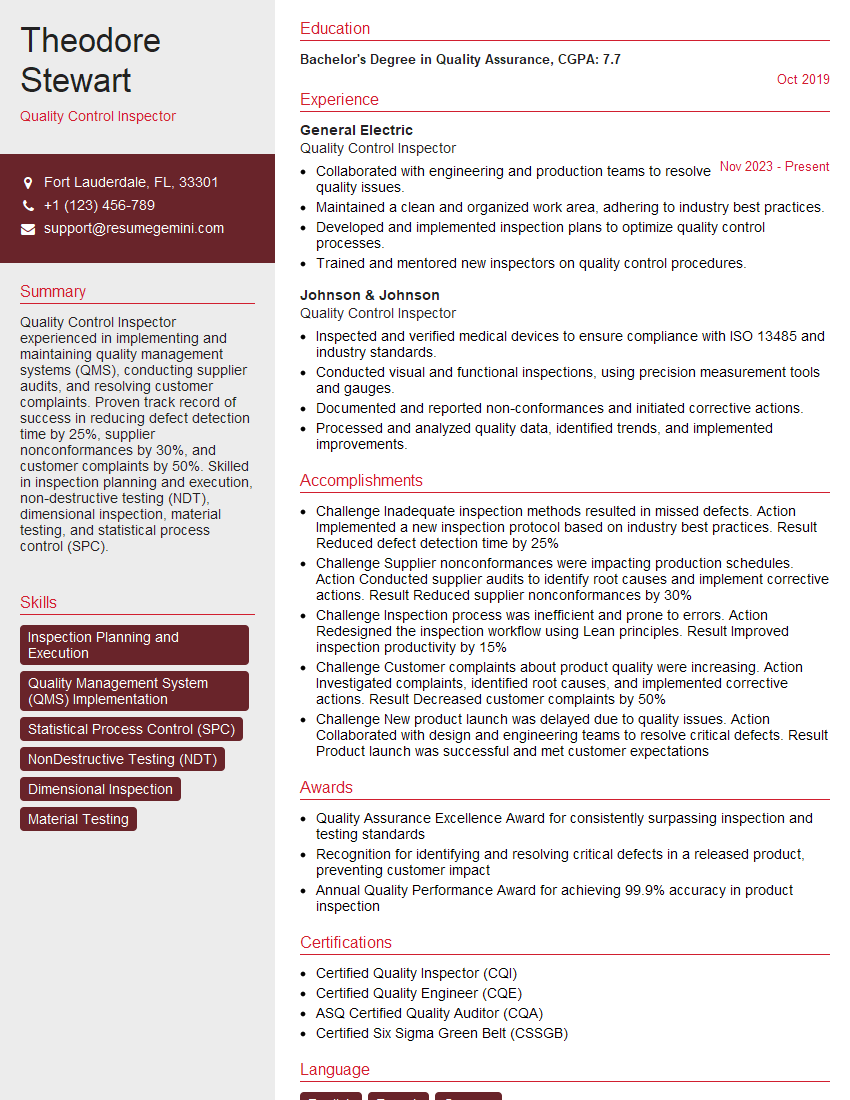
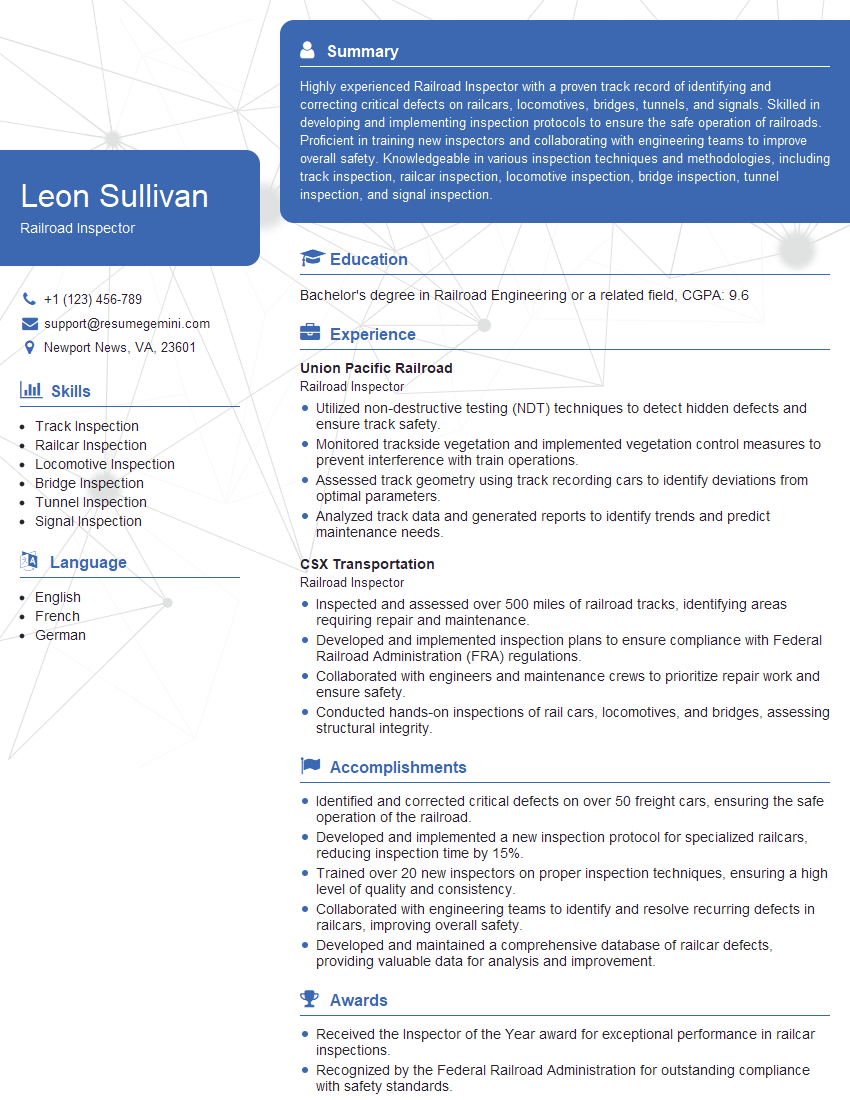
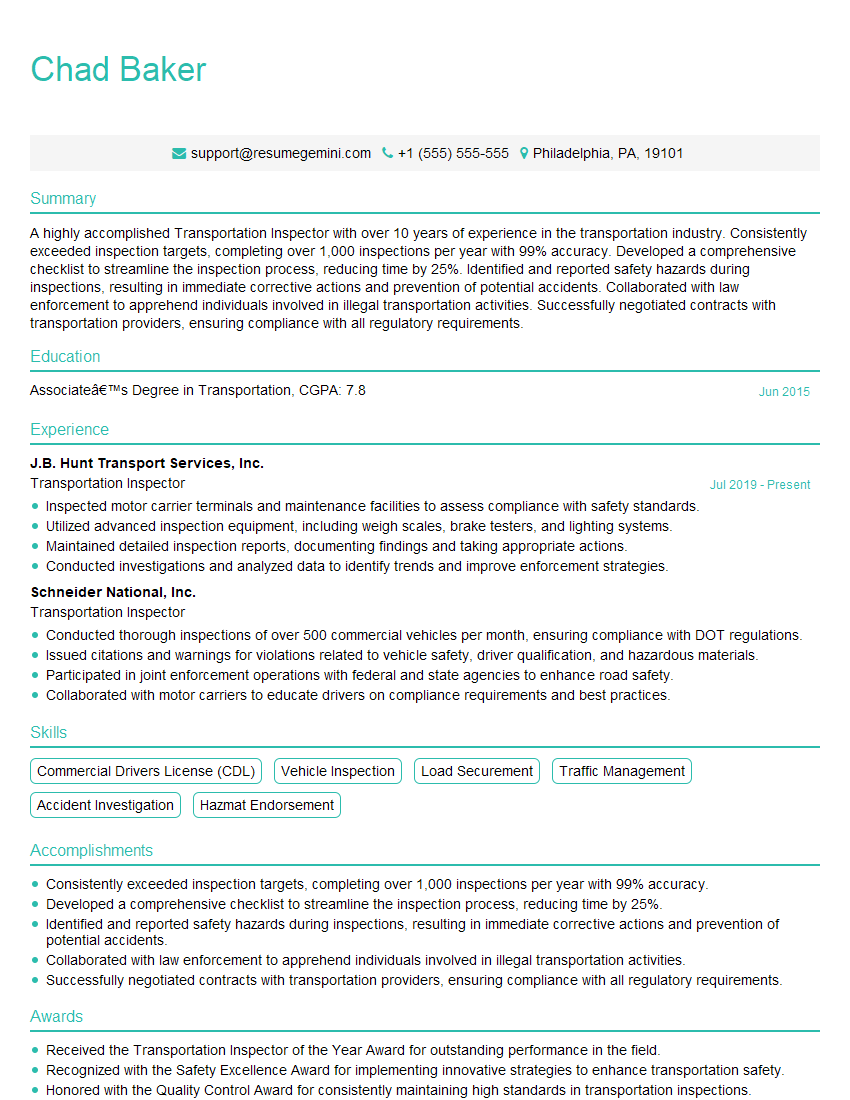
Mastering the skills of Inspecting Vehicles and Equipment opens doors to exciting career opportunities in various industries, offering excellent growth potential and competitive salaries. A strong resume is crucial for showcasing your expertise and securing your dream job. Crafting an ATS-friendly resume is vital to ensure your application gets noticed by recruiters. ResumeGemini is a trusted resource to help you build a professional and impactful resume that highlights your skills and experience effectively. We provide examples of resumes tailored specifically to the Inspecting Vehicles and Equipment field to help you get started. Take advantage of these resources to present yourself in the best possible light and advance your career.
Explore more articles
Users Rating of Our Blogs
Share Your Experience
We value your feedback! Please rate our content and share your thoughts (optional).
What Readers Say About Our Blog
Very informative content, great job.
good