Interviews are opportunities to demonstrate your expertise, and this guide is here to help you shine. Explore the essential Inspection and Evaluation of Existing Structures interview questions that employers frequently ask, paired with strategies for crafting responses that set you apart from the competition.
Questions Asked in Inspection and Evaluation of Existing Structures Interview
Q 1. Explain the different types of non-destructive testing methods used in structural inspections.
Non-destructive testing (NDT) methods are crucial for assessing the condition of existing structures without causing damage. Several techniques are employed, each with its strengths and limitations.
- Visual Inspection: This is the most basic and often the first step. It involves a thorough visual examination of the structure, looking for cracks, corrosion, spalling, or other visible signs of distress. Think of it like a doctor’s initial observation of a patient.
- Ultrasonic Testing (UT): UT uses high-frequency sound waves to detect internal flaws like cracks or voids in materials like concrete or steel. The sound waves reflect off discontinuities, and the time it takes for the reflection is used to determine the size and location of the flaw. Imagine it like using sonar to map the seabed – the sound waves reveal hidden features.
- Ground Penetrating Radar (GPR): GPR uses electromagnetic waves to create images of subsurface structures and identify voids, pipes, or other features beneath the ground’s surface. This is particularly useful in foundation investigations. Think of it like a medical CAT scan, but for the ground.
- Magnetic Particle Inspection (MPI): MPI is used for detecting surface and near-surface cracks in ferromagnetic materials (like steel). A magnetic field is applied, and magnetic particles are sprinkled on the surface. Cracks disrupt the magnetic field, causing the particles to accumulate, making the cracks visible. Imagine iron filings revealing hidden magnetic field lines, highlighting any breaks in the pattern.
- Dye Penetrant Inspection (DPI): DPI is similar to MPI but is used for detecting surface cracks in non-ferromagnetic materials (like aluminum). A dye is applied to the surface, penetrating any cracks. A developer is then used to draw the dye out of the cracks, making them visible. Think of it like revealing a hidden fingerprint using special powder.
The selection of appropriate NDT methods depends on the type of material, the expected type of defect, and the accessibility of the structure.
Q 2. Describe your experience with identifying and assessing structural deterioration in concrete structures.
My experience with concrete deterioration assessment is extensive. I’ve worked on numerous projects, ranging from small residential buildings to large-scale infrastructure. Identifying deterioration involves a multi-faceted approach.
I begin with a thorough visual inspection, noting signs of cracking (e.g., shrinkage cracks, flexural cracks, corrosion-induced cracks), spalling (concrete breaking away from the surface), efflorescence (salt deposits), and staining (indicative of leakage). Then, I employ NDT methods like ultrasonic testing to assess the extent of internal damage, such as delamination or voids. I also consider environmental factors that contribute to deterioration, such as freeze-thaw cycles, chemical attack from de-icing salts, and carbonation. For example, in a recent project, we identified extensive chloride-induced corrosion in a coastal bridge’s concrete deck, necessitating significant repairs. Proper documentation, including photographic evidence and detailed measurements, is critical to accurately assess the extent and severity of deterioration.
Q 3. How do you interpret and analyze building plans and structural drawings?
Interpreting building plans and structural drawings is fundamental to my work. I approach it systematically, starting with understanding the overall design intent and building systems. I carefully examine the architectural plans for building layout, material specifications, and details about building elements. Then, I scrutinize the structural drawings, focusing on:
- Foundation details: Type, depth, and dimensions of footings, piles, or other foundation elements.
- Framing systems: Column locations, beam sizes, and bracing details. This helps determine the structural capacity of the building.
- Connections: Details of how structural members are connected to each other (e.g., welds, bolts, rivets). Understanding connection details is crucial for assessing the stability of the structure.
- Material specifications: The type and grade of materials used in the construction. This impacts the structural performance and longevity of the building.
Using software like AutoCAD or Revit is helpful for visualizing the three-dimensional relationships of structural elements. I cross-reference architectural and structural drawings to ensure consistency and identify any discrepancies. Any ambiguities are further clarified with the original designers or by on-site investigation.
Q 4. What are the common causes of foundation settlement and how can they be identified?
Foundation settlement, the gradual sinking of a foundation, can be caused by a variety of factors.
- Poor Soil Conditions: Expansive clays, compressible soils, or soils with low bearing capacity can lead to excessive settlement. Think of a foundation built on shifting sand – it’s bound to sink.
- Overloading: Adding significant weight to the structure (e.g., an addition, new equipment) can exceed the foundation’s design capacity, causing settlement. It’s like overloading a truck – the wheels will sink deeper into the ground.
- Water Saturation: Excess water in the soil reduces its strength and increases its compressibility, leading to settlement. Think of a waterlogged sponge – it compresses under load.
- Erosion: Erosion of soil around the foundation can cause the structure to settle unevenly. It’s like slowly removing support from under a table – it will tilt.
- Foundation Design Flaws: Poorly designed or improperly constructed foundations are more susceptible to settlement. A poorly built foundation is like a house of cards – inherently unstable.
Identifying the cause of settlement involves a combination of visual inspection (looking for cracks in walls or floors), instrument monitoring (settlement gauges), soil investigations (borings and laboratory testing), and analysis of the building plans and construction history.
Q 5. Explain the process of preparing a detailed structural inspection report.
Preparing a detailed structural inspection report is a crucial step in communicating findings and recommendations. My process involves these key steps:
- Pre-Inspection Planning: Gathering background information (building plans, construction history, previous reports), defining the scope of the inspection, and coordinating access to the site.
- Visual Inspection and Data Collection: Conducting a thorough visual inspection of the structure, noting any visible signs of damage or distress. Employing NDT methods where necessary to get a clearer picture of subsurface conditions. Recording data with photographs, sketches, and measurements.
- Data Analysis and Interpretation: Analyzing the collected data to identify the causes of any observed deficiencies. Comparing findings to relevant building codes and standards.
- Report Writing: Documenting all findings and observations in a clear and concise report, including detailed descriptions, photographs, and drawings. Clearly highlighting any areas of concern or potential safety hazards.
- Recommendations: Providing recommendations for repairs or strengthening measures, including estimated costs and prioritization of repairs based on severity and urgency.
The final report should be easy to understand for both technical and non-technical audiences. Using clear language, photographs, and tables to present complex information makes it accessible and effective.
Q 6. How familiar are you with relevant building codes and standards (e.g., IBC)?
I am very familiar with relevant building codes and standards, including the International Building Code (IBC), American Society of Civil Engineers (ASCE) standards, and other applicable local codes. I understand the requirements for structural design, construction, and inspection, and I use these codes as a benchmark when assessing the condition of existing structures. My experience involves applying these codes to assess compliance and identify deficiencies. This includes evaluating the adequacy of structural elements based on current code requirements. For example, I recently helped assess the seismic vulnerability of a building based on the latest IBC requirements, which informed our recommendations for retrofitting measures.
Q 7. How do you assess the condition of steel structures, including signs of corrosion and fatigue?
Assessing the condition of steel structures involves identifying signs of corrosion and fatigue.
Corrosion: I look for signs of rust, pitting, and scaling on the surface of steel members. Advanced corrosion can lead to significant section loss and weaken the structural element. NDT methods like MPI are useful for detecting subsurface corrosion. The environment plays a huge role; coastal structures are especially prone to corrosion due to salt spray.
Fatigue: Fatigue is the gradual weakening of a material due to repeated cyclic loading. Signs of fatigue often manifest as cracks, particularly at stress concentration points (such as welds or sharp corners). Visual inspection is usually the initial step, and UT can be used to detect the extent of fatigue cracking. Fatigue failure can be catastrophic, so early detection is crucial.
Beyond visual inspection and NDT methods, I consider the history of loading on the structure and environmental factors. A detailed assessment includes measuring remaining section thickness, evaluating the severity of corrosion or fatigue cracking, and comparing the observed damage to allowable limits defined in relevant codes and standards. This provides a solid basis for determining the remaining capacity and lifespan of the steel structure.
Q 8. Describe your experience with using various inspection tools and equipment.
My experience with inspection tools and equipment is extensive, encompassing both traditional and advanced technologies. I’m proficient in using tools for visual inspection, such as magnifying glasses, borescopes, and moisture meters, to detect surface cracks, delamination, and moisture ingress. For more in-depth analysis, I utilize advanced techniques. For example, I regularly employ ground-penetrating radar (GPR) to locate subsurface voids or anomalies in foundations and pavements. I also use infrared thermography to identify thermal bridges and insulation deficiencies, and ultrasonic testing to assess the thickness and integrity of concrete elements. Finally, I’m skilled in operating and interpreting data from sophisticated instruments like chainometers and digital inclinometers for precise measurements of building settlement and deflection.
For instance, during a recent inspection of a historic building, the use of a borescope allowed us to identify internal corrosion within a seemingly sound steel beam, preventing a potentially catastrophic failure. In another project, GPR helped us locate a previously unknown void under a concrete slab, guiding the remediation efforts effectively. The combination of these different tools enables a comprehensive and thorough assessment.
Q 9. How do you prioritize repair and remediation needs based on structural inspection findings?
Prioritizing repair and remediation needs involves a structured approach. I begin by assessing the severity of each identified defect based on its impact on structural stability, safety, and serviceability. This involves considering factors like the extent of damage, the load-bearing capacity of the affected members, and the potential consequences of delayed repairs. I use a risk-based prioritization system, classifying defects as critical (immediate attention needed), major (requiring prompt attention), minor (can be addressed later), or cosmetic (not impacting structural integrity). A critical defect might be a significant crack in a load-bearing wall, demanding immediate attention to prevent collapse, while minor defects like minor surface cracks might be scheduled for future maintenance.
For example, a building with significant foundation settlement would require immediate prioritization of foundation repairs before addressing other, less critical issues like cosmetic facade repairs. A clear and prioritized list, along with associated cost estimates, is then presented to the client, allowing them to make informed decisions regarding allocation of resources.
Q 10. Explain your understanding of load-bearing capacity and structural stability.
Load-bearing capacity refers to the maximum load a structural element can withstand before failure. Structural stability refers to the ability of a structure to resist external forces (wind, snow, earthquakes) and maintain its intended form and function without collapse. Understanding both is crucial for ensuring structural integrity. Load-bearing capacity is determined through calculations using engineering principles, material properties, and the anticipated loads the structure will bear. Stability is evaluated by considering the overall geometry, support conditions, and the interaction between different structural members.
Think of it like a Jenga tower. The load-bearing capacity of each block is its ability to support the weight of the blocks above it. The stability of the whole tower depends on how well the blocks are interlocked and their overall arrangement. Assessing both factors is essential to prevent collapse. In practice, I use engineering software and calculations, alongside visual inspections, to determine both load-bearing capacities of individual components and the overall stability of the structure.
Q 11. How do you handle unexpected findings during a structural inspection?
Unexpected findings during a structural inspection are common. My response involves a systematic approach. First, I carefully document the unexpected finding, including photographs, sketches, and detailed notes. Second, I conduct further investigation to understand the nature and extent of the finding. This may involve additional non-destructive testing or, if necessary, limited destructive testing with client approval. Third, I assess the potential impact of the finding on the structural integrity and safety of the building. Finally, I communicate the finding and its implications to the client, recommending appropriate next steps which could include further investigation, immediate remediation, or modifications to the original scope of work.
For example, discovering hidden termite damage during a routine inspection requires a complete reassessment. I would immediately recommend a specialized termite inspection and report the damage to the client, along with proposed strategies for mitigation.
Q 12. Describe your experience with writing concise and informative inspection reports.
My inspection reports are written to be concise, informative, and easy to understand. They follow a standardized format including a clear introduction, detailed findings organized by area or system, photographs and diagrams, conclusions summarizing the overall condition, and recommendations for repairs or maintenance. I use plain language, avoiding technical jargon unless absolutely necessary and defining such terms if used. I strive to provide a balanced perspective, highlighting both positive and negative aspects of the structure’s condition. The objective is to offer a clear picture to enable the client to make informed decisions.
I use tables to summarize findings effectively, using clear headings and concise descriptions. For example, I might use a table to list all identified cracks, their location, size, and severity rating. The goal is to present data efficiently while minimizing ambiguity.
Q 13. How do you communicate technical findings to non-technical clients or stakeholders?
Communicating technical findings to non-technical clients requires clear and simple language, avoiding jargon. I use analogies and visual aids to illustrate complex concepts. For example, instead of saying “the shear wall exhibits inadequate stiffness,” I might say “the wall isn’t strong enough to withstand strong winds.” I also tailor my communication to the client’s level of understanding, adjusting the technical detail as needed. I ensure the report includes a summary section with key findings and recommendations presented in plain English. I am always available to answer questions and explain any unclear points.
In a recent project, I used a simple diagram to show a client how water was penetrating their basement wall, explaining the implications clearly and proposing practical and cost-effective solutions.
Q 14. What is your experience with different types of masonry materials and their deterioration mechanisms?
My experience with masonry materials is extensive, encompassing various types including brick, concrete block, stone, and terracotta. I understand the deterioration mechanisms affecting each, including freeze-thaw cycles, efflorescence (salt deposits), sulfate attack, and carbonation. I can identify different types of mortar and their properties, and I am adept at recognizing common masonry defects, such as cracking, spalling, and erosion. I assess the severity of deterioration and its potential impact on the structure’s stability and appearance. For example, freeze-thaw damage is particularly prevalent in colder climates, leading to cracking and spalling in porous materials like brick. Sulfate attack can cause significant weakening of concrete masonry units, especially in environments with high sulfate concentrations in the soil or groundwater.
I use a combination of visual inspection, material testing, and historical information to understand the deterioration mechanisms at play and to recommend suitable repair and maintenance strategies. A detailed understanding of these materials and their vulnerabilities is crucial for providing accurate assessments and effective solutions.
Q 15. How do you evaluate the integrity of waterproofing systems?
Evaluating the integrity of a waterproofing system requires a multi-pronged approach combining visual inspection, testing, and understanding the system’s design. We start with a thorough visual examination, looking for signs of cracking, leaks, deterioration, or displacement of membranes and sealants. This is especially crucial in areas prone to water accumulation like basements, roofs, and bathrooms. Then, we may employ non-destructive testing methods like moisture meters to assess the presence of moisture within the substrates. For more in-depth assessment, destructive testing such as core sampling might be necessary.
For example, in a basement waterproofing scenario, we might observe cracks in the foundation walls, evidence of efflorescence (salt deposits indicating water movement), or staining on the walls. A moisture meter reading could indicate high moisture content within the concrete, suggesting a compromised waterproofing membrane. In a roof inspection, we’d look at the condition of flashing, around penetrations, and the integrity of the membrane itself, which could be anything from a built-up roofing system to a single-ply membrane. Understanding the original design is key as it informs the appropriate testing methods and potential areas of vulnerability. A poorly designed system, even with high quality materials, may fail prematurely.
Career Expert Tips:
- Ace those interviews! Prepare effectively by reviewing the Top 50 Most Common Interview Questions on ResumeGemini.
- Navigate your job search with confidence! Explore a wide range of Career Tips on ResumeGemini. Learn about common challenges and recommendations to overcome them.
- Craft the perfect resume! Master the Art of Resume Writing with ResumeGemini’s guide. Showcase your unique qualifications and achievements effectively.
- Don’t miss out on holiday savings! Build your dream resume with ResumeGemini’s ATS optimized templates.
Q 16. Describe your familiarity with different types of foundation systems.
My familiarity with foundation systems is extensive, encompassing various types including:
- Spread Footings: These are the most common type, transferring building loads directly to the soil. Their suitability heavily depends on soil bearing capacity.
- Pile Foundations: Used in situations with weak soil, piles transfer loads to deeper, stronger strata. Different types include driven piles, drilled shafts, and caissons.
- Mat Foundations: A large concrete slab used for uniformly distributing loads over expansive or weak soils, often seen in large structures.
- Basement Walls: These can be constructed from poured concrete, concrete block, or even poured-in-place concrete walls with waterproofing systems.
- Slab-on-Grade Foundations: A single concrete slab which acts as both the foundation and the floor. Requires thorough soil compaction and often incorporates vapor barriers.
Understanding the specific type of foundation is paramount in assessing its structural integrity and potential vulnerabilities. For instance, a spread footing on expansive clay could be subject to heave and settlement issues, requiring specific techniques to mitigate damage. A crack in a poured concrete basement wall might indicate hydrostatic pressure issues or settlement, prompting a closer examination of waterproofing and soil drainage systems. I’ve personally inspected numerous structures with diverse foundation types, making me confident in assessing their condition and recommending appropriate solutions.
Q 17. How do you incorporate safety procedures into your inspection process?
Safety is always my top priority. Before any inspection, a thorough site safety plan is developed. This includes:
- Personal Protective Equipment (PPE): This is crucial and includes hard hats, safety glasses, high-visibility vests, and appropriate footwear. The type of PPE will vary based on site conditions and potential hazards.
- Site Assessment: Before entering a building, I carefully assess potential hazards. This involves identifying unstable structures, potential fall hazards, hazardous materials, and the presence of asbestos or lead paint.
- Access and Egress: Safe access points and clear escape routes must be confirmed. This is particularly vital when working at heights or in confined spaces.
- Communication: Maintaining clear communication with colleagues and site personnel is essential. Having a pre-determined communication plan in case of emergencies is crucial.
- Documentation: Any near misses or hazards identified are immediately documented, and corrective actions are taken. Post-inspection reports always include safety observations.
For instance, if I’m inspecting a dilapidated structure, I may need to use scaffolding and rope access techniques, with a designated spotter present. If there’s asbestos suspected, I’d engage appropriately licensed professionals for sampling and analysis. My commitment to safety is unwavering.
Q 18. How do you determine the appropriate level of inspection required for a given structure?
Determining the appropriate level of inspection depends on several factors:
- Purpose of the inspection: Is it for due diligence, insurance purposes, or to address a specific issue?
- Age and condition of the structure: Older structures or those exhibiting visible distress require more comprehensive inspections.
- Occupancy and use: A building housing sensitive equipment might necessitate a more stringent inspection than a residential structure.
- Environmental factors: Exposure to harsh weather or aggressive soil conditions may necessitate a more thorough evaluation.
- Client requirements: The client’s needs and budget will dictate the scope of work.
For example, a pre-purchase inspection might be a visual assessment focusing on major structural components, while a detailed inspection for insurance purposes might involve non-destructive testing and detailed documentation. I use a risk-based approach, focusing my efforts on areas identified as high-risk based on age, condition and use.
Q 19. What are the key factors to consider when assessing the lifespan of a structure?
Assessing a structure’s lifespan is complex and involves considering several factors:
- Material quality and durability: The inherent strength and longevity of building materials play a significant role.
- Design and construction quality: A well-designed and constructed structure will generally last longer.
- Maintenance and repairs: Regular maintenance and prompt repairs can significantly extend the life of a structure.
- Environmental factors: Exposure to extreme weather, aggressive soils, and environmental pollutants can accelerate deterioration.
- Occupancy and use: High-stress applications or heavy usage can shorten the lifespan.
For example, a concrete structure designed with adequate reinforcement and protection against chloride ingress will typically outlast a wood-framed structure exposed to significant moisture. Regular maintenance, such as repainting or replacing damaged components, can proactively prevent premature deterioration and extend the building’s operational life, often saving money in the long run. An accurate lifespan assessment requires a blend of experience, engineering judgment, and sometimes advanced analytical techniques.
Q 20. How do you handle discrepancies between design drawings and the actual structure?
Discrepancies between design drawings and the as-built structure are common and necessitate careful investigation. My approach involves:
- Careful documentation: All discrepancies are thoroughly documented with photographs and detailed descriptions.
- Verification: The identified discrepancies are verified through additional investigation, including potential review of older drawings or site records.
- Impact assessment: The impact of the discrepancies on the structural integrity and performance of the structure is assessed.
- Recommendations: Based on the assessment, recommendations for repair, modification, or further investigation are provided.
For instance, if the drawings show a specific reinforcement configuration, but the actual construction differs, we need to assess if this affects the load-bearing capacity. This may involve intrusive investigations (e.g., core drilling) to verify the actual reinforcement and compare it to the design requirements. A thorough understanding of structural mechanics and building codes is essential to accurately assess the impact of these discrepancies and make informed recommendations.
Q 21. Explain your understanding of the principles of structural mechanics.
My understanding of structural mechanics is fundamental to my work. It involves the application of physics and engineering principles to analyze how forces and loads affect structures. This includes:
- Static and dynamic loads: Understanding the different types of loads (dead loads, live loads, wind loads, seismic loads) and their effects on structures.
- Stress and strain: Analyzing the internal forces within a structure and how materials deform under load.
- Structural analysis methods: Applying analytical and numerical methods (e.g., finite element analysis) to calculate stresses, strains, and deflections.
- Material properties: Understanding the strength, stiffness, and other properties of various construction materials (concrete, steel, timber).
- Failure mechanisms: Identifying potential modes of failure (e.g., buckling, shear failure, cracking).
A simple example is analyzing the bending moment in a beam to understand if the beam is adequately sized to resist the applied load. More complex scenarios might involve using advanced software to model the behaviour of a structure under seismic loading, or assessing the potential for soil settlement to cause foundation distress. My expertise in structural mechanics allows me to accurately assess the safety and stability of existing structures and to design appropriate repairs or strengthening solutions.
Q 22. Describe your experience with using software for structural analysis and modeling.
My experience with structural analysis and modeling software is extensive. I’m proficient in several industry-standard programs, including SAP2000, ETABS, and RISA-3D. These tools allow me to create detailed 3D models of structures, input various load scenarios (dead loads, live loads, wind loads, seismic loads), and analyze the resulting stresses and deflections. This is crucial for assessing the structural integrity of existing buildings. For instance, I recently used SAP2000 to model a historic brick building experiencing settlement issues. By inputting the observed settlement data and analyzing the resulting stress distribution, I was able to identify the critical areas requiring immediate attention and propose effective remediation strategies. Beyond these programs, I also have experience with less sophisticated software for simpler calculations, and I understand the limitations of each program and when they are appropriately applied. My ability to select and utilize the right software for the job is a key component of my analytical process.
Q 23. How familiar are you with various types of wood decay and its impact on structures?
Understanding wood decay is paramount in structural inspection. I’m familiar with the various types, including brown rot, white rot, and soft rot. Brown rot, for example, attacks the cellulose in wood, leaving behind a crumbly, brown residue. This weakens the structural capacity significantly. White rot, conversely, decomposes both cellulose and lignin, resulting in a white, spongy texture. Soft rot, often found in damp environments, attacks the wood’s cell walls, leading to a soft, stringy consistency. The impact on structures depends on the extent and location of the decay. A small area of decay might be manageable with localized repairs, but extensive decay can compromise the structural integrity of beams, joists, or even the entire structure, requiring significant intervention. I frequently use a combination of visual inspection, moisture meters, and sometimes destructive testing to assess the severity of wood decay and determine the appropriate repair or replacement strategy. For example, in one recent project, I identified advanced brown rot in a supporting beam of an older home. This required replacing the affected section to ensure the safety of the occupants.
Q 24. How do you assess the condition of roofing systems and identify potential issues?
Assessing roofing systems requires a systematic approach. I begin with a visual inspection, checking for missing or damaged shingles, flashing issues, ponding water, signs of leaks, and overall condition of the underlayment. I then examine the gutters and downspouts for proper drainage to prevent water damage. I also check the condition of the roof structure itself, looking for sagging, signs of rot, or evidence of pest infestations. Using binoculars can be helpful for accessing hard-to-reach areas. Identifying potential issues involves carefully considering the age of the roofing materials, the local climate, and the overall condition of the entire roof assembly. For example, signs of granular loss on asphalt shingles suggest approaching the end of their lifespan, potentially leading to leaks in the near future. A thorough assessment of the entire roofing system – not just the visible shingles – is crucial in preventing costly future problems.
Q 25. What is your experience with thermal imaging and its application in building inspections?
Thermal imaging is a valuable tool in my inspections. It uses infrared technology to detect temperature variations, allowing me to identify hidden moisture problems, insulation deficiencies, and air leaks. For example, thermal imaging can reveal areas of water intrusion behind walls or ceilings before visible signs of damage appear. This allows for early intervention and potentially prevents more extensive and costly repairs later. Similarly, it can identify poorly insulated areas that result in energy loss. I always interpret thermal images with caution, however, considering factors like ambient temperature and solar radiation, as these can influence the readings. A comprehensive understanding of both the technology and the building’s context is critical for accurate interpretation.
Q 26. Describe your approach to documenting inspection findings, including photography and videography.
Thorough documentation is essential. My approach involves a combination of high-resolution photography, detailed written reports, and sometimes videography. Photographs are taken to document visible defects, while written reports provide a comprehensive overview of my findings, including the type and extent of damage, potential causes, and recommended actions. Videography can be valuable for showcasing larger areas or hard-to-describe conditions. For example, I might use video to document the extent of a crack in a foundation wall or to demonstrate a structural deflection issue. My goal is to create a clear and concise record that is easy for clients to understand, facilitates communication with contractors and engineers, and serves as a reference point for future maintenance or repairs. I utilize a structured reporting system to ensure consistency and completeness across all my projects. I always maintain detailed records of dates, location, and weather conditions that might have impacted my inspection.
Q 27. How do you stay updated on the latest advancements and best practices in structural inspection?
Staying updated is critical in this field. I achieve this through several avenues. I actively participate in professional organizations such as the American Society of Civil Engineers (ASCE) and attend relevant conferences and seminars. I regularly read industry publications and journals to learn about new technologies and best practices. Furthermore, I actively seek out continuing education courses focused on new inspection techniques, building materials, and relevant building codes. This continuous learning ensures I remain at the forefront of advancements in structural inspection and evaluation. Staying abreast of the latest building codes is crucial for accurate and legally sound assessments.
Q 28. Describe your experience with managing and coordinating inspection teams.
My experience managing inspection teams involves careful planning, clear communication, and fostering a collaborative environment. I prioritize assigning tasks based on team members’ skills and experience, ensuring everyone understands their responsibilities and the overall goals of the inspection. Regular communication, including pre-inspection meetings and progress updates, is key to maintaining efficiency and resolving any issues promptly. I also emphasize safety protocols and the use of appropriate personal protective equipment (PPE) to ensure the wellbeing of my team. Providing constructive feedback and fostering a culture of continuous learning is crucial in developing and maintaining a highly effective team. I use a project management software to streamline assignments, communications, and report generation.
Key Topics to Learn for Inspection and Evaluation of Existing Structures Interview
- Structural Analysis Fundamentals: Understanding load paths, stress and strain, and material behavior in existing structures. Practical application: Analyzing load distribution on a deteriorated beam.
- Non-Destructive Testing (NDT) Methods: Familiarization with techniques like ultrasonic testing, ground penetrating radar, and visual inspection. Practical application: Identifying internal defects in concrete using ultrasonic testing.
- Deterioration Mechanisms: Understanding the causes of deterioration in various materials (concrete, steel, wood) due to environmental factors and aging. Practical application: Diagnosing the cause of cracking in a masonry wall.
- Code Compliance and Standards: Knowledge of relevant building codes and standards related to structural inspection and evaluation. Practical application: Assessing the compliance of an existing structure with current seismic design codes.
- Report Writing and Documentation: Ability to clearly and concisely document findings, including photographic evidence and recommendations. Practical application: Preparing a detailed inspection report with clear findings and remediation suggestions.
- Rehabilitation and Repair Techniques: Familiarity with common repair methods and strategies for extending the service life of existing structures. Practical application: Suggesting appropriate repair methods for corroded steel reinforcement.
- Safety Procedures and Risk Assessment: Understanding and implementing safe working practices during inspections and evaluations. Practical application: Conducting a thorough risk assessment before inspecting a damaged structure.
- Data Analysis and Interpretation: Ability to analyze inspection data and interpret findings to reach informed conclusions. Practical application: Interpreting deflection measurements to assess the structural integrity of a floor system.
Next Steps
Mastering Inspection and Evaluation of Existing Structures is crucial for career advancement in the construction and engineering industries, opening doors to specialized roles and higher earning potential. A strong resume is your key to unlocking these opportunities. Crafting an ATS-friendly resume is essential to get your application noticed by hiring managers. To significantly enhance your resume and increase your chances of landing your dream job, we strongly recommend leveraging ResumeGemini. ResumeGemini provides a powerful platform for building professional resumes, and we offer examples of resumes tailored specifically to Inspection and Evaluation of Existing Structures to help guide you.
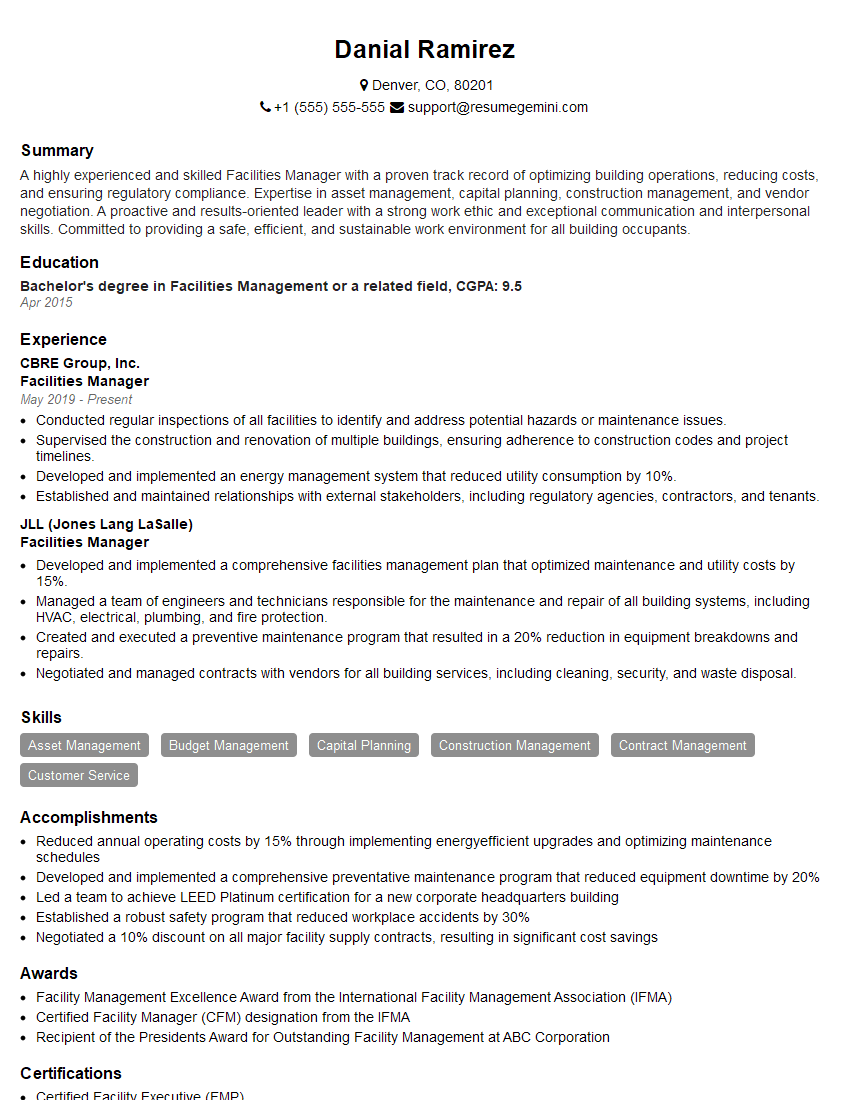
Facilities Manager Resume Sample

Asset Manager Resume Sample
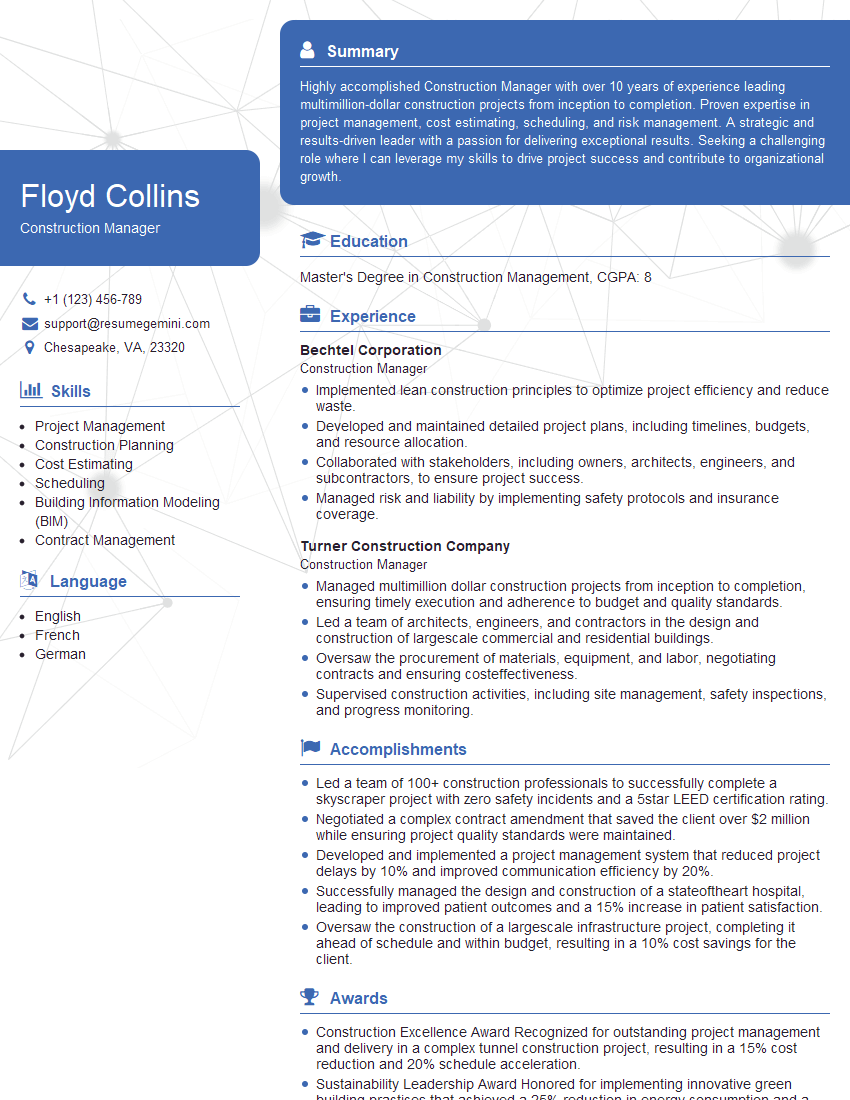
Construction Manager Resume Sample

Project Engineer Resume Sample

Civil Engineer Resume Sample
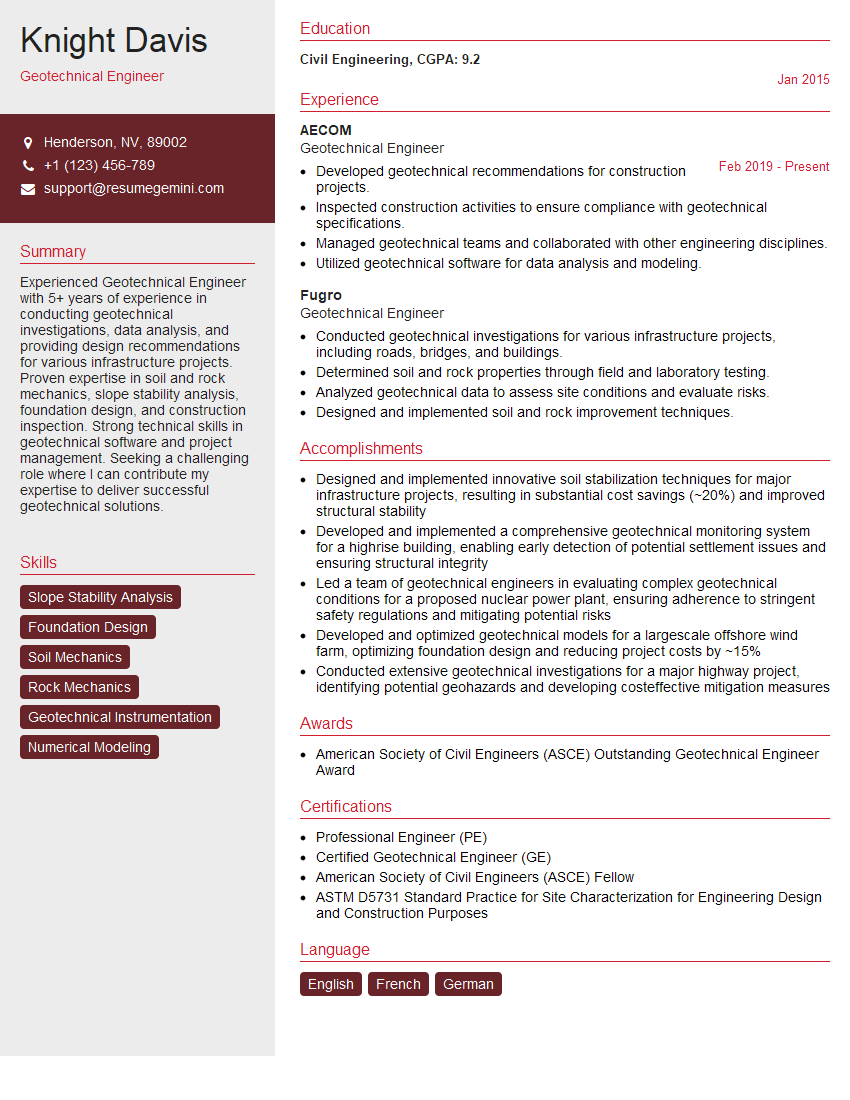
Geotechnical Engineer Resume Sample
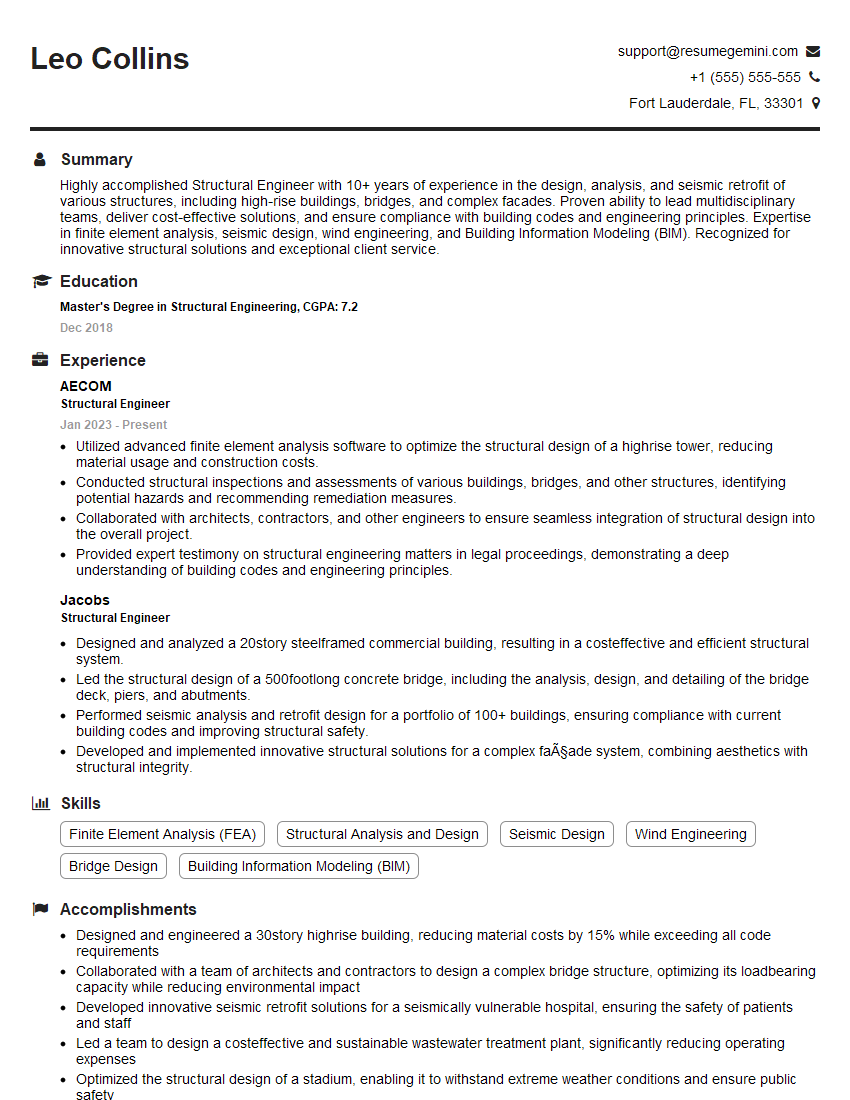
Structural Engineer Resume Sample

Materials Engineer Resume Sample
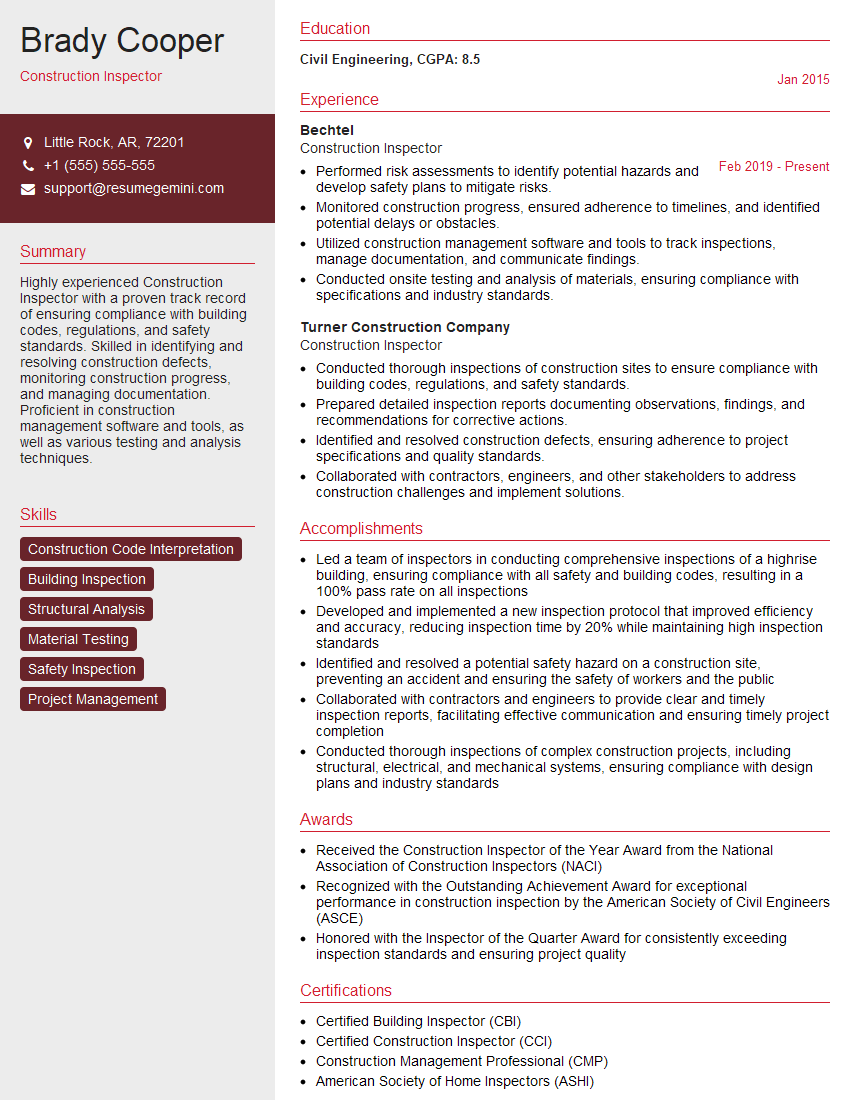
Construction Inspector Resume Sample
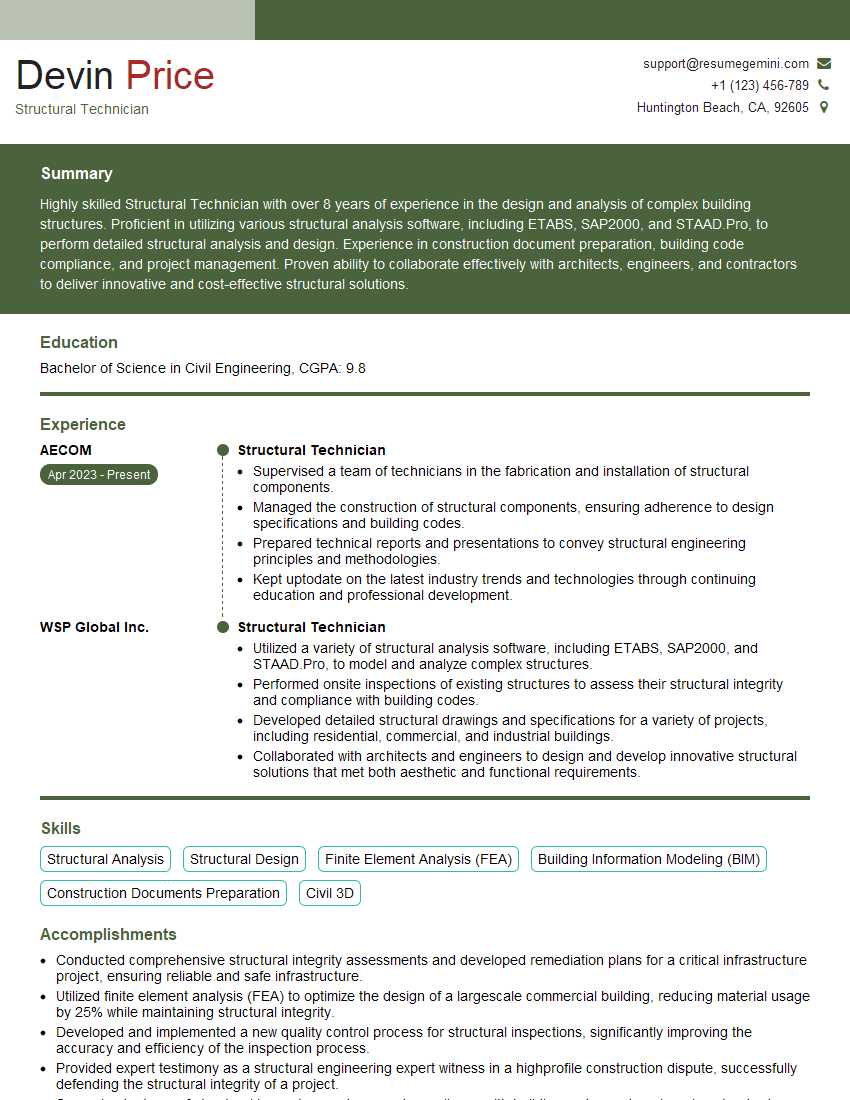
Structural Technician Resume Sample
Rehabilitation Engineer Resume Sample
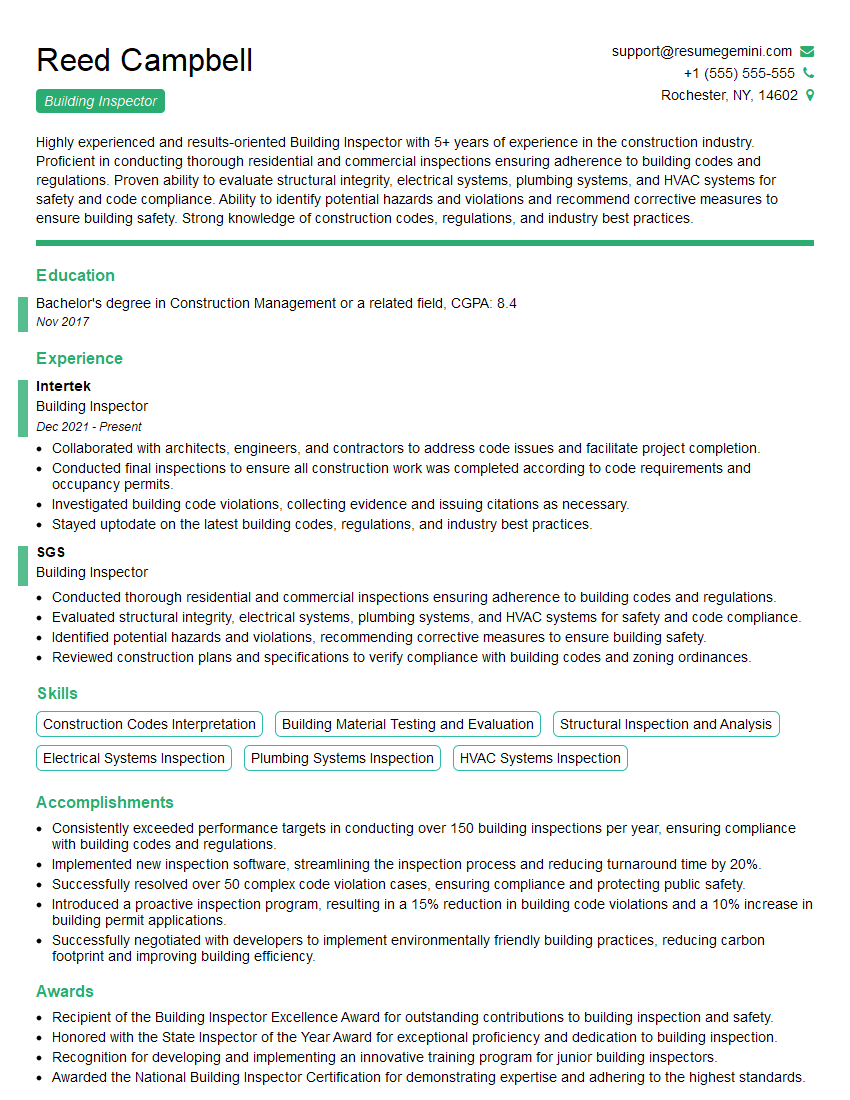
Building Inspector Resume Sample

Site Supervisor Resume Sample

Quality Control Inspector Resume Sample
Explore more articles
Users Rating of Our Blogs
Share Your Experience
We value your feedback! Please rate our content and share your thoughts (optional).
What Readers Say About Our Blog
Very informative content, great job.
good