Preparation is the key to success in any interview. In this post, we’ll explore crucial Installation and Commissioning interview questions and equip you with strategies to craft impactful answers. Whether you’re a beginner or a pro, these tips will elevate your preparation.
Questions Asked in Installation and Commissioning Interview
Q 1. Explain the difference between pre-commissioning, commissioning, and post-commissioning.
Installation and commissioning is a multi-stage process. Pre-commissioning, commissioning, and post-commissioning represent distinct phases, each with its own focus. Think of building a house: pre-commissioning is like ensuring you have all the necessary materials and blueprints before starting construction; commissioning is the actual construction and testing of each component; post-commissioning is the final inspection and handover.
Pre-commissioning: This phase focuses on verifying that all equipment and materials are delivered correctly, inspected for damage, and are ready for installation. It involves reviewing design documents, creating a detailed installation plan, and performing inspections to ensure everything aligns with the project specifications. For example, this might include checking the voltage ratings of electrical components against the site’s power supply.
Commissioning: This is the core phase where systems are installed, tested, and verified against design requirements. It involves rigorous testing and adjustments to ensure the system functions as intended. This is where we meticulously test functionalities, calibrate equipment, and address any discrepancies found. For instance, we’d test HVAC systems to make sure they reach the specified temperature and humidity levels.
Post-commissioning: This involves final system validation, documentation completion, and handover to the client. It includes conducting a final walkthrough, reviewing all test results, preparing operation and maintenance manuals, and offering training to the client’s staff. For example, we’d confirm that the system is performing efficiently and sustainably, and that the client’s team understands how to operate and maintain it.
Q 2. Describe your experience with functional performance testing.
Functional performance testing is crucial to ensure that a system meets its intended operational goals. My experience encompasses a wide range of systems, from HVAC and building management systems to complex industrial processes. We typically employ a structured approach, using test procedures derived from the design specifications and industry standards.
For example, in a recent project involving a new HVAC system in a large hospital, we conducted functional performance tests to verify that the system could maintain the required temperature and humidity levels in various zones, while also meeting energy efficiency targets. This included measuring air flow rates, temperature differentials, and energy consumption. We used specialized data loggers to record test results and compare them to the design specifications. Any deviations required further investigation and adjustments.
These tests are not just about numbers; they are about validating the system’s ability to fulfil its role, ensuring patient comfort and safety in this case. A rigorous approach to testing builds confidence in the system’s reliability and longevity.
Q 3. How do you troubleshoot a system failure during commissioning?
Troubleshooting during commissioning requires a systematic and methodical approach. The first step is always safety – securing the area and ensuring no personnel are at risk. Then, I follow these steps:
Identify the Problem: Pinpoint the exact nature of the failure – is it a complete shutdown, intermittent malfunction, or performance issue?
Gather Data: Collect information from all relevant sources: error logs, system monitoring data, operator observations. Is there a specific trigger?
Isolate the Cause: Use diagnostic tools and techniques to narrow down the potential causes. This may involve checking wiring, reviewing sensor readings, examining control logic, or even running simulations.
Implement Corrective Action: Once the root cause is identified, implement the necessary repairs or adjustments. This might involve replacing faulty components, reconfiguring software, or adjusting operational parameters.
Verify the Solution: After implementing the corrective action, rigorously retest the system to ensure the problem is resolved and that the system functions correctly and reliably. Document all findings and actions taken.
For instance, if a chiller isn’t operating correctly, we might check refrigerant levels, condenser fan operation, and control system settings. Using a systematic approach increases efficiency and reduces downtime.
Q 4. What are the key documents involved in the commissioning process?
The commissioning process relies heavily on documentation to ensure consistency, traceability, and accountability. Key documents include:
Project Specifications: These define the requirements for the system being commissioned, including performance targets, functional requirements, and acceptance criteria.
Design Drawings and Schematics: These provide detailed information on the system’s design, including component layout, wiring diagrams, and control logic.
Commissioning Plan: This document outlines the steps involved in commissioning, including testing procedures, timelines, responsibilities, and acceptance criteria.
Test Procedures and Reports: These documents detail the tests performed, the results obtained, and any deviations from the expected performance.
Commissioning Checklist: A structured list of tasks that need to be completed during commissioning. Ensures nothing is overlooked.
As-Built Drawings: Updated drawings reflecting any changes or modifications made during construction and commissioning.
Operation and Maintenance Manuals: This provides guidance on the operation, maintenance, and troubleshooting of the commissioned system.
Q 5. What safety precautions do you take during installation and commissioning?
Safety is paramount during installation and commissioning. We adhere to strict safety protocols, including:
Lockout/Tagout Procedures: Ensuring equipment is properly de-energized and locked out before any work is performed on it, protecting personnel from electrical hazards.
Personal Protective Equipment (PPE): Using appropriate PPE such as safety glasses, hard hats, gloves, and safety footwear to minimize the risk of injury.
Risk Assessments: Conducting thorough risk assessments before undertaking any task to identify and mitigate potential hazards.
Permit-to-Work Systems: Formal systems for authorizing and controlling high-risk work activities, ensuring that only authorized and qualified personnel perform the work.
Confined Space Entry Procedures: Following safe procedures for entering and working in confined spaces, ensuring adequate ventilation and monitoring of atmospheric conditions.
Emergency Response Plan: Having a well-defined emergency response plan in place to handle any incidents or accidents that might occur during installation or commissioning.
Regular safety briefings and training are also crucial to maintaining a safe work environment. Safety isn’t just a checklist; it’s a culture.
Q 6. Explain your experience with different types of commissioning methodologies (e.g., phased commissioning).
My experience includes various commissioning methodologies, each tailored to the project’s size and complexity.
Phased Commissioning: This involves commissioning systems in stages, typically as they are installed. It allows for early identification of problems and minimizes disruptions. For example, commissioning the HVAC system before the interior finishes are installed, reducing the risk of damage to completed work.
Integrated Commissioning (Cx): A more holistic approach that integrates commissioning activities throughout the entire design and construction process. This ensures that all systems are designed and installed to work together efficiently, preventing issues that may arise from poor coordination. It involves early contractor involvement and regular coordination meetings.
Retro-Commissioning (RCx): This focuses on optimizing the performance of existing systems. It often involves identifying operational inefficiencies and implementing improvements to enhance energy efficiency, reduce maintenance costs, and extend the life of equipment. For example, this may involve adjusting control sequences to improve energy efficiency in an older building.
The choice of methodology depends on factors such as project size, budget, and timeline. A well-defined commissioning methodology is essential to ensure project success.
Q 7. How do you ensure compliance with relevant codes and standards during commissioning?
Compliance with relevant codes and standards is non-negotiable. Throughout the commissioning process, we adhere to all applicable local, national, and international codes and standards. This includes:
Regular Audits: Conducting regular audits to verify compliance with the relevant standards and regulations. This includes ensuring proper documentation of testing and inspection activities.
Reference Documents: Keeping readily available reference copies of relevant codes and standards to provide guidance throughout the commissioning process.
Third-Party Inspections: Involving third-party inspectors to conduct independent verification and validation of compliance. This provides an objective assessment of compliance and can enhance client confidence.
Software Compliance: Ensuring any software used in the system meets the relevant regulatory standards and cybersecurity requirements.
Using these practices ensures that the commissioned system is safe, reliable, and complies with all relevant regulations.
Q 8. Describe your experience with commissioning management software.
Commissioning management software is crucial for efficient project execution. My experience encompasses using several platforms, including [Software Name 1] and [Software Name 2]. These tools allow for centralized data management, streamlining tasks from scheduling and progress tracking to documentation and reporting. For example, in a recent HVAC commissioning project, [Software Name 1] facilitated the seamless scheduling of functional performance tests, automatically generating reports that consolidated test results, deviations, and corrective actions. This significantly reduced administrative overhead and improved transparency across the project team.
Key features I find invaluable include: integrated task management, automated reporting, real-time data visualization (think dashboards showing progress against deadlines), and efficient change order management. The ability to link test results directly to specific equipment or system components aids in troubleshooting and significantly improves documentation quality.
Q 9. How do you manage change orders during the commissioning phase?
Managing change orders during commissioning requires a structured approach to maintain project integrity and avoid delays. My process begins with a thorough review of each change order request, assessing its impact on the scope, schedule, and budget. I then collaborate with the engineering team, contractor, and client to evaluate the feasibility and necessary adjustments. A formal change order request form is used to document the change, its justification, associated costs, and the revised timeline.
For example, if a change order necessitates additional testing, I would incorporate it into the commissioning plan, clearly defining the new test procedures and assigning responsibilities. The updated plan is then circulated to all stakeholders for approval. Crucially, every change is meticulously documented, ensuring traceability and accountability. We avoid the trap of accepting verbal changes and use a change control system integrated within the chosen commissioning management software which minimizes confusion and ensures transparent communication and complete change history.
Q 10. What is your experience with creating and reviewing commissioning plans?
Creating and reviewing commissioning plans is a cornerstone of successful project delivery. I begin by thoroughly reviewing the design documents, specifications, and project requirements. The commissioning plan outlines all the tests required to verify the systems’ proper functionality and performance according to the project specifications. This includes defining test procedures, responsible parties, acceptance criteria, and required documentation.
For instance, a typical plan would cover functional testing (verifying the system operates as designed), performance testing (ensuring it meets specified performance criteria), and integrated testing (testing interactions between different systems). During the review process, I meticulously check for completeness, clarity, and accuracy, ensuring that the plan is feasible and aligned with the project timeline and budget. Key aspects of review include: alignment with industry standards (e.g., NEBB), completeness of test procedures, and the identification of potential conflicts or redundancies.
Q 11. How do you handle conflicts or disagreements with other contractors during the commissioning process?
Conflicts between contractors are inevitable in complex projects. My approach emphasizes proactive communication and collaboration. I facilitate open discussions to understand each party’s perspectives, identify the root cause of the disagreement, and find mutually acceptable solutions. I leverage my experience and understanding of the project specifications and industry standards to provide objective assessments and mediate conflicts.
For example, in one project, a dispute arose between the mechanical and electrical contractors regarding responsibility for a particular test. Instead of escalating the issue, I organized a meeting between the involved parties, reviewed the relevant contract documents, and collaboratively defined the responsibilities based on the project specifications. This collaborative approach avoided delays and fostered a more positive working relationship between the contractors.
Q 12. Describe a time you had to solve a complex technical problem during commissioning.
During the commissioning of a large-scale data center, we encountered a complex issue with the HVAC system’s cooling capacity. The system consistently failed to meet the specified temperature thresholds under full load conditions. Initial troubleshooting pointed to various potential causes, including faulty sensors, refrigerant leaks, and improper ductwork design.
My approach involved systematically investigating each potential cause. We conducted a series of detailed tests, including pressure drops across various components, analyzing temperature gradients, and examining airflow patterns. Eventually, we discovered that the issue stemmed from a combination of factors: an overlooked design flaw in the ductwork and some incorrectly calibrated airflow dampers. By meticulously documenting the testing process, and collaborating with the design team and contractors, we developed and implemented a comprehensive solution that addressed the identified problems. The solution involved modifications to the ductwork and recalibration of the dampers, which resulted in the HVAC system achieving its intended performance. This case highlights the importance of systematic troubleshooting and the value of collaboration in resolving complex technical challenges.
Q 13. Explain your experience with different types of testing (e.g., functional, performance, integrated).
My experience encompasses a wide range of commissioning tests, each serving a unique purpose. Functional testing verifies that each system operates according to its design intent. This involves testing individual components and integrated systems to ensure they meet the required functionality. Performance testing assesses whether the system meets its specified performance criteria, using quantitative measurements and comparisons against baseline data.
Integrated testing, perhaps the most crucial, validates the interaction and compatibility between different systems. For example, in a building automation system (BAS) commissioning project, functional testing might involve verifying each individual sensor, actuator and controller. Performance testing might involve validating the response times of the system under different load conditions. Finally, integrated testing would confirm that the HVAC, lighting, and security systems integrate seamlessly within the BAS for unified control and monitoring.
I also have experience in specialized testing types such as load testing (simulating peak demand conditions), endurance testing (testing sustained operational performance), and safety testing (verifying adherence to safety codes). The selection and execution of tests are always tailored to the specific requirements of each project.
Q 14. How do you document your work and findings during commissioning?
Comprehensive documentation is paramount in commissioning. My approach involves utilizing a combination of digital and physical methods. I leverage commissioning management software to create a centralized repository for all test data, reports, and documentation. This includes test procedures, results, observations, photos, and any relevant correspondence. The software facilitates easy access to information for all stakeholders, ensures version control, and assists in the generation of professional reports.
Additionally, I maintain detailed physical logs and records, incorporating observations and notes from on-site inspections and tests. These physical records supplement the digital records and act as a backup should technology fail. The goal is always complete transparency and traceability, ensuring that any issue can be tracked to its root cause, should it arise during the lifecycle of the system. For instance, a detailed log might include entries such as: “10:00 AM – Functional test completed on VAV unit 3. All setpoints met. Observed minor noise during operation; reported to contractor.” Such entries, combined with images or video evidence, significantly enhance the clarity and value of commissioning documentation.
Q 15. What is your experience with commissioning reports and documentation?
Commissioning reports and documentation are the lifeblood of any successful project. They provide a comprehensive record of the entire commissioning process, from initial planning to final acceptance. Think of them as the project’s ‘memory’ – a detailed account of everything that happened, every test performed, and every issue resolved. This documentation is crucial for ensuring the system performs as intended, meets regulatory requirements, and allows for efficient troubleshooting down the line.
My experience encompasses creating and reviewing various types of commissioning documentation, including:
- Pre-commissioning checklists: These verify the readiness of equipment and systems before actual testing begins.
- System performance test reports: These detail the results of functional tests, including data logs, graphs, and deviations from expected performance.
- Commissioning punch lists: These list outstanding issues or incomplete tasks that need attention before final acceptance.
- As-built drawings: These reflect the actual installation as opposed to the design drawings.
- Operation and Maintenance (O&M) manuals: These provide detailed instructions for the safe and efficient operation and maintenance of the commissioned system.
I’m proficient in using various software to create and manage this documentation, ensuring its accuracy, completeness, and ease of access. For instance, in a recent project involving a large-scale HVAC system, meticulous documentation ensured a seamless handover to the client, allowing for immediate operational efficiency.
Career Expert Tips:
- Ace those interviews! Prepare effectively by reviewing the Top 50 Most Common Interview Questions on ResumeGemini.
- Navigate your job search with confidence! Explore a wide range of Career Tips on ResumeGemini. Learn about common challenges and recommendations to overcome them.
- Craft the perfect resume! Master the Art of Resume Writing with ResumeGemini’s guide. Showcase your unique qualifications and achievements effectively.
- Don’t miss out on holiday savings! Build your dream resume with ResumeGemini’s ATS optimized templates.
Q 16. Explain your understanding of HAZOP studies and their relevance to commissioning.
A HAZOP (Hazard and Operability Study) is a systematic technique used to identify potential hazards and operational problems in a system before it’s built or commissioned. Think of it as a proactive risk assessment, helping to prevent accidents and ensure safe operation. It’s a crucial part of the commissioning process because it helps anticipate and mitigate risks during installation and operation.
My understanding of HAZOP involves participating in HAZOP workshops, reviewing HAZOP reports, and incorporating the findings into the commissioning plan. This includes verifying that the implemented safeguards, identified during the HAZOP study, are functioning correctly. For example, if a HAZOP identified a risk of overpressure in a vessel, the commissioning process would include rigorous testing of the pressure relief valves to ensure they function within the specified parameters.
During commissioning, we meticulously verify that the recommendations from the HAZOP study have been properly implemented and are effective. This is particularly important for safety-critical systems, where failures can have severe consequences.
Q 17. How do you ensure the quality of the commissioning process?
Ensuring quality in the commissioning process is a multi-faceted approach. It requires meticulous planning, execution, and documentation. It’s like baking a cake – you need the right ingredients (processes), the right method (procedures), and careful monitoring (quality control) to ensure a successful outcome.
My approach to quality assurance includes:
- Following a well-defined commissioning plan: This plan outlines the scope, methodology, and schedule for the commissioning activities.
- Using qualified and experienced personnel: The team’s expertise is essential for accurate testing and troubleshooting.
- Implementing a robust quality control system: This involves regular reviews of test results, inspections, and documentation to identify and correct any deviations from standards.
- Employing independent verification and validation: Having a third party review the work helps ensure objectivity and identify potential biases.
- Utilizing appropriate testing and calibration equipment: Accurate measurements are critical to ensuring system performance.
For example, in a recent project, our rigorous quality control process, including regular calibration checks of our test equipment and adherence to strict documentation standards, enabled us to detect a minor issue in a sensor early on, preventing a major problem later.
Q 18. What are the key performance indicators (KPIs) you use to measure the success of a commissioning project?
Key Performance Indicators (KPIs) are crucial for measuring the success of a commissioning project. They provide objective measures of performance, helping to identify areas of strength and weakness. Think of them as the ‘report card’ for the project.
The KPIs I typically use include:
- Completion rate of commissioning activities: This measures the progress against the planned schedule.
- Number of punch list items resolved: This indicates the effectiveness of the troubleshooting and correction process.
- System uptime after commissioning: This demonstrates the reliability and operational efficiency of the commissioned system.
- Time taken for commissioning: This helps evaluate the efficiency of the process.
- Cost of commissioning compared to budget: This assesses the financial performance of the project.
- Client satisfaction: This is an important subjective measure of success.
Tracking these KPIs throughout the project enables proactive adjustments and ensures that the project stays on track and within budget.
Q 19. Describe your experience working with different types of equipment (e.g., PLCs, DCS, sensors).
My experience spans a wide range of equipment, including Programmable Logic Controllers (PLCs), Distributed Control Systems (DCS), and various types of sensors. I’m comfortable working with both analog and digital systems, understanding their functionalities and interconnections.
PLCs: I’ve worked extensively with PLCs from various manufacturers (e.g., Siemens, Allen-Bradley), programming and troubleshooting them using various software packages. I’m familiar with ladder logic and structured text programming.
DCS: My experience with DCS systems (e.g., Honeywell, Yokogawa) involves configuring, testing, and integrating them with other systems. I’m adept at using their respective engineering workstations.
Sensors: I’ve worked with a wide variety of sensors, including temperature, pressure, flow, and level sensors. I understand their operating principles, calibration procedures, and troubleshooting techniques. For example, I recently diagnosed a faulty level sensor on a water tank by analyzing the sensor’s output signal and cross-referencing it with other system parameters.
This broad experience allows me to effectively manage complex systems and ensure smooth integration of various components.
Q 20. How do you manage risks associated with installation and commissioning?
Risk management is paramount in installation and commissioning. It’s about proactively identifying potential problems and developing strategies to mitigate them. Think of it as ‘planning for the unexpected’.
My approach to risk management includes:
- Risk identification: Using techniques like HAZOP, checklists, and brainstorming to identify potential hazards and problems.
- Risk assessment: Evaluating the likelihood and severity of each identified risk.
- Risk mitigation: Developing strategies to reduce the likelihood or severity of risks, such as implementing safety procedures, using redundant systems, and providing adequate training.
- Risk monitoring: Continuously tracking risks throughout the project and making adjustments as necessary.
- Documentation: Maintaining a comprehensive record of all identified risks, assessments, and mitigation strategies.
For example, in a project involving working at heights, we implemented strict safety procedures, provided thorough training, and used appropriate fall protection equipment to mitigate the risk of falls. Regular monitoring of these safety practices ensured that these risks were managed effectively.
Q 21. Describe your experience with loop checking and instrumentation verification.
Loop checking and instrumentation verification are fundamental aspects of commissioning. They involve meticulously verifying the functionality of each instrument and control loop in the system. Think of it as checking every wire and component to ensure the system works as designed.
Loop checking involves verifying the signal path from the field instrument (e.g., a pressure transmitter) to the control system (e.g., a PLC or DCS). This involves checking for proper wiring, signal strength, and correct scaling. I use both manual and automated methods to perform loop checks, ensuring complete coverage. I’m proficient with using test equipment like multi-meters, signal generators, and loop calibrators.
Instrumentation verification encompasses a broader range of activities, including:
- Calibration: Ensuring that the instruments are accurately measuring the process variables.
- Functionality tests: Verifying that the instruments are working correctly and responding appropriately to changes in the process.
- Documentation: Maintaining detailed records of the verification activities, including calibration certificates and test results.
For instance, in a recent project involving a chemical plant, meticulous loop checking and instrumentation verification ensured the safe and reliable operation of the process control system, preventing potential hazardous situations and ensuring process efficiency.
Q 22. How do you handle deviations from the design specifications during commissioning?
Handling deviations from design specifications during commissioning is crucial for ensuring the system’s performance and safety. My approach involves a systematic process: First, any deviation is meticulously documented, including its location, nature, and potential impact. Then, I assess the significance of the deviation. Minor discrepancies might be acceptable within pre-defined tolerances, while significant deviations require immediate attention. For significant deviations, I collaborate with the design engineers and project managers to determine the best course of action. This might involve requesting design revisions, implementing temporary workarounds, or exploring alternative solutions that meet the project requirements. Each solution is carefully evaluated for its impact on cost, schedule, and performance. Finally, all changes are formally documented and approved before proceeding. For instance, on a recent HVAC project, a slight misalignment in ductwork was discovered. After assessing its impact on airflow, we determined it fell within acceptable tolerances and documented it as a minor deviation. However, a different project involving a control system mis-wiring required a complete rework and documentation to ensure safety and functionality.
Q 23. Explain your understanding of the importance of commissioning in ensuring operational efficiency.
Commissioning is paramount for achieving and maintaining operational efficiency. Think of a car: A well-commissioned system is like a finely tuned engine—running smoothly, efficiently, and reliably. Conversely, a poorly commissioned system is like an engine with misfiring cylinders—inefficient, unreliable, and potentially damaging. Commissioning ensures that all systems are installed and integrated correctly, operating according to design specifications, and meeting performance benchmarks. This minimizes energy waste, reduces downtime, maximizes lifespan, and ultimately, saves the client money. For example, a poorly commissioned HVAC system might consume significantly more energy than designed, leading to higher operational costs. Similarly, inadequate commissioning of a manufacturing process control system could lead to production delays and defects.
Q 24. How do you ensure that the commissioned system meets the client’s requirements?
Ensuring the commissioned system meets client requirements is a top priority. I achieve this through a multi-faceted approach. First, I carefully review and thoroughly understand the client’s requirements document, paying close attention to functional specifications, performance criteria, and acceptance criteria. Throughout the project, I maintain open communication with the client, providing regular updates and addressing concerns promptly. Detailed testing and inspection are performed at various stages, documenting all findings. These tests go beyond simple functionality checks and delve into performance parameters, energy efficiency, and safety compliance. Finally, a formal handover meeting with the client ensures that the system is fully understood, all documentation is complete and correct, and the client is satisfied with the outcome. For example, on a hospital project, ensuring the precise temperature and humidity levels in operating rooms were critical. We performed rigorous testing with documentation to prove compliance with the client’s stringent requirements.
Q 25. Describe your experience with commissioning of complex systems.
I have extensive experience commissioning complex systems, including large-scale industrial automation projects and intricate building management systems. In one project, I oversaw the commissioning of a fully automated manufacturing plant. This required coordinating the efforts of multiple contractors and ensuring seamless integration of various subsystems, such as robotics, PLC control systems, and material handling equipment. The challenge lay not just in individual system functionality but ensuring their synchronized operation to achieve optimal production efficiency. Another example involved a complex building management system for a skyscraper, integrating HVAC, lighting, security, and fire safety systems. Thorough testing was crucial to ensure these systems worked together harmoniously and responded appropriately to various scenarios. These experiences have honed my skills in managing intricate projects, coordinating diverse teams, and navigating challenging technical issues.
Q 26. What is your approach to continuous improvement in commissioning?
Continuous improvement in commissioning is a key focus for me. I actively seek feedback from my team and clients after each project to identify areas where processes can be optimized. I meticulously review commissioning reports, identifying trends, and highlighting areas for refinement. I also participate in industry conferences and workshops to stay abreast of new technologies and best practices. I document lessons learned from each project and share this knowledge with my team to enhance future project execution. One recent initiative was implementing a new data management system to improve the tracking and reporting of commissioning activities, which greatly improved efficiency and accuracy.
Q 27. How do you stay up-to-date with the latest technologies and standards in commissioning?
Staying current with the latest technologies and standards is essential in this rapidly evolving field. I regularly attend industry conferences and workshops organized by organizations such as ASHRAE (American Society of Heating, Refrigerating and Air-Conditioning Engineers) and NEBB (National Environmental Balancing Bureau). I actively participate in professional development courses and obtain relevant certifications to enhance my expertise. I also subscribe to industry publications and journals, and follow relevant online forums and communities to stay abreast of advancements and evolving best practices. Keeping up with the latest versions of industry standards, such as ISO 13370, is critical for compliance and best-in-class performance.
Q 28. Explain your experience with working on international commissioning projects.
I have considerable experience working on international commissioning projects, which has broadened my perspective and enhanced my problem-solving skills. One project involved commissioning a large-scale data center in Singapore. This required navigating cultural differences, working with international teams, and adapting to local regulations and standards. Another project in Europe involved commissioning a renewable energy plant, requiring understanding of different energy grids and regulations. These international assignments have fostered my adaptability, enhanced my cross-cultural communication skills, and improved my ability to work effectively in diverse settings.
Key Topics to Learn for Your Installation and Commissioning Interview
Landing your dream Installation and Commissioning role requires a thorough understanding of both the theoretical and practical aspects. Preparing effectively will showcase your expertise and confidence.
- Safety Procedures and Regulations: Understanding and applying relevant safety standards (e.g., OSHA, industry-specific regulations) in all phases of installation and commissioning. Practical application: Describe your experience conducting risk assessments and implementing safety protocols on previous projects.
- Equipment Knowledge: Demonstrate a strong grasp of the equipment you’ll be working with. This includes understanding its functionality, limitations, and potential failure points. Practical application: Explain how you troubleshoot malfunctioning equipment and perform preventative maintenance.
- Installation Techniques: Mastering the precise and efficient installation of various systems, ensuring adherence to blueprints and specifications. Practical application: Describe your experience with different installation methods and your ability to adapt to various project requirements.
- Commissioning Procedures: Thoroughly understanding the steps involved in testing, verifying, and documenting the functionality of installed systems. Practical application: Detail your experience with commissioning protocols, including testing procedures and documentation.
- Troubleshooting and Problem-Solving: Demonstrate your ability to identify, diagnose, and resolve issues efficiently and effectively during the installation and commissioning process. Practical application: Describe a challenging problem you encountered and how you successfully resolved it.
- Documentation and Reporting: Accurate and comprehensive record-keeping is crucial. Practical application: Explain your experience with generating reports, documenting progress, and maintaining accurate as-built drawings.
- Teamwork and Communication: Highlight your ability to collaborate effectively with engineers, technicians, and clients. Practical application: Describe how you effectively communicate technical information to both technical and non-technical audiences.
Next Steps: Launch Your Career in Installation and Commissioning
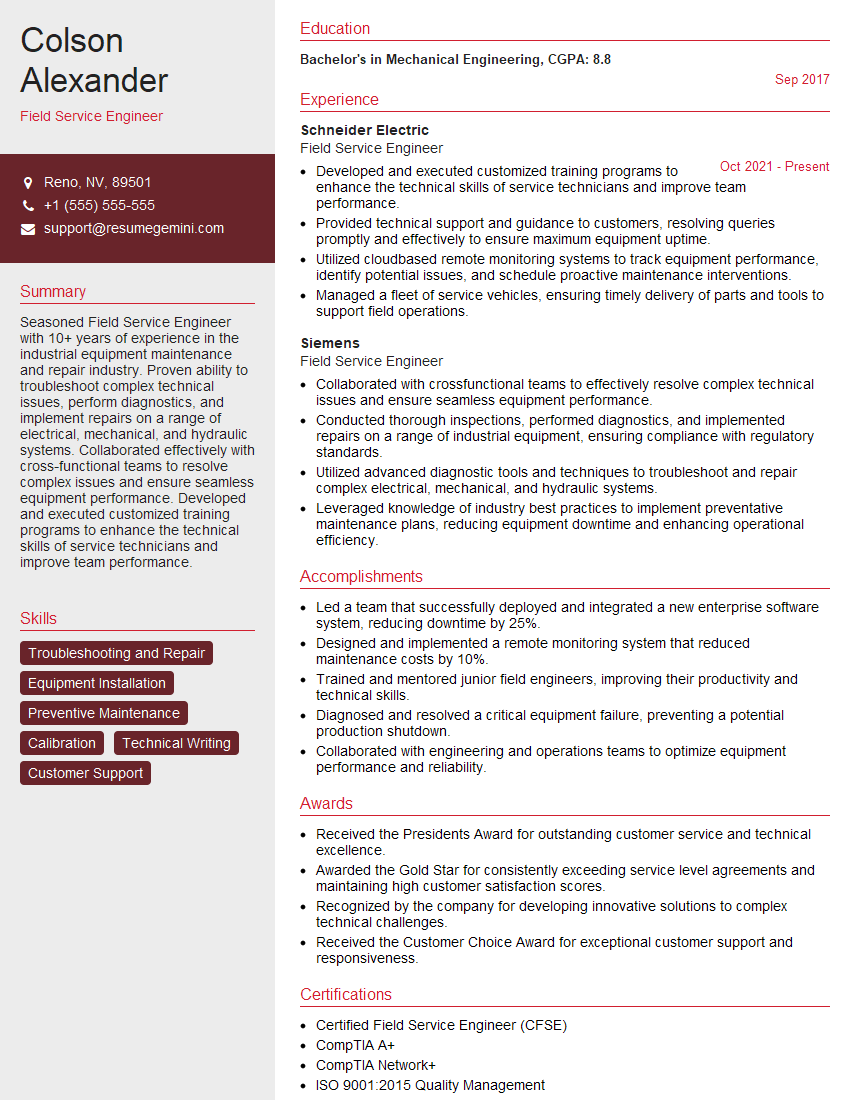
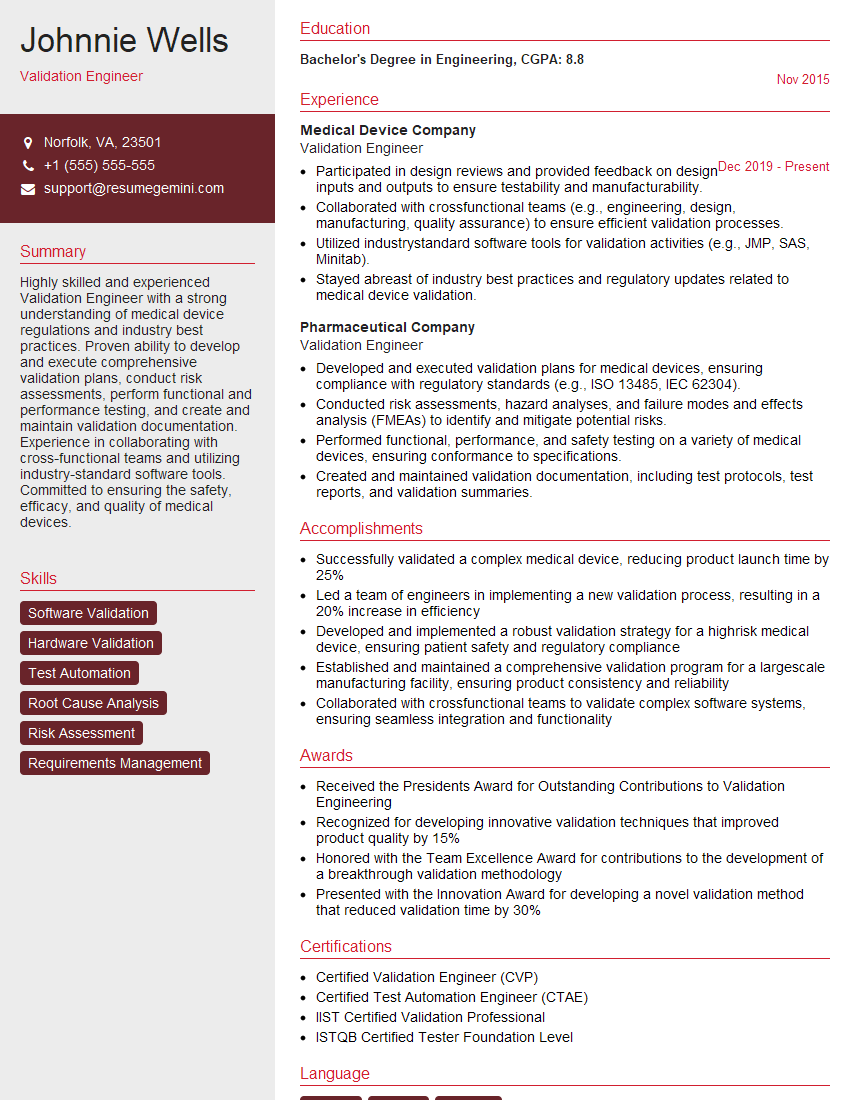
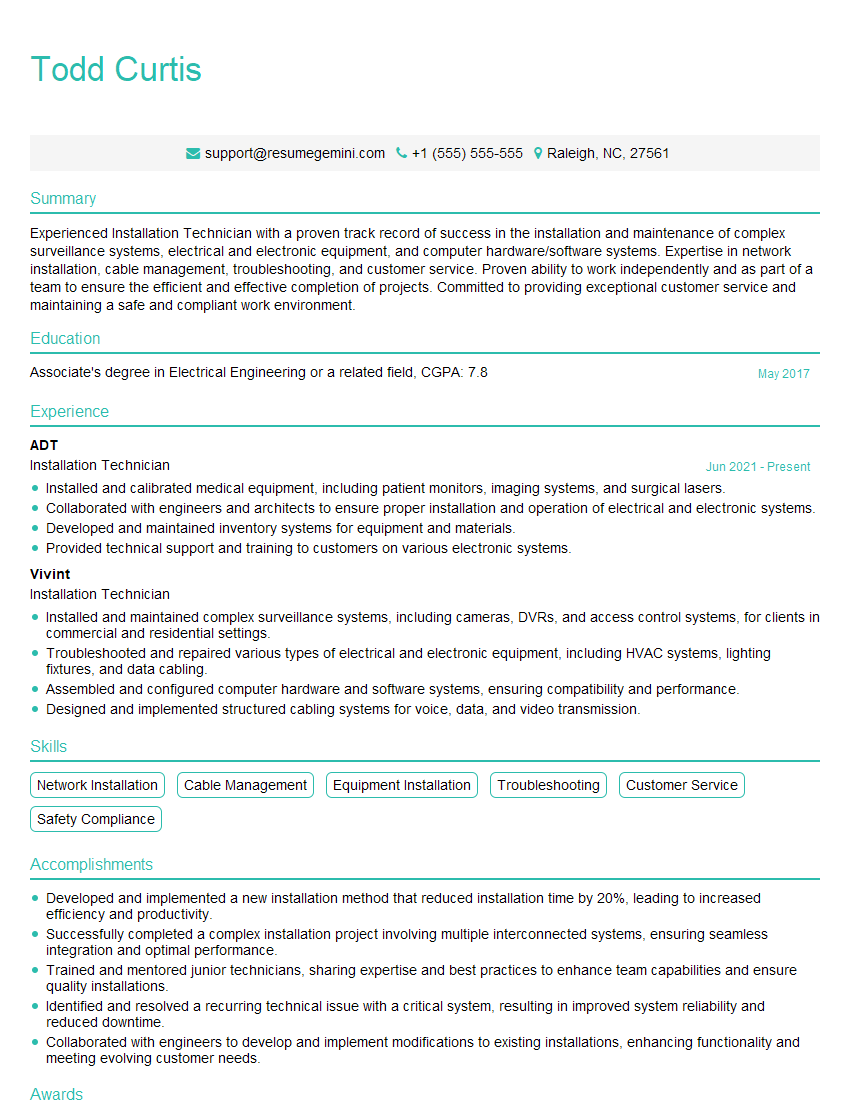
Mastering Installation and Commissioning opens doors to exciting career opportunities and continuous professional growth. To maximize your job prospects, a well-crafted, ATS-friendly resume is essential. ResumeGemini is a trusted resource to help you create a resume that highlights your skills and experience effectively. They provide examples of resumes tailored specifically to Installation and Commissioning roles, ensuring your application stands out from the competition. Take the next step towards your dream career – create a powerful resume with ResumeGemini today!
Explore more articles
Users Rating of Our Blogs
Share Your Experience
We value your feedback! Please rate our content and share your thoughts (optional).
What Readers Say About Our Blog
Very informative content, great job.
good