Every successful interview starts with knowing what to expect. In this blog, we’ll take you through the top Installation and Operational Qualification interview questions, breaking them down with expert tips to help you deliver impactful answers. Step into your next interview fully prepared and ready to succeed.
Questions Asked in Installation and Operational Qualification Interview
Q 1. Explain the difference between Installation Qualification (IQ) and Operational Qualification (OQ).
Installation Qualification (IQ) and Operational Qualification (OQ) are critical steps in validating equipment and processes in regulated industries, particularly pharmaceuticals. Think of it like building and testing a car. IQ is like verifying all the parts are correctly installed in the car – ensuring the engine is in place, the tires are attached, etc. OQ, on the other hand, is like testing if all the systems work together as intended—testing the brakes, the engine’s power, etc., under controlled conditions.
IQ focuses on verifying that the equipment has been installed correctly according to the manufacturer’s specifications and any internal requirements. This includes checking that the equipment is correctly located, all components are present and functioning properly, and the installation conforms to relevant standards and good manufacturing practices (GMP).
OQ, in contrast, demonstrates that the installed equipment performs according to predetermined specifications under defined operating conditions. This involves testing the equipment’s functionality throughout its operational range, making sure parameters like temperature, pressure, or mixing speeds are accurate and consistent.
Q 2. Describe the key components of an IQ protocol.
A comprehensive IQ protocol should include several key components to ensure a thorough and documented installation review. Consider this a checklist for a successful IQ:
- Equipment Identification: Detailed description and identification of the equipment, including model number, serial number, and manufacturer. This should ideally include photos.
- As-Built Drawings: Verification that the equipment’s installation aligns with approved as-built drawings and any engineering specifications.
- Utility Verification: Confirmation that all necessary utilities, such as power, water, compressed air, and vacuum, are correctly connected and meet the required specifications.
- Calibration Records: Documentation demonstrating the calibration of instruments used during the installation (e.g., pressure gauges, thermocouples). These instruments will be essential for the OQ phase.
- Installation Procedures: A step-by-step record of the equipment installation process, including dates, personnel involved, and any deviations from the established procedures. This is crucial for traceability.
- Cleanliness and Sanitation Verification: Documentation of the cleaning and sanitation of the equipment before operation, ensuring it’s free from contaminants.
- Documentation Review: This final step assesses that all required documentation is complete, accurate, and signed off by authorized personnel.
Following these steps ensures a robust IQ, laying the groundwork for a successful OQ.
Q 3. What are the critical parameters to consider during OQ execution?
During OQ execution, several critical parameters must be monitored and documented to ensure the equipment operates as expected. These parameters will depend on the specific equipment but often include:
- Temperature: Verification of temperature uniformity and accuracy throughout the operating range, often using multiple sensors.
- Pressure: Accurate measurement and control of pressure, crucial in many processes.
- Flow Rate: Measurement of accurate and consistent flow of liquids or gases.
- Mixing Efficiency: For mixing equipment, ensuring even mixing throughout the vessel to provide consistency in the products.
- Timing/Cycles: Accurate timing and completion of defined cycles, essential in automated systems.
- Weight/Volume: Accurate dispensing of materials, particularly relevant for filling equipment.
- Alarm functions: Checking that all safety and operational alarms are working correctly.
Failing to monitor critical parameters accurately during OQ can result in invalidated results, requiring costly and time-consuming re-qualification.
Q 4. How do you ensure the accuracy and reliability of IQ/OQ data?
The accuracy and reliability of IQ/OQ data are paramount. Several strategies are employed to achieve this:
- Calibration of Instruments: Regular calibration of all measuring instruments used is crucial. Traceable calibration certificates are essential for audit trails.
- Use of Standard Operating Procedures (SOPs): Adhering strictly to SOPs for both IQ and OQ reduces variability and human error.
- Trained Personnel: Only trained and qualified personnel should conduct IQ/OQ activities. Proper training ensures consistent execution and data interpretation.
- Data Integrity: Maintaining meticulous records, including raw data, calculations, and deviations, is vital for data integrity. Electronic data systems with audit trails are highly recommended.
- Peer Review: Having independent review of the IQ/OQ data and protocols adds another layer of quality control.
- Deviation Management: A proper protocol for handling deviations during the execution of IQ/OQ activities is essential. Deviations need to be investigated, documented, and potentially corrected with appropriate justification.
By following these steps, you ensure confidence in the data and the validity of the qualification.
Q 5. What are the regulatory requirements for IQ/OQ in the pharmaceutical industry?
Regulatory requirements for IQ/OQ in the pharmaceutical industry are stringent and vary somewhat by region, but generally align with GMP principles. Agencies such as the FDA (United States), EMA (Europe), and others expect thorough documentation and adherence to relevant guidelines. Key aspects include:
- Compliance with GMP: All aspects of IQ/OQ must comply with the relevant Good Manufacturing Practices guidelines.
- Detailed Documentation: Comprehensive and traceable documentation is crucial, including protocols, executed reports, and raw data.
- Change Control: Any changes to the equipment or its operational parameters require a formal change control process and potentially requalification.
- Deviation Management: A robust deviation management system is critical to handle unforeseen issues during IQ/OQ.
- Auditable Trails: All data must be auditable, ensuring traceability and allowing for review by regulatory agencies.
Failure to meet these regulatory requirements can result in significant penalties and regulatory actions.
Q 6. Explain the concept of Performance Qualification (PQ). How does it relate to IQ and OQ?
Performance Qualification (PQ) is the final step in equipment qualification. While IQ verifies the installation and OQ demonstrates the functionality under controlled conditions, PQ assesses the equipment’s ability to consistently produce the desired results under real-world operating conditions. Think of it as the final “real-world” test of the car before it’s sold.
Imagine a pharmaceutical filling machine. IQ confirms its proper installation, OQ validates its ability to fill to a specific volume under controlled laboratory conditions. PQ then demonstrates that the machine can reliably fill the correct volume, consistently, across multiple batches, in a normal production environment. PQ frequently involves running simulated production batches or even real production batches with the quality control testing.
Therefore, PQ builds upon the foundation of IQ and OQ, providing complete assurance that the equipment performs its intended function consistently and reliably in its intended use environment. All three—IQ, OQ, and PQ—are essential components of equipment validation.
Q 7. Describe a situation where an IQ/OQ failed. How did you resolve it?
During an OQ for a new high-pressure liquid chromatography (HPLC) system, we failed to achieve the required retention times for the test samples. Initial troubleshooting revealed a significant discrepancy between the set temperature and the actual temperature in the column oven. Investigation determined that a faulty thermocouple was responsible.
Our resolution involved the following steps:
- Identifying the Root Cause: We systematically analyzed all possible sources of error, concluding that the faulty thermocouple was the primary cause of the deviation.
- Replacing the faulty component: The thermocouple was promptly replaced with a calibrated replacement.
- Re-calibration and Re-testing: The HPLC system was recalibrated, and the OQ tests were repeated. This confirmed that the system was functioning correctly.
- Deviation Report: A comprehensive deviation report was documented, detailing the issue, investigation, corrective actions, and verification of correction.
- Retraining: We conducted brief retraining for the team on identifying similar problems and troubleshooting the system more effectively.
This experience highlighted the importance of thorough investigation, meticulous record-keeping, and prompt corrective action during equipment qualification processes.
Q 8. How do you handle deviations during IQ/OQ execution?
Handling deviations during IQ/OQ is crucial for maintaining the integrity of the validation process. A deviation is any unplanned event that differs from the pre-approved protocol. Think of it like a detour on a road trip – you have a planned route, but sometimes unexpected road closures or traffic jams necessitate a change of plans. The key is to document and investigate the deviation thoroughly.
Our approach involves immediately documenting the deviation in a deviation log, noting the date, time, location, description of the event, and the personnel involved. We then assess the impact of the deviation on the overall qualification. Is it minor and easily corrected, or does it significantly affect the results? For minor deviations, a justification might suffice, explaining why it happened and how it was addressed. However, for major deviations, a thorough investigation is necessary, often involving a root cause analysis. The investigation should pinpoint the reason for the deviation and outline corrective and preventative actions (CAPA) to ensure it doesn’t happen again. All of this is meticulously documented and reviewed by management to ensure compliance.
For example, if a temperature sensor malfunctions during the OQ of an autoclave, this is a deviation. We would document it, replace the sensor, re-calibrate it, and repeat the relevant tests. The deviation, investigation, and corrective action would all be detailed in the final report.
Q 9. What documentation is required for IQ/OQ compliance?
Comprehensive documentation is the cornerstone of IQ/OQ compliance. It’s your proof that the equipment and processes meet regulatory requirements. Imagine building a house without blueprints; it would be chaos! Similarly, without proper documentation, your validation is incomplete.
- Installation Qualification (IQ): This includes the equipment’s specifications, installation instructions, acceptance criteria, and a detailed description of the installation process, including photos or videos. Think of this as documenting that you have the right parts and that they are correctly assembled.
- Operational Qualification (OQ): This documents that the equipment functions as intended within its specified operational parameters. It includes calibration certificates, test procedures, raw data, and calculations, demonstrating the equipment works as expected within its designated operating range. Imagine this stage as the system’s functional test, ensuring everything works harmoniously.
- Performance Qualification (PQ): While not always explicitly called out as part of IQ/OQ, PQ is crucial for confirming the equipment consistently produces the desired results under real-world conditions. This would involve documentation of tests performed under typical production conditions, demonstrating it successfully performs its intended purpose. Think of PQ as demonstrating successful baking of a cake when using the new oven successfully completed its IQ/OQ.
- Deviation Logs and Reports: As mentioned before, detailed records of any deviations, investigations, and corrective actions are vital for demonstrating compliance.
- Master Validation Plan: A comprehensive plan outlining the entire validation process, including timelines, responsibilities, and acceptance criteria.
All documents should be properly version-controlled, approved, and archived according to regulatory guidelines like GMP (Good Manufacturing Practices) or equivalent standards.
Q 10. How do you ensure the traceability of equipment and materials used in IQ/OQ?
Traceability is about establishing a clear chain of custody for all equipment and materials used in IQ/OQ. It’s like leaving a trail of breadcrumbs to ensure you can always find your way back. This ensures the origin, handling, and history of everything used in the process is clear and easily accessible.
We achieve traceability through several methods:
- Unique Identification Numbers (UIDs): Each piece of equipment and material should have a unique identifier, such as a serial number or lot number. This is like giving each item a passport.
- Calibration Certificates: For calibrated equipment, we maintain copies of the calibration certificates with the UID, ensuring its accuracy is documented.
- Material Certificates of Analysis (CoA): For raw materials or reagents, CoAs provide information about their purity and identity, linking it back to the source.
- Inventory Management Systems: Using dedicated inventory management software helps to track the usage, location, and history of each item. This is like a central database that keeps track of all items, showing its complete history.
- Detailed Documentation: All documents should clearly reference the UIDs of the equipment and materials used. This creates a clear link between the document and the specific items involved.
By maintaining this traceability, we can easily verify the origin and history of any item involved in the qualification, simplifying investigations, audits, and future maintenance.
Q 11. What are the different types of validation methods?
Validation methods vary depending on the equipment and its intended purpose. Think of it like choosing the right tool for a specific job. You wouldn’t use a hammer to screw in a screw!
- Performance Testing: This involves testing the equipment’s ability to meet its predefined specifications under various operating conditions. For example, measuring temperature accuracy and uniformity in an oven.
- Functional Testing: This verifies that the equipment performs its intended function, such as confirming the proper operation of a centrifuge or autoclave’s sterilization cycle.
- Calibration: This establishes the accuracy of measuring instruments against known standards.
- Visual Inspection: A simple yet essential method to check for any physical damage or defects on the equipment.
- Leak Testing: Testing for leaks in systems such as autoclaves or vacuum pumps is crucial for safety and proper function.
- Analytical Testing: If the equipment produces a product, analytical testing ensures the product meets quality standards.
The selection of validation methods depends on risk assessment and regulatory guidelines. A highly sensitive analytical instrument will require more rigorous validation than a simple laboratory balance. A thorough risk assessment will guide the appropriate methods selection.
Q 12. Explain the importance of risk assessment in IQ/OQ.
Risk assessment is fundamental to effective IQ/OQ. It helps prioritize resources and ensures validation efforts are focused where they are most needed. Without a risk assessment, you’re essentially shooting in the dark.
A risk assessment identifies potential hazards associated with equipment failure or malfunction. It considers the probability of failure and the potential consequences if failure occurs. For example, a failure of an autoclave could lead to contamination of products posing health risks, whereas a balance malfunction might only lead to minor inaccuracies in measurements.
The risk assessment then dictates the scope and depth of the validation process. High-risk equipment requires more thorough and frequent validation than low-risk equipment. It can also influence the selection of validation methods, with high-risk processes needing more robust techniques and more frequent testing.
The output of the risk assessment forms the basis of the master validation plan, providing a structured roadmap for qualification activities.
Q 13. How do you manage change control during IQ/OQ?
Change control during IQ/OQ ensures that any modifications to the equipment, process, or procedures are properly documented and validated. Imagine altering a recipe without recording the changes – you won’t be able to reproduce the same results consistently!
Our change control process involves a formal change request that’s reviewed and approved by relevant stakeholders. The request needs to justify the change, document its potential impact, and outline the necessary validation activities to re-qualify any affected aspects. Any modifications, whether software updates or hardware replacements, necessitate a revalidation of the affected portions, or potentially a full re-qualification depending on the scope of the change. This ensures the system remains validated and compliant even after changes.
Detailed records of the change request, approval, implementation, and re-validation are essential for maintaining audit trails and demonstrating continued compliance. This includes any associated documentation updates and re-training of personnel.
Q 14. What are some common challenges faced during IQ/OQ execution?
Several challenges are commonly encountered during IQ/OQ execution.
- Inadequate Planning: Insufficient upfront planning can lead to delays, cost overruns, and inconsistencies. A well-defined timeline, clear responsibilities, and a comprehensive validation plan are essential for success.
- Lack of Resources: Insufficient personnel, equipment, or budget can hinder the progress and quality of the validation.
- Unclear Specifications: Ambiguous or incomplete specifications for equipment or processes can lead to confusion and deviations from the intended protocol.
- Insufficient Training: Inadequately trained personnel can make errors during IQ/OQ execution, compromising the results.
- Regulatory Changes: Keeping up with the constantly evolving regulatory landscape can be challenging, and validation plans must adapt to incorporate the latest guidelines.
- Complex Equipment: Highly complex or sophisticated equipment requires specialized expertise and more extensive validation activities.
- Unexpected Deviations: Handling deviations efficiently and effectively requires a well-defined process, including comprehensive investigation, documentation, and corrective actions.
Proactive planning, thorough risk assessment, sufficient resources, and well-trained personnel are key to mitigating these challenges.
Q 15. How do you ensure the training of personnel involved in IQ/OQ activities?
Ensuring adequate training for personnel involved in IQ/OQ activities is paramount for successful validation. It’s not just about ticking a box; it’s about fostering a culture of quality and compliance. My approach involves a multi-layered training strategy.
- Initial Training: This covers the fundamental concepts of IQ (Installation Qualification), OQ (Operational Qualification), and the relevant regulatory requirements (like 21 CFR Part 11). We use a combination of online modules, presentations, and hands-on workshops, tailoring the content to the specific equipment and processes.
- On-the-Job Training: Experienced personnel mentor new team members during actual IQ/OQ activities. This provides practical experience and allows for immediate feedback and clarification. Shadowing senior validators is extremely helpful here.
- Refresher Training: Regular refresher courses, perhaps annually or when significant changes to procedures or equipment occur, ensure knowledge remains up-to-date. This keeps everyone aligned with best practices and current regulations.
- Documentation and Testing: We use assessments and practical exercises to verify understanding. Training records are meticulously documented, providing verifiable proof of competency. This includes sign-offs confirming completion and comprehension.
For example, in validating a new HPLC system, training would cover the specific instrument’s operation, the required tests for IQ and OQ, data recording procedures, and deviation handling. This comprehensive approach minimizes errors and ensures that all personnel involved are well-equipped to conduct accurate and compliant validation.
Career Expert Tips:
- Ace those interviews! Prepare effectively by reviewing the Top 50 Most Common Interview Questions on ResumeGemini.
- Navigate your job search with confidence! Explore a wide range of Career Tips on ResumeGemini. Learn about common challenges and recommendations to overcome them.
- Craft the perfect resume! Master the Art of Resume Writing with ResumeGemini’s guide. Showcase your unique qualifications and achievements effectively.
- Don’t miss out on holiday savings! Build your dream resume with ResumeGemini’s ATS optimized templates.
Q 16. What are the key metrics for measuring the success of IQ/OQ?
Measuring the success of IQ/OQ hinges on several key metrics, all focused on ensuring equipment performs as intended and meets regulatory requirements. These include:
- Complete and Accurate Documentation: This is fundamental. All protocols, data, and deviations must be meticulously documented, following a structured format (e.g., using templates). The completeness and accuracy of this documentation are key indicators of success.
- On-Time Completion: Meeting predetermined timelines demonstrates effective planning and execution. Delays can indicate procedural problems or resource constraints.
- Compliance with Regulatory Requirements: The IQ/OQ must meet all applicable regulations (e.g., GMP, 21 CFR Part 11). Any deviation constitutes a failure point.
- Equipment Performance Within Specifications: OQ results must confirm the equipment consistently operates within pre-defined acceptance criteria. Failing to meet these criteria requires investigation and corrective action.
- No Critical Deviations: The absence of critical deviations indicates a smooth validation process without significant setbacks. Minor deviations should be documented and addressed through a CAPA (Corrective and Preventive Action) process.
- Deviation Rate: A low deviation rate signals efficient and well-controlled processes.
We use these metrics to not only assess past performance but also to identify areas for improvement in future validation projects. For instance, tracking deviation rates helps in proactively improving SOPs or training programs to minimize errors.
Q 17. Describe your experience with different types of equipment validation.
My experience encompasses a broad range of equipment validation, covering various technologies and industries. This includes:
- Analytical Instruments: HPLC, GC, spectrophotometers, balances – I’ve extensively validated these, focusing on system suitability testing, accuracy checks, and precision verification.
- Bioreactors and Fermenters: Validation here focuses on ensuring accurate temperature and pressure control, sterility, and proper mixing performance. This often involves more complex protocols including media sterilization validation.
- Cleanroom Equipment: Autoclaves, laminar flow hoods, environmental monitoring systems – validation activities focus on sterility assurance, particle count, and environmental monitoring results.
- Process Equipment: This includes mixers, reactors, and filling machines, requiring rigorous assessment of mechanical functions, process parameters, and output quality.
Each equipment type has unique validation challenges. For example, validating an autoclave involves rigorous sterility testing, while validating a balance necessitates precise weight verification using calibrated standards. I always tailor the validation approach to the specific requirements of the equipment and its intended use.
Q 18. Explain your understanding of 21 CFR Part 11 and its impact on IQ/OQ.
21 CFR Part 11 is a critical element in IQ/OQ, particularly regarding computerized systems. It outlines the FDA’s guidelines for electronic records and electronic signatures, ensuring data integrity and authenticity. In the context of IQ/OQ, this means:
- Electronic Signatures: All electronic signatures on validation documents must meet 21 CFR Part 11 requirements, ensuring traceability and accountability.
- Data Integrity: All data collected during IQ/OQ must be accurate, complete, consistent, and attributable. This involves using validated systems and implementing robust data management procedures.
- Audit Trails: Complete audit trails are crucial for demonstrating data integrity and system security. These audit trails should track all changes and accesses to validation data.
- System Access Control: Access to validation systems and data must be controlled and documented, ensuring only authorized personnel can access and modify data.
- Security: Measures must be implemented to protect the system from unauthorized access, use, or modification.
Failure to comply with 21 CFR Part 11 can lead to significant regulatory issues. For instance, if an audit trail is incomplete or data integrity is compromised, it can invalidate the entire validation process. Therefore, we adhere strictly to these regulations throughout the IQ/OQ process.
Q 19. How do you ensure data integrity in IQ/OQ documentation?
Data integrity in IQ/OQ documentation is paramount. We employ several strategies to ensure this:
- Use of Validated Systems: All data acquisition and storage systems must be validated to ensure data accuracy and reliability.
- Standard Operating Procedures (SOPs): Detailed SOPs outline data collection, handling, and storage procedures to maintain consistency and reduce errors. These SOPs are reviewed and updated regularly.
- Data Backup and Archiving: Regular backups of data are critical for disaster recovery and long-term data preservation. A robust archiving system is crucial for regulatory compliance.
- Version Control: A version control system should track changes to documents and data, ensuring the latest version is always used and previous versions are readily available for audits.
- Review and Approval Processes: Multiple levels of review and approval are implemented to verify data accuracy and completeness before finalization. This involves checks for completeness, accuracy, and compliance with regulations.
- Deviation Management System: A well-defined system for managing deviations, including investigation, root cause analysis, and corrective actions, ensures that all anomalies are addressed and documented.
For example, we use electronic data capture systems with built-in audit trails to ensure complete traceability. This leaves an undeniable audit trail of all actions performed on the data.
Q 20. How do you manage the validation lifecycle for equipment?
Managing the validation lifecycle requires a structured and proactive approach. It begins with planning and extends well beyond initial qualification. The lifecycle typically includes:
- Planning and Risk Assessment: Identify critical equipment, define validation scope, and assess risks to determine the appropriate validation strategy.
- Installation Qualification (IQ): Verify that the equipment is installed correctly according to the manufacturer’s specifications and site requirements.
- Operational Qualification (OQ): Demonstrate that the equipment functions as intended within its defined operational parameters.
- Performance Qualification (PQ): Verify that the equipment consistently produces the desired results under normal operating conditions. This is often a continuous process.
- Periodic Re-qualification: Regular re-qualification, at defined intervals, maintains validation status and ensures continued compliance. Frequency depends on equipment usage and criticality.
- Change Control: A rigorous change control process ensures any modifications to the equipment or its operational parameters are properly evaluated and validated before implementation.
- Deviation Management: Effective management of deviations ensures problems are identified, investigated, and corrected, preventing recurrence.
- Record Keeping and Archiving: Maintain complete and accurate records of all validation activities, complying with regulatory requirements.
By implementing this lifecycle approach, we ensure consistent compliance, proactive problem solving, and continuous improvement in validation processes.
Q 21. Describe your experience with computerized systems validation.
Computerized systems validation (CSV) is a critical part of my expertise. It’s crucial for ensuring the reliability and integrity of data generated by software used in regulated environments. My experience involves:
- Risk Assessment: Identifying the criticality of software systems and determining the appropriate validation strategy based on risk.
- Defining Validation Scope: Clearly defining the functionalities to be validated, including user requirements and specifications.
- Software Development Lifecycle (SDLC) Compliance: Ensuring the validation process aligns with established SDLC methodologies, such as Waterfall or Agile.
- Installation Qualification (IQ): Verifying correct installation and configuration of the software according to manufacturer specifications and site requirements.
- Operational Qualification (OQ): Demonstrating that the software functions as expected and meets predefined operational parameters.
- Performance Qualification (PQ): Verifying consistent performance and output quality through testing and user acceptance testing (UAT).
- 21 CFR Part 11 Compliance: Ensuring that the system complies with all relevant regulations for electronic records and signatures.
- Documentation: Creating thorough validation documentation compliant with regulatory expectations.
For example, I’ve been involved in validating laboratory information management systems (LIMS), chromatography data systems (CDS), and electronic batch record (EBR) systems. These projects required a deep understanding of software functionality, regulatory requirements, and a methodical approach to testing and documentation.
Q 22. How do you utilize risk-based approaches in IQ/OQ?
A risk-based approach to Installation Qualification (IQ) and Operational Qualification (OQ) prioritizes resources and efforts on the aspects posing the greatest risk to product quality and patient safety. Instead of a blanket approach to every aspect of the equipment, we identify critical parameters and potential failure modes. This is often accomplished using a Failure Mode and Effects Analysis (FMEA).
For example, consider a high-speed centrifuge. A risk-based approach wouldn’t necessitate an exhaustive examination of every screw; instead, it would focus on critical parameters like speed accuracy, temperature control (if applicable), and braking mechanisms. These directly impact product integrity. We’d perform rigorous testing and validation on these high-risk areas, potentially using more robust methodologies, while applying a less intensive approach to lower-risk components.
This risk-based strategy leads to more efficient and targeted validation, saving time and resources without compromising safety and quality. It involves a systematic process of identifying hazards, assessing risks, implementing controls, and monitoring effectiveness. This ensures we allocate our resources where they’re needed most.
Q 23. Explain your familiarity with different validation software and tools.
My experience encompasses a range of validation software and tools, both general-purpose and specialized for GMP environments. I’m proficient with LIMS (Laboratory Information Management Systems) for data management and analysis, which are crucial for maintaining audit trails and ensuring data integrity. These systems help manage the vast amounts of data generated during IQ/OQ.
I’ve worked extensively with validation software specifically designed for equipment qualification, such as those providing automated data collection, analysis, and report generation. This streamlines the qualification process and minimizes manual data entry, reducing human error. These packages frequently allow integration with the equipment itself, automating data acquisition directly from the instrument’s system. In some cases, we’ve used custom scripts to interface with equipment lacking direct software integration, enabling automated data capture.
Furthermore, I’m comfortable using spreadsheet software like Microsoft Excel and specialized statistical software packages (like Minitab or JMP) for data analysis and report generation to confirm compliance with regulatory requirements. Choosing the right tool depends entirely on the complexity of the equipment and the specific validation needs.
Q 24. What is your approach to developing a validation plan?
Developing a validation plan is a systematic process that begins with a thorough understanding of the equipment and its intended use. It’s not a one-size-fits-all approach. I begin by carefully reviewing the equipment’s specifications, user manuals, and intended use in the manufacturing process.
- Scope Definition: Clearly define the scope, including specific equipment, parameters, and tests to be performed.
- Risk Assessment: Identify potential failure modes and their impact on product quality and safety (using FMEA as mentioned previously).
- Methodology Selection: Determine the appropriate testing methods, including acceptance criteria, based on the risk assessment and equipment specifications. This could involve physical testing, calibration checks, or performance verification.
- Protocol Development: Develop detailed protocols outlining step-by-step procedures for each test, including equipment, materials, and expected results.
- Resource Allocation: Define the personnel, equipment, and materials required for the validation activities.
- Timeline and Budget: Establish a realistic timeline and budget for the entire validation process.
- Reporting and Approval: Outline the structure and format for the final validation reports, including review and approval processes.
A well-defined plan is crucial for efficient validation and ensures compliance with regulatory expectations. The plan should be a living document; it may need adjustments throughout the validation process to reflect changes or challenges encountered.
Q 25. How do you handle discrepancies between expected and actual results during OQ?
Discrepancies between expected and actual results during OQ are investigated thoroughly and systematically. The first step is to ensure the discrepancy is genuine and not due to errors in data collection or recording. We meticulously review the OQ protocol, the raw data, and the calculations to identify any potential errors. This includes double-checking all calculations and verifying the accuracy of instruments used.
If the discrepancy persists, a thorough investigation is launched, following a deviation investigation procedure. This may involve:
- Identifying the root cause: Analyzing the deviation to understand why the actual results differ from the expected results. This might involve checking equipment calibration, reviewing operating procedures, and assessing environmental factors.
- Implementing corrective actions: Defining and implementing corrective actions to address the root cause of the deviation. This might include recalibration, repair, or retraining of personnel.
- Verifying effectiveness: Repeating the affected tests to verify that the corrective actions have resolved the discrepancy and that the equipment is performing as expected.
- Documenting the investigation: Thoroughly documenting the entire investigation, including the deviation, root cause analysis, corrective actions, and verification results. This documentation forms a critical part of the overall validation package.
Depending on the severity of the discrepancy, it may require a complete requalification of the equipment.
Q 26. Describe your experience with deviation investigations related to IQ/OQ.
My experience with deviation investigations related to IQ/OQ involves a systematic approach rooted in root cause analysis. When a deviation occurs, I follow a structured investigation process to determine the root cause and implement appropriate corrective and preventive actions (CAPAs).
For example, if a temperature sensor deviated from expected readings during the OQ of an incubator, the investigation would include:
- Review of the protocol: Verify that the protocol was followed correctly.
- Calibration verification: Confirm the calibration status of the temperature sensor and the reference thermometer used.
- Equipment inspection: Thoroughly inspect the incubator for any physical damage or malfunction.
- Environmental factors: Assess the environmental conditions (power fluctuations, ambient temperature) that could have influenced the results.
- Personnel training: Review personnel training records to ensure proper operating procedures were followed.
Once the root cause is identified (e.g., faulty sensor), corrective actions (e.g., sensor replacement) are implemented, and the effectiveness of these actions is verified. All findings are documented in a formal deviation report, including the root cause, corrective actions, and preventive actions to prevent similar deviations in the future. This rigorous approach is critical for ensuring data integrity and regulatory compliance.
Q 27. How do you ensure the proper cleaning and sanitization of equipment during IQ/OQ?
Cleaning and sanitization are crucial steps in IQ/OQ to ensure the equipment is free from contamination before and after validation testing. The specific methods employed depend on the equipment and its intended use. A detailed cleaning and sanitization procedure is developed, which is then validated as part of the overall IQ/OQ process.
This procedure typically includes:
- Disassembly (if necessary): Equipment might need to be disassembled for thorough cleaning, particularly for components that are difficult to access. This must be done in a controlled manner, following the manufacturer’s guidelines.
- Cleaning agents: Selecting appropriate cleaning agents, considering material compatibility and effectiveness against potential contaminants. Validation of the cleaning process itself might be required to confirm its efficacy.
- Cleaning process: A detailed description of the cleaning steps, including the sequence, contact time, and rinsing procedures. This should be documented to ensure consistency.
- Sanitization: Implementing appropriate sanitization methods to eliminate or reduce microorganisms. Methods may include steam sterilization, chemical disinfection, or other validated techniques.
- Drying: Proper drying procedures to prevent residue buildup or microbial growth.
- Reassembly (if necessary): Careful reassembly following the manufacturer’s instructions.
- Visual inspection: Thorough visual inspection after cleaning and sanitization to confirm the absence of visible contaminants.
The cleaning and sanitization procedure must be validated to confirm its effectiveness in removing contaminants and ensuring the equipment is suitable for its intended use. This could involve microbiological testing or residue analysis.
Q 28. Explain your experience with auditing IQ/OQ documentation and processes.
Auditing IQ/OQ documentation and processes is essential for ensuring compliance with regulatory requirements and maintaining data integrity. My approach involves a detailed review of the entire validation package, focusing on completeness, accuracy, and adherence to established procedures and guidelines.
This includes:
- Review of protocols: Assessing the completeness and clarity of the validation protocols, including the methodology, acceptance criteria, and test procedures.
- Data review: Scrutinizing raw data for accuracy, completeness, and consistency. This may involve comparing data across different runs or tests.
- Deviation investigation review: Examining the thoroughness of any deviation investigations, ensuring that root causes were correctly identified and appropriate corrective actions were implemented.
- Report review: Evaluating the final validation reports for accuracy, completeness, and proper interpretation of the results. This includes checking for proper conclusions and recommendations.
- Compliance assessment: Assessing the validation package for compliance with relevant regulations, guidelines, and internal procedures.
- Audit trail review: Reviewing the complete audit trail to verify the integrity of the data and the chain of custody of samples and records.
The goal of an audit is not to find fault but to identify areas for improvement and to ensure that the validation process is robust and reliable, leading to a validated process that consistently produces high-quality products.
Key Topics to Learn for Installation and Operational Qualification Interview
- Installation Qualification (IQ): Understanding the scope and purpose of IQ, including documentation review, facility and equipment inspection, and verification of installation procedures. Practical application: Describe your experience verifying the correct installation of critical equipment in a regulated environment.
- Operational Qualification (OQ): Defining OQ, its objectives, and the processes involved in demonstrating that equipment operates within predefined parameters. Practical application: Explain how you would design and execute an OQ protocol for a specific piece of equipment, considering potential deviations and corrective actions.
- Performance Qualification (PQ): Understanding the relationship between IQ, OQ, and PQ, and the importance of PQ in demonstrating consistent product output. Practical application: Describe a situation where a PQ process revealed a performance issue and how you addressed it.
- Documentation and Compliance: Mastering the crucial role of detailed and accurate documentation in meeting regulatory requirements (e.g., GMP, FDA guidelines). Practical application: Explain your experience in maintaining complete and auditable documentation for IQ/OQ/PQ processes.
- Risk Assessment and Mitigation: Identifying potential risks associated with equipment installation and operation and developing strategies for mitigation. Practical application: Describe a scenario where you conducted a risk assessment and implemented control measures to prevent equipment failure or process deviations.
- Troubleshooting and Problem Solving: Developing effective strategies for identifying and resolving issues related to equipment malfunction or process deviations during IQ/OQ/PQ. Practical application: Describe a time you successfully troubleshooted a technical problem during equipment qualification.
- Deviation Management: Understanding procedures for managing deviations from established protocols during qualification activities. Practical application: Explain how you would handle a deviation discovered during an OQ procedure and document the corrective actions.
Next Steps
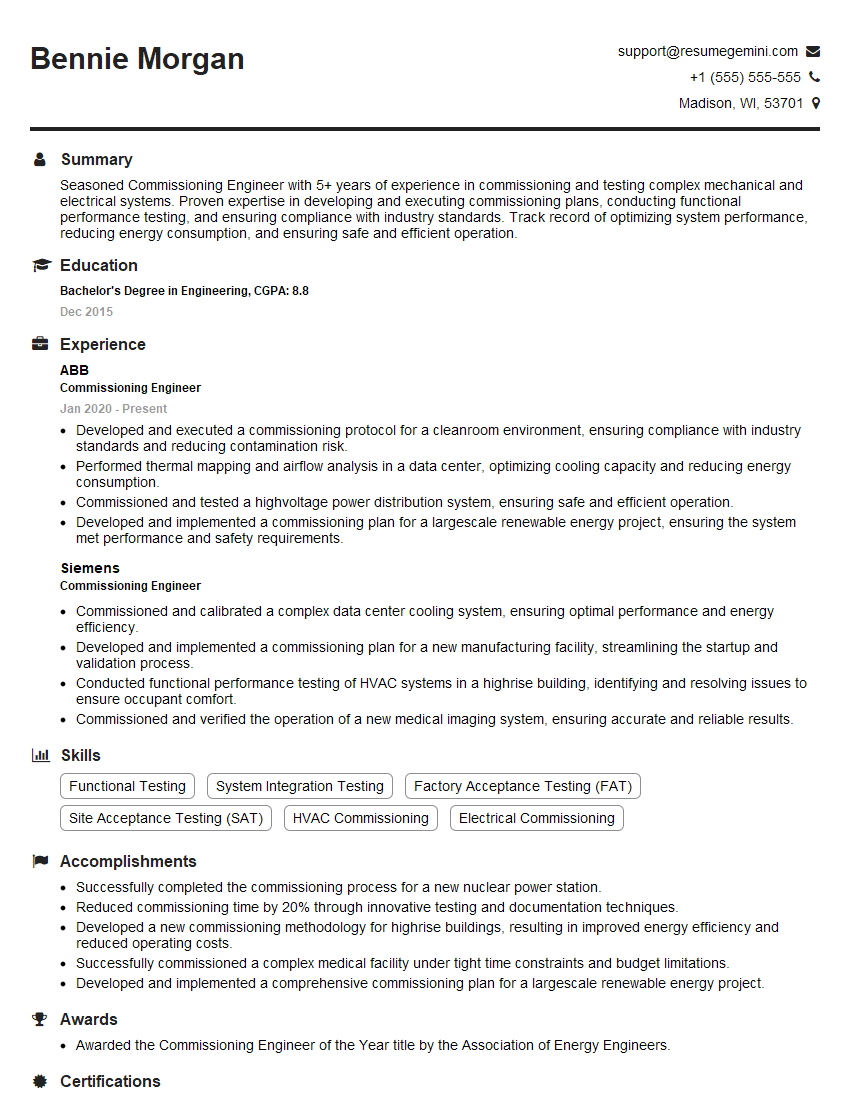
Mastering Installation and Operational Qualification is crucial for career advancement in regulated industries. A strong understanding of these processes demonstrates your commitment to quality, compliance, and technical expertise, opening doors to higher-level roles and increased earning potential. To significantly boost your job prospects, create an ATS-friendly resume that highlights your qualifications effectively. ResumeGemini is a trusted resource to help you build a professional and impactful resume that gets noticed. We provide examples of resumes tailored to Installation and Operational Qualification to guide you. Invest the time to craft a compelling resume—it’s your key to unlocking exciting new opportunities.
Explore more articles
Users Rating of Our Blogs
Share Your Experience
We value your feedback! Please rate our content and share your thoughts (optional).
What Readers Say About Our Blog
Very informative content, great job.
good