Preparation is the key to success in any interview. In this post, we’ll explore crucial Instrument Microphone Placement interview questions and equip you with strategies to craft impactful answers. Whether you’re a beginner or a pro, these tips will elevate your preparation.
Questions Asked in Instrument Microphone Placement Interview
Q 1. Explain the proximity effect and its impact on microphone choice.
The proximity effect is the bass boost that occurs when a microphone is placed very close to a sound source. It’s a result of the microphone’s diaphragm responding more strongly to low frequencies at close range. This is because the sound waves don’t have time to spread out before reaching the capsule. Imagine throwing a pebble into a still pond – close to where it lands, the waves are tall and strong. Further away, they’re smaller and weaker. This is analogous to the proximity effect.
This effect significantly impacts microphone choice. If you’re recording a bass instrument like a double bass or tuba and want that rich, full sound, you might favor a cardioid microphone, which accentuates the proximity effect. The closeness compensates for the instrument’s naturally less prominent bass frequencies. However, if you’re recording something already bass-heavy, like an electric bass guitar near an amp, you might want a microphone less sensitive to low frequencies or use EQ to reduce the bass after recording to avoid muddiness. For instance, an omni-directional microphone would be less likely to overemphasize the bass. The choice depends on the desired tonal balance.
Q 2. Describe the differences between cardioid, omni-directional, and figure-eight polar patterns.
Microphone polar patterns describe the microphone’s sensitivity to sound from different directions. Think of it as a visual representation of how well the mic ‘hears’ from various angles.
- Cardioid: This is the most common pattern. It’s highly sensitive to sound coming from the front, moderately sensitive to sound from the sides, and rejects sound from the rear. It’s great for isolating a sound source while minimizing unwanted background noise. Imagine a heart shape: that’s the cardioid’s pickup pattern.
- Omni-directional: This pattern is equally sensitive to sound from all directions. It’s useful for capturing a large sound field, such as a choir or orchestra. It ‘hears’ everything equally, like a sphere of sensitivity.
- Figure-eight: This pattern is highly sensitive to sound from the front and rear, but rejects sound from the sides. It’s useful for stereo recording techniques, such as the Blumlein pair, or when you need to isolate a sound source from either side, ignoring what’s directly in between.
The choice of polar pattern heavily influences how your recording will sound. A cardioid is best for isolating instruments, while an omni is better for capturing ambience. The figure-eight provides interesting stereo imaging options but demands careful placement to avoid unwanted sounds from the back.
Q 3. How do you choose the right microphone for a specific instrument?
Choosing the right microphone for an instrument is a crucial step towards a professional-sounding recording. It involves careful consideration of several factors.
- Instrument Type: A delicate acoustic guitar would call for a condenser mic known for its detail and sensitivity. A powerful electric guitar amp would likely benefit from a dynamic mic designed to handle high sound pressure levels (SPL) and withstand the aggressive sound.
- Desired Sound: Do you need a warm, intimate sound or a bright, articulate one? Different microphones have different sonic characteristics.
- Acoustic Environment: A highly reflective room might require a cardioid microphone to reduce room reflections (bleed), while a well-treated room might allow the use of an omni to pick up more natural ambience.
- Budget: High-quality microphones can be expensive, so finding the sweet spot between quality and affordability is important.
For example, a Neumann U 87 Ai is often favored for vocals and acoustic instruments, prized for its versatility and detail, while a Shure SM57 is a workhorse dynamic microphone that’s a staple for recording electric guitar amps and snare drums due to its durability and ability to handle high SPLs.
Q 4. Explain the concept of phase cancellation and how to avoid it.
Phase cancellation is a destructive interference that occurs when two identical sound waves are out of sync by 180 degrees. Imagine two waves crashing into each other – the peaks of one wave meet the troughs of the other, resulting in a cancellation or reduction of the overall sound. This often happens when using multiple microphones to record the same sound source.
To avoid phase cancellation, try these strategies:
- Minimize distance between mics: Keep microphones close to each other when recording the same sound source. The closer they are, the more likely they are to capture similar waveforms.
- Use the 3:1 rule: When placing multiple mics on the same source, maintain a 3:1 distance rule. This means the distance between microphones should be at least three times the distance from the closest microphone to the sound source. This decreases the likelihood of phase issues arising from differing sound arrival times.
- Experiment with mic placement: Slight adjustments in microphone positioning can significantly impact phase coherence. Listen carefully and adjust until you achieve the best balance.
- Use mono recording if necessary: For critical passages, consider recording to a single microphone track, instead of a stereo pair, to avoid potential phase issues completely.
Failing to address phase cancellation can lead to a thin, weak, or unnatural sound, especially in the low frequencies.
Q 5. What are the common techniques for minimizing bleed in a multi-microphone setup?
Bleed, or unwanted sound from other instruments, is a common issue in multi-microphone setups. Here’s how to minimize it:
- Careful Microphone Placement: Use cardioid microphones and point them directly at the intended instrument, minimizing the capture of sound from other instruments. The ‘off-axis’ rejection of cardioid mics is very beneficial here.
- Acoustic Treatment: Proper acoustic treatment in the recording space helps absorb unwanted reflections and reduce the overall ambient sound level.
- Distance: The further the microphones are from unintended sound sources, the less likely they are to pick up bleed. This is particularly useful when the instruments have different volumes. For instance, if drums are much louder than a guitar, you could reduce bleed by maximizing the physical distance between drum mics and the guitar mic.
- Go-bo’s: Use physical barriers (like screens or panels) to block sound from reaching the microphones. They act as acoustic ‘walls’ between instruments.
- EQ and Post-Processing: In post-production, EQ can help to selectively reduce frequencies where bleed is most prominent. Although it’s always best to minimize bleed during recording, some post-production correction is sometimes necessary.
Minimizing bleed during recording helps achieve a cleaner, more focused sound, making the mixing process easier and reducing the need for extensive post-production edits.
Q 6. How do you handle acoustic treatment in a recording environment?
Acoustic treatment is crucial for controlling sound reflections in a recording environment. Untreated rooms create unwanted resonances and reflections that muddy the sound and make it difficult to capture a clean recording.
Strategies for acoustic treatment involve both absorption and diffusion:
- Absorption: This reduces sound reflections by converting sound energy into heat. Common materials include acoustic foam, bass traps (for low-frequency control), and thick curtains or blankets. Bass traps are especially important as low-frequency sounds have longer wavelengths and are more difficult to absorb.
- Diffusion: This scatters sound reflections to prevent echoes and standing waves, which can create uneven frequency response and comb filtering (creating distinct dips and peaks in the frequency spectrum). Diffusers are often designed with irregular shapes to evenly distribute reflections.
The specific treatment needs depend on the room’s size and shape and the desired acoustic characteristics. Professional acoustic consultants can help design a customized acoustic treatment plan.
A well-treated room minimizes unwanted reflections and creates a more controlled and natural sounding environment for recording.
Q 7. Describe your experience with different types of microphone stands and accessories.
I’ve had extensive experience with various microphone stands and accessories. The choice depends largely on the specific application and desired stability and flexibility.
- Boom Stands: These are highly versatile, allowing for precise microphone placement above, below, or to the side of the instrument. They’re essential for overhead microphone placements on drums or for positioning microphones in tight spaces.
- Straight Stands: These provide a simple and stable solution for placing microphones on surfaces. They’re suitable for applications where precise positioning isn’t as crucial. These are better for a static microphone setup.
- Microphone Clips/Shock Mounts: Essential for minimizing handling noise and vibrations. Shock mounts isolate the microphone from the stand, preventing vibrations from transferring to the microphone capsule, minimizing unwanted noise. For example, a high-quality Rycote Lyre mount provides excellent isolation.
- Microphone Cables: High-quality cables minimize signal loss and noise. XLR cables are the industry standard for professional audio applications.
- Pop Filters: These are crucial for vocal recording, minimizing plosives (pronounced ‘p’ and ‘b’ sounds that can overload the microphone). They’re usually a mesh screen placed in front of the microphone.
In professional settings, you’ll often find a combination of these elements to ensure optimal stability, isolation, and noise reduction. Choosing the right stand and accessories is as critical to a great recording as choosing the perfect microphone.
Q 8. What are the advantages and disadvantages of using close miking versus distant miking?
Close miking and distant miking represent two fundamentally different approaches to microphone placement, each with its own set of advantages and disadvantages. Close miking involves placing the microphone very near the sound source (typically within a few inches), while distant miking positions the microphone several feet away.
- Close Miking Advantages: High signal-to-noise ratio, reduced ambient noise pickup, greater control over the sound’s character (e.g., emphasizing certain frequencies), isolation from other sound sources.
- Close Miking Disadvantages: Proximity effect (bass boost), potential for handling noise, less natural ambience captured.
- Distant Miking Advantages: Natural ambience and room sound are captured, generally less prone to handling noise, easier to position, can capture a more realistic representation of the instrument’s sound in its environment.
- Distant Miking Disadvantages: Lower signal-to-noise ratio, greater risk of unwanted sounds being captured, less control over the sound character, potential for phase issues if multiple microphones are used.
For example, close miking is ideal for recording a snare drum to achieve a powerful, punchy sound, while distant miking might be preferred for capturing a large orchestral section to capture the natural reverberation of the hall.
Q 9. How do you address feedback issues during a live sound reinforcement scenario?
Feedback in live sound reinforcement occurs when the amplified sound from speakers is picked up by microphones and re-amplified, creating a loud, howling sound. Addressing this requires a multi-pronged approach:
- Gain Staging: Reducing the gain on both the microphone preamplifiers and the main PA system is crucial. Start by lowering the gain on the problem microphone and then on the main PA system, while monitoring closely for feedback.
- Microphone Placement: Carefully position microphones to minimize their exposure to the speakers’ direct sound. Point microphones away from loudspeakers, and use microphone isolation shields if necessary. This often means experimenting with placement to find the sweet spot.
- EQ: Using a graphic equalizer (EQ) to cut specific frequencies that are causing feedback is very effective. A notch filter can precisely eliminate the offending frequency. Identify the feedback frequency by slowly increasing gain on the problem channel until feedback occurs; then cut that frequency with the EQ.
- Acoustic Treatment: Absorbing materials in the room can reduce reflections and the chances of feedback. Carpeting, acoustic panels, and strategically placed drapes can dramatically improve the acoustic environment.
- Feedback Suppressors: Specialized equipment such as feedback suppressors can dynamically detect and reduce feedback frequencies in real-time. This is a more advanced and expensive solution but can be invaluable for challenging acoustic spaces.
Think of it like a dog chasing its tail – you need to break the loop! Reducing gain, strategic microphone placement, and EQ are the most common ways to do this.
Q 10. Explain your approach to miking a drum kit.
Miking a drum kit is a complex process requiring careful consideration of each drum’s individual characteristics and the desired overall sound. There is no single ‘correct’ way, but a common and effective approach involves a combination of close and distant miking techniques:
- Kick Drum: A dynamic microphone (like a Shure Beta 52A or AKG D112) is typically placed inside the kick drum pointed towards the beater. Experiment with placement for different tonal characteristics.
- Snare Drum: A dynamic microphone (like a Shure SM57 or Sennheiser e609) is often placed about 2-3 inches from the resonant head, slightly off-center. This is very common and effective.
- Toms: Dynamic microphones (similar to those used for snare) are placed close to the resonant heads of each tom. Placement is adjusted to find the optimal sweet spot for each drum.
- Overheads: A pair of condenser microphones (like AKG C414 or Neumann KM 184) are positioned above the kit to capture the overall ambience and cymbal sounds. Stereo techniques like XY or spaced pair configurations are commonly used.
- Hi-Hat: A small condenser microphone (like a DPA 4060) can be used for detailed capture of hi-hat. This is often optional.
The exact microphone selection and placement will depend on the specific drum kit, the genre of music, and the desired sonic characteristics. It often involves a process of experimentation to find the best positions.
Q 11. How do you choose the right microphone for recording a piano?
Choosing the right microphone for recording a piano depends heavily on the desired sound and the style of piano (grand versus upright). Here’s a breakdown:
- Condenser Microphones: These generally offer a more detailed and nuanced sound, capturing the subtleties of the piano’s timbre. Large-diaphragm condenser mics (e.g., Neumann U 87 Ai, AKG C414) are often used for a warmer, more lush sound, while small-diaphragm condenser mics (e.g., Schoeps CMC 64, Neumann KM 184) provide more detail and a potentially cleaner sound. They are used for capturing a wide stereo image.
- Dynamic Microphones: These are less sensitive and more robust than condenser mics. They are less often used for piano recording but can be useful in certain situations where detailed capture isn’t primary or for adding a more present and impactful low-end.
- Placement Techniques: The placement of the microphones significantly affects the recorded sound. Common techniques include stereo pairs (spaced pair, XY, ORTF), close miking individual sections, or a combination of both.
- Room Acoustics: The room’s acoustics play a crucial role. A well-treated room will reduce unwanted reflections and resonances, providing a more balanced and natural sound.
For example, if aiming for a classic, warm piano sound, a pair of large-diaphragm condensers in a spaced-pair configuration might be ideal. For a more contemporary, bright recording, small-diaphragm condensers in an XY configuration might be preferred. Experimentation is key to finding the right combination of microphone type and placement.
Q 12. How would you handle miking a string quartet?
Miking a string quartet requires a balance of capturing individual instrument character while maintaining a cohesive ensemble sound. The goal is to create a realistic spatial representation of the musicians’ positions and the overall balance.
- Individual Mics: Spot miking each instrument (violins I & II, viola, cello) can provide greater control over individual balances and prevent bleed between instruments. Smaller diaphragm condenser microphones are often favored for their clarity and detail.
- Overhead Mics: One or two overhead microphones can capture the ensemble’s overall sound, ambiance, and stereo image. This helps create a larger and less dry sound.
- Blending: Carefully blend the individual and overhead microphone signals during mixing to create a balanced and natural-sounding recording. Individual mics give control and the overheads provide room sound.
- Microphone Selection: Cardioid or hypercardioid patterns are best for minimizing bleed, while high-quality condenser mics capture the nuances of each instrument.
- Placement: Experiment with microphone height and distance to optimize the balance and spatial image. Consider using a small spaced-pair setup for overheads.
The optimal approach will depend on the acoustic environment and the desired artistic interpretation. The goal is to capture the beauty of the individual players while also representing the balance and synergy of the ensemble.
Q 13. Explain your experience with different microphone preamplifiers.
Microphone preamplifiers are critical for shaping the sound before it reaches the analog-to-digital converter (ADC). My experience encompasses various types, each with distinct sonic characteristics and capabilities:
- Solid State Preamplifiers: These are generally known for their transparency, clarity, and high headroom. They are often chosen for their reliability and consistency across a wide frequency range. Examples include those found in many audio interfaces and standalone preamp units.
- Tube Preamplifiers: These offer a warmer, often more colored sound, often with a smoother top end and increased harmonic saturation. They can add a pleasant warmth but require careful attention to potential noise and distortion.
- Transformer-Coupled Preamplifiers: These employ transformers in their circuitry, adding a distinctive character often described as having a vintage warmth and punchier low-end. This can change the tonal color of the input significantly.
The choice of preamplifier is often a matter of preference and the desired sonic outcome. Some engineers are known to match the character of the preamp to the character of the instruments being recorded. For instance, tube preamps may be paired with acoustic instruments to enhance their warmth, while solid-state preamps might be used for precise capture of instruments with bright or complex harmonics.
Q 14. What are some common problems encountered during microphone placement, and how do you solve them?
Several common problems plague microphone placement, and adept troubleshooting is key:
- Phase Cancellation: This occurs when two microphones capture the same sound source but with opposite polarities (180 degrees out of phase). The result is a thin or hollow sound, or even complete cancellation of frequencies. This is often resolved by inverting the polarity of one of the microphones. Experimentation is key to finding the solution.
- Comb Filtering: This arises from multiple reflections reaching the microphone from the same sound source, resulting in a ‘comb-like’ effect on the frequency response. Addressing this often involves microphone positioning and/or acoustic treatment in the room. The idea is to reduce the multiple reflections that cause this artifact.
- Excessive Noise: Noise from the environment (e.g., HVAC systems, traffic), handling noise, or electrical hum can contaminate recordings. Solutions include reducing environmental noise, using a microphone with a high signal-to-noise ratio, and proper grounding techniques.
- Poor Microphone Choice: Using an inappropriate microphone for a given sound source can lead to suboptimal results. Understanding a microphone’s characteristics (polar pattern, frequency response, etc.) is critical. This requires knowing the characteristics of your sound sources.
- Incorrect Gain Staging: Setting the gain too high can lead to clipping and distortion, while setting it too low results in a weak signal, increasing the noise floor. Proper gain staging ensures an optimal signal level before reaching the ADC.
Solving these problems often involves a systematic approach. Carefully listen to the recordings and analyze any anomalies. If needed, test various solutions. Experience and a thorough understanding of acoustics are crucial for diagnosing and fixing these issues effectively.
Q 15. How do you ensure proper gain staging in a recording session?
Gain staging is the process of optimizing the signal level at each stage of your audio chain, preventing clipping (distortion from an overloaded signal) and maximizing the dynamic range of your recording. Think of it like managing the water flow in a plumbing system: you need enough pressure for a good shower, but too much pressure can burst pipes. In audio, too much gain leads to harshness and unwanted distortion, while too little results in a weak, noisy signal.
To ensure proper gain staging, I start by setting the input gain on the preamplifier (usually on a mixing console or audio interface). I’ll use a test tone or a quiet section of the performance and adjust the gain knob until the signal meter shows a healthy level, typically peaking around -18dBFS to -12dBFS in the digital domain. This leaves headroom – space for louder peaks – without sacrificing dynamic range. I then adjust the output gain at each subsequent stage (e.g., channel faders on a mixing console, track levels in the DAW) to maintain a consistent level throughout the chain. Regular monitoring with a visual meter is crucial to ensure I’m not exceeding the maximum signal level.
Finally, I always check my overall output level before exporting the final mix to prevent clipping during mastering or playback on different systems.
Career Expert Tips:
- Ace those interviews! Prepare effectively by reviewing the Top 50 Most Common Interview Questions on ResumeGemini.
- Navigate your job search with confidence! Explore a wide range of Career Tips on ResumeGemini. Learn about common challenges and recommendations to overcome them.
- Craft the perfect resume! Master the Art of Resume Writing with ResumeGemini’s guide. Showcase your unique qualifications and achievements effectively.
- Don’t miss out on holiday savings! Build your dream resume with ResumeGemini’s ATS optimized templates.
Q 16. What is your experience with digital audio workstations (DAWs) and their integration with microphone setups?
I’m proficient with several DAWs, including Pro Tools, Logic Pro X, and Ableton Live. My experience encompasses a wide range of tasks, from basic recording and editing to advanced mixing and mastering. I understand the intricacies of integrating microphone setups with DAWs, which involves configuring input and output routing, selecting appropriate sample rates and bit depths, and handling different microphone preamp settings. I’m also experienced in using various plugins and virtual instruments to shape the sound and enhance the recording.
For instance, when setting up a drum kit, I’ll often use separate tracks in my DAW for each microphone, allowing for individual gain staging, EQ, and compression. This flexibility enables detailed control over each instrument’s sound. DAWs are essential for precise adjustments and creative processing. For instance, using a compressor plugin effectively manages dynamic range, making quieter parts more audible while reducing the level of the louder passages.
Q 17. Describe your process for setting up and monitoring levels during a live sound reinforcement event.
Setting up and monitoring levels during a live sound reinforcement event requires a proactive and attentive approach. It’s a dynamic process that involves constant adjustment. I begin by setting up the PA system, ensuring all the inputs and outputs are correctly connected and routed. Then, I perform a line check, verifying the signal flow and function of all equipment.
I use a combination of visual metering on the mixing console and my ears to monitor levels. I start by setting the initial gain levels for each instrument based on typical output levels and then fine-tune as needed. Throughout the event, I pay close attention to the overall mix balance, adjusting individual channel faders as required to maintain a consistent level and prevent feedback or overloading. Regular communication with the performers is also essential; I’ll check in with them throughout the performance to see if any adjustments are needed to meet their preferences.
In addition to my ears, I often use digital metering for accurate level control. I typically aim for a balance that keeps the sound clear and avoids harshness or distortion. A well-monitored system prevents the event from sounding muddy or lacking in clarity.
Q 18. Explain your understanding of signal flow in a typical recording or live sound system.
The signal flow in a typical recording or live sound system follows a consistent pattern. It begins with the sound source (e.g., instrument, vocalist). The sound is then captured by the microphone, which converts the acoustic energy into an electrical signal. This signal passes through the microphone cable to a preamplifier, which boosts the signal strength and provides impedance matching.
From the preamp, the signal goes to either a mixing console (in live sound or sometimes in recording) or directly into an audio interface (in recording). In a mixing console, the signal is processed through various effects (EQ, compression, reverb, etc.), and routed to different outputs, ultimately going to speakers or a recording device. An audio interface, acting as a bridge between the analog and digital domains, converts the analog signal into a digital format and sends it to the DAW. From there, the signal is further processed and recorded digitally.
Finally, the digital signal can be converted back to analog and sent to speakers for playback or mastered and distributed.
- Example (Recording): Microphone -> Preamp -> Audio Interface -> DAW -> Mastering Software -> Distribution
- Example (Live Sound): Instrument -> Microphone -> Mixing Console -> Amplifier -> Speakers
Q 19. How do you troubleshoot a faulty microphone signal?
Troubleshooting a faulty microphone signal is a systematic process. I first check the most obvious things: the physical connections. Are the cables properly plugged in at both the microphone and the input device? Is the cable damaged or broken? I would visually inspect for any bending, fraying, or cuts in the cable. A simple visual check often reveals the problem.
If the cables are fine, I’ll check the microphone itself. Is it turned on (if it has a power switch)? Is the microphone receiving power correctly (for condenser microphones)? If I have a spare microphone, I might try replacing the microphone to see if the problem is with the microphone or the connection itself.
Next, I check the input channel on the mixing console or audio interface. Is the gain set appropriately? Is the input channel selected correctly? Is there any phantom power available (for condenser microphones)? I’ll try different inputs and channels to isolate the problem. Finally, if all else fails, I may need to consult the technical documentation or seek assistance from a sound engineer.
Q 20. What techniques do you use to achieve a natural and balanced sound in your recordings?
Achieving a natural and balanced sound hinges on several key techniques. First, choosing the right microphones for the specific instruments is paramount. Different microphones have different frequency responses and polar patterns, each best suited for certain instruments or applications. For instance, a dynamic microphone might be preferable for loud instruments like drums or guitar amps, while a condenser microphone might capture the detail and nuances of a delicate acoustic instrument better.
Precise microphone placement is critical. Experimenting with different positions relative to the sound source can drastically affect the final sound. For example, the distance between the microphone and the instrument alters the tonal balance; closer miking can capture more detail but also more room reflections. I use techniques like close miking for high-fidelity sound or ambient miking for a more spacious recording.
After recording, I’ll make subtle adjustments in the mixing stage, employing EQ and compression to enhance the recording further. Equalization helps to shape the frequency response, balancing different elements of the track. Compression controls the dynamic range, ensuring a consistent level and preventing unwanted peaks.
Q 21. Explain your understanding of microphone frequency response and its relevance to instrument miking.
Microphone frequency response refers to how a microphone responds to different frequencies of sound. It’s represented graphically, showing the microphone’s sensitivity to various frequencies from low to high. A flat frequency response means the microphone picks up all frequencies equally. However, most microphones are designed with a specific frequency response curve, boosting or attenuating certain frequencies to better suit particular applications.
Understanding microphone frequency response is crucial for instrument miking because it directly affects the captured sound’s character. For instance, a microphone with a boosted presence range might be ideal for a bright, snappy snare drum sound, whereas a microphone with a warmer low-end response might be better for recording bass guitar or vocals.
When miking instruments, I consider the frequency range of each instrument, keeping in mind the microphone’s frequency response curve. If an instrument is lacking in a certain frequency range, a microphone that boosts that range could help. Conversely, if an instrument is too strong in a particular frequency range, choosing a microphone that attenuates that range can help balance the sound.
Q 22. How do you choose between dynamic and condenser microphones?
The choice between dynamic and condenser microphones hinges on the instrument’s sonic characteristics and the desired sound. Dynamic mics are robust, handle high sound pressure levels (SPLs) well, and are less sensitive to handling noise. Condenser mics, on the other hand, are more sensitive, offering a wider frequency response and capturing more detail, but are more fragile and require phantom power.
For example, a loud snare drum might benefit from a dynamic mic like the Shure SM57 for its ability to handle the impact without distortion. Conversely, a delicate acoustic guitar might sound better with a condenser mic like a Neumann U 87 for its nuanced detail capture. The choice depends on the specific sound you want to achieve.
- Dynamic: Ideal for loud instruments (snare, bass amp, toms), live performances, and situations where ruggedness is crucial.
- Condenser: Best suited for quieter instruments (acoustic guitar, vocals, overhead cymbals), studio recordings where high fidelity is paramount.
Q 23. Describe your experience with using different types of microphone cables.
My experience encompasses various microphone cables, primarily XLR and, less frequently, TRS (for line-level instruments). XLR cables are the industry standard for microphones due to their balanced signal transmission, which minimizes noise interference. I’ve used various gauges and lengths depending on the recording environment. Thicker gauge cables provide better signal integrity over longer distances, preventing signal loss and hum. I always ensure cables are in good condition, free from damage, and properly terminated to avoid signal degradation or unexpected issues. I’ve encountered problems with poorly shielded cables causing ground loops and hum, emphasizing the importance of quality cabling.
In a live setting, robust, durable cables are necessary to withstand the wear and tear of handling. In a studio setting, though durability is still important, the focus may shift more to minimizing any possible interference. I often opt for high-quality, low-capacitance cables in the studio for optimal signal transfer.
Q 24. How do you optimize microphone placement for stereo recording?
Optimizing microphone placement for stereo recording involves techniques like XY, AB, and MS (Mid-Side) stereo. The XY technique uses two closely spaced microphones pointed at the sound source, creating a narrow stereo image. The AB technique employs two spaced microphones to capture a wider stereo image with more natural ambience. The MS technique uses a cardioid microphone (mid) and a figure-eight microphone (side), providing control over the stereo width in post-production.
The choice of technique depends on the sound source and desired stereo width. For instance, an intimate vocal performance might suit XY, while a large orchestral recording might benefit from AB or MS. Careful positioning, relative to the sound source and reflective surfaces within the recording space, is crucial to obtaining a balanced and well-defined stereo image. I always listen critically throughout the process, adjusting placement to achieve optimal stereo separation and avoid phase cancellation.
Q 25. What is your approach to managing multiple microphones in a complex recording scenario?
Managing multiple microphones in a complex recording scenario requires careful planning and execution. This often starts with creating a detailed microphone placement diagram, which specifies each microphone’s position, type, and instrument. Careful attention is given to phase coherence – minimizing phase cancellations resulting from signals arriving out of sync. This often involves using phase-coherent techniques like XY or employing additional signal processing in post-production to alleviate phase-related problems.
I also utilize gain staging effectively, ensuring that all microphones are appropriately level-matched to prevent overloading or clipping while also maximizing signal-to-noise ratio. Proper isolation of individual instrument signals through strategic microphone placement and appropriate baffling is crucial to reducing bleed and crosstalk, which makes mixing easier. Using a well-organized patch bay is essential to easily connect and disconnect various instruments and avoid cabling chaos. Finally, frequent monitoring during recording to identify potential problems in real-time is vital.
Q 26. How do you address the challenges of miking instruments with high transient response?
Instruments with a high transient response, such as snare drums or acoustic guitars, require careful microphone selection and placement to capture their dynamic characteristics without distortion or unwanted harshness. I often use dynamic microphones due to their ability to handle high SPLs. The microphone should be placed to avoid capturing harsh frequencies by experimenting with positioning. Close miking with a dynamic microphone will help to minimize these harsh frequencies.
If necessary, I will employ additional signal processing, such as EQ and compression, in post-production to tame harsh transients or add warmth to the sound. The use of a pop filter or windscreen can further reduce unwanted noise and transient harshness. The specific approach involves close listening, iterative adjustments, and a balance of mic selection, placement, and post-processing.
Q 27. Describe your familiarity with different microphone mounting techniques.
My familiarity with microphone mounting techniques extends to various methods, from simple boom stands and microphone clips to specialized shock mounts and suspension systems. Boom stands provide flexibility in positioning, especially for overhead microphone placement. Shock mounts effectively isolate the microphone from vibrations, preventing unwanted rumble and low-frequency noise. Suspension systems minimize structural-borne noise and provide even better isolation than shock mounts.
The choice of mounting technique depends on the instrument, recording environment, and desired isolation level. For example, a delicate acoustic instrument might require a suspension system, whereas a snare drum might only need a sturdy boom stand with a mic clip. Proper mounting ensures that the microphone captures the desired sound without interference from unwanted noises.
Q 28. How do you determine the appropriate microphone distance for a specific instrument and recording environment?
Determining the appropriate microphone distance is a crucial aspect of microphone placement. The optimal distance varies based on the instrument, its acoustic characteristics, and the desired sound. A general rule of thumb is the closer the microphone, the more direct sound and less room ambience is captured; further distance adds more room ambience, creating a more spacious feel.
For instance, a close-miked snare drum emphasizes punch and attack, while a more distant placement adds resonance and room sound. Similarly, close-miking an acoustic guitar allows for more detailed capture of the instrument’s nuances, while backing away adds room ambience. I consider the proximity effect (bass boost at close distances) when positioning mics. Experimentation and critical listening remain key to identifying the sweet spot, the distance that balances direct sound with desirable ambience.
Key Topics to Learn for Instrument Microphone Placement Interview
- Microphone Types and Polar Patterns: Understanding cardioid, omnidirectional, figure-8 patterns and their impact on sound capture and bleed.
- Acoustic Principles: Applying concepts like proximity effect, phase cancellation, and comb filtering to optimize microphone placement.
- Instrument-Specific Techniques: Mastering techniques for various instruments (e.g., drums, guitars, vocals) considering their acoustic properties and desired sound.
- Placement Strategies for Different Recording Environments: Adapting techniques based on room acoustics, reverberation, and potential noise sources.
- Practical Application: Hands-on experience with microphone placement in different recording scenarios and troubleshooting common issues.
- Signal Flow and Processing: Understanding the path of the audio signal from the microphone to the recording device and basic signal processing techniques.
- Problem-Solving Approaches: Diagnosing and resolving issues related to unwanted noise, poor sound quality, and phase problems.
- Microphone Techniques and Styles: Exploring different microphone techniques, like close miking, distant miking, stereo techniques (XY, AB, MS).
Next Steps
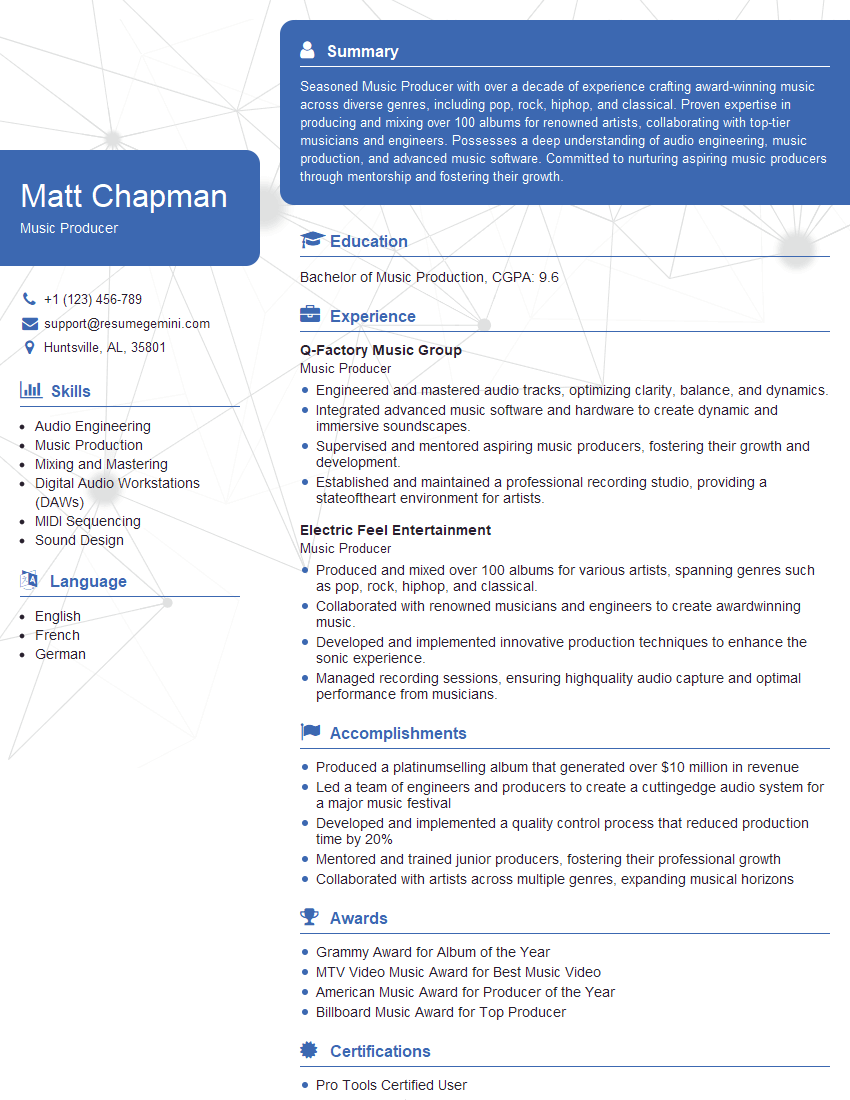
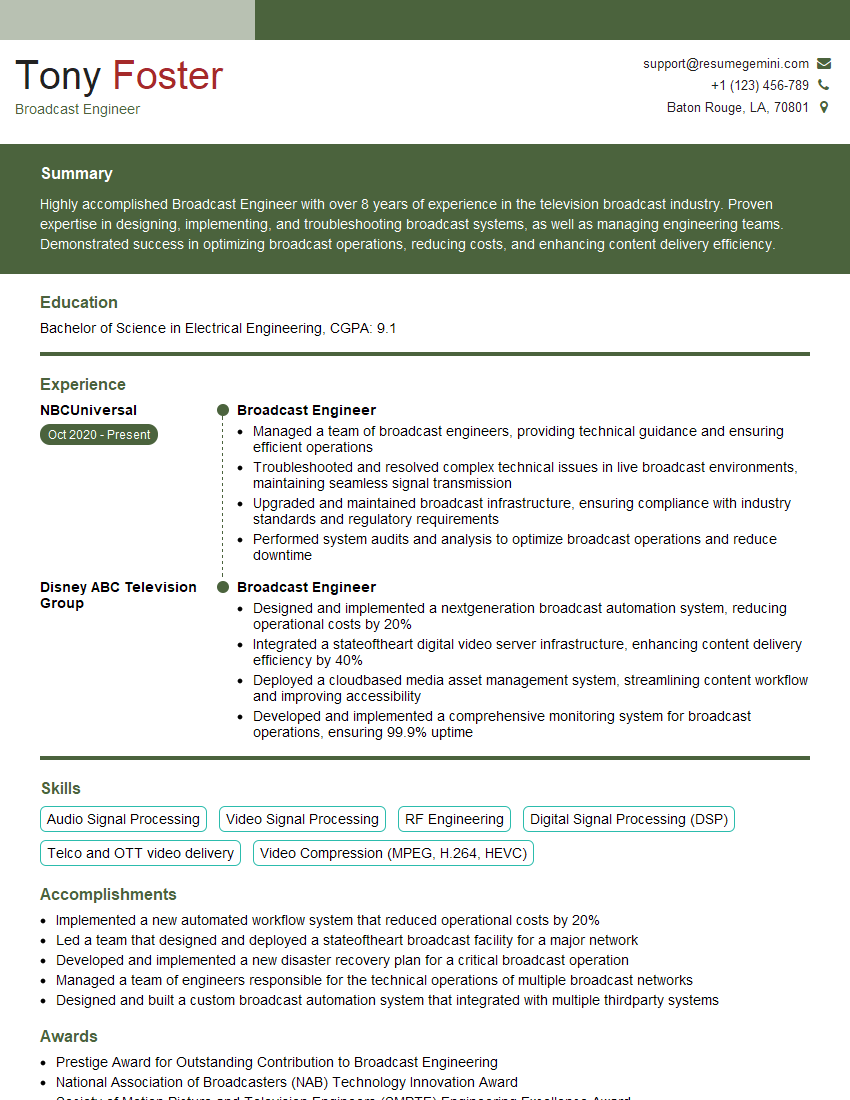
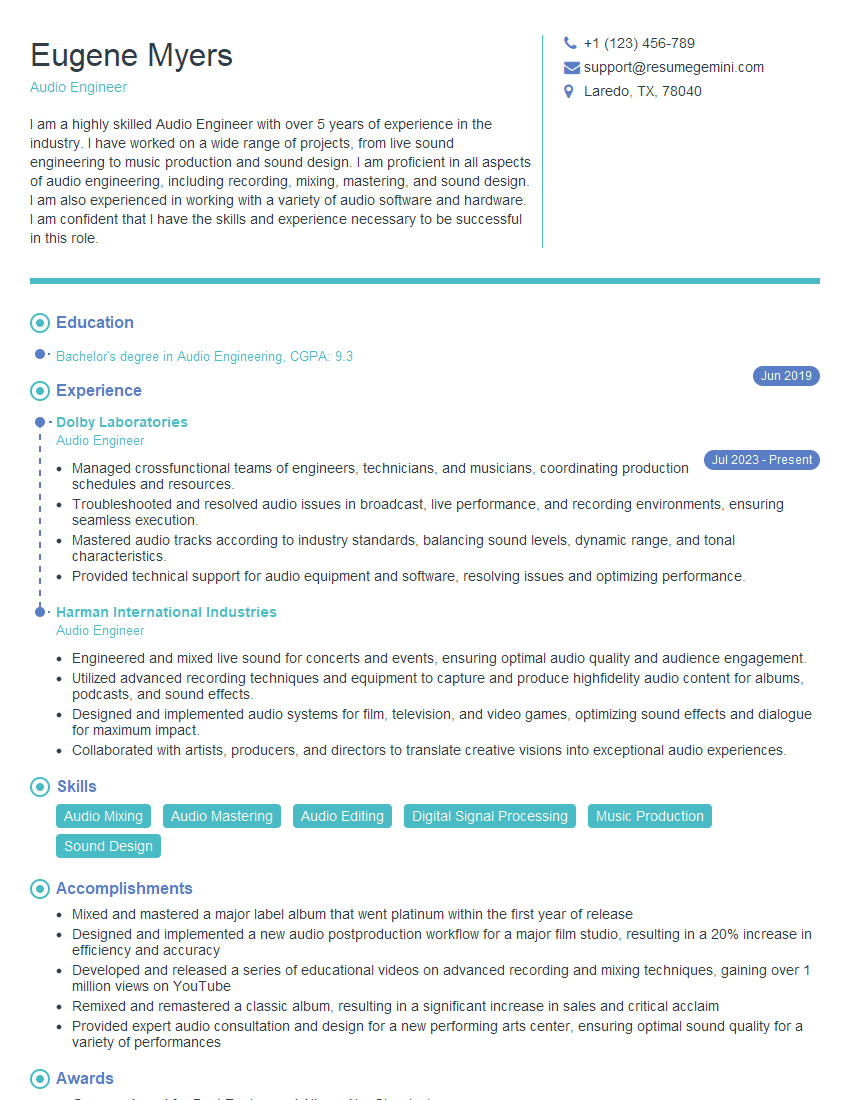
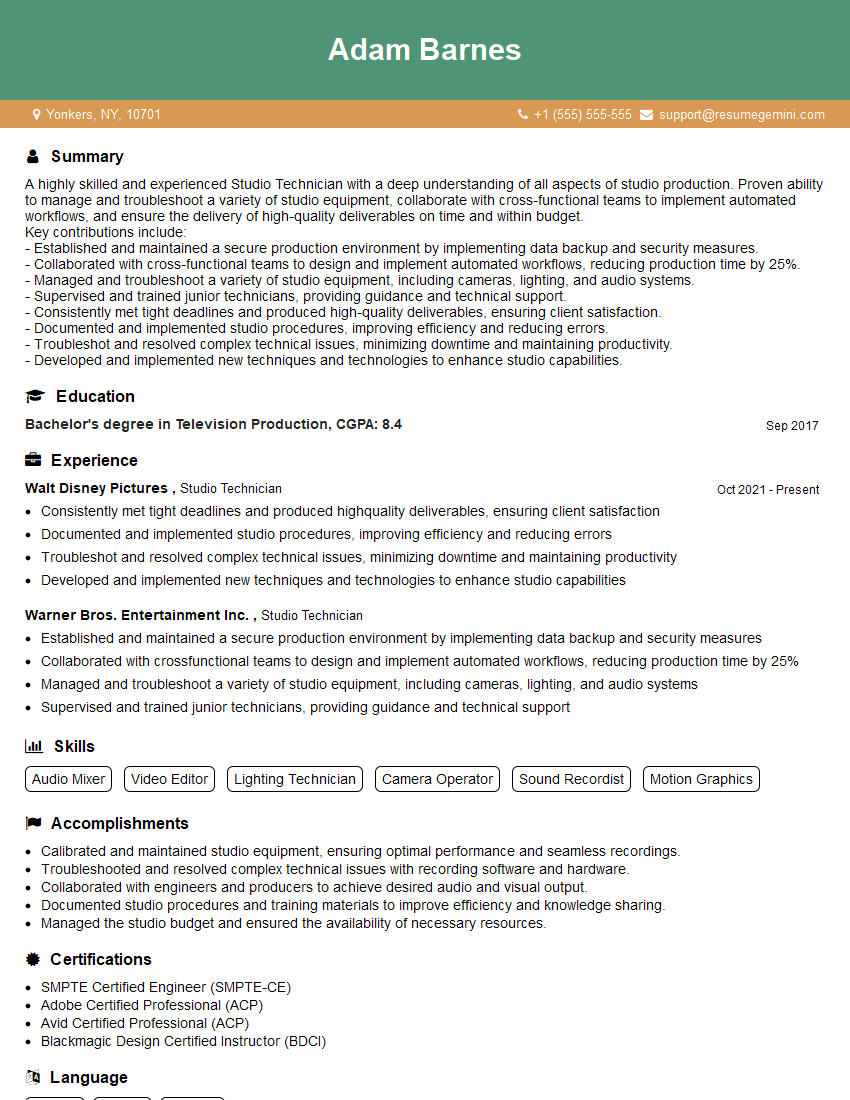
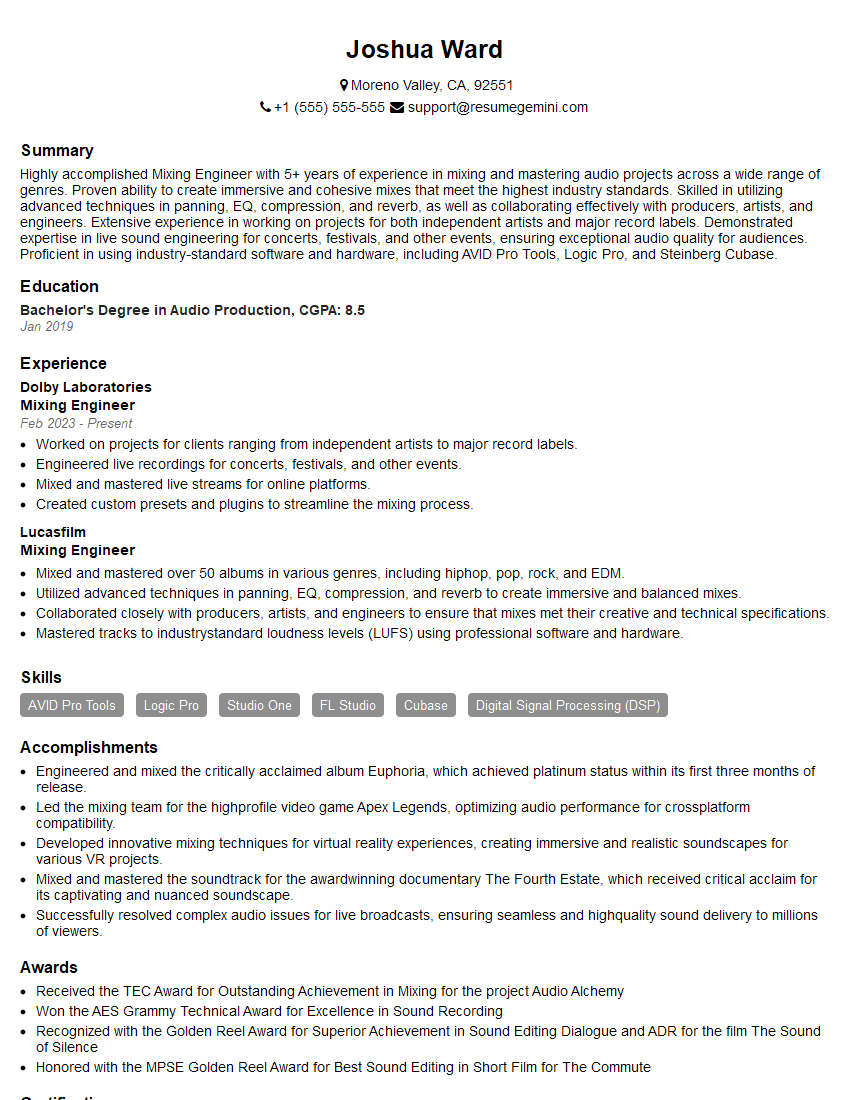
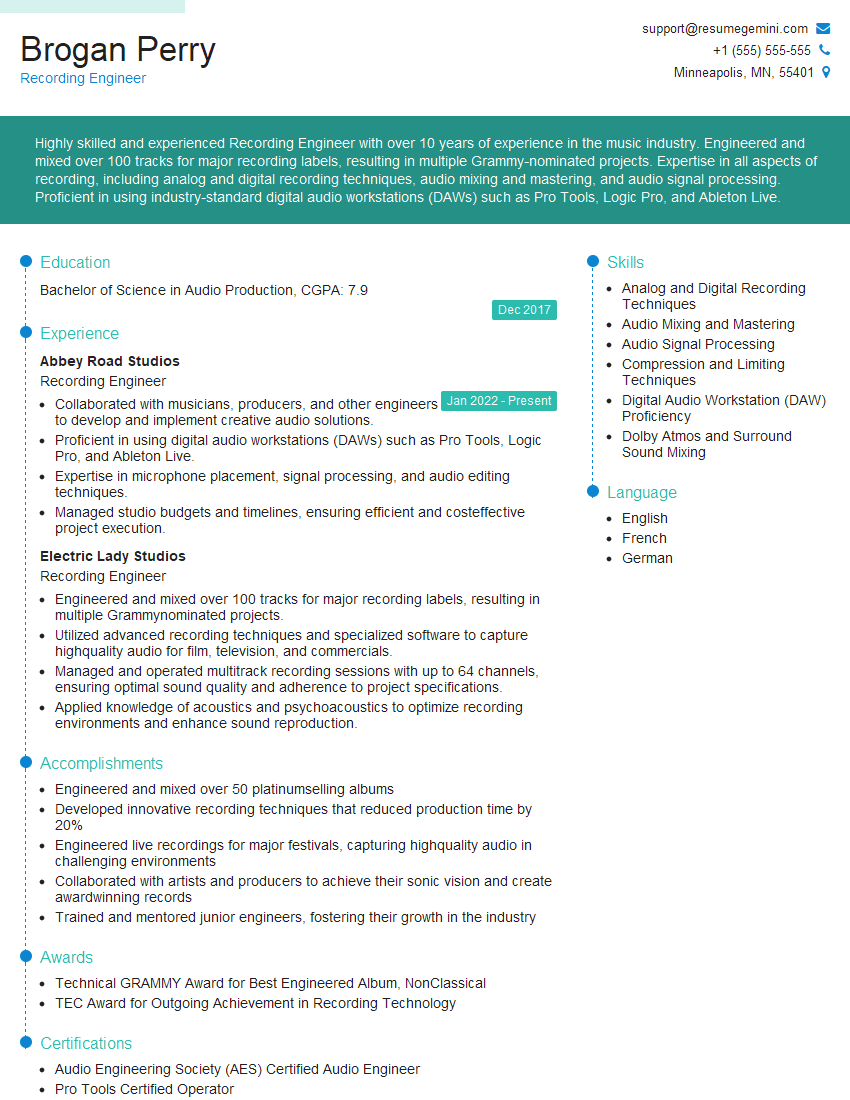
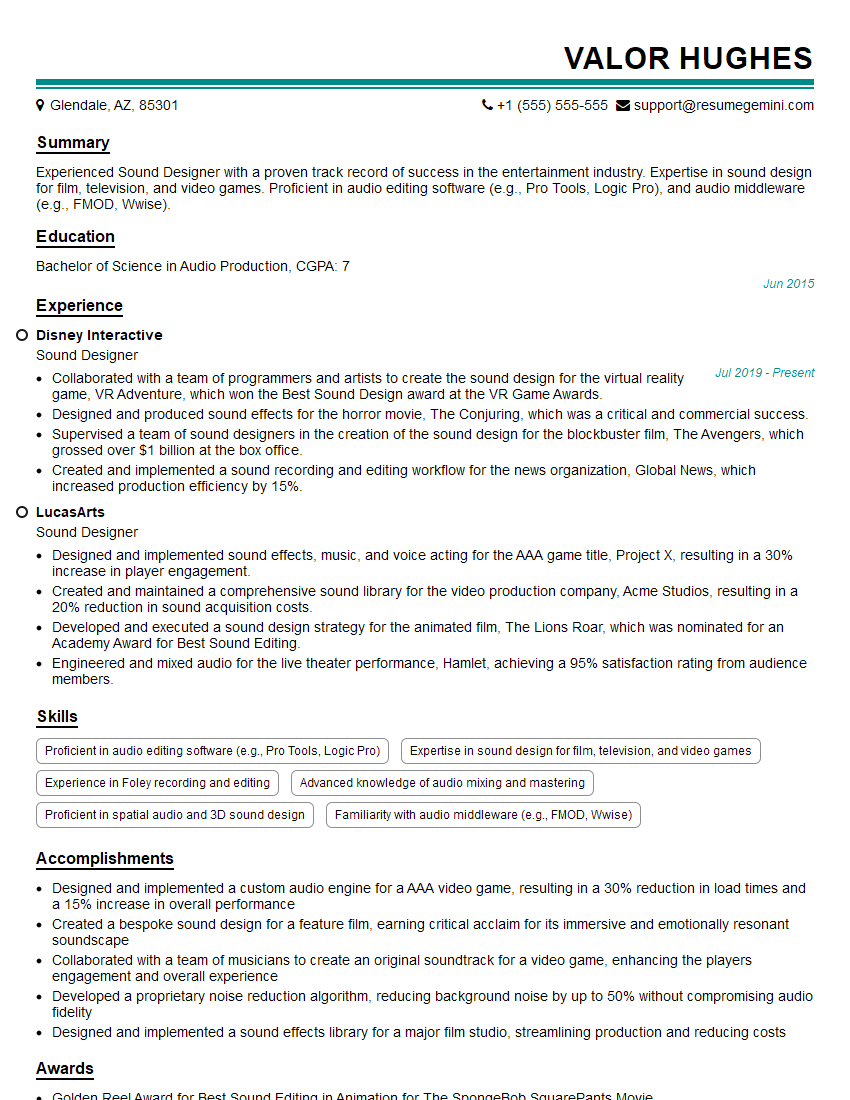
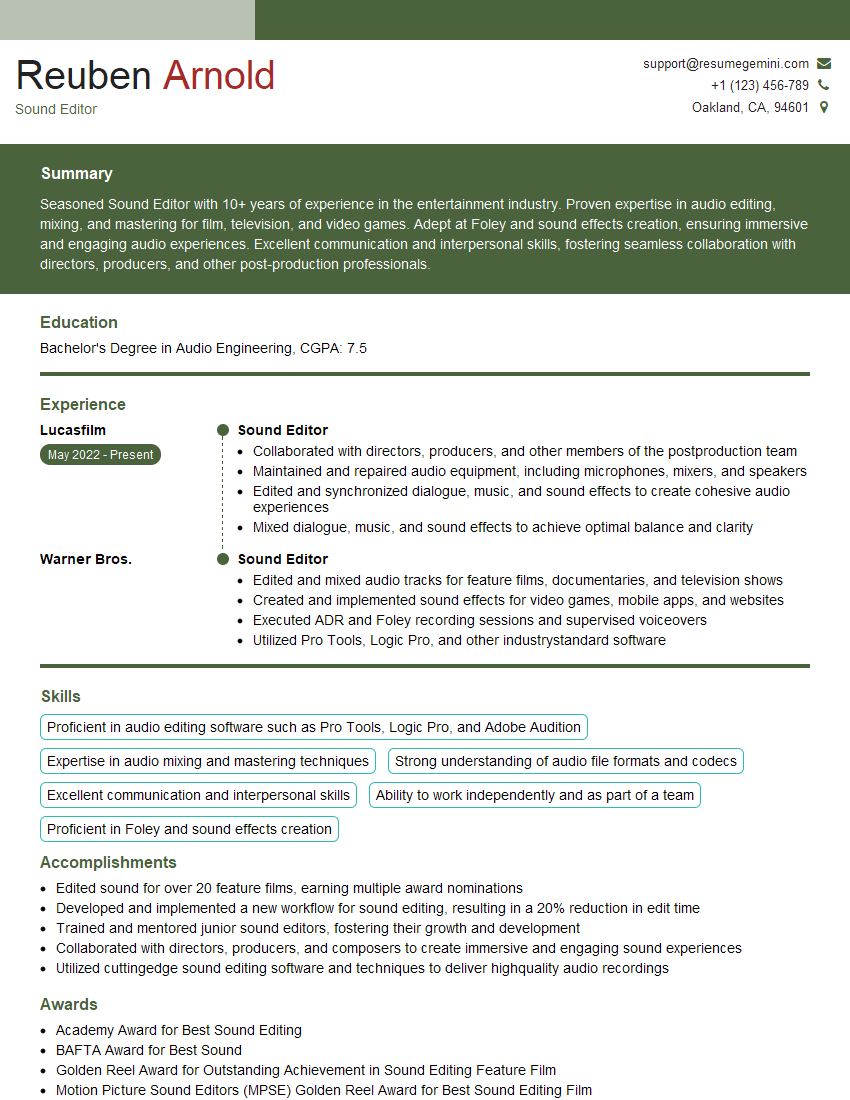
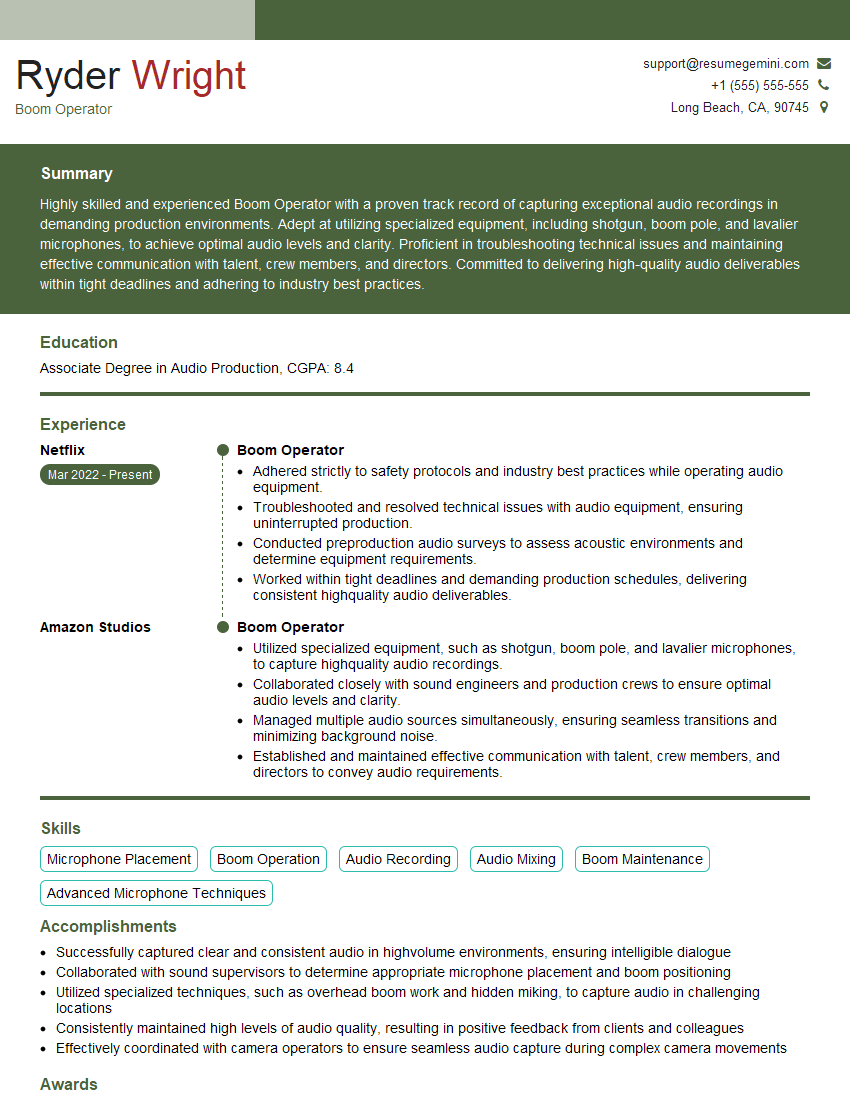
Mastering instrument microphone placement is crucial for career advancement in audio engineering, music production, and live sound reinforcement. A strong understanding of these principles demonstrates technical proficiency and problem-solving skills highly sought after by employers. To significantly increase your job prospects, create an ATS-friendly resume that highlights your skills and experience effectively. ResumeGemini is a trusted resource that can help you build a professional and impactful resume. We offer examples of resumes tailored specifically to Instrument Microphone Placement to guide you in showcasing your expertise. Use these resources to present yourself confidently and land your dream role.
Explore more articles
Users Rating of Our Blogs
Share Your Experience
We value your feedback! Please rate our content and share your thoughts (optional).
What Readers Say About Our Blog
Very informative content, great job.
good