Feeling uncertain about what to expect in your upcoming interview? We’ve got you covered! This blog highlights the most important Instrumental Proficiency interview questions and provides actionable advice to help you stand out as the ideal candidate. Let’s pave the way for your success.
Questions Asked in Instrumental Proficiency Interview
Q 1. Describe your experience with different types of instruments (e.g., pressure transmitters, flow meters, level sensors).
Throughout my career, I’ve extensively worked with a wide range of instrumentation, including pressure transmitters (both differential and absolute), various flow meters (Coriolis, vortex, magnetic, ultrasonic), and diverse level sensors (radar, ultrasonic, hydrostatic). My experience encompasses both the selection and implementation of these devices in diverse industrial settings, from chemical plants and refineries to water treatment facilities.
For instance, I was involved in a project where we upgraded an aging chemical plant’s level measurement system. The old system, relying on float-based sensors, was prone to errors and maintenance issues. We replaced it with a non-contact radar level sensor, significantly improving accuracy and reducing downtime. Similarly, I’ve worked extensively with Coriolis flow meters in high-precision applications requiring accurate mass flow measurement.
- Pressure Transmitters: Experience with various brands and technologies (e.g., Rosemount, Yokogawa).
- Flow Meters: Hands-on experience with Coriolis, vortex, magnetic, and ultrasonic flow meters in various applications.
- Level Sensors: Expertise in radar, ultrasonic, hydrostatic, and capacitance level sensors; familiar with their respective strengths and limitations.
Q 2. Explain the principles of operation for a pressure transmitter.
A pressure transmitter converts pressure into an electrical signal, typically 4-20 mA. The underlying principle depends on the type of transmitter, but common methods include:
- Strain Gauge: This is a very common type. A diaphragm deflects under pressure, changing the resistance of strain gauges bonded to it. This resistance change is converted to a 4-20 mA signal. Think of it like a tiny, highly sensitive scale – the more pressure, the more the diaphragm bends and the bigger the signal.
- Capacitance: A change in pressure alters the capacitance between two plates within the sensor. This capacitance variation is then converted to a signal. Imagine a capacitor as two plates close together; pressure changes the distance, altering the electrical properties.
- Piezoresistive: Pressure changes the resistance of a semiconductor material. Again, this resistance change is then converted into a measurable signal.
Irrespective of the mechanism, the signal is typically amplified, conditioned, and converted to a standard output for process control systems.
Q 3. How do you troubleshoot a malfunctioning flow meter?
Troubleshooting a malfunctioning flow meter is a systematic process. My approach involves:
- Check for Obvious Issues: Inspect for blockages, leaks, or damage to the meter or its associated piping.
- Verify Power and Signal: Ensure the flow meter is receiving power and transmitting a signal to the control system. Check wiring connections and loop continuity.
- Check Calibration: Verify that the flow meter is calibrated correctly. A simple zero and span check can often identify calibration drift.
- Examine Meter Readings: Analyze the meter’s output for unusual patterns, such as erratic readings or consistently low/high values. This might indicate a malfunctioning component within the flow meter.
- Consult Documentation: Review the flow meter’s technical specifications and troubleshooting guides. Manufacturers often provide detailed diagnostics.
- Advanced Diagnostics: If the problem persists, utilize advanced diagnostic tools, such as loop testing equipment, to identify the specific fault. Some flow meters have built-in diagnostic capabilities.
For example, I once encountered a vortex flow meter showing erratic readings. After checking for obvious issues and confirming proper power, I used loop testing equipment to pinpoint a faulty signal amplifier within the meter itself, requiring replacement.
Q 4. What calibration techniques are you familiar with?
I am proficient in various calibration techniques, including:
- Two-Point Calibration: This involves calibrating the instrument at two points—typically zero and span. This is a common and relatively quick method.
- Multi-Point Calibration: This method uses several calibration points across the instrument’s range, providing higher accuracy and detecting non-linearity.
- In-situ Calibration: Calibration performed without removing the instrument from the process line. This minimizes downtime.
- Laboratory Calibration: Calibration performed in a controlled laboratory environment using calibrated standards. This offers higher accuracy but requires removing the instrument from service.
The choice of calibration technique depends on the instrument’s type, accuracy requirements, and process conditions. I always follow the manufacturer’s recommended procedures and maintain meticulous calibration records.
Q 5. Describe your experience with instrument loop testing and calibration.
I have extensive experience in instrument loop testing and calibration, which are essential for ensuring the accuracy and reliability of process measurements. Loop testing involves verifying the entire signal path from the sensor to the control system. This includes checking wiring, signal strength, and the overall functionality of the loop.
Calibration is usually performed using calibrated equipment and established procedures to verify and adjust the instrument’s output to match known standards. This involves generating a calibration certificate, which documents the procedure and results. I use both manual and automated calibration methods, depending on the instrument and the needs of the process.
For instance, I recently led a project to test and calibrate over fifty pressure transmitters across a large chemical production area. The project required careful planning and execution to minimize process downtime and maintain safety. This also involved coordinating with other teams and communicating the progress and results effectively.
Q 6. How do you ensure the accuracy and reliability of instrument readings?
Ensuring accurate and reliable instrument readings requires a multi-faceted approach:
- Regular Calibration: Establish a preventive maintenance schedule for regular calibration, according to the instrument’s specifications and the criticality of its measurement.
- Proper Installation and Maintenance: Correct installation and routine maintenance minimize errors and prolong the instrument’s lifespan. This includes cleaning, inspecting for damage, and ensuring proper environmental conditions.
- Loop Testing: Regular loop testing identifies potential problems before they affect process control.
- Data Logging and Analysis: Tracking instrument readings over time allows for early detection of anomalies and trends that indicate potential issues.
- Environmental Factors: Consider the effects of temperature, pressure, and vibration on instrument performance. Employ compensation techniques when necessary.
- Instrument Selection: Choose instruments appropriate for the application, taking into account factors such as accuracy, range, and environmental conditions.
Think of it like regularly servicing your car—preventative maintenance prevents major problems and ensures reliable performance.
Q 7. Explain the importance of instrument documentation and maintenance.
Instrument documentation and maintenance are crucial for several reasons:
- Safety: Accurate instrument readings are essential for safe process operation. Poorly maintained instruments can lead to unsafe conditions.
- Compliance: Many industries have strict regulations regarding instrument calibration and maintenance. Proper documentation ensures compliance.
- Process Optimization: Accurate measurements are critical for optimal process control and efficiency. Poor instrument performance can lead to reduced yields or quality issues.
- Troubleshooting: Detailed documentation aids in troubleshooting and repairs. Knowing the instrument’s history and maintenance records helps diagnose problems faster.
- Cost Savings: Preventive maintenance minimizes unexpected downtime and costly repairs.
I always maintain detailed instrument records, including calibration certificates, maintenance logs, and any other relevant information. This ensures a clear history of each instrument’s performance and assists in proactive maintenance.
Q 8. Describe your experience with different types of control valves.
My experience encompasses a wide range of control valves, from the simplest globe valves to complex, digitally controlled ones. I’ve worked extensively with:
- Globe Valves: These are versatile, offering good flow control and are common in many process applications. I’ve used them for regulating flow in various chemical processes, carefully selecting the valve size and material based on pressure, temperature, and fluid characteristics.
- Ball Valves: Primarily used for on/off service due to their quick opening and closing action, I’ve utilized these in situations requiring rapid isolation of sections of a pipeline during maintenance or emergencies.
- Butterfly Valves: These offer excellent flow capacity and are efficient for large diameter lines. My experience includes using them in water treatment facilities and HVAC systems, understanding the trade-offs between flow control precision and pressure drop.
- Diaphragm Valves: These are often preferred for handling slurries or corrosive fluids, preventing direct contact with the valve components. I’ve seen their effectiveness in applications involving chemical sludge and highly acidic solutions.
- Control Valves with Positioners: I have extensive experience with digitally controlled valves equipped with positioners for precise and repeatable control. The ability to provide feedback and adjust the valve position based on the control signal is crucial for maintaining process stability and optimizing efficiency. I’ve used these in demanding applications requiring tight control tolerances.
Selecting the right valve type is critical, and my expertise extends to understanding the nuances of each type, their limitations, and best-suited applications. I always consider factors like flow characteristics, pressure drop, corrosion resistance, and maintenance requirements.
Q 9. What are the common causes of instrument failures and how do you prevent them?
Instrument failures stem from various causes. Common culprits include:
- Wear and Tear: Mechanical components like seals, diaphragms, and bearings naturally degrade over time and require periodic replacement. Regular preventive maintenance, including inspections and lubrication, minimizes this.
- Corrosion: Exposure to harsh chemicals or environmental conditions leads to corrosion. Selecting appropriate materials (stainless steel, special alloys) and implementing protective coatings are vital preventative measures.
- Vibration: Excessive vibration can damage delicate sensors and actuators. Proper mounting, vibration dampening, and avoiding resonance frequencies are crucial.
- Power Supply Issues: Fluctuations or outages in the power supply can lead to malfunctions. Using uninterruptible power supplies (UPS) and robust wiring protects against this.
- Calibration Drift: Sensors and transmitters gradually drift from their calibrated values. Regular calibration is a cornerstone of preventing errors and ensuring accuracy.
- Human Error: Incorrect installation, wiring mistakes, or improper operation can cause failures. Rigorous training, clear documentation, and adherence to procedures are essential.
Preventing failures involves a multi-pronged approach. This includes establishing a robust preventive maintenance program, proper selection and installation of instruments, using high-quality components, and continuously monitoring the system for signs of malfunction. Regular data analysis and trend monitoring help in early detection of potential problems.
Q 10. What safety procedures do you follow when working with instrumentation?
Safety is paramount in instrumentation work. My procedures always adhere to the highest standards:
- Lockout/Tagout (LOTO): Before any maintenance or repair, I rigorously follow LOTO procedures to isolate power and energy sources, preventing accidental activation and ensuring personal safety.
- Personal Protective Equipment (PPE): I always wear appropriate PPE, including safety glasses, gloves, and protective clothing, depending on the task and potential hazards.
- Permit-to-Work Systems: I’m well-versed in working under permit-to-work systems, ensuring all necessary approvals and risk assessments are in place before commencing work on hazardous systems.
- Gas Detection: When working in potentially hazardous areas, I use gas detectors to identify and monitor potentially lethal gases like methane, hydrogen sulfide, or carbon monoxide.
- Confined Space Entry Procedures: I’m trained in confined space entry procedures, ensuring safe access and egress, and using appropriate respiratory equipment when necessary.
- Emergency Response Planning: I’m familiar with the facility’s emergency procedures and response plans, ensuring I know how to respond effectively in case of an incident.
Safety is not just a set of rules; it’s a mindset. Every task is approached with a focus on minimizing risk, prioritizing safety over speed or efficiency.
Q 11. Explain your understanding of control loops and their components.
A control loop is a closed-loop system that maintains a process variable at a desired setpoint. Imagine it like a thermostat controlling room temperature: It senses the current temperature (process variable), compares it to the desired temperature (setpoint), and adjusts the heating/cooling (final control element) to maintain the setpoint. The components include:
- Process Variable (PV): The measured quantity, like temperature, pressure, or flow.
- Sensor/Transmitter: Measures the PV and converts it into a signal.
- Controller: Compares the PV to the setpoint and calculates the necessary control action.
- Final Control Element (FCE): Actuates the control signal from the controller, like a valve or motor.
- Setpoint (SP): The desired value of the PV.
For example, in a temperature control loop, a thermocouple (sensor) measures the temperature, sending a signal to a PID controller. The controller calculates the necessary correction and adjusts the position of a control valve (FCE) on the steam line, regulating the heat input to maintain the setpoint.
Q 12. Describe your experience with programmable logic controllers (PLCs).
I possess significant experience programming and troubleshooting PLCs using various programming languages, including Ladder Logic, Function Block Diagrams (FBD), and Structured Text. My experience includes:
- Programming: I can develop PLC programs for a wide range of industrial control applications, from simple sequential control to complex process automation.
- Troubleshooting: Using diagnostic tools and my understanding of PLC architecture, I effectively troubleshoot malfunctions and identify the root causes of failures.
- Hardware Configuration: I am proficient in configuring and connecting various input/output modules, communication networks, and other peripherals to the PLC.
- HMI Integration: I have experience integrating PLCs with Human Machine Interfaces (HMIs) to provide operators with a clear view of the process and easy control.
- Specific PLC brands: I’ve worked with Allen-Bradley, Siemens, and Schneider Electric PLCs, understanding their specific programming environments and communication protocols.
One particular project involved designing a PLC-based system for controlling a packaging line. I successfully optimized the system, reducing downtime by 15% through careful programming and efficient error handling.
Q 13. How do you interpret instrument schematics and diagrams?
Instrument schematics and diagrams are essential for understanding the layout, connections, and functionality of instrumentation systems. I can interpret various types, including:
- P&ID (Piping and Instrumentation Diagrams): These illustrate the process flow, piping systems, and the location and interconnection of instruments.
- Loop Diagrams: These show the detailed connections within a single control loop, including the sensor, transmitter, controller, and final control element.
- Wiring Diagrams: These detail the electrical connections between instruments and other components.
- Instrument Location Drawings: These indicate the physical location of instruments within the plant.
I use my understanding of instrument symbols, process flow, and electrical circuits to trace signals, identify components, and understand the overall system operation. I routinely use these diagrams for troubleshooting, maintenance, and system modifications.
Q 14. Explain your experience with distributed control systems (DCS).
My experience with Distributed Control Systems (DCS) includes configuration, programming, and troubleshooting. DCS offer significant advantages in large-scale industrial process control, allowing for centralized monitoring and control of numerous process variables across geographically dispersed areas.
- Configuration: I’ve configured various DCS platforms, setting up process variables, alarm limits, control strategies, and operator interfaces.
- Programming: I’m familiar with various DCS programming languages and methodologies, often utilizing advanced control algorithms like model predictive control (MPC) for optimization.
- Troubleshooting: I’ve used DCS diagnostic tools to identify and resolve issues, leveraging the system’s historical data and event logs for root cause analysis.
- Redundancy and Failover: I understand the importance of redundancy and failover mechanisms in DCS to maintain system operation even in case of component failures.
- Specific DCS platforms: I’ve worked with systems from Honeywell, Emerson, and Yokogawa, gaining experience across different architectures and functionalities.
A recent project involved upgrading an aging DCS in a refinery. The upgrade significantly improved the system’s reliability, reduced maintenance costs, and allowed for more efficient process optimization.
Q 15. What software programs are you proficient in for instrumentation?
My proficiency in instrumentation software spans a wide range of applications. I’m highly experienced with industry-standard software packages like Siemens SIMATIC PCS 7 for process control and visualization, ABB System 800xA for distributed control systems (DCS), and Emerson DeltaV. I also possess strong skills in using asset management software like SAP PM and Maximo for managing instrument maintenance and inventory. Beyond these commercial packages, I’m comfortable working with various calibration and data acquisition software, including specialized tools for specific instrument types like gas chromatographs or spectrometers. My expertise extends to utilizing programming languages like Python for data analysis, automation of tasks, and developing custom scripts to interface with instrumentation hardware.
For example, in a recent project involving a large refinery, I used SIMATIC PCS 7 to troubleshoot a malfunctioning level transmitter. The software’s diagnostic capabilities allowed me to quickly pinpoint the issue, reducing downtime and preventing potential safety hazards. Another example includes using Python to automate the data logging process from multiple gas analyzers, significantly improving efficiency and data quality.
Career Expert Tips:
- Ace those interviews! Prepare effectively by reviewing the Top 50 Most Common Interview Questions on ResumeGemini.
- Navigate your job search with confidence! Explore a wide range of Career Tips on ResumeGemini. Learn about common challenges and recommendations to overcome them.
- Craft the perfect resume! Master the Art of Resume Writing with ResumeGemini’s guide. Showcase your unique qualifications and achievements effectively.
- Don’t miss out on holiday savings! Build your dream resume with ResumeGemini’s ATS optimized templates.
Q 16. How do you handle conflicting instrument readings?
Conflicting instrument readings are a common challenge in instrumentation. My approach involves a systematic investigation to identify the root cause. This begins with verifying the accuracy and calibration of each instrument involved. I check for known issues with specific instrument types, such as drift or hysteresis, and examine the data history to look for patterns or anomalies.
Next, I investigate the instrument’s physical environment: Are there any external factors, such as temperature fluctuations or vibration, that could be influencing the readings? I also check the instrument’s installation and wiring for any potential problems. For example, a poorly grounded thermocouple could lead to inaccurate readings.
If the discrepancy remains, I might cross-reference the readings with data from other, independent instruments measuring the same parameter. If multiple instruments still show conflicting data, a thorough investigation into the process itself may be necessary to identify potential issues in the process line, such as leaks or blockages, which could be causing false readings.
Finally, documenting all findings and corrective actions is crucial for maintaining accurate records and preventing future conflicts. Think of it like a detective case—you systematically eliminate possibilities until you find the culprit.
Q 17. What is your experience with hazardous area classifications?
I have extensive experience working within hazardous area classifications, adhering strictly to safety regulations and standards like IEC 60079. This includes understanding the different zones (Zone 0, Zone 1, Zone 2) and their associated risk levels. My knowledge extends to selecting and installing intrinsically safe instruments and equipment, ensuring they’re correctly certified for the specific hazardous area classification. I’m familiar with different protection methods, such as explosion-proof enclosures, purge systems, and pressure-proof enclosures.
For instance, in a project involving a chemical plant, I was responsible for specifying and installing intrinsically safe temperature sensors in Zone 1 areas. This required careful selection of the correct sensor type and enclosure, ensuring it met all safety requirements and underwent proper testing and certification. Furthermore, I’m adept at implementing lock-out/tag-out procedures and performing pre-commissioning checks in hazardous areas, safeguarding both personnel and equipment.
Q 18. Describe your experience with predictive maintenance techniques for instrumentation.
Predictive maintenance is crucial for maximizing uptime and minimizing unexpected failures in instrumentation. My experience encompasses various predictive maintenance techniques, including vibration analysis, infrared thermography, and condition-based monitoring using data analytics. I leverage these methods to detect subtle changes in instrument performance before they lead to major failures.
For instance, using vibration analysis, I’ve identified early signs of bearing wear in a control valve actuator. This enabled preventative maintenance before the failure occurred, preventing costly production downtime. Similarly, infrared thermography has helped me detect overheating in electrical components, enabling timely repairs and averting potential fires or catastrophic failures. Data analytics, often involving machine learning algorithms, can predict impending failures based on historical instrument performance data, allowing for proactive maintenance scheduling.
Q 19. Explain the concept of instrument loop integrity.
Instrument loop integrity refers to the complete and accurate functioning of the entire signal path from the sensor to the control system. This includes the sensor itself, the transmission cables, the signal conditioning equipment (such as transmitters and converters), and the control system. Maintaining loop integrity is vital for accurate process control and safety.
Think of it like a chain—if one link is weak, the whole chain fails. Any break or fault in this loop can lead to inaccurate readings, incorrect control actions, and potentially unsafe operating conditions. Regular loop checks, including calibrations and signal verifications, are crucial for maintaining loop integrity. These checks ensure that the signal transmitted accurately reflects the measured process variable.
An example of compromised loop integrity could be a broken wire in the sensor’s signal cable leading to an inaccurate reading or a faulty transmitter which is unable to accurately convert the sensor signal into a usable format for the control system. Maintaining loop integrity involves regular calibration, thorough inspections, and well-defined procedures.
Q 20. How do you manage instrument spares and inventory?
Effective instrument spares and inventory management is crucial for minimizing downtime. My approach involves maintaining a well-organized inventory system, often using CMMS (Computerized Maintenance Management System) software like SAP PM or Maximo. This includes accurately tracking the quantity, location, and condition of each spare part. The system helps to optimize the number of spares held, balancing the cost of stocking parts against the risk of production delays due to unavailability.
I employ a combination of techniques, including ABC analysis (categorizing items by their value and criticality) and EOQ (Economic Order Quantity) calculations to determine optimal ordering quantities. Furthermore, regular stock checks and cycle counts are performed to maintain accuracy in inventory records. In addition to this, I work to ensure that all spares are stored correctly, following best practices to maintain their functionality. This strategy ensures that critical parts are readily available when needed, minimizing downtime and optimizing maintenance efficiency.
Q 21. Describe your experience with root cause analysis for instrument failures.
Root cause analysis (RCA) is critical in identifying the underlying reasons behind instrument failures. My approach often involves using structured methodologies such as the ‘5 Whys’ technique or Fishbone diagrams. The goal isn’t just to fix the immediate problem, but to understand why it occurred to prevent recurrence.
For example, if a pressure transmitter fails, a simple fix would be to replace the transmitter. However, RCA would investigate why it failed: Was it due to environmental factors (e.g., high temperature or vibration)? Was there a problem with the installation? Was it due to a manufacturing defect? By systematically investigating these possibilities, we can prevent the same failure mode from affecting other instruments.
Data analysis, reviewing historical maintenance records and instrument performance data, plays a crucial role in RCA. Documentation of the entire process is essential to learn from the failure and to share knowledge within the team, improving preventative maintenance strategies in the future.
Q 22. How do you communicate technical information effectively to non-technical personnel?
Communicating complex technical information to a non-technical audience requires a shift in perspective. Instead of focusing on the technical details, the emphasis should be on the impact and value. I achieve this through several strategies:
- Analogies and metaphors: I relate technical concepts to everyday experiences. For instance, explaining a feedback loop in a control system by comparing it to a thermostat regulating room temperature.
- Visual aids: Diagrams, charts, and simple illustrations can significantly improve understanding. A picture is often worth a thousand words, especially when dealing with intricate processes.
- Storytelling: Framing technical information within a narrative can make it more engaging and memorable. I might share a real-world example of how a specific instrument or system solved a problem.
- Avoiding jargon: I replace technical terms with simpler alternatives whenever possible, explaining complex words only when necessary. If a technical term must be used, I immediately provide a clear and concise definition.
- Active listening and feedback: I always encourage questions and actively listen to the audience’s responses, clarifying any points of confusion immediately. This ensures that the information is being understood.
For example, when explaining the intricacies of a spectral analysis process to a marketing team, I would focus on how the data helps improve product quality and customer satisfaction, rather than delving into the specifics of Fourier transforms.
Q 23. What is your experience with data acquisition and analysis related to instrumentation?
My experience with data acquisition and analysis spans various instrumentation types and applications. I’m proficient in using various software packages like LabVIEW, MATLAB, and Python for data acquisition, processing, and visualization. I’ve worked extensively with different data acquisition hardware, including DAQ devices, oscilloscopes, and specialized measurement instruments.
In one project involving a high-speed manufacturing line, I used a high-speed DAQ system to collect vibration data from critical components. This data was then analyzed using Fast Fourier Transforms (FFTs) in MATLAB to identify frequencies indicative of impending equipment failure, leading to preventative maintenance and avoiding costly downtime.
My approach typically involves:
- Defining clear objectives: Understanding the goals of the data analysis is crucial for selecting appropriate methods and metrics.
- Data cleaning and validation: Ensuring the quality of the acquired data through filtering and outlier detection.
- Statistical analysis: Applying appropriate statistical techniques to extract meaningful insights from the data.
- Visualization and reporting: Creating clear and concise reports to communicate findings to relevant stakeholders.
Q 24. Describe your experience with different communication protocols used in instrumentation.
My experience encompasses a wide range of communication protocols used in instrumentation, including:
- RS-232/485: These serial communication protocols are widely used for simple data transmission, especially in older or simpler instrumentation systems.
- Ethernet/IP: This protocol offers high-speed data transfer and is commonly used in industrial automation and networked instrumentation systems. I’ve worked with industrial Ethernet protocols in complex automation scenarios.
- Fieldbus protocols (Profibus, Modbus, CAN bus): These are crucial for real-time data exchange in industrial environments. My understanding extends to configuring, troubleshooting, and optimizing these protocols in various industrial settings.
- Wireless protocols (Bluetooth, Wi-Fi, Zigbee): I have experience integrating wireless sensors and actuators into systems, particularly in applications requiring remote monitoring or difficult-to-reach locations. Wireless communication is critical in remote monitoring applications.
For example, I recently worked on a project integrating various sensors via Modbus TCP/IP into a centralized control system. This involved configuring the communication parameters, establishing reliable data transfer, and developing software routines to handle the data stream. This required strong understanding of the protocol’s addressing scheme and error handling mechanism.
Q 25. How familiar are you with regulatory compliance for instrumentation?
Regulatory compliance is paramount in instrumentation. My understanding of relevant standards and regulations is comprehensive and includes:
- IEC 61508 (Functional Safety): Understanding the requirements for safety-related systems, particularly in hazardous environments.
- FDA 21 CFR Part 11 (Electronic Records and Signatures): Ensuring compliance in regulated industries such as pharmaceuticals and healthcare.
- Industry-specific standards: Familiarity with relevant standards applicable to specific industries (e.g., automotive, aerospace).
I’m adept at integrating compliance considerations throughout the lifecycle of an instrumentation system, from design and selection of components to testing, validation, and documentation. A recent project involved implementing a safety instrumented system (SIS) for a process plant, which required meticulous attention to detail and thorough documentation to meet IEC 61508 standards.
Q 26. Explain your experience with different types of sensors and their applications.
My experience spans a wide array of sensors, including:
- Temperature sensors (thermocouples, RTDs, thermistors): I’m experienced in selecting appropriate sensor types based on application requirements, including accuracy, range, and response time.
- Pressure sensors (strain gauge, capacitive, piezoresistive): Understanding the principles of operation and selecting appropriate sensors for different pressure ranges and applications.
- Flow sensors (differential pressure, ultrasonic, turbine): Experience in measuring different flow regimes and using appropriate flow sensors.
- Level sensors (ultrasonic, capacitive, float): Knowledge of different level sensing techniques and selecting the appropriate sensor for different tank geometries and liquids.
- Optical sensors (photodiodes, phototransistors): Experience with optical sensing in applications such as position detection, color sensing and object recognition.
For instance, in one project involving liquid level monitoring in a chemical process, I had to select and integrate a non-contact ultrasonic level sensor to avoid contamination and ensure accurate measurement. The choice of this sensor was justified based on the liquid’s properties and environmental conditions.
Q 27. Describe your experience troubleshooting complex instrumentation systems.
Troubleshooting complex instrumentation systems requires a systematic approach. My methodology involves:
- Understanding the system: Thoroughly reviewing system schematics, documentation, and operational procedures.
- Gathering information: Collecting data from various sources, including sensor readings, error logs, and operator observations.
- Isolating the problem: Using a process of elimination to pinpoint the source of the malfunction.
- Testing and verification: Testing hypotheses and verifying solutions before implementing them.
- Documentation: Meticulously documenting the troubleshooting process and the implemented solution.
One challenging case involved an intermittent failure in a sophisticated chemical analyzer. By analyzing the error logs, reviewing sensor readings, and meticulously checking signal paths, I traced the issue to a loose connection within a critical subassembly. This highlighted the importance of thorough inspection and attention to detail during system maintenance.
Q 28. What is your approach to continuous improvement in instrumentation and control systems?
Continuous improvement in instrumentation and control systems is essential for maintaining optimal performance and efficiency. My approach focuses on:
- Regular maintenance and calibration: Establishing a preventative maintenance schedule for instruments and regularly calibrating sensors to ensure accuracy and reliability.
- Data-driven analysis: Analyzing operational data to identify areas for improvement and optimize system performance.
- Process optimization: Implementing techniques such as PID tuning, advanced control algorithms, or model predictive control (MPC) to enhance process control.
- Technology upgrades: Staying updated on the latest technologies and considering upgrades to improve accuracy, speed, reliability, and efficiency.
- Training and development: Ensuring operators and technicians receive adequate training to operate and maintain systems effectively.
For instance, implementing a predictive maintenance strategy based on vibration analysis in a manufacturing plant significantly reduced downtime and maintenance costs. By monitoring vibration patterns, we were able to predict potential failures and schedule maintenance proactively.
Key Topics to Learn for Instrumental Proficiency Interview
- Instrument-Specific Techniques: Mastering fundamental techniques like articulation, intonation, phrasing, and dynamics specific to your instrument.
- Sight-Reading & Transposition: Demonstrate proficiency in reading and interpreting unfamiliar musical scores, including the ability to transpose effectively.
- Musical Theory Application: Show how you understand and apply concepts like harmony, rhythm, melody, and form in your performance.
- Improvisation & Creativity: Showcase your ability to create and perform spontaneously, demonstrating musicality and inventiveness.
- Performance Practice & History: Display an understanding of stylistic periods and performance practices relevant to your instrument and the music you play.
- Troubleshooting & Problem-Solving: Explain how you approach technical challenges, identify weaknesses in your playing, and develop solutions.
- Ensemble Playing (if applicable): Demonstrate your ability to work collaboratively with other musicians, maintaining balance and precision.
- Aural Skills: Exhibit strong listening skills, including accurate recognition of intervals, chords, and melodic lines.
Next Steps
Mastering instrumental proficiency is crucial for career advancement, opening doors to exciting opportunities in performance, education, and related fields. A strong resume is your first step towards securing these opportunities. Creating an ATS-friendly resume is vital for getting noticed by potential employers. To enhance your resume-building experience and significantly improve your chances, leverage the power of ResumeGemini. ResumeGemini provides a trusted platform to create a professional and impactful resume. Examples of resumes tailored to Instrumental Proficiency are available to guide you. Take control of your career journey – start building your exceptional resume today!
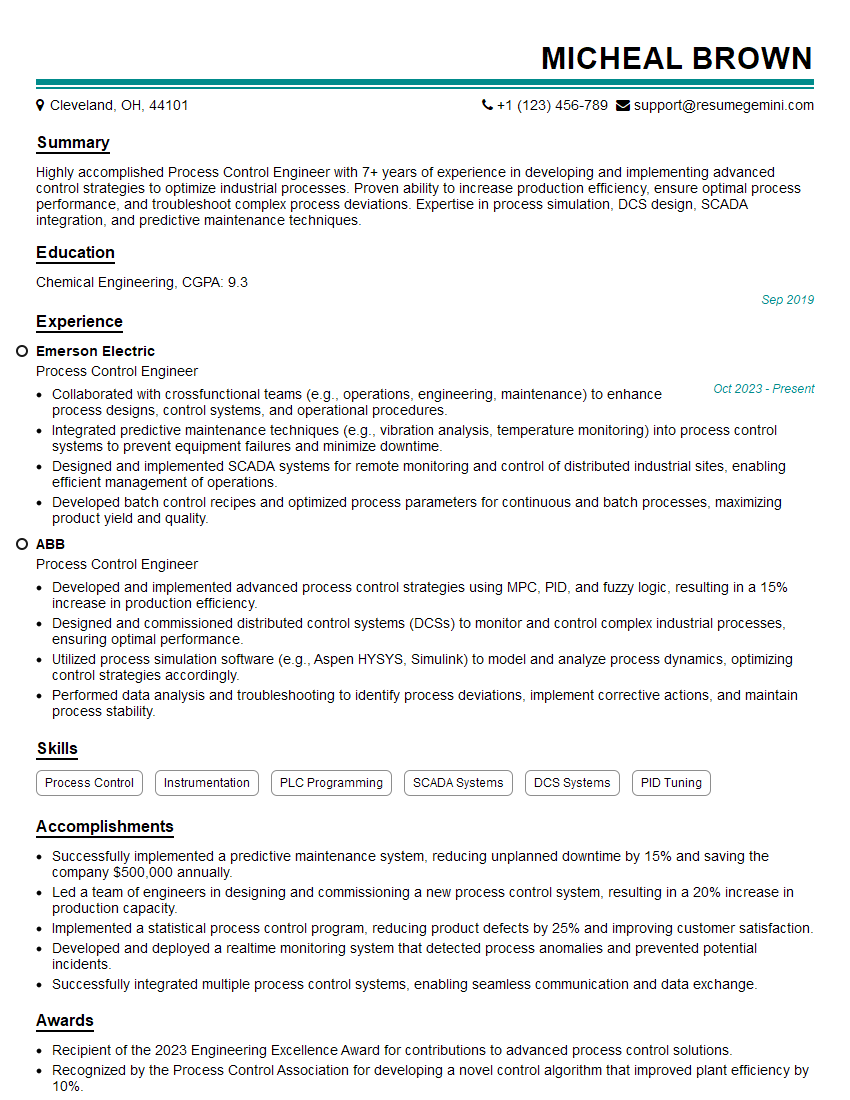
Process Control Engineer Resume Sample
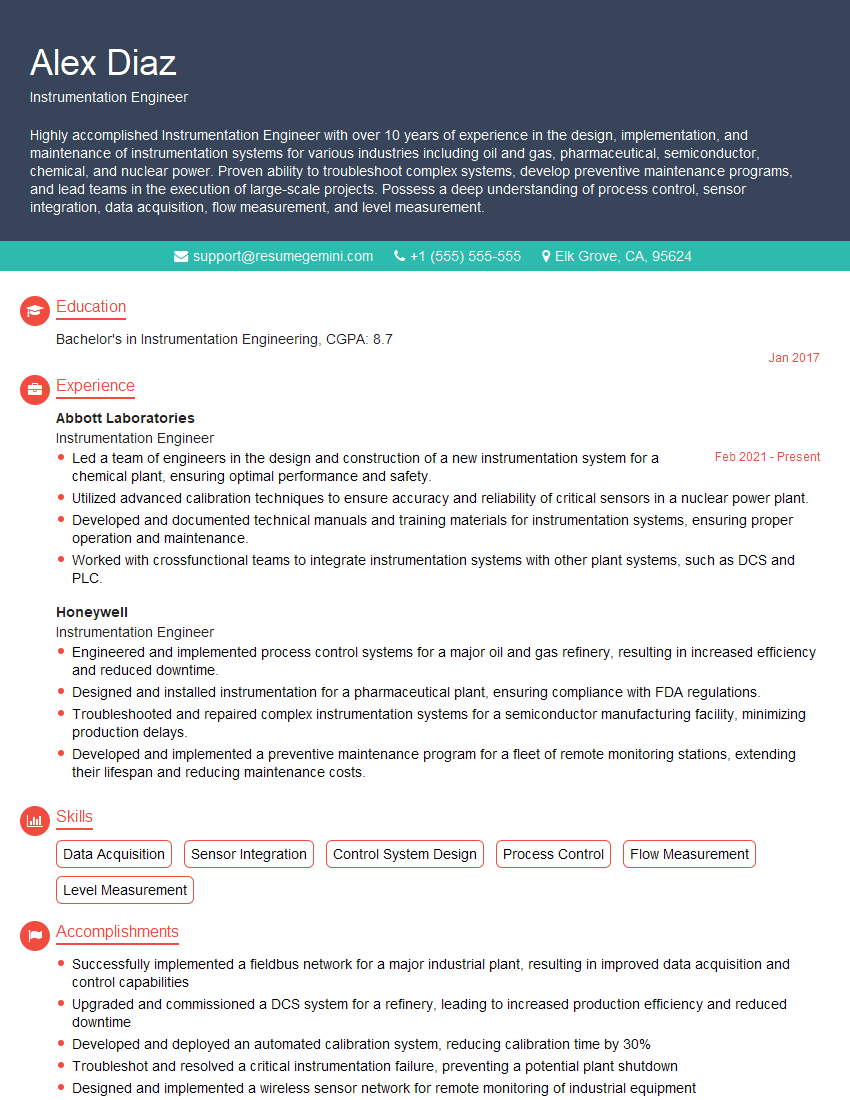
Instrumentation Engineer Resume Sample
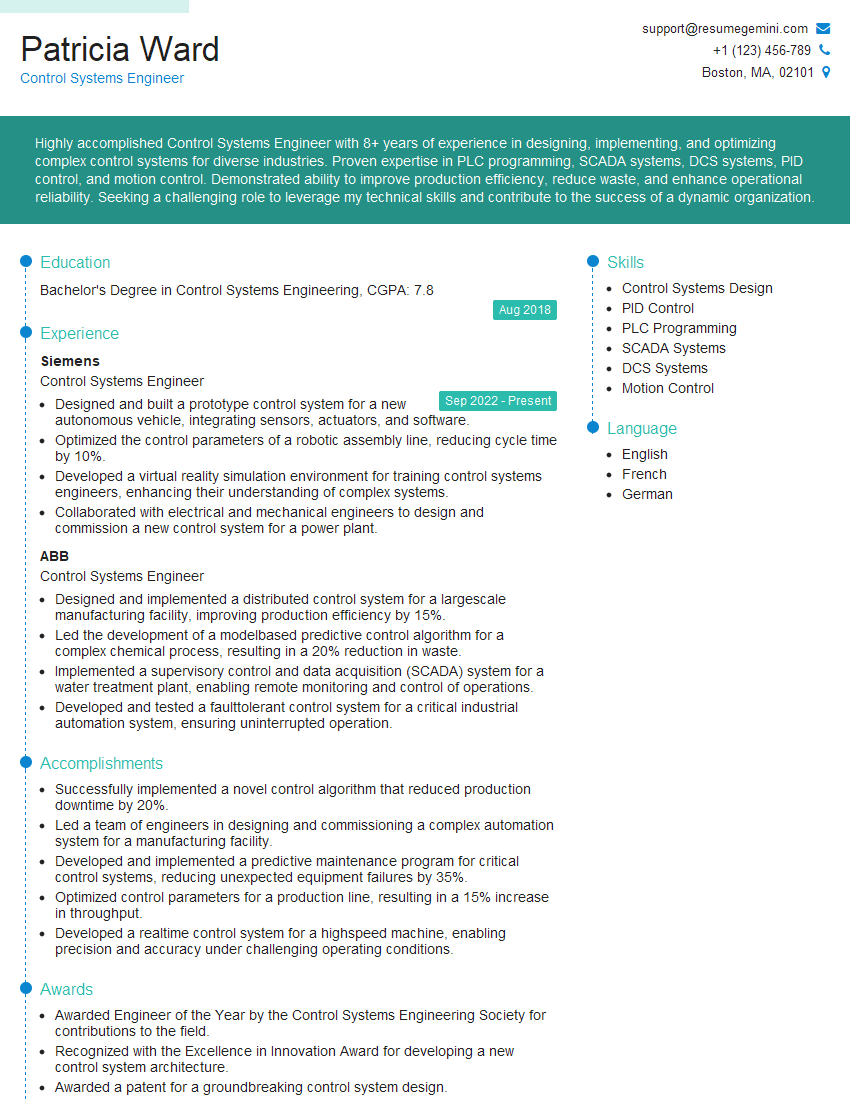
Control Systems Engineer Resume Sample
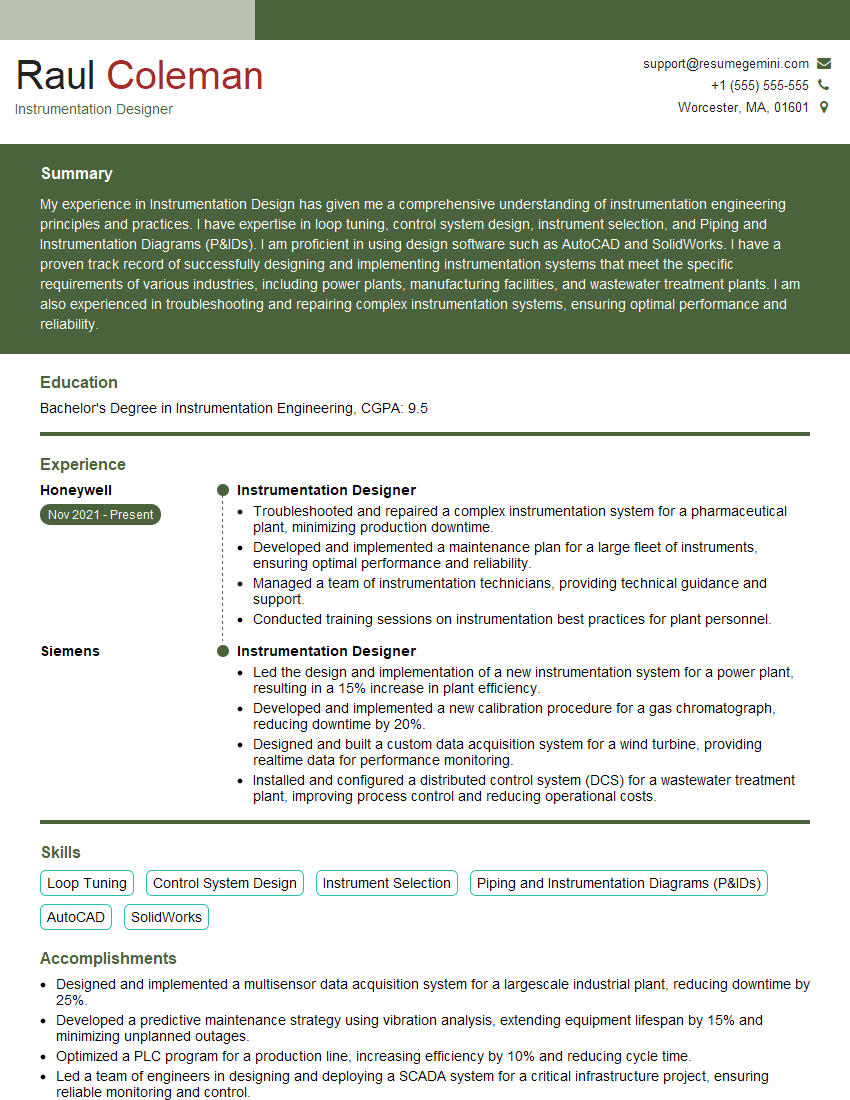
Instrumentation Designer Resume Sample
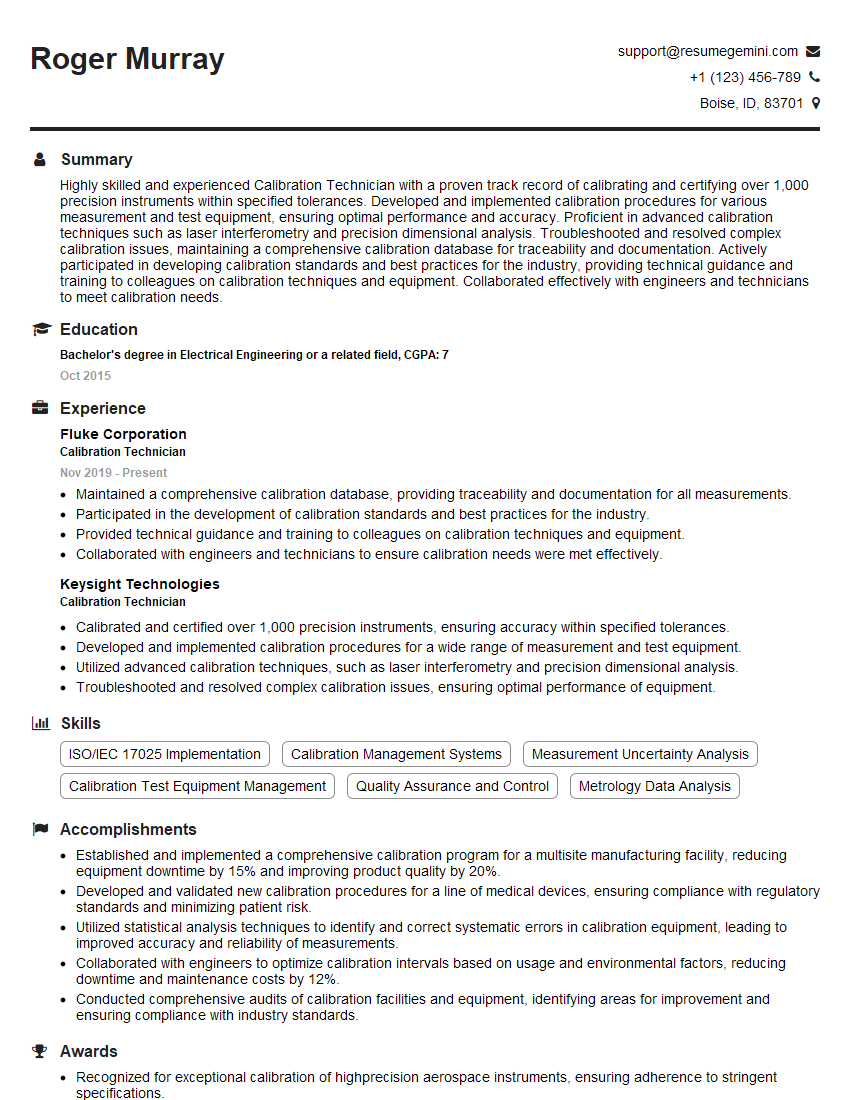
Calibration Technician Resume Sample
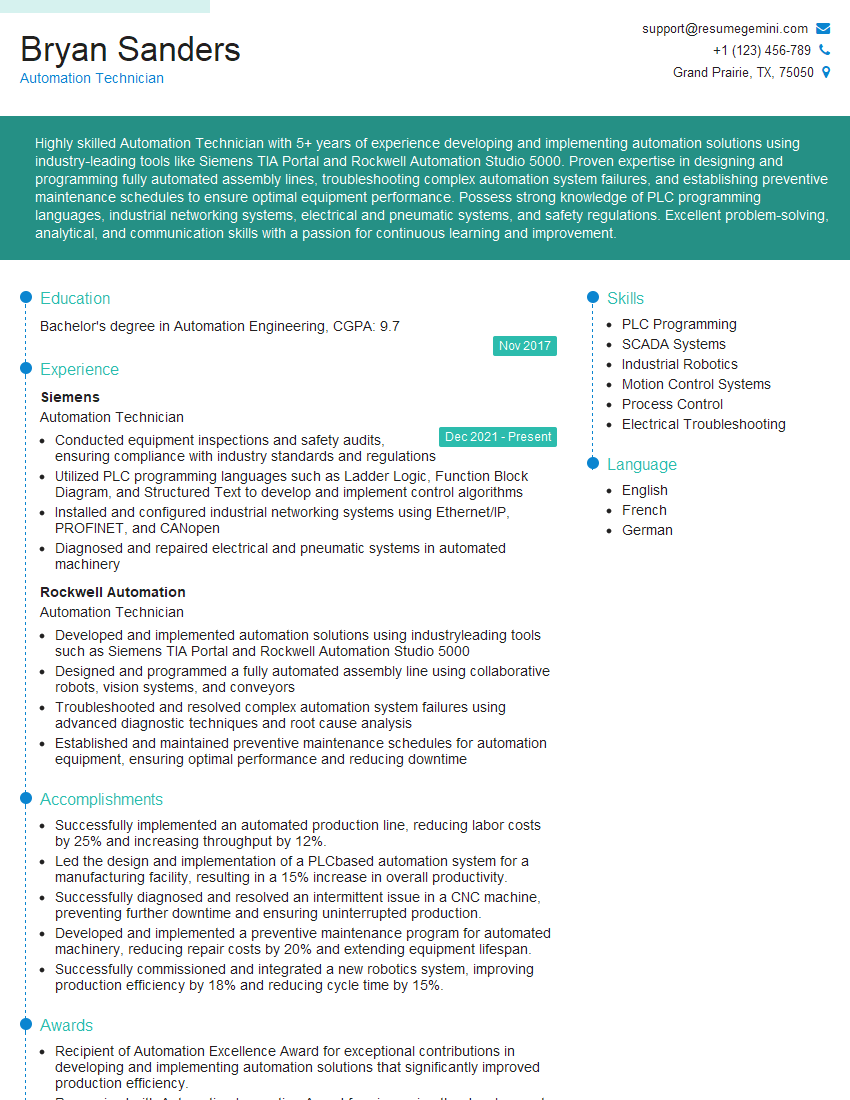
Automation Technician Resume Sample
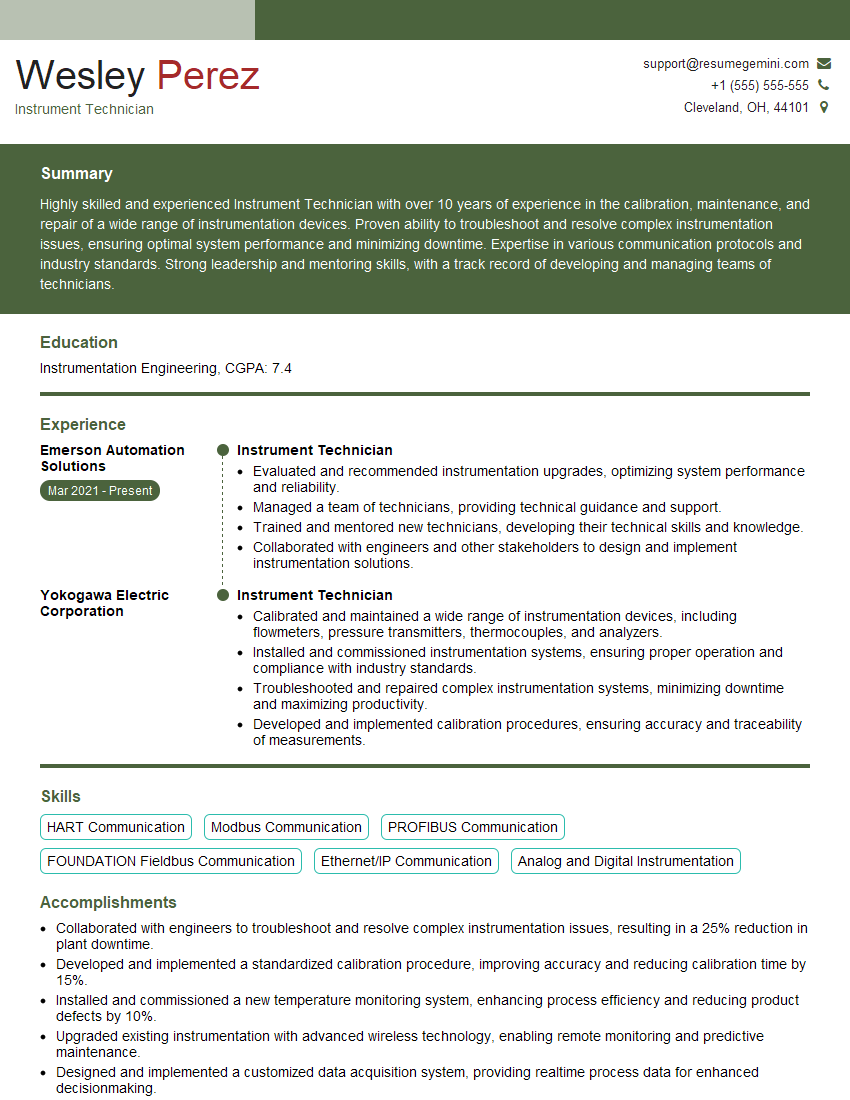
Instrument Technician Resume Sample
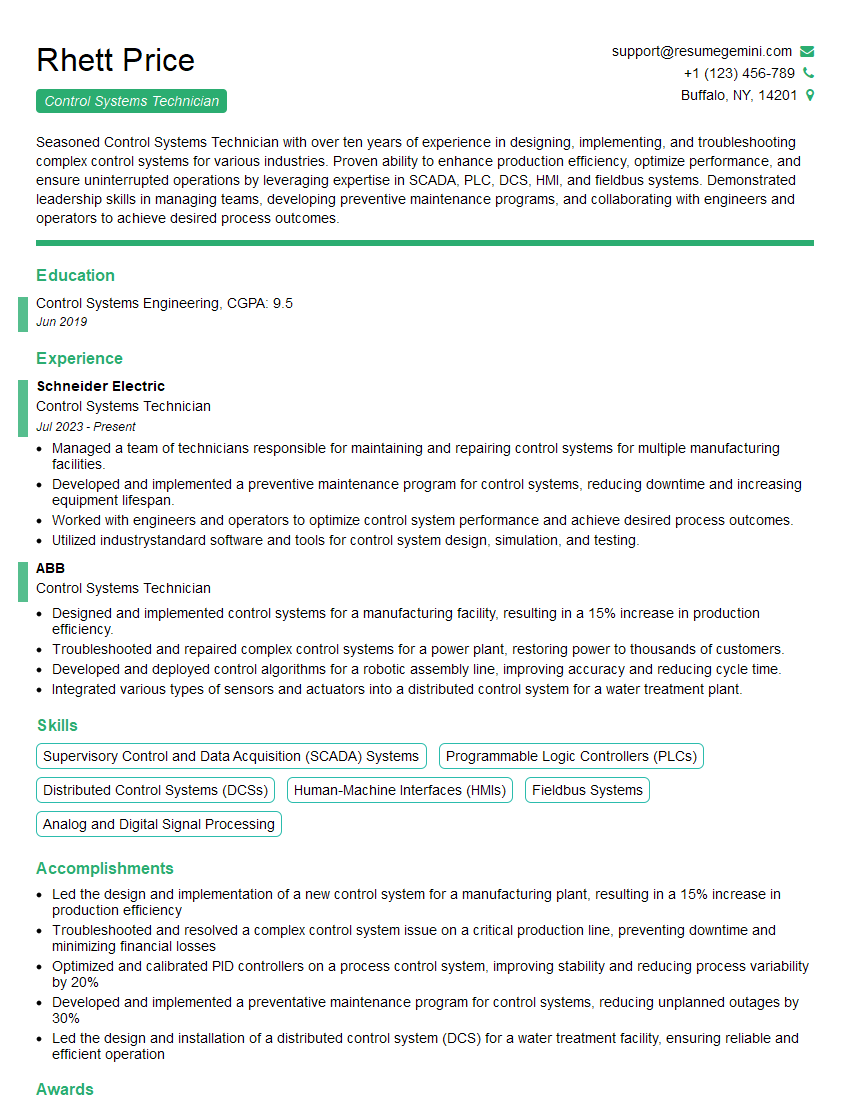
Control Systems Technician Resume Sample
Explore more articles
Users Rating of Our Blogs
Share Your Experience
We value your feedback! Please rate our content and share your thoughts (optional).
What Readers Say About Our Blog
Very informative content, great job.
good