The right preparation can turn an interview into an opportunity to showcase your expertise. This guide to Instrumentalist interview questions is your ultimate resource, providing key insights and tips to help you ace your responses and stand out as a top candidate.
Questions Asked in Instrumentalist Interview
Q 1. Describe your experience with different musical styles.
My musical journey has encompassed a wide range of styles, from the classical elegance of Bach and Mozart to the vibrant energy of jazz and the soulful depth of blues. I’ve performed and studied Baroque music, focusing on its intricate ornamentation and contrapuntal textures. This involved meticulous study of historical performance practices. My experience with jazz includes improvisational solos and ensemble work, demanding quick thinking and responsiveness to other musicians. I’ve also explored contemporary classical music, appreciating the innovative harmonic languages and extended techniques frequently used. Each style presents unique challenges and rewards, requiring adaptation in technique, interpretation, and expression.
- Classical: Developed a strong foundation in technique, phrasing, and dynamics.
- Jazz: Cultivated improvisation skills, understanding of harmony, and rhythmic flexibility.
- Blues: Learned to express emotion through phrasing and tone, emphasizing the soulful quality of the music.
Q 2. What instruments do you play proficiently?
My primary instrument is the clarinet, on which I possess a high level of proficiency. I’ve performed extensively on the clarinet in various settings, from solo recitals to orchestral performances. Beyond the clarinet, I’m also a competent saxophonist, comfortable playing both alto and tenor saxophones. This allows me to contribute to a wider variety of musical genres and ensembles. My skills extend to basic piano proficiency, which aids in my understanding of music theory and composition and allows me to accompany myself and others.
Q 3. Explain your approach to sight-reading music.
Sight-reading is a crucial skill for any instrumentalist, and my approach is multifaceted. Firstly, I focus on understanding the overall structure of the piece before diving into the details. This includes identifying the key signature, time signature, and general melodic contour. I then break down the music into smaller, manageable sections, focusing on one phrase or measure at a time. I pay close attention to note values, rhythms, and articulation markings. Regular practice is paramount; I regularly engage in sight-reading exercises, gradually increasing the complexity of the material. I’ve found that tackling challenging pieces in a systematic way, focusing on understanding rather than immediate perfection, is key to successful sight-reading.
For example, when encountering a complex passage, I might slow down significantly to ensure accuracy and then gradually increase tempo as I gain familiarity.
Q 4. How do you handle performance anxiety?
Performance anxiety is a common challenge for musicians, and I’ve developed several strategies to manage it. Thorough preparation is the most important element – the more familiar I am with the music, the more confident I feel. I also use relaxation techniques such as deep breathing and visualization before performances. Furthermore, I focus on positive self-talk, reminding myself of my skills and past successes. I find that a strong focus on the musical expression itself, rather than the potential for error, helps to shift my attention and alleviate anxiety. Finally, building experience through regular performance opportunities has been invaluable in desensitizing myself to the pressure of performing live.
Q 5. Describe your experience working in an ensemble.
I have extensive experience playing in various ensembles, from small chamber groups to large orchestras. This collaborative aspect of music-making is incredibly rewarding. In chamber music, I’ve learned the importance of active listening, precise intonation, and nuanced phrasing to achieve a unified and expressive performance. In orchestral settings, I’ve honed my ability to blend with a larger group while still maintaining individual musicality. I value the collaborative process of ensemble playing, recognizing that a successful performance is a product of teamwork and mutual respect.
For example, my work in a woodwind quintet taught me the value of careful balancing of dynamics and individual lines to achieve a cohesive ensemble sound.
Q 6. Discuss your experience with improvisation.
Improvisation is a significant part of my musical practice, particularly within the context of jazz. My improvisational approach is rooted in a deep understanding of harmony and melody. I typically start by identifying the harmonic progression of the piece, utilizing scales, modes, and chord tones to build melodic phrases. I pay attention to rhythm and phrasing, ensuring that my improvisations have a sense of direction and shape. I also strive to create musical dialogues with other improvisers, reacting to and building upon their ideas. Improvisation is an ongoing process of learning and experimentation, and I continually seek to expand my vocabulary and expressive capabilities.
For instance, in a jam session, I might start with a simple melodic phrase based on the chord progression, then gradually incorporate more complex rhythmic and melodic elements, all while maintaining a sense of harmonic coherence.
Q 7. How do you maintain your instrument?
Maintaining my instruments is crucial for optimal performance and longevity. For my clarinet, this involves regular cleaning after each use, using specialized cleaning swabs and polishing cloths. I ensure the pads are regularly checked by a professional repair technician to maintain their airtight seal. The mouthpiece needs periodic cleaning as well. For my saxophones, the process is similar, but involves additional attention to the key mechanisms and ensuring they are properly lubricated. I also store my instruments in a climate-controlled environment to prevent damage from humidity or temperature fluctuations. Regular maintenance prevents costly repairs and ensures that my instruments are always in peak playing condition.
Q 8. Explain your understanding of music theory.
Music theory is the foundation upon which all music is built. It’s a system of understanding and explaining the structure and elements of music, allowing us to analyze, compose, and perform effectively. It encompasses several key areas:
- Pitch and Intervals: This deals with the relative highness or lowness of notes and the distance between them (intervals). Understanding intervals is crucial for constructing melodies and harmonies.
- Scales and Modes: These are sets of notes organized in specific patterns. Different scales and modes create distinct moods and character in music. For example, a major scale typically sounds happy, while a minor scale often sounds sad.
- Harmony: This explores the combination of simultaneous pitches (chords) and how they progress. Understanding harmony is essential for creating rich and interesting musical textures.
- Rhythm and Meter: This concerns the organization of time in music, including the patterns of beats (rhythm) and the grouping of beats into measures (meter). A strong understanding of rhythm is critical for precise and expressive playing.
- Form and Structure: This involves how musical ideas are organized into larger sections, such as verse, chorus, and bridge. Knowing musical forms helps in understanding the overall architecture of a piece.
My understanding extends beyond the basics, encompassing advanced concepts like counterpoint, modulation, and orchestration. I’ve actively studied these concepts not just academically but also through practical application in composition and performance.
Q 9. What are your strengths and weaknesses as a musician?
My strengths as a musician lie in my technical proficiency, musicality, and adaptability. I’ve dedicated years to honing my skills on my instrument, resulting in a high level of precision and control. I am also very sensitive to the expressive nuances of the music, striving for emotionally resonant performances. My ability to quickly learn new pieces and adapt to different styles has been a valuable asset in various ensembles and settings.
However, like any musician, I also have areas for improvement. While I’m confident in my technical abilities, I am always seeking to expand my improvisational skills and further develop my composing talents. Public performance, while something I enjoy, can sometimes trigger a slight performance anxiety, which I actively manage through practice and mindful preparation.
Q 10. Describe a challenging performance and how you overcame it.
One particularly challenging performance was a solo recital where I was tasked with performing a technically demanding piece with a very fast tempo and intricate passagework. I had only a limited time to prepare, which added to the pressure. Initially, my practice sessions were riddled with mistakes and frustration. I felt overwhelmed by the sheer complexity of the piece.
To overcome this, I implemented a systematic approach. I broke down the piece into smaller, manageable sections, focusing on mastering each section individually before piecing them together. I employed slow practice techniques, gradually increasing the tempo only when I felt confident and comfortable with the technical aspects. I also utilized recording myself to identify areas needing more attention. Through this focused and methodical practice, I not only mastered the technical challenges but also gained a deeper understanding and appreciation for the emotional depth of the piece. The performance, in the end, was a success, highlighting the value of a structured approach in tackling difficult musical challenges.
Q 11. How do you adapt to different musical settings?
Adapting to different musical settings requires flexibility and a deep understanding of various musical styles and contexts. My experience has ranged from classical chamber music to jazz ensembles and even collaborative projects with contemporary composers. Key factors in my adaptability include:
- Active Listening: Paying close attention to the musical style, dynamics, and phrasing of other musicians is critical for seamless integration.
- Style Awareness: Understanding the nuances of different genres (e.g., the rhythmic precision of classical music vs. the improvisational freedom of jazz) allows me to effectively contribute.
- Technical Versatility: Having a solid foundation in music theory and a wide technical range enables me to adjust my playing style to suit the needs of diverse musical settings.
- Communication: Open communication with other musicians helps in understanding the artistic vision and achieving a cohesive performance.
For example, transitioning from a precise classical performance to a more spontaneous jazz improvisation requires a shift in my mindset and playing approach, focusing on improvisation and rhythmic interplay.
Q 12. What is your preferred rehearsal process?
My preferred rehearsal process is a combination of structured and collaborative approaches. I believe in starting with a thorough review of the score, identifying potential challenges and areas requiring special attention. This initial phase is followed by focused practice on individual parts, ensuring technical accuracy and musical expression. Then we move towards collective rehearsals, focusing on ensemble blend, balance, and phrasing. I find it crucial to create a collaborative environment where everyone feels comfortable sharing ideas and addressing concerns. I believe in fostering a constructive feedback culture, with an emphasis on mutual respect and support among the musicians. During rehearsals, I always encourage experimentation and exploration of different interpretive possibilities. Open communication and active listening form the backbone of my preferred rehearsal style.
Q 13. Describe your experience with recording music.
I have extensive experience in recording music, both in studio and live settings. My understanding encompasses the technical aspects of recording, including microphone placement, signal processing, and audio editing. I am proficient in using various Digital Audio Workstations (DAWs), such as Logic Pro X and Ableton Live, for recording, editing, and mixing. In the studio, I am comfortable with different recording techniques, such as close miking for detailed capturing of instrumental nuances or using ambient miking for creating a natural soundscape. I understand the importance of preparation before entering a recording session, ensuring my part is technically sound and musically expressive. My experience also extends to post-production work, including editing, mixing, and mastering, to ensure a professional and polished final product. I am always willing to adapt my approach to the specific needs and technical requirements of each recording project. For example, I’ve worked on both solo recordings and large ensemble projects, requiring different strategies and levels of collaboration.
Q 14. How do you collaborate effectively with other musicians?
Effective collaboration with other musicians hinges on mutual respect, open communication, and a shared artistic vision. I believe in approaching collaborative projects with a spirit of teamwork and a willingness to compromise. I actively listen to others’ ideas and contributions, valuing their perspectives and expertise. This involves clear and respectful communication, both verbal and non-verbal, to address concerns and ensure everyone is on the same page. During rehearsals and performances, I strive to create a supportive environment where musicians feel comfortable sharing their thoughts and concerns. I approach disagreements constructively, always aiming for solutions that benefit the overall musical outcome. A strong collaborative relationship is built on trust and a shared commitment to achieving musical excellence. I view collaboration as an opportunity for growth and learning, embracing the unique contributions of each musician to elevate the final performance.
Q 15. What are your long-term career goals as a musician?
My long-term career goals as a musician center around building a sustainable and fulfilling career that blends artistic expression with professional success. I aim to establish myself as a versatile and sought-after instrumentalist, performing in diverse settings – from orchestral concerts and chamber music collaborations to solo recitals and potentially composing and arranging my own works. I envision myself actively contributing to the music community through teaching and mentoring younger musicians, sharing my passion and expertise. Ultimately, I want to leave a lasting impact on the musical landscape, inspiring audiences and fellow musicians alike.
This involves a multi-faceted approach: consistent high-quality performance practice, strategic networking within the industry, continuous skill development through masterclasses and further education, and cultivating a strong online presence to reach broader audiences. I’m also interested in exploring opportunities in music therapy, leveraging my musical abilities to benefit others.
Career Expert Tips:
- Ace those interviews! Prepare effectively by reviewing the Top 50 Most Common Interview Questions on ResumeGemini.
- Navigate your job search with confidence! Explore a wide range of Career Tips on ResumeGemini. Learn about common challenges and recommendations to overcome them.
- Craft the perfect resume! Master the Art of Resume Writing with ResumeGemini’s guide. Showcase your unique qualifications and achievements effectively.
- Don’t miss out on holiday savings! Build your dream resume with ResumeGemini’s ATS optimized templates.
Q 16. Describe your experience with music education.
My experience with music education is extensive, spanning both formal and informal settings. I began my musical journey with private lessons in piano at the age of seven, which provided a solid foundation in music theory, technique, and performance practice. I continued these private studies throughout my schooling, supplementing them with participation in school ensembles like orchestra and choir. Later, I pursued a Bachelor of Music degree, specializing in [Instrument Name], where I received comprehensive training in performance, pedagogy, and music history. This formal education provided me with a deeper understanding of musical structure, analysis, and the historical context of various musical styles. Beyond my formal education, I’ve also participated in several masterclasses with renowned musicians and regularly attend workshops on various aspects of musical performance and teaching.
Furthermore, I have experience teaching privately and in group settings, working with students of all ages and skill levels. I believe in tailoring my teaching methods to individual learning styles and fostering a supportive and encouraging environment where students can develop their musical potential to the fullest.
Q 17. How do you stay current with new musical trends?
Staying current with new musical trends is crucial for any musician. I employ a multi-pronged approach: I actively listen to a wide range of contemporary music across various genres, utilizing streaming services and attending live performances. I follow influential musicians and composers on social media platforms, keeping abreast of their latest projects and creative endeavors. I also subscribe to music magazines and journals, which provide insightful articles and reviews of new releases and significant developments in the music world. Engaging with online music communities and forums allows me to interact with fellow musicians and discover emerging artists and trends. Regularly attending industry conferences and workshops offers valuable networking opportunities and exposes me to the latest techniques and technologies.
For example, recently I discovered a fascinating new approach to [specific musical technique or style] through an online workshop, which I’ve incorporated into my own playing and teaching. This continuous learning process ensures my musical perspective remains fresh and innovative.
Q 18. Explain your understanding of musical notation.
Musical notation is the system of written symbols used to represent music. My understanding encompasses both traditional notation and more contemporary methods. I can read and write music fluently, understanding the intricacies of notation including note values, rhythm, key signatures, time signatures, accidentals, dynamics, articulation markings, and phrasing. I understand the implications of different clefs, and can decipher complex scores for various instrumental combinations.
For example, a time signature of 4/4 indicates four beats per measure, with each beat being a quarter note. Understanding these symbols allows me to accurately interpret and perform a musical score. I’m also comfortable with using music notation software such as Sibelius or Finale to create, edit, and print musical scores.
Q 19. How do you create a unique musical interpretation?
Creating a unique musical interpretation involves a careful balance between respecting the composer’s intentions and adding one’s personal artistic expression. It’s about bringing the music to life in a way that resonates with both the composer’s vision and the audience’s sensibilities. This process begins with a thorough understanding of the score’s historical context, stylistic features, and technical demands. I spend considerable time analyzing the music, paying close attention to details such as phrasing, dynamics, articulation, and harmonic structure.
Next, I explore different interpretative possibilities. For instance, I might experiment with varying tempos, dynamics, or articulations to highlight specific aspects of the composition. This process is iterative – I may practice a passage multiple times, refining the interpretation based on my own sensibilities and the response of my audience during rehearsals and performances. The key is to be mindful of the overall structure and narrative of the piece, ensuring that my personal expression enhances, rather than detracts from, the composer’s intentions. For example, in performing a Beethoven sonata, my interpretation might emphasize the dramatic tension while highlighting the lyrical beauty through nuanced phrasing and dynamic shading, reflecting my own personal sensitivity.
Q 20. Describe your experience with different performance venues.
My performance experience spans various venues, each presenting unique challenges and rewards. I’ve performed in intimate recital halls, larger concert halls, outdoor spaces, and even unconventional venues such as museums and art galleries. Each venue requires adaptation in terms of projection, technical considerations (such as microphone use), and audience engagement. Performing in a small recital hall demands a nuanced and intimate approach, whereas a large concert hall requires a bolder projection and awareness of acoustics. Outdoor performances necessitate adapting to environmental factors such as wind and ambient noise.
For example, performing in a historic concert hall required careful attention to acoustics and dynamics, ensuring that the music projected effectively without overwhelming the space. In contrast, an outdoor performance necessitated using amplification to ensure the audience could clearly hear the performance. This adaptability is crucial for a successful performance in any setting.
Q 21. How familiar are you with music technology and software?
I am highly familiar with various music technologies and software. I am proficient in using Digital Audio Workstations (DAWs) such as Logic Pro X and Ableton Live for recording, editing, and mixing audio. I understand the principles of audio engineering, including microphone techniques, signal processing, and mixing consoles. I use notation software such as Sibelius and Finale to create, edit, and print scores. I am also familiar with various music production software and plugins, enabling me to enhance recordings and create unique sonic textures.
Moreover, I’m adept at using music playback software for rehearsals and performances, and I’m comfortable troubleshooting technical issues that may arise during performances. My technical skills have broadened my creative capabilities, allowing me to experiment with various recording and production techniques to achieve specific artistic outcomes.
Q 22. What is your process for learning new musical pieces?
Learning a new piece is a multi-stage process that goes beyond simply reading the notes. It’s about understanding the composer’s intent and bringing the music to life.
Initial Analysis: I begin by carefully studying the score, identifying its form (sonata, rondo, etc.), key signatures, time signatures, and overall structure. I look for harmonic progressions and melodic motifs to understand the piece’s architecture.
Technical Breakdown: Next, I break down the piece into smaller, manageable sections. This allows me to focus on mastering difficult passages without feeling overwhelmed. I identify challenging rhythmic patterns, technical hurdles, and expressive nuances.
Aural Learning: Listening to recordings of established performers is crucial. This helps me understand different interpretations and stylistic choices. I analyze phrasing, articulation, and dynamics to inform my own performance.
Hands-on Practice: This is where I put it all together. I start slowly, focusing on accuracy and clarity. Gradually, I increase tempo and work on developing musicality. I’ll frequently record myself to identify areas needing improvement.
Memorization and Performance: Once I’m comfortable with the technical aspects, I focus on memorization. I work on internalizing the music, so that performing becomes an act of communication, not just rote playing. This includes rehearsing in performance-like settings.
Q 23. Describe your approach to practicing your instrument.
My practice routine is structured and goal-oriented. It’s not just about putting in hours; it’s about efficient and effective practice.
Warm-up: I always begin with exercises designed to improve finger dexterity, embouchure (if applicable), and breathing. This prepares my instrument and body for focused practice.
Targeted Practice: I dedicate specific time slots to address weaknesses. If I’m struggling with a particular passage, I’ll isolate it and practice slowly, methodically working on accuracy and fluency. Techniques like slow practice with gradual tempo increases are very useful here.
Musicality Focus: A significant portion of my practice is dedicated to developing musical expression. I focus on phrasing, dynamics, articulation, and creating a narrative through my performance. I might experiment with different interpretive approaches.
Repertoire Review: I regularly review previously learned pieces to maintain technique and refine interpretations. This helps prevent muscle memory from becoming rigid and ensures that my performances remain fresh.
Recording and Self-Analysis: Regularly recording myself allows for objective self-assessment. Listening back helps me identify areas needing improvement and track my progress over time.
Q 24. How do you handle constructive criticism?
Constructive criticism is invaluable for growth. I approach it with an open mind and a willingness to learn.
Active Listening: I listen carefully to understand the feedback, seeking clarification when needed. I try to avoid getting defensive.
Identifying the Core Issue: I focus on the specific points raised, separating subjective opinions from objective observations. What are the key areas for improvement?
Implementing Changes: I incorporate the feedback into my practice, experimenting with different approaches to address the identified weaknesses.
Seeking Further Guidance: If I’m unsure about how to implement the feedback, I seek additional guidance from trusted mentors or colleagues.
Reflecting on Progress: After incorporating the feedback, I reassess my performance to see how it has improved. This iterative process of feedback, implementation, and reassessment is key.
Q 25. How do you manage your time effectively as a musician?
Time management is crucial for musicians. It’s a balancing act between practice, performances, teaching, and personal life.
Scheduling: I use a planner or digital calendar to schedule practice sessions, rehearsals, lessons, and performances. Blocking out specific times dedicated to practice improves consistency.
Prioritization: I prioritize tasks based on deadlines and importance. This helps me focus my energy on what matters most. For example, prioritizing a major performance over a less important one.
Efficient Practice: I strive to make my practice sessions as efficient as possible, focusing on targeted exercises and avoiding unnecessary distractions.
Breaks and Downtime: I incorporate regular breaks to avoid burnout. Taking short breaks during long practice sessions improves focus and productivity.
Flexibility: Unexpected events happen. Having some flexibility built into my schedule allows me to adapt to changes and maintain a healthy work-life balance.
Q 26. What is your experience with teaching music?
I have extensive experience teaching music, both privately and in group settings. My approach is centered on fostering a love for music and building strong foundational skills.
Individualized Instruction: I tailor my teaching style to each student’s learning pace, musical interests, and goals.
Comprehensive Curriculum: My lessons cover a range of topics, including music theory, technique, sight-reading, and performance skills.
Positive Reinforcement: I create a supportive and encouraging learning environment, focusing on the student’s strengths and providing positive reinforcement.
Performance Opportunities: I encourage students to participate in recitals and other performance opportunities to build confidence and experience.
Relationship Building: I prioritize building a strong rapport with my students, creating a comfortable and trusting learning environment.
Q 27. How would you handle a technical malfunction during a performance?
A technical malfunction during a performance is a possibility every musician must be prepared for. My approach focuses on quick thinking and problem-solving.
Quick Assessment: I’d quickly assess the nature of the malfunction. Is it a minor issue that can be quickly resolved, or something more serious?
Immediate Action: If possible, I would attempt a quick fix, such as adjusting a setting or replacing a broken reed.
Improvisation: If a quick fix isn’t possible, I would improvise, perhaps by adapting the piece or seamlessly transitioning to a different section. My experience allows me to handle such situations calmly and creatively.
Maintaining Composure: It’s essential to maintain composure and avoid panicking. A calm demeanor will help prevent the issue from escalating or affecting the audience.
Addressing the Audience: Depending on the severity, I might briefly acknowledge the issue to the audience, explaining the situation with grace and humor.
Q 28. Describe your experience with composing or arranging music.
While my primary focus is performance, I have experience composing and arranging music. This has enriched my understanding of musical structure and deepened my appreciation for the creative process.
Composition Process: My composition process often begins with an idea – a melody, a rhythm, or a harmonic progression. I then develop that idea, experimenting with different textures, forms, and instrumentation.
Arrangement Experience: I’ve arranged existing pieces for different ensembles, adapting them to suit the unique capabilities of the performers. This involves careful consideration of instrumentation, voicing, and overall balance.
Software Proficiency: I am proficient in using music notation software (like Sibelius or Finale) to create and edit my compositions and arrangements.
Creative Exploration: Composing and arranging has allowed me to explore my own musical voice and experiment with different styles and techniques.
Collaborative Efforts: I welcome opportunities to collaborate with other musicians on composing and arranging projects.
Key Topics to Learn for Instrumentalist Interview
- Data Structures & Algorithms: Understanding fundamental data structures (arrays, linked lists, trees, graphs) and algorithms (searching, sorting, graph traversal) is crucial for optimizing Instrumentalist workflows and solving complex problems efficiently.
- Software Design Principles: Familiarize yourself with SOLID principles and design patterns. Be prepared to discuss how you would design and implement features within the Instrumentalist ecosystem, considering scalability and maintainability.
- API Integration & Communication: Instrumentalist likely interacts with various APIs. Understanding RESTful APIs, API documentation, and efficient data exchange methods is essential.
- Testing & Debugging: Demonstrate your proficiency in writing unit tests, integration tests, and debugging techniques. Be prepared to discuss testing strategies and methodologies.
- Database Management: Depending on the role, familiarity with SQL or NoSQL databases and their application within the Instrumentalist context will be beneficial. Understand database design principles and optimization techniques.
- Specific Instrumentalist Features (if applicable): Research the specific features and functionalities of Instrumentalist that are relevant to the role you’re applying for. Understanding these in detail will showcase your initiative and preparation.
- Problem-Solving & Critical Thinking: Practice approaching technical challenges methodically. Be ready to articulate your thought process and explain your approach to problem-solving.
Next Steps
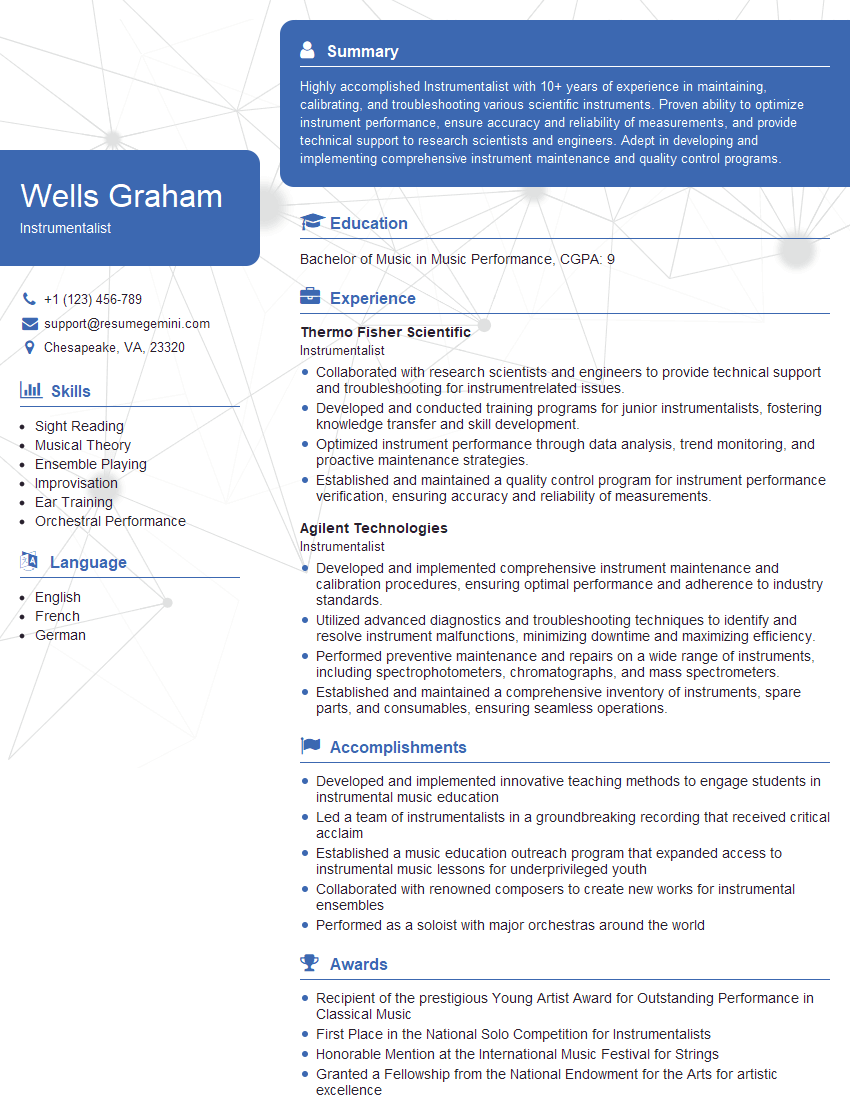
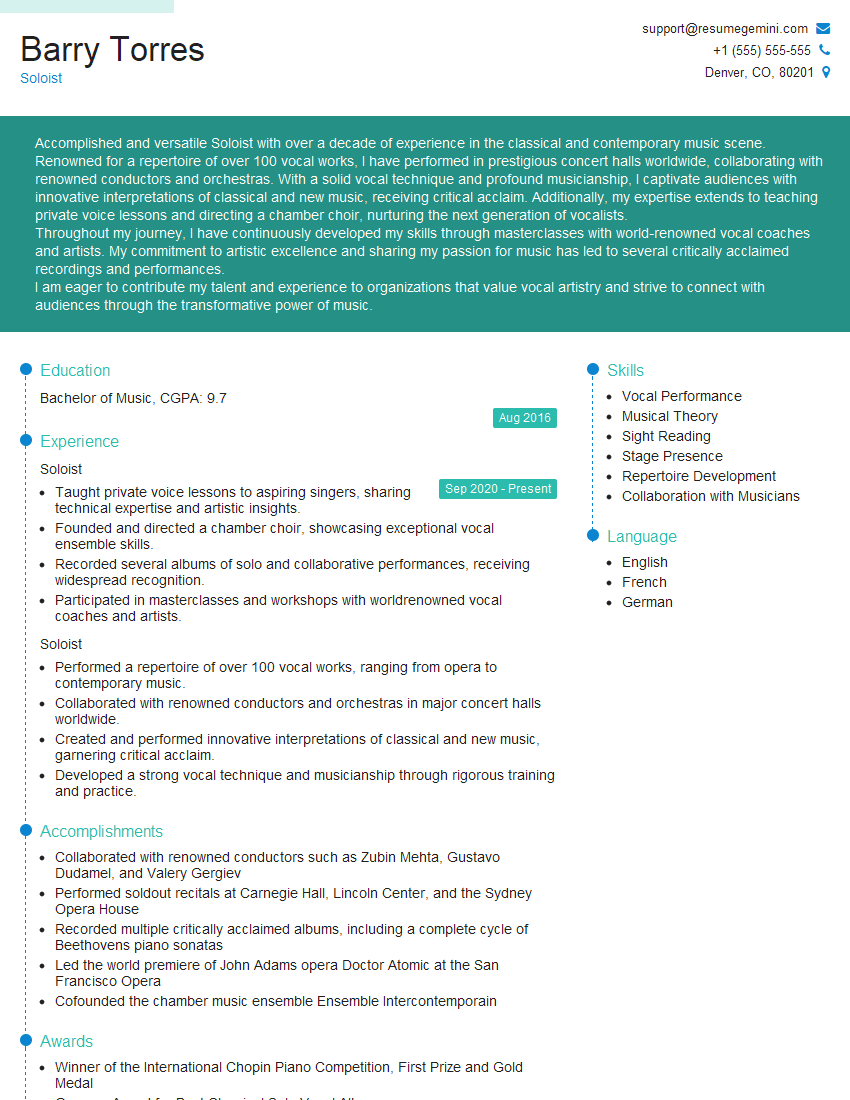
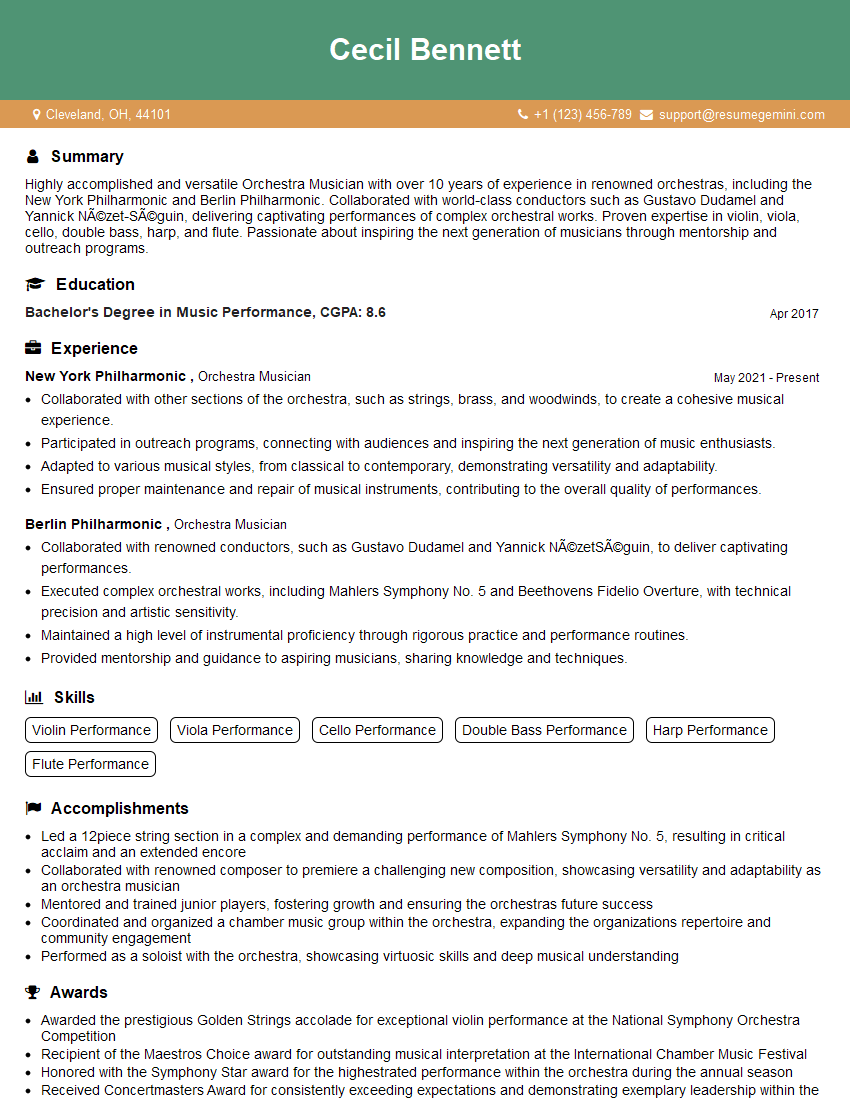
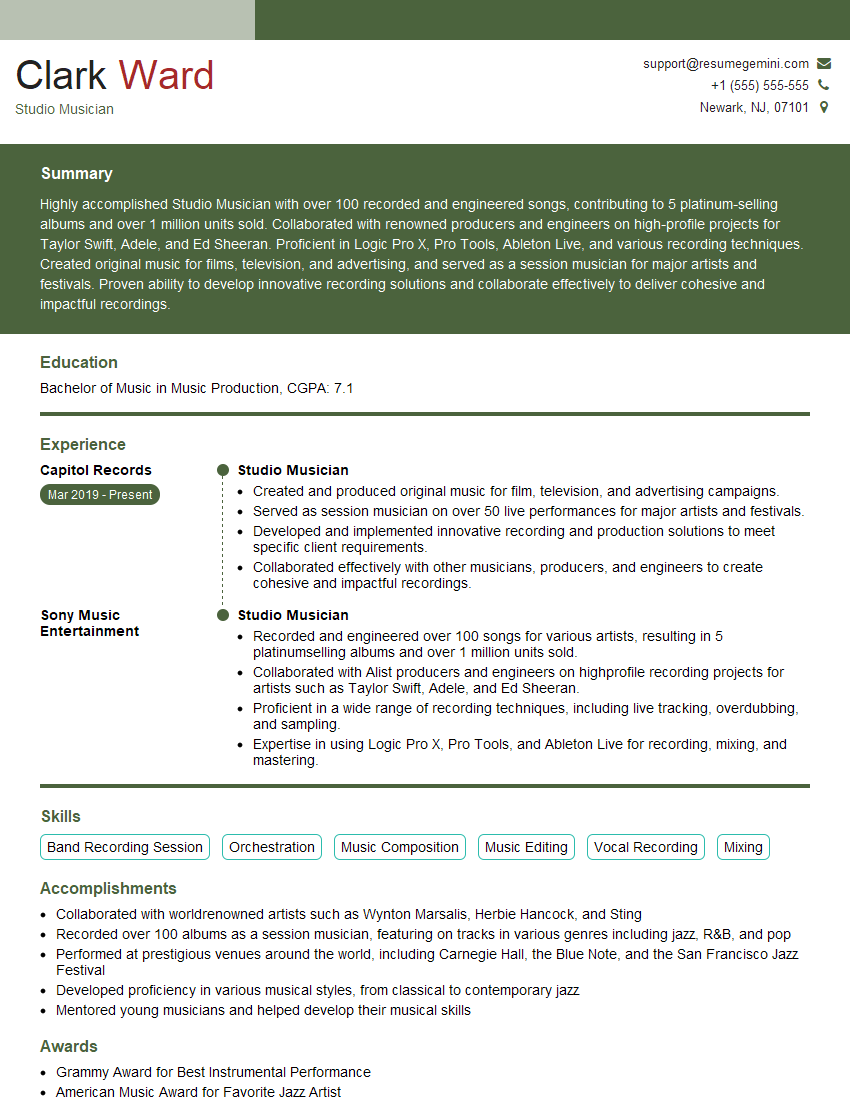
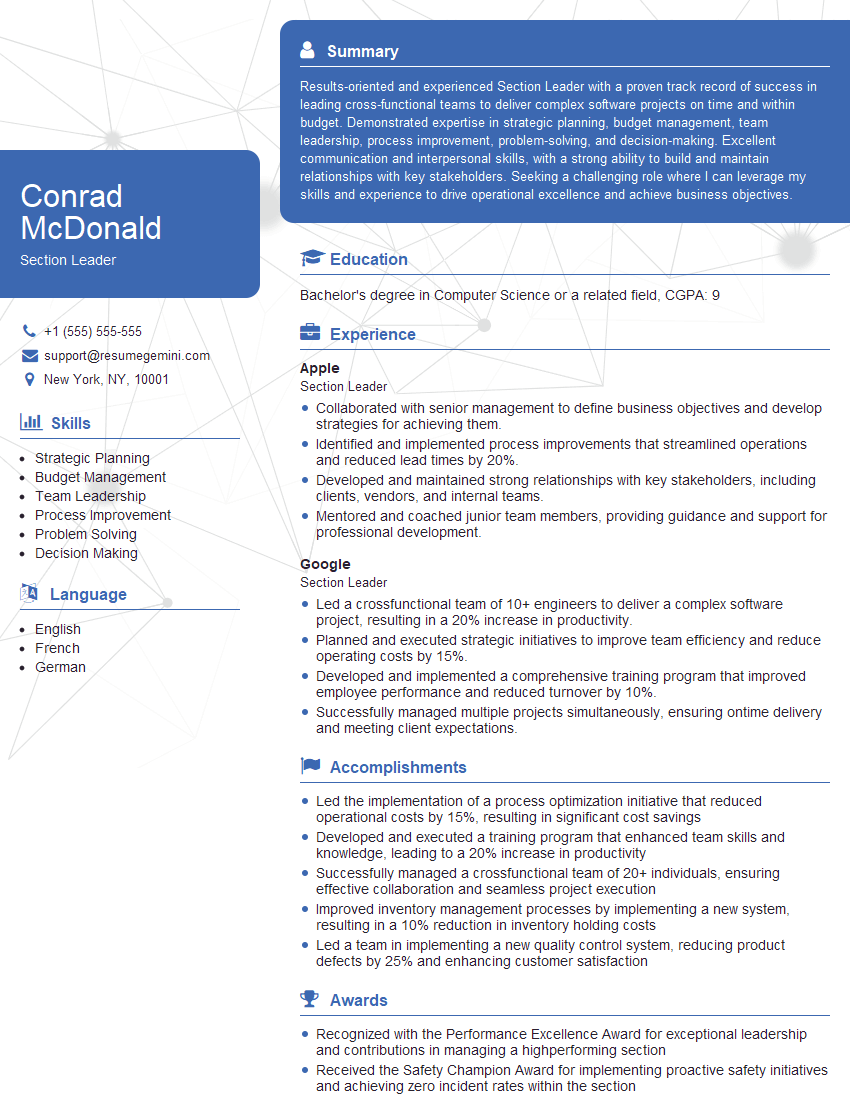
Mastering Instrumentalist can significantly advance your career in the tech industry, opening doors to exciting opportunities and challenging roles. A strong understanding of its functionalities and underlying principles is highly valued by employers. To enhance your job prospects, create an ATS-friendly resume that highlights your skills and experience effectively. We highly recommend using ResumeGemini to build a professional and impactful resume. ResumeGemini offers valuable tools and resources to help you craft a compelling narrative that showcases your expertise. Examples of resumes tailored to Instrumentalist roles are available below to guide you.
Explore more articles
Users Rating of Our Blogs
Share Your Experience
We value your feedback! Please rate our content and share your thoughts (optional).
What Readers Say About Our Blog
Very informative content, great job.
good