Interviews are opportunities to demonstrate your expertise, and this guide is here to help you shine. Explore the essential Intelligence Analysis Tools interview questions that employers frequently ask, paired with strategies for crafting responses that set you apart from the competition.
Questions Asked in Intelligence Analysis Tools Interview
Q 1. Explain the difference between structured and unstructured data in intelligence analysis.
In intelligence analysis, the distinction between structured and unstructured data is crucial for effective processing and analysis. Structured data is highly organized and easily searchable, fitting neatly into predefined fields like databases. Think of a spreadsheet with columns for name, date of birth, and address – each piece of information has a designated place. Unstructured data, conversely, lacks this inherent organization. It includes things like text documents, audio recordings, images, and social media posts. The information within isn’t easily categorized or readily searchable without sophisticated processing.
For example, a database of known terrorists (structured) is easily queried for individuals matching specific criteria. However, analyzing a transcript of a terrorist’s intercepted phone call (unstructured) requires techniques like natural language processing (NLP) to extract relevant information. This difference impacts the tools and techniques used in analysis; structured data is typically managed with relational databases and SQL, while unstructured data often requires machine learning and text analytics.
Q 2. Describe your experience using Palantir or similar intelligence platforms.
I have extensive experience utilizing Palantir Gotham, a leading intelligence platform. My work involved building and managing data pipelines, integrating diverse data sources ranging from satellite imagery to financial transactions, and developing custom visualizations to support strategic decision-making. A particular project involved integrating data from multiple government agencies to identify and track transnational criminal organizations. We used Palantir’s powerful graph database capabilities to visualize the complex relationships between individuals, entities, and events, revealing previously unseen connections and patterns. This enabled us to effectively prioritize investigative efforts and enhance operational efficiency. The platform’s ability to handle both structured and unstructured data, coupled with its robust analytical tools, proved invaluable in this complex investigation.
Q 3. How do you ensure the accuracy and reliability of intelligence data sources?
Ensuring the accuracy and reliability of intelligence data sources is paramount. My approach is multi-faceted and involves a rigorous process of source validation and triangulation. This starts by evaluating the credibility of each source: Is it a known expert? Is it consistent with other information we have? What is its potential bias? We use established intelligence methodologies to assess the source’s reputation, history, and motivation.
Triangulation is crucial – confirming information from multiple independent sources. If three unrelated sources corroborate a piece of information, its reliability significantly increases. We also use techniques like open-source intelligence (OSINT) verification and data analysis to cross-reference information and identify inconsistencies or anomalies. Ultimately, a documented chain of custody and audit trail provides an assurance of the data integrity.
Q 4. What are some common challenges in integrating data from multiple intelligence sources?
Integrating data from multiple intelligence sources presents several challenges. Data format inconsistencies are common; one source might use a specific date format, while another uses a different one. Similarly, differing data structures create obstacles. Data quality issues vary significantly between sources. One source may have rigorously vetted information, whereas another may contain inaccuracies or incomplete data. Finally, access restrictions and data security concerns often complicate integration. Some data may be classified or require specific permissions to access.
To overcome these issues, we employ standardized data formats, such as XML or JSON, to ensure interoperability. Data cleansing and transformation techniques are used to improve data quality and address inconsistencies. Secure data exchange protocols are employed to protect classified information. Furthermore, robust metadata management is crucial for tracking data provenance and ensuring accountability.
Q 5. Explain your process for identifying and mitigating biases in intelligence analysis.
Identifying and mitigating biases is a critical aspect of objective intelligence analysis. We utilize a structured approach involving self-awareness, cross-referencing, and critical evaluation. Analysts are trained to recognize their own biases and potential blind spots. This includes understanding cognitive biases like confirmation bias (favoring information that confirms pre-existing beliefs) and anchoring bias (over-relying on the first piece of information received).
Cross-referencing ensures diverse perspectives. We encourage collaboration among analysts with different backgrounds and expertise, ensuring that analyses are challenged and refined. A rigorous review process also helps identify and correct potential biases. Regular training and education on cognitive biases and critical thinking further enhances our ability to minimize biases and improve the objectivity of our assessments.
Q 6. How would you handle conflicting information from different intelligence sources?
Conflicting information demands careful analysis and evaluation. We begin by thoroughly examining each source to assess its credibility, reliability, and potential biases. We look for potential explanations for the discrepancies – is there a difference in the time of reporting? Could there be a misunderstanding of terms? Does one source have a known motivation to mislead?
Our goal is not necessarily to resolve the conflict definitively but to understand the range of possibilities and the level of uncertainty. We present all conflicting information transparently in our reporting, highlighting areas of uncertainty and suggesting further investigation where needed. This approach allows decision-makers to make informed choices based on the available information, even when complete certainty is elusive.
Q 7. Describe your experience with data visualization techniques for intelligence reporting.
Data visualization is a cornerstone of effective intelligence reporting. I’m proficient in using a variety of tools and techniques to create clear, concise, and insightful visualizations. For example, network graphs are invaluable for illustrating relationships between individuals or organizations in a complex network. Timelines effectively display the sequence of events, while heatmaps can reveal geographic patterns or other data distribution patterns. I’ve also used Sankey diagrams to showcase information flows and choropleth maps to highlight geographic distributions.
The key is to choose the most appropriate visualization technique for the data and the intended audience. Simplicity is crucial; complex visualizations can obscure the message. All visualizations are accompanied by clear, concise annotations that explain the data presented and support conclusions. Ultimately, effective data visualization facilitates quicker comprehension, enhances communication, and supports better decision-making.
Q 8. What methods do you use for validating intelligence findings?
Validating intelligence findings is crucial for ensuring accuracy and reliability. It’s like checking your work before submitting a critical report – you wouldn’t want to present inaccurate information! We employ a multi-faceted approach, often referred to as the ‘corroboration’ process. This involves seeking evidence from multiple independent sources. For example, if a source claims a specific event occurred, we’d look for supporting information from different types of intelligence: signals intelligence (SIGINT), human intelligence (HUMINT), open-source intelligence (OSINT), etc. We also cross-reference information, checking for inconsistencies or contradictions between sources. If there’s a disagreement, we investigate further to determine which source is more reliable, often relying on source evaluation criteria that factor in the source’s history, motivation, and access to information. Statistical analysis and probability assessments might also be used to evaluate the likelihood of a finding being accurate.
Furthermore, we rigorously examine the methodologies used to collect and analyze the data. Did the collection process have biases? Were the analytical techniques sound? Addressing these questions is crucial for establishing confidence in our findings. Ultimately, the goal is to build a robust case, supported by a preponderance of verifiable evidence, to ensure the intelligence product is reliable and credible.
Q 9. How do you prioritize intelligence requirements based on urgency and impact?
Prioritizing intelligence requirements is a critical skill, balancing the urgency of a threat with its potential impact. Imagine you’re a firefighter – you need to tackle the most dangerous fire first. We use a prioritization matrix that considers both factors. On the one axis, we rate urgency – how quickly a response is needed (e.g., imminent attack vs. long-term strategic threat). On the other axis, we rate impact – how significant the consequences would be if the threat materialized (e.g., casualties, economic disruption).
Requirements with high urgency and high impact are given top priority; they might involve responding to an active shooter situation or a cyberattack in progress. Those with low urgency and low impact are given low priority, perhaps involving long-term strategic analysis of a geopolitical trend. The ones in between require careful consideration, balancing short-term needs with long-term strategic goals. This matrix isn’t static; priorities can shift rapidly based on new information or evolving circumstances. We use sophisticated software tools to track and manage these priorities, ensuring that we focus our resources effectively and efficiently.
Q 10. What are the ethical considerations involved in intelligence analysis?
Ethical considerations are paramount in intelligence analysis. Our work has significant implications, and we must operate within a strict ethical framework. This includes adhering to laws and regulations regarding privacy, data collection, and the dissemination of intelligence. For example, we must ensure that any surveillance activities are conducted legally and proportionally. We also must be mindful of the potential for bias to creep into our analysis. We actively work to mitigate bias by using diverse data sources, employing rigorous analytical methods, and seeking feedback from multiple perspectives.
Furthermore, we have a responsibility to protect the identities of sources and avoid actions that could put them at risk. Transparency within the organization is also important, ensuring that stakeholders are aware of the limitations and potential consequences of intelligence assessments. The accuracy and integrity of our work are crucial because the decisions based on our analyses have far-reaching consequences.
Q 11. Explain your understanding of different data mining techniques used in intelligence analysis.
Data mining in intelligence analysis is the process of discovering patterns, anomalies, and relationships within large datasets. Think of it like searching for hidden connections in a vast ocean of information. We utilize a range of techniques, depending on the nature of the data and the specific goals of the analysis.
- Association Rule Mining: This technique identifies relationships between items in a dataset. For example, finding that individuals who purchased specific software packages are also more likely to engage in certain online activities.
- Clustering: This technique groups similar data points together. It can be used to identify groups of individuals or entities with shared characteristics (e.g., terrorist networks, criminal organizations).
- Classification: This technique builds models to predict the class or category of a new data point. For example, classifying emails as spam or not spam or individuals as high-risk or low-risk.
- Regression: This technique is used to predict a continuous value. For example, predicting the future price of a commodity based on historical data.
We employ various software tools to perform these data mining tasks. The choice of technique often depends on the nature of the dataset and the research question being addressed. For example, if dealing with text data, natural language processing (NLP) techniques might be employed before applying other data mining methods.
Q 12. How would you use social media and open-source intelligence (OSINT) to support an investigation?
Social media and OSINT are invaluable resources for investigations. Imagine trying to build a profile of a suspect – social media provides a wealth of information readily available to the public. We utilize various tools to collect and analyze data from platforms such as Twitter, Facebook, and Instagram. This includes monitoring keywords, hashtags, and specific accounts to identify relevant information.
We also use OSINT techniques to gather information from websites, blogs, news articles, and other publicly available sources. This might involve verifying information gathered from social media or uncovering additional details about individuals or organizations. For example, we might use geolocation data from social media posts to determine a suspect’s location or use online searches to verify alibis. It’s like assembling pieces of a puzzle – each source adds to the overall picture, enhancing the investigation’s scope and efficiency. However, it is important to acknowledge the potential challenges of OSINT, including the need to verify its accuracy and authenticity, and the possibility of encountering disinformation.
Q 13. Describe your experience working with geospatial intelligence (GEOINT) tools.
My experience with GEOINT tools is extensive. GEOINT is crucial for understanding the spatial context of events and activities, providing visual evidence to support analysis. I’m proficient in using various software packages to analyze satellite imagery, aerial photographs, and geographic data. These tools allow me to create maps, identify locations, and measure distances, which is often vital in tracking movements of individuals or groups, or in determining the location and size of facilities.
For instance, I have utilized software to analyze satellite imagery to identify patterns of activity associated with a specific target. This might involve detecting changes in infrastructure, identifying vehicle movements, or assessing the presence of specific equipment. The integration of GEOINT with other intelligence disciplines, such as HUMINT and SIGINT, greatly enhances our understanding of the situation. This integrated approach is very valuable in investigations because it permits a comprehensive and well-supported view of events.
Q 14. How do you use predictive modeling or forecasting techniques in your work?
Predictive modeling and forecasting are essential in anticipating future events and informing strategic decision-making. It’s about looking into the future based on past and present trends. We use various statistical and machine learning techniques to develop models that predict future events, such as potential conflict outbreaks, changes in market trends, or the spread of infectious diseases. These models are typically based on historical data and incorporating various factors, such as political, economic, and social indicators.
For example, we might develop a model to predict the likelihood of civil unrest in a specific region based on factors such as economic inequality, political instability, and historical patterns of violence. It’s crucial to remember that these are probabilities, not certainties; the models provide informed estimates, not guarantees. However, these informed estimates greatly assist in proactive measures and resource allocation. Regular refinement and validation of our predictive models are important to increase their accuracy and reliability over time.
Q 15. What are some limitations of using AI or machine learning in intelligence analysis?
While AI and machine learning offer incredible potential for intelligence analysis, they’re not without limitations. One major hurdle is data bias. AI models are trained on existing data, and if that data reflects existing biases (e.g., racial, gender, or geographic), the AI will perpetuate and even amplify those biases in its analysis, leading to inaccurate or unfair conclusions.
Another limitation is the interpretability of AI results. Many sophisticated AI algorithms, like deep learning models, are essentially ‘black boxes.’ It can be difficult to understand *why* an AI arrived at a particular conclusion, making it hard to validate its findings and build trust among analysts. This lack of transparency can be particularly problematic in high-stakes intelligence work where accountability is paramount.
Furthermore, AI struggles with novelty. AI is good at identifying patterns in existing data, but it can be less effective at identifying completely new or unexpected threats or trends that deviate significantly from historical patterns. Human analysts remain vital for detecting such anomalies and interpreting nuanced contextual information.
Finally, there’s the issue of data security and privacy. Training and using AI models often require access to large volumes of sensitive data, raising concerns about potential breaches and misuse. Protecting this data from unauthorized access while ensuring responsible AI deployment is a major challenge.
Career Expert Tips:
- Ace those interviews! Prepare effectively by reviewing the Top 50 Most Common Interview Questions on ResumeGemini.
- Navigate your job search with confidence! Explore a wide range of Career Tips on ResumeGemini. Learn about common challenges and recommendations to overcome them.
- Craft the perfect resume! Master the Art of Resume Writing with ResumeGemini’s guide. Showcase your unique qualifications and achievements effectively.
- Don’t miss out on holiday savings! Build your dream resume with ResumeGemini’s ATS optimized templates.
Q 16. Explain the concept of link analysis and its application in intelligence work.
Link analysis is a powerful technique used to visualize and analyze relationships between entities. In intelligence work, these entities could be individuals, organizations, locations, or events. The goal is to uncover hidden connections, identify patterns, and ultimately, gain a deeper understanding of a complex situation.
Imagine a network diagram where each node represents an entity, and the links between nodes represent relationships (e.g., financial transactions, communications, travel patterns). Link analysis tools allow analysts to visually explore this network, identify key players (nodes with many connections), clusters of entities, and paths between entities. For example, we might uncover a network of individuals suspected of terrorist activity by mapping their communications, financial transactions, and travel records. The visualization reveals clusters, key players, and the potential flow of resources and information within the network.
In practice, link analysis is often supported by software that allows for the import of large datasets, the creation of visualizations, and the identification of key characteristics such as centrality (how central a node is within the network), betweenness centrality (how often a node lies on the shortest path between other nodes), and closeness centrality (how close a node is to all other nodes).
Q 17. How do you assess the credibility and validity of anonymous or unverified intelligence?
Assessing the credibility of anonymous or unverified intelligence is a crucial, yet challenging aspect of intelligence work. It requires a systematic approach that combines several key steps:
- Source Evaluation: We need to assess the source’s past reliability, their potential motives (are they trying to manipulate us?), and their access to the information in question. This often involves corroborating information from multiple sources.
- Information Corroboration: We must find independent verification of the information from other, reliable sources. This cross-referencing helps to determine if the information is consistent and accurate.
- Methodological Analysis: How was the intelligence obtained? What methods were used? Understanding the intelligence collection method helps us evaluate the potential biases or limitations in the intelligence gathering process.
- Contextual Analysis: Does the information make sense within the broader context of what we already know? Does it fit with established patterns or contradict existing intelligence?
- Content Analysis: Analyze the content of the intelligence itself. Is it credible, logical, and consistent with other information? Or is it fabricated, exaggerated, or unrealistic?
Essentially, we build a ‘case file’ around the anonymous intelligence, weighing the evidence and making a reasoned judgment on its credibility. If there’s insufficient corroboration or significant inconsistencies, we will treat the information with caution or discard it altogether.
Q 18. What are your experiences with various data formats (e.g., XML, JSON, CSV)?
I have extensive experience working with various data formats, including XML, JSON, and CSV. I’m proficient in parsing and manipulating these formats using various programming languages such as Python and R.
For example, I’ve used Python’s xml.etree.ElementTree library to parse XML data representing intelligence reports, extracting relevant fields and transforming them into a more usable format. I’ve utilized JSON’s inherent structure to easily manage and query large datasets of social media posts, using Python libraries like json and pandas. CSV files are frequently used for tabular data, often processed using the same libraries for cleaning, transformation, and analysis.
# Python example (reading a JSON file): import json with open('data.json', 'r') as f: data = json.load(f) # Process the JSON data...Q 19. Describe your experience with querying and manipulating large datasets.
My experience with querying and manipulating large datasets is extensive. I have worked with datasets containing millions of records, using various tools and techniques to efficiently extract and analyze relevant information. My approach involves a combination of programming, database management, and data visualization.
In one project, I used SQL queries to extract specific information from a large relational database of communication intercepts, filtering and sorting data based on various criteria like keywords, timestamps, and sender/receiver identities. I leveraged Python libraries like pandas and NumPy for further data manipulation and analysis, such as identifying trends and patterns within the communication network. Effective data manipulation involved efficient data cleaning and preprocessing steps to address issues like missing data, inconsistent formatting and outliers.
For very large datasets that don’t fit into memory, I’ve employed techniques like distributed computing (using tools like Spark or Hadoop) to perform parallel processing and improve efficiency. Visualizing results using tools like Tableau or Python libraries like matplotlib and seaborn is critical to effectively communicate findings.
Q 20. Explain your proficiency with SQL or other database querying languages.
I am highly proficient in SQL and have used it extensively for querying and managing relational databases. My skills encompass writing complex queries involving joins, subqueries, aggregations, and window functions to extract specific information from large datasets. I’m familiar with various SQL dialects, including MySQL, PostgreSQL, and SQL Server. I’ve optimized queries for performance, using indexing techniques and query optimization strategies to ensure fast retrieval of data.
For instance, I’ve used SQL to join tables representing different aspects of a target’s activities (e.g., financial transactions, travel records, communications) to create a holistic profile. I’ve also employed advanced SQL techniques like common table expressions (CTEs) to break down complex queries into smaller, more manageable units improving code readability and maintainability. Beyond SQL, I am also experienced with NoSQL databases (like MongoDB) and utilize appropriate query languages depending on the database system and data structure.
-- Example SQL query: SELECT COUNT(*) FROM transactions WHERE amount > 10000 AND transaction_date BETWEEN '2023-01-01' AND '2023-12-31';Q 21. How do you present complex intelligence findings to non-technical audiences?
Presenting complex intelligence findings to non-technical audiences requires careful planning and execution. My approach focuses on clarity, simplicity, and visual communication.
I avoid technical jargon and instead use plain language, focusing on the ‘so what?’ aspect – the implications of the findings. I use visuals extensively, including charts, graphs, and maps to illustrate key insights. Simple metaphors and analogies can greatly aid understanding of abstract concepts.
For instance, instead of discussing intricate network analysis techniques, I might present a simplified diagram illustrating key connections and influences. If presenting data on financial transactions, I might use a bar chart to show the volume of transactions over time, instead of presenting complex SQL queries. Storytelling is a powerful technique – weaving the findings into a narrative makes the information more engaging and memorable.
Finally, I tailor the presentation to the specific audience, taking into account their level of knowledge and interests. Interactive elements, such as Q&A sessions, can foster better understanding and ensure the audience feels involved in the process.
Q 22. Describe a situation where you had to adapt your analysis to new or unexpected information.
Adapting analysis to new information is crucial in intelligence work, where the situation is constantly evolving. Imagine I was analyzing a potential terrorist threat based on intercepted communications suggesting an imminent attack in a specific location. My initial analysis, based on the available data, pointed towards a specific target and method of attack. However, then we intercepted a new communication indicating a change in plans – a different target and a modified attack method.
My adaptation involved several steps: First, I immediately flagged the initial analysis as potentially outdated. Second, I incorporated the new information, carefully assessing its reliability and validity. This included verifying the source and contextualizing the new communication within the overall intelligence picture. Third, I re-evaluated my risk assessment, considering the altered threat and updating the potential impact. Fourth, I communicated these changes clearly and concisely to relevant stakeholders, ensuring everyone had the most up-to-date intelligence. This example highlights the dynamic nature of intelligence analysis and the importance of iterative adjustments based on new evidence.
Q 23. How do you manage and prioritize competing intelligence requests?
Prioritizing competing intelligence requests requires a structured approach. I typically use a matrix that considers urgency, importance, and available resources. ‘Urgency’ refers to the immediacy of the need for the intelligence; ‘importance’ considers the strategic implications of the request; and ‘available resources’ encompasses personnel, time, and technological capabilities. Each request is scored across these three dimensions.
For instance, a request for intelligence on an imminent cyberattack would score high on urgency, potentially high on importance depending on the target, and its prioritization would depend on the available resources within the team. A long-term strategic analysis might score lower on urgency but higher on importance. By using this weighted system, I can rank requests and allocate resources effectively, ensuring the most critical tasks are addressed first. This ensures transparency and allows for justification of prioritization decisions.
Q 24. How do you ensure the security and confidentiality of sensitive intelligence data?
Securing sensitive intelligence data is paramount. My approach is multi-layered and includes adhering to strict protocols established within the intelligence community. This starts with access control – employing strong authentication and authorization mechanisms to restrict access to only those with a legitimate need-to-know. Data encryption, both in transit and at rest, is crucial, using robust encryption algorithms to protect data from unauthorized access.
Regular security audits are performed to identify vulnerabilities and ensure compliance with best practices. We utilize secure data storage and disposal methods, complying with regulations concerning the handling and destruction of classified materials. Furthermore, regular security awareness training for all personnel is essential to reinforce best practices and educate on potential threats. This holistic approach ensures the confidentiality, integrity, and availability of sensitive intelligence data, mitigating risks and protecting national security.
Q 25. Describe your experience with different intelligence analysis methodologies (e.g., Structured Analytic Techniques).
My experience encompasses a variety of intelligence analysis methodologies, including Structured Analytic Techniques (SATs). SATs, such as Analysis of Competing Hypotheses (ACH) and Key Assumptions Check (KAC), provide structured frameworks for reducing cognitive biases and enhancing analytical rigor.
For example, I’ve utilized ACH extensively in assessing potential scenarios related to geopolitical instability. This involves developing competing hypotheses, identifying key indicators that would support or refute each, and systematically evaluating evidence. KAC helps challenge underlying assumptions that may unconsciously influence our analyses. I also use other methodologies such as trend analysis, scenario planning, and network analysis, selecting the most appropriate technique based on the specific intelligence problem at hand.
Q 26. How do you stay current with the latest developments in intelligence analysis tools and techniques?
Staying current in this field requires continuous learning. I actively participate in professional development programs, attending conferences, and workshops related to intelligence analysis. I subscribe to relevant journals and publications, keeping abreast of emerging trends and research in the field.
Furthermore, I engage in continuous self-learning, exploring new tools and techniques through online courses and tutorials. Networking with peers and professionals within the intelligence community provides valuable insights and exposure to best practices. Maintaining a strong professional network facilitates the exchange of knowledge and awareness of the latest advancements in the field.
Q 27. Explain your understanding of the limitations of various intelligence analysis tools.
All intelligence analysis tools have limitations. For instance, while geospatial intelligence tools provide valuable visualization capabilities, they are only as good as the data fed into them. Inaccurate or incomplete data can lead to flawed interpretations. Similarly, network analysis tools can reveal connections between individuals and entities but cannot always definitively establish intent or causality.
Moreover, reliance on any single tool or technique can lead to a narrow perspective. It’s crucial to be aware of these limitations and to incorporate multiple data sources and analytic methods to gain a more holistic understanding. Over-reliance on technology can also lead to a lack of critical human judgment and oversight, hence a balanced approach is vital.
Q 28. Describe your experience working within an intelligence community setting.
My experience within an intelligence community setting has been one of collaborative problem-solving and rigorous adherence to established protocols. I have worked within multi-disciplinary teams, collaborating with analysts from various backgrounds and specializations. This teamwork has involved sharing information, integrating perspectives, and collectively producing comprehensive intelligence assessments.
The collaborative environment necessitates excellent communication and coordination skills, as information sharing and coordination are vital for effective analysis. Adherence to security protocols and handling sensitive information was paramount and involved continuous training and reinforcement of best practices. Working in such a structured and regulated environment has refined my analytical abilities, fostering a deep understanding of the nuances of intelligence work and its vital role in national security.
Key Topics to Learn for Intelligence Analysis Tools Interview
- Data Acquisition & Management: Understanding various data sources (open-source, classified, etc.), data cleaning techniques, and database management systems relevant to intelligence analysis.
- Data Analysis & Visualization: Mastering techniques for identifying patterns, trends, and anomalies within datasets. Proficiency in visualization tools to effectively communicate findings to stakeholders.
- Geospatial Intelligence (GEOINT): Working with mapping software and geographic information systems (GIS) to analyze spatial data and create insightful visualizations for intelligence reporting.
- Signal Intelligence (SIGINT) & Communication Analysis: Understanding the principles of SIGINT and how to analyze communications data to extract meaningful intelligence.
- Open Source Intelligence (OSINT) Techniques: Developing strategies for effectively collecting and analyzing information from publicly available sources, emphasizing ethical considerations.
- Intelligence Cycle & Analytical Methodologies: A solid grasp of the intelligence cycle (planning & direction, collection, processing, analysis & production, dissemination) and various analytical methods (e.g., structured analytic techniques).
- Data Mining & Predictive Modeling: Applying techniques to identify potential threats or opportunities based on historical and current data. Familiarity with relevant software and algorithms is crucial.
- Information Security & Handling Classified Information: Understanding the importance of data security and the procedures for handling classified information responsibly and ethically.
- Report Writing & Presentation Skills: The ability to clearly and concisely communicate complex analytical findings through written reports and presentations.
- Specific Software Proficiency: Depending on the job description, familiarity with particular tools (e.g., Palantir, ArcGIS, specific database systems) might be vital. Research the requirements of the specific roles you’re applying for.
Next Steps
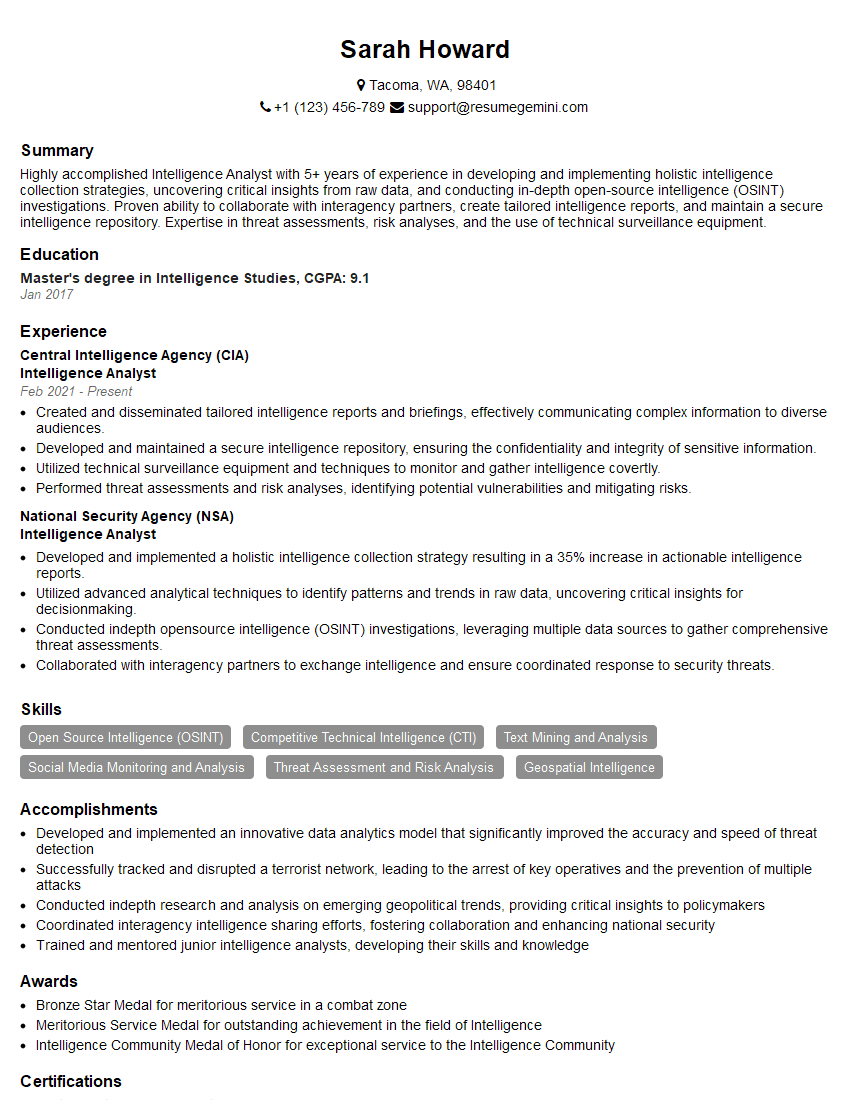
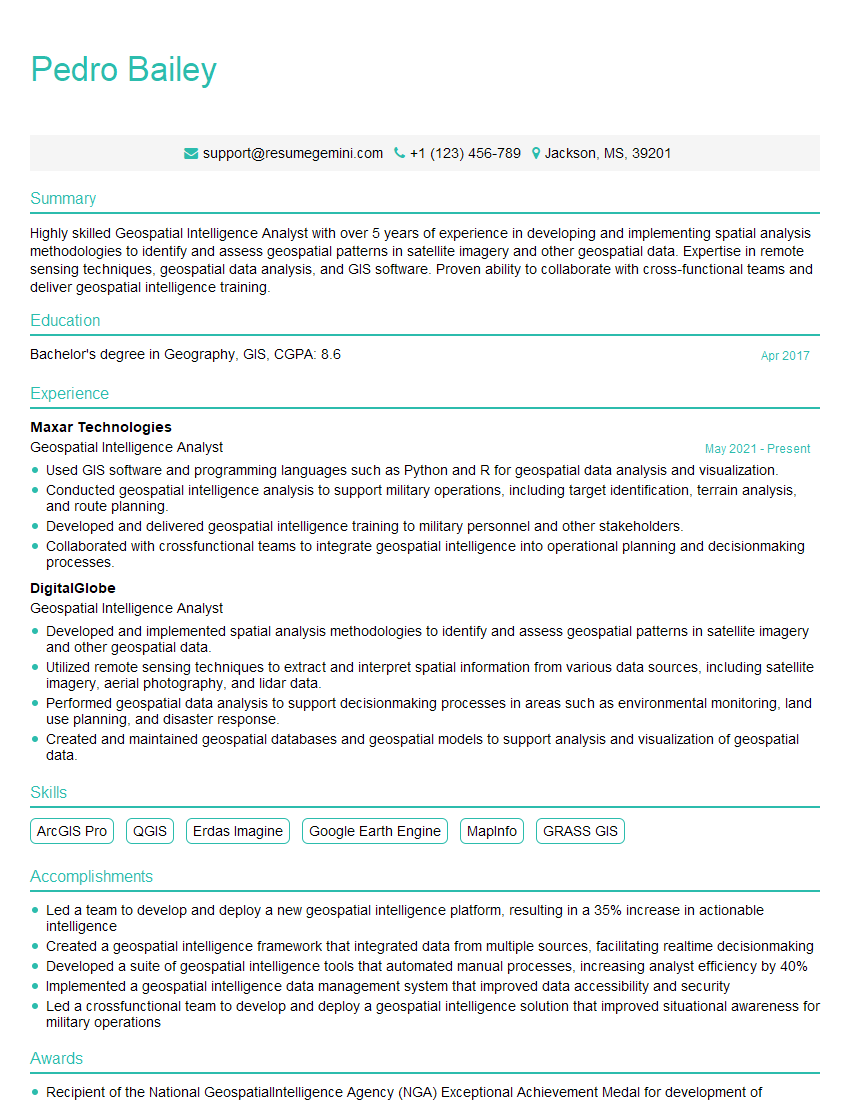
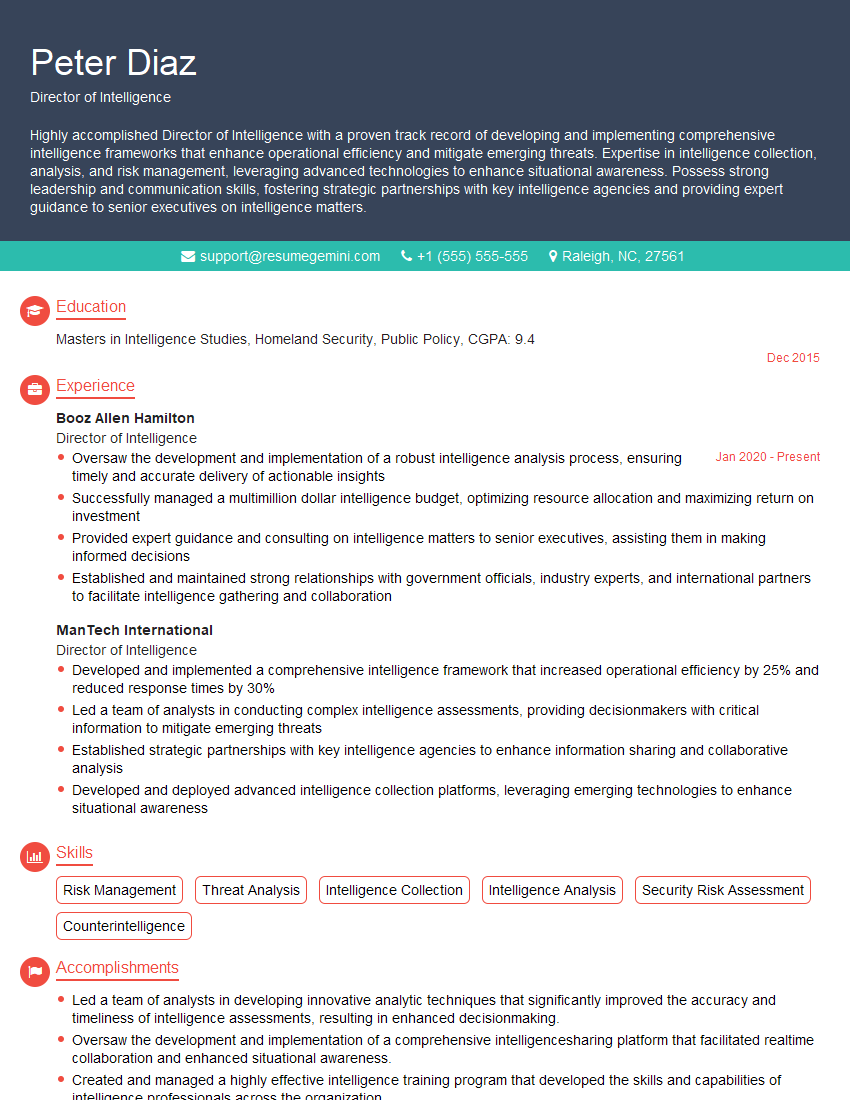
Mastering Intelligence Analysis Tools is paramount for career advancement in this dynamic field. Proficiency in these tools demonstrates crucial skills and significantly enhances your job prospects. To maximize your chances, create an ATS-friendly resume that highlights your relevant skills and experience. ResumeGemini is a trusted resource for building professional and impactful resumes. They provide examples of resumes tailored to Intelligence Analysis Tools roles, helping you present your qualifications effectively and stand out from the competition.
Explore more articles
Users Rating of Our Blogs
Share Your Experience
We value your feedback! Please rate our content and share your thoughts (optional).
What Readers Say About Our Blog
good