Interviews are opportunities to demonstrate your expertise, and this guide is here to help you shine. Explore the essential Intelligence Reporting interview questions that employers frequently ask, paired with strategies for crafting responses that set you apart from the competition.
Questions Asked in Intelligence Reporting Interview
Q 1. Explain the intelligence cycle.
The intelligence cycle is a fundamental framework used by intelligence organizations to gather, process, and disseminate information. It’s a continuous loop, not a linear process, and involves several key phases.
- Planning and Direction: This initial phase defines the intelligence requirements – what information is needed and why. It involves identifying the problem, setting objectives, and determining priorities. For example, if a country is concerned about a potential coup, the planning phase would focus on gathering intelligence about potential coup leaders, their motivations, and their plans.
- Collection: This is the gathering of raw data from various sources using different intelligence collection methods (HUMINT, SIGINT, OSINT, etc.). Think of it as the detective work—gathering clues. This stage might involve intercepting communications, conducting surveillance, or interviewing informants.
- Processing: Raw data is transformed into usable intelligence. This involves cleaning, organizing, and converting data into a format suitable for analysis. For instance, raw intercepted communications need to be translated, transcribed, and categorized.
- Analysis: This is where analysts make sense of the processed information, identifying patterns, drawing conclusions, and forming assessments. This is like the detective piecing together clues to form a hypothesis about the case. Data analysis techniques and structured analytic methodologies are heavily used in this stage.
- Dissemination: The finished intelligence product (e.g., a report, briefing) is shared with decision-makers who need the information to make informed choices. This is the crucial step where the findings are communicated effectively and appropriately to relevant stakeholders.
- Feedback: This is a crucial, often overlooked step. The cycle then begins anew, refining requirements based on the effectiveness of the previous cycle. Did the intelligence meet the needs of decision-makers? Were there gaps? This feedback is invaluable for future intelligence operations.
Q 2. Describe your experience with different intelligence collection methods (HUMINT, SIGINT, OSINT, etc.).
My experience spans a wide range of intelligence collection methods.
- HUMINT (Human Intelligence): I’ve been involved in managing and assessing information gathered from human sources, including agents, informants, and defectors. This involves careful source vetting and handling to ensure the reliability of information obtained. For example, I’ve worked on projects requiring the careful cultivation of sources within a specific organization to gain insights into their internal operations.
- SIGINT (Signals Intelligence): I have extensive experience analyzing intercepted communications, including radio transmissions, satellite imagery, and electronic signals. This involves sophisticated signal processing techniques and the ability to extract meaningful intelligence from large datasets. A past project involved analyzing intercepted phone calls to identify patterns of communication within a criminal network.
- OSINT (Open-Source Intelligence): I am proficient in using publicly available information, like news articles, social media, and government reports, to create comprehensive intelligence assessments. I’ve developed tools and processes to effectively sift through large volumes of open source data to identify critical pieces of information. A recent project involved using OSINT to monitor the activities of a specific organization to assess its intentions and capabilities.
- IMINT (Imagery Intelligence): I have worked with satellite and aerial imagery, using geospatial analysis tools to identify and interpret key features. This often involves recognizing patterns and changes over time. I worked on a project analyzing changes in infrastructure over several months to forecast potential areas of conflict.
- MASINT (Measurement and Signature Intelligence): I’ve had exposure to analysis using various sensors and technologies to measure physical phenomena, such as acoustic, seismic, or electromagnetic signals. This type of intelligence is often crucial in understanding the technological capabilities of adversaries.
Each method presents unique challenges and requires specialized skills. A key skill is understanding the limitations and biases of each source and being able to cross-reference data obtained from various methods for increased confidence in the final product.
Q 3. How do you assess the credibility and reliability of intelligence sources?
Assessing the credibility and reliability of intelligence sources is paramount. It’s a multi-faceted process involving several steps.
- Source Background Check: This involves investigating the source’s history, motivations, and potential biases. For example, if the source is a known criminal, their information needs to be carefully corroborated.
- Information Corroboration: Never rely on information from a single source. The information must be verified through multiple independent sources and methods. The more corroboration you have, the more confident you can be in the accuracy of the information. This could involve cross-referencing information with open-source data, or with intelligence collected from other sources.
- Method of Acquisition: How was the information obtained? Was it overheard, directly observed, or relayed through intermediaries? Each method has a different level of reliability. Direct observation is generally more reliable than hearsay.
- Track Record: Consider the source’s past performance. Has this source provided reliable information in the past? A consistent track record of accuracy is a strong indicator of credibility.
- Bias Detection: It’s crucial to understand and account for potential biases. Are there any underlying motivations that might influence the source’s information? A source might be motivated by personal gain, revenge or political influence.
I use a structured approach, documenting my assessment of each source and clearly stating any limitations or biases in the final intelligence product. Transparency and clear communication regarding the limitations of the intelligence are essential.
Q 4. What techniques do you use to analyze large datasets of intelligence information?
Analyzing large intelligence datasets requires leveraging advanced analytical techniques and tools. My approach is multi-pronged.
- Data Cleaning and Preprocessing: The first step is to clean and organize the data, handling missing values and inconsistencies. This often involves using scripting languages like Python with libraries such as Pandas and NumPy.
- Data Visualization: Visualizing the data using tools like Tableau or Power BI can reveal hidden patterns and correlations that might be missed in raw data. Creating charts and graphs can help identify trends, outliers, and other valuable information.
- Statistical Analysis: Employing statistical techniques to identify trends, anomalies, and significant relationships within the data. This can include methods like regression analysis, clustering, and anomaly detection algorithms.
- Natural Language Processing (NLP): For text-based data, NLP techniques can be used to extract key information, sentiment analysis, and topic modeling. This can help uncover insights that would be impossible to detect manually.
- Machine Learning (ML): Advanced ML algorithms can be employed to identify patterns and anomalies that would be difficult or impossible to identify through traditional methods. This might involve using algorithms like support vector machines or neural networks.
For example, I’ve utilized machine learning techniques to detect anomalies in financial transactions to identify money laundering patterns. My work relies heavily on integrating various tools and techniques to tackle the challenges inherent in processing and interpreting these large datasets.
Q 5. Explain your understanding of different intelligence analytic methodologies (e.g., structured analytic techniques).
I am proficient in various intelligence analytic methodologies, including structured analytic techniques. These methods are crucial for ensuring objective, rigorous analysis.
- Structured Analytic Techniques (SATs): These techniques are designed to improve the quality and objectivity of intelligence analysis by reducing biases and enhancing analytical rigor. Examples include:
- Analysis of Competing Hypotheses (ACH): This method involves developing multiple plausible explanations for an event and then systematically testing each hypothesis against the available evidence. This mitigates confirmation bias – a common problem in intelligence analysis.
- Key Assumptions Check (KAC): This involves explicitly identifying and examining the underlying assumptions driving the analysis to challenge potential biases and errors.
- Matrix Analysis: This method organizes information in a structured format (e.g., a matrix) to facilitate pattern recognition and highlight relationships between different variables. This can be especially useful when dealing with numerous interconnected events.
- Red Teaming/Devil’s Advocacy: Challenging assumptions and conclusions through dedicated opposing perspectives. This encourages critical thinking and reduces the risk of overlooking crucial information.
- Other Methodologies: In addition to SATs, I utilize other methodologies such as trend analysis, scenario planning, and network analysis. The choice of methodology depends on the nature of the intelligence problem and the available data.
The application of these techniques ensures that my analysis is clear, well-reasoned, and avoids pitfalls common in less structured analysis.
Q 6. How do you identify and prioritize intelligence requirements?
Identifying and prioritizing intelligence requirements is a critical initial step in the intelligence cycle. It’s guided by several factors.
- Policymaker Needs: Understanding the intelligence needs of policymakers is crucial. This involves close collaboration and communication to ensure that the intelligence produced is relevant and timely. This includes understanding their current priorities and any emerging concerns.
- Threat Assessment: Analyzing current and emerging threats to national security or other relevant interests. This includes understanding the capabilities and intentions of potential adversaries.
- Strategic Goals: Alignment with broader strategic goals and objectives. What information is needed to support decision-making related to these goals?
- Resource Constraints: Prioritizing intelligence requirements based on available resources, including personnel, technology, and budget. This involves careful cost-benefit analysis.
- Urgency and Time Sensitivity: Some information may be time-sensitive, while other information can be gathered over a longer period. Urgency is a significant factor in prioritization.
I use a prioritization matrix, weighing factors such as impact, likelihood, and feasibility to create a ranked list of intelligence requirements. This framework helps in focusing resources on the most critical intelligence needs.
Q 7. Describe your experience in producing intelligence reports and briefings.
Producing clear, concise, and impactful intelligence reports and briefings is a core competency. My experience includes writing reports for various audiences, from senior policymakers to operational teams.
- Report Structure: Reports typically follow a standard structure, including an executive summary, background, methodology, findings, analysis, and conclusions. This ensures consistency and readability.
- Clarity and Conciseness: Reports should be clear, concise, and avoid unnecessary jargon. The key findings and recommendations should be easily understood by the intended audience.
- Data Visualization: Using charts, graphs, and maps to illustrate key findings and enhance understanding. Visual representation is critical for conveying complex information effectively.
- Accuracy and Objectivity: Ensuring that the information presented is accurate, unbiased, and supported by evidence. Limitations and potential biases are always clearly stated.
- Security and Handling: Adhering to strict security protocols to protect classified information and ensure appropriate dissemination.
For example, I’ve prepared briefings for senior military officers on the potential threat posed by an adversary’s new weapon system, tailoring the presentation to their specific needs and background. I always strive for a balance between providing essential information in a readily understandable format while maintaining security standards and integrity.
Q 8. How do you ensure the accuracy and timeliness of your intelligence reporting?
Ensuring accuracy and timeliness in intelligence reporting is paramount. It’s a multi-faceted process that begins with rigorous source vetting. We assess the credibility and reliability of each source, considering their past performance, potential biases, and the methods used to obtain the information. This often involves triangulation – comparing information from multiple independent sources to identify corroborating details and inconsistencies.
Timeliness relies on efficient workflow and effective communication. We utilize streamlined reporting systems and prioritize urgent information. This involves clear prioritization of intelligence needs and leveraging automated tools for data processing and analysis where possible. For example, we might use software to track and analyze social media trends in real-time, providing rapid alerts on emerging threats. Regular quality control checks are integral, with senior analysts reviewing reports for accuracy and completeness before dissemination.
Imagine investigating a potential terrorist attack. We wouldn’t rely solely on a single, anonymous tip. Instead, we would cross-reference the information with open-source intelligence (OSINT), intercepted communications, and human intelligence (HUMINT) to build a comprehensive and verifiable picture. This layered approach helps to mitigate the risk of inaccurate or misleading information.
Q 9. How do you handle conflicting or contradictory intelligence information?
Conflicting intelligence is a common challenge. Resolving contradictions requires a systematic approach. First, we meticulously examine each piece of information, identifying its source, methodology, and any potential biases. We then look for contextual clues – perhaps one source is more reliable in a specific area or timeframe. We might also employ analytical techniques like Bayesian analysis to quantify the probability of different scenarios, given the available evidence.
Sometimes, the apparent contradiction might stem from differing perspectives or incomplete data. In such cases, we might conduct further investigation to gather additional information, bridging the gap between conflicting reports. Ultimately, the goal is not to simply choose one report over another but to synthesize the information into a coherent and nuanced assessment, acknowledging areas of uncertainty when necessary. We might conclude, for example, that the conflicting reports highlight the complexity of the situation rather than necessarily indicating a lack of accuracy in either report.
Q 10. Describe a time you had to make a critical decision based on incomplete intelligence.
During a large-scale cyberattack investigation, we received fragmented and incomplete data. We knew a significant breach had occurred, but the precise nature and extent of the compromised information remained unclear. Based on the initial, incomplete intelligence – primarily log files and network traffic analysis – we had to decide whether to immediately shut down critical systems, potentially disrupting operations, or wait for more definitive evidence, risking further data loss.
This decision involved careful weighing of risks. We used a structured decision-making framework, considering the potential consequences of both options. We also engaged subject matter experts in cybersecurity to provide further insight and refine our risk assessment. Ultimately, we opted for a phased shutdown, prioritizing the most sensitive systems first. This approach proved effective, minimizing the damage while allowing us to gather more complete intelligence before a full shutdown. While this course of action caused temporary disruption, it prevented a far greater catastrophe.
Q 11. How do you communicate complex intelligence information to a non-technical audience?
Communicating complex intelligence to a non-technical audience requires clear, concise language and effective visualization. Jargon should be minimized or explained. Instead of using technical terms like ‘SIGINT’ (Signals Intelligence), we might say ‘intelligence gathered from intercepted communications’. We use analogies and real-world examples to illustrate complex concepts. Visual aids, such as charts, maps, and timelines, significantly enhance understanding. Storytelling can also be a powerful tool for conveying key findings in a memorable way.
For instance, explaining the intricacies of a complex financial fraud scheme would be simplified by presenting the key steps as a flowchart. Instead of providing a detailed breakdown of encrypted communications, we might summarize the findings with a simple sentence: ‘Our analysis of intercepted messages reveals plans for a major cyberattack targeting financial institutions’. The focus should always be on delivering the key takeaways clearly and concisely, ensuring the audience understands the implications of the intelligence.
Q 12. What are some of the ethical considerations in intelligence reporting?
Ethical considerations are central to intelligence reporting. The most critical concern is maintaining the privacy and security of individuals. We must comply with all relevant laws and regulations, ensuring that information is handled responsibly and lawfully. This involves strict adherence to data protection policies and carefully considering the potential impact of our reporting on individuals’ lives and reputations.
Another ethical concern is the potential for bias. Analysts must strive for objectivity, avoiding interpretations that are influenced by personal beliefs or political agendas. The accuracy and neutrality of reporting should always take precedence. Transparency and accountability are also vital. The methods used to gather and analyze intelligence should be clearly documented and open to scrutiny, allowing for independent review and verification. In cases of doubt, it’s always better to err on the side of caution and protect individual rights.
Q 13. How do you stay current with the latest developments in your field?
Staying current requires continuous learning and engagement with the intelligence community. I regularly attend professional development courses and conferences, keeping abreast of emerging threats, technologies, and analytical techniques. I subscribe to relevant journals, online publications, and news sources, ensuring I receive up-to-date intelligence and analysis. Networking with colleagues and experts within the field facilitates knowledge sharing and exposes me to diverse perspectives.
Furthermore, I actively participate in online forums and communities related to intelligence analysis. I engage in peer review of reports and publications to refine my skills and learn from others’ experiences. Continuous self-reflection and critical evaluation of my work are also integral to my professional development. This ensures I remain adaptive and responsive to the ever-evolving landscape of intelligence.
Q 14. What software and tools are you proficient in using for intelligence analysis?
My skillset encompasses a range of software and tools commonly used in intelligence analysis. I am proficient in using various data analysis platforms like Palantir Gotham and Analyst's Notebook for visualizing and analyzing large datasets. I’m also familiar with open-source intelligence (OSINT) tools and techniques for gathering information from public sources. This includes using search engines effectively, analyzing social media trends, and using mapping software to geolocate information.
Furthermore, I am adept at using data visualization tools like Tableau and Power BI to effectively present complex findings. I have experience working with various programming languages, including Python and R, for data manipulation and statistical modeling. This enables more advanced data processing and the development of custom analytical tools. My proficiency extends to secure communication platforms and encryption tools, ensuring the confidentiality and integrity of sensitive intelligence.
Q 15. Describe your experience with data visualization and presentation techniques.
Data visualization is crucial for effectively communicating complex intelligence findings. My experience encompasses a wide range of techniques, from simple charts and graphs to interactive dashboards and geospatial mapping. I’m proficient in tools like Tableau, Power BI, and ArcGIS, using them to transform raw data into easily understandable narratives. For instance, in a recent project analyzing global trade patterns, I used Tableau to create interactive maps showing shifts in import/export volumes, highlighting potential vulnerabilities or emerging economic trends. This allowed stakeholders to quickly grasp the key insights without needing extensive data analysis expertise. I also prioritize choosing the right visualization type for the specific data and audience; a pie chart is effective for showing proportions, while a line graph is better for illustrating trends over time. My presentations are always designed with the audience in mind, ensuring clarity, conciseness, and impact.
Career Expert Tips:
- Ace those interviews! Prepare effectively by reviewing the Top 50 Most Common Interview Questions on ResumeGemini.
- Navigate your job search with confidence! Explore a wide range of Career Tips on ResumeGemini. Learn about common challenges and recommendations to overcome them.
- Craft the perfect resume! Master the Art of Resume Writing with ResumeGemini’s guide. Showcase your unique qualifications and achievements effectively.
- Don’t miss out on holiday savings! Build your dream resume with ResumeGemini’s ATS optimized templates.
Q 16. How do you ensure the security and confidentiality of sensitive intelligence information?
Securing sensitive intelligence information is paramount. My approach is multi-layered and adheres to strict protocols. This begins with robust access control, using systems with granular permissions to limit access to only authorized personnel on a need-to-know basis. Data encryption, both in transit and at rest, is fundamental, utilizing AES-256 or similar strong encryption algorithms. Regular security audits and penetration testing are crucial to identify vulnerabilities and proactively mitigate potential threats. Furthermore, I am trained in handling classified information, adhering to all relevant regulations and guidelines, including proper handling and destruction procedures for physical and digital documents. Data loss prevention (DLP) tools are employed to monitor and prevent sensitive data from leaving the secure network. Think of it like a layered security system – multiple safeguards to prevent unauthorized access, much like a high-security building uses multiple locks, alarms, and guards.
Q 17. What is your experience with risk assessment and threat modeling?
Risk assessment and threat modeling are integral parts of my intelligence work. I employ various frameworks, including the Diamond Model of Intrusion Analysis and STRIDE (Spoofing, Tampering, Repudiation, Information Disclosure, Denial of Service, Elevation of Privilege) to systematically identify potential threats and vulnerabilities. For example, when assessing a potential cyberattack, I’d use the Diamond Model to map the adversary’s capabilities, infrastructure, and techniques, allowing us to predict their likely actions and develop countermeasures. Threat modeling helps us anticipate and mitigate risks proactively, preventing incidents rather than reacting to them. I document my findings thoroughly, clearly outlining the likelihood and impact of each threat, enabling informed decision-making regarding resource allocation and mitigation strategies. A recent project involved assessing the risk of supply chain disruption in a critical infrastructure sector, leading to the development of a comprehensive risk mitigation plan that improved resilience.
Q 18. How do you contribute to a team environment in an intelligence setting?
In an intelligence setting, teamwork is essential. I actively contribute by sharing my expertise, actively participating in brainstorming sessions, and providing constructive feedback. I’m a strong communicator, capable of clearly articulating complex information to both technical and non-technical audiences. I believe in collaborative problem-solving, using diverse perspectives to reach more comprehensive and accurate conclusions. I also value mentoring junior analysts, sharing my knowledge and experience to help them develop their skills. For example, during a complex investigation, I collaborated with a team of analysts, each contributing their unique skillset, resulting in a successful resolution. Strong communication and the ability to synthesize information from various sources are key to successful teamwork in this field.
Q 19. Explain your understanding of geopolitical risk and its implications.
Geopolitical risk refers to the potential for political, economic, or social instability in a particular region or country to negatively impact businesses or organizations. Understanding geopolitical risk is crucial for strategic planning and decision-making. It encompasses a wide range of factors, including political instability, terrorism, armed conflict, economic sanctions, changes in government policy, and social unrest. The implications can be significant, potentially disrupting supply chains, affecting investment decisions, impacting market access, and creating operational challenges. For instance, escalating tensions between two countries could lead to sanctions, impacting trade and investment, while political instability in a region could disrupt supply chains, impacting manufacturing and logistics. Analyzing geopolitical risks requires monitoring political developments, economic indicators, and social trends, and using this information to assess the potential impact on an organization’s operations and objectives.
Q 20. How do you use intelligence to inform strategic decision-making?
Intelligence informs strategic decision-making by providing timely, accurate, and relevant information to support the decision-making process. I use intelligence to identify emerging threats and opportunities, anticipate future trends, and assess the potential consequences of different courses of action. This involves analyzing various intelligence sources, synthesizing information, and translating it into actionable insights. For example, in a scenario involving a potential foreign policy decision, I would gather intelligence on the political landscape, economic conditions, and potential reactions from other countries. This analysis would then be used to assess the potential risks and benefits of different policy options, allowing decision-makers to choose the course of action that best aligns with their goals and minimizes potential negative consequences. The goal is not just to provide information, but to help decision-makers anticipate the future and make well-informed choices.
Q 21. Describe your experience with competitive intelligence gathering and analysis.
Competitive intelligence gathering and analysis focuses on understanding competitors’ strengths, weaknesses, strategies, and intentions. My experience involves using a variety of open-source and commercially available intelligence tools and techniques to gather data on competitors’ products, markets, and operations. This includes analyzing their marketing campaigns, financial reports, patents, and news articles. I also employ techniques like reverse engineering and market research to uncover competitive advantages and potential vulnerabilities. The output of this analysis is usually a comprehensive competitive intelligence report, which provides insights to inform strategic decisions, such as product development, marketing strategies, and competitive pricing. For example, I once helped a client analyze a competitor’s new product launch, identifying potential vulnerabilities and recommending counter-strategies. This resulted in the client successfully defending their market share and even gaining a competitive edge.
Q 22. How familiar are you with different intelligence community agencies and their roles?
My familiarity with the intelligence community is extensive. I understand the distinct roles and interdependencies of various agencies. For instance, the Central Intelligence Agency (CIA) focuses on foreign intelligence and covert operations, while the National Security Agency (NSA) specializes in signals intelligence (SIGINT). The Federal Bureau of Investigation (FBI) contributes domestic intelligence, counterintelligence, and counterterrorism efforts. The Defense Intelligence Agency (DIA) provides military intelligence to the Department of Defense. Each agency possesses unique capabilities and contributes to the overall intelligence picture, often collaborating on shared objectives. Understanding these nuances is crucial for effective intelligence analysis and reporting, as it allows for appropriate data sourcing and interpretation considering the agency’s specific mandates and methodologies.
- CIA: Human intelligence (HUMINT), covert operations.
- NSA: Signals intelligence (SIGINT), cybersecurity.
- FBI: Domestic intelligence, counterterrorism, law enforcement.
- DIA: Military intelligence, foreign military capabilities.
Effective collaboration between these agencies is paramount to a holistic understanding of complex situations.
Q 23. Explain your understanding of open-source intelligence (OSINT) techniques.
Open-Source Intelligence (OSINT) involves collecting information from publicly available sources. It’s a crucial first step in many intelligence investigations, offering a cost-effective and accessible method for gathering context and initial insights. My OSINT techniques encompass a wide range of approaches. I utilize search engines like Google and specialized tools to analyze social media platforms (Twitter, Facebook, etc.), news articles, government websites, academic research, and even publicly accessible databases.
For example, to assess the impact of a natural disaster on a specific region, I might utilize satellite imagery from platforms like Google Earth to assess damage, cross-reference that data with social media posts for firsthand accounts, and then corroborate information with news reports and government statements.
Analyzing OSINT requires critical evaluation of source reliability and potential biases. I employ techniques such as triangulation (comparing information from multiple sources) and verification to ensure accuracy and build a robust picture. OSINT is not simply about data collection; it’s about meticulous analysis and interpretation to draw meaningful conclusions.
Q 24. Describe a challenging intelligence problem you solved and how you approached it.
One challenging problem I faced involved assessing the legitimacy of a newly emerged social media campaign suspected of being a foreign disinformation operation. The campaign used sophisticated techniques, including creating seemingly authentic user profiles and employing subtle narratives that aligned with existing societal tensions. My approach involved a multi-stage process:
- Data Collection: I utilized OSINT techniques to collect data on the campaign’s reach, messaging, and the characteristics of its user profiles.
- Data Analysis: I employed network analysis techniques to identify patterns and connections between accounts, helping to expose bot activity and coordinated behavior.
- Source Validation: I rigorously evaluated the credibility of sources, cross-referencing information with known factual data and identifying discrepancies.
- Attribution Analysis: I examined linguistic patterns, digital fingerprints (IP addresses, server locations), and other technical details to determine the potential origin of the campaign.
- Report Writing: I prepared a comprehensive report outlining my findings, including evidence supporting the likelihood of a foreign disinformation operation.
The challenge lay in separating genuine grassroots activism from a calculated disinformation campaign. Through careful analysis and triangulation of diverse data points, I successfully identified indicators of foreign influence, contributing to a timely counter-intelligence response.
Q 25. How do you interpret and present different types of intelligence data (quantitative and qualitative)?
Interpreting and presenting both quantitative and qualitative intelligence data requires a nuanced approach. Quantitative data, such as statistics on economic growth or military deployments, is analyzed using statistical methods to identify trends and patterns. Qualitative data, like intercepted communications or eyewitness accounts, requires careful contextualization and interpretation to understand underlying motivations and intentions. I always ensure the presentation includes clear visual aids (charts, graphs, maps) to enhance understanding.
For example, when analyzing economic sanctions on a particular country, I would use quantitative data (trade statistics, GDP growth rates) to show the immediate economic impact. Simultaneously, I would incorporate qualitative data (government statements, media reports, social media sentiment) to understand the broader political and societal effects. The combination offers a more complete picture.
My reports prioritize clarity and accuracy. I avoid technical jargon where possible and use simple language while ensuring the necessary level of detail for the intended audience.
Q 26. What are your strengths and weaknesses as an intelligence analyst?
My strengths include meticulous attention to detail, strong analytical skills, and an ability to synthesize information from diverse sources. I’m adept at identifying patterns and drawing insightful conclusions, even from fragmented or ambiguous data. I possess excellent written and verbal communication skills, enabling me to effectively convey complex information to both technical and non-technical audiences. My experience working independently and collaboratively under pressure contributes to effective teamwork.
A weakness I am actively working to improve is managing competing priorities. With so many potentially important variables in intelligence analysis, effective prioritization is essential, and I am developing time management and organizational skills to mitigate this.
Q 27. How do you handle pressure and tight deadlines in a fast-paced intelligence environment?
The intelligence environment is inherently fast-paced and demanding. I’ve developed strategies to manage pressure and meet tight deadlines effectively. These strategies include:
- Prioritization: Focusing on the most critical tasks first and delegating or postponing less urgent items.
- Time Management: Using tools like project management software to track progress and allocate time efficiently.
- Stress Management: Employing techniques like mindfulness and regular breaks to maintain focus and avoid burnout.
- Teamwork: Collaborating effectively with colleagues to share workloads and ensure tasks are completed on time.
The ability to maintain composure under pressure is crucial in this field. My calm demeanor under duress allows me to continue delivering accurate and timely analysis, even in high-stakes situations.
Q 28. Describe your experience with intelligence reporting software and technologies (e.g., Palantir, Tableau).
My experience with intelligence reporting software and technologies is substantial. I’m proficient in using various tools for data visualization, analysis, and reporting. I have extensive experience with Palantir Gotham, leveraging its capabilities for complex data integration, network analysis, and visual representation of intelligence findings. I’m also familiar with Tableau for creating insightful dashboards and reports that effectively communicate intelligence findings to diverse audiences. My proficiency extends to other data analysis tools like Python with libraries such as pandas and scikit-learn, enabling me to perform advanced statistical analysis and machine learning tasks when necessary.
These tools are invaluable for managing large datasets, identifying patterns, and effectively visualizing complex relationships within intelligence data. My expertise in these technologies allows for more efficient and accurate analysis, contributing to timely and informed decision-making.
Key Topics to Learn for Intelligence Reporting Interview
- Data Analysis & Interpretation: Understanding various data types (structured, unstructured), employing analytical techniques to identify trends and patterns, and drawing accurate conclusions from complex datasets.
- Report Writing & Structure: Crafting clear, concise, and objective reports that effectively communicate findings to diverse audiences. This includes mastering different report formats (executive summaries, detailed analyses) and adhering to specific intelligence community standards.
- Source Evaluation & Credibility Assessment: Critically evaluating the reliability and validity of information sources, understanding bias, and applying appropriate methodologies to determine the credibility of intelligence.
- Intelligence Cycle & Processes: A thorough understanding of the entire intelligence cycle, from planning and collection to analysis, production, and dissemination. Knowing how each stage impacts the final product is crucial.
- Threat Assessment & Risk Management: Analyzing potential threats, assessing risk levels, and developing strategies for mitigation. This involves understanding various threat actors and their motivations.
- Geopolitical Context & Awareness: Demonstrating a comprehensive understanding of global events and their implications for intelligence gathering and analysis. This requires staying updated on current affairs and possessing a strong grasp of international relations.
- Technology & Tools: Familiarity with relevant software and tools used in intelligence analysis, such as data visualization platforms, analytical software, and secure communication systems.
- Ethical Considerations & Legal Frameworks: Understanding the ethical implications of intelligence work and adhering to legal and regulatory frameworks related to data handling and dissemination.
Next Steps
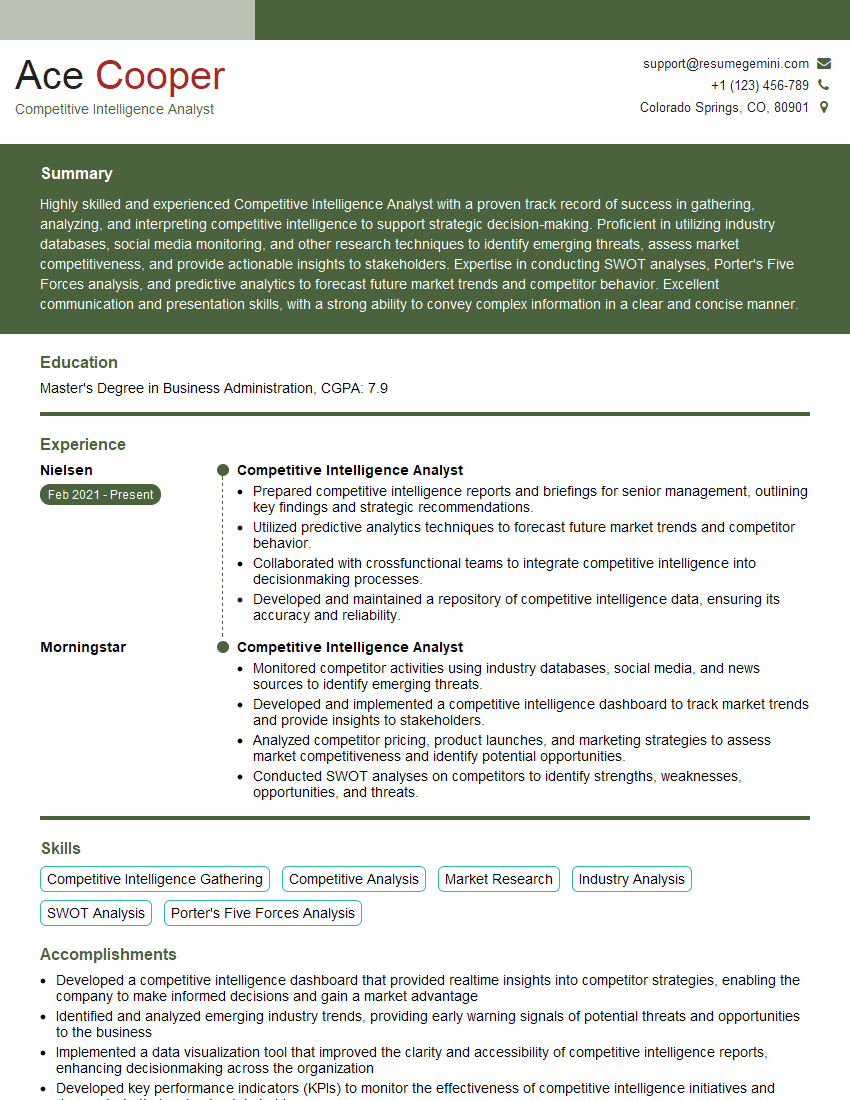
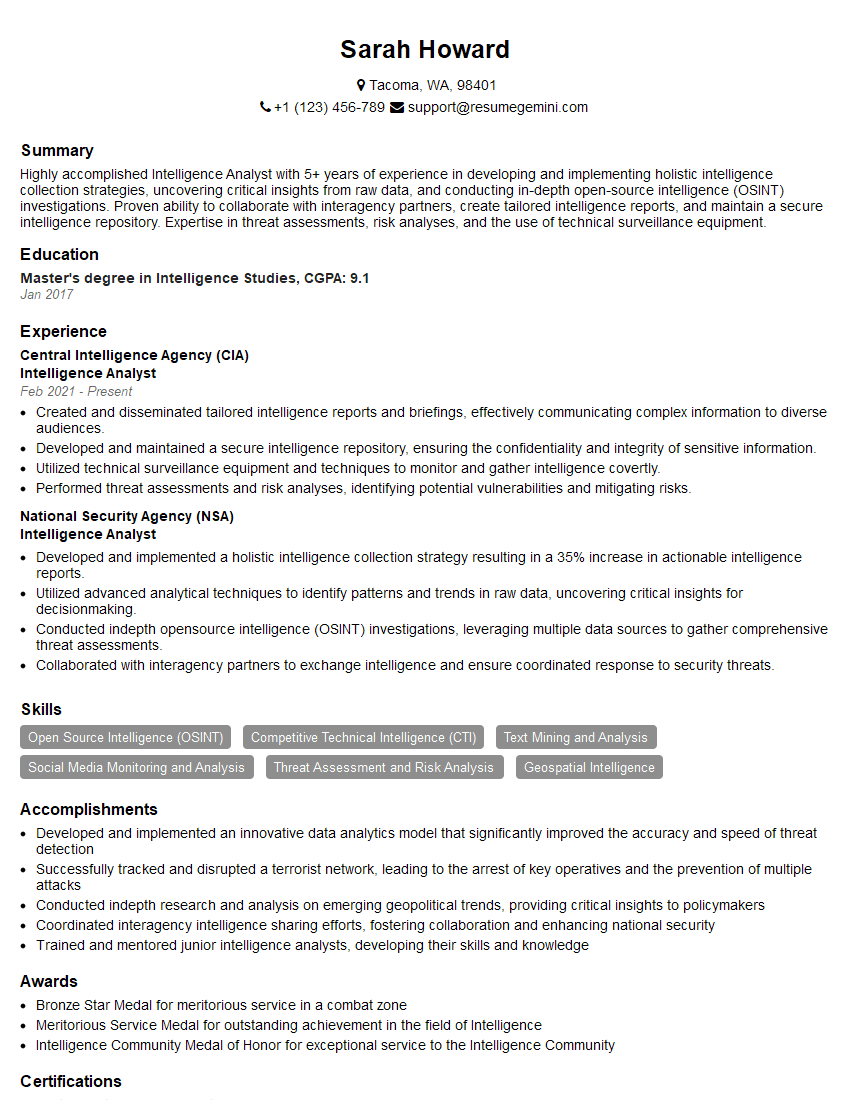
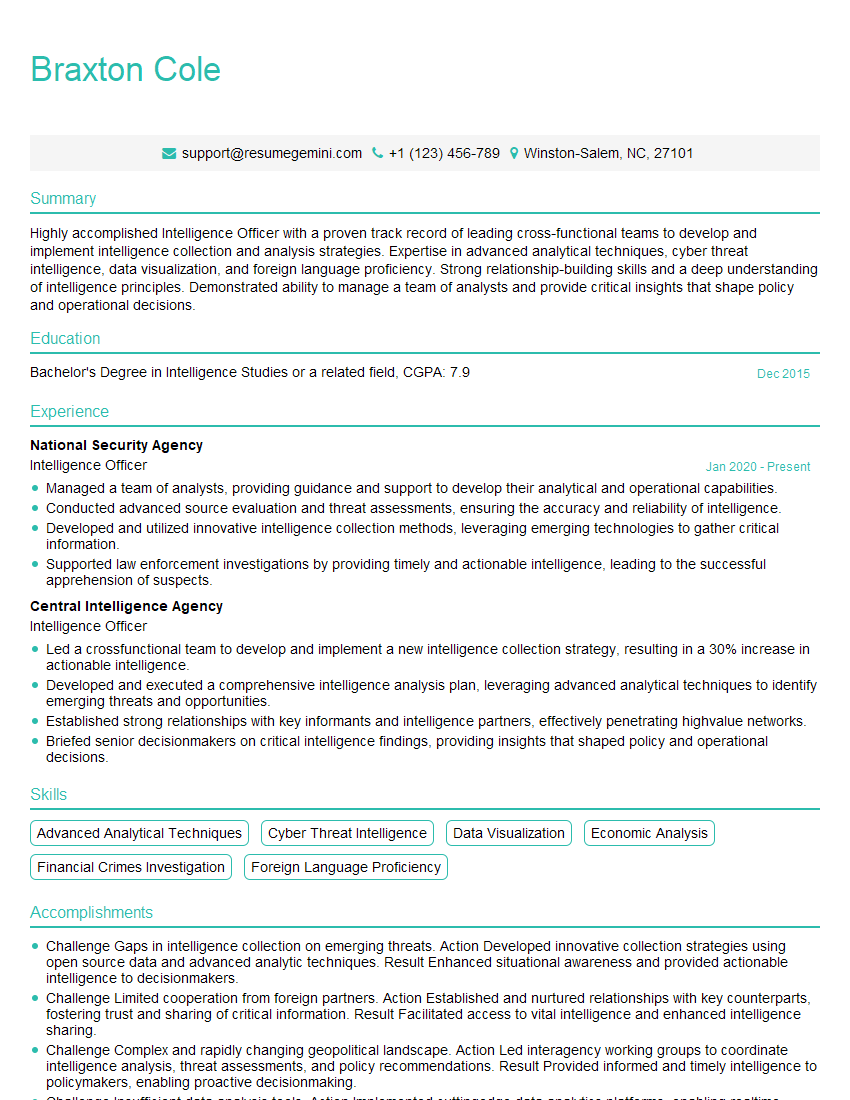
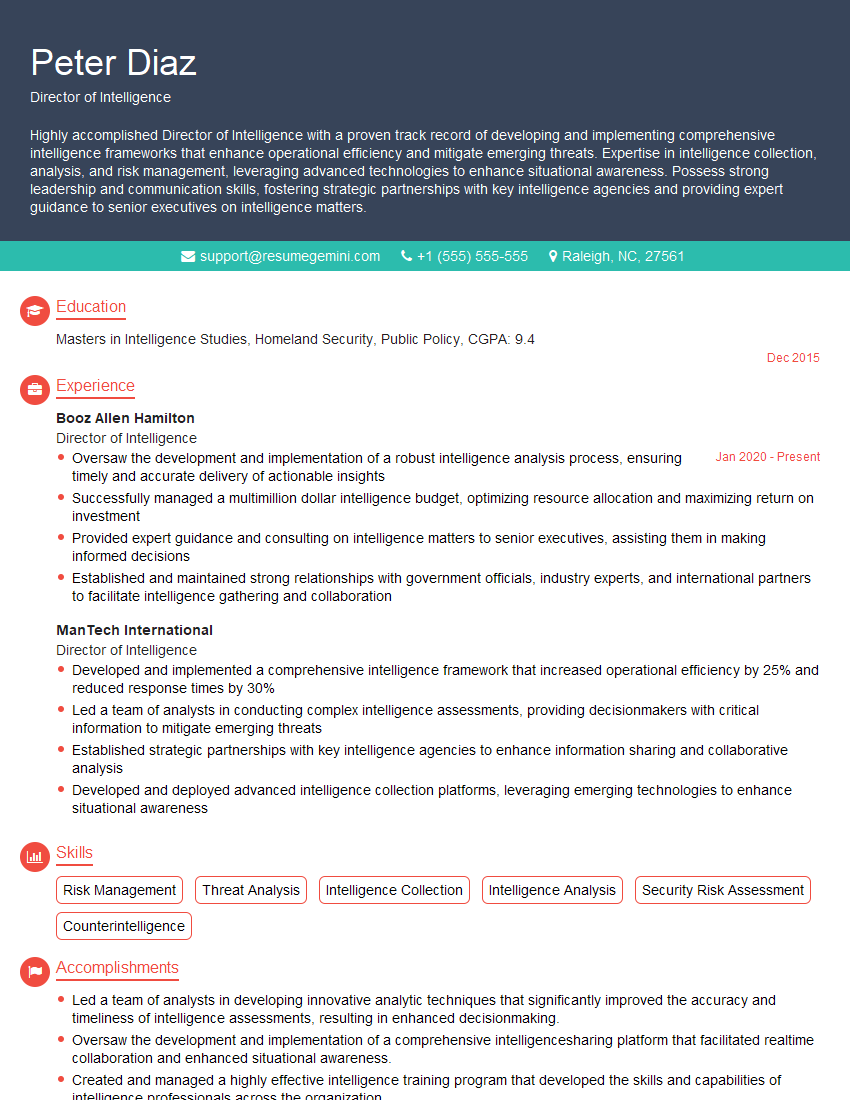
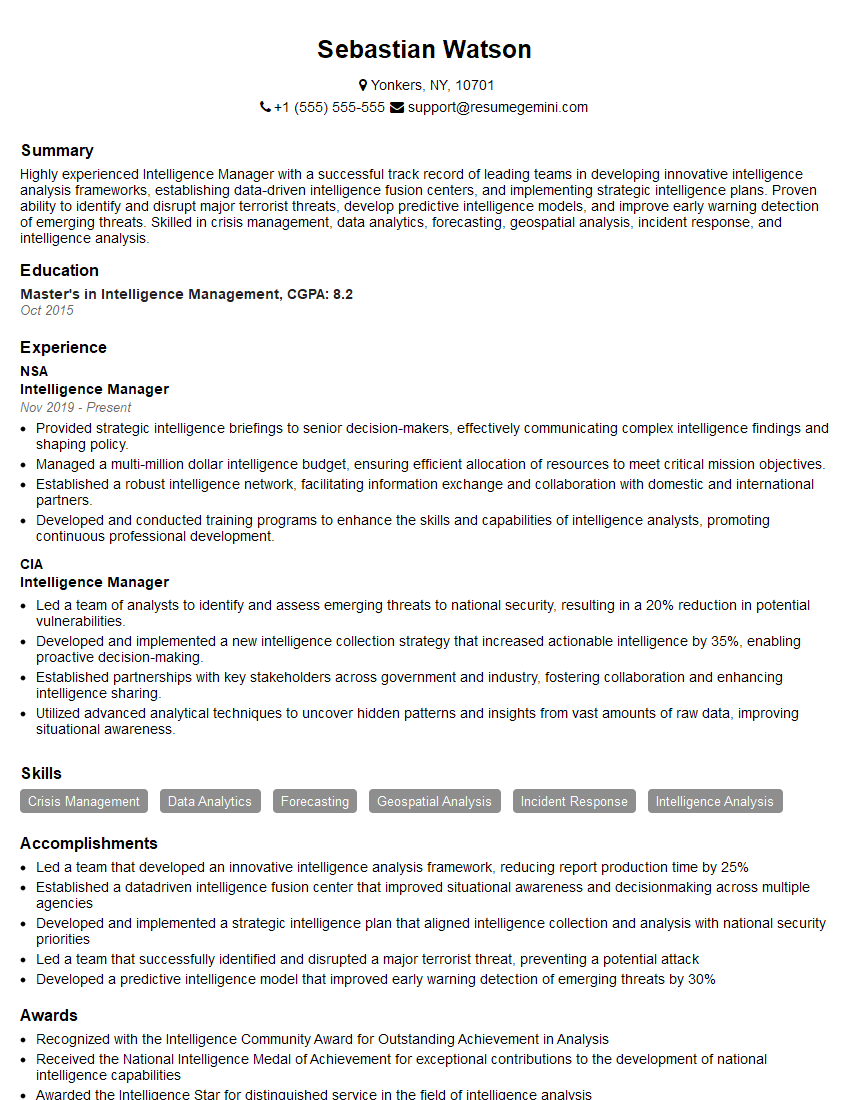
Mastering Intelligence Reporting is vital for a successful and impactful career in this dynamic field. It opens doors to challenging and rewarding roles with significant responsibility. To maximize your job prospects, creating a strong, ATS-friendly resume is paramount. This ensures your qualifications are effectively highlighted to potential employers. We strongly encourage you to utilize ResumeGemini, a trusted resource, to build a professional and impactful resume that showcases your skills and experience. Examples of resumes tailored to Intelligence Reporting are available to help guide you.
Explore more articles
Users Rating of Our Blogs
Share Your Experience
We value your feedback! Please rate our content and share your thoughts (optional).
What Readers Say About Our Blog
good