Feeling uncertain about what to expect in your upcoming interview? We’ve got you covered! This blog highlights the most important International Electrotechnical Commission (IEC) 60601 Medical Equipment Standards interview questions and provides actionable advice to help you stand out as the ideal candidate. Let’s pave the way for your success.
Questions Asked in International Electrotechnical Commission (IEC) 60601 Medical Equipment Standards Interview
Q 1. Explain the key differences between IEC 60601-1 and IEC 60601-1-2.
IEC 60601-1 is the core standard for the safety of medical electrical equipment. Think of it as the foundational rulebook. It covers general requirements like electrical safety, mechanical safety, and protection against various hazards. IEC 60601-1-2, on the other hand, is a particular *part* of the broader 60601 standard, focusing exclusively on electromagnetic compatibility (EMC). It specifies the requirements for medical devices to withstand electromagnetic interference (EMI) and not generate excessive EMI that could disrupt other equipment or patient safety. In short: 60601-1 is the overarching safety standard, while 60601-1-2 deals specifically with electromagnetic interference.
For example, 60601-1 might specify the maximum acceptable leakage current from a device, ensuring it won’t cause electric shock. 60601-1-2, however, would define the limits of electromagnetic radiation emitted by that same device to prevent interference with nearby medical equipment like pacemakers or MRI machines.
Q 2. Describe the process of risk management according to IEC 60601-1.
Risk management in IEC 60601-1 is a systematic process designed to identify, analyze, and mitigate potential hazards associated with medical equipment. It’s not a one-time event but an iterative process throughout the entire lifecycle of the device, from initial design to eventual decommissioning. The process typically involves these steps:
- Hazard Identification: Identifying all potential hazards associated with the device. This often involves brainstorming, fault tree analysis, and reviewing similar devices.
- Risk Analysis: Evaluating the severity, probability, and risk level of each identified hazard. This usually employs risk matrices that combine severity and probability to determine an overall risk score.
- Risk Control: Implementing appropriate control measures to reduce or eliminate the identified risks. These controls can be in the form of design modifications, warnings, instructions for use, or other safety measures.
- Risk Acceptance: After implementing risk controls, a decision is made on whether the remaining risk is acceptable. If not, further controls must be implemented.
- Risk Review: Regularly reviewing the risk assessment process and the effectiveness of implemented controls. This ensures the ongoing safety of the device.
Imagine designing a new infusion pump. The risk management process would identify potential hazards such as electrical shock, incorrect drug delivery, and software malfunctions. Through risk analysis, the probability and severity of each are assessed. Risk control measures might include implementing redundant safety mechanisms, clear user instructions, and thorough software testing.
Q 3. What are the essential protection requirements defined in IEC 60601-1?
IEC 60601-1 defines several essential protection requirements to ensure the safety of patients and operators. These are broadly categorized as:
- Protection against electric shock: This includes requirements for insulation, grounding, leakage current limits, and protection against electric shock during normal operation and fault conditions. For example, the standard specifies maximum permissible leakage currents to prevent dangerous electric shocks.
- Protection against mechanical hazards: This covers requirements related to moving parts, sharp edges, and other mechanical hazards. For example, the device needs to be designed to prevent pinching or crushing injuries.
- Protection against fire hazards: The standard includes requirements for fire resistance of materials and protection against fire ignition. For example, materials used in the device should meet specific flammability standards.
- Protection against thermal hazards: This involves the prevention of burns or other thermal injuries from hot surfaces or excessive heating. The standard specifies limits on surface temperatures.
- Protection against radiation hazards: This covers requirements related to different types of radiation, including electromagnetic radiation (addressed more specifically in 60601-1-2). The standard may specify limits on emitted radiation.
These requirements are often implemented through design considerations, testing protocols, and the use of safety components.
Q 4. How does IEC 60601-1 address electromagnetic compatibility (EMC)?
IEC 60601-1 addresses electromagnetic compatibility (EMC) by specifying requirements for both electromagnetic interference (EMI) and electromagnetic susceptibility (EMS). While the specific EMC tests and limits are detailed in IEC 60601-1-2, 60601-1 provides the framework and establishes the importance of EMC considerations.
EMI refers to the ability of a medical device to avoid generating electromagnetic emissions that could interfere with other equipment. EMS refers to the ability of a medical device to withstand interference from external electromagnetic fields without malfunctioning. The standard requires manufacturers to demonstrate compliance through various EMC tests. These tests simulate real-world electromagnetic environments, ensuring the device can operate safely without causing or being affected by interference.
For instance, a medical device must be tested to ensure it won’t emit radio frequencies that could interfere with a nearby heart monitor, and vice versa, that it can operate reliably even in the presence of strong electromagnetic fields from other equipment or sources.
Q 5. Explain the significance of applying IEC 60601-1-2 in medical device design.
IEC 60601-1-2 is crucial in medical device design because it ensures the safety and reliability of devices in the presence of electromagnetic fields. Without proper consideration of EMC, medical devices can malfunction due to external interference or emit emissions which disrupt other equipment or patient monitoring. This can lead to misdiagnosis, treatment errors, or even patient injury.
Consider a defibrillator. It needs to be immune to interference from other medical devices in an emergency situation. Similarly, it must not emit emissions that interfere with nearby equipment. IEC 60601-1-2 provides the specific requirements and testing procedures to ensure such devices are reliably shielded and sufficiently robust to prevent malfunctions caused by electromagnetic interference.
Q 6. What are the key aspects of applying IEC 60601-1-11 (Software)?
IEC 60601-1-11, addressing software in medical devices, focuses on the safety and performance of the software components. It emphasizes a systematic approach to software development and verification, recognizing that software flaws can lead to significant safety hazards. Key aspects include:
- Software Development Lifecycle (SDLC): The standard encourages a rigorous SDLC, including requirements specification, design, implementation, testing, and maintenance.
- Software Verification and Validation (V&V): The standard mandates thorough V&V activities to ensure the software meets its intended functionality and safety requirements. This usually includes unit testing, integration testing, system testing, and potentially clinical testing.
- Software Risk Management: The standard requires identifying, analyzing, and mitigating potential software-related hazards, much like the broader risk management process outlined in 60601-1.
- Software Configuration Management: Maintaining a controlled and auditable record of the software development process and its changes over time is essential.
- Software Quality Assurance (SQA): Implementing processes to ensure the quality and reliability of the software throughout the development lifecycle is crucial.
In short, IEC 60601-1-11 enforces a disciplined and quality-focused approach to software development in medical devices, which is increasingly crucial given the growing sophistication of software in modern medical equipment.
Q 7. Describe your experience with IEC 60601 testing and certification processes.
Throughout my career, I’ve been extensively involved in various aspects of IEC 60601 testing and certification. I’ve worked with numerous medical device manufacturers, guiding them through the complexities of these standards. My experience encompasses all stages of the process:
- Risk Management Guidance: I’ve helped numerous companies establish robust risk management systems, facilitating hazard identification, risk analysis, and the implementation of appropriate risk mitigation strategies.
- EMC Testing and Compliance: I have considerable experience in planning and executing EMC testing according to IEC 60601-1-2. This includes pre-compliance testing, certification testing with notified bodies, and addressing non-compliance issues.
- Safety Testing: I’ve overseen various safety tests, including electrical safety, mechanical safety, and other relevant tests outlined in IEC 60601-1. This includes interpreting the results and recommending necessary design modifications.
- Software Testing and Verification: I have guided companies in designing and implementing rigorous software testing and verification processes, ensuring compliance with IEC 60601-1-11. This includes code reviews, software validation, and demonstrating compliance to regulators.
- Notified Body Interaction: I possess extensive experience interacting with Notified Bodies (NBs) to obtain CE marking. This includes preparing technical documentation, managing testing schedules, and effectively addressing NB queries.
My involvement has ranged from small single-device projects to large-scale programs involving complex, multi-faceted medical systems. I’m particularly proud of my work on a new cardiac monitoring system where I helped the team achieve certification in record time, saving the company significant time and resources, while ensuring patient safety remained paramount.
Q 8. How would you handle a non-compliance issue discovered during testing?
Discovering a non-compliance issue during testing is a serious matter requiring a systematic approach. The first step is to thoroughly document the issue, including detailed observations, test data, and any relevant equipment settings. This documentation forms the basis for our investigation and corrective actions. Next, we need to determine the root cause of the non-compliance. This might involve reviewing design specifications, manufacturing processes, or even the testing procedures themselves. Once the root cause is identified, we develop and implement corrective actions. These actions might include design modifications, changes to manufacturing procedures, or revisions to our testing protocols. Each corrective action needs to be thoroughly verified through retesting to ensure that the issue is resolved. Finally, a thorough report summarizing the non-compliance, the investigation, corrective actions, and verification testing is created and shared with relevant stakeholders, including regulatory bodies if necessary. For example, if a heart rate monitor fails to meet accuracy specifications, we might investigate the sensor’s calibration, the signal processing algorithm, or even the display component. The corrective action might involve recalibration procedures, software updates, or replacement of faulty components. The entire process needs to be meticulously documented and auditable.
Q 9. Explain the concept of MTTF (Mean Time To Failure) and its relevance to IEC 60601.
MTTF, or Mean Time To Failure, represents the average time a device is expected to function before experiencing a failure. In the context of IEC 60601, MTTF is a crucial metric for assessing the reliability and safety of medical equipment. A high MTTF indicates a more reliable device, reducing the risk of malfunctions during critical medical procedures. For example, a defibrillator with a low MTTF would be unacceptable due to the potentially life-threatening consequences of a failure. IEC 60601 doesn’t explicitly mandate specific MTTF values but uses it as an indicator of design robustness and the effectiveness of risk mitigation strategies. The standard focuses on risk management techniques and testing procedures to ensure devices meet acceptable safety and performance levels, indirectly aiming to achieve high MTTF values. Calculations of MTTF often involve statistical analysis of failure data from testing and field use. While MTTF is important, it’s crucial to understand that it is only an average. Individual devices can fail earlier or later than the predicted MTTF.
Q 10. What is the role of a safety management system in achieving IEC 60601 compliance?
A robust safety management system is the cornerstone of IEC 60601 compliance. It’s a structured and proactive approach to identifying, assessing, and mitigating risks associated with medical devices throughout their lifecycle. This includes hazard identification (e.g., electrical shock, fire, software errors), risk analysis (assessing the likelihood and severity of hazards), risk control (implementing measures to reduce or eliminate risks), and risk monitoring (tracking and reviewing the effectiveness of risk control measures). Compliance with IEC 60601 requires evidence that this system is in place and effective. This involves thorough documentation, processes for design review, risk assessments, and ongoing monitoring. For instance, a safety management system might mandate regular software updates to address potential vulnerabilities or require periodic testing to verify the continued effectiveness of safety mechanisms. A well-implemented safety management system proactively addresses potential issues, reducing risks and improving patient safety.
Q 11. Describe the different classes of medical equipment according to IEC 60601-1.
IEC 60601-1 classifies medical equipment based on its degree of protection against electrical hazards. The classes are: Class I devices have a protective earth (ground) connection as part of their protection against electric shock; Class II devices are double-insulated or have other means to ensure protection without an earth connection; and Class III devices are powered by a low-voltage, isolated power source (e.g., battery-powered). Additionally, there is Class B applied to equipment intended for use in the home environment, with less stringent requirements than Class A, and Class CF (formerly Class B) equipment intended to be used in the home environment. The classification is crucial for determining the necessary safety precautions and testing procedures. For example, Class I equipment requires the testing of earth leakage current, while Class II equipment requires rigorous insulation testing. The choice of class depends heavily on the intended use and risk associated with the medical device.
Q 12. Explain the meaning of ‘Basic Insulation’ and ‘Applied Parts’ in IEC 60601-1.
In IEC 60601-1, ‘basic insulation’ refers to the primary insulation separating live parts from accessible parts. It’s the initial barrier preventing electric shock. ‘Applied parts’ are parts of the equipment that are accessible to the patient or operator during normal use. The safety of a medical device relies heavily on the integrity of basic insulation to protect against electric shock. Failures in basic insulation can lead to serious consequences. For instance, the plastic casing around the internal circuitry of a patient monitor would be considered basic insulation. The buttons, display screen, and other parts the user touches are applied parts. IEC 60601-1 mandates stringent testing of basic insulation to ensure it can withstand expected stresses and prevent electric shock. The standard specifies requirements for the minimum insulation levels and the testing methodology to verify that the basic insulation meets the specified requirements. Double insulation or reinforced insulation are commonly used techniques to provide an extra level of protection in case of basic insulation failure.
Q 13. How do you ensure the safety of a medical device throughout its lifecycle?
Ensuring the safety of a medical device throughout its lifecycle requires a holistic approach encompassing various stages. Design control is paramount, involving thorough risk assessment and mitigation strategies during the design phase. Manufacturing processes need rigorous quality control to ensure the device is built according to specifications and doesn’t introduce new hazards. Testing at each stage (component, unit, and system) is crucial to verify its performance and safety. Post-market surveillance and vigilance are essential to track device performance in real-world settings and identify any potential issues that might not have surfaced during testing. This includes collecting data on adverse events, conducting regular software updates and hardware maintenance, and responding swiftly to any reported incidents. For example, a post-market surveillance program for a pacemaker might involve collecting data on battery life, device malfunctions, and patient outcomes, enabling improvements to the design and manufacturing process. Regular software updates can address previously unknown vulnerabilities and keep the device running safely. This continuous monitoring is critical for maintaining device safety throughout its operational life and beyond.
Q 14. Discuss your understanding of essential performance levels in IEC 60601.
Essential Performance Levels (EPLs) in IEC 60601 define the required level of safety and performance for a medical device, depending on its intended use and associated risk. EPLs range from EPL a (lowest risk) to EPL f (highest risk), with each level demanding increasing stringency in design, testing, and risk management. A higher EPL necessitates more rigorous safety measures and testing. For instance, a simple thermometer might be assigned a lower EPL, while a life support ventilator would require a much higher EPL, necessitating extensive safety and performance checks. The assignment of an EPL isn’t arbitrary. It’s determined through a detailed hazard analysis considering the device’s intended use and potential consequences of failure. The correct determination and application of the EPL are essential for guaranteeing appropriate levels of safety and performance for medical devices. It’s a critical part of ensuring the devices used in healthcare settings are safe and effective for their intended purposes.
Q 15. How would you interpret and apply a risk management matrix in a medical device project?
A risk management matrix is a crucial tool in medical device development, helping us visualize and prioritize potential hazards. It typically uses a two-dimensional grid, plotting the severity of a hazard against its probability of occurrence. This allows us to categorize risks into different levels (e.g., negligible, low, moderate, high, critical). In a project, we’d first identify all potential hazards through thorough hazard analysis (e.g., using Failure Mode and Effects Analysis – FMEA). Then, for each hazard, we’d determine its severity (impact on the patient) and probability (likelihood of the hazard occurring). This information is plotted on the matrix, and risks falling into higher categories demand immediate attention. We then implement risk control measures (design changes, warnings, etc.) to mitigate the risks and re-evaluate the risk level after implementing the controls. For example, a high-severity, high-probability risk (e.g., electrical shock from a faulty power supply) would require immediate and significant mitigation, perhaps involving redundant safety systems and rigorous testing. A low-severity, low-probability risk might only need a simple design change or a brief mention in the instructions for use.
Career Expert Tips:
- Ace those interviews! Prepare effectively by reviewing the Top 50 Most Common Interview Questions on ResumeGemini.
- Navigate your job search with confidence! Explore a wide range of Career Tips on ResumeGemini. Learn about common challenges and recommendations to overcome them.
- Craft the perfect resume! Master the Art of Resume Writing with ResumeGemini’s guide. Showcase your unique qualifications and achievements effectively.
- Don’t miss out on holiday savings! Build your dream resume with ResumeGemini’s ATS optimized templates.
Q 16. What are the common failure modes in medical devices and how to mitigate them?
Common failure modes in medical devices are diverse, varying greatly depending on the device’s complexity and function. Some prevalent examples include:
- Electrical Failures: Short circuits, insulation breakdown, power supply failures. Mitigation involves robust design, rigorous testing (including dielectric strength testing), and the use of protective circuitry.
- Mechanical Failures: Component wear, fracture, breakage, jamming. Mitigation includes the use of high-quality materials, appropriate tolerances, and regular maintenance schedules.
- Software Failures: Bugs, unexpected input, memory leaks. Mitigation requires robust software development practices (including thorough testing and validation), secure coding, and redundancy where applicable.
- Human Factors Errors: Incorrect use, misinterpretation of instructions, inadequate training. Mitigation involves intuitive design, clear and concise instructions, and thorough training programs.
- Material Degradation: Corrosion, embrittlement, biocompatibility issues. Mitigation focuses on material selection, appropriate sterilization techniques, and environmental testing.
The key to effective mitigation is a multifaceted approach combining robust design, rigorous testing, thorough verification and validation, and comprehensive user training.
Q 17. Explain your experience with different medical device standards beyond IEC 60601-1.
My experience extends beyond IEC 60601-1, encompassing standards such as:
- IEC 60601-1-2: Electromagnetic Compatibility (EMC): This standard ensures the device is immune to external electromagnetic interference and doesn’t generate excessive electromagnetic emissions that could disrupt other equipment or harm patients. I’ve managed projects involving EMC testing and compliance, including radiated and conducted emission and immunity tests.
- IEC 62304: Software Lifecycle: I’ve been involved in applying this standard to software development, ensuring a rigorous process for managing software risks and ensuring safety and quality throughout its lifecycle.
- ISO 13485: Quality Management Systems: This standard provides a framework for establishing a comprehensive quality management system, which is essential for medical device compliance. I’ve participated in internal audits and have experience implementing and maintaining ISO 13485 compliant quality systems.
- IEC 62366: Usability Engineering: I have experience in usability testing and applying Human Factors principles to ensure device usability and safety.
Understanding these standards’ interplay is vital for comprehensive regulatory compliance.
Q 18. Describe your familiarity with various testing methods related to IEC 60601 compliance.
My familiarity with IEC 60601-related testing encompasses a wide range of methods, including:
- Electrical Safety Tests: These include tests for leakage current, earth leakage current, insulation resistance, dielectric strength, and applied part tests.
- Electromagnetic Compatibility (EMC) Tests: These verify immunity to electromagnetic interference and assess the device’s emissions.
- Mechanical Tests: These evaluate mechanical strength, stability, and durability of the device under various conditions.
- Environmental Tests: These assess the device’s performance under extreme temperatures, humidity, and pressure conditions.
- Biocompatibility Tests: These assess the device’s interaction with biological systems to ensure safety and prevent adverse reactions.
- Software Testing: These tests verify software functionality, reliability, and safety.
I’m proficient in interpreting test results and understanding their implications for compliance. I have hands-on experience with various testing equipment and understand the importance of proper test methodologies to ensure the accuracy and reliability of the results.
Q 19. How do you ensure traceability and documentation throughout the IEC 60601 compliance process?
Traceability and documentation are paramount in IEC 60601 compliance. We maintain a comprehensive documentation system, using a combination of electronic and paper-based records. This includes:
- Requirements Traceability Matrix: Linking design specifications to test results and risk assessments.
- Version Control System: Tracking changes to design documents and software code.
- Test Reports and Certificates: Documented evidence of successful testing.
- Design History File (DHF): A complete record of the device’s development, including design inputs, design outputs, and verification and validation activities.
- Risk Management File: Documenting the identification, analysis, and mitigation of risks.
A robust document management system ensures we can easily trace any aspect of the device’s development and testing back to its origin. This is crucial for audits and demonstrates compliance to regulatory bodies.
Q 20. What is your approach to troubleshooting a safety-critical issue in a medical device?
Troubleshooting a safety-critical issue requires a systematic and methodical approach. My process involves:
- Immediate Action: First priority is to ensure patient safety. This might involve isolating the device, initiating corrective actions, or alerting appropriate personnel.
- Problem Definition: Precisely define the issue, gathering all relevant information (error messages, witness statements, device logs).
- Root Cause Analysis: Employing techniques like Fishbone diagrams or 5 Whys to identify the root cause of the failure, not just the symptoms.
- Corrective Action Implementation: Develop and implement corrective actions to address the root cause and prevent recurrence. This might involve design modifications, software updates, or changes to operating procedures.
- Verification and Validation: Thoroughly test the implemented corrective actions to verify effectiveness and validate the solution.
- Documentation: Completely document the entire process, including the problem description, root cause analysis, corrective actions, and verification and validation results.
The key is a thorough, evidence-based approach that prioritizes safety and prevents future occurrences.
Q 21. How do you balance design innovation with meeting IEC 60601 requirements?
Balancing innovation with IEC 60601 compliance is a delicate but crucial aspect of medical device development. It’s not a trade-off, but rather an integration. We start by incorporating safety and compliance considerations early in the design process, not as an afterthought. This involves:
- Early Risk Assessment: Identifying potential hazards early on allows for proactive design choices that minimize risks.
- Design for Safety: Incorporating safety features into the device’s architecture from the outset, rather than adding them later.
- Modular Design: A modular design allows for easier modifications and upgrades without compromising safety.
- Iterative Design and Testing: Regular testing and feedback loops allow for adjustments and improvements throughout the development process.
- Collaboration with Experts: Working closely with regulatory consultants and safety engineers ensures compliance throughout the process.
By integrating safety and compliance into the design process from the beginning, we avoid costly rework and delays while still allowing for innovative designs that meet both patient needs and regulatory requirements. It’s about designing for safety *and* innovation, not choosing one over the other.
Q 22. Describe your understanding of the different types of medical device labeling requirements.
IEC 60601 mandates comprehensive labeling for medical devices, ensuring safe and effective use. Labeling requirements aren’t uniform; they vary based on the device’s type, intended use, and associated risks. Key elements include:
- Manufacturer’s information: Name, address, and contact details are crucial for traceability and accountability.
- Device identification: Unique model number, serial number, and lot number allow for specific device tracking and recall management.
- Intended use: A clear and concise statement specifying the device’s purpose and clinical applications, crucial for preventing misuse.
- Warnings and precautions: Prominent labeling of potential hazards, contraindications, and necessary precautions for safe operation. This might involve symbols (e.g., the IEC 60417 symbols for caution and warning) or text.
- Instructions for use (IFU) reference: Indication of where complete instructions for safe and proper usage can be found.
- Symbols and pictograms: Standardized symbols communicate safety information across language barriers, such as electrical hazards, environmental restrictions, and sterilization methods.
- Ratings and specifications: Technical information like power requirements, operating temperature range, and any other critical operational parameters.
For example, a defibrillator’s labeling would prominently display high-voltage warnings, instructions for proper electrode placement, and emergency contact information. Conversely, a simple blood pressure monitor’s labeling would focus on operational instructions and warnings related to potential interference from other electronic devices.
Q 23. How would you explain complex technical concepts regarding IEC 60601 to non-technical stakeholders?
Explaining complex IEC 60601 concepts to non-technical stakeholders requires clear, concise communication, avoiding jargon. I use analogies and real-world examples to make abstract concepts relatable. For instance, explaining ‘electrical safety’ can be compared to household electrical safety—we wouldn’t use a damaged appliance, right? Similarly, medical devices need protection against electrical shocks to ensure patient and user safety.
When discussing ‘risk management,’ I illustrate it as a process of identifying potential hazards, assessing their severity, and implementing controls to mitigate those risks. Think of it like building a house—you wouldn’t build a house without considering potential hazards like fire or earthquakes; similarly, we must consider hazards for medical devices and implement controls to minimize risks. I would use simple charts and diagrams to visualize the risk assessment process.
Finally, explaining ‘electromagnetic compatibility (EMC)’ can be likened to radio interference. Imagine a hospital with numerous electronic devices. EMC ensures that these devices do not interfere with each other and function reliably without causing malfunctions or harm. I ensure that stakeholders understand the importance of this by explaining real-world scenarios where EMC failures can lead to critical situations.
Q 24. Discuss your experience with regulatory audits related to IEC 60601 compliance.
I have extensive experience with regulatory audits concerning IEC 60601 compliance, both internal and external. My responsibilities have included preparing for audits, conducting internal audits to identify potential non-compliances, and coordinating with notified bodies during external audits. I’m familiar with the audit process, including the preparation of documentation such as design files, risk management reports, and test reports.
During audits, I have successfully addressed auditor queries relating to risk management, electrical safety, and EMC. I have been involved in implementing corrective and preventive actions (CAPA) based on audit findings. For example, during one audit, an auditor questioned the robustness of our software verification process. We presented our updated documentation and test results which demonstrated compliance with the relevant standards.
My experience has been crucial in ensuring continuous improvement of our quality management system and adherence to IEC 60601 standards. I’ve developed a thorough understanding of the specific requirements and expectations of notified bodies, facilitating smoother audits and minimizing delays.
Q 25. What is your familiarity with the changes between the different editions of IEC 60601-1?
I’m intimately familiar with the evolution of IEC 60601-1 across different editions. Each revision incorporates advancements in technology and addresses emerging safety concerns. Key changes across editions include:
- Increased focus on risk management: Later editions emphasize a more systematic and comprehensive approach to risk management, using tools like FMEA (Failure Mode and Effects Analysis).
- Application of new technologies: The standards have adapted to incorporate technological advancements, including software-intensive medical devices and wireless communication technologies, with specific requirements for software validation and cybersecurity.
- Clarification and expansion of requirements: Subsequent editions often clarify ambiguous requirements from previous versions, addressing identified gaps and improving the overall clarity and applicability of the standard.
- Enhanced usability engineering: Emphasis on user interface design and the importance of ensuring ease of use and reduced risk of user error.
- Strengthened requirements for electromagnetic compatibility (EMC): More stringent requirements to ensure device compatibility within the electromagnetic environment of healthcare settings.
For instance, the introduction of IEC 60601-1-4 (EMC) significantly altered testing methodologies and requirements for electromagnetic emissions and immunity, leading to more robust and reliable medical devices.
Q 26. Describe a situation where you had to resolve a conflict between design requirements and safety standards.
In one project, the design team proposed a user interface that, while aesthetically pleasing, lacked clear visual cues for critical functions. This conflicted with IEC 60601’s requirement for intuitive and safe operation, potentially increasing the risk of user error. The conflict was resolved through collaborative discussion, involving engineers, designers, and clinical experts. We created mockups and tested alternative designs with target users, evaluating usability and safety. The final design incorporated clearer visual indicators and simplified workflow, successfully balancing aesthetic appeal and safety requirements without compromising functionality.
The solution involved creating a design that satisfied both design requirements and safety standards through user-centered design principles and iterative testing. This demonstrated the importance of incorporating clinical input and user feedback early in the design process.
Q 27. How would you determine the appropriate level of protection required for a new medical device?
Determining the appropriate level of protection for a new medical device is a crucial step and is based on a comprehensive risk assessment. It’s not a one-size-fits-all approach; the required level depends on the device’s intended use, potential hazards, and patient population. Here’s a step-by-step approach:
- Hazard analysis: Identify all potential hazards associated with the device throughout its lifecycle.
- Risk analysis: Evaluate the likelihood and severity of each identified hazard, using appropriate risk matrices.
- Risk control: Implement safety measures to mitigate identified risks. This might include design changes, warnings, operational instructions, or additional safety features.
- Risk evaluation: Re-evaluate the remaining risk after implementing control measures. Is the residual risk acceptable? This often requires referencing various IEC 60601-1 clauses.
- Risk acceptability: Based on the risk evaluation, determine if the residual risk is acceptable. If not, further risk reduction measures are necessary.
The level of protection is then determined by the residual risk level. For instance, a device with high potential for electric shock would require a higher level of protection (e.g., reinforced insulation, protective earth) compared to a device with minimal electrical hazard.
Q 28. Explain your experience with utilizing risk analysis tools and techniques to meet IEC 60601 requirements.
Risk analysis is fundamental to complying with IEC 60601. I have extensive experience using various tools and techniques, including:
- Failure Mode and Effects Analysis (FMEA): A systematic approach for identifying potential failure modes and their effects on the system. I utilize FMEA to evaluate risks throughout the product lifecycle, from design to disposal.
- Fault Tree Analysis (FTA): A top-down approach to identify the possible causes of a system failure. FTA helps to understand the complex interactions between components and identify critical failure points.
- Hazard and Operability Study (HAZOP): A structured review technique that systematically examines the design and operational phases of a device to identify potential hazards.
- Risk matrices: These matrices help to quantify and prioritize identified hazards based on their likelihood and severity. I use various risk matrices including those with different weighting to reflect varying clinical considerations.
For example, in a recent project, we conducted a thorough FMEA for a new infusion pump. This identified potential failure modes such as inaccurate dosage delivery, occlusion of the tubing, and power supply failure. The team then developed mitigation strategies for each failure mode, integrating these into the design, testing, and manufacturing phases. This rigorous risk analysis ensured the device met the safety requirements of IEC 60601 and reduced the likelihood of serious incidents.
Key Topics to Learn for International Electrotechnical Commission (IEC) 60601 Medical Equipment Standards Interview
- Basic Safety and Essential Performance: Understanding the fundamental requirements for safe and effective medical equipment operation. This includes risk management principles and application.
- Electrical Safety: Deep dive into protection against electric shock, including leakage currents, insulation requirements, and grounding techniques. Practical application: analyzing circuit diagrams and identifying potential hazards.
- Mechanical Safety: Exploring safety requirements related to mechanical hazards such as sharp edges, moving parts, and stability. Practical application: evaluating the mechanical design of medical devices for compliance.
- Protection against Electromagnetic Disturbances (EMC): Understanding the principles of EMC and how to design medical devices to meet emission and immunity requirements. Practical application: troubleshooting EMC issues in medical equipment.
- Software Safety: Exploring the safety requirements for software used in medical devices, including software verification and validation. Practical application: evaluating software design for safety and reliability.
- Application of IEC 60601-1 and Collateral Standards: Familiarity with the structure of the standard, understanding how different parts (e.g., 60601-1-2, 60601-1-6) apply to various types of medical equipment. Practical application: determining which parts of the standard are relevant to a specific device.
- Risk Management: A thorough understanding of risk management methodologies and their application within the context of IEC 60601. Practical application: conducting a risk assessment for a medical device.
- Testing and Certification: Knowledge of the testing procedures and certification processes required to demonstrate compliance with IEC 60601. Practical application: interpreting test results and identifying areas needing improvement.
Next Steps
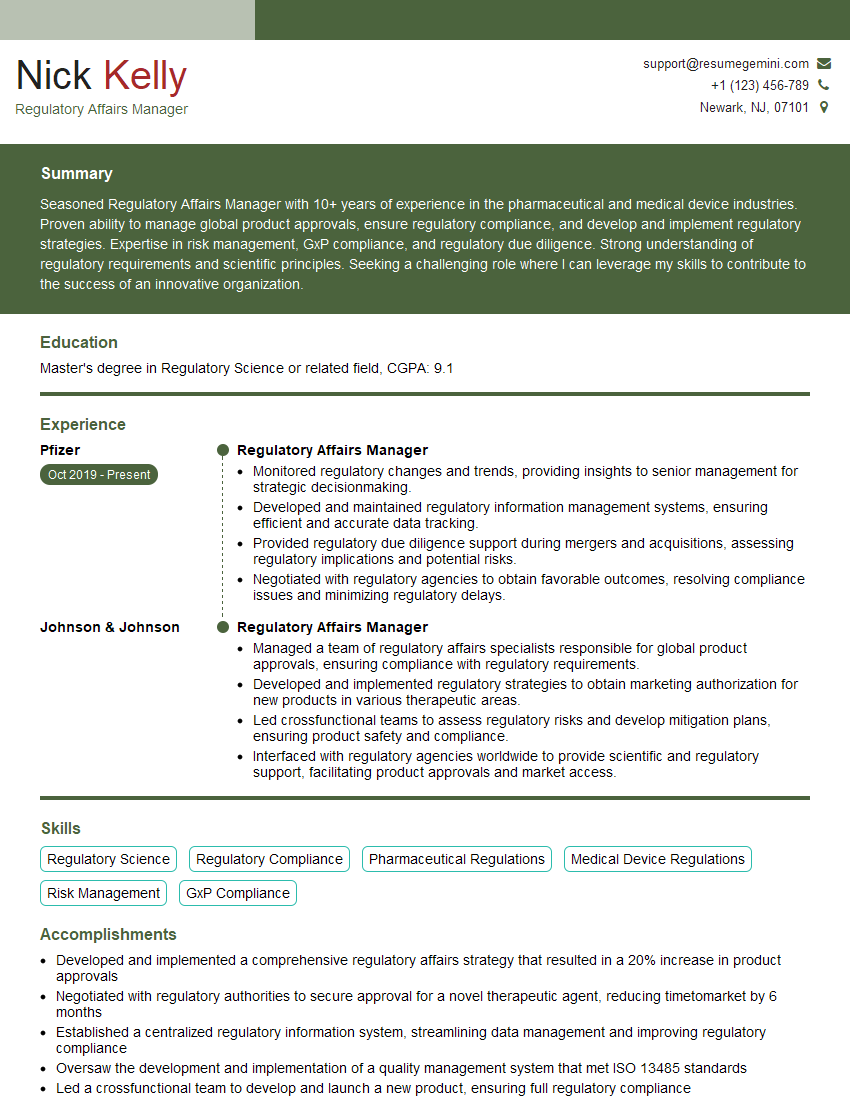
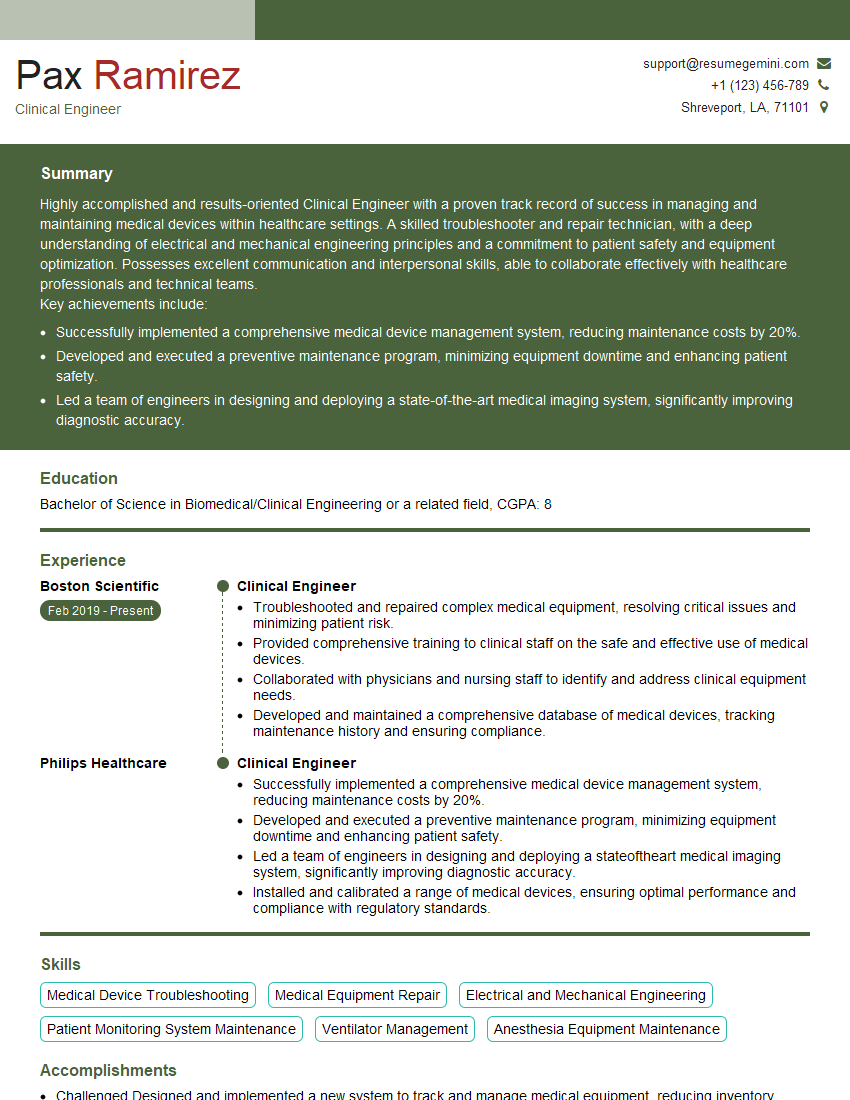
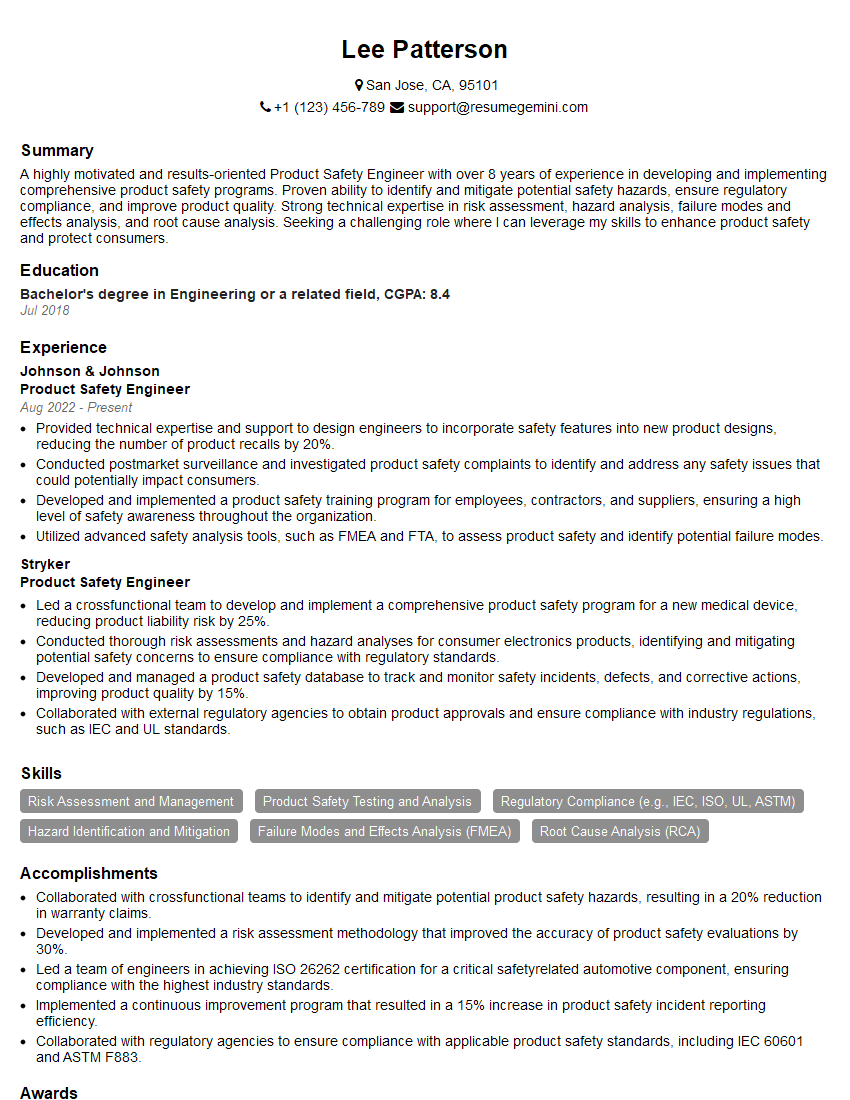
Mastering IEC 60601 Medical Equipment Standards significantly enhances your career prospects in the medical device industry, opening doors to roles with higher responsibility and earning potential. A strong resume is crucial for showcasing your expertise. Creating an ATS-friendly resume is essential to maximize your chances of getting noticed by recruiters. ResumeGemini is a trusted resource to help you build a professional and effective resume tailored to the specific requirements of the jobs you’re targeting. Examples of resumes tailored to IEC 60601 Medical Equipment Standards expertise are available to help guide you. Invest time in crafting a compelling resume—it’s your first impression!

Explore more articles
Users Rating of Our Blogs
Share Your Experience
We value your feedback! Please rate our content and share your thoughts (optional).
What Readers Say About Our Blog
Very informative content, great job.
good