Feeling uncertain about what to expect in your upcoming interview? We’ve got you covered! This blog highlights the most important International Performance Measurement and Verification Protocol (IPMVP) interview questions and provides actionable advice to help you stand out as the ideal candidate. Let’s pave the way for your success.
Questions Asked in International Performance Measurement and Verification Protocol (IPMVP) Interview
Q 1. Explain the three main IPMVP verification methods.
IPMVP outlines three primary verification methods: Calibrated Metering, Regression Analysis, and Whole-Building (or Whole-Facility) Analysis. Each method employs different approaches to measure and verify energy savings, selecting the most appropriate method depends heavily on the project’s complexity and available data.
- Calibrated Metering: This is the most direct method, involving the precise measurement of energy consumption before and after an energy efficiency improvement. Think of it like using a highly accurate kitchen scale to weigh ingredients before and after baking a cake – you directly measure the difference. This approach is best suited for projects with readily accessible and measurable energy flows, such as a single piece of equipment replacement. For example, replacing an old HVAC unit and precisely measuring its energy consumption before and after installation.
- Regression Analysis: This statistical method uses historical energy consumption data to establish a baseline and predict what consumption would have been without the improvements. It’s like predicting the future harvest based on past yields, considering factors like weather and fertilizer use. This method is useful when there are many influencing factors or when calibrated metering isn’t feasible. For example, assessing the impact of energy efficiency upgrades on an entire office building while accounting for occupancy variations.
- Whole-Building (or Whole-Facility) Analysis: This comprehensive method considers the entire building’s energy performance. Instead of focusing on individual components, it analyzes the overall energy balance. Think of it like a complete health checkup, examining various body systems rather than focusing on a single organ. This method is especially useful when multiple improvements are implemented simultaneously and makes use of energy modeling software for accurate performance assessment.
Q 2. Describe the difference between measurement and verification.
While closely related, measurement and verification represent distinct phases in an IPMVP project. Measurement is the process of collecting data on energy consumption before and after implementing energy efficiency measures. It’s the data gathering phase. Verification, on the other hand, is the process of analyzing that data to determine the actual energy savings achieved. It’s the analytical phase where you confirm the impact of your improvements. Think of building a house: Measurement is like carefully measuring lumber before building walls, and Verification is like inspecting the final house to ensure all dimensions are as expected and the house is structurally sound.
Q 3. What are the key components of an IPMVP plan?
A comprehensive IPMVP plan comprises several key components: Project Definition, Data Acquisition Plan, Measurement and Verification Method Selection, Data Analysis Plan, Reporting and Documentation. Each section is critical to ensuring the project’s success.
- Project Definition: Clearly defining the project’s scope, objectives, and goals is essential. This includes specifying the energy-efficiency measures being implemented and identifying the areas to be measured. For instance, specifying exactly which lighting fixtures are being upgraded and the intended energy reduction target.
- Data Acquisition Plan: This details how data will be collected, including the types of meters, frequency of readings, and data validation procedures. This might involve specifying the use of smart meters, manual readings, or sub-metering systems and defining quality checks.
- Measurement and Verification Method Selection: This section outlines the chosen verification method (Calibrated Metering, Regression Analysis, or Whole-Building Analysis) based on the project’s specifics. Justification for the selected method should be included.
- Data Analysis Plan: This describes how the collected data will be analyzed to determine energy savings. Specific statistical methods and software to be employed should be outlined.
- Reporting and Documentation: This component details how the findings will be documented and reported, including the format and content of the final report. A clear plan ensures transparency and accountability.
Q 4. How do you handle data quality issues in an IPMVP project?
Data quality is paramount in IPMVP projects. Handling data quality issues requires a proactive and systematic approach. This typically involves:
- Data Validation: Implementing rigorous checks to identify and correct errors or inconsistencies in the collected data. This might include range checks, plausibility checks, and comparisons with historical data.
- Data Cleaning: Removing or correcting erroneous data points. Outliers need to be investigated to determine their validity and whether they should be included in the analysis or replaced with a more appropriate value.
- Gap Analysis: Addressing missing data points. This may involve using interpolation or extrapolation techniques to fill gaps, but it’s crucial to document these steps clearly.
- Documentation: Meticulously documenting all data quality issues and the steps taken to address them is vital for transparency and auditability. This may include notes detailing why certain data points were excluded from analysis.
For example, if a meter malfunctions during the project period, proper documentation must be kept. Replacement values may need to be estimated (with a detailed explanation) instead of throwing out valuable information.
Q 5. What are some common challenges encountered during IPMVP projects?
Common challenges in IPMVP projects include:
- Data Availability and Quality: Lack of reliable historical data or inaccurate metering can hinder effective analysis.
- Unforeseen Circumstances: Changes in occupancy, weather patterns, or equipment malfunctions can influence energy consumption and complicate the analysis.
- Methodological Limitations: Selecting the appropriate method can be complex, and each method has limitations. Misapplication can lead to flawed results.
- Cost and Time Constraints: IPMVP projects can be time-consuming and expensive, requiring careful planning and resource allocation.
- Stakeholder Coordination: Managing expectations and achieving buy-in from all stakeholders can be challenging.
For instance, a retrofit project might encounter unexpected construction delays, resulting in data gaps. Careful planning and clear communication are crucial to overcome these challenges.
Q 6. Explain the importance of baseline data in IPMVP.
Baseline data is fundamental to IPMVP. It provides a benchmark against which to measure energy savings after implementing energy efficiency improvements. Without a reliable baseline, accurately assessing the impact of the improvements is impossible. The baseline represents the ‘before’ picture, allowing for a clear ‘after’ comparison and quantification of the energy savings. Think of it as a before-and-after photo of a weight loss journey; without the ‘before’ picture, you cannot accurately determine the impact of the weight loss efforts.
Q 7. How do you select appropriate key performance indicators (KPIs) for an IPMVP project?
Selecting appropriate KPIs for an IPMVP project requires a careful consideration of the project’s goals and available data. KPIs should be:
- Relevant: Directly related to the project’s objectives and the energy-efficiency measures implemented.
- Measurable: Quantifiable with readily available data.
- Achievable: Realistic and attainable within the project’s timeframe and resources.
- Specific: Clearly defined and unambiguous.
- Time-Bound: Associated with a specific timeframe for measurement and analysis.
Examples of relevant KPIs include energy consumption (kWh), energy cost ($), thermal energy savings (BTU), and carbon dioxide emissions (kg). The chosen KPIs should align with the project’s goal – are we aiming to reduce costs, emissions, or improve overall building performance? For example, if the project is focused on lighting upgrades, energy consumption from lighting could be a critical KPI. If the project aims at overall energy savings, total building energy consumption might be a more comprehensive KPI.
Q 8. Describe the process of developing an IPMVP report.
Developing an IPMVP report is a meticulous process that ensures the accurate measurement and verification of energy savings from efficiency projects. It’s like building a strong case in court – every detail matters.
The process typically involves these key steps:
- Project Planning: Define project scope, objectives, and measurement approach. This includes identifying the baseline period and the performance period.
- Data Acquisition: Collect energy consumption data, weather data, and operational data from meters, building management systems (BMS), or other reliable sources. Thorough data logging is crucial here. Think of this as gathering all the evidence.
- Data Analysis: Analyze the collected data using appropriate statistical methods to identify trends, outliers, and potential sources of error. This involves cleaning and validating the data – like sifting through evidence to find the relevant facts.
- Modeling (if applicable): Develop a model to account for factors influencing energy consumption beyond the implemented measures (e.g., weather normalization). This is like creating a control group in an experiment to isolate the effects of the efficiency measure.
- Savings Calculation: Calculate energy savings based on the chosen method (e.g., actual-vs-predicted, calibrated simulation). This step determines the effectiveness of the project – the strength of your case.
- Uncertainty Analysis: Quantify the uncertainty associated with the savings calculation. This addresses the inherent variability in data and models – acknowledging potential errors.
- Report Writing: Document the entire process, including methodology, data, analysis, and results, following the IPMVP guidelines. This is the final presentation of your findings – a comprehensive and well-supported argument.
For example, a report might detail the energy savings from a new HVAC system in an office building, demonstrating the reduction in kilowatt-hours (kWh) compared to a pre-retrofit baseline, along with a thorough uncertainty analysis to account for weather variations and measurement limitations.
Q 9. What are some common statistical methods used in IPMVP?
IPMVP relies on several statistical methods to analyze energy data and calculate savings reliably. Think of these as the tools in our statistical toolbox.
- Regression Analysis: This is used to model the relationship between energy consumption and influencing factors like weather and occupancy. Linear regression is frequently used, but more complex models may be necessary for non-linear relationships. For instance, a regression model could help us isolate the impact of improved insulation on a building’s energy use, controlling for the effect of external temperature.
- Time Series Analysis: Used to identify trends and seasonality in energy consumption data over time. This is essential for establishing a baseline and understanding normal variations in energy use. We might use this to see how energy consumption fluctuates throughout a year, accounting for seasonal variations.
- Statistical Process Control (SPC): Helps identify unusual patterns or outliers in data that might indicate measurement errors or unusual operational events. Control charts are commonly used to visualize the data and detect anomalies. This ensures that we don’t draw conclusions based on faulty readings.
- Hypothesis Testing: Used to assess the statistical significance of observed energy savings. This helps us determine if the observed savings are real or just random fluctuation. A t-test, for example, might be used to compare energy use before and after an efficiency upgrade.
The choice of statistical method depends on the specific project and data characteristics. Proper application requires a strong understanding of statistical principles and limitations.
Q 10. How do you deal with missing data in an IPMVP analysis?
Missing data is a common challenge in IPMVP analysis. It’s like having gaps in your evidence. Handling it requires careful consideration.
Several approaches can be used:
- Data Imputation: This involves estimating missing values using available data. Simple methods include using the mean or median of similar data points. More sophisticated methods, like regression imputation, can be used for better accuracy. It’s like filling in the blanks with educated guesses.
- Data Removal: If only a small amount of data is missing, it might be acceptable to remove the incomplete data points, provided it doesn’t significantly bias the analysis. This is like discarding unreliable evidence.
- Sensitivity Analysis: This involves analyzing how sensitive the results are to different imputation methods or the removal of missing data. If the results are not significantly affected by these changes, it suggests robustness of the findings. It’s like checking if our conclusions are sensitive to the way we handle the missing information.
The best approach depends on the extent and nature of the missing data and the overall quality of the dataset. It’s crucial to document the chosen method and its potential impact on the results.
Q 11. Explain the concept of uncertainty analysis in IPMVP.
Uncertainty analysis in IPMVP is crucial for quantifying the reliability of the savings calculation. It’s like acknowledging the margin of error in any measurement. We never have perfect data.
Uncertainty arises from various sources:
- Measurement Errors: Inaccuracies in meter readings or other data collection methods.
- Model Uncertainty: Limitations and assumptions in the chosen model (if applicable).
- Data Variability: Natural variations in energy consumption due to weather, occupancy, or other factors.
Methods for quantifying uncertainty include:
- Monte Carlo Simulation: This involves running numerous simulations using randomly sampled data to determine the range of possible savings.
- Propagation of Error: This is a more analytical approach that uses statistical formulas to estimate the overall uncertainty based on the uncertainties of individual inputs.
The results are usually reported as a confidence interval around the estimated savings, e.g., “We are 95% confident that the annual savings are between $X and $Y.”
Q 12. What are the different types of savings calculations in IPMVP?
IPMVP offers several methods for calculating savings, each with its strengths and weaknesses. The best approach depends on project specifics.
- Actual vs. Predicted: This compares actual energy consumption during the performance period to a predicted consumption based on a baseline period. It’s simple and intuitive, but relies heavily on accurate baseline modeling.
- Calibrated Simulation: This uses a calibrated energy model to predict energy use in both the baseline and performance periods. This approach is useful for complex systems but requires sophisticated modeling expertise.
- Statistical Adjustment Method: This uses statistical techniques to adjust energy consumption data for external factors like weather or operational changes. It’s useful when there are significant external influences on energy use.
For example, a simple retrofit project might utilize the actual vs. predicted method, whereas a large-scale renovation involving multiple systems might require a calibrated simulation.
Q 13. What are the requirements for reporting IPMVP results?
IPMVP reports must meet specific requirements to ensure transparency, accuracy, and consistency. Think of these as the reporting standards for our findings.
Key requirements include:
- Clear Project Description: Detailed explanation of the project’s goals, scope, and implemented measures.
- Detailed Methodology: Clear description of the data collection methods, analysis techniques, and savings calculation approach. This allows others to verify the results.
- Data Presentation: Organized and clear presentation of all data, including tables, graphs, and supporting documentation.
- Uncertainty Analysis: Quantitative assessment of the uncertainty associated with the savings calculation, including confidence intervals.
- Quality Assurance: Description of the steps taken to ensure data quality and accuracy.
- Compliance with IPMVP Standards: Adherence to the relevant IPMVP protocols and guidelines.
A well-written IPMVP report is essential for securing financing, demonstrating project success, and promoting best practices.
Q 14. How do you ensure the accuracy and reliability of IPMVP data?
Ensuring the accuracy and reliability of IPMVP data is paramount. It’s like ensuring the evidence in a courtroom is credible and admissible.
Key strategies include:
- Accurate Metering: Use properly calibrated meters and ensure accurate data logging. Regular meter checks are important.
- Data Validation: Check for inconsistencies, outliers, and errors in the data before analysis. This involves thorough quality checks.
- Appropriate Statistical Methods: Select and apply statistical methods that are appropriate for the data and project objectives. Incorrect statistical methods can lead to flawed results.
- Peer Review: Have the report and analysis reviewed by an independent expert to identify potential biases or errors. This is analogous to getting a second opinion from a colleague.
- Documentation: Maintain complete and transparent documentation of the entire process, including data collection, analysis, and uncertainty quantification. This allows for traceability and review.
By implementing these strategies, we can ensure the credibility and trustworthiness of IPMVP results, leading to more effective energy efficiency projects.
Q 15. Describe your experience with different IPMVP software tools.
My experience with IPMVP software tools spans a variety of options, from simple spreadsheet-based calculations to sophisticated energy modeling platforms. I’ve worked extensively with tools that allow for data import, cleaning, and analysis, crucial for accurate measurement and verification. For example, I’ve used programs that facilitate the creation of detailed energy models, which are then compared to measured data to assess performance. These models incorporate various factors influencing energy consumption, such as weather data, occupancy patterns, and equipment operation. I am also proficient in using software dedicated to statistical analysis, essential for determining the statistical significance of energy savings. Finally, I’m familiar with specialized reporting software that automates the creation of IPMVP-compliant reports, ensuring compliance with industry standards and facilitating clear communication of results.
Specifically, I have experience with [mention specific software names, e.g., EnergyPlus, eQuest, and custom developed tools tailored for specific project needs]. Each tool offers unique capabilities, and the selection depends largely on the project’s scope, complexity, and budget.
Career Expert Tips:
- Ace those interviews! Prepare effectively by reviewing the Top 50 Most Common Interview Questions on ResumeGemini.
- Navigate your job search with confidence! Explore a wide range of Career Tips on ResumeGemini. Learn about common challenges and recommendations to overcome them.
- Craft the perfect resume! Master the Art of Resume Writing with ResumeGemini’s guide. Showcase your unique qualifications and achievements effectively.
- Don’t miss out on holiday savings! Build your dream resume with ResumeGemini’s ATS optimized templates.
Q 16. Explain the role of the verification agent in an IPMVP project.
The Verification Agent (VA) in an IPMVP project plays a crucial, independent role, ensuring the integrity and accuracy of the measurement and verification process. They act as a neutral third party, reviewing the entire process from planning to reporting. Think of them as a referee in a game – making sure everyone plays by the rules and the outcome is fair and unbiased. Their responsibilities include reviewing the project’s measurement and verification plan (M&V Plan), assessing the data collection methods, independently analyzing the data, and verifying that the reported savings are credible and meet the project’s objectives. They are not involved in the implementation of energy efficiency measures but serve as a critical check on the accuracy of reported results. A qualified VA’s expertise and impartiality are vital for building stakeholder trust and ensuring the long-term credibility of energy performance projects.
Q 17. How do you address discrepancies between measured and predicted energy savings?
Discrepancies between measured and predicted energy savings are common in IPMVP projects, and addressing them requires a methodical approach. It’s not about simply dismissing the difference; instead, we need to understand the reasons behind it. This involves a detailed investigation into potential sources of error. For instance, unforeseen changes in occupancy patterns, equipment malfunctions, or inaccuracies in the initial energy model can all contribute to discrepancies. The first step is to thoroughly review the M&V plan, examining the assumptions made and the data collection methods used. A thorough reconciliation process is critical, carefully evaluating each data point and the potential sources of error. We may need to use statistical analysis to assess the significance of the discrepancies. If significant discrepancies remain after a thorough investigation, the reasons are documented and reported transparently. Sometimes, further investigation or even a recalibration of the energy model might be required.
For example, if the predicted savings were significantly higher than measured savings, we might investigate whether the initial energy model accurately reflected real-world conditions, or if there were any unplanned changes to the building’s operations after the implementation of the energy efficiency measures.
Q 18. What are the ethical considerations in IPMVP?
Ethical considerations are paramount in IPMVP projects. Maintaining transparency and objectivity is crucial. This includes clearly stating any limitations of the M&V plan, disclosing any potential conflicts of interest, and ensuring that the data collection and analysis are performed without bias. The Verification Agent’s independence is key to ensuring ethical conduct, as they provide an unbiased assessment of the project’s results. It’s vital to avoid misleading or exaggerating the results, and to accurately represent the uncertainties associated with the measurement and verification process. Furthermore, protecting the confidentiality of data and respecting intellectual property rights are also important ethical responsibilities. Adherence to professional standards and codes of conduct ensures the credibility and integrity of IPMVP projects.
Q 19. Describe your understanding of the IPMVP protocol.
The International Performance Measurement and Verification Protocol (IPMVP) is a globally recognized standard for measuring and verifying energy savings from energy efficiency projects. It provides a structured framework for planning, implementing, and reporting on these projects, ensuring consistency and credibility. It’s designed to be flexible, accommodating various project types and technologies. The IPMVP outlines several different methods for measuring and verifying energy savings, each appropriate for different situations. These methods range from simple, cost-effective approaches to more complex, rigorous methodologies. The core principle is to compare baseline energy consumption with post-implementation energy consumption, controlling for extraneous factors that could influence energy use. The IPMVP isn’t just about numbers; it’s about establishing a robust, verifiable process that builds trust and confidence in the results. The entire process, from initial planning to final reporting, is documented thoroughly, allowing for independent review and verification.
Q 20. What are the benefits of using IPMVP?
The benefits of using IPMVP are numerous and far-reaching. Firstly, it provides a standardized and credible approach to measuring energy savings, allowing for accurate evaluation of the effectiveness of energy efficiency measures. This leads to improved decision-making, as projects can be objectively assessed, and future projects can be planned more effectively. Secondly, it enhances the credibility of energy savings claims, promoting investor confidence and potentially unlocking access to financing. For example, a rigorously conducted IPMVP study can significantly increase the likelihood of securing financing for future sustainability projects. Thirdly, by improving transparency and accountability, it helps to avoid disputes and conflicts between stakeholders. Finally, the use of IPMVP promotes better communication of project results, both internally and externally, creating a common language for discussing energy performance.
Q 21. How do you ensure stakeholder buy-in for an IPMVP project?
Securing stakeholder buy-in for an IPMVP project requires a proactive and collaborative approach. Early engagement is critical; involving stakeholders from the outset ensures their concerns and perspectives are considered during the planning phase. Transparency is paramount; clear and accessible communication about the project’s objectives, methodology, and expected outcomes is crucial. This includes clearly explaining the value proposition of IPMVP, highlighting its benefits for all stakeholders, including cost savings, reduced environmental impact, and improved energy management practices. It’s also essential to tailor the communication to the specific audience, using clear and concise language, and addressing any concerns or objections directly. Presenting case studies and success stories from similar projects can build confidence and demonstrate the effectiveness of IPMVP. Finally, active listening and a willingness to adapt the project based on stakeholder feedback are essential for achieving buy-in and fostering a collaborative project environment.
Q 22. What is your experience with different types of energy efficiency measures?
My experience encompasses a wide range of energy efficiency measures, categorized broadly into building envelope improvements, HVAC system upgrades, lighting retrofits, and process optimization. For example, I’ve worked on projects involving the installation of high-performance windows and insulation (building envelope), the replacement of outdated chillers with high-efficiency models (HVAC), the conversion to LED lighting (lighting), and the implementation of improved process controls in industrial facilities (process optimization).
In building envelope projects, I’ve analyzed energy savings through detailed thermal modeling and on-site measurements, identifying areas for improvement such as air leakage and thermal bridging. HVAC projects involved analyzing system performance data to identify inefficiencies and optimize operating strategies, resulting in significant energy savings. Lighting retrofits often included careful consideration of lighting levels, occupant comfort, and daylight harvesting strategies. Process optimization involved working closely with plant operators to identify and eliminate unnecessary energy consumption in industrial processes, frequently through the implementation of variable frequency drives and improved process scheduling.
- Building Envelope: High-performance windows, improved insulation, air sealing.
- HVAC: High-efficiency chillers, variable refrigerant flow (VRF) systems, optimized control strategies.
- Lighting: LED retrofits, daylight harvesting, occupancy sensors.
- Process Optimization: Variable frequency drives (VFDs), improved process controls, waste heat recovery.
Q 23. How do you manage project risks in an IPMVP project?
Managing project risks in an IPMVP project requires a proactive and systematic approach. I employ a risk management framework that involves identifying potential risks, assessing their likelihood and impact, developing mitigation strategies, and monitoring progress throughout the project lifecycle. This involves regular communication and collaboration with the project team and stakeholders.
Common risks include inaccurate data collection, unforeseen site conditions, changes in scope, and delays in obtaining necessary approvals. For example, inaccurate data collection could lead to flawed energy savings calculations. To mitigate this, I establish robust quality control procedures, including data validation and verification steps. Unforeseen site conditions might necessitate adjustments to the measurement plan; to mitigate this, I incorporate contingency planning into the project schedule and budget. Changes in scope are addressed through change management procedures, ensuring that any alterations are documented and approved. Delays are mitigated through proactive scheduling and communication.
Throughout the process, risk registers are maintained and updated regularly, providing a centralized repository for risk information and tracking mitigation progress. Regular project meetings and progress reports further support risk management.
Q 24. Explain your experience in developing and implementing IPMVP plans.
My experience in developing and implementing IPMVP plans involves a structured approach, starting with a thorough understanding of the project goals and objectives, followed by the development of a detailed measurement and verification (M&V) plan. This plan outlines the methodology, data collection procedures, and analysis techniques to be used to quantify energy savings. I have been involved in various projects, ranging from small-scale retrofits to large-scale new construction projects, utilizing different IPMVP options depending on the project’s complexity and data availability.
For instance, in one project involving a large office building retrofit, we utilized the IPMVP Option C (Calibrated Simulation) to predict and measure energy savings. This involved developing a detailed energy model of the building before and after the retrofit and comparing the predicted savings with actual measured savings. In another project, involving a small industrial facility, we used IPMVP Option B (Engineering Analysis) due to limited baseline data, developing detailed calculations based on equipment performance specifications and operating data. Each plan clearly defines roles and responsibilities, data quality control procedures, and reporting requirements. Regular review and updates ensure the plan remains aligned with project progress.
Q 25. How do you communicate technical information to non-technical audiences?
Communicating complex technical information to non-technical audiences requires a clear and concise approach that avoids jargon and uses relatable analogies. I typically begin by establishing a shared understanding of the project goals and the importance of energy efficiency. Then, I present information using visuals such as charts, graphs, and infographics. Analogies help bridge the gap between technical concepts and everyday experiences; for example, comparing energy consumption to household water usage can help make the concept more accessible.
I also tailor my communication style to the audience; a presentation to a board of directors will differ significantly from a training session for building operators. Active listening and soliciting questions are crucial for ensuring understanding. Finally, providing concise summaries and key takeaways reinforces the most important points.
Q 26. Describe your experience with different types of data collection methods.
My experience with data collection methods includes a variety of approaches tailored to the specific project needs. This ranges from using automated data loggers and building management systems (BMS) to manual data collection methods, such as conducting on-site inspections and interviewing building occupants. Each method has its strengths and weaknesses. Automated data loggers provide continuous, high-resolution data but may require specialized expertise to install and maintain. BMS data offers a convenient source of information but may lack the detail needed for comprehensive analysis.
Manual data collection, while time-consuming, can provide valuable insights into building operations and occupant behavior, often revealing patterns that automated systems miss. For example, in a recent project, manual observations revealed that occupants frequently left lights on in unoccupied spaces, an issue not readily apparent in the BMS data alone. The choice of data collection method always involves a trade-off between cost, accuracy, and the level of detail required. A well-designed IPMVP plan addresses these considerations and specifies the appropriate methods.
Q 27. What are the limitations of IPMVP?
While IPMVP provides a robust framework for M&V, it has some limitations. One key limitation is the reliance on accurate and complete data. Missing or inaccurate data can significantly affect the accuracy of the results. Another limitation is the potential for unforeseen circumstances during the project, such as equipment malfunctions or changes in occupancy patterns, which can influence energy consumption and complicate the analysis. The level of detail and rigor required by IPMVP can be resource-intensive, both in terms of time and cost.
Furthermore, IPMVP primarily focuses on quantifying energy savings; it doesn’t necessarily address other factors like occupant comfort, indoor environmental quality, or the life-cycle cost implications of the implemented measures. Finally, the selection of the appropriate IPMVP option can be challenging, requiring careful consideration of factors such as data availability, project complexity, and budget constraints.
Q 28. How do you stay up-to-date with the latest developments in IPMVP?
Staying up-to-date with the latest developments in IPMVP involves continuous professional development. I actively participate in industry conferences and workshops, attend webinars, and read relevant publications to keep abreast of new technologies, methodologies, and best practices. I’m also a member of professional organizations such as [Mention relevant professional organizations], which provide access to networking opportunities and continuing education resources. I regularly review updates and revisions to the IPMVP guideline document itself, ensuring my work always adheres to the latest standards.
Furthermore, I actively seek opportunities to collaborate with other professionals in the field, sharing experiences and insights. This collaborative approach fosters a shared understanding of best practices and helps identify emerging trends and challenges in the field of M&V.
Key Topics to Learn for International Performance Measurement and Verification Protocol (IPMVP) Interview
Mastering IPMVP requires a blend of theoretical understanding and practical application. Focus your preparation on these key areas to confidently navigate your interview:
- IPMVP Standard Overview: Thoroughly understand the structure and purpose of the IPMVP standard. This includes its objectives, scope, and the different options for verification methodologies.
- Data Acquisition and Management: Learn about the different methods for collecting and managing data relevant to energy performance, including data loggers, metering systems, and data analysis software. Practice interpreting real-world data sets.
- Verification Methodologies: Gain a strong understanding of the various verification methods outlined in IPMVP, such as the calibrated energy balance approach, the engineering analysis approach, and the statistical approach. Be ready to discuss their strengths and weaknesses in different scenarios.
- Uncertainty Analysis: Develop proficiency in quantifying uncertainty in measurement and calculation. Understand how to propagate uncertainty through calculations and how this affects the overall confidence in the results.
- Reporting and Documentation: Familiarize yourself with the requirements for preparing clear, concise, and compliant IPMVP reports. This includes the appropriate presentation of data, uncertainty analysis, and conclusions.
- Practical Applications: Consider real-world applications such as retrofits, new construction, and various building types. Think about how different energy efficiency measures are verified using IPMVP methodologies.
- Problem-Solving: Prepare to address potential challenges in data collection, analysis, and reporting. Practice identifying and resolving issues that may arise during a verification project.
Next Steps
A strong understanding of IPMVP significantly enhances your marketability in the energy efficiency and sustainability sectors, opening doors to exciting career opportunities. To maximize your job prospects, it’s crucial to present your skills and experience effectively. Creating an ATS-friendly resume is paramount for getting noticed by recruiters.
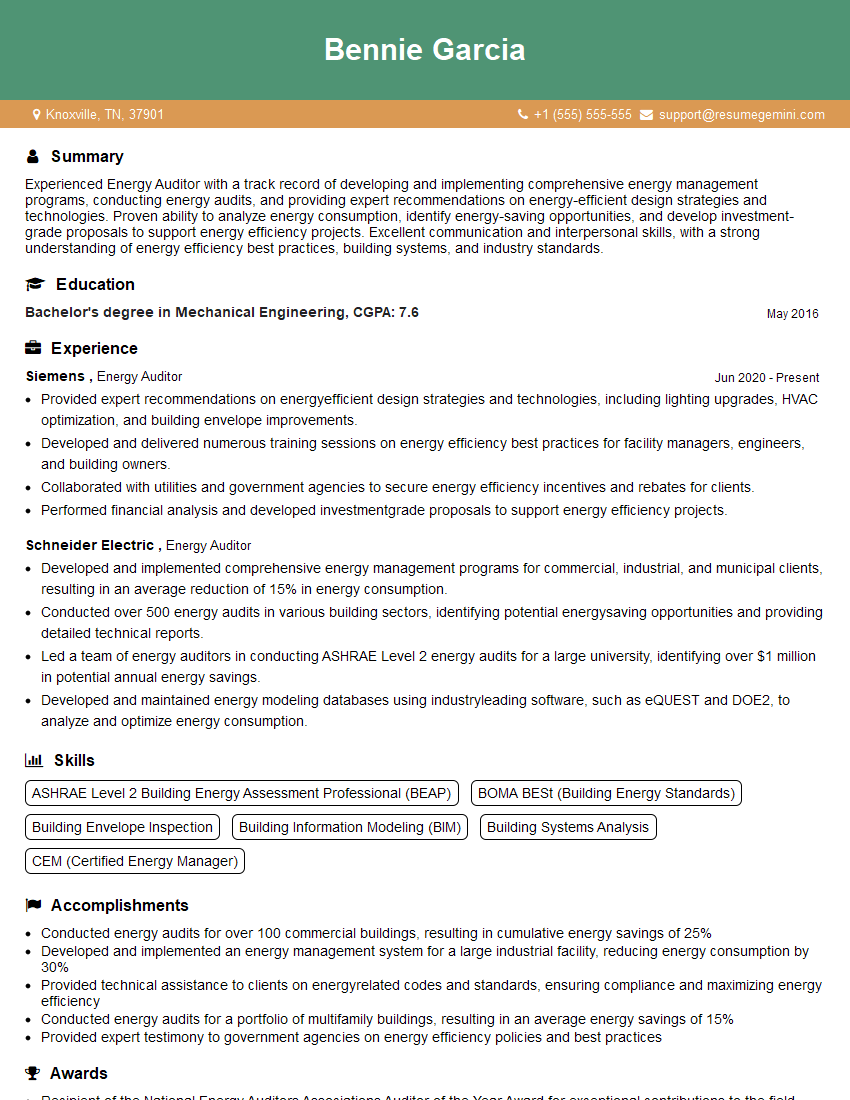
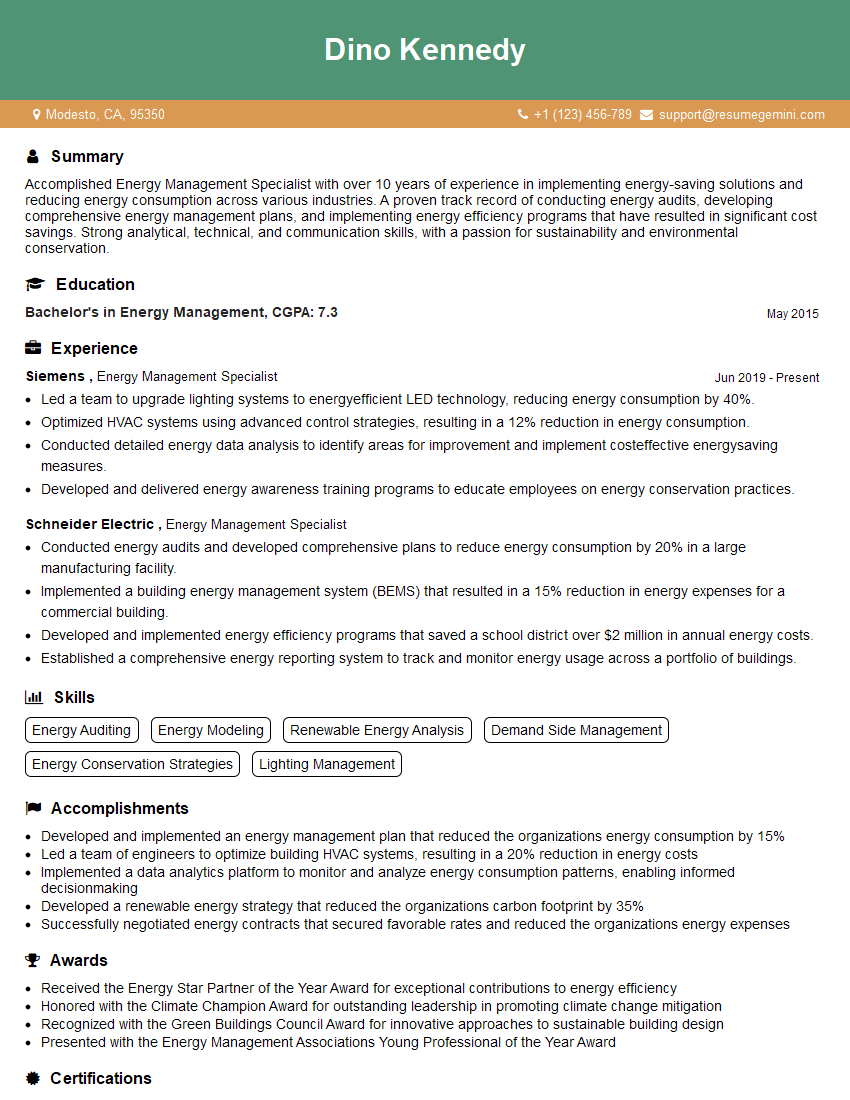
We highly recommend using ResumeGemini to build a professional and impactful resume. ResumeGemini provides the tools and resources to create a resume that effectively highlights your IPMVP expertise. Examples of resumes tailored to International Performance Measurement and Verification Protocol (IPMVP) roles are available to help guide you. Take the next step and invest in your future success!

Explore more articles
Users Rating of Our Blogs
Share Your Experience
We value your feedback! Please rate our content and share your thoughts (optional).
What Readers Say About Our Blog
Very informative content, great job.
good