Interviews are more than just a Q&A session—they’re a chance to prove your worth. This blog dives into essential International Product Safety Regulations interview questions and expert tips to help you align your answers with what hiring managers are looking for. Start preparing to shine!
Questions Asked in International Product Safety Regulations Interview
Q 1. Explain the difference between ISO 9001 and ISO 13485.
ISO 9001 and ISO 13485 are both international standards focusing on quality management systems (QMS), but they target different industries. ISO 9001 is a generic standard applicable to virtually any organization aiming to improve its quality management processes. It focuses on customer satisfaction through consistent product and service delivery. Think of it as a broad framework for ensuring quality.
ISO 13485, on the other hand, is specifically designed for organizations involved in the design, development, production, and distribution of medical devices. It builds upon ISO 9001 but adds stricter requirements related to patient safety and regulatory compliance. This means more stringent documentation, risk management, and traceability requirements. Imagine a stricter, more specialized version tailored for the high-stakes medical device industry.
- ISO 9001: Focuses on customer satisfaction, continuous improvement, and general quality management principles.
- ISO 13485: Incorporates ISO 9001 principles but adds specific requirements for medical devices, emphasizing patient safety and regulatory compliance.
In essence, while ISO 9001 provides a foundation for quality, ISO 13485 builds upon it to ensure the safety and efficacy of medical devices, making it a necessity in that sector.
Q 2. Describe your experience with the EU’s REACH regulation.
My experience with the EU’s REACH (Registration, Evaluation, Authorisation and Restriction of Chemicals) regulation is extensive. I’ve been involved in several projects assisting companies in complying with its requirements. REACH aims to improve the protection of human health and the environment through the better and safer use of chemicals. This involves registering substances, evaluating their risks, and restricting or authorizing their use if necessary.
Specifically, my work has included:
- Substance Registration: Assisting companies in compiling the necessary data for registering substances with the European Chemicals Agency (ECHA).
- Safety Data Sheet (SDS) Preparation: Ensuring SDSs meet REACH requirements and provide accurate information on chemical hazards and safe handling.
- Compliance Audits: Conducting internal and external audits to verify REACH compliance.
- Supply Chain Management: Helping companies manage their supply chains to ensure the use of REACH-compliant substances.
One notable project involved a client manufacturing electronics. We had to meticulously review their supply chain to identify all substances of very high concern (SVHCs) used in their products and ensure compliance with the restrictions placed on them.
Q 3. How familiar are you with the US Consumer Product Safety Improvement Act (CPSIA)?
I am very familiar with the US Consumer Product Safety Improvement Act (CPSIA). This act significantly strengthened consumer product safety regulations in the United States. It addresses the presence of lead and other toxic substances in children’s products and requires manufacturers and importers to comply with various testing and certification requirements.
My experience includes:
- Lead testing and certification: Understanding and implementing the testing procedures required to ensure products comply with lead content limits.
- Tracking and tracing: Implementing systems to track and trace components and materials to guarantee compliance throughout the supply chain.
- Labeling requirements: Ensuring proper labeling and warnings as required by the CPSIA.
- Responding to recalls: Understanding the processes involved in a product recall, if needed.
For instance, I assisted a client who manufactured children’s toys in navigating the complexities of the CPSIA, ensuring their products met all necessary requirements before entering the US market.
Q 4. What is your experience with RoHS compliance?
RoHS (Restriction of Hazardous Substances) compliance is another area of my expertise. This directive restricts the use of certain hazardous materials in electrical and electronic equipment. My experience encompasses the entire process, from material selection to final product certification.
My work has included:
- Material selection and sourcing: Identifying and sourcing RoHS-compliant components and materials.
- Testing and analysis: Conducting testing to verify that materials meet RoHS requirements.
- Documentation and record-keeping: Maintaining comprehensive documentation to demonstrate compliance.
- Supplier management: Working with suppliers to ensure they are providing RoHS-compliant components.
A recent project involved assisting a manufacturer of consumer electronics in transitioning to RoHS-compliant materials. This included analyzing existing components, identifying suitable replacements, and coordinating testing to confirm compliance.
Q 5. Explain your understanding of the Globally Harmonized System of Classification and Labelling of Chemicals (GHS).
The Globally Harmonized System of Classification and Labelling of Chemicals (GHS) is an internationally agreed-upon system for classifying and communicating the hazards of chemicals. It provides a standardized approach to hazard communication, making it easier to understand and handle chemicals safely across different countries and regions.
My understanding includes the key elements of GHS such as:
- Classification of hazards: Understanding the criteria used to classify chemicals based on their physical, health, and environmental hazards.
- Labeling requirements: Knowing the specific elements required on a GHS-compliant label, including hazard pictograms, signal words, hazard statements, and precautionary statements.
- Safety Data Sheets (SDS): Understanding how GHS information is incorporated into SDSs to provide comprehensive information on chemical hazards and safe handling.
The consistent use of GHS globally helps prevent accidents and illnesses by standardizing the way hazardous chemicals are identified and handled. For example, a worker in any country recognizing the GHS pictograms would understand the inherent risks associated with the chemical.
Q 6. How do you ensure product safety throughout the entire product lifecycle?
Ensuring product safety throughout the entire product lifecycle is paramount. This requires a proactive, multi-faceted approach starting from the design phase and continuing through manufacturing, distribution, use, and disposal.
My approach includes:
- Design for Safety (DfS): Integrating safety considerations into the product design from the outset. This includes hazard analysis, risk assessment, and the selection of safe materials and components.
- Manufacturing Controls: Implementing robust manufacturing processes to ensure consistent product quality and safety. This includes quality control checks at various stages of production.
- Testing and Certification: Conducting thorough testing and obtaining necessary certifications to verify that the product meets relevant safety standards and regulations.
- Post-Market Surveillance: Continuously monitoring product performance after launch to identify and address any safety issues that may arise. This may include collecting customer feedback and reviewing incident reports.
- End-of-Life Management: Developing environmentally responsible disposal methods to minimize environmental impacts.
This holistic approach helps to proactively identify and mitigate safety risks, minimizing the chances of accidents and ensuring customer safety.
Q 7. Describe a situation where you had to identify and resolve a product safety issue.
In one instance, a client reported an unusual number of incidents related to a specific component in their power tool. Initial investigations suggested a potential failure mechanism related to overheating. We immediately implemented a multi-step process:
- Incident Analysis: We thoroughly analyzed all reported incidents, carefully documenting the circumstances, location, and potential causes.
- Failure Analysis: We conducted detailed failure analysis on the affected components, using advanced techniques to identify the root cause of the overheating.
- Design Modification: Based on our findings, we worked with the engineering team to redesign the component, addressing the identified weaknesses and enhancing its thermal management capabilities.
- Testing and Validation: The redesigned component underwent rigorous testing to ensure it met all safety requirements and performed as expected.
- Recall and Replacement: We coordinated a voluntary recall of the affected power tools and replaced the faulty components with the improved design.
- Communication: We maintained open communication with the client and relevant authorities throughout the entire process.
This experience underscored the importance of robust post-market surveillance and the effectiveness of a well-defined process for addressing product safety issues. The collaboration between different teams and stakeholders was essential in resolving this situation efficiently and safely.
Q 8. What are the key considerations when conducting a product safety risk assessment?
A product safety risk assessment is a systematic process to identify hazards associated with a product and evaluate the risks those hazards pose to consumers. It’s crucial for ensuring compliance with regulations and preventing harm. Key considerations include:
- Hazard Identification: This involves a thorough examination of the product, its intended use, and foreseeable misuse. We consider physical hazards (sharp edges, entanglement), chemical hazards (toxic substances), biological hazards (bacteria), and ergonomic hazards (strain). For example, a children’s toy might be assessed for small parts that could be choking hazards.
- Risk Analysis: This step evaluates the likelihood and severity of harm from identified hazards. We use risk matrices to quantify this, considering factors like the frequency of exposure, the vulnerability of users, and the potential consequences of injury or damage. A high likelihood of a serious injury would warrant more attention than a low likelihood of a minor injury.
- Risk Evaluation: This involves comparing the identified risks to acceptable levels. Regulations and industry standards provide guidelines for acceptable risk levels. If risks exceed acceptable levels, risk reduction measures must be implemented.
- Risk Control: This is where we implement measures to mitigate or eliminate identified hazards. Examples include redesigning the product, adding safety features (e.g., guards, warnings), providing clear instructions, or restricting product use.
- Risk Communication: This involves effectively communicating the identified risks and implemented control measures to all stakeholders, including consumers, manufacturers, and regulatory bodies. This could involve safety labels, instruction manuals, and safety data sheets.
A robust risk assessment uses a combination of qualitative and quantitative methods to ensure a comprehensive evaluation. The goal is not to eliminate all risk (as that’s often impossible), but to reduce it to an acceptable level.
Q 9. How would you handle a recall situation?
Handling a product recall requires a swift and coordinated response. My approach involves:
- Immediate Action: Confirm the defect and its potential impact. Initiate a thorough investigation to determine the scope of the problem, including the number of affected units, the geographic distribution, and the severity of the potential harm.
- Notification: Immediately notify relevant regulatory authorities (e.g., the CPSC in the US, the CE in the EU) as required by law. This notification needs to outline the problem, the number of affected units, and the proposed recall strategy.
- Recall Strategy Development: Develop a comprehensive recall plan, including communication to consumers (press releases, website updates, direct mail), methods for returning or replacing defective products, and procedures for managing customer inquiries and complaints. We’d need to consider different communication channels depending on our target consumer base and their preferences.
- Recall Execution: Implement the recall plan efficiently and effectively. This may involve coordinating with distributors, retailers, and logistics providers. Clear instructions and readily available contact information for consumers are key.
- Post-Recall Monitoring: Continuously monitor the effectiveness of the recall and address any ongoing issues. This ensures that the issue is fully resolved and prevents future occurrences.
- Root Cause Analysis: After the recall, a thorough root cause analysis is essential to prevent similar issues in the future. This involves identifying and addressing the underlying design flaws, manufacturing processes, or other factors that contributed to the defect.
Effective communication and transparency throughout the recall process are crucial to maintain consumer confidence and minimize negative impact on the company’s reputation.
Q 10. Explain your experience with conducting internal audits for compliance.
I have extensive experience conducting internal audits to ensure compliance with international product safety regulations. My approach is systematic and thorough, encompassing:
- Pre-audit Planning: Defining the scope of the audit, identifying key areas of focus, and establishing the audit team. We would select a team with appropriate expertise, depending on the products and relevant regulations.
- Documentation Review: Examining relevant documents, such as design specifications, test reports, manufacturing records, and quality control procedures. This helps in understanding the design, manufacturing process, and implemented controls.
- On-site Inspection: Conducting on-site inspections of facilities and processes. This includes reviewing manufacturing processes, examining finished products, and observing personnel performing tasks. We also use checklists to ensure consistency.
- Interviewing Personnel: Interviewing personnel at all levels to gather information about procedures, challenges, and compliance practices. This can reveal insights not visible in documents.
- Non-conformance Reporting: Identifying and documenting any non-conformances or areas where improvements are needed. This section includes clear descriptions of findings, their impact, and suggested corrective actions.
- Corrective Action Plan: Collaborating with relevant departments to develop and implement corrective action plans to address identified non-conformances. This is crucial to prevent recurrence of similar issues.
- Audit Report: Preparing a comprehensive audit report that summarizes findings, conclusions, and recommendations for improvement. This is a formal document that tracks corrective action completion.
Using a risk-based approach, I prioritize auditing areas with the highest potential for non-compliance, focusing on areas most likely to impact product safety.
Q 11. Describe your familiarity with different product certification standards.
My familiarity with product certification standards is extensive, covering a wide range of international and regional standards. I’m proficient in interpreting and applying standards such as:
- IEC 60950-1: Information technology equipment – Safety – Part 1: General requirements.
- UL 60950-1: Similar to the IEC standard, but developed by Underwriters Laboratories.
- EN 62368-1: Audio/video, information and communication technology equipment – Safety – Part 1: General requirements.
- ISO 9001: Quality management systems – Requirements.
- ISO 14001: Environmental management systems – Requirements with guidance for use.
- CE Marking (EU): Indicates conformity with EU health, safety, and environmental protection legislation.
- FCC Regulations (US): Rules governing radio frequency emissions.
Understanding these standards is essential to ensure a product’s safety and compliance with relevant regulations in target markets. My experience includes helping companies navigate the intricacies of these standards to successfully obtain certifications.
Q 12. What is your experience with regulatory submissions and approvals?
I have significant experience with regulatory submissions and approvals for a variety of products across multiple jurisdictions. This involves:
- Preparing technical documentation: Compiling all necessary technical documentation according to regulatory requirements. This can include test reports, design specifications, and safety assessments.
- Completing application forms: Accurately and completely filling out all required application forms for each regulatory body. This requires deep understanding of the specific requirements of each authority.
- Managing communication with regulatory bodies: Maintaining effective communication and promptly addressing any queries or requests for additional information from regulatory agencies. Often this requires clear and concise communication in the appropriate language.
- Responding to regulatory feedback: Addressing any concerns or feedback received from regulatory agencies, addressing any deficiencies, and resubmitting the application if necessary.
- Tracking approvals: Tracking the progress of each application and ensuring timely approvals are obtained before product launch. This is often time-sensitive.
I have a proven track record of successfully navigating complex regulatory landscapes, obtaining approvals for various products in different countries, and maintaining regulatory compliance throughout the product lifecycle. This often requires close attention to detail and familiarity with specific regulatory nuances for different countries.
Q 13. How do you stay up-to-date with changes in international product safety regulations?
Staying updated on ever-changing international product safety regulations is critical. My strategies include:
- Subscription to regulatory databases: I subscribe to several reliable databases that provide up-to-date information on regulatory changes. This ensures that I’m alerted to any updates affecting the products I work on.
- Participation in industry events: Attending industry conferences, webinars, and workshops allows me to network with other professionals and learn about the latest regulatory developments. This allows for networking and discussions with industry peers.
- Engagement with regulatory bodies: Directly engaging with relevant regulatory agencies through their websites and email newsletters helps me stay informed about updates and policy changes. This might involve attending public hearings or submitting comments on proposed changes.
- Monitoring industry publications: I regularly read trade publications and industry journals to stay abreast of trends and emerging regulatory challenges. This provides insights into the wider regulatory environment and potential implications for specific products.
- Working with regulatory consultants: Sometimes engaging with specialized regulatory consultants is crucial for navigating complex regulatory landscapes and accessing expert advice. This is especially valuable for navigating new or challenging regulations.
Continuous learning is essential to ensure compliance and adapt to evolving safety standards.
Q 14. How do you balance product safety with cost and time constraints?
Balancing product safety with cost and time constraints requires a strategic approach that prioritizes safety without compromising feasibility. I achieve this by:
- Prioritizing risks: Focusing on high-risk areas first, allocating resources strategically to address the most critical safety concerns. This avoids unnecessary expenditure on low-risk areas.
- Value engineering: Exploring alternative design solutions and manufacturing processes that maintain safety while reducing costs. This might involve finding cheaper, but equally effective, materials or manufacturing techniques.
- Effective planning and resource allocation: Carefully planning the testing and certification process to optimize timelines and resources. This involves streamlining processes and allocating tasks efficiently.
- Collaboration: Working closely with design, engineering, and manufacturing teams to integrate safety considerations throughout the product development lifecycle. Collaboration ensures that safety requirements are considered from the outset.
- Continuous improvement: Implementing a culture of continuous improvement to identify and address potential safety issues early, preventing costly recalls and delays later on. This minimizes the cost of dealing with issues later in the process.
While cost and time are important factors, compromising product safety is never acceptable. A well-structured risk assessment and a proactive approach to safety can help prevent costly issues down the line.
Q 15. What are the ethical implications of product safety violations?
Product safety violations carry significant ethical implications, extending beyond mere legal ramifications. At their core, these violations represent a breach of trust between a manufacturer and its consumers. Manufacturers have a moral obligation to ensure their products are safe for their intended use, protecting users from harm. Failure to do so is ethically unacceptable, as it prioritizes profit over human well-being.
Consider a scenario where a company knowingly releases a product with a faulty component, leading to injuries or fatalities. This isn’t just a legal issue; it’s a profound ethical failure, demonstrating a disregard for human life and safety. The ethical ramifications include damage to the company’s reputation, loss of consumer trust, and potential legal repercussions leading to hefty fines and even criminal charges. The long-term consequences can extend to impacting employee morale and company culture. Ethical considerations should always drive product safety decisions, ensuring a commitment to producing safe and reliable products.
Career Expert Tips:
- Ace those interviews! Prepare effectively by reviewing the Top 50 Most Common Interview Questions on ResumeGemini.
- Navigate your job search with confidence! Explore a wide range of Career Tips on ResumeGemini. Learn about common challenges and recommendations to overcome them.
- Craft the perfect resume! Master the Art of Resume Writing with ResumeGemini’s guide. Showcase your unique qualifications and achievements effectively.
- Don’t miss out on holiday savings! Build your dream resume with ResumeGemini’s ATS optimized templates.
Q 16. Describe your experience working with international regulatory bodies.
Throughout my career, I’ve collaborated extensively with various international regulatory bodies, including the European Commission (EC), the U.S. Consumer Product Safety Commission (CPSC), and the China Certification and Accreditation Administration (CNCA). This interaction has involved navigating diverse regulatory landscapes and ensuring product compliance across multiple jurisdictions. For instance, during the development of a new medical device, I worked directly with the EC to meet the stringent requirements of the Medical Device Regulation (MDR), addressing concerns related to clinical data, risk management, and post-market surveillance. My experience also includes participating in industry-led discussions and working groups to harmonize international standards and promote best practices in product safety. This collaborative approach is crucial for simplifying the process of bringing safe products to a global market.
Q 17. How would you interpret and implement a specific product safety standard?
Interpreting and implementing a product safety standard requires a systematic approach. First, I would thoroughly review the standard, noting all specific requirements and associated testing methodologies. Let’s say we’re working with IEC 60950-1, the safety standard for Information Technology Equipment. I would focus on understanding the clauses related to electrical safety, mechanical hazards, and fire safety. Then, I’d meticulously map those requirements to the specific design and materials used in our product. This entails conducting rigorous testing and verification to ensure our product adheres to all the specified limits and parameters. Documentation is crucial here; I’d meticulously record all tests, results, and any necessary deviations, ensuring complete traceability. In case of any deviations, a thorough risk assessment would be undertaken to justify the variations and to implement appropriate mitigation strategies. The entire process is iterative, with continuous monitoring and adjustments made based on test results and feedback.
Q 18. What are the key differences between product safety regulations in the US, EU, and China?
The US, EU, and China each have distinct approaches to product safety regulations. The US system, often led by the CPSC, tends to be more reactive, responding to reported incidents and implementing recalls as needed. The EU, on the other hand, employs a more proactive, harmonized approach with legislation like the General Product Safety Directive (GPSD), focusing on risk assessment and conformity assessment throughout the product lifecycle. China places a significant emphasis on mandatory certification schemes, requiring products to obtain specific certifications before they can enter the market. The key differences lie in the emphasis on proactive versus reactive approaches, the level of standardization, and the specific regulatory bodies involved. A product compliant with one region’s regulations may not automatically satisfy the requirements of another.
For example, the labeling requirements for toys differ significantly across these regions. The US focuses on specific warning labels, while the EU has a more comprehensive approach encompassing packaging and instructions. China has its own specific labeling criteria, including language requirements.
Q 19. Describe your experience using a product safety management system.
I have extensive experience implementing and managing Product Safety Management Systems (PSMS), often based on ISO 14971 for medical devices or similar standards for other product categories. These systems involve a structured approach to identifying, assessing, and mitigating potential hazards throughout the product’s lifecycle. In one project, I led the implementation of a PSMS for a new line of consumer electronics. This entailed developing comprehensive risk assessments, defining hazard control measures, and establishing procedures for monitoring and reviewing the effectiveness of our safety controls. The PSMS wasn’t a one-time implementation; it was integrated into our daily operations, with regular audits and updates to reflect changes in design, materials, or regulations. Having a robust PSMS is not just about compliance; it’s about building a culture of safety and proactively preventing incidents.
Q 20. How would you manage conflicts between different international safety standards?
Managing conflicts between different international safety standards necessitates a strategic approach. The first step is to identify the specific points of conflict. For example, one standard might have more stringent requirements for flammability testing than another. Once the conflicts are clear, I’d engage in a thorough risk assessment, evaluating the potential hazards associated with each standard. Then, I would explore options like adopting the most stringent standard to ensure maximum safety, or seeking exemptions or equivalency determinations from relevant authorities. Documentation of this process is critical, detailing the justifications for decisions made. In some cases, working with international standards organizations to harmonize requirements may be a long-term solution. It’s crucial to avoid compromising on safety, always prioritizing the protection of consumers.
Q 21. What is your approach to identifying potential safety hazards in product design?
Identifying potential safety hazards in product design requires a multifaceted approach. We utilize a combination of techniques including Failure Mode and Effects Analysis (FMEA), Hazard and Operability Study (HAZOP), and Design for Safety guidelines. FMEA systematically evaluates potential failure modes within the product and their associated effects, prioritizing risks based on severity, probability, and detectability. HAZOP examines the design under various operating conditions, looking for deviations that could create hazards. Design for Safety involves incorporating safety principles from the earliest stages of product development. These methodologies help us proactively identify potential hazards, allowing us to implement effective safeguards and mitigate risks before the product reaches the market. For example, during the design review of a power tool, we’d use FMEA to assess the potential for electric shock, while HAZOP would identify potential hazards during assembly and operation.
Q 22. Explain your understanding of the concept of ‘due diligence’ in product safety.
Due diligence in product safety means taking all reasonable steps to ensure a product is safe for its intended use and won’t cause harm. It’s not just about meeting minimum legal requirements; it’s about a proactive and comprehensive approach to risk management. Think of it like being a responsible homeowner: you wouldn’t just minimally maintain your property; you’d regularly inspect for issues, make repairs, and take preventative measures to avoid accidents.
This involves a multi-faceted process:
- Hazard identification: Identifying all potential hazards associated with the product throughout its lifecycle, from design and manufacturing to use and disposal.
- Risk assessment: Evaluating the likelihood and severity of each identified hazard.
- Risk control: Implementing measures to eliminate or mitigate the identified risks, such as design modifications, safety warnings, or user training.
- Record-keeping: Maintaining comprehensive documentation of all safety-related activities, including hazard analyses, risk assessments, and implemented control measures.
- Continuous improvement: Regularly reviewing and updating the product safety program based on new information, feedback, and incident investigations.
For example, a toy manufacturer undertaking due diligence would not only ensure the toy meets chemical standards but also test for small parts that could be choking hazards, and provide clear age recommendations and safety warnings.
Q 23. How would you prioritize different safety risks?
Prioritizing safety risks involves a structured approach. I typically use a risk matrix that considers both the likelihood and severity of each potential hazard. This allows for a quantitative assessment, facilitating objective prioritization.
The matrix typically uses a scale (e.g., low, medium, high) for both likelihood and severity. Combining these assessments generates a risk level (e.g., low, medium, high). Risks are prioritized based on this risk level, with high-risk hazards addressed first. For example:
- High likelihood, high severity: Immediate action required. This might involve recalling a product with a significant safety defect.
- Low likelihood, high severity: Mitigation measures are still necessary, but the urgency is lower. This could involve adding a safety feature or improving instructions.
- High likelihood, low severity: While the impact is minimal, the high frequency suggests attention is needed. Improvements might involve better warning labels or minor design changes.
- Low likelihood, low severity: These can be addressed as resources permit or during routine safety reviews.
Consider a children’s toy: a choking hazard (high likelihood, high severity) would be prioritized over a minor scratch risk (low likelihood, low severity).
Q 24. Describe your experience with conducting root cause analysis for product safety incidents.
Root cause analysis (RCA) is crucial for learning from product safety incidents and preventing recurrence. I typically employ the ‘5 Whys’ technique, coupled with a thorough review of available data. This often involves interviewing witnesses, reviewing incident reports, analyzing product design and manufacturing processes, and examining the product itself.
For example, if a coffee maker overheated and caused a fire, the 5 Whys might unfold as follows:
- Why did the coffee maker overheat? Because the thermostat malfunctioned.
- Why did the thermostat malfunction? Because of a faulty component.
- Why was the component faulty? Because of a flaw in the manufacturing process.
- Why was there a flaw in the manufacturing process? Because quality control procedures were inadequate.
- Why were quality control procedures inadequate? Because of insufficient training and inadequate oversight.
The final ‘why’ reveals the root cause, allowing for targeted corrective actions, such as improved manufacturing process controls and enhanced employee training.
Q 25. What are the key elements of a robust product safety program?
A robust product safety program is built on several key elements:
- Clear Safety Policy: A formal statement outlining the organization’s commitment to product safety.
- Hazard Identification and Risk Assessment: A systematic process for identifying potential hazards and assessing their associated risks.
- Design for Safety: Incorporating safety considerations into the product design from the outset.
- Testing and Verification: Rigorous testing to verify that the product meets safety requirements.
- Manufacturing Controls: Implementing processes to ensure consistent product quality and adherence to safety standards during manufacturing.
- Post-Market Surveillance: Monitoring product performance and safety after the product has been released to the market.
- Incident Reporting and Investigation: A system for reporting and investigating product safety incidents, followed by corrective actions.
- Training and Communication: Ensuring all relevant personnel are trained on product safety procedures and regulations.
- Record Keeping and Documentation: Maintaining detailed records of all safety-related activities.
Each of these elements is interconnected and essential for creating a truly robust program.
Q 26. How do you ensure that your team understands and complies with product safety regulations?
Ensuring team understanding and compliance begins with clear and consistent communication. This includes providing comprehensive training on relevant regulations, internal safety procedures, and best practices. I utilize a multi-pronged approach:
- Regular Training Sessions: Conducting both initial and refresher training sessions, using various methods such as presentations, workshops, and online modules.
- Accessible Documentation: Providing easy access to all relevant safety documents, including regulations, standards, and internal procedures.
- Regular Audits and Inspections: Conducting periodic audits and inspections to ensure compliance and identify areas for improvement.
- Open Communication Channels: Establishing clear communication channels to encourage reporting of safety concerns and potential hazards.
- Incentivizing Compliance: Recognizing and rewarding employees who actively contribute to product safety.
I also make sure to use examples from real-world scenarios to make the training more engaging and relatable, emphasizing the practical implications of compliance.
Q 27. How do you document and track product safety compliance?
Documenting and tracking product safety compliance is critical for demonstrating due diligence and ensuring accountability. We utilize a combination of electronic and paper-based systems, depending on the specific requirements. This typically includes:
- Centralized Database: A database to store all safety-related documents, such as risk assessments, test results, incident reports, and corrective actions.
- Version Control: Using a version control system to ensure that all documents are up-to-date and easily traceable.
- Audit Trails: Maintaining audit trails to document all changes and updates made to safety-related documentation.
- Regular Reporting: Generating regular reports on compliance status to management and relevant stakeholders.
- Compliance Matrices: Using compliance matrices to track progress against specific regulations and standards.
This ensures transparency, facilitates efficient monitoring, and simplifies regulatory audits.
Q 28. Describe a time you had to make a difficult decision regarding product safety.
In a previous role, we discovered a potential defect in a high-volume consumer product shortly before its launch. The defect wasn’t life-threatening, but it could cause significant inconvenience and potential damage to the product itself. The decision was whether to delay the launch, incurring significant financial penalties, or proceed with the launch while implementing a recall plan.
After careful consideration of all the factors – the severity of the defect, the potential impact on consumers, and the financial implications – we decided to delay the launch. This allowed us to implement corrective actions and conduct further testing, ensuring the product was safe and reliable before release. While the financial implications were substantial, prioritizing consumer safety and long-term brand reputation proved the correct choice.
Key Topics to Learn for International Product Safety Regulations Interview
- Understanding Global Harmonization: Explore the evolution and impact of international standards harmonization efforts on product safety. Consider the benefits and challenges associated with this process.
- Key International Standards & Directives: Familiarize yourself with major regulatory frameworks like ISO, IEC, CE marking (EU), and others relevant to your target industry. Be prepared to discuss their application and implications.
- Risk Assessment and Management: Understand the methodologies behind identifying, evaluating, and mitigating product safety risks throughout the product lifecycle. Practice applying these methodologies to hypothetical scenarios.
- Testing and Certification Procedures: Learn about different testing methods and certification bodies involved in verifying product compliance with international safety standards. Be prepared to discuss the importance of accreditation and independent testing.
- Product Liability and Recalls: Grasp the legal implications of product safety failures, including understanding product liability laws in different jurisdictions and the processes involved in managing product recalls.
- Supply Chain Management and Due Diligence: Discuss your understanding of the importance of ensuring product safety throughout the entire supply chain, including supplier audits and due diligence procedures.
- Data Management and Documentation: Understand the importance of meticulously documenting all aspects of product safety processes, including testing results, risk assessments, and corrective actions. Explore relevant data management systems.
- Emerging Technologies and Future Trends: Discuss your awareness of new technologies and evolving regulatory landscapes affecting product safety, demonstrating your proactive approach to staying updated.
Next Steps
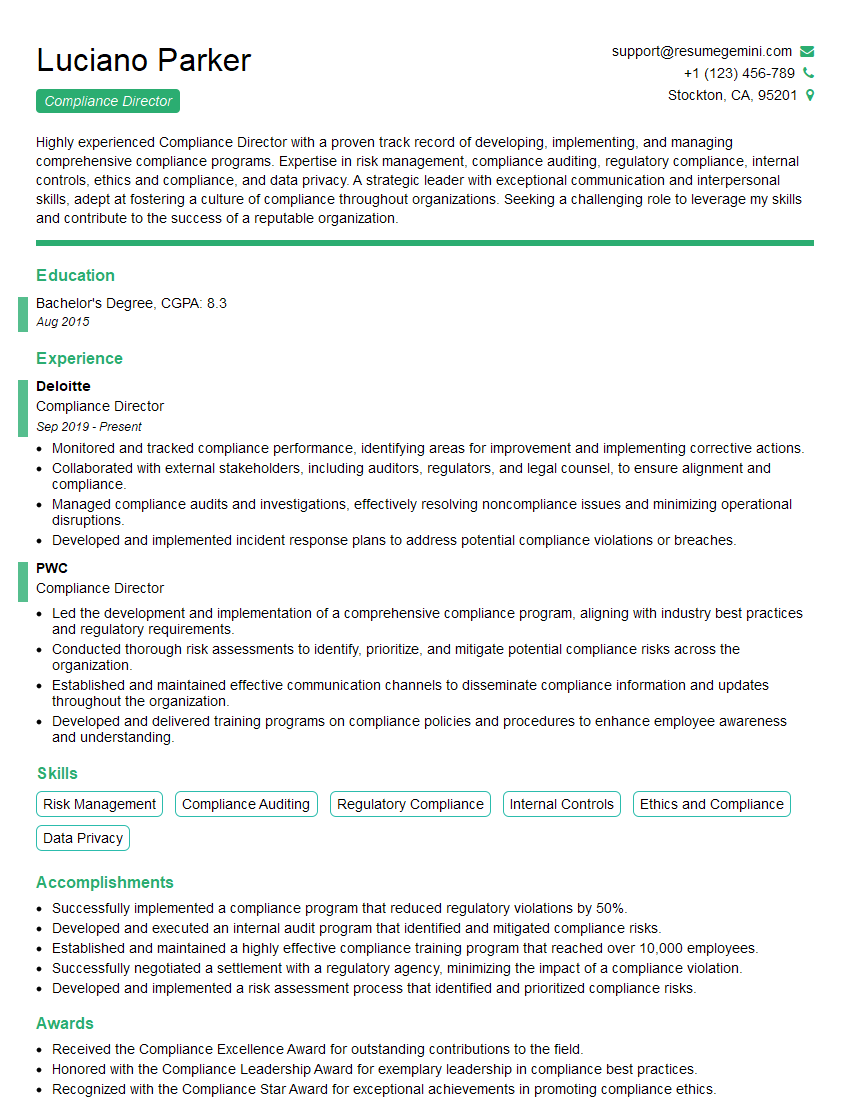
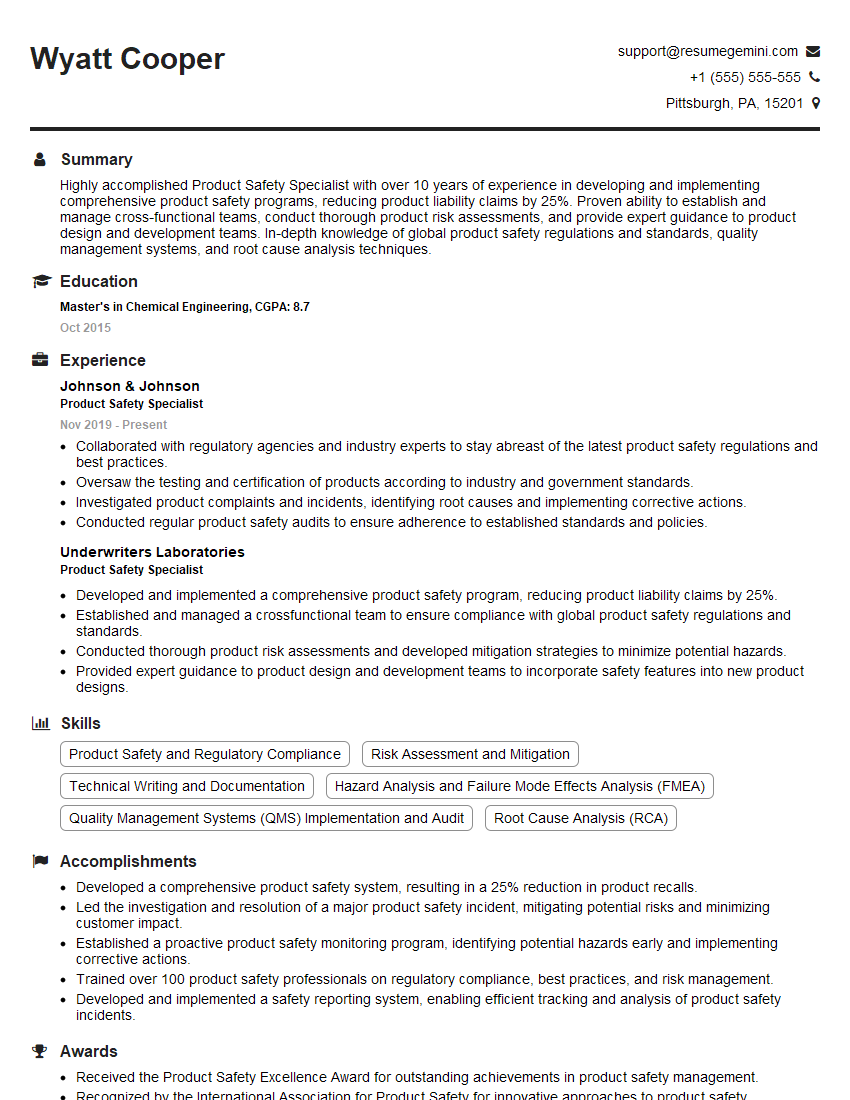
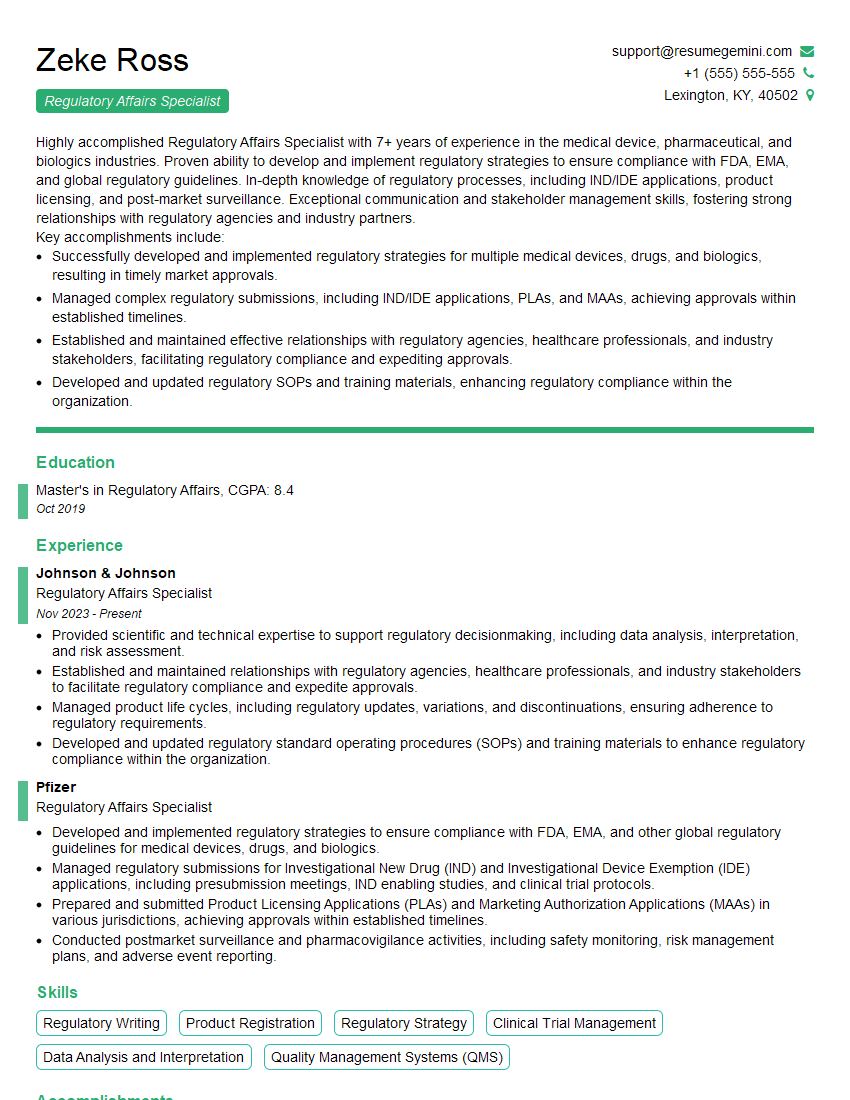
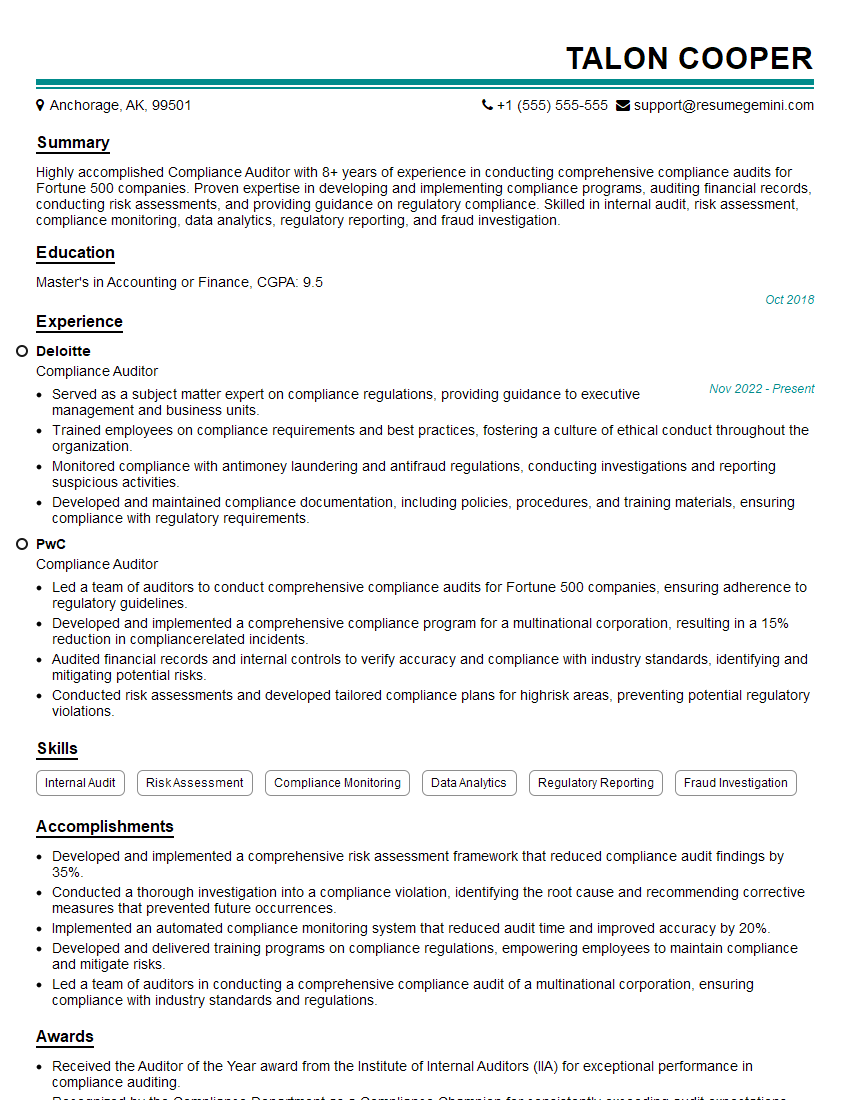
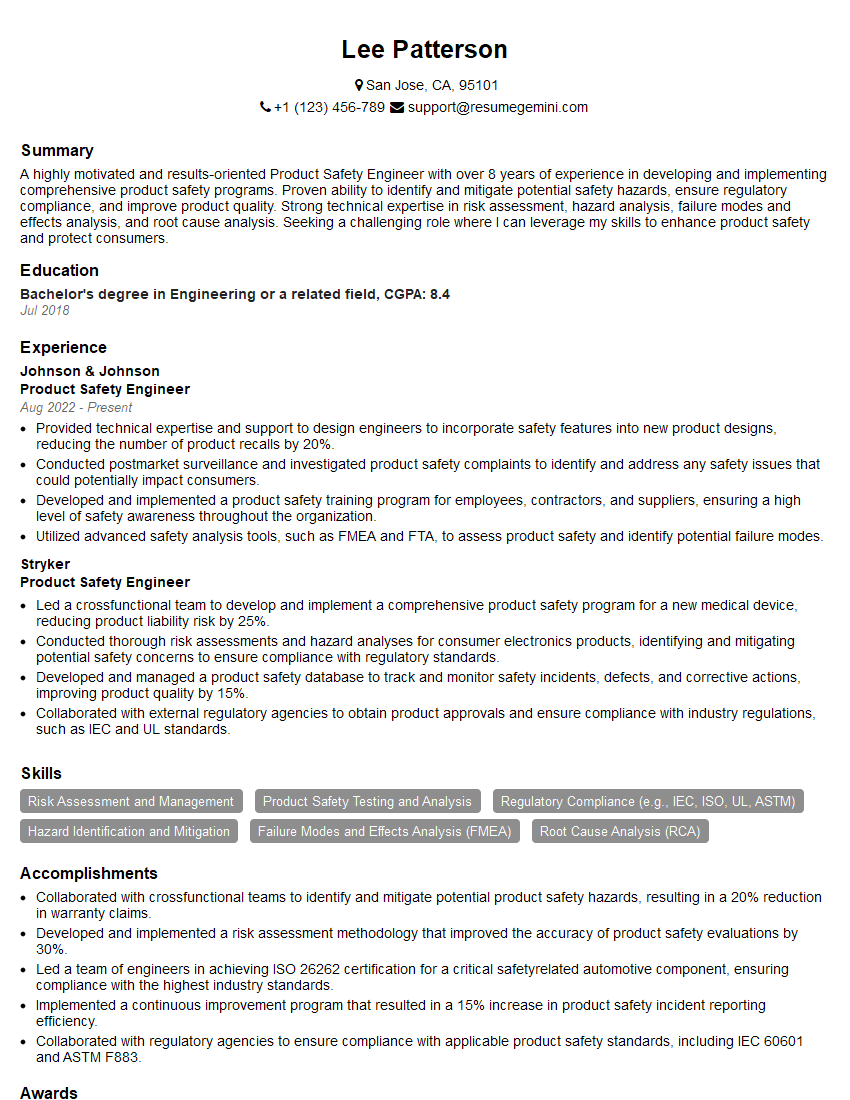
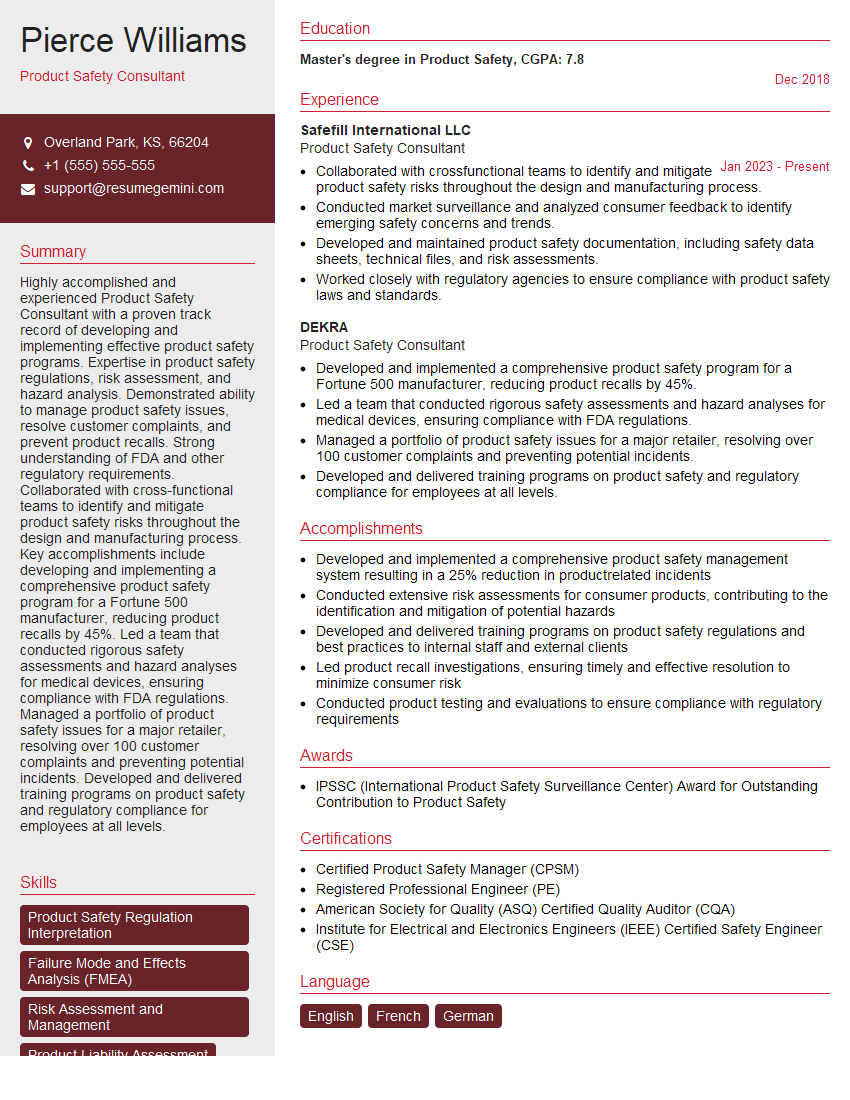
Mastering International Product Safety Regulations is crucial for career advancement in a globally connected market. A strong understanding of these regulations demonstrates a commitment to safety, compliance, and ethical business practices, making you a highly valuable asset to any organization. To maximize your job prospects, it’s vital to create an ATS-friendly resume that effectively showcases your expertise. ResumeGemini is a trusted resource to help you build a professional and impactful resume. Examples of resumes tailored to International Product Safety Regulations are available, providing templates and guidance to help you present your skills and experience effectively.

Explore more articles
Users Rating of Our Blogs
Share Your Experience
We value your feedback! Please rate our content and share your thoughts (optional).
What Readers Say About Our Blog
good