The right preparation can turn an interview into an opportunity to showcase your expertise. This guide to International Society of Music Arrangers and Orchestrators (ISMAO) Membership interview questions is your ultimate resource, providing key insights and tips to help you ace your responses and stand out as a top candidate.
Questions Asked in International Society of Music Arrangers and Orchestrators (ISMAO) Membership Interview
Q 1. Define orchestration and its role in music production.
Orchestration is the art of assigning musical instruments to different parts of a composition. Think of it as the ‘coloring’ of a musical piece. It’s not just about which instruments play, but how they interact to create a specific sonic landscape, emotional impact, and overall texture. In music production, orchestration is crucial for translating a composer’s or arranger’s vision into a rich and compelling auditory experience. It dictates the balance, dynamics, and overall sonic character of the finished product. A poor orchestration can muddy the sounds, while a masterful orchestration can elevate a simple melody into a breathtaking masterpiece.
For example, a simple melody played by a solo violin might evoke a feeling of delicate intimacy, while the same melody orchestrated for a full symphony orchestra, with layered strings, brass, and woodwinds, could create a powerful and dramatic effect.
Q 2. Explain the difference between arranging and orchestrating.
While often used interchangeably, arranging and orchestrating are distinct processes. Arranging is the broader concept, encompassing the adaptation of an existing musical piece (often a song) for a different instrumentation or style. It might involve restructuring sections, changing the rhythm, adding harmonies or counter-melodies, and generally re-imagining the piece. Orchestration, on the other hand, is a specific aspect of arranging, focusing exclusively on the assignment of instruments within a given arrangement. You could arrange a song for a string quartet, and then orchestrate the individual string parts for each instrument within the quartet. So, orchestration is a subset of arranging.
Think of it like building a house: arranging is the overall architectural design, deciding on the number of rooms, their function, and the overall layout. Orchestration is then the meticulous process of specifying which materials to use for each wall, floor, and fixture—the detailed implementation of the architectural plan.
Q 3. Describe your experience with various musical notation software (Sibelius, Finale, Dorico).
I’m proficient in Sibelius, Finale, and Dorico, each with its own strengths and weaknesses. Sibelius is known for its intuitive interface and excellent playback engine, making it ideal for quick sketching and prototyping. Finale boasts a vast library of sounds and sophisticated engraving features, perfect for creating polished scores for professional publication. Dorico, being relatively newer, offers powerful features for large-scale projects and boasts impressive efficiency in handling complex scores. My experience encompasses not only inputting notes but also utilizing the advanced features of each program, such as custom template creation, advanced notation techniques (e.g., complex rhythmic notation), and efficient score management for large ensembles. I’ve used all three extensively in professional projects, selecting the software best suited to the specific needs of each project.
For example, I might use Sibelius for a quick arrangement of a pop song, Finale for a detailed orchestral score for a film, and Dorico for a complex opera score.
Q 4. How do you approach the arrangement of a song for different instrumentations?
Approaching arrangement for different instrumentations requires a deep understanding of the capabilities and limitations of each instrument. My process begins with analyzing the song’s melody, harmony, and rhythm. Then, I consider the emotional content and overall style of the piece. Finally, I select instruments that best convey these elements. For a small ensemble, such as a string quartet, I’ll focus on creating a tight, interwoven texture. For a larger orchestra, I might employ more contrasting sections and layered textures. The arrangement will fundamentally change depending on whether I’m writing for a jazz combo, a rock band, a chamber ensemble, or a full symphony orchestra. Each instrumentation demands a different approach, ranging from the intimate textures of a string quartet to the powerful and diverse timbres of a full orchestra.
For instance, a simple ballad might work beautifully with a solo piano and cello, but require a completely different approach when orchestrated for a full orchestra, potentially adding layered strings, woodwinds for counter-melodies, and brass for powerful climaxes.
Q 5. Discuss your familiarity with different orchestral instrument ranges and timbres.
My familiarity with orchestral instrument ranges and timbres is extensive. I understand the nuances of each instrument family – strings (violins, violas, cellos, basses), woodwinds (flutes, oboes, clarinets, bassoons), brass (trumpets, horns, trombones, tubas), and percussion (a vast array of instruments). I’m also familiar with less common instruments, and their potential contributions to the overall sound. This knowledge informs my choices in instrumentation and allows me to write effectively for each instrument, exploiting its unique sonic capabilities while remaining sensitive to its limitations. For example, I know the upper register of the flute is bright and airy, while the lower register is darker and more mysterious; similarly, the trombone has a powerful and resonant sound, suitable for dramatic passages, while the oboe can offer a plaintive and expressive tone.
This understanding allows me to create compelling musical textures and avoids writing parts that are unplayable or inappropriate for a particular instrument. A strong understanding of timbre allows for creative sonic palettes that heighten emotional impact.
Q 6. How do you balance individual instrumental parts within a larger orchestral arrangement?
Balancing individual instrumental parts within a larger orchestral arrangement is a crucial skill. It involves careful consideration of volume, frequency range, and timbre. I use techniques like layering, counterpoint, and strategic use of dynamics to ensure that no single instrument overpowers the others. I might use quieter instruments to fill in harmonic gaps, while louder instruments play the melodic lines. The process of balancing requires continuous listening and adjustment. I often use a mixing console metaphor, envisioning each instrument as a channel and adjusting their levels to create a cohesive and well-balanced sonic image.
For instance, I might use muted trumpets to create a mellow background texture behind more prominent strings, or use the lower register of the bassoon to fill out the harmony in a passage dominated by higher-pitched instruments.
Q 7. Explain your process for creating a compelling musical arrangement from a given melody.
My process for creating a compelling arrangement from a given melody is iterative. It starts with a deep analysis of the melody itself – its rhythm, contour, and emotional character. Then I build upon this foundation, adding harmonies, counter-melodies, and rhythmic variations. I consider the overall form of the piece, exploring options for introductions, interludes, and outros that enhance the emotional journey of the listener. Throughout this process, instrumentation choices are closely tied to the emotional impact I want to achieve. The arrangement is refined through multiple revisions, incorporating feedback from my own critical listening and, if applicable, input from collaborators.
For example, a simple folk melody could be transformed into a dramatic orchestral piece by adding powerful string sections for emotional climaxes, contrasting woodwinds for more intimate sections, and layered percussion to create rhythmic tension and release. This iterative process ensures a cohesive and emotionally resonant final product.
Q 8. Describe a time you had to adapt a musical arrangement to meet a specific deadline or budget.
Meeting deadlines and budget constraints is a common challenge in music arrangement. One project involved arranging a symphony for a smaller ensemble due to budgetary limitations. The original score was designed for a full orchestra, but the client’s budget only allowed for a string quartet, clarinet, and bassoon. My adaptation involved:
Careful Reduction of Parts: I meticulously analyzed the harmonic structure and melodic lines of the original score to identify essential parts that could be retained. I redistributed the melodic material among the available instruments, ensuring the overall harmonic effect wasn’t compromised.
Strategic Simplification: I simplified some of the more complex instrumental passages, using simpler rhythms and harmonies that were still evocative of the original composition. This didn’t compromise the overall quality or emotional impact of the piece but significantly reduced the amount of orchestration work required.
Time Management: I broke the adaptation process into manageable tasks, prioritizing the most critical sections first. I also used efficient notation software to streamline the editing and finalizing processes to meet the tight deadline.
The result was a compelling arrangement that retained the essence of the original symphony while fitting within the client’s budget and deadline. It highlights the importance of understanding not only the music itself, but also the logistical and financial constraints of a project.
Q 9. How do you incorporate harmonic and rhythmic complexity into your arrangements?
Incorporating harmonic and rhythmic complexity requires a deep understanding of musical theory and orchestration techniques. My approach involves:
Harmonic Sophistication: I frequently use extended harmonies, such as altered dominant chords, secondary dominants, and chromatic passing chords, to add color and depth to the harmonic progression. For instance, I might introduce a diminished 7th chord to create a sense of tension before resolving to a more consonant chord. This creates a richer, more interesting harmonic landscape.
Rhythmic Variety: I avoid monotonous rhythms by incorporating syncopation, polyrhythms, and rhythmic displacement. For example, I might use a rhythmic pattern in one instrument that subtly contradicts the main rhythm in other instruments. This creates a sense of rhythmic interest and drive.
Instrumental Color: I leverage the unique timbral characteristics of each instrument to enhance both harmonic and rhythmic complexity. The interplay of different instrumental textures creates richer layering and enhances the overall sonic experience.
It’s crucial to balance complexity with clarity. While adding layers of rhythmic and harmonic intricacy, I ensure that the overall texture remains cohesive and intelligible. The goal isn’t to simply overwhelm the listener with complexity, but to use it effectively to create an engaging and memorable musical experience.
Q 10. What are some common challenges in orchestrating music for film or games?
Orchestrating for film or games presents unique challenges compared to concert music. These include:
Synchronization with Visuals: The music needs to precisely align with the action on screen. This often involves creating cues that are very short and specific, requiring meticulous attention to detail and precise timing. For example, a sudden shift in harmony or rhythm might need to perfectly coincide with a dramatic event in a film.
Emotional Impact: The music must heighten the emotional impact of the scene. This requires a deep understanding of both musical expression and the storytelling elements of the film or game. For example, a quiet, understated melody might be used to create a sense of foreboding, while a powerful, dramatic melody might be used to accompany a climactic battle scene.
Budget and Time Constraints: Film and game scoring often involve tight deadlines and budget restrictions. Efficiency and resourcefulness are key to successfully completing these projects.
Technological Considerations: The orchestration needs to be compatible with the sound design and mixing processes. For instance, I might need to consider the use of specific virtual instruments or effects to achieve a certain sound.
Successfully navigating these challenges requires strong communication, technical expertise, and the ability to adapt to changing circumstances. Working within these parameters requires a keen sense of creative problem-solving.
Q 11. How do you ensure the readability and clarity of your musical scores?
Ensuring readability and clarity in musical scores is paramount. My approach involves:
Clear Notation: I utilize standard notation practices, ensuring consistent spacing, clear articulation markings, and precise dynamic indications. I avoid cluttered scores by using clear and concise notation.
Logical Organization: I organize the score in a logical and intuitive manner, making it easy for performers to follow the music. This involves thoughtful use of system breaks, page turns, and part layout.
Consistent Style: I maintain a consistent style throughout the score, avoiding unnecessary variations in notation that might confuse the musicians.
Detailed Instructions: Where necessary, I include detailed instructions to clarify any ambiguities or special performance requirements. For example, I might provide specific instructions for tempo changes or articulation techniques.
By adhering to these principles, I ensure that the score is both aesthetically pleasing and easily readable by musicians of varying skill levels. A readable score minimizes potential errors during rehearsal and performance, leading to a smoother and more successful musical outcome.
Q 12. Explain your experience with music copy editing and proofreading.
Music copy editing and proofreading are essential parts of the music preparation process. My experience involves meticulous checking for:
Accuracy of Notation: I carefully verify the accuracy of all notes, rests, rhythms, and accidentals to ensure that the score reflects the composer’s intentions precisely.
Consistency of Style: I ensure that the style of notation is consistent throughout the score, adhering to established standards and avoiding inconsistencies that might confuse the performers.
Correcting Errors: I identify and correct any errors in the score, such as misplaced notes, incorrect clefs, or missing parts.
Legibility and Formatting: I check for legibility and proper formatting, ensuring that the score is clear, organized, and visually appealing.
This process requires a keen eye for detail and a thorough understanding of music notation conventions. A well-proofread score not only enhances performance quality, but it also reflects professionalism and respect for the composer’s work. It minimizes potential performance problems and reflects positively on all parties involved.
Q 13. Describe your workflow for creating and revising orchestral arrangements.
My workflow for creating and revising orchestral arrangements is iterative and involves several stages:
Analysis: I begin by carefully analyzing the original composition, identifying its key features, harmonic structure, melodic lines, and overall style.
Sketching: I create preliminary sketches of the arrangement, experimenting with different instrumental combinations and textures.
Instrumentation: I assign the various instrumental parts, taking into account the timbral characteristics and ranges of different instruments.
Composition and Notating: I compose and notate the arrangement using professional music notation software, ensuring the accuracy and clarity of the score.
Revision: I review and revise the arrangement multiple times, listening carefully to the score and making necessary adjustments to improve its clarity, balance, and overall quality.
Proofreading: I meticulously proofread the final score to ensure its accuracy and consistency.
This iterative process involves feedback loops, continuous refinement, and attention to detail, ensuring that the final product meets the highest standards of quality and musical excellence.
Q 14. How do you collaborate effectively with composers and other musicians?
Effective collaboration is crucial in music arrangement. My approach emphasizes:
Clear Communication: I maintain open and honest communication with composers and other musicians, ensuring that everyone is on the same page regarding the project’s goals and expectations. This often involves regular meetings and discussions.
Active Listening: I actively listen to the composer’s ideas and suggestions, incorporating them into the arrangement where appropriate.
Constructive Feedback: I provide constructive feedback to the composer and other musicians, offering suggestions for improvement without being overly critical.
Respectful Collaboration: I treat all collaborators with respect and professionalism, recognizing the value of their contributions to the project.
Flexibility and Adaptability: I’m flexible and adaptable, willing to adjust the arrangement based on the composer’s feedback and the needs of the project.
Successful collaboration leads to a richer, more nuanced, and more fulfilling musical outcome. It demonstrates professionalism and encourages a supportive environment where everyone can contribute their unique skills and perspectives.
Q 15. What are your preferred methods for communicating musical ideas and revisions?
My preferred methods for communicating musical ideas and revisions prioritize clarity and efficiency. I find a multi-pronged approach works best. For initial concepts, I often use detailed score mockups, utilizing notation software like Sibelius or Dorico to visually represent instrumentation, rhythmic patterns, and melodic contours. This allows for precise communication of my musical vision. For revisions, I supplement these scores with audio demos, created using virtual instruments, which provide an aural representation of the intended sound. These demos are invaluable for conveying subtleties of phrasing, dynamics, and timbre that are difficult to represent solely in notation. Finally, clear and concise written communication accompanies both the score and audio, outlining the specific changes being proposed and the reasoning behind them. This combination ensures a comprehensive and transparent understanding of my musical intentions.
Career Expert Tips:
- Ace those interviews! Prepare effectively by reviewing the Top 50 Most Common Interview Questions on ResumeGemini.
- Navigate your job search with confidence! Explore a wide range of Career Tips on ResumeGemini. Learn about common challenges and recommendations to overcome them.
- Craft the perfect resume! Master the Art of Resume Writing with ResumeGemini’s guide. Showcase your unique qualifications and achievements effectively.
- Don’t miss out on holiday savings! Build your dream resume with ResumeGemini’s ATS optimized templates.
Q 16. Explain your understanding of music theory and its application in arranging and orchestrating.
Music theory is the bedrock of my arranging and orchestrating work. A deep understanding of harmony, counterpoint, form, and orchestration techniques is essential for creating compelling and effective arrangements. For example, understanding functional harmony allows me to create sophisticated chord progressions that support the emotional arc of the music, effectively guiding the listener’s experience. My knowledge of counterpoint enables me to write independent melodic lines that intertwine and complement each other, creating rich textures and avoiding dissonance. Similarly, understanding musical form helps me construct arrangements that are both structurally sound and engaging, ensuring that the listener’s attention remains captivated. The principles of orchestration, including instrumentation, voicing, and timbre, allow me to carefully craft the sonic landscape, painting a vivid auditory picture through strategic use of different instrumental colors and textures. In essence, music theory provides the framework for my creative process, enabling me to translate abstract musical ideas into concrete and effective arrangements.
Q 17. How do you balance the artistic and technical aspects of music arrangement?
Balancing the artistic and technical aspects of music arrangement is a constant negotiation. The artistic vision—the emotional core, the desired mood and atmosphere—must drive the creative process. However, this artistic vision needs a solid technical foundation to be effectively realized. For instance, I might have a deeply emotional melody I want to convey, but the technical aspect would involve selecting appropriate instrumentation to best express that emotion—a soaring violin solo might be more effective than a muted trumpet. Similarly, a driving rhythm might be artistically vital, but its technical execution requires careful consideration of rhythmic complexity and instrumental capabilities. The process is iterative; the artistic vision shapes the technical choices, and the technical limitations or possibilities inform and refine the artistic expression. I consistently refine my arrangements, ensuring the technical elements support and enhance the artistic vision.
Q 18. Discuss your experience with different musical styles and genres.
My experience spans a wide range of musical styles and genres, including classical, jazz, film scoring, pop, and world music. This diverse background equips me with a versatile skillset, allowing me to adapt my arranging and orchestrating techniques to the specific demands of each genre. For example, arranging for a classical string quartet requires a different approach than orchestrating for a large film orchestra, where considerations of cinematic impact and dynamic range come to the fore. Similarly, working with jazz ensembles demands an understanding of improvisation and harmonic freedom, whereas pop arrangements might prioritize catchy melodies and accessible rhythms. I view this stylistic versatility not as a limitation, but as a strength, enabling me to approach each project with a fresh perspective and tailored approach.
Q 19. How do you handle feedback and constructive criticism on your musical arrangements?
I value constructive criticism and view feedback as an invaluable opportunity for growth. I actively seek feedback from diverse sources, including other musicians, producers, and even potential listeners. My approach involves listening carefully to the feedback, understanding the perspectives offered, and determining whether the suggestions align with the overall artistic vision. I separate constructive criticism from subjective opinions, focusing on the actionable points that can enhance the arrangement. If the feedback is valid and improves the piece, I incorporate it thoughtfully and iteratively, often testing new approaches through revised audio demos. Even if I ultimately don’t implement a suggested change, I appreciate the perspective it offered and value the collaborative process. My goal is always to create the best possible arrangement.
Q 20. Describe your experience with conducting or working with live orchestras.
I’ve had the privilege of working with live orchestras on numerous occasions, both in the role of arranger and, occasionally, as a conductor for smaller ensembles. These experiences have been invaluable in bridging the gap between the theoretical and the practical. Working with live musicians offers immediate feedback on the technical feasibility and sonic impact of my arrangements. It’s a dynamic process; hearing the musicians interpret my work reveals aspects of the arrangement I may not have anticipated, often leading to further refinement. Conducting, even on a smaller scale, has provided an in-depth understanding of the nuances of orchestral performance, which informs my arranging process. The experience of managing the ensemble’s dynamics, tempos, and overall expression has shaped my approach, enabling me to create arrangements that are not only sonically rich but also practically achievable within a live performance context.
Q 21. How do you manage large and complex musical projects effectively?
Managing large and complex musical projects demands meticulous organization and planning. I use a project management approach that involves breaking down the project into smaller, manageable tasks with clearly defined deadlines. I utilize digital tools such as project management software (e.g., Asana, Trello) to track progress and collaborate effectively with other musicians and personnel. Creating detailed timelines, outlining specific tasks for each stage of the process (e.g., sketching, scoring, arranging, recording, mixing), helps me maintain a clear overview and ensures that the project stays on schedule. Communication is crucial; I maintain consistent contact with all stakeholders, providing regular updates and addressing any challenges proactively. A flexible approach is vital, accommodating unexpected changes or roadblocks while maintaining the overall artistic vision. This structured approach ensures that even the most complex projects are completed effectively and efficiently.
Q 22. What software or tools do you use for audio editing and mixing?
My audio editing and mixing workflow relies heavily on industry-standard Digital Audio Workstations (DAWs). I primarily use Logic Pro X, but I’m also proficient in Pro Tools and Ableton Live, adapting my choice to the project’s specific needs and collaborators’ preferences. These DAWs offer a comprehensive suite of tools, from precise editing capabilities like time stretching and pitch correction to advanced mixing features like EQ, compression, and reverb. For example, when working on a large orchestral score, Logic Pro X’s powerful MIDI editing capabilities are invaluable for precise note placement and articulation. In addition, I utilize various plugins for specialized effects and instrument emulation; for instance, I frequently employ Vienna Symphonic Library’s orchestral virtual instruments to achieve a realistic and nuanced sonic palette. Finally, I always carefully consider the monitoring environment to ensure consistent results during the mixing process. This might involve using studio reference monitors or calibrated headphones to maintain accurate frequency response and loudness levels.
Q 23. How do you stay current with industry trends in music arrangement and orchestration?
Staying abreast of industry trends is crucial. I achieve this through a multi-pronged approach. First, I actively attend workshops and conferences like those organized by the ISMAO, where I network with leading arrangers and composers, and learn about the latest technologies and compositional techniques. Second, I subscribe to relevant journals and online publications such as those focusing on film scoring, orchestral music, and audio engineering. Third, I continuously engage with online communities and forums dedicated to music arrangement and orchestration, discussing techniques and challenges with fellow professionals. Finally, I meticulously analyze contemporary scores from film, television, video games, and concert music, paying attention to trends in instrumentation, orchestration techniques, and harmonic language. For example, I recently saw a trend towards incorporating more diverse instrumentation, experimenting with non-traditional orchestral combinations, and a renewed interest in microtonal music; keeping an eye on these developments informs my own creative process.
Q 24. What are some of your favorite orchestral works, and why?
Choosing favorites is difficult! However, some works consistently inspire me. Gustav Mahler’s Symphony No. 5 stands out for its dramatic arc, masterful use of thematic transformation, and deeply emotional impact. The sheer complexity and depth of his orchestration are always awe-inspiring. Similarly, Richard Strauss’s Also Sprach Zarathustra captivates with its powerful orchestral colors and dramatic storytelling. Finally, I deeply admire the innovative and expressive scoring in Bernard Herrmann’s work for Alfred Hitchcock’s films, particularly Psycho, showcasing how economical yet powerfully evocative scoring can be. Each of these composers represents a unique approach to orchestration, pushing the boundaries of the medium and providing endless inspiration.
Q 25. How do you handle creative differences with a composer or director?
Creative differences are inevitable, and handling them professionally is key. I begin by emphasizing open communication and active listening. I believe in fostering a collaborative environment where everyone feels comfortable expressing their ideas and concerns. If a disagreement arises, I aim to understand the composer’s or director’s artistic vision thoroughly before offering my perspectives. I often approach these discussions by proposing alternative solutions or compromises, rather than simply stating my preferences. For example, if a composer wants a specific sound that might be technically challenging or stylistically inappropriate, I might suggest a different approach that retains the desired emotional impact while being more feasible. Ultimately, the goal is to create the best possible final product through mutual respect and creative compromise.
Q 26. Explain your understanding of copyright and licensing related to music arrangements.
Understanding copyright and licensing is paramount. When arranging existing music, I ensure I obtain the necessary permissions and licenses from the copyright holder. This typically involves securing a mechanical license to reproduce the music and potentially a synchronization license if the arrangement is to be used in a visual medium like a film or video game. The terms of these licenses vary widely and must be carefully reviewed. For example, mechanical licenses often grant the right to reproduce a musical work in a physical format or digitally, while synchronization licenses are required to synchronize the music with moving images. Failing to obtain the appropriate licenses can lead to serious legal repercussions and financial penalties. In my work, I usually work with a music licensing professional to navigate these complexities and ensure compliance.
Q 27. Describe your experience working within a professional music production environment.
My experience in professional music production spans various roles and projects. I’ve worked as a freelance arranger for film and television, collaborating closely with composers and directors to realize their musical visions. I’ve also been involved in video game scoring, where the demands for dynamic music and tight deadlines require efficient and collaborative workflows. In these settings, I’ve gained experience in managing large projects, coordinating with recording engineers and musicians, and delivering high-quality work under pressure. My role frequently involves reviewing and implementing feedback, constantly refining the arrangements to best suit the overall production. This experience has provided valuable insights into the practicalities of large-scale music productions, from initial concept discussions to final mixing and mastering.
Q 28. What are your long-term career goals within the field of music arrangement and orchestration?
My long-term career goals involve continued growth and expansion within the field of music arrangement and orchestration. I aim to enhance my skills in areas such as electronic music integration within orchestral contexts, and further refine my expertise in various musical genres. I also hope to expand my network within the industry and collaborate on increasingly ambitious and challenging projects, including perhaps composing my own orchestral works. Ultimately, I aspire to become a highly sought-after and respected arranger and orchestrator, consistently delivering exceptional work and pushing the creative boundaries of orchestral music. This includes mentoring aspiring arrangers and contributing to the educational resources available in the field through workshops and publications.
Key Topics to Learn for International Society of Music Arrangers and Orchestrators (ISMAO) Membership Interview
- Understanding ISMAO’s Mission and Values: Thoroughly research ISMAO’s goals, activities, and the benefits of membership. Be prepared to articulate how your aspirations align with the organization’s objectives.
- Orchestration Techniques and Principles: Demonstrate a strong understanding of various orchestration techniques, including instrument ranges, timbral blending, and balancing sections. Be ready to discuss practical applications in different musical contexts.
- Music Arrangement Strategies: Showcase your knowledge of different arrangement styles, approaches to thematic development, and the creation of compelling musical narratives. Prepare examples from your own work.
- Digital Audio Workstations (DAWs) and Notation Software: Discuss your proficiency in industry-standard DAWs and music notation software. Highlight your workflow and problem-solving skills within these environments.
- Collaboration and Professionalism: Explain your approach to collaborative projects, emphasizing effective communication, teamwork, and respect for diverse perspectives. This is crucial for working within a professional society.
- Copyright and Licensing in Music: Demonstrate an understanding of copyright law and best practices for licensing music, particularly relevant for arrangers and orchestrators.
- Music Theory and Analysis: Be prepared to discuss advanced music theory concepts and demonstrate your ability to analyze musical scores effectively. This foundational knowledge is essential for sophisticated arrangement and orchestration.
- Portfolio and Professional Experience: Prepare to discuss your past work, showcasing your strengths and skills. Be ready to explain your creative process and justify your choices.
Next Steps
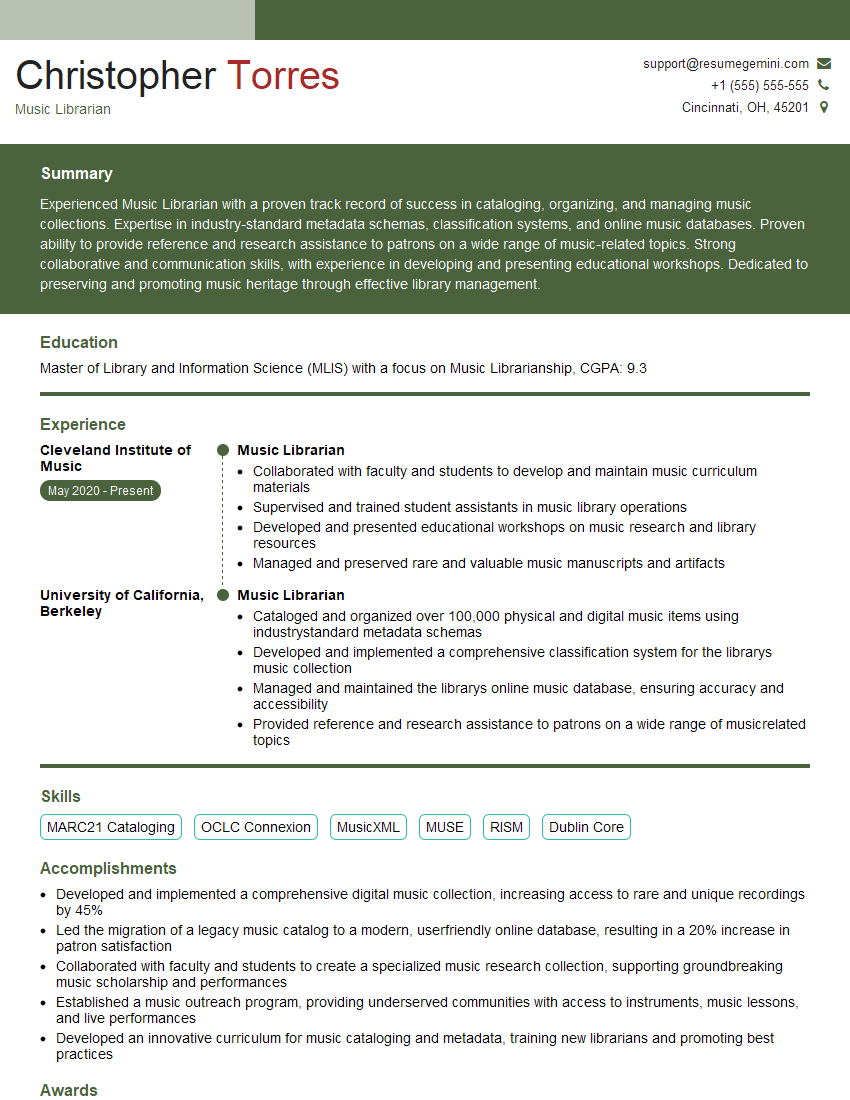
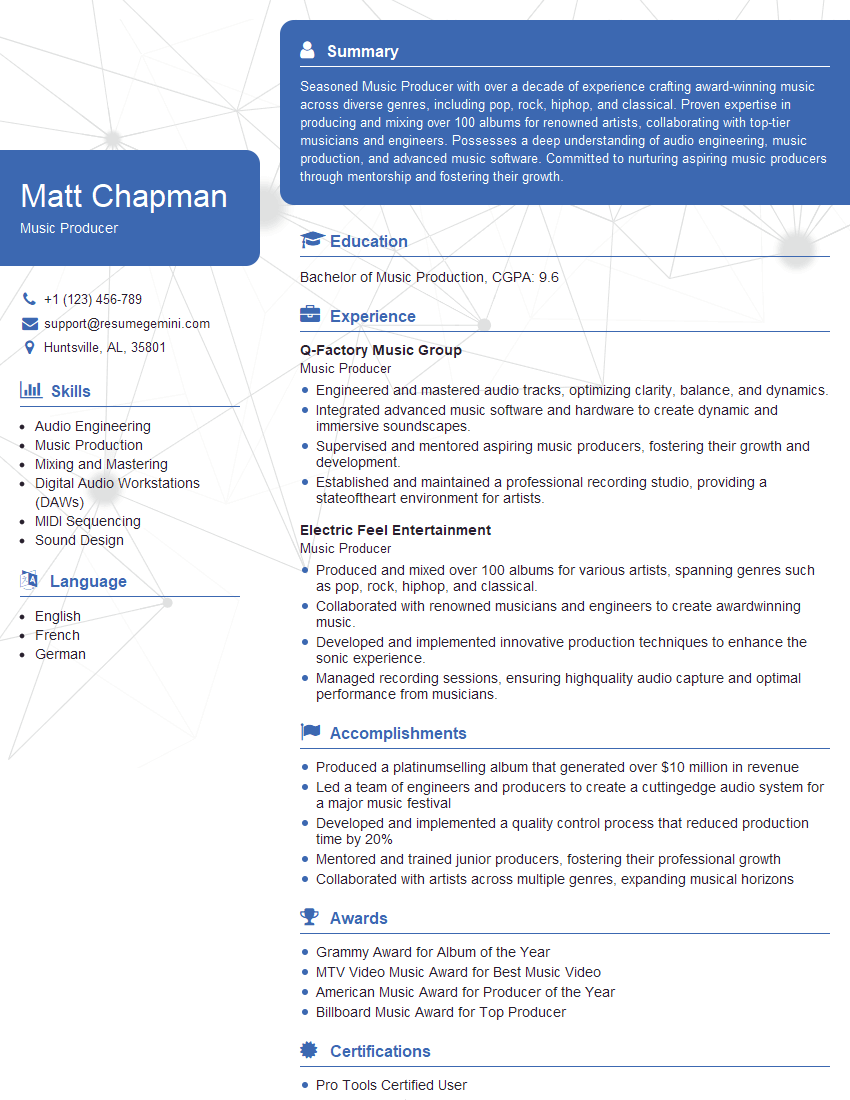
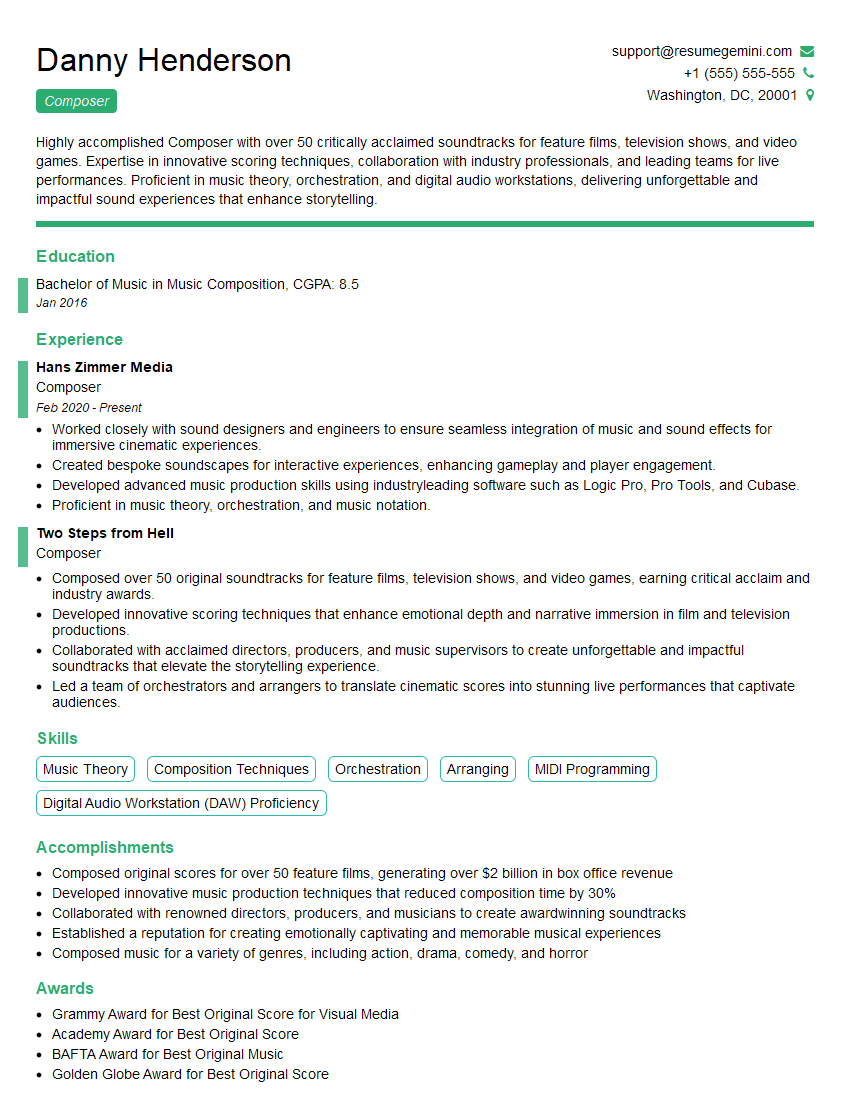
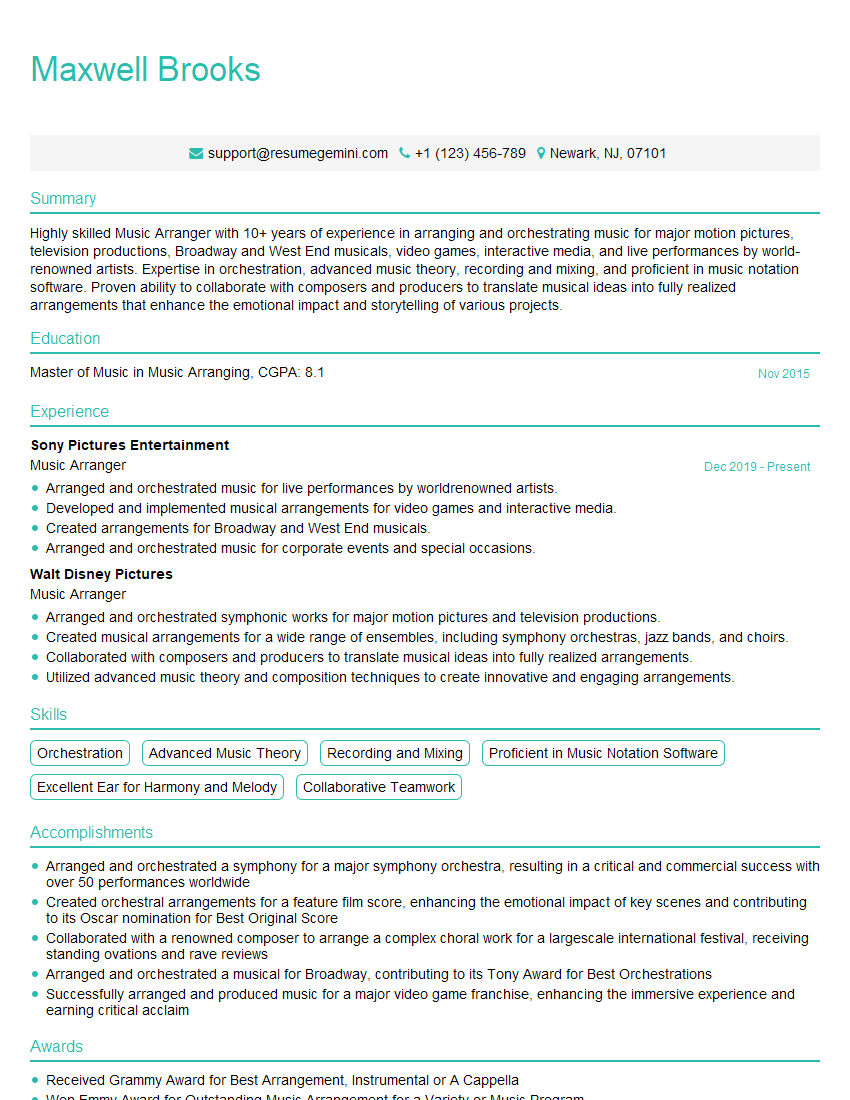
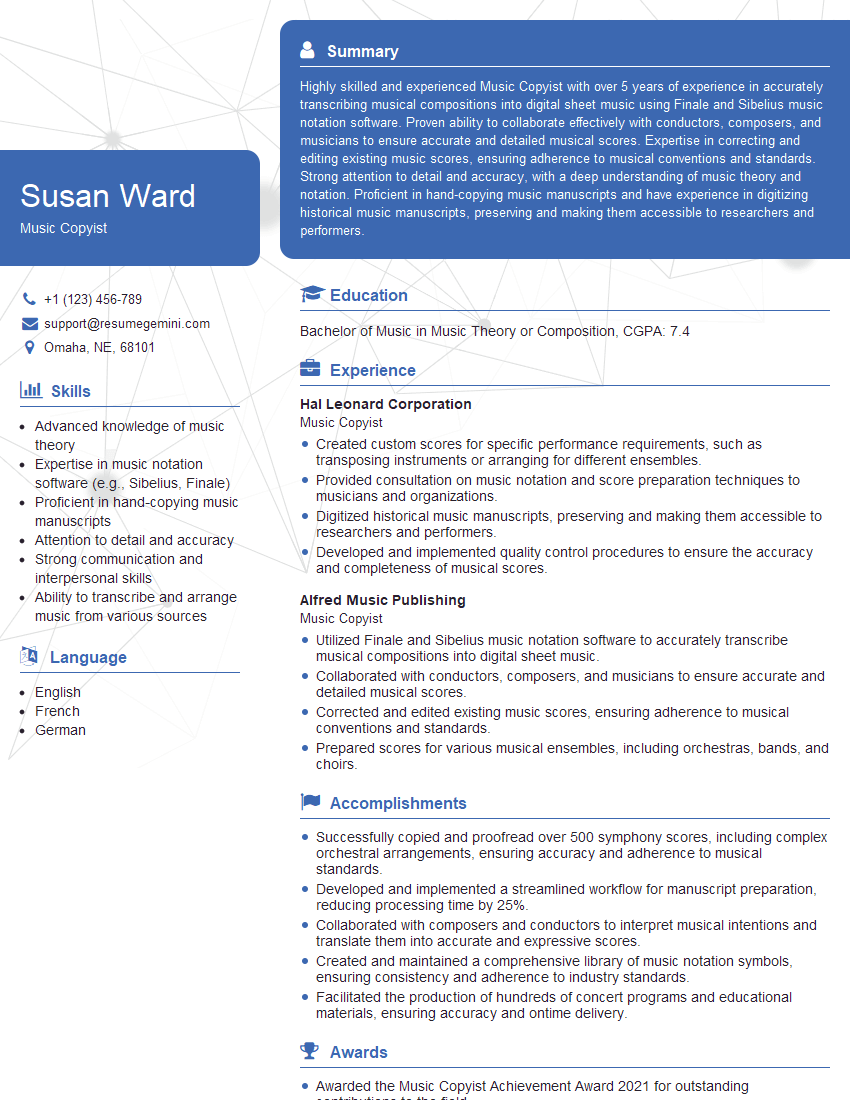
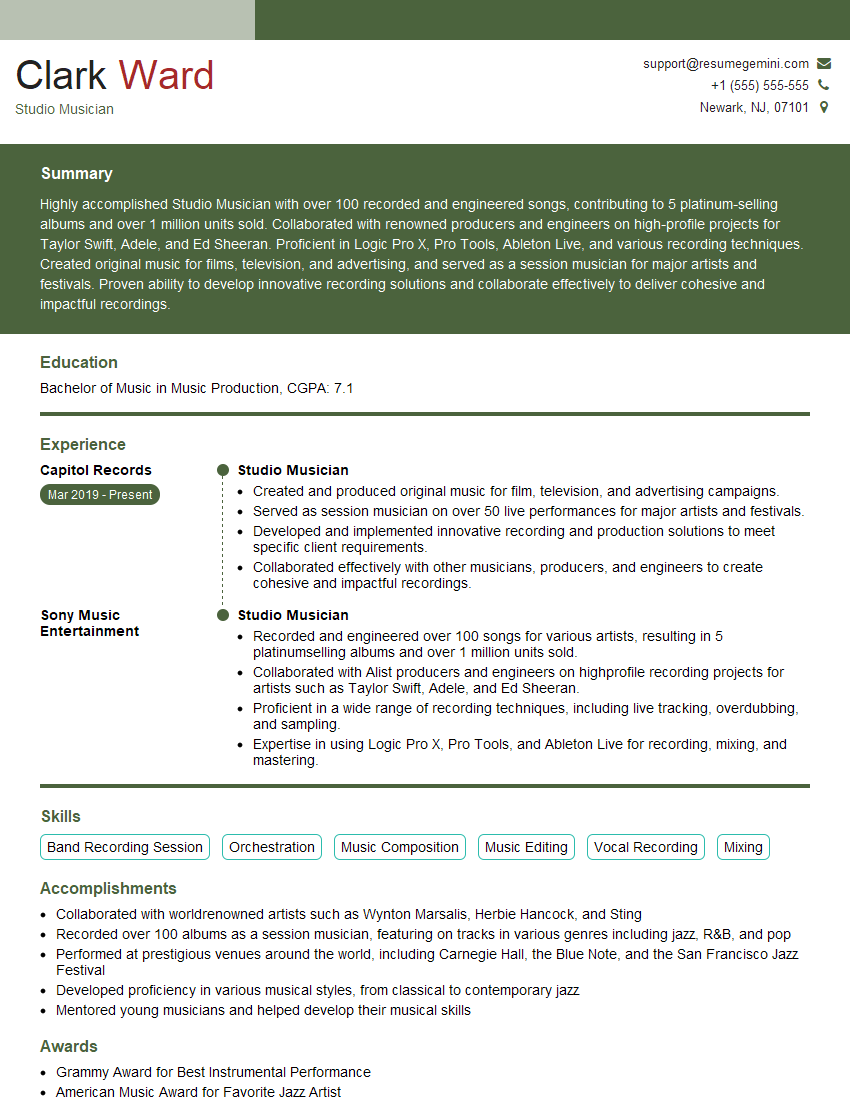
Gaining ISMAO membership significantly enhances your professional standing within the music industry, opening doors to networking opportunities, collaborations, and career advancement. To maximize your job prospects, creating an ATS-friendly resume is crucial. ResumeGemini is a trusted resource that can help you build a professional resume tailored to the specific requirements of your target roles. Examples of resumes tailored to ISMAO membership are available to help guide you in this process.
Explore more articles
Users Rating of Our Blogs
Share Your Experience
We value your feedback! Please rate our content and share your thoughts (optional).
What Readers Say About Our Blog
Very informative content, great job.
good