Feeling uncertain about what to expect in your upcoming interview? We’ve got you covered! This blog highlights the most important Interpretation Skills interview questions and provides actionable advice to help you stand out as the ideal candidate. Let’s pave the way for your success.
Questions Asked in Interpretation Skills Interview
Q 1. Describe your experience with simultaneous interpretation.
Simultaneous interpretation is a challenging yet rewarding aspect of my profession. It involves listening to a speaker and translating their words into another language at the same time. This requires exceptional concentration, linguistic agility, and the ability to quickly process and convey information accurately. My experience encompasses various settings, from international conferences and business negotiations to medical consultations and legal proceedings. For instance, I recently interpreted a keynote address at a tech conference, requiring rapid comprehension of complex technical jargon and its seamless translation to ensure the audience fully grasped the speaker’s message. The ability to maintain a natural flow and rhythm despite the time constraint is crucial, and I’ve honed this skill through years of dedicated practice and exposure to diverse contexts.
Q 2. Explain the difference between consecutive and simultaneous interpretation.
Consecutive and simultaneous interpretation are two distinct approaches to interpreting. In consecutive interpretation, the speaker pauses periodically, allowing the interpreter to deliver a complete and accurate rendition of their message in the target language. Think of it like taking notes and then summarizing a section of a speech in the target language. This gives the interpreter more time to process and deliver a polished translation. Simultaneous interpretation, on the other hand, is a real-time process, where the interpreter translates the speaker’s words almost simultaneously, using a headset and microphone. This requires a high level of multitasking and linguistic dexterity.
An analogy: imagine watching a movie. Consecutive interpretation is like watching a scene and then having a detailed summary explained to you afterward. Simultaneous interpretation is like watching a movie with subtitles appearing as the actors speak.
Q 3. How do you handle interpreting complex terminology?
Handling complex terminology is a key skill for any interpreter. My approach involves several strategies. Firstly, I always prepare thoroughly before any assignment, researching the specific subject matter and familiarizing myself with any technical vocabulary. If I encounter unfamiliar terms during the interpretation, I utilize my understanding of the context to infer meaning, employing paraphrasing and explanation to ensure clarity for the audience. For example, instead of directly translating a highly specialized medical term, I might explain its function within the broader context of the speech, ensuring the meaning is conveyed appropriately. I also maintain a network of colleagues and resources to consult when encountering particularly obscure terminology.
Q 4. What strategies do you use to maintain accuracy and fluency during interpretation?
Maintaining accuracy and fluency is paramount. My strategies include:
- Extensive preparation: Thoroughly researching the topic and familiarizing myself with relevant vocabulary.
- Active listening: Focusing intently on the speaker’s message, tone, and emphasis.
- Memory techniques: Utilizing mental chunking and note-taking (especially in consecutive interpretation) to help remember key ideas and details.
- Regular practice: Consistent work keeps my skills sharp and my knowledge base updated.
- Self-evaluation: Regularly reviewing my work and identifying areas for improvement.
Q 5. How do you manage interpreting in a high-pressure environment?
High-pressure situations are part and parcel of interpreting. My approach focuses on maintaining composure and utilizing effective coping mechanisms. This involves deep breathing exercises to manage stress, focusing on delivering the message accurately and efficiently rather than letting nerves cloud my judgment, and effective time management skills. Preparation plays a huge role in reducing stress; being well-prepared gives me confidence and allows me to focus on the nuances of the task at hand. I also prioritize sleep and a healthy lifestyle to improve overall mental resilience. Ultimately, experience has taught me to channel nervous energy into heightened focus and concentration.
Q 6. Describe your experience with note-taking for consecutive interpretation.
Note-taking for consecutive interpretation is a critical skill. I use a concise system of abbreviations, symbols, and keywords, designed to capture the essence of the speaker’s message rather than transcribing it verbatim. My system combines elements of linear and visual note-taking, using symbols to represent key concepts and relationships between ideas. This ensures I can quickly recall the context and reconstruct the message accurately and fluently during my interpretation. I’ve constantly refined my note-taking techniques over the years, adapting them to different speech styles and subject matter. The system needs to be highly personalized and efficient, because in consecutive interpretation, time is of the essence while accuracy and flow are paramount.
Q 7. How do you adapt your interpretation style to different audiences?
Adapting my interpretation style is essential. I consider the audience’s background, level of understanding of the subject matter, and cultural context when delivering the interpretation. For instance, a technical presentation to specialists requires a different approach than a public speech to a general audience. I might use more formal language for academic settings, and employ simpler terms and explanations for audiences with less specialized knowledge. Cultural nuances are also important; I adapt my delivery to respect cultural norms and sensitivities. This involves paying attention to subtleties in tone, style, and even humor, tailoring the interpretation for maximum comprehension and cultural appropriateness.
Q 8. How do you handle interruptions or unclear speech during interpretation?
Handling interruptions or unclear speech during interpretation requires a combination of skilled listening, quick thinking, and clear communication. Imagine you’re conducting a simultaneous interpretation of a complex technical presentation. If the speaker suddenly pauses mid-sentence or their speech becomes muffled, I immediately employ several strategies. First, I acknowledge the interruption by subtly pausing my interpretation – this shows the audience I’m aware of the issue and prevents confusion. Then, I try to anticipate what was said or implied, based on the context and the speaker’s previous statements. If necessary, I politely ask the speaker to repeat the unclear phrase or clarify a point. Should the interruption be significant, I might briefly signal to the audience that there’s a minor disruption before continuing the interpretation once clarity is restored. For instance, I could say something like, ‘One moment, please,’ or, ‘The speaker is clarifying a point,’ depending on the setting’s formality. Professionalism demands both prompt response and the maintenance of a natural flow of interpretation as much as possible.
Q 9. How do you maintain neutrality and objectivity while interpreting?
Maintaining neutrality and objectivity is paramount in interpretation. It’s about conveying the message accurately, without imposing my own biases or opinions. Think of me as a transparent conduit; my role isn’t to add my personal commentary or sway the audience’s perception. I achieve this through rigorous self-awareness and active listening. I focus solely on the source language speaker’s words and tone, diligently translating the meaning without injecting my own interpretations. This involves carefully choosing words that mirror the original meaning and style while avoiding subjective language. For example, if the speaker uses emotionally charged language, I strive to convey the same emotion in the target language, but without adding any extra emphasis or personal judgment. Maintaining a neutral tone and avoiding any form of nonverbal communication that could be interpreted as favoring one side over the other is also crucial. Regular self-reflection on my interpretations helps in maintaining this objectivity.
Q 10. Explain your understanding of ethical considerations in interpretation.
Ethical considerations are the bedrock of professional interpretation. They guide my actions, ensuring accuracy, confidentiality, and respect for all parties involved. Confidentiality is paramount; information shared during an interpretation session is treated with the utmost discretion, and I would never disclose it to anyone outside the context of the assignment. Accuracy is another critical ethical component; I am obligated to interpret the message faithfully, without adding or omitting information that could alter the meaning or impact. Impartiality is also essential; I must remain neutral and avoid any bias, ensuring that the message is conveyed objectively. Furthermore, professional ethics dictate that I should always acknowledge the limitations of my skills. If I encounter terminology outside my expertise, I have an obligation to inform relevant parties and seek assistance, if necessary, rather than risking misinterpretation.
- Confidentiality: Protecting sensitive information shared during the interpretation.
- Accuracy: Faithfully conveying the meaning of the source message.
- Impartiality: Remaining neutral and objective.
- Professionalism: Maintaining a high standard of conduct and competence.
Q 11. How do you prepare for an interpretation assignment?
Preparation for an interpretation assignment is crucial for success. The process isn’t just about knowing the languages; it’s about understanding the context. First, I thoroughly research the topic. If it’s a medical interpretation, I familiarize myself with relevant medical terminology. If it’s a business meeting, I research the companies and their products. This research allows me to anticipate the terminology and themes likely to be discussed. Next, I review any available materials, such as presentations, reports, or background information. This allows me to adapt to the specific language and context of the event. I also consider the cultural context, aiming to understand potential nuances in communication style or terminology that could impact my interpretation. Finally, I practice my interpretation skills by reading and listening to examples relevant to the context, ensuring fluidity and accuracy. The goal is to be well-prepared to deliver accurate and culturally appropriate interpretations.
Q 12. Describe a time you had to interpret culturally sensitive information.
During a community health forum, I had to interpret a doctor’s explanation of a sensitive procedure to a patient from a different cultural background. The doctor explained the risks and benefits clearly, but using medical jargon that wasn’t easily understood by the patient. The patient was also visibly hesitant, due to cultural beliefs that differ from standard medical practice. My role wasn’t just to translate words but to bridge the cultural gap. I used simple language and provided cultural context to make the information understandable and relatable. Instead of directly translating medical terms, I explained concepts in a way that aligned with the patient’s cultural frame of reference. I also carefully observed the patient’s non-verbal cues to gauge their understanding and address any concerns or hesitations they might have. This highlighted the importance of being not only linguistically proficient but culturally sensitive and sensitive to the emotional needs of the individuals involved.
Q 13. How do you handle situations where you are unsure of the meaning of a word or phrase?
Encountering an unfamiliar word or phrase is a common challenge in interpretation. My strategy involves a multi-pronged approach. First, I try to infer the meaning from the context. The surrounding words and the speaker’s overall message often provide clues. If the context isn’t sufficient, I might politely ask the speaker for clarification, subtly rephrasing the unclear section in a way that prompts explanation without interrupting the flow of conversation. If the speaker is unable to clarify, or it’s a situation where direct inquiry isn’t possible, I will acknowledge the uncertainty by saying something like, “Let me rephrase that, the speaker is stating…” or “The speaker mentioned [unclear phrase], and I’ll attempt to convey its essence, ” to maintain transparency with my audience. In situations where there’s a significant need for precision, I will make a note to research the term later and provide a more accurate translation to the appropriate audience at the appropriate time.
Q 14. What technology are you familiar with using in interpretation?
I’m proficient in utilizing various technologies commonly employed in interpretation. This includes video conferencing platforms like Zoom and Microsoft Teams for remote interpretation. I am also familiar with interpretation software and hardware, such as speech-to-text and text-to-speech technologies and assistive listening devices. My experience extends to using specialized interpretation platforms designed for simultaneous and consecutive interpretation in various settings, including court reporting software for legal settings and specialized medical terminology software for medical settings. Furthermore, I am comfortable using various recording and transcription tools for post-interpretation review and quality assurance. My technical expertise allows for smooth and efficient delivery of interpretation services in diverse environments.
Q 15. How do you manage fatigue during prolonged interpretation sessions?
Managing fatigue during prolonged interpretation sessions is crucial for maintaining accuracy and professionalism. It’s akin to a marathon runner pacing themselves – a sprint at the beginning will lead to burnout. My strategy involves a multi-pronged approach.
Prior Preparation: Adequate sleep, proper nutrition, and hydration before the session are non-negotiable. I also mentally prepare myself, reviewing any relevant materials beforehand to reduce on-the-spot cognitive load.
Strategic Breaks: I utilize short, scheduled breaks to stretch, walk around, and clear my head. Even a few minutes of focused relaxation can significantly improve concentration. I find the Pomodoro Technique (25 minutes of focused work followed by a 5-minute break) particularly helpful.
Active Listening Techniques: Instead of passively listening, I actively engage with the speaker’s message, paraphrasing mentally to ensure comprehension and prevent mental drift. This keeps me alert and focused.
Mindfulness and Breathing Exercises: Deep breathing exercises or short mindfulness sessions can help reduce stress and improve mental clarity, particularly during high-pressure moments.
Post-Session Recovery: After a long session, I prioritize rest and relaxation to allow my brain to recover. This might involve gentle exercise, meditation, or simply unwinding with a book.
For instance, during a recent 8-hour conference, I scheduled three 15-minute breaks and took short walking breaks between sessions, making all the difference in maintaining my energy and focus.
Career Expert Tips:
- Ace those interviews! Prepare effectively by reviewing the Top 50 Most Common Interview Questions on ResumeGemini.
- Navigate your job search with confidence! Explore a wide range of Career Tips on ResumeGemini. Learn about common challenges and recommendations to overcome them.
- Craft the perfect resume! Master the Art of Resume Writing with ResumeGemini’s guide. Showcase your unique qualifications and achievements effectively.
- Don’t miss out on holiday savings! Build your dream resume with ResumeGemini’s ATS optimized templates.
Q 16. How do you deal with a speaker who speaks very quickly?
Interpreting a speaker who speaks rapidly requires quick thinking and excellent note-taking skills. It’s like trying to catch a fast-moving ball – you need to be agile and precise. My approach involves a combination of techniques.
Signal the Speaker: If appropriate, politely yet firmly request the speaker to slow down. This is often necessary for optimal interpretation. A simple phrase like, “Excuse me, could you please slow down slightly?” can be very effective.
Active Listening and Note-Taking: I use a combination of abbreviations, symbols, and keywords in my notes, focusing on key concepts rather than verbatim transcription. This allows me to capture the essence of the message despite the fast pace.
Prioritization and Summarization: I prioritize the core message and summarize complex information into shorter, more manageable segments. This aids in translating the main points without getting lost in the details.
Memory Aids and Chunking: I utilize memory techniques such as chunking information into smaller, manageable units. This improves retention and allows for more accurate interpretation.
For example, during a fast-paced legal proceeding, I used a combination of abbreviations and symbols to take notes, prioritizing key legal terms and arguments, which allowed me to deliver a concise yet accurate interpretation.
Q 17. How do you handle a speaker with a strong accent?
Handling a speaker with a strong accent requires patience, adaptability, and a strong understanding of phonetics. It’s like learning a new dialect – you need to be attentive and willing to adjust your approach.
Careful Listening and Clarification: I focus intently on understanding the speaker’s pronunciation and intonation. If I’m unsure of a word or phrase, I politely ask for clarification without interrupting the flow of conversation too much.
Contextual Clues: I rely on contextual clues, body language, and visual aids to supplement understanding, particularly when encountering unfamiliar vocabulary or pronunciation.
Knowledge of Dialects and Accents: My experience includes working with speakers from various linguistic backgrounds, enabling me to adapt my listening and interpreting skills accordingly. I also leverage resources such as dictionaries and online tools to improve my comprehension.
Paraphrasing and Confirmation: I often paraphrase what I hear to confirm my understanding with the speaker and ensure accuracy in my interpretation.
For instance, during a medical consultation with a speaker who had a strong regional accent, I carefully listened, used contextual clues, and confirmed my understanding with the doctor before relaying the information to the patient. This ensured accurate communication and avoided potential misunderstandings.
Q 18. Describe your experience working with different interpretation modes.
My experience encompasses various interpretation modes, including simultaneous, consecutive, and whispered interpretation. Each mode demands a different skillset and approach.
Simultaneous Interpretation: This involves interpreting while the speaker is still talking, requiring exceptional multitasking and quick thinking. My experience includes working on international conferences and webinars, where I translated speeches and presentations in real time.
Consecutive Interpretation: This involves listening to a segment of speech before interpreting it. This mode is suitable for smaller meetings and allows for more detailed note-taking. I have utilized this method extensively in business negotiations and legal proceedings.
Whispered Interpretation: This is a form of simultaneous interpretation where the interpreter whispers the translation to a single person or a small group. My experience in this mode includes providing assistance at private meetings and court proceedings.
The ability to adapt to different modes demonstrates my versatility and adaptability as an interpreter. Understanding the nuances of each mode allows me to tailor my approach to the specific context and needs of the situation.
Q 19. What are your strengths and weaknesses as an interpreter?
My strengths lie in my adaptability, accuracy, and excellent listening skills. I’m proficient in several languages, and I possess a strong ability to quickly grasp complex information and convey it clearly and accurately in the target language. I’m also comfortable working in diverse settings and adapting my style to suit the specific needs of the situation.
A potential weakness is my tendency to be perfectionistic, which can sometimes lead to increased stress levels during high-pressure situations. To mitigate this, I’m actively working on improving my time management skills and practicing mindfulness techniques to better manage stress and maintain focus.
Q 20. How do you ensure the confidentiality of information you interpret?
Confidentiality is paramount in my profession. I treat all information I interpret as strictly confidential and adhere to strict ethical guidelines. My commitment to confidentiality extends beyond the session itself.
Professional Codes of Conduct: I strictly adhere to the ethical codes of conduct set by professional interpreter organizations. These codes explicitly outline the importance of confidentiality and the consequences of breaching this trust.
Non-Disclosure Agreements: I’m willing to sign non-disclosure agreements (NDAs) to legally reinforce my commitment to confidentiality, especially when working on sensitive projects.
Data Security: I treat any digital records of interpretations with the same level of care I extend to paper records, using secure storage methods and practicing safe data management.
Professional Boundaries: I maintain strict professional boundaries and avoid discussing interpreted information with anyone outside the context of the assignment.
My commitment to confidentiality extends beyond legal requirements. It’s a matter of professional ethics and personal integrity. Protecting sensitive information is an essential component of maintaining trust and building strong professional relationships.
Q 21. What is your experience with interpreting legal or medical terminology?
I have considerable experience interpreting both legal and medical terminology. This requires not only linguistic proficiency but also a deep understanding of the relevant subject matter.
Legal Terminology: My experience includes interpreting in court proceedings, legal consultations, and contract negotiations. I’m familiar with legal jargon, courtroom procedures, and the nuances of legal language. I consistently ensure accuracy and precision when translating legal documents and discussions.
Medical Terminology: My work has included interpreting in medical consultations, hospital settings, and clinical trials. I have a strong grasp of medical terminology, anatomical terms, and disease processes. I understand the importance of accuracy in conveying medical information, ensuring patient safety and effective healthcare delivery.
Continuing Education: I actively participate in continuing education to stay updated on the latest developments in both legal and medical fields, including new terminology and evolving best practices. This ensures I can maintain the highest level of accuracy and proficiency in my interpretations.
Interpreting within these specialized fields requires a high level of precision and understanding. An error in interpretation can have serious legal or medical ramifications. Therefore, a commitment to accuracy and attention to detail is paramount.
Q 22. How do you deal with conflicting information or contradictory statements?
Conflicting information is a common challenge in interpretation. My approach involves a multi-step process. First, I carefully analyze both statements, identifying the points of divergence. I then consider the context – the speaker’s background, their potential biases, and the overall situation. This helps me determine which statement is more likely to be accurate or if there’s a possible reconciliation between the two. For instance, if one speaker provides a general overview while another offers specific details, I might integrate both perspectives by clarifying that the overview is subject to certain nuances or exceptions. Sometimes, if the contradiction is irreconcilable, I’ll explicitly mention the discrepancy, indicating that there are conflicting accounts and allowing the audience to draw their own conclusions. Transparency is key in such situations.
Example: Imagine one speaker says ‘The meeting will be at 2 PM’, while another says ‘The meeting will be at 2:30 PM’. Instead of simply choosing one time, I might say, ‘Speaker A mentioned 2 PM, while Speaker B stated 2:30 PM. We may need to clarify the exact time before proceeding.’ This ensures accuracy and avoids misleading the audience.
Q 23. How do you handle situations where the source language is unclear?
When faced with unclear source language, my first step is to politely request clarification from the speaker. I might ask for them to rephrase, elaborate on a particular point, or provide additional context. If direct clarification isn’t feasible, I use my linguistic knowledge and understanding of the subject matter to infer the intended meaning. I pay close attention to nonverbal cues like body language and tone of voice, which can often provide additional clues. In certain cases, I might incorporate a qualifier into my interpretation, like ‘It seems the speaker meant…’ or ‘The speaker implied…’ to indicate that my interpretation is based on an inference rather than explicit statement. I never fabricate information, but rather work to provide a plausible and well-supported interpretation.
Example: If a speaker uses a highly colloquial expression unfamiliar to the target audience, I would attempt to convey the intended meaning using a common equivalent in the target language while acknowledging the nuance of the original expression if possible.
Q 24. What is your preferred method for note-taking during consecutive interpretation?
My preferred note-taking method for consecutive interpretation is a combination of linear note-taking and keyword jotting. I use abbreviations, symbols, and shorthand to capture the essence of the speech rather than transcribing word-for-word. Linear notes allow me to follow the speaker’s logical flow, while keywords help me quickly recall key points and arguments. I utilize a system that works best for me, focusing on key concepts, names, numbers, and logical connectors. The goal isn’t to create a complete transcript but rather a memory aid that allows for a fluent and accurate rendition of the message.
Example: Instead of writing ‘The economic downturn significantly impacted the agricultural sector in rural areas’, I might write ‘Econ downturn -> agri sector rural areas – sig impact’. This allows me to quickly recall the main points without getting bogged down in details.
Q 25. Describe your experience with remote or virtual interpretation.
I have extensive experience with remote and virtual interpretation, utilizing various platforms such as Zoom, Skype, and specialized interpretation software. I’m proficient in managing technical difficulties and maintaining clear communication despite the distance. In remote settings, it’s even more crucial to pay close attention to audio quality and ensure a strong internet connection. I’m adaptable to different technologies and can quickly adjust to any unforeseen technical challenges. My experience includes online conferences, virtual meetings, and remote court proceedings. I ensure the same level of accuracy and professionalism in virtual settings as I do in person.
Example: I once had a sudden internet outage during a crucial virtual meeting. I immediately alerted the participants, switched to a backup internet connection, and quickly resumed the interpretation with minimal disruption.
Q 26. How do you stay updated on changes in language and terminology?
Staying updated on language and terminology changes is an ongoing process for any interpreter. I regularly consult reputable online dictionaries and thesauruses specific to my language pairs. I actively engage with professional language associations and attend workshops and conferences to keep abreast of new terminology, especially in specialized fields like medicine, law, and technology. Furthermore, I subscribe to relevant industry newsletters and publications, and actively follow developments in the field through journals and online resources. Reading widely in both my source and target languages keeps my vocabulary rich and my ear attuned to current usage.
Example: To stay updated on legal terminology, I might consult the latest legal databases and subscribe to legal journals in the target languages.
Q 27. How do you handle difficult or challenging clients?
Handling challenging clients requires a combination of professionalism, diplomacy, and effective communication. I prioritize maintaining a calm and respectful demeanor, even in stressful situations. I actively listen to the client’s concerns and attempt to understand their perspective, ensuring open communication. If a client is making unreasonable demands or exhibiting unprofessional behavior, I maintain my composure, firmly but politely explaining the boundaries of my role and the importance of adhering to professional standards. In some cases, I may need to escalate the issue to a supervisor, depending on the severity of the situation. Ultimately, I strive to complete the interpretation task accurately and efficiently while maintaining a positive and productive working relationship (when possible).
Example: If a client becomes agitated, I might say something like, ‘I understand your frustration, but it’s important that we maintain a respectful dialogue. Can we please focus on the information at hand?’
Q 28. What are your salary expectations for this role?
My salary expectations for this role are competitive with the industry standard for experienced interpreters with my qualifications and experience. I’m happy to discuss my specific salary requirements after learning more about the responsibilities and benefits offered with this position. My compensation expectations are based on my skill set, experience, level of proficiency in my language pairs, and the complexity and demand of the assignments.
Key Topics to Learn for Interpretation Skills Interview
- Understanding Context: Mastering the ability to accurately grasp the nuances of spoken or written communication, considering cultural context and background knowledge.
- Accurate Rendering: Developing precise and faithful translation skills, ensuring the meaning and intent of the source message are conveyed without distortion or loss of information. Practical application includes mock interpretation exercises with diverse source materials.
- Consecutive vs. Simultaneous Interpretation: Understanding the distinct techniques and challenges of each method, and developing strategies to effectively manage information flow and memory in both scenarios.
- Ethical Considerations: Recognizing and adhering to professional codes of conduct, ensuring confidentiality, and maintaining impartiality throughout the interpretation process.
- Specialized Terminology and Jargon: Building a robust vocabulary in relevant fields (e.g., medical, legal, technical) and effectively adapting language to the target audience.
- Note-Taking Techniques (for Consecutive Interpretation): Mastering efficient note-taking systems to aid memory and recall during consecutive interpretation, focusing on keywords and semantic units.
- Handling Difficult Situations: Developing strategies for managing interruptions, ambiguous language, and challenging communication situations, maintaining composure and professionalism under pressure.
- Self-Assessment and Continuous Improvement: Recognizing areas for improvement and actively seeking opportunities for professional development, including feedback and further training.
Next Steps
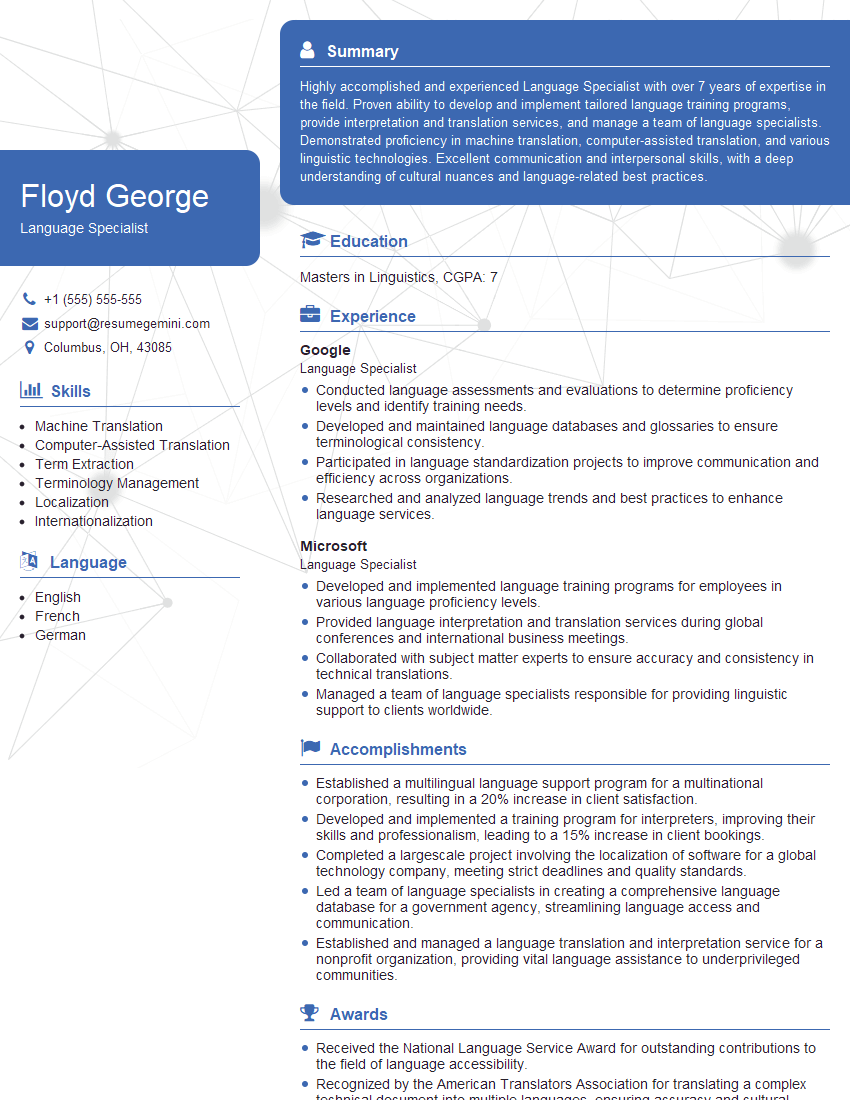
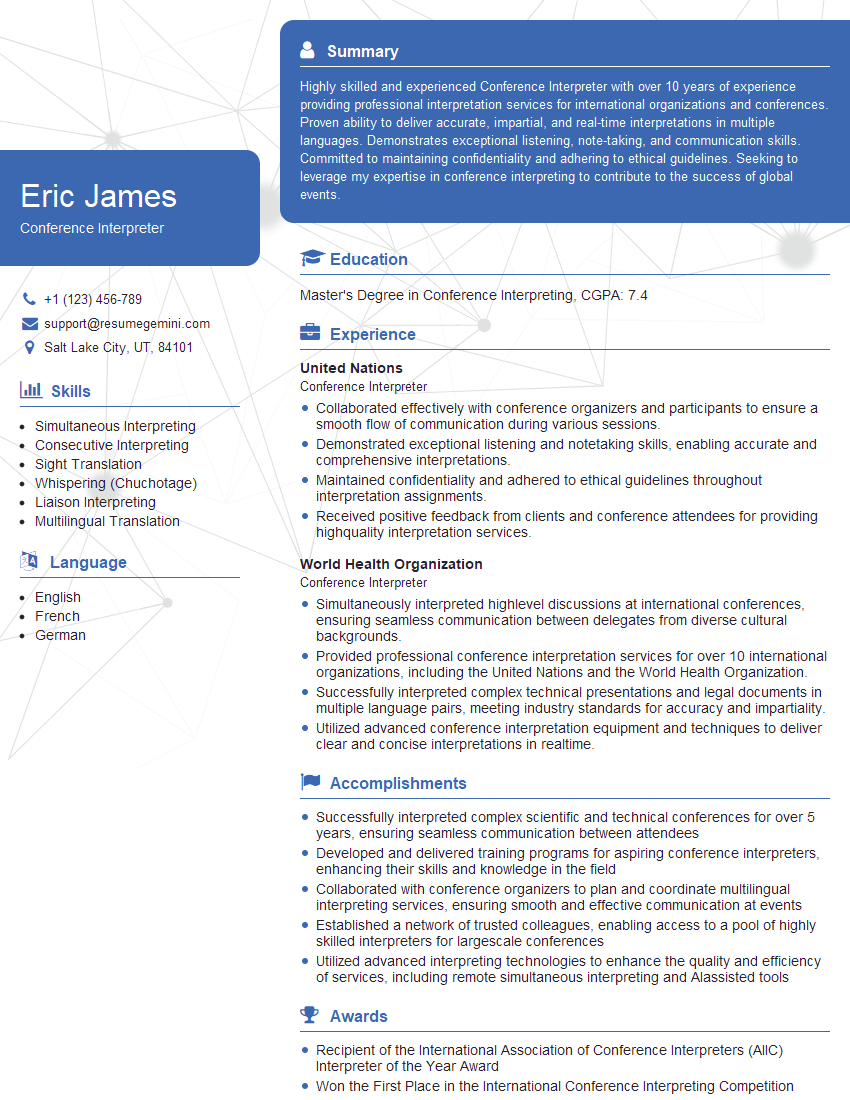
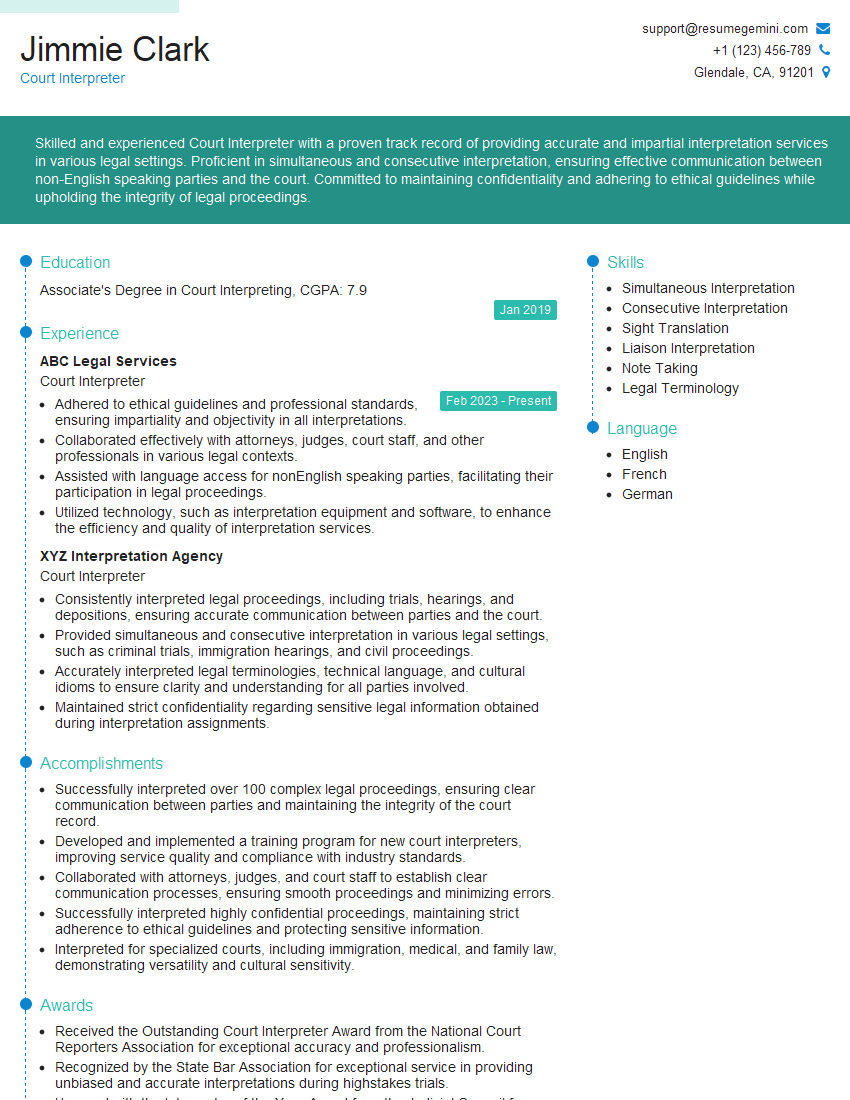
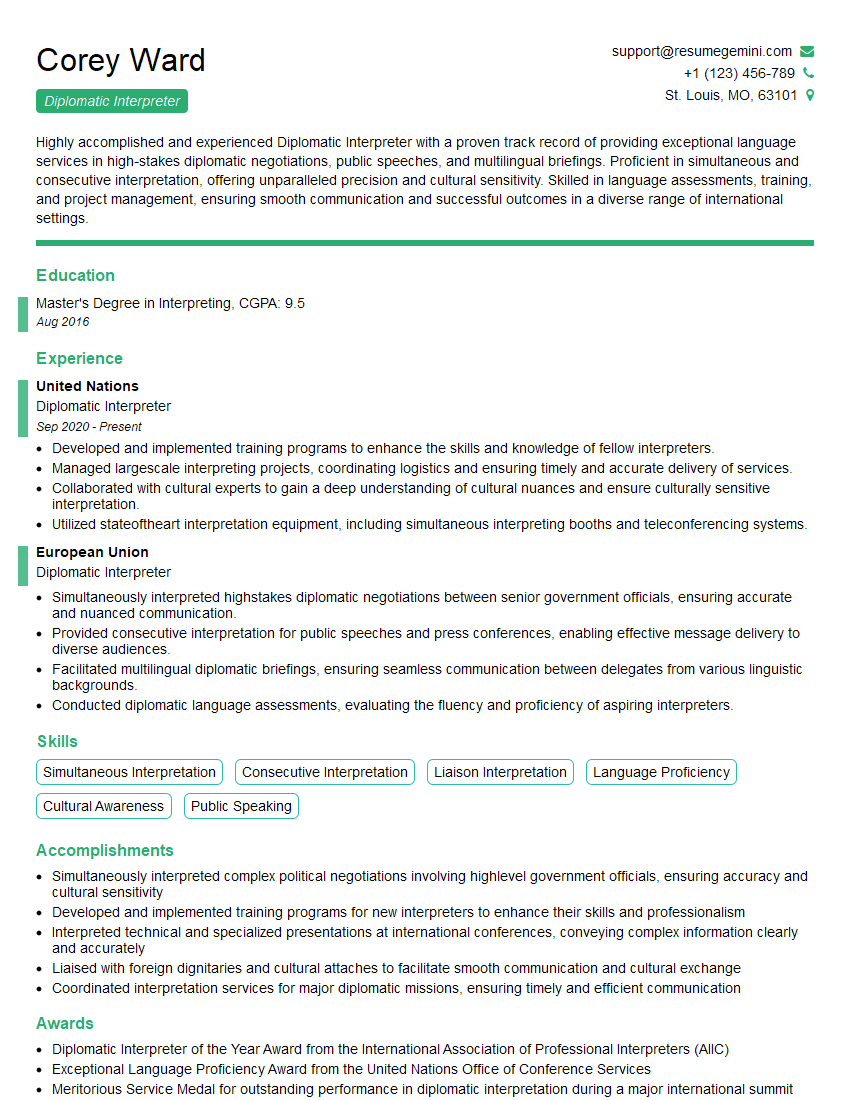
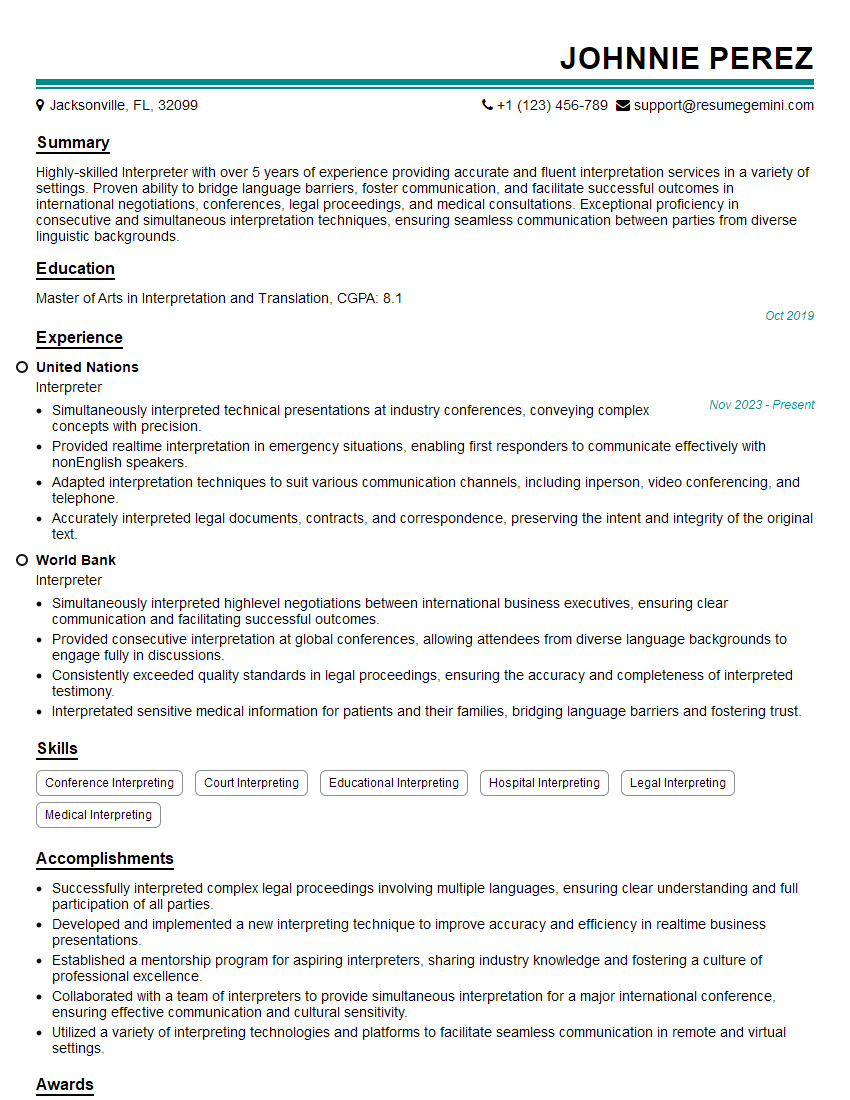
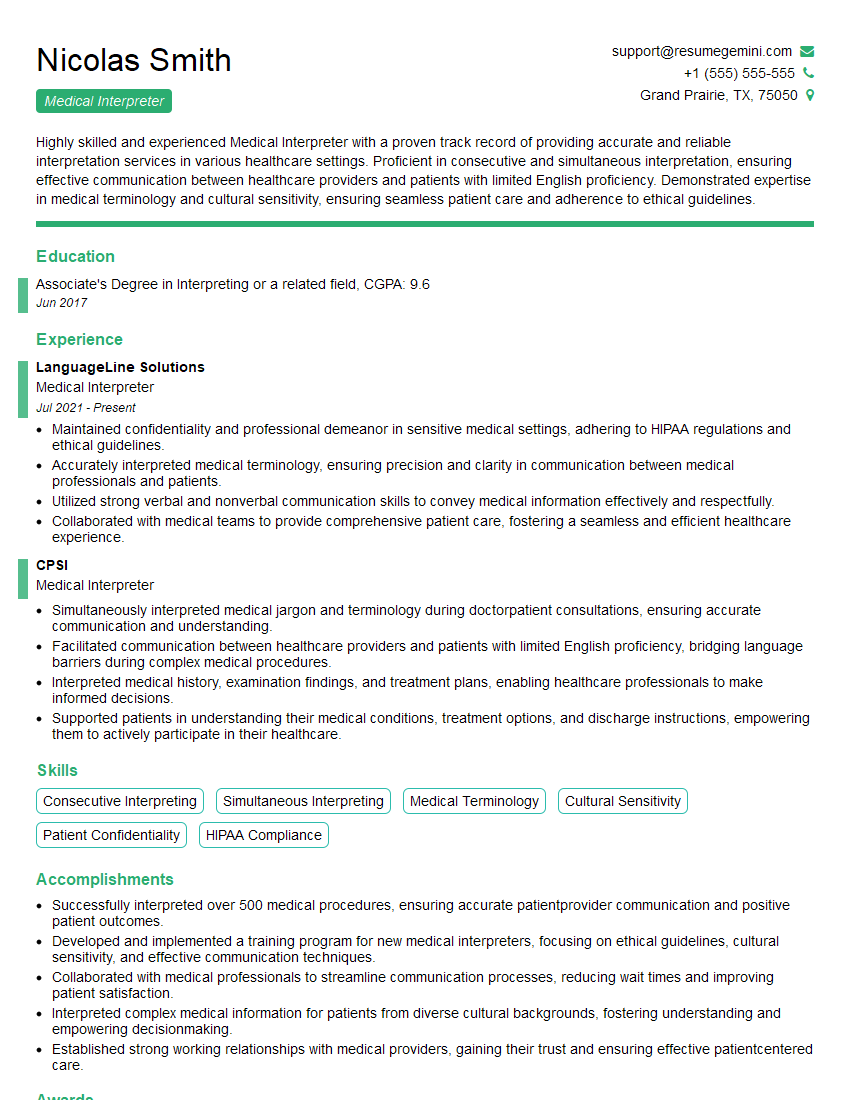
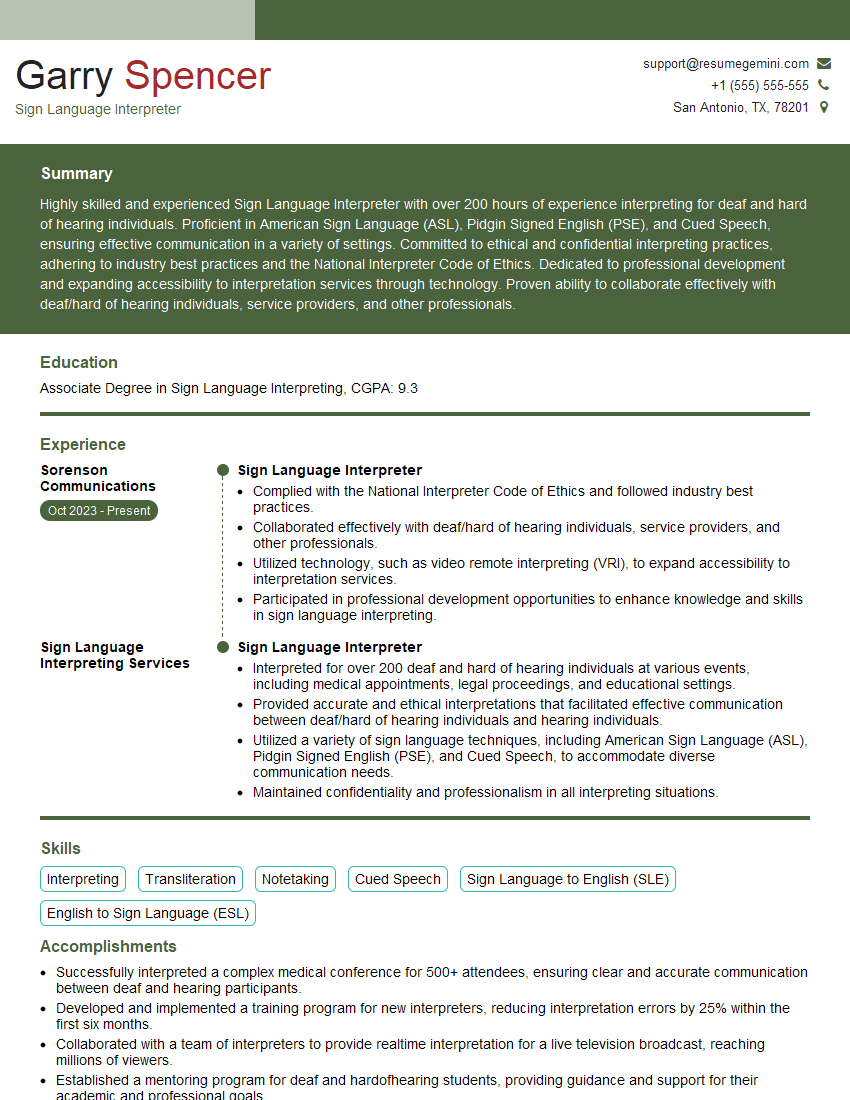
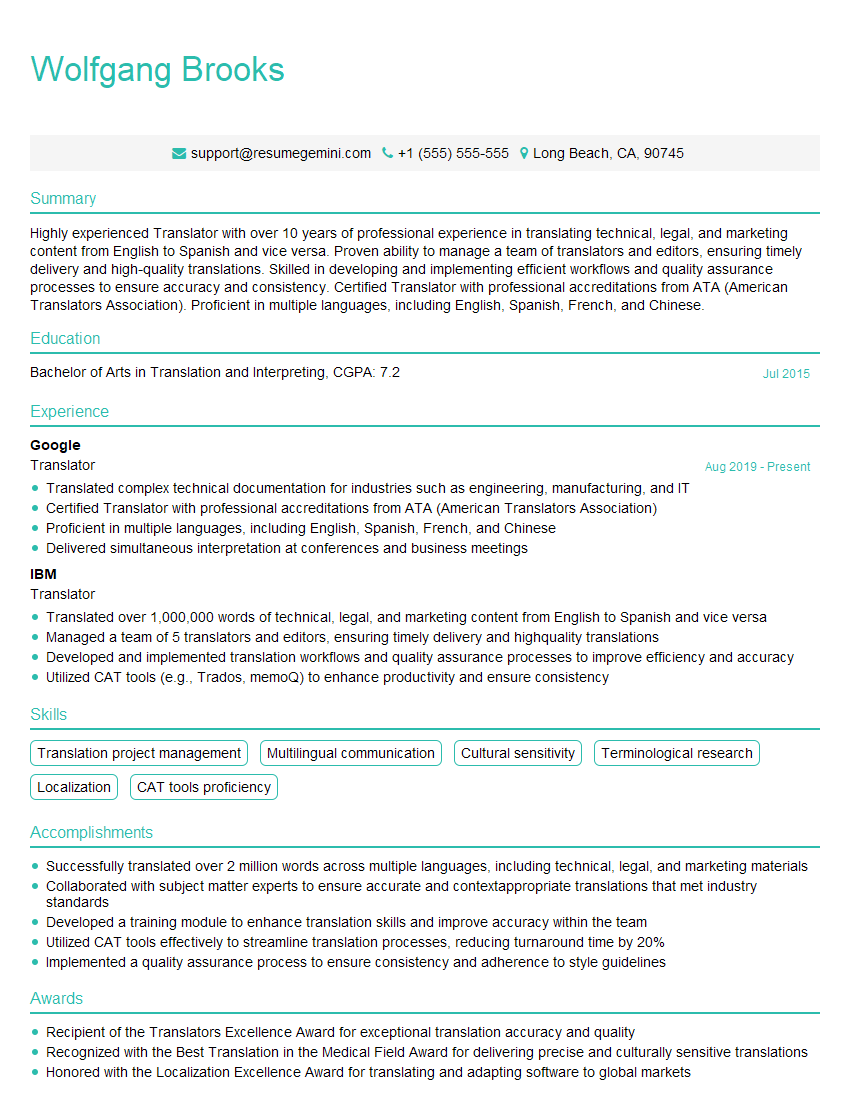
Mastering interpretation skills opens doors to diverse and rewarding career paths, offering opportunities for professional growth and significant impact. A strong resume is crucial for showcasing your abilities to potential employers. To maximize your job prospects, create an ATS-friendly resume that effectively highlights your skills and experience. ResumeGemini is a trusted resource to help you build a professional and impactful resume. Examples of resumes tailored to Interpretation Skills are available to guide you, making the process easier and more effective.
Explore more articles
Users Rating of Our Blogs
Share Your Experience
We value your feedback! Please rate our content and share your thoughts (optional).
What Readers Say About Our Blog
Very informative content, great job.
good