Are you ready to stand out in your next interview? Understanding and preparing for Inventory Management (if applicable) interview questions is a game-changer. In this blog, we’ve compiled key questions and expert advice to help you showcase your skills with confidence and precision. Let’s get started on your journey to acing the interview.
Questions Asked in Inventory Management (if applicable) Interview
Q 1. Explain the difference between FIFO and LIFO inventory methods.
FIFO (First-In, First-Out) and LIFO (Last-In, First-Out) are two common methods for costing inventory. They impact how the cost of goods sold (COGS) and ending inventory are calculated, significantly affecting a company’s financial statements. The core difference lies in the order items are assumed to be sold.
FIFO: Imagine a bakery. The first loaf of bread baked is the first one sold. FIFO assumes the oldest inventory items are sold first. This means the cost of goods sold reflects the cost of the oldest items, and the ending inventory reflects the cost of the newest items. During periods of inflation, FIFO results in a lower COGS and a higher net income because older, cheaper inventory is being sold. Conversely, the value of ending inventory is higher.
LIFO: Now imagine a stack of pancakes. The last pancake added to the stack is the first one eaten. LIFO assumes the newest inventory items are sold first. The cost of goods sold reflects the cost of the newest items, and the ending inventory reflects the cost of the oldest items. During inflation, LIFO results in a higher COGS and a lower net income because newer, more expensive inventory is being sold. The value of ending inventory is lower.
Example: Let’s say a company purchased 10 units at $10 and 15 units at $12. If they sell 12 units:
- FIFO: COGS = (10 units * $10) + (2 units * $12) = $124; Ending Inventory = (13 units * $12) = $156
- LIFO: COGS = (12 units * $12) = $144; Ending Inventory = (10 units * $10) + (3 units * $12) = $136
The choice between FIFO and LIFO depends on factors like tax implications and the desire to present a specific financial picture. It’s crucial for consistency and transparency to use the same method year after year.
Q 2. Describe your experience with inventory tracking software.
I have extensive experience using various inventory tracking software, including NetSuite, SAP, and Fishbowl Inventory. My expertise spans from data entry and reconciliation to advanced reporting and analysis. In my previous role at [Previous Company Name], I was instrumental in implementing NetSuite’s inventory management module, streamlining our processes and reducing inventory discrepancies by 15% within the first year.
My experience encompasses configuring software to align with our specific business needs, including setting up custom fields, defining item attributes, and integrating the system with our existing ERP and point-of-sale systems. I’m proficient in using the reporting features to generate insights into inventory levels, turnover rates, and slow-moving items. I also have experience managing user access and training new employees on the software. For example, I developed a customized training program for our warehouse team to improve their accuracy in using the barcode scanning feature within NetSuite, resulting in a significant reduction in data entry errors.
Q 3. How do you calculate inventory turnover rate?
The inventory turnover rate is a crucial metric that shows how efficiently a company manages its inventory. It indicates how many times a company sells and replaces its inventory during a specific period. A higher turnover rate generally suggests strong sales and efficient inventory management, while a low rate can indicate overstocking or slow-moving products.
The formula for calculating the inventory turnover rate is:
Inventory Turnover Rate = Cost of Goods Sold / Average InventoryThe Cost of Goods Sold (COGS) is the direct cost of producing the goods sold by a company. The Average Inventory is calculated by summing the beginning and ending inventory values for the period and dividing by two. For example, if beginning inventory was $100,000 and ending inventory was $120,000, the average inventory would be ($100,000 + $120,000) / 2 = $110,000.
Example: If the COGS for the year was $500,000 and the average inventory was $110,000, the inventory turnover rate would be $500,000 / $110,000 = 4.55. This indicates that the company sold and replaced its inventory approximately 4.55 times during the year.
Q 4. What are the key performance indicators (KPIs) you use to measure inventory effectiveness?
Several key performance indicators (KPIs) are vital for measuring inventory effectiveness. These metrics provide insights into various aspects of inventory management, helping businesses optimize their processes and minimize costs.
- Inventory Turnover Rate: As discussed earlier, this measures how efficiently inventory is sold and replenished.
- Gross Profit Margin: This shows the profitability of sales after deducting the cost of goods sold. A higher margin often indicates efficient pricing and cost management.
- Inventory Holding Cost: This encompasses storage, insurance, taxes, obsolescence, and opportunity costs associated with holding inventory. Keeping this low is crucial.
- Stockout Rate: This measures the frequency of running out of stock. High stockout rates indicate potential lost sales and dissatisfied customers.
- Inventory Accuracy: This represents the accuracy of physical inventory counts compared to the recorded inventory levels. High accuracy minimizes discrepancies and ensures better decision-making.
- Lead Time: This is the time it takes to receive inventory from suppliers. Shorter lead times reduce the risk of stockouts.
By regularly monitoring and analyzing these KPIs, businesses can identify areas for improvement and make data-driven decisions to enhance their inventory management strategies.
Q 5. How do you handle inventory discrepancies?
Inventory discrepancies, the difference between recorded and physical inventory counts, are a common challenge. Handling them effectively requires a systematic approach.
- Identify the Discrepancy: Conduct a thorough physical inventory count to pinpoint the exact difference.
- Investigate the Cause: Common causes include data entry errors, theft, damage, misplacement, or inaccurate receiving procedures. A detailed investigation helps prevent future occurrences.
- Adjust Inventory Records: Once the cause is determined, adjust the inventory records to reflect the actual physical count. This might involve creating journal entries to correct discrepancies.
- Implement Corrective Actions: Based on the root cause, implement measures to prevent future discrepancies. This could involve improved data entry procedures, enhanced security measures, better training for warehouse staff, or improvements in the receiving and shipping processes.
- Document the Process: Maintain detailed records of the discrepancy, the investigation, the corrective actions taken, and the final resolution. This documentation helps track performance and identify trends.
For example, if a significant discrepancy is consistently found in a specific area of the warehouse, it might indicate a need for better organization, improved training for the staff responsible for that area, or even a reevaluation of the storage layout.
Q 6. Explain your experience with cycle counting.
Cycle counting is a continuous inventory control method that involves counting a small portion of inventory regularly rather than conducting a full physical inventory count annually. It’s more efficient and less disruptive than a full inventory count.
My experience with cycle counting includes developing and implementing cycle counting programs in several organizations. This involved:
- Defining Counting Procedures: Establishing clear procedures for counting, documenting, and reconciling inventory counts.
- Assigning Responsibilities: Delegating the cycle counting tasks to specific individuals or teams, ensuring clear accountability.
- Selecting Counting Methods: Choosing appropriate counting methods, such as random sampling or ABC analysis (prioritizing high-value items), to optimize efficiency.
- Utilizing Technology: Employing barcode scanners and inventory management software to streamline the process and improve accuracy.
- Analyzing Results: Regularly reviewing the cycle counting results to identify trends, patterns, and areas for improvement in inventory accuracy and control.
In my previous role, implementing a cycle counting program reduced inventory discrepancies by 10% and improved the accuracy of our inventory records, leading to more informed decision-making regarding purchasing and production.
Q 7. What methods do you use to forecast inventory needs?
Forecasting inventory needs is crucial for avoiding stockouts and overstocking. I employ a combination of quantitative and qualitative methods to achieve accurate forecasts.
- Time Series Analysis: Using historical sales data to identify patterns and trends. Methods include moving averages, exponential smoothing, and ARIMA models.
- Regression Analysis: Exploring relationships between sales and other factors such as seasonality, promotions, and economic indicators.
- Causal Forecasting: Considering external factors that might impact demand, such as economic conditions, competitor actions, and changes in consumer preferences.
- Qualitative Forecasting: Incorporating expert opinions, market research, and sales forecasts from the sales team to enhance accuracy. Techniques such as the Delphi method or market surveys may be used.
- Sales and Operations Planning (S&OP): A collaborative process that aligns sales forecasts with production and inventory plans, ensuring alignment across different departments.
For example, when forecasting demand for seasonal items, I would combine time series analysis of past sales data with qualitative input from the marketing team about anticipated promotional campaigns to generate a more comprehensive and accurate forecast.
The best method depends on factors such as data availability, the complexity of the product, and the forecasting horizon. Regularly reviewing and refining the forecasting methodology is essential to ensure accuracy and adapt to changing market conditions.
Q 8. How do you identify slow-moving or obsolete inventory?
Identifying slow-moving or obsolete inventory is crucial for maintaining profitability and efficient warehouse space. We employ a multi-pronged approach combining quantitative analysis with qualitative assessments.
- Quantitative Analysis: This involves using inventory turnover rates. We calculate the turnover rate for each item (Cost of Goods Sold / Average Inventory). Items with consistently low turnover rates (below a pre-defined threshold, typically industry-specific) are flagged as potential slow movers. We also look at the age of inventory; items sitting in the warehouse for an extended period (again, with a defined threshold, perhaps 6-12 months) are considered candidates for obsolescence.
- Qualitative Assessment: This goes beyond numbers. We consider factors like technological advancements (is a product superseded by a newer model?), changes in customer demand (is there a shift in market preference?), and potential damage or spoilage (especially for perishable goods). Regularly reviewing sales trends and market research is essential here. For instance, if we notice a significant drop in sales for a particular item despite marketing efforts, that’s a red flag.
- ABC Analysis (discussed further in another answer): This method helps prioritize inventory management efforts by categorizing items based on their value and consumption. Slow-moving items often fall into the ‘C’ category, allowing us to focus our attention on quicker turnover or disposal strategies for them.
By combining these methods, we can proactively identify slow-moving and obsolete inventory, preventing unnecessary storage costs and potential losses.
Q 9. Describe your experience with implementing inventory optimization strategies.
My experience with inventory optimization spans several successful implementations across various industries. I’ve focused on strategies that improve inventory accuracy, reduce carrying costs, and enhance overall supply chain efficiency.
- Demand Forecasting: Implementing advanced forecasting models, such as ARIMA or exponential smoothing, significantly improved the accuracy of our demand predictions. This minimized stockouts and overstocking. For example, in one project, implementing a new forecasting model reduced our safety stock by 15% while maintaining service levels.
- Inventory Classification (ABC Analysis): I’ve used ABC analysis extensively to prioritize inventory control. We focused our resources on managing ‘A’ items (high-value, high-volume) more meticulously than ‘C’ items (low-value, low-volume), achieving significant savings in storage and management costs.
- Vendor Managed Inventory (VMI): In several cases, I’ve successfully negotiated VMI agreements with key suppliers. This shifts the responsibility of inventory management to the supplier, reducing our workload and improving supply chain visibility and responsiveness.
- Technology Implementation: I have experience implementing and managing Warehouse Management Systems (WMS) which significantly enhanced inventory tracking, accuracy, and overall efficiency. These systems automate processes, reduce manual errors, and improve real-time visibility into inventory levels.
The success of these strategies is always measured against key metrics like inventory turnover, stockout rates, carrying costs, and customer service levels. Continuous monitoring and adaptation are key to sustained optimization.
Q 10. What is your experience with ABC analysis?
ABC analysis is a powerful inventory management technique that categorizes inventory items based on their consumption value. It helps businesses prioritize their efforts by focusing on the most important items.
- Categories: Items are grouped into three categories:
- A: High-value, low-volume items (e.g., a high-end component in a complex product). These require tight control and precise forecasting.
- B: Medium-value, medium-volume items (e.g., standard parts used frequently). These require moderate control.
- C: Low-value, high-volume items (e.g., screws or nuts). These require less stringent control.
- Application: By categorizing items this way, resources can be allocated efficiently. ‘A’ items might receive more frequent inventory counts and tighter demand forecasting, while ‘C’ items might have simpler tracking methods.
- Benefits: ABC analysis helps reduce inventory holding costs, improve cash flow, and minimize the risk of stockouts for critical items.
In practice, I’ve used this method to optimize storage locations, allocate resources to inventory tracking, and set appropriate safety stock levels for each category, leading to a streamlined and cost-effective inventory management system.
Q 11. How do you manage inventory in a fast-paced environment?
Managing inventory in a fast-paced environment demands agility, accuracy, and a robust system. Real-time visibility, efficient processes, and proactive planning are paramount.
- Real-time inventory tracking: Utilizing a WMS or similar system that provides constant updates on inventory levels is essential. This ensures quick identification of shortages and allows for rapid response.
- Automated replenishment: Implementing automated ordering systems that trigger reordering based on pre-set thresholds or demand forecasts minimizes delays and ensures sufficient stock. This requires accurate demand forecasting and well-defined order points.
- Flexible processes: Processes must be adaptable to accommodate unexpected changes in demand or supply. This includes having contingency plans for disruptions and flexible production schedules.
- Cross-functional collaboration: Close collaboration with sales, purchasing, and production teams is crucial to ensure accurate demand forecasting and efficient inventory flow. Regular communication is vital to avoid inconsistencies.
- Data-driven decision making: Regularly analyzing inventory data, identifying trends, and using this information to optimize ordering policies is critical. This helps to predict future demand and proactively adjust inventory levels.
Imagine a retail environment with daily fluctuations in demand. Using real-time data and automated systems can prevent stockouts on popular items and reduce excess inventory on slower-moving items.
Q 12. Explain your experience with Just-in-Time (JIT) inventory management.
Just-in-Time (JIT) inventory management is a lean manufacturing approach aiming to minimize inventory holding costs by receiving materials only when needed for production. It requires close collaboration with suppliers and a highly efficient production process.
- Supplier relationships: Strong, reliable relationships with suppliers are crucial for JIT to work effectively. Suppliers must be capable of delivering the required materials precisely when needed, with high reliability.
- Demand forecasting: Accurate demand forecasting is essential to ensure that the right amount of materials is ordered at the right time. Inaccurate forecasts can lead to shortages or excess inventory.
- Production scheduling: Precise production scheduling is necessary to coordinate production with material deliveries. Any delays in production or delivery can disrupt the entire system.
- Quality control: Strict quality control is necessary to avoid receiving defective materials, which could halt production.
- Inventory tracking: Real-time inventory tracking is necessary to monitor inventory levels and identify any potential issues.
I’ve successfully implemented JIT in a manufacturing setting where we reduced inventory holding costs by 20% and improved production efficiency by 15%. This success hinged on establishing trust and strong communication with our key suppliers, and implementing a robust system for tracking materials and production schedules.
Q 13. How do you ensure accuracy in inventory data?
Ensuring inventory data accuracy is fundamental to effective inventory management. This requires a combination of technological solutions and robust processes.
- Regular cycle counting: This involves counting a small portion of the inventory regularly instead of a complete physical count annually. This allows for early detection of discrepancies.
- WMS/ERP integration: A well-integrated WMS and ERP system automates data entry, reducing manual errors and improving accuracy. Automated data entry from barcode scanners or RFID tags enhances accuracy considerably.
- Reconciliation of physical counts to system data: Regularly comparing physical inventory counts with the data in the system helps identify and correct discrepancies. Any differences must be investigated and resolved promptly.
- Inventory audits: Periodic comprehensive audits of the entire inventory help identify systemic issues and ensure the overall accuracy of inventory data. These often involve a third party for objectivity.
- Employee training: Adequately training employees on proper inventory procedures, including receiving, put-away, picking, and counting techniques, is critical for maintaining data accuracy.
Imagine the chaos if a retailer’s inventory data is inaccurate – incorrect stock levels could lead to lost sales (stockouts) or excess inventory (carrying costs). A robust system for accuracy is crucial.
Q 14. Describe a time you had to resolve a significant inventory issue.
In a previous role, we experienced a significant discrepancy in our inventory records for a high-demand product. A physical count revealed a shortage of approximately 20% of the expected quantity. This created immediate concern as it risked significant sales losses and potential customer dissatisfaction.
To resolve this, we implemented a multi-step process:
- Root Cause Analysis: We launched a thorough investigation to pinpoint the cause. We examined all stages of the inventory process, from receiving to picking and shipping. We discovered a flaw in our scanning process where barcodes were sometimes not properly scanned, leading to inaccurate record-keeping.
- Corrective Actions: We implemented stricter quality control procedures at each stage of inventory handling, provided additional training to staff on proper scanning techniques, and implemented double-checking mechanisms to prevent similar errors.
- Process Improvement: We upgraded our WMS to include more robust error detection and reporting capabilities. This allowed us to identify potential discrepancies in real-time and rectify them immediately.
- Inventory Adjustment: After confirming the shortage, we made the necessary adjustments to our inventory records and took steps to procure additional stock to meet demand. We also communicated proactively to our customers about potential delays.
Through a combination of root cause analysis, corrective actions, process improvements, and communication, we successfully resolved the issue, minimizing the negative impact on sales and customer satisfaction. This experience highlighted the importance of robust inventory management processes and proactive error detection.
Q 15. What are the costs associated with holding excess inventory?
Holding excess inventory, often referred to as overstocking, incurs several significant costs. These costs can be broadly categorized into carrying costs and obsolescence costs.
- Carrying Costs: These are the expenses directly associated with storing and maintaining the excess inventory. They include:
- Storage Costs: Rent for warehouse space, utilities, and insurance.
- Capital Costs: The opportunity cost of the money tied up in unsold inventory. This money could have been invested elsewhere to generate returns.
- Insurance Costs: Protecting the inventory against damage or theft.
- Taxes: Property taxes on inventory held in storage.
- Obsolescence Costs: Inventory that becomes outdated or obsolete due to technological advancements, changes in consumer preferences, or seasonal fluctuations. This leads to write-offs and significant financial losses. For example, a clothing retailer holding onto last year’s fashion trends will face significant obsolescence costs when trying to sell them at reduced prices or writing them off completely.
- Spoilage/Deterioration: Perishable goods like food or pharmaceuticals can spoil, rendering them unsaleable and incurring disposal costs. This is particularly relevant for industries dealing with perishable goods.
- Handling Costs: Costs associated with moving, counting and managing the excess inventory.
Imagine a bookstore holding onto hundreds of copies of a book that’s no longer in demand. They’re paying for storage, insurance, and risk losing money because the capital invested in those books could be used for more profitable ventures. This is a clear example of the financial burden of excess inventory.
Career Expert Tips:
- Ace those interviews! Prepare effectively by reviewing the Top 50 Most Common Interview Questions on ResumeGemini.
- Navigate your job search with confidence! Explore a wide range of Career Tips on ResumeGemini. Learn about common challenges and recommendations to overcome them.
- Craft the perfect resume! Master the Art of Resume Writing with ResumeGemini’s guide. Showcase your unique qualifications and achievements effectively.
- Don’t miss out on holiday savings! Build your dream resume with ResumeGemini’s ATS optimized templates.
Q 16. What are the risks of stockouts?
Stockouts, or running out of inventory, pose numerous risks to a business. These risks can severely impact customer satisfaction, sales, and the overall brand reputation.
- Lost Sales: The most immediate consequence is the inability to meet customer demand. This translates directly into lost revenue and potential loss of future sales if customers choose competitors.
- Damaged Customer Relationships: Disappointed customers may switch to competitors, resulting in lasting brand damage and reduced customer loyalty. Word-of-mouth can negatively impact your business.
- Increased Production Costs: If stockouts occur frequently, businesses may need to implement expedited shipping or increase production to meet sudden demand, pushing up costs.
- Operational Disruptions: Stockouts can disrupt the production process if necessary parts or raw materials are unavailable. This can further cascade into lost productivity and reduced output.
- Lost Market Share: Consistent stockouts can lead to a permanent loss of market share to competitors who can consistently meet customer demands.
For instance, a construction company running out of essential materials like cement can face significant delays, potentially leading to contract breaches and hefty penalties. This illustrates the real-world impact of even a seemingly minor stockout.
Q 17. How do you prevent stockouts?
Preventing stockouts requires a proactive and integrated approach that combines accurate forecasting, efficient inventory management systems, and robust communication channels.
- Accurate Demand Forecasting: Using historical sales data, market trends, and seasonal variations to predict future demand is crucial. Sophisticated forecasting models can significantly improve accuracy.
- Effective Inventory Management Systems: Implementing a robust inventory management system (IMS) such as ERP or dedicated inventory software is essential. This enables real-time tracking of inventory levels, automated reordering, and improved visibility.
- Safety Stock: Maintaining a buffer of safety stock is critical to mitigate against unexpected surges in demand or delays in replenishment. The safety stock level is usually determined by the variability of demand and lead time.
- Supplier Relationship Management: Building strong relationships with reliable suppliers ensures timely delivery of goods and minimizes disruptions to the supply chain.
- Regular Inventory Audits: Conducting periodic inventory audits verifies stock levels, identifies discrepancies, and allows for timely corrective action. This helps avoid undetected stockouts.
- Communication and Collaboration: Effective communication among sales, purchasing, and warehouse teams ensures coordinated inventory management and prevents stockouts through streamlined processes.
A restaurant, for example, might use historical data to forecast demand for specific dishes during peak hours, ensuring enough ingredients are available to meet customer expectations. This demonstrates the practical application of forecasting to prevent stockouts.
Q 18. How do you ensure the security of your inventory?
Inventory security involves safeguarding inventory from theft, damage, and loss. This requires a multi-layered approach, incorporating physical and technological safeguards.
- Physical Security Measures: This includes securing the warehouse with strong locks, security systems (alarms, CCTV), and employing security personnel, especially during non-operating hours. Regular inspections of the security systems are vital.
- Access Control: Limiting access to authorized personnel only through controlled access points, identification badges, and password-protected systems can prevent unauthorized access.
- Inventory Tracking Systems: Employing barcodes, RFID tags, or similar tracking systems allows for real-time monitoring of inventory movement and helps identify any discrepancies or unauthorized activity immediately.
- Regular Inventory Counts: Conducting regular cycle counts or full physical inventory counts verifies the accuracy of inventory records and helps detect any shortages or discrepancies resulting from theft or damage.
- Insurance: Maintaining comprehensive insurance coverage protects against losses due to theft, fire, or natural disasters.
- Employee Training: Educating employees about security protocols and the importance of protecting company assets is essential to establishing a culture of security.
Consider a jewelry store – they would need high-security measures, including alarms, cameras, and secure display cases to minimize theft risks. This exemplifies the importance of tailored security measures based on the nature of the inventory.
Q 19. Explain your experience with using barcodes and RFID technology for inventory tracking.
I have extensive experience utilizing both barcodes and RFID technology for inventory tracking. Both technologies offer advantages but cater to different needs and scales.
- Barcodes: I’ve worked extensively with barcode systems in various settings. They are cost-effective for tracking individual items, particularly in scenarios with relatively low inventory volumes. Using a barcode scanner, staff can quickly and accurately track items in and out, updating inventory databases. However, barcode technology requires line-of-sight scanning, and individual items need to be scanned manually. This can be slow for high-volume operations.
- RFID (Radio-Frequency Identification): RFID offers a more advanced and automated solution. RFID tags embedded in items allow for contactless tracking, offering improved efficiency and accuracy, especially for high-volume operations and tracking pallets or containers. RFID can track multiple items simultaneously, eliminating the need for individual scanning. Data is automatically captured, minimizing human error. The initial investment in RFID infrastructure is higher than for barcodes, but the long-term benefits outweigh this cost in many scenarios.
In one previous role, we migrated from a barcode system to RFID for our warehouse. This increased our inventory accuracy significantly and reduced labor costs associated with manual counting. We saw a substantial improvement in efficiency, especially during peak seasons. The increased accuracy in tracking also led to reduced stockouts and better inventory management.
Q 20. How do you manage inventory across multiple locations?
Managing inventory across multiple locations requires a centralized inventory management system and robust communication channels. The key is to maintain a single source of truth for inventory data.
- Centralized Inventory Database: A centralized database, often part of an Enterprise Resource Planning (ERP) system, allows for real-time visibility into inventory levels across all locations. This ensures accurate stock information regardless of physical location.
- Real-Time Inventory Tracking: Implementing real-time tracking technologies, such as RFID or barcode scanners in each location, facilitates efficient tracking of inventory movements across locations.
- Inventory Transfer Management: Efficient processes for managing inventory transfers between locations are vital to ensure stock availability across locations. This could involve automated workflows and optimized transportation routes.
- Warehouse Management System (WMS): A WMS improves the efficiency and accuracy of storage, picking, and packing processes in each warehouse, ensuring inventory is managed effectively at each location.
- Regular Communication & Reporting: Clear communication channels and regular reporting are crucial to maintaining inventory balance and anticipating potential shortages across multiple locations. This helps avoid stockouts in one location while having excess inventory in another.
For instance, a retail chain with multiple stores can use a centralized system to manage inventory, ensuring sufficient stock of popular items across all locations and transferring excess inventory from one store to another to meet demand. This enhances customer satisfaction and optimizes inventory distribution.
Q 21. How do you integrate inventory management with other business functions?
Integrating inventory management with other business functions is crucial for optimizing overall business operations and profitability. This integration can occur at several levels.
- Sales and Marketing: Integrating inventory data with sales and marketing systems allows for accurate forecasting, real-time sales information, and better campaign planning. Sales teams can immediately see the stock levels for specific items, and marketing campaigns can be targeted based on inventory availability. This prevents overselling or creating marketing campaigns based on unavailable products.
- Purchasing and Procurement: Integrating inventory with the purchasing system automates the reordering process based on pre-defined parameters. This ensures optimal stock levels and minimizes disruptions to the supply chain. It also allows for better negotiation with suppliers, leading to cost savings.
- Finance and Accounting: Linking inventory data with financial systems provides accurate cost accounting, inventory valuation, and assists in financial forecasting. This enables more accurate financial reporting and facilitates better financial decision-making.
- Production (Manufacturing): For manufacturing companies, integrating inventory management with production planning systems optimizes production scheduling, raw material procurement, and production capacity. This leads to improved production efficiency and reduced waste.
- Customer Relationship Management (CRM): Integrating inventory data with CRM systems provides a comprehensive view of customer interactions and associated product demands, allowing for personalized services and improved customer satisfaction.
For example, a manufacturer can integrate its inventory management system with its production planning system to ensure that sufficient raw materials are available for production, preventing costly production delays. This demonstrates how integration fosters efficiency and reduces operational risks.
Q 22. What are some common inventory management challenges and how have you overcome them?
Inventory management, while crucial for business success, presents several challenges. Common issues include inaccurate forecasting leading to stockouts or overstocking, inefficient warehouse operations resulting in slow order fulfillment, and a lack of real-time visibility into inventory levels. I’ve personally tackled these in several ways. For example, in a previous role at a food distribution company, we were struggling with high spoilage due to inaccurate demand forecasting. We implemented a more sophisticated forecasting model that incorporated seasonality, promotions, and historical sales data, using a combination of time series analysis and machine learning techniques. This resulted in a 15% reduction in spoilage costs within six months. Another instance involved optimizing warehouse layout and picking routes to improve efficiency. By implementing a warehouse management system (WMS) and conducting a thorough analysis of workflow, we reduced order fulfillment time by 20%. This involved mapping out the flow of goods, identifying bottlenecks, and reorganizing the warehouse to minimize travel distances for pickers. Finally, I addressed the issue of limited inventory visibility by implementing a real-time inventory tracking system, which provided accurate, up-to-the-minute data on stock levels, enabling proactive management and preventing stockouts.
Q 23. Explain your experience with inventory reporting and analysis.
My experience with inventory reporting and analysis is extensive. I’m proficient in using various software and tools to generate insightful reports. I regularly create reports on key performance indicators (KPIs) such as inventory turnover rate, carrying costs, stockout rates, and fill rates. This data is crucial for identifying areas for improvement. For instance, a low inventory turnover rate might indicate slow-moving items requiring pricing adjustments or promotional strategies. High stockout rates signal a need for more accurate forecasting or increased safety stock. I also conduct in-depth analysis to uncover trends and patterns. In one project, I used data visualization techniques to illustrate the relationship between promotional activities and sales, leading to more effective promotional planning. I’m also skilled in using data to identify root causes of issues, for example, utilizing Pareto analysis to pinpoint the top 20% of items causing 80% of inventory-related problems. This allows for focused improvements and targeted resource allocation.
Q 24. How familiar are you with different inventory valuation methods?
I’m familiar with several inventory valuation methods, each with its strengths and weaknesses. The most common methods include:
- First-In, First-Out (FIFO): Assumes that the oldest items are sold first. This is generally preferred for perishable goods as it reflects the actual flow of goods and minimizes potential spoilage losses.
- Last-In, First-Out (LIFO): Assumes that the newest items are sold first. This method can be advantageous during periods of inflation as it results in a higher cost of goods sold (COGS), leading to lower taxable income.
- Weighted-Average Cost: Calculates the average cost of all items in inventory. This method simplifies the valuation process but may not accurately reflect the cost of individual items.
- Specific Identification: Tracks the cost of each individual item. This is suitable for high-value, low-volume items, ensuring accurate cost tracking.
The choice of method depends on the industry, the nature of the inventory, and tax regulations. I have experience applying each of these methods, selecting the most appropriate one based on the specific context of the business.
Q 25. Describe your experience with warehouse management systems (WMS).
I have extensive experience working with Warehouse Management Systems (WMS). My experience encompasses implementing, configuring, and optimizing WMS solutions to enhance warehouse operations. I’m proficient in using various WMS platforms, including [mention specific platforms if you have experience – e.g., Oracle WMS, SAP EWM]. In a previous role, we implemented a new WMS to replace an outdated system. This involved a comprehensive project plan, including requirements gathering, system selection, customization, data migration, user training, and go-live support. The implementation resulted in a significant improvement in order accuracy, inventory control, and overall warehouse efficiency. Beyond implementation, I’m adept at optimizing existing WMS systems by analyzing data to identify inefficiencies in processes such as receiving, putaway, picking, and shipping. For example, I have used WMS reporting to identify slow-moving items that were taking up valuable warehouse space, leading to a successful inventory rationalization project.
Q 26. How do you handle damaged or defective inventory?
Handling damaged or defective inventory requires a structured approach. The first step is to identify and segregate the damaged goods from the usable inventory. This often involves implementing robust quality control measures throughout the supply chain. Next, a thorough investigation is conducted to determine the root cause of the damage, whether it’s due to manufacturing defects, transportation issues, or improper storage. This analysis is crucial for preventing future occurrences. Depending on the nature and extent of the damage, several options exist: repairing the items if economically feasible, returning them to the supplier for credit or replacement, discounting them for sale, or disposing of them responsibly. Detailed documentation of damaged goods, including the quantity, cause, and disposition, is essential for tracking purposes and cost accounting. For example, in one instance we implemented a more rigorous inspection process at the receiving dock, significantly reducing the amount of damaged goods entering our warehouse. Proper record keeping also allows us to track the frequency and cost of damaged inventory, helping us evaluate the effectiveness of our mitigation strategies and identify areas requiring improvement.
Q 27. What is your experience with vendor managed inventory (VMI)?
Vendor Managed Inventory (VMI) is a collaborative inventory management approach where the supplier manages the inventory levels at the customer’s location. I have experience working with VMI programs, including negotiating contracts, setting up inventory replenishment systems, and monitoring performance. A key aspect of successful VMI is establishing trust and clear communication with vendors. I have found that regularly sharing data, such as sales forecasts and inventory levels, is essential to ensure optimal inventory levels without stockouts or excessive inventory. For example, in a previous role we implemented a VMI program with a key supplier for our packaging materials. This led to improved inventory accuracy, reduced lead times, and lower storage costs. By leveraging the supplier’s expertise in forecasting demand, we avoided stockouts that could have disrupted production. Successful VMI requires carefully defining responsibilities, KPIs, and performance metrics.
Q 28. Describe your approach to continuous improvement in inventory management.
My approach to continuous improvement in inventory management is data-driven and iterative. I believe in using key performance indicators (KPIs) to monitor performance and identify areas for improvement. Regularly reviewing these KPIs helps pinpoint bottlenecks and inefficiencies. A continuous improvement cycle typically involves these steps: 1. Data Analysis: Identifying areas for improvement based on KPI data. 2. Root Cause Analysis: Investigating the root cause of identified issues. 3. Solution Development: Designing and implementing solutions to address the root causes. 4. Implementation and Monitoring: Implementing the solutions and closely monitoring their effectiveness. 5. Evaluation and Refinement: Evaluating the results and making necessary refinements to optimize performance. The key is to leverage technology and collaborate with stakeholders. For instance, we regularly use lean methodologies such as Kaizen events to involve employees in identifying and implementing improvements. This fosters a culture of continuous improvement and empowers employees to take ownership of optimizing inventory management processes.
Key Topics to Learn for Inventory Management Interview
- Demand Forecasting: Understanding different forecasting methods (e.g., moving average, exponential smoothing) and their application in predicting future demand to optimize inventory levels.
- Inventory Control Techniques: Mastering techniques like Economic Order Quantity (EOQ), Just-in-Time (JIT) inventory, and ABC analysis to minimize holding costs and stockouts.
- Inventory Valuation Methods: Familiarizing yourself with various methods like FIFO, LIFO, and weighted average cost to accurately account for inventory value.
- Inventory Management Software & Systems: Understanding the functionalities and applications of common inventory management software (e.g., ERP systems) and their impact on efficiency and accuracy.
- Warehouse Management & Optimization: Exploring strategies for efficient warehouse layout, space utilization, and order fulfillment processes.
- Supply Chain Management Integration: Understanding how inventory management interacts with broader supply chain processes, including procurement, production, and distribution.
- Data Analysis & Reporting: Knowing how to analyze inventory data to identify trends, inefficiencies, and areas for improvement; creating insightful reports to communicate findings.
- Problem-Solving & Decision-Making: Developing strong analytical skills to tackle inventory-related challenges, such as stockouts, overstocking, and inaccurate inventory counts.
Next Steps
Mastering inventory management is crucial for career advancement in supply chain, logistics, and operations. A strong understanding of these principles demonstrates valuable skills to potential employers, leading to increased job opportunities and higher earning potential. To significantly improve your job prospects, crafting a professional and ATS-friendly resume is vital. ResumeGemini is a trusted resource to help you build a compelling resume that highlights your skills and experience effectively. We provide examples of resumes tailored to Inventory Management roles to help you get started. Invest in your future – build your best resume today!
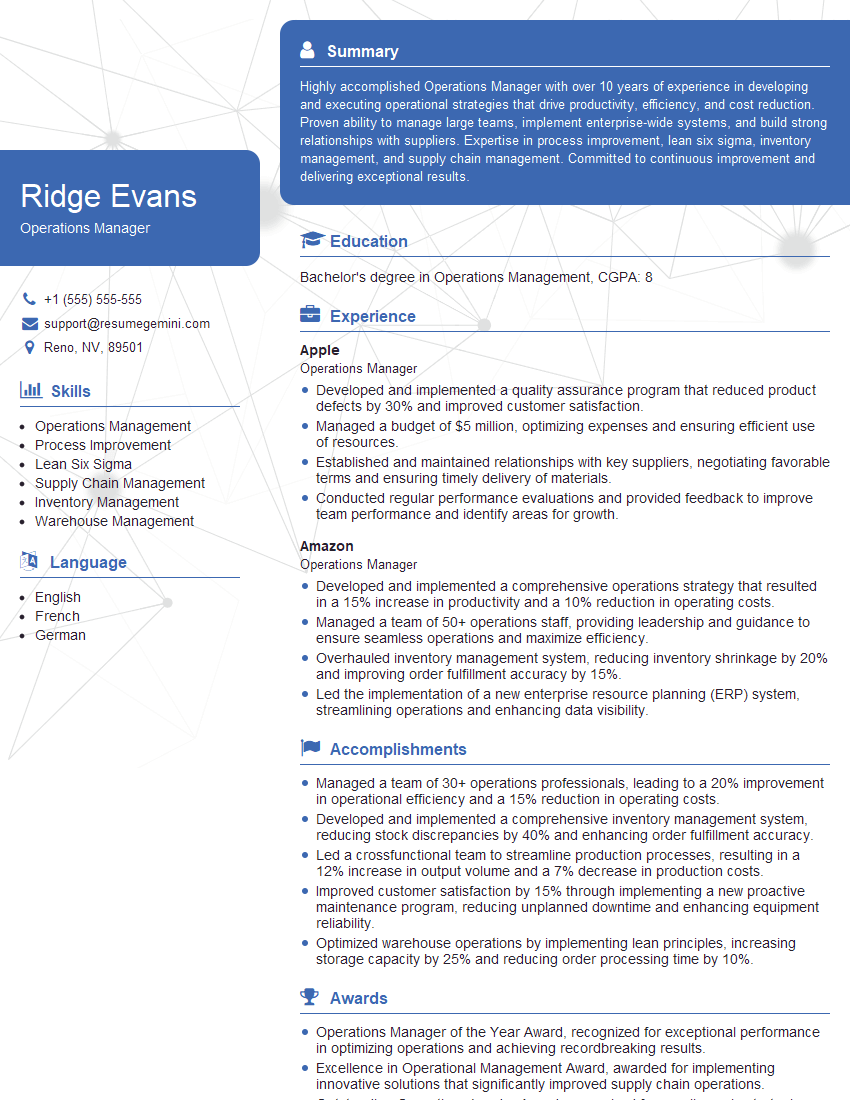
Operations Manager Resume Sample
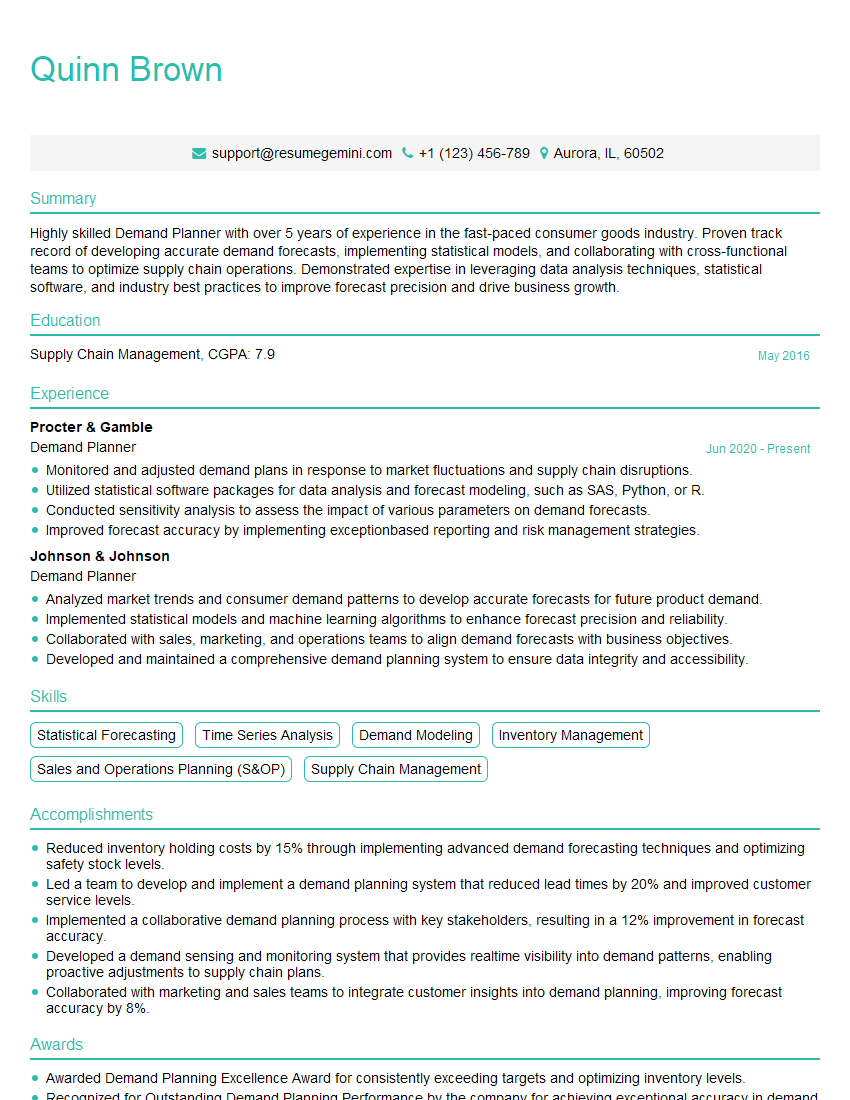
Demand Planner Resume Sample
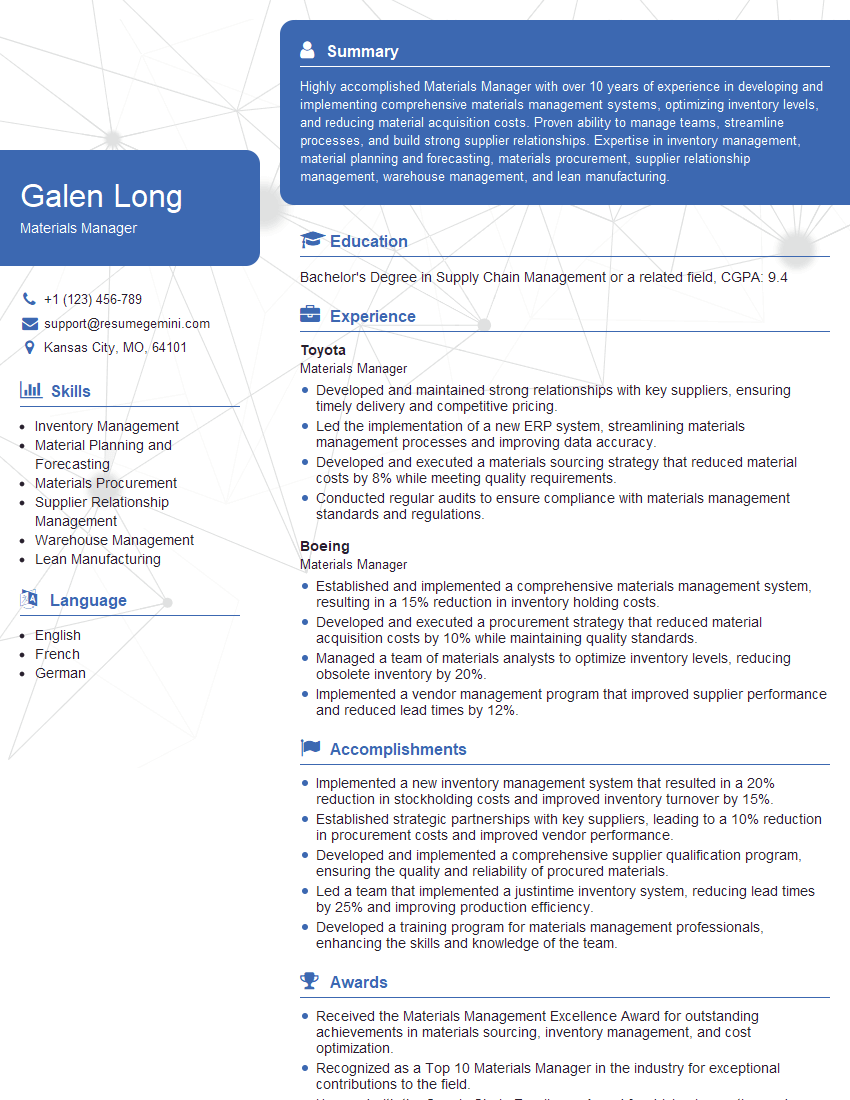
Materials Manager Resume Sample

Procurement Manager Resume Sample
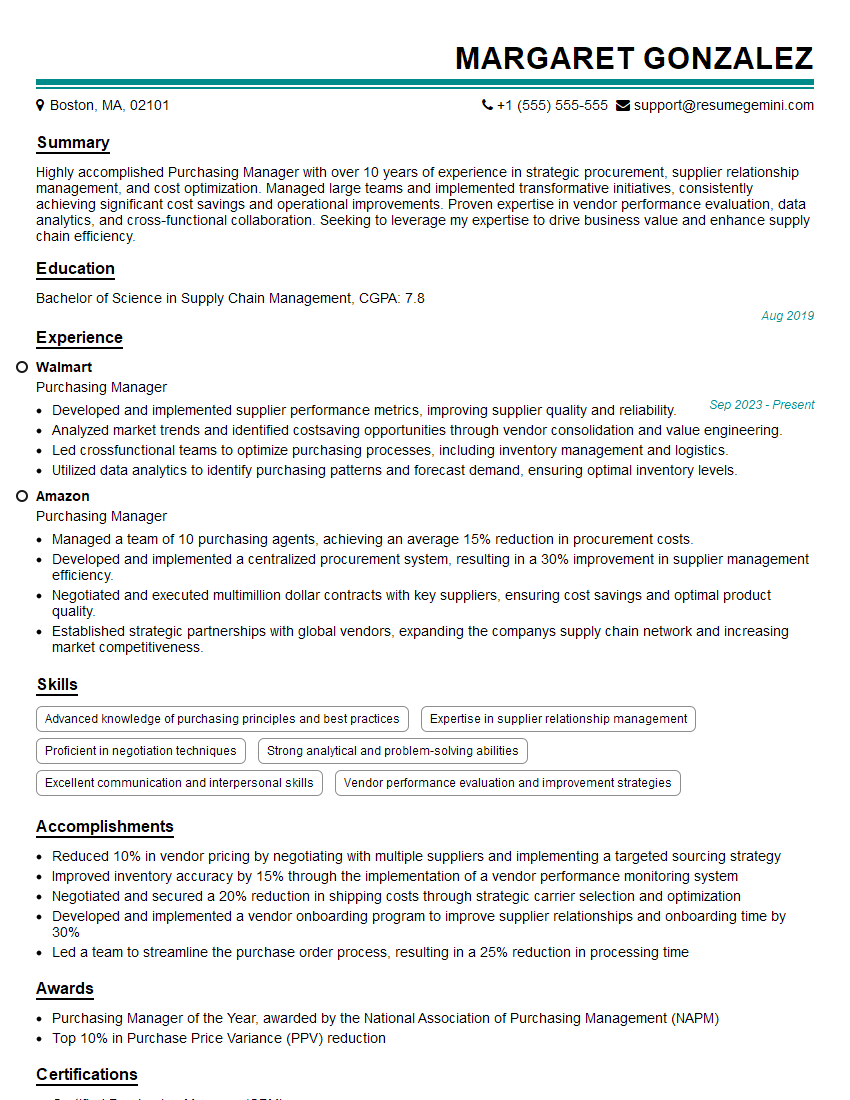
Purchasing Manager Resume Sample
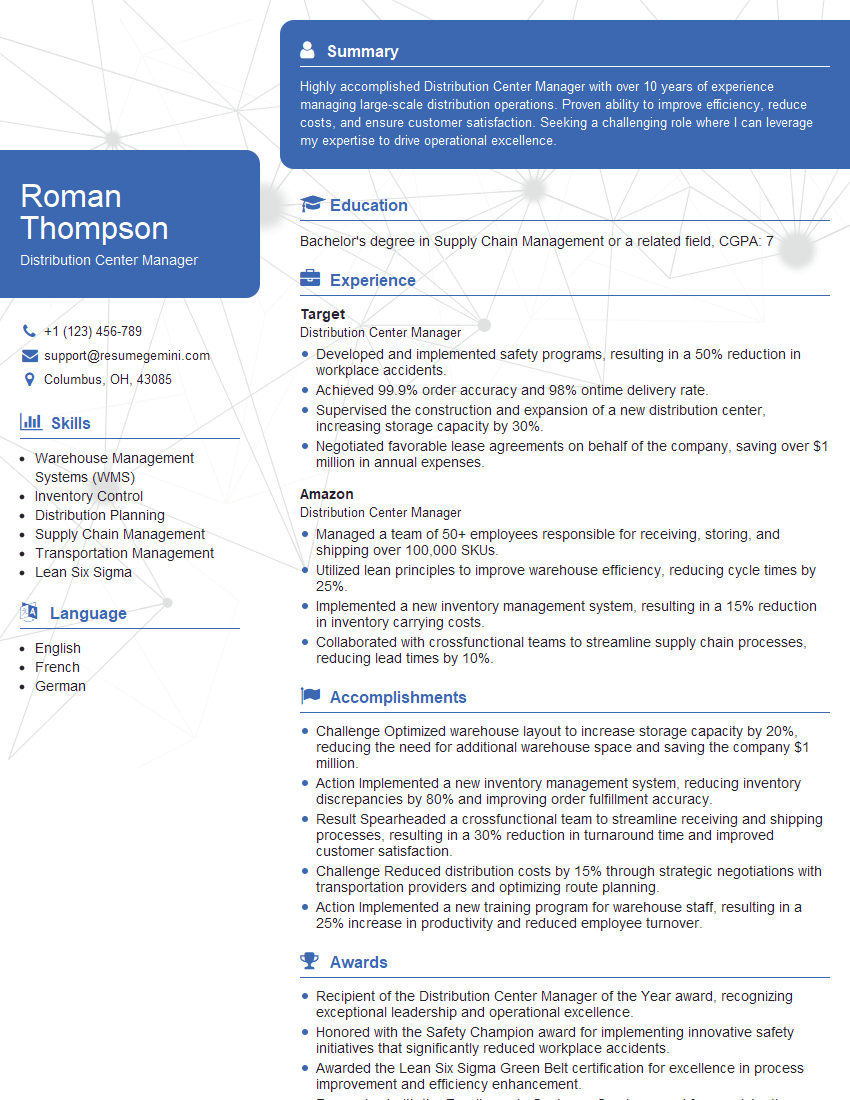
Distribution Center Manager Resume Sample
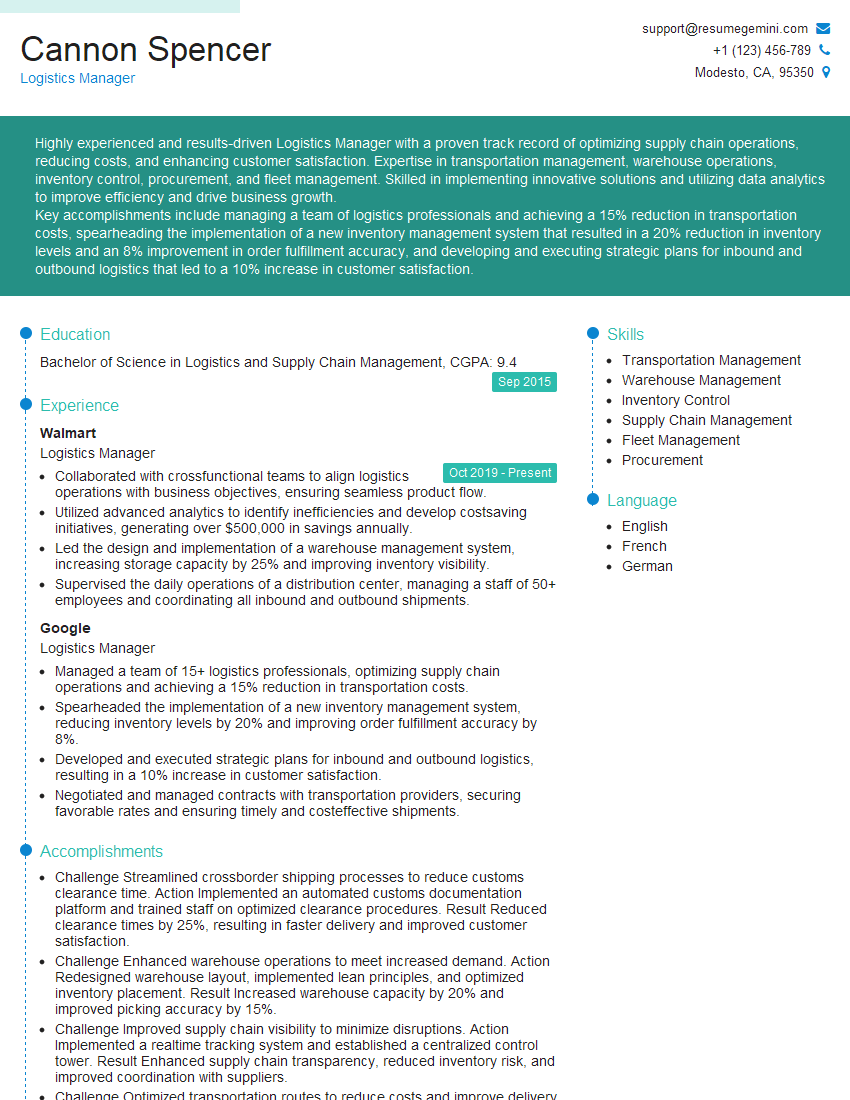
Logistics Manager Resume Sample
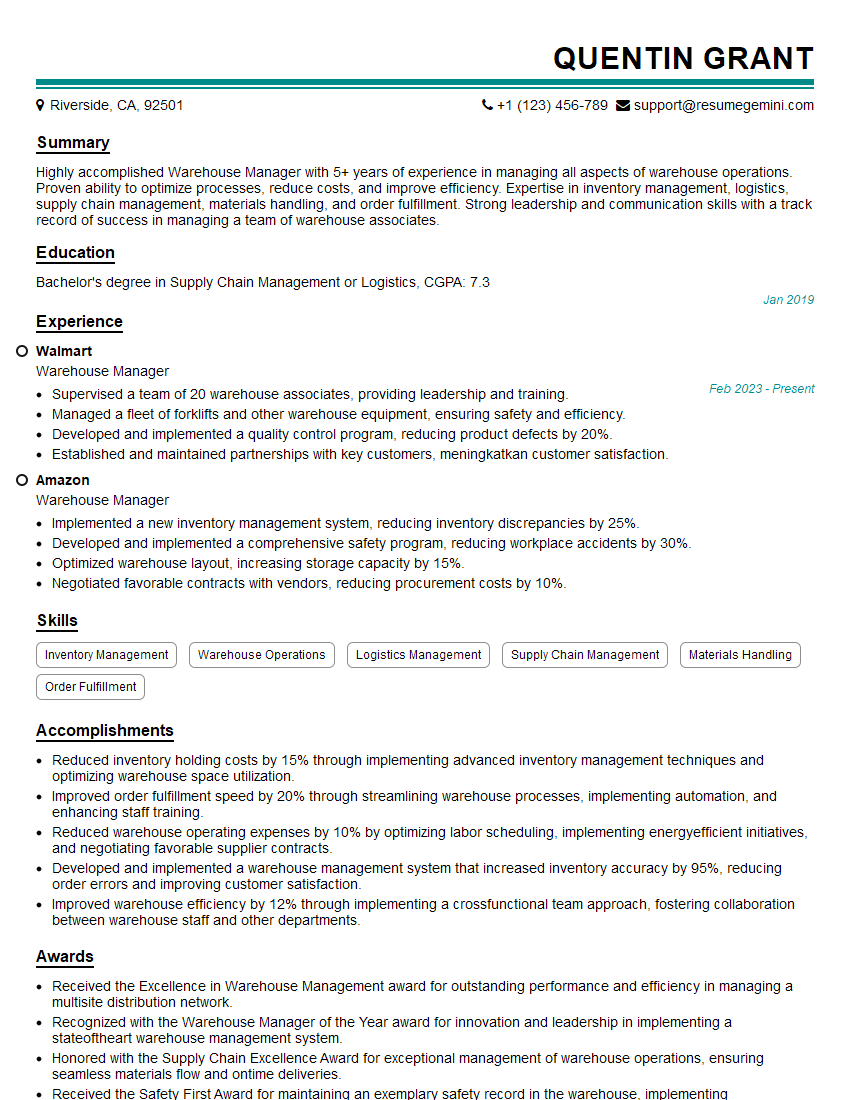
Warehouse Manager Resume Sample
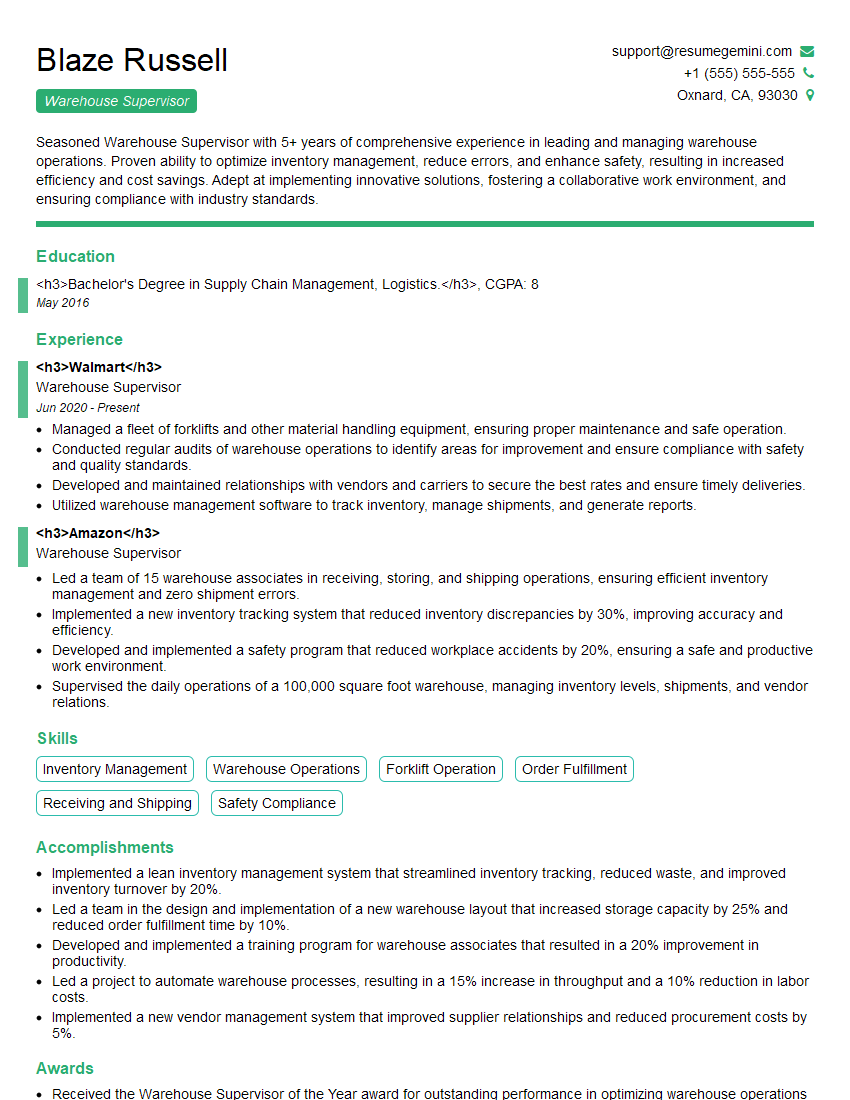
Warehouse Supervisor Resume Sample
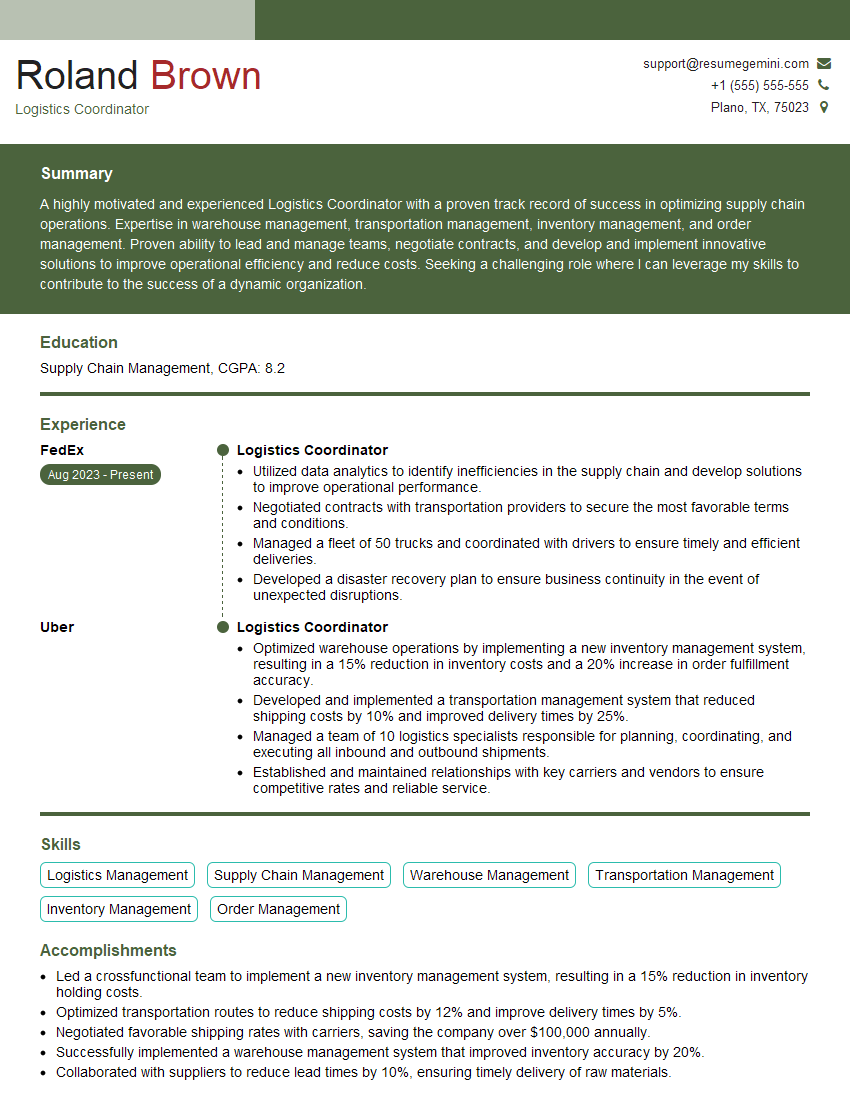
Logistics Coordinator Resume Sample
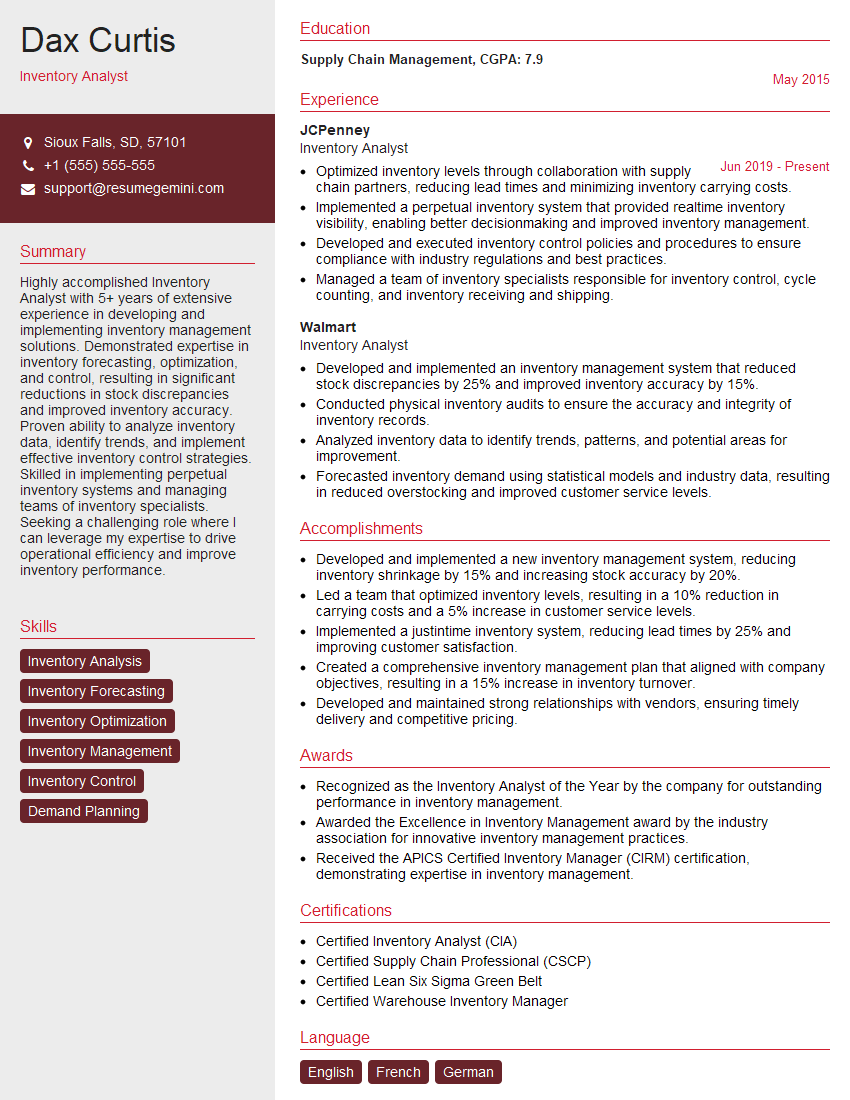
Inventory Analyst Resume Sample
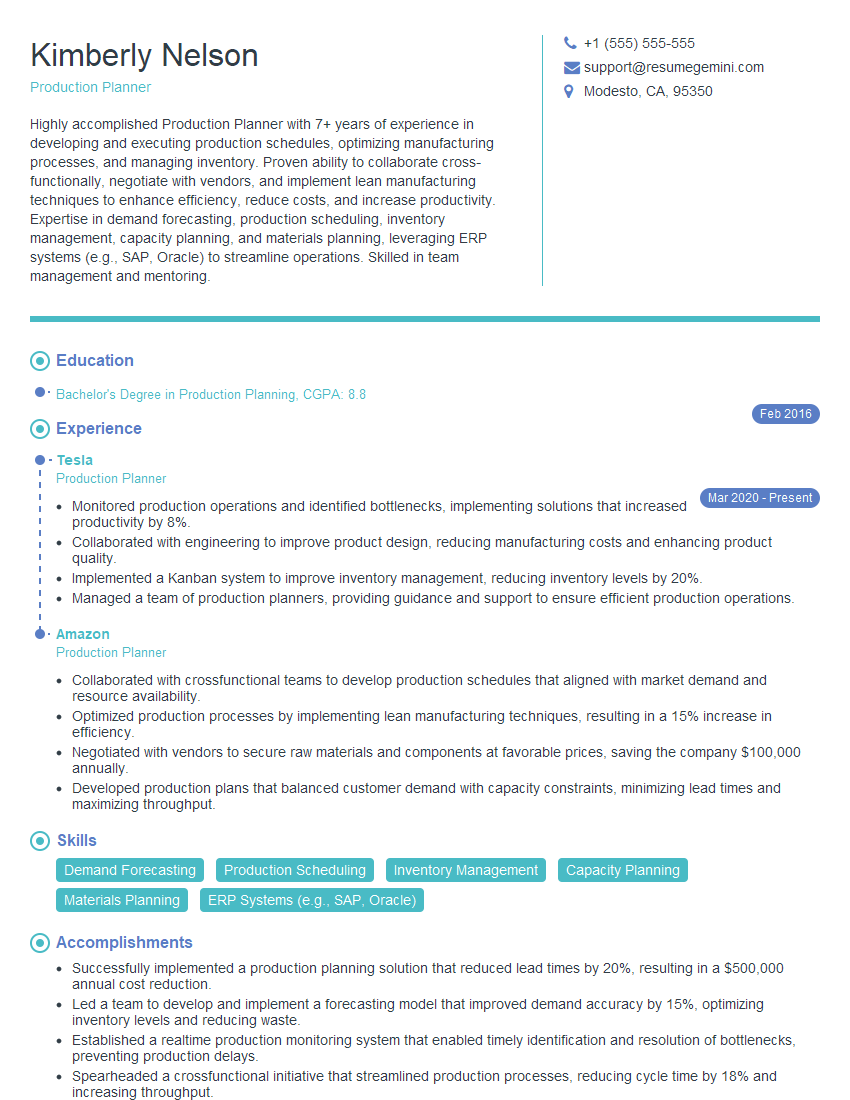
Production Planner Resume Sample

Inventory Manager Resume Sample
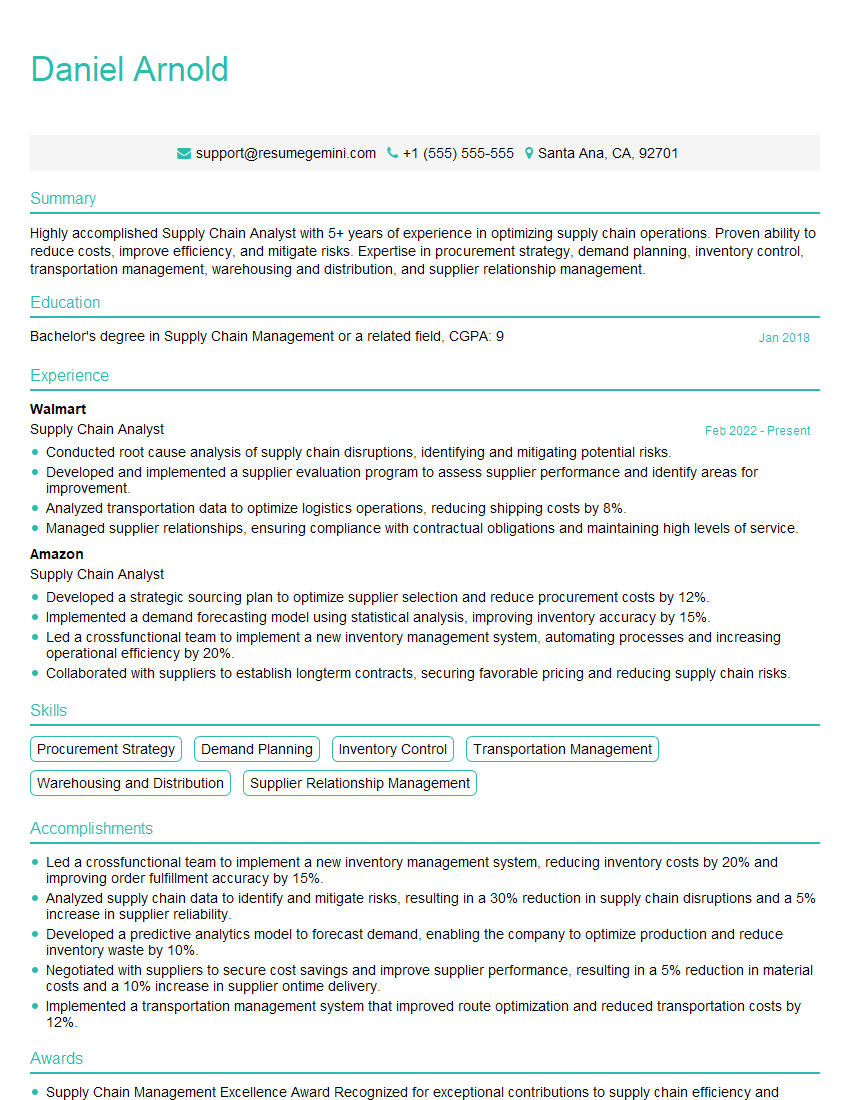
Supply Chain Analyst Resume Sample
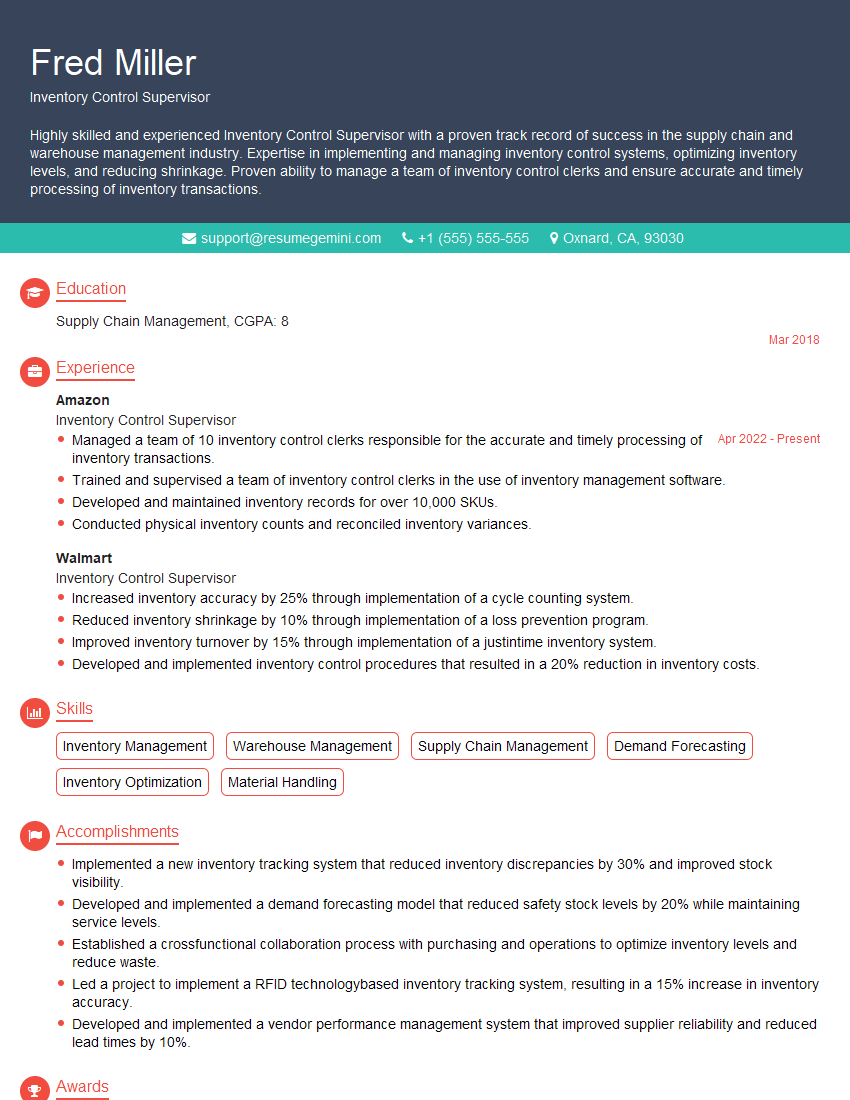
Inventory Control Supervisor Resume Sample
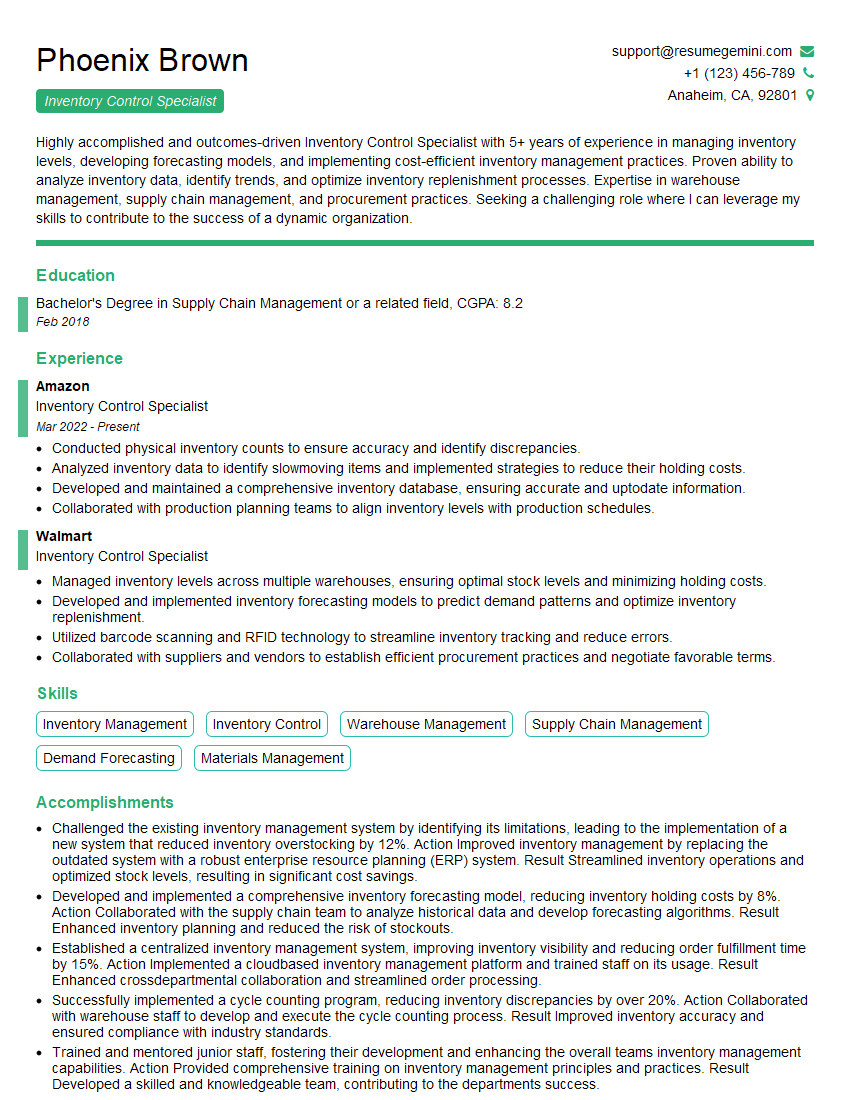
Inventory Control Specialist Resume Sample
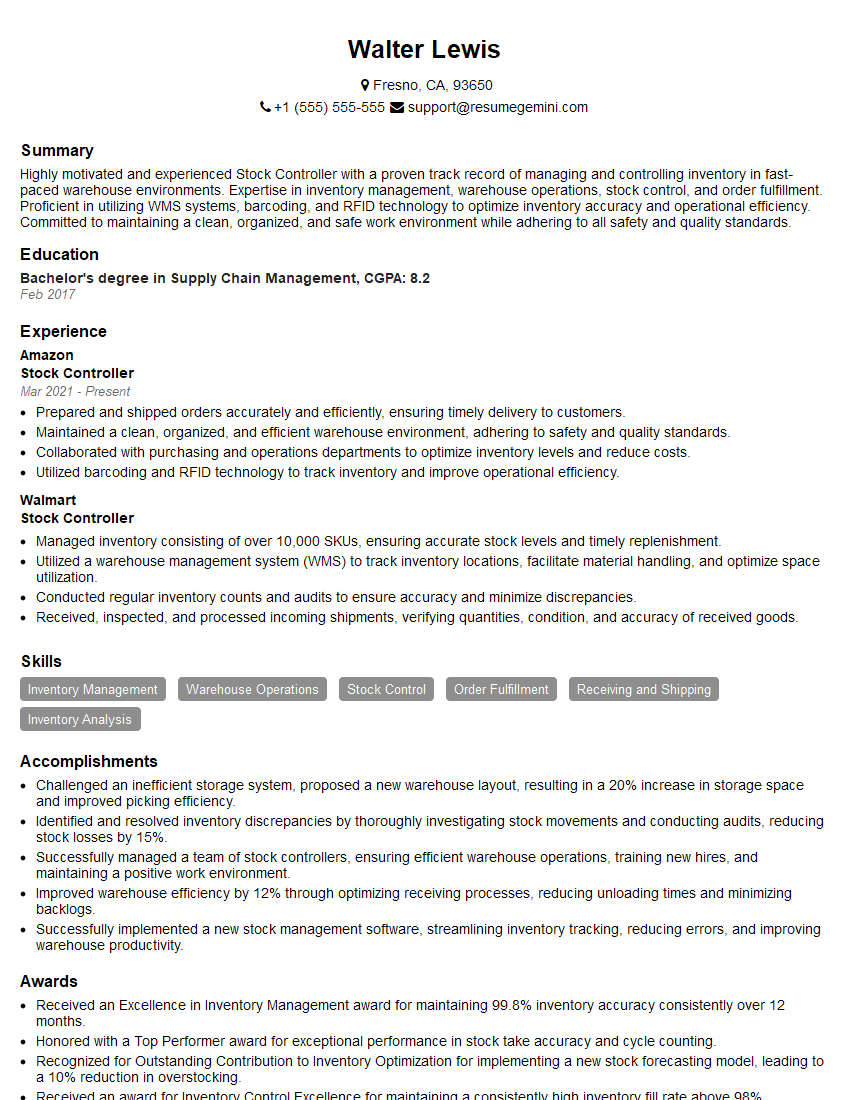
Stock Controller Resume Sample
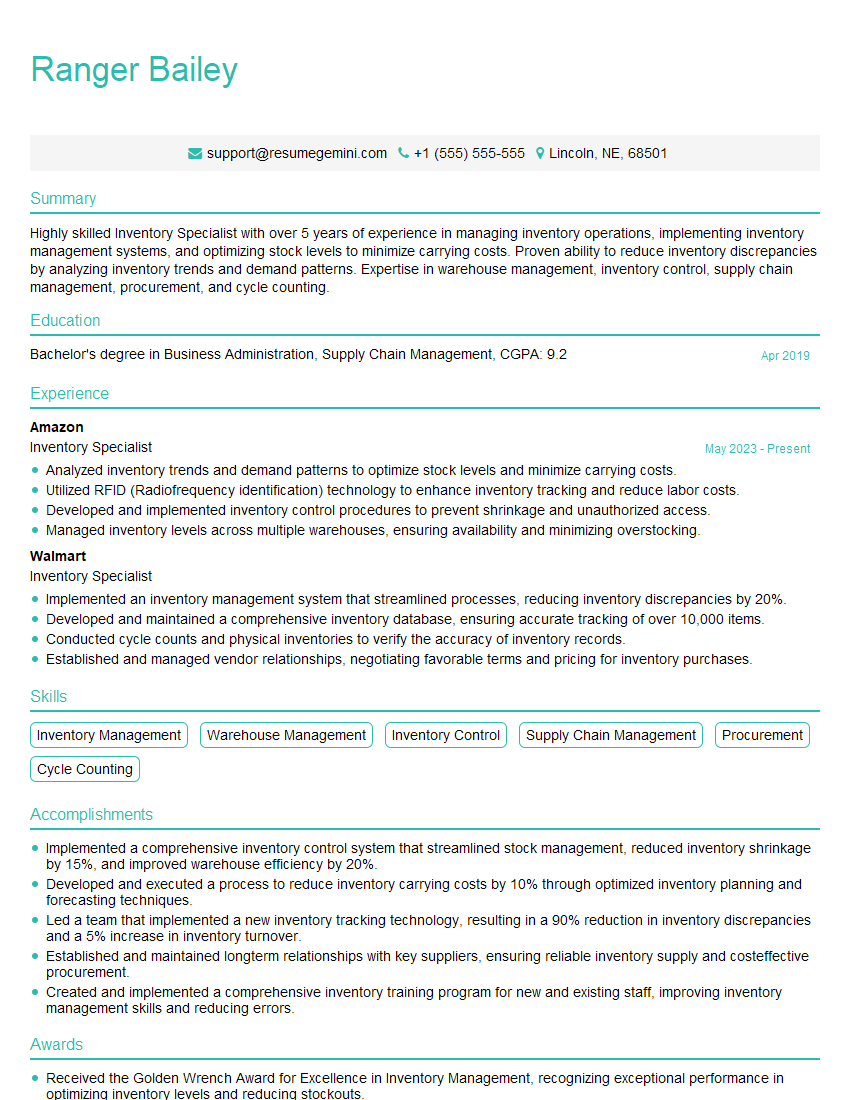
Inventory Specialist Resume Sample
- Operations Manager
- Demand Planner
- Materials Manager
- Procurement Manager
- Purchasing Manager
- Distribution Center Manager
- Logistics Manager
- Warehouse Manager
- Warehouse Supervisor
- Logistics Coordinator
- Inventory Analyst
- Production Planner
- Inventory Manager
- Supply Chain Analyst
- Inventory Control Supervisor
- Inventory Control Specialist
- Stock Controller
- Inventory Specialist
Explore more articles
Users Rating of Our Blogs
Share Your Experience
We value your feedback! Please rate our content and share your thoughts (optional).
What Readers Say About Our Blog
Very informative content, great job.
good