The right preparation can turn an interview into an opportunity to showcase your expertise. This guide to Investigation and Crime Analysis interview questions is your ultimate resource, providing key insights and tips to help you ace your responses and stand out as a top candidate.
Questions Asked in Investigation and Crime Analysis Interview
Q 1. Describe your experience with various investigative methodologies.
My experience encompasses a wide range of investigative methodologies, from traditional methods like interviewing and surveillance to advanced techniques leveraging technology and data analysis. I’m proficient in applying various models, including:
- CompStat (Comparative Statistics): This involves regularly reviewing crime statistics to identify trends and deploy resources effectively. For instance, I’ve used CompStat to analyze spikes in burglaries in a specific neighborhood, leading to increased patrols and the subsequent arrest of a prolific burglar.
- Problem-Oriented Policing (POP): This approach focuses on identifying the root causes of crime problems and developing tailored solutions. I was involved in a POP project addressing repeat shoplifting at a local mall. Through analysis of incident reports and interviews with mall staff, we identified security vulnerabilities and implemented improved lighting and security protocols, significantly reducing shoplifting incidents.
- Intelligence-Led Policing (ILP): ILP leverages criminal intelligence to proactively target crime hotspots and disrupt criminal networks. I have extensive experience using intelligence databases to link seemingly unrelated crimes, identifying patterns and leading to the apprehension of organized crime groups.
- Case Management Systems: I am adept at using case management software to track leads, evidence, and investigative progress efficiently. This improves collaboration among investigators and helps ensure no leads are missed.
My approach is always data-driven, ensuring objectivity and a strategic focus in investigations.
Q 2. Explain your understanding of crime mapping and spatial analysis.
Crime mapping and spatial analysis are crucial for understanding the geographic distribution of crime and identifying patterns. Crime mapping uses Geographic Information Systems (GIS) software to visualize crime data on maps, showing crime hotspots, patterns of movement, and relationships between different crime types. Spatial analysis goes further, using statistical and spatial modeling techniques to analyze the spatial relationships between crime events and other factors such as socioeconomic data, environmental factors, and infrastructure.
For example, by mapping burglaries alongside data on vacant properties, we can identify areas with higher vulnerability and target crime prevention strategies accordingly. Spatial analysis can also help us understand how offenders travel between crime scenes, providing valuable insights for apprehending them. Techniques like kernel density estimation can help visualize the intensity of crime clustering.
Q 3. How do you prioritize investigative leads effectively?
Prioritizing investigative leads requires a systematic approach. I employ a multi-faceted strategy that considers:
- Time Sensitivity: Leads that involve imminent threats or ongoing crimes are prioritized. For instance, a witness account of a recent robbery would take precedence over a cold case.
- Reliability of the Source: Leads from credible and reliable sources, such as confirmed eyewitnesses or forensic evidence, are given higher priority than anonymous tips or unsubstantiated rumors.
- Potential for Success: Leads with a higher probability of leading to an arrest or the recovery of evidence are favored. This often involves assessing the strength of the evidence and the feasibility of pursuing the lead.
- Resource Availability: The available resources, such as personnel and equipment, influence the prioritization of leads. High-priority leads might require assigning a larger investigative team.
I often use a scoring system to rank leads based on these criteria, ensuring that the most promising leads are investigated first.
Q 4. What software or tools are you proficient in for crime analysis?
My proficiency includes a variety of software and tools for crime analysis:
- GIS Software (ArcGIS, QGIS): For crime mapping and spatial analysis.
- Statistical Software (R, SPSS): For data analysis and statistical modeling.
- Database Management Systems (SQL): For managing and querying large crime databases.
- Data Visualization Tools (Tableau, Power BI): For creating clear and compelling visualizations of crime data.
- Case Management Systems (various proprietary systems): For tracking cases, evidence, and investigative progress.
My expertise extends to using these tools collaboratively to generate actionable intelligence.
Q 5. Explain your experience with data visualization techniques used in crime analysis.
Data visualization plays a crucial role in crime analysis by communicating complex information clearly and effectively. I utilize a range of techniques, including:
- Geographic maps: Showing crime hotspots, patterns of movement, and relationships between crime and other factors.
- Charts and graphs: Illustrating trends, patterns, and correlations in crime data over time.
- Network diagrams: Visualizing the relationships between individuals and organizations involved in criminal activity.
- Interactive dashboards: Allowing for dynamic exploration of crime data and facilitating interactive analysis.
Effective visualization helps identify patterns that might be missed in raw data and facilitates communication of findings to stakeholders.
Q 6. How do you identify patterns and trends in crime data?
Identifying patterns and trends in crime data requires a combination of statistical analysis and investigative expertise. I typically employ these methods:
- Descriptive statistics: Calculating summary statistics (mean, median, mode, etc.) to understand the basic characteristics of the data.
- Exploratory data analysis (EDA): Using visual techniques (histograms, scatter plots, box plots) to identify patterns and anomalies in the data.
- Time series analysis: Analyzing crime data over time to identify trends, seasonality, and other temporal patterns. For instance, identifying seasonal increases in burglaries during the holiday season.
- Spatial autocorrelation analysis: Assessing whether crime events are clustered or dispersed spatially. This can reveal hotspots and identify underlying environmental influences.
- Regression analysis: Identifying relationships between crime rates and other variables, such as socioeconomic factors or policing strategies.
The combination of these methods allows for a comprehensive understanding of crime patterns and trends, enabling better resource allocation and crime prevention strategies.
Q 7. Describe a time you had to analyze incomplete or ambiguous data.
In one case, I was tasked with investigating a series of arsons where witness accounts were conflicting and forensic evidence was limited. The initial data was fragmented and inconsistent. To address this, I employed several techniques:
- Data triangulation: I cross-referenced information from multiple sources (witness statements, fire reports, security footage) to identify any converging points and inconsistencies.
- Missing data imputation: Using statistical techniques to estimate missing values where possible, while acknowledging the uncertainty introduced.
- Qualitative analysis: Thorough examination of witness statements, searching for underlying themes or recurring details, even if seemingly insignificant.
- Network analysis: I explored potential links between suspects based on social connections and past interactions. Even incomplete connections helped build a more comprehensive picture.
While I couldn’t definitively solve the case with limited data, the analysis pointed toward a pattern involving individuals with a history of disputes over property lines, guiding further investigation and ultimately leading to a breakthrough.
Q 8. How do you handle conflicting information during an investigation?
Conflicting information is inevitable in investigations. Think of it like a jigsaw puzzle with missing pieces and some pieces that seem to not quite fit. My approach involves a systematic process of verification and triangulation.
Source Verification: I meticulously examine the credibility of each source. This includes assessing their potential biases, motivations, and past reliability. For instance, an eyewitness account needs corroboration from other evidence, such as security footage or forensic data.
Data Triangulation: I compare information from multiple independent sources to identify patterns and inconsistencies. If three different witnesses independently mention a blue car, that’s stronger evidence than a single witness. Conversely, if two sources contradict each other, I delve deeper to find the reason for the discrepancy.
Logical Analysis: I employ deductive and inductive reasoning to evaluate the plausibility of different narratives. This involves carefully examining the timeline of events, physical evidence, and witness testimonies to identify inconsistencies and contradictions. Sometimes, the ‘conflicting’ information may actually reveal a more complex truth.
Documentation: Every piece of information, including contradictions, is meticulously documented with its source and any analysis performed. This transparent record ensures accountability and allows for revisiting the data later.
For example, in a robbery case, one witness might describe the suspect as tall and thin, while another describes them as short and stocky. Instead of dismissing either account, I’d analyze the viewing conditions, the witness’s distance from the suspect, and look for additional evidence to reconcile the descriptions. Perhaps the suspect was wearing clothing that distorted their appearance.
Q 9. Explain your understanding of different types of bias in crime data.
Bias in crime data significantly impacts the accuracy of analysis and can lead to skewed conclusions. Several types exist:
Reporting Bias: This refers to inconsistencies in how crimes are reported and recorded. For instance, certain crimes, like domestic violence, may be underreported due to victim reluctance or societal stigma, while others, like theft, may be overreported due to insurance claims or other factors.
Sampling Bias: This occurs when the data collected doesn’t accurately represent the entire population. For instance, focusing solely on crime reports from a specific neighborhood might misrepresent the crime rates of the entire city.
Confirmation Bias: This is the tendency to favor information that confirms pre-existing beliefs or hypotheses. An analyst might selectively focus on data supporting their initial assumptions, neglecting contradictory evidence.
Cognitive Bias: These are inherent human tendencies that can skew judgment. For example, ‘availability heuristic’ means we overestimate the likelihood of events easily recalled (e.g., highly publicized crimes), ignoring less-publicized but potentially more prevalent crimes.
Addressing these biases involves employing rigorous data collection methods, using diverse data sources, carefully considering alternative explanations, and applying statistical techniques to identify and mitigate potential biases. It also requires self-awareness and critical reflection on one’s own assumptions.
Q 10. How do you ensure the accuracy and reliability of your crime analysis?
Accuracy and reliability are paramount. To ensure this, I employ a multi-faceted approach:
Data Validation: I rigorously check the source, completeness, and consistency of the data. This might involve cross-referencing information across different databases or contacting agencies for clarifications.
Data Cleaning: I identify and correct errors, inconsistencies, or missing values in the dataset. This often involves using data cleaning tools and techniques to handle outliers, duplicates, and invalid entries.
Appropriate Statistical Methods: I select statistical techniques appropriate to the type of data and research question. Using the wrong statistical methods can lead to erroneous conclusions. For example, applying a linear regression model to non-linear data will yield misleading results.
Peer Review: I frequently seek feedback from colleagues to validate my findings and analysis. A fresh perspective can identify biases or errors I might have missed.
Transparency: I maintain detailed records of my methodology and data sources, enabling others to reproduce my analysis and evaluate its validity.
For instance, if analyzing crime trends, I wouldn’t rely solely on police reports. I’d also consider data from victim surveys, hospital records, and other relevant sources to gain a more comprehensive understanding.
Q 11. What are some common challenges in crime analysis, and how do you address them?
Crime analysis faces numerous challenges. Data quality issues, as discussed earlier, are a major hurdle. Other common challenges include:
Data Silos: Information might be scattered across different agencies or departments, hindering comprehensive analysis. Overcoming this involves fostering collaboration and data sharing between relevant parties.
Limited Resources: Time, budget, and personnel constraints can limit the scope and depth of analysis.
Technological Limitations: The software and tools available may not always be adequate for the complexity of the data or analytical task.
Interpreting Complex Data: Crime data is often multifaceted, requiring advanced statistical skills and a good understanding of the social context to interpret accurately.
Addressing these challenges often involves strategic planning, advocating for resources, utilizing available technology effectively, and developing strong collaborations with other professionals. For example, to combat data silos, I would actively participate in inter-agency meetings and build relationships with key personnel from different organizations.
Q 12. Describe your experience with report writing and presentation of findings.
Effective report writing and presentation are crucial for communicating findings to stakeholders. My approach emphasizes clarity, accuracy, and visual appeal.
Clear and Concise Writing: I avoid jargon and use simple language that is easily understood by the target audience. Technical terms are defined where necessary.
Data Visualization: I use charts, graphs, and maps to illustrate key findings and make complex data more accessible. Choosing the right visual representation (e.g., bar chart vs. line graph) is essential for conveying the information effectively.
Logical Structure: Reports follow a clear structure, progressing logically from the introduction, methodology, findings, and conclusions. This ensures easy navigation and understanding.
Interactive Presentations: For presentations, I use visuals, data demonstrations, and storytelling to engage the audience and convey the significance of my findings. Interactive elements, where appropriate, enhance audience engagement.
I’ve presented findings to various audiences, from law enforcement agencies to community groups, adapting my communication style to meet their specific needs and understanding. The key is to convey the information in a manner that is easily grasped and actionable.
Q 13. How do you maintain confidentiality and ethical standards in your work?
Maintaining confidentiality and ethical standards is non-negotiable. My commitment to ethical conduct guides all aspects of my work:
Data Security: I adhere to strict protocols to protect the confidentiality of sensitive information. This includes secure storage of data, limiting access to authorized personnel, and complying with all relevant data privacy regulations.
Objectivity and Impartiality: I strive to maintain objectivity in my analysis and avoid conflicts of interest. This involves being mindful of potential biases and ensuring my conclusions are supported by evidence rather than personal opinions.
Transparency and Accountability: I document my methods and findings thoroughly, making my work auditable and subject to scrutiny. This demonstrates transparency and promotes accountability.
Adherence to Legal and Ethical Codes: I am thoroughly familiar with and strictly adhere to all relevant legal and ethical codes, including data protection laws and professional codes of conduct.
For example, I would never disclose confidential information to unauthorized individuals, even if under pressure. I would also carefully consider the ethical implications of my analyses before sharing findings, ensuring they are not used to unfairly target individuals or groups.
Q 14. Explain your understanding of legal and regulatory frameworks relevant to investigations.
A deep understanding of legal and regulatory frameworks is essential for ethical and effective investigations and crime analysis. These frameworks vary across jurisdictions but generally include:
Data Protection Laws: Laws such as GDPR (in Europe) and CCPA (in California) govern the collection, storage, and use of personal data. These laws define what data can be collected, how it must be protected, and how it can be used. Violation can result in significant penalties.
Freedom of Information Laws: These laws govern public access to government-held information, including crime data. Analysts must be aware of these laws and ensure they comply when releasing or sharing information.
Evidence Laws: These laws determine the admissibility of evidence in legal proceedings. Understanding evidence laws is crucial for ensuring that the data and analysis used in investigations can be presented effectively in court.
Criminal Procedure Laws: These laws govern the conduct of investigations and prosecutions. Analysts must be aware of these laws to ensure that their work complies with legal standards and due process.
Ignorance of these frameworks can lead to legal issues and compromise the integrity of investigations. Therefore, continuous learning and staying updated on legal and regulatory changes are essential.
Q 15. How familiar are you with predictive policing techniques?
Predictive policing uses data analysis and statistical modeling to anticipate future crime hotspots or potential criminal activities. It’s not about predicting specific crimes, but rather identifying areas and times with a higher probability of criminal events. Think of it like weather forecasting – we can’t predict exactly when or where a specific thunderstorm will strike, but we can predict areas with a higher likelihood of storms based on historical data and current conditions.
My familiarity extends to various predictive policing models, including those based on spatial autocorrelation (identifying crime clusters), time series analysis (detecting patterns over time), and machine learning algorithms (like neural networks) that incorporate multiple data sources to make more nuanced predictions. I have experience in evaluating the accuracy and reliability of these models, understanding their limitations, and interpreting their outputs for practical application in resource allocation and deployment of law enforcement personnel.
For instance, in a previous case, we used a predictive model incorporating historical crime data, social media sentiment, and real-time sensor data (traffic flow, noise levels) to successfully predict a surge in petty theft in a specific shopping mall during evening hours. This allowed us to pre-position officers and significantly reduce the number of incidents.
Career Expert Tips:
- Ace those interviews! Prepare effectively by reviewing the Top 50 Most Common Interview Questions on ResumeGemini.
- Navigate your job search with confidence! Explore a wide range of Career Tips on ResumeGemini. Learn about common challenges and recommendations to overcome them.
- Craft the perfect resume! Master the Art of Resume Writing with ResumeGemini’s guide. Showcase your unique qualifications and achievements effectively.
- Don’t miss out on holiday savings! Build your dream resume with ResumeGemini’s ATS optimized templates.
Q 16. Describe your experience with link analysis and network analysis.
Link analysis and network analysis are crucial for understanding the relationships between individuals and entities involved in criminal activities. Link analysis focuses on identifying direct connections, while network analysis provides a broader view of complex relationships within a criminal network. Think of it like mapping a social network, but with criminal actors and their interactions.
My experience encompasses using various software tools to build and analyze these networks, including visualizing relationships through nodes (individuals or entities) and edges (connections between them). I can identify key players (high-degree nodes), weak links (low-degree nodes), and potential bridges (connections between different parts of the network). This allows us to identify potential leaders, collaborators, and vulnerabilities within organized crime groups or terrorist cells.
For example, in a drug trafficking investigation, we used network analysis to identify the main supplier based on the flow of money and goods. The analysis revealed a hierarchical structure, enabling us to target the key player and dismantle the entire network.
Q 17. How do you evaluate the credibility of sources of information?
Evaluating source credibility is paramount. It’s not enough to simply collect information; we must determine its reliability and trustworthiness. This involves considering several factors, including the source’s expertise, potential biases, the method of information gathering, and corroboration with other sources.
I use a multi-faceted approach: I assess the source’s expertise and potential conflicts of interest; I examine the methodology used to gather the information (was it eyewitness testimony, forensic evidence, or hearsay?); I cross-reference information from multiple independent sources to identify consistency and discrepancies; and I consider the context and potential motivations behind the information provided.
For instance, an anonymous tip must be carefully verified through independent investigation, while forensic evidence, such as DNA, requires rigorous chain-of-custody documentation. Each piece of information is assessed for reliability before being integrated into the overall investigation.
Q 18. How do you use technology to enhance investigative efficiency?
Technology significantly enhances investigative efficiency. I leverage various tools to manage large datasets, analyze information quickly, and visualize complex relationships. This includes Geographic Information Systems (GIS) for mapping crime patterns, Computer-Assisted Case Management (CACM) systems for organizing case information, and specialized software for data mining and network analysis.
Specifically, I utilize GIS to identify crime hotspots, analyze spatial relationships, and predict future crime occurrences. CACM systems help manage case files, track leads, and document investigative steps. Data mining tools allow for pattern recognition within large datasets of crime reports, call logs, and social media information. I’m also proficient in using specialized software for link analysis and network analysis, enabling the visual representation and analysis of complex relationships within criminal networks.
In one case, using GIS to analyze burglaries, we identified a pattern of crimes occurring along a specific bus route, leading to the arrest of a suspect who was using the public transportation system to access his targets.
Q 19. Explain your understanding of different crime typologies.
Crime typologies are classifications of crimes based on shared characteristics. Understanding these typologies is crucial for effective crime analysis, resource allocation, and prevention strategies. These classifications can be based on various factors, such as the nature of the offense (e.g., violent, property, drug-related), the method of operation (modus operandi or MO), the target victim profile, or the geographical location.
My understanding encompasses various typologies, including the FBI’s Uniform Crime Reporting (UCR) system, which categorizes crimes into broad categories like murder, robbery, and larceny. However, I also utilize more nuanced typologies specific to certain crime types. For instance, in analyzing burglaries, I might categorize them based on the type of property stolen, entry method, or time of day, leading to a more focused investigative strategy.
For example, analyzing a series of seemingly unrelated robberies, I might identify a consistent MO, such as the same type of vehicle used and a specific time frame, revealing a pattern that allows for targeted investigation and offender profiling.
Q 20. How do you stay updated on the latest trends and advancements in crime analysis?
Staying updated on trends and advancements is crucial in this dynamic field. I achieve this through continuous professional development, including attending conferences and workshops, participating in online courses and webinars, and reading relevant academic journals and industry publications.
I actively engage with professional organizations such as the International Association of Chiefs of Police (IACP) and the American Society of Crime Prevention Practitioners (ASCPP), which offer valuable resources and insights. I also maintain a network of contacts within the law enforcement and crime analysis communities, fostering information exchange and collaborative learning. This ensures my techniques and approaches align with current best practices and technological innovations.
For example, I recently completed a course on advanced network analysis techniques utilizing machine learning algorithms, enhancing my ability to uncover hidden patterns and relationships within criminal networks.
Q 21. Describe your experience collaborating with other investigators and stakeholders.
Collaboration is essential in criminal investigations. I have extensive experience working with diverse teams, including fellow investigators, forensic specialists, intelligence analysts, prosecutors, and community stakeholders. Effective collaboration requires clear communication, mutual respect, and a shared understanding of goals and responsibilities.
I facilitate collaboration by clearly articulating my findings, presenting information in accessible formats (e.g., visual dashboards, reports), and actively seeking feedback from team members. I embrace different perspectives and actively listen to others’ insights, building consensus and ensuring that all relevant information is considered. My experience includes leading collaborative projects, coordinating information sharing across agencies, and presenting findings to decision-makers.
In a recent complex fraud investigation, I coordinated the efforts of multiple law enforcement agencies and financial institutions. My role in synthesizing information from disparate sources and effectively communicating it to the investigative team was crucial in successfully bringing the perpetrators to justice.
Q 22. Explain your approach to problem-solving in a high-pressure investigative environment.
In high-pressure investigative environments, a structured approach is crucial. My strategy centers around the SARA model (Scanning, Analysis, Response, Assessment) adapted for rapid, effective problem-solving. I begin by scanning the immediate situation, gathering preliminary information to identify the core problem. This involves prioritizing information—what’s critical, what’s noise? Then, I move to analysis, meticulously reviewing all available data: witness statements, forensic reports, timelines. I utilize various analytical techniques, such as link analysis or geographic profiling, to identify patterns and potential suspects. Next comes the response phase, where I coordinate investigative actions, possibly involving surveillance, interviews, or search warrants. Finally, assessment involves reviewing the outcome, evaluating the effectiveness of our strategies, and identifying areas for improvement in future cases. For instance, in a complex fraud case, the initial scan might reveal a discrepancy in financial records. Analysis would involve tracing the transactions, while the response might involve interviewing key individuals and seizing relevant documents. The assessment would determine if the fraud was successfully uncovered and what preventative measures could be implemented.
Q 23. How do you handle setbacks or challenges during an investigation?
Setbacks are inevitable in investigations. My approach is to view them as learning opportunities. First, I conduct a thorough review of what went wrong, focusing on facts, not blame. Was there a flaw in our methodology? Did we overlook crucial information? This self-reflection prevents repeating past mistakes. Second, I engage my team in brainstorming alternative strategies. We discuss what we’ve learned and explore new avenues of inquiry. For example, if a key witness is uncooperative, we might explore other methods of obtaining information, such as examining their digital footprint or seeking additional witnesses. Finally, I remain flexible and adapt my approach. Investigations are rarely linear. We need to be prepared to adjust our plans as new information emerges. The persistence to reassess and adjust ensures the investigation keeps moving forward.
Q 24. Describe your experience with case management systems.
I have extensive experience with various case management systems, including [mention specific systems e.g., CaseTrak, RMS, etc.]. I’m proficient in using these systems to track evidence, manage case files, update reports, and collaborate with colleagues. My skills encompass data entry, report generation, and utilizing the system’s analytical features. For instance, I’ve used CaseTrak to efficiently track the chain of custody for forensic evidence, ensuring its integrity throughout the investigation. The ability to efficiently manage case files within such systems is crucial for maintaining organization and reducing errors. Knowing how to extract data for analysis is equally important. For example, I could pull data from the system to identify trends in crime types or suspect characteristics, aiding in strategic decision-making.
Q 25. How do you conduct thorough background checks and verify information?
Thorough background checks are critical. My approach involves using multiple sources of information to verify data. This includes accessing public records (e.g., court records, property records), conducting interviews, using commercial databases (e.g., LexisNexis, Accurint), and verifying social media profiles. Cross-referencing information from various sources is key to validating its accuracy. For example, if a suspect claims to have a specific employment history, I’d verify that claim through employment records and potentially even by contacting the employers. Each piece of information obtained needs to be thoroughly vetted, and inconsistencies should prompt further investigation. This multi-layered approach ensures the reliability and accuracy of information used to inform investigative decisions.
Q 26. Explain your understanding of statistical significance in crime data analysis.
Statistical significance in crime data analysis refers to the probability that an observed pattern or relationship in the data is not due to random chance. It helps us determine whether a trend or correlation is genuinely meaningful or merely a fluke. We typically use p-values to assess significance; a p-value less than 0.05 (generally) indicates a statistically significant result. For example, if we find a statistically significant correlation between increased alcohol sales and an increase in assaults in a specific neighborhood, we can conclude with a degree of confidence that there’s a real relationship, not just random variation. However, it’s important to note that statistical significance doesn’t necessarily imply causation; correlation doesn’t equal causation. Further investigation is required to establish the causal link, if any. Understanding these concepts helps to avoid misinterpreting crime data and making evidence-based policy decisions.
Q 27. How familiar are you with different types of forensic evidence?
My familiarity with forensic evidence is extensive, encompassing various types. I understand the value and limitations of different forms of evidence, including:
- DNA evidence: I understand the procedures for collection, analysis, and interpretation of DNA profiles, including the potential for contamination and the limitations of partial profiles.
- Digital evidence: I am skilled in securing, analyzing, and interpreting digital data from computers, mobile devices, and other electronic sources.
- Trace evidence: I’m experienced in identifying and analyzing trace evidence, such as fibers, hairs, and paint chips, using appropriate analytical techniques.
- Ballistics: I understand ballistic analysis, including comparing bullets and cartridge cases to firearms.
- Fingerprint evidence: I’m adept at interpreting and analyzing fingerprints, understanding various methods of fingerprint lifting and comparison.
Q 28. Describe your experience with interviewing witnesses and suspects.
I have significant experience in interviewing witnesses and suspects, employing a range of techniques tailored to the individual and the situation. My approach emphasizes building rapport, active listening, and employing open-ended questions to encourage detailed responses. With witnesses, the goal is to elicit accurate and unbiased information. This includes understanding their perspective, identifying potential biases, and corroborating their statements with other evidence. With suspects, I utilize different strategies, sometimes employing persuasive techniques while always adhering to legal protocols and ensuring their rights are protected. It is crucial to document all interviews meticulously, recording both verbal responses and any non-verbal cues. In cases where a suspect is uncooperative, I would utilize alternative strategies, such as using evidence to contradict their statements or bringing in additional witnesses. Proper interviewing techniques are fundamental to successful investigations, leading to accurate information, confessions, or compelling leads.
Key Topics to Learn for Investigation and Crime Analysis Interview
- Crime Scene Investigation Fundamentals: Understanding crime scene processing, evidence collection techniques, chain of custody, and the importance of meticulous documentation.
- Data Analysis & Interpretation: Applying statistical methods to crime data, identifying trends and patterns, and using data visualization to present findings effectively. Practical application includes analyzing crime mapping software outputs and drawing actionable conclusions.
- Investigative Methodologies: Familiarizing yourself with various investigative approaches, such as intelligence-led policing, problem-oriented policing, and case management systems. Understanding the strengths and weaknesses of each methodology is crucial.
- Criminal Profiling & Behavioral Analysis: Understanding the principles of criminal profiling, including geographic profiling and offender behavior analysis. Practical application involves interpreting behavioral clues to develop investigative leads.
- Report Writing & Presentation Skills: Mastering the art of clear, concise, and persuasive report writing. Practice presenting complex analytical findings to both technical and non-technical audiences.
- Legal & Ethical Considerations: A thorough understanding of relevant laws, regulations, and ethical guidelines related to investigation and crime analysis is paramount. This includes ensuring adherence to privacy laws and maintaining the integrity of investigative processes.
- Technology in Crime Analysis: Familiarity with various software and tools used in crime analysis, such as crime mapping software, statistical packages, and database management systems. Understanding their capabilities and limitations is essential.
Next Steps
Mastering Investigation and Crime Analysis opens doors to a rewarding career with significant growth potential, offering opportunities for advancement and specialization within law enforcement, intelligence, or private sector security. To maximize your job prospects, crafting a compelling and ATS-friendly resume is crucial. ResumeGemini is a trusted resource to help you build a professional resume that highlights your skills and experience effectively. We provide examples of resumes tailored to Investigation and Crime Analysis to help you showcase your unique qualifications. Take the next step in your career journey and create a resume that reflects your expertise and ambition.
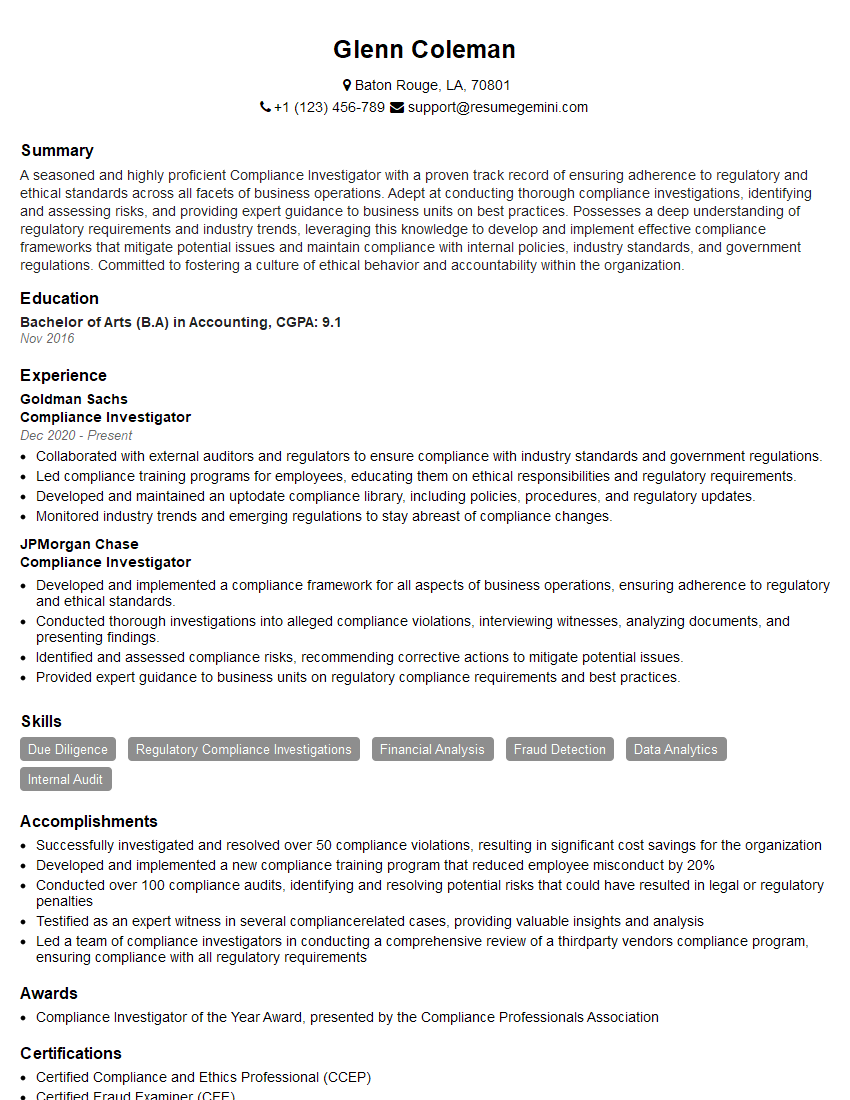
Compliance Investigator Resume Sample
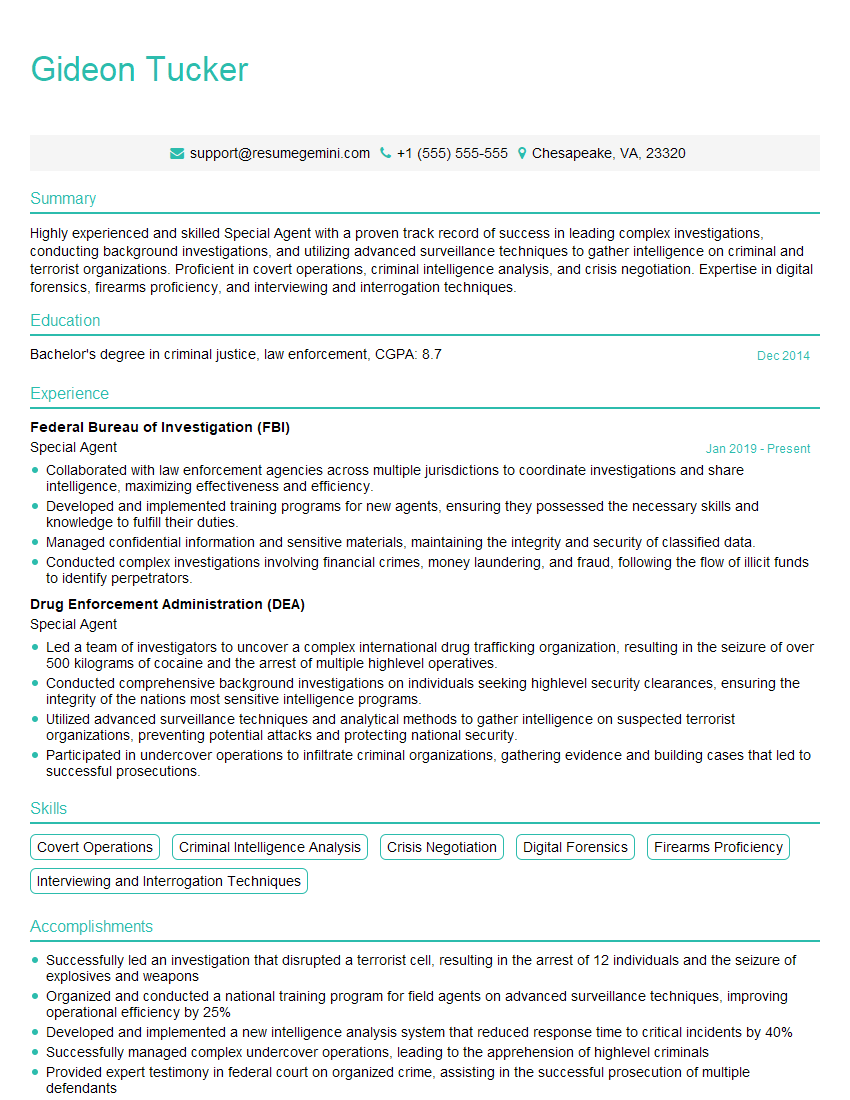
Special Agent Resume Sample
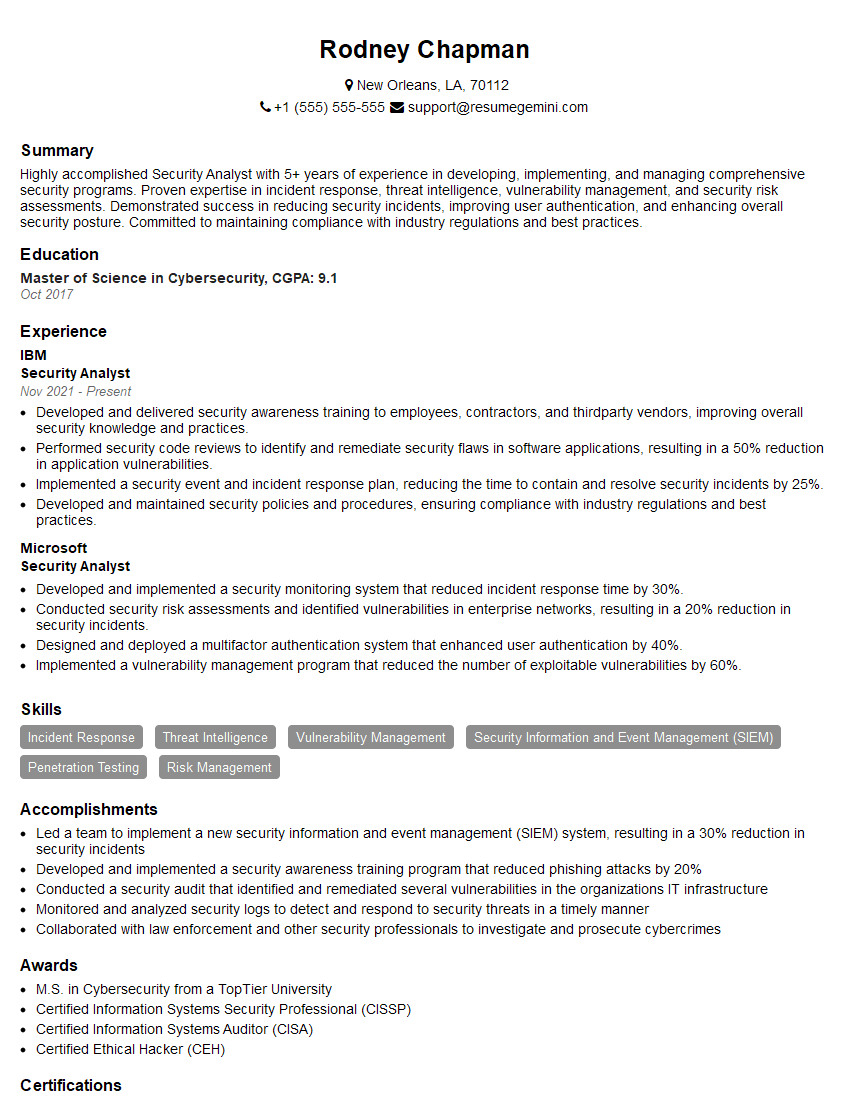
Security Analyst Resume Sample
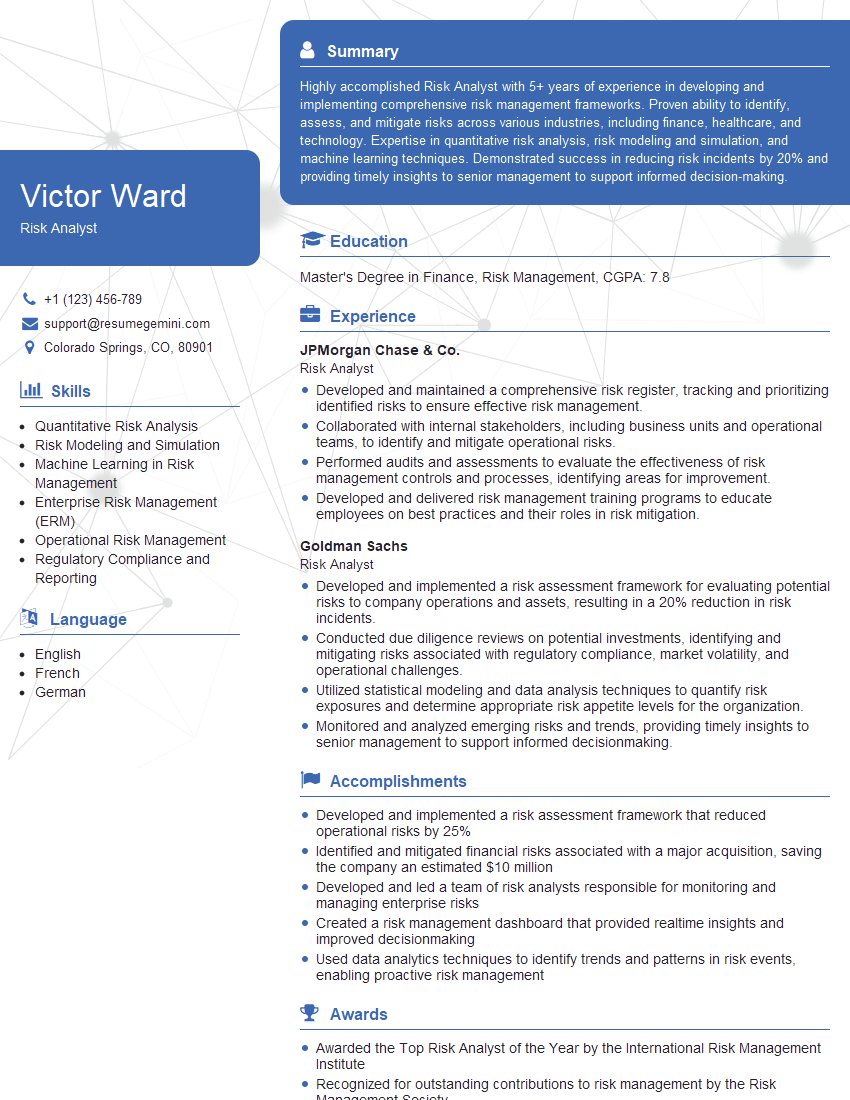
Risk Analyst Resume Sample
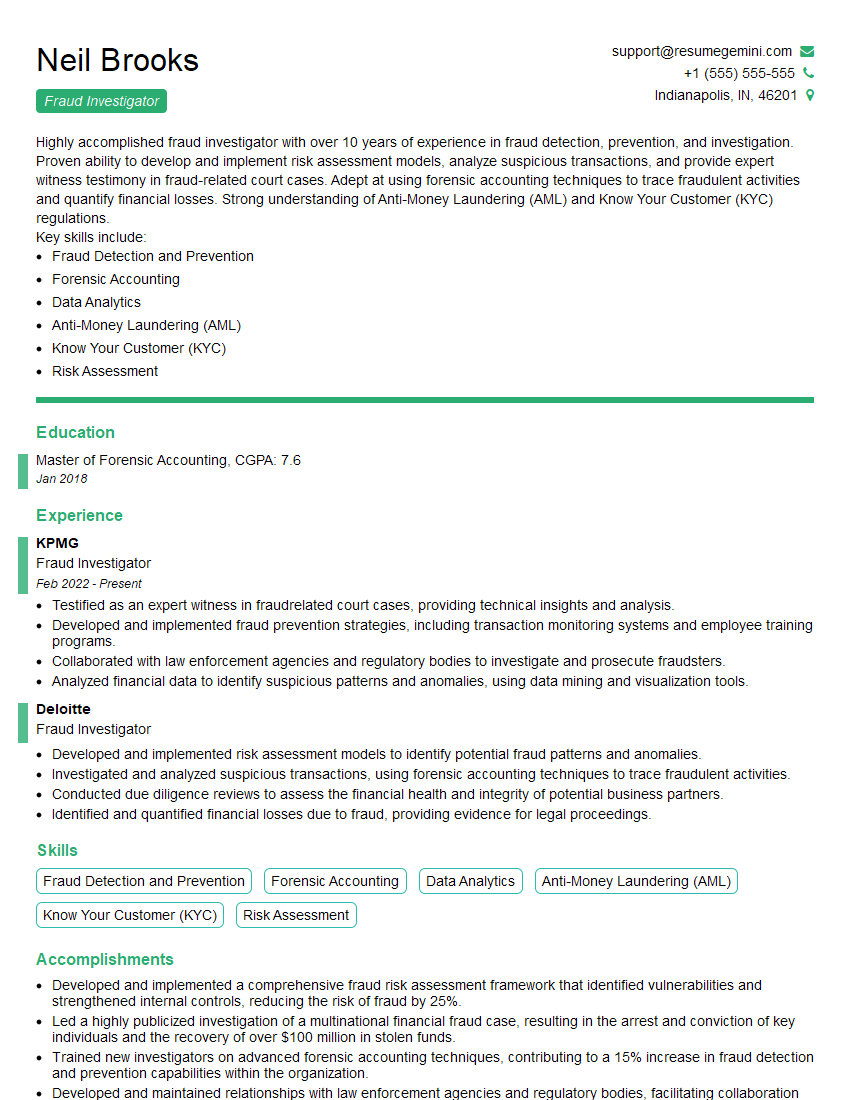
Fraud Investigator Resume Sample
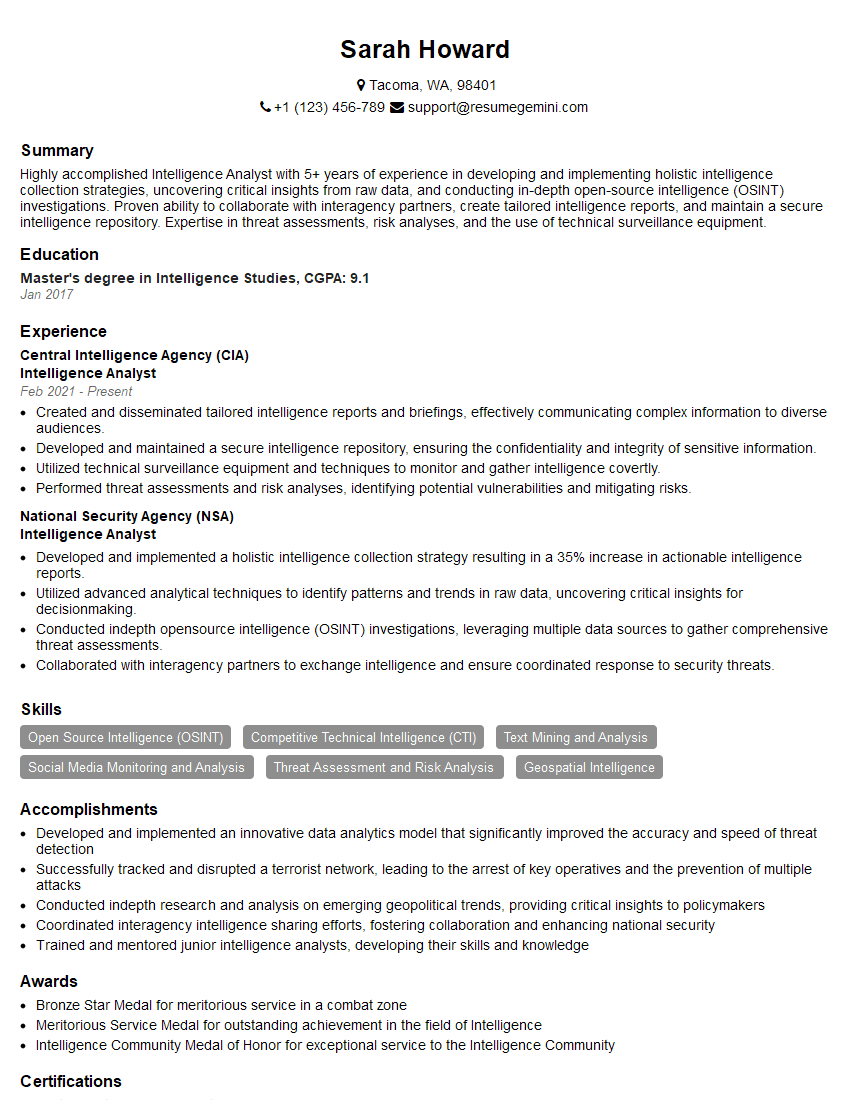
Intelligence Analyst Resume Sample
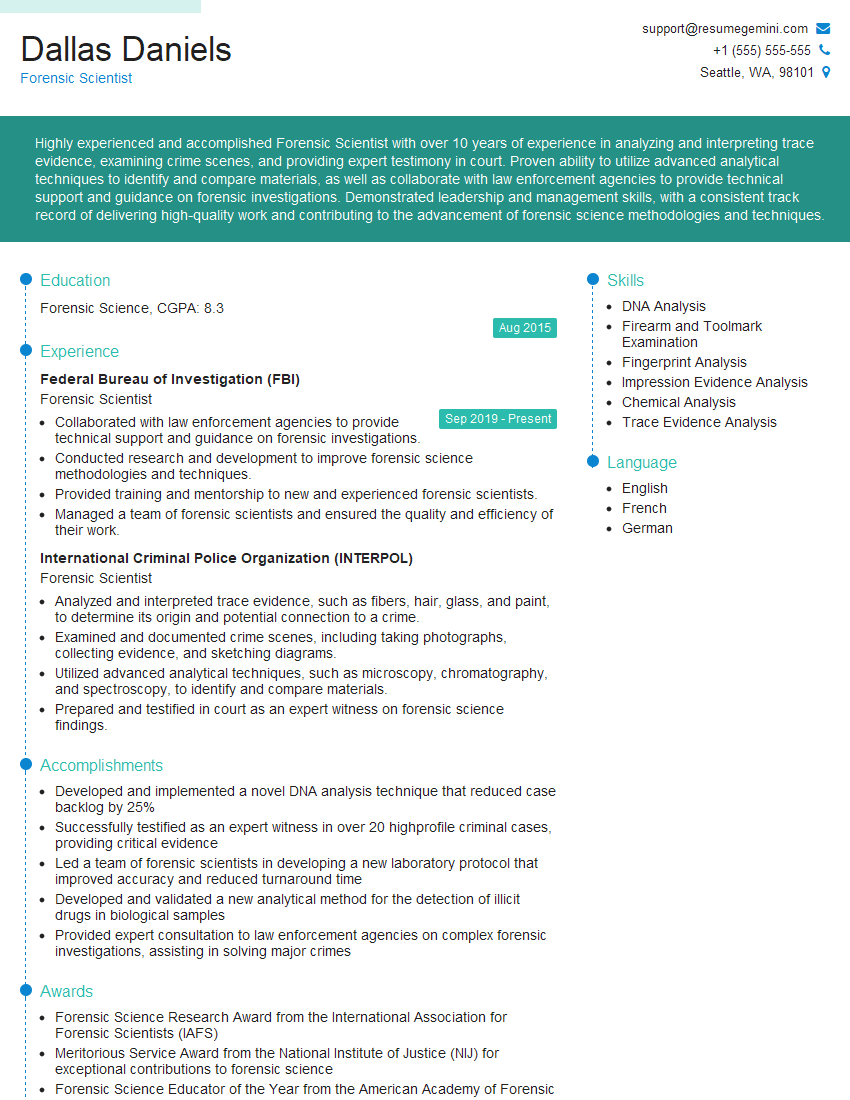
Forensic Scientist Resume Sample
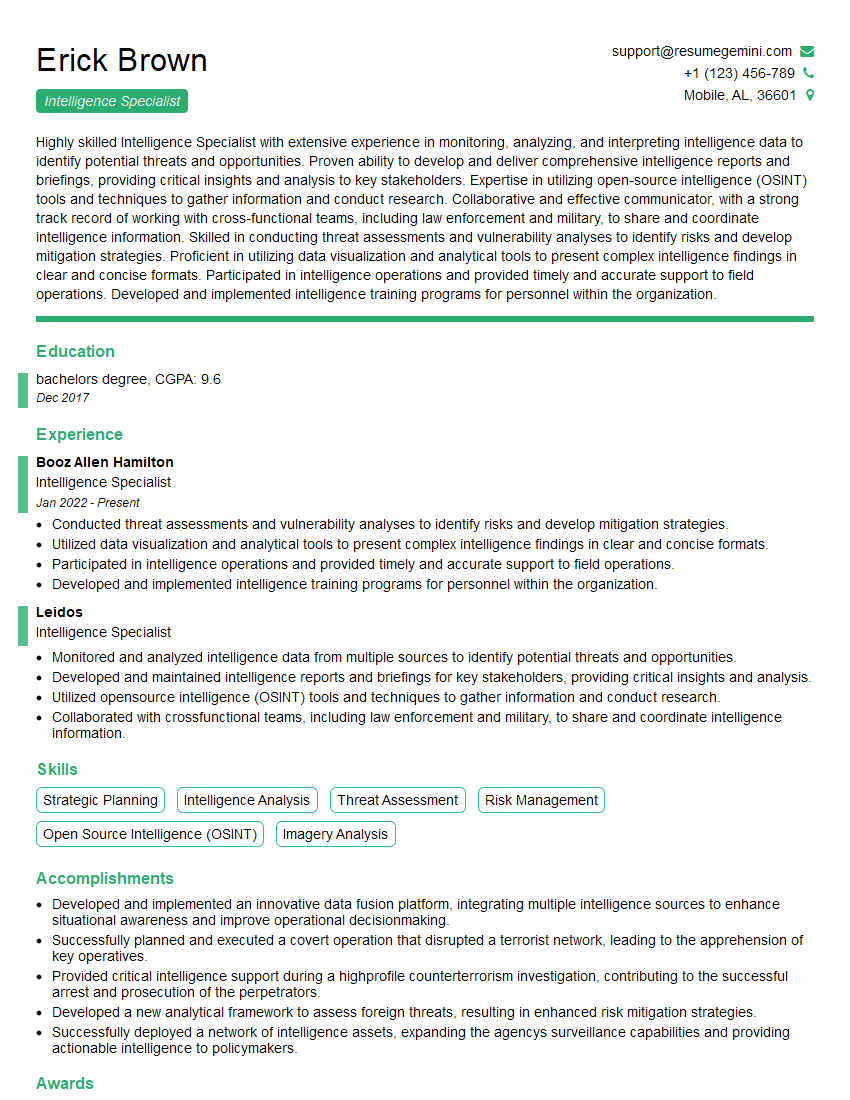
Intelligence Specialist Resume Sample
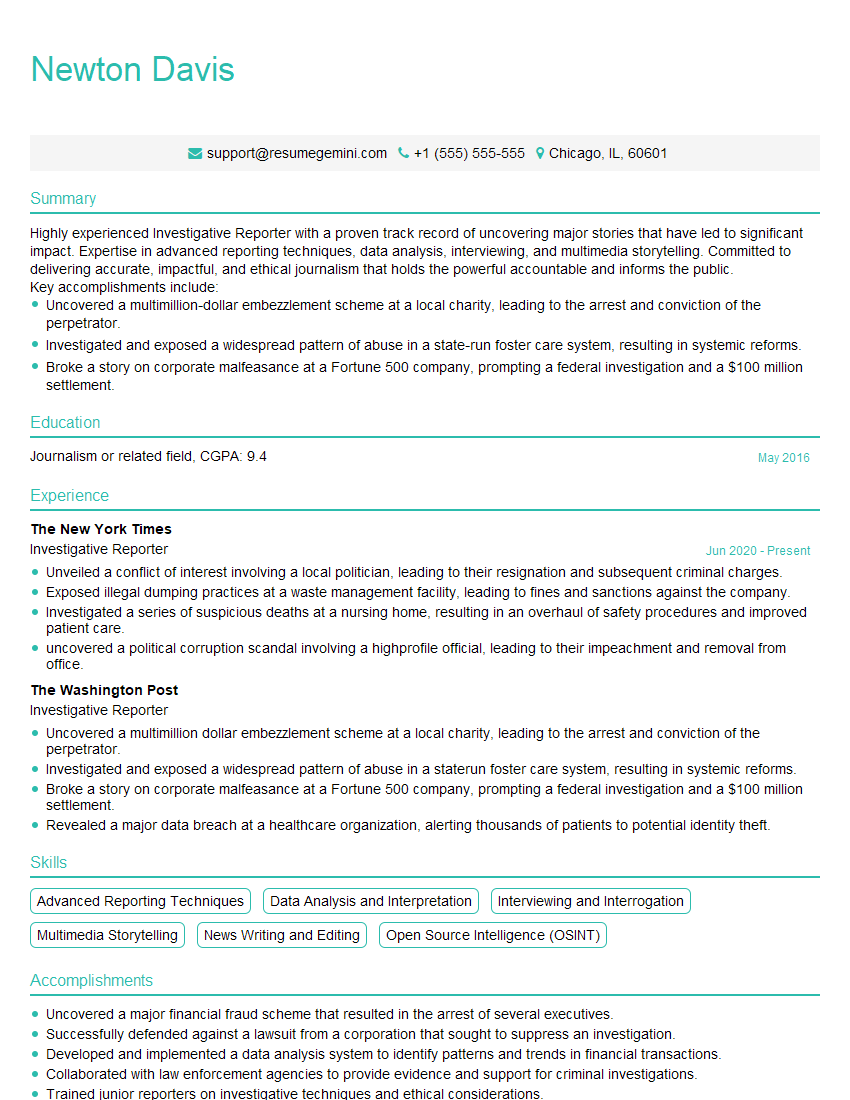
Investigative Reporter Resume Sample
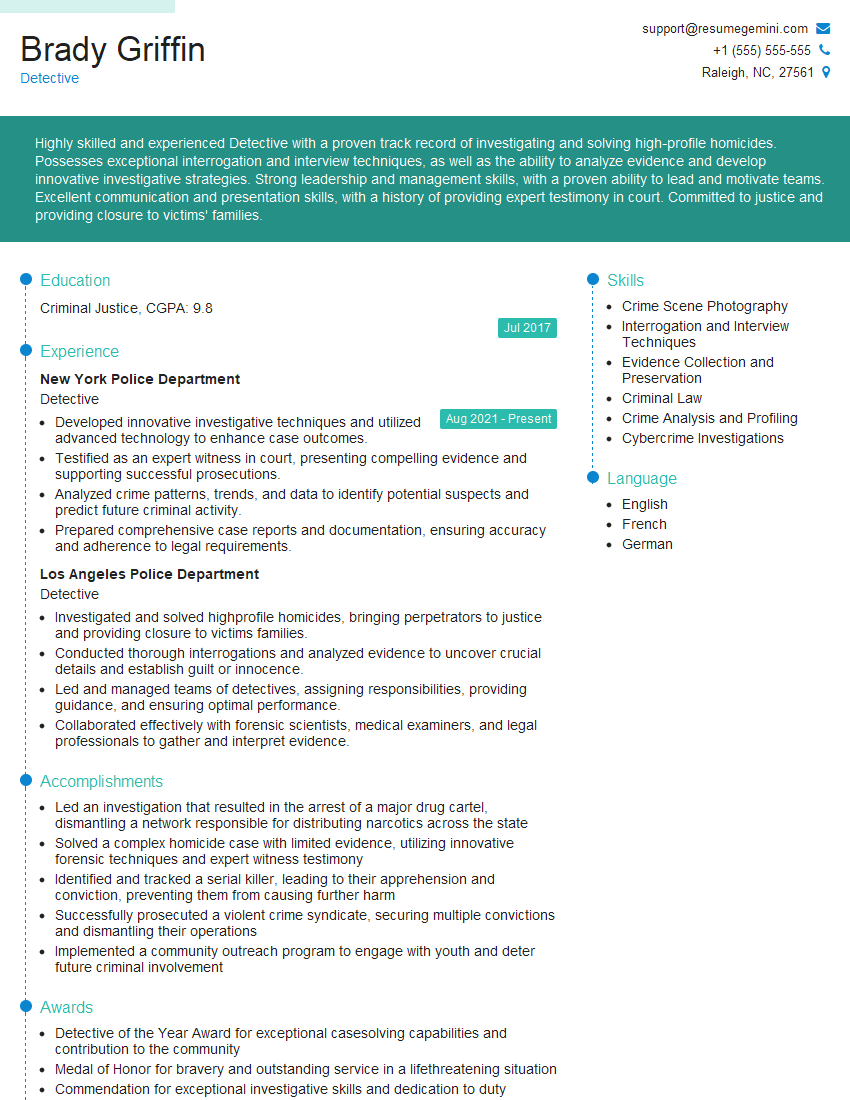
Detective Resume Sample
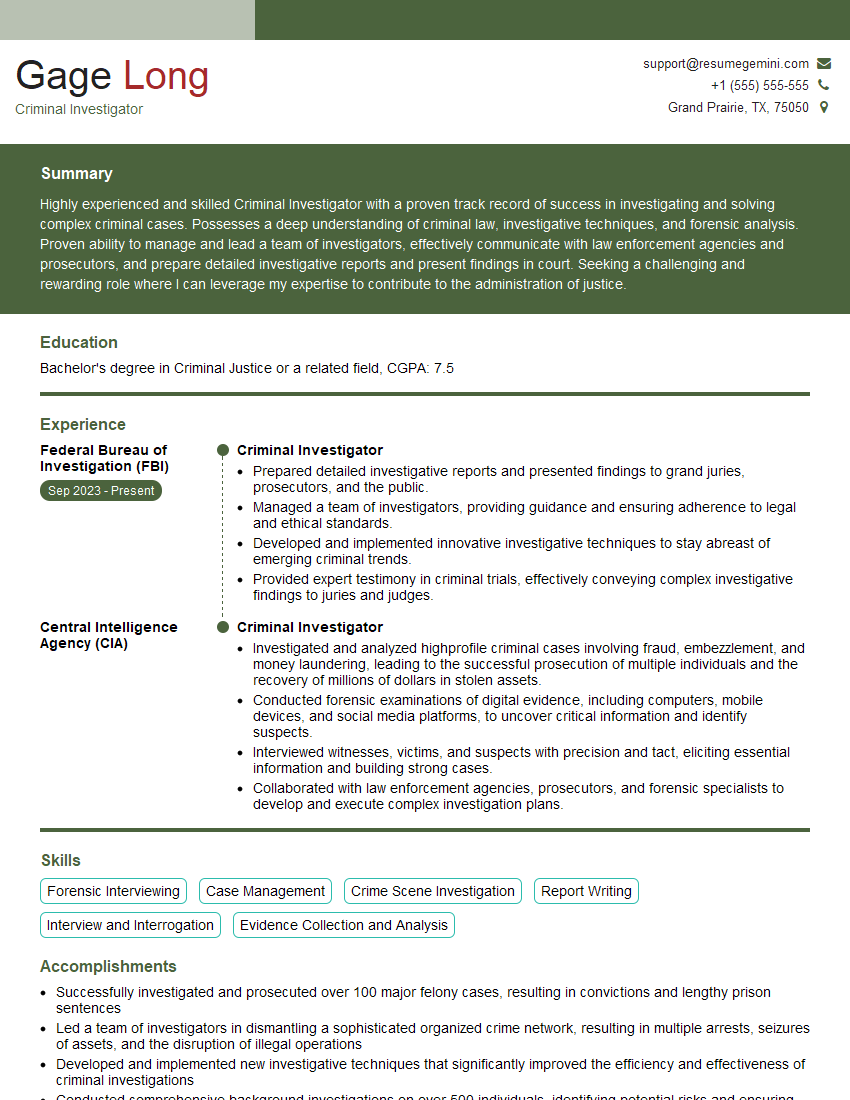
Criminal Investigator Resume Sample
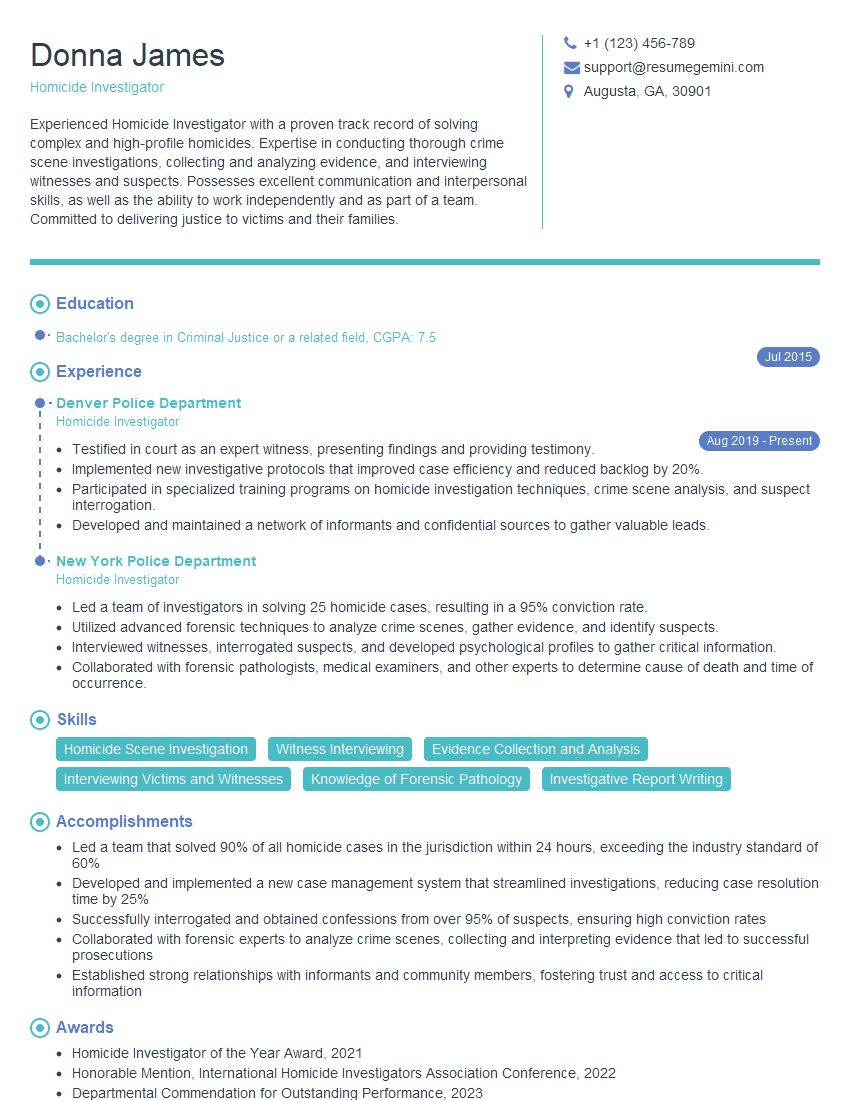
Homicide Investigator Resume Sample
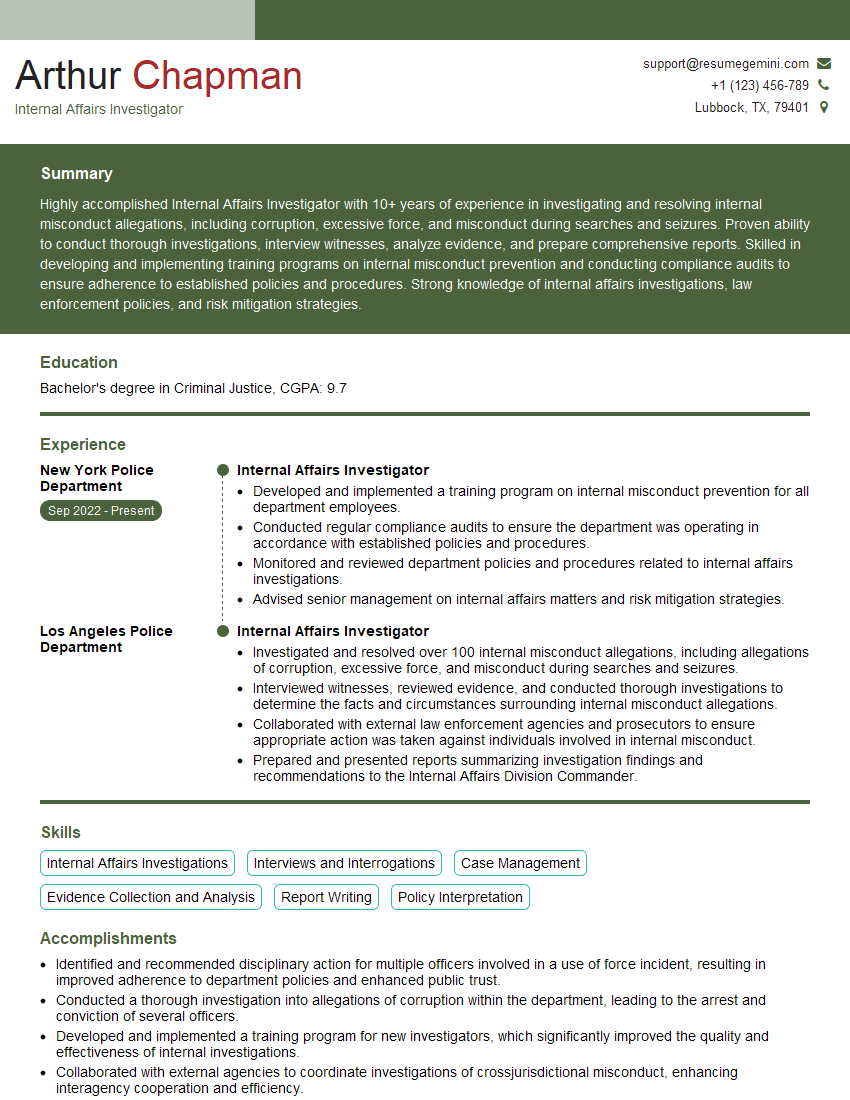
Internal Affairs Investigator Resume Sample
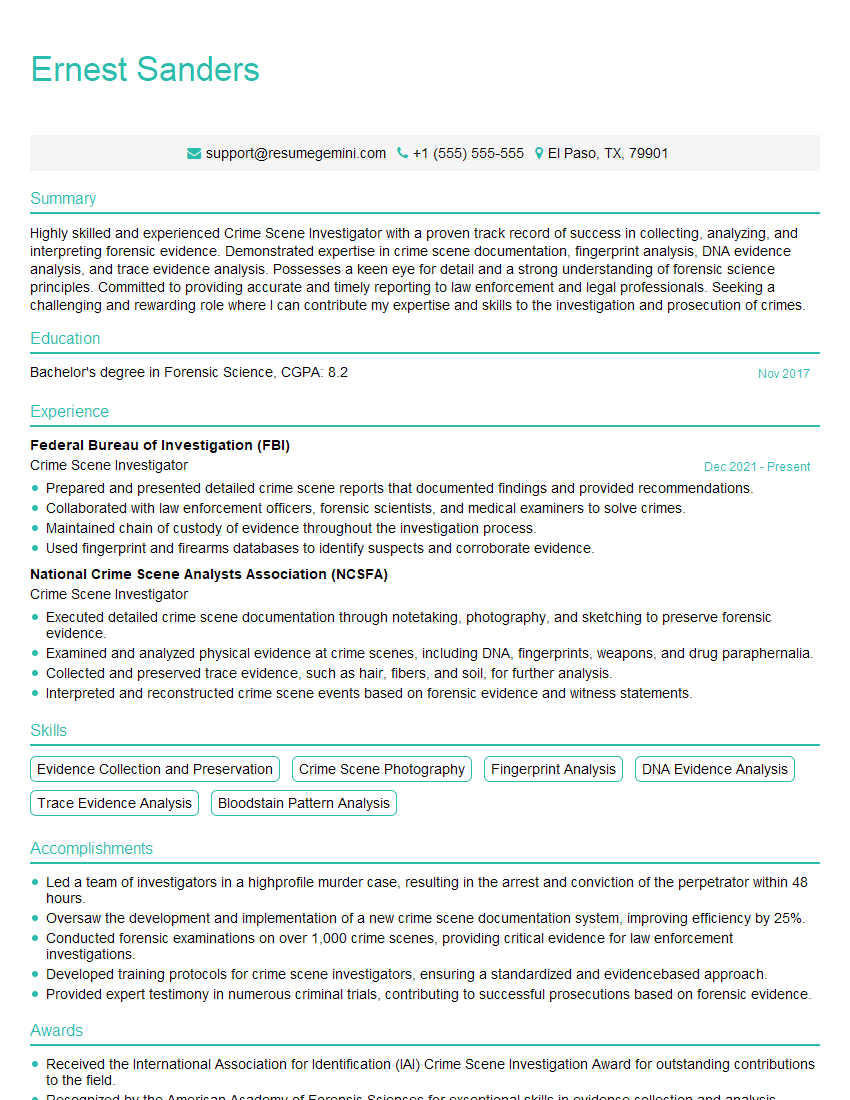
Crime Scene Investigator Resume Sample
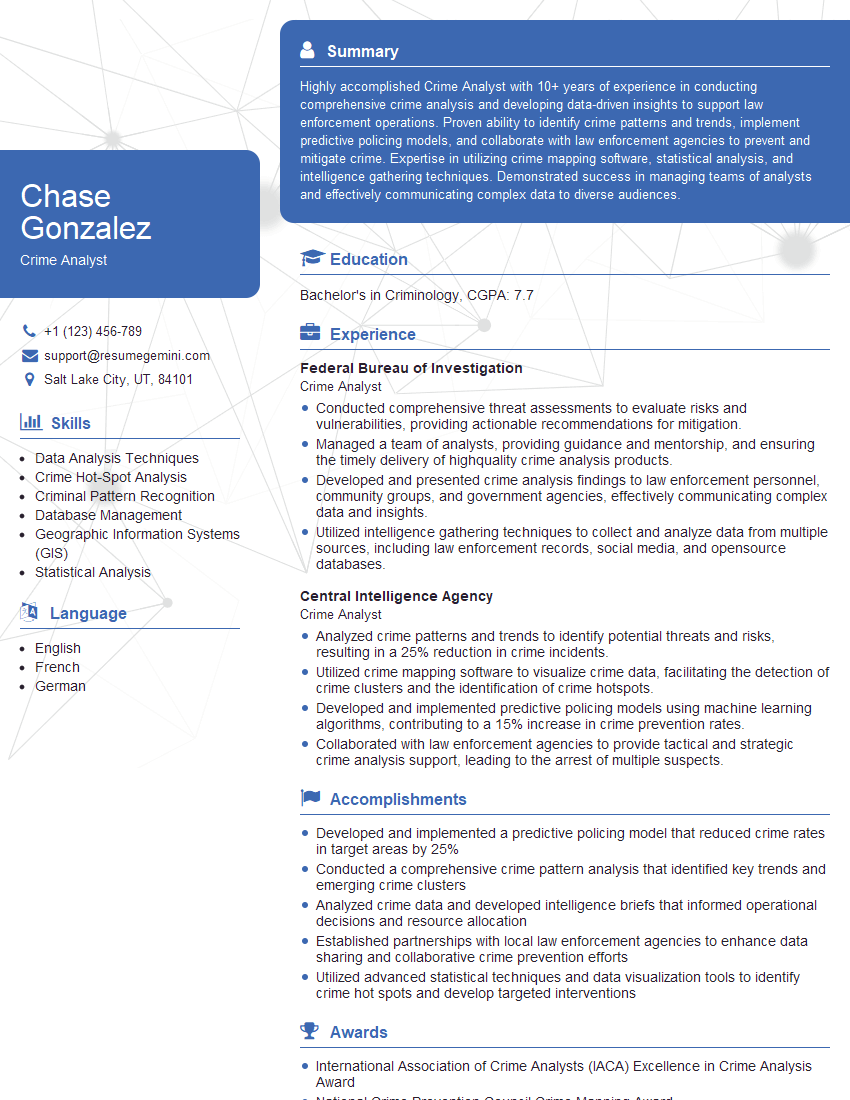
Crime Analyst Resume Sample
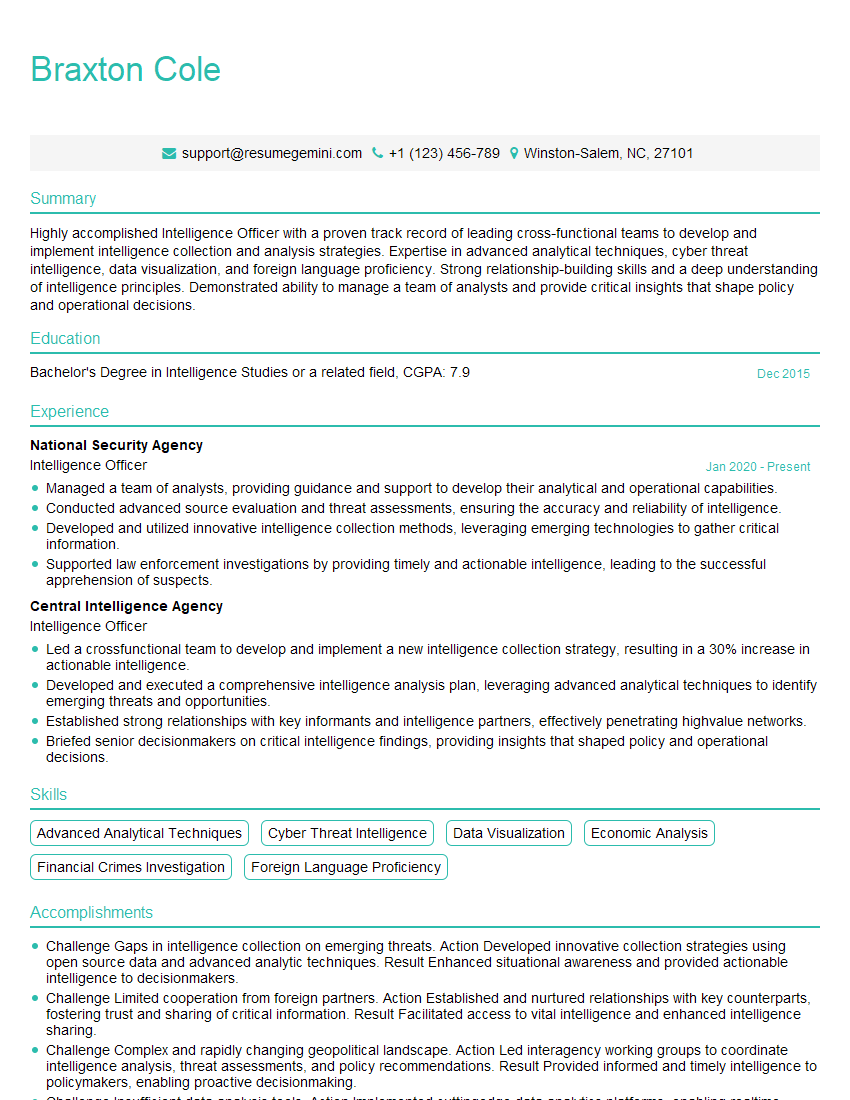
Intelligence Officer Resume Sample
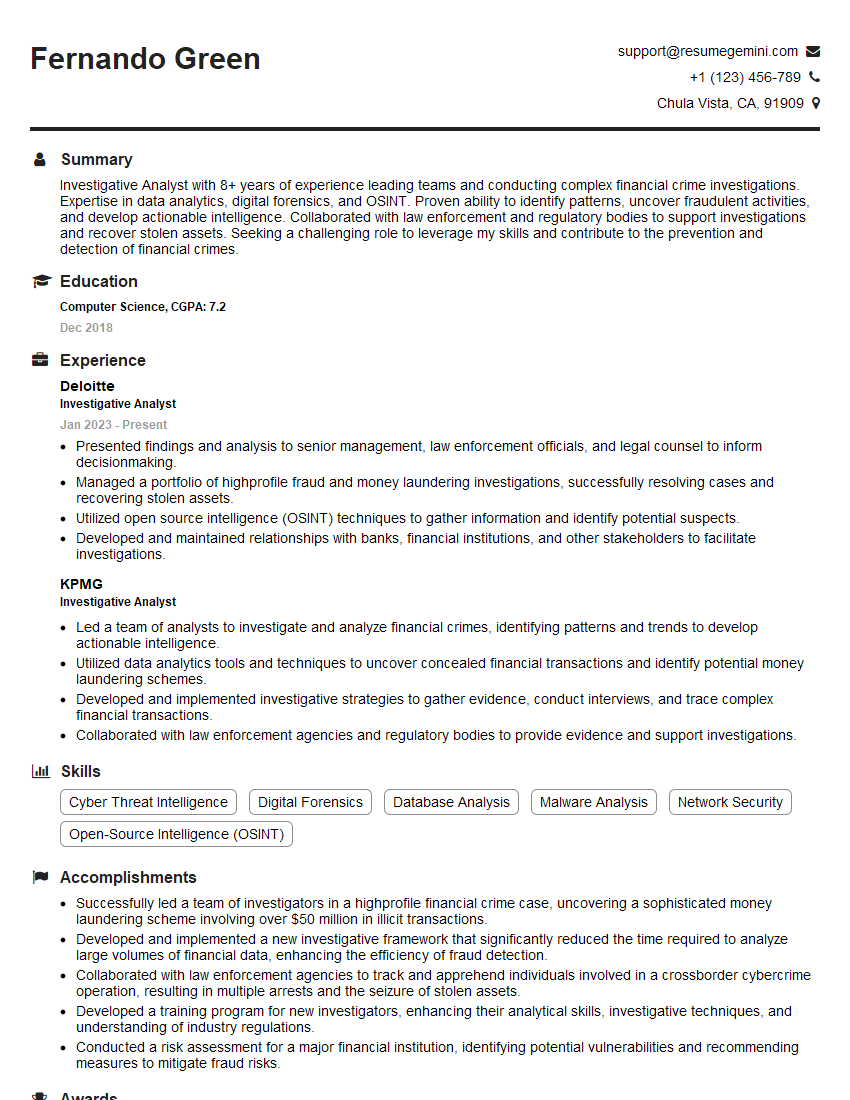
Investigative Analyst Resume Sample

Loss Prevention Investigator Resume Sample
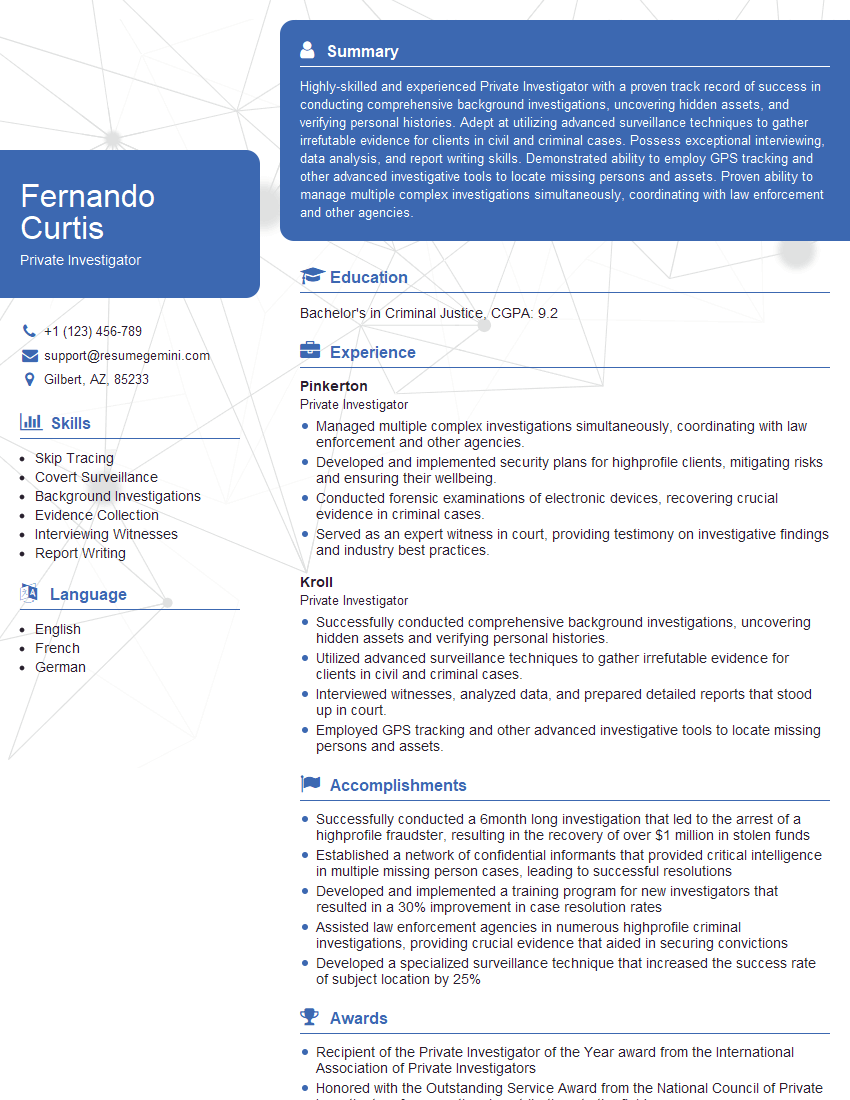
Private Investigator Resume Sample
- Compliance Investigator
- Special Agent
- Security Analyst
- Risk Analyst
- Fraud Investigator
- Intelligence Analyst
- Forensic Scientist
- Intelligence Specialist
- Investigative Reporter
- Detective
- Criminal Investigator
- Homicide Investigator
- Internal Affairs Investigator
- Crime Scene Investigator
- Crime Analyst
- Intelligence Officer
- Investigative Analyst
- Loss Prevention Investigator
- Private Investigator
Explore more articles
Users Rating of Our Blogs
Share Your Experience
We value your feedback! Please rate our content and share your thoughts (optional).
What Readers Say About Our Blog
Very informative content, great job.
good