Feeling uncertain about what to expect in your upcoming interview? We’ve got you covered! This blog highlights the most important IRC Chapter 3 interview questions and provides actionable advice to help you stand out as the ideal candidate. Let’s pave the way for your success.
Questions Asked in IRC Chapter 3 Interview
Q 1. Explain the difference between unicast, multicast, and broadcast addressing.
Imagine you’re sending postcards. Unicast, multicast, and broadcast are like different mailing strategies. Unicast is sending a postcard to one specific address – your message goes to only one recipient. Multicast is like sending the same postcard to a select group of people – perhaps a book club – it reaches multiple recipients, but only those specifically targeted. Broadcast is putting your postcard in every single mailbox in the neighborhood – it reaches everyone within the network.
In networking terms:
- Unicast: A one-to-one communication between a sender and a receiver. This is the most common type of communication in the Internet Protocol (IP) network. Example: Accessing a web server.
- Multicast: A one-to-many communication. One sender transmits to multiple receivers who have subscribed to receive messages of that type. Example: Streaming live video to many viewers.
- Broadcast: A one-to-all communication within a network. The sender’s message is received by every device on the network. Example: A network administrator sending a configuration update to all devices on a local area network (LAN).
Q 2. Describe the process of IP address resolution.
IP address resolution is the process of finding the MAC address associated with a given IP address. Think of it as looking up someone’s physical address (MAC address) given their postal address (IP address). This is crucial because routers and switches use MAC addresses to forward data packets directly to the correct device on a local network.
The most common method is using the Address Resolution Protocol (ARP). When a device needs to send data to another device on the same network segment, it sends an ARP broadcast query asking for the MAC address of the target IP address. The device with the matching IP address responds with its MAC address. The requesting device then caches this information for future use to improve efficiency.
For communication beyond the local network, the Domain Name System (DNS) plays a vital role. DNS translates domain names (like google.com) into IP addresses, which are then resolved to MAC addresses using ARP.
Q 3. What are the different classes of IP addresses and their address ranges?
The older classes of IP addresses (IPv4) are divided into A, B, and C classes. Each class designates a different range of IP addresses and the number of networks and hosts they can support. Classful addressing is largely obsolete, superseded by CIDR.
- Class A:
10.0.0.0 - 10.255.255.255(Large networks, few networks) - Class B:
172.16.0.0 - 172.31.255.255(Medium networks, medium number of networks) - Class C:
192.168.0.0 - 192.168.255.255(Small networks, many networks)
Note that these ranges are only part of the IPv4 address space. Other special addresses exist like private IP ranges and multicast ranges.
Q 4. Explain subnetting and its importance in network design.
Subnetting is the process of dividing a larger network into smaller, more manageable subnetworks. Imagine you have a large apartment building. Subnetting is like dividing that building into smaller apartments or floors, making it easier to manage utilities, security, and access. This improves network performance and security by reducing network congestion and broadcast domains.
Importance in Network Design:
- Improved efficiency: Reduces broadcast traffic and collisions.
- Enhanced security: Isolates sensitive data and prevents unauthorized access.
- Better resource management: Allows for more efficient allocation of IP addresses.
- Scalability: Enables flexible growth and adaptation to changing network needs.
Q 5. How does CIDR notation work?
CIDR (Classless Inter-Domain Routing) notation simplifies network addressing by using a slash (/) followed by the number of bits used for the network portion of an IP address. This replaces the older classful addressing system. For example: 192.168.1.0/24 indicates a network with 24 bits used for the network address and 8 bits for the host address. The more bits used for the network address, the smaller the number of hosts available, and vice versa.
It’s efficient because it allows for variable-sized networks, unlike the fixed-size networks of classful addressing. This flexibility is crucial for effective network planning and address allocation.
Q 6. Describe the function of a subnet mask.
A subnet mask is a 32-bit number that separates the network address from the host address in an IP address. It acts like a filter, indicating which bits represent the network portion and which bits represent the host portion. It’s written in dotted decimal notation just like an IP address.
For example, with the IP address 192.168.1.10 and subnet mask 255.255.255.0, the network address is 192.168.1.0. The subnet mask is used by routers to determine which network an IP address belongs to and how to forward packets.
Q 7. Explain the concept of VLSM (Variable Length Subnet Masking).
VLSM (Variable Length Subnet Masking) is a technique that allows for the allocation of subnet masks of varying lengths based on the specific needs of different parts of the network. This contrasts with fixed subnet mask sizes used in earlier networking practices. Because of this flexibility, it is much more efficient in terms of IP address usage.
For instance, a large department might require a larger subnet with many host addresses, while a smaller department might need a smaller subnet. VLSM allows you to precisely tailor subnet sizes to match the number of hosts in each subnetwork, minimizing IP address waste.
Q 8. What is a default gateway and how does it function?
A default gateway is the IP address of the router that a device uses to access networks outside its own local network. Think of it as the address of the ‘exit’ from your home network to the internet. When your computer wants to reach a website (whose IP address is not on your local network), it sends the data packet to its default gateway (router), which then forwards it along the internet towards the destination.
It functions by acting as a bridge between your local network (e.g., your home Wi-Fi) and the larger internet. Your computer has no direct route to other networks; the gateway handles the routing. The router examines the destination IP address and uses routing protocols (discussed later) to determine the best path to forward the packet.
Example: If your home network’s IP addresses are in the 192.168.1.0/24 range, and your router has an IP address of 192.168.1.1, then 192.168.1.1 would be your default gateway.
Q 9. What is DHCP and how does it work?
DHCP, or Dynamic Host Configuration Protocol, is a network management protocol used to automatically assign IP addresses and other network configuration parameters to devices on a network. Instead of manually configuring each device, DHCP simplifies the process significantly.
It works through a client-server model. DHCP servers maintain a pool of available IP addresses. When a device joins the network, it broadcasts a DHCP Discover message. The DHCP server responds with a DHCP Offer, providing an IP address, subnet mask, default gateway, and other settings. The client then requests this configuration with a DHCP Request message, and the server confirms the assignment with a DHCP ACK (Acknowledgement) message.
How it simplifies things: Imagine setting up a large office network with hundreds of computers. DHCP eliminates the tedious task of assigning a unique IP address to each device. It also allows for easy reassignment of IP addresses if a device leaves the network.
Q 10. Explain the differences between static and dynamic IP addressing.
Static and dynamic IP addressing differ in how IP addresses are assigned to devices on a network.
- Static IP Addressing: You manually assign a permanent IP address to a device. This is useful for servers or other devices that need a consistent, unchanging address, allowing other devices to always find them. It requires careful planning to avoid IP address conflicts.
- Dynamic IP Addressing: This uses a DHCP server (as described above) to assign IP addresses automatically. Addresses are assigned temporarily, usually for a lease period. Once the lease expires, the device can renew the IP address or get a new one. It’s simple, flexible, and ideal for many devices such as laptops and smartphones.
Analogy: Static IP is like having a permanent home address, while dynamic IP is like renting an apartment – you have an address for a specific period, but it might change later.
Q 11. What are the different types of routing protocols (e.g., RIP, OSPF, EIGRP)?
Several routing protocols exist, each with its strengths and weaknesses. Here are a few common ones:
- RIP (Routing Information Protocol): A distance-vector protocol that uses hop count as its metric. Simple to implement but has limitations in larger networks due to its limited hop count (maximum 15).
- OSPF (Open Shortest Path First): A link-state protocol that uses a more sophisticated algorithm to determine the shortest path. It’s scalable and widely used in large networks. We’ll cover it in more detail later.
- EIGRP (Enhanced Interior Gateway Routing Protocol): A Cisco proprietary distance-vector protocol that incorporates features of link-state protocols, making it very efficient and scalable. It’s a hybrid approach offering the best of both worlds.
- BGP (Border Gateway Protocol): Used for routing between autonomous systems (large networks like those of ISPs). It’s an extremely complex protocol, handling routing across the entire internet.
Q 12. Compare and contrast distance-vector and link-state routing protocols.
Distance-vector and link-state routing protocols differ fundamentally in how they exchange routing information and build their routing tables.
- Distance-vector protocols (e.g., RIP) rely on exchanging routing information with directly connected neighbors. Each router shares its knowledge of distances to destinations with its neighbors. This can lead to slow convergence (the time it takes for the network to adapt to changes). They are simple to implement but can suffer from issues like ‘count-to-infinity’ problems.
- Link-state protocols (e.g., OSPF) employ a more sophisticated approach. Each router floods its link-state information (information about directly connected links and their costs) to all other routers in the area. Routers then independently calculate the shortest path to all destinations based on this complete topology information. This leads to faster convergence and more accurate routing.
In short: Distance-vector is like gossiping – each person tells their neighbors what they know, leading to potential inaccuracies and slow updates. Link-state is like having a map – each person gets a complete map of the entire area and figures out the best route themselves.
Q 13. Explain how OSPF works and its key features.
OSPF (Open Shortest Path First) is a link-state routing protocol widely used in large networks. It’s based on Dijkstra’s algorithm, which finds the shortest path between nodes in a graph.
How it works:
- Network Segmentation: OSPF divides a network into areas, simplifying the routing process in large networks.
- Link-State Advertisements (LSAs): Routers send LSAs containing information about their directly connected links (cost, network addresses). These LSAs are flooded throughout the area.
- Link-State Database (LSDB): Each router builds an LSDB, a complete picture of the network topology within its area.
- Shortest Path First (SPF): Using Dijkstra’s algorithm, each router calculates the shortest path to every destination based on its LSDB.
- Routing Table: The SPF algorithm’s output creates the routing table used to forward packets.
Key Features:
- Scalability: Handles large networks efficiently.
- Fast Convergence: Adapts quickly to network changes.
- Hierarchical Design: Areas help manage complexity.
- Support for multiple routing metrics: Allows prioritization of links based on cost.
Q 14. Describe the concept of routing tables.
A routing table is a database on a router that contains information about network routes. It’s essentially the router’s ‘map’ of the network. Each entry lists a destination network, the next hop router to reach that destination, and the interface to use to send data to that next hop.
Example Entry:
Destination Network | Next Hop IP Address | Interface192.168.1.0/24 | 192.168.1.100 | Ethernet010.0.0.0/8 | 172.16.1.1 | Serial0This entry indicates that to reach the 192.168.1.0/24 network, the router should send packets to the 192.168.1.100 address via the Ethernet0 interface. Similarly, for the 10.0.0.0/8 network, the packets are forwarded to 172.16.1.1 via the Serial0 interface.
Routers use their routing tables to decide how to forward incoming and outgoing packets. The tables are populated by various routing protocols like OSPF or RIP, or by statically configuring routes.
Q 15. What are routing loops and how can they be prevented?
Routing loops are a serious problem in networks where data packets endlessly circulate between routers, never reaching their destination. Imagine a game of hot potato where the potato never leaves the circle! This happens because routers, lacking complete knowledge of the network, can mistakenly forward packets back to where they came from. This leads to congestion, dropped packets, and a general network slowdown.
Preventing routing loops requires mechanisms like the split horizon, which prevents a router from advertising a route back to the interface it received the route from. Another crucial technique is poison reverse, where a router advertises a route to its neighbor with an artificially high metric (cost), making it less attractive and effectively blocking the loop. These mechanisms, combined with careful network design and configuration, help avoid these frustrating circular routes.
For instance, if router A advertises a route to router B, B should not advertise it back to A. Poison reverse would involve B advertising the route back to A with a metric indicating an extremely costly path.
Career Expert Tips:
- Ace those interviews! Prepare effectively by reviewing the Top 50 Most Common Interview Questions on ResumeGemini.
- Navigate your job search with confidence! Explore a wide range of Career Tips on ResumeGemini. Learn about common challenges and recommendations to overcome them.
- Craft the perfect resume! Master the Art of Resume Writing with ResumeGemini’s guide. Showcase your unique qualifications and achievements effectively.
- Don’t miss out on holiday savings! Build your dream resume with ResumeGemini’s ATS optimized templates.
Q 16. What is the purpose of a routing protocol’s metric?
A routing protocol’s metric is a numerical value assigned to each route, representing its cost or desirability. Think of it as the ‘price’ to traverse a given path. This cost can be based on various factors such as hop count (number of routers traversed), bandwidth, delay, or a combination thereof. Routers use the metric to make informed decisions about the best path to forward traffic. A lower metric generally indicates a more preferred route, leading to efficient and fast data delivery.
For example, the Open Shortest Path First (OSPF) protocol uses cost based on bandwidth, while RIP (Routing Information Protocol) traditionally uses hop count. A path with a metric of 10 is generally considered less desirable than a path with a metric of 5, all other factors being equal.
Q 17. Explain the concept of network convergence.
Network convergence is the process by which a network stabilizes after a change or disruption, like a router failure or link going down. It’s the network’s ability to find new optimal routes and restore normal operation. Imagine a highway system rerouting traffic after an accident – that’s similar to network convergence.
When a network undergoes a change, routing protocols work collaboratively to recalculate the best paths. Convergence time is critical; a faster convergence time means less network downtime and a quicker return to normal operations. The efficiency of the routing protocols and network topology greatly affect convergence speed.
For example, a network using OSPF typically converges much faster than a network relying on RIP because of its improved mechanisms for dealing with network changes.
Q 18. Describe the different types of network topologies.
Network topologies define the physical or logical layout of a network. Several common topologies exist:
- Bus Topology: Devices connect to a single cable (the bus). Simple but susceptible to single points of failure.
- Star Topology: Devices connect to a central hub or switch. Easy to manage and troubleshoot, but the central device can be a bottleneck.
- Ring Topology: Devices connect in a closed loop. Data travels in one direction. Reliable but a single failure can disrupt the entire network.
- Mesh Topology: Devices connect to multiple other devices, providing redundancy and high reliability but are complex and expensive.
- Tree Topology: A hierarchy resembling an inverted tree. Often a combination of star and bus topologies.
- Hybrid Topology: Combines multiple topologies. Offers flexibility and scalability, but can be more complex to manage.
Q 19. What are the benefits and drawbacks of different network topologies?
The choice of topology depends on several factors, including cost, scalability, and reliability:
- Bus Topology: Benefits: Simple, inexpensive. Drawbacks: Single point of failure, limited scalability.
- Star Topology: Benefits: Easy management, high reliability. Drawbacks: Central device is a bottleneck, can be more expensive than bus topology.
- Ring Topology: Benefits: Reliable data transmission. Drawbacks: Single point of failure, complex troubleshooting.
- Mesh Topology: Benefits: High redundancy, high reliability. Drawbacks: Expensive, complex to implement.
- Tree Topology: Benefits: Scalable, hierarchical structure. Drawbacks: Single point of failure at root.
- Hybrid Topology: Benefits: Flexibility, scalability. Drawbacks: Can be complex to manage.
Q 20. Explain the importance of network security in the context of IRC Chapter 3.
Network security is paramount in IRC Chapter 3, as it deals with the routing and overall infrastructure of networks. A compromised network infrastructure can have devastating consequences, leading to data breaches, service disruptions, and even financial losses. Protecting the network from unauthorized access, malware, and denial-of-service attacks is crucial to ensuring the integrity and availability of network services.
Securing routers, switches, and other network devices through measures like strong passwords, regular firmware updates, and access control lists is essential. Implementing firewalls, intrusion detection/prevention systems, and virtual private networks (VPNs) further strengthen network security.
Q 21. Describe common network security threats and mitigation techniques.
Common network security threats include:
- Denial-of-Service (DoS) attacks: Flooding a network with traffic to make it unavailable.
- Man-in-the-middle (MITM) attacks: Intercepting communication between two parties.
- Malware: Viruses, worms, and Trojans that can infect network devices.
- Unauthorized access: Gaining access to the network without permission.
Mitigation techniques include:
- Firewalls: Control network traffic based on predefined rules.
- Intrusion Detection/Prevention Systems (IDS/IPS): Monitor network traffic for malicious activity.
- Virtual Private Networks (VPNs): Create secure connections over public networks.
- Regular security audits and penetration testing: Identify and address vulnerabilities.
- Strong passwords and access control: Limit unauthorized access to network devices.
- Regular software and firmware updates: Patch security vulnerabilities.
Q 22. What is a firewall and how does it work?
A firewall is a network security system that monitors and controls incoming and outgoing network traffic based on predetermined security rules. Think of it as a gatekeeper for your network, allowing only authorized traffic to pass through while blocking everything else. It works by inspecting each packet of data – the individual units of information – that attempts to cross the network boundary. This inspection involves checking the packet’s source and destination addresses, ports (like a specific door on a building), and other characteristics against its established rules. If a packet matches a rule that allows it, the firewall lets it pass. If it matches a rule that blocks it, the firewall drops the packet, effectively preventing it from reaching its destination.
For example, a firewall might be configured to allow all web traffic (port 80 and 443) from the internet to your web server, but block all incoming connections to port 22 (SSH) from untrusted sources to prevent unauthorized access. This is crucial for protecting sensitive data and resources within your network from malicious actors and unauthorized users.
Q 23. Explain the concept of Access Control Lists (ACLs).
Access Control Lists (ACLs) are sets of rules that define which users or devices have permission to access specific network resources. Imagine it like a detailed guest list for your network. Each rule specifies who (user or device identified by IP address or other criteria), can do what (read, write, execute), to which network resource (server, folder, etc.). ACLs are crucial for enforcing security policies and preventing unauthorized access to sensitive data and systems.
For instance, an ACL might grant only specific employees access to a shared network drive containing confidential financial information. Another ACL might restrict access to a particular server to only authorized administrators, thereby enhancing the security of that server. ACLs can be implemented at different layers of the network infrastructure, including routers, switches, and firewalls.
Q 24. How do you troubleshoot network connectivity issues?
Troubleshooting network connectivity issues involves a systematic approach. I start by gathering information from the affected user, identifying the nature of the problem (e.g., inability to access the internet, specific websites, or network drives). Then, I follow these steps:
- Check the obvious: Is the device powered on? Are cables properly connected? Is Wi-Fi enabled and connected correctly?
- Ping the target: I use the
pingcommand to check if the device can reach the target (website, server, etc.). A successful ping indicates connectivity; failure suggests a problem between the devices. - Trace the route (
tracertortraceroute): This command traces the path of packets to the target, highlighting any points of failure along the way. - Check IP configuration: Verify the device’s IP address, subnet mask, and default gateway are correctly configured.
- Examine network devices: Investigate routers, switches, and firewalls for any errors or misconfigurations. Check logs for any events that might have caused the connectivity issue.
- Consult network monitoring tools: Leverage tools such as SolarWinds, PRTG, or Nagios to identify bottlenecks or performance issues that might indicate a problem.
- Check for DNS issues: If the problem is specific to certain websites, ensure DNS resolution is working correctly.
This methodical approach, combined with detailed logging and experience, allows for efficient isolation and resolution of network connectivity problems.
Q 25. Describe your experience with network monitoring tools.
I have extensive experience with various network monitoring tools, including Nagios, Zabbix, and SolarWinds. Nagios, for example, is excellent for proactive monitoring of network devices and services, alerting me to potential issues before they impact users. I used Nagios in a previous role to monitor a large enterprise network, ensuring high availability and performance. Its ability to monitor servers, network devices, and applications, coupled with its robust alerting system, is invaluable.
Zabbix is another powerful tool I’ve utilized for its flexibility and scalability. It can handle a large number of monitored devices and offers advanced features like auto-discovery and flexible reporting. I implemented Zabbix to monitor a geographically dispersed network, utilizing its distributed architecture to provide real-time insights into network health and performance across various locations.
My experience with these tools allows me to quickly identify and resolve network issues, minimizing downtime and ensuring optimal performance. The choice of the specific tool depends greatly on the complexity of the network and the budget constraints.
Q 26. Explain the concept of Quality of Service (QoS).
Quality of Service (QoS) is a set of functionalities that let you manage the type of network traffic that has priority over others. Think of it as a traffic management system for your network, ensuring that critical applications receive the bandwidth they need, even during periods of high congestion. QoS operates by prioritizing certain types of traffic based on criteria like application, user, or priority levels. This is particularly important in environments with bandwidth limitations or applications requiring low latency (like VoIP or video conferencing).
For example, in a hospital setting, QoS could be used to prioritize medical imaging data transmission over less critical traffic, ensuring that critical information reaches its destination quickly and reliably. Similarly, in a business environment, QoS can ensure that VoIP calls are prioritized over less time-sensitive traffic, resulting in clearer and more reliable communication. QoS mechanisms often involve techniques like packet marking, queuing, and traffic shaping.
Q 27. Describe your experience with network documentation and diagramming.
Thorough network documentation and diagramming are essential for efficient network management and troubleshooting. I use various tools and techniques to maintain accurate and up-to-date documentation. My approach involves combining physical and logical network diagrams, along with detailed configuration documentation for all network devices.
I utilize tools like Visio and draw.io to create clear and concise network diagrams illustrating the physical layout of the network (cables, devices, locations) and the logical structure (routing protocols, VLANs, etc.). Alongside these diagrams, I maintain detailed configuration files and documentation for each router, switch, firewall, and server. This documentation includes IP addresses, subnet masks, routing configurations, ACLs, and other essential details. This documentation is crucial for future planning, troubleshooting, and maintenance tasks. Regular review and updates are essential to reflect any changes in the network.
Q 28. Explain how you would design a network for a small office environment.
Designing a network for a small office requires a balanced approach, considering scalability, security, and budget. A typical design would include:
- Router: A router connects the office network to the internet, providing connectivity and security features such as NAT (Network Address Translation) and firewall capabilities.
- Switch: A switch connects devices within the office, allowing them to communicate with each other efficiently. A managed switch offers features like VLANs (Virtual LANs) for improved security and network segmentation.
- Wireless Access Point (WAP): Provides Wi-Fi access for laptops, smartphones, and other wireless devices. A robust WAP is essential for good signal coverage and security.
- Firewall: A firewall protects the network from external threats, filtering incoming and outgoing traffic based on pre-defined rules. A basic firewall integrated into the router can be sufficient for a small office.
- Servers (Optional): Depending on the needs, a small office might have a file server for shared storage, a print server, or other dedicated servers.
For security, I would implement strong passwords, enable WPA2/WPA3 encryption for Wi-Fi, and regularly update the firmware of all network devices. The design would be well-documented, including diagrams and configuration details, enabling easy maintenance and troubleshooting. The specific hardware and configurations would be chosen to balance cost-effectiveness with the office’s needs and projected growth.
Key Topics to Learn for IRC Chapter 3 Interview
- Core Principles of [Specific IRC Chapter 3 Concept 1]: Understand the foundational theories and their practical implications within real-world scenarios. Consider how these principles apply to different systems and architectures.
- Practical Application of [Specific IRC Chapter 3 Concept 2]: Focus on mastering the techniques and methodologies discussed. Be prepared to explain how to implement these concepts and troubleshoot potential issues. Think through examples of how you might use this in a project.
- Problem-Solving Strategies related to [Specific IRC Chapter 3 Concept 3]: Develop a structured approach to tackling challenges related to this chapter. Practice identifying problems, devising solutions, and evaluating their effectiveness. Consider edge cases and potential limitations.
- Advanced Concepts in [Specific IRC Chapter 3 Area]: Explore more nuanced aspects of the chapter. This will demonstrate a deeper understanding and highlight your commitment to continuous learning. Think about areas where you could expand your knowledge.
- Comparison and Contrast of [Specific IRC Chapter 3 Concepts]: Be able to articulate the differences and similarities between key concepts within Chapter 3. This demonstrates critical thinking and the ability to synthesize information.
Next Steps
Mastering the concepts in IRC Chapter 3 is crucial for demonstrating a strong foundation in [relevant field/technology] and significantly enhances your career prospects. A well-crafted resume is essential for showcasing your skills and experience to potential employers. To ensure your resume is ATS-friendly and highlights your expertise in IRC Chapter 3, we strongly recommend utilizing ResumeGemini. ResumeGemini provides a user-friendly platform to build a professional resume tailored to your specific skills and experience. Examples of resumes tailored to IRC Chapter 3 are available to help you get started.
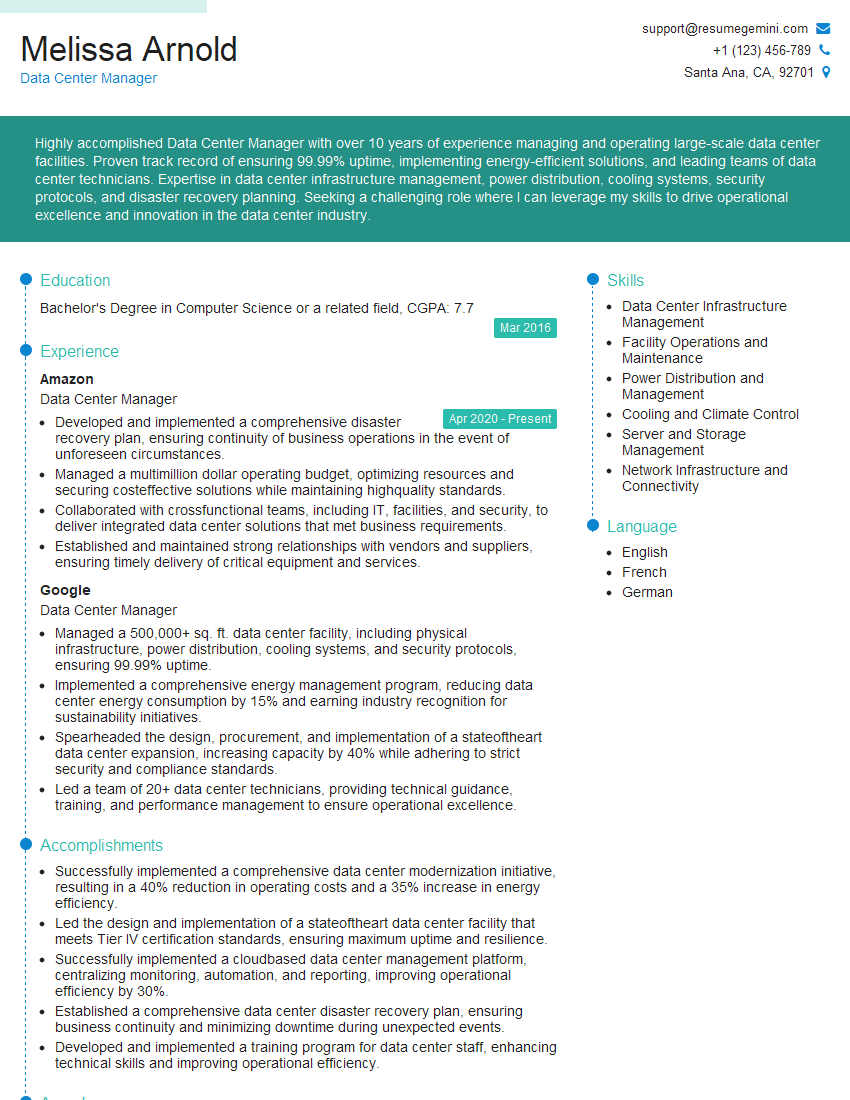
Data Center Manager Resume Sample
Compliance Officer Resume Sample
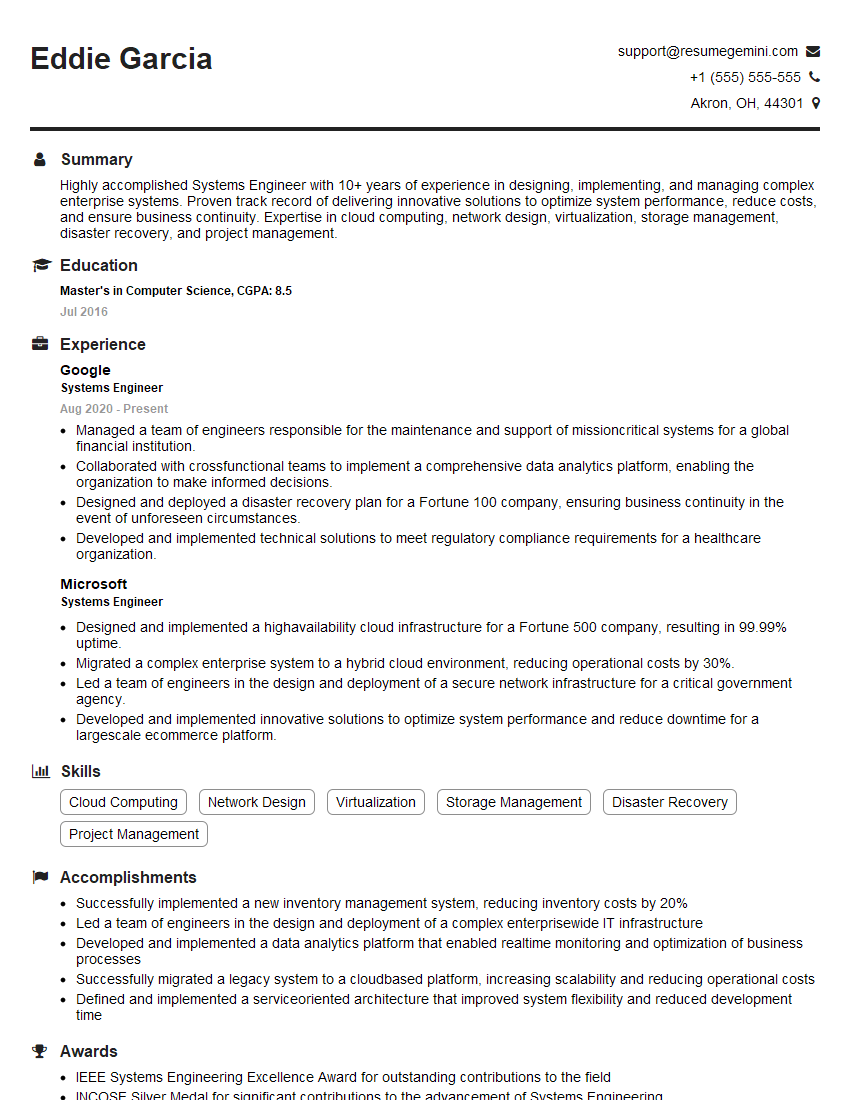
Systems Engineer Resume Sample
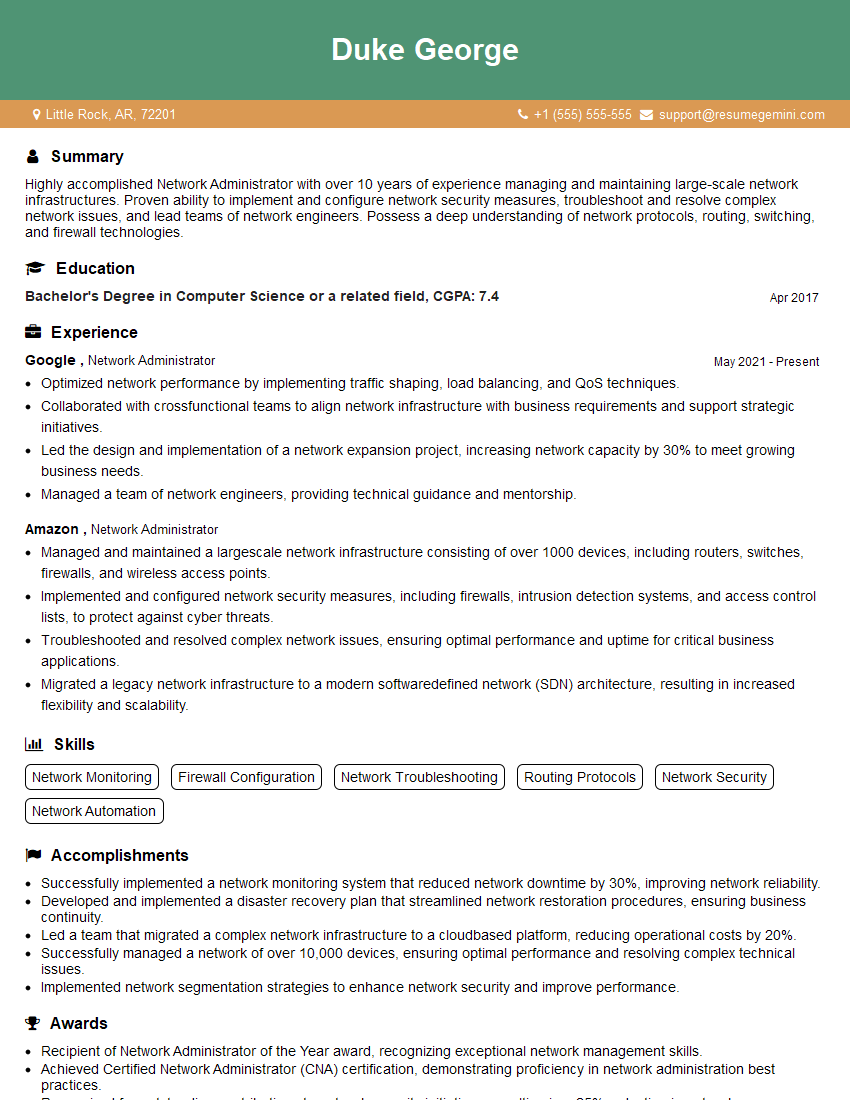
Network Administrator Resume Sample
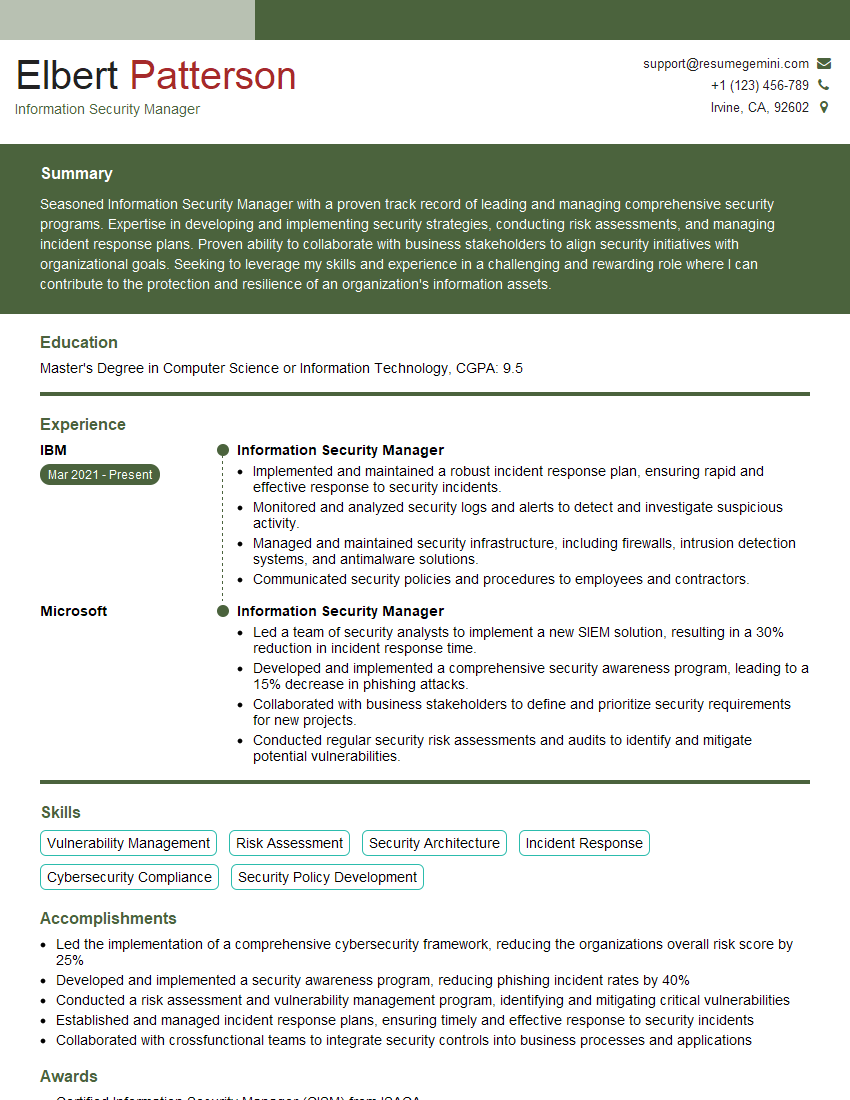
Information Security Manager Resume Sample
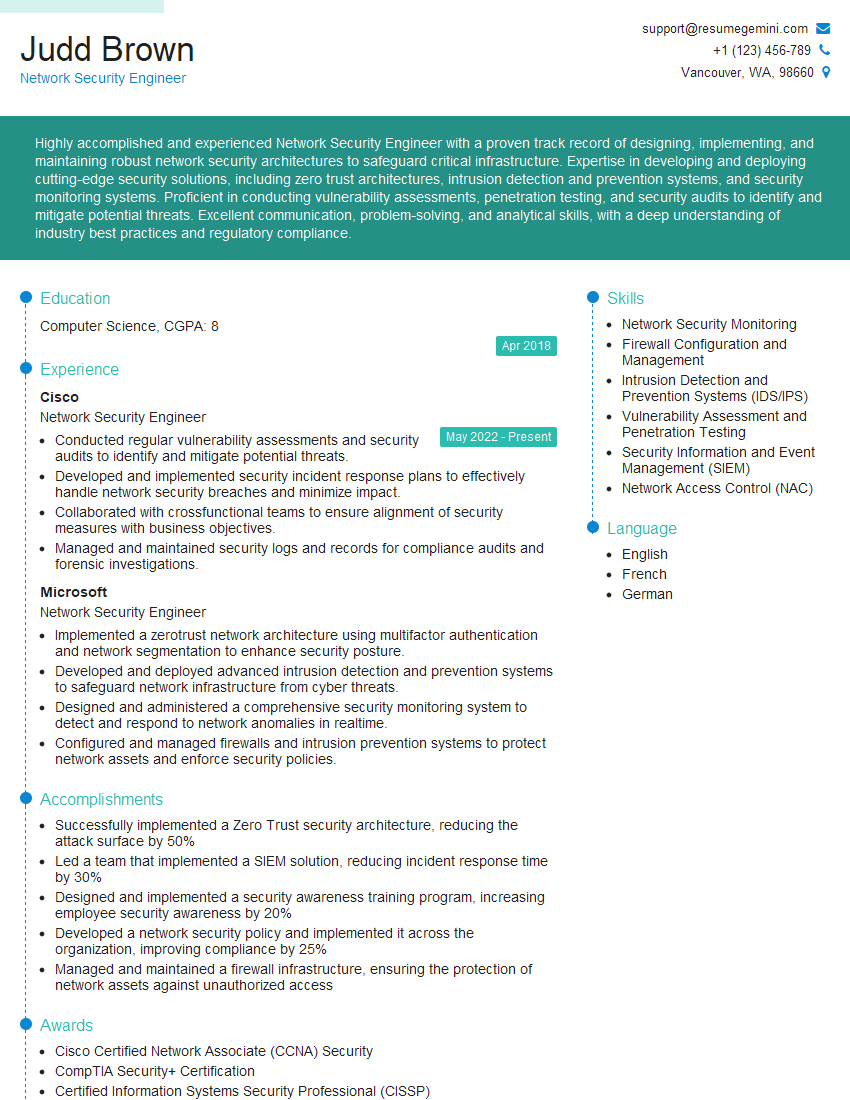
Network Security Engineer Resume Sample
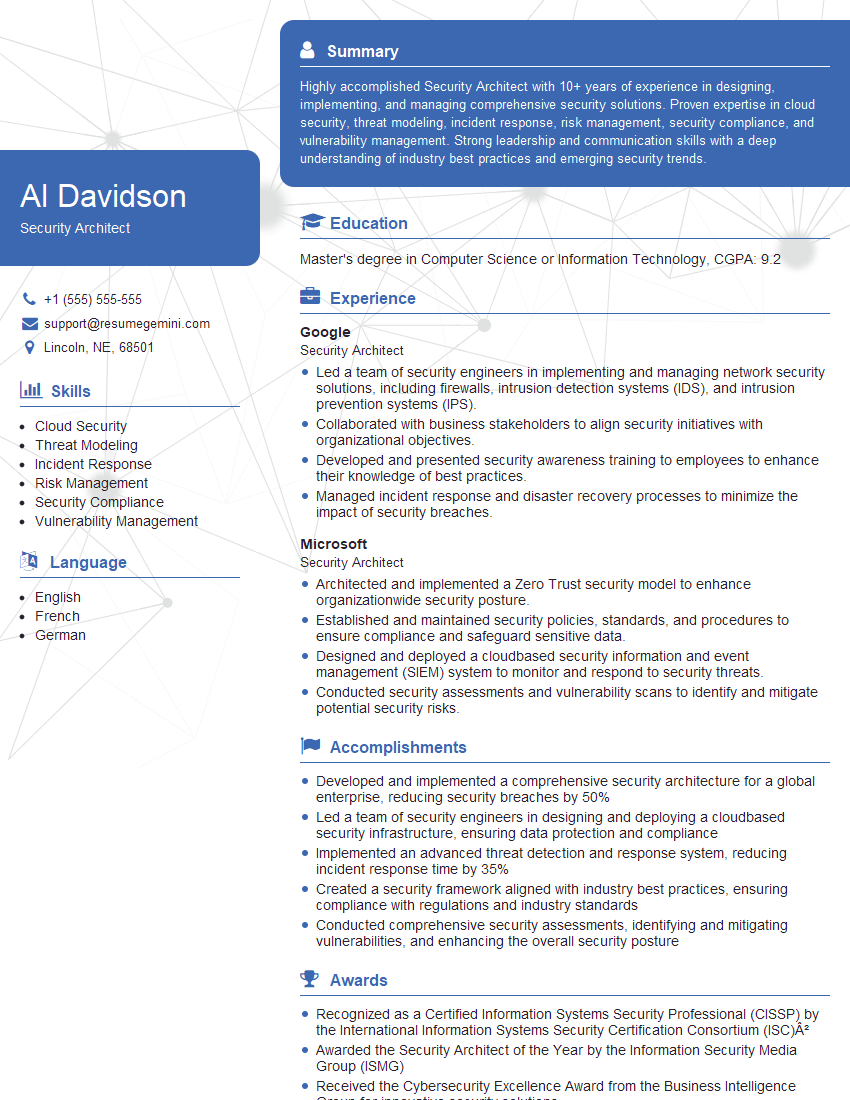
Security Architect Resume Sample
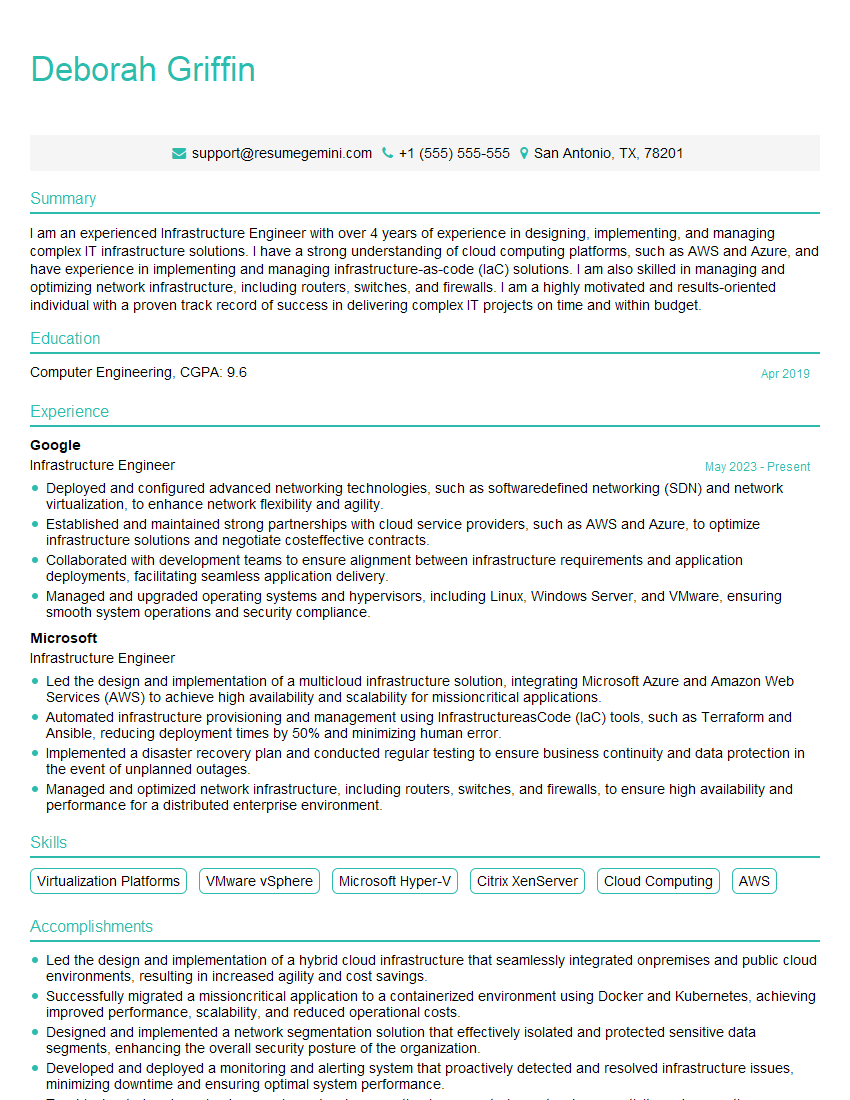
Infrastructure Engineer Resume Sample
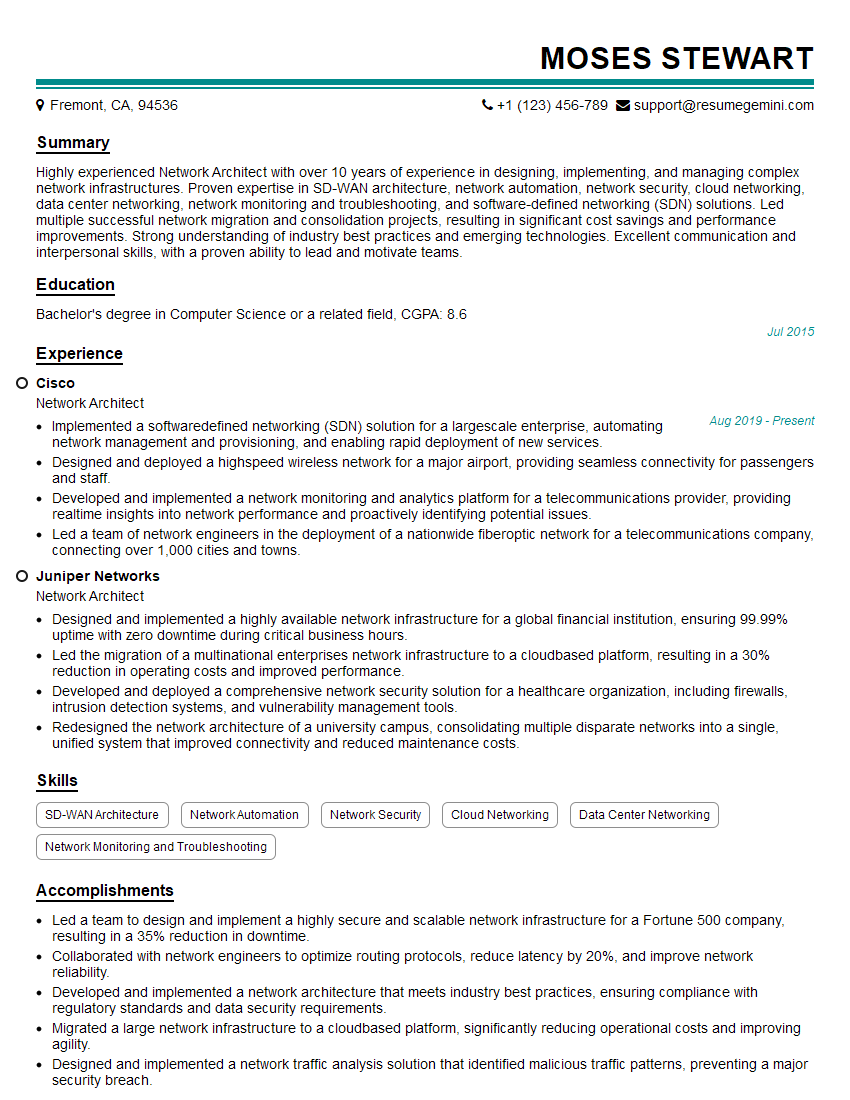
Network Architect Resume Sample
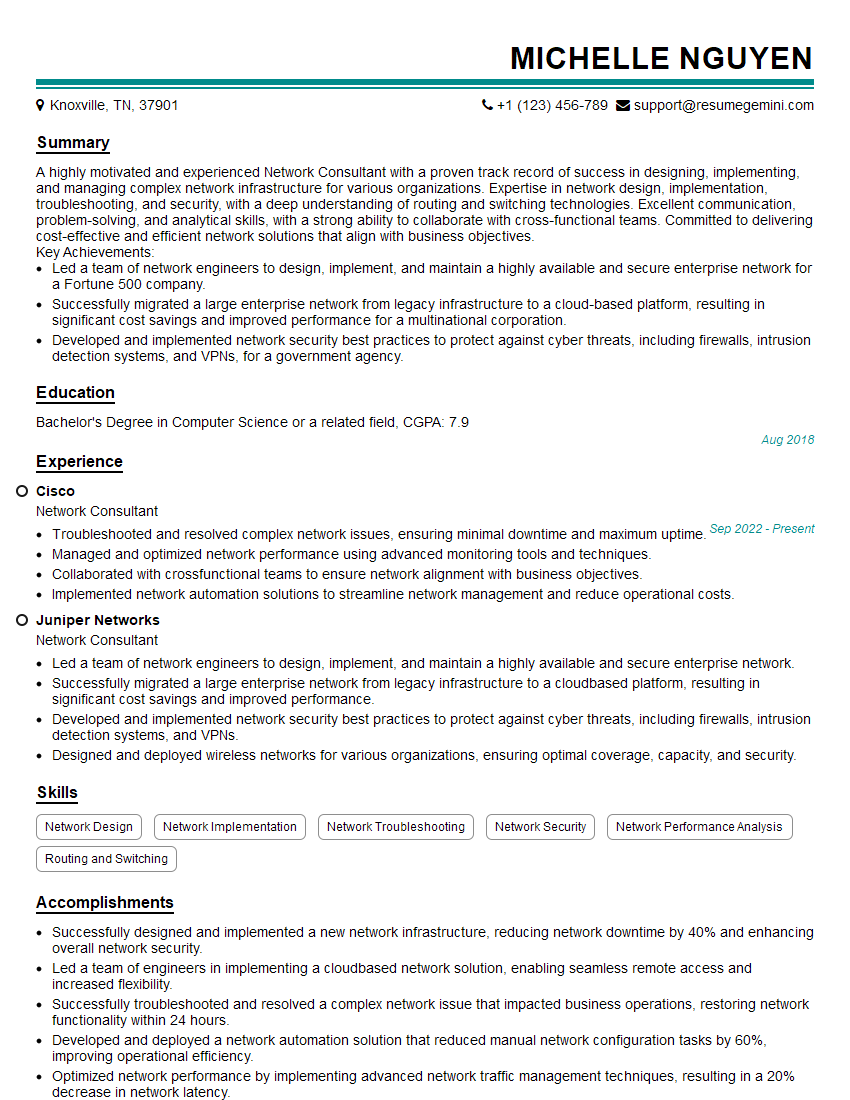
Network Consultant Resume Sample
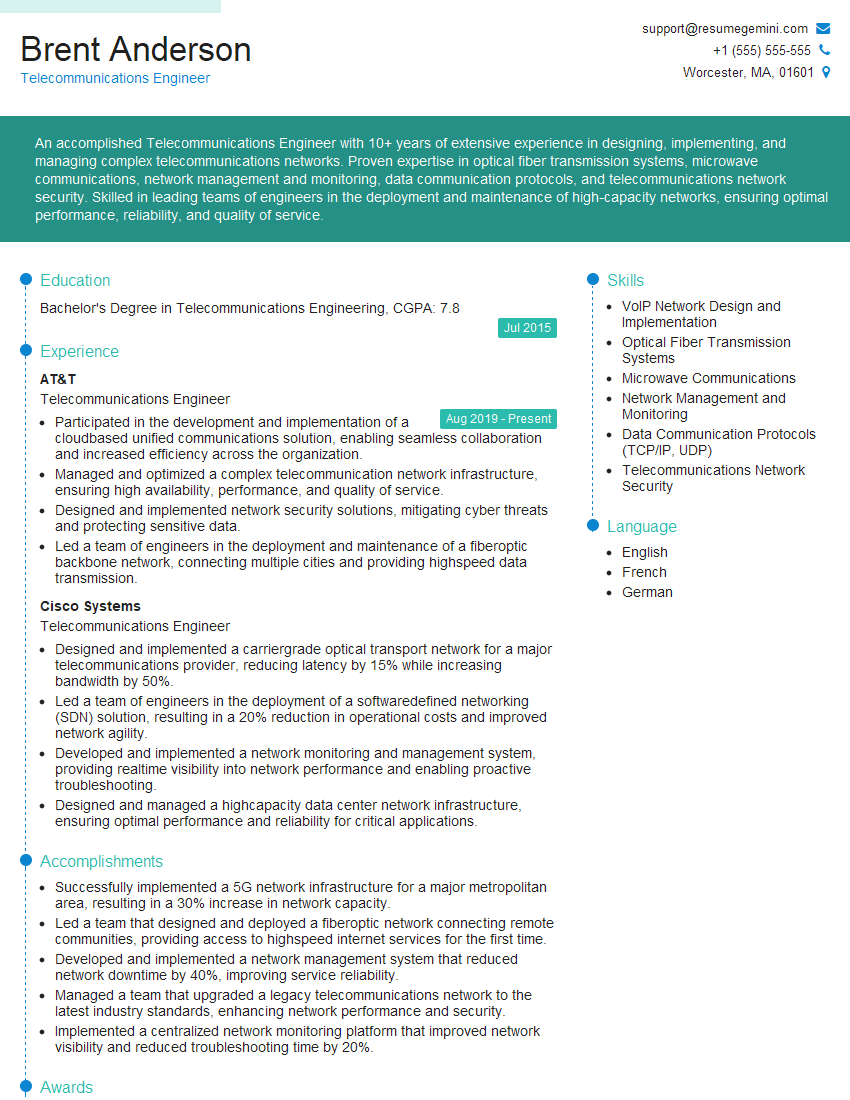
Telecommunications Engineer Resume Sample
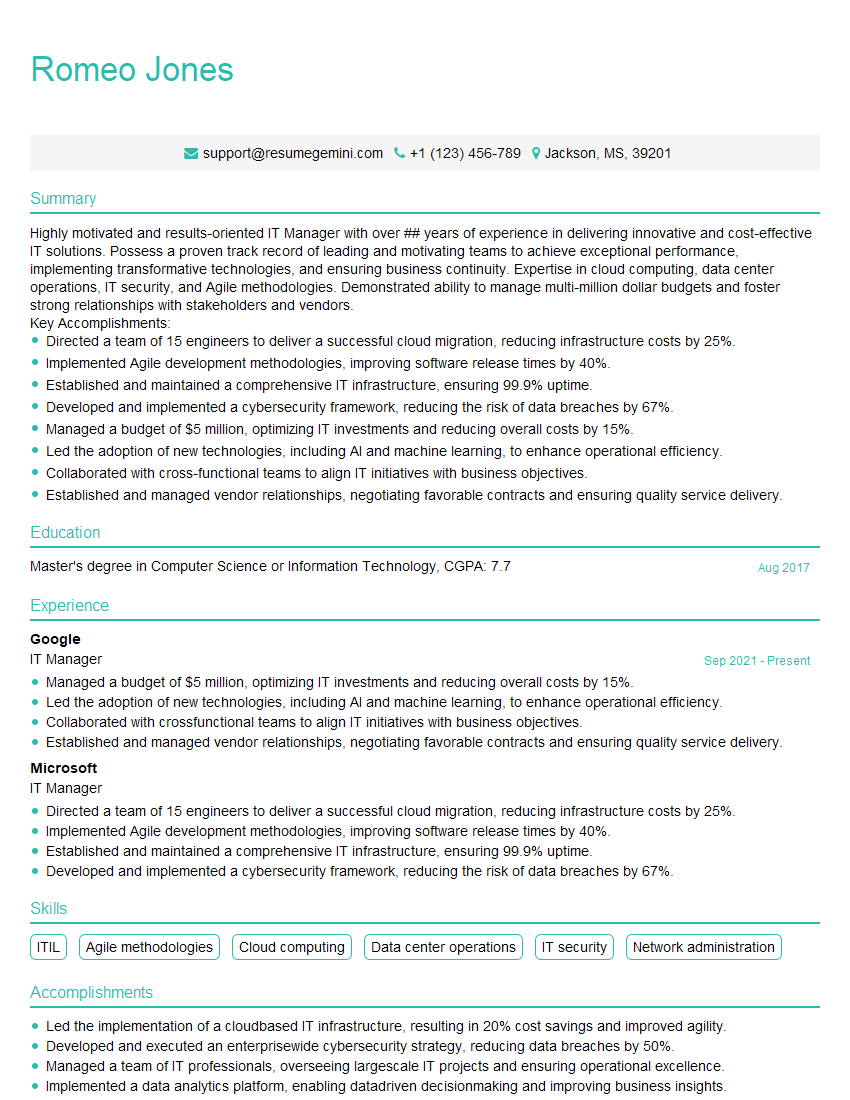
IT Manager Resume Sample
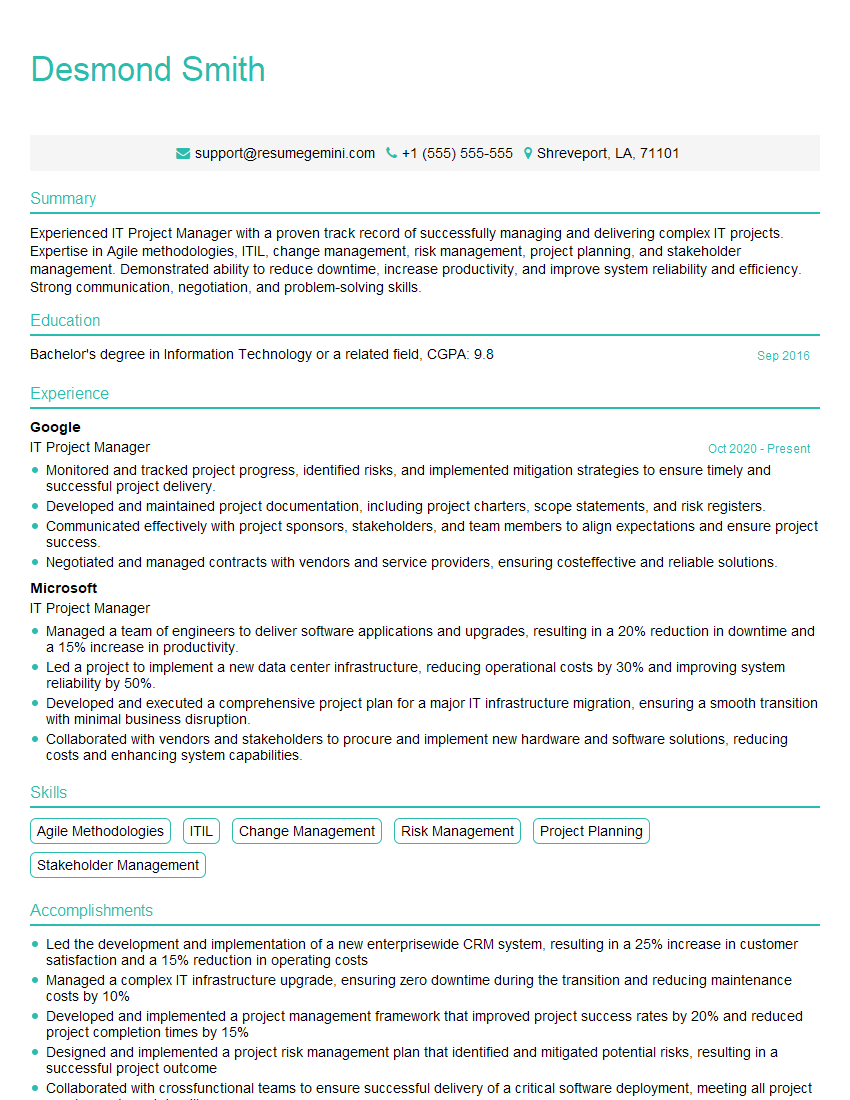
IT Project Manager Resume Sample
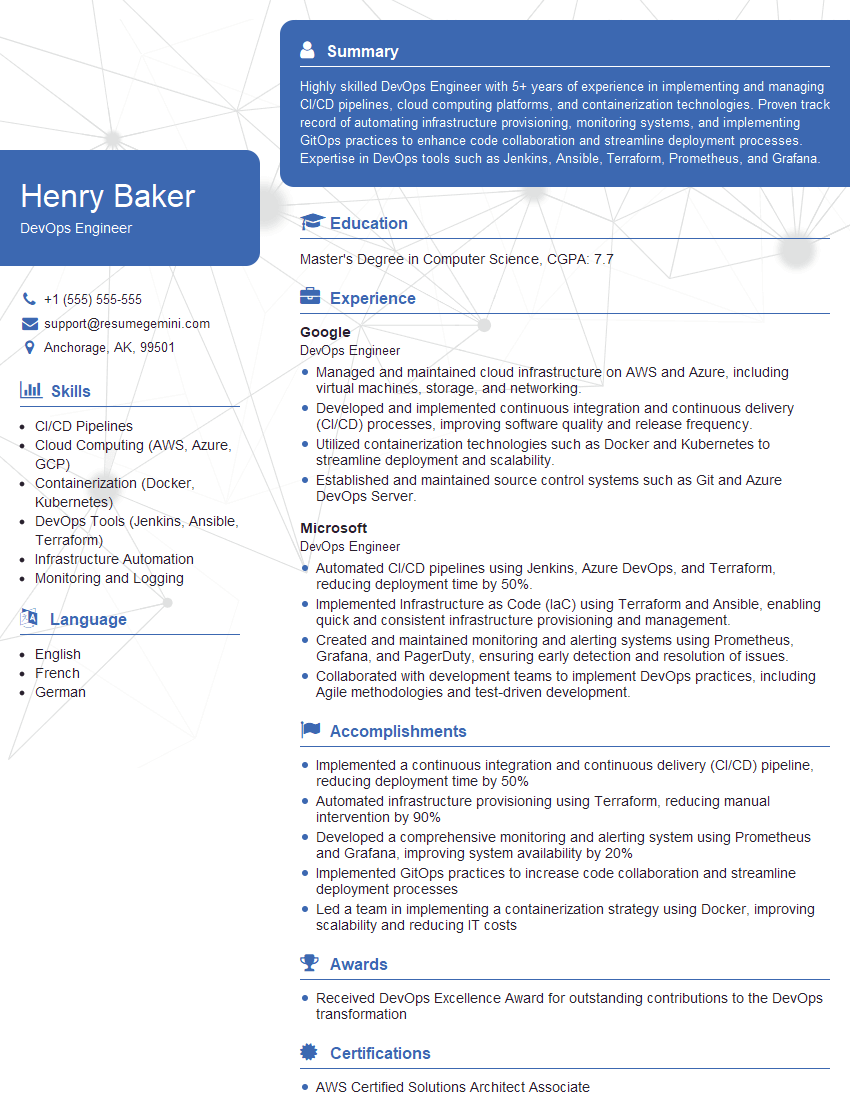
DevOps Engineer Resume Sample
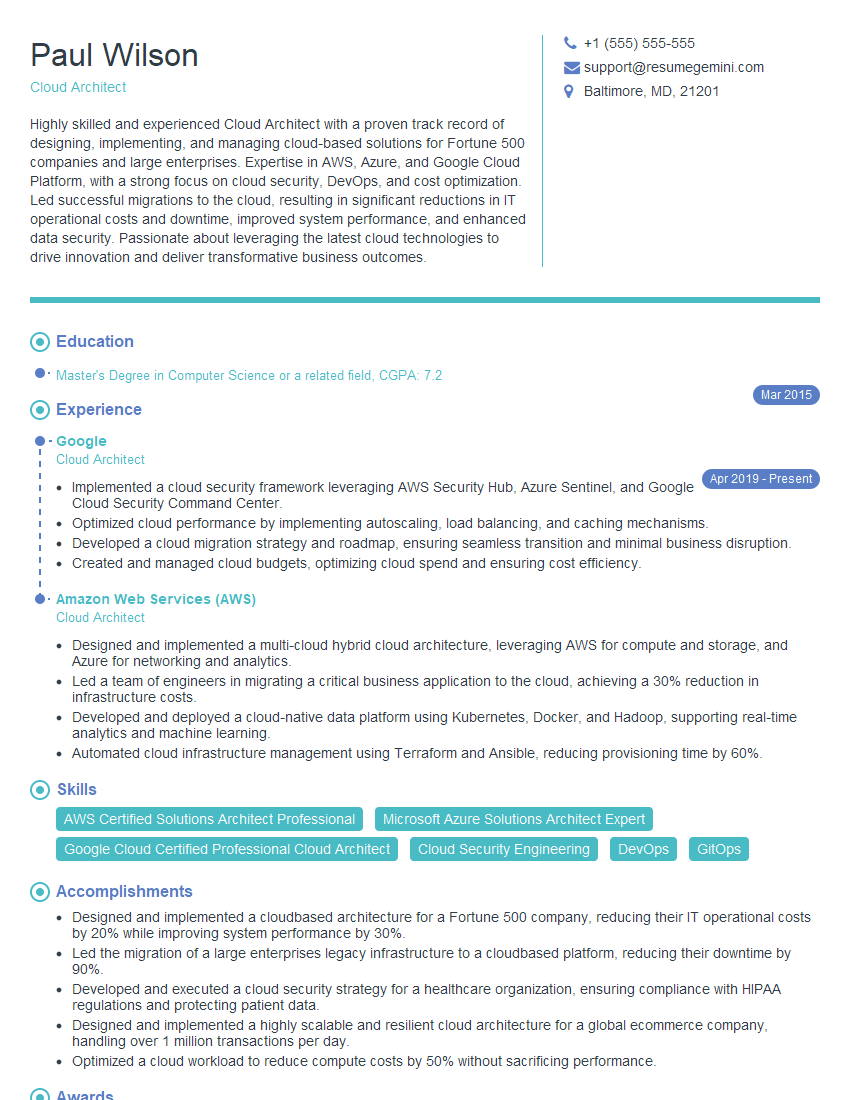
Cloud Architect Resume Sample
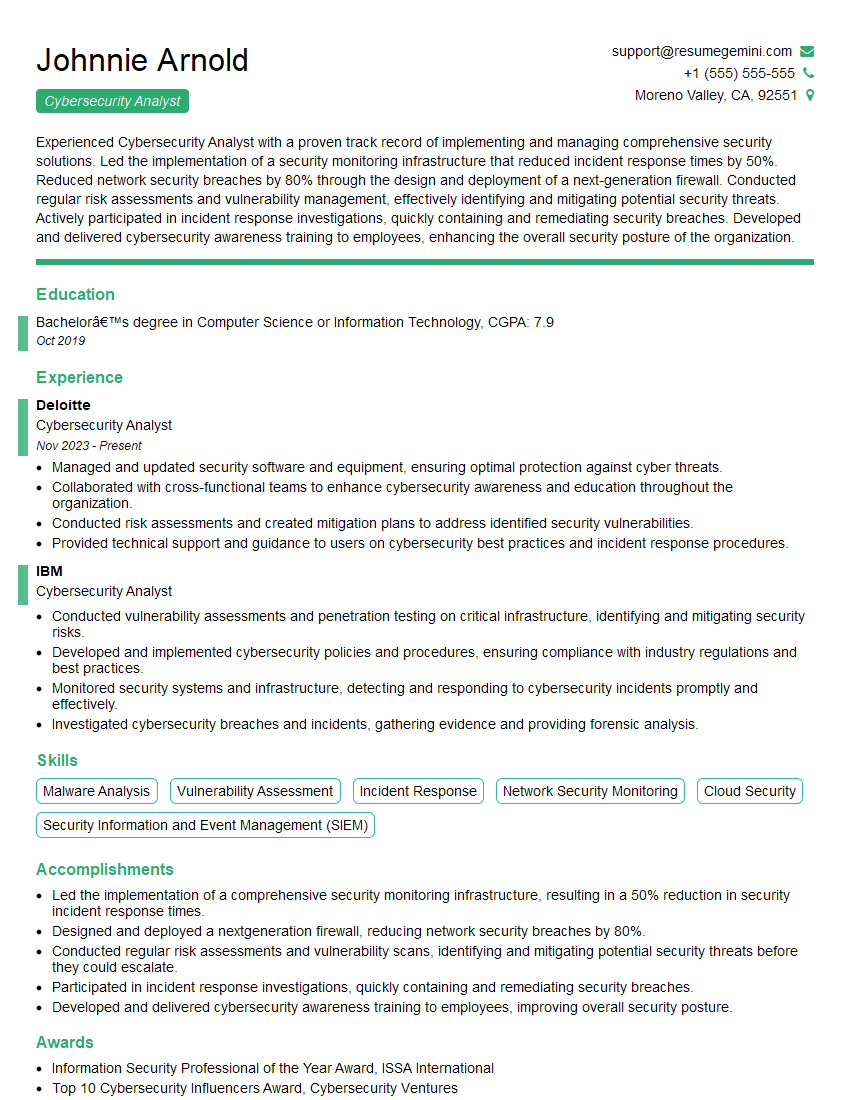
Cybersecurity Analyst Resume Sample
- Data Center Manager
- Compliance Officer
- Systems Engineer
- Network Administrator
- Information Security Manager
- Network Security Engineer
- Security Architect
- Infrastructure Engineer
- Network Architect
- Network Consultant
- Telecommunications Engineer
- IT Manager
- IT Project Manager
- DevOps Engineer
- Cloud Architect
- Cybersecurity Analyst
Explore more articles
Users Rating of Our Blogs
Share Your Experience
We value your feedback! Please rate our content and share your thoughts (optional).
What Readers Say About Our Blog
Very informative content, great job.
good