The thought of an interview can be nerve-wracking, but the right preparation can make all the difference. Explore this comprehensive guide to Irrigation Design and Installation interview questions and gain the confidence you need to showcase your abilities and secure the role.
Questions Asked in Irrigation Design and Installation Interview
Q 1. Explain the difference between drip, sprinkler, and subsurface irrigation systems.
The main difference between drip, sprinkler, and subsurface irrigation systems lies in how they deliver water to plants. Think of it like choosing the best way to water your garden: a gentle shower, a targeted spray, or a slow, deep soak.
- Drip Irrigation: This system delivers water directly to the plant roots through a network of tubes and emitters. It’s like giving each plant a personal drink, minimizing water waste and maximizing efficiency. This is ideal for drought-tolerant landscapes, vegetable gardens, and areas with limited water resources. I’ve successfully used drip irrigation in numerous projects, including a recent vineyard installation where precise water delivery was crucial.
- Sprinkler Irrigation: This system uses sprinklers to spray water over a larger area. This is like giving your garden a shower. While more water-efficient than flood irrigation, it can lead to some water loss through evaporation and runoff, especially in windy conditions. Sprinklers are suitable for lawns, larger flower beds, and areas where a more even distribution of water is needed. I’ve designed many residential sprinkler systems, carefully considering nozzle types and spacing to achieve optimal coverage.
- Subsurface Irrigation: This method involves placing perforated pipes or tubes below the soil surface. Water slowly seeps upwards, moistening the root zone. Imagine this as a slow, deep drink for your plants. This minimizes water loss from evaporation and runoff and is beneficial for water conservation. It’s excellent for established landscapes and areas with high winds. A recent project involved installing subsurface irrigation in a large park to conserve water and reduce maintenance.
Q 2. Describe your experience with various irrigation controllers and their programming.
My experience encompasses a wide range of irrigation controllers, from basic timers to sophisticated weather-based systems. I’m proficient in programming various brands, including Rain Bird, Hunter, and Toro. Programming involves setting up schedules, adjusting run times, and configuring sensor inputs. For example, I recently programmed a Hunter X-Core controller for a large commercial project, incorporating rain sensors and soil moisture probes to optimize watering schedules and conserve water. This involved defining specific start times, durations, and station sequences for different zones, ensuring efficient and targeted water distribution. I’m also experienced with using web-based interfaces for remote monitoring and control, allowing for real-time adjustments and troubleshooting.
Example code (pseudocode for setting a station schedule):
Set Station 1: Start Time = 6:00 AM, Duration = 15 minutes
Set Station 2: Start Time = 6:15 AM, Duration = 20 minutes
Q 3. How do you calculate the water requirements for a specific landscape?
Calculating water requirements involves several factors. It’s like figuring out how much water your garden needs to stay happy and healthy. We consider the following:
- Evapotranspiration (ET): This measures the water lost from the soil and plants through evaporation and transpiration. We use local weather data and plant types to estimate ET.
- Soil Type: Sandy soils drain quickly and require more frequent watering than clay soils.
- Plant Type: Different plants have different water needs. A succulent requires less water than a thirsty lawn.
- Landscape Area: This determines the overall water needed.
- Irrigation Efficiency: Not all the water you apply reaches the plant roots. Sprinkler systems, for example, are less efficient than drip irrigation.
We combine these factors using various formulas or specialized software to determine the total water needed. This calculation ensures we design a system that meets the plants’ needs without overwatering or wasting water. For example, I recently used the Crop Evapotranspiration (ETc) method to design a system for a golf course, carefully considering the turf type and local climate conditions.
Q 4. What are the common causes of low water pressure in an irrigation system?
Low water pressure can stem from several issues: it’s like a blockage in your garden hose. Common causes include:
- Clogged filters or emitters: These restrict water flow. Regular cleaning is essential.
- Leaks in the pipes: Leaks reduce overall pressure. Regular system inspection is crucial.
- Closed or partially closed valves: Check that all valves are fully open.
- Low water main pressure: This is an issue outside your irrigation system and may require contacting your water utility.
- Incorrectly sized pipes: Undersized pipes can’t handle the water flow needed.
Troubleshooting involves systematically checking each of these components, starting with the easiest to access. A pressure gauge can help pinpoint the location of the problem.
Q 5. Explain your experience with different types of irrigation valves and their functions.
Irrigation valves are the gatekeepers of your system. They control the flow of water to different zones. I have experience with various types, including:
- Electric Valves: These are controlled by the irrigation controller, offering precise control over watering schedules. They are the workhorse of most systems.
- Hydraulic Valves: These use water pressure to operate, offering simplicity but less precise control than electric valves. We often use them in smaller, simpler systems.
- Pressure-Regulating Valves: These maintain consistent water pressure across different zones, crucial for uniform irrigation.
- Anti-Siphon Valves: These prevent backflow of contaminated water into the water main, a crucial safety feature.
The choice of valve depends on the system’s size, complexity, and budget. I select appropriate valves based on the project’s needs, ensuring that they are compatible with the controller and the piping system.
Q 6. How do you troubleshoot a malfunctioning irrigation system?
Troubleshooting a malfunctioning system is systematic. It’s like detective work for your garden. I use a step-by-step approach:
- Visual Inspection: Check for leaks, broken pipes, or damaged components.
- Controller Check: Verify programming, power supply, and sensor readings.
- Valve Inspection: Manually test each valve to see if it opens and closes properly.
- Pressure Check: Use a pressure gauge to measure the water pressure at various points in the system.
- Water Meter Check: Monitor water usage to detect unusually high consumption, indicating a leak.
- Zone Isolation: Turn off zones one by one to pinpoint the faulty section.
Using this approach, I can typically isolate the problem quickly. Documentation and clear communication with the client throughout the troubleshooting process are crucial for a smooth resolution.
Q 7. What are the key considerations for designing an irrigation system for a sloped landscape?
Designing for slopes requires careful consideration to prevent erosion and ensure even water distribution. It’s like carefully watering a hillside garden. Key considerations include:
- Proper Grading: Creating level areas or terraces can help prevent runoff and erosion.
- Appropriate Pipe Sizing and Sloping: Pipes should be sized appropriately to handle the flow rate, and they need to be sloped to ensure proper drainage and prevent waterlogging.
- Erosion Control: Implementing measures like mulch, retaining walls, or vegetation can help protect the soil.
- Zone Design: Dividing the landscape into smaller zones with shorter run times can help manage water distribution on slopes.
- Emitter Selection: Low-flow emitters are often preferred to minimize runoff on slopes.
We use specialized software and calculations to ensure appropriate water distribution and minimize potential problems. I recently designed a system for a sloped vineyard, carefully incorporating terracing and using pressure-compensating drip emitters to guarantee even watering, regardless of elevation.
Q 8. Describe your experience with CAD software for irrigation design.
My experience with CAD software for irrigation design is extensive. I’m proficient in several industry-standard programs, including AutoCAD, Civil 3D, and WaterCAD. I use these tools throughout the entire design process, from initial site surveys and topographic analysis to the creation of detailed system layouts, including pipe sizing, emitter placement, and valve locations. For example, in a recent project designing an irrigation system for a large vineyard, I used AutoCAD to create precise contour maps, which allowed me to optimize the layout of the laterals and mains to minimize elevation changes and ensure even water distribution. Civil 3D was instrumental in creating 3D models that helped visualize the system’s integration with the existing landscape and identify potential conflicts. WaterCAD, on the other hand, facilitated the hydraulic modeling to accurately size pipes and valves, ensuring adequate pressure throughout the system. Beyond these core functions, I also utilize these CAD programs for creating professional construction drawings, including detailed schematics and isometrics, that are essential for a seamless installation process.
Q 9. How do you ensure proper water distribution within an irrigation system?
Ensuring proper water distribution is paramount in irrigation design. It involves a multifaceted approach that begins with a thorough understanding of the site’s topography, soil type, and plant water requirements. I use a combination of techniques to achieve this: First, accurate site surveying and analysis help identify areas with varying elevations and slopes, informing the design of the system layout. Then, hydraulic modeling software, such as WaterCAD, allows me to simulate water flow under various scenarios, ensuring adequate pressure and flow rate at all points within the system. Proper pipe sizing, based on the calculated flow rates, is crucial. The selection of appropriate emitters or sprinklers with consistent flow rates and distribution patterns is equally important. For example, in a golf course irrigation project, I carefully selected low-trajectory sprinklers for the greens to minimize water loss through evaporation and wind drift. Finally, regular system maintenance and monitoring, coupled with the use of pressure gauges and flow meters, allows for timely adjustments and ensures long-term performance.
Q 10. What are your preferred methods for soil moisture monitoring?
My preferred methods for soil moisture monitoring combine both traditional and modern technologies. Traditional methods include using a soil probe to physically assess soil moisture content at various depths. This method provides a direct measure, but it’s labor-intensive and only provides a point measurement. To get a more comprehensive understanding, I often incorporate automated soil moisture sensors. These sensors can be installed at multiple locations across the irrigation zone and provide continuous data, allowing for real-time monitoring and irrigation scheduling adjustments. I favor sensors that use capacitance or tensiometry techniques because they provide reliable and accurate readings over a wide range of soil types. The data collected from these sensors is often integrated into a centralized irrigation management system, which can trigger irrigation events automatically based on pre-defined thresholds, leading to significant water savings and optimized plant health.
Q 11. Explain your understanding of water conservation techniques in irrigation design.
Water conservation is a core principle in my irrigation design philosophy. It involves a combination of strategic planning, technological innovation, and operational efficiency. Key techniques include:
- Efficient irrigation scheduling: Utilizing weather data and soil moisture sensors to precisely schedule irrigation events, preventing overwatering.
- Drip irrigation and micro-sprinklers: Choosing efficient irrigation methods that deliver water directly to plant roots, minimizing evaporation and runoff.
- Proper emitter selection and spacing: Optimizing emitter discharge rates and spacing to ensure uniform water distribution.
- Rain sensors and soil moisture sensors: Integrating smart technology to automatically adjust or suspend irrigation based on rainfall or sufficient soil moisture.
- Pressure-regulating valves: Maintaining consistent pressure throughout the system, reducing water loss and ensuring even distribution.
Q 12. Describe your experience with different types of irrigation piping materials.
My experience encompasses a wide range of irrigation piping materials, each with its own advantages and disadvantages.
- Polyvinyl chloride (PVC): A cost-effective and durable option, suitable for many applications. However, it can be brittle and susceptible to damage under extreme temperature fluctuations.
- High-density polyethylene (HDPE): Offers excellent flexibility, durability, and resistance to corrosion, making it ideal for challenging terrains and long-distance pipelines. It’s often preferred for mainline installations.
- Chlorinated polyvinyl chloride (CPVC): A more temperature-resistant variant of PVC, suitable for hot-water applications or regions with extreme temperature swings.
- Polyethylene (PE): Similar to HDPE, but often less expensive, suitable for smaller diameter laterals.
Q 13. How do you determine the appropriate pipe size for an irrigation system?
Determining the appropriate pipe size is critical for efficient irrigation system performance. It involves calculating the necessary flow rate for each zone based on the plant water requirements, soil type, and emitter characteristics. I use hydraulic design software such as WaterCAD, which employs complex equations based on pipe friction and head loss to calculate the required pipe diameter. These calculations consider the desired pressure at the emitters and the overall system layout. For example, a larger diameter main line will be necessary to carry the combined flow from multiple laterals. Improper pipe sizing can lead to inadequate water pressure at the end of the lines, uneven water distribution, and increased energy consumption. Therefore, accurate calculations and careful consideration of system hydraulics are paramount. The output from this software provides detailed specifications, including pipe size, ensuring the chosen size meets the hydraulic demands of the system and aligns with industry standards.
Q 14. What safety precautions do you take when working with irrigation systems?
Safety is paramount in all my irrigation projects. I adhere to strict safety protocols throughout the design, installation, and maintenance phases. These include:
- Proper excavation techniques: Always calling 811 before excavation to locate underground utilities and preventing damage to existing lines.
- Personal protective equipment (PPE): Wearing appropriate safety gear such as hard hats, safety glasses, and gloves during all installation and maintenance activities.
- Lockout/tagout procedures: Following established procedures when working on energized equipment to prevent accidental activation and injury.
- Proper handling of chemicals: Following safety data sheets (SDS) and taking appropriate precautions when working with fertilizers and other chemicals commonly used in irrigation systems.
- Training and certification: Ensuring all personnel involved in the project are properly trained and certified in relevant safety procedures.
Q 15. Explain your experience with backflow preventers and their importance.
Backflow preventers are crucial safety devices in irrigation systems. They prevent contaminated water from flowing back into the potable water supply. Think of it like a one-way valve for your irrigation system, protecting the public water system from potential contaminants like fertilizers, pesticides, or even bacteria from the irrigation line. My experience encompasses installing and maintaining various types, including double check valves, reduced pressure zone backflow preventers (RPZ), and pressure vacuum breakers (PVB). The selection of the appropriate backflow preventer depends heavily on the local plumbing codes and the specific application. For instance, an RPZ is typically required for high-hazard applications like hospitals or food processing plants, offering a higher level of protection compared to a PVB used in low-hazard applications like residential landscapes. Regular testing and maintenance, often mandated by local authorities, are essential to ensure their continued effectiveness. I’ve personally overseen numerous backflow preventer tests and have experience troubleshooting malfunctioning units, ensuring compliance and preventing costly water contamination incidents.
Career Expert Tips:
- Ace those interviews! Prepare effectively by reviewing the Top 50 Most Common Interview Questions on ResumeGemini.
- Navigate your job search with confidence! Explore a wide range of Career Tips on ResumeGemini. Learn about common challenges and recommendations to overcome them.
- Craft the perfect resume! Master the Art of Resume Writing with ResumeGemini’s guide. Showcase your unique qualifications and achievements effectively.
- Don’t miss out on holiday savings! Build your dream resume with ResumeGemini’s ATS optimized templates.
Q 16. How do you manage irrigation system maintenance and repairs?
Irrigation system maintenance is key to longevity and efficiency. My approach involves a proactive, multi-step process. First, I conduct a thorough spring inspection, checking for leaks, damaged lines, clogged emitters, and malfunctioning controllers. This often includes pressure testing various sections of the system to identify leaks early on. Next, I develop a customized maintenance schedule, factoring in the specific needs of the landscape and the type of irrigation equipment used. This might involve regular flushing of lines to remove sediment buildup, nozzle adjustments for optimal water distribution, and controller programming updates for seasonal changes. For repairs, I prioritize quick response times to minimize water waste and landscape damage. I always utilize high-quality replacement parts, aiming for long-term solutions over quick fixes. I meticulously document all maintenance and repair activities, keeping detailed records for future reference. For example, I recently managed a large-scale repair project involving a fractured main line. By carefully isolating the affected area and using specialized pipe fusion techniques, I was able to minimize disruption and restore full irrigation functionality quickly.
Q 17. Describe your experience with different types of sprinkler heads and nozzles.
My experience with sprinkler heads and nozzles spans various types, each suited for specific applications. Rotor heads are ideal for larger areas needing high-volume water distribution, while spray heads are better for smaller, more intricate areas. I also have expertise with pop-up spray heads, which offer a neat, unobtrusive solution for lawns and flowerbeds. The choice of nozzle depends on factors like water pressure, desired throw distance, and precipitation rate. For example, a low-angle nozzle offers a wider coverage, perfect for uniform watering of lawns, while a high-angle nozzle is suited for taller plants requiring more focused watering. I’ve worked extensively with different manufacturers and their various nozzle types, understanding their unique characteristics and performance capabilities. Selecting the correct combination of head and nozzle is crucial for water efficiency and ensuring proper coverage, avoiding over-watering or dry spots. I always use a rain gauge in several different zones of the property to measure the actual water distribution of the system. This is particularly important in areas with varying topography. I often use flow meters as well to measure the water flow in different parts of the system, and use this information to determine if the nozzles are set correctly.
Q 18. What are the factors to consider when selecting an irrigation pump?
Selecting the right irrigation pump is critical for system performance and efficiency. Several factors need careful consideration. First, the required flow rate (gallons per minute or GPM) is determined by the size and type of irrigation system. This requires calculating the total water demand of all zones. Second, the total dynamic head (TDH), which is the combined pressure needed to overcome friction losses in the piping system and lift water to the highest sprinkler head, is calculated using specialized software and considerations for the total length and diameter of the piping. Third, the pump’s horsepower (HP) rating needs to be sufficient to meet the GPM and TDH requirements. Lastly, energy efficiency is key, opting for pumps with high efficiency ratings (EER) to minimize operational costs and environmental impact. I frequently utilize pump curve charts to determine the optimal pump selection for specific projects. For instance, a recent project requiring a significant lift to reach higher elevations demanded a high-pressure centrifugal pump, carefully selected to ensure sufficient water pressure at the highest point of the landscape while staying within budget.
Q 19. Explain your experience with designing irrigation systems for various plant types.
Designing irrigation systems for diverse plant types demands a deep understanding of their water requirements. I tailor the system to each plant’s specific needs, considering factors such as water usage rates, root depth, and sun exposure. For example, a drought-tolerant xeriscape landscape will require a drastically different irrigation schedule and system design than a lush, water-intensive flower garden. I use a combination of soil analysis and local weather data to create the irrigation system. This helps to fine-tune irrigation schedules and ensure efficient water delivery. For example, a drip irrigation system may be more suitable for flower beds with closely spaced plants, while a sprinkler system may be better for larger areas of lawn. For trees and shrubs, I utilize treegator bags to help retain water. Proper consideration is also given to soil type, which influences water absorption rates. Clay soils, for instance, require a slower application rate compared to sandy soils. The result is a customized irrigation plan that optimizes water use while promoting healthy plant growth. I also consider the seasonal changes to modify the irrigation schedules as needed.
Q 20. How do you handle scheduling conflicts or project delays?
Handling scheduling conflicts and project delays requires proactive communication and planning. I begin by establishing clear timelines and milestones with clients, ensuring everyone understands the project scope and potential challenges. Open communication is crucial; I maintain regular contact with clients and subcontractors to discuss any potential issues and adjust the schedule accordingly. Should delays occur due to unforeseen circumstances like inclement weather or material shortages, I immediately assess the impact and develop contingency plans. I’m adept at prioritizing tasks and allocating resources effectively to mitigate the impact of delays. This might involve adjusting the project timeline, re-sequencing tasks, or negotiating with subcontractors to secure alternative solutions. Maintaining detailed project records and regularly updating clients helps maintain transparency and build trust. For example, on a recent project, a delay in material delivery threatened to push back the project completion date. By proactively contacting alternative suppliers and adjusting the work schedule, I successfully minimized the delay’s impact, completing the project only a few days behind schedule.
Q 21. Describe your experience with different types of filtration systems for irrigation.
Different filtration systems are crucial for maintaining the health and efficiency of irrigation systems, preventing clogging of emitters and sprinklers. My experience includes working with various filter types, including screen filters, disc filters, and sand filters. Screen filters are ideal for removing larger debris, while disc filters offer finer filtration. Sand filters provide the most thorough filtration, effectively removing silt, clay, and other fine particles. The choice of filter depends on factors like water source quality, system size, and the level of filtration needed. I also have experience with backwashing systems, which automatically clean the filter media, extending its lifespan and maintaining optimal performance. For instance, in areas with high sediment levels, a sand filter with a backwashing system is essential to prevent frequent clogging and maintain consistent water flow. Regular filter maintenance is crucial; I incorporate filter cleaning and replacement into my routine maintenance schedule, ensuring the system’s long-term health and minimizing the risk of costly repairs due to clogged components.
Q 22. Explain your knowledge of water quality and its impact on irrigation.
Water quality is paramount in irrigation design. The presence of salts, minerals, and other dissolved substances directly impacts plant health and system efficiency. High salinity can lead to soil degradation, reduced nutrient uptake, and ultimately, crop failure. Conversely, excessively soft water may lack essential nutrients plants need for robust growth. Understanding the specific characteristics of your water source – be it well water, municipal supply, or reclaimed water – is crucial.
- Salinity: High salt concentration can lead to osmotic stress, making it difficult for plants to absorb water. We use a soil salinity test to assess this and determine if amendments like gypsum are needed.
- pH: The pH level affects nutrient availability. A soil pH that is too high or too low can lock up essential nutrients, impairing plant growth. We often adjust pH through soil amendments or specialized irrigation techniques.
- Turbidity: High turbidity, or cloudiness, can clog emitters and drippers, reducing water flow and efficiency. Filtration systems are essential to mitigate this. I’ve seen projects where improper filtration resulted in significant emitter clogging and ultimately system failure.
- Chemical Composition: The presence of specific chemicals, such as heavy metals or pesticides, can be toxic to plants and harm the environment. Regular water testing helps us identify potential problems.
For instance, in a recent project in a desert region, we discovered high salinity in the well water. We incorporated a reverse osmosis system into the irrigation design to desalinate the water, ensuring the health of the landscape plants.
Q 23. How do you prepare a detailed irrigation system design plan?
Preparing an irrigation system design plan is a multi-step process that requires careful consideration of various factors. It’s like designing a circulatory system for your plants, ensuring they receive the right amount of water at the right time.
- Site Assessment: This includes a thorough evaluation of the area’s topography, soil type, climate, and plant requirements. I always take detailed measurements and photos.
- Water Source Analysis: Determining the availability, quality, and pressure of the water source is crucial. Water quality tests are always a vital first step.
- Irrigation Method Selection: Choosing the appropriate irrigation method (drip, sprinkler, micro-sprinkler, etc.) based on factors like site characteristics, water availability, and plant needs. Drip irrigation is often preferred for efficiency and precision.
- Layout Design: Creating a detailed layout plan that shows the placement of pipes, valves, emitters, and other components. This requires expertise in CAD software and a good understanding of hydraulics.
- Hydraulic Calculations: Performing hydraulic calculations to ensure adequate water pressure and flow throughout the system. This ensures all plants receive sufficient water and pressure is evenly distributed.
- Material Selection: Choosing appropriate materials for pipes, valves, and fittings, considering factors like durability, corrosion resistance, and cost-effectiveness. I generally opt for materials suitable for the local climate and water quality.
- Cost Estimation: Developing a detailed cost estimate for the entire project, including materials, labor, and permits. Accurate cost estimates are crucial for project success.
- Permitting and Regulations: Navigating any necessary permits and regulations for the area, ensuring compliance.
For example, on a recent golf course project, we used a sophisticated computer model to simulate water flow and optimize the sprinkler placement to minimize water waste and ensure consistent coverage.
Q 24. What are the legal requirements and permits needed for irrigation installations?
Legal requirements for irrigation installations vary widely depending on location and the scale of the project. These requirements are generally designed to protect water resources and ensure responsible water use.
- Water Rights Permits: In many areas, obtaining permits to use water for irrigation is mandatory. This often involves demonstrating a legitimate need for the water and adhering to water allocation guidelines.
- Building Permits: Depending on the scope of the project, building permits might be necessary, especially for larger-scale installations that involve substantial infrastructure.
- Environmental Impact Assessments (EIAs): In sensitive environmental areas, an EIA might be required to assess the potential impacts of the irrigation system on the surrounding ecosystem.
- Contractor Licenses and Insurance: Contractors must have the necessary licenses and insurance to carry out the installation work legally.
- Local Ordinances: Local ordinances and regulations related to water use, landscaping, and construction must be followed. These can range from setback requirements to restrictions on the type of irrigation system permitted.
In my experience, navigating the permitting process often requires patience and attention to detail. I always recommend consulting with local authorities early in the project planning phase to ensure a smooth and compliant installation.
Q 25. Explain your experience with using soil sensors and data loggers in irrigation management.
Soil sensors and data loggers are game-changers in irrigation management. They provide real-time data on soil moisture, temperature, and salinity, allowing for precise and efficient irrigation scheduling.
- Soil Moisture Sensors: These sensors measure the volumetric water content in the soil. I typically use tensiometers and capacitance probes, which are reliable and fairly simple to install and monitor.
- Data Loggers: Data loggers collect data from multiple sensors and store it for later retrieval and analysis. I use data loggers with wireless capabilities that allow for remote monitoring and control of the irrigation system. This significantly minimizes site visits.
- Irrigation Control Systems: The data collected by sensors and loggers can be integrated with irrigation control systems to automate irrigation scheduling and optimize water use.
In one project, we used a network of soil moisture sensors and a central data logger to create a precision irrigation system for a large vineyard. By irrigating only when and where needed, we saved considerable amounts of water and improved vine health.
The data collected allows for detailed analysis of soil moisture patterns and helps us optimize the irrigation schedule over time. We can adjust the irrigation plan based on real-time data, improving its efficiency. For example, using historical data, we can create predictive models for future water demands.
Q 26. How do you manage a team of irrigation installers?
Managing a team of irrigation installers involves effective communication, delegation, and leadership. It’s all about collaboration and efficient execution.
- Clear Communication: Ensuring all team members understand the project plans, their roles, and responsibilities is essential. Daily briefings and open communication channels are crucial for effective teamwork.
- Delegation of Tasks: Distributing tasks based on individual skills and experience promotes efficiency and ensures that each member is adequately challenged.
- On-Site Supervision: Providing on-site supervision to ensure adherence to safety standards and quality control is paramount. This minimizes errors and potential rework.
- Training and Development: Providing opportunities for training and development helps build team skills and expertise. Staying current with new technologies is important for the team’s growth and competitiveness.
- Conflict Resolution: Addressing conflicts fairly and promptly prevents disruptions to the project workflow and ensures a harmonious team environment.
My approach to team management is to foster a collaborative spirit and a safe working environment. I empower my team, providing them with the tools and support they need to succeed. I’ve found that a well-trained and motivated team delivers higher quality work and completes projects efficiently and safely.
Q 27. Describe your experience with estimating costs for irrigation projects.
Accurate cost estimation is crucial for the success of any irrigation project. It requires a detailed understanding of the project scope, material costs, labor rates, and potential unforeseen expenses.
- Detailed Quantity Takeoff: Precisely calculating the quantities of materials required, including pipes, fittings, valves, emitters, and other components. This usually involves using design software and detailed project plans.
- Material Cost Estimation: Obtaining current prices from suppliers and factoring in potential price fluctuations. I always obtain multiple quotes to ensure competitive pricing.
- Labor Cost Estimation: Estimating the labor hours required for each task and multiplying by the appropriate labor rates, taking into account labor costs, including insurance and benefits.
- Contingency Planning: Adding a contingency amount to account for unforeseen expenses or delays. This is typically a percentage of the total estimated cost.
- Permitting and Inspection Fees: Incorporating the costs of obtaining necessary permits and inspections. It’s critical to budget accurately for this as permits can sometimes be delayed.
For example, I recently used a specialized software program to estimate the costs of a large-scale irrigation project. The software automated many of the calculations and allowed me to generate a detailed breakdown of costs. Transparency in cost estimation builds trust with clients.
Q 28. What are the latest advancements in irrigation technology and how can they improve efficiency?
The irrigation industry is constantly evolving, with numerous advancements enhancing efficiency and sustainability.
- Smart Irrigation Controllers: These controllers use weather data, soil moisture sensors, and evapotranspiration calculations to optimize irrigation schedules, reducing water waste and increasing efficiency. They incorporate weather data for precise adjustments.
- Variable Rate Irrigation: This technology allows for precise water application based on the specific needs of different areas within a field or landscape. Sensors help identify areas needing more water.
- Remote Sensing and Drone Technology: Drones equipped with sensors can provide detailed information on crop health and soil moisture, aiding in irrigation management decisions. This offers a quick overview of large areas.
- Water-Smart Irrigation Technologies: These technologies focus on minimizing water usage through efficient irrigation methods, such as drip irrigation and subsurface irrigation. The focus is on minimizing evaporation.
- Artificial Intelligence (AI) in Irrigation: AI-powered systems can analyze vast amounts of data to predict water needs and optimize irrigation strategies, ensuring optimal water use and crop yield.
I recently worked on a project that incorporated a smart irrigation controller with weather sensors and soil moisture monitoring. The system automatically adjusted irrigation schedules based on real-time conditions, resulting in a significant reduction in water consumption. The future of irrigation is definitely smart and data-driven.
Key Topics to Learn for Your Irrigation Design and Installation Interview
- Hydraulics and Hydrology: Understanding water pressure, flow rates, and soil infiltration characteristics is fundamental. Consider how these principles influence system design and efficiency.
- Irrigation System Design: Learn different irrigation methods (drip, sprinkler, micro-spray), their applications, and design considerations for various landscapes and crops. Practice calculating water requirements and designing layouts.
- Pump Selection and Sizing: Master the principles of pump selection based on system demands, head pressure, and available power sources. Understand pump curves and efficiency calculations.
- Pipe Sizing and Material Selection: Learn about different pipe materials (PVC, HDPE), their properties, and how to select appropriate pipe sizes to minimize head loss and ensure adequate flow.
- Water Management and Conservation: Demonstrate knowledge of water-efficient irrigation practices, including scheduling, soil moisture monitoring, and smart irrigation technologies.
- Installation Techniques and Best Practices: Familiarize yourself with proper installation techniques, including trenching, pipe laying, emitter placement, and system testing. Understand safety protocols and industry standards.
- Troubleshooting and Maintenance: Be prepared to discuss common irrigation problems, their causes, and solutions. Show your understanding of preventative maintenance and system repairs.
- CAD Software and Design Tools: Showcase your proficiency in relevant design software used for creating irrigation plans and schematics (mention specific software if applicable to your experience).
- Regulations and Codes: Understand local and regional regulations concerning water usage, permits, and installation standards.
- Project Management and Communication: Be prepared to discuss your approach to project management, including client communication, scheduling, and budget control.
Next Steps
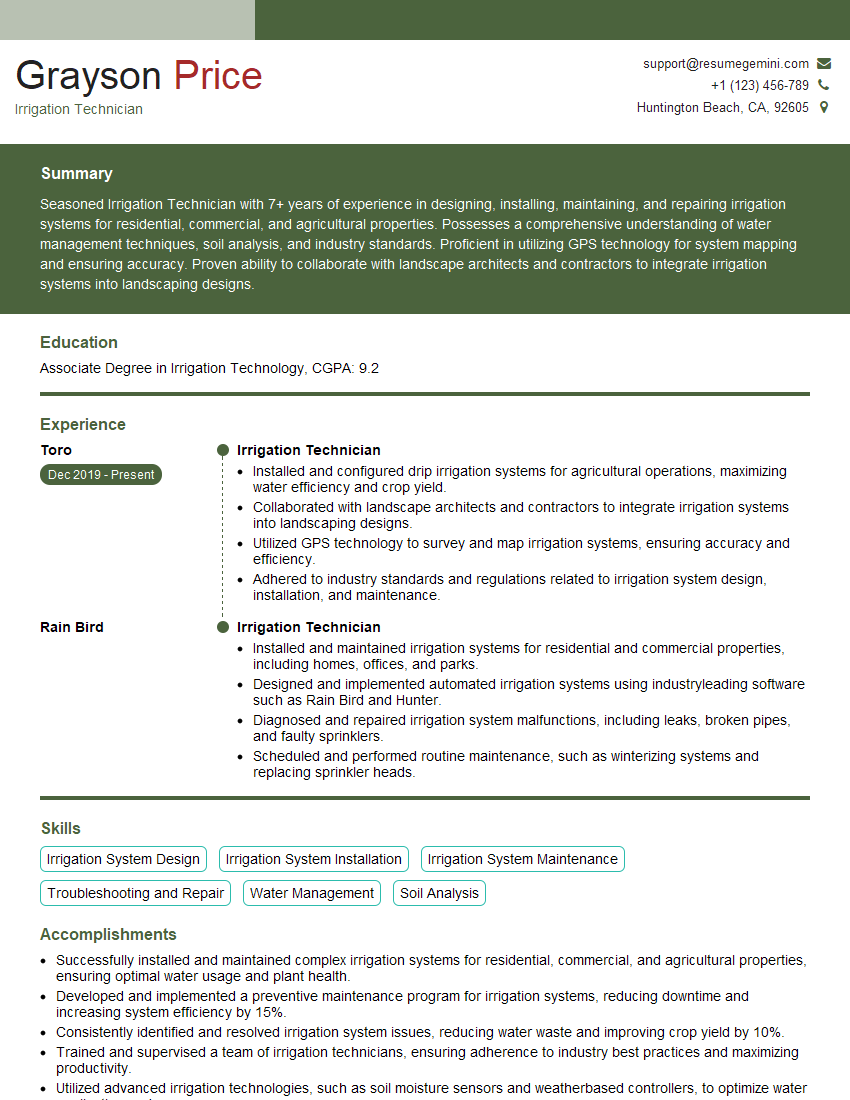
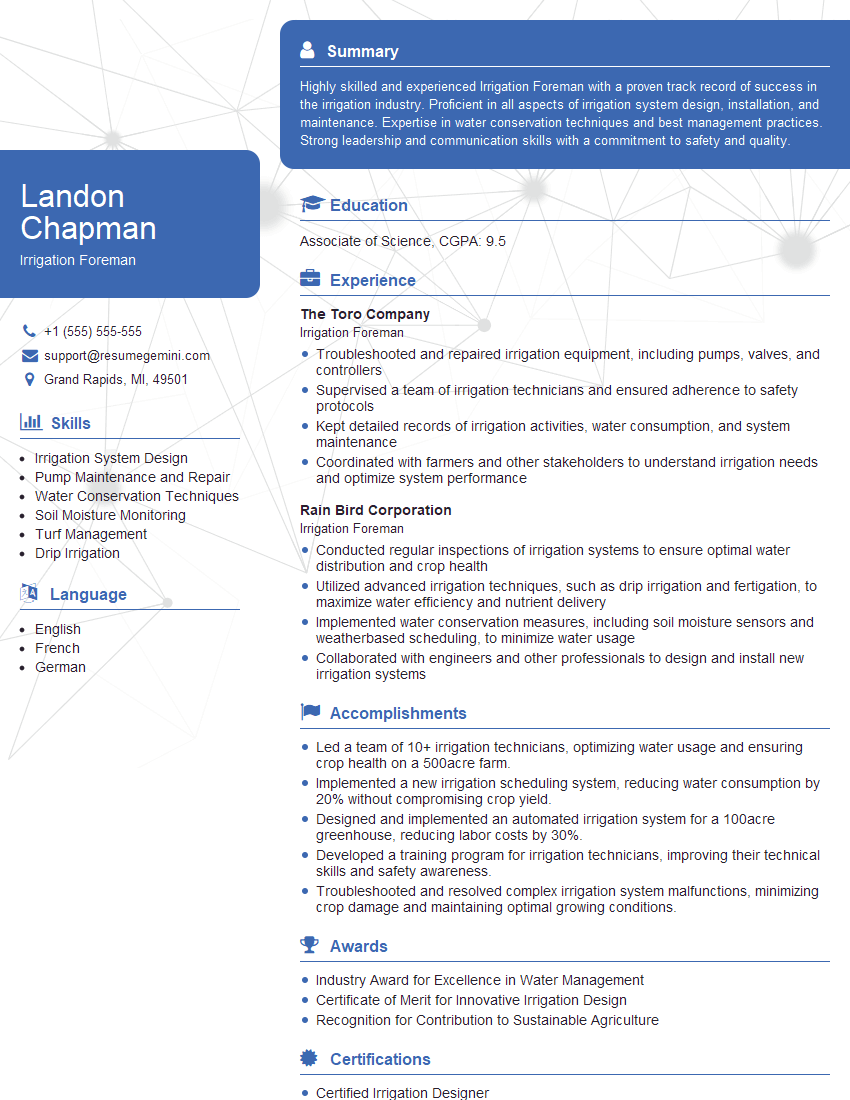
Mastering Irrigation Design and Installation opens doors to a rewarding career with diverse opportunities for growth and specialization. A strong resume is crucial for showcasing your skills and experience to potential employers. Creating an ATS-friendly resume significantly increases your chances of getting noticed by recruiters. ResumeGemini is a trusted resource to help you build a professional and impactful resume tailored to your specific skills and experience. Examples of resumes tailored to Irrigation Design and Installation are available to help guide you.
Explore more articles
Users Rating of Our Blogs
Share Your Experience
We value your feedback! Please rate our content and share your thoughts (optional).
What Readers Say About Our Blog
Very informative content, great job.
good