Unlock your full potential by mastering the most common ISO 1101:2004 interview questions. This blog offers a deep dive into the critical topics, ensuring you’re not only prepared to answer but to excel. With these insights, you’ll approach your interview with clarity and confidence.
Questions Asked in ISO 1101:2004 Interview
Q 1. Explain the core principles of ISO 1101:2004.
ISO 1101:2004, now superseded by ISO 9001, focused on the quality management systems (QMS) needed to ensure consistent production of products and services that meet customer requirements and enhance customer satisfaction. Its core principles revolved around a customer-centric approach, continual improvement, and the proactive identification and management of risks. Think of it as a blueprint for building a robust and efficient system focused on delivering high-quality outputs.
- Customer Focus: Understanding and meeting customer needs and expectations was paramount. This included not just delivering the product or service but also considering their overall experience.
- Leadership: Top management played a vital role in setting the direction, providing resources, and fostering a culture of quality.
- Involvement of People: Engaging employees at all levels was critical to achieving a successful QMS. Empowered employees are more likely to identify and solve problems.
- Process Approach: Managing activities as interconnected processes allows for better control, efficiency, and identification of improvement opportunities. This means understanding the flow of work and how each step contributes to the final outcome.
- System Approach to Management: Viewing the entire organization as an interconnected system, rather than isolated departments, allows for improved coordination and effectiveness.
- Continual Improvement: Constantly striving to improve processes and performance through data analysis, feedback, and proactive problem-solving was an integral part of the standard.
- Factual Approach to Decision Making: Decisions should be based on data and analysis, rather than assumptions or gut feelings.
- Mutually Beneficial Supplier Relationships: Collaborating with suppliers to ensure they also meet quality requirements benefits the entire supply chain.
Q 2. Describe the relationship between ISO 1101:2004 and other ISO standards.
While ISO 1101:2004 is now obsolete, its principles laid the groundwork for many other ISO standards related to quality management. It shared a strong conceptual relationship with other ISO 9000 family standards, providing a framework for their implementation. For example, ISO 14001 (environmental management) and ISO 45001 (occupational health and safety management) incorporate similar principles like continual improvement and a process-oriented approach. The focus on documented processes and procedures found in ISO 1101:2004 is also reflected in many other ISO standards across diverse industries.
The relationship wasn’t always about direct integration. ISO 1101:2004 provided a general framework for quality management, while other standards built upon this foundation to address specific industry needs or environmental concerns. Think of it as a common base language that other standards build upon, providing specialized vocabularies and applications.
Q 3. What are the key elements of a quality management system (QMS) according to ISO 1101:2004?
According to ISO 1101:2004 (now superseded), a robust QMS included several key elements: defining the scope of the system, documenting processes, assigning responsibilities, setting objectives, and monitoring performance. This wasn’t just about having a manual; it was about establishing a living, breathing system that continually adapts and improves.
- Quality Policy and Objectives: A clear statement of the organization’s commitment to quality and measurable goals to achieve that commitment.
- Resource Management: Ensuring the availability of necessary resources, including personnel, equipment, and information, to support the QMS.
- Process Management: Defining, documenting, implementing, monitoring, and controlling key processes to ensure consistency and efficiency.
- Product Realization: Covering the entire product lifecycle, from design and development to delivery and post-sale support.
- Measurement, Analysis, and Improvement: Continuously monitoring performance, analyzing data, and implementing improvements to enhance effectiveness.
- Management Review: Regularly reviewing the QMS’s effectiveness and making necessary adjustments.
For example, a manufacturing company might map out its production process step-by-step, documenting each stage, defining responsibilities, and establishing quality checks at each point. This detailed mapping ensures that every product meets the same standards.
Q 4. How does ISO 1101:2004 address customer satisfaction?
ISO 1101:2004 addressed customer satisfaction by emphasizing understanding and meeting customer requirements throughout the entire process. This extended beyond just delivering a product that works; it encompassed the entire customer experience. Think of customer satisfaction as the ultimate goal, not just a byproduct.
- Understanding Customer Needs: Actively soliciting feedback through surveys, focus groups, and other methods to understand customer expectations.
- Meeting Requirements: Ensuring the product or service consistently meets the specified requirements and addresses the customer’s needs.
- Monitoring Satisfaction: Tracking customer satisfaction through surveys, feedback forms, and other metrics to identify areas for improvement.
For instance, a software company might regularly survey users to gauge their satisfaction, using this data to improve features, resolve bugs, and enhance the overall user experience. Addressing negative feedback proactively can significantly improve customer loyalty.
Q 5. Explain the importance of continual improvement within the framework of ISO 1101:2004.
Continual improvement was a cornerstone of ISO 1101:2004. It wasn’t about reaching a perfect state and then stopping; it was about an ongoing cycle of evaluation, improvement, and re-evaluation. This involved proactively identifying areas for improvement, implementing changes, and measuring their effectiveness. Think of it as a continuous feedback loop that ensures the QMS is constantly adapting and optimizing.
The standard encouraged the use of data analysis, performance indicators, and regular reviews to identify opportunities for improvement. This could involve anything from streamlining a process to improving employee training. Regular internal audits were a key mechanism for identifying areas needing improvement.
Q 6. Describe the process of internal auditing as defined by ISO 1101:2004.
Internal auditing, as defined within the framework of ISO 1101:2004, was a systematic and independent examination of the QMS to determine its effectiveness and compliance with established standards and procedures. It wasn’t just about finding faults; it was about ensuring the system was working as designed and identifying opportunities for improvement.
- Planning: Defining the scope, objectives, and resources for the audit.
- Conducting the Audit: Gathering evidence through interviews, document reviews, and observations to evaluate conformance.
- Reporting: Documenting the findings, including both positive aspects and areas for improvement.
- Follow-up: Addressing identified non-conformances and implementing corrective actions.
A well-planned internal audit might involve a team of trained auditors reviewing documentation, interviewing employees, and observing processes to ensure they align with the organization’s quality policy and procedures. The findings would then be reported to management, leading to corrective actions and system improvements.
Q 7. How does ISO 1101:2004 address risk management?
While ISO 1101:2004 didn’t explicitly lay out a formal risk management process like later standards, the principles of proactive identification and mitigation of potential problems were inherent throughout. The emphasis on continual improvement and a process approach implicitly required organizations to anticipate and address potential issues that could affect the quality of their products or services. Think of it as a built-in mechanism to prevent problems rather than solely reacting to them.
For example, regularly reviewing processes and identifying potential points of failure – whether that’s a bottleneck in production or a lack of employee training – was crucial. Addressing these potential risks proactively helped prevent defects and ensure consistent quality.
Q 8. What are the key performance indicators (KPIs) for measuring the effectiveness of a QMS?
Measuring the effectiveness of a Quality Management System (QMS) requires a strategic approach using Key Performance Indicators (KPIs). These KPIs shouldn’t just focus on the system itself, but also on the impact it has on the organization’s overall objectives. Instead of solely tracking internal metrics, it’s crucial to connect them to customer satisfaction, operational efficiency, and profitability. ISO 1101:2004 doesn’t explicitly list specific KPIs, as the best metrics are context-dependent. However, some universally relevant examples include:
- Customer Satisfaction: Measured through surveys, feedback forms, and complaint rates. A high customer satisfaction score directly reflects the QMS’s effectiveness in delivering quality products or services.
- Defect Rate: Tracks the number of nonconforming products or services relative to the total output. A consistently low defect rate shows improvements in processes and proactive issue prevention.
- Process Efficiency: This can be measured by cycle times, resource utilization, and waste reduction. Improvements here indicate that the QMS streamlines operations and enhances productivity.
- On-time Delivery: This KPI gauges the QMS’s ability to meet deadlines and fulfill customer expectations consistently.
- Employee Satisfaction and Training: A well-functioning QMS empowers employees and provides sufficient training. Tracking their satisfaction and training completion rates reflects the QMS’s effectiveness in fostering a positive and knowledgeable workforce.
Selecting the right KPIs involves careful consideration of the organization’s goals, industry benchmarks, and the QMS’s specific focus areas. Regularly reviewing and adjusting these KPIs ensures the QMS remains effective and adaptable to changing needs.
Q 9. Explain the concept of ‘management responsibility’ as it pertains to ISO 1101:2004.
Management responsibility within ISO 1101:2004 is paramount. It dictates that top management must actively lead and be accountable for establishing, implementing, maintaining, and continuously improving the QMS. This isn’t just a matter of signing off on documents; it requires visible commitment and proactive engagement. Think of it as setting the tone at the top, ensuring the organization’s entire culture embraces quality.
This encompasses several key aspects:
- Defining the Quality Policy: Top management defines the overall quality policy, outlining the organization’s commitment to quality and providing a framework for the entire QMS.
- Resource Allocation: They ensure that sufficient resources—financial, human, and technological—are dedicated to the QMS’s operation and improvement.
- Establishing a Quality Management Team: Top management assigns responsibility for QMS management to a specific team or individuals, fostering clear accountability.
- Regular Reviews and Improvements: They participate in management reviews, analyze performance, identify areas for improvement, and ensure corrective actions are taken.
- Promoting Quality Culture: Top management fosters a culture of continuous improvement and quality awareness throughout the organization, encouraging employee participation and feedback.
Essentially, effective management responsibility demonstrates top management’s dedication to quality, not just as a compliance exercise, but as a fundamental principle driving the organization’s success.
Q 10. How does ISO 1101:2004 guide the development and implementation of corrective actions?
ISO 1101:2004 provides a structured approach to corrective actions, emphasizing the importance of identifying root causes and preventing recurrence. It’s not just about fixing the immediate problem; it’s about understanding *why* the problem occurred.
The process typically involves these steps:
- Identifying Nonconformities: This is the initial step—detecting any deviations from the specified requirements or standards.
- Investigating the Root Cause: This is crucial. Thoroughly investigate the nonconformity to determine the underlying cause, not just the symptoms. Tools like fishbone diagrams or 5 Whys can be helpful here.
- Developing Corrective Actions: Based on the identified root cause, define actions to eliminate the nonconformity. These actions should be clearly documented, assigned responsibility, and include deadlines.
- Implementing Corrective Actions: The planned corrective actions are implemented systematically.
- Verifying Effectiveness: Once implemented, the effectiveness of the corrective actions must be verified to ensure the problem is truly resolved and won’t recur. This often involves monitoring and measuring the relevant KPIs.
- Documenting the Entire Process: Complete documentation is essential, tracing the entire process from identifying the nonconformity to verifying the effectiveness of the corrective actions. This helps track improvements and provide evidence of effective QMS management.
For example, if a manufacturing process consistently produces defects, a corrective action might involve retraining staff, upgrading equipment, or refining the process itself. The verification step would then involve monitoring the defect rate to ensure it’s significantly reduced after implementing these actions.
Q 11. Describe the role of top management in establishing and maintaining a QMS.
Top management plays a pivotal role in establishing and maintaining a QMS. Their commitment sets the stage for the entire system’s success. Their responsibilities extend far beyond simply approving documents; they are the driving force behind the QMS’s effectiveness.
Key roles include:
- Defining the Quality Policy and Objectives: Top management sets the overall quality direction, determining the organization’s commitment to quality and establishing clear objectives.
- Providing Resources: They are responsible for providing the necessary resources—financial, human, and technological—to establish, implement, and maintain the QMS.
- Ensuring Compliance: Top management ensures that the QMS complies with all applicable requirements and standards, demonstrating their unwavering commitment to quality.
- Promoting a Quality Culture: They promote a culture of continuous improvement and quality awareness, ensuring all employees understand and embrace quality principles.
- Conducting Management Reviews: Top management actively participates in regular management reviews, evaluating the effectiveness of the QMS and making necessary improvements.
Without the active involvement of top management, the QMS is likely to fall short of its goals. Their leadership and commitment are the cornerstones of a robust and effective QMS.
Q 12. Explain the importance of documentation control within the QMS.
Documentation control is vital for a functioning QMS. It ensures that documents are readily available, accurate, up-to-date, and readily accessible to those who need them. Think of it as the QMS’s ‘memory’ – it records, tracks and preserves the critical information needed for effective quality management.
Effective documentation control includes:
- Creating and Approving Documents: Establishing clear procedures for creating, reviewing, and approving all documents within the QMS ensures accuracy and relevance.
- Version Control: Implementing a system for managing document versions prevents confusion and ensures everyone uses the most current version.
- Distribution and Access: Controlled distribution and access ensure only authorized personnel have access to specific documents.
- Document Storage and Retrieval: A well-organized system for storing and retrieving documents makes them readily available when needed.
- Regular Review and Updates: Documents should be reviewed and updated regularly to ensure they remain accurate, current, and effective.
Without proper documentation control, the QMS would be disorganized, prone to errors, and unable to provide the necessary evidence of compliance. Imagine trying to build a house without blueprints—a chaotic and ineffective outcome is inevitable.
Q 13. How does ISO 1101:2004 address the control of nonconforming outputs?
ISO 1101:2004 addresses the control of nonconforming outputs – essentially, products or services that don’t meet the specified requirements – by emphasizing prevention and a structured approach to handling them.
The key aspects include:
- Identification and Segregation: Nonconforming outputs must be clearly identified and segregated to prevent their unintended use or delivery to customers.
- Investigation and Analysis: An investigation is necessary to determine the cause of the nonconformity. This helps prevent recurrence.
- Decision Making: A decision must be made on how to handle the nonconforming output: rework, repair, scrap, concession, etc. This decision should be documented and justified.
- Corrective Actions: Implement corrective actions to prevent similar nonconformities in the future. This is crucial for continuous improvement.
- Record Keeping: Maintain detailed records of all actions taken concerning nonconforming outputs. This allows for tracking and analysis to demonstrate effective QMS operation.
For example, if a batch of products fails a quality inspection, they would be identified, segregated, and investigated to determine the root cause. Depending on the nature and severity of the nonconformity, actions such as rework, repair, or scrapping would be taken. The process would be thoroughly documented, including corrective actions to prevent future occurrences.
Q 14. Describe the process of conducting a management review.
A management review is a formal process to evaluate the QMS’s effectiveness and suitability. It’s not just a formality; it’s a crucial opportunity for top management to assess performance, identify areas for improvement, and ensure the QMS remains aligned with organizational goals. Think of it as a comprehensive health check for the QMS.
The process typically involves:
- Reviewing Objectives and KPIs: Assessing progress toward achieving the QMS’s objectives and evaluating the performance of key indicators.
- Analyzing Performance Data: Reviewing data on customer satisfaction, defect rates, process efficiency, and other relevant metrics to identify trends and areas requiring attention.
- Identifying Areas for Improvement: Based on the review of performance data, identifying opportunities to improve the QMS’s effectiveness and efficiency.
- Resource Allocation: Determining the resources needed to implement any necessary improvements, ensuring the QMS has the support it requires.
- Implementing Changes: Developing and implementing action plans to address the identified areas for improvement.
- Documenting the Process: Maintaining complete records of the management review, including the findings, decisions, and action plans. This provides a valuable audit trail.
The management review should be a dynamic process, not a static event. It should lead to tangible changes and improvements in the QMS, enhancing its effectiveness over time. The frequency of reviews should be determined based on the organization’s needs and risk profile, but it’s recommended they occur at least annually.
Q 15. How does ISO 1101:2004 support the continual improvement of the QMS?
ISO 9001:2004 (not ISO 1101:2004, as the latter doesn’t exist), the standard for Quality Management Systems (QMS), directly supports continual improvement through its emphasis on the Plan-Do-Check-Act (PDCA) cycle. This cyclical process is ingrained throughout the standard, encouraging ongoing evaluation and refinement of the QMS.
Plan: Setting objectives, processes, and responsibilities. This involves identifying areas for improvement based on data analysis, customer feedback, and internal audits.
Do: Implementing the planned actions and documenting the processes involved. This could include the introduction of a new software, new training methods or changes to a workflow.
Check: Monitoring and measuring the processes, analyzing results against objectives. This might include analyzing defect rates, customer satisfaction surveys, and internal audit findings.
Act: Taking corrective and preventive actions based on the check stage, and updating the system accordingly. This includes formalizing changes, documenting lessons learned, and adjusting processes for continued improvement. A critical element of this stage is regularly reviewing the effectiveness of the actions implemented.
For instance, imagine a manufacturing company using ISO 9001:2004. They might find, during the ‘check’ phase, that a particular production line has a higher-than-acceptable defect rate. Using the PDCA cycle, they would analyze the cause during the ‘act’ phase, implement corrective actions (e.g., retraining staff, upgrading equipment), and monitor the effectiveness of those actions to ensure continuous improvement.
Career Expert Tips:
- Ace those interviews! Prepare effectively by reviewing the Top 50 Most Common Interview Questions on ResumeGemini.
- Navigate your job search with confidence! Explore a wide range of Career Tips on ResumeGemini. Learn about common challenges and recommendations to overcome them.
- Craft the perfect resume! Master the Art of Resume Writing with ResumeGemini’s guide. Showcase your unique qualifications and achievements effectively.
- Don’t miss out on holiday savings! Build your dream resume with ResumeGemini’s ATS optimized templates.
Q 16. Explain the importance of resource management in implementing ISO 1101:2004.
Resource management, a crucial component of ISO 9001:2004, ensures the QMS has the necessary resources—human, physical, financial, and technological—to function effectively. Without proper resource management, the QMS will fail to operate efficiently, risking inconsistencies and nonconformities.
Human Resources: This encompasses staff competence, training, and motivation. The organization must ensure personnel have the necessary skills and knowledge to carry out their roles. Regular training and development programs are essential.
Physical Resources: This includes facilities, equipment, infrastructure, and workspace. These need to be adequately maintained to ensure operational efficiency and product quality.
Financial Resources: Sufficient funding is required for the implementation, maintenance, and improvement of the QMS. This includes investment in training, equipment, software, and audits.
Technological Resources: Access to appropriate software, hardware, and technologies that streamline processes and enable effective data management is crucial.
Consider a software development company. Proper resource management might involve allocating sufficient programmers with the necessary expertise to a project, providing them with the required software licenses and hardware, and ensuring that the project has an adequate budget to meet its deadlines and quality standards.
Q 17. How does ISO 1101:2004 address product realization?
ISO 9001:2004 addresses product realization—the process of transforming inputs into outputs—through a structured approach that encompasses planning, design, development, production, delivery, and post-delivery activities. It emphasizes control at each stage, ensuring that the final product meets customer requirements.
Planning of Product Realization: Defining product requirements, processes, and resources needed to achieve the planned outputs.
Design and Development: Establishing design and development planning, input control, design verification and validation, and design and development changes.
Production and Service Provision: Controlling production and service provision processes, ensuring that inputs are suitable and that processes are implemented as planned, with monitoring and measurement of the output.
Release of Products and Services: Ensuring products and services are released only after meeting predetermined requirements, often including final inspections and verification.
Post-delivery activities: Handling post-delivery services like maintenance, repairs, or warranty claims.
For example, a car manufacturer utilizing ISO 9001:2004 would have rigorous processes for each stage, from design (ensuring safety standards are met), through manufacturing (quality control checks at various points), to delivery (ensuring timely and damage-free transport), and post-delivery service (handling warranty repairs).
Q 18. Explain the role of internal communication in maintaining a successful QMS.
Internal communication is the lifeblood of a successful QMS. Effective communication ensures that everyone understands their roles, responsibilities, and the importance of maintaining quality. Without it, inconsistencies and misunderstandings will inevitably lead to quality problems.
Top-Down Communication: Management must clearly communicate the organization’s quality policy, objectives, and expectations.
Bottom-Up Communication: Feedback channels must be established to allow employees to report problems, suggest improvements, and voice concerns.
Horizontal Communication: Effective communication between different departments is critical to ensure seamless workflow and collaboration.
Communication Methods: Various methods such as meetings, emails, intranet, training sessions, and regular updates should be utilized to disseminate information effectively.
Imagine a hospital implementing ISO 9001:2004. Effective communication is vital for patient safety. Clear communication between doctors, nurses, and support staff is crucial, as is open communication about potential risks or issues, enabling a rapid response.
Q 19. Describe the importance of monitoring and measuring the effectiveness of the QMS.
Monitoring and measurement are essential to determine the effectiveness of the QMS. This involves collecting and analyzing data to track performance against objectives and identify areas needing improvement. Without this process, the QMS operates blindly, unable to adapt and optimize.
Monitoring: The ongoing observation and tracking of processes and performance indicators.
Measurement: The collection of data to quantify the performance of processes. This can include metrics like defect rates, customer satisfaction scores, lead times, and cycle times.
Data Analysis: Examining the collected data to identify trends, patterns, and areas of concern.
Corrective and Preventive Actions: Based on the data analysis, appropriate actions are implemented to improve performance.
For a food processing plant, monitoring might include regular temperature checks, while measurement could involve tracking the number of rejected products. Analysis of this data helps determine if processes are operating effectively, and if adjustments are needed to prevent future issues.
Q 20. How would you handle a situation where a nonconformity is identified during an internal audit?
When a nonconformity is identified during an internal audit, a structured approach is crucial. The process should be documented and transparent to ensure traceability and effective resolution.
Identify and Document: The nonconformity should be clearly identified and documented, specifying the nature of the deviation from the standard.
Root Cause Analysis: A thorough investigation should be conducted to understand the underlying causes of the nonconformity. Techniques like ‘5 Whys’ or fishbone diagrams can be used.
Corrective Action: Develop and implement actions to eliminate the cause of the nonconformity and prevent recurrence. This includes immediate actions to prevent further nonconformities.
Preventive Action: Identify and implement actions to prevent similar nonconformities from occurring in the future.
Verification: Verify that the implemented corrective and preventive actions have been effective.
Documentation: All findings, actions, and verification results should be carefully documented.
For example, if an internal audit reveals a lack of proper calibration records for measuring equipment, the corrective action might involve immediate calibration and the preventive action might include implementing a schedule for regular calibration with a documented procedure.
Q 21. What are the key steps in developing a corrective action plan?
Developing a corrective action plan involves a systematic approach to addressing identified nonconformities. The plan should be specific, measurable, achievable, relevant, and time-bound (SMART).
Define the Problem: Clearly state the nonconformity, including the specific nature, location, and impact.
Identify the Root Cause: Use appropriate root cause analysis tools to determine the underlying cause(s) of the nonconformity, not just the symptoms.
Develop Corrective Actions: Formulate specific actions to address the root cause(s). These actions must effectively eliminate the nonconformity.
Assign Responsibility: Assign ownership of the corrective actions to specific individuals or teams.
Set Deadlines: Establish realistic timelines for the completion of each corrective action.
Implement Actions: Execute the corrective actions as planned.
Verify Effectiveness: Monitor and measure the effectiveness of the implemented actions to confirm that the nonconformity has been eliminated and prevent recurrence.
Document Everything: Maintain a complete record of the entire process, from identifying the nonconformity to verifying the effectiveness of the corrective actions.
For instance, if a customer complaint reveals a packaging defect, the corrective action plan might involve a review of the packaging process, retraining staff, and implementation of additional quality checks.
Q 22. Describe your experience conducting internal audits based on ISO 1101:2004.
My experience with ISO 1101:2004 internal audits spans over eight years, encompassing various industries. I’ve led and participated in numerous audits, focusing on the effective implementation and maintenance of Quality Management Systems (QMS). My approach is always risk-based, prioritizing areas with the highest potential for non-conformances. This includes reviewing documented procedures, observing processes in action, interviewing personnel at all levels, and examining records to verify compliance.
For example, during an audit of a manufacturing plant, we identified a gap in their calibration procedure, leading to inconsistencies in product quality. Through a collaborative process with the plant management, we established a corrective action plan focusing on enhanced training and improved documentation, resulting in demonstrable improvements during subsequent audits.
Another key aspect of my audit approach is ensuring objectivity and impartiality. I meticulously document findings, emphasizing both positive aspects and areas for improvement. My reports are structured to provide actionable insights for management to address identified gaps and strengthen their QMS.
Q 23. How do you ensure that the QMS remains effective and efficient over time?
Maintaining an effective and efficient QMS based on ISO 1101:2004 requires continuous monitoring, review, and improvement. This involves several key strategies:
- Regular Internal Audits: Scheduled internal audits are crucial to identify weaknesses and verify conformity to the QMS. Audits should cover all aspects of the QMS, from planning to production, with a focus on risk areas.
- Management Review: Regular management reviews, typically conducted quarterly or annually, are critical for assessing the effectiveness of the QMS. These reviews should include evaluating performance indicators, identifying opportunities for improvement, and allocating resources for necessary changes.
- Corrective and Preventive Actions (CAPA): A robust CAPA system is essential to address non-conformances and prevent their recurrence. This involves identifying root causes, implementing corrective actions, and verifying their effectiveness.
- Continuous Improvement: The QMS should be continuously improved through proactive initiatives, such as employee suggestions, process optimization projects, and the implementation of best practices. The PDCA cycle (Plan-Do-Check-Act) is a valuable tool for this continuous improvement process.
- Training and Competence: Employees must receive adequate training to understand their roles and responsibilities within the QMS. Regular training keeps them up-to-date with changes and best practices.
Think of a QMS like a living organism. It needs constant care and attention to thrive. Regular monitoring and improvement are essential to ensure its continued effectiveness and efficiency.
Q 24. How would you address resistance to change within an organization during ISO 1101:2004 implementation?
Resistance to change is a common challenge during ISO 1101:2004 implementation. Addressing this requires a proactive and communicative approach. I find the following strategies particularly effective:
- Effective Communication: Clearly articulate the benefits of ISO 1101:2004 implementation to all stakeholders, emphasizing how it will improve processes, efficiency, and customer satisfaction. Address their concerns and answer their questions directly.
- Involvement and Participation: Engage employees in the implementation process. Involve them in identifying problem areas and developing solutions. This gives them a sense of ownership and reduces resistance.
- Training and Education: Provide comprehensive training to ensure all employees understand the new processes and procedures. This reduces uncertainty and builds confidence.
- Leadership Support: Secure strong leadership support for the implementation. Leaders must visibly champion the initiative and demonstrate their commitment.
- Phased Implementation: Implement the QMS in phases rather than all at once. This allows for adjustments based on feedback and minimizes disruption.
- Recognition and Reward: Recognize and reward employees who contribute to the successful implementation of the QMS. This reinforces positive behavior and motivates others.
Remember, change management is a human process. Focus on addressing people’s needs and concerns to overcome resistance.
Q 25. Explain your understanding of the Plan-Do-Check-Act (PDCA) cycle.
The Plan-Do-Check-Act (PDCA) cycle is a powerful iterative four-step management method used for continuous improvement. It’s a cornerstone of ISO 1101:2004 and many other quality management systems.
- Plan: Define the objective, the scope, and the resources needed to achieve the objective. This involves analyzing current processes and identifying areas for improvement.
- Do: Implement the planned changes on a small scale, possibly as a pilot program. Collect data throughout this phase.
- Check: Analyze the results of the implementation against the planned objective. Were the goals met? What went well, and what could be improved?
- Act: Based on the evaluation, standardize the changes if successful, or revise the plan and repeat the cycle if necessary.
Think of it like baking a cake. You plan the recipe (Plan), bake the cake (Do), taste and evaluate the result (Check), and adjust the recipe for next time (Act). It’s a cyclical process that enables continuous improvement over time.
Q 26. Describe a time when you successfully resolved a quality-related issue.
In a previous role, we experienced a significant increase in customer complaints regarding product defects. Initially, we focused on reactive solutions, addressing each complaint individually. However, this proved unsustainable. To resolve the issue systematically, we implemented a structured problem-solving methodology:
- Root Cause Analysis: We conducted a thorough investigation to identify the root cause of the defects. This involved analyzing manufacturing processes, inspecting raw materials, and interviewing production personnel.
- Corrective Action: We identified the source of the problem to be a malfunctioning piece of equipment. We implemented corrective actions including repairing the equipment and implementing a more rigorous preventive maintenance schedule.
- Preventive Measures: To prevent future recurrence, we implemented stricter quality control checks throughout the production process. We also invested in employee training focused on proactive quality control.
- Monitoring and Evaluation: We continuously monitored customer complaints and conducted regular process audits to ensure the effectiveness of the implemented measures. The defect rate reduced significantly, and customer satisfaction improved considerably.
This situation underscored the importance of a structured approach to problem-solving, involving thorough investigation, implementation of corrective actions, preventive measures, and ongoing monitoring.
Q 27. How do you stay up-to-date on changes and developments related to ISO 1101:2004?
Staying current with ISO 1101:2004 and related developments is essential. My strategy involves a multi-pronged approach:
- Professional Organizations: I actively participate in professional organizations focused on quality management. These often offer webinars, conferences, and publications that provide updates on industry trends and standards revisions.
- Industry Publications and Journals: I regularly read relevant industry publications and journals, which often feature articles on best practices and the latest developments in quality management.
- Online Resources: I monitor reputable online resources for news and updates related to quality management standards. This includes websites of standardization bodies and professional associations.
- Training and Certification: I regularly participate in training and certification programs related to ISO 9001 (although ISO 1101:2004 is now obsolete, knowledge of 9001 is crucial as it largely supersedes it) and other quality management standards. This keeps me abreast of changes in the field.
Continuous learning is crucial in this constantly evolving field. Staying updated not only improves my expertise but also ensures I am offering the most effective solutions and advice to my clients.
Q 28. What are the benefits of implementing an ISO 1101:2004 compliant QMS?
While ISO 1101:2004 is outdated and superseded by ISO 9001, the benefits it offered were largely the same, and are still pertinent when discussing ISO 9001. Implementing a robust QMS, whether based on ISO 1101:2004 or its successor, provides numerous benefits:
- Improved Product and Service Quality: A well-implemented QMS ensures consistency in product and service quality, leading to increased customer satisfaction.
- Enhanced Efficiency and Productivity: Streamlined processes and reduced waste lead to improved efficiency and productivity.
- Reduced Costs: Improved quality and efficiency translate to lower costs associated with defects, rework, and customer complaints.
- Increased Customer Satisfaction: Consistent quality and efficient service lead to increased customer loyalty and retention.
- Improved Risk Management: A QMS identifies and mitigates potential risks, reducing the likelihood of negative outcomes.
- Competitive Advantage: ISO certification demonstrates a commitment to quality, providing a competitive edge in the marketplace.
- Improved Employee Morale: Clear roles, processes, and opportunities for improvement foster a more positive and productive work environment.
In essence, a well-structured QMS based on quality management principles enhances all aspects of an organization, promoting sustainable growth and success.
Key Topics to Learn for ISO 1101:2004 Interview
Ace your ISO 1101:2004 interview by mastering these key areas. Remember, understanding the practical application of these concepts is crucial.
- Terminology and Definitions: Familiarize yourself with the core terminology used within ISO 1101:2004. Understanding these terms is fundamental to demonstrating your expertise.
- Principles of Ergonomics: Go beyond the theory. Consider real-world scenarios where ergonomic principles are applied within a workplace, and how they impact efficiency and safety.
- Workplace Assessment Methods: Study various methods for assessing the ergonomics of a workplace. Be prepared to discuss their strengths and weaknesses, and when each method is most appropriate.
- Risk Assessment and Mitigation: Understand how to identify ergonomic risks and develop strategies to mitigate those risks. Think about practical examples and case studies.
- Legislation and Standards: Become familiar with relevant legislation and standards related to ergonomics and workplace safety. This shows a commitment to compliance and best practices.
- Corrective Actions and Improvements: Learn how to implement corrective actions based on ergonomic assessments. This includes proposing and evaluating potential solutions.
- Human Factors Considerations: Understand the interplay between human capabilities, limitations, and the work environment. Be ready to discuss how these factors influence design and implementation.
Next Steps
Mastering ISO 1101:2004 demonstrates a commitment to workplace safety and efficiency, significantly enhancing your career prospects in many fields. A strong resume is your key to unlocking these opportunities. Crafting an ATS-friendly resume is essential for getting your application noticed. We highly recommend using ResumeGemini to build a professional and impactful resume that highlights your ISO 1101:2004 knowledge. ResumeGemini provides examples of resumes tailored to ISO 1101:2004, allowing you to create a document that truly showcases your skills and experience. Take the next step towards your dream job today!
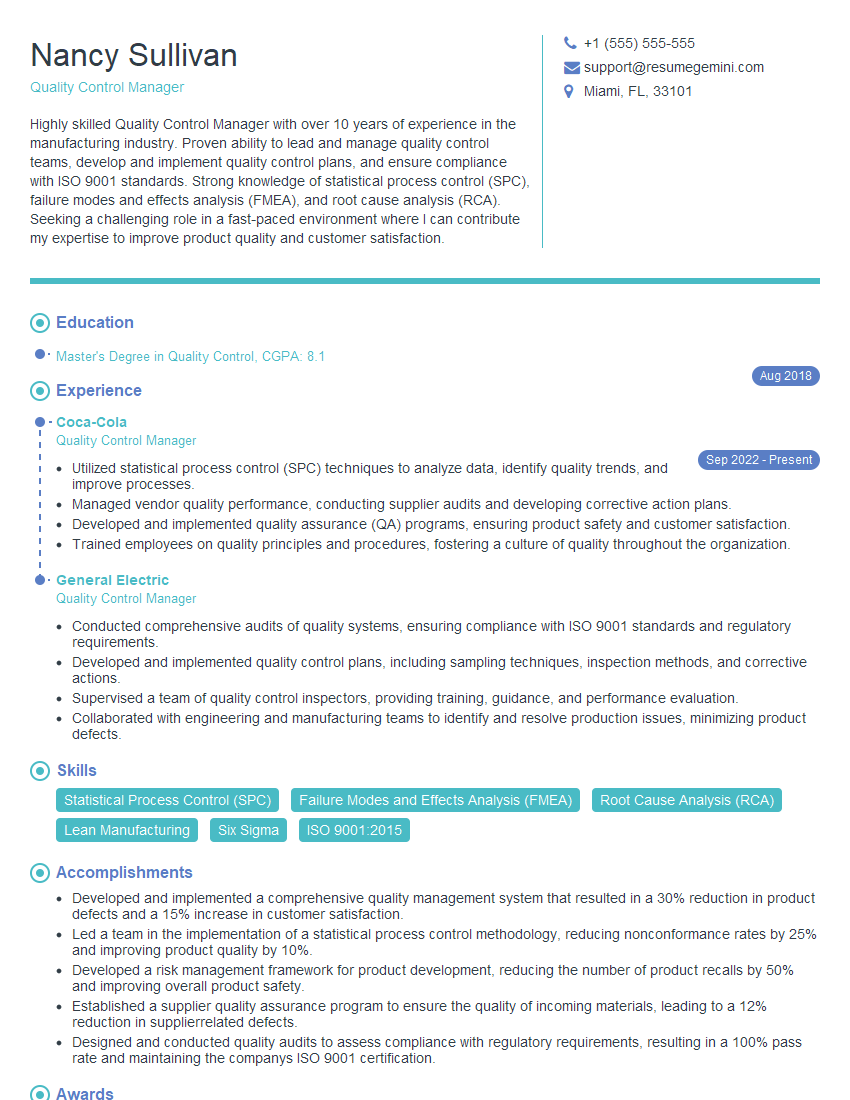
Quality Control Manager Resume Sample
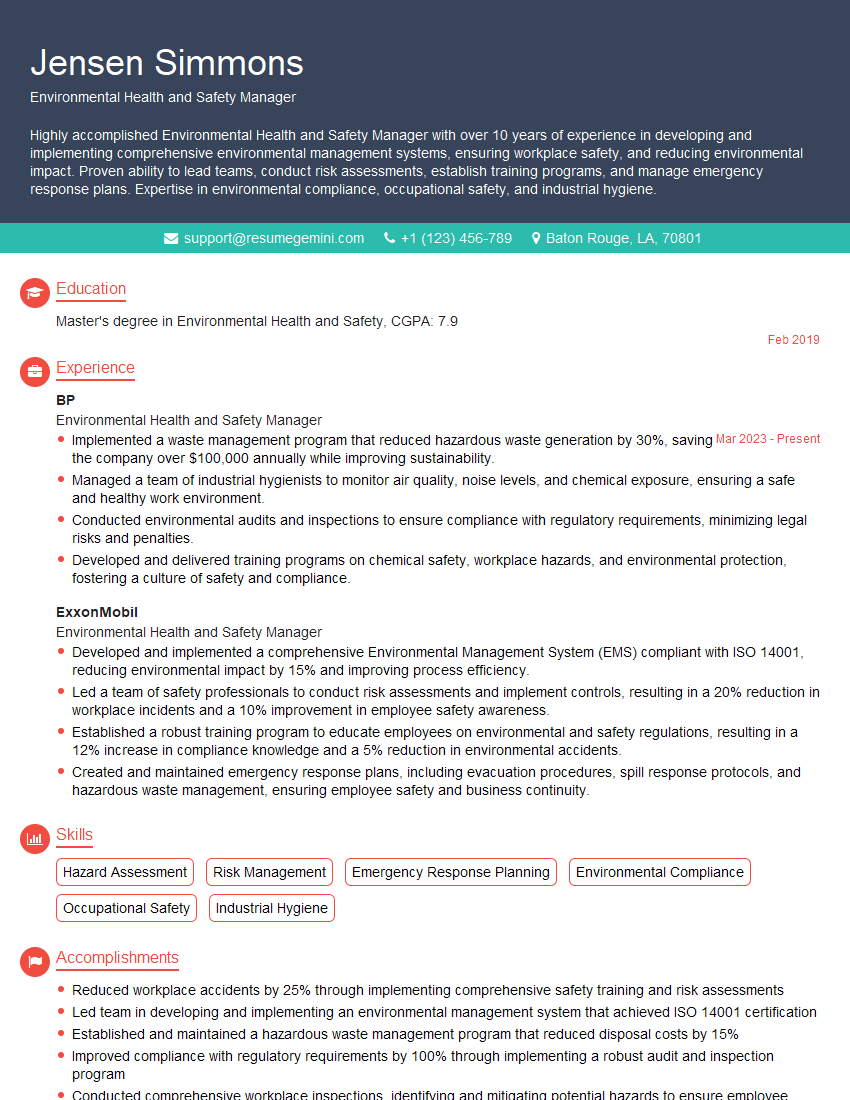
Environmental Health and Safety Manager Resume Sample

Compliance Officer Resume Sample
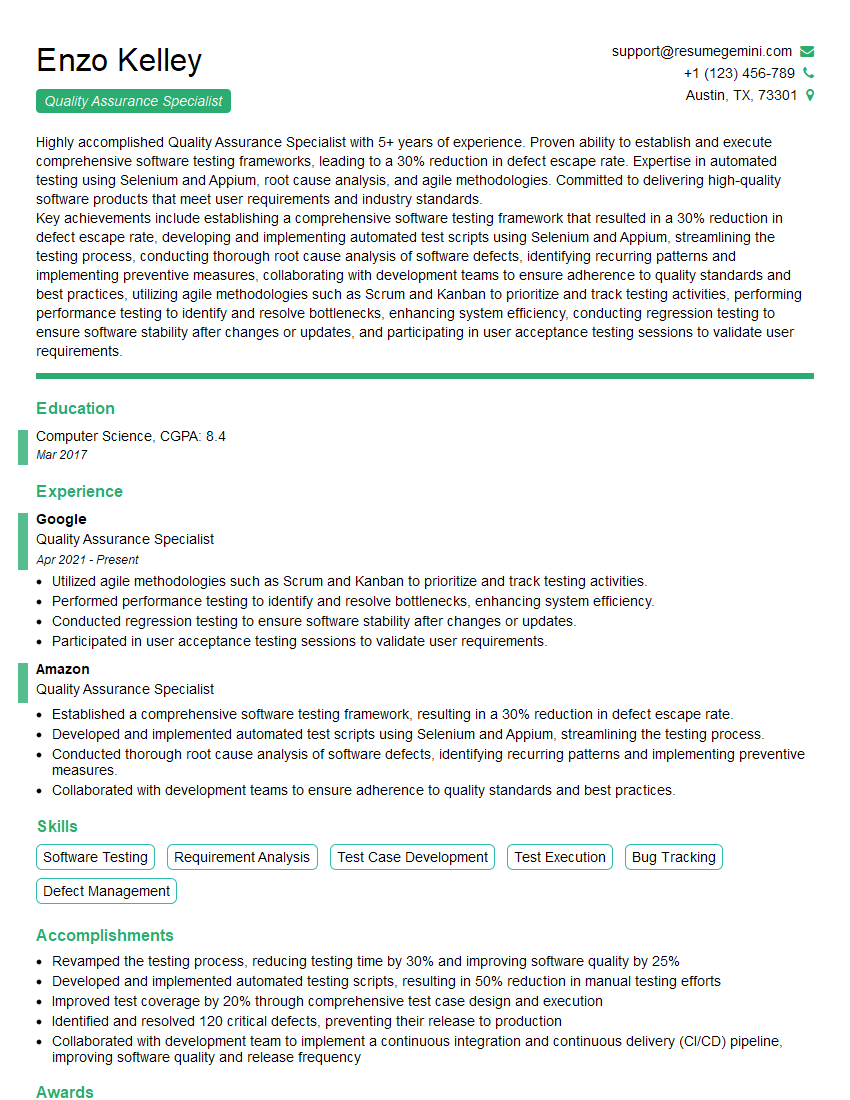
Quality Assurance Specialist Resume Sample
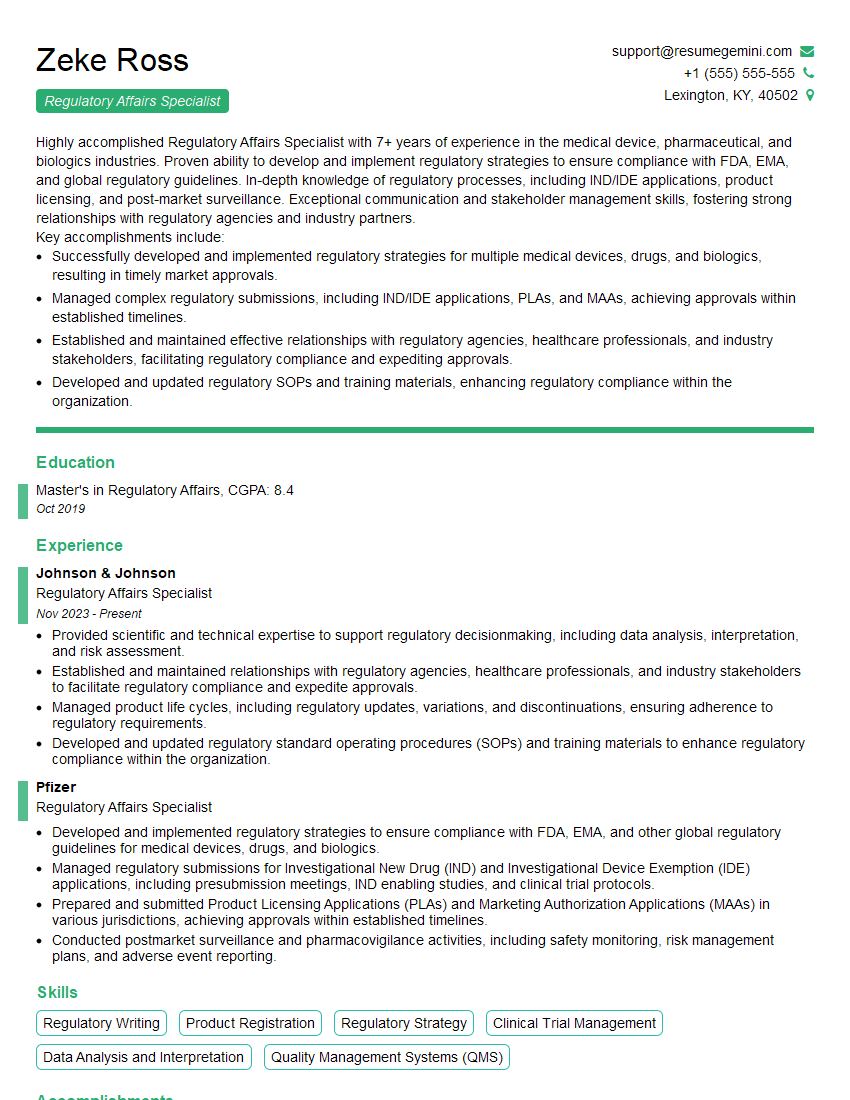
Regulatory Affairs Specialist Resume Sample
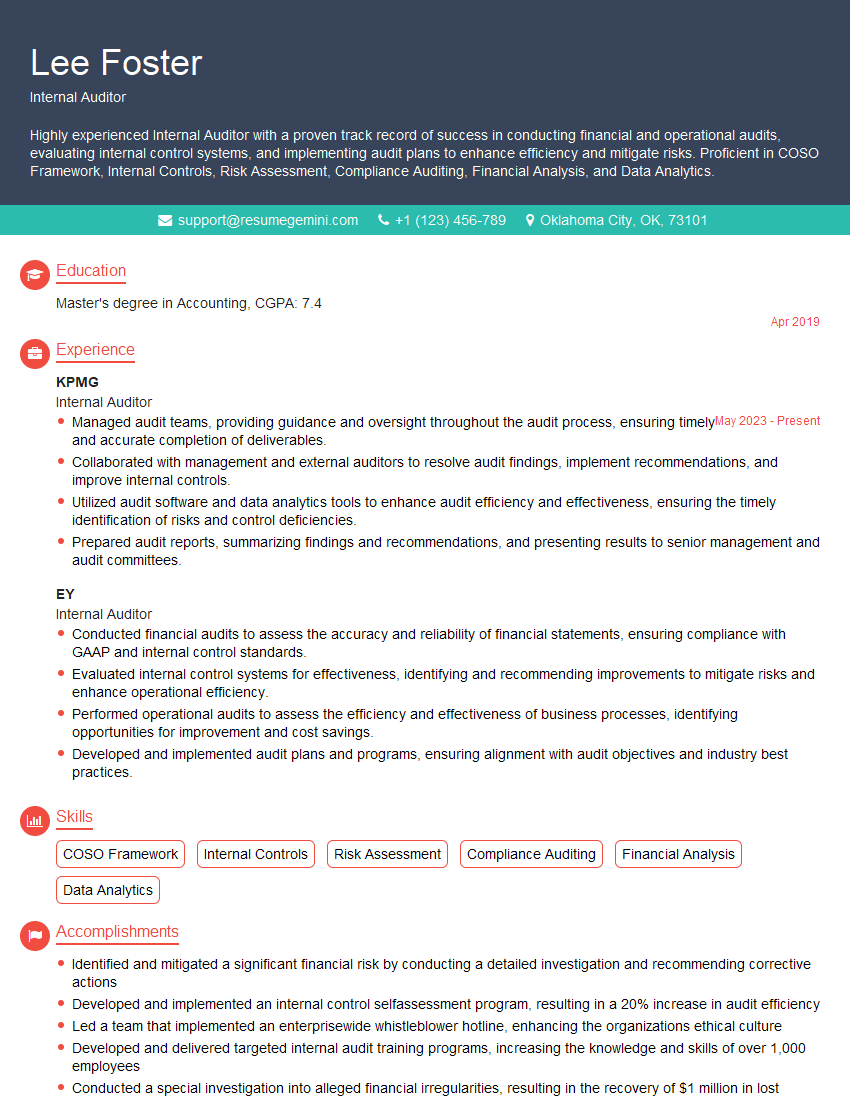
Internal Auditor Resume Sample

Risk Management Specialist Resume Sample
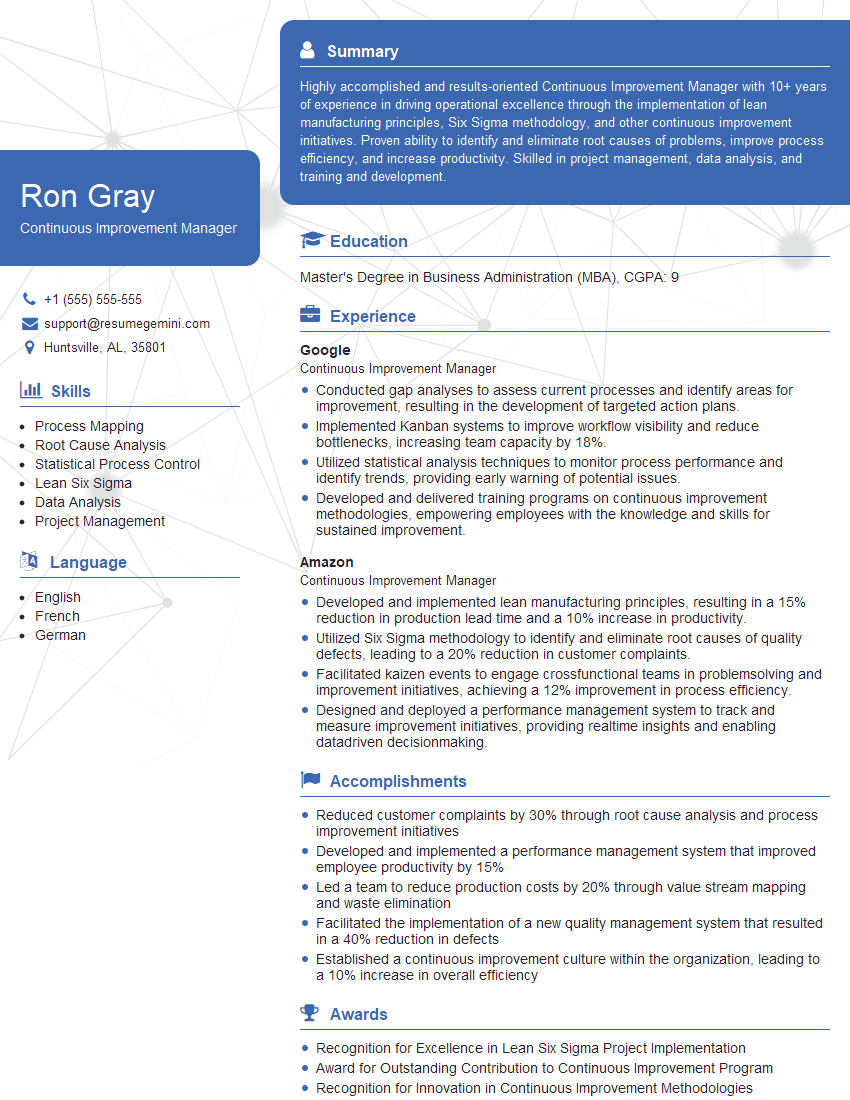
Continuous Improvement Manager Resume Sample
Explore more articles
Users Rating of Our Blogs
Share Your Experience
We value your feedback! Please rate our content and share your thoughts (optional).
What Readers Say About Our Blog
Very informative content, great job.
good