Cracking a skill-specific interview, like one for ISO 14971 Medical Device Risk Management, requires understanding the nuances of the role. In this blog, we present the questions you’re most likely to encounter, along with insights into how to answer them effectively. Let’s ensure you’re ready to make a strong impression.
Questions Asked in ISO 14971 Medical Device Risk Management Interview
Q 1. Define Hazard, Risk, and Harm according to ISO 14971.
ISO 14971 defines these three crucial terms within the context of medical device safety:
- Hazard: A potential source of harm. Think of it as a dangerous situation waiting to happen. For example, a sharp edge on a medical device is a hazard because it could potentially cut a patient or healthcare worker.
- Risk: A combination of the probability of occurrence of harm and the severity of that harm. It’s the likelihood of the hazard causing actual damage. A sharp edge (hazard) with a high probability of being touched inappropriately (probability) and causing a deep cut (severity) represents a high risk.
- Harm: Physical injury or damage to the health of people, or damage to property or the environment. It’s the actual negative consequence resulting from exposure to a hazard. For instance, a deep laceration caused by the sharp edge of the device is the harm.
Understanding the difference between these three is fundamental. A hazard is a potential problem; risk quantifies the likelihood and severity of that problem becoming a reality; and harm is the undesirable outcome.
Q 2. Explain the difference between a risk analysis and a risk evaluation.
While both risk analysis and risk evaluation are integral parts of ISO 14971 risk management, they differ significantly in their approach:
- Risk Analysis: This is the process of identifying hazards, analyzing the risk associated with each hazard, and determining the risk control measures needed. It involves identifying potential hazards related to the medical device, estimating the probability and severity of harm, and ultimately, determining the level of risk. It’s a qualitative and/or quantitative assessment of risks.
- Risk Evaluation: This step involves comparing the level of risk determined during the risk analysis with pre-defined risk acceptance criteria. It’s the judgement of the acceptability of the identified risks. This process determines whether the risk is acceptable as is, or whether further risk control measures are necessary to reduce the risk to an acceptable level.
Imagine designing a new insulin pump. Risk analysis would involve identifying hazards like inaccurate insulin delivery, malfunctioning battery, or allergic reactions to the materials. Risk evaluation would then compare the assessed risk of each hazard against the pre-defined acceptable risk levels to decide whether the design needs further modifications.
Q 3. Describe the different risk control measures outlined in ISO 14971.
ISO 14971 encourages a hierarchical approach to risk control, prioritizing the most effective measures first. These include:
- Elimination: Removing the hazard entirely. This is the most effective method. For example, redesigning a device to eliminate sharp edges.
- Substitution: Replacing the hazardous component with a safer alternative. Using a less toxic material in the device’s construction is an example.
- Engineering Controls: Implementing design changes to reduce the risk. Adding a safety interlock to prevent accidental activation is an example of this.
- Administrative Controls: Implementing procedures and instructions to minimize exposure to the hazard. User training programs and clear warning labels are examples of this.
- Personal Protective Equipment (PPE): Providing users with protective equipment to mitigate risk. This is usually considered a last resort, after all other methods have been exhausted. Gloves or eye protection would fall under this category.
The choice of risk control measure depends heavily on the specific hazard and its associated risk. The goal is always to employ the most effective and feasible measure to achieve an acceptable level of risk.
Q 4. What are the key stages in the ISO 14971 risk management process?
The ISO 14971 risk management process is iterative and typically includes these key stages:
- Hazard Analysis: Identifying potential hazards associated with the medical device throughout its lifecycle.
- Risk Analysis: Determining the probability and severity of harm associated with each identified hazard.
- Risk Evaluation: Comparing the level of risk with pre-defined acceptance criteria.
- Risk Control: Implementing risk control measures to reduce the risk to an acceptable level.
- Risk Monitoring and Review: Regularly monitoring the effectiveness of implemented control measures and reviewing the overall risk management process throughout the device’s lifecycle.
It’s important to remember that this is not a linear process; you might iterate through these stages multiple times as you refine your understanding of the risks and their mitigation.
Q 5. How do you determine the severity, probability, and detectability of a hazard?
Determining severity, probability, and detectability often involves a combination of qualitative and quantitative methods:
- Severity: This assesses the potential seriousness of harm if the hazard occurs. It is often categorized using scales (e.g., from 1 to 5, with 5 being death). Consider factors like the potential for permanent disability, hospitalisation, or minor injury.
- Probability: This estimates the likelihood of the hazard occurring. This can be estimated using historical data, fault tree analysis, failure mode and effects analysis (FMEA), or expert opinion. It’s often categorized using scales (e.g., from 1 to 5, with 5 being frequent).
- Detectability: This assesses the likelihood that the hazard or its effects will be detected before harm occurs. Factors to consider include the presence of warning systems, user training, and the ability of built-in safety mechanisms to prevent the hazard from occurring.
For example, a hazard might be rated as high severity (potential death), low probability (unlikely to occur), and high detectability (easily detected by the user). A risk matrix is often used to visually represent the relationship between these factors in order to assign an overall risk level.
Q 6. Explain the concept of risk acceptability.
Risk acceptability is a judgment that the level of risk is low enough to be considered acceptable within the context of the intended use of the medical device and the benefits it provides. It’s not about eliminating all risk—that’s often impossible—but about managing risk to an acceptable level considering the benefits of the medical device.
This judgment is based on factors such as:
- Benefits of the device: A medical device with life-saving benefits might justify a higher level of residual risk than a device with less critical functionality.
- Available technology: Current technology might limit the ability to reduce risk to a certain level.
- Regulatory requirements: Regulatory bodies set acceptable risk levels that medical device manufacturers must adhere to.
- Societal expectations: Public perception and expectations regarding the safety of medical devices also influence what level of risk is considered acceptable.
The determination of risk acceptability is a key decision-making point within the risk management process and needs to be documented and justified.
Q 7. What are the key elements of a risk management plan?
A comprehensive risk management plan should include the following key elements:
- Scope and objectives: Clearly defining the medical device and the scope of the risk management process.
- Hazard analysis methodology: Describing the methods that will be used to identify hazards (e.g., FMEA, fault tree analysis).
- Risk analysis methodology: Describing how risk will be assessed, including the scales used for severity, probability, and detectability.
- Risk evaluation criteria: Defining acceptable risk levels and the process for determining whether risk is acceptable.
- Risk control measures: Listing the planned risk control measures for each hazard.
- Risk monitoring plan: Outlining how the effectiveness of risk control measures will be monitored and reviewed.
- Responsibilities and timelines: Assigning responsibilities and establishing timelines for completing each stage of the risk management process.
- Documentation: Defining the documentation requirements, including records of identified hazards, risk assessment results, risk control measures implemented, and the results of risk monitoring activities.
A well-defined risk management plan ensures a structured and consistent approach to managing risks, allowing for efficient tracking, review and updating as needed.
Q 8. How do you document risk management activities according to ISO 14971?
ISO 14971 mandates meticulous documentation of all risk management activities. Think of it as a comprehensive audit trail, ensuring traceability and accountability throughout the entire product lifecycle. This documentation isn’t just about ticking boxes; it’s about demonstrating a proactive and systematic approach to patient safety.
- Risk Analysis Reports: These detail the hazards identified, risk estimations, and the risk control measures implemented. They often include tables summarizing the identified hazards, associated risks, and mitigation strategies.
- Risk Control Measures Documentation: This includes design specifications, test protocols, and verification/validation reports demonstrating the effectiveness of implemented controls. For example, if a hazard is mitigated by a software change, the documentation would include the version control, test results, and sign-off.
- Risk Management Plan: A high-level document outlining the overall approach to risk management, including the methods used (FMEA, FTA, etc.), responsibilities, and timelines. Think of this as the roadmap for your risk management journey.
- Risk Evaluation Reports: These summarize the results of risk analyses and evaluations, showing the remaining (residual) risks after controls are implemented. They form the basis for decision-making on product acceptability.
- Post-Market Surveillance Plans and Reports: These outline how you’ll monitor the device’s safety and performance once it’s on the market and report any new information or issues discovered.
All documentation must be readily accessible, clear, concise, and auditable. Proper version control and change management procedures are vital to maintain integrity and traceability.
Q 9. Describe your experience with risk matrix development and use.
A risk matrix is a visual tool used to prioritize risks based on their severity and probability of occurrence. It’s like a heat map for risk, allowing us to focus our efforts on the most critical issues first. I’ve extensively used risk matrices in various medical device projects, employing different scales and criteria depending on the project’s complexity and regulatory requirements.
For example, in a project involving a new implantable device, we used a matrix with a 4×4 scale (Low, Medium, High, Critical for both Severity and Probability). The resulting 16 cells prioritized risks according to their combined score, with high-severity and high-probability risks demanding immediate attention. We defined specific criteria for each level of severity and probability, ensuring consistent application across the project.
My experience also encompasses refining existing risk matrices, adapting them to specific product characteristics, and integrating them into broader risk management plans. This ensures that the matrix remains a useful and up-to-date tool for decision making.
Q 10. How do you perform a Failure Mode and Effects Analysis (FMEA)?
A Failure Mode and Effects Analysis (FMEA) is a systematic approach to identifying potential failure modes in a system, analyzing their effects, and estimating their severity and probability. It’s like a preemptive detective work, anticipating potential problems before they arise.
Performing an FMEA typically involves these steps:
- Define the System/Product: Clearly identify the system or component you’re analyzing.
- Identify Potential Failure Modes: Brainstorm potential ways each component can fail (e.g., breakage, malfunction, corrosion).
- Analyze Effects of Failure: Determine the consequences of each failure mode on the system and, most importantly, on the patient.
- Assess Severity: Assign a severity rating (e.g., using a scale of 1 to 10) to each potential failure mode based on its impact on patient safety.
- Assess Occurrence: Estimate the probability that each failure mode will occur (again, using a numerical scale).
- Assess Detection: Estimate the likelihood that a failure will be detected before it reaches the patient.
- Calculate Risk Priority Number (RPN): Multiply the Severity, Occurrence, and Detection ratings (RPN = Severity x Occurrence x Detection). This creates a numerical risk ranking. High RPN values indicate high-priority risks that need immediate attention.
- Identify and Implement Risk Control Measures: Develop and implement measures to reduce the risk associated with high-RPN failure modes. These might involve design changes, improved manufacturing processes, or enhanced testing procedures.
- Re-evaluate RPN: After implementing controls, reassess the RPN to determine the effectiveness of the chosen risk controls.
Documenting the entire process is crucial, providing a transparent and auditable record of the FMEA.
Q 11. Explain how Fault Tree Analysis (FTA) is used in risk management.
Fault Tree Analysis (FTA) is a top-down, deductive technique used to identify the combinations of events that can lead to a specific undesired event (often called a ‘top event’). It’s like working backward from a problem to understand its root causes. Unlike FMEA, which looks at individual components, FTA focuses on the system level.
FTA uses a graphical representation—a fault tree—that shows the logical relationship between various events. It uses Boolean logic (AND, OR gates) to combine events, creating a visual model that helps understand how different failures can contribute to the top event. For example, a top event could be ‘Device Malfunction Leading to Patient Harm’. The FTA would then break this down into its contributing events, such as sensor failure, software error, or power supply interruption. These, in turn, could be broken down further until we reach basic events (individual component failures).
The FTA is particularly useful for complex systems where multiple failures can interact. By systematically analyzing the fault tree, we can determine the critical failure paths that contribute most significantly to the top event and implement control measures accordingly. It’s a powerful tool for understanding system vulnerabilities and identifying areas needing improvement.
Q 12. How do you manage residual risks?
Residual risks are risks that remain after implementing risk control measures. They’re unavoidable in many situations, but they must be managed effectively. The approach involves a combination of strategies:
- Acceptance: Some residual risks might be acceptably low, given the benefits of the device. This decision should be documented and justified, considering the risk benefit analysis.
- Mitigation: Even with acceptable risks, further mitigation might be possible. This could involve additional warnings, training for users, or ongoing monitoring.
- Transfer: In some cases, risk might be transferred to a third party, such as an insurance company.
- Avoidance: If the residual risk is unacceptably high, it might require changes to the device’s design or intended use to avoid it entirely. This might involve redesigning a component or changing the intended user population.
The key is transparency and justification. Decisions on how to manage residual risks must be documented, explaining the rationale behind each choice. Regular review of residual risks is essential, as new information or usage patterns might affect their assessment.
Q 13. What is the role of Post-Market Surveillance in ISO 14971?
Post-market surveillance (PMS) is a crucial aspect of ISO 14971, representing the ongoing monitoring of a medical device’s safety and performance after it’s been released to the market. Think of it as a continuous feedback loop, allowing us to identify and address any unforeseen issues or risks that might emerge after the initial risk management activities.
PMS involves several key activities:
- Collecting Data: Gathering information from various sources, such as adverse event reports, field complaints, post-market clinical follow-up studies, and literature reviews.
- Analyzing Data: Evaluating the collected data to identify trends, patterns, or emerging risks.
- Risk Re-evaluation: Based on the data analysis, the initial risk assessments are revisited to determine whether any changes are needed in the risk control strategy.
- Implementing Corrective Actions: Taking appropriate actions (e.g., issuing a field safety corrective action, initiating a recall, or modifying product labeling) if necessary.
- Communication: Keeping relevant parties (e.g., regulatory bodies, healthcare professionals, and patients) informed of any safety issues or actions taken.
Effective PMS is vital for ensuring the ongoing safety of medical devices and for detecting and mitigating any unforeseen risks, protecting patients and maintaining public trust.
Q 14. Describe your experience with CAPA (Corrective and Preventive Action) related to risk management.
Corrective and Preventive Action (CAPA) is a systematic process for addressing deviations from quality and safety requirements. When a problem occurs related to risk management (e.g., a higher-than-expected number of adverse events), CAPA ensures that appropriate actions are taken to prevent it from happening again.
My experience involves participating in all phases of the CAPA process:
- Identifying the Problem: This typically starts with an investigation into the root cause of an issue, involving detailed analysis of adverse events, complaints, or internal audits.
- Implementing Corrective Actions: Defining and executing actions to resolve the immediate problem, which may include recalling the product or improving the manufacturing process.
- Implementing Preventive Actions: Focusing on preventing the problem from recurring. This could involve design changes, process improvements, or additional training for staff.
- Verifying Effectiveness: Ensuring the implemented corrective and preventive actions have been successful in resolving and preventing the problem. This might involve follow-up audits, post-implementation monitoring, or other verification activities.
- Documentation: Maintaining comprehensive records of all CAPA activities, which allows for a review of effectiveness and allows improvements to the entire system.
Effective CAPA is essential for continuous improvement in risk management and maintaining the safety and quality of medical devices.
Q 15. Explain the concept of risk benefit analysis.
Risk-benefit analysis is a critical component of ISO 14971, ensuring that the benefits of a medical device outweigh its inherent risks. It’s not simply about identifying hazards; it’s about weighing the likelihood and severity of harm against the therapeutic value or other benefits the device provides. Imagine a new surgical instrument – it might carry a small risk of accidental tissue damage, but if it significantly improves the precision and speed of a life-saving procedure, that risk might be deemed acceptable. The process involves systematically evaluating the potential benefits and harms, quantifying them whenever possible, and comparing them to establish an overall risk profile.
This analysis often involves creating a table comparing benefits (e.g., improved patient outcomes, reduced recovery time, increased diagnostic accuracy) against harms (e.g., infection risk, adverse reactions, equipment failure). We then use a suitable scale to rank these benefits and harms, and make a reasoned judgement based on the overall balance. For instance, a high benefit with a low risk would lead to an acceptable risk profile, whereas a low benefit with a high risk would not be acceptable unless appropriate risk mitigation measures are implemented.
Career Expert Tips:
- Ace those interviews! Prepare effectively by reviewing the Top 50 Most Common Interview Questions on ResumeGemini.
- Navigate your job search with confidence! Explore a wide range of Career Tips on ResumeGemini. Learn about common challenges and recommendations to overcome them.
- Craft the perfect resume! Master the Art of Resume Writing with ResumeGemini’s guide. Showcase your unique qualifications and achievements effectively.
- Don’t miss out on holiday savings! Build your dream resume with ResumeGemini’s ATS optimized templates.
Q 16. How do you prioritize risks?
Risk prioritization in ISO 14971 is crucial for efficient resource allocation and focus on the most critical issues. We typically use a risk matrix, considering both the probability of occurrence (likelihood) and the severity of harm (severity). This results in a ranked list of risks allowing us to focus our mitigation efforts where they’ll have the greatest impact. For instance, a high likelihood and high severity risk warrants immediate attention and robust mitigation strategies, while a low likelihood and low severity risk may require only periodic monitoring.
Several methods exist for determining likelihood and severity. Qualitative methods (e.g., using descriptive scales like ‘low,’ ‘medium,’ ‘high’) are often sufficient, while quantitative methods (e.g., using statistical data, historical incident reports) are used if data is available. The assigned numerical values determine a risk score for each identified hazard. This score is then used to prioritize the risks.
We may also use risk analysis techniques such as Fault Tree Analysis (FTA) or Failure Mode and Effects Analysis (FMEA) to better understand the interplay of contributing factors leading to hazards. FTA helps identify potential causes, whilst FMEA systematically evaluates potential failure modes and their impact.
Q 17. How do you communicate risk information to different stakeholders?
Communicating risk information effectively requires tailoring the message to the audience’s understanding and needs. A technical report for regulatory agencies requires detail and precision, while a patient information leaflet needs to be clear, concise, and easy to comprehend. Different stakeholders have different priorities, perspectives, and levels of technical knowledge. We employ various communication strategies including:
- Regulatory Agencies: Detailed risk management reports, including risk analysis methods, mitigation strategies, and residual risk levels.
- Clinicians: Concise summaries focusing on potential adverse events, recommended usage instructions, and clinical implications of identified risks.
- Patients: Easy-to-understand patient information leaflets highlighting potential benefits and risks in simple language, using visuals where appropriate.
- Management: Regular reports and meetings providing updates on identified risks, mitigation strategies, and overall risk profile of the device.
Clear, transparent, and consistent communication is paramount. Visual aids like risk matrices and graphs can be very effective in conveying complex information to diverse audiences.
Q 18. How does ISO 14971 interact with other relevant standards (e.g., IEC 62366)?
ISO 14971 is not an isolated standard; it interacts significantly with others within the medical device regulatory landscape. For example, IEC 62366 (Human factors engineering for medical devices) directly impacts risk management by identifying hazards related to usability and human-device interaction. A poorly designed user interface can significantly increase the likelihood of errors and patient harm. Therefore, the risk management process should consider the outcomes of usability testing conducted according to IEC 62366 to appropriately manage these risks.
Similarly, ISO 13485 (Medical devices – Quality management systems – Requirements for regulatory purposes) sets the framework for a comprehensive quality management system (QMS) within which risk management (ISO 14971) is embedded. The interplay involves using risk management outputs to inform design choices, manufacturing processes, and post-market surveillance activities under the QMS.
Other standards, such as those addressing specific device types or materials, also indirectly influence the risk management process by dictating safety requirements and testing protocols that contribute to risk reduction. In essence, ISO 14971 acts as a central hub coordinating the various safety and quality standards.
Q 19. Describe your experience with risk management software or tools.
I’ve extensive experience using various risk management software tools, including both cloud-based and on-premise solutions. These tools facilitate the entire risk management process, from hazard identification and analysis to risk mitigation planning and reporting. Examples include software platforms capable of building FMEAs, Fault Tree Analyses, and risk matrices. Such tools allow for collaborative work, version control, and efficient reporting to regulatory bodies.
The benefits of using these tools are numerous: they offer structured workflows, data management capabilities, efficient risk tracking and analysis, and improved traceability throughout the lifecycle of the medical device. For example, one tool I used allowed us to easily track risk levels through the development cycle, creating an audit trail that simplified regulatory compliance documentation. The ability to automate repetitive tasks also frees up valuable time for more in-depth risk analysis.
Q 20. How do you handle changes in design or specifications during the risk management process?
Changes in design or specifications necessitate a re-evaluation of the risk management file. This is a fundamental aspect of maintaining product safety. Whenever a design change occurs, we must follow a structured change management process. This usually involves:
- Identifying the change: Clearly document the nature and extent of the modifications.
- Risk re-assessment: Analyze the impact of the change on previously identified hazards and their corresponding risks. This may require updating the risk matrix, performing additional analyses (e.g., FMEA), or both.
- Mitigation strategy update: Modify or add mitigation strategies as needed to address any new or modified risks introduced by the design change.
- Documentation: Thoroughly document all changes to the risk management file, including the rationale for the modifications and justification for the updated mitigation strategies.
- Verification: Confirm that the implemented changes effectively address the identified risks.
Failing to properly manage changes can lead to significant risks and regulatory non-compliance. Therefore, a rigorous and documented change control process is crucial.
Q 21. What is your experience with different risk assessment methodologies?
My experience encompasses a range of risk assessment methodologies, including Failure Mode and Effects Analysis (FMEA), Fault Tree Analysis (FTA), and Hazard and Operability Study (HAZOP). FMEA is a widely used bottom-up approach that systematically evaluates potential failure modes of each component or function, determining their effects and severity. This method provides a detailed view of potential failure points and the subsequent risk propagation.
FTA, in contrast, is a top-down approach that starts with an undesired event and works backward to identify the contributing factors. This technique is particularly useful for complex systems where several factors can trigger an undesired event. HAZOP systematically examines the design and operation of a system, considering deviations from intended operation to find potential hazards. Each methodology has strengths and weaknesses making the selection dependent on the complexity of the system and the specific needs of the risk assessment.
Furthermore, I’m proficient in using qualitative and quantitative methods for assessing risk, adapting my approach based on the availability of data and the nature of the hazards. This ensures a comprehensive and thorough evaluation of all potential risks.
Q 22. Describe a situation where you had to make a difficult decision regarding risk.
One challenging risk decision involved a novel drug delivery system. Early testing revealed a slightly higher-than-acceptable rate of minor skin irritation at the injection site. While the irritation was temporary and not considered life-threatening, our initial risk analysis classified it as a moderate risk. The difficult decision was whether to proceed with additional design iterations to reduce the irritation rate, delaying market launch, or to mitigate the risk through improved patient labeling and instructions. We carefully weighed the potential for delayed market entry against the potential for patient discomfort. Ultimately, we chose to implement more stringent quality controls in manufacturing and enhance the patient information leaflet with clearer warnings and aftercare instructions. This approach allowed us to proceed with launch while minimizing the potential for patient harm and regulatory issues. This decision highlighted the importance of balancing risk mitigation strategies with project timelines and commercial considerations.
Q 23. How do you ensure the effectiveness of your risk management process?
Ensuring the effectiveness of our risk management process is a continuous effort. We achieve this through a multi-faceted approach: First, we adhere strictly to ISO 14971, using its framework for hazard identification, risk analysis, and risk control. Second, we implement a robust, documented process with clearly defined roles and responsibilities. Third, we conduct regular risk reviews and updates throughout the product lifecycle, including design reviews, post-market surveillance, and feedback incorporation. Finally, we use various risk analysis methods, such as Failure Mode and Effects Analysis (FMEA) and Fault Tree Analysis (FTA), to identify potential hazards and their associated risks. We also utilize risk matrices to prioritize risk control activities based on their severity and probability. We track all risk mitigation actions and continuously review their effectiveness, revisiting our assessments and applying corrective actions as needed. Regular audits ensure our procedures meet the required standards and that everyone understands their role in risk management.
Q 24. How do you stay updated on the latest changes and interpretations of ISO 14971?
Staying current with ISO 14971 requires a multi-pronged approach. We actively participate in industry conferences and webinars focused on medical device regulations. We subscribe to relevant journals and regulatory updates. Our team members attend regular training sessions to maintain proficiency in risk management methodologies. We leverage online resources provided by regulatory bodies and professional organizations. Furthermore, we maintain active membership in industry associations to stay informed on best practices and emerging interpretations of ISO 14971. We also monitor the activities of relevant standards bodies to understand any revisions or future updates to the standard. This proactive approach ensures our risk management processes remain compliant and aligned with current best practices.
Q 25. How do you manage competing risks in a product development project?
Managing competing risks requires a structured approach. We start by identifying all risks associated with the project, categorizing them by severity and probability. We then utilize a risk matrix or similar prioritization tool to rank these risks. This helps us to focus on the most critical risks first. Often, this involves trade-off decisions. For instance, a design choice that mitigates a high-severity risk might introduce another, lower-severity risk. We document these trade-offs, ensuring that the overall risk profile remains acceptable. A crucial aspect is transparent communication among all stakeholders—design engineers, clinicians, regulatory affairs personnel, and management. Open discussion and collaborative decision-making are essential for navigating these complex scenarios. We may use techniques like Decision Trees to visualize potential outcomes of different choices and to quantify their relative risks and benefits.
Q 26. Describe your experience in conducting a risk review meeting.
Risk review meetings are crucial. I typically start by providing a summary of the current risk status, highlighting significant changes or updates since the last meeting. We then systematically review each identified hazard and its associated risks, including the effectiveness of implemented control measures. Participants (including representatives from engineering, clinical, regulatory, and quality) contribute their expertise, challenging assumptions, and suggesting alternative mitigation strategies. We document all discussions and decisions meticulously. A key element is focusing on the evidence-based justification for each risk classification and mitigation strategy. Meeting minutes serve as a record for ongoing risk management activities and form part of the regulatory submission documentation. After the meeting, we circulate minutes for review and agreement, ensuring all attendees are aligned on next steps. For complex cases, we might use visual aids like FMEA tables or risk matrices to facilitate discussion and understanding.
Q 27. How do you address the challenges of managing risk in complex medical devices?
Managing risk in complex medical devices presents unique challenges due to their intricate designs and functionalities. We employ a systems approach, breaking down the device into its constituent parts and analyzing the risks associated with each component. This often involves modular FMEAs, allowing for focused analysis of specific subsystems. We also incorporate techniques like hazard and operability studies (HAZOP) to identify potential hazards during various operating scenarios. Collaboration with subject matter experts, such as clinicians and software engineers, is vital for a comprehensive hazard identification. We utilize advanced modeling and simulation tools where appropriate to assess risks related to complex interactions between different components. Furthermore, we prioritize thorough testing and verification activities, ranging from component-level testing to system-level validation, to ensure the effectiveness of our risk control measures. Throughout this process, meticulous documentation is essential, ensuring a clear audit trail of all risk management activities.
Q 28. Explain the difference between proactive and reactive risk management.
Proactive risk management involves identifying and addressing potential hazards *before* they cause harm. This is a forward-looking approach, often embedded in the design and development phases. Think of it like preventative maintenance on a car – changing the oil before the engine fails. Examples include conducting thorough hazard analysis during design, implementing robust testing protocols, and incorporating safety features into the product. Reactive risk management, on the other hand, deals with hazards *after* they have manifested. It focuses on analyzing incidents, implementing corrective actions, and preventing recurrence. This is akin to repairing a car engine after it breaks down. Examples include conducting root cause analysis after a reported adverse event and issuing a recall for a faulty product. Ideally, a strong medical device risk management system integrates both proactive and reactive approaches for a holistic risk management strategy, aiming to minimize the likelihood and impact of adverse events throughout the product lifecycle.
Key Topics to Learn for ISO 14971 Medical Device Risk Management Interview
- Risk Management Process: Understand the complete lifecycle, from hazard identification and risk analysis to risk control and post-market surveillance. Be prepared to discuss the iterative nature of the process.
- Hazard Analysis Techniques: Familiarize yourself with various techniques like FMEA (Failure Mode and Effects Analysis), FTA (Fault Tree Analysis), and HAZOP (Hazard and Operability Study). Practice applying these techniques to hypothetical medical device scenarios.
- Risk Control Measures: Go beyond simply identifying risks; be prepared to discuss and justify various risk control strategies, including design changes, warnings, instructions for use, and process controls. Consider the effectiveness and feasibility of different options.
- Risk Acceptance Criteria: Understand the principles behind establishing and justifying acceptable risk levels. Be able to articulate how to balance residual risk with the benefits of the device.
- Risk Documentation: Demonstrate your understanding of the importance of clear, complete, and traceable documentation throughout the risk management process. This includes understanding how to maintain and update risk management files.
- Regulatory Requirements: Understand how ISO 14971 interacts with other relevant regulations and standards in the medical device industry. This might include FDA regulations or other regional standards.
- Practical Application: Prepare examples from your experience where you applied ISO 14971 principles. Focus on demonstrating your problem-solving skills and ability to apply theoretical concepts to real-world situations.
- Software as a Medical Device (SaMD): If applicable to the role, demonstrate your understanding of applying ISO 14971 principles to software-based medical devices and the unique challenges they present.
Next Steps
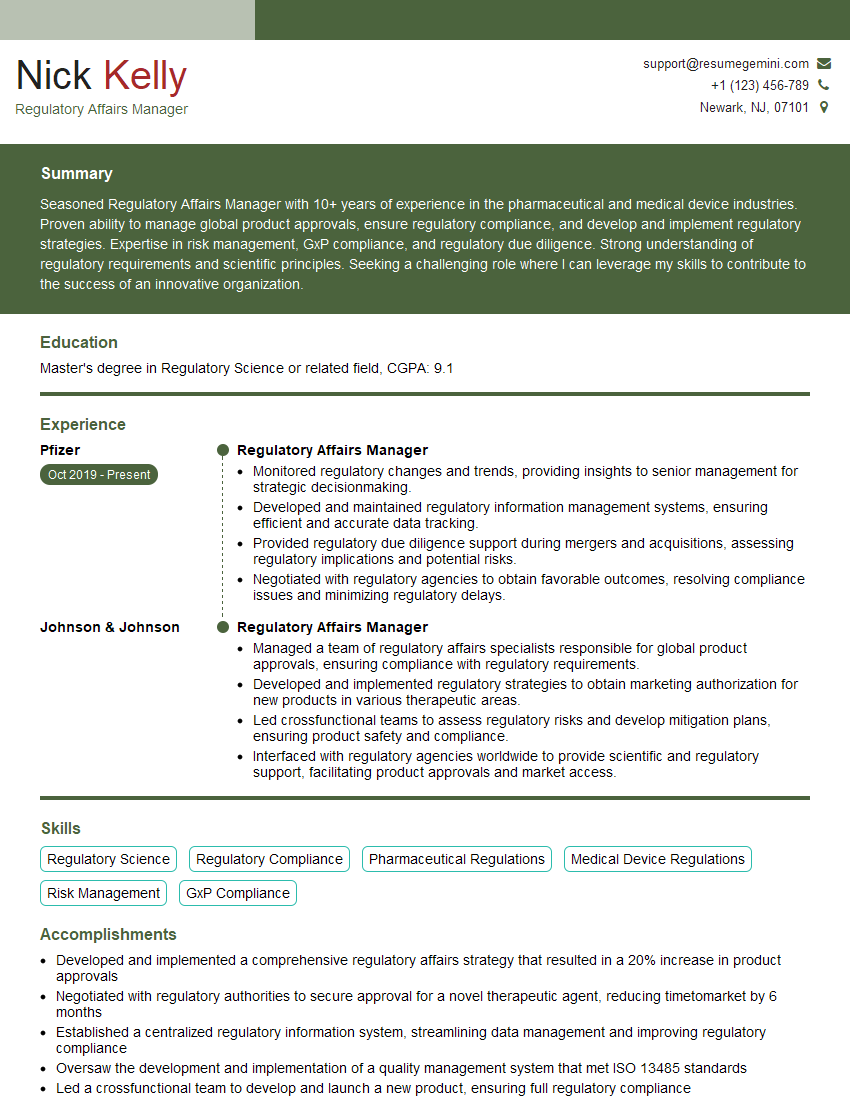
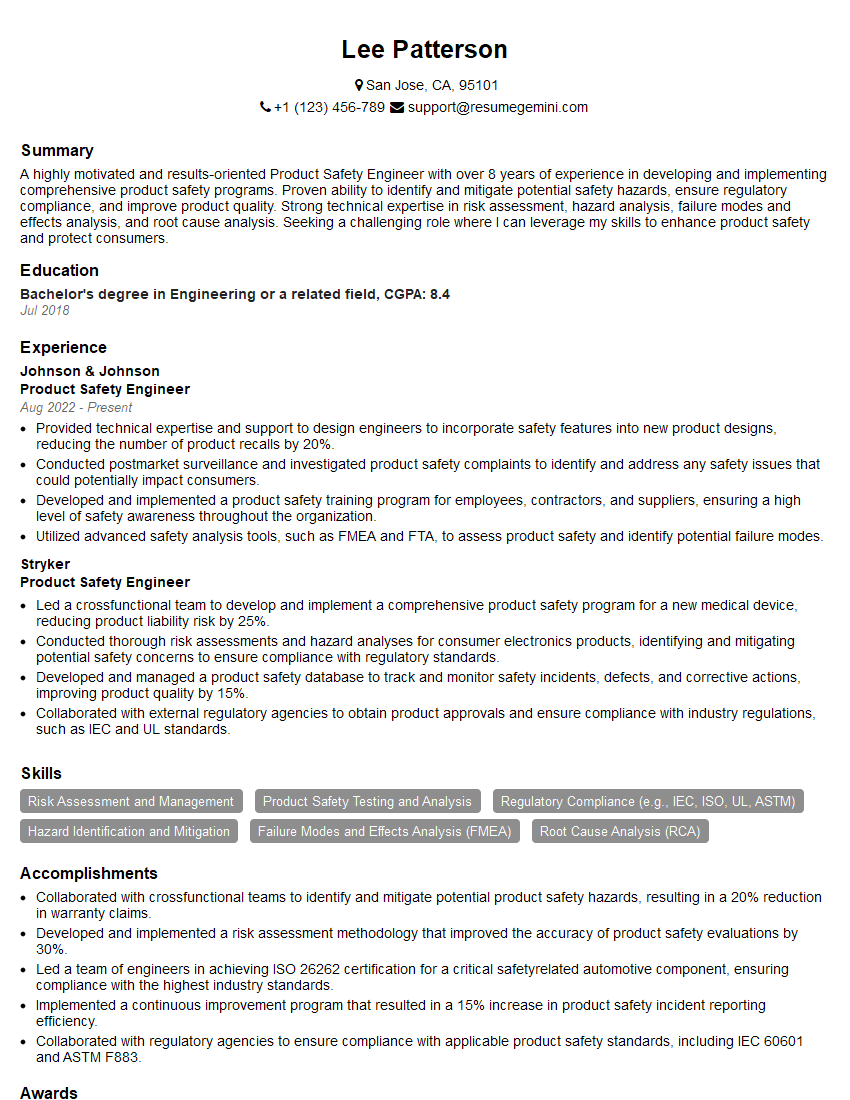
Mastering ISO 14971 Medical Device Risk Management is crucial for career advancement in the medical device industry. It demonstrates a deep understanding of patient safety and regulatory compliance, highly sought-after skills in this field. To maximize your job prospects, create a compelling and ATS-friendly resume that highlights your expertise. ResumeGemini is a trusted resource to help you build a professional resume that showcases your skills effectively. Examples of resumes tailored to ISO 14971 Medical Device Risk Management are available, providing you with a strong foundation for crafting your own standout application.
Explore more articles
Users Rating of Our Blogs
Share Your Experience
We value your feedback! Please rate our content and share your thoughts (optional).
What Readers Say About Our Blog
Very informative content, great job.
good