Interviews are opportunities to demonstrate your expertise, and this guide is here to help you shine. Explore the essential ISO 26262 Compliance interview questions that employers frequently ask, paired with strategies for crafting responses that set you apart from the competition.
Questions Asked in ISO 26262 Compliance Interview
Q 1. Explain the different Automotive Safety Integrity Levels (ASILs) and their implications.
Automotive Safety Integrity Levels (ASILs) in ISO 26262 categorize the severity of potential hazards associated with malfunctioning electrical/electronic (E/E) systems in vehicles. They range from ASIL A (lowest) to ASIL D (highest), representing the required safety integrity level for the system.
- ASIL A: Low risk of harm. Think of a malfunctioning rear window defroster – inconvenient, but not life-threatening.
- ASIL B: Moderate risk of harm. Consider a faulty parking assist system that might lead to minor damage.
- ASIL C: High risk of harm. A malfunction in the Electronic Stability Control (ESC) system could result in a serious accident.
- ASIL D: Very high risk of harm. This is reserved for the most critical systems, such as the braking system, where a malfunction could directly lead to fatalities.
The ASIL level directly impacts the rigor of the development process. Higher ASIL levels require more extensive testing, verification, and validation activities to ensure the safety of the system. For example, an ASIL D system might require extensive fault injection testing and use of multiple redundant safety mechanisms, while an ASIL A system would need significantly less.
Q 2. Describe the ISO 26262 lifecycle and the key activities in each phase.
The ISO 26262 lifecycle is a structured approach to developing safety-related E/E systems. It consists of several phases, each with specific activities. Think of it as a carefully planned journey, with checkpoints at each stage to ensure safety is maintained throughout the process.
- Phase 1: Concept Phase: Defines the overall system concept, safety goals, and initial hazard analysis.
- Phase 2: System Design: Develops a system architecture that meets the safety requirements, including defining functional and safety requirements, and conducting a preliminary hazard analysis and risk assessment (HARA).
- Phase 3: Hardware Architectural Design: Focuses on the hardware design, including the selection of components, safety mechanisms, and fault tolerance mechanisms. This involves detailed hardware-level HARA.
- Phase 4: Hardware Unit Design: Implements the hardware design and validates that it meets the specifications.
- Phase 5: Software Architectural Design: Specifies the software architecture, safety mechanisms, and allocation of safety requirements to software components. This too involves a software-level HARA.
- Phase 6: Software Unit Design: Implements the software design and validates it against the specifications.
- Phase 7: Integration and Verification: Integrates hardware and software components and performs system-level testing, verification, and validation to ensure the entire system meets its safety goals.
- Phase 8: Operation Phase: Continuous monitoring of the system’s performance in real-world conditions and addressing any issues that arise.
Q 3. How do you perform a Hazard Analysis and Risk Assessment (HARA)?
A Hazard Analysis and Risk Assessment (HARA) systematically identifies potential hazards associated with a system, assesses their risks, and determines the necessary ASIL level. It’s like a detective investigation for potential safety issues.
- Hazard Identification: Brainstorming sessions, Failure Modes and Effects Analysis (FMEA), and fault tree analysis (FTA) are used to identify potential hazards that could occur due to malfunctioning E/E systems.
- Hazard Classification: Each identified hazard is classified based on its severity (injury level), probability (likelihood of occurrence), and controllability (ease of mitigation). This often involves using a matrix or scoring system.
- Risk Assessment: Based on severity, probability, and controllability, a risk level is assigned to each hazard. This helps prioritize the safety work.
- ASIL Determination: The assigned risk levels are compared to pre-defined thresholds, which then dictates the required ASIL level for the system or system component.
- Risk Mitigation: Strategies for reducing the risk associated with each hazard are identified and implemented. This could involve adding safety mechanisms, redundant systems, or improving existing procedures.
For example, in designing an automated emergency braking (AEB) system, we’d identify hazards like sensor malfunctions, software errors, or actuator failures. We’d assess the probability and severity of each hazard leading to a collision (potentially resulting in injury or death) to determine the appropriate ASIL, most likely ASIL D in this case.
Q 4. What are the key differences between safety requirements and functional requirements?
Functional requirements define *what* a system should do; safety requirements define *how* the system should prevent hazards. Think of it as the difference between functionality and safety net.
- Functional Requirements: Describe the intended functionality of the system. For instance, “The cruise control system shall maintain a constant speed as set by the driver.”
- Safety Requirements: Describe the safety-related behavior of the system, often specifying how to handle malfunctions to prevent hazards. For example, “The cruise control system shall automatically disengage if a critical sensor fault is detected.”
Safety requirements are derived from the HARA and are crucial for ensuring the system meets the necessary ASIL. While functional requirements focus on achieving the intended operation, safety requirements address the prevention of hazards resulting from malfunction or failure.
Q 5. Explain the concept of safety goals and how they are derived.
Safety goals define the overall safety objectives for a system. They are high-level statements describing the intended level of safety. Think of them as the ultimate aim of your safety efforts.
Safety goals are derived from the HARA by considering the identified hazards and their associated risks. They often start broad and become progressively more specific. For example:
- High-level goal: To prevent fatalities or serious injuries due to malfunctioning of the powertrain.
- More specific goal: The probability of a fatal accident due to powertrain malfunction shall be less than 10-9 per kilometer.
These goals guide the development process and are used to verify the system’s safety performance. They’re like the North Star guiding the development team, ensuring that the final product aligns with the predetermined safety standards.
Q 6. Describe your experience with different safety mechanisms and techniques.
Throughout my career, I’ve worked with a variety of safety mechanisms and techniques. My experience includes:
- Redundancy: Implementing multiple independent systems to perform the same function. This could involve using dual processors, sensors, or actuators, allowing the system to continue operating even if one component fails (e.g., dual-channel braking system).
- Fault Detection and Tolerance: Employing mechanisms to detect and manage faults, such as watchdog timers, plausibility checks, and error handling routines. This aims at preventing faults from cascading and causing larger problems.
- Safety-related Hardware: Utilizing specialized hardware components designed to meet safety requirements, such as qualified microcontrollers with built-in safety features (e.g., those designed to meet ISO 26262 requirements).
- Safety-related Software: Using coding guidelines (e.g., MISRA C), static code analysis, and dynamic testing to ensure the software is robust and free of critical defects. Techniques like model-based development can also greatly improve the safety of the software.
- Diversification: Using different design techniques or technologies for different components to reduce the probability of common-mode failures. For example, using different sensor technologies for redundant systems.
In one project, we implemented a triple-modular redundancy (TMR) system for a critical actuator, ensuring high reliability even in the presence of multiple component failures. The choice of safety mechanism always depends on the specific system, its ASIL level, and the identified hazards.
Q 7. How do you ensure traceability between safety requirements and implementation?
Traceability between safety requirements and implementation is crucial for verification and validation, ensuring all safety requirements are correctly implemented and tested. This helps to avoid misinterpretations and ensure nothing is overlooked, like connecting the dots in a complex system.
We achieve this through several methods:
- Requirement Management Tools: Using tools that allow us to link safety requirements to design documents, code modules, test cases, and test results. This creates a clear audit trail.
- Unique Identifiers: Assigning unique identifiers to each safety requirement and tracing them throughout the development lifecycle. This ensures clear and unambiguous links.
- Documentation: Maintaining comprehensive documentation that clearly shows the relationship between safety requirements and their implementation. This includes design documents, code comments, and test reports.
- Automated Traceability Tools: Employing tools that automatically track the links between requirements and implementation, providing a comprehensive and up-to-date view of traceability.
For example, a safety requirement might state: “The system shall detect a sensor failure within 10ms”. This requirement is then linked to the specific code module that performs the sensor failure detection, and linked further to test cases that verify the 10ms response time. This ensures full traceability from the high-level requirement to the implemented code and its validation.
Q 8. Explain your understanding of Fault Tree Analysis (FTA) and Failure Modes and Effects Analysis (FMEA).
Fault Tree Analysis (FTA) and Failure Modes and Effects Analysis (FMEA) are crucial techniques in ISO 26262 for identifying potential hazards and assessing their risks. FTA is a top-down, deductive approach that starts with an undesired event (top event) and works backward to identify the basic events that could lead to it. Imagine a tree, where the top event is the root, and the branches represent various fault combinations causing the root event. FMEA, on the other hand, is a bottom-up, inductive approach that examines individual components or functions, identifying potential failure modes and their effects on the system.
FTA Example: Let’s say the top event is ‘Vehicle Brake Failure’. FTA would explore potential causes like ‘Brake System Malfunction’, ‘Sensor Failure’, ‘Software Error’. Each of these would then be further broken down into more basic causes until we reach the root causes.
FMEA Example: We might analyze a specific component like a brake pressure sensor. The FMEA would list potential failure modes (e.g., sensor malfunction, short circuit, open circuit), their severity (how dangerous), probability (how likely), and detectability (how easily detected). This allows prioritization of improvements to mitigate higher-risk failures.
In practice, both FTA and FMEA are often used together to provide a comprehensive safety analysis. FTA helps understand the overall system failures, while FMEA helps identify failure modes within individual components. The results of both techniques inform risk mitigation strategies and design improvements.
Q 9. How do you verify and validate safety-related software and hardware?
Verifying and validating safety-related software and hardware requires a rigorous approach encompassing multiple techniques. Verification confirms that the system is built correctly, while validation confirms that it meets its intended requirements. This process spans the entire development lifecycle.
- Hardware Verification: Includes techniques such as circuit simulations, hardware-in-the-loop (HIL) testing, and environmental stress screening to ensure the hardware behaves as expected under various conditions. We utilize robust test benches to simulate real-world conditions like temperature variations, vibrations, and electromagnetic interference.
- Software Verification: This involves unit testing, integration testing, and system testing to assess the software’s functionality and adherence to requirements. Static analysis tools automatically check code for potential errors before runtime. Dynamic testing includes techniques like white-box and black-box testing. We use coverage analysis metrics to ensure thorough testing.
- Software Validation: This demonstrates that the software fulfills its safety requirements. This is often done through simulations, HIL testing and possibly even real-world testing of the entire system. Requirements traceability is essential to connect test cases to specific requirements.
- Safety Analysis: Techniques like FTA and FMEA (as discussed earlier) are essential for identifying and assessing potential hazards. Safety metrics are tracked throughout the development process to ensure that the required Automotive Safety Integrity Level (ASIL) is achieved.
Throughout the process, comprehensive documentation and traceability are essential for demonstrating compliance with ISO 26262. This ensures complete transparency and audibility of the safety measures taken.
Q 10. What are the key considerations for selecting safety-related microcontrollers?
Selecting safety-related microcontrollers is critical for achieving the required ASIL. Key considerations include:
- ASIL Compatibility: The microcontroller must be qualified to meet the required ASIL level. This includes documentation of its safety features and performance characteristics.
- Diagnostic Coverage: The microcontroller should have built-in diagnostic capabilities, such as self-tests and error detection mechanisms. This is crucial for detecting and handling potential failures.
- Hardware Redundancy: For higher ASIL levels, redundant microcontrollers might be necessary to ensure continued operation even if one fails. Techniques like lock-step processing or voting mechanisms are employed.
- Memory Protection: Robust memory protection mechanisms are important to prevent unintended code execution or data corruption. This helps prevent silent data corruption that is very difficult to detect.
- Timing Accuracy: Precise timing control is essential for many safety-critical applications. The selected microcontroller should meet the timing requirements of the system.
- Reliability and Availability: The microcontroller’s failure rate should be sufficiently low to meet the ASIL requirements. This information is provided by the manufacturer.
- Qualification and Certification: Look for microcontrollers with formal safety certifications or qualification documentation to simplify compliance efforts.
The selection process involves a thorough evaluation of the microcontroller’s specifications, features, and its suitability for the target application and ASIL level.
Q 11. Explain your experience with safety-related diagnostics and fault detection.
My experience with safety-related diagnostics and fault detection spans various techniques. Effective diagnostics are crucial for ensuring safety and preventing hazardous situations. A multi-layered approach is typically employed.
- Built-in Self-Tests (BIST): Microcontrollers often include BIST capabilities. These are implemented in hardware and software to verify the integrity of their internal components. Regular BIST executions help detect internal failures at an early stage.
- Watchdog Timers: These are crucial to detect software hangs or unexpected behaviour. If the software fails to reset the watchdog timer within a specified timeframe, it triggers a system reset.
- Redundancy and Voting: For higher ASIL levels, redundant sensors or actuators are often used, and their outputs are compared using voting mechanisms. Discrepancies trigger alerts or corrective actions.
- Error Detection Codes: Techniques like cyclic redundancy checks (CRCs) are used to detect errors in data transmission and storage. Detecting corrupted data early is paramount.
- Sensor plausibility checks: Comparing sensor outputs against expected values or other sensor readings. A sensor providing an unusual reading will trigger an alarm or corrective action.
The effectiveness of diagnostic measures is quantified by the diagnostic coverage metric, a key aspect of ISO 26262 compliance. A high diagnostic coverage ensures that a substantial majority of potential faults are detected and handled appropriately.
Q 12. How do you manage safety requirements throughout the software development lifecycle?
Managing safety requirements throughout the software development lifecycle (SDLC) is critical for ISO 26262 compliance. A robust process is needed to ensure traceability and verification.
- Requirement Specification: Safety requirements are formally documented, using techniques like hazard analysis and risk assessment. These are linked to ASIL levels. Each requirement should be clear, unambiguous and testable.
- Design and Implementation: The design process includes safety mechanisms and considerations. Coding guidelines and standards are implemented to minimize errors.
- Verification and Validation: Rigorous testing and analysis are performed to validate that the software meets safety requirements. This includes unit, integration, and system testing, as well as static and dynamic analysis.
- Configuration Management: A version control system is used to track changes to code, requirements, and test results, ensuring traceability.
- Change Management: Any change to the software is formally evaluated for its impact on safety. A change control board ensures that every modification to the software does not compromise its safety.
- Documentation: Comprehensive documentation is maintained throughout the SDLC. This includes requirements specifications, design documents, test results, and safety analysis reports.
A systematic approach that emphasizes traceability and clear documentation is crucial for managing safety requirements and demonstrating compliance.
Q 13. Describe your experience with different safety standards and guidelines (e.g., IEC 61508).
My experience encompasses various safety standards, including ISO 26262 (Road vehicles), and IEC 61508 (Functional safety of electrical/electronic/programmable electronic safety-related systems). ISO 26262 is a specific adaptation of IEC 61508 to the automotive industry. Both standards define a systematic approach to functional safety, emphasizing hazard analysis, risk assessment, and the implementation of safety mechanisms throughout the development lifecycle.
Key Similarities: Both standards use a hazard analysis and risk assessment to determine the required safety integrity level (SIL for IEC 61508 and ASIL for ISO 26262). Both emphasize the use of safety lifecycle methods and processes, verification and validation techniques, and the importance of documentation.
Key Differences: ISO 26262 is tailored to the automotive industry, considering specific hazards and challenges related to road vehicles. It provides detailed requirements for different aspects of automotive systems, such as electronic control units (ECUs) and software. IEC 61508 is broader, applicable to a wide range of industrial systems. It is more general than ISO 26262, requiring adaptation to the specific application.
Understanding these standards is fundamental for ensuring the safety of systems in their respective domains. My work involves applying the relevant parts of these standards to guarantee compliance while balancing safety with other engineering goals.
Q 14. How do you ensure the independence of safety assessments?
Ensuring the independence of safety assessments is crucial for objective evaluation and reliable results. Bias can significantly affect the assessment’s integrity. This independence is achieved through various mechanisms:
- Separation of Roles: The teams responsible for developing the system should be independent from the teams performing safety assessments. This prevents conflicts of interest and encourages a more critical evaluation.
- External Review: Employing an independent third-party organization to review the safety assessment provides an unbiased perspective and identifies potential weaknesses. External audits offer an objective point of view.
- Use of Qualified Personnel: The assessors should have the necessary expertise and qualifications to perform the assessment. They must be well-versed in the relevant safety standards and best practices.
- Documented Processes: Clear procedures should be in place to define the scope, methodology, and reporting requirements of the safety assessment. This ensures consistency and transparency.
- Management Oversight: A management team independent of the development and assessment teams should oversee the entire process to ensure proper adherence to procedures and address conflicts that might arise.
By implementing these measures, we can build trust in the integrity of the safety assessment and ensure that potential safety issues are properly identified and addressed.
Q 15. Explain your understanding of safety metrics and key performance indicators (KPIs).
Safety metrics and KPIs in ISO 26262 are crucial for monitoring and managing the safety of automotive systems. They provide objective measures to track progress, identify risks, and demonstrate compliance. Think of them as a dashboard showing the health of your safety efforts. Key metrics often include:
- Probability of Failure on Demand (PFD): The probability that a safety-related system will fail to perform its intended function when needed. A lower PFD indicates a safer system. For example, an Automatic Emergency Braking (AEB) system’s PFD might be targeted at less than 10-6.
- Safety Integrity Level (SIL): A classification of the safety requirements for a safety-related system, ranging from SIL 1 (lowest) to SIL 4 (highest). The SIL dictates the rigor of the development process and the level of safety verification and validation required. A higher SIL demands more stringent methods.
- Defect Density: The number of defects found per lines of code or other relevant units of measurement. It reflects the overall quality of the code and the effectiveness of testing. A lower defect density signals a more reliable system.
- Mean Time Between Failures (MTBF): The average time between consecutive failures of a system. A higher MTBF indicates greater reliability and a lower risk of failures.
KPIs, on the other hand, are often higher-level metrics that tie directly to business objectives. They might track the cost of safety activities, the time spent on safety reviews, or the number of safety-related incidents. For example, a KPI could track the percentage of development tasks completed with a completed safety case.
Career Expert Tips:
- Ace those interviews! Prepare effectively by reviewing the Top 50 Most Common Interview Questions on ResumeGemini.
- Navigate your job search with confidence! Explore a wide range of Career Tips on ResumeGemini. Learn about common challenges and recommendations to overcome them.
- Craft the perfect resume! Master the Art of Resume Writing with ResumeGemini’s guide. Showcase your unique qualifications and achievements effectively.
- Don’t miss out on holiday savings! Build your dream resume with ResumeGemini’s ATS optimized templates.
Q 16. How do you handle safety-related incidents and deviations?
Handling safety-related incidents and deviations is paramount. Our process follows a structured approach, beginning with immediate containment to prevent further harm. Think of it like a fire drill – first, you extinguish the fire (contain the issue), then investigate the cause (root cause analysis), and finally, implement corrective actions to prevent recurrence.
- Incident Reporting: We have a formal reporting system where incidents are documented meticulously, including the context, symptoms, and potential consequences. This is crucial for traceability and auditing.
- Root Cause Analysis (RCA): We use techniques like the 5 Whys or Fault Tree Analysis to systematically investigate the root cause of the incident, not just the symptoms. This helps us understand the underlying problems and develop effective solutions.
- Corrective Actions: Based on the RCA, we define and implement corrective actions, which are documented and verified to ensure their effectiveness. This might include software patches, hardware modifications, or process improvements.
- Preventive Actions: We also focus on preventive actions to prevent similar incidents from happening in the future. This could involve design changes, improved testing procedures, or enhanced training programs.
All of this is documented and regularly reviewed to continuously improve our safety processes.
Q 17. Describe your experience with safety-related documentation and reporting.
Safety-related documentation is the backbone of ISO 26262 compliance. It’s not just about creating documents, it’s about creating a comprehensive, traceable, and auditable record of every aspect of the safety lifecycle. Imagine building a house – the blueprints (documentation) are as important as the bricks and mortar (the product).
- Safety Case: The safety case is the central document demonstrating compliance, summarizing all safety analysis, verification, and validation activities.
- Hazard Analysis and Risk Assessment (HARA): This identifies potential hazards and assesses their associated risks. The output of HARA directly influences the selection of safety requirements and ASIL levels.
- Safety Requirements Specification: This document formally defines the safety requirements for the system, derived from the HARA. Traceability between requirements, design, and testing is essential.
- Test Plans and Reports: Detailed test plans and reports demonstrate the verification and validation of the safety requirements. Test results must be thoroughly documented.
- Change Management Records: Any changes to the system or its design must be tracked and evaluated for their impact on safety.
We use a document management system to control and track these documents, ensuring version control and easy accessibility. Regular audits are performed to verify the integrity and completeness of our documentation.
Q 18. What are the challenges of integrating safety requirements into existing development processes?
Integrating safety requirements into existing development processes can be challenging, particularly in legacy systems. The main challenges often include:
- Cultural Shift: Integrating safety often requires a significant cultural change within the development team, fostering a safety-conscious mindset from the very beginning of the development lifecycle.
- Process Changes: Existing processes may need to be adapted or modified to incorporate safety activities such as hazard analysis, safety requirement specification, and safety verification and validation.
- Tool Integration: Integrating new safety-related tools into the existing development environment can be complex and time-consuming.
- Increased Development Costs and Timelines: Safety activities can add significant costs and timelines to projects, especially in the early phases.
- Lack of Expertise: Many organizations may lack the necessary expertise in ISO 26262 and functional safety.
Addressing these challenges involves careful planning, training, and a phased approach to implementation. We often use agile methodologies to incorporate safety activities into iterative development cycles.
Q 19. How do you manage conflicting safety requirements?
Conflicting safety requirements are inevitable in complex systems. Resolving them requires a systematic approach, prioritizing safety and considering the overall system architecture.
- Prioritization: We start by prioritizing safety requirements based on their associated ASIL levels. Higher ASIL requirements take precedence.
- Trade-off Analysis: If conflicts remain, a trade-off analysis is performed, weighing the benefits and risks of each requirement. This often involves documenting the rationale behind the chosen solution.
- Requirement Decomposition: Sometimes, complex requirements can be decomposed into smaller, less conflicting requirements.
- System Architecture Review: A review of the system architecture can help identify potential sources of conflict and suggest alternative designs.
- Formal Methods: In critical cases, formal methods can be used to rigorously analyze and resolve conflicts.
The process for managing these conflicts is clearly documented and reviewed to ensure transparency and traceability. Decisions are based on safety arguments that are justified and auditable.
Q 20. Explain your experience with safety-related tools and techniques (e.g., model checking, formal verification).
Experience with safety-related tools and techniques is essential for achieving high levels of safety. We use a range of tools and methods throughout the development process:
- Model Checking: We use model checking to formally verify the correctness of system models, identifying potential safety violations early in the development cycle. This involves creating a formal model of the system and using automated tools to check for specific properties, such as the absence of deadlocks or race conditions.
Example: Using tools like SPIN to model and verify the behavior of a state machine representing a safety-critical system. - Formal Verification: This goes beyond model checking to provide more rigorous mathematical proofs of safety properties. It’s often used for highly critical systems where the risk of failure is extremely high.
- Static Analysis Tools: These tools automatically analyze code for potential safety violations, such as buffer overflows or null pointer dereferences. They improve code quality and reduce the risk of runtime errors.
Example: Using Coverity or Polyspace to analyze C/C++ code for potential safety hazards. - Requirement Traceability Tools: These tools ensure that safety requirements are properly linked to design artifacts, code, and test cases, aiding in demonstrating compliance.
The selection of tools is dependent on the ASIL level and the complexity of the system.
Q 21. Describe your experience with safety-related testing methods (e.g., fault injection, stress testing).
Safety-related testing is crucial for verifying that the system meets its safety requirements. We employ a variety of methods:
- Fault Injection Testing: This involves deliberately introducing faults into the system to observe its behavior and assess its ability to handle errors. This mimics real-world scenarios and helps identify weaknesses.
Example: Injecting random bit flips into the memory to simulate hardware failures. - Stress Testing: This involves subjecting the system to extreme conditions, such as high temperatures, voltages, or workloads, to assess its robustness and resilience. This pushes the system to its limits to find potential vulnerabilities.
- Software-in-the-Loop (SIL) Testing: This involves testing the software independently, simulating the interaction with hardware and other software components.
- Hardware-in-the-Loop (HIL) Testing: This involves testing the software and hardware together in a controlled environment, using simulated inputs and outputs to mimic real-world conditions.
- System Testing: This involves testing the entire system, including all hardware and software components, to verify its functionality and safety.
The choice of testing methods is driven by the ASIL level, the system architecture, and the identified hazards. A comprehensive testing strategy is developed to ensure sufficient coverage and confidence in the system’s safety.
Q 22. How do you ensure the maintainability and scalability of safety-related systems?
Maintaining and scaling safety-related systems under ISO 26262 requires a proactive approach encompassing design, development, and maintenance phases. It’s not just about building a system that’s safe today, but one that remains safe and adaptable as requirements evolve and the system grows.
Modular Design: We break down the system into independent, reusable modules. This improves maintainability as changes in one module don’t necessitate a complete system overhaul. For example, a specific safety function could be encapsulated in a module, allowing for independent testing and updates.
Version Control: Robust version control systems (like Git) are essential to track changes, enabling easy rollback to previous stable versions if necessary. This ensures traceability and allows for efficient debugging and issue resolution.
Automated Testing: Implementing automated unit, integration, and system tests is crucial. This guarantees consistent and thorough testing with each modification, reducing the risk of introducing new safety issues. Automated tests should cover all aspects of the safety requirements.
Documentation: Clear, concise documentation is paramount. This includes detailed design specifications, test plans, and results, as well as maintenance logs. This aids in understanding the system’s functionality and facilitates future modifications.
Scalability Considerations: From the outset, we consider scalability. This involves using architectures that can handle increased data volumes, processing demands, and expanded functionality without compromising safety. For instance, employing a distributed system architecture with redundancy built-in can enhance scalability and resilience.
By adhering to these principles, we create systems that are not only safe but also easily maintained and adapted to future needs, minimizing the risk of safety compromises throughout the system’s lifecycle.
Q 23. How do you communicate technical safety information to non-technical audiences?
Communicating complex technical safety information to non-technical audiences requires simplifying the message without sacrificing accuracy. This is crucial for gaining stakeholder buy-in, ensuring compliance, and fostering a strong safety culture.
Analogies and Visual Aids: We use relatable analogies to explain technical concepts. For example, explaining Automotive Safety Integrity Levels (ASILs) using a traffic light analogy (ASIL D being a red light, requiring the highest level of safety) makes it easier to understand.
Visualizations: Charts, diagrams, and infographics help visualize complex data. A simple bar chart comparing the safety requirements across different system components can be much clearer than a lengthy technical report.
Layered Approach: We tailor our communication to the audience’s level of understanding. This might involve providing a high-level overview to senior management and more detailed information to technical teams.
Storytelling: Framing safety information within a narrative makes it more engaging and memorable. For example, discussing a past incident and how the subsequent safety improvements prevented similar events in the future can be highly effective.
Active Listening and Feedback: We actively listen to the audience’s questions and concerns, ensuring they fully understand the information. This two-way communication is essential for effective knowledge transfer.
By using these techniques, we ensure that critical safety information is not only understood but also acted upon, creating a shared commitment to safety across the organization.
Q 24. Explain your understanding of the role of safety culture within an organization.
Safety culture is the foundation of any successful ISO 26262 implementation. It’s not just a set of rules; it’s a shared mindset and set of values that prioritize safety above all else. A strong safety culture permeates all aspects of an organization, from top management to individual contributors.
Leadership Commitment: Visible and unwavering support from top management is crucial. This means actively promoting safety, allocating resources for safety initiatives, and holding individuals accountable for safety performance.
Open Communication: A culture of open communication is essential. Employees should feel comfortable reporting safety concerns without fear of reprisal. This requires establishing clear reporting channels and ensuring prompt investigations of reported issues.
Proactive Risk Management: The focus shouldn’t be solely on reacting to incidents but on proactively identifying and mitigating potential hazards. Regular safety audits, hazard analyses, and risk assessments are crucial components of a proactive safety culture.
Continuous Improvement: Safety is an ongoing journey, not a destination. Regular reviews of safety processes and procedures, coupled with the implementation of lessons learned from incidents, are vital for continuous improvement.
Training and Education: Providing regular training and education on safety procedures and best practices is essential. This ensures that all employees are aware of their safety responsibilities and have the skills to perform their tasks safely.
A strong safety culture isn’t merely a regulatory compliance exercise; it’s a fundamental aspect of a company’s success. It reduces accidents, improves efficiency, and fosters a positive and productive work environment.
Q 25. Describe your experience with different safety certification processes.
My experience encompasses various safety certification processes, primarily focusing on ISO 26262 for automotive applications. The process involves multiple stages, from initial hazard analysis to final system validation.
Functional Safety Management: This involves establishing a functional safety management system, defining roles and responsibilities, and implementing safety processes throughout the development lifecycle. This includes creating a safety plan which outlines all safety activities.
Hazard Analysis and Risk Assessment: This critical stage involves identifying potential hazards, assessing their risks, and determining the required Automotive Safety Integrity Level (ASIL) for each hazard. Techniques like FMEA (Failure Mode and Effects Analysis) are commonly used.
Safety Requirements Specification: Safety requirements are derived from the hazard analysis and risk assessment. These requirements are rigorously documented and traceable to the ASIL level.
System Design and Implementation: The system is designed and implemented according to the safety requirements, utilizing appropriate safety mechanisms and architectures.
Verification and Validation: This crucial phase involves demonstrating that the system meets the safety requirements. This typically involves a combination of analysis, simulation, and testing activities.
Certification Audit: A third-party certification body audits the entire process and confirms compliance with ISO 26262 standards. This audit scrutinizes the documentation, processes, and test results.
I have been involved in projects undergoing both internal and external audits, ensuring compliance with the rigor of the ISO 26262 standard throughout the entire process, from requirements definition to final certification.
Q 26. How do you stay up-to-date with the latest developments in ISO 26262?
Staying current with ISO 26262 developments is crucial. The standard itself is evolving, and new technologies and techniques constantly emerge. I employ a multi-faceted approach to keep my knowledge up-to-date.
Professional Organizations: Active participation in organizations like the SAE (Society of Automotive Engineers) provides access to the latest research, standards updates, and industry best practices. Attending conferences and workshops is invaluable.
Industry Publications: I regularly read industry publications and journals focusing on functional safety and automotive electronics. This provides insights into new trends and challenges.
Training Courses: I participate in regular training courses and workshops to stay abreast of the latest interpretations and updates to the ISO 26262 standard.
Networking: Engaging with other professionals in the field through conferences, online forums, and professional networks offers valuable insights and perspectives.
Following Regulatory Updates: Keeping track of relevant regulatory changes and updates impacting ISO 26262 is essential to maintain compliance.
This combination of formal and informal learning ensures I am equipped with the most up-to-date knowledge and best practices to navigate the ever-evolving landscape of functional safety.
Q 27. Describe a situation where you had to make a difficult decision related to safety.
In a previous project, we detected a potential safety issue late in the development cycle. A specific component, while meeting initial specifications, exhibited unexpected behavior under certain stress conditions, potentially leading to a hazard classified as ASIL B. The decision was whether to proceed with the current timeline, potentially accepting some risk, or to delay the launch to fully investigate and mitigate the issue.
We opted for a delay. The initial reaction was disappointment from project management due to the potential cost implications. However, prioritizing safety was paramount. We rigorously analyzed the issue, implemented corrective actions, and re-tested the component to ensure it met the ASIL B requirements. This involved additional development effort, redesign of certain aspects, and extended testing. The extra time allowed for thorough verification and validation, resulting in a safer and more reliable product.
Though the delay was challenging, it ultimately demonstrated the importance of prioritizing safety and the long-term benefits of a proactive approach. This experience reinforced the principle that safety compromises should never be made, even under pressure to meet deadlines.
Q 28. Explain your experience with working in a collaborative environment on safety-critical projects.
Collaborative teamwork is essential for successful ISO 26262 projects. The complexity of these projects often necessitates a multidisciplinary team with diverse expertise. My experience highlights the importance of clear communication, defined roles, and shared responsibility.
Cross-functional Teams: I’ve worked on teams involving software engineers, hardware engineers, safety engineers, and project managers. Each member brought their specialized skills, leading to a comprehensive approach to safety.
Communication Protocols: We established clear communication channels using tools like JIRA and Confluence to track tasks, share information, and document decisions. Regular meetings and status updates ensured everyone was informed and aligned.
Version Control: Using a centralized version control system (like Git) was crucial for managing code and documentation. This facilitated collaboration and ensured all team members worked on the latest versions.
Shared Responsibility: Safety was a shared responsibility, not solely confined to the safety engineers. Each team member understood their role in achieving the overall safety goals.
Conflict Resolution: Disagreements are inevitable in collaborative projects. We utilized structured approaches to resolve conflicts, prioritizing safety considerations and using data-driven arguments to reach consensus.
Through efficient communication, clearly defined roles, and a shared commitment to safety, we consistently delivered high-quality, safe, and compliant products.
Key Topics to Learn for ISO 26262 Compliance Interview
Acing your ISO 26262 Compliance interview requires a solid understanding of both the theoretical framework and its practical implications. Focus your preparation on these key areas:
- Hazard Analysis and Risk Assessment (HARA): Understand the process of identifying potential hazards related to automotive electrical/electronic systems and assessing their associated risks. Consider how different Automotive Safety Integrity Levels (ASILs) impact design choices.
- Safety Requirements Specification and Management: Learn how to define and manage safety requirements throughout the entire development lifecycle. Practice translating high-level safety goals into concrete, verifiable requirements.
- Safety Concept and Architectural Design: Explore how safety mechanisms are integrated into system architecture. Understand the importance of redundancy, fail-operational behavior, and fault tolerance.
- Software Safety: Familiarize yourself with coding guidelines, verification, and validation techniques specific to safety-critical software. Consider the use of static and dynamic analysis tools.
- Hardware Safety: Understand the role of hardware components in achieving functional safety. Discuss topics such as hardware fault tolerance and diagnostics.
- Verification and Validation (V&V): Master the techniques used to verify that the system meets its safety requirements and validate that it behaves as intended. This includes testing methodologies and documentation.
- Safety Case and Documentation: Learn how to create a comprehensive safety case that demonstrates compliance with ISO 26262. Understand the importance of clear and traceable documentation throughout the development process.
- ASIL Decomposition and Management: Understand how to break down higher-level ASIL requirements into lower-level requirements for individual components and functions.
Next Steps
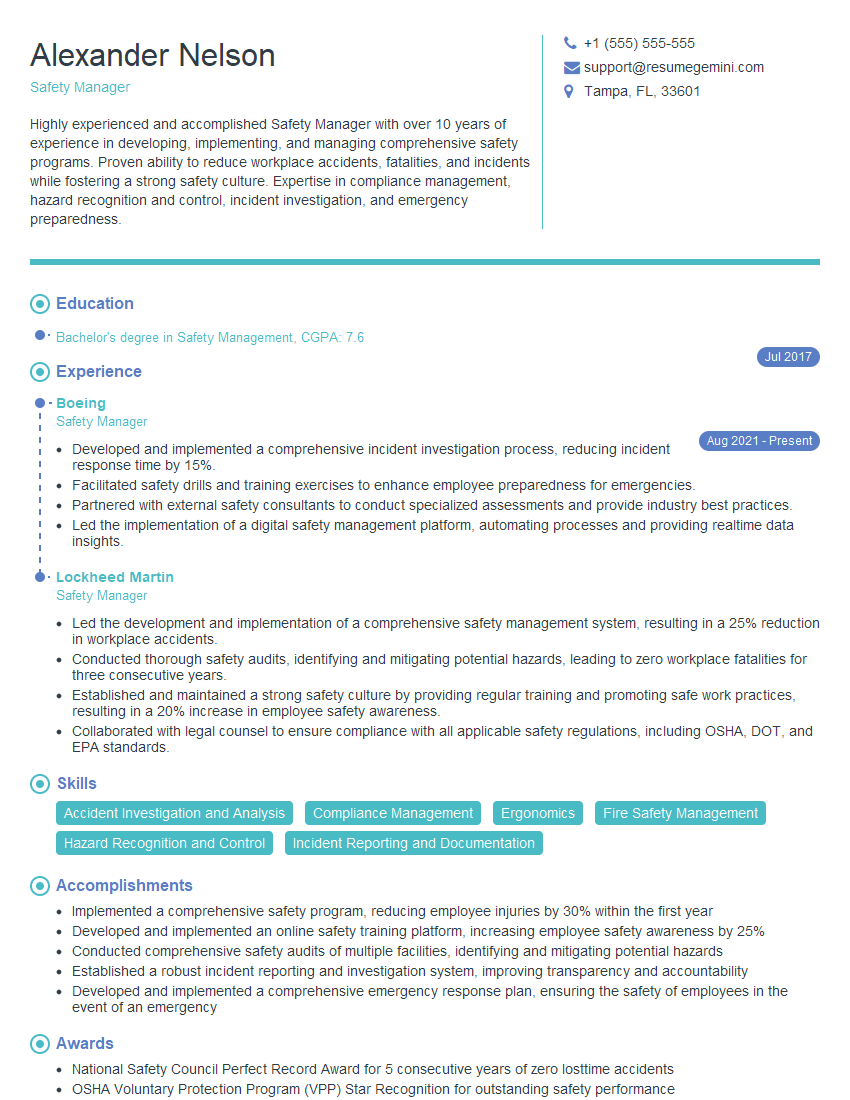
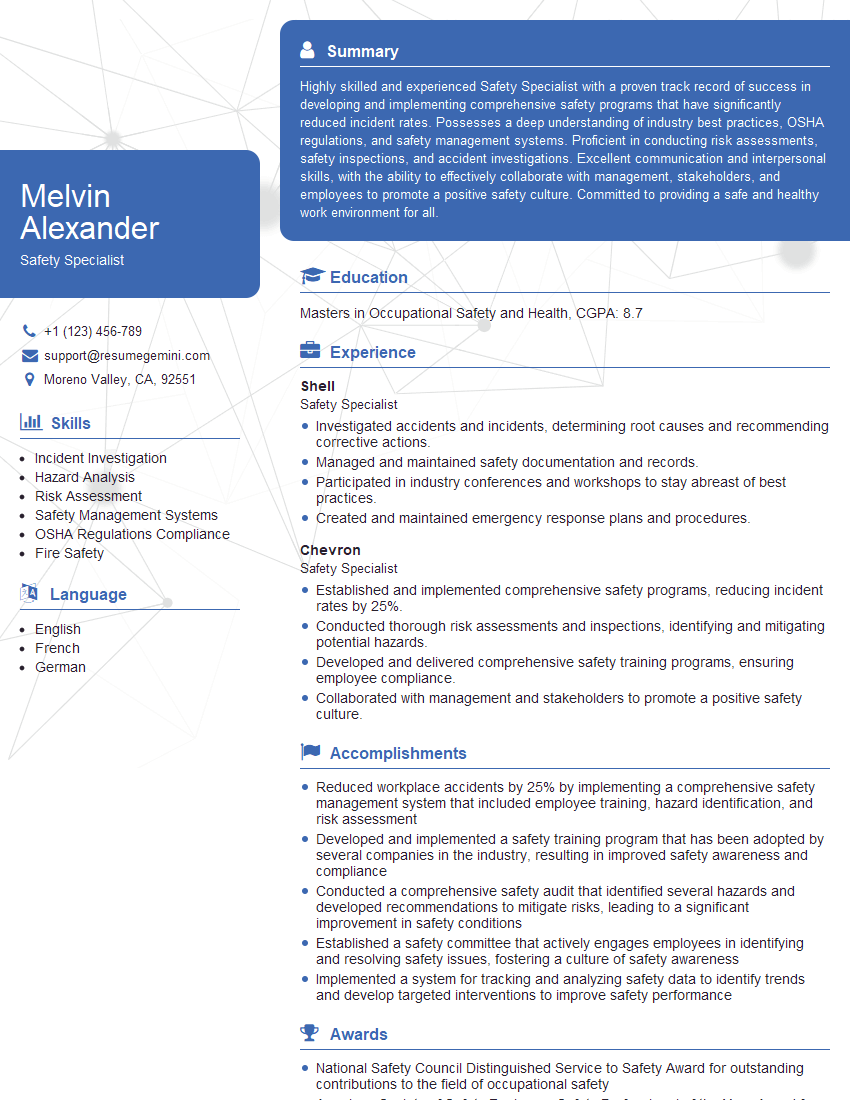
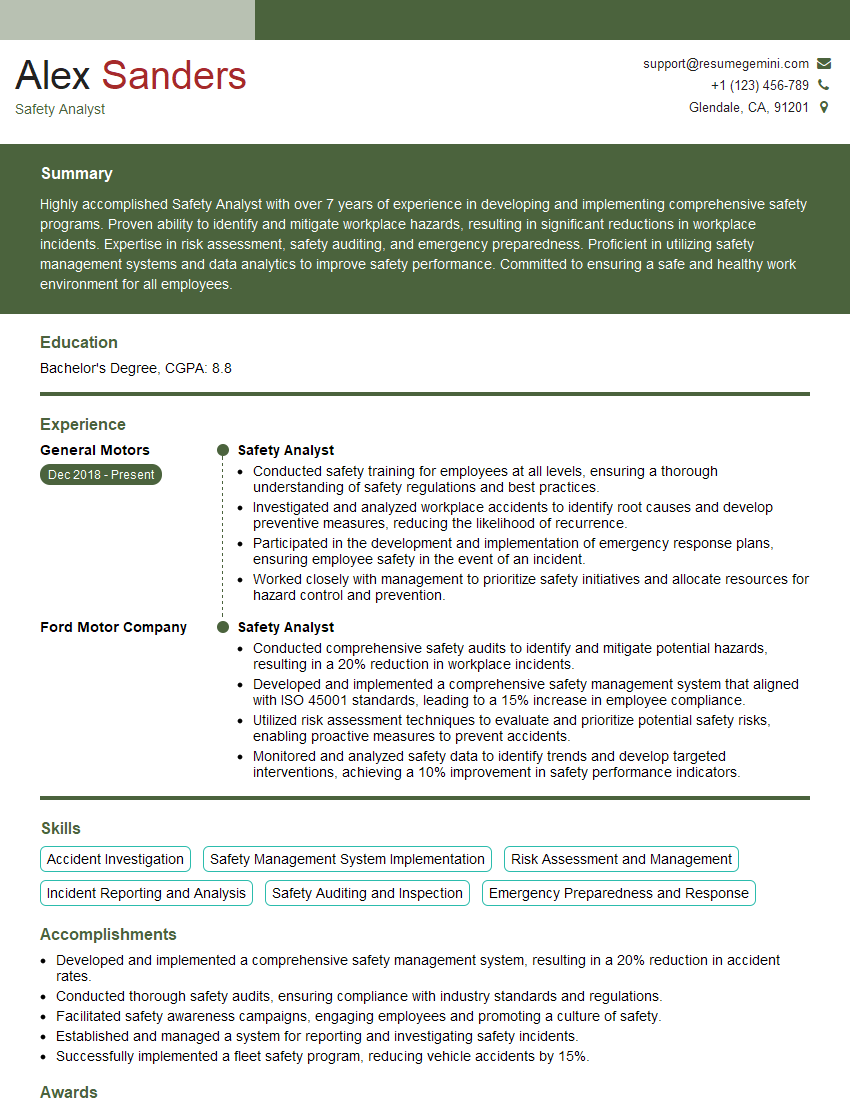
Mastering ISO 26262 Compliance significantly enhances your career prospects in the automotive industry, opening doors to exciting and challenging roles. To maximize your chances of landing your dream job, invest time in crafting a compelling, ATS-friendly resume that highlights your skills and experience. ResumeGemini is a trusted resource to help you build a professional resume that stands out. They offer examples of resumes tailored to ISO 26262 Compliance, providing invaluable templates to guide you. Take the next step in your career journey – build a powerful resume and confidently showcase your expertise.
Explore more articles
Users Rating of Our Blogs
Share Your Experience
We value your feedback! Please rate our content and share your thoughts (optional).
What Readers Say About Our Blog
Very informative content, great job.
good