Interviews are opportunities to demonstrate your expertise, and this guide is here to help you shine. Explore the essential Jacket Pressing interview questions that employers frequently ask, paired with strategies for crafting responses that set you apart from the competition.
Questions Asked in Jacket Pressing Interview
Q 1. Describe your experience with different types of jacket fabrics.
My experience with jacket fabrics spans a wide range, from lightweight linens and silks to heavy wool worsteds and durable cottons. Understanding the properties of each fabric is crucial for successful pressing. For example, a delicate silk requires a low temperature and minimal pressure to avoid scorching or shine, while a heavy wool might need more heat and pressure to achieve a crisp finish. I’m familiar with the nuances of different weaves – from plain weaves to twills and satins – and how these impact the pressing process. I also consider the fabric’s finish; a heavily textured fabric requires a different approach compared to a smooth one. Understanding fiber content (e.g., wool, polyester blends) is equally important, as synthetic fibers react differently to heat than natural fibers.
- Lightweight Fabrics: Silk, linen, cotton voile – these require gentle pressing with low heat and possibly a pressing cloth to prevent shine.
- Medium-Weight Fabrics: Cotton twill, gabardine, wool flannel – these can handle moderate heat and pressure.
- Heavyweight Fabrics: Wool worsted, heavy cotton canvas – these need higher heat and firm pressure for a crisp finish.
Q 2. Explain the process of pressing a structured blazer.
Pressing a structured blazer requires precision and attention to detail. It’s not just about removing wrinkles; it’s about shaping and enhancing the garment’s inherent structure. I begin by checking the garment for any obvious stains or damage. Then, I carefully press the lining first, paying close attention to the seams and interfacing. This helps prevent unwanted impressions from showing on the outer fabric. Next, I address the shoulders, using a tailor’s ham to create a smooth, rounded shape. I work my way down, pressing the sleeves, front panels, and back panel, always paying attention to the direction of the nap and maintaining consistent pressure and heat. The lapels receive special attention; I use a point presser to define their edges sharply and ensure a crisp roll. Finally, I give the entire blazer a final press to ensure a consistent finish, using a sleeve board to press the sleeves evenly. I always finish by checking the garment on a dress form to ensure everything is aligned perfectly.
Q 3. How do you handle delicate fabrics during pressing?
Handling delicate fabrics during pressing requires a gentle touch and the right tools. I always use a low heat setting and a pressing cloth, preferably a thin, clean cotton cloth, placed between the iron and the fabric. This protects the fabric from direct heat and prevents shine or scorching. For extremely delicate fabrics like silk or lace, I might use a steam press instead of a hand iron, as steam offers a more even distribution of heat and moisture. I work in smaller sections, moving the iron slowly and never leaving it in one place for too long. The key is to avoid any harsh pressure or excessive heat. A steam block can also be effective, carefully introducing the steam to lift and shape the delicate fabric. I sometimes test the heat on a scrap piece of fabric of similar material before proceeding to press the garment itself.
Q 4. What are the common issues encountered during jacket pressing and how do you resolve them?
Common issues in jacket pressing include shine, scorch marks, wrinkles, and uneven pressing. Shine usually occurs when too much pressure or heat is applied to certain fabrics, particularly silk or wool. Scorch marks are caused by excessive heat. Wrinkles often remain if the garment isn’t properly stretched and smoothed during pressing. Uneven pressing is a result of inconsistent pressure and technique. I resolve these issues by adjusting the heat settings appropriately and applying consistent, even pressure. I always pre-test my heat settings on a hidden area before pressing the visible garment. If shine occurs, it can sometimes be minimized by using a damp cloth to lightly mist the affected area and then pressing gently with a low heat. Scorch marks, unfortunately, are more difficult to remove and often require professional cleaning. Persistent wrinkles may require more careful stretching and repositioning the garment while pressing.
Q 5. Explain your experience with various pressing equipment (e.g., steam press, hand iron).
I’m proficient with both steam presses and hand irons, understanding that each has its strengths. A steam press is invaluable for larger garments and achieving even heat and pressure, especially when dealing with heavy fabrics or complex shapes. It streamlines the process and is less physically demanding. However, hand irons provide better control and precision for intricate details, like pressing lapels or delicate seams. I select my equipment based on the fabric type, garment complexity, and my personal preferences for specific tasks. I also ensure all equipment is properly maintained and cleaned regularly; this guarantees consistent performance. Regular cleaning of the iron’s soleplate ensures consistent heat transfer and avoids transferring residue to the fabric.
Q 6. How do you maintain the quality and consistency of your pressing work?
Maintaining quality and consistency relies on a combination of factors. First, a thorough understanding of fabric properties and pressing techniques is essential. Second, I adhere to a strict workflow, always following the same systematic steps to ensure consistency. Third, regular maintenance of my equipment is crucial. Finally, I always take time to check my work, critically assessing the pressed garment from every angle on a dress form before declaring it finished. Constant practice and ongoing professional development help improve skills and maintain a high standard of work.
Q 7. What are your methods for preventing wrinkles and creases?
Preventing wrinkles and creases starts before the pressing process even begins. Proper garment handling during cleaning and storage is important. I advise clients to hang garments properly, especially suits and blazers, to prevent creasing. During pressing, focusing on smooth, even strokes and paying attention to seam lines helps to prevent new wrinkles from forming. Using a tailor’s ham and sleeve board ensures that all areas of the garment receive the appropriate amount of pressure and shape. After pressing, I advise clients to avoid packing garments tightly, allowing them to breathe and hang properly in a climate-controlled environment.
Q 8. Describe your quality control procedures for pressed jackets.
My quality control procedures for pressed jackets are meticulous and multi-layered, ensuring each garment meets the highest standards. It begins even before pressing, with a thorough inspection of the garment for any pre-existing defects like stitching errors or fabric flaws. During pressing, I carefully monitor the temperature and pressure applied to the fabric, adjusting as needed depending on the material. After pressing, each jacket undergoes a final inspection to check for:
- Wrinkles or creases: Even the slightest imperfection is noted and addressed.
- Seam alignment: Seams should be crisp and precisely aligned.
- Fabric shine or damage: Over-pressing can lead to unwanted shine or even damage the fabric, something I diligently prevent.
- Overall shape and drape: The jacket should hang beautifully and maintain its intended structure.
Any defects found are documented, and the garment is either re-pressed or, if the damage is irreparable, set aside for appropriate action. This rigorous approach ensures consistent quality and customer satisfaction.
Q 9. How do you adapt your pressing techniques to different jacket styles?
Adapting pressing techniques to different jacket styles is crucial for achieving optimal results. The key is understanding how the style influences the desired finish. For example:
- Structured jackets (e.g., blazers): Require firm pressing with appropriate shoulder pads to create a sharp, defined silhouette. I use a tailor’s ham and sleeve roll to shape the shoulders and maintain crisp lines.
- Casual jackets (e.g., denim jackets): Usually require less intense pressing, focusing on removing wrinkles without creating excessive shine or stiffness. I often use lower temperatures and might employ a pressing cloth to protect the denim.
- Leather jackets: Require specialized techniques and tools, often using a lower temperature and avoiding prolonged pressure to prevent damage or shine.
I always consider the fabric composition and the overall design aesthetic before selecting my pressing methods. It’s like painting – different brushstrokes are needed for different effects.
Q 10. How do you identify and repair pressing related damages?
Identifying and repairing pressing-related damages requires a keen eye and a methodical approach. Common problems include:
- Shine marks: These are often caused by excessive heat or pressure. If caught early, they can sometimes be lightened by gently steaming the area; however, severe shine marks might be irreparable.
- Burns: These are indicated by discoloration or damage to the fabric. Unfortunately, burns typically cannot be repaired and the garment may need to be remade.
- Wrinkles or creases: These can be addressed through re-pressing, adjusting the temperature and pressure as needed.
- Seam puckering: This can happen if the seams aren’t properly set before pressing. It might require unpicking and re-stitching.
My repair strategy involves careful assessment of the damage, selection of the appropriate repair technique, and a thorough final inspection to ensure the repair is invisible and the garment is restored to its original quality. Prevention is always better than cure, which is why my focus is on meticulous pressing techniques from the start.
Q 11. Explain your understanding of different pressing temperatures and their effects on fabrics.
Understanding different pressing temperatures and their effects on various fabrics is essential. Temperature is directly related to the fiber content of the fabric:
- Lower temperatures (e.g., wool): Suitable for delicate fabrics like silk, wool, and rayon. Too much heat can damage these materials.
- Medium temperatures (e.g., cotton): Appropriate for cotton, linen, and most blends. Allows for efficient wrinkle removal without damage.
- Higher temperatures (e.g., synthetics): Can be used for synthetic fabrics like polyester, nylon, and acrylic. These fabrics are more resistant to heat.
I always consult fabric care labels and test a small, inconspicuous area first before applying heat to the entire garment. Thinking of it like cooking – you wouldn’t use the same heat for a delicate fish as you would for a tough steak!
Q 12. How do you handle urgent orders and meet tight deadlines?
Handling urgent orders and meeting tight deadlines requires efficient time management and prioritization. My approach involves:
- Careful assessment of the order: Understanding the specifics of the order and its complexity helps in creating a realistic timeline.
- Prioritization: Focusing on the most time-sensitive tasks first ensures the timely completion of urgent orders.
- Efficient workflow: Streamlining my process and minimizing unnecessary steps allows for faster turnaround times.
- Communication: Maintaining clear and consistent communication with the team and clients prevents misunderstandings and delays.
In high-pressure situations, I remain calm and focused, utilizing my experience and skills to meet deadlines without compromising quality. It’s a bit like a well-rehearsed orchestra – each member knows their part and works together harmoniously to create a beautiful final product.
Q 13. Describe your experience working within a production team.
My experience working within a production team is extensive and rewarding. I am comfortable collaborating with others, understanding the importance of teamwork in achieving shared goals. My role typically involves:
- Collaboration: Working effectively with seamstresses, pattern makers, and other team members to ensure seamless workflow.
- Communication: Maintaining clear and open communication with the team to prevent bottlenecks and delays.
- Problem-solving: Collaboratively addressing any pressing-related issues that might arise.
- Quality control: Contributing to the overall quality control process to ensure all garments meet the highest standards.
I am a strong believer in teamwork and am confident in my ability to contribute to a positive and productive team environment.
Q 14. What is your experience with different types of interfacing and how it impacts pressing?
My experience with different types of interfacing is extensive. Interfacing significantly impacts pressing, influencing the structure, drape, and overall finish of a garment. Different interfacings are best suited for different fabrics and purposes:
- Fusible interfacing: Bonds to the fabric with heat, providing structure and support. The type of fusible interfacing (woven, knit, etc.) is chosen based on the outer fabric. Pressing this correctly is crucial to prevent bubbling or scorching.
- Sew-in interfacing: Stitched into the garment, offering a stable base and preventing stretching. Careful pressing around the seam allowances is essential to avoid distorting the interfacing or the outer fabric.
- Non-woven interfacing: Offers lightweight support and shaping. Pressing should be gentle to avoid crushing the structure.
Choosing the correct interfacing and understanding its properties are key to successful pressing. Incorrect interfacing can lead to problems like puckering, uneven finishes, and poor drape. It’s like selecting the correct foundation for a building; the right base is essential for a strong and stable structure.
Q 15. How do you ensure consistent shoulder pressing?
Consistent shoulder pressing is crucial for a garment’s structure and overall appearance. It involves creating a smooth, even shoulder line without any bumps or creases. This is achieved through a combination of techniques and careful attention to detail.
- Proper Paddings and Blocks: Using appropriately sized shoulder pads and tailor’s ham provides support and prevents distortion during pressing. Think of the ham as a sculptor’s tool, shaping the shoulder to its ideal form.
- Pressing Direction: I always press from the center of the shoulder outwards, following the natural grain of the fabric. This prevents stretching and ensures a uniform finish. Imagine smoothing a piece of silk—gentle and directional strokes are key.
- Temperature Control: The iron temperature must be adjusted according to the fabric. Too high, and you risk scorching; too low, and you won’t achieve the desired crispness. I always test a small, inconspicuous area first to ensure the correct setting.
- Multiple Passes: Often, achieving perfection requires multiple, light presses. I avoid applying heavy pressure in one go, which can lead to unwanted shine or fabric damage. It’s like baking a cake – multiple gentle stirs are more effective than one forceful mixing.
For instance, when pressing a delicate silk blouse, I would use a low temperature, a pressing cloth, and make several light passes, carefully rotating the garment to ensure even heat distribution.
Career Expert Tips:
- Ace those interviews! Prepare effectively by reviewing the Top 50 Most Common Interview Questions on ResumeGemini.
- Navigate your job search with confidence! Explore a wide range of Career Tips on ResumeGemini. Learn about common challenges and recommendations to overcome them.
- Craft the perfect resume! Master the Art of Resume Writing with ResumeGemini’s guide. Showcase your unique qualifications and achievements effectively.
- Don’t miss out on holiday savings! Build your dream resume with ResumeGemini’s ATS optimized templates.
Q 16. How do you achieve a crisp collar and lapel finish?
A crisp collar and lapel are hallmarks of quality tailoring. Achieving this requires precision and a good understanding of the fabric’s properties.
- Point Pressing: Using a tailor’s point presser allows for precise shaping of the collar points and lapel edges. This tool concentrates heat effectively, allowing for sharp definition.
- Seam Pressing: Seams must be pressed open or to one side, depending on the garment’s construction and design. I use a clapper to set the seams firmly, preventing them from springing open.
- Roll Pressing: Rolling the collar and lapels creates a natural curve and prevents unwanted creases. This technique involves using gentle, rolling movements of the iron.
- Fabric Considerations: Heavier fabrics like wool require a hotter iron than lighter fabrics like linen. Always refer to the garment’s care instructions.
Imagine a perfectly pressed suit—the collar stands sharply, the lapels lie smoothly. Achieving this requires painstaking attention to each detail. In my experience, I find that a combination of point pressing, careful seam pressing, and gentle roll pressing is fundamental to creating this look.
Q 17. How do you prevent shine marks on fabric?
Shine marks, those unsightly glossy patches, are the bane of every presser’s existence. They result from excessive heat and pressure being applied to the same area. Here’s how I avoid them:
- Pressing Cloths: Always use a pressing cloth between the iron and the garment. This acts as a buffer, distributing heat more evenly and preventing direct contact that causes shine.
- Light Pressure: Avoid heavy pressure. Multiple light passes are far more effective than one heavy press.
- Low Temperature: Use a lower temperature iron, especially for delicate fabrics prone to shine.
- Moisture Control: Dampen the pressing cloth or use a steam iron judiciously; excessive moisture can also contribute to shine.
- Iron Lift-off:Instead of dragging the iron across the fabric, lift the iron slightly after each press to prevent shine. This avoids the localized heat build-up that causes shine.
For example, when pressing a dark-colored suit, I would always use a pressing cloth and lift the iron slightly between each press. Even on lighter fabrics, a pressing cloth is a key preventative measure.
Q 18. What safety precautions do you follow during pressing?
Safety is paramount in my workspace. I always follow these precautions:
- Proper Iron Usage: I never leave a hot iron unattended. I unplug it when not in use and allow it to cool completely before cleaning or storing it. I use the iron’s correct settings according to the fabric guidelines.
- Workspace Organization: My workspace is clutter-free to avoid accidents. Tools and equipment are within easy reach but placed to avoid trips or falls.
- Personal Protective Equipment: I wear heat-resistant gloves when handling very hot equipment. This is particularly important when dealing with steam irons or clappers.
- Ventilation: I ensure proper ventilation when using steam, to avoid breathing in excessive moisture.
- Emergency Preparedness: I’m aware of my workplace’s emergency procedures and understand the location of fire extinguishers and first-aid kits.
Safety isn’t just a checklist; it’s an integral part of my daily work process. Prevention is better than cure.
Q 19. What is your understanding of fabric shrinkage and how to prevent it during pressing?
Fabric shrinkage is the reduction in size of a garment due to heat, moisture or other chemical interactions. It’s particularly critical during pressing.
- Pre-Shrinking: I always pre-shrink fabrics, especially natural fibers like cotton and wool, before cutting and sewing. This involves washing and drying the fabric according to its care instructions.
- Temperature Control: Using the correct iron temperature is vital. Excessive heat can cause irreversible shrinkage. I always check the fabric care label for appropriate temperature settings.
- Pressing Techniques: I use gentle pressing techniques, avoiding excessive pressure and prolonged exposure to heat. I make sure that the fabric is not stretched or distorted during the pressing process.
- Blocking Techniques: For more delicate fabrics or complex garment sections, I may use blocking techniques to avoid shrinkage. Blocking involves carefully stretching and pinning the garment to its intended shape while it dries.
Imagine a beautifully tailored shirt shrinking after just one press! Preventing this involves careful preparation and attention to the pressing process. Pre-shrinking is a fundamental step and correct temperature settings make all the difference.
Q 20. Describe your experience with pattern matching during pressing.
Pattern matching during pressing is crucial for garments with prints or plaids. It ensures that the pattern aligns seamlessly across seams and throughout the garment. It’s more than just pressing; it’s about ensuring visual consistency.
- Careful Placement: Before pressing, I carefully align the fabric pieces to match the pattern. This is particularly important at seams and across larger areas.
- Seam Alignment: I pay extra attention to aligning patterns at seams; using pins to hold the fabric in place helps. This is done prior to pressing, so the pattern is not distorted.
- Use of Clapper or Ham: A clapper or tailor’s ham can help maintain the correct alignment while the garment cools and sets.
- Pressing Direction: I press gently from one matching section to the next, following the pattern’s flow. This avoids disrupting the alignment.
Imagine a plaid shirt with mismatched patterns—it would look amateurish. Matching patterns is meticulous work that adds considerable value to the final garment.
Q 21. How do you manage and maintain your workspace and equipment?
Maintaining a clean, organized workspace and well-maintained equipment is vital for efficiency and safety.
- Workspace Organization: I keep my pressing board, iron, and other tools neatly arranged. This prevents accidents and allows for smooth workflow.
- Iron Cleaning: Regularly cleaning my iron is crucial to prevent build-up and maintain its effectiveness. I use a damp cloth to clean any residue and ensure the steam vents are clear.
- Equipment Maintenance: I inspect my equipment regularly for damage or wear and tear. I replace or repair any faulty components immediately.
- Storage: I store my tools and equipment in a designated area, preventing damage and keeping them accessible for use.
- Hygiene: I maintain cleanliness in my workspace, ensuring that dust and other debris do not accumulate. This also prevents potential fabric contamination.
A well-maintained workspace promotes efficiency and prevents costly mistakes. It’s all part of a professional approach to my craft.
Q 22. How familiar are you with different types of pressing pads and their uses?
Pressing pads are crucial for achieving a professional finish in garment pressing. Different fabrics require different pads to avoid unwanted shine or damage. My experience encompasses a wide range, including:
- Tailor’s Ham: A curved, padded form typically filled with layers of cotton batting and fabric scraps. It’s essential for shaping curved areas like sleeves and collars, preventing creases and creating a smooth, three-dimensional shape. Think of it as a tailor’s sculpting tool.
- Sleeve Board: A specialized board with a tapered end specifically designed for pressing sleeves. It allows for precise pressing along the sleeve’s length and shaping of the cap.
- Point Presser: A pointed tool perfect for reaching into tight areas like darts or collar points. The precise pressure prevents creasing and creates crisp, defined edges.
- Pressing Cloth: Always used between the iron and the garment to protect delicate fabrics and prevent shine. Different cloths are available in various materials (cotton, silk, etc.) depending on fabric type.
- Foam Pad: A versatile pad providing even pressure distribution for general-purpose pressing. It’s gentler on delicate fabrics than a hard surface.
Choosing the right pad is critical. For example, a tailor’s ham is absolutely necessary for a beautifully shaped jacket sleeve, whereas a foam pad might be sufficient for a simple cotton shirt.
Q 23. Describe a time you had to troubleshoot a pressing problem.
I once encountered a situation where a client’s wool jacket exhibited persistent shiny marks after pressing. Initially, I used a standard cotton pressing cloth, but the problem persisted. My troubleshooting steps involved:
- Identifying the Cause: I examined the jacket closely and determined the shine was likely caused by too much pressure and heat on a delicate area. The high moisture content in the wool likely contributed to the issue.
- Adjusting Technique: I switched to a silk pressing cloth, which is much more delicate and allows for gentler pressure. I also lowered the iron’s temperature and applied more steam with lighter pressure.
- Testing on an inconspicuous area: Before pressing the entire garment, I tested my adjusted method on a hidden seam to ensure the solution worked without causing further damage.
- Gentle Pressing: I used a combination of lifting and pressing motions instead of continuous pressure to allow the steam to penetrate the fabric evenly.
By carefully adjusting my technique and using the appropriate pressing cloth, I successfully removed the shiny marks without harming the fabric. This experience reinforced the importance of understanding the nuances of different fabrics and adjusting the pressing technique accordingly.
Q 24. How do you handle a damaged garment that requires special pressing techniques?
Handling damaged garments requires a delicate touch and specialized techniques. For instance, if a garment has burn marks, I would avoid that area entirely during the pressing process. If there are tears or weak spots, I would use a low temperature and minimal pressure, supporting the area with a pressing cloth. For a garment with a stain, I would start by carefully cleaning the stain before pressing. A stain could become embedded with heat, making the stain more permanent.
In the case of severe damage, I would consult with the client before proceeding to ensure any restoration attempts will not make the situation worse. Often, it is necessary to refer the garment to a specialist cleaner or repair service.
Q 25. What are your preferred methods for pressing sleeves?
My preferred method for pressing sleeves involves using a sleeve board and tailor’s ham in conjunction. The sleeve board provides support and prevents unwanted creases, while the tailor’s ham shapes the sleeve cap beautifully. I begin by placing the sleeve on the sleeve board, ensuring the seam lies flat. Then, I use the tailor’s ham to support the sleeve cap. Using a pressing cloth, I gently press the sleeve, working from the seam towards the edge, repeating the process several times to achieve a crisp, smooth finish. For delicate fabrics, I might use a lower temperature and more steam.
Q 26. Explain your experience using different types of steam.
I’m experienced with both dry and wet steam. Dry steam is ideal for crisp finishes and is particularly useful on fabrics like linen and cotton. However, too much dry heat can damage delicate materials. Wet steam, on the other hand, is more gentle and penetrates deeper, making it perfect for delicate materials like silk and wool. It helps to remove wrinkles effectively without creating unwanted shine. I adapt my steam application according to the fabric type and desired outcome. For example, I would use more dry steam for a crisp cotton shirt and more wet steam for a delicate wool blazer.
Q 27. How do you maintain the cleanliness of your pressing equipment?
Maintaining the cleanliness of my pressing equipment is paramount to ensure high-quality results. My routine includes:
- Daily Cleaning: After each use, I wipe down the iron’s soleplate with a damp cloth to remove any residue. I also empty the water reservoir and clean the steam vents to prevent mineral build-up.
- Regular Descaling: To prevent mineral deposits from clogging the steam vents, I regularly descale my iron using a descaling solution according to the manufacturer’s instructions.
- Pad Cleaning: I regularly air out my pressing pads to prevent the accumulation of moisture and lint. If necessary, I spot clean them with a mild detergent and allow them to air dry completely.
- Board Cleaning: The pressing board surface is cleaned regularly with a damp cloth, making sure it is completely dry before use.
Regular maintenance ensures the longevity of my equipment and produces consistent, high-quality results.
Q 28. How do you stay updated on new pressing technologies and techniques?
Staying current in the field of garment pressing requires continuous learning. I achieve this through several methods:
- Trade Publications: I regularly read industry magazines and journals that feature new technologies, techniques, and best practices.
- Workshops and Seminars: Attending workshops and seminars led by experienced pressers allows me to learn new skills and refine my existing techniques.
- Online Resources: I actively explore reputable online forums and communities for discussions about new equipment and techniques. Videos and online tutorials are also a great way to learn visual demonstrations of pressing techniques.
- Networking: Connecting with other professionals in the field allows for the exchange of ideas and knowledge. This can lead to discovering new technologies and techniques and problem-solving unique situations.
By actively engaging in these methods, I guarantee I’m abreast of the latest advancements, ensuring I’m always offering the best possible service.
Key Topics to Learn for Jacket Pressing Interview
- Understanding Fabric Types: Knowing the properties of different fabrics (wool, cotton, linen, silk etc.) and how they respond to pressing techniques is crucial. This includes understanding drape, shrinkage potential, and susceptibility to damage.
- Pressing Equipment & Techniques: Familiarity with various pressing equipment (steam irons, pressing machines, sleeve boards, etc.) and their proper use. This includes mastering different pressing techniques like blocking, shaping, and wrinkle removal.
- Identifying and Repairing Pressing Issues: Troubleshooting common pressing problems such as shine, scorch marks, and wrinkles. This involves understanding the cause of the problem and implementing the appropriate corrective action.
- Quality Control and Inspection: Knowing how to inspect a pressed garment for quality, ensuring a professional finish free of imperfections. This includes understanding industry standards and client expectations.
- Safety Procedures and Ergonomics: Understanding and adhering to safety protocols when using pressing equipment. This includes proper posture and techniques to prevent injury.
- Production Efficiency and Workflow: Understanding how to optimize your workflow for maximum efficiency while maintaining quality. This includes time management and organizational skills.
- Maintaining Pressing Equipment: Knowing how to properly clean and maintain pressing equipment to ensure its longevity and optimal performance.
Next Steps
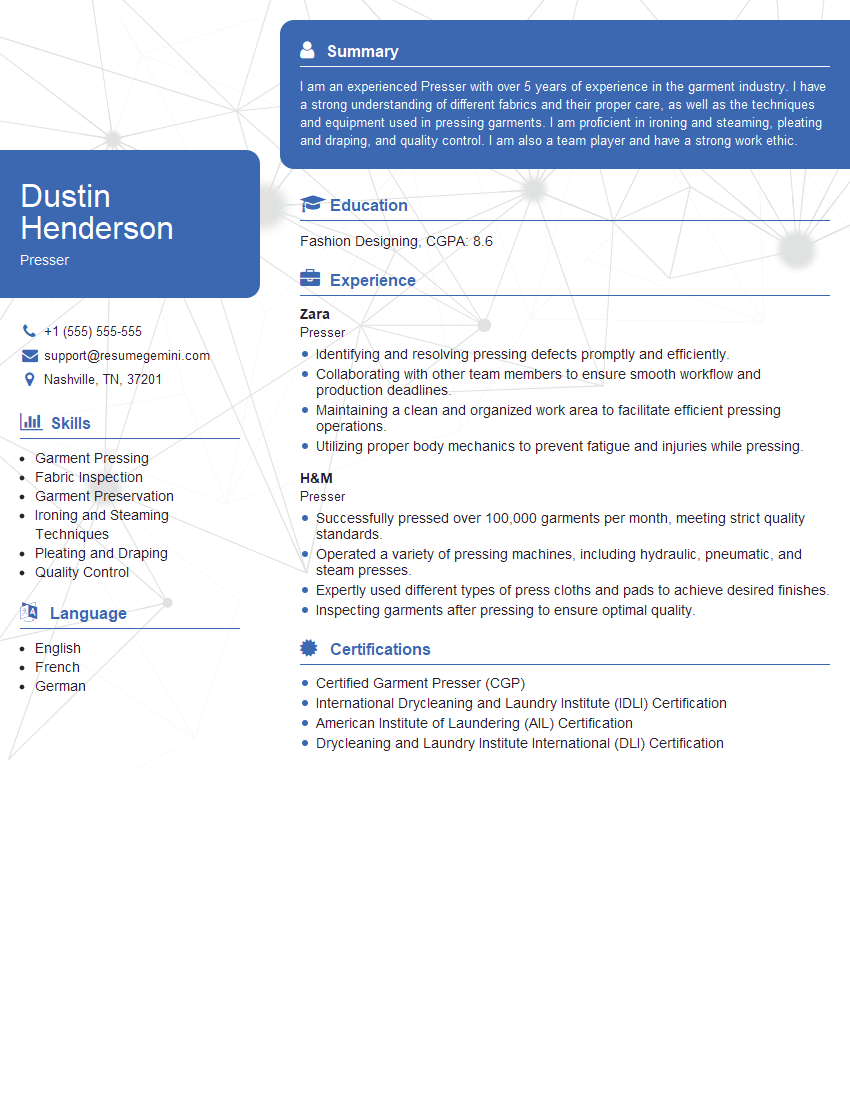
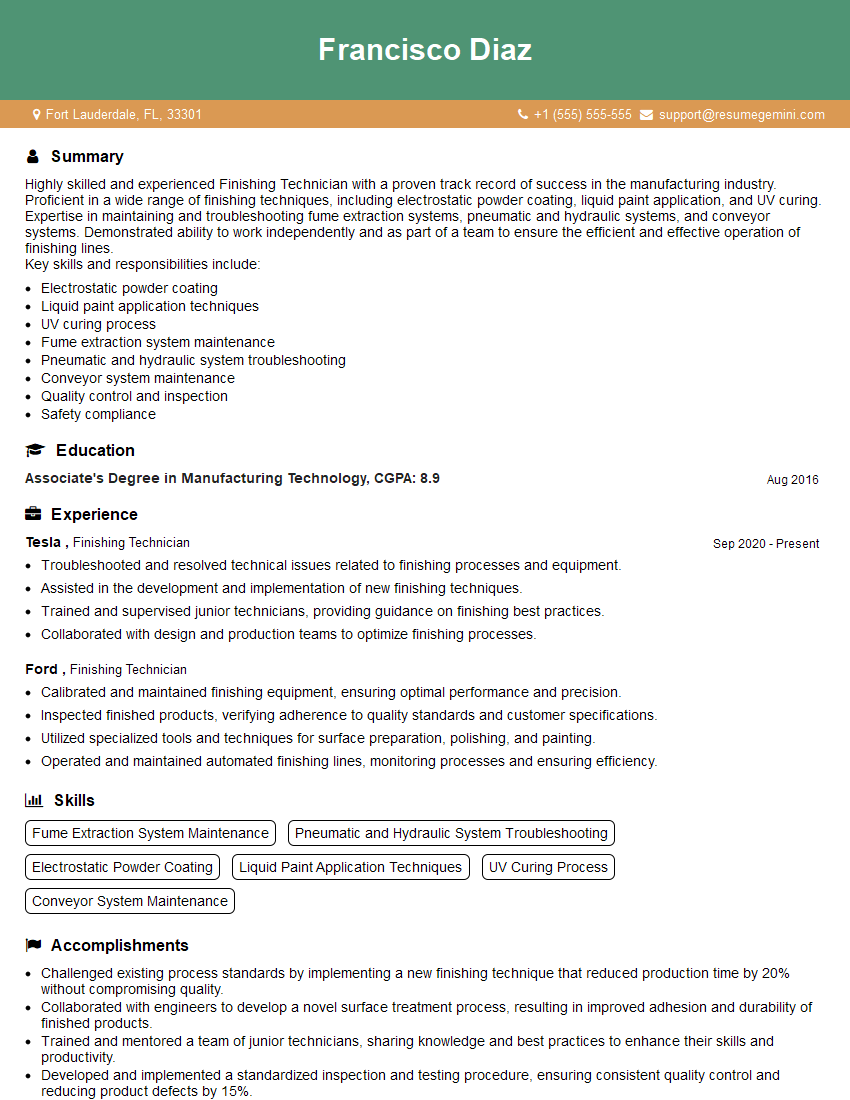
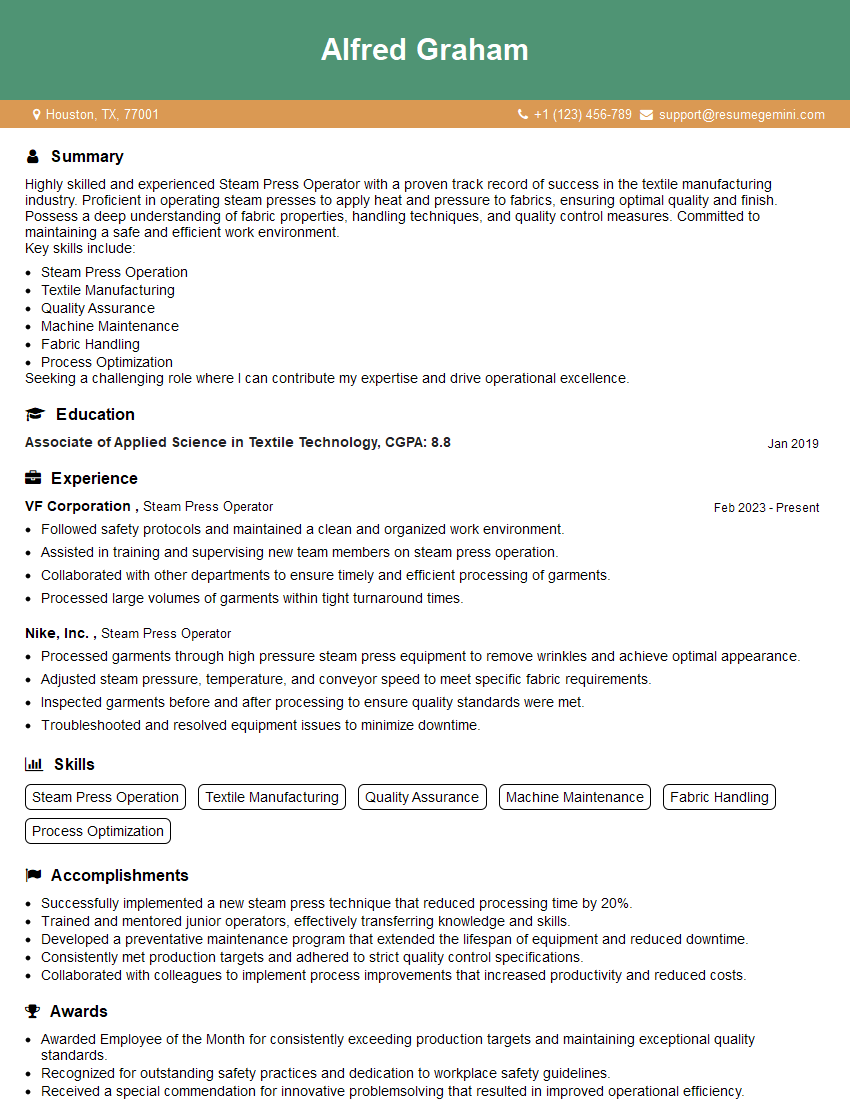
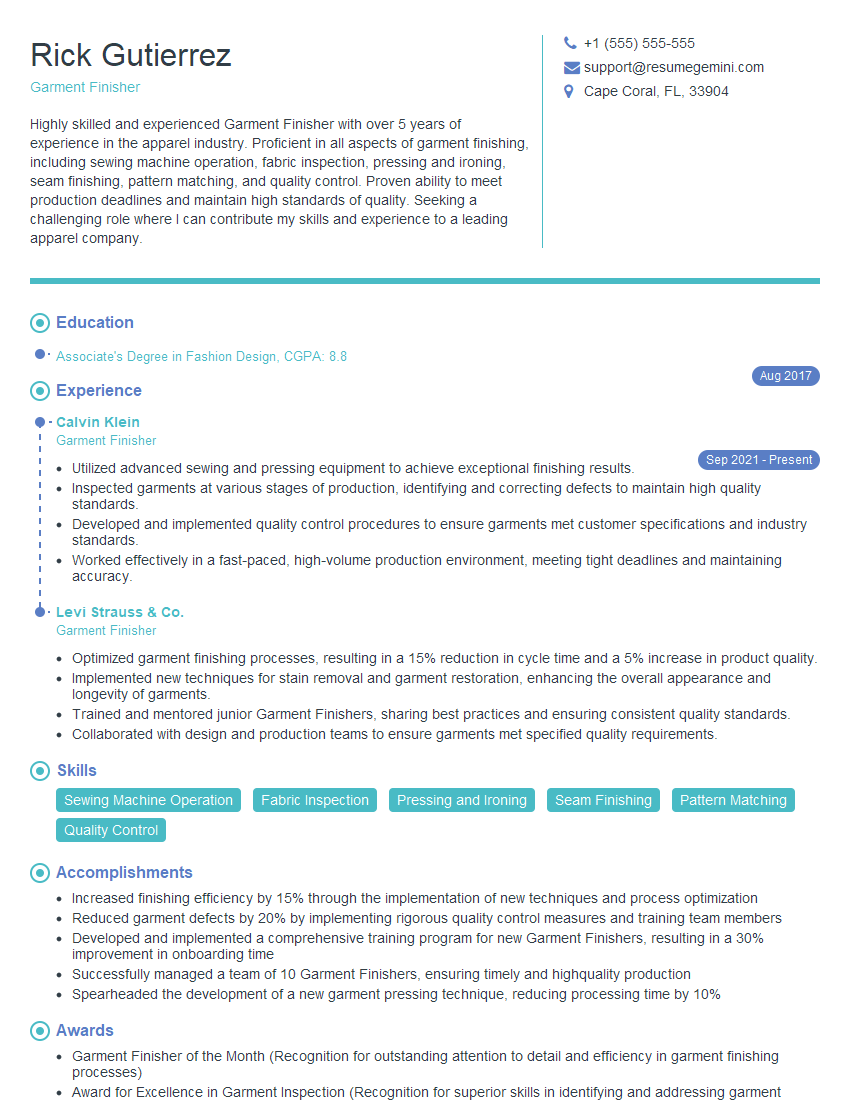
Mastering jacket pressing is a valuable skill that opens doors to diverse opportunities in the apparel and fashion industries, leading to career advancement and increased earning potential. To maximize your job prospects, create a resume that Applicant Tracking Systems (ATS) can easily read and understand. ResumeGemini is a trusted resource for building professional, ATS-friendly resumes that highlight your skills and experience effectively. We provide examples of resumes tailored to the Jacket Pressing field to help you craft a compelling application.
Explore more articles
Users Rating of Our Blogs
Share Your Experience
We value your feedback! Please rate our content and share your thoughts (optional).
What Readers Say About Our Blog
good