Cracking a skill-specific interview, like one for Jewelry Repair and Maintenance, requires understanding the nuances of the role. In this blog, we present the questions you’re most likely to encounter, along with insights into how to answer them effectively. Let’s ensure you’re ready to make a strong impression.
Questions Asked in Jewelry Repair and Maintenance Interview
Q 1. What types of soldering techniques are you proficient in?
Soldering is a fundamental skill in jewelry repair, joining metals using a filler metal with a lower melting point. I’m proficient in several techniques, each suited for different applications.
- Hard soldering (or brazing): This uses higher-temperature alloys, resulting in stronger joints ideal for structural repairs, like fixing broken shanks on rings. Think of it like welding, but for smaller, more delicate pieces.
- Soft soldering: This employs lower-temperature alloys and is suitable for less-stressful areas. It’s perfect for delicate repairs where excess heat could damage gemstones or thin metal sections, for example, repairing a clasp.
- Laser soldering: A more precise and controlled technique, minimizing heat damage. This is invaluable for intricate work and repairs on antique or delicate items. I find it particularly useful when working with thinner gauge metals and complex designs.
Choosing the right technique is critical for a successful repair and depends heavily on the piece’s metal type, design, and the specific damage. For example, I wouldn’t use hard solder on a thin filigree piece as the heat could easily warp the design, preferring soft solder or even laser soldering instead.
Q 2. Describe your experience with stone setting.
Stone setting is an art form requiring precision and patience. My experience spans various setting styles, including:
- Prong setting: Securely holding stones using metal prongs. I’m adept at repairing damaged prongs, re-tipping them, or even replacing them entirely while maintaining the stone’s integrity. I recently repaired a vintage ring where several prongs were severely bent; I carefully straightened them and reinforced them with small additions of solder for increased security.
- Bezel setting: Enclosing stones within a metal frame. I can expertly adjust bezels, address sizing issues, and resolve loose stones. I once had a customer with a bezel-set diamond that was slightly loose. I carefully tightened the bezel, ensuring a secure and flush fit, returning the stone to its original brilliance.
- Channel setting: Setting stones in a groove. This requires careful alignment and pressure. I’m capable of replacing missing stones in channel settings and repairing damage without affecting adjacent stones. I’ve repaired many channel-set wedding bands where stones had fallen out over time.
My experience ensures I can handle all types of settings, offering repairs that are both structurally sound and aesthetically pleasing. I always prioritize the stone’s safety throughout the repair process.
Q 3. How do you identify and repair common jewelry damages like broken clasps or prongs?
Diagnosing and repairing common jewelry damages requires a keen eye and methodical approach.
- Broken clasps: I carefully assess the break to determine the best repair method. This might involve soldering, replacing the clasp entirely (if severely damaged), or even re-attaching a jump ring. I always check for any further damage to the bracelet or necklace before undertaking any repair.
- Damaged prongs: Loose or broken prongs are a frequent issue. I gently assess the stone’s security and the extent of prong damage. Repairs can range from simply reshaping bent prongs to soldering new ones, or in some cases, creating an entirely new prong using a small piece of the same metal.
- Broken chains/links: I use the appropriate tools to carefully open and close chain links or use small jump rings to reinstate the links in a broken chain, ensuring a smooth, invisible repair.
My approach focuses on restoring the jewelry’s original functionality and aesthetics, using high-quality materials and techniques to guarantee durability.
Q 4. Explain your process for cleaning different types of gemstones.
Cleaning gemstones requires a gentle touch and awareness of each stone’s properties. Harsh chemicals or abrasive cleaners can irrevocably damage certain gems.
- Soft stones (e.g., Opals, Pearls): These require the gentlest cleaning, typically using a soft brush and lukewarm soapy water. Avoid ultrasonic cleaners, which can cause cracking.
- Hard stones (e.g., Diamonds, Sapphires, Rubies): These generally tolerate ultrasonic cleaning, though I prefer a more careful approach. I use a soft brush and a mild detergent, followed by a thorough rinse. Ultrasonic cleaning is used cautiously, for a short duration.
- Porous stones (e.g., Turquoise): These are particularly sensitive to water and chemicals. I avoid submersion and gently wipe them with a damp cloth.
I always assess the gemstone before cleaning, choosing the safest and most effective method to ensure its long-term beauty and preservation. I inform clients of the cleaning method used and provide recommendations for future care.
Q 5. What are your skills in metal polishing and finishing?
Metal polishing and finishing are essential for restoring a piece’s luster and removing scratches. My skills encompass various techniques:
- Hand polishing: Using various grades of polishing compounds and cloths to achieve a high shine on intricate surfaces, often finishing with a final buff for maximum luster. This is ideal for achieving a precise, targeted shine on delicate areas.
- Rotary polishing: Using a motorized polisher with different attachments to achieve a uniform finish across larger areas. This method allows for efficient polishing of larger pieces or items with repetitive patterns.
- Electro-polishing: Using an electrochemical process for a smoother, more even finish. It’s very effective on highly tarnished or pitted metal. This method is usually reserved for heavily tarnished pieces or pieces requiring a very high shine.
I select the technique based on the metal type, the level of damage, and the desired finish. I meticulously work to eliminate scratches and imperfections while preserving the integrity of the metal.
Q 6. How do you handle repairs on intricate pieces?
Repairing intricate pieces demands precision, patience, and a deep understanding of jewelry construction. My approach involves:
- Detailed examination: I meticulously examine the piece under magnification to pinpoint the damage and understand its cause. Photography is often used to document the process and any pre-existing issues.
- Careful disassembly: Intricate pieces often require careful disassembly before repair, ensuring all components are protected and recorded. I frequently employ tiny clamps, tweezers, and specialized tools to prevent damage during dismantling.
- Strategic repair: Repairs are carried out methodically, focusing on structural integrity and preserving the piece’s original aesthetic. I often use microsoldering and laser soldering techniques for these challenging jobs.
- Meticulous reassembly: After repair, the piece is carefully reassembled, ensuring the perfect alignment and function of all components.
I use microscopic work and specialized tools to address challenges, always keeping the safety and preservation of the piece as a top priority. A recent example was a Victorian brooch with incredibly fine filigree work, where I used laser soldering and extremely fine tools to flawlessly repair a broken section.
Q 7. What tools and equipment are you most comfortable using?
My toolbox is well-stocked with a range of tools essential for precise and efficient repairs. I’m highly proficient with:
- Microscopes: Essential for examining fine details and performing intricate repairs.
- Various soldering torches and equipment: Including those for different soldering techniques (soft, hard, and laser).
- Stone setting tools: Various types of punches, hammers, and setting burs for secure stone setting and repair.
- Polishing equipment: Rotary polishers, buffing wheels, and a range of polishing compounds.
- Ultrasonic cleaners: Used cautiously and selectively for cleaning hard gemstones.
- Tweezers, pliers, and other hand tools: A diverse collection for handling small components and intricate work.
My familiarity with these tools, combined with my expertise in their proper application, ensures efficient and precise repairs that meet the highest standards of quality.
Q 8. Describe your experience with watch repair (if applicable).
While my primary expertise lies in jewelry repair, I possess a significant understanding of watch repair, particularly in the area of mechanical watch movements. My experience isn’t solely focused on full overhauls but encompasses troubleshooting and repairing common issues like replacing broken hands, fixing minor stem problems, and cleaning and lubricating movements. For instance, I once successfully repaired a vintage pocket watch that had been inactive for over 50 years, requiring meticulous cleaning, lubrication, and the replacement of a worn mainspring. This involved using specialized tools and a strong understanding of the intricate mechanics involved. I am comfortable working on both automatic and manual-winding movements but always acknowledge the limits of my expertise and recommend seeking a certified watchmaker for complex repairs beyond my skill set.
Q 9. How do you assess the value and potential repair costs of a damaged piece?
Assessing the value and repair costs of a damaged piece is a multi-step process. First, I carefully examine the piece, noting the type of metal, gemstones, and the extent of the damage. Then, I identify the specific repair needed, whether it’s simple cleaning, prong repair, stone replacement, or more extensive structural work. I research current market values for similar pieces using online databases, auction results, and comparing with similar items from reputable jewelers to establish a reasonable valuation of the piece before damage. The cost estimate is then compiled by considering the cost of materials (metals, stones), labor hours, and any specialized equipment or techniques required. For instance, a simple prong repair on a gold ring might cost less than replacing a complex gemstone setting in a platinum piece. Transparency is key; I always present clients with a detailed breakdown of the costs, allowing them to make informed decisions.
Q 10. What are the different types of metals used in jewelry making and their properties?
Numerous metals are used in jewelry making, each with unique properties affecting durability, cost, and aesthetic appeal.
- Gold (Au): Highly malleable and ductile, resistant to corrosion. Available in various karats (24k being pure gold), influencing its purity and hardness.
- Silver (Ag): Also malleable and ductile, but tarnishes easily, requiring regular polishing.
- Platinum (Pt): Rare, highly resistant to corrosion and tarnish, very dense and durable, usually more expensive than gold.
- Palladium (Pd): Similar to platinum, but less expensive, a good alternative for hypoallergenic jewelry.
- White Gold: Yellow gold alloyed with other metals (like palladium or nickel) to create a white appearance. Often rhodium plated for extra shine and tarnish resistance.
- Sterling Silver: 92.5% silver, alloyed with other metals for strength.
Q 11. How do you handle customer concerns and complaints regarding repairs?
Handling customer concerns is paramount. I always listen attentively, acknowledging their frustration and validating their feelings. I explain the repair process clearly, answering their questions thoroughly and honestly. If a misunderstanding exists concerning the repair or cost, I provide further clarification, perhaps showing examples of similar repairs. If there’s a genuine issue with the repair, I offer a solution, which might include a re-do, partial refund, or alternative options. I strive to create a positive experience, even during challenging situations, building trust through open communication and a willingness to find a mutually acceptable resolution. For example, if a client is unhappy with the polish on their piece, I’ll gladly re-polish it to their satisfaction, ensuring their jewelry exceeds expectations.
Q 12. Describe your experience with metal casting.
My experience with metal casting extends to both lost-wax casting and investment casting. Lost-wax casting is a more traditional method, involving creating a wax model, which is then encased in investment material. The wax is melted out, and molten metal is poured into the resulting mold. Investment casting offers similar results with higher precision, especially useful for intricate designs. I’m proficient in preparing molds, selecting appropriate metals for casting, and controlling the casting parameters to ensure high-quality results. Understanding the nuances of different casting methods allows for successful repairs and creation of customized pieces. For example, I’ve successfully recreated a lost earring component through lost-wax casting, matching the original piece exactly in terms of design and metal.
Q 13. How do you maintain a clean and organized workspace?
Maintaining a clean and organized workspace is crucial for efficiency and safety. I follow a consistent cleaning routine at the end of each workday, ensuring all tools are properly stored and cleaned. My workbench is organized with tools arranged logically for quick access. I use designated containers for different materials, such as precious metals, gemstones, and findings. A well-organized space reduces the risk of damage to delicate items, minimizes clutter, and facilitates a smooth workflow. Think of it like a surgeon’s operating room – precision and cleanliness are non-negotiable for quality work.
Q 14. What safety precautions do you take while working with jewelry repair tools?
Safety is paramount in jewelry repair. I always wear safety glasses to protect my eyes from flying debris. When working with chemicals (like cleaning solutions or fluxes), I use appropriate ventilation and protective gloves. I handle sharp tools with care, employing caution to avoid cuts and injuries. I regularly inspect my equipment for damage and ensure proper grounding for electrical tools. This meticulous approach minimizes risk and protects both myself and my surroundings. Proper safety habits are not only essential but demonstrate professional responsibility and concern for my own well-being and that of my clients.
Q 15. How familiar are you with different types of gemstones and their characteristics?
My familiarity with gemstones extends beyond simple identification; I understand their diverse physical and chemical properties, which directly impacts repair strategies. For example, I know that softer stones like opals require gentler handling during cleaning and setting than harder stones like sapphires or diamonds. I’m proficient in identifying various cuts (brilliant, emerald, princess, etc.), recognizing natural vs. synthetic stones, and understanding the potential for treatments like heating or irradiation which influence their durability and repair considerations. I regularly consult gemological resources to stay abreast of the latest advancements in gemstone identification and treatment techniques. I can assess a gemstone’s integrity, identify potential weaknesses, and advise clients on the best course of action for maintenance or repair, ensuring longevity and preservation of the stone’s beauty.
- Hardness: Understanding the Mohs hardness scale is crucial. A diamond (10) needs different handling than a topaz (8).
- Cleavage and Fracture: Knowing how a stone breaks helps prevent damage during repair.
- Inclusion Identification: Identifying inclusions helps determine a stone’s origin and potential vulnerabilities.
Career Expert Tips:
- Ace those interviews! Prepare effectively by reviewing the Top 50 Most Common Interview Questions on ResumeGemini.
- Navigate your job search with confidence! Explore a wide range of Career Tips on ResumeGemini. Learn about common challenges and recommendations to overcome them.
- Craft the perfect resume! Master the Art of Resume Writing with ResumeGemini’s guide. Showcase your unique qualifications and achievements effectively.
- Don’t miss out on holiday savings! Build your dream resume with ResumeGemini’s ATS optimized templates.
Q 16. What are your experience with resizing rings?
Ring resizing is a common procedure I perform regularly. The process involves carefully removing or adding metal to adjust the ring’s circumference. The approach depends on the ring’s design and metal type. Simple band resizing might involve stretching or compressing the metal, while more intricate designs may necessitate cutting and soldering. I always prioritize preserving the integrity of the ring and its setting. I carefully assess the ring for any pre-existing damage before starting the resize. For example, if a ring is already very thin, stretching might weaken it further, so soldering may be a better option. I always discuss all options and potential risks with the customer before proceeding.
For example, I recently resized a platinum wedding band with a delicate filigree design. Stretching wasn’t an option due to the design, so I carefully cut the band, added a small piece of platinum, and precisely soldered it back together, ensuring a seamless finish that maintained the ring’s original beauty.
Q 17. Describe your experience with engraving and other custom work.
I have extensive experience with engraving, both hand-engraving and using computer-aided design (CAD) technology. Hand-engraving allows for intricate designs and personal touches, while CAD provides greater precision and repeatability for complex patterns. I frequently undertake custom work such as creating bespoke settings for unique gemstones or designing and crafting entirely new pieces based on client specifications. This includes incorporating clients’ existing stones into new designs, offering alternative settings to enhance the stone’s beauty. I work closely with clients to develop designs, selecting materials and techniques to achieve the desired aesthetic and functionality.
I recently completed a custom project where a client wanted to transform their grandmother’s pearl necklace into a pendant for their daughter. I carefully removed the pearls, restrung them with a finer thread, and designed a modern, yet elegant, setting incorporating the original clasp. The result was a treasured heirloom transformed into a contemporary piece, holding both historical and sentimental value.
Q 18. How do you handle repairs that require special skills or equipment?
When a repair requires specialized skills or equipment, I have established a network of trusted professionals I can consult or collaborate with. For example, for laser welding of delicate pieces or complex stone resetting, I partner with a jeweler specializing in those areas. This ensures the highest quality repair while allowing me to focus on my areas of expertise. Transparency is key – clients are always informed about the need for specialized services and the associated costs.
I am also committed to ongoing professional development. I regularly attend workshops and seminars to keep my skills sharp and learn new techniques, ensuring I can handle the vast majority of repair challenges in-house. I constantly upgrade my tools and equipment, investing in technologies that improve precision and efficiency.
Q 19. How familiar are you with ethical sourcing and sustainability in jewelry?
Ethical sourcing and sustainability are paramount in my practice. I prioritize using recycled metals whenever possible, reducing the environmental impact of new material extraction. I carefully vet my suppliers, ensuring they adhere to responsible sourcing practices and fair labor standards. I actively seek out gemstones and materials certified by reputable organizations promoting ethical and sustainable practices. I transparently communicate my commitment to ethical sourcing to my clients, providing them with confidence in the origin and impact of their jewelry.
For example, I always ask suppliers for documentation regarding the origin and processing of materials. I look for certifications indicating fair trade practices or environmental responsibility. I communicate this information to my clients, showcasing that their jewelry reflects their values.
Q 20. How do you troubleshoot issues during repairs?
Troubleshooting during repairs involves a systematic approach. I begin by carefully examining the problem, identifying the root cause. This might involve using magnification tools to assess the damage. Once the problem is identified, I research potential solutions, consulting reference materials or colleagues if necessary. I always test my solutions incrementally, evaluating the outcome at each step to prevent further damage. If a solution doesn’t work, I revisit my analysis and try an alternative approach. Documentation of each step is crucial for both tracking progress and learning from any setbacks.
For instance, if a clasp is malfunctioning, I systematically check each component for wear, damage, or misalignment before attempting any repair. I might start by cleaning and lubricating the parts before resorting to more involved repairs like replacing a worn component.
Q 21. What are the common problems encountered in jewelry repair and how do you address them?
Common problems in jewelry repair include broken prongs, loose stones, damaged clasps, chain breaks, and scratches. Addressing these issues requires a combination of technical skill and careful assessment. For broken prongs, I carefully repair or replace them, ensuring secure stone settings. Loose stones require resetting, sometimes involving specialized techniques depending on the setting type. Damaged clasps may need repair or replacement, depending on the severity of the damage. Chain breaks are repaired by soldering or using specialized joining techniques. Scratches can be polished out, but this might require specialized polishing compounds and techniques. Each problem is approached methodically, balancing the need for structural integrity with the aesthetic preservation of the piece.
For example, a client might bring in a ring with a loose diamond. I would carefully examine the setting, determine why the stone became loose (worn prongs, damage to the setting), and then either repair the existing prongs or reset the stone using a suitable technique to ensure a secure and aesthetically pleasing result.
Q 22. How do you ensure the quality of your repair work?
Ensuring the quality of my repair work is paramount. It’s a multi-step process that begins with a thorough assessment of the piece. I carefully examine the damage, considering the metal type, gemstone settings, and overall structural integrity. I then select the appropriate repair techniques and materials, prioritizing the preservation of the original design and craftsmanship whenever possible. Throughout the repair, I meticulously document each step, ensuring traceability and accountability. Finally, I conduct a rigorous quality check, inspecting the repair under magnification to ensure precision and durability. This includes checking for any imperfections, loose stones, or structural weaknesses. I often perform a stress test, gently manipulating the piece to simulate real-world wear and tear before returning it to the client. This commitment to a meticulous process ensures the longevity and beauty of the repaired jewelry. For example, when repairing a delicate antique brooch with intricate filigree work, I might use a specialized low-heat soldering technique to avoid damaging the surrounding metal.
Q 23. Describe your experience with repairing antique or vintage jewelry.
I have extensive experience repairing antique and vintage jewelry, often dating back to the Victorian, Edwardian, and Art Deco eras. These pieces often present unique challenges due to their age, the use of now-obsolete techniques and materials, and the sometimes delicate nature of their construction. For instance, I’ve repaired antique brooches where the original solder was brittle due to age and required a very careful and precise application of modern, compatible solder. Dealing with antique jewelry requires a deep understanding of historical craftsmanship, material science, and the ethical considerations of preservation. I prioritize minimally invasive repair techniques whenever possible, aiming to retain as much of the original character as I can. My approach emphasizes preserving the historical value and aesthetic integrity of each piece. I meticulously research the specific era and techniques used to create the jewelry to inform my repair strategy. One memorable instance involved restoring a Victorian diamond necklace where several prongs were severely worn and broken. I carefully recreated the prongs using traditional methods and materials, ensuring that the repair was both structurally sound and aesthetically unobtrusive.
Q 24. What are your skills in using CAD software for jewelry design?
While my primary focus is on the hands-on repair of jewelry, I am proficient in using CAD (Computer-Aided Design) software for design modifications and creating custom pieces. I primarily use RhinoGold, a specialized software for jewelry design. This allows me to create accurate 3D models of existing pieces for better visualization during repairs or to design custom components needed to restore missing elements. For instance, if a section of a bracelet is damaged beyond repair, I can use CAD software to model the replacement piece, ensuring a seamless fit and integration with the original design. I can also utilize CAD to design custom settings for gemstones or to plan more complex repairs involving intricate metalwork. Although I am not solely a jewelry designer, my proficiency in CAD complements my repair skills, allowing me to offer a more comprehensive service to my clients.
Q 25. How do you prioritize tasks in a busy repair shop?
In a busy repair shop, effective task prioritization is crucial. I employ a system that combines urgency and importance. I use a combination of a physical task board and a digital scheduling system. Urgent repairs, such as those with tight deadlines or involving significant damage, are given immediate attention. I typically prioritize repairs based on the level of difficulty and the potential value of the item. Smaller, straightforward tasks might be grouped together for efficient processing. I also take into account the client’s expectations and communication, ensuring that transparent communication about timelines is maintained. For example, I might tackle a quick stone-setting job while waiting for the specialized materials needed for a complex antique restoration. This balance allows me to manage multiple projects concurrently without compromising quality or client satisfaction.
Q 26. What methods do you use to evaluate the integrity of a setting?
Evaluating the integrity of a setting is a crucial step before any repair. I use a multi-pronged approach. Firstly, I visually inspect the setting under magnification. This allows me to identify any loose stones, worn prongs, or cracks in the metal. Then, I gently test the security of each stone by applying slight pressure with a blunt instrument. I look for any play or movement. If I suspect deeper issues, I might use a digital microscope to get a closer look and identify any hidden damage. For example, in an intricate pave setting, the microscope is essential to identify cracks in the metal around the small gemstones. Finally, if the stone itself is loose, I might use x-ray tools or other specialized equipment to understand the underlying damage to the setting. This meticulous inspection ensures that all potential problems are identified before proceeding with any repair.
Q 27. How do you determine the best repair method for a specific piece?
Choosing the best repair method depends on several factors, including the type of damage, the material of the jewelry, and the client’s preferences. For example, a simple prong repair might involve refitting or replacing the existing prong. More extensive damage may necessitate a complete resetting of the stone or even the reconstruction of a section of the setting. In each case, I consider the aesthetics, the structural integrity, and the longevity of the repair. For an antique piece, I prioritize traditional methods to maintain its historical integrity. For modern pieces, I may use more contemporary techniques where they ensure a better, longer-lasting result. Prior to recommending a repair method, I always discuss all options with the client, detailing the costs, timelines, and the relative merits of each approach. Transparency and collaboration with the client are essential parts of the process. If the jewelry requires extensive work that is beyond my capabilities I will direct the client to a colleague or specialist with the expertise needed for that specific project.
Q 28. Explain your experience with different types of adhesives used in jewelry repair.
I have experience with various adhesives used in jewelry repair, but I prioritize using them only when absolutely necessary, and always choose the best material for the particular circumstances and the type of metal. In most cases, traditional soldering and other metalworking techniques are preferred for their strength and durability. However, in certain delicate situations, such as repairing hairline cracks in thin metal or securing small components, specific adhesives can be beneficial. I might use epoxy resins for non-structural repairs and laser welding for more delicate joining. Each adhesive has specific properties, including strength, flexibility, and compatibility with different metals. For example, I might use a UV-curable adhesive for a small repair that requires fast setting time, while an epoxy resin might be better suited for a larger repair that requires more flexibility. However, it’s imperative to understand that adhesives are not a substitute for proper soldering or metalwork in structural repairs. I always disclose the use of adhesive to the client, emphasizing its limitations and ensuring that they understand the long-term implications. I would never use an adhesive in a repair that would compromise the structural integrity of the piece.
Key Topics to Learn for Jewelry Repair and Maintenance Interview
- Metal Repair Techniques: Understanding soldering, welding, and the repair of various precious metals (gold, silver, platinum). Practical application includes demonstrating knowledge of different soldering techniques and their suitability for various metals and repairs.
- Stone Setting: Mastering various stone setting methods (prong, bezel, channel, pave). Practical application involves describing the process of securely setting different types of gemstones and addressing potential challenges.
- Jewelry Cleaning and Polishing: Knowing appropriate cleaning solutions and polishing techniques for different metals and gemstones. Practical application focuses on explaining safe and effective cleaning methods to avoid damage.
- Chain Repair and Restoration: Understanding how to repair broken chains, replace clasps, and restore damaged links. Practical application involves describing troubleshooting techniques for various chain types and their respective repairs.
- Gem Identification and Grading: Familiarity with common gemstones and their properties. Practical application includes differentiating between various gemstones and assessing their quality based on clarity, color, cut, and carat.
- Troubleshooting and Problem Solving: Analyzing and resolving common jewelry repair challenges. Practical application focuses on describing a methodical approach to diagnosing and fixing problems, showcasing problem-solving skills.
- Safety Procedures and Equipment Usage: Understanding and adhering to safety protocols while using specialized tools and equipment. Practical application involves detailing safe practices with tools like torches, ultrasonic cleaners, and various hand tools.
- Repair Documentation and Estimation: Accurately documenting repair processes and providing realistic cost estimations. Practical application includes demonstrating clear communication regarding repair specifics and pricing.
Next Steps
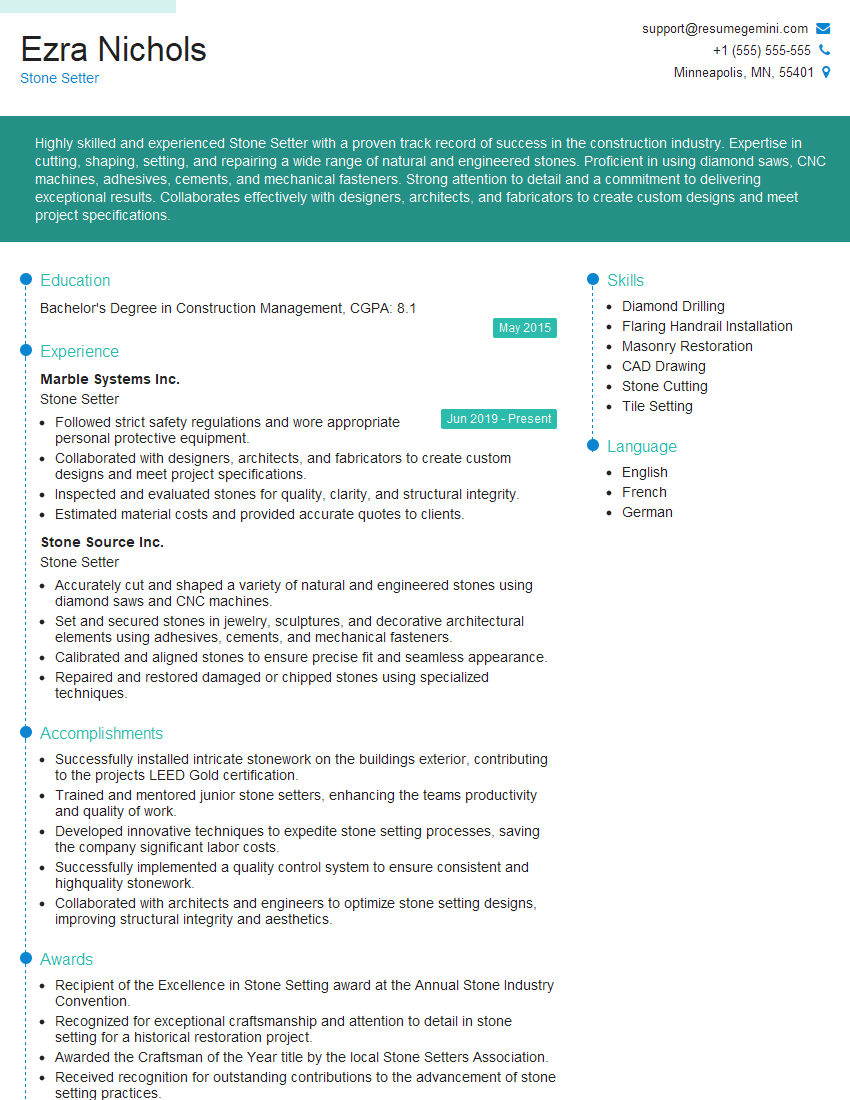
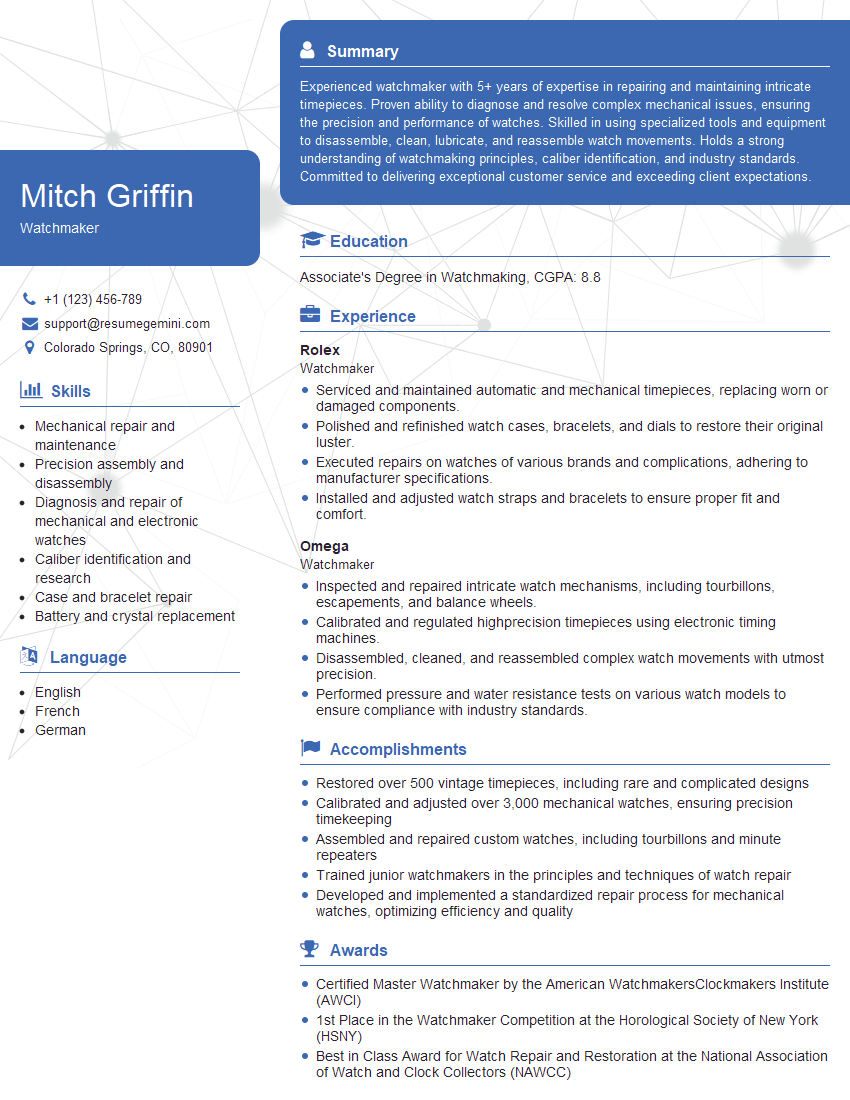
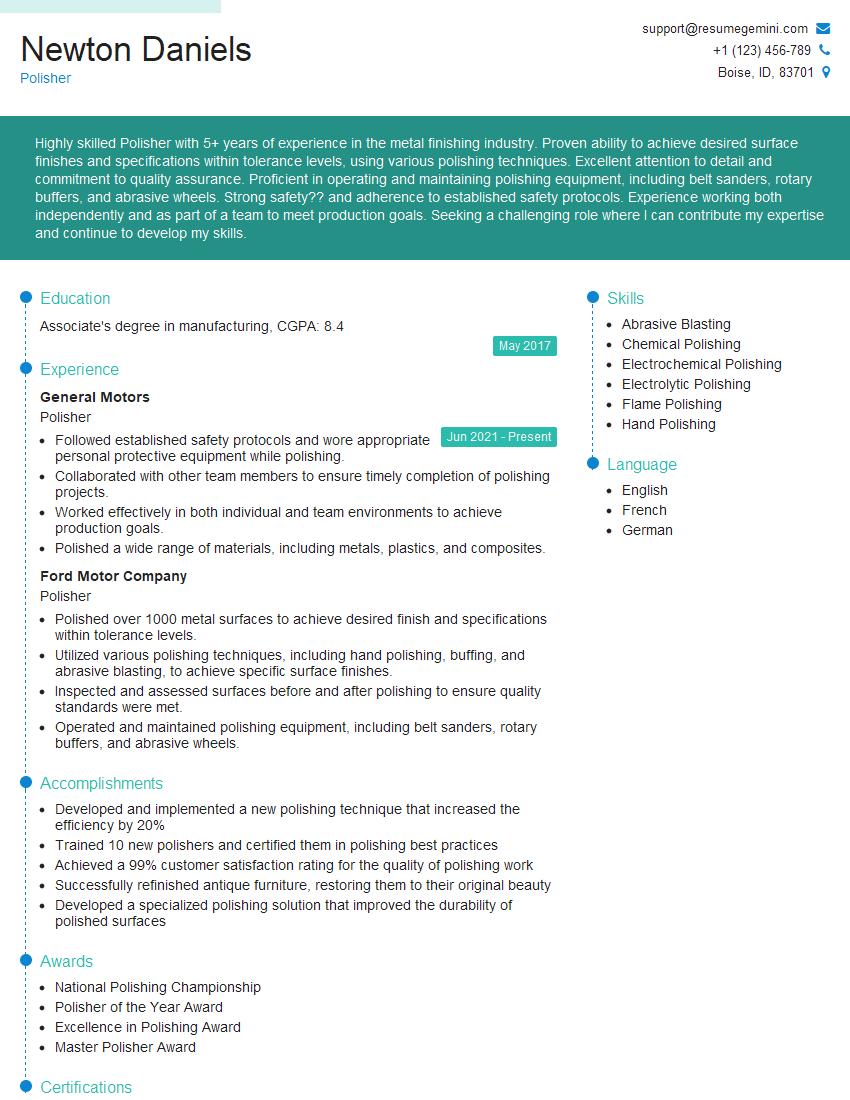
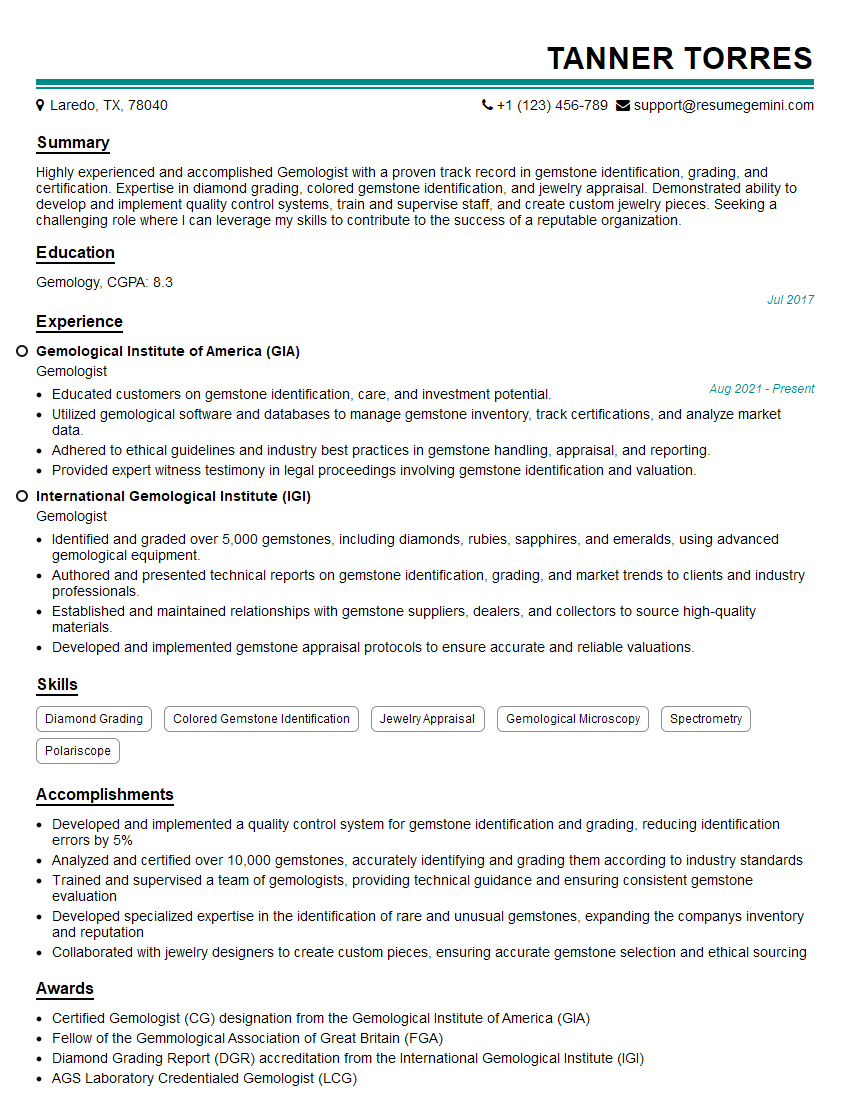
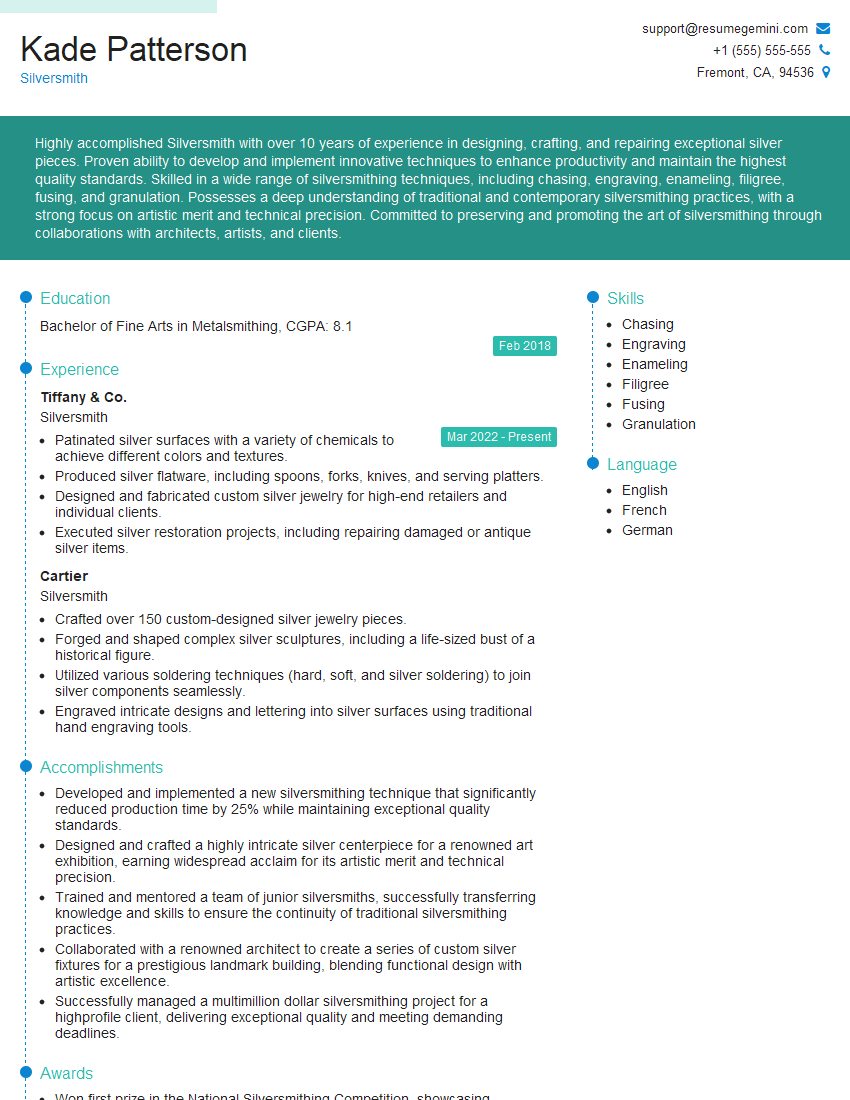
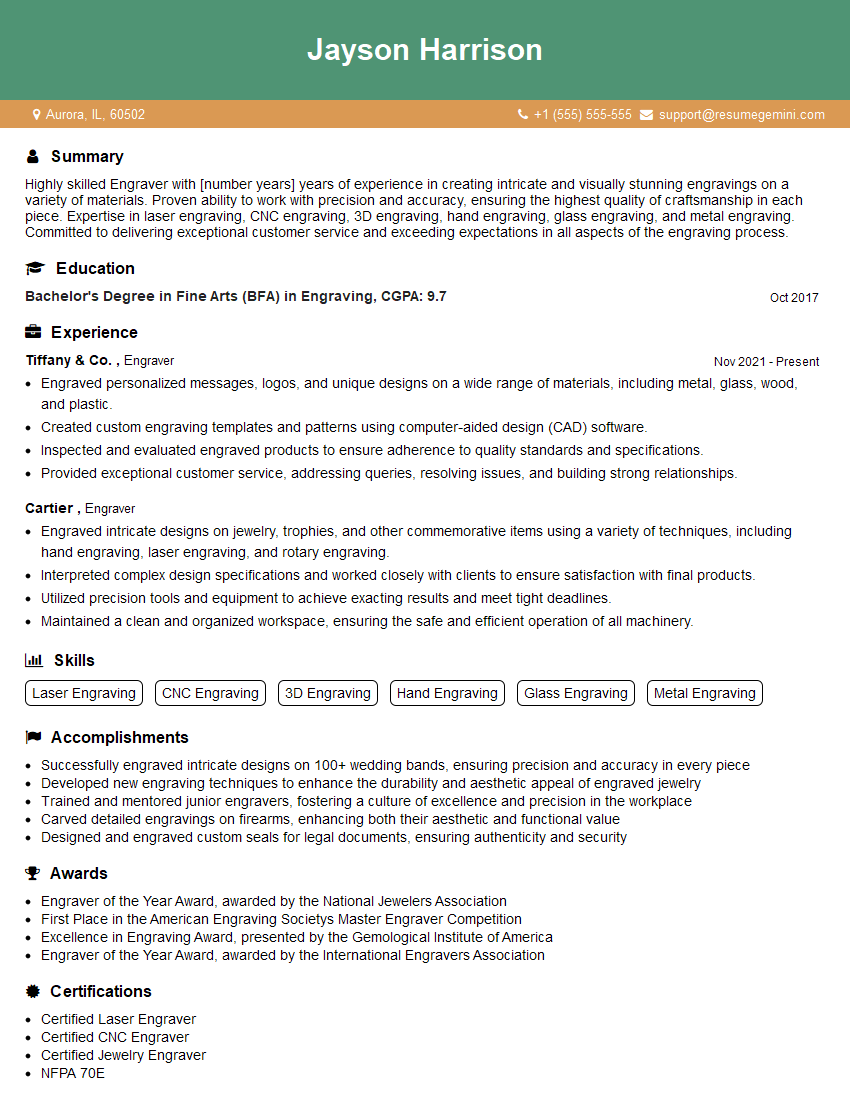
Mastering Jewelry Repair and Maintenance opens doors to exciting career opportunities with significant earning potential and professional growth. A strong resume is crucial for showcasing your skills and experience to potential employers. To maximize your job prospects, create an ATS-friendly resume that highlights your key qualifications and achievements. ResumeGemini is a trusted resource to help you build a professional and impactful resume, ensuring your application stands out. Examples of resumes tailored specifically to Jewelry Repair and Maintenance are available to guide you through the process.

Explore more articles
Users Rating of Our Blogs
Share Your Experience
We value your feedback! Please rate our content and share your thoughts (optional).
What Readers Say About Our Blog
Very informative content, great job.
good