Interviews are opportunities to demonstrate your expertise, and this guide is here to help you shine. Explore the essential Jewelry Retail and Wholesale Operations interview questions that employers frequently ask, paired with strategies for crafting responses that set you apart from the competition.
Questions Asked in Jewelry Retail and Wholesale Operations Interview
Q 1. Describe your experience managing inventory in a jewelry retail environment.
Effective jewelry inventory management is crucial for profitability and operational efficiency. It involves a multi-faceted approach encompassing accurate tracking, strategic ordering, and efficient stock rotation. In my previous role at [Previous Company Name], I implemented a comprehensive inventory system using a combination of physical stock counts and a dedicated POS system. This allowed for real-time tracking of every piece, from the moment it arrived until it was sold.
We utilized a barcode system to identify each item, making stocktaking quick and accurate. Our system also generated automated reports on slow-moving items, allowing us to proactively adjust pricing or marketing strategies. For example, we noticed a particular line of earrings was underperforming. By implementing a targeted discount and featuring them prominently in our window display, we successfully moved the inventory and increased profitability.
Furthermore, I implemented a system of regular cycle counting, checking specific sections of the inventory on a rotating schedule, rather than relying on large, infrequent complete counts. This minimized disruption to daily operations and provided a more consistent understanding of stock levels.
Q 2. Explain your approach to visual merchandising in a jewelry store.
Visual merchandising in jewelry retail is all about creating an appealing and inviting atmosphere that entices customers to browse and purchase. It’s about storytelling through display. My approach focuses on creating distinct zones within the store, each with a unique theme or style. For instance, one area might highlight classic designs, while another features contemporary pieces.
I believe in the power of lighting. Proper lighting can dramatically enhance the sparkle and brilliance of gemstones. We used strategically placed spotlights to highlight key pieces and created a warm, inviting ambiance with softer ambient lighting.
The use of props and displays is also critical. We used velvet displays to showcase individual pieces, allowing them to stand out. We also incorporated creative elements, like incorporating natural elements like wood or stone depending on the jewelry’s style, that complement the jewelry without overpowering it. Finally, I always prioritize clear and concise signage to help customers navigate the store and understand pricing.
Q 3. How do you handle customer complaints regarding damaged or faulty jewelry?
Handling customer complaints about damaged or faulty jewelry requires a calm, empathetic, and professional approach. The goal is to resolve the issue quickly and fairly, preserving the customer relationship. My first step is always to listen attentively to the customer’s concerns, acknowledging their frustration and validating their experience.
Next, I thoroughly examine the jewelry to determine the nature and cause of the damage. Depending on the situation, I may offer a repair, replacement, or refund. For example, if the damage was due to a manufacturing defect, a replacement is typically the best solution. If it was due to customer misuse (within reason), we may offer a repair at a reduced cost.
Throughout the process, maintaining clear and open communication is paramount. I keep the customer informed of every step and aim to exceed their expectations with the resolution. Detailed record-keeping is also crucial, both for customer satisfaction and for tracking potential issues with specific suppliers or manufacturing processes.
Q 4. What strategies do you employ to increase sales in a jewelry retail setting?
Increasing sales in a jewelry retail setting requires a multifaceted strategy that blends marketing, customer service, and operational excellence. One key aspect is targeted marketing. This might involve email campaigns to loyal customers, social media marketing showcasing new arrivals or special offers, or collaborating with local influencers.
Secondly, excellent customer service is essential. Building rapport, providing personalized recommendations, and exceeding customer expectations foster loyalty and repeat business. Offering excellent after-sales service, such as cleaning or minor repairs, demonstrates care and commitment.
Another strategy is offering exclusive promotions and events. Hosting trunk shows featuring designers, offering loyalty programs, or running seasonal sales can attract new customers and incentivize existing ones. Finally, effectively managing inventory, ensuring that the store offers a diverse range of items to cater to various tastes and budgets is paramount.
Q 5. Describe your experience with point-of-sale (POS) systems in jewelry retail.
Point-of-sale (POS) systems are the backbone of any successful jewelry retail operation. My experience with POS systems includes using [Mention specific POS system names, e.g., Lightspeed Retail, Square, etc.]. These systems allow for efficient sales processing, inventory management, and customer relationship management (CRM).
A robust POS system allows for tracking sales data, generating reports, and analyzing trends, providing valuable insights into business performance. Features like barcode scanning and integrated payment processing streamline transactions and reduce errors. For example, the ability to track sales by item, salesperson, and payment method helps identify top-selling items, successful sales strategies, and payment preferences.
Furthermore, a good POS system integrates with other business systems like accounting software and inventory management databases, making it easier to manage the overall business.
Q 6. How do you ensure the security of high-value jewelry in a retail or wholesale setting?
Securing high-value jewelry requires a layered security approach. This involves physical security measures, such as robust display cases with tamper-resistant locks, strategically placed security cameras with high-resolution recording capabilities, and alarm systems that are monitored 24/7.
Beyond physical security, personnel training is crucial. Employees should be well-versed in security protocols, including procedures for handling cash and high-value items. Regular security audits and staff training sessions are crucial to address vulnerabilities and ensure employees remain vigilant.
In a wholesale setting, the security measures are enhanced to include secured storage facilities with restricted access, potentially including biometric access controls, and insurance policies tailored to the specific value of the inventory. Regular inventory checks and advanced inventory tracking systems are vital for preventing theft or loss and accurately monitoring stock levels.
Q 7. Explain your understanding of different jewelry metals and gemstones.
My understanding of jewelry metals and gemstones encompasses both their properties and their market value. Common jewelry metals include gold (in various karats), platinum, silver, and palladium. Each metal possesses unique characteristics impacting its durability, color, and cost. For instance, platinum is more durable and hypoallergenic than gold, but also more expensive.
Regarding gemstones, I have a working knowledge of the ‘four Cs’ – cut, clarity, carat, and color – used to assess a gemstone’s quality and value. Different gemstones possess different properties. Diamonds, for example, are prized for their brilliance and hardness, while sapphires and emeralds are valued for their rich color saturation. I also understand the various treatments and enhancements gemstones can undergo and their impact on their value and durability.
This knowledge allows me to assess the quality of jewelry, provide informed advice to customers, and make informed sourcing and pricing decisions. I am also familiar with various gemstone certifications and grading systems, which are vital for ensuring the authenticity and quality of the pieces we sell.
Q 8. How do you identify and authenticate different types of jewelry?
Authenticating jewelry requires a multi-faceted approach combining knowledge, tools, and sometimes, expert consultation. It starts with visual inspection, assessing the piece’s craftsmanship, hallmarks, and overall condition. For example, a genuine diamond will exhibit specific brilliance and fire, different from cubic zirconia. We look for maker’s marks, which are often tiny engravings indicating the manufacturer or designer. These can be particularly helpful with identifying vintage or antique pieces. Beyond visual inspection, we may use specialized tools like diamond testers to determine the presence of genuine diamonds, or spectrometers to analyze the composition of gemstones. For high-value items or those with uncertain provenance, independent gemological laboratory certification is crucial. This provides an unbiased assessment of the stone’s characteristics (carat, cut, clarity, color) and authenticity. Essentially, a combination of experience, equipment, and, when necessary, expert opinions ensure accurate authentication.
Q 9. What are your strategies for managing supplier relationships in the jewelry wholesale industry?
Managing supplier relationships in the jewelry wholesale industry is paramount. It’s built on trust, transparency, and mutual benefit. I prioritize building long-term partnerships, not just transactional relationships. This involves:
- Thorough Due Diligence: Carefully vetting potential suppliers for their ethical sourcing practices, quality control measures, and financial stability. This might involve site visits and verification of certifications.
- Clear Communication: Maintaining open communication channels to ensure clear expectations regarding product quality, delivery timelines, and payment terms. Regular meetings and consistent updates are essential.
- Negotiation and Fair Pricing: Balancing the need for competitive pricing with ensuring fair compensation for the supplier. A healthy relationship isn’t solely about cost reduction.
- Conflict Resolution: Establishing a proactive system for addressing any conflicts or issues that arise. Transparency and a willingness to find mutually acceptable solutions are crucial.
- Performance Evaluation: Regularly reviewing supplier performance based on metrics such as on-time delivery, product quality, and adherence to ethical standards. This provides feedback and helps identify areas for improvement.
Q 10. How do you negotiate pricing with jewelry suppliers?
Negotiating pricing with jewelry suppliers requires a strategic approach that balances securing favorable terms with maintaining positive relationships. It’s not just about getting the lowest price; it’s about finding a price that’s fair and sustainable for both parties. My strategy involves:
- Market Research: Thoroughly researching market prices for comparable items to establish a baseline for negotiations. This ensures I’m entering negotiations with a realistic understanding of value.
- Volume Discounts: Negotiating volume discounts based on the quantity of jewelry ordered. Higher volumes often translate into better pricing.
- Payment Terms: Discussing payment terms to determine favorable options for both parties, such as early payment discounts or extended credit terms (though carefully considering the financial implications).
- Relationship Building: Cultivating long-term relationships with suppliers can often lead to better pricing and more favorable terms over time, as trust and mutual benefit are established.
- Win-Win Approach: Focusing on a win-win approach to negotiations, where both parties feel they have received a fair outcome. This helps maintain a positive business relationship, leading to long-term benefits.
Q 11. Describe your experience with jewelry appraisal and grading.
Jewelry appraisal and grading are integral parts of the industry, influencing pricing, insurance valuations, and legal transactions. My experience spans various aspects, including understanding the 4Cs of diamond grading (cut, clarity, carat, color) and gem identification. I can assess gemstones based on their color, cut, clarity, and carat weight, using standardized grading scales like the GIA system. For metals, I’m proficient in identifying different karats and alloys, assessing their purity and durability. Appraisal involves not just evaluating the individual components but also the overall design, craftsmanship, and market value of the piece. I regularly utilize gemological instruments, such as refractometers and spectrometers, to analyze gemstones. For antique or estate jewelry, understanding historical context and market trends is crucial in determining their value. Accurate appraisal requires a combination of technical knowledge and market awareness. A recent appraisal involved a vintage necklace; my detailed report considered the age, the maker’s mark (identifying its provenance), the gemstones’ quality, and current market trends for similar pieces, ultimately determining its fair market value.
Q 12. How do you manage the logistics of shipping and receiving jewelry?
Managing the logistics of shipping and receiving jewelry demands meticulous attention to detail and security. The high value and fragility of jewelry necessitate specialized handling and insurance. My approach involves:
- Secure Packaging: Utilizing high-quality, tamper-evident packaging designed to protect jewelry from damage during transit. This often includes custom-fit cases, protective inserts, and robust outer containers.
- Insurance: Ensuring adequate insurance coverage for both inbound and outbound shipments to protect against loss or damage. This is often handled through specialized insurers who understand the nuances of the jewelry industry.
- Tracking and Traceability: Implementing robust tracking systems to monitor shipments throughout the entire process. This ensures accountability and allows us to respond promptly to any issues.
- Secure Transportation: Partnering with reputable and insured carriers specialized in handling high-value goods. This may involve utilizing secure delivery services and chain-of-custody protocols.
- Inventory Management: Utilizing a sophisticated inventory management system to track incoming and outgoing shipments accurately. This minimizes discrepancies and ensures efficient stock management.
Q 13. Explain your understanding of jewelry insurance and risk management.
Jewelry insurance and risk management are critical to mitigating potential losses. This includes protecting against theft, damage, loss during transit, and even acts of nature. Understanding different types of insurance policies, such as all-risk policies that cover a wide range of scenarios, is crucial. Risk management extends beyond insurance and involves:
- Security Measures: Implementing robust security measures within our facilities, such as alarm systems, secure storage, and controlled access. Employee background checks also contribute to risk mitigation.
- Inventory Control: Maintaining accurate inventory records to track items and quickly identify any discrepancies. Regular inventory audits are essential.
- Due Diligence on Suppliers: Thoroughly vetting suppliers to ensure their ethical sourcing practices and quality control measures minimize the risk of receiving counterfeit or damaged goods.
- Compliance: Staying up-to-date on all relevant regulations and laws pertaining to the jewelry industry to ensure compliance and minimize legal risks.
- Insurance Claims Process: Having a clearly defined process for filing insurance claims in the event of loss or damage, ensuring smooth and timely payouts.
Q 14. How do you stay up-to-date on the latest trends in the jewelry industry?
Staying current with jewelry industry trends requires a multifaceted approach. I leverage various resources to maintain my knowledge and expertise:
- Industry Publications: Regularly reading trade publications and magazines such as National Jeweler and JCK to stay informed about market trends, new designs, and technological advancements.
- Trade Shows and Events: Attending industry trade shows and events, such as JCK Las Vegas, to network with peers, learn about new products, and observe emerging trends firsthand. These events offer invaluable insights into evolving styles and consumer preferences.
- Online Resources: Utilizing online platforms and social media to track trending designs, observe consumer preferences, and analyze market data. Monitoring social media and blogs dedicated to jewelry fashion provides a good understanding of customer preferences.
- Gemological Institutes: Staying informed through gemological institutes like GIA for updates on gemstone identification, treatments, and grading standards. This ensures we maintain the highest levels of accuracy and expertise.
- Competitor Analysis: Observing and analyzing the strategies and product offerings of competitors to identify new trends and opportunities. This aids in developing our business strategy and anticipating market changes.
Q 15. Describe your experience with jewelry marketing and advertising.
My approach to jewelry marketing and advertising is multifaceted, focusing on a blend of traditional and digital strategies tailored to the specific target audience and the nature of the jewelry (e.g., high-end bespoke pieces versus everyday fashion jewelry). For high-end pieces, I leverage print advertising in luxury lifestyle magazines and targeted social media campaigns on platforms like Instagram, focusing on high-quality photography and videography that showcase the craftsmanship and exclusivity. For more accessible jewelry, I utilize a broader range of digital marketing, including influencer collaborations on platforms like TikTok and YouTube, paid search advertising (Google Ads), and email marketing campaigns segmented by customer preferences and purchase history. I also believe strongly in the power of public relations; securing features in relevant blogs and publications builds credibility and brand awareness organically. Analyzing marketing ROI is crucial, so I utilize analytics tools to track campaign performance, adjust strategies accordingly, and ensure efficient resource allocation.
For example, in a recent campaign for a collection of handcrafted silver earrings, we saw a 30% increase in sales after launching a TikTok influencer campaign. Conversely, a print campaign for our high-end diamond necklaces yielded a lower immediate ROI, but significantly boosted brand recognition and led to several high-value client inquiries.
Career Expert Tips:
- Ace those interviews! Prepare effectively by reviewing the Top 50 Most Common Interview Questions on ResumeGemini.
- Navigate your job search with confidence! Explore a wide range of Career Tips on ResumeGemini. Learn about common challenges and recommendations to overcome them.
- Craft the perfect resume! Master the Art of Resume Writing with ResumeGemini’s guide. Showcase your unique qualifications and achievements effectively.
- Don’t miss out on holiday savings! Build your dream resume with ResumeGemini’s ATS optimized templates.
Q 16. How do you manage a team in a jewelry retail or wholesale environment?
Managing a team in the jewelry industry requires a blend of strong leadership, mentorship, and a deep understanding of the nuances of the business. I believe in fostering a collaborative and supportive environment where each team member feels valued and empowered. This begins with clear communication of expectations, providing regular feedback, and setting achievable goals. I delegate tasks based on individual strengths and provide opportunities for professional development. Regular team meetings are essential to address challenges, celebrate successes, and ensure everyone is aligned with the business objectives. I utilize a coaching style of management, guiding and supporting my team members rather than simply directing them. This approach not only improves individual performance, but also fosters a sense of teamwork and shared responsibility.
For instance, when I’ve had team members struggling with a specific sales technique, instead of criticizing their performance, I provide tailored training and demonstrate successful techniques through role-playing exercises, creating a more positive and productive learning experience.
Q 17. How do you handle employee performance issues?
Addressing employee performance issues requires a systematic and empathetic approach. I begin with a private conversation to understand the root cause of the problem, ensuring a safe space for open communication. This could involve seeking clarification on performance expectations, identifying any obstacles hindering their success, or addressing personal factors impacting their work. I document all conversations and create a performance improvement plan (PIP) with specific, measurable, achievable, relevant, and time-bound (SMART) goals. Regular check-ins are crucial to monitor progress and offer continued support. If the performance does not improve despite the PIP, it may unfortunately lead to disciplinary action, but this is always a last resort, following established company procedures.
For instance, if a sales associate consistently misses their sales targets, I might discover they lack confidence in presenting higher-priced items. This is addressed by providing specialized product training and mentorship from a top-performing team member. This proactive approach improves their skillset and boosts their confidence, thus improving overall performance. However, if improvement is not noted, a PIP is enacted, eventually leading to termination as a last resort, following HR guidelines.
Q 18. What are your strategies for improving customer satisfaction?
Improving customer satisfaction is paramount in the jewelry business, where trust and building long-term relationships are key. My strategies focus on exceeding customer expectations at every touchpoint. This starts with exceptional customer service, providing personalized attention, and actively listening to customer needs. Offering a variety of payment options, flexible return policies, and providing detailed information about product care enhance the overall buying experience. Proactive communication, including order updates and post-purchase follow-ups, keeps customers informed and builds rapport. Gathering customer feedback through surveys and reviews helps identify areas for improvement and tailor services accordingly. Implementing a loyalty program rewards repeat customers and fosters long-term relationships.
For example, we implemented a system where customers can schedule virtual consultations with our designers to create bespoke pieces, improving personalized service and creating a more luxurious client experience.
Q 19. What software or technology are you proficient in for managing jewelry operations?
My proficiency in jewelry operations software includes experience with inventory management systems like NetSuite and Zoho Inventory, enabling efficient tracking of stock levels, sales data, and order fulfillment. I’m also adept at using point-of-sale (POS) systems like Square and Shopify POS for processing transactions and managing customer data. For design and manufacturing, I have experience with CAD (Computer-Aided Design) software like Rhino and Matrix, and for financial management, I’m familiar with accounting software such as QuickBooks. Proficiency in these technologies enables streamlining operations, improving efficiency, and ultimately boosting profitability.
Q 20. How do you manage budgets and expenses in a jewelry business?
Managing budgets and expenses in a jewelry business requires meticulous attention to detail and a deep understanding of cost structures. I start by creating a comprehensive budget, forecasting revenue and expenses based on historical data, market trends, and sales projections. This involves careful analysis of direct costs (materials, labor, manufacturing) and indirect costs (rent, utilities, marketing). Regular monitoring of expenses against the budget is crucial, identifying any variances and taking corrective actions. I use various financial reports to track key performance indicators (KPIs) such as gross profit margin, operating expenses, and inventory turnover. Negotiating favorable terms with suppliers and optimizing inventory levels are essential to controlling costs and maximizing profitability. The goal is to ensure efficient resource allocation while maintaining a healthy profit margin.
For example, by negotiating better deals with our diamond suppliers, we were able to reduce our material costs by 15%, significantly impacting our overall profitability.
Q 21. Describe your experience with forecasting sales and inventory needs.
Forecasting sales and inventory needs is crucial for a jewelry business to avoid stockouts or overstocking, both of which can significantly impact profitability. I employ a multi-faceted approach, incorporating historical sales data, market trends, seasonal variations, economic indicators, and marketing campaign plans. Time series analysis, statistical forecasting methods, and trend analysis are used to predict future demand. This involves analyzing past sales data to identify patterns and seasonality, and then extrapolating these patterns to predict future sales. I also consider external factors such as economic conditions and fashion trends. The accuracy of forecasting is refined through continuous monitoring of actual sales, adjusting predictions based on deviations from the forecast. This iterative process enables us to maintain optimal inventory levels and avoid costly stockouts or excessive inventory holding.
For example, by analyzing sales data from previous holiday seasons, we were able to accurately predict a surge in demand for specific styles of earrings and necklaces. This allowed us to increase our inventory levels accordingly, ensuring sufficient stock to meet the higher demand, avoiding any potential loss of sales.
Q 22. How do you ensure compliance with relevant regulations in the jewelry industry?
Ensuring compliance in the jewelry industry involves meticulous adherence to a range of regulations, varying by location. This includes, but is not limited to, hallmarking laws (ensuring precious metal content is accurately represented), import/export regulations (dealing with tariffs and documentation for international trade), ethical sourcing guidelines (verifying conflict-free diamonds and responsible mining practices), and consumer protection laws (accurate pricing and product descriptions). We maintain detailed records of all transactions, certifications, and origin documentation. Regular internal audits and external compliance reviews are conducted to identify and address potential issues proactively. For example, we utilize a specialized software system that tracks the entire lifecycle of each piece from sourcing to sale, ensuring full traceability and adherence to regulations throughout the process. Failure to comply can result in significant penalties, reputational damage, and legal issues; therefore, proactive compliance is paramount to our business.
Q 23. Explain your experience with loss prevention strategies in a jewelry retail environment.
Loss prevention in a jewelry retail environment is critical. Our strategies are multifaceted and encompass robust security measures such as high-quality surveillance systems (CCTV) covering all areas, including blind spots, sophisticated alarm systems with immediate alerts, and secure display cases with tamper-evident seals. We also focus on staff training: employees undergo thorough security protocols, including procedures for handling suspicious activity, recognizing common theft techniques, and maintaining customer awareness without creating a hostile environment. We implement strict inventory management practices – regular stock counts, barcode scanning, and advanced inventory software – to quickly identify discrepancies. Finally, we employ visual merchandising techniques that deter theft while enhancing customer experience; for instance, strategically placing high-value items in high-visibility, secure zones. Think of it like a layered security approach, where each measure complements the next, creating a strong defense against loss.
Q 24. How do you handle returns and exchanges in a jewelry retail setting?
Handling returns and exchanges in a jewelry retail setting requires careful attention to detail and adherence to clear policies communicated upfront. Our policy allows returns within a specified timeframe (e.g., 14 days) with the original receipt, providing the jewelry is in its original condition, unworn, and undamaged. For exchanges, we offer store credit or an exchange for a different item of equal or greater value. Damaged or altered items are not accepted for return. We meticulously inspect all returned items to assess their condition and ensure no damage occurred while in the customer’s possession. The process is documented thoroughly, including photos and descriptions, to avoid any disputes. We strive for a smooth and customer-friendly return process, understanding that it’s a crucial element of building trust and loyalty. Occasionally, disputes arise, and in such cases, we aim for a fair and mutually agreeable resolution, perhaps through a partial refund or store credit depending on the situation.
Q 25. Describe your experience with different sales techniques in the jewelry industry.
My sales approach in the jewelry industry is built on building rapport and understanding individual customer needs. I don’t employ high-pressure tactics. Instead, I focus on consultative selling. This involves actively listening to understand the customer’s preferences, lifestyle, and the occasion for the purchase. I use open-ended questions to uncover their needs and desires. For example, ‘What is the special occasion?’ or ‘What style of jewelry are you typically drawn to?’ Once I have a clear understanding, I guide them toward pieces that best suit their taste and budget. I also educate customers about different metals, gemstones, and jewelry care, building confidence and trust. Storytelling is also a valuable technique – sharing the history or unique qualities of a piece adds emotional resonance and enhances the buying experience. Beyond this, I always follow up post-sale to ensure customer satisfaction and encourage future purchases.
Q 26. How do you build and maintain relationships with key customers in the wholesale sector?
Building and maintaining relationships with key wholesale customers requires a consistent and personalized approach. Regular communication is essential – this includes email updates, phone calls, and occasional in-person meetings. I focus on understanding their specific needs and challenges, tailoring my offerings and support accordingly. Providing them with exclusive previews of new collections and special offers is a great way to foster loyalty. Building trust is crucial, and that involves being reliable, responsive, and transparent in all interactions. Active listening and addressing any concerns promptly are key. For instance, I proactively resolve any inventory or delivery issues to ensure their business operations run smoothly. Moreover, I strive to be a valuable resource, offering expertise on market trends and providing marketing support to help them succeed. Ultimately, it’s about forging a partnership, where mutual success is the goal.
Q 27. What is your approach to managing conflicts between team members?
My approach to managing conflicts between team members centers on fostering open communication and a culture of respect. I encourage team members to first attempt resolving their issues directly, using ‘I’ statements to express concerns clearly and respectfully. If a direct resolution isn’t possible, I act as a neutral mediator, facilitating a conversation where both parties can express their perspectives. My goal is to identify the root cause of the conflict, not simply to assign blame. I ask clarifying questions to understand each party’s point of view. We work collaboratively to find a mutually agreeable solution, focusing on actionable steps to prevent future conflicts. In some instances, individual coaching or team-building exercises may be necessary to improve communication and teamwork. Documentation of the conflict resolution process is maintained to track progress and ensure accountability.
Q 28. Describe your experience with jewelry repair and maintenance processes.
Experience with jewelry repair and maintenance involves a deep understanding of various jewelry construction techniques and materials. We partner with skilled and reputable jewelers for complex repairs, ensuring quality and craftsmanship. For simpler repairs, such as cleaning, polishing, or minor adjustments, we have trained staff who handle these in-house. We utilize specialized tools and equipment designed for delicate jewelry work. All repair work is documented with detailed descriptions and photos of the damage and repair work done. We provide customers with a transparent cost estimate upfront, outlining the type of repair and associated labor and material costs. We set realistic timelines for repairs and keep customers informed of their progress. Proper care and maintenance of jewelry are stressed to customers, educating them on appropriate cleaning methods and safe storage practices to prolong the life of their pieces. Customer satisfaction is our priority throughout the entire repair process.
Key Topics to Learn for Jewelry Retail and Wholesale Operations Interview
- Understanding the Jewelry Market: Develop a strong grasp of current market trends, including popular styles, precious metal prices, and gemstone valuations. Consider the differences between high-end, mid-range, and budget-friendly jewelry markets.
- Retail Sales & Customer Service: Practice effective communication and sales techniques tailored to the luxury goods sector. Learn how to handle customer objections, upsell and cross-sell effectively, and provide exceptional customer service.
- Inventory Management: Understand inventory tracking systems, stock control procedures, and the importance of accurate record-keeping. Be prepared to discuss methods for minimizing shrinkage and maximizing inventory turnover.
- Wholesale Operations: Familiarize yourself with the process of sourcing, negotiating, and managing relationships with suppliers. Understand pricing strategies, sales contracts, and order fulfillment in a wholesale environment.
- Visual Merchandising & Display: Learn the principles of effective visual merchandising to enhance the appeal of jewelry displays in both retail and wholesale settings. Consider lighting, presentation, and creating a luxurious shopping experience.
- Loss Prevention & Security: Understand common security procedures for jewelry retail and wholesale operations, including inventory control, alarm systems, and staff training related to theft prevention.
- Point of Sale (POS) Systems: Gain familiarity with different POS systems and their applications in processing transactions, managing inventory, and generating sales reports. Be prepared to discuss your experience with various POS systems.
- Pricing and Profitability Analysis: Understand the factors that go into determining pricing, including cost of goods, overhead, and desired profit margins. Be prepared to discuss strategies for maximizing profitability.
Next Steps
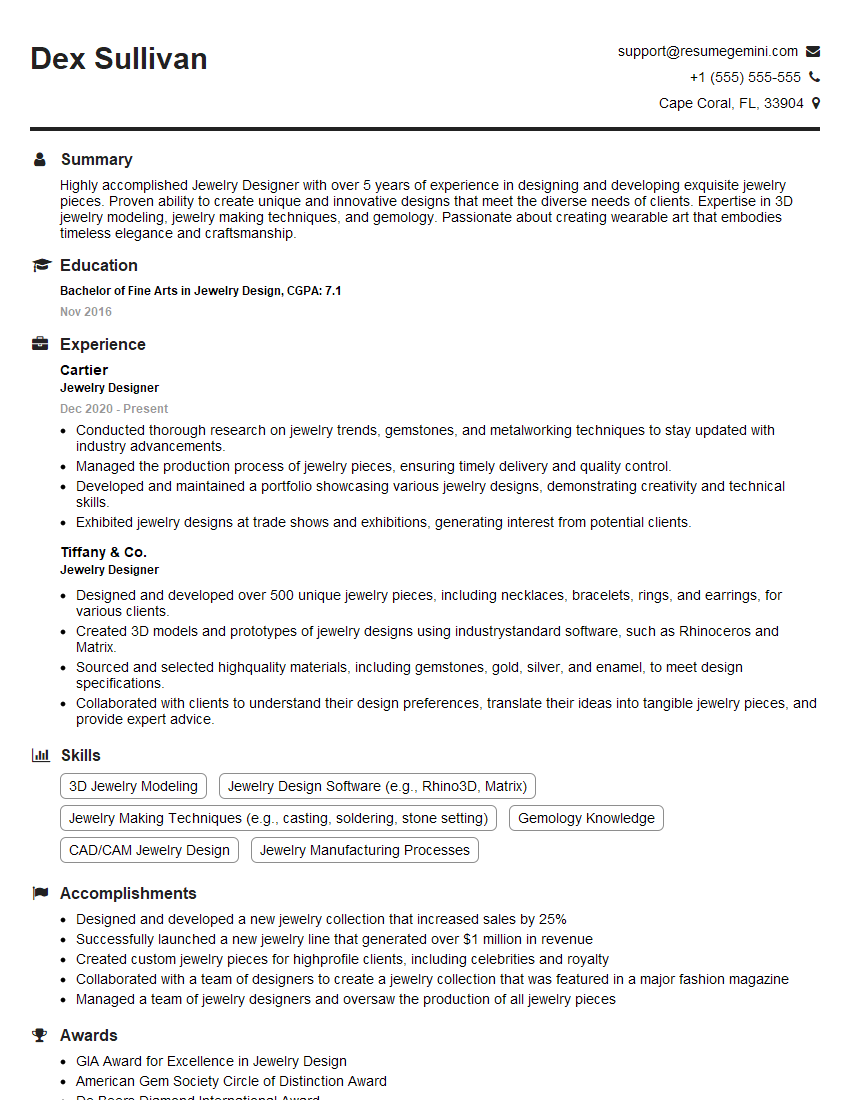
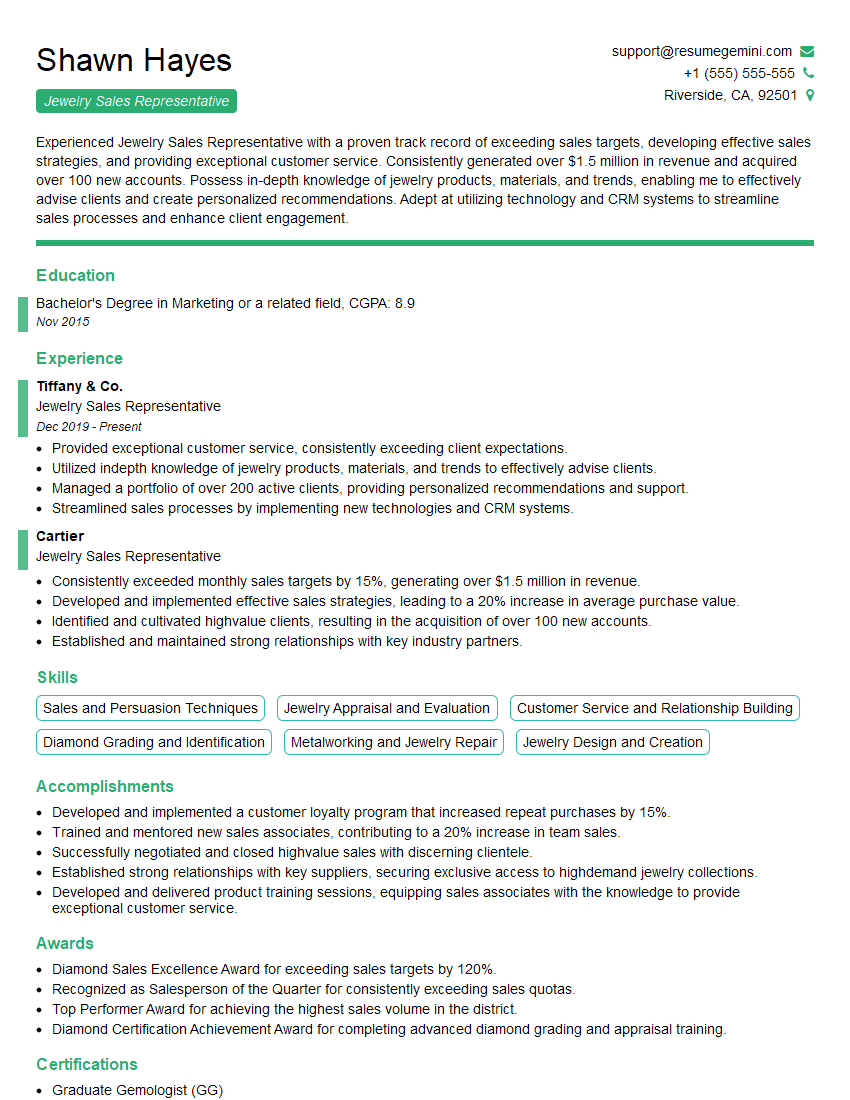
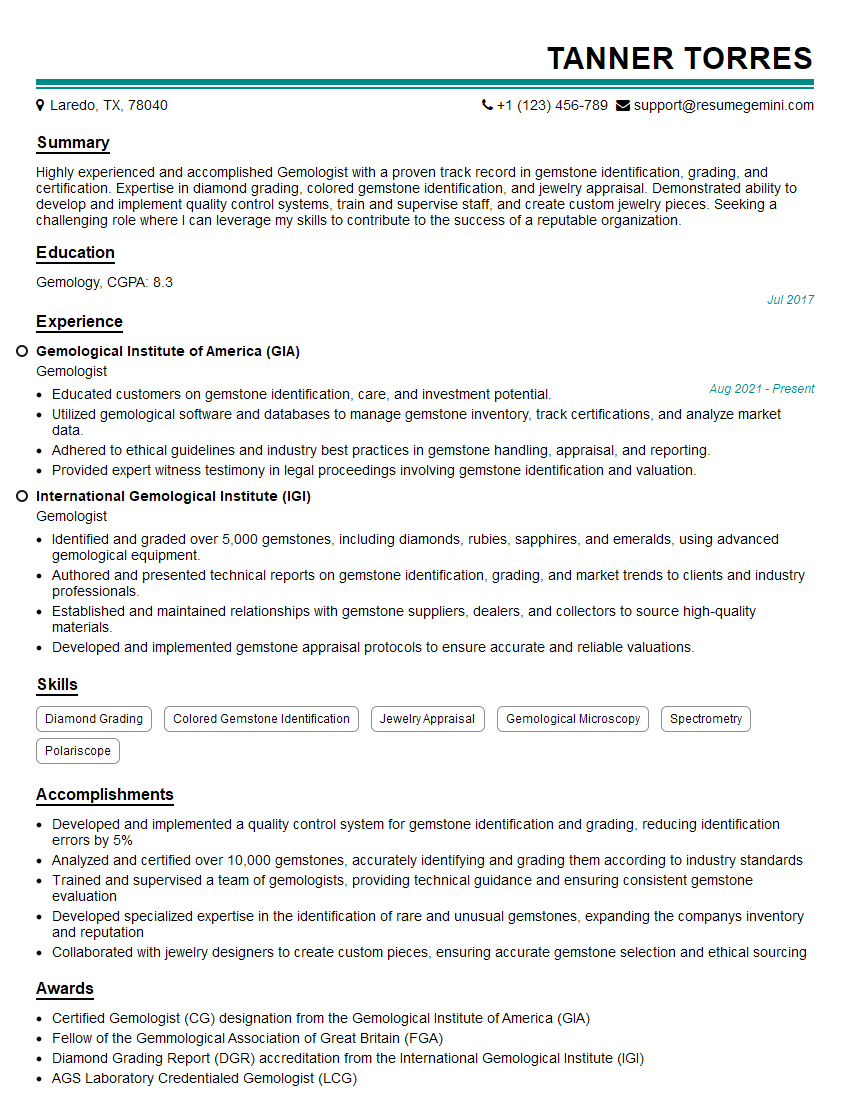
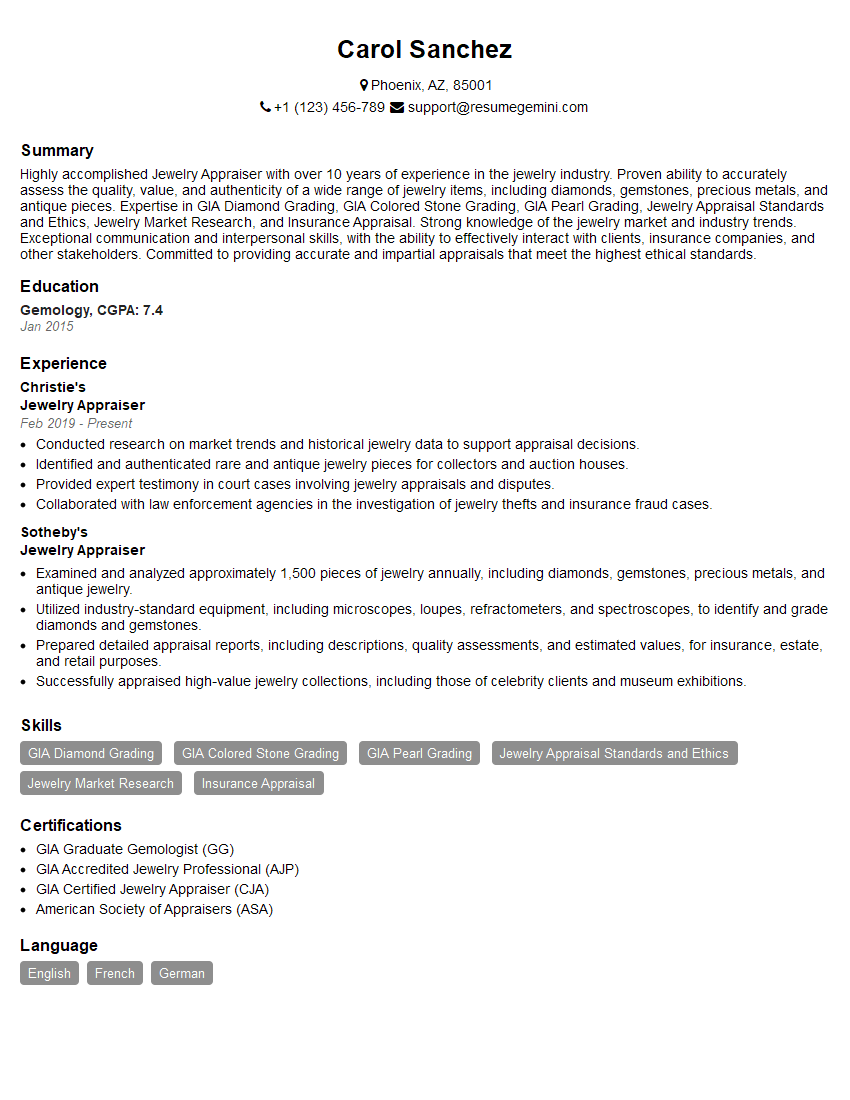
Mastering Jewelry Retail and Wholesale Operations is crucial for advancing your career in this exciting and lucrative industry. A strong understanding of these key areas will significantly increase your chances of securing your dream role. Creating an ATS-friendly resume is paramount in today’s job market. To ensure your resume effectively highlights your skills and experience, we highly recommend using ResumeGemini. ResumeGemini provides a user-friendly platform for building professional resumes, and we offer examples of resumes tailored to Jewelry Retail and Wholesale Operations to help you get started.
Explore more articles
Users Rating of Our Blogs
Share Your Experience
We value your feedback! Please rate our content and share your thoughts (optional).
What Readers Say About Our Blog
Very informative content, great job.
good