Interviews are more than just a Q&A session—they’re a chance to prove your worth. This blog dives into essential Joint Intelligence Planning and Execution interview questions and expert tips to help you align your answers with what hiring managers are looking for. Start preparing to shine!
Questions Asked in Joint Intelligence Planning and Execution Interview
Q 1. Describe the Joint Intelligence Preparation of the Operational Environment (JIPOE) process.
Joint Intelligence Preparation of the Operational Environment (JIPOE) is a systematic process used by military commanders and intelligence professionals to understand the operational environment and its impact on military operations. It’s essentially a detailed intelligence investigation of the battlefield, going far beyond just the enemy’s immediate capabilities. Think of it like a detective meticulously piecing together clues before a major arrest.
The JIPOE process typically involves these key steps:
- Define the Operational Environment (OE): This involves identifying the geographic area, political climate, population characteristics, and other factors relevant to the mission.
- Describe the OE: This step dives into the details, analyzing the terrain, infrastructure, weather patterns, and the overall character of the area.
- Evaluate the OE: This is where we assess the potential impact of the OE on friendly and enemy operations. For example, how will mountainous terrain affect maneuverability? What are the implications of a dense population?
- Determine the adversary’s capabilities and intentions: This requires examining the enemy’s order of battle, their likely courses of action, and their overall goals.
- Develop an intelligence estimate: This culminates in a concise assessment that addresses the likely actions of the adversary, the opportunities and threats posed by the OE, and the overall implications for friendly forces.
For example, in planning an operation in a desert environment, JIPOE would consider factors like water scarcity, extreme temperatures, and limited cover, and how these factors would influence both friendly and enemy forces.
Q 2. Explain the role of different intelligence disciplines (HUMINT, SIGINT, GEOINT, etc.) in Joint Intelligence Planning.
Different intelligence disciplines play crucial, interconnected roles in Joint Intelligence Planning. Think of them as different pieces of a puzzle, each contributing to the complete picture.
- Human Intelligence (HUMINT): Provides information gathered from human sources, such as spies, defectors, and informants. This is invaluable for understanding enemy intentions, plans, and morale. Imagine gaining insight into an enemy’s internal disagreements through a human source.
- Signals Intelligence (SIGINT): This involves intercepting and analyzing communications and electronic signals. SIGINT can reveal enemy communications, weapon systems, and deployment patterns. For instance, intercepting a radio conversation can give us valuable insight into enemy movement.
- Geospatial Intelligence (GEOINT): This utilizes imagery, maps, and geospatial data to understand the terrain, infrastructure, and enemy activity. GEOINT can provide crucial insights about enemy positions and logistics. Think of satellite images showing enemy troop movements.
- Measurement and Signature Intelligence (MASINT): This discipline involves analyzing physical measurements and signatures to identify and characterize targets. This might include analyzing acoustic emissions from a potential enemy installation.
- Open-Source Intelligence (OSINT): OSINT leverages publicly available information from sources like news articles, social media, and academic publications. While seemingly less sensitive, OSINT provides context and enhances our understanding of the overall situation.
Successful Joint Intelligence Planning depends on the effective integration and fusion of these diverse intelligence sources. Each discipline provides unique perspectives and information crucial for a comprehensive understanding of the operational environment.
Q 3. How do you assess the reliability and validity of intelligence sources?
Assessing the reliability and validity of intelligence sources is paramount. We use a multi-faceted approach, similar to how a jury assesses the credibility of witnesses.
Reliability refers to the consistency and trustworthiness of a source. We ask: Has this source been accurate in the past? What are their motivations? Are they subject to biases? We might corroborate information from multiple independent sources to enhance reliability.
Validity refers to the accuracy and truthfulness of the information itself. Does the information make sense in the context of other information we already possess? Are there any inconsistencies? Can we independently verify it? Triangulating information from different sources greatly increases its validity.
For example, if one source claims an enemy attack is imminent, we wouldn’t take it at face value. We’d need corroboration from other sources (like SIGINT detecting increased communication activity or GEOINT showing troop mobilization) before we conclude the threat is credible. We also consider the source’s potential biases – is this a source known for exaggeration or misinformation?
Q 4. What are the key elements of a comprehensive intelligence estimate?
A comprehensive intelligence estimate should provide a clear, concise, and unbiased assessment of the situation. It’s a critical document that guides decision-making at all levels.
- Situation Overview: A summary of the current situation, including key events and developments.
- Analysis of Enemy Capabilities: An assessment of the enemy’s strengths, weaknesses, and likely courses of action. We consider their order of battle, their weapons systems, their leadership, and their doctrine.
- Assessment of the Operational Environment: An evaluation of the terrain, weather, and other environmental factors that could influence the operation.
- Assessment of Friendly Capabilities: An evaluation of our own strengths and weaknesses in relation to the enemy and the operational environment.
- Assessment of Risks and Opportunities: An identification of potential risks and opportunities for both friendly and enemy forces.
- Conclusions and Recommendations: Clear, concise recommendations based on the assessment, along with potential courses of action.
Think of it as a roadmap: it lays out where we are, where the enemy is, what challenges we face, and what options we have. This informed analysis enables better decision-making and reduces uncertainty.
Q 5. How do you prioritize intelligence requirements in a resource-constrained environment?
Prioritizing intelligence requirements in a resource-constrained environment requires a disciplined approach. We need to focus our limited resources on the information that will have the greatest impact on the mission.
Prioritization frameworks often involve:
- Impact Assessment: Evaluating the potential impact of different intelligence requirements on the overall mission success. Intelligence that significantly affects our decision-making is prioritized higher.
- Urgency: Considering the time sensitivity of the information needed. Urgent information that is critical for immediate decision-making gets top priority.
- Feasibility: Assessing the likelihood of successfully collecting the required intelligence with available resources. Unrealistic requirements are deprioritized.
- Cost-Benefit Analysis: Weighing the costs of intelligence collection against the potential benefits. We want maximum return for our limited investment.
For instance, if we have limited drone flight time, we would prioritize areas where enemy activity is most likely to have a significant impact on the mission, rather than indiscriminately surveying the entire area.
Q 6. Describe your experience using intelligence databases and analytical tools.
Throughout my career, I have extensively used various intelligence databases and analytical tools. My experience includes working with:
- Intelligence Community (IC) databases: These include secure databases containing classified information relevant to national security, such as information on enemy activities and capabilities.
- Geospatial Intelligence (GEOINT) platforms: Systems for analyzing satellite imagery, aerial photographs, and maps. I’m proficient in using these systems to identify enemy installations, track movement, and plan operations.
- Data analytics tools: Software designed for analyzing large datasets of intelligence information. These tools help identify trends, patterns, and anomalies that might otherwise go unnoticed.
- Link analysis tools: These tools allow me to map relationships between people, organizations, and events, enabling a more comprehensive understanding of networks and operational structures.
I’m also adept at using various programming languages such as Python, employing libraries like Pandas and Scikit-learn, for automated data analysis and visualization.
Q 7. Explain the process of developing and disseminating intelligence products.
Developing and disseminating intelligence products is a critical function. The process involves careful planning, analysis, and communication.
Development typically includes:
- Gathering and analyzing raw intelligence: This involves collecting data from various sources and using analytical tools to identify key findings and patterns.
- Writing and editing intelligence reports: Creating clear, concise, and well-supported reports tailored to the specific needs of decision-makers. This often involves writing summaries, assessments, and briefings.
- Quality control and review: Ensuring accuracy, objectivity, and proper classification of the information. Senior analysts and supervisors review products before dissemination.
Dissemination involves sharing the intelligence with relevant parties. This could involve:
- Briefings to commanders and policymakers: Presenting key intelligence findings in a clear and concise manner tailored to the audience.
- Distribution of intelligence reports: Providing written reports to relevant stakeholders through secure channels.
- Real-time intelligence updates: Providing immediate updates on critical events as they unfold.
Effective dissemination is crucial for ensuring timely and informed decision-making. It relies on appropriate channels, clear communication, and a deep understanding of the audience’s needs and priorities.
Q 8. How do you integrate intelligence from different sources to create a cohesive picture?
Integrating intelligence from disparate sources—human intelligence (HUMINT), signals intelligence (SIGINT), imagery intelligence (IMINT), open-source intelligence (OSINT), etc.—requires a structured approach. Think of it like assembling a jigsaw puzzle: each piece of intelligence is a fragment of the larger picture. The process begins with data fusion, where raw data from various sources is collated and analyzed for common threads. Then, we use correlation techniques to identify relationships and patterns between seemingly unrelated pieces of information. For example, HUMINT might suggest an imminent attack, while SIGINT intercepts communications confirming preparations. IMINT could then verify troop movements matching the HUMINT and SIGINT assessments. Finally, we apply analytic techniques, like Bayesian analysis, to assess probabilities and refine the overall picture. This systematic approach creates a cohesive and validated understanding of the situation.
Imagine investigators piecing together a crime. One witness describes the suspect’s car, another their clothing, and forensic evidence provides DNA. Integrating this information allows for a comprehensive profile of the suspect, far more accurate than any single source could provide.
Q 9. How do you handle conflicting or ambiguous intelligence information?
Conflicting or ambiguous intelligence is the norm, not the exception. Handling it requires a rigorous methodology. Firstly, we meticulously re-examine the source of each piece of information. Is it credible? What are its biases or limitations? We assess the methodology used to collect the information and look for any potential contamination or distortion. Secondly, we employ triangulation techniques, comparing the information to other independent sources to determine which aligns best with the wider body of evidence. If the conflict remains, we might apply probabilistic reasoning, assigning confidence levels to each piece of intelligence and weighting them accordingly to arrive at the most probable conclusion. Sometimes, we must accept that uncertainty is inherent and report the conflicting assessments, highlighting the lack of consensus and the reasons for the disagreement.
For instance, two sources may disagree on the exact date of a planned attack. By carefully analyzing the collection methods, source credibility, and correlating with supporting evidence, we might be able to determine which assessment is more likely or conclude that there’s significant uncertainty in the timing.
Q 10. What are the ethical considerations in intelligence analysis and reporting?
Ethical considerations are paramount in intelligence analysis. We are bound by strict guidelines regarding the protection of privacy, the avoidance of unlawful activities, and the accurate and unbiased presentation of information. This includes carefully considering the potential impact of our assessments, avoiding the manipulation of data, and ensuring transparency in our methodologies. We must be mindful of the potential for misuse of intelligence information, protecting sources and methods, and upholding the principles of due process and fairness. We are responsible for our findings and must be accountable for their consequences. For example, we cannot deliberately omit information that contradicts our preferred conclusion, nor can we selectively highlight evidence that supports a predetermined narrative.
Consider a situation where an intelligence report could lead to military action. The ethical imperative is to ensure the accuracy of the intelligence and the careful assessment of the potential human cost of any actions based on our findings. Rigorous adherence to ethical standards is crucial to maintain public trust and ensure the responsible use of intelligence.
Q 11. Explain your understanding of intelligence cycle phases and their interrelation.
The intelligence cycle is a continuous process with five key phases: Planning & Direction, Collection, Processing & Exploitation, Analysis & Production, and Dissemination & Feedback. They are interconnected and iterative. Planning & Direction defines intelligence requirements and tasking, guiding the entire process. Collection gathers raw intelligence data. Processing & Exploitation transforms raw data into usable intelligence. Analysis & Production interprets this intelligence to create assessments and reports. Dissemination & Feedback shares intelligence with consumers and receives feedback to improve future cycles. A critical aspect is the feedback loop; the insights gleaned from dissemination refine future planning, making it a continuous improvement cycle.
Imagine a detective investigating a case: planning involves identifying the need for information; collection is gathering evidence (interviews, forensics); processing involves organizing the evidence; analysis is interpreting the evidence to solve the case; and dissemination is sharing the findings with the court and relevant parties.
Q 12. Describe your experience with intelligence briefings and presentations.
I have extensive experience in preparing and delivering intelligence briefings and presentations to diverse audiences, ranging from senior military commanders to policymakers. My approach emphasizes clarity, conciseness, and visual aids. I tailor my communication style to the audience, avoiding technical jargon whenever possible and focusing on the key takeaways and implications of the intelligence. I utilize various presentation techniques, including data visualization, storytelling, and interactive elements to enhance engagement and understanding. I’m adept at using various tools, including presentation software and data visualization tools, to effectively communicate complex information.
In one instance, I presented a complex geopolitical analysis to a group of non-experts. By using simple maps, charts, and analogies, I was able to successfully communicate the key findings and their strategic implications without losing the audience in technical details.
Q 13. How do you communicate complex intelligence information to non-intelligence personnel?
Communicating complex intelligence to non-intelligence personnel requires skillful adaptation. The key is to translate technical jargon into plain language, focusing on the ‘so what?’ – the implications and relevance of the intelligence to the audience. Visual aids are invaluable, simplifying complex data and making it more accessible. Storytelling and real-world examples can help create a relatable narrative. Using analogies to compare unfamiliar concepts to familiar ones enhances understanding. Finally, active listening and engaging in a Q&A session address any concerns or ambiguities.
For instance, explaining the implications of a cyberattack to a business executive would involve focusing on the potential financial losses and reputational damage, rather than delving into technical details of the attack vector.
Q 14. What are the challenges of working in a joint intelligence environment?
The joint intelligence environment presents unique challenges. One is the integration of diverse perspectives and methodologies from different intelligence agencies and services, each with its own culture, priorities, and technical expertise. Harmonizing these differences requires strong leadership, clear communication, and a shared understanding of goals and objectives. Another challenge lies in managing competing priorities and resource constraints in a collaborative setting, balancing competing demands across multiple domains. Finally, ensuring information sharing and interoperability across different systems and platforms can be challenging. Overcoming these obstacles requires effective collaboration, robust communication channels, and a commitment to shared goals.
For example, coordinating intelligence efforts between a signals intelligence agency and a human intelligence agency requires careful planning, resource allocation, and clear communication protocols to ensure effective collaboration and avoid duplication of effort.
Q 15. Describe your experience with intelligence support to operations.
My experience in intelligence support to operations spans over a decade, encompassing various roles from analyst to team lead. I’ve consistently focused on bridging the gap between raw intelligence and actionable operational plans. This involved translating complex data into concise, easily digestible formats for commanders and operational teams. For instance, during a counter-narcotics operation, I analyzed intercepted communications, financial transactions, and movement patterns to identify key players in a drug trafficking organization. This intelligence directly supported the raid that led to the seizure of a substantial amount of narcotics and several key arrests. Another example involved supporting a peacekeeping mission by providing real-time threat assessments based on open-source intelligence and HUMINT reports. This allowed the mission commanders to proactively adjust their deployment and security measures, minimizing risk to personnel and maximizing mission effectiveness.
Career Expert Tips:
- Ace those interviews! Prepare effectively by reviewing the Top 50 Most Common Interview Questions on ResumeGemini.
- Navigate your job search with confidence! Explore a wide range of Career Tips on ResumeGemini. Learn about common challenges and recommendations to overcome them.
- Craft the perfect resume! Master the Art of Resume Writing with ResumeGemini’s guide. Showcase your unique qualifications and achievements effectively.
- Don’t miss out on holiday savings! Build your dream resume with ResumeGemini’s ATS optimized templates.
Q 16. How do you contribute to the development of intelligence requirements?
Contributing to the development of intelligence requirements is a collaborative process that starts with understanding the operational objectives. I begin by engaging in thorough discussions with operational planners, identifying their information gaps and operational needs. This involves asking crucial questions like: What are the operational goals? What are the potential obstacles? What information is needed to overcome these obstacles? What are the timelines and resources available? Once these needs are clearly defined, I translate them into specific intelligence requirements, focusing on the ‘who, what, when, where, why, and how’ of the target or issue. These requirements are then prioritized based on their urgency and relevance to the operation. For example, in a counter-terrorism operation, a high priority might be identifying the location of a high-value target, while identifying the target’s financial network might be a lower, yet still important, priority.
Q 17. How do you measure the effectiveness of intelligence products?
Measuring the effectiveness of intelligence products isn’t straightforward, but it’s critical. We use a multi-faceted approach. Firstly, we assess whether the intelligence directly contributed to achieving the operational objective. Did the intelligence lead to a successful operation? Did it prevent a potential threat? Secondly, we look at the timeliness and accuracy of the intelligence. Was it delivered when it was needed? Was the information accurate and reliable? Thirdly, we assess the impact and value of the intelligence. Did it improve decision-making? Did it save resources or lives? We often use metrics like the number of successful operations directly attributed to the intelligence, the accuracy rate of predictions, and feedback from operational commanders. It’s also important to consider the cost-benefit analysis – did the cost of gathering the intelligence outweigh the benefit achieved?
Q 18. Explain your understanding of the different levels of classification and handling of sensitive information.
I have a thorough understanding of classification levels and handling procedures, adhering strictly to regulations. This includes Top Secret, Secret, Confidential, and Unclassified, each with specific handling instructions. My experience includes managing highly sensitive information, ensuring proper access control, secure storage, and transmission. I’m familiar with various security protocols, including encryption, data loss prevention tools, and secure communication methods. For instance, I’ve managed access control lists to restrict access to classified information based on the ‘need-to-know’ principle. This includes understanding compartmentalized intelligence and maintaining detailed logs of all access and dissemination. Violation of these regulations is unacceptable and can have serious consequences, so meticulous adherence is paramount. Training in this area is continuous and mandatory.
Q 19. Describe your experience using intelligence to inform decision-making.
Using intelligence to inform decision-making is central to my work. I’ve consistently translated complex intelligence analysis into clear, concise briefings for decision-makers. This often involves presenting competing hypotheses, highlighting uncertainties, and clearly stating the implications of different courses of action. For example, during a hostage situation, I integrated various intelligence streams—including real-time surveillance data, communications intercepts, and open-source information—to build a comprehensive picture of the situation. This allowed the decision-makers to assess the risks and benefits of different tactical options, ultimately leading to a successful resolution. It’s crucial to present information objectively, avoiding bias, and focusing on clarity and relevance to the decision at hand. The key is to ensure that the intelligence empowers informed and timely decision-making.
Q 20. How do you incorporate risk assessment into intelligence planning?
Risk assessment is integrated into every phase of intelligence planning. We start by identifying potential threats, vulnerabilities, and risks associated with each stage of the intelligence process—from collection to dissemination. This involves considering operational risks, such as exposure to hostile forces, technical risks, such as compromising communication systems, and human risks, such as the potential for compromised sources. We then develop mitigation strategies to minimize these risks. These strategies can involve alternative collection methods, enhanced security protocols, or the development of contingency plans. For instance, in planning a clandestine operation, we might incorporate deception measures to mask our activities or utilize multiple, independent communication channels to reduce the risk of interception. A thorough risk assessment ensures the safety of personnel and the success of the intelligence operation.
Q 21. What is your experience with developing intelligence collection plans?
Developing intelligence collection plans requires a systematic approach. I begin by clarifying the intelligence requirements, focusing on specific information gaps. Then, I identify potential sources of information, such as HUMINT, SIGINT, IMINT, OSINT, and MASINT. For each source, I assess its feasibility, cost-effectiveness, and potential risks. I then develop a detailed plan outlining the collection methodologies, timelines, and responsible parties. This often involves coordinating with various agencies and stakeholders. For example, in planning a collection operation targeting a specific individual, I would consider using a combination of SIGINT to monitor communications, OSINT to research their activities, and potentially HUMINT through the deployment of human assets. Each stage of the collection plan would be carefully considered for potential risks and mitigation strategies are implemented. The plan is then reviewed and refined through a collaborative process ensuring optimal efficiency and effectiveness.
Q 22. How do you maintain situational awareness during dynamic operational environments?
Maintaining situational awareness (SA) in dynamic operational environments is crucial for effective Joint Intelligence Planning and Execution. It’s like having a constantly updating map of the battlefield, not just geographically, but also including the actors, their intentions, and the overall context. This requires a multi-faceted approach.
- Multiple Intelligence Streams: I rely on a fusion of intelligence from various sources – HUMINT (human intelligence), SIGINT (signals intelligence), IMINT (imagery intelligence), OSINT (open-source intelligence), and MASINT (measurement and signature intelligence). Each source provides a unique piece of the puzzle.
- Real-time Data Analysis: Modern tools allow for near real-time analysis of data. I leverage these to identify patterns, trends, and emerging threats. Think of it like a constantly updating dashboard showing key indicators.
- Collaboration and Communication: SA is not a solo effort. Regular communication and collaboration with ground teams, analysts from different agencies, and decision-makers are critical. This ensures everyone has the same understanding and can contribute their insights.
- Predictive Analysis: Using historical data and current trends, I can attempt to predict potential developments and anticipate challenges before they emerge. It’s akin to forecasting weather patterns to prepare for potential storms.
- Continuous Monitoring and Evaluation: SA is not a one-time assessment; it’s a continuous process. Regularly reviewing and updating the understanding of the operational environment is essential to adapt to the changing landscape.
For example, during a counterterrorism operation, real-time monitoring of social media, intercepted communications, and drone imagery allowed us to anticipate a planned attack and adjust our deployment accordingly, preventing potential casualties.
Q 23. Describe your experience with intelligence analysis in specific operational contexts (e.g., counterterrorism, counterinsurgency).
My experience in intelligence analysis spans both counterterrorism and counterinsurgency operations. In counterterrorism, I’ve focused on identifying and tracking terrorist networks, analyzing their communications, and predicting their potential targets. This often involved working with complex datasets to uncover hidden connections and patterns.
For instance, in one operation, we were able to disrupt a planned bombing by analyzing intercepted communications and identifying the key players involved. The analysis uncovered a code used by the network which, once broken, revealed the location of the intended target and the time of the planned attack.
In counterinsurgency operations, my analysis focused on understanding the motivations and grievances of insurgent groups, their tactics, and their support networks within the local population. This required a deeper understanding of the local cultural and political landscape. In one instance, by analyzing patterns of attacks and the distribution of propaganda, we were able to identify key influencers within the insurgent group and initiate a successful targeted counter-narrative campaign.
Q 24. How do you adapt your intelligence analysis techniques to different types of conflict?
Adapting intelligence analysis techniques to different types of conflict requires flexibility and a nuanced understanding of the specific context. A one-size-fits-all approach won’t work. The key is to adjust the focus of analysis based on the nature of the conflict.
- Conventional Warfare: Focuses on military capabilities, order of battle, and logistics. The emphasis is on quantifiable data, like troop strength and weapons systems.
- Asymmetric Warfare: Requires a more holistic approach, considering not only military aspects, but also political, social, and economic factors. Analyzing the motivations and goals of non-state actors is crucial.
- Cyber Warfare: Requires specialized skills in analyzing digital data, network traffic, and malware. Understanding the digital infrastructure of the adversary is vital.
For example, in a conventional conflict, the focus of my intelligence analysis would likely be on the enemy’s military capabilities and deployment patterns, whereas in a counterinsurgency campaign, the focus would shift to understanding the local population’s support for the insurgency, and the insurgents’ methods of recruitment and financing.
Q 25. Explain your understanding of the legal and policy frameworks governing intelligence activities.
My understanding of the legal and policy frameworks governing intelligence activities is comprehensive. It’s paramount that all intelligence operations adhere to both domestic and international laws. This includes laws on privacy, data protection, and the use of force.
I am familiar with regulations such as [mention specific relevant legislation – examples might include the Foreign Intelligence Surveillance Act (FISA) in the US context, or equivalent legislation in other countries], which govern surveillance and data collection. I understand the importance of obtaining proper authorization for any intelligence operation and the necessity of maintaining strict oversight and accountability. Furthermore, I am well-versed in the ethical considerations surrounding intelligence gathering and analysis, and ensuring all actions comply with the highest standards of integrity.
For example, before initiating any surveillance operation, I meticulously review and ensure full compliance with the relevant legal framework to protect the rights of all individuals involved.
Q 26. How do you manage and prioritize competing intelligence demands?
Managing and prioritizing competing intelligence demands requires a structured approach. It’s akin to triage in a hospital – assessing the urgency and impact of each request and allocating resources accordingly. I use a prioritization matrix that considers factors like:
- Urgency: How quickly is the information needed?
- Impact: What are the potential consequences if the information is not obtained?
- Feasibility: How likely is it that the intelligence can be gathered within the given timeframe and resources?
I also regularly communicate with stakeholders to ensure alignment on priorities. Transparency is key to avoid misunderstandings and ensure everyone is working towards the same goals. In some cases, I might need to negotiate trade-offs and explain the rationale behind resource allocation decisions.
For example, if we have limited resources and simultaneous requests for intelligence on an imminent threat and a long-term strategic objective, the imminent threat would take priority.
Q 27. Describe your proficiency in using specific intelligence software or systems.
My proficiency in intelligence software and systems is extensive. I’m experienced with [mention specific software – examples might include Palantir, Analyst’s Notebook, or other relevant platforms]. I’m adept at using these tools for data analysis, visualization, and reporting. This includes using geospatial analysis tools to map intelligence data, and using data mining techniques to identify patterns and anomalies.
My skills extend beyond simply using the software; I understand the underlying data structures and methodologies that enable efficient analysis. I can adapt and utilize these tools to analyze various kinds of data, from text and imagery to network traffic and sensor data. I also possess the necessary skills to train others on the effective use of these tools. For instance, I’ve trained junior analysts on the best practices for data visualization using Analyst’s Notebook to ensure consistent, effective communication of intelligence findings.
Q 28. How do you ensure the quality and accuracy of your intelligence work?
Ensuring the quality and accuracy of intelligence work is paramount. It’s a matter of credibility and potentially life or death. My approach involves a multi-layered process:
- Source Evaluation: Critically assessing the reliability and credibility of all sources of intelligence is crucial. This involves evaluating the source’s motivation, biases, and track record.
- Data Validation: Independently verifying information from multiple sources before reaching any conclusions. This involves comparing information across multiple datasets and searching for corroborating evidence.
- Peer Review: Having colleagues review my analysis to identify potential biases or errors. This process helps ensure objectivity and accuracy.
- Documentation and Traceability: Maintaining meticulous records of all sources, methodology, and analysis. This allows for transparency and ensures that conclusions can be revisited and validated if necessary.
- Continuous Improvement: Regularly evaluating my own methods and adapting them to improve accuracy and efficiency.
For example, if a piece of intelligence seems too good to be true, I’d be highly skeptical and would undertake further investigation to verify the claims from multiple independent and reliable sources before incorporating it into my analysis.
Key Topics to Learn for Joint Intelligence Planning and Execution Interview
- Intelligence Cycle Understanding: Deeply understand the phases of the intelligence cycle – planning, collection, processing, analysis, production, and dissemination – and how they interconnect within a joint environment.
- Joint Planning Process (JPP): Master the JPP, focusing on the role of intelligence in informing each phase, from initial planning through execution and assessment. Practice applying this knowledge to hypothetical scenarios.
- Intelligence Fusion & Collaboration: Explore the challenges and techniques of integrating intelligence from diverse sources (HUMINT, SIGINT, OSINT, etc.) to create a cohesive and actionable intelligence picture within a joint task force.
- Risk Assessment & Mitigation: Understand how intelligence informs risk assessment throughout the planning and execution phases. Be prepared to discuss strategies for mitigating identified risks.
- Communication & Coordination: Discuss the critical role of effective communication and coordination between intelligence analysts, planners, and operational forces in a joint setting. Consider the challenges of information sharing and collaboration across different agencies and services.
- Ethical Considerations & Legal Frameworks: Demonstrate awareness of ethical considerations and legal frameworks governing intelligence collection, analysis, and dissemination in joint operations.
- Technology & Tools: Familiarize yourself with common intelligence tools and technologies used in joint planning and execution. Focus on their application and limitations.
- Intelligence Preparation of the Battlefield (IPB): Grasp the concept of IPB and its practical application in shaping operational plans and informing decision-making.
- All-Source Intelligence Analysis: Demonstrate your proficiency in integrating information from multiple sources and synthesizing it into a clear, concise, and actionable intelligence assessment.
Next Steps
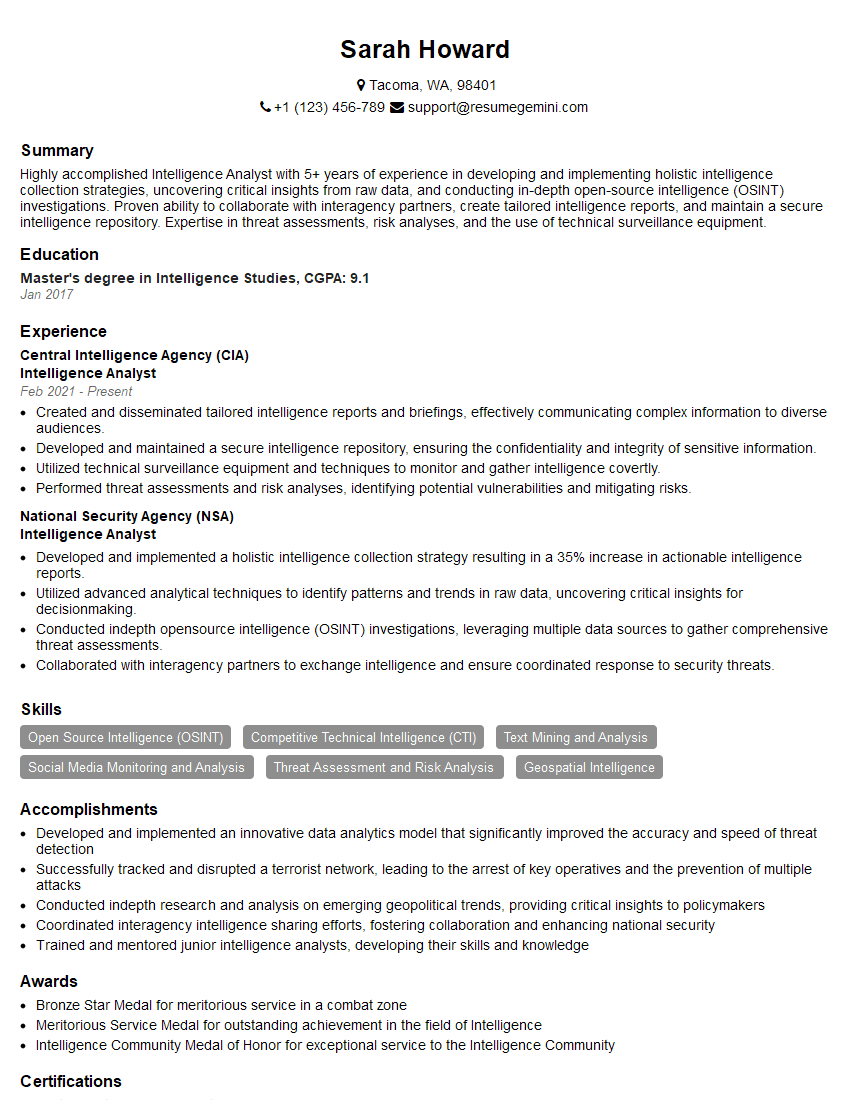
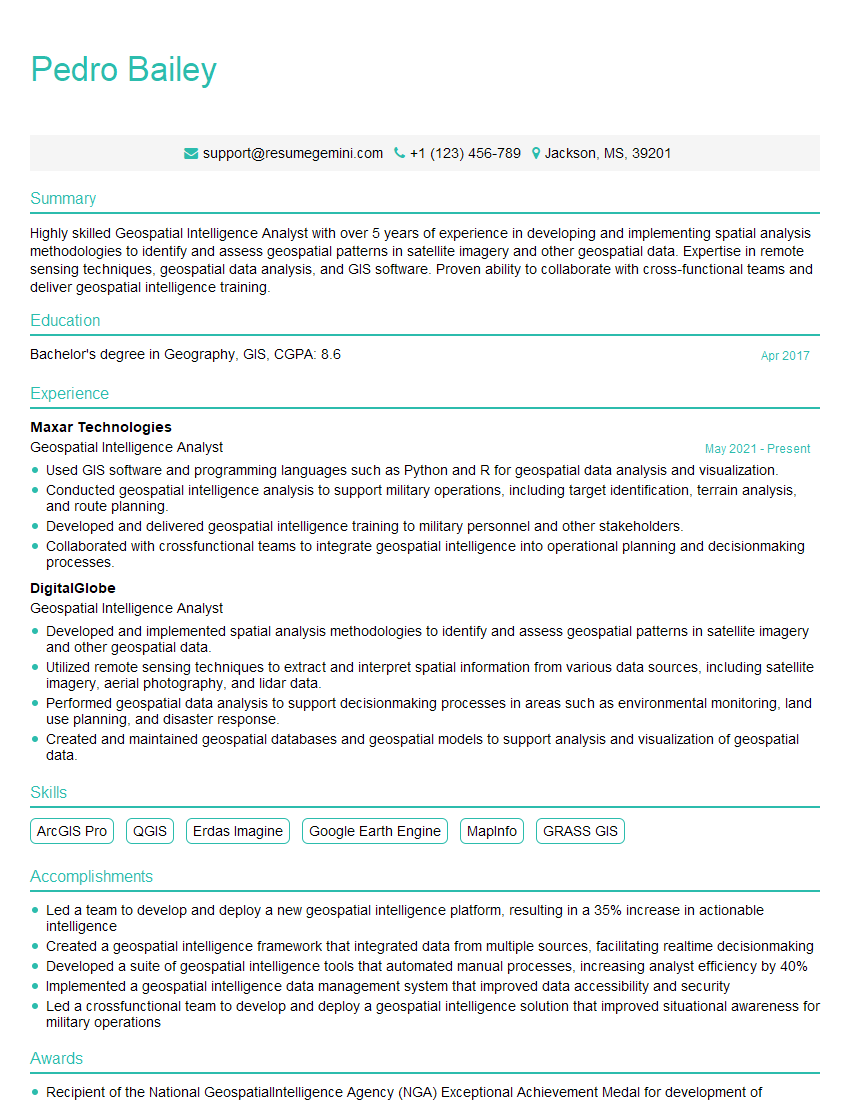
Mastering Joint Intelligence Planning and Execution significantly enhances your career prospects, opening doors to leadership roles and high-impact positions within the intelligence community. To maximize your job search success, focus on building an ATS-friendly resume that effectively showcases your skills and experience. ResumeGemini is a trusted resource for crafting compelling and professional resumes. Using ResumeGemini, you can create a resume tailored to highlight your expertise in Joint Intelligence Planning and Execution. Examples of resumes designed for this field are available to help guide you.
Explore more articles
Users Rating of Our Blogs
Share Your Experience
We value your feedback! Please rate our content and share your thoughts (optional).
What Readers Say About Our Blog
Very informative content, great job.
good