Cracking a skill-specific interview, like one for Kanban and Just-in-Time (JIT) Systems, requires understanding the nuances of the role. In this blog, we present the questions you’re most likely to encounter, along with insights into how to answer them effectively. Let’s ensure you’re ready to make a strong impression.
Questions Asked in Kanban and Just-in-Time (JIT) Systems Interview
Q 1. Explain the core principles of Kanban.
Kanban is a visual system for managing workflow. It’s based on the principle of visualizing work, limiting work in progress (WIP), and continuously improving the process. At its core, Kanban focuses on making work processes more efficient and predictable by identifying and eliminating bottlenecks.
- Visualize Workflow: Making the workflow explicit through a Kanban board.
- Limit Work in Progress (WIP): Restricting the number of tasks in progress at any given time to focus on completing existing work before starting new tasks.
- Manage Flow: Optimizing the movement of work through the system to reduce lead times and improve efficiency.
- Make Process Policies Explicit: Defining clear rules and guidelines for how work is processed.
- Implement Feedback Loops: Regularly reviewing the process and making adjustments based on data and feedback to identify areas of improvement.
- Improve Collaboratively: Working together as a team to identify and resolve problems, continuously improving the process.
Imagine a bakery: Instead of baking dozens of different items simultaneously, Kanban suggests focusing on a smaller, manageable number (WIP limit) to ensure those items are completed efficiently and delivered on time. Visualizing this on a board helps the bakers see their progress and identify any potential delays.
Q 2. What are the key differences between Kanban and Scrum?
While both Kanban and Scrum are Agile methodologies aimed at improving software development (and other project management), they differ significantly in their approach.
- Process: Scrum is a framework with defined roles (Product Owner, Scrum Master, Development Team), events (Sprint Planning, Daily Scrum, Sprint Review, Sprint Retrospective), and artifacts (Product Backlog, Sprint Backlog, Increment). Kanban is more of a method that focuses on visualizing and managing workflow without prescribing specific roles or events. It’s evolutionary, adapting to the team’s needs.
- Iterative vs. Continuous Flow: Scrum uses short iterations (sprints) to deliver working software incrementally. Kanban emphasizes continuous flow, delivering value as soon as it’s ready.
- Change Management: Scrum has a more structured approach to change management within a sprint; Kanban allows for more flexibility and continuous adaptation.
- Team Structure: Scrum defines specific roles, while Kanban is more flexible and can work with existing teams.
Think of it like this: Scrum is like a well-defined recipe with specific steps, ingredients, and timing. Kanban is more like a cooking process that allows for improvisation and adjustments along the way, based on real-time feedback.
Q 3. Describe the role of a Kanban board.
A Kanban board is the visual representation of the workflow. It’s a physical or digital board displaying the stages of a process, with cards representing individual tasks or items. It provides a shared understanding of the work in progress and its progress through the system.
A typical board includes columns representing stages of the workflow (e.g., To Do, In Progress, Testing, Done) and cards representing the individual tasks. Each card might contain details like task description, assigned person, and due date. The board enables team members to easily see the current status of all tasks, identify bottlenecks, and track progress.
Imagine a hospital operating room. A Kanban board could show the status of surgeries, with columns for ‘Scheduled’, ‘Preparing’, ‘In progress’, and ‘Completed’. Each card represents a scheduled operation, providing immediate clarity on the surgical workflow.
Q 4. How do you visualize workflow using Kanban?
Workflow visualization in Kanban involves mapping out the steps involved in completing a task or project on the Kanban board. This typically involves defining the stages of the workflow as columns and using cards to represent each individual task or item. The movement of the cards across the columns visually represents the flow of work.
For instance, a software development team might have columns like ‘Backlog’, ‘To Do’, ‘In Progress’, ‘Testing’, ‘Done’. Each task is represented by a card that moves across these columns as it progresses through the development process. This clear visualization makes it easy for everyone to understand the progress and identify potential roadblocks.
Using different colors, symbols, or labels on the cards can further enhance visualization. For example, red cards could represent urgent tasks, while blue cards might represent tasks awaiting external dependencies.
Q 5. What are the benefits of implementing a Kanban system?
Implementing a Kanban system offers numerous benefits, enhancing efficiency and transparency throughout a process.
- Improved Workflow Visibility: The visual nature of Kanban provides a clear overview of the workflow, making it easy to identify bottlenecks and areas for improvement.
- Reduced Lead Time: By limiting work in progress and optimizing the flow of work, Kanban helps reduce the time it takes to complete tasks.
- Increased Efficiency: Focusing on completing tasks before starting new ones, Kanban prevents context switching and improves focus.
- Better Collaboration: The shared visibility of the Kanban board promotes better collaboration and communication among team members.
- Continuous Improvement: Regular reviews and feedback loops enable continuous improvement of the process.
- Enhanced Predictability: By tracking progress and identifying bottlenecks, Kanban helps in predicting future outcomes with greater accuracy.
For example, a customer service team using Kanban can quickly see which issues are pending, how long they are taking to resolve, and where the bottlenecks lie, leading to faster response times and improved customer satisfaction.
Q 6. What are some common Kanban metrics and how are they used?
Several key metrics help track performance and identify areas for improvement in a Kanban system.
- Lead Time: The total time it takes for an item to move through the entire workflow, from start to finish. A shorter lead time indicates greater efficiency.
- Cycle Time: The time it takes to complete a single task or item. Analyzing cycle time helps pinpoint bottlenecks in specific stages of the workflow.
- Throughput: The number of items completed within a given time period. This metric shows the overall productivity of the system.
- Work in Progress (WIP): The number of items currently being processed at any given time. High WIP often indicates bottlenecks and reduced efficiency.
- Little’s Law: Relates Lead Time, Throughput, and WIP. (WIP = Throughput * Lead Time). Useful for understanding the relationship between these key metrics.
By tracking these metrics over time, teams can identify trends, pinpoint areas for improvement, and measure the effectiveness of implemented changes. For example, a consistent increase in lead time might signal a need to address a bottleneck in a specific stage of the workflow.
Q 7. Explain the concept of Work-in-Progress (WIP) limits.
Work-in-Progress (WIP) limits restrict the number of tasks that can be actively worked on at any given time within a specific stage of the workflow. The goal is to prevent multitasking and improve focus on completing existing tasks before starting new ones.
By limiting WIP, teams reduce context switching, minimize interruptions, and accelerate completion times. This leads to improved efficiency, reduced risk of errors, and a faster delivery of value. WIP limits are usually set empirically, based on the team’s capacity and the complexity of tasks.
Imagine a car assembly line. Instead of having multiple partially assembled cars at each station, WIP limits ensure that only a certain number of cars are in progress at any given station. This prevents congestion, ensures a smooth flow, and speeds up the entire assembly process. This is a real-world application of a WIP limit.
Q 8. How do you handle unexpected requests or urgent tasks in a Kanban system?
Unexpected requests and urgent tasks are a reality in any system. In Kanban, we handle them by prioritizing them within the existing workflow. This doesn’t mean abandoning the system, but rather strategically integrating the urgent task.
First, we assess the urgency and impact. Is it truly urgent, or can it be scheduled later? Then, we analyze the capacity. Where can we fit this task without significantly disrupting the flow? This might involve temporarily adjusting priorities using a simple method like adding a new high-priority column or using a special color-coded card. For example, a critical bug fix might jump ahead of other tasks already in progress. We then communicate this change transparently to the team. Finally, we may need to adjust our work in progress (WIP) limits temporarily to accommodate the urgent task, and swiftly return to the standard limits once it’s complete. We might even use a ‘hotfix’ column on our Kanban board to visualise this process. The key is to maintain transparency and minimize disruption to the overall flow.
Q 9. How do you identify and address bottlenecks in a Kanban system?
Identifying bottlenecks in a Kanban system is crucial for continuous improvement. Bottlenecks represent constraints that hinder workflow and reduce efficiency. We use several techniques to uncover them.
Firstly, we regularly monitor the Kanban board itself. A consistent build-up of cards in a specific column visually indicates a bottleneck. For instance, if tasks consistently linger in the ‘Testing’ column, it might indicate insufficient testing resources or a lengthy testing process. Secondly, we use lead and cycle time metrics. Lead time is the total time from request to delivery, while cycle time is the time spent actively working on a task. Consistently high cycle times in specific areas point to bottlenecks. Thirdly, we use data analysis such as cumulative flow diagrams (CFD) to visualize workflow over time and identify patterns of congestion. Finally, we actively solicit feedback from the team members working in the affected areas; they have the on-the-ground insights needed for effective diagnosis. Addressing the bottlenecks might involve things like adding more resources, process improvement, training, or improving the clarity of requirements.
Q 10. Describe the process of continuous improvement within a Kanban system.
Continuous improvement is the heart of Kanban. We employ several practices to achieve this.
- Regular Retrospectives: Team meetings dedicated to reviewing past performance, identifying areas for improvement, and planning future adjustments. These sessions help uncover hidden issues and optimize workflows.
- Experimentation (Kaizen): Small, incremental changes are introduced and evaluated systematically. This minimizes risk and ensures that improvements are genuinely beneficial. For example, we might change our WIP limits by one card to observe the effects before making larger changes.
- Data-Driven Decisions: Lead and cycle times, CFDs, and other metrics are used to inform decision-making, ensuring improvements are based on tangible evidence and not just gut feeling.
- Visual Management: The Kanban board itself is a tool for continuous improvement. By visualizing the workflow, the team can identify and address issues proactively.
This iterative process of continuous improvement ensures that the Kanban system remains dynamic, responsive and efficient. It’s about making small, consistent changes that cumulatively lead to significant improvements.
Q 11. What are the key principles of Just-in-Time (JIT) manufacturing?
Just-in-Time (JIT) manufacturing focuses on producing goods only when needed, minimizing waste and maximizing efficiency. It relies on several key principles:
- Value Stream Mapping: Identifying and eliminating all non-value-added steps in the production process.
- Level Scheduling: Producing a balanced and consistent output, avoiding peaks and valleys in demand.
- Pull System: Production is triggered by actual customer demand, not by forecasts.
- Continuous Improvement (Kaizen): Constantly striving to optimize processes and reduce waste.
- Respect for People: Empowering workers to identify and solve problems.
- Zero Defects: Aiming for perfect quality to avoid rework and waste.
The goal is a lean, highly responsive manufacturing system that minimizes inventory, reduces lead times, and improves quality.
Q 12. How does JIT relate to Kanban?
Kanban is a visual system for managing workflow, while JIT is a philosophy for eliminating waste and optimizing production. They are closely related, often working together.
JIT provides the underlying philosophy of eliminating waste, while Kanban provides a visual system for managing the workflow according to that philosophy. Kanban helps implement the pull system in JIT, providing the mechanism for visualizing and controlling the flow of work based on actual demand. Essentially, Kanban is a tool that can support the implementation of JIT principles.
Q 13. Explain the concept of ‘pull’ systems in JIT.
In a JIT ‘pull’ system, production is driven by actual customer demand, not by forecasts or pre-determined schedules. Think of it like a chain reaction.
Imagine a supermarket shelf. When a customer buys a product, the cashier notes it. This triggers a signal to the stockroom to replenish that specific product. The stockroom, in turn, signals to the warehouse to send more. This process repeats throughout the supply chain, meaning goods are only produced or moved when needed. There is minimal inventory at each stage, and production is highly responsive to real-time customer demand. This contrasts sharply with a ‘push’ system where goods are produced based on forecasts and pushed through the supply chain regardless of actual customer demand, leading to potential overstocking and waste.
Q 14. What are some common challenges in implementing JIT?
Implementing JIT presents several challenges.
- Supplier Dependency: JIT relies heavily on reliable suppliers delivering the right parts at the right time. Delays or quality issues from suppliers can significantly disrupt the entire system.
- Inventory Management: Maintaining minimal inventory requires accurate demand forecasting and efficient inventory control systems. Insufficient inventory can lead to production stoppages, while excessive inventory defeats the purpose of JIT.
- Process Variability: JIT thrives on stable, predictable processes. High variability in production times or quality can create bottlenecks and disruptions.
- Change Management: Implementing JIT requires a significant cultural shift within the organization, moving from a push to a pull system. Employee training and buy-in are crucial.
- Initial Investment: Implementing JIT may require upfront investment in improved technology, training, and process optimization.
Addressing these challenges requires careful planning, strong supplier relationships, robust processes, and a committed workforce.
Q 15. How do you manage inventory in a JIT system?
Managing inventory in a Just-in-Time (JIT) system is all about minimizing waste by only producing what’s needed, when it’s needed. Instead of large stockpiles, we rely on a tightly coordinated system where materials arrive precisely as they’re required in the production process. This requires extremely accurate demand forecasting and strong relationships with suppliers.
- Frequent Deliveries: Small, frequent shipments from suppliers replace large, infrequent deliveries. Think of it like a grocery store that gets fresh produce daily instead of a massive weekly delivery.
- Pull System: Production is triggered by actual customer demand, not by a pre-determined production schedule. This is in contrast to a push system, where goods are produced based on forecasts and pushed into inventory.
- Kanban Cards (or digital equivalents): These act as signals to request materials or components when needed. When a workstation uses a part, they signal the previous stage to replenish the supply, creating a chain reaction throughout the entire supply chain.
- Level Scheduling: Aims to produce a uniform mix of products, stabilizing demand across the entire production line.
For example, in an automotive assembly plant using JIT, parts like engines or tires would arrive at the assembly line just as they’re needed to install, avoiding large storage space and potential obsolescence.
Career Expert Tips:
- Ace those interviews! Prepare effectively by reviewing the Top 50 Most Common Interview Questions on ResumeGemini.
- Navigate your job search with confidence! Explore a wide range of Career Tips on ResumeGemini. Learn about common challenges and recommendations to overcome them.
- Craft the perfect resume! Master the Art of Resume Writing with ResumeGemini’s guide. Showcase your unique qualifications and achievements effectively.
- Don’t miss out on holiday savings! Build your dream resume with ResumeGemini’s ATS optimized templates.
Q 16. How do you measure the effectiveness of a JIT system?
Measuring the effectiveness of a JIT system involves tracking key metrics that reflect its core principles: minimizing waste and maximizing efficiency. We don’t just look at one metric, but rather a combination to get a holistic view.
- Inventory Turnover Rate: How quickly inventory is sold or used. A higher rate indicates efficient inventory management.
- Lead Time Reduction: The time it takes to complete a process, from order placement to delivery. Shorter lead times are essential.
- Defect Rate: Lower defect rates signify improved quality control and fewer wasted resources.
- Production Efficiency: Measures the output against inputs (labor, materials, etc.). Higher efficiency means less waste.
- On-Time Delivery Rate: A high rate demonstrates the system’s ability to meet customer demands consistently.
- Waste Reduction (Lean Metrics): Tracking various forms of waste like overproduction, waiting, transportation, inventory, motion, over-processing, and defects (often remembered by the acronym ‘DOWNTIME’).
For instance, if our inventory turnover rate increases by 20% while simultaneously reducing lead time by 15%, that shows significant improvement in the JIT system’s effectiveness.
Q 17. Explain the concept of Kaizen in relation to Kanban and JIT.
Kaizen, meaning ‘continuous improvement’ in Japanese, is the philosophy that underpins both Kanban and JIT. It emphasizes incremental, ongoing improvements rather than large-scale changes. In Kanban, Kaizen manifests in regularly reviewing the Kanban board to identify bottlenecks, improve workflow, and eliminate waste. In JIT, Kaizen drives the constant search for ways to reduce lead times, streamline processes, and improve quality.
For example, in a Kanban system, a team might use Kaizen to analyze the reasons behind a task stuck in a ‘Blocked’ column. This could lead to changes in the process, improving communication or resource allocation. Similarly, in a JIT environment, Kaizen could involve optimizing the layout of a factory floor to minimize material movement or implementing a new quality control technique to reduce defects.
Kaizen isn’t a one-time event; it’s a continuous cycle of identifying problems, developing solutions, implementing them, and measuring the results. This iterative process is crucial for the long-term success of both Kanban and JIT systems.
Q 18. What is the role of visual management in Kanban and JIT?
Visual management is fundamental to both Kanban and JIT, making it easy to see the status of work, identify bottlenecks, and track progress. It promotes transparency and empowers everyone in the process to understand and improve it.
- Kanban Boards: Visual representations of workflow, showing the status of tasks at each stage. This could be a physical board with cards or a digital Kanban tool.
- Andon Cords/Lights: Visual signals that alert workers or management to problems on the production line, immediately stopping production to address the issue and prevent defects from spreading.
- Inventory Levels: Clearly visible stock levels allow for quick identification of shortages or excesses.
- Value Stream Maps: Visual representations of the entire process, from order to delivery, highlighting areas for improvement.
- 5S Methodology: A workplace organization system focused on Sort, Set in Order, Shine, Standardize, and Sustain, improving efficiency and clarity.
Imagine a Kanban board with color-coded cards representing different task statuses – this instantly communicates the workflow’s overall health and allows for quick identification of potential delays.
Q 19. How do you ensure quality control in a JIT environment?
Quality control in a JIT environment is proactive and integrated into every stage of the process. Since there’s minimal inventory buffer, defects are immediately costly and disruptive.
- Early Detection: Implementing rigorous quality checks at each step prevents defects from propagating down the line.
- Supplier Partnerships: Working closely with suppliers to ensure high-quality materials and components. This involves regular communication and collaborative quality improvement efforts.
- Total Quality Management (TQM): Embracing a culture of quality throughout the organization, where every employee is responsible for maintaining quality standards.
- Statistical Process Control (SPC): Using statistical methods to monitor and control variations in the production process, helping identify and address issues before they become major problems.
- Poka-Yoke (Mistake-Proofing): Designing processes and equipment to prevent mistakes from occurring in the first place.
For example, a manufacturing process might use Poka-Yoke techniques like jigs and fixtures to ensure parts are assembled correctly, eliminating the possibility of human error.
Q 20. How do you handle variability in demand in a JIT system?
Handling variability in demand in a JIT system requires flexibility and responsiveness. It’s not about eliminating variability but rather mitigating its impact.
- Demand Forecasting: Employing sophisticated forecasting techniques to accurately predict demand fluctuations. This might involve using historical data, market trends, and sales predictions.
- Flexible Production Capacity: Having the ability to scale production up or down quickly to meet changes in demand. This could involve cross-training employees, using flexible machinery, or working with flexible suppliers.
- Level Scheduling (as mentioned earlier): Aims to create a more stable and predictable production environment.
- Quick Changeovers: Minimizing the time it takes to switch between producing different products.
- Buffering (but strategically): While minimizing inventory is key, some small, strategic buffers might be necessary to handle unexpected spikes in demand. These buffers should be closely monitored.
For instance, a bakery might use demand forecasting to predict peak demand during holidays and adjust production schedules accordingly. They might also have some strategically placed ingredients in reserve for unexpected surges.
Q 21. Describe your experience with implementing Kanban or JIT in a previous role.
In my previous role at a manufacturing company, we implemented a Kanban system to improve our order fulfillment process. We had a significant backlog of orders and inconsistent delivery times. Our initial Kanban board was a physical whiteboard with sticky notes representing individual orders.
The implementation involved several phases:
- Mapping the Workflow: We meticulously mapped out each step involved in fulfilling an order, from receiving the order to shipping the product.
- Identifying Bottlenecks: By visualizing the workflow, we quickly identified bottlenecks, such as slowdowns in the quality control stage and a lack of sufficient resources in packaging.
- Implementing the Kanban System: We defined work-in-progress (WIP) limits for each stage, limiting the number of orders in progress at any given time. This prevented overloading certain stages and focused our efforts on completing tasks efficiently.
- Continuous Improvement: We held regular Kanban meetings (often called ‘Kanban retrospectives’) to review the board, identify areas for improvement, and adjust WIP limits as needed. We implemented several Kaizen initiatives to enhance efficiency, including streamlining the quality control process and improving communication between departments.
The results were significant: We reduced our lead times by 30%, improved on-time delivery rates by 20%, and reduced our overall inventory by 15%. The visualization provided by the Kanban board and the iterative process of continuous improvement were instrumental in driving these positive changes.
Q 22. What are some tools or software you’ve used to support Kanban or JIT implementation?
Throughout my career, I’ve utilized various tools to support Kanban and JIT implementations, tailored to the specific needs of each project. For visualizing workflow and tracking progress, I’ve extensively used Kanban boards – both physical (whiteboards with sticky notes) and digital (Jira, Trello, Azure DevOps). These tools allow for clear visualization of the workflow stages, bottlenecks, and work-in-progress (WIP) limits. For JIT specifically, I’ve found inventory management systems like SAP and Oracle crucial for precise tracking of materials, minimizing waste and ensuring timely delivery. Furthermore, lean management software focusing on metrics and process improvement, such as LeanKit, helps with data analysis, identifying areas for optimization, and measuring the impact of improvements. The selection always depends on the organization’s existing infrastructure and the complexity of the project.
Q 23. What are some of the limitations of Kanban or JIT?
While Kanban and JIT offer significant advantages, they also present certain limitations. One key challenge with Kanban is the potential for information silos if not properly implemented. Team members might lack visibility into the overall workflow, hindering collaboration and problem-solving. JIT, on the other hand, relies heavily on accurate demand forecasting and precise supply chain management. Any disruption in the supply chain, such as supplier delays or unexpected surges in demand, can severely impact production. Both systems also require a highly disciplined and collaborative work culture; without commitment from all team members, the benefits are significantly reduced. Lastly, implementing either system can initially disrupt existing processes, leading to temporary inefficiencies before the full benefits are realized. Careful planning and change management are vital to mitigate this.
Q 24. How do you adapt Kanban or JIT to different organizational contexts?
Adapting Kanban and JIT to different organizational contexts requires a nuanced approach. The key is to understand the organization’s unique characteristics – its size, industry, culture, and existing processes. For example, a small startup might benefit from a simple Kanban board with few columns and a minimal WIP limit, while a large multinational corporation might require a more complex system with multiple Kanban boards, integrated with other enterprise systems. Similarly, JIT implementation needs careful consideration of the supply chain dynamics; a company with a global supply chain will need more robust forecasting and risk management strategies compared to a local business. Customization is key; the core principles of Kanban and JIT remain consistent, but their application needs to be tailored to the specific context. For instance, I’ve adapted Kanban for software development teams and for marketing departments, adjusting the workflow stages and metrics to fit their unique needs. The core principle of visualizing workflow and limiting WIP remains, but the specifics change.
Q 25. Describe a time you had to troubleshoot a problem in a Kanban or JIT system.
In a previous project implementing Kanban for a software development team, we encountered a significant bottleneck in the testing phase. Tasks were piling up, delaying the entire process. My initial approach involved analyzing the Kanban board to identify the root cause. We discovered that the testing team lacked sufficient resources and expertise to handle the influx of tasks. To troubleshoot, we implemented the following steps: 1) increased the testing team’s capacity by adding a new tester; 2) prioritized tasks based on criticality and dependencies; 3) introduced a daily stand-up meeting for the testing team to proactively address roadblocks; and 4) provided additional training to enhance the team’s testing efficiency. By addressing the bottleneck systematically, we improved workflow, reduced lead times, and significantly boosted team morale. This experience underscored the importance of continuous monitoring and the need for proactive problem-solving in Kanban implementations.
Q 26. How do you measure the ROI of a Kanban or JIT implementation?
Measuring the ROI of Kanban and JIT implementations requires a multi-faceted approach. It’s not just about immediate cost savings but also about long-term gains in efficiency and quality. Key metrics include: lead time reduction (time from order to delivery), cycle time (time spent on each task), inventory turnover, defect rates, and customer satisfaction. By comparing these metrics before and after implementation, we can quantify the improvements. For instance, a reduction in lead time directly translates into faster delivery and potentially higher customer satisfaction. Similarly, lower inventory levels reduce storage costs and minimize the risk of obsolescence. It’s important to track these metrics consistently over time to capture the full impact of the implementation and demonstrate a clear return on investment. A financial ROI calculation can be done by quantifying cost savings (e.g., reduced inventory, labor, or rework) and comparing it to implementation costs.
Q 27. What are some common mistakes to avoid when implementing Kanban or JIT?
Several common mistakes can hinder the success of Kanban and JIT implementations. One common error is simply adopting the tools without a thorough understanding of the underlying principles. Kanban and JIT are not just about using a board or reducing inventory; they require a fundamental shift in mindset toward continuous improvement and waste reduction. Another frequent mistake is a lack of commitment from all team members. Effective implementation needs buy-in from everyone involved. Ignoring feedback from the team and failing to adapt the system based on its needs can also undermine its success. Overly ambitious initial goals can also lead to disappointment and resistance to change. It’s vital to start with small, manageable improvements and gradually scale up. Finally, failing to track and analyze key metrics can prevent you from identifying areas for further optimization. Regular review and refinement are critical for continued success.
Q 28. How would you explain Kanban and JIT to a non-technical audience?
Imagine a restaurant kitchen. Kanban is like having a visual system on the wall showing what dishes are being prepared, how many are in progress, and what’s needed next. It helps the cooks manage their workload efficiently, avoiding overwhelming the kitchen with too many orders at once. JIT, or Just-in-Time, is like only ordering the ingredients needed for the dishes currently on order, instead of having a huge storage room full of food that might go to waste. It ensures that resources are used effectively, minimizing waste. Both systems aim for smoother operations, higher efficiency, and better customer satisfaction by optimizing the flow of work and minimizing unnecessary inventory.
Key Topics to Learn for Kanban and Just-in-Time (JIT) Systems Interviews
- Kanban Fundamentals: Understanding the core principles of Kanban, including visualizing workflow, limiting work in progress (WIP), managing flow, and continuous improvement.
- Kanban Metrics: Learn to interpret key metrics like cycle time, lead time, and throughput to identify bottlenecks and optimize processes. Practice explaining how these metrics drive decision-making.
- Just-in-Time (JIT) Principles: Grasp the core tenets of JIT, focusing on waste reduction, value stream mapping, and the importance of synchronized production.
- Kanban vs. Scrum: Understand the key differences and similarities between these agile methodologies. Be prepared to discuss when each approach might be most suitable.
- Practical Applications: Explore real-world examples of Kanban and JIT implementation across various industries (software development, manufacturing, etc.). Prepare to discuss challenges and successful strategies.
- Problem-Solving with Kanban & JIT: Develop your ability to identify and analyze process inefficiencies using Kanban techniques. Practice explaining how to implement solutions based on data and observations.
- Lean Principles: Familiarize yourself with the broader context of Lean thinking and how Kanban and JIT fit within the overall framework of Lean methodologies.
- Continuous Improvement (Kaizen): Understand the importance of iterative improvement and how to foster a culture of continuous learning and adaptation within a Kanban or JIT system.
- Tools and Techniques: Be familiar with common Kanban tools (e.g., Kanban boards, software solutions) and techniques (e.g., swim lanes, WIP limits).
Next Steps
Mastering Kanban and Just-in-Time (JIT) Systems significantly enhances your value in today’s competitive job market. These methodologies are highly sought after across numerous industries, demonstrating your ability to optimize processes, improve efficiency, and contribute to a successful team. To maximize your chances of landing your dream role, focus on creating a compelling and ATS-friendly resume that highlights your skills and experience effectively.
ResumeGemini is a trusted resource to help you build a professional and impactful resume. Leverage their expertise to create a document that showcases your proficiency in Kanban and JIT. Examples of resumes tailored to these methodologies are available to guide you through the process. Invest time in crafting a strong resume – it’s your first impression with potential employers.

Operations Manager Resume Sample
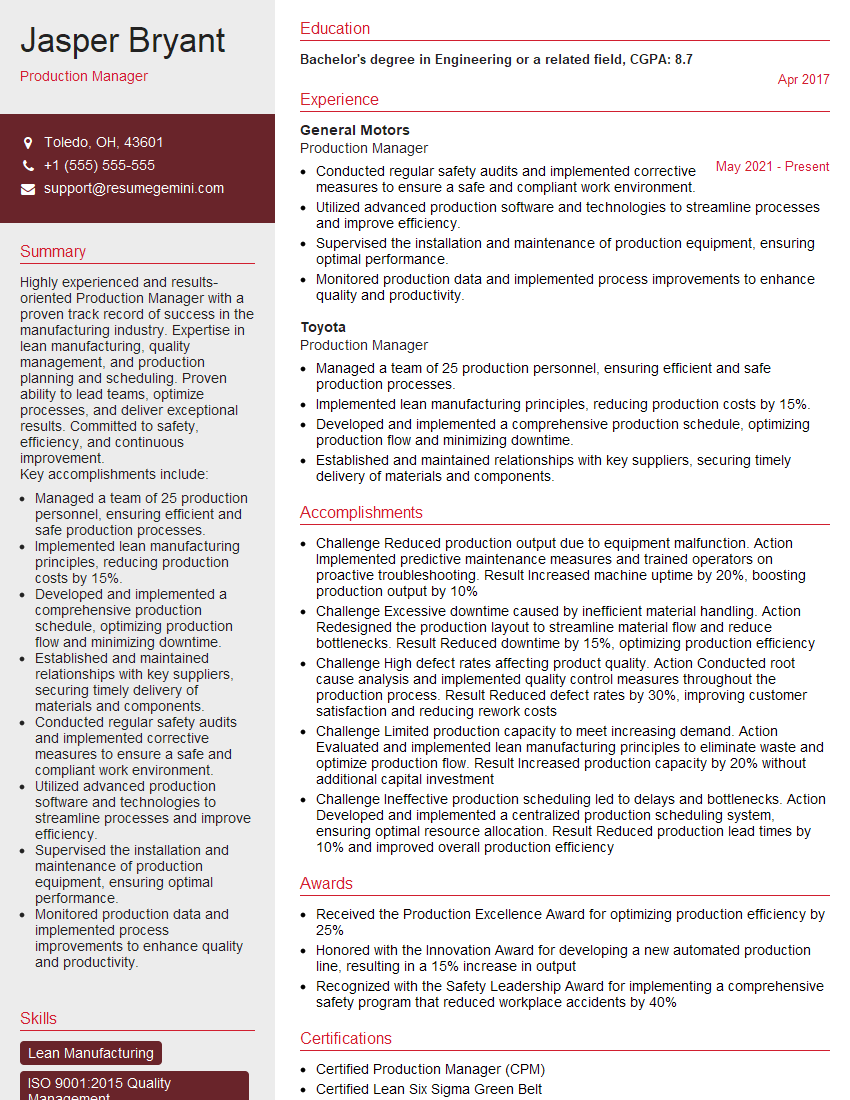
Production Manager Resume Sample
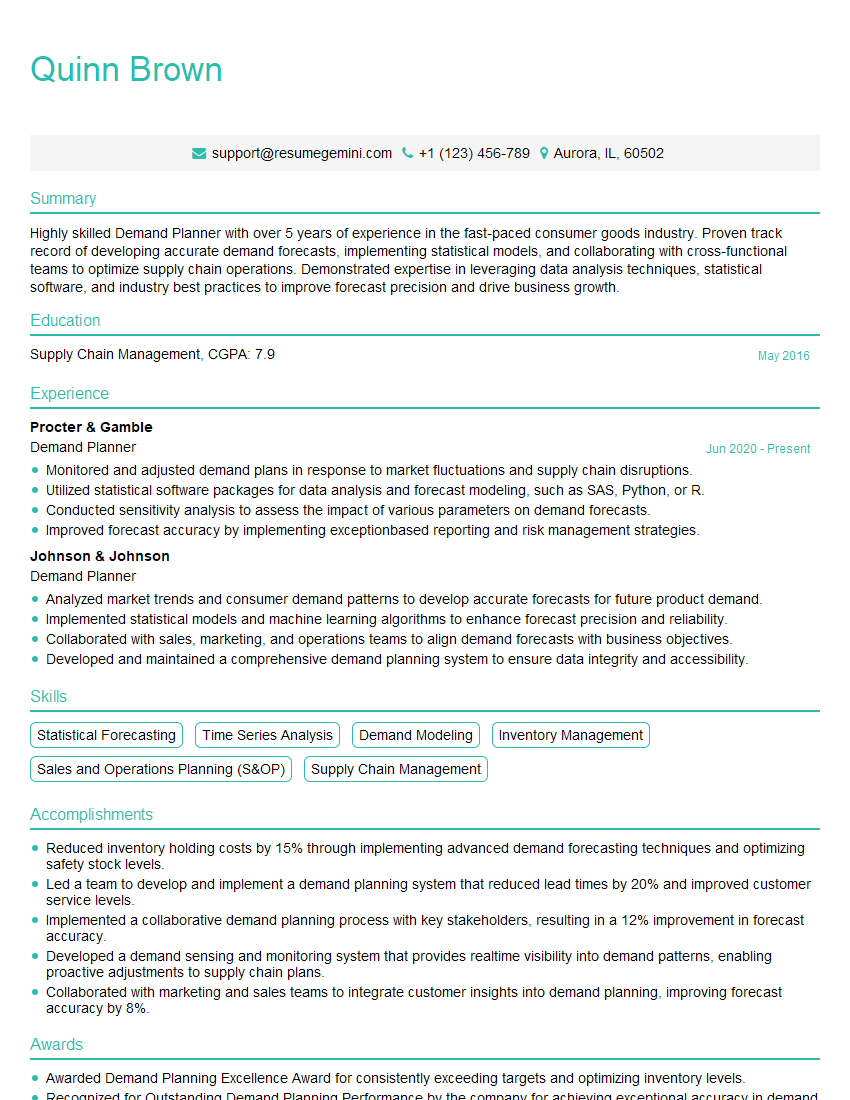
Demand Planner Resume Sample
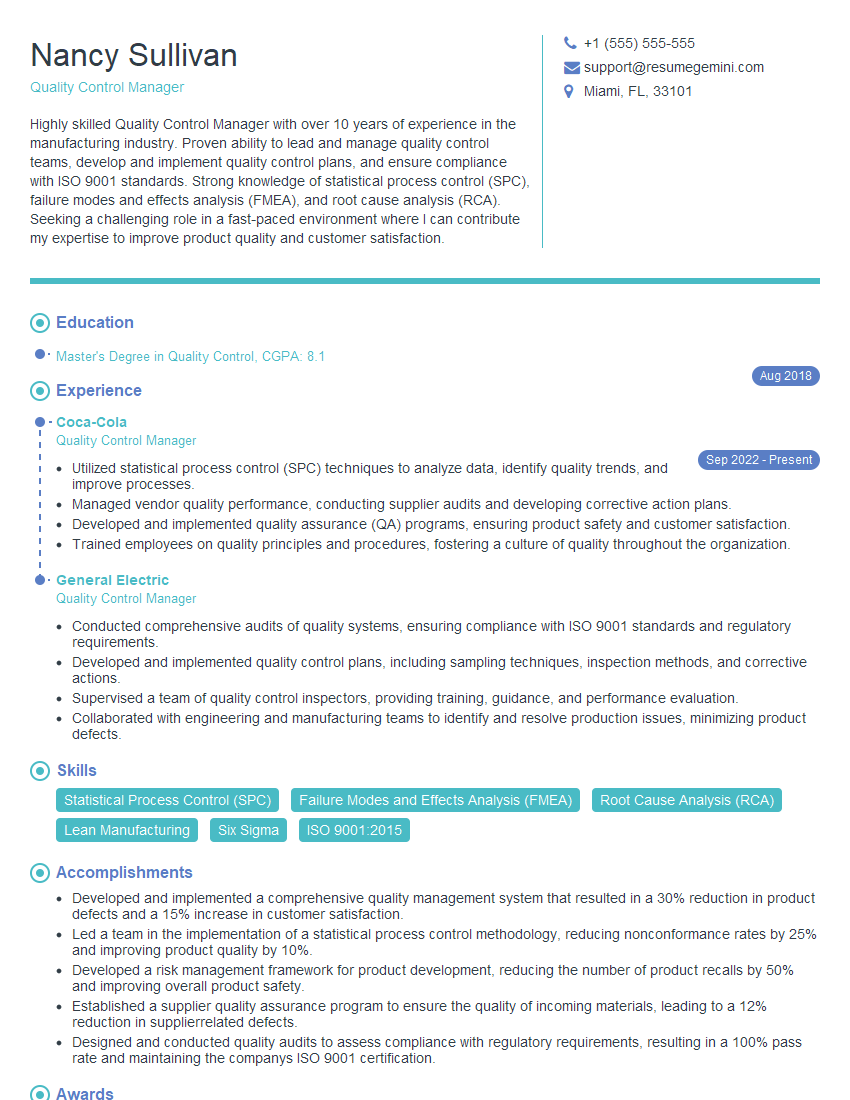
Quality Control Manager Resume Sample
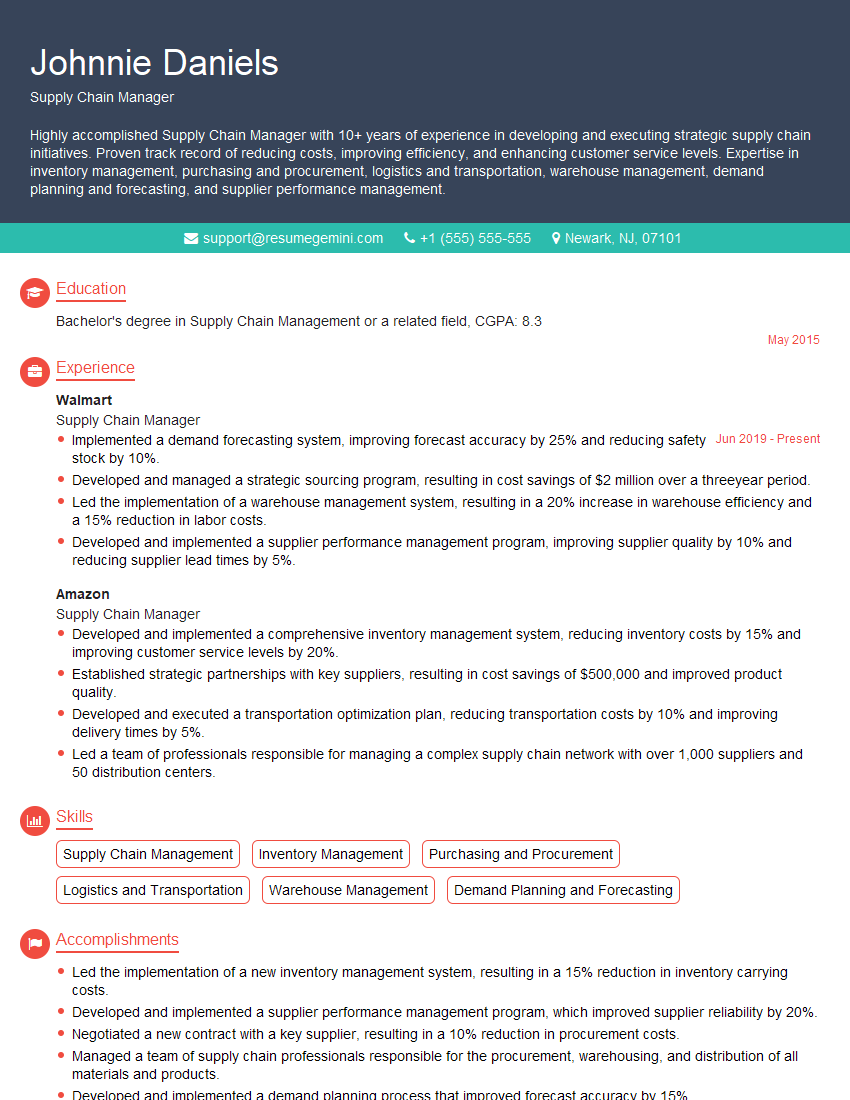
Supply Chain Manager Resume Sample
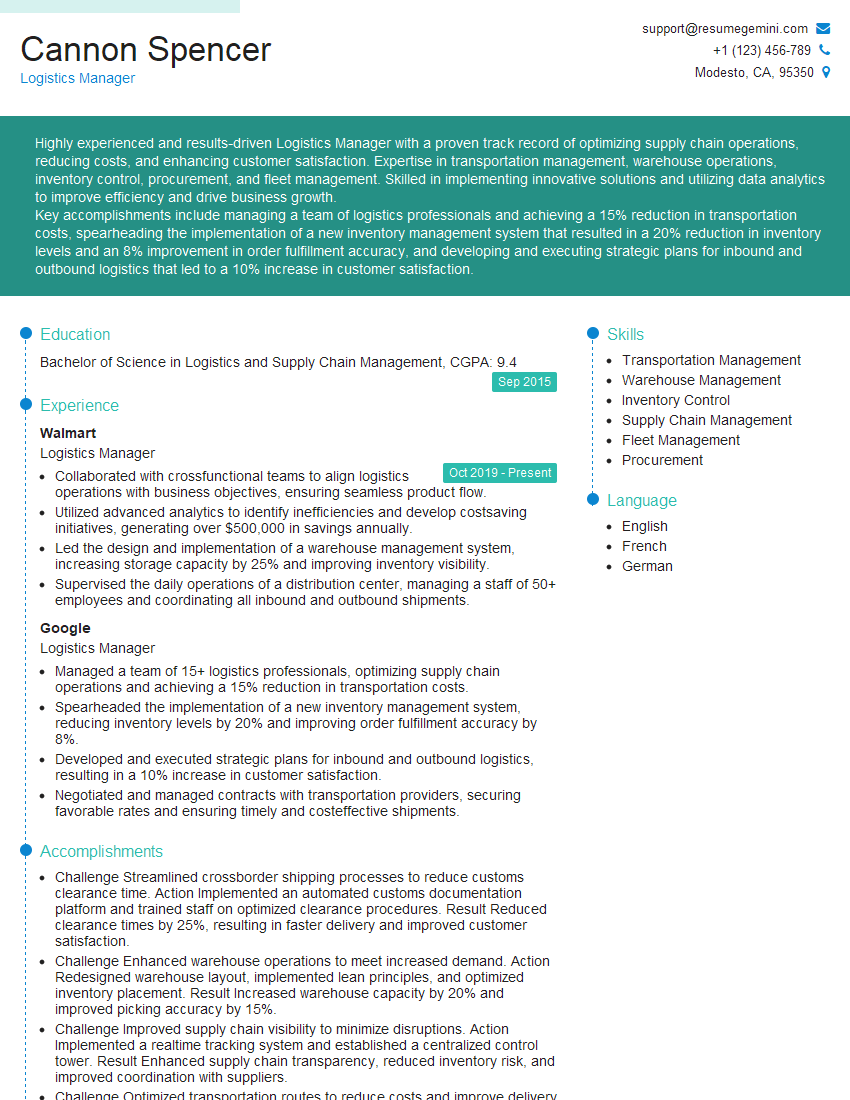
Logistics Manager Resume Sample
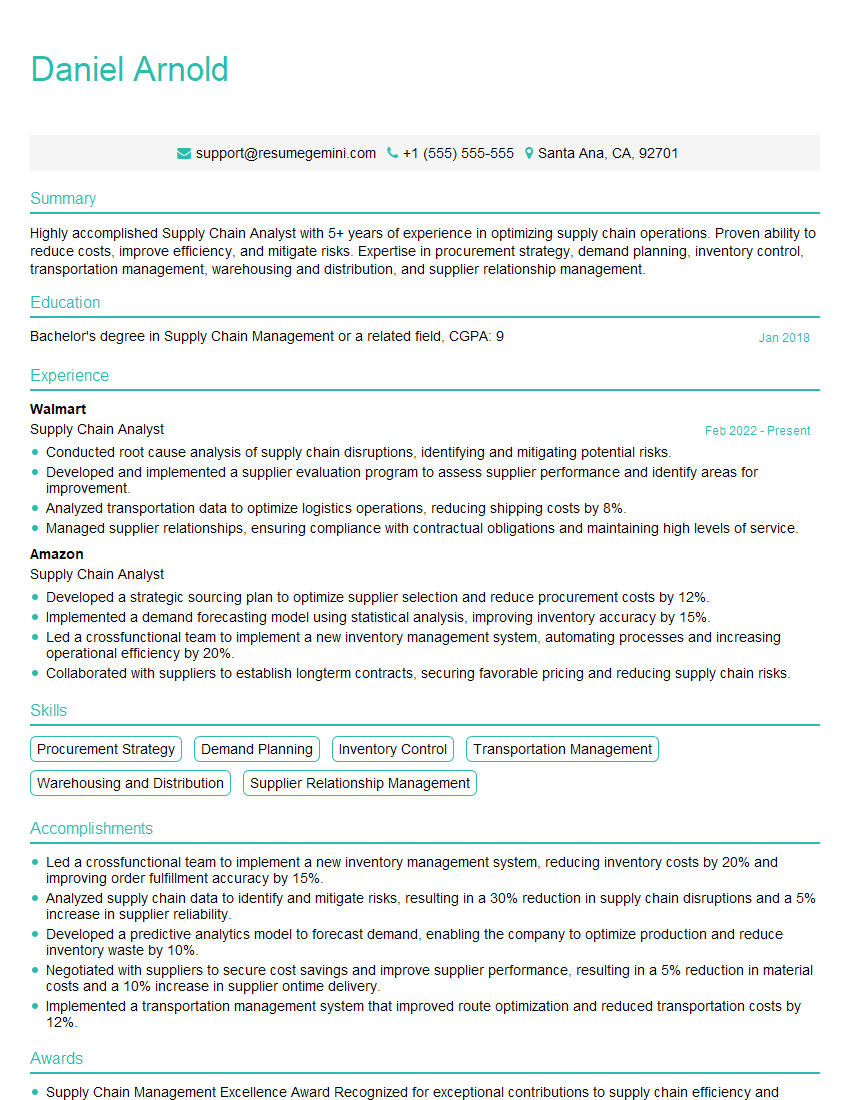
Supply Chain Analyst Resume Sample
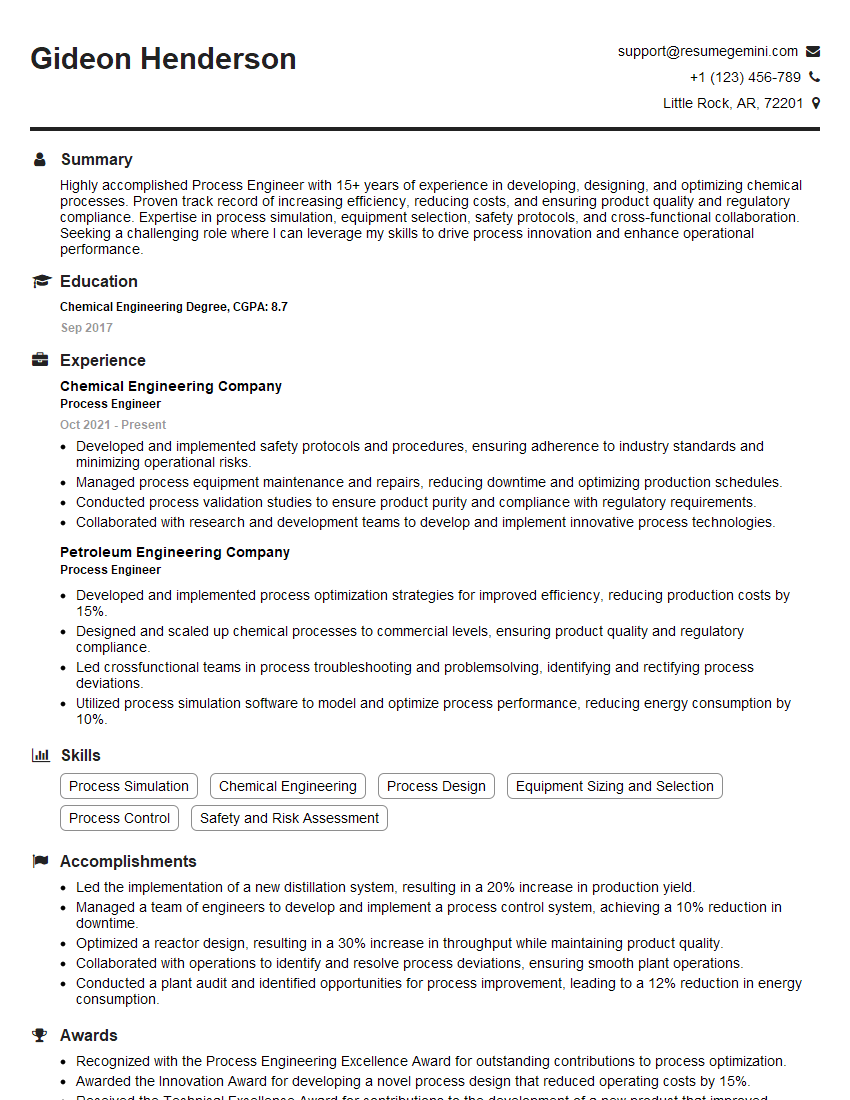
Process Engineer Resume Sample
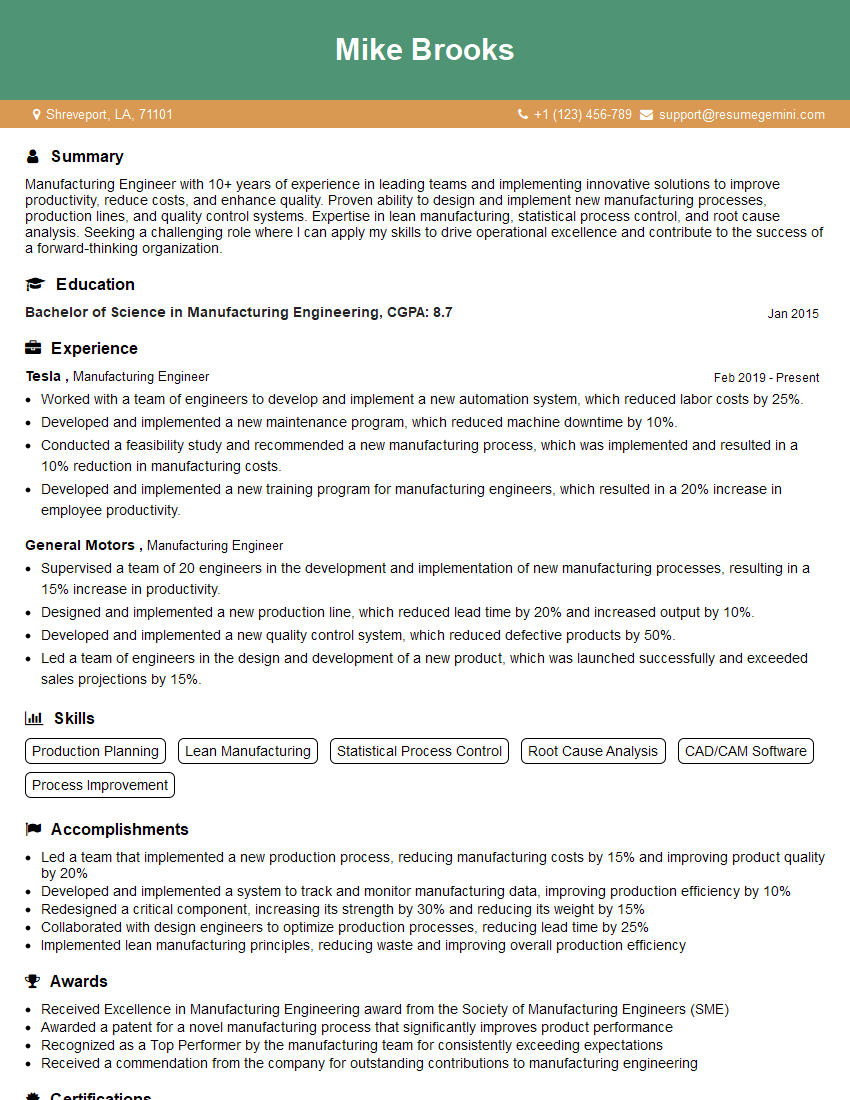
Manufacturing Engineer Resume Sample
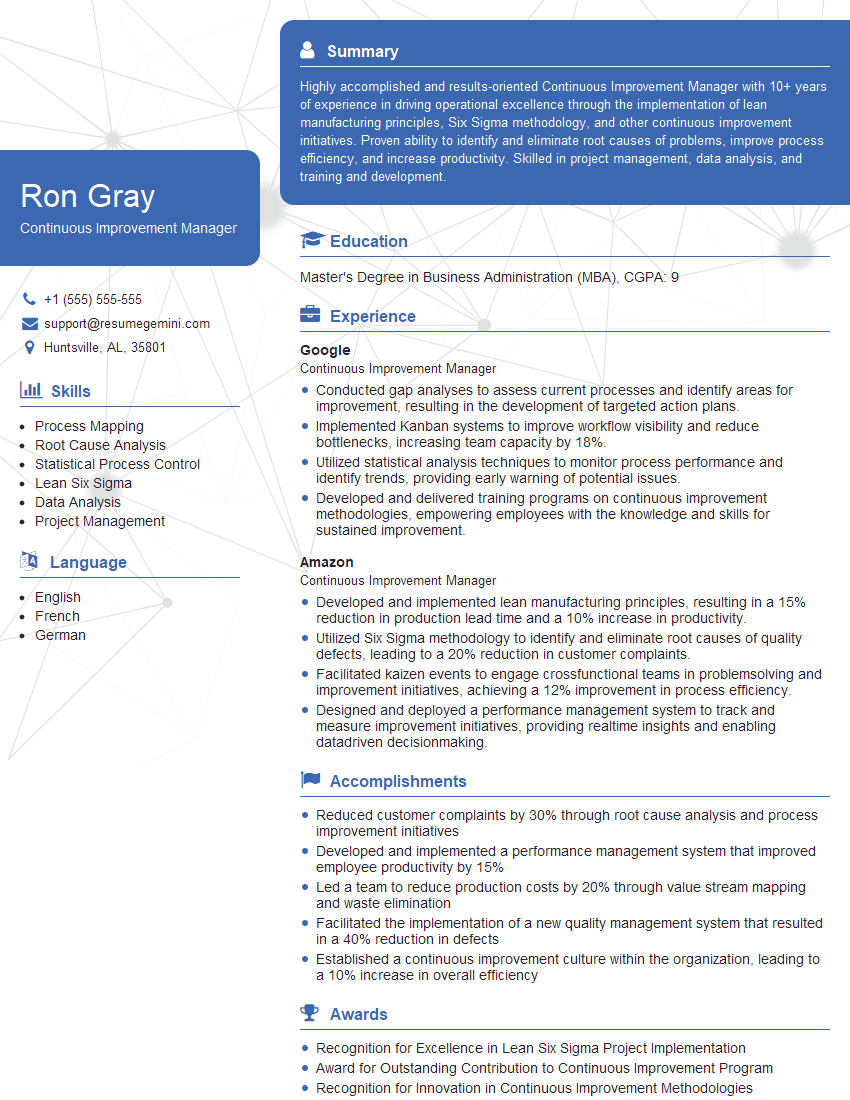
Continuous Improvement Manager Resume Sample
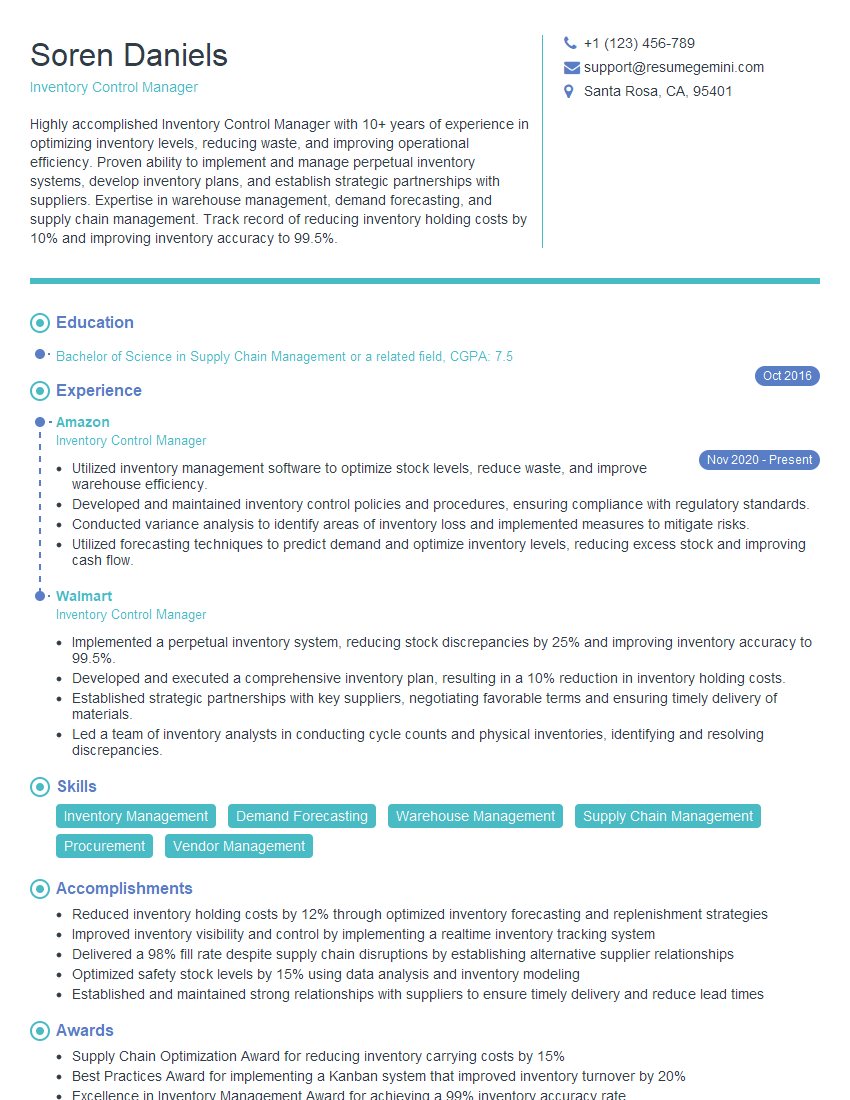
Inventory Control Manager Resume Sample
Explore more articles
Users Rating of Our Blogs
Share Your Experience
We value your feedback! Please rate our content and share your thoughts (optional).
What Readers Say About Our Blog
Very informative content, great job.
good