The right preparation can turn an interview into an opportunity to showcase your expertise. This guide to Knowledge of Aerospace Industry Standards and Regulations interview questions is your ultimate resource, providing key insights and tips to help you ace your responses and stand out as a top candidate.
Questions Asked in Knowledge of Aerospace Industry Standards and Regulations Interview
Q 1. Explain the differences between FAA and EASA regulations.
The FAA (Federal Aviation Administration) and EASA (European Union Aviation Safety Agency) are the primary aviation regulatory bodies in the United States and Europe, respectively. While both aim to ensure aviation safety, their approaches and specific regulations differ. The FAA’s regulations are largely focused on the US national airspace system and are often more prescriptive, providing detailed requirements. EASA, on the other hand, employs a more harmonized and less prescriptive approach, emphasizing a Safety Management System (SMS) philosophy and risk-based decision-making. This means EASA regulations often focus on demonstrating compliance with safety objectives rather than strict adherence to specific procedures. For instance, where the FAA might specify a precise material, EASA might allow an equivalent material provided its safety is demonstrated. This difference stems from their distinct regulatory cultures and legal frameworks. Another key difference lies in their certification processes; though increasingly converging, subtle variations exist in documentation requirements and approval workflows. Ultimately, both organizations share the overarching goal of ensuring the safety and security of air travel but achieve this through differing methodologies.
Q 2. Describe your experience with Part 23 or Part 25 certification.
I have extensive experience with Part 23 (normal, utility, acrobatic, and commuter category airplanes) and Part 25 (transport category airplanes) certification. In my previous role, I was directly involved in the certification of a new light sport aircraft under Part 23. This involved navigating the complexities of airworthiness standards, conducting comprehensive testing, preparing detailed certification documentation, and liaising with the certifying authority (FAA). Specifically, my contributions focused on demonstrating compliance with structural integrity requirements, flight performance standards, and systems safety. The process included finite element analysis (FEA) to validate structural strength, wind tunnel testing to verify aerodynamic performance, and rigorous flight testing to meet the required performance metrics. My work on Part 25 certification involved reviewing design documentation and ensuring compliance with the more stringent requirements governing larger, more complex aircraft, such as those related to flight control systems and evacuation procedures. This experience instilled in me a deep understanding of the rigorous standards and processes involved in obtaining type certificates for both small and large aircraft.
Q 3. How familiar are you with the process of obtaining a Supplemental Type Certificate (STC)?
I’m very familiar with obtaining a Supplemental Type Certificate (STC). An STC is essentially a modification to an existing aircraft type certificate, allowing for the addition of new equipment or modifications to the aircraft’s design. The process typically begins with identifying the proposed modification and developing a detailed design plan. This plan needs to demonstrate compliance with all applicable airworthiness regulations. It often involves a significant amount of engineering analysis, testing, and documentation to prove that the modification won’t compromise the aircraft’s safety or performance. This involves rigorous testing—often flight testing—and submitting detailed reports to the regulatory authority (FAA or EASA). The entire process is meticulously documented, and the regulatory authority reviews every aspect to verify compliance. A key element of success involves effective communication and collaboration with the certification authority throughout the process. I’ve personally worked on several STC projects, including one involving the installation of a new avionics suite and another involving structural reinforcement to accommodate additional payload. The meticulous nature of this process and attention to detail is crucial for ensuring airworthiness and compliance.
Q 4. What are the key elements of an effective aerospace quality management system (AQMS)?
An effective Aerospace Quality Management System (AQMS) is paramount for ensuring the safety and reliability of aerospace products. Key elements include a strong commitment to quality at all levels of the organization; a well-defined quality policy and objectives; clearly defined roles and responsibilities; robust procedures for design, manufacturing, and inspection; effective use of statistical process control (SPC) methods for monitoring processes and identifying areas for improvement; comprehensive corrective and preventive action (CAPA) processes to address non-conformances; a strong emphasis on traceability throughout the entire supply chain; and ongoing training and development of personnel. A successful AQMS also integrates hazard identification and risk management processes and utilizes robust auditing mechanisms to ensure continual improvement. It must be aligned with relevant industry standards, such as AS9100, and consistently monitored for effectiveness. Imagine building a complex airplane – every single part must meet the highest standard, and the AQMS is the blueprint and engine for consistently achieving that.
Q 5. Describe your understanding of AS9100 standards.
AS9100 is an internationally recognized quality management system standard specific to the aerospace industry. It’s based on ISO 9001 but includes additional requirements tailored to the unique challenges and risks of aerospace manufacturing. My understanding of AS9100 encompasses its core principles, including customer focus, leadership commitment, engagement of people, process approach, improvement, evidence-based decision-making, and relationship management. AS9100 emphasizes the importance of risk management, configuration management, and the rigorous control of processes to minimize defects and ensure consistent product quality. I have personal experience with AS9100 implementation and auditing, having been involved in helping organizations achieve and maintain AS9100 certification. Compliance with AS9100 not only ensures high-quality products but also demonstrates a commitment to safety and strengthens relationships with customers and suppliers. It’s much more than just a set of rules; it’s a framework for continuous improvement and enhanced safety within the aerospace industry.
Q 6. Explain the importance of maintaining accurate and complete traceability records in aerospace manufacturing.
Maintaining accurate and complete traceability records is absolutely critical in aerospace manufacturing. Traceability means the ability to track a component or material from its origin through every stage of manufacturing, assembly, and testing. This is essential for several reasons. First, it’s crucial for identifying the source of defects or non-conformances should they arise. If a problem occurs, traceability allows quick isolation of the faulty component and prevents further issues. Second, it’s vital for ensuring compliance with regulatory requirements. Many regulations demand specific materials and processes; traceability ensures that these requirements are met consistently. Third, traceability is often crucial for warranty claims and liability issues. Knowing the entire history of a part is invaluable in determining responsibility in case of failures. For example, consider a critical component failure. Complete traceability allows immediate identification of the batch of materials, the manufacturing facility, and the specific processes involved, enabling rapid root cause analysis and corrective actions. In short, traceability is not just a nice-to-have; it’s fundamental to the safety and reliability of aerospace products and is a non-negotiable aspect of quality management.
Q 7. How do you ensure compliance with export control regulations in the aerospace industry?
Ensuring compliance with export control regulations in the aerospace industry is a complex but essential responsibility. These regulations, administered by agencies like the U.S. Department of State’s Directorate of Defense Trade Controls (DDTC) and the Bureau of Industry and Security (BIS), are designed to prevent the proliferation of sensitive technologies. Compliance requires a thorough understanding of the regulations, including the identification of controlled items, the classification of those items under the appropriate control lists (e.g., the U.S. Munitions List or the Commerce Control List), and the proper licensing requirements for export or transfer. This includes developing internal procedures and training programs to educate employees about export control compliance. It also includes conducting regular self-assessments and audits to identify potential compliance gaps and proactively address them. Furthermore, it involves implementing a robust export control compliance program that involves screening transactions, maintaining accurate records of exports, and cooperating with government agencies as needed. Failure to comply can result in significant penalties, including fines and legal action. In the aerospace industry, where technology is often highly sensitive and strategically important, rigorous adherence to export control regulations is not merely a legal obligation but is also crucial for national security and international stability.
Q 8. Describe your experience with conducting internal audits of aerospace quality systems.
My experience with conducting internal audits of aerospace quality systems spans over ten years, encompassing various roles from auditor to audit lead. I’m proficient in conducting audits against industry standards like AS9100, AS9110, and AS9120, ensuring compliance with regulatory requirements like FAA regulations (e.g., Part 21, Part 45) and EASA regulations. My audits have covered the entire product lifecycle, from design and manufacturing to maintenance and overhaul. A recent project involved auditing a supplier’s quality management system for the production of critical aircraft components. This audit included reviewing documentation, conducting interviews with personnel, and observing processes on the shop floor to ensure compliance with the AS9100 standard. I identified several minor non-conformances related to documentation control and corrective action processes, which were subsequently addressed and resolved by the supplier.
I utilize a risk-based approach to auditing, focusing on areas of higher risk and potential impact. This allows for a more efficient and effective audit, concentrating resources on the most critical aspects of the quality system. I’m adept at using audit management software to track findings, manage corrective actions, and generate reports. I also actively participate in the development and improvement of our organization’s audit program.
Q 9. How do you identify and mitigate risks associated with non-compliance in aerospace projects?
Identifying and mitigating risks associated with non-compliance in aerospace projects requires a proactive and systematic approach. It begins with a thorough understanding of the regulatory landscape and applicable standards. We use various risk assessment methodologies, including Failure Mode and Effects Analysis (FMEA) and Fault Tree Analysis (FTA), to identify potential risks and their potential impact on safety and compliance. This involves identifying potential failure modes, their severity, occurrence, and detection rates, to determine the Risk Priority Number (RPN).
Mitigation strategies are then developed and implemented based on the RPN. These strategies can range from design changes and process improvements to increased inspection and testing. Regular monitoring and review of the effectiveness of these mitigation strategies are crucial. For example, during a project involving the design of a new flight control system, we identified a potential risk of software failure causing loss of control. Our FMEA analysis assigned a high RPN to this failure mode. Consequently, we implemented multiple mitigation strategies including redundant systems, rigorous software testing, and robust error detection mechanisms. This resulted in a significant reduction of the overall risk.
Q 10. What is your experience with Failure Modes and Effects Analysis (FMEA) in an aerospace context?
My experience with FMEA in the aerospace context is extensive. I have led numerous FMEA workshops involving cross-functional teams of engineers, technicians, and quality personnel. We utilize both system-level and component-level FMEAs to identify potential failure modes throughout the lifecycle of aerospace products and processes. We ensure that the FMEA process follows a structured approach, considering potential failures from design, manufacturing, and operation.
A practical example involved an FMEA conducted on a new aircraft engine component. Through a systematic review of the component’s design and manufacturing process, we identified a potential failure mode related to fatigue cracking. This was assigned a high RPN. As a result, we implemented design changes, enhanced material selection, and strengthened inspection procedures to significantly mitigate this risk. The FMEA provided a structured method to identify and control these risks, ultimately leading to an improved design that met all the required safety and reliability criteria.
Q 11. Describe your understanding of human factors and their impact on aerospace safety.
Human factors play a critical role in aerospace safety. Human error is often cited as the primary cause of incidents and accidents. Therefore, understanding human capabilities and limitations is paramount in designing safe and efficient aerospace systems and operations. I understand the importance of designing interfaces and procedures that are easy to understand and use, minimizing the potential for human error. This includes designing cockpits and control panels that are intuitive and ergonomic, as well as creating clear and concise operating procedures.
For instance, consider the design of a flight control system. A poorly designed interface could lead to pilot errors during critical phases of flight. By applying human factors principles, we can develop user-friendly interfaces, reducing the likelihood of human error. This involves incorporating factors like workload, attention, and situational awareness into the design process. Furthermore, effective training programs addressing human factors, such as Crew Resource Management (CRM), significantly reduce human error. CRM helps pilots to better communicate and handle stressful situations more effectively.
Q 12. Explain how you would handle a non-conformity discovered during an audit.
Handling a non-conformity discovered during an audit requires a structured approach. The first step is to thoroughly document the non-conformity, including a clear description, location, and impact. Following that, we determine the severity of the non-conformity based on its potential impact on safety and compliance. A formal Non-Conformity Report (NCR) is issued, detailing all pertinent information.
Next, we work with the responsible party to develop and implement corrective actions to address the root cause of the non-conformity. We ensure that appropriate verification measures are in place to prevent recurrence. For example, if a non-conformity related to incorrect part marking is found, corrective actions might involve retraining personnel, improving the part marking process, and implementing a stricter inspection process. Finally, the effectiveness of the corrective actions is verified through follow-up audits and reviews to ensure that the problem has been successfully resolved and the risk mitigated.
Q 13. What are your experiences with corrective and preventative actions (CAPA)?
My experience with Corrective and Preventative Actions (CAPA) is extensive. I have been involved in developing and implementing CAPA processes for various aerospace projects. The CAPA process is crucial for preventing the recurrence of non-conformances and continuously improving quality management systems. We follow a systematic process involving investigation, root cause analysis (using tools like 5 Whys or Fishbone diagrams), development of corrective actions, implementation, verification, and validation.
For instance, if recurring non-conformances are found in a particular manufacturing process, we initiate a CAPA process. This might involve investigating the process thoroughly to determine the root cause, perhaps a poorly trained operator or inadequate tooling. We would then implement corrective actions such as employee training, equipment upgrades, or process modifications. These actions are then verified to ensure they are effective in eliminating the root cause and preventing future recurrences. The entire CAPA process is meticulously documented and reviewed.
Q 14. Explain the importance of safety risk assessments in aerospace design and operations.
Safety risk assessments are fundamental to aerospace design and operations. They are essential for identifying hazards, analyzing risks, and implementing safety measures to mitigate those risks. These assessments are conducted throughout the entire product lifecycle, from initial concept design through operation and maintenance. They consider various factors such as human factors, environmental conditions, and potential system failures. They are critical to compliance with relevant regulations and standards, and ultimately, to ensuring the safety of passengers, crew, and the public.
A risk assessment might involve identifying the potential for an engine failure during flight. Through hazard identification and analysis, the risk associated with such a failure would be determined considering probability and severity. Mitigation strategies could then be implemented, such as redundant engine systems, emergency procedures, and robust engine maintenance programs. Regular reviews and updates to the risk assessment are crucial to address changing operational conditions and new technologies.
Q 15. How familiar are you with the various types of aerospace materials and their regulatory requirements?
My familiarity with aerospace materials and their regulatory requirements is extensive. I have a deep understanding of the properties and limitations of various materials, including metals (aluminum alloys, titanium, steel), composites (carbon fiber reinforced polymers, fiberglass), polymers, and ceramics. Each material has specific certifications and standards it must meet to be used in aerospace applications, dictated by bodies like the FAA (Federal Aviation Administration) in the US and EASA (European Union Aviation Safety Agency) in Europe.
For instance, aluminum alloys used in aircraft structures must meet stringent requirements for fatigue resistance and corrosion protection, detailed in specifications like AMS (Aerospace Material Specifications). Similarly, composite materials used in airframes undergo rigorous testing to verify their mechanical properties and durability under various conditions. These tests are often documented and overseen according to standards defined by ASTM (American Society for Testing and Materials) and other relevant bodies. My experience includes working directly with material test reports, certification documents, and engineering specifications to ensure compliance. I’m also familiar with the traceability requirements for these materials, guaranteeing that every component can be tracked throughout its lifecycle.
- Metals: Understanding the heat treatments, mechanical properties, and corrosion resistance of different alloys is crucial.
- Composites: Expertise in layup techniques, curing processes, and non-destructive testing (NDT) methods is vital for quality control.
- Regulatory Compliance: Familiarity with standards like AMS, ASTM, and specific OEM (Original Equipment Manufacturer) requirements is essential.
Career Expert Tips:
- Ace those interviews! Prepare effectively by reviewing the Top 50 Most Common Interview Questions on ResumeGemini.
- Navigate your job search with confidence! Explore a wide range of Career Tips on ResumeGemini. Learn about common challenges and recommendations to overcome them.
- Craft the perfect resume! Master the Art of Resume Writing with ResumeGemini’s guide. Showcase your unique qualifications and achievements effectively.
- Don’t miss out on holiday savings! Build your dream resume with ResumeGemini’s ATS optimized templates.
Q 16. Describe your understanding of the certification process for a new aircraft design.
The aircraft certification process is a rigorous and multi-stage procedure that ensures the safety and airworthiness of a new aircraft design. It’s a collaborative effort between the aircraft manufacturer, regulatory agencies (like the FAA or EASA), and various testing organizations. The process generally involves:
- Design Phase: Development of the aircraft design, incorporating safety requirements and best practices.
- Testing Phase: Rigorous testing of individual components and the entire aircraft system, including structural testing, flight testing, and systems testing. This often involves wind tunnel testing, fatigue testing, and environmental testing.
- Certification Criteria: Meeting stringent certification standards outlined in regulations like FAR Part 25 (US) or CS-25 (Europe) covering various aspects like flight controls, structures, systems, and engines.
- Documentation: Comprehensive documentation is required, including design reports, test results, and maintenance manuals.
- Approval Phase: Submission of all documentation to the regulatory agency for review and approval. This process can involve numerous inspections and audits by the regulatory body.
Imagine it like building a skyscraper – each floor (system), each beam (component), must undergo meticulous checks and approvals before the entire structure can be declared safe. The certification process mirrors this detailed approach ensuring every aspect meets the highest safety standards.
Q 17. What is your experience with environmental regulations in the aerospace industry?
Environmental regulations are becoming increasingly important in the aerospace industry, focusing on reducing the environmental impact of aircraft operations and manufacturing. Key areas include:
- Noise Pollution: Regulations limit aircraft noise levels around airports, driving the development of quieter engines and operational procedures.
- Emissions: Stricter limits are being placed on aircraft emissions, including greenhouse gases (CO2, CH4, N2O) and other pollutants (NOx, SOx). This is driving research into more efficient engines and sustainable aviation fuels (SAFs).
- Waste Management: Regulations cover the proper disposal and recycling of hazardous waste generated during manufacturing and maintenance.
- Compliance: Manufacturers must comply with regulations like the ICAO (International Civil Aviation Organization) standards and national environmental laws. This includes reporting emissions, implementing environmental management systems (EMS), and conducting environmental impact assessments.
My experience includes working with environmental impact assessments, participating in the development of sustainability strategies, and ensuring compliance with relevant environmental regulations. I understand the complexities of balancing environmental responsibility with operational efficiency and cost-effectiveness.
Q 18. Describe your understanding of the lifecycle management of aerospace products.
Lifecycle management in aerospace encompasses all phases of an aerospace product’s existence, from design and manufacturing to operation, maintenance, and disposal. It aims to optimize performance, safety, and cost-effectiveness throughout the product’s entire life. Key aspects include:
- Design for Reliability and Maintainability (DfR/M): Designing products for ease of maintenance, repair, and disposal from the outset.
- Supply Chain Management: Efficient management of the entire supply chain to ensure timely delivery of parts and materials.
- Maintenance, Repair, and Overhaul (MRO): Developing effective maintenance strategies and procedures to extend the lifespan of the product.
- Obsolescence Management: Managing the challenges of parts becoming obsolete and developing strategies to replace them.
- Disposal and Recycling: Developing environmentally friendly methods for disposing of or recycling aerospace components at the end of their life.
Effectively managing the lifecycle of an aerospace product is vital for minimizing costs, maximizing operational efficiency, and adhering to environmental regulations. I have practical experience in developing and implementing lifecycle management plans, working with both OEMs and MRO providers.
Q 19. How familiar are you with the use of statistical process control (SPC) in aerospace manufacturing?
Statistical Process Control (SPC) is a crucial tool in aerospace manufacturing for ensuring consistent product quality and preventing defects. It uses statistical methods to monitor and control manufacturing processes by analyzing data collected from the production line. Control charts, such as X-bar and R charts, are commonly used to track key process parameters, identifying trends and variations that may indicate potential problems.
In aerospace, where safety is paramount, SPC is not merely a quality control measure but a critical element of ensuring that components meet stringent standards. By analyzing data from processes like machining, welding, or composite layup, anomalies can be identified and addressed before they lead to defects. This ensures that all components conform to the strict tolerances and material specifications dictated by regulatory bodies.
For example, in the manufacturing of a titanium part for an aircraft engine, SPC might be used to monitor the dimensions of the part after machining. If the data points on a control chart begin to show an upward or downward trend outside of control limits, it would signal a potential problem with the machining process, prompting an investigation and corrective action before faulty parts are produced.
Q 20. Explain your experience with root cause analysis techniques in an aerospace environment.
Root cause analysis (RCA) is essential in the aerospace industry for investigating incidents, failures, or quality issues. The goal is to identify the underlying causes, not just the symptoms, to prevent recurrence. Several methods are used, including:
- 5 Whys: A simple but effective method of repeatedly asking ‘why’ to delve deeper into the causes of an issue.
- Fishbone Diagram (Ishikawa Diagram): A visual tool used to brainstorm potential causes categorized by different factors (materials, methods, manpower, machines, measurements, environment).
- Fault Tree Analysis (FTA): A top-down approach that identifies the events leading to a specific undesirable event.
In an aerospace context, a thorough RCA might investigate an in-flight engine malfunction. Instead of simply replacing the failed component, the RCA would aim to understand why it failed—was it due to a manufacturing defect, improper maintenance, or design flaw? This investigation could involve reviewing maintenance logs, examining the failed component, and conducting metallurgical analysis. The goal is to identify the root cause and implement corrective actions to prevent similar incidents in the future. My experience includes leading RCAs, presenting findings to stakeholders, and developing corrective action plans.
Q 21. How would you manage a situation where regulatory requirements conflict with project timelines?
Conflicts between regulatory requirements and project timelines are a common challenge in the aerospace industry. Managing this requires a proactive and collaborative approach. The key is to:
- Early Identification: Proactively identify potential conflicts early in the project lifecycle during the planning phase.
- Risk Assessment: Conduct a thorough risk assessment to evaluate the potential impact of any conflicts and prioritize actions.
- Communication: Maintain open communication with regulatory agencies and stakeholders to discuss potential solutions.
- Documentation: Maintain detailed documentation of all communication, decisions, and justifications.
- Negotiation: Negotiate with regulatory agencies to seek waivers or alternative compliance strategies if necessary. This requires a strong understanding of the regulations and the ability to demonstrate that the proposed solutions maintain a suitable level of safety.
- Contingency Planning: Develop contingency plans to address potential delays or cost overruns.
For instance, if a new material requires longer certification testing than initially anticipated, we might need to explore alternatives or negotiate with the regulatory agency for an expedited review process while maintaining safety standards. The choice will always prioritize safety and compliance over strict adherence to the original timeline. Compromises are sometimes necessary, but safety must never be sacrificed.
Q 22. Describe your experience with documenting and maintaining compliance records.
Maintaining compliance records is crucial in aerospace. It’s not just about ticking boxes; it’s about demonstrating a consistent commitment to safety and regulatory adherence. My experience involves meticulous record-keeping using both paper-based and digital systems, ensuring traceability and accessibility. This includes documenting all aspects of design, manufacturing, testing, and maintenance, adhering to standards like AS9100 (for quality management) and relevant FAA or EASA regulations. For example, I’ve managed the documentation for a major aircraft modification program, tracking all changes, approvals, and associated testing results in a centralized database. This ensured easy retrieval during audits and facilitated efficient problem-solving if discrepancies arose.
My processes ensure version control, audit trails, and the proper disposal of obsolete records. I’ve developed and implemented systems to ensure data integrity and accuracy, minimizing the risk of errors and inconsistencies that can compromise compliance. We often utilize specialized software to manage this, with features such as access control and automated reporting to streamline the process. A recent project involved transitioning from a primarily paper-based system to a fully digital one, significantly improving efficiency and reducing the risk of losing vital documentation.
Q 23. What is your understanding of the role of safety management systems (SMS)?
A Safety Management System (SMS) is a proactive approach to managing safety risks within an aerospace organization. It’s not just about reacting to incidents; it’s about systematically identifying, assessing, and mitigating hazards before they can lead to accidents or incidents. Think of it as a continuous cycle of improvement. A robust SMS involves several key elements: hazard identification (e.g., through safety audits, incident reporting), risk assessment (evaluating the likelihood and severity of potential hazards), risk mitigation (implementing controls to reduce the risk), and safety performance monitoring (tracking key safety indicators and measuring the effectiveness of implemented controls).
My understanding encompasses the implementation and maintenance of SMS across various aerospace contexts, from manufacturing to operations. I have experience in developing and implementing safety policies, procedures, and training programs. For instance, I helped develop a SMS for a drone operation, focusing specifically on the unique risks associated with unmanned aerial vehicles, like loss of control and potential collisions. A strong SMS is essential for demonstrating regulatory compliance and creating a culture of safety within an organization. It builds trust with regulators, stakeholders, and, most importantly, with the public.
Q 24. Explain the importance of configuration management in aerospace projects.
Configuration management (CM) is the systematic control of changes to an aerospace system or product throughout its lifecycle. It’s vital because it ensures that all design, manufacturing, and operational aspects remain consistent and traceable. Without effective CM, you risk building a system that doesn’t meet its specifications, leading to potential safety hazards, cost overruns, and schedule delays. Imagine building an aircraft with parts that are not compatible or have unintended interactions – the consequences could be catastrophic.
In aerospace, CM involves the identification, control, status accounting, verification, and auditing of configuration items (CIs). These CIs are essentially the individual components or elements of a system, from a single bolt to a complete engine. Each CI has a unique identifier and a detailed description of its characteristics. Changes are meticulously tracked and authorized through a formal change control process, often using dedicated software. This ensures that only approved changes are implemented, and the entire system’s integrity remains intact. Effective CM is paramount for meeting certification requirements and ensuring the long-term operational safety and reliability of aerospace products.
Q 25. How familiar are you with the different types of aerospace testing and certification?
Aerospace testing and certification are rigorous processes designed to ensure safety and airworthiness. There’s a wide variety of tests, depending on the product and its intended use. Environmental testing subjects components and systems to extreme conditions (temperature, pressure, humidity, vibration) to ensure they can withstand the stresses of flight. Functional testing verifies that components and systems perform as designed. Flight testing involves real-world testing of aircraft or systems, often in various phases, from initial proving flights to extensive performance evaluations.
Certification involves meeting the requirements set forth by regulatory bodies like the FAA (Federal Aviation Administration) in the US or EASA (European Union Aviation Safety Agency) in Europe. This involves rigorous documentation, testing, and demonstration to prove compliance with applicable regulations and standards. I’m familiar with different certification standards and processes, including DO-178C for software, DO-254 for hardware, and the airworthiness standards for aircraft certification. Experience includes participation in testing and certification programs for both aircraft systems and components. This has involved coordinating with testing labs, reviewing test data, and preparing documentation for regulatory submissions.
Q 26. What is your approach to staying current with changes in aerospace regulations and standards?
Staying current in aerospace regulations and standards is critical. The industry is constantly evolving, with new technologies and safety requirements regularly introduced. My approach is multifaceted: I actively monitor regulatory websites (such as the FAA and EASA websites), subscribe to industry publications, attend conferences and workshops, and participate in professional organizations such as SAE International. This ensures I’m aware of any changes impacting our work. I also maintain a network of colleagues and experts in the field, facilitating discussions and knowledge exchange. This network provides valuable insights and helps me understand the practical implications of new regulations.
Furthermore, I regularly review relevant industry standards and guidance documents. This includes understanding the rationale behind the changes, not just the technical details. I utilize online resources and training programs to strengthen my understanding of new technologies and their implications for safety and compliance. Finally, I ensure our internal processes are updated to reflect the latest regulatory changes, ensuring continuous improvement and proactive compliance.
Q 27. Describe your experience with working within a collaborative environment to achieve regulatory compliance.
Collaboration is paramount in achieving regulatory compliance in aerospace. Projects often involve multiple teams, departments, and even external organizations. My experience highlights working effectively within these collaborative environments, facilitating communication, resolving conflicts, and ensuring everyone is working towards the same goal. I’ve used collaborative tools like project management software and shared databases to ensure transparency and efficient information sharing.
For instance, on a recent project involving international collaboration, I played a key role in coordinating activities between engineering teams in different countries, ensuring consistency in design and compliance with various regional regulations. This required effective communication, clear documentation, and a willingness to work across cultures and time zones. I find that building trust and strong relationships is essential for successful collaboration, allowing for open communication and effective problem-solving when challenges arise. By fostering a culture of collaboration, we can achieve more efficiently and effectively meet the highest standards of regulatory compliance.
Q 28. How would you explain complex aerospace regulations to a non-technical audience?
Explaining complex aerospace regulations to a non-technical audience requires simplifying the language and using relatable analogies. Instead of using technical jargon, I focus on explaining the underlying principles and the reasons behind these regulations. For example, instead of saying “DO-178C software certification,” I might explain that it’s a set of rules ensuring the software controlling a plane’s systems is thoroughly tested and safe. I would then explain how these rules help ensure the flight is safe and reliable.
I often use storytelling to illustrate the importance of compliance. I might share examples of past accidents caused by non-compliance, highlighting the human cost and the impact on the industry. I emphasize that these regulations aren’t just bureaucratic hurdles; they exist to protect people’s lives and ensure the safety of air travel. Visual aids, such as diagrams or flowcharts, can also greatly improve comprehension. By combining simple language, relatable examples, and visual aids, I can successfully communicate the importance and complexity of aerospace regulations to a non-technical audience.
Key Topics to Learn for Knowledge of Aerospace Industry Standards and Regulations Interview
- Airworthiness Regulations: Understand the core principles of airworthiness certification, including design, manufacturing, and maintenance requirements (e.g., FAA Part 25, EASA CS-25). Explore practical application in ensuring aircraft safety and compliance.
- Safety Management Systems (SMS): Learn the theoretical framework of SMS and its practical application in risk mitigation and proactive safety management within aerospace organizations. Consider case studies of successful SMS implementation.
- Quality Assurance and Control in Aerospace Manufacturing: Understand industry-specific quality standards (e.g., AS9100, ISO 9001) and their role in ensuring consistent product quality and traceability throughout the manufacturing process. Explore practical problem-solving scenarios involving quality deviations.
- Material Selection and Testing: Gain a foundational understanding of material properties relevant to aerospace applications and the various testing methods used to ensure material integrity and compliance with industry standards. Consider practical examples of material failure and their causes.
- Environmental Regulations: Familiarize yourself with environmental regulations impacting aerospace operations, focusing on noise pollution, emissions control, and waste management. Understand how these regulations influence design and operational practices.
- Human Factors in Aerospace: Explore the human element in aviation safety, including pilot training, crew resource management, and human-machine interaction. Consider the role of human factors in accident investigation and prevention.
Next Steps
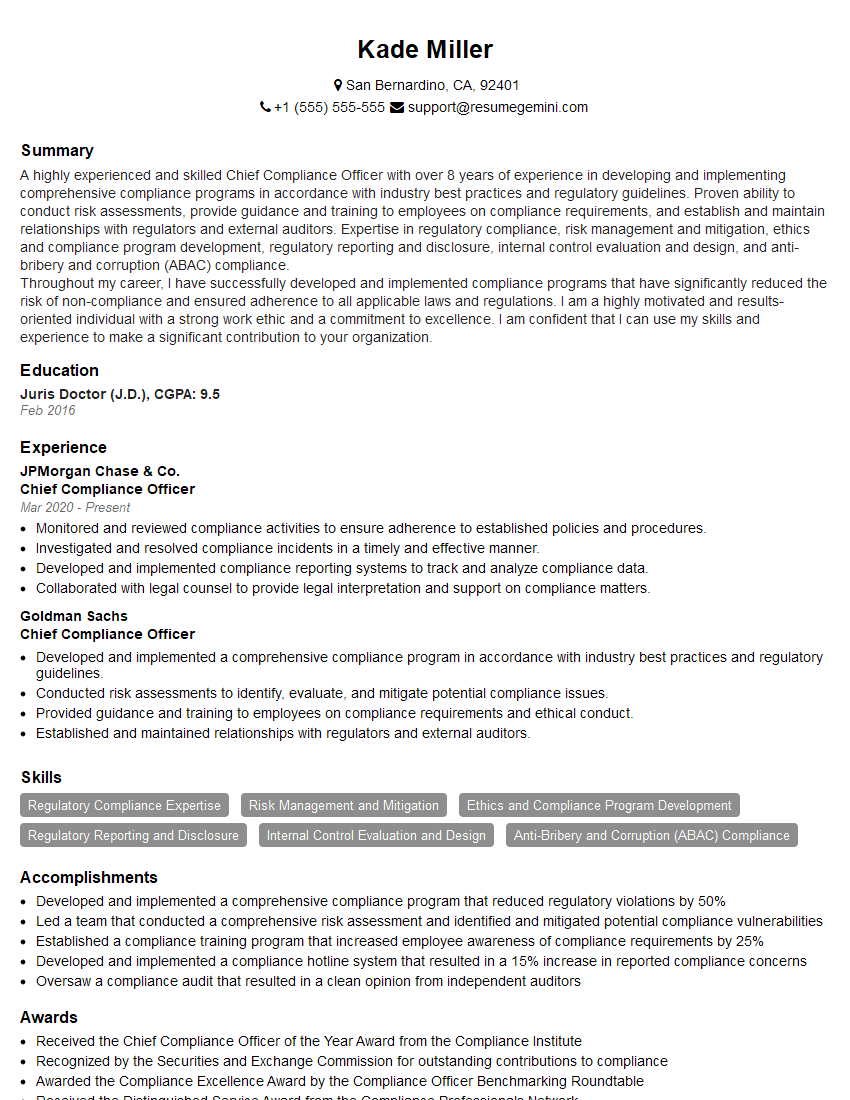
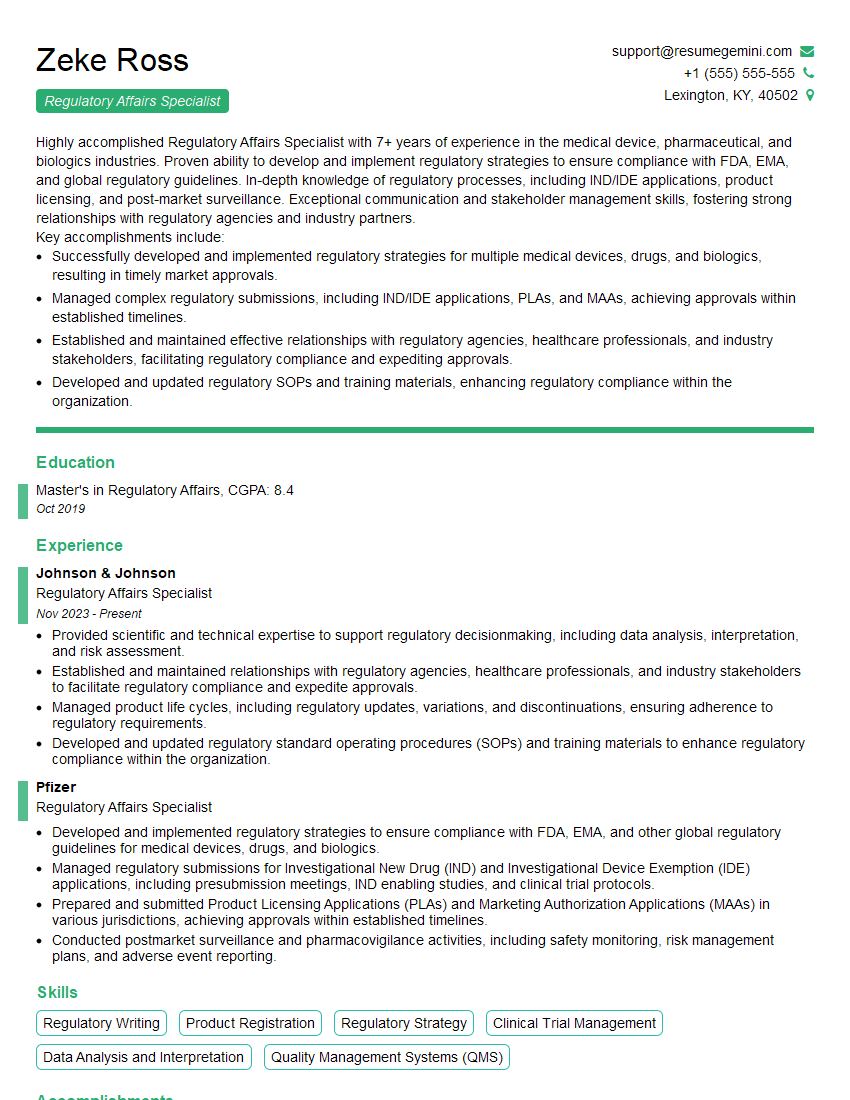
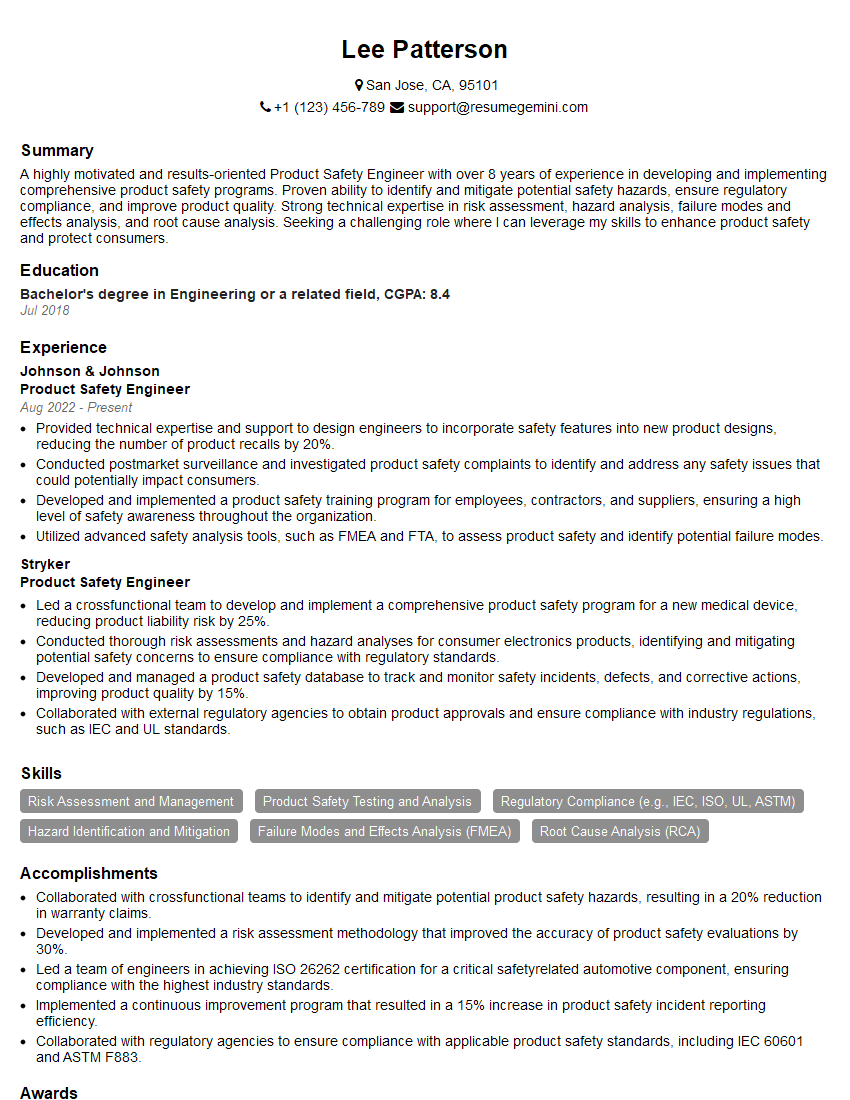
Mastering Knowledge of Aerospace Industry Standards and Regulations is crucial for career advancement in this highly regulated and safety-critical industry. A strong understanding of these topics demonstrates your commitment to safety and compliance, making you a highly desirable candidate. To significantly increase your chances of landing your dream aerospace role, create an ATS-friendly resume that highlights your relevant skills and experience. ResumeGemini is a trusted resource to help you build a professional and impactful resume tailored to the aerospace industry. Examples of resumes specifically designed for candidates with expertise in Knowledge of Aerospace Industry Standards and Regulations are available to guide you.
Explore more articles
Users Rating of Our Blogs
Share Your Experience
We value your feedback! Please rate our content and share your thoughts (optional).
What Readers Say About Our Blog
Very informative content, great job.
good