Every successful interview starts with knowing what to expect. In this blog, we’ll take you through the top Knowledge of Comic Industry interview questions, breaking them down with expert tips to help you deliver impactful answers. Step into your next interview fully prepared and ready to succeed.
Questions Asked in Knowledge of Comic Industry Interview
Q 1. Explain the difference between a comic book and a graphic novel.
The difference between a comic book and a graphic novel boils down primarily to length and narrative structure. Think of it like the difference between a short story and a novel. A comic book is typically a shorter, self-contained story, often part of an ongoing series with individual issues released periodically. They are usually 20-30 pages long and focus on a single, self-contained narrative arc or a part of a larger overarching story. Examples include single issues of Batman or The Walking Dead. A graphic novel, on the other hand, is a longer, more complete story, often presented as a single volume. They function as self-contained narratives, although some can be part of a larger series. They tend to be 100 pages or more and develop complex plots and characters over the course of the entire book. Maus by Art Spiegelman and Watchmen by Alan Moore are classic examples.
The key distinction isn’t the format itself (both are sequential art), but the scope and narrative ambition. While a comic book issue might feel like a chapter, a graphic novel feels more like a complete novel.
Q 2. Describe your experience with different comic book printing techniques.
My experience with comic book printing techniques spans several methods, each with its own pros and cons. I’ve worked with offset printing, which is the industry standard for high-volume printing, offering sharp detail and consistent color reproduction at a relatively low cost per unit. However, offset printing requires significant upfront investment in plates and setup, making it less ideal for smaller runs or experimental projects.
I’ve also utilized digital printing, especially for proofs and smaller print runs. It’s faster and more cost-effective for shorter print runs, but the quality might not always match the sharpness and vibrancy of offset. Digital printing allows for greater flexibility in smaller print runs and on-demand printing.
Finally, I have some experience with risograph printing for independent and experimental projects. This technique is known for its distinctive textured aesthetic and is often used for its unique and vibrant colors. While it offers a very specific artistic look, it’s not suitable for high-fidelity reproduction required by many mainstream publishers.
Q 3. What are some common storytelling techniques used in comics?
Comic storytelling relies heavily on visual language, and effective techniques are crucial. Panel sequencing dictates the pacing and flow of the narrative. A rapid succession of small panels creates a sense of urgency, while larger panels can emphasize a specific moment. Camera angles, mimicking filmmaking, influence the reader’s perspective and emotional response. A low angle might portray a character as powerful, while a high angle might make them seem vulnerable.
Gutter space – the space between panels – plays a significant role. A large gutter can create a sense of time passing or a significant event happening between scenes, while a smaller gutter provides a seamless transition. Speech balloons and captions convey dialogue and narration, and their placement and design add to the overall visual storytelling. Character design, including body language and expressions, further enhances the narrative. A simple frown can convey more emotion than pages of dialogue.
Finally, the use of visual metaphors and symbolism adds layers of meaning to the story. The use of color, font style, and visual motifs can also add to the depth and overall messaging.
Q 4. How familiar are you with different comic book genres (e.g., superhero, horror, romance)?
My familiarity with comic book genres is extensive. I’m comfortable working across the spectrum, including:
- Superhero Comics: From the classic archetypes to more deconstructed approaches, I understand the tropes and conventions of this dominant genre, including character development, power scaling, and world-building.
- Horror Comics: I have a deep understanding of how visual storytelling can heighten suspense and dread. This involves careful use of lighting, shadow, and panel composition to amplify the horror elements.
- Romance Comics: I understand the nuances of portraying intimacy and emotional connection through visual cues and dialogue, a subtler art than some of the more action-oriented genres.
- Science Fiction Comics: My knowledge encompasses world-building, technological details, and the exploration of futuristic or alternate realities.
- Fantasy Comics: I’m proficient in creating detailed, imaginative worlds, populated by mythical creatures and complex magic systems.
- Slice-of-Life Comics: I’m experienced in capturing the everyday moments and relationships that make up the human experience.
My experience extends beyond these core genres to include independent, experimental, and creator-owned works.
Q 5. Discuss the importance of panel layout and pacing in comic storytelling.
Panel layout and pacing are fundamental to comic storytelling. They work in tandem to control the reader’s experience. The size, shape, and arrangement of panels dictate the rhythm and emotional impact of the narrative. A series of small, tightly-cropped panels can build tension and speed up the action. Larger panels, conversely, can slow down the pace and emphasize a particular moment, drawing the reader’s attention to details.
The placement of panels, the use of gutters (the spaces between panels), and the direction of the reader’s eye movement all influence pacing. For example, a transition from a large, establishing shot to a series of smaller panels focusing on character interaction creates a clear shift in focus and mood.
Consider the classic example of a chase scene. Rapid-fire, small panels would create a sense of urgency and movement, whereas a slower, more deliberate panel layout might showcase the emotional weight of the chase for the characters involved. Mastering panel layout and pacing is key to controlling the reader’s emotions and building suspense.
Q 6. How do you ensure visual consistency across multiple issues of a comic book series?
Maintaining visual consistency across multiple issues of a comic book series requires meticulous planning and attention to detail. This involves establishing a clear style guide from the outset that covers all aspects of the visual presentation. The guide should include examples of character designs, backgrounds, and lettering styles, ensuring everyone involved in the production adheres to a unified look and feel.
Regular communication between the writer, artist, inker, colorist, and letterer is essential. The art team should share work-in-progress images frequently to catch inconsistencies and ensure that the artwork aligns with the overall vision. Using consistent color palettes and line weights greatly helps in maintaining uniformity. Digital tools allow for the creation of standardized assets (like character models or background elements) that can be reused across different issues.
Finally, reference sheets and model sheets for characters are vital. These sheets provide clear guidelines for the artist, ensuring that character features, costumes, and poses remain consistent throughout the series. This approach helps to preserve a unified visual style despite potential changes in creative teams or delays in production.
Q 7. What software and tools are you proficient in for creating or editing comic books?
My proficiency in software and tools for creating and editing comic books is extensive. I’m highly experienced with industry-standard programs, such as:
- Adobe Photoshop: For digital painting, image manipulation, and color correction.
- Adobe Illustrator: For vector-based art, creating clean lines, and lettering.
- Clip Studio Paint: A comprehensive digital painting and comics creation software with features tailored to comic book creation, particularly effective for inking and coloring.
- GIMP (GNU Image Manipulation Program): A free, open-source alternative to Photoshop, useful for various image editing tasks.
Beyond these core applications, I’m familiar with various other tools for specific tasks, including page layout software and digital inking and coloring pens.
Q 8. Describe your experience with color palettes and their impact on storytelling.
Color palettes are crucial in comics; they’re more than just aesthetics; they dictate mood, character personality, and even plot points. A muted, desaturated palette might suggest a somber, melancholic story, while vibrant, saturated colors could indicate excitement or action. Think of the stark blacks and blues often used in noir comics versus the bright, almost hyper-real colors used in superhero comics. This contrast directly impacts the reader’s emotional response.
For example, in a scene depicting a character’s grief, I might use desaturated blues and grays, emphasizing shadows and a lack of vibrancy to mirror the character’s internal state. Conversely, a superhero battle scene might explode with bright reds, yellows, and oranges, reflecting the energy and intensity of the conflict. My process often begins with establishing the overall tone of the story and then selecting a palette that aligns with it. I might also use specific color associations to build character; perhaps a villain is always associated with deep purples and blacks to symbolize their sinister nature.
Beyond the overall palette, I pay close attention to color temperature. Warm colors (reds, oranges, yellows) can convey comfort and warmth, while cool colors (blues, greens, purples) can suggest coldness, mystery, or even danger. The strategic use of color temperature within a single scene can subtly shift the emotional landscape and guide the reader’s eye.
Q 9. How do you handle feedback from editors or other collaborators?
Feedback is integral to the comic-making process. I embrace constructive criticism as an opportunity for growth. My approach involves actively listening to the feedback, asking clarifying questions if needed, and considering how the suggestions align with the overall vision of the project. Sometimes, feedback might challenge my initial ideas, and that’s okay! It allows me to refine my work and create a stronger final product.
For instance, an editor might suggest altering a character’s design to better reflect their personality or changing a panel’s layout for improved readability. I analyze the feedback carefully. If I disagree, I’ll explain my reasoning and engage in a constructive dialogue to find a mutually beneficial solution. The goal is always collaboration, not confrontation. Ultimately, the shared goal is a compelling comic, and that often requires a blend of my vision and the insights of collaborators.
Documentation is key. I keep detailed notes on all feedback received, along with my responses and the final decisions made. This allows for transparency and traceability throughout the process.
Q 10. Explain your understanding of copyright and intellectual property rights in the comic industry.
Copyright and intellectual property rights are paramount in the comic industry. Understanding these legal aspects is crucial for both creators and publishers. Copyright protects original creative works, including comic scripts, artwork, and character designs. This protection prevents unauthorized copying, distribution, or adaptation of the work. It’s automatically granted upon creation but registering the copyright with the appropriate authorities provides stronger legal standing.
Intellectual property rights extend beyond copyright and encompass trademarks (for characters’ names and logos), patents (for specific inventions depicted in comics), and trade secrets (confidential information about creative processes). Work-for-hire agreements between creators and publishers are common. These agreements specify ownership of the created material, often granting the publisher broad rights while compensating the creator for their work. Understanding these agreements’ nuances is vital to protect creators’ interests and avoid disputes.
Infringement can lead to significant legal consequences, including lawsuits and financial penalties. Therefore, creators must diligently protect their rights by registering their works, understanding contractual agreements, and seeking legal counsel when necessary. This protection safeguards their creative investment and ensures they receive proper credit and compensation for their work.
Q 11. What are some current trends in the comic book market?
The comic book market is dynamic, with several notable current trends. One is the rise of creator-owned titles and independent publishers. Many creators are bypassing traditional publishers to self-publish their work digitally or through smaller presses, gaining more creative control and a larger share of profits. This has led to a more diverse range of voices and styles in the industry.
Another significant trend is the increasing popularity of digital comics. Readers now have convenient access to a vast library of comics through various platforms and apps. This has broadened the audience and opened new avenues for distribution. Simultaneously, physical graphic novels continue to be popular, demonstrating the enduring appeal of tangible collectibles.
The industry also reflects broader societal shifts. We see a greater emphasis on diverse representation in characters and storylines, reflecting a more inclusive and representative portrayal of the world. Experimentation with different art styles and storytelling approaches remains a prominent feature, pushing the boundaries of the medium.
Q 12. How do you stay updated on the latest developments in the comic book industry?
Staying updated in this fast-paced industry requires a multifaceted approach. I regularly read industry publications like The Comics Journal and ICv2 to understand market trends and news. I also follow industry influencers and creators on social media platforms like Twitter and Instagram. This offers insight into emerging trends and discussions within the comic community.
Attending comic conventions (like San Diego Comic-Con or New York Comic Con) provides invaluable networking opportunities and a chance to connect with other creators, publishers, and industry professionals. These events also offer a first-hand look at the latest releases and innovative approaches. Finally, I actively engage with online comic communities and forums to participate in discussions and learn from the experiences of others.
Continuous learning is crucial. I subscribe to online courses and workshops focused on art techniques, storytelling, and the business side of the comic industry. This approach ensures I remain at the forefront of developments and adapt my skills accordingly.
Q 13. What is your experience with different types of comic book lettering?
Comic book lettering is more than just writing words; it’s a visual art form that complements the artwork and enhances readability. I’m familiar with various lettering styles, from traditional serif and sans-serif fonts to more stylized, hand-lettered approaches. The choice of style significantly influences the tone and feel of a comic.
For example, a classic serif font might be suitable for a historical or more traditional comic, lending a sense of gravitas. A bolder, sans-serif font could work well for a modern or action-oriented story. Hand-lettering allows for greater artistic control and expression, often used to emphasize specific words or create a unique visual style. I often use different weights, sizes, and kerning (the space between letters) to create visual hierarchy and ensure readability within panels.
Beyond the font choice, considerations include the placement of dialogue and captions within panels to avoid cluttering the artwork or obstructing the reader’s view. Balloon shapes and tails also play a significant role in conveying emotion and character interactions. Understanding these elements ensures the lettering seamlessly integrates with the art and elevates the overall storytelling experience.
Q 14. Describe your process for creating compelling character designs.
Creating compelling character designs involves more than just drawing a pretty face; it’s about visually communicating a character’s personality, backstory, and role within the story. I begin with a thorough understanding of the character’s personality, motivations, and place in the narrative. This informs every design choice, from their physical appearance to their clothing and accessories.
For instance, a character’s posture can communicate confidence or insecurity. Their clothing style might reflect their social status or personality. A superhero’s costume could symbolize their power or ideology. I often start with sketches, experimenting with different silhouettes and poses to capture the character’s essence. I also consider the overall visual style of the comic and how the character design will fit within that aesthetic.
Research plays a critical role. I might study historical costumes, cultures, or even real-life people to gain inspiration for character designs. The goal is to create a design that is not only visually appealing but also instantly recognizable and memorable. This process usually involves multiple revisions and iterations before arriving at the final design.
Q 15. How familiar are you with the history and evolution of comic books?
My familiarity with the history and evolution of comic books is extensive. I’ve studied the medium from its early newspaper comic strips like The Yellow Kid and Krazy Kat, which laid the groundwork for sequential art, through the Golden Age (character creation, superhero archetypes), the Silver Age (reimagining of classic characters), the Bronze Age (more mature themes and complex characters), and the modern era of independent comics and graphic novels. I understand the impact of key publishers like Timely Comics (Marvel’s predecessor), DC Comics, and EC Comics, as well as the rise of independent publishers and the creator-owned movement. I’m familiar with the technological shifts, from printing techniques to digital distribution and the impact of those changes on the art form itself. My understanding includes not just the creative evolution but also the business side – from distribution models to censorship and societal influences on content.
- Golden Age (1938-1956): Birth of the superhero genre with characters like Superman and Batman.
- Silver Age (1956-1970): A resurgence of superheroes with a focus on science fiction and a more optimistic tone.
- Bronze Age (1970-1985): Increased realism, more complex characters with flaws, and darker themes.
- Modern Age (1985-Present): Diverse styles, independent publishers flourish, graphic novels gain mainstream acceptance.
Career Expert Tips:
- Ace those interviews! Prepare effectively by reviewing the Top 50 Most Common Interview Questions on ResumeGemini.
- Navigate your job search with confidence! Explore a wide range of Career Tips on ResumeGemini. Learn about common challenges and recommendations to overcome them.
- Craft the perfect resume! Master the Art of Resume Writing with ResumeGemini’s guide. Showcase your unique qualifications and achievements effectively.
- Don’t miss out on holiday savings! Build your dream resume with ResumeGemini’s ATS optimized templates.
Q 16. What are some of your favorite comic books and why?
Choosing favorites is difficult, as the beauty of comics lies in their diversity! However, Watchmen by Alan Moore and Dave Gibbons stands out for its deconstruction of the superhero genre and its profound social commentary. Its intricate plotting and masterful art still resonate today. Maus by Art Spiegelman is a landmark achievement, demonstrating the power of comics to tell complex and emotionally resonant stories through a unique visual language. The graphic novel’s innovative approach to representing the Holocaust is unforgettable. Finally, Sandman by Neil Gaiman showcased the versatility of comics, venturing into mythology, fantasy, and philosophical themes with exceptional writing and artistic flair. Each of these works pushed boundaries and expanded the possibilities of the medium.
Q 17. How do you manage deadlines and workloads in a fast-paced environment?
Managing deadlines and workloads in the fast-paced comic book industry relies on effective time management and strong organizational skills. I utilize project management tools to break down large projects into smaller, manageable tasks with clear deadlines. I prioritize tasks based on urgency and importance using methods like the Eisenhower Matrix (urgent/important). Regular communication with collaborators – writers, artists, editors – is crucial to ensure everyone is on the same page and potential roadblocks are identified early. I also build buffer time into my schedule to accommodate unexpected delays or creative revisions.
Q 18. Describe your experience with collaborative projects in the comic book industry.
My experience with collaborative projects has been extensive, involving working with diverse teams of writers, artists, colorists, letterers, and editors. Successful collaboration requires clear communication, respect for individual contributions, and a shared vision for the final product. I’ve learned to adapt my working style to different personalities and creative processes, focusing on constructive feedback and compromise. I’ve also used collaborative platforms for sharing files and tracking progress, fostering a transparent workflow. For example, I was part of a team that developed a six-issue comic book series. Regular team meetings, shared online documents, and a structured feedback process ensured a cohesive final product.
Q 19. How do you adapt your storytelling to different target audiences?
Adapting storytelling to different target audiences involves understanding their interests, age appropriateness, and reading levels. For younger audiences, simpler narratives, brighter art styles, and age-appropriate themes are employed. Older audiences may appreciate more complex plots, nuanced characters, and potentially mature themes. The language used should be tailored to the target demographic. For instance, a comic aimed at teenagers might use slang and deal with relatable issues like identity and friendship, while a comic aimed at adults could explore more complex themes like societal issues or moral dilemmas.
Q 20. Explain your understanding of the different stages of comic book production.
Comic book production involves several key stages:
- Idea Generation & Scripting: Developing the story concept, writing a script outlining panels and dialogue.
- Pencilling: The artist creates the initial artwork, laying out panels and character designs.
- Inking: Adding line art to the pencils, defining outlines and details.
- Coloring: Adding color to the artwork, setting the mood and atmosphere.
- Lettering: Adding dialogue, captions, and sound effects.
- Editing: Review and revision by the editor to ensure quality and consistency.
- Printing & Distribution: The final product is printed and distributed to retailers or digitally published.
Q 21. What are some strategies for marketing and promoting comic books?
Marketing and promoting comic books requires a multifaceted approach leveraging both traditional and digital methods. This might include:
- Social Media Marketing: Engaging fans on platforms like Twitter, Instagram, and Facebook, showcasing artwork, and building a community.
- Public Relations: Seeking coverage in relevant publications and websites.
- Conventions & Events: Participating in comic book conventions to connect with readers and sell merchandise.
- Online Retailers: Making the comic book readily available through platforms like Amazon and Comixology.
- Website & Email Marketing: Having a dedicated website with information about the comic and using email newsletters to keep fans updated.
- Advertising: Targeted ads online and potentially in relevant print publications.
Successful marketing often involves understanding your target audience and using strategies that resonate with them.
Q 22. How do you handle creative differences with collaborators?
Creative differences are inevitable in collaborative projects, especially in the dynamic world of comic book creation. My approach centers around open communication and mutual respect. I believe in fostering an environment where everyone feels comfortable expressing their ideas and concerns. Instead of viewing disagreements as conflicts, I see them as opportunities for growth and innovation. For example, if a writer has a specific vision for a character’s arc that clashes with my artistic interpretation, we’d sit down, discuss our individual perspectives, and brainstorm alternative solutions that satisfy both creative visions. This might involve compromising on certain aspects or exploring new angles that integrate both ideas. Ultimately, the goal is to create a final product that’s stronger and more compelling than any single individual could have achieved alone. We might use mood boards or storyboarding sessions to visually represent our ideas and find common ground. The key is to approach the process collaboratively, focusing on finding a shared vision rather than imposing individual preferences.
Q 23. Discuss your familiarity with various comic book distribution channels.
Comic book distribution is a multifaceted landscape. Traditionally, the direct market, through comic book specialty shops, played a dominant role. This channel relies on a strong relationship between distributors, retailers, and publishers. However, the industry has evolved significantly with the rise of digital distribution platforms like ComiXology and others, providing a wider reach to readers globally. This digital realm also includes subscription services that offer readers access to a catalog of digital comics. Furthermore, print-on-demand services enable creators to self-publish and sell their comics directly to consumers via online platforms such as Amazon and Etsy, cutting out traditional publishers and distributors. Bookstores, both big chains and independent stores, also represent a significant channel, especially for graphic novels and those aiming for broader appeal. Finally, online retailers like Amazon and independent creators’ websites offer another avenue for reaching a wider audience. Understanding each channel’s strengths and weaknesses allows for a tailored distribution strategy that maximizes reach and sales.
Q 24. What are some common challenges faced by comic book creators?
Comic book creators face a multitude of challenges. Financial instability is a major hurdle, as income can be unpredictable, particularly for independent creators. Marketing and promotion can be a significant challenge, requiring a dedicated effort to reach potential readers in a crowded marketplace. Competition is fierce, requiring creators to constantly innovate and deliver high-quality work to stand out. Balancing creative vision with commercial considerations can also be tricky, as creators must often adapt their work to meet market demands without compromising their artistic integrity. Furthermore, securing funding, managing legal and contractual issues, and navigating the complexities of intellectual property rights all demand considerable attention and resources. Finally, the ever-evolving landscape of the industry, with shifting reader preferences and technological changes, presents continuous challenges that creators must adapt to.
Q 25. How do you approach creating a compelling comic book storyline?
Crafting a compelling comic book storyline requires a multi-step process. It begins with a strong concept—a unique premise that grabs the reader’s attention from the start. I often start by developing compelling characters with relatable flaws and motivations. A well-defined setting and atmosphere are equally crucial for immersing the reader in the story’s world. I then build a detailed outline, mapping out the major plot points and character arcs. This helps maintain narrative coherence and ensure a satisfying resolution. Intriguing conflicts, both internal and external, are essential for driving the narrative forward and keeping readers engaged. The pacing is also vital—knowing when to build suspense, introduce twists, and offer moments of respite. Regular self-editing and seeking feedback from trusted sources are crucial to refine the storyline and ensure a compelling narrative. For instance, I might create a detailed character profile for each character or create a visual representation of the story’s climax before starting on the actual artwork. Iterative refinement is key.
Q 26. Describe your understanding of different narrative structures in comics.
Comics employ diverse narrative structures beyond the linear chronological approach. Classic linear storytelling moves sequentially through time, but many comics utilize non-linear structures, such as flashbacks or interwoven timelines to enhance narrative complexity. Parallel narratives can showcase multiple characters’ perspectives simultaneously, enriching the story’s depth. Episodic structures, common in superhero comics, present self-contained stories within a larger ongoing narrative arc. Nonlinear narratives might utilize fragmented panels or unconventional layouts to convey the character’s internal state or a disjointed timeline. Frame narratives, where a story is told within another story, add layers of meaning and intrigue. Understanding these structures allows for the manipulation of time and perspective to create dynamic and engaging stories. For example, a flashback sequence could reveal crucial backstory to motivate a present-day action, creating a richer understanding of a character’s actions.
Q 27. What are some effective ways to build a strong brand identity for a comic book?
Building a strong brand identity for a comic book is crucial for attracting readers and establishing a loyal fanbase. This starts with a compelling title that’s memorable and reflects the comic’s genre and tone. A distinctive logo design, consistent with the comic’s overall aesthetic, is essential for visual recognition. A well-defined brand voice, reflected in the comic’s writing style and artwork, helps create a cohesive brand personality. A consistent color palette and visual style across all marketing materials reinforce brand recognition. Engaging with readers on social media and other platforms helps build community and fosters a sense of connection. Creating merchandise such as posters, t-shirts, and figurines can further establish brand recognition and extend the comic’s reach. For example, a horror comic might use a dark color palette, sharp lines, and a gothic font for its logo. In contrast, a lighthearted superhero comic might use brighter colors and a more playful font.
Q 28. How familiar are you with self-publishing options for comic books?
I’m very familiar with self-publishing options for comic books. Services like Print-on-Demand platforms (e.g., Amazon Kindle Direct Publishing, IngramSpark) allow creators to print and sell their comics without large upfront costs, making it accessible to many. Digital self-publishing platforms offer wider reach and lower production costs, allowing creators to build a direct relationship with their audience. However, self-publishing requires significant effort in marketing, distribution, and customer service. Creators need to manage all aspects of the process, from editing and design to marketing and sales. The creation of a website or online store to sell digital comics directly to the consumers is also crucial. Platforms like Gumroad, Etsy, and even personal websites can be useful for this purpose. It’s crucial to carefully consider the various platforms available and weigh their pros and cons based on the creator’s specific needs and resources. Understanding pricing strategies, royalty structures, and marketing tools within these platforms is key to success.
Key Topics to Learn for Knowledge of Comic Industry Interview
- Comic Book History & Evolution: Understanding the historical context, key eras (Golden Age, Silver Age, etc.), and major publishers’ contributions is crucial. Consider the impact of societal changes on comic book narratives and styles.
- Genre Conventions & Tropes: Familiarize yourself with common genres (superhero, horror, sci-fi, etc.) and their recurring narrative structures, character archetypes, and visual styles. Be prepared to discuss how these elements function within specific comics.
- Key Players & Influencers: Research influential creators, writers, artists, and publishers. Understanding their contributions and impact on the industry will demonstrate your depth of knowledge.
- Market Trends & Analysis: Stay updated on current market trends, including digital comics, graphic novels, and the evolving relationship between comics and other media (film, TV).
- Business Models & Distribution: Explore the various business models within the comic industry, including direct market sales, subscription services, licensing, and merchandising. Understand the complexities of distribution channels.
- Legal & Copyright Aspects: Develop a basic understanding of intellectual property rights, copyright laws, and their relevance to the comic book industry.
- Creative Process & Collaboration: Discuss the collaborative nature of comic book creation, including the roles of writers, artists, letterers, colorists, and editors. Understand the stages of production and the challenges involved.
- Critical Analysis & Interpretation: Practice analyzing comics critically, considering themes, symbolism, narrative techniques, and the overall artistic merit. Be prepared to articulate your perspectives thoughtfully.
Next Steps
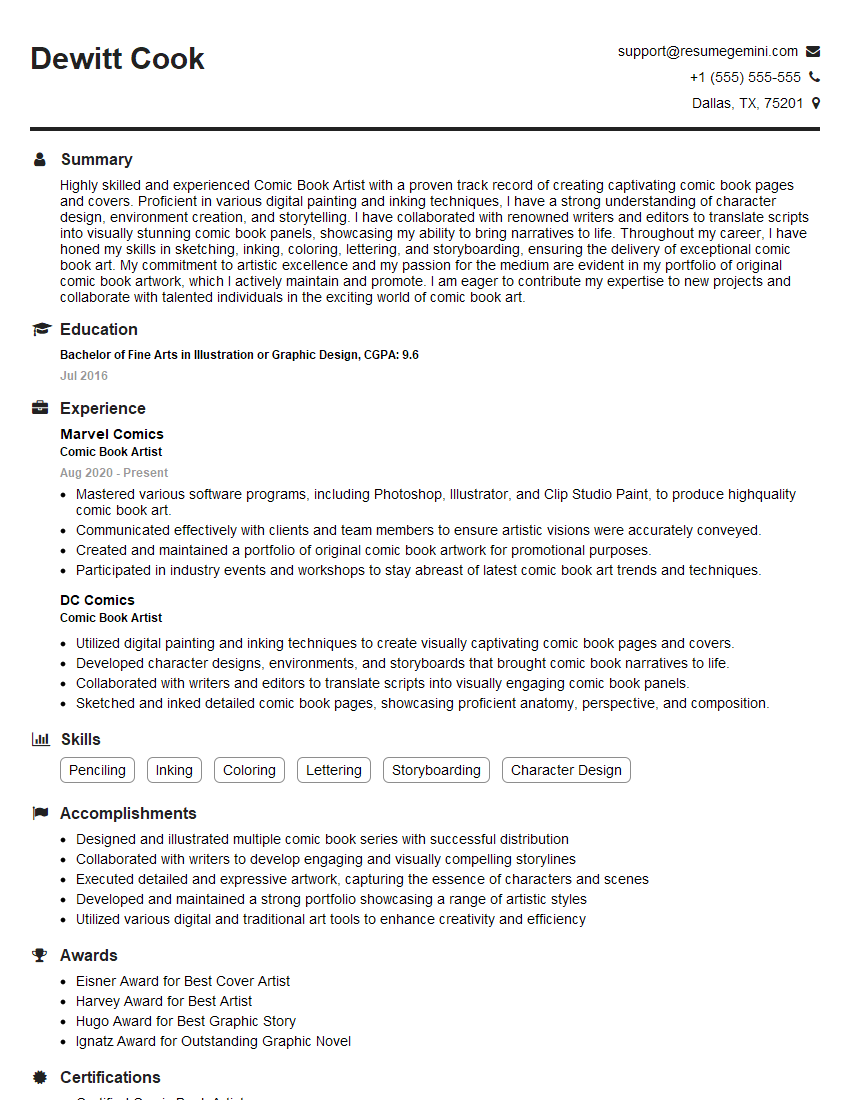
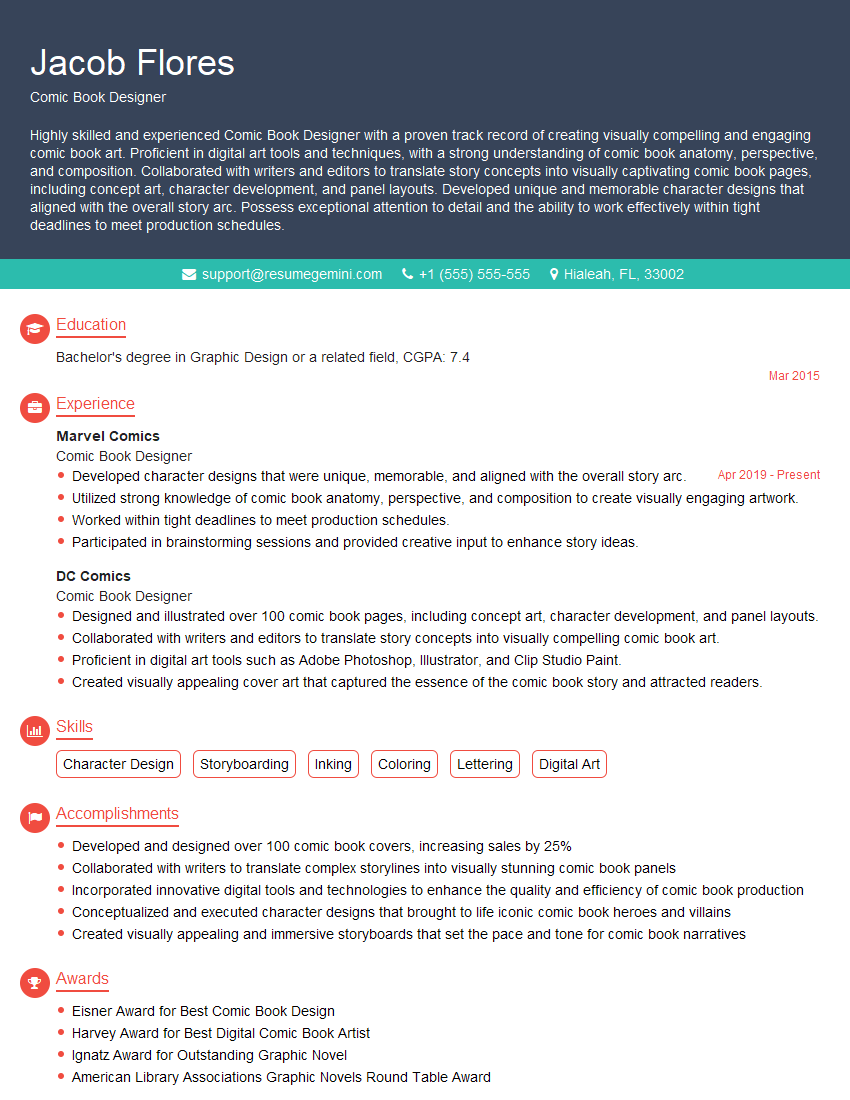
A strong understanding of the comic industry is essential for career advancement, opening doors to exciting roles in publishing, marketing, creative development, or even academic research. To maximize your job prospects, craft an ATS-friendly resume that highlights your relevant skills and experience effectively. ResumeGemini is a trusted resource that can help you build a professional and impactful resume. They offer examples of resumes tailored to the Knowledge of Comic Industry, providing you with a valuable template to guide your own creation. Invest the time to build a compelling resume—it’s your first impression on potential employers.
Explore more articles
Users Rating of Our Blogs
Share Your Experience
We value your feedback! Please rate our content and share your thoughts (optional).
What Readers Say About Our Blog
Very informative content, great job.
good