Interviews are more than just a Q&A session—they’re a chance to prove your worth. This blog dives into essential Knowledge of Construction Materials interview questions and expert tips to help you align your answers with what hiring managers are looking for. Start preparing to shine!
Questions Asked in Knowledge of Construction Materials Interview
Q 1. What are the key properties of concrete and how do they affect its performance?
Concrete’s performance hinges on several key properties. Think of it like a cake – the ingredients and how they’re mixed determine the final product. The main properties are:
- Strength: Measured by compressive strength (ability to resist crushing), tensile strength (ability to resist pulling), and flexural strength (ability to resist bending). Higher strength concrete is crucial for load-bearing structures like bridges and high-rise buildings. A poorly mixed batch will result in low strength, leading to potential collapse.
- Workability: This refers to how easily the concrete can be placed and compacted. A workable mix flows smoothly into forms, minimizing voids and ensuring a dense, strong final product. Poor workability leads to honeycomb (voids) within the concrete, significantly reducing its strength and durability.
- Durability: This relates to the concrete’s resistance to weathering, chemicals, and abrasion. Factors like proper curing (keeping the concrete moist after pouring) and the use of admixtures (chemicals added to modify properties) greatly influence durability. Concrete exposed to de-icing salts in winter needs higher durability to prevent damage.
- Shrinkage: As concrete cures, it loses moisture and shrinks. Excessive shrinkage can cause cracking. Controlling the mix design and employing techniques like controlled curing can mitigate this. Consider a concrete sidewalk – shrinkage cracking is a common sight if not properly managed.
- Permeability: This is how easily water can penetrate the concrete. High permeability allows water to enter, leading to freeze-thaw damage (water expands when frozen, causing cracking) and corrosion of embedded steel. Adding water reducers during mixing can improve impermeability.
Understanding these properties is vital for selecting the appropriate concrete mix for a specific application. A high-strength mix is needed for a bridge pier, whereas a highly workable mix might be better suited for complex formwork.
Q 2. Explain the different types of steel used in construction and their applications.
Steel is a cornerstone of construction, offering high strength and ductility (ability to deform without breaking). Several types are commonly used:
- Carbon Steel: The most common and economical type. Its strength is directly related to its carbon content – higher carbon content means higher strength but lower ductility. Used extensively in structural framing, reinforcement bars (rebar), and other applications where high strength is required. Think of the steel beams supporting a skyscraper.
- Alloy Steel: Contains other elements besides carbon (e.g., chromium, nickel, molybdenum) that enhance specific properties like strength, corrosion resistance, or toughness. Stainless steel, a type of alloy steel, is used where corrosion resistance is critical, such as in facades or chemical plants. For example, stainless steel is a great choice for railings exposed to harsh weather conditions.
- High-Strength Low-Alloy (HSLA) Steel: Offers a balance between high strength and weldability. It’s often used in bridges and other structures where weight reduction is important without compromising strength. This type of steel helps reduce the overall weight of a structure, saving on material costs.
- Weathering Steel (Corten Steel): Forms a protective oxide layer when exposed to the weather, reducing the need for painting. Used in architectural applications for aesthetic reasons and low maintenance. Think of decorative steel panels on modern buildings.
The choice of steel depends on factors such as structural requirements, budget, and environmental conditions. A detailed structural analysis is essential to determine the appropriate grade and type of steel for any given project.
Q 3. Describe the process of selecting appropriate lumber for a specific project.
Selecting lumber requires careful consideration of several factors. It’s like choosing the right ingredients for a recipe; the wrong choice can ruin the final dish. Key factors include:
- Species: Different species (e.g., Douglas fir, Southern pine, redwood) offer varying strength, durability, and aesthetic qualities. Douglas fir is known for its strength and is often used in structural applications, while redwood is prized for its resistance to rot and is used in outdoor structures.
- Grade: Lumber grades are based on the number and type of knots, checks (splits), and other imperfections. Higher grades have fewer imperfections and are stronger and more suitable for structural applications. For example, No. 1 grade lumber is suitable for visible framing members, while lower grades might be suitable for less critical applications.
- Size and Dimensions: The required size depends on the application. Structural members need larger dimensions to carry heavier loads. Accurate dimensions are crucial for ensuring proper fit and preventing structural issues.
- Moisture Content: Lumber should be dried to the appropriate moisture content for the application to prevent warping, shrinking, and other dimensional changes. Construction-grade lumber is typically air-dried, while some specialty lumber is kiln-dried to achieve precise moisture content.
- Intended Use: The specific application dictates the required properties. Exterior applications require lumber with good rot resistance, while interior applications might prioritize aesthetic qualities.
Consulting a structural engineer or experienced lumber supplier is crucial for complex projects to ensure appropriate selection. Ignoring these factors can lead to structural failures, costly repairs, and even safety hazards.
Q 4. How do you identify and address potential material defects?
Identifying and addressing material defects is critical for ensuring the safety and longevity of a project. This requires a thorough inspection process at different stages.
Identification: This involves visual inspection, testing (e.g., compression testing for concrete, tensile testing for steel), and sometimes specialized equipment (e.g., ultrasonic testing for internal flaws). We look for:
- Visual Defects: Cracks, splits, warping, discoloration, insect damage, etc.
- Dimensional Defects: Incorrect sizes, out-of-square components.
- Internal Defects: Voids, honeycombing (in concrete), inclusions (in steel).
Addressing Defects: Once defects are identified, the approach depends on the severity and type:
- Minor Defects: Might be acceptable depending on the application and relevant standards. For example, minor surface cracks in concrete might be acceptable if they don’t compromise structural integrity.
- Significant Defects: Require repair or replacement. Cracked concrete might be repaired with epoxy injections, while severely damaged lumber should be replaced.
Documentation is crucial. Thorough records of defects, repairs, and acceptance criteria are essential for quality control and liability purposes.
Q 5. What are the common causes of concrete cracking and how can they be prevented?
Concrete cracking is a common problem, often stemming from a combination of factors:
- Shrinkage: As concrete cures, it loses moisture and shrinks, leading to tensile stresses that can cause cracking. This is more pronounced in hot, dry conditions.
- Temperature Changes: Temperature fluctuations cause expansion and contraction, creating stress that can crack the concrete.
- Plastic Shrinkage: Rapid water loss from the surface of freshly placed concrete can cause shrinkage cracking before the concrete has fully hardened.
- Settlement: Uneven settlement of the underlying soil can exert stresses on the concrete, leading to cracking.
- Overloading: Exceeding the design load capacity of the concrete can cause cracking.
- Poor Construction Practices: Insufficient compaction, improper curing, use of inadequate formwork, and poor placement techniques can lead to cracking.
Prevention: Several strategies can mitigate cracking:
- Proper Mix Design: Using a low water-cement ratio reduces shrinkage.
- Proper Curing: Keeping the concrete moist for several days after placement prevents rapid water loss.
- Control of Temperature: Using shade, insulation, or other methods to moderate temperature changes.
- Use of Control Joints: Planned joints in the concrete allow for expansion and contraction without causing uncontrolled cracking.
- Proper Foundation Design: Ensuring stable ground conditions and adequate compaction.
Understanding the cause of cracking is crucial for selecting the appropriate prevention method. For example, cracks due to plastic shrinkage can be minimized by using appropriate curing techniques.
Q 6. Explain the difference between Portland cement and other types of cement.
Portland cement is the most common type, forming the basis of most concrete. It’s made by heating a mixture of limestone and clay, then grinding the resulting clinker into a fine powder. The key reaction is the hydration of the cement particles when mixed with water, resulting in a hardened mass.
Other types of cement include:
- Masonry Cement: A blend of Portland cement and other materials that modifies properties like water retention and workability. Ideal for masonry work, providing better adhesion and workability than straight Portland cement.
- White Cement: Similar to Portland cement but with low iron content, resulting in a lighter color. Used for decorative applications where a white or light-colored finish is required.
- High-Alumina Cement: Develops high early strength, but has lower long-term durability than Portland cement. It’s used in specialized applications where rapid strength gain is crucial.
- Expansive Cement: Expands slightly as it hardens, creating compressive stress that offsets shrinkage and can mitigate cracking. Useful for filling cracks or creating self-healing concrete.
The choice of cement depends on the application requirements. For most general concrete work, Portland cement is perfectly adequate. However, other types offer advantages in specific situations where particular properties are critical.
Q 7. What are the factors affecting the durability of asphalt pavements?
Asphalt pavement durability is influenced by many factors:
- Traffic Loading: Heavy traffic loads cause fatigue cracking and rutting (deformation). Proper pavement design, including sufficient thickness and appropriate aggregate selection, is crucial to withstand traffic loads.
- Environmental Factors: Temperature fluctuations, freeze-thaw cycles, and exposure to water and chemicals all contribute to pavement deterioration. The use of durable aggregates and appropriate binder types can enhance resistance to environmental degradation.
- Material Properties: The quality of the asphalt binder, aggregate type and grading, and the mix design significantly impact durability. A well-designed mix will provide a balance of strength, flexibility, and resistance to deformation.
- Construction Practices: Proper compaction, ensuring uniform density, and proper construction techniques are essential for achieving optimal pavement performance and extending its lifespan.
- Maintenance: Regular maintenance, such as crack sealing and pothole repair, prevents further deterioration and extends the life of the pavement. Routine inspections are vital to catch issues early on.
Designing a durable asphalt pavement requires careful consideration of all these factors. For example, in areas with heavy freeze-thaw cycles, the use of aggregates resistant to freeze-thaw damage is essential. Ignoring these factors can result in premature pavement failure, leading to costly repairs and disruption.
Q 8. Describe different methods of waterproofing structures.
Waterproofing structures is crucial to protect them from water damage, which can lead to structural weakening, mold growth, and costly repairs. There are several methods, broadly categorized as membrane systems, coating systems, and integral systems.
- Membrane Systems: These involve applying a continuous waterproof layer over the structure. Examples include:
- Built-up roofing (BUR): Layers of asphalt and felt create a durable, waterproof membrane often used on flat roofs.
- Single-ply membranes: Materials like EPDM (ethylene propylene diene monomer) rubber or TPO (thermoplastic polyolefin) are installed as single sheets, offering a quicker installation process.
- Liquid-applied membranes: These are sprayed or rolled onto surfaces, forming a seamless waterproof layer. Common materials include polyurethane and acrylics.
- Coating Systems: These provide a protective layer that resists water penetration. Examples include:
- Cementitious coatings: These are durable and resistant to abrasion, often used in basements and tunnels.
- Acrylic coatings: Flexible coatings that can bridge minor cracks and are suitable for various surfaces.
- Integral Systems: These incorporate waterproofing properties directly into the construction material itself. An example is using waterproof concrete admixtures.
The choice of method depends on factors like the type of structure, budget, and environmental conditions. For instance, a basement might benefit from a cementitious coating, while a flat roof might be better suited for a BUR system. Proper design and installation are paramount to ensure the effectiveness of any waterproofing system.
Q 9. What are the benefits and drawbacks of using recycled materials in construction?
Using recycled materials in construction offers significant environmental and economic benefits, but also presents certain challenges.
- Benefits:
- Reduced environmental impact: Less virgin material is extracted, reducing mining and manufacturing emissions. Recycling reduces landfill waste.
- Cost savings: Recycled materials are often cheaper than virgin materials.
- Improved sustainability: Contributes to a circular economy, promoting resource efficiency.
- Drawbacks:
- Variable quality: Recycled materials can have inconsistent properties compared to virgin materials, requiring careful quality control.
- Potential contamination: Recycled materials may contain contaminants that need to be managed.
- Availability and logistics: Sourcing and transporting recycled materials can be more complex than procuring virgin materials.
- Performance limitations: In some cases, the performance of recycled materials may not meet specific structural requirements.
For example, using recycled steel in reinforcement bars can significantly reduce carbon emissions but requires careful testing to ensure the strength meets the design criteria. Similarly, recycled aggregates in concrete can reduce costs but might need adjustments to the mix design to achieve the desired strength and workability. Careful planning and quality assurance are crucial for successful implementation of recycled materials.
Q 10. Explain the importance of material compatibility in construction projects.
Material compatibility is crucial for the long-term performance and durability of any construction project. It refers to the ability of different materials to coexist without adverse reactions or degradation.
Incompatible materials can lead to a variety of problems, including:
- Chemical reactions: Some materials react with each other, causing corrosion, staining, or weakening of the structure. For example, using galvanized steel in contact with certain types of concrete can lead to corrosion.
- Physical incompatibility: Materials with different thermal expansion rates can create stresses and cracking when subjected to temperature fluctuations. Think of using different types of wood with vastly different expansion properties in close proximity.
- Moisture issues: Incompatible materials can create pathways for water penetration, leading to damage and mold growth.
To ensure compatibility, it’s essential to consult material compatibility charts provided by manufacturers and employ experienced professionals who understand the potential interactions between different materials during the design and construction phases. Careful material selection and appropriate detailing are crucial to preventing compatibility issues and ensuring a durable, long-lasting structure.
Q 11. How do you determine the strength and load-bearing capacity of different materials?
Determining the strength and load-bearing capacity of construction materials involves a combination of laboratory testing, empirical data, and engineering calculations.
- Laboratory testing: Standardized tests are performed on samples to determine properties like compressive strength (for concrete and masonry), tensile strength (for steel and timber), and flexural strength (for beams and slabs). Examples include ASTM (American Society for Testing and Materials) and ISO (International Organization for Standardization) standards.
- Empirical data: Historical data and established material properties from previous projects and research studies are used to inform design choices.
- Engineering calculations: Structural engineers use various methods and software to calculate the stresses and strains on materials under different loading conditions, ensuring the structure can safely support the intended loads. These calculations take into account factors like material properties, geometry, and environmental conditions.
For instance, the compressive strength of concrete is determined by testing cylinders cast from the concrete mix, following standardized procedures. This strength value is then used in structural calculations to ensure the concrete structure can safely bear the applied loads. Similar testing and calculation methods are used for other materials to ensure structural integrity.
Q 12. Discuss the impact of environmental factors on material selection.
Environmental factors significantly impact material selection. These factors influence material durability, performance, and even cost.
- Climate: Temperature extremes, humidity, rainfall, and exposure to UV radiation affect material degradation. For example, materials susceptible to freeze-thaw cycles (like concrete) may not be suitable in cold climates unless special admixtures are used.
- Soil conditions: Soil type, moisture content, and potential for expansive soils impact foundation design and material selection. Expansive soils can exert significant pressure on foundations, necessitating materials with high strength and resistance to deformation.
- Exposure to chemicals: Exposure to chemicals like salts (from de-icing) or industrial pollutants can corrode materials, necessitating the use of corrosion-resistant materials like stainless steel or specific coatings.
- Biological factors: Exposure to insects, fungi, or marine organisms can damage certain materials, requiring the use of treated timber or materials resistant to biodegradation.
Consider a coastal structure, where materials must be selected to withstand saltwater corrosion, strong winds, and UV exposure. This might involve using specialized coatings, stainless steel, or pressure-treated timber. Proper assessment of environmental factors is critical in material selection to ensure the project’s long-term performance and longevity.
Q 13. What are some common sustainable construction materials and their applications?
Sustainable construction materials minimize environmental impact throughout their life cycle—from extraction to disposal. Several options are gaining popularity:
- Bamboo: A rapidly renewable resource, bamboo is strong, lightweight, and aesthetically pleasing. It can be used in flooring, scaffolding, and structural elements.
- Recycled steel: Using recycled steel reduces the need for iron ore mining and lowers carbon emissions. It offers comparable strength to virgin steel and is suitable for structural applications.
- Cross-laminated timber (CLT): Engineered timber product made by layering and gluing planks of lumber. CLT is strong, sustainable, and can be used in walls, floors, and roofs, reducing reliance on concrete.
- Hempcrete: A bio-composite material made from hemp fibers and lime binder. It has excellent thermal insulation properties and is suitable for walls and infill panels.
- Recycled aggregates: Using recycled concrete or demolition waste as aggregates in new concrete mixes reduces landfill waste and conserves natural resources.
The application of sustainable materials depends on the specific project requirements and local availability. For example, CLT might be ideal for a low-rise building in a region with abundant timber resources, while recycled aggregates can be incorporated into concrete mixes in most construction projects.
Q 14. Explain the process of preparing and interpreting a concrete mix design.
Preparing and interpreting a concrete mix design involves determining the optimal proportions of cement, aggregates (sand and gravel), water, and potentially admixtures to achieve the desired concrete properties.
Process:
- Determine the required concrete properties: This involves specifying the compressive strength, workability, durability, and other relevant properties based on the project requirements.
- Select the materials: The type of cement, aggregates, and admixtures are chosen based on availability, cost, and performance characteristics.
- Mix proportioning: The proportions of the ingredients are determined through calculations and/or experimentation. This often involves using established mix design methods (e.g., ACI 211.1) or specialized software.
- Trial mixes: Test batches of concrete are made using the calculated proportions, and their properties are evaluated through laboratory testing.
- Mix design refinement: The mix proportions are adjusted based on the results of the trial mixes until the desired properties are achieved.
Interpreting the mix design: The final mix design will specify the weight or volume of each ingredient per unit volume (e.g., cubic meter) of concrete. This information is crucial for accurate concrete ordering and production. The design also includes data on the expected compressive strength, slump (workability), and other relevant properties. Any deviations from the specified design during production or placement must be closely monitored and documented.
For example, a mix design might specify a ratio of 1:1.5:3 (cement:sand:gravel) by weight and a water-cement ratio of 0.5. The interpretation would indicate that for every 1 part of cement, 1.5 parts of sand and 3 parts of gravel are required, along with half as much water as the cement weight, to achieve the target properties. Accurate interpretation ensures that the produced concrete will meet the design requirements.
Q 15. How do you manage material waste and disposal in a construction project?
Managing material waste and disposal on a construction project is crucial for environmental responsibility, cost efficiency, and legal compliance. It’s a multi-faceted process starting even before construction begins.
- Planning & Procurement: Accurate material takeoffs and careful planning minimize over-ordering, a major source of waste. We specify materials efficiently, considering prefabricated components where possible to reduce on-site cutting and waste generation.
- On-site Management: Implementing a robust waste segregation system is key. Designated areas for different waste streams (wood, metal, concrete, etc.) streamline recycling and disposal. Regular site inspections ensure proper segregation and prevent cross-contamination.
- Recycling & Reuse: We prioritize recycling and reuse wherever feasible. For example, salvaged materials can be repurposed, and concrete rubble can be crushed and used as aggregate in other parts of the project or even sold to external parties. This reduces landfill waste and saves money.
- Disposal & Reporting: All waste is disposed of according to local regulations. We partner with licensed waste haulers and maintain meticulous records of waste generated, recycled, and disposed of. This ensures compliance and provides valuable data for future projects.
- Waste Audits: Regular waste audits help identify areas for improvement. This allows us to continually optimize our processes and reduce our environmental footprint. For instance, a recent audit revealed an excess of packaging material, leading us to negotiate with suppliers for more efficient packaging solutions.
Imagine a recent project where we successfully diverted over 70% of construction waste from landfills through a combination of these strategies. This was not only environmentally beneficial but also saved the client significant disposal fees.
Career Expert Tips:
- Ace those interviews! Prepare effectively by reviewing the Top 50 Most Common Interview Questions on ResumeGemini.
- Navigate your job search with confidence! Explore a wide range of Career Tips on ResumeGemini. Learn about common challenges and recommendations to overcome them.
- Craft the perfect resume! Master the Art of Resume Writing with ResumeGemini’s guide. Showcase your unique qualifications and achievements effectively.
- Don’t miss out on holiday savings! Build your dream resume with ResumeGemini’s ATS optimized templates.
Q 16. What are the different types of masonry materials and their properties?
Masonry materials are the backbone of many structures. Their properties determine the structural integrity, durability, and aesthetic appeal of a building. Here are some key types:
- Bricks: Made from clay fired in kilns, bricks are strong, durable, and relatively inexpensive. They come in various sizes, colors, and finishes. Properties include high compressive strength, good thermal insulation, and fire resistance.
- Concrete Blocks (CMUs): Hollow concrete blocks are lightweight, strong, and efficient to install. They are commonly used for walls and partitions. Their properties include good insulation (due to the hollow core) and relatively high compressive strength.
- Stone: Natural stone, such as granite, marble, and limestone, offers superior durability and aesthetic value but is generally more expensive and difficult to work with. Properties vary depending on the type of stone, but generally include high strength, low maintenance, and excellent aesthetics.
- Glass Blocks: Used primarily for translucent partitions, glass blocks offer good light transmission and some insulation properties. Their main properties include light transmission, durability, and fire resistance.
Choosing the right masonry material depends on several factors, including budget, aesthetic requirements, structural needs, and environmental considerations. For example, in a project requiring high fire resistance, we might choose brick or concrete blocks over less fire-resistant materials.
Q 17. Describe the testing procedures for determining the quality of aggregate.
Aggregate quality directly impacts the strength and durability of concrete. Several tests are conducted to ensure it meets specifications:
- Grading/Sieve Analysis: Determines the particle size distribution. This is crucial for determining the workability and strength of the concrete mix. A poorly graded aggregate can lead to voids and weak concrete.
- Specific Gravity & Absorption: Measures the density and water absorption of the aggregate. This helps in determining the quantity of aggregate needed for a given volume of concrete and its potential impact on workability.
- Los Angeles Abrasion Test: Assesses the aggregate’s resistance to abrasion and crushing. High abrasion resistance is crucial for applications where the aggregate will be subjected to wear and tear, such as pavements.
- Soundness Test: Determines the aggregate’s resistance to weathering. This test is especially important in areas prone to freeze-thaw cycles. Aggregates failing this test may disintegrate over time, compromising the concrete’s durability.
- Cleanliness Test: Evaluates the amount of deleterious materials (clay, silt, etc.) present. These impurities can weaken the concrete and affect its workability.
These tests are typically performed in accredited laboratories. The results guide material selection and ensure the concrete meets the required strength and durability standards for the specific project. For instance, a highway project would demand high-quality aggregate with exceptional abrasion and soundness characteristics compared to a residential foundation.
Q 18. What are the fire-resistant properties of various construction materials?
Fire resistance is a critical factor in building design. Different materials exhibit vastly different fire-resistant properties:
- Concrete: Offers excellent fire resistance due to its high thermal mass. It can withstand high temperatures for extended periods, protecting the structural elements.
- Steel: While strong, steel loses strength at high temperatures. However, fireproofing coatings can significantly enhance its fire resistance.
- Bricks: Bricks are inherently fire-resistant and are often used in firewalls and chimneys.
- Wood: Wood is combustible, but treated lumber with fire retardants can improve its fire resistance. However, wood’s fire resistance is significantly less than concrete or brick.
- Gypsum Board (Drywall): Offers good fire resistance, particularly when used in multiple layers.
The fire resistance of a material is usually expressed in terms of its fire-resistance rating, which indicates how long it can withstand a standard fire test. In high-rise buildings, for example, stringent fire-resistance requirements are imposed on structural elements to ensure the safety of occupants.
Q 19. Explain the use of different types of insulation materials.
Insulation materials are critical for energy efficiency and thermal comfort in buildings. The choice depends on several factors including the application, budget, and environmental considerations.
- Fiberglass: A common and cost-effective choice, fiberglass insulation is available in batts, rolls, and loose-fill forms. It provides good thermal insulation but can irritate skin during installation.
- Cellulose: Made from recycled paper, cellulose insulation is environmentally friendly and offers good thermal performance. It also has sound-dampening properties.
- Mineral Wool: Includes rock wool and slag wool, both known for their excellent fire resistance and thermal performance. They are often used in high-temperature applications.
- Spray Foam: Provides excellent air sealing and thermal insulation. It’s applied as a liquid and expands to fill cavities, minimizing thermal bridging.
- Rigid Foam Boards (e.g., Polystyrene, Polyurethane): Used for exterior wall insulation and roofing. They offer good insulation and can provide structural support.
For example, in a cold climate, high-performance insulation like spray foam or mineral wool might be preferred to minimize energy loss. In a hot climate, reflective insulation can help reduce heat gain. The application – walls, roof, or floors – also dictates the appropriate type of insulation material.
Q 20. How do you evaluate the cost-effectiveness of different construction materials?
Evaluating the cost-effectiveness of construction materials involves a holistic approach that considers both initial cost and long-term performance.
- Initial Cost: This includes the material cost, transportation, and installation labor. Different materials will have vastly different initial costs.
- Durability & Lifespan: Materials with longer lifespans require less frequent replacement, reducing long-term costs. For instance, a higher upfront cost for durable materials like stone might be offset by its longevity compared to less expensive, shorter-lived alternatives.
- Maintenance Costs: Some materials require more frequent maintenance than others. For example, wood may require periodic repainting or staining, adding to long-term costs.
- Energy Efficiency: Insulation materials with high R-values reduce energy consumption over the building’s life, resulting in long-term cost savings.
- Environmental Impact: Embodied carbon – the carbon footprint of a material throughout its life cycle – is becoming increasingly important. Sustainable materials can reduce the environmental impact and may attract green building certifications, adding value to the project.
We often use life-cycle cost analysis (LCCA) to compare materials. LCCA models project the total cost of a material over its entire lifespan, factoring in all relevant costs. This provides a more accurate picture of cost-effectiveness compared to solely considering the initial price.
Q 21. Describe your experience with material takeoffs and quantity calculations.
Material takeoffs and quantity calculations are fundamental to accurate project budgeting and scheduling. My experience involves using various methods and software to ensure precise quantities:
- Manual Takeoffs: I’m proficient in manually calculating quantities from architectural and engineering drawings. This involves meticulous measurement and detailed calculations.
- Software-Assisted Takeoffs: I use specialized takeoff software like On-Screen Takeoff or PlanSwift to speed up the process and improve accuracy. These programs help automate measurements and calculations.
- BIM (Building Information Modeling): I have experience extracting quantities directly from BIM models, providing an even more efficient and accurate method for material takeoffs. This also allows for better coordination with other disciplines.
- Quantity Surveying Standards: I adhere to established quantity surveying standards and best practices to ensure consistency and accuracy in my calculations.
- Error Checking & Verification: I conduct thorough checks and verification of my calculations to minimize errors. This includes independent reviews and cross-referencing data from different sources.
On a recent large-scale project, the accurate material takeoff facilitated by BIM software resulted in significant cost savings by minimizing material waste and preventing costly delays due to material shortages. This demonstrates the critical role of precise quantity calculations in successful project execution.
Q 22. What software or tools do you use to manage and track construction materials?
Material management in construction requires robust software and tools. I typically utilize a combination of platforms depending on project size and complexity. For smaller projects, a spreadsheet program like Microsoft Excel, coupled with a well-defined filing system, can be sufficient for tracking quantities, costs, and delivery dates. However, for larger, more intricate projects, I leverage dedicated Construction Management Software (CMS). These platforms often include features such as:
- Inventory Management: Real-time tracking of materials on-site and in transit.
- Procurement Modules: Streamlined ordering and purchase order management.
- Cost Control: Detailed cost tracking of materials, helping to manage budgets effectively.
- Reporting and Analytics: Generating reports on material usage, costs, and potential delays.
Examples of CMS I’ve used include Procore, Autodesk BIM 360, and PlanGrid. The choice depends on the specific needs of the project and the client’s preferences.
Q 23. How do you ensure the timely delivery of materials to the construction site?
Ensuring timely material delivery is critical for maintaining project schedules and avoiding costly delays. My approach involves a multi-pronged strategy:
- Accurate Forecasting: Precise material quantity takeoffs are essential. I collaborate closely with estimators and the design team to develop accurate material lists well in advance of the project start date.
- Strategic Procurement Planning: I establish a clear procurement plan, identifying reliable suppliers, negotiating favorable terms, and establishing realistic lead times. This often involves securing long-term agreements with key suppliers.
- Regular Communication: Consistent communication with suppliers is crucial. I track orders, confirm delivery schedules, and proactively address any potential delays. This often involves using delivery tracking software integrated with the CMS.
- On-site Management: Proper storage and organization of materials on-site help prevent loss or damage and facilitate efficient use. This includes creating designated storage areas and implementing a system for tracking materials received.
For instance, on a recent high-rise project, proactive communication with our steel supplier prevented a potential two-week delay by identifying a potential transportation bottleneck early on and securing alternative transport arrangements.
Q 24. Explain your experience with different material handling techniques.
My experience encompasses a wide range of material handling techniques, tailored to the specific material and project context. These include:
- Heavy Lifting Equipment: Cranes, forklifts, and excavators are utilized for handling heavy materials like concrete, steel, and precast elements. Safety protocols are paramount when using this equipment.
- Conveyors and Material Lifts: Efficient for moving materials vertically or horizontally across a site, minimizing manual handling.
- Manual Handling: While minimized whenever possible due to safety concerns, manual handling techniques are sometimes necessary for smaller, lighter materials. Proper lifting techniques are always emphasized to prevent injury.
- Specialized Equipment: Specific equipment might be required for certain materials, such as vacuum lifters for glass panels or specialized trucks for transporting oversized loads.
For example, during the construction of a large warehouse, we used a combination of conveyors and forklifts to move large quantities of lumber and building materials efficiently and safely to designated storage areas.
Q 25. How do you manage conflicts related to material specifications or quality?
Material specification or quality conflicts require careful management. My approach centers on clear communication and collaboration:
- Document Review: Thoroughly review the contract documents, specifications, and drawings to identify the source of the conflict.
- Communication with Stakeholders: Engage in open communication with all involved parties – architects, engineers, contractors, and suppliers – to understand their perspectives and concerns.
- Testing and Verification: If quality is in question, initiate testing and verification procedures to determine material compliance with specifications. This could involve independent laboratory testing.
- Negotiation and Resolution: Work collaboratively to find a mutually acceptable solution. This may involve substituting materials, adjusting the schedule, or negotiating cost adjustments.
- Documentation: Maintain meticulous documentation of all communications, testing results, and agreements reached to prevent future disputes.
In one instance, a dispute arose over the compressive strength of concrete supplied. Through thorough testing and documentation, we were able to demonstrate that the concrete met the specified requirements, resolving the conflict amicably.
Q 26. How do you stay updated on new construction materials and technologies?
Staying updated on new construction materials and technologies is crucial for maintaining a competitive edge. I utilize several strategies:
- Industry Publications and Journals: Regularly read trade publications, journals, and online resources to stay informed about the latest developments.
- Conferences and Trade Shows: Attending industry conferences and trade shows provides opportunities to network with peers, learn about new products, and witness demonstrations.
- Online Courses and Webinars: Many online platforms offer courses and webinars focusing on new construction materials and techniques.
- Networking with Peers: Engaging with other professionals through industry groups and online forums allows for the exchange of information and best practices.
- Manufacturer Websites and Literature: Reviewing materials provided directly from manufacturers provides detailed information about product specifications and applications.
For example, I recently completed a course on the use of mass timber construction techniques and am exploring its application in an upcoming project.
Q 27. Describe a time you had to solve a problem related to material failure.
During the construction of a residential complex, we experienced a significant problem with premature cracking in the concrete foundations. Initial investigation suggested potential issues with the concrete mix design or curing process. My approach involved the following steps:
- Thorough Investigation: A comprehensive investigation was conducted, including visual inspection, core sampling, and laboratory testing of the affected concrete.
- Root Cause Analysis: The tests revealed that insufficient curing had led to insufficient strength development, resulting in cracking under load. This was further corroborated by interviews with the concrete subcontractors.
- Corrective Actions: We implemented immediate corrective actions including repair of the cracked sections using appropriate techniques, along with adjustments to the curing procedure on the remaining foundations.
- Preventative Measures: To prevent similar issues in future projects, we updated our quality control procedures and provided more detailed specifications for concrete curing, including stricter monitoring and inspection protocols.
This incident highlighted the importance of meticulous quality control throughout the construction process and the value of proactive problem-solving.
Q 28. Explain how you would ensure material compliance with building codes and regulations.
Ensuring material compliance with building codes and regulations is paramount. This involves a multi-stage process:
- Specification Review: All materials must meet or exceed the requirements outlined in relevant building codes and regulations. This requires careful review of specifications during the design phase.
- Material Testing: Independent testing of materials may be required to verify compliance. This is particularly crucial for structural materials.
- Supplier Compliance: Confirm that suppliers provide materials with appropriate certifications and documentation, demonstrating compliance with relevant standards.
- Documentation and Record-Keeping: Maintain thorough documentation of material testing results, certifications, and inspections. This is essential for demonstrating compliance during inspections and audits.
- On-site Inspection: Regular on-site inspections are necessary to verify that the materials used conform to specifications.
For instance, we carefully select and document the use of certified fire-rated materials in accordance with the local fire codes for all projects. This ensures not only building code compliance but also the safety of the occupants.
Key Topics to Learn for Knowledge of Construction Materials Interview
- Concrete Technology: Understanding different concrete mixes, their strengths, weaknesses, and applications in various construction scenarios. Consider factors influencing durability and longevity.
- Steel Structures: Familiarize yourself with various steel grades, their properties, and applications in buildings and infrastructure. Be prepared to discuss structural analysis and design considerations.
- Timber Engineering: Explore different types of wood, their structural properties, and appropriate applications. Understand treatments for durability and pest resistance.
- Masonry Materials: Gain a solid understanding of bricks, blocks, and stones – their properties, laying techniques, and suitability for different projects. Discuss mortar types and their significance.
- Sustainable and Green Building Materials: Familiarize yourself with eco-friendly alternatives, their properties, and environmental impact. This demonstrates forward-thinking in the industry.
- Material Testing and Quality Control: Understanding standard testing procedures and quality control measures for construction materials is crucial. Be prepared to discuss common tests and their significance.
- Material Selection and Specification: Demonstrate your ability to select appropriate materials based on project requirements, budget, and environmental considerations. Discuss factors influencing material selection.
- Health and Safety Regulations: Understanding the handling, storage, and safety precautions associated with various construction materials is vital. This showcases your commitment to responsible practices.
Next Steps
Mastering knowledge of construction materials is paramount for career advancement in the construction industry. A strong understanding of these materials directly translates to better project planning, execution, and overall success. To increase your job prospects, crafting an ATS-friendly resume is essential. This ensures your application is effectively screened by applicant tracking systems. We recommend using ResumeGemini to build a professional and impactful resume that highlights your expertise. ResumeGemini offers examples of resumes tailored to professionals with Knowledge of Construction Materials, allowing you to create a compelling document showcasing your skills and experience effectively.
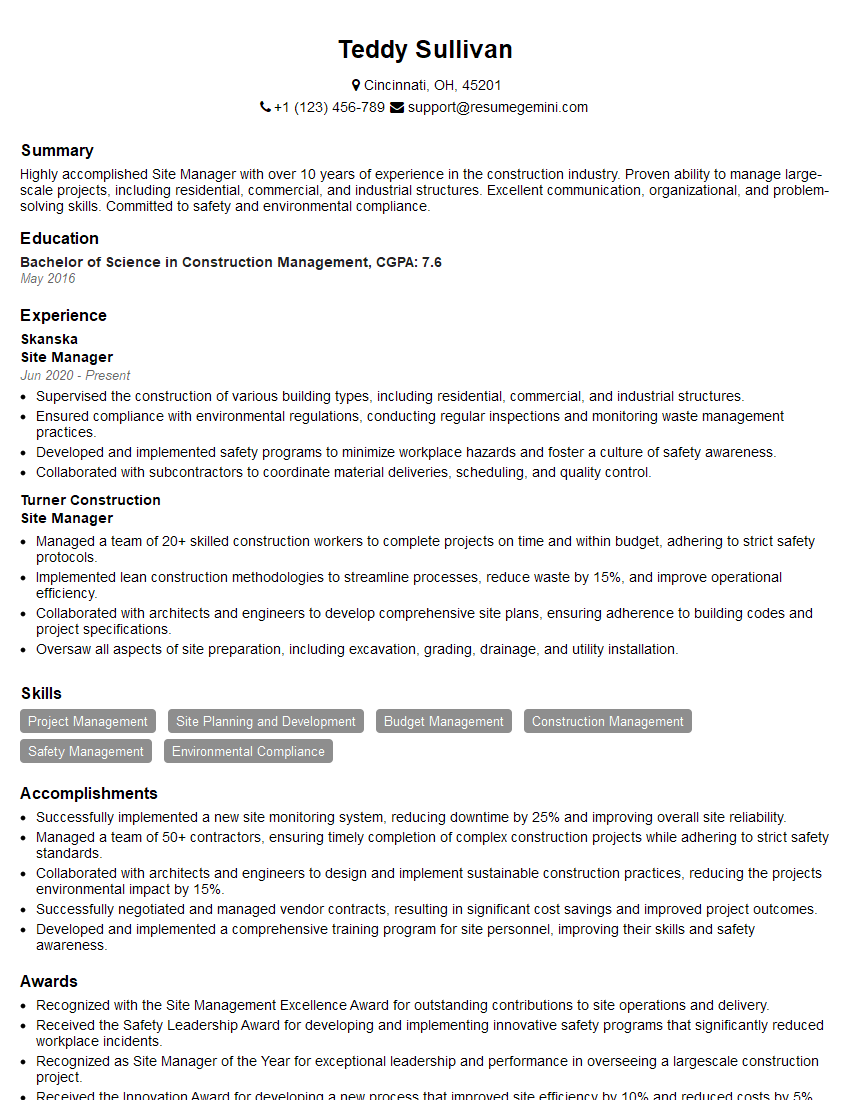
Site Manager Resume Sample

Procurement Manager Resume Sample
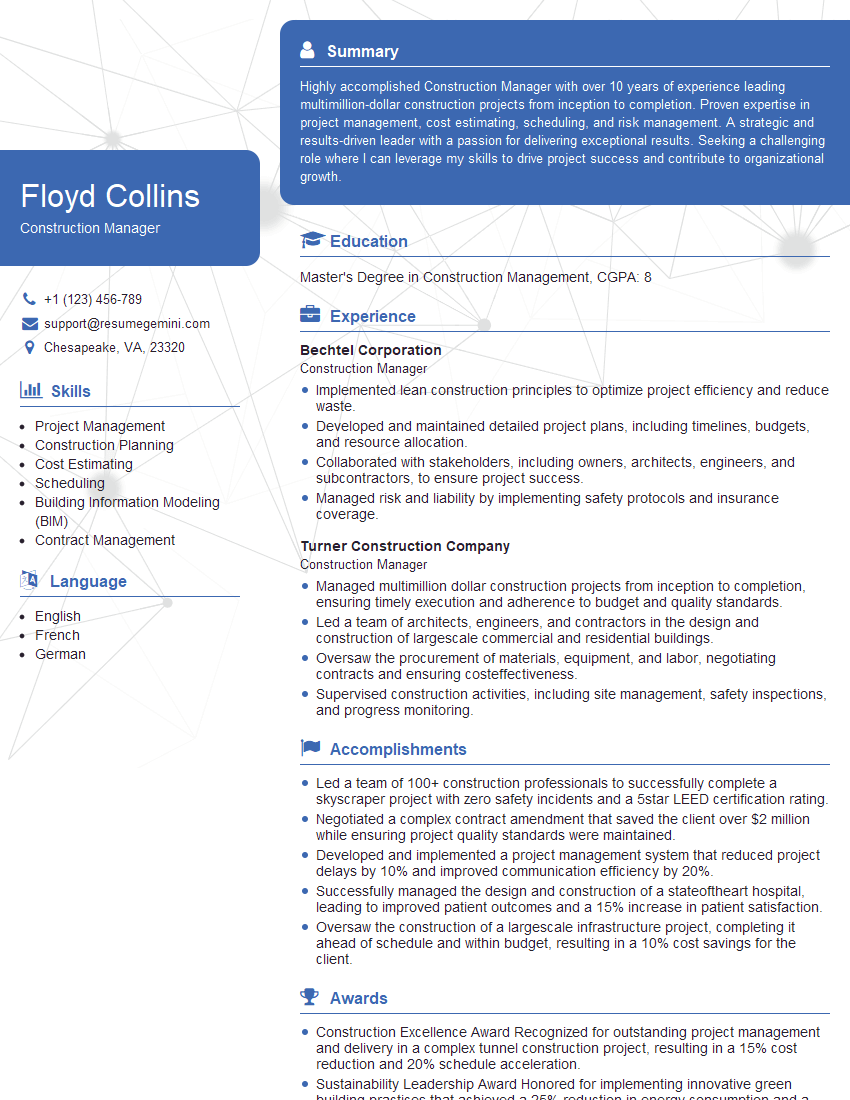
Construction Manager Resume Sample

Construction Project Manager Resume Sample

Construction Superintendent Resume Sample

Project Engineer Resume Sample

Estimator Resume Sample

Quantity Surveyor Resume Sample

Specifications Writer Resume Sample

Civil Engineer Resume Sample

Geotechnical Engineer Resume Sample
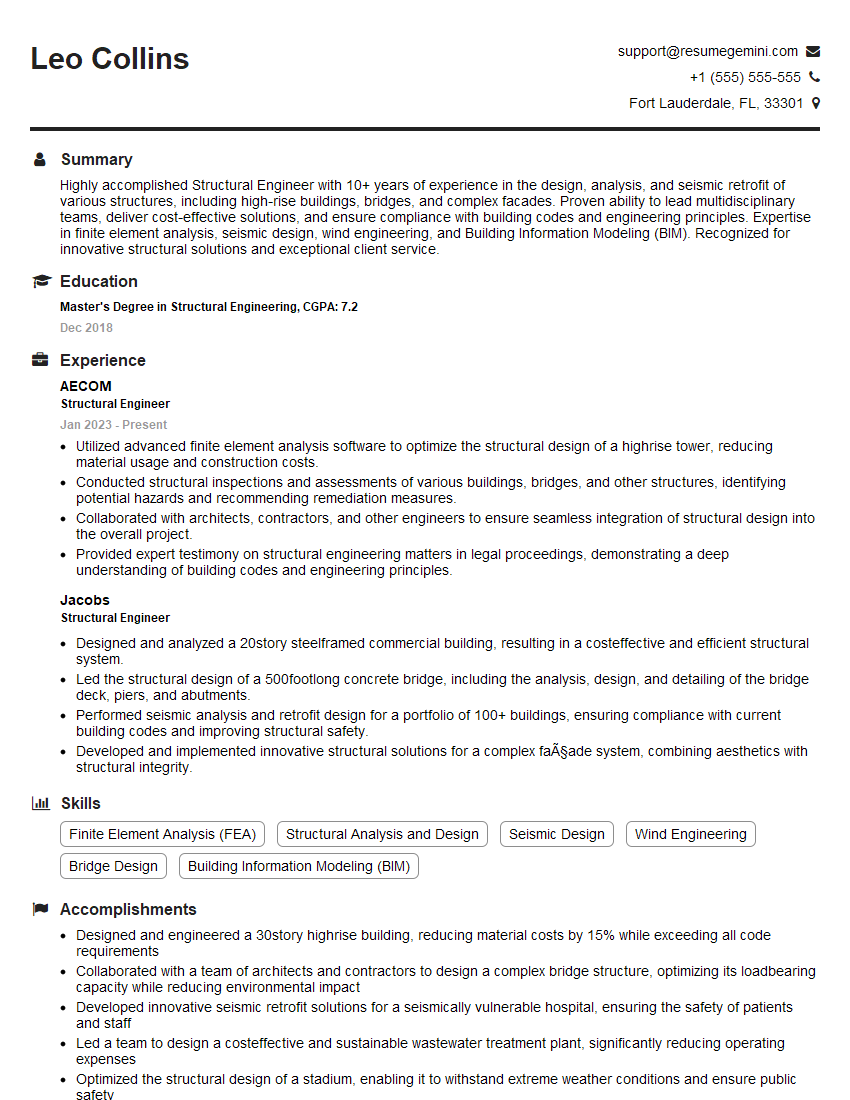
Structural Engineer Resume Sample
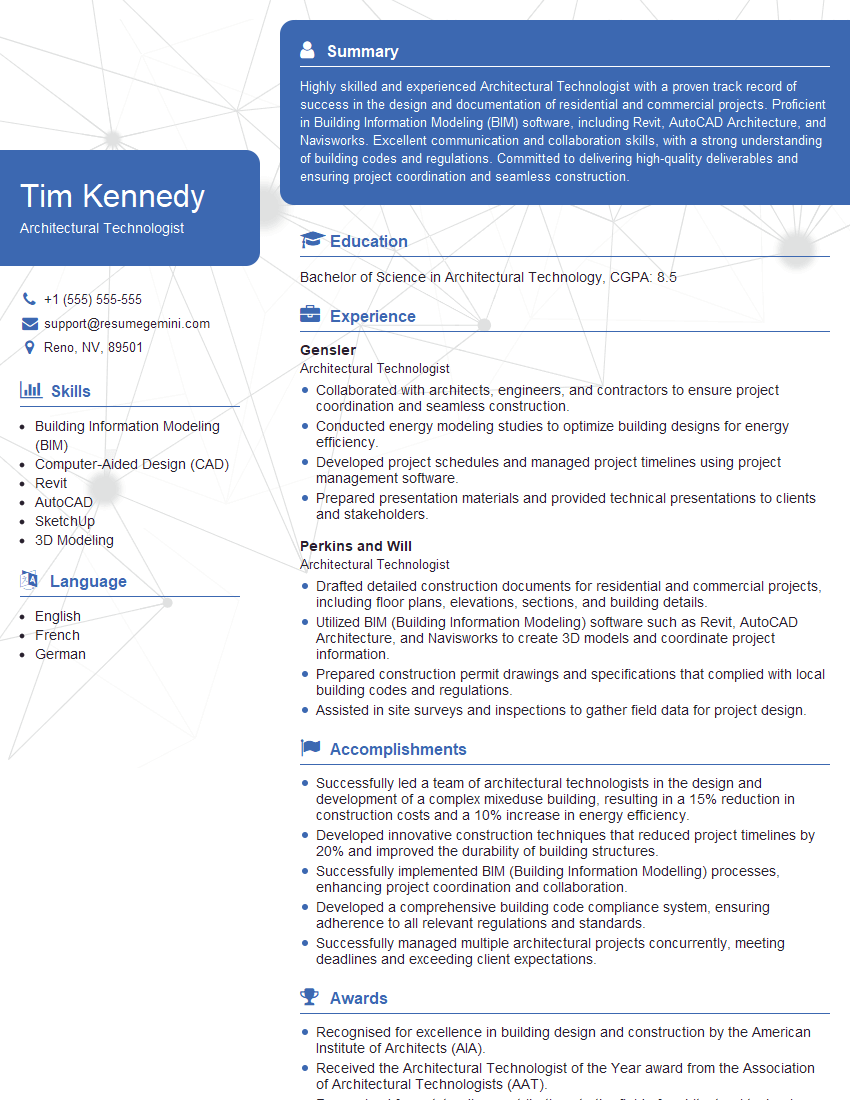
Architectural Technologist Resume Sample

Materials Scientist Resume Sample

Materials Technician Resume Sample
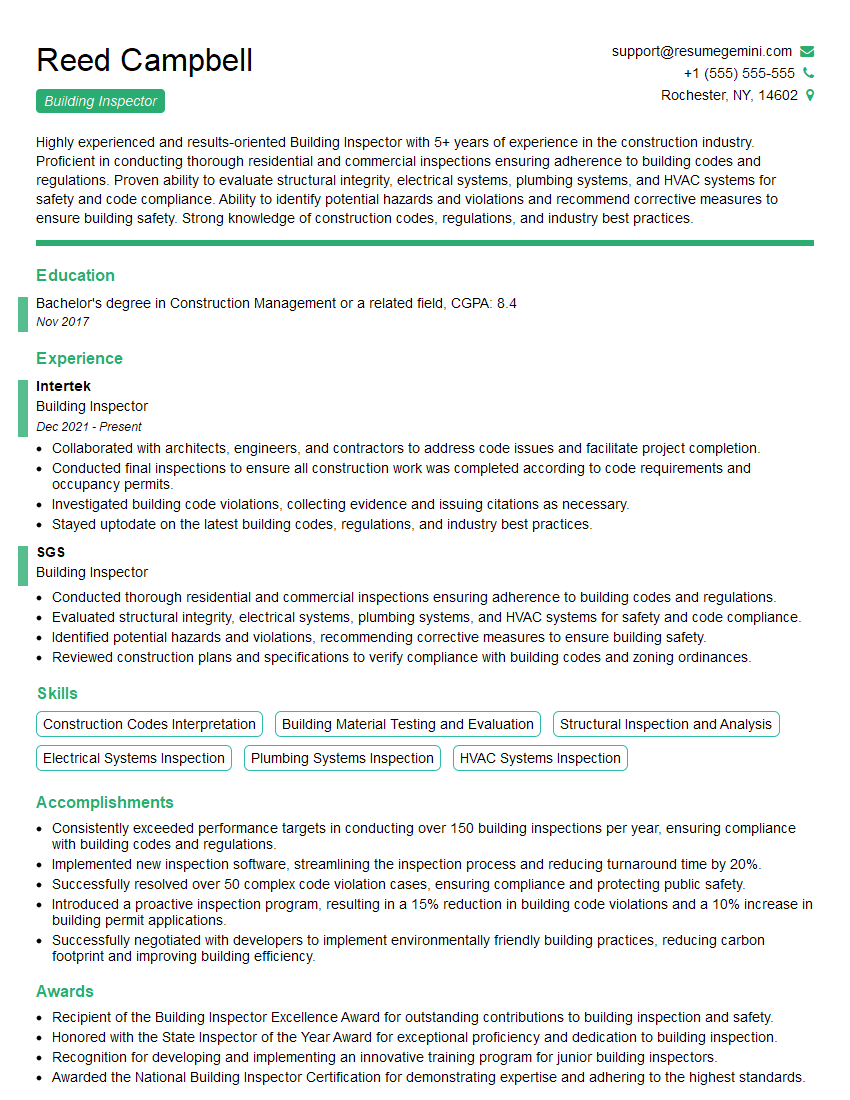
Building Inspector Resume Sample
- Site Manager
- Procurement Manager
- Construction Manager
- Construction Project Manager
- Construction Superintendent
- Project Engineer
- Estimator
- Quantity Surveyor
- Specifications Writer
- Civil Engineer
- Geotechnical Engineer
- Structural Engineer
- Architectural Technologist
- Materials Scientist
- Materials Technician
- Building Inspector
Explore more articles
Users Rating of Our Blogs
Share Your Experience
We value your feedback! Please rate our content and share your thoughts (optional).
What Readers Say About Our Blog
Very informative content, great job.
good