Every successful interview starts with knowing what to expect. In this blog, we’ll take you through the top Knowledge of design for sustainability interview questions, breaking them down with expert tips to help you deliver impactful answers. Step into your next interview fully prepared and ready to succeed.
Questions Asked in Knowledge of design for sustainability Interview
Q 1. Explain the principles of Cradle to Cradle design.
Cradle to Cradle (C2C) design is a holistic framework that mimics nature’s processes, aiming to eliminate the concept of waste. Instead of a linear ‘cradle to grave’ model (extraction, production, consumption, disposal), C2C envisions a cyclical system where materials are continuously reused and recycled. This involves designing products with two distinct metabolisms:
- Technical Metabolism: Materials are designed for continuous reuse and recycling within a closed-loop system. Think of high-quality plastics designed to be easily disassembled and repurposed multiple times.
- Biological Metabolism: Materials are designed to safely return to the biological cycle, decomposing without harming the environment. Examples include compostable packaging or organically grown materials.
The key principles of C2C are:
- Waste equals food: All materials should be utilized as resources in other cycles.
- Respect diversity: Celebrate the diversity of materials and processes.
- Use current solar income: Rely on renewable resources, minimizing depletion of finite resources.
- Celebrate diversity: Respect the diversity of cultures and values.
- Safety for human and environmental health: Ensure products don’t negatively impact human health or the environment.
For example, consider a C2C-certified carpet: Its components are carefully selected to be easily disassembled and either recycled or composted, rather than ending up in a landfill.
Q 2. Describe the concept of Life Cycle Assessment (LCA) and its application in sustainable design.
Life Cycle Assessment (LCA) is a comprehensive methodology used to evaluate the environmental impacts of a product, process, or service across its entire life span. From raw material extraction to manufacturing, use, and disposal, an LCA quantifies the energy consumption, greenhouse gas emissions, water usage, and waste generation associated with each stage.
In sustainable design, LCA acts as a crucial decision-making tool. By identifying the environmental hotspots in a product’s life cycle, designers can prioritize improvements in those specific areas. For instance, an LCA might reveal that a product’s transportation accounts for a significant portion of its carbon footprint. This knowledge can guide designers towards selecting more sustainable transportation methods or even re-evaluating the product’s manufacturing location.
An LCA typically involves these stages:
- Goal and Scope Definition: Defining the product’s boundaries and the specific environmental impacts to be assessed.
- Inventory Analysis: Quantifying the inputs and outputs of each life cycle stage.
- Impact Assessment: Evaluating the environmental significance of the identified impacts.
- Interpretation: Analyzing the results to identify improvement opportunities.
For example, imagine designing a new type of packaging. An LCA could compare the environmental impacts of using recycled paper versus a biodegradable plastic, helping designers make an informed choice that minimizes the overall environmental burden.
Q 3. How do you incorporate biomimicry into your design process?
Biomimicry is the practice of emulating nature’s time-tested solutions to design sustainable products and systems. It involves observing natural processes, identifying their underlying principles, and translating them into innovative designs. The focus is on learning from nature’s efficiency, resilience, and sustainability.
I incorporate biomimicry into my design process by:
- Identifying a challenge: Defining the design problem that needs to be solved, such as developing a more efficient cooling system.
- Exploring nature’s solutions: Researching how nature tackles similar challenges. For example, studying how termites regulate temperature in their mounds.
- Abstracting the underlying principles: Identifying the fundamental design principles from the natural model (e.g., ventilation, passive cooling).
- Applying the principles to the design: Translating those principles into a design solution (e.g., designing a building with a naturally ventilated cooling system).
- Testing and iterative refinement: Evaluating the performance of the design and making adjustments based on the results.
For instance, the design of wind turbine blades has been inspired by the shape of humpback whale flippers, resulting in more efficient and quieter turbines. Similarly, the design of Velcro fasteners was inspired by the structure of burrs.
Q 4. What are the key differences between sustainable and traditional design approaches?
Traditional design approaches often prioritize aesthetics, functionality, and cost-effectiveness without adequately considering environmental impacts. Sustainable design, on the other hand, integrates environmental considerations into every stage of the design process. Here’s a comparison:
| Feature | Traditional Design | Sustainable Design |
|---|---|---|
| Focus | Functionality, aesthetics, cost | Functionality, aesthetics, cost, environmental impact |
| Materials | Often use virgin materials; limited consideration of lifecycle | Prioritizes recycled, renewable, and sustainably sourced materials; considers full lifecycle |
| Energy Use | Energy efficiency not a primary concern | Minimizes energy consumption throughout the product lifecycle |
| Waste Management | Disposal often the default outcome | Seeks to minimize waste; designs for recyclability, reuse, or biodegradability |
| Lifecycle Considerations | Limited to product use | Considers entire lifecycle from cradle to grave (or cradle to cradle) |
In essence, traditional design is often linear and extractive, while sustainable design strives to be cyclical and regenerative, mimicking nature’s processes.
Q 5. Explain the concept of circular economy and its relevance to sustainable design.
The circular economy is an economic model that aims to eliminate waste and pollution, keep products and materials in use, and regenerate natural systems. It contrasts with the linear ‘take-make-dispose’ model of the traditional economy. Instead of extracting resources, manufacturing products, using them, and disposing of them, the circular economy emphasizes:
- Design for durability and repairability: Creating products designed to last longer and be easily repaired.
- Reuse and remanufacturing: Extending the lifespan of products through reuse or remanufacturing into new products.
- Recycling and material recovery: Recovering valuable materials from waste streams.
- Renewable energy: Transitioning to renewable energy sources to power production and consumption.
The circular economy is deeply relevant to sustainable design because it provides a framework for designing products and systems that minimize environmental impact. By incorporating circular economy principles, designers can create products that are more sustainable, resource-efficient, and less reliant on virgin materials.
For instance, a company might design a product with easily replaceable parts, promoting repairability and reducing the need for replacements. This reduces resource consumption and lowers the environmental footprint.
Q 6. What are some common sustainable materials and their environmental impacts?
Several sustainable materials are gaining popularity, each with varying environmental impacts:
- Bamboo: A rapidly renewable resource with a low carbon footprint. However, its processing can involve harsh chemicals.
- Recycled Plastics: Significantly reduces reliance on virgin resources. However, the quality and recyclability of different plastics vary.
- Hemp: A durable and versatile material with a low environmental impact. Its cultivation requires fewer pesticides than other fiber crops.
- Cork: A naturally renewable material harvested without harming the tree. It is also biodegradable and has good insulation properties.
- Mycelium (Mushroom Roots): A rapidly growing, sustainable material used as an alternative to styrofoam and other packaging materials.
- Reclaimed Wood: Reduces the demand for new timber and embodies a lower carbon footprint than freshly cut wood. However, the quality and suitability will depend on the source and prior treatments.
It’s important to note that the environmental impact of a material is not just about its production but also its transportation, processing, and end-of-life management. A ‘life-cycle assessment’ helps to make informed material choices.
Q 7. How would you measure the environmental impact of a product or system?
Measuring the environmental impact of a product or system requires a multi-faceted approach, often utilizing Life Cycle Assessment (LCA) as the primary methodology. However, other metrics can provide additional insights:
- Carbon Footprint: Measures the total greenhouse gas emissions (in CO2 equivalents) associated with a product’s lifecycle. This is a key indicator of climate change impact.
- Water Footprint: Quantifies the total volume of water used throughout the product’s lifecycle, including both direct and indirect water use.
- Energy Consumption: Assesses the energy required for material extraction, processing, manufacturing, transportation, and end-of-life management.
- Material Use: Tracks the types and quantities of materials used, considering their renewability and recyclability.
- Waste Generation: Measures the amount of waste generated at each stage of the product’s lifecycle, including hazardous waste.
- Embodied Carbon: The total carbon emissions associated with the materials used in a building or product.
Data collection methods include using industry databases, material datasheets, energy modeling software, and field measurements. Tools and software are available for performing LCAs and calculating various environmental impact indicators.
Beyond quantitative metrics, qualitative assessments such as social impact assessments can provide a more complete picture of sustainability. Consider factors like fair labor practices, resource equity, and community engagement.
Q 8. Describe your experience with designing for resource efficiency.
Resource efficiency in design is about minimizing the environmental impact of a product or building throughout its lifecycle, from material extraction to disposal. It’s about doing more with less – using fewer resources to achieve the same or better functionality.
In my experience, I’ve tackled this in several ways. For instance, in a recent project designing a community center, we prioritized using locally sourced, reclaimed timber. This reduced transportation emissions significantly, and the use of reclaimed wood diverted waste from landfills, demonstrating a circular economy approach. Another example involves optimizing building envelope design to minimize energy loss. Through sophisticated thermal modeling and the selection of high-performance insulation, we reduced the building’s heating and cooling loads by 30%, directly impacting resource consumption.
Furthermore, I’ve employed techniques like Design for Disassembly (DfD), where products are designed for easy repair and component reuse, extending their lifespan and minimizing waste. This approach requires careful consideration of material choices and joint designs, but the long-term environmental and economic benefits are significant.
Q 9. How do you incorporate user behavior into sustainable design?
Understanding user behavior is crucial for sustainable design; otherwise, even the most eco-friendly building or product will fail if people don’t use it sustainably. We incorporate user behavior by employing user-centered design methods. This means conducting thorough research to understand how people interact with the designed system.
For example, in a residential complex, we discovered through surveys and observations that residents weren’t using the communal recycling bins efficiently due to unclear labeling and inconvenient placement. By redesigning the system with clearer signage, conveniently located bins, and educational campaigns, we significantly increased recycling rates. Incorporating feedback from users throughout the design process is vital, ensuring the design aligns with their actual behavior and promotes sustainable practices.
Another example is using persuasive design techniques to encourage more sustainable actions. For instance, in a smart home design, we could implement a system that displays real-time energy usage data, making users more aware of their consumption habits and prompting them to conserve energy.
Q 10. How do you incorporate social equity into sustainable design?
Social equity is integral to sustainable design; it’s not just about the environment but also about ensuring fair and just outcomes for all people. Ignoring social equity leads to designs that benefit some while disadvantaging others.
In practice, this involves considering accessibility for people with disabilities, affordability for low-income communities, and equitable distribution of benefits. For instance, in a green building project, we ensured that the building design accommodated the needs of people with mobility issues, incorporating ramps, wider doorways, and accessible restrooms. Moreover, we collaborated with local community groups to understand their needs and preferences, ensuring the design catered to the unique requirements of the community.
We also consider the potential displacement of communities through gentrification resulting from sustainable development projects. Working to mitigate these effects is paramount. This might involve creating affordable housing options or providing relocation support for affected residents.
Q 11. Describe your experience with LEED certification or other green building standards.
I have extensive experience with LEED certification, having been involved in several projects that achieved LEED Gold and Platinum ratings. LEED (Leadership in Energy and Environmental Design) is a widely recognized green building rating system that provides a framework for sustainable building design and construction.
My involvement spans all phases of a project, from initial design concepts to post-occupancy evaluation. For example, in a recent project, we achieved LEED Platinum by implementing strategies like high-performance building envelopes, optimized HVAC systems, efficient lighting, and the use of recycled and locally sourced materials. Documenting every aspect of the design and construction process according to LEED requirements is crucial for achieving certification. This involved meticulous record-keeping, material selection documentation, and energy modeling reports.
Beyond LEED, I’m also familiar with other green building standards like BREEAM (Building Research Establishment Environmental Assessment Method) and Green Globes, adapting my approach to the specific requirements of the project and its geographical location.
Q 12. What are some common challenges in implementing sustainable design?
Implementing sustainable design often faces significant challenges. One major hurdle is the upfront cost. Sustainable materials and technologies can be more expensive initially than conventional options. However, the long-term cost savings through reduced energy consumption and maintenance often outweigh this.
Another challenge is the lack of awareness and understanding among clients and stakeholders. Educating them about the benefits of sustainable design is critical. Furthermore, the availability of sustainable materials and skilled labor can be limited in certain regions, hindering the implementation of sustainable practices. Finally, obtaining necessary permits and approvals for innovative sustainable solutions can sometimes be a bureaucratic challenge.
Overcoming these challenges requires careful planning, collaboration with skilled professionals, and strong communication to build consensus and demonstrate the value proposition of sustainable design.
Q 13. How do you handle conflicting objectives in sustainable design (e.g., cost vs. environmental performance)?
Conflicting objectives, such as cost versus environmental performance, are common in sustainable design. Resolving these conflicts requires a holistic approach that considers the entire lifecycle of the project. It’s rarely about making a purely binary choice.
We use a multi-criteria decision analysis (MCDA) approach. This involves defining clear criteria for evaluating different design options, assigning weights to those criteria based on their importance, and scoring each option against those criteria. This enables a quantitative comparison of design alternatives. For example, we might prioritize lower embodied carbon in the materials (environmental performance) while also considering lifecycle cost and constructability (cost). The MCDA helps us find the optimal balance between competing objectives.
Another technique is life-cycle costing (LCC). LCC analyses the total cost of ownership over the building’s or product’s lifetime, including initial costs, operating costs, and end-of-life costs. This provides a more comprehensive view that often reveals long-term savings from sustainable options, even if their upfront cost is higher.
Q 14. Explain the concept of embodied carbon and its importance in sustainable design.
Embodied carbon refers to the greenhouse gas emissions associated with the manufacturing, transportation, and installation of building materials and products. It’s a crucial aspect of sustainable design because a significant portion of a building’s total carbon footprint is generated during its construction, not just during its operational phase.
Minimizing embodied carbon requires careful material selection. This includes favoring low-carbon materials like timber, recycled content materials, and materials sourced locally to reduce transportation emissions. We use tools like Environmental Product Declarations (EPDs) to assess the embodied carbon of different materials. EPDs provide standardized environmental information about a product, allowing for comparisons and informed decision-making.
Reducing embodied carbon might involve using less material overall through efficient design, optimizing structural elements to minimize material usage, and extending the lifespan of buildings through robust construction and maintenance. The importance of addressing embodied carbon in design is increasingly recognized as it is a critical factor in achieving net-zero carbon buildings.
Q 15. How do you evaluate the sustainability of a supply chain?
Evaluating the sustainability of a supply chain requires a holistic approach, going beyond just the immediate supplier. We need to assess environmental, social, and economic impacts across the entire lifecycle – from raw material extraction to end-of-life management.
- Environmental Impact: This includes evaluating carbon emissions from transportation, energy consumption in manufacturing, water usage, waste generation, and the use of hazardous materials. We look at certifications like FSC (Forest Stewardship Council) for timber or GOTS (Global Organic Textile Standard) for textiles to ensure responsible sourcing.
- Social Impact: Fair labor practices, worker safety, and community impact are crucial. We assess supplier compliance with ethical codes of conduct and international labor standards. Transparency and traceability are key – knowing where materials come from and how they’re produced.
- Economic Impact: This evaluates the economic viability of the supply chain, ensuring fair pricing and supporting local economies. We examine supplier stability and their ability to meet long-term demands sustainably.
For example, in a furniture project, we might evaluate the carbon footprint of wood sourcing, the energy used in manufacturing, and the recyclability or biodegradability of the final product. We’d also investigate the working conditions in the factories and ensure fair wages are paid.
Career Expert Tips:
- Ace those interviews! Prepare effectively by reviewing the Top 50 Most Common Interview Questions on ResumeGemini.
- Navigate your job search with confidence! Explore a wide range of Career Tips on ResumeGemini. Learn about common challenges and recommendations to overcome them.
- Craft the perfect resume! Master the Art of Resume Writing with ResumeGemini’s guide. Showcase your unique qualifications and achievements effectively.
- Don’t miss out on holiday savings! Build your dream resume with ResumeGemini’s ATS optimized templates.
Q 16. Describe your approach to designing for disassembly and recyclability.
Designing for disassembly and recyclability is about thinking about the end-of-life of a product from the very beginning. It’s akin to building with LEGOs – easy to take apart and reuse the components.
- Material Selection: We prioritize using readily recyclable materials, avoiding hazardous substances, and specifying materials with known end-of-life pathways. This might include choosing aluminum over steel, or using bio-based polymers over conventional plastics.
- Modular Design: Breaking down complex products into smaller, easily replaceable modules simplifies disassembly. If a part fails, only that module needs replacing, extending the product’s lifespan.
- Standardisation: Using standardized fasteners (like screws instead of glue) and connectors makes disassembly easier and reduces the complexity of recycling processes.
- Design for Remanufacturing: Designing products to be refurbished or upgraded extends their useful life, reducing the need for new resources.
For instance, a laptop designed for disassembly would have easily accessible screws and clearly labeled components. The battery, screen, and motherboard could be easily removed and recycled or reused separately. This minimizes waste and maximizes material recovery.
Q 17. How do you stay up-to-date on the latest trends and technologies in sustainable design?
Staying current in sustainable design requires a multi-pronged approach.
- Professional Networks: I actively participate in professional organizations like the US Green Building Council (USGBC) and attend conferences and workshops focusing on sustainability.
- Industry Publications and Journals: I regularly read publications like Building Green and Environmental Science & Technology to stay abreast of the latest research and best practices.
- Online Resources and Databases: I use online databases like LEED Online and material databases to access updated information on sustainable materials and technologies.
- Case Studies and Benchmarking: Analyzing successful sustainable projects from around the world helps identify innovative solutions and best practices.
Continual learning is essential; the field is constantly evolving with new materials, technologies, and regulations.
Q 18. Describe your experience with using design software for sustainable analysis (e.g., BIM, LCA software).
I have extensive experience using design software for sustainable analysis.
- Building Information Modeling (BIM): BIM software allows for detailed modeling of building systems, enabling efficient energy analysis, material quantity estimations, and waste reduction strategies. We can use BIM to optimize building orientation for solar gain and minimize material usage.
- Life Cycle Assessment (LCA) Software: LCA software helps quantify the environmental impacts of building materials and processes throughout their entire life cycle. This allows for informed material selection decisions based on their carbon footprint, energy consumption, and waste generation.
For example, using BIM, we can model different building envelope designs to optimize energy performance and then use LCA software to compare the environmental impacts of various material options. This data-driven approach ensures that design choices are evidence-based and contribute to overall sustainability.
Q 19. What are some strategies for reducing energy consumption in building design?
Reducing energy consumption in building design involves a combination of passive and active strategies.
- Passive Strategies: These leverage the natural environment to minimize energy needs. This includes optimizing building orientation for solar gain, using high-performance insulation, employing natural ventilation, and designing shading devices to reduce solar heat gain.
- Active Strategies: These involve incorporating energy-efficient systems. This might involve using high-efficiency HVAC systems, installing LED lighting, employing smart building controls to optimize energy usage, and incorporating renewable energy sources.
For example, a building oriented to maximize south-facing windows can capture winter sunlight for passive heating, while overhangs can shade windows in the summer, reducing cooling loads. Using high-performance windows and insulation minimizes heat loss in winter and heat gain in summer, further reducing energy demand.
Q 20. How do you integrate renewable energy sources into your designs?
Integrating renewable energy sources into designs is crucial for reducing reliance on fossil fuels.
- Photovoltaic (PV) Panels: Rooftop or integrated PV panels can generate clean electricity on-site, reducing the building’s reliance on the grid.
- Solar Thermal Systems: These systems collect solar energy to heat water or provide space heating, significantly reducing energy consumption for these purposes.
- Wind Turbines: In appropriate locations, small wind turbines can be integrated into building designs to generate electricity.
- Geothermal Energy: Geothermal heat pumps utilize the stable temperature of the earth to provide heating and cooling, resulting in high energy efficiency.
The selection of renewable energy sources depends on site-specific factors, such as available sunlight, wind speed, and geological conditions. A thorough feasibility study is essential to determine the optimal renewable energy mix for a given project.
Q 21. Explain the concept of water stewardship in design.
Water stewardship in design is about responsible water usage and management throughout a building’s lifecycle. It’s not just about reducing consumption but also ensuring water quality and protecting water resources.
- Water-Efficient Fixtures: Using low-flow toilets, faucets, and showerheads significantly reduces water consumption.
- Rainwater Harvesting: Collecting rainwater for non-potable uses like irrigation or toilet flushing reduces potable water demand.
- Greywater Recycling: Reusing wastewater from showers and sinks for irrigation can reduce reliance on potable water sources.
- Water-Permeable Surfaces: Using permeable pavements and landscaping allows rainwater to infiltrate the ground, replenishing groundwater supplies and reducing runoff.
- Water Quality Management: Preventing water pollution through careful material selection and waste management is essential.
For example, a sustainable building might incorporate rainwater harvesting to irrigate landscaping, reducing potable water usage. Greywater recycling could further supplement irrigation needs, minimizing the building’s overall water footprint.
Q 22. How do you address waste management in your design process?
Waste management is paramount in sustainable design. It’s not just about disposal; it’s about minimizing waste generation from the outset. My approach involves a multi-pronged strategy focusing on design for disassembly, material selection, and lifecycle assessment.
- Design for Disassembly (DfD): I prioritize designing products and structures that can be easily taken apart at the end of their life. This allows for component reuse, recycling, and reduces landfill waste. Think modular furniture that can be easily repaired or upgraded, rather than replaced entirely.
- Material Selection: I meticulously choose materials with a low environmental impact, considering their embodied energy (the energy used to produce them), recyclability, and biodegradability. For example, opting for recycled steel over virgin steel, or using rapidly renewable bamboo instead of slow-growing hardwoods.
- Lifecycle Assessment (LCA): This crucial step analyzes the environmental impact of a product or building throughout its entire life, from material extraction to disposal. It helps identify hotspots of waste generation and pinpoint areas for improvement. For instance, an LCA might reveal that a particular packaging material is contributing significantly to waste, leading us to explore more sustainable alternatives.
Ultimately, effective waste management in design requires a holistic perspective, integrating these strategies throughout the design process, not just as an afterthought.
Q 23. How do you incorporate sustainable transportation considerations into your projects?
Sustainable transportation is crucial for reducing carbon emissions and promoting healthier urban environments. My approach involves considering the entire transportation lifecycle – from material sourcing to the eventual demolition of the structure.
- Proximity to Public Transit: When designing buildings, I prioritize locations that offer easy access to public transportation, cycling lanes, and pedestrian walkways, thereby reducing reliance on private vehicles.
- Material Sourcing: I strive to use locally sourced materials to minimize transportation distances and associated emissions. This might mean working with local suppliers or prioritizing materials with lower transportation burdens.
- Construction Logistics: Careful planning during the construction phase is essential. This includes optimizing delivery routes, using electric or hybrid vehicles, and minimizing construction waste.
- Embodied Carbon in Materials: Selecting materials with lower embodied carbon – the carbon emissions associated with the production and transportation of building materials – is a key consideration. This could involve using recycled materials or those with a lower carbon footprint.
The goal is not just to reduce emissions from a single aspect of transportation but to create a holistic system that minimizes impact across the board.
Q 24. What are your thoughts on the role of technology in achieving sustainability goals?
Technology plays a transformative role in achieving sustainability goals. It empowers us to design more efficiently, monitor performance, and ultimately create a smaller environmental footprint.
- Building Information Modeling (BIM): BIM allows for detailed 3D modeling of buildings, enabling efficient material quantification, waste reduction, and better energy performance analysis. This allows us to identify and resolve potential sustainability issues early in the design process.
- Simulation and Analysis Software: Tools that simulate energy consumption, water usage, and other environmental impacts allow for optimization of designs to minimize their footprint. For instance, we can simulate different building orientations to maximize solar gain and minimize energy needs.
- Smart Building Technologies: The use of sensors and automation to monitor and control energy consumption, lighting, and HVAC systems can drastically reduce operational energy needs. Imagine a building that automatically adjusts lighting based on occupancy and natural light availability.
- Data Analytics and Monitoring: Real-time data analysis can help us track and evaluate the environmental performance of a building over time. This continuous feedback loop informs future design decisions and ensures ongoing improvement.
However, it’s important to remember that technology is a tool; its effectiveness depends on responsible application and ethical considerations.
Q 25. Describe a project where you had to make a trade-off between sustainability and other design objectives.
In a recent project designing a community center, we faced a trade-off between sustainability and cost. We initially proposed a design featuring locally sourced, sustainably harvested timber for the structure, but its cost was significantly higher than conventionally sourced lumber. This would have potentially made the project unaffordable for the community.
We addressed this by carefully evaluating the embodied carbon of the different lumber options. While the locally sourced timber had a lower carbon footprint overall, we found that using responsibly sourced, rapidly renewable lumber from a slightly further distance, combined with significant energy efficiency measures in other aspects of the design (high-performance insulation, efficient windows), offered a comparable environmental performance at a lower cost. The final design still prioritized sustainability, but within a realistic budget, demonstrating a practical approach to balancing competing objectives.
Q 26. How do you communicate the value of sustainable design to clients or stakeholders?
Communicating the value of sustainable design requires a multi-faceted approach. It’s not just about the environmental benefits; it’s about showcasing the long-term economic, social, and health advantages.
- Data-Driven Arguments: Present quantifiable data on cost savings, energy efficiency improvements, and reduced environmental impact. For example, demonstrate how a sustainable design can reduce energy bills by a certain percentage over the building’s lifetime.
- Visualizations and Simulations: Use compelling visuals such as 3D renderings and simulations to illustrate the design’s sustainability features and their positive impacts.
- Storytelling: Share case studies and real-world examples of successful sustainable design projects to demonstrate the practical benefits and inspire confidence.
- Transparency and Education: Clearly explain the design choices and their rationale, educating clients about the environmental and social considerations involved. Open communication builds trust and understanding.
- Lifecycle Cost Analysis: Demonstrate that while upfront costs might be slightly higher, sustainable design often leads to significant long-term cost savings through reduced energy consumption, maintenance, and operational expenses.
Effective communication requires tailoring the message to the specific audience and their priorities, highlighting the aspects of sustainable design that are most relevant and compelling to them.
Q 27. What are your personal values and how do they influence your approach to sustainable design?
My personal values deeply influence my approach to sustainable design. A strong sense of environmental stewardship, social responsibility, and a commitment to creating a more equitable and resilient future are central to my work.
I believe in designing for longevity, minimizing environmental impact, and creating spaces that foster well-being for both people and the planet. This means incorporating biophilic design principles (connecting people to nature), promoting healthy indoor environments, and advocating for the use of ethical and socially responsible materials. My commitment extends beyond the project itself; I believe in actively engaging with the local community and participating in initiatives that promote sustainability.
Q 28. What are your long-term career goals in the field of sustainable design?
My long-term career goals are to become a leading advocate and practitioner of sustainable design, contributing to a larger shift towards more environmentally and socially responsible practices in the built environment. I aspire to lead and mentor teams, driving innovation in sustainable design strategies and technologies. I also aim to contribute to the broader discourse surrounding sustainability through research, publications, and active participation in industry organizations and initiatives. Ultimately, I want to leave a positive legacy by creating buildings and spaces that are both aesthetically pleasing and environmentally responsible, contributing to a healthier and more sustainable future for generations to come.
Key Topics to Learn for Knowledge of Design for Sustainability Interview
- Life Cycle Assessment (LCA): Understanding the environmental impacts of products from cradle to grave, including material extraction, manufacturing, use, and disposal. Practical application: Analyzing the LCA of a specific product and identifying areas for improvement.
- Sustainable Materials: Knowledge of bio-based, recycled, and rapidly renewable materials, their properties, and limitations. Practical application: Choosing appropriate sustainable materials for a specific design project, considering factors like cost, performance, and availability.
- Circular Economy Principles: Deep understanding of concepts like reduce, reuse, recycle, and repair, and their application in design. Practical application: Designing products for durability, repairability, and recyclability, minimizing waste and maximizing resource utilization.
- Sustainable Design Principles: Familiarity with design strategies that minimize environmental impact, such as biomimicry, eco-efficiency, and cradle-to-cradle design. Practical application: Applying these principles to solve a specific design challenge, optimizing for both environmental and functional performance.
- Environmental Regulations and Standards: Awareness of relevant environmental regulations and certifications (e.g., LEED, BREEAM). Practical application: Designing products or systems that comply with relevant regulations and achieve sustainability certifications.
- Sustainable Packaging: Understanding the environmental impact of packaging and strategies for minimizing its footprint. Practical application: Designing eco-friendly packaging solutions that reduce material use and enhance recyclability.
- Social and Ethical Considerations: Recognizing the social and ethical dimensions of sustainable design, including fair labor practices and responsible sourcing. Practical application: Incorporating ethical considerations into the design process, ensuring equitable and responsible outcomes.
Next Steps
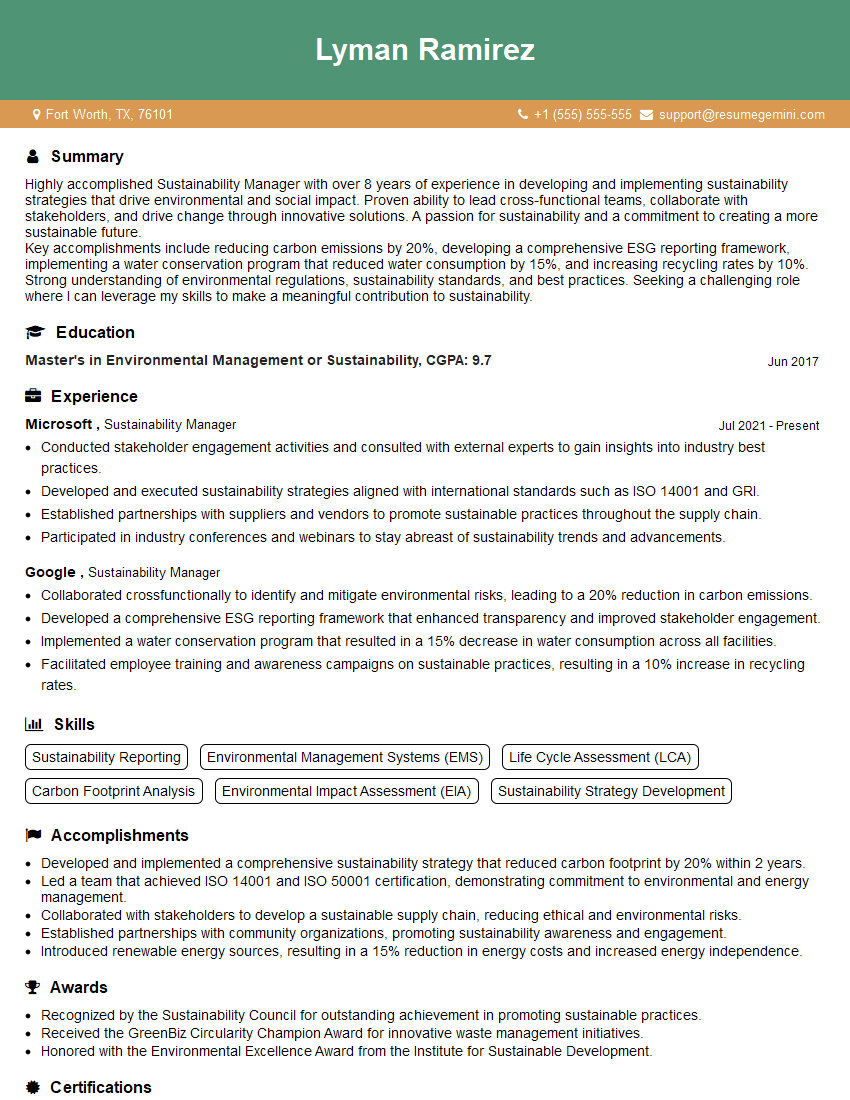
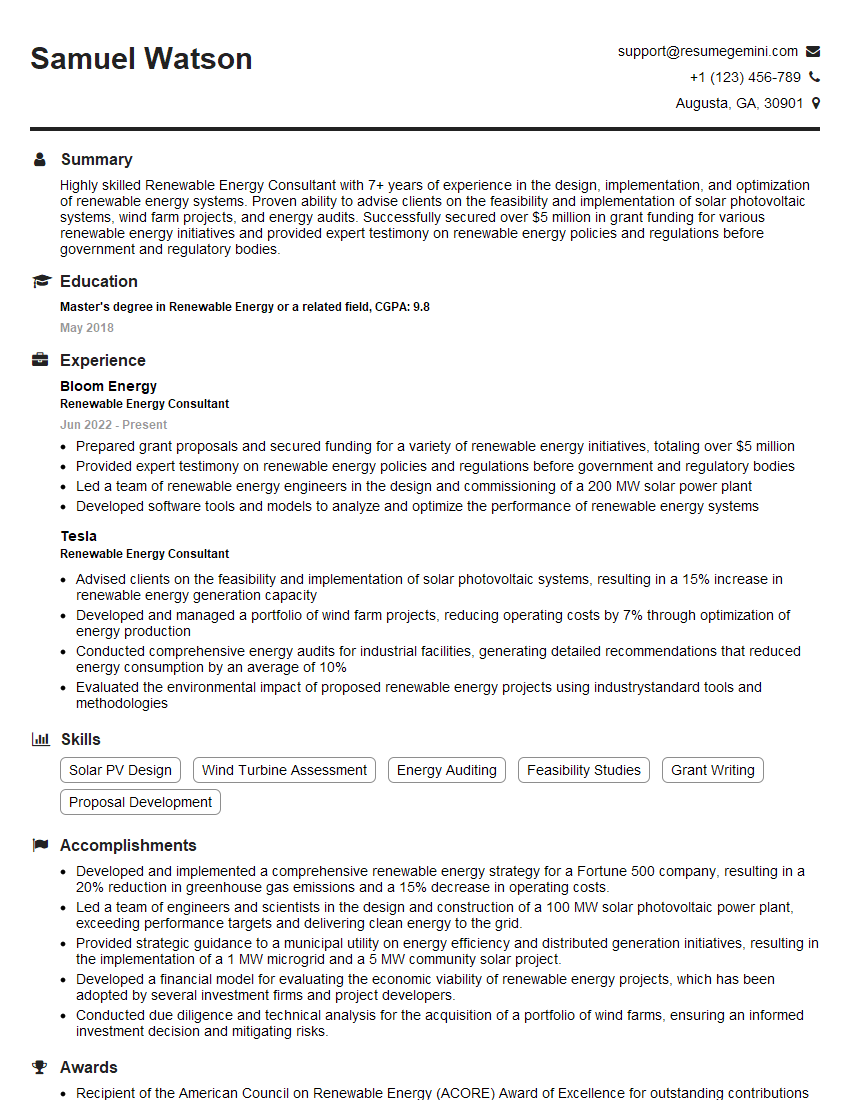
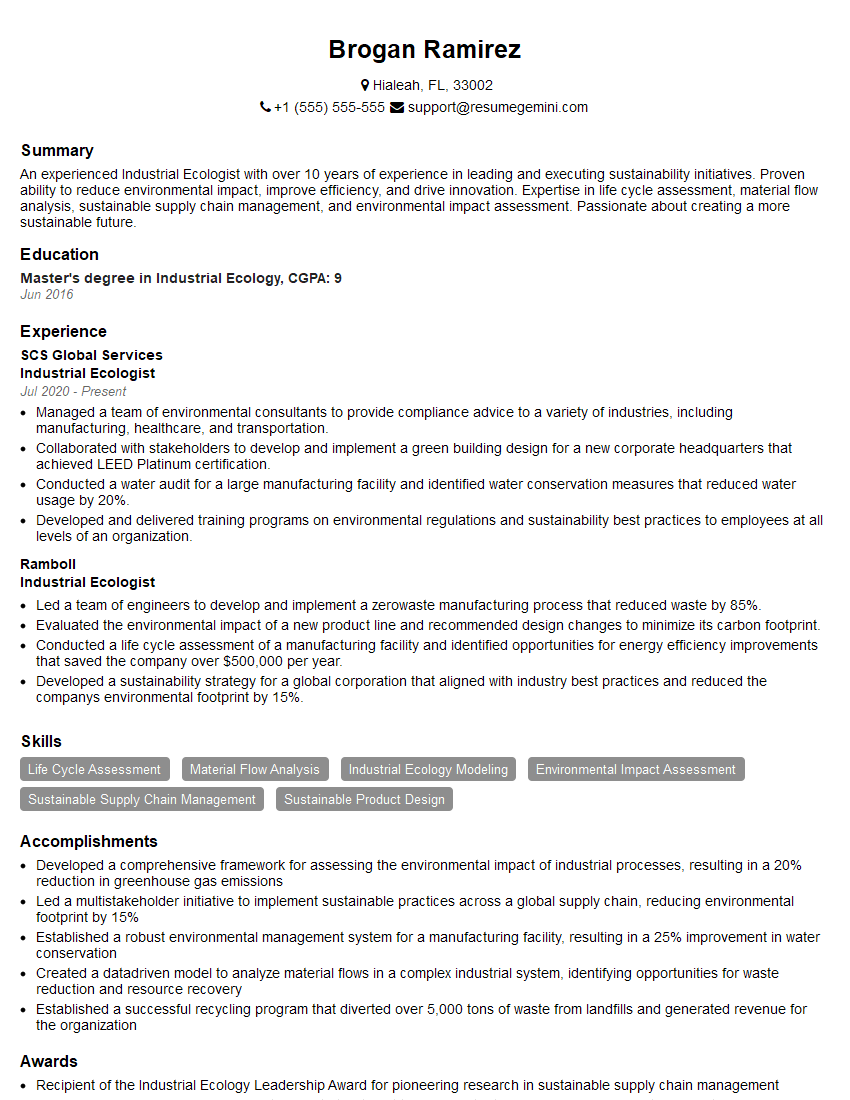
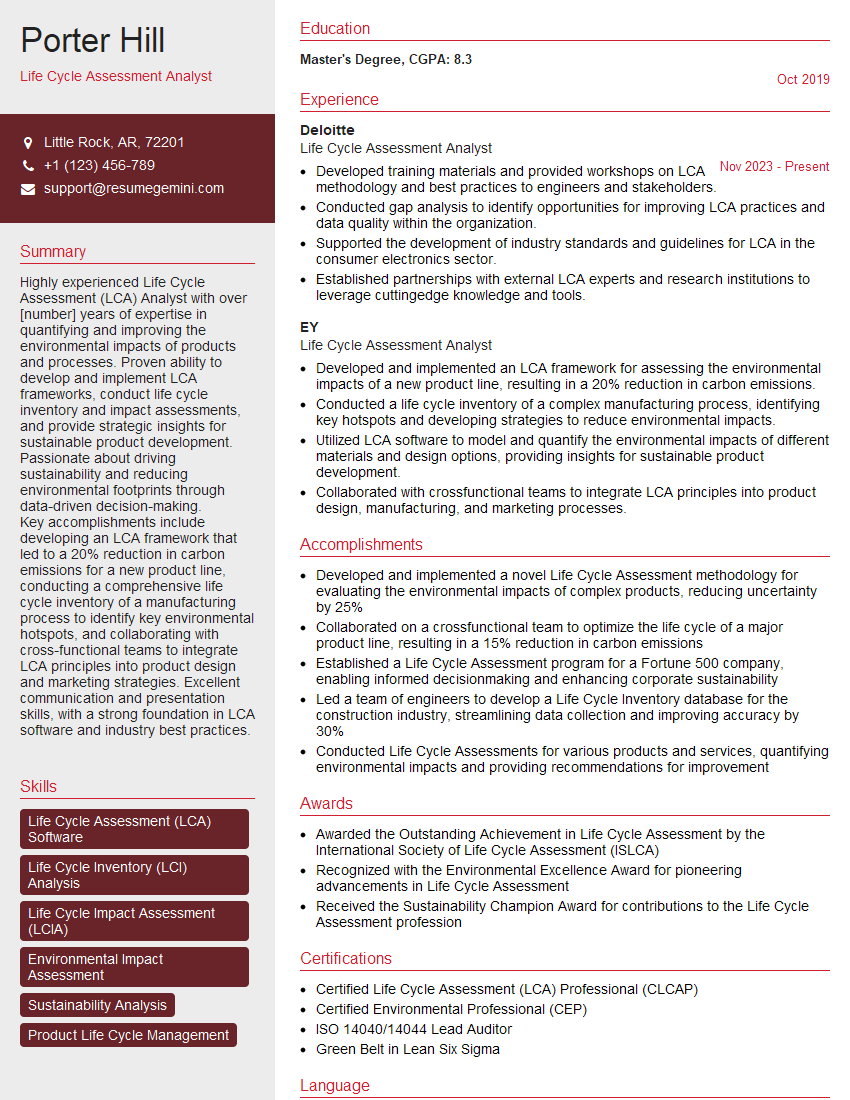
Mastering knowledge of design for sustainability is crucial for career advancement in a rapidly evolving world. Demonstrating this expertise through a strong resume is key to unlocking exciting opportunities. Building an ATS-friendly resume is essential for maximizing your chances of getting your application noticed. ResumeGemini is a trusted resource to help you craft a compelling and effective resume. They provide examples of resumes tailored to Knowledge of design for sustainability, allowing you to showcase your skills and experience effectively. Take advantage of these resources to propel your career forward!

Explore more articles
Users Rating of Our Blogs
Share Your Experience
We value your feedback! Please rate our content and share your thoughts (optional).
What Readers Say About Our Blog
Very informative content, great job.
good