Every successful interview starts with knowing what to expect. In this blog, we’ll take you through the top Knowledge of different playing styles and systems interview questions, breaking them down with expert tips to help you deliver impactful answers. Step into your next interview fully prepared and ready to succeed.
Questions Asked in Knowledge of different playing styles and systems Interview
Q 1. Explain the difference between action and strategy gameplay.
Action gameplay focuses on immediate, direct player interaction within the game world. Think quick reflexes, precise timing, and often a high degree of challenge. Strategy gameplay, conversely, emphasizes planning, resource management, and long-term decision-making. It’s about outsmarting your opponent or the game itself rather than simply reacting quickly.
A good example of action gameplay is a fast-paced shooter like Call of Duty, where success hinges on your ability to react to enemy movements and accurately aim your weapon. A strategy game like Civilization, on the other hand, demands that you carefully manage your resources, research technologies, and forge alliances over extended periods to achieve victory.
The distinction isn’t always black and white. Many games blend action and strategy elements. For instance, a real-time strategy (RTS) game like StarCraft requires quick reflexes to manage units in combat (action) while simultaneously planning long-term economic and strategic expansion (strategy).
Q 2. Describe the core mechanics of a roguelike game.
Roguelike games are characterized by several core mechanics that create their unique, challenging experience. These include:
- Procedurally Generated Levels: Each playthrough features a randomly generated map, ensuring high replayability and preventing rote memorization of levels.
- Permanent Death: Character death typically results in the loss of all progress in that playthrough, increasing the stakes and promoting careful gameplay.
- Focus on Exploration and Discovery: Players explore the game world to find resources, upgrade their character, and progress through the game.
- Turn-based or Real-time Combat: Combats can range from tactical, turn-based affairs to fast-paced real-time challenges.
- Emphasis on Replayability: Because of the procedural generation and permanent death, the game is designed to be played repeatedly.
Hades is a fantastic example of a modern roguelike that expertly blends these elements into a compelling narrative experience. Its procedurally generated underworld, challenging combat, and captivating story create an incredibly replayable game.
Q 3. How would you design a progression system for an RPG?
Designing a compelling RPG progression system involves carefully considering player agency and motivation. A good system should feel rewarding and encourage players to experiment with different playstyles.
Here’s a potential framework:
- Character Attributes: Allow players to specialize their characters by investing in core attributes (e.g., Strength, Dexterity, Intelligence). This could use a point-based system or a more nuanced approach with skill trees.
- Skill Trees/Skill Points: Offer diverse skill trees that align with different character builds (e.g., a warrior focused on melee combat, a mage specializing in spells, or a rogue adept at stealth and trickery). This gives players a sense of progression and mastery.
- Equipment System: Implement a system where players can find or craft more powerful weapons, armor, and accessories. This system should be balanced to avoid overwhelming players with options too early or too late in the game.
- Leveling System: This could be experience-based, where players gain experience through combat and quests or a system where progress is linked directly to skill progression.
- Crafting System (Optional): Allow players to create their own gear, potions, and other items, adding an extra layer of customization and engagement.
Consider adding a meta-progression system, allowing players to unlock permanent benefits between game sessions, encouraging repeated playthroughs.
Q 4. What are the key elements of a successful MMO gameplay loop?
A successful MMO gameplay loop revolves around engaging players in a cycle of activities that feel rewarding and encourage continued participation. Key elements include:
- Clear Objectives: Players should always have a sense of purpose – whether it’s completing quests, leveling up, progressing in a storyline, or working towards a shared goal (e.g., a raid).
- Meaningful Rewards: Rewards should be satisfying and relevant to the player’s goals. This could involve experience points, better gear, cosmetic items, or in-game currency.
- Social Interaction: MMOs thrive on community; facilitate interactions through guilds, group activities, player trading, and communication tools.
- Progression System: Provide a robust system that encourages players to improve their characters or accounts, unlocking new content and abilities.
- Regular Content Updates: Keep the game fresh with ongoing updates adding new quests, zones, features, or events to maintain player engagement.
World of Warcraft is a prime example of a game that effectively incorporates these elements, providing a compelling loop that has retained millions of players for years.
Q 5. Compare and contrast the gameplay styles of ‘Dark Souls’ and ‘Minecraft’.
Dark Souls and Minecraft represent drastically different gameplay styles despite both being highly successful.
Dark Souls: Emphasizes challenging, deliberate combat with a focus on precise timing and skillful execution. The game’s difficulty is central to its appeal, demanding patience, strategy, and mastery of the combat mechanics. Exploration is methodical, and progress is punctuated by intense boss encounters. The game’s world is interconnected but relatively fixed.
Minecraft: Offers a vastly more open-ended and creative experience. While combat exists, it’s not the primary focus; creativity, resource management, and world-building are paramount. Players are free to build whatever they desire, explore procedurally generated landscapes, and collaborate with others in a sandbox environment. Difficulty can be adjusted, offering a more accessible experience than Dark Souls.
In short, Dark Souls provides a focused, challenging experience built around mastering precise combat and overcoming adversity, while Minecraft offers unparalleled freedom and creativity in a sandbox world.
Q 6. Explain how player agency is implemented in different game genres.
Player agency, the degree to which players feel in control of their experience, is implemented differently across genres.
- RPGs: Offer high player agency through character customization, skill trees, and branching narratives allowing players to shape their character’s story and abilities.
- Sandbox Games (e.g., Minecraft): Maximize player agency by providing virtually limitless freedom to build, explore, and interact with the game world as they see fit.
- Linear Games: Often have limited player agency, guiding players through a predetermined narrative with little room for deviation.
- Strategy Games: Provide significant player agency through strategic decision-making in resource management, unit control, and overall game strategy.
- Fighting Games: Offer a moderate level of agency; while characters have predetermined movesets, skilled players can express significant agency through strategic use of combos, counter-attacks, and defensive maneuvers.
The level of player agency is a key design choice that directly impacts the overall player experience and satisfaction.
Q 7. How would you design a compelling combat system for a fighting game?
Designing a compelling fighting game combat system requires a delicate balance of depth, accessibility, and originality.
- Move Set Design: Each character should possess a unique moveset incorporating a variety of attacks (light, medium, heavy), special moves, and potential super moves (ultimate moves). The moveset should allow for both offensive and defensive options, avoiding any overwhelming imbalances.
- Combo System: Design a combo system that rewards skilled players while not being too complex for beginners. The system should allow for creative stringing of attacks to create impressive combos but not be exploitable with easily repeatable, overly damaging combos.
- Special Moves/Super Moves: Implement special and ultimate moves that provide powerful offensive or defensive options, but must be balanced to avoid them becoming overly dominant in the game.
- Defensive Mechanics: Include mechanics that allow players to defend against attacks, such as blocking, parrying, or dodging. These mechanics should be essential to the combat system but not make it too easy to simply defend.
- Hit Detection and Animation: Ensure precise hit detection and visually appealing animations to create a smooth, satisfying combat experience.
Consider also incorporating a ranking system to keep players engaged and motivated, and make sure testing and balancing are a key part of the development process to ensure a fair and fun game for all players.
Q 8. Describe your experience with different game engines and their impact on gameplay.
My experience spans several game engines, each offering unique strengths influencing gameplay significantly. For instance, Unity’s ease of use and vast asset store make it ideal for rapid prototyping and smaller teams, allowing for quicker iteration on gameplay mechanics. Its flexible physics engine allows for creative interactions, like realistic ragdoll physics in a fighting game or intricate environmental puzzles. Unreal Engine, on the other hand, excels in high-fidelity graphics and complex simulations, making it the preferred choice for AAA titles demanding photorealistic visuals and demanding physics simulations, such as realistic water effects or destructible environments. The choice of engine directly impacts the visual style, performance capabilities, and ultimately, the player experience. For example, a game aiming for charming, low-poly visuals might thrive in Unity, while a realistic open-world game would benefit from Unreal Engine’s power. I’ve also worked with GameMaker Studio 2, a more accessible engine perfect for 2D games and indie developers, highlighting its simplicity and rapid development cycle allowing for creative experimentation with 2D platforming and puzzle mechanics.
Q 9. Discuss the challenges of balancing a competitive multiplayer game.
Balancing a competitive multiplayer game is a constant, iterative process, arguably the most challenging aspect of game development. It requires a deep understanding of game theory and player psychology. The core challenge lies in creating a fair and engaging experience where skill determines success, not simply grinding or exploiting hidden mechanics. This necessitates careful tuning of various elements: weapon stats, character abilities, map design, and progression systems. For example, if a particular weapon is demonstrably overpowered, it needs nerfing, impacting its damage, fire rate, or accuracy. Similarly, if a character is too dominant, their strengths might need adjustment, perhaps by reducing their health, mobility, or effectiveness of a specific ability. Continuous monitoring of player statistics, win rates, and community feedback is crucial. A/B testing – releasing different versions with subtle changes to compare player responses – is invaluable in this process. The goal is to create a ‘rock-paper-scissors’ dynamic where no single strategy consistently dominates, maintaining a vibrant, competitive landscape.
Q 10. How do you incorporate player feedback into gameplay iteration?
Incorporating player feedback is fundamental to successful game development. We actively solicit feedback through various channels: in-game surveys, community forums, social media monitoring, and playtesting sessions. This feedback is meticulously categorized and analyzed to identify recurring issues or suggestions. For example, if multiple players report a particular level is too difficult, we might adjust enemy placement, add checkpoints, or reduce the difficulty of certain challenges. Conversely, if a feature proves unpopular, we may iterate on it or, if necessary, remove it entirely. We prioritize feedback that points toward significant imbalances or frustrating gameplay experiences. This structured approach ensures that changes are data-driven and are focused on addressing issues that genuinely affect the player experience. Regular communication with the community helps manage expectations and fosters a sense of collaboration.
Q 11. Explain the concept of emergent gameplay and provide an example.
Emergent gameplay refers to unexpected and unplanned interactions arising from the game’s core mechanics and rules. It’s when players discover ingenious strategies or behaviors that weren’t explicitly designed by the developers. A prime example is the development of unexpected tactics in a strategy game, perhaps a player discovers a devastating combination of units or a clever way to exploit the terrain. In Minecraft, emergent gameplay is central to its appeal. The simple mechanics of block placement and destruction allow players to build incredibly complex structures, create intricate contraptions, and develop entire societies—all without specific instructions from the game designers. The unexpected creative expression and problem-solving this allows is a core part of its enduring popularity. Emergent gameplay significantly enhances replayability and fosters a sense of ownership and creativity within the player base.
Q 12. How would you design a level with multiple gameplay paths?
Designing a level with multiple gameplay paths offers players choices, increasing replayability and catering to different playstyles. A key consideration is ensuring each path feels distinct and rewarding. One approach is to create a branching level structure, where the player encounters a decision point: a fork in the road, a choice of doors, or perhaps solving a puzzle in multiple ways. Each path could offer unique challenges, rewards, or even narrative elements. For example, a stealth-focused player might prefer a hidden passage, whereas a more aggressive player might opt for a direct confrontation. These paths should be balanced in terms of difficulty and reward to avoid making one option clearly superior. Clear visual cues and subtle hints can guide players toward different paths without being overly prescriptive, allowing for emergent gameplay possibilities. Furthermore, the paths could converge later in the level, creating a sense of narrative cohesion and shared progression. The level design should also consider the player’s previous interactions with the game, ensuring that previous choices affect which paths become available.
Q 13. Describe your experience with different input methods and their impact on gameplay.
Different input methods significantly shape the gameplay experience. Traditional controllers offer familiar comfort and precision for many players, but can limit the expressiveness of some actions. Keyboard and mouse input provides higher precision and often quicker response times, particularly advantageous in fast-paced games like first-person shooters. Touchscreen controls, while intuitive for mobile games, can sometimes be less precise and prone to accidental inputs. Motion controls offer unique interaction possibilities but require careful calibration to avoid frustration; they can enhance immersion in certain genres, such as adventure games, but can be a detriment to precision-based activities. The ideal input method depends on the game genre and target platform. A puzzle game might be better suited to touch controls, while a racing game might benefit from a controller, and a first-person shooter ideally uses mouse and keyboard. Considering accessibility is crucial, offering options for players to customize input methods to their preferences and abilities.
Q 14. How would you design a game system that encourages player exploration?
Encouraging player exploration involves creating a compelling and rewarding environment. This can be achieved through several design techniques: Firstly, a visually appealing world with interesting landmarks, hidden areas, and diverse environments. Secondly, strategic placement of collectibles, secrets, and optional challenges that reward exploration. These could range from lore entries providing narrative depth, to powerful upgrades, to simply satisfying discoveries. Thirdly, creating a sense of mystery and discovery, perhaps through subtle environmental clues, cryptic messages, or unusual events that pique the player’s curiosity. Fourthly, creating a smooth and enjoyable traversal system; if moving around is difficult, players won’t explore. Finally, feedback mechanisms, such as a map that updates as players discover new areas or a comprehensive achievement system, can reinforce the value of exploration and encourage completionist behavior. A well-designed reward system, which scales to the difficulty of the exploration, is crucial to maintaining player engagement.
Q 15. What are some common pitfalls in designing game systems?
Designing game systems is a complex process, and several pitfalls can lead to an unbalanced or unengaging experience. One common mistake is feature creep – adding too many features without considering their impact on the overall system. This can lead to bloated systems that are difficult to balance and understand. Another frequent issue is neglecting the player experience. Systems might be internally consistent but frustrating or unintuitive for players to interact with. For example, a complex crafting system with numerous, obscure recipes can be internally consistent but lead to player frustration.
Another pitfall is poor system integration. Individual systems (combat, economy, progression) might work well in isolation but clash when combined. For instance, a powerful early-game weapon that makes the rest of the game trivial is a sign of poor system integration. Lastly, lack of iteration and playtesting is detrimental. Systems rarely work perfectly on the first try; continuous testing and refinement are crucial.
- Example: A game introduces a new currency that’s difficult to acquire and has few uses. This creates an imbalance and frustrates players.
Career Expert Tips:
- Ace those interviews! Prepare effectively by reviewing the Top 50 Most Common Interview Questions on ResumeGemini.
- Navigate your job search with confidence! Explore a wide range of Career Tips on ResumeGemini. Learn about common challenges and recommendations to overcome them.
- Craft the perfect resume! Master the Art of Resume Writing with ResumeGemini’s guide. Showcase your unique qualifications and achievements effectively.
- Don’t miss out on holiday savings! Build your dream resume with ResumeGemini’s ATS optimized templates.
Q 16. How do you ensure a game’s systems are well-integrated and coherent?
Ensuring well-integrated and coherent game systems requires a holistic design approach. It’s not enough for each system to function independently; they need to reinforce and complement each other. Start with a clear overarching game design document outlining the core loop and the role of each system within that loop. This document should clearly define how different systems interact and what the desired player experience is for each interaction.
Consider using system diagrams to visualize the relationships between systems and identify potential conflicts or redundancies. For example, a diagram showing how experience points earned in combat contribute to character progression, unlocking new skills and affecting the economy through gear purchases. During development, consistent communication between different teams (design, programming, art) is critical for maintaining coherence. Regular playtesting and feedback sessions will reveal inconsistencies and inform necessary adjustments.
Employ a iterative development process, constantly reviewing and refining system interactions based on playtesting data. This often involves adjusting numbers, adding or removing features, and refining the player experience. Imagine the progression system in an RPG: if earning experience points is too easy, the player will quickly reach the endgame, making the game feel too short. If it’s too hard, the player may become discouraged. Balance is key.
Q 17. Describe your approach to designing challenging but fair gameplay.
Designing challenging yet fair gameplay hinges on creating a balance between difficulty and player agency. Difficulty shouldn’t stem from unfair mechanics or arbitrary limitations, but from skillful design that presents meaningful challenges that players can overcome through skill and strategy. A good challenge encourages players to improve their skills and learn the game’s mechanics, not to simply grind through repetitive tasks.
Think of it like climbing a mountain: a truly challenging climb has varied terrain, obstacles to overcome, and moments of both intense difficulty and rewarding views. The challenge isn’t about making the mountain impossibly steep but about providing a route that’s both demanding and attainable with skill and effort.
- Progressive Difficulty: Gradually increase the difficulty curve, introducing new mechanics and challenges as the player progresses.
- Player Choice and Agency: Provide players with options to tackle challenges in different ways. Multiple approaches to solving puzzles or different builds for combat.
- Clear Feedback: Give players clear and immediate feedback on their actions. This could include visual cues, sound effects, or textual explanations to help them understand the game’s mechanics and their impact.
- Difficulty Settings: Offer adjustable difficulty levels to cater to different player preferences. This allows players to experience the core gameplay without being unnecessarily frustrated.
Q 18. How do you test and balance different game systems?
Testing and balancing game systems is an ongoing process that requires a multifaceted approach. It begins with establishing clear metrics to measure the effectiveness of each system. This might include win rates, player progression speed, or resource acquisition rates. These metrics serve as benchmarks against which changes are measured.
Playtesting is crucial. Gather data from a diverse group of players with varying skill levels. Observe how players interact with the systems, identify pain points, and collect quantitative data from the metrics. This data will highlight imbalances and areas requiring attention. Use analytics tools to monitor player behaviour in the live game to identify unexpected consequences or exploits that may have emerged.
Balance adjustments should be iterative and data-driven. Making small, incremental changes and observing their impact allows for fine-tuning. This is far more effective than making large sweeping changes without proper testing. For example, instead of doubling the damage output of a weapon, consider a 10% increase, observing player behaviour, and then making further small adjustments.
Q 19. What are some techniques for creating engaging tutorials?
Engaging tutorials should avoid lengthy text walls and overwhelming information dumps. Instead, focus on teaching the core mechanics through hands-on gameplay and clear visual cues. Start with the simplest mechanics and progressively introduce more complex concepts. Consider using a combination of interactive elements, such as mini-games, and clear visual demonstrations. The tutorial should feel integrated with the game’s world and storyline rather than being a separate entity.
Examples of Techniques:
- Guided Gameplay: Lead the player through a series of simple tasks, gradually introducing new mechanics.
- Interactive Tutorials: Use mini-games or challenges to teach players about specific mechanics. This can make learning more fun and less tedious.
- Visual Cues and Hints: Utilize on-screen prompts, visual indicators, or highlighted UI elements to guide the player.
- Progressive Unlock: Unlock new content and features progressively, teaching players about the systems as they progress.
- Optional Skip: Consider allowing advanced players to skip the tutorial if they’re familiar with the game mechanics.
Q 20. Explain your understanding of game economy design.
Game economy design centers around managing the flow of resources within a game. It’s about creating a system where players can acquire, use, and trade resources in a way that is balanced, engaging, and supports the overall gameplay loop. This requires a deep understanding of supply and demand, player behavior, and the game’s core mechanics. A well-designed economy motivates players to participate in various game activities, providing a sense of progression and achievement.
Consider a few key aspects:
- Resource Acquisition: How do players obtain resources? Should it be through combat, crafting, exploration, or trading?
- Resource Usage: How are resources spent? Crafting, upgrading equipment, purchasing items, or other activities.
- Resource Value: What’s the relative value of different resources? Rare items should be harder to obtain and offer greater benefits.
- Inflation and Deflation: Consider the potential for inflation (resources becoming less valuable) or deflation (resources becoming too scarce). Careful balancing is necessary to prevent an imbalanced economy.
- Trading and Market: If trading is a feature, ensure the system is fair and prevents exploitation.
A well-designed game economy is often invisible; players experience a natural progression and scarcity, but they may not consciously recognize the underlying system that generates it. A poorly designed economy can lead to frustration, boredom, and a feeling of unfairness.
Q 21. How would you design a system to prevent player exploits?
Preventing player exploits requires a multi-pronged approach that combines robust game design, proactive monitoring, and responsive adjustments. Firstly, the game’s systems should be designed with exploit prevention in mind. This includes careful consideration of game mechanics, avoiding loopholes or unexpected interactions. Thorough playtesting is essential to identify and address potential vulnerabilities before release.
Secondly, implement robust server-side validation to prevent cheats and hacks. This means verifying player actions on the server instead of relying solely on client-side checks. For instance, ensuring that a player cannot teleport outside of designated areas or gain resources through unintended means. Regularly monitor player behavior and activity for unusual patterns that could indicate exploitation. This often involves analyzing game data for anomalies, such as unusually high resource acquisition or rapid progression.
Finally, develop a responsive system for addressing detected exploits. This involves swiftly deploying patches or updates to fix identified vulnerabilities. Consider establishing a system for reporting exploits and engage the player community by providing clear channels for feedback.
Example: A game with a crafting system might check the player’s inventory to ensure they have the necessary resources *before* allowing them to craft an item. This prevents players from manipulating the game’s code to craft items without the required resources.
Q 22. What are the considerations for designing gameplay for different platforms?
Designing gameplay across different platforms requires careful consideration of each platform’s unique capabilities and limitations. This includes screen size, input methods, processing power, and target audience. For instance, a complex real-time strategy game might be challenging to adapt to a mobile phone’s smaller screen and touch controls, requiring a significant simplification of the interface and potentially a shift in gameplay mechanics. Conversely, a simple puzzle game designed for a mobile phone could be expanded upon for a PC version with richer visuals and more complex puzzles.
- Input Methods: A console game relies heavily on controllers, while a PC game often incorporates keyboard and mouse, and mobile games utilize touchscreens. The control scheme must be adapted to best utilize the available inputs.
- Screen Size and Resolution: UI elements and visual fidelity must be adjusted for varying screen sizes and resolutions. A game designed for a large monitor might appear cluttered on a smaller mobile screen.
- Processing Power: Mobile devices have significantly less processing power than PCs or consoles. This necessitates optimized graphics and potentially simpler game mechanics to maintain a smooth frame rate.
- Target Audience: The platform itself often dictates the target audience. Mobile games tend to attract a more casual audience, while PC games might attract a more hardcore player base.
Successfully designing for multiple platforms often involves making strategic choices about which aspects of the gameplay experience can be adapted or simplified without sacrificing the core fun.
Q 23. How do you approach designing accessible gameplay?
Accessible gameplay design ensures everyone can enjoy the game, regardless of their abilities. This means considering players with visual, auditory, motor, or cognitive impairments.
- Visual Accessibility: This involves offering adjustable font sizes, high contrast modes, colorblind options, and clear visual cues.
- Auditory Accessibility: Provide subtitles and closed captions for all dialogue and important sound cues. Consider alternative audio cues for players who are deaf or hard of hearing.
- Motor Accessibility: Offer customizable control schemes and allow for alternative input methods, like voice control. Reduce the need for rapid, precise movements.
- Cognitive Accessibility: Avoid overly complex rules or mechanics. Provide clear instructions and tutorials. Keep the pacing manageable, and offer difficulty settings.
For example, in a racing game, accessible design could include customizable control schemes (allowing players to use a simplified button layout), visual cues indicating upcoming turns and hazards, and adjustable difficulty levels affecting the AI opponents’ skill. A well-designed accessible game doesn’t just cater to a minority but enhances the experience for everyone by allowing players to adjust the game to their individual needs and preferences.
Q 24. Discuss the role of AI in creating engaging gameplay experiences.
AI plays a crucial role in creating engaging gameplay experiences, particularly in games where the player interacts with non-player characters (NPCs). A well-designed AI system provides challenges that are both rewarding and believable.
- Challenging Opponents: AI opponents should provide a challenging, but not insurmountable, obstacle for the player. The difficulty should scale appropriately with player progress.
- Realistic Behavior: NPCs should behave in a way that feels realistic and believable within the game’s context. This can involve incorporating realistic decision-making processes and reactions.
- Emergent Gameplay: Well-designed AI can lead to emergent gameplay, where unexpected and engaging scenarios arise from the interaction between the player and the AI.
- Narrative Integration: AI can be used to drive narrative elements, providing believable and engaging interactions with characters that move the story forward.
For example, in a strategy game, AI opponents might utilize different strategies based on the player’s actions, creating dynamic and unpredictable gameplay. In an RPG, AI-controlled companions might react to the player’s choices and actions, affecting the narrative and gameplay experience.
Q 25. How do you incorporate narrative elements into gameplay?
Incorporating narrative elements effectively enhances gameplay by providing context, motivation, and emotional engagement. It’s not simply about adding a story; it’s about weaving it intrinsically into the game mechanics.
- Environmental Storytelling: Use level design, visual details, and sound design to tell parts of the story without relying solely on dialogue or cutscenes.
- Character Interactions: Create believable and engaging interactions between the player and other characters, using dialogue, quests, and relationships to drive the narrative.
- Player Choice and Consequence: Allow player choices to have meaningful consequences that affect the narrative and the game world.
- Gameplay as Storytelling: Design core gameplay mechanics to directly reflect and advance the narrative. For instance, a stealth game focused on espionage could use its mechanics to reveal secrets and unfold the story.
For example, in a puzzle game set in a crumbling ancient city, the puzzles themselves could represent the challenges faced by the civilization, revealing their history and downfall through gameplay. The narrative doesn’t simply exist beside the gameplay; it is the gameplay.
Q 26. What are your preferred methods for prototyping gameplay systems?
Prototyping gameplay systems is crucial for iterating and refining ideas before committing to full development. My preferred methods often involve a combination of techniques:
- Paper Prototyping: Quickly sketching out core mechanics and game flow on paper or using whiteboards is a great way to brainstorm and test fundamental ideas efficiently.
- Digital Prototyping Tools: Using tools like Unity or Unreal Engine allows for faster iteration on core mechanics and testing with visual representation, though the initial learning curve can be steeper.
- Playtesting with Simple Mechanics: Creating simple versions of core mechanics using readily available tools like Twine or even spreadsheet software to test core concepts and player interaction before committing to detailed visuals or code.
- Iteration and Feedback: Prototyping is an iterative process; constant playtesting and seeking feedback are crucial for refinement.
I find that using a combination of these methods allows for rapid exploration of ideas in the early stages and a smoother transition to full-scale development later.
Q 27. How would you design a system for rewarding player skill and progress?
Rewarding player skill and progress is essential for creating a satisfying and engaging gameplay experience. A well-designed reward system should provide both short-term and long-term motivation.
- Skill-Based Rewards: Reward players based on their performance, such as awarding points or achievements for completing difficult challenges or mastering specific skills.
- Progress-Based Rewards: Provide rewards for completing objectives or reaching certain milestones in the game, such as unlocking new areas, items, or abilities.
- Meaningful Progression: Ensure that progression feels meaningful and rewarding. This might involve unlocking powerful new abilities or customizing a character’s appearance.
- Feedback Mechanisms: Provide clear feedback to players on their progress and accomplishments. This could involve score displays, progress bars, or achievement notifications.
- Variety of Rewards: Offer a variety of rewards to cater to different player preferences.
For example, a fighting game might reward skillful combos with points and unlockable characters, while an RPG might reward exploration and quest completion with experience points and better equipment.
Q 28. Describe your experience with iterative game design and development.
Iterative game design is fundamental to my approach. I believe that games evolve through continuous refinement based on playtesting and feedback. My experience has shown me that the initial design is rarely the final product.
- Playtesting and Feedback Loops: Regular playtesting with diverse players is crucial for identifying issues and gathering feedback. This feedback then informs design iterations.
- Agile Development Methodologies: I incorporate agile principles into my development process, working in short sprints and adapting plans as needed based on testing and feedback.
- Data-Driven Design Decisions: Using analytics to track player behavior provides valuable insights that can guide design decisions and balance gameplay.
- Continuous Improvement: The iterative process is not a linear path; it involves revisiting and refining aspects of the game based on newly gathered information throughout the process.
For instance, in one project, initial playtesting revealed that a particular level was too difficult. Through iterative changes based on the collected data, we adjusted enemy placement, puzzle complexity, and provided better in-game guidance to create a more balanced and enjoyable experience.
Key Topics to Learn for Knowledge of Different Playing Styles and Systems Interview
- Offensive Systems: Understanding various attacking formations (e.g., 4-3-3, 4-4-2), their strengths, weaknesses, and player roles within them. Consider practical application: analyzing game footage to identify team tactical approaches.
- Defensive Systems: Analyzing different defensive strategies (e.g., zonal marking, man-marking, pressing triggers), their effectiveness in various scenarios, and the communication required for successful implementation. Consider practical application: designing defensive strategies for specific opponent strengths.
- Transitional Play: Mastering the principles of effective transitions between offense and defense, including counter-pressing, quick transitions, and maintaining shape during changes of possession. Consider practical application: evaluating the effectiveness of a team’s transitions in a match.
- Individual Player Roles: Deep understanding of different player positions and their specific tactical responsibilities within various systems. Consider practical application: assessing individual player performances within a specific tactical system.
- Adaptability and Adjustments: Understanding the importance of in-game adjustments based on opponent tactics, player performance, and match flow. Consider practical application: suggesting tactical changes during a simulated game scenario.
- Data Analysis and Interpretation: Utilizing data and analytics to understand team and individual performance within a tactical framework. Consider practical application: interpreting performance metrics to identify areas for improvement in a team’s playing style.
Next Steps
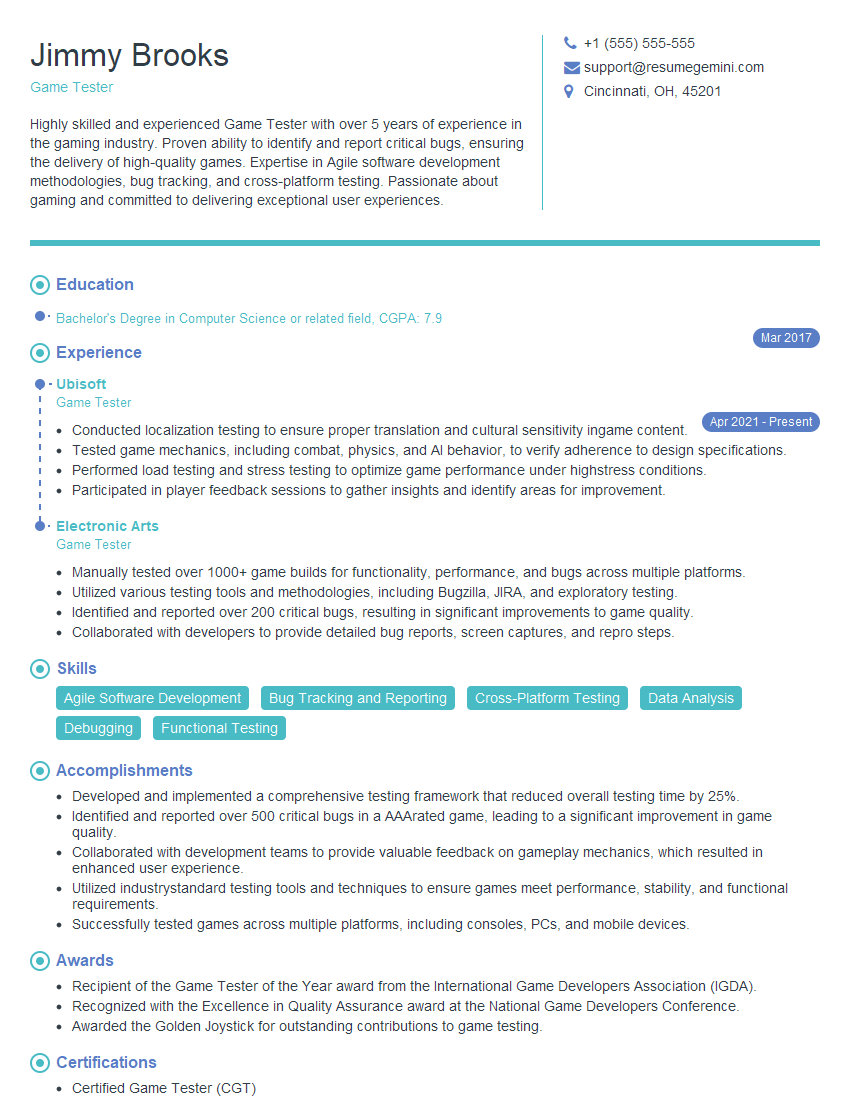
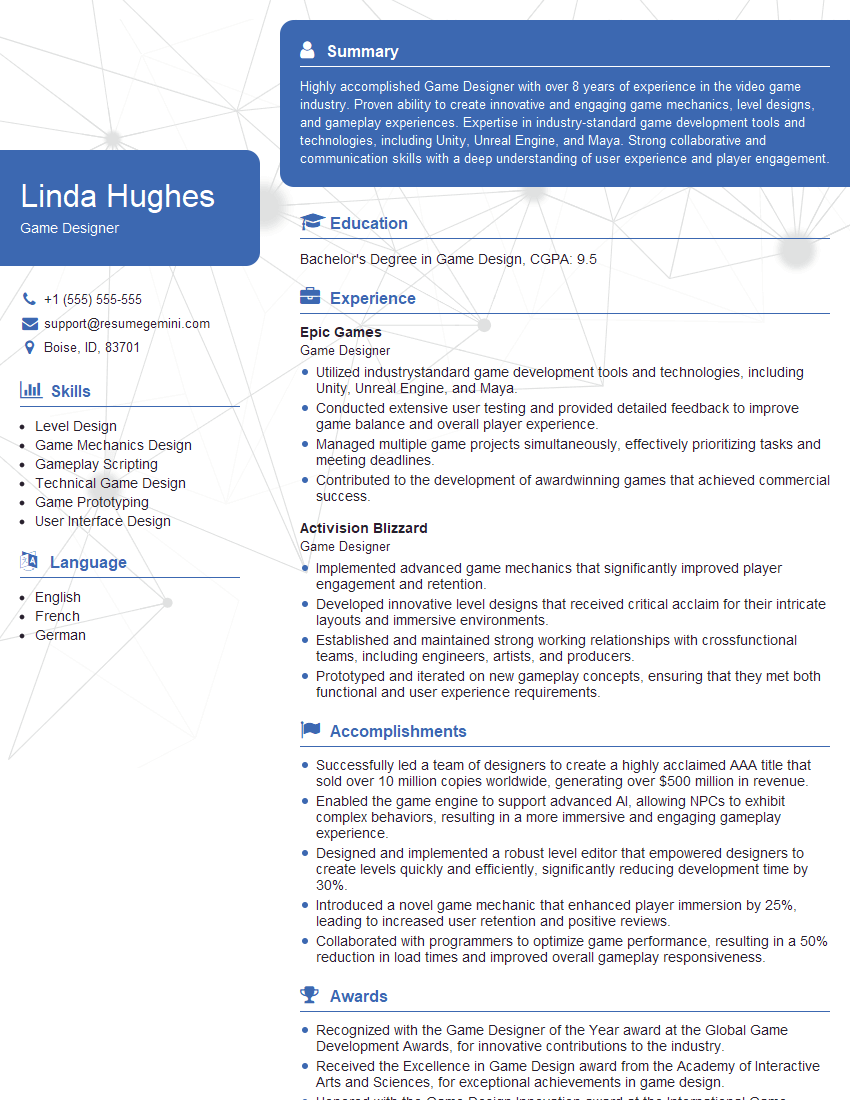
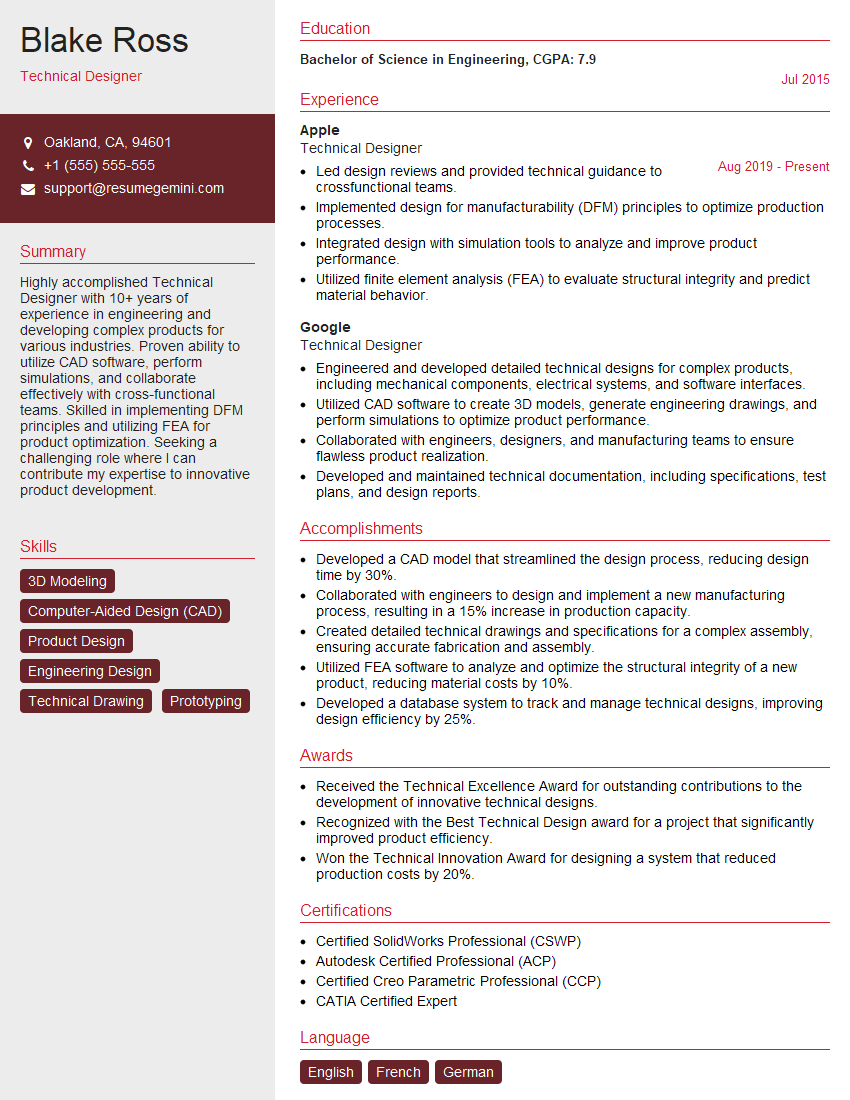
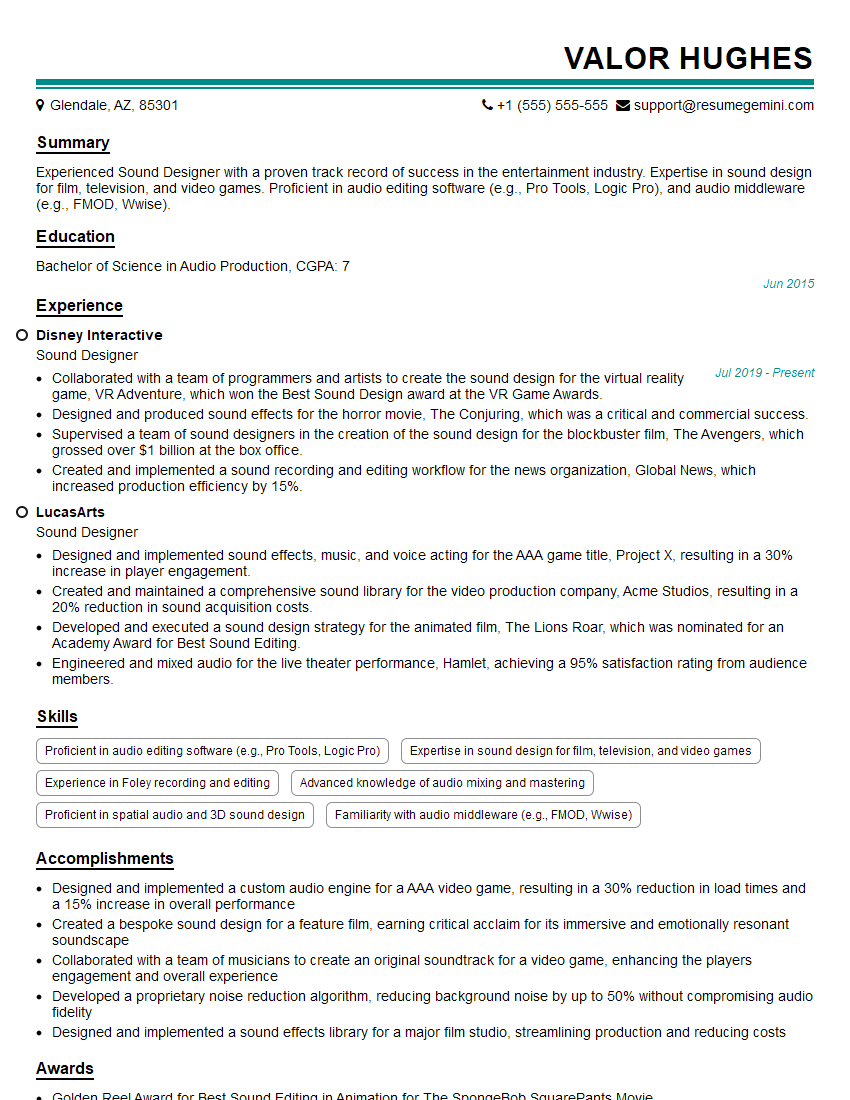
Mastering knowledge of different playing styles and systems is crucial for career advancement in sports analysis, coaching, and management. A strong understanding of tactical principles allows you to contribute meaningfully to team performance and strategic decision-making. To enhance your job prospects, create an ATS-friendly resume that highlights your expertise. ResumeGemini is a trusted resource that can help you build a professional and impactful resume. We provide examples of resumes tailored to showcasing expertise in Knowledge of different playing styles and systems – explore them to see how you can best present your skills and experience.
Explore more articles
Users Rating of Our Blogs
Share Your Experience
We value your feedback! Please rate our content and share your thoughts (optional).
What Readers Say About Our Blog
Very informative content, great job.
good