Cracking a skill-specific interview, like one for Knowledge of different types of sewing machines, requires understanding the nuances of the role. In this blog, we present the questions you’re most likely to encounter, along with insights into how to answer them effectively. Let’s ensure you’re ready to make a strong impression.
Questions Asked in Knowledge of different types of sewing machines Interview
Q 1. What are the main differences between industrial and domestic sewing machines?
The primary differences between industrial and domestic sewing machines lie in their durability, speed, functionality, and intended use. Think of it like comparing a sports car to a family sedan. Domestic machines are designed for home use, offering versatility for various projects but at a slower speed and with less robust construction. Industrial machines, on the other hand, are built for heavy-duty, continuous use in factories. They’re faster, more powerful, and typically specialized for specific tasks like stitching jeans or creating intricate embroidery.
- Speed: Industrial machines are significantly faster, often reaching speeds far exceeding domestic machines.
- Durability: Industrial machines are built with stronger materials and components to withstand prolonged use under high stress.
- Functionality: While domestic machines are versatile, industrial machines are often specialized for a particular type of sewing or fabric.
- Maintenance: Industrial machines require more frequent and specialized maintenance.
- Cost: Industrial machines are considerably more expensive than domestic machines.
For example, a domestic machine might struggle to sew through multiple layers of heavy denim, whereas an industrial denim sewing machine is designed for that very purpose. A garment factory would use dozens of specialized industrial machines to create a single garment.
Q 2. Describe the functionality of a lockstitch sewing machine.
A lockstitch sewing machine creates a stitch by interlocking a top thread and a bottom thread in a pattern that resembles a locked chain. Imagine weaving two threads together – that’s the essence of a lockstitch. This interlocking creates a strong, secure stitch ideal for most sewing projects. The machine uses two spools of thread; one is fed from the top (top thread), and the other is housed within a bobbin beneath the needle plate (bottom thread). The needle pierces the fabric, carrying the top thread. Simultaneously, the bobbin case rotating below feeds the bottom thread, creating a loop that is subsequently captured and locked with the top thread to form a stitch. The resulting stitch is very durable and is less likely to unravel than other stitch types.
Most domestic sewing machines are lockstitch machines. The strength and flexibility of the lockstitch make it suitable for everything from delicate fabrics to thick upholstery. It’s the workhorse of the sewing world.
Q 3. Explain the purpose of a serger (overlock) machine.
A serger, also known as an overlock machine, is designed to finish fabric edges, creating a professional and durable seam. Instead of simply joining two pieces of fabric, a serger cuts, sews, and finishes the edges simultaneously, preventing fraying and creating a neat, clean finish. Imagine a sewing machine that also acts like a tiny pair of scissors and a decorative edge finisher – all in one!
Sergers use multiple threads (usually three or four) to create a stitch that encloses and finishes the raw edge of the fabric. This prevents fraying and provides a professional look to garments and other sewn items. This stitch type is often found in professional-quality garments, especially those with stretch fabrics.
The difference between a serger and a lockstitch machine is significant. A lockstitch machine joins fabric, while a serger finishes the raw edges and seals them, often enhancing both the appearance and longevity of a garment. They are often used together in professional sewing.
Q 4. What are the different types of sewing machine needles and their applications?
Sewing machine needles are categorized by system (like 130/705H), size, and type. The system number indicates the needle’s shank and groove type, crucial for compatibility with your machine. The size, denoted numerically, represents the needle’s thickness. Larger numbers indicate thicker needles for heavier fabrics. Needle type is perhaps the most important aspect for your sewing project.
- Sharp needles: These are general-purpose needles for woven fabrics like cotton, linen, and silk.
- Ballpoint needles: Designed for knit fabrics, their rounded tips prevent snagging and damage to the fabric’s loops.
- Stretch needles: Similar to ballpoint but with a slightly more elongated tip for increased stretch flexibility.
- Jeans needles: Heavier needles with reinforced points for heavy-duty stitching of denim and similar fabrics.
- Leather needles: Feature a heavier construction and a sharp point for piercing thick leather.
- Embroidery needles: These needles often have a larger eye to accommodate thicker embroidery threads.
Choosing the right needle is paramount. Using the wrong needle can lead to skipped stitches, broken needles, and damaged fabric. Always select a needle appropriate for the fabric type and weight.
Q 5. How do you troubleshoot a skipped stitch on a sewing machine?
A skipped stitch is a common sewing machine frustration. It’s like a hiccup in your sewing process! Here’s a systematic approach to troubleshooting:
- Check the needle: Bent, dull, or incorrectly inserted needles are frequent culprits. Replace with a fresh needle of the correct type and size for your fabric.
- Examine the thread: Ensure the thread is properly wound on the bobbin and spool, and that it’s the right type for your machine and fabric. Knots or tangles in the thread can cause skipped stitches.
- Inspect the tension: Incorrect top or bottom tension can lead to skipped stitches. Adjust the tension dials, testing after each minor adjustment. Too much tension will pull the fabric and cause skipped stitches; too little, and it results in loose stitches.
- Verify the bobbin: Make sure the bobbin is correctly inserted and spinning freely. A poorly inserted bobbin can cause all sorts of problems, including skipped stitches.
- Check the feed dogs: Ensure the feed dogs are raised and moving freely. These are the teeth that move the fabric under the needle. If they’re jammed or broken, the fabric won’t feed correctly.
- Clean the machine: Lint and debris can accumulate in your machine, obstructing its smooth operation. Clean under the needle plate and around the bobbin case.
By systematically checking these points, you can usually pinpoint the cause and restore your sewing machine to its perfect stitching ability.
Q 6. Explain the process of changing a sewing machine needle.
Changing a sewing machine needle is a simple yet crucial maintenance task that helps prevent skipped stitches, broken needles, and fabric damage. Always remember to turn off and unplug your machine before handling the needle.
- Lower the needle: Turn the hand wheel to lower the needle to its lowest position.
- Loosen the needle clamp screw: Locate the screw holding the needle in place (usually on the needle clamp). Use a screwdriver to gently loosen this screw.
- Remove the old needle: Gently pull the old needle straight out from the needle clamp. The needle should slip out easily once the screw is loosened.
- Insert the new needle: Insert the new needle into the needle clamp, ensuring the flat side of the needle shank is facing towards the back of the machine. This is critical for proper needle alignment.
- Tighten the needle clamp screw: Tighten the needle clamp screw securely, holding the needle firmly in place.
- Raise the needle: Turn the hand wheel to raise the needle to its highest position.
Always double-check your work to ensure the needle is properly secured before starting your sewing project.
Q 7. What are the common causes of tension problems in sewing machines?
Tension problems in sewing machines result in uneven stitches, puckering, or loops on either the top or bottom of your fabric. The culprits often lie in several areas:
- Incorrect tension settings: The tension dials regulate the amount of tension applied to the top and bottom threads. Experimenting with these dials is key to finding the correct balance.
- Thread type and quality: Using the wrong thread for your fabric or a low-quality thread can cause tension problems. Opt for good quality thread appropriate for your project.
- Dirty or damaged bobbin case: Lint, dirt, or a damaged bobbin case can affect the smooth movement of the bottom thread and impact your tension.
- Old or damaged bobbin: An old or poorly wound bobbin can affect the tension, creating uneven stitches.
- Incorrect bobbin insertion: Incorrectly inserting the bobbin can throw off your tension.
- Needle type and size: Using the incorrect needle for your fabric can also lead to tension problems.
Troubleshooting tension problems requires a systematic approach. Begin by checking the simplest things first, such as tension settings and thread quality. Then, proceed to cleaning or replacing components like the bobbin case and bobbin. Sometimes, a tiny adjustment can make a big difference!
Q 8. How do you clean and lubricate a sewing machine?
Regular cleaning and lubrication are crucial for maintaining your sewing machine’s efficiency and longevity. Think of it like servicing a car – you wouldn’t expect it to run smoothly without regular maintenance!
Cleaning: Begin by unplugging the machine. Use a soft brush or compressed air to remove dust and lint from all accessible areas, including under the bobbin case, around the feed dogs, and in the shuttle race. For stubborn residue, a slightly damp (not wet!) cloth can be used. Never use harsh chemicals or abrasive cleaners, as these can damage the machine’s delicate parts.
Lubrication: Most sewing machines require specific sewing machine oil. Apply a small drop of oil to the designated lubrication points. Your machine’s manual will specify these locations. Too much oil can attract more dust and lint, so less is more. After oiling, run the machine for a few minutes to distribute the oil.
Frequency: How often you need to clean and lubricate depends on usage. For frequent use, a weekly cleaning and monthly lubrication might be necessary. Less frequent use might allow for less regular maintenance, but always inspect before each project.
Q 9. What safety precautions should be taken when operating a sewing machine?
Sewing machine safety is paramount. Always treat it with respect, just as you would any power tool.
- Unplug before cleaning or maintenance: This prevents accidental shocks.
- Keep fingers clear of the needle: This prevents needle injuries. Use a finger guard if necessary.
- Keep the area around the machine clean and clutter-free: A clear workspace minimizes trip hazards and accidental entanglement.
- Use appropriate tools: Never try to adjust or repair parts you don’t understand. Consult your manual or a professional.
- Proper needle placement: Ensure the needle is inserted correctly and securely. A bent or improperly installed needle can cause breakage or injury.
- Never reach under the needle while the machine is running: It’s an extremely common cause of injury.
- Supervise children: Never allow children to operate a sewing machine unsupervised.
Following these simple precautions will significantly reduce the risk of accidents.
Q 10. Describe the different types of bobbins used in sewing machines.
Bobbins are small spools that hold the lower thread in a sewing machine. Different machines use different types.
- Class 15 Bobbins: These are the most common type, usually metal, and have a small, smooth, circular case. They are found in many domestic machines.
- Class 15J Bobbins: Similar to Class 15 but slightly smaller. They are often used in industrial or high-speed domestic machines.
- Top-loading Bobbins: These are inserted from the top rather than the bottom. These are used in various specialized or older machines.
- Plastic Bobbins: These are becoming more common and can sometimes be found in more modern machines.
Always check your machine’s manual to ensure you are using the correct type of bobbin. Using the wrong bobbin can lead to poor stitch quality or even damage to the machine.
Q 11. How do you adjust the stitch length and width on a sewing machine?
Adjusting stitch length and width is simple but essential for various sewing projects. Most machines have dials or controls specifically for these settings.
Stitch Length: A longer stitch length is ideal for basting or quick sewing, while a shorter stitch is necessary for seams that need extra strength. The stitch length is usually measured in millimeters or stitches per inch. You’ll often see a scale on the dial or a digital display showing the stitch length.
Stitch Width: This affects the width of zigzag stitches and other decorative stitches. A narrower width creates a more compact stitch, while a wider width is used for decorative effects or to create stronger seams. The scale is usually measured in millimeters.
Example: Let’s say you’re sewing a sturdy seam on denim. You’d select a short stitch length (around 2.0 mm or less) and a narrow stitch width (if using a zigzag stitch). If you’re basting, you might select a much longer stitch length (around 4.0 mm or more).
Q 12. What are the common types of presser feet and their uses?
Presser feet are essential for guiding fabric through the sewing machine and creating different stitch types and effects. There’s a wide variety.
- General-purpose foot: The standard foot for straight and zigzag stitches.
- Zipper foot: Allows for even stitching close to zippers.
- Buttonhole foot: Used to create buttonholes of various lengths and widths.
- Blind hem foot: Creates almost invisible hems.
- Rolled hem foot: Creates narrow, rolled hems.
- Walking foot: Ideal for sewing multiple layers of fabric together evenly.
- Quilting foot: Provides more consistent feed and allows for precision quilting.
Each foot has a specific function and using the correct one is vital for achieving optimal results. Often, these are easily interchangeable depending on the machine’s setup.
Q 13. Explain the difference between a straight stitch and a zigzag stitch.
The difference between a straight stitch and a zigzag stitch is fundamental to sewing.
Straight Stitch: A straight stitch is simply a series of evenly spaced vertical stitches. It’s the most basic stitch and used extensively for seams and construction. Its primary strength lies in its simplicity and reliability for securing fabric pieces together.
Zigzag Stitch: A zigzag stitch consists of stitches that alternate between left and right. It is more flexible than a straight stitch and offers a number of practical uses. It is often used to finish raw edges, create decorative patterns, or sew stretch fabrics.
In essence, the straight stitch provides strength and stability, while the zigzag stitch adds flexibility, stretch and a decorative element.
Q 14. How do you identify and repair a broken needle?
A broken needle is a common sewing machine issue. Identifying and replacing it is essential.
Identification: A broken needle is usually obvious. You might hear a loud ‘snap’ or notice a skipped stitch. The needle might be visibly bent or broken. Check carefully for any damage to the needle, either at the tip or the shaft.
Repair (Replacement): Always unplug the machine before handling the needle. Loosen the needle clamp screw (usually located above the needle). Gently remove the broken needle by grasping it with needle nose pliers or tweezers. Install a new needle of the correct size and type specified in your machine’s manual, ensuring it’s inserted correctly and firmly tightened. Incorrect needle insertion can damage the machine’s parts.
Prevention: Using the correct needle for the fabric type is key. Don’t force the sewing machine through thick fabrics or multiple layers without the aid of a walking foot. Also, make sure the needle is securely tightened.
Q 15. What is the purpose of a feed dog?
The feed dog is a crucial component in most sewing machines, acting as the ‘tractor’ for your fabric. Think of it as a set of tiny teeth located beneath the needle plate. These teeth grip and move the fabric forward consistently with each stitch, ensuring even feeding and preventing bunching or skipping. Without a properly functioning feed dog, you’d struggle to sew straight lines or work with multiple layers of fabric effectively.
Different machines have variations in feed dog design – some are adjustable, allowing you to control the feed speed depending on the fabric type. For instance, delicate fabrics might require a slower feed, achievable by lowering or even disengaging the feed dog entirely. Conversely, heavier materials will need a more aggressive feed.
Career Expert Tips:
- Ace those interviews! Prepare effectively by reviewing the Top 50 Most Common Interview Questions on ResumeGemini.
- Navigate your job search with confidence! Explore a wide range of Career Tips on ResumeGemini. Learn about common challenges and recommendations to overcome them.
- Craft the perfect resume! Master the Art of Resume Writing with ResumeGemini’s guide. Showcase your unique qualifications and achievements effectively.
- Don’t miss out on holiday savings! Build your dream resume with ResumeGemini’s ATS optimized templates.
Q 16. How do you maintain the timing of a sewing machine?
Maintaining the timing of a sewing machine, also known as hook timing, is essential for proper stitch formation. Incorrect timing leads to skipped stitches, broken needles, or inconsistent stitch length. It’s a delicate process often requiring specialized tools and knowledge. To start, you generally need to access the machine’s internal components. Most importantly, timing is related to the precise interaction between the hook (which catches and forms the stitch) and the needle.
The process varies greatly depending on the machine’s brand and model. Some machines allow for minor timing adjustments via external screws, while others require more intricate internal adjustments. For this reason, I always recommend consulting the machine’s manual or seeking professional help if you’re unfamiliar with this procedure, as incorrect adjustments could cause serious damage.
Regular maintenance such as cleaning and oiling the machine also contributes to optimal timing, ensuring smooth, synchronized movement of all parts. The accumulation of lint and dirt can interfere with the precise operation of the hook and needle, leading to timing issues.
Q 17. What are some common problems associated with industrial sewing machines?
Industrial sewing machines, while robust, face unique challenges. Common problems include:
- Needle breakage: This is often caused by incorrect needle selection, dull needles, high sewing speeds, or improper fabric handling.
- Tension issues: Inconsistent top or bottom tension can lead to puckering, skipped stitches, or broken threads. This can stem from worn tension discs, incorrect tension adjustments, or a buildup of lint.
- Lubrication problems: Inadequate lubrication causes friction, leading to premature wear and tear, overheating, and ultimately, machine failure.
- Motor problems: Industrial machines work continuously, putting a lot of stress on the motor. Overheating or burnout can occur if the machine isn’t properly cooled or overloaded.
- Timing problems: As mentioned before, inaccurate timing disrupts stitch formation.
Regular maintenance, including lubrication, cleaning, and timely repairs, is vital in preventing many of these issues.
Q 18. How do you diagnose and fix a broken needle bar?
Diagnosing a broken needle bar requires a methodical approach. First, visually inspect the needle bar for any obvious damage, such as bends, cracks, or loose screws. Check for any obstructions that might be preventing its movement.
If there’s no visible damage, the problem might lie within the machine’s mechanism. This usually involves carefully removing relevant parts (following the machine’s manual) to inspect the connecting rods, springs, and other components that contribute to the needle bar’s movement. A common culprit is a bent or broken connecting rod which will require replacement. It’s essential to ensure all parts are properly aligned and functioning before reassembling.
Fixing a broken needle bar often involves replacing the damaged part, which may require purchasing a replacement from the manufacturer or a reputable supplier. If you lack the experience, it’s advisable to call a qualified technician to avoid further damage to the machine.
Q 19. What types of fabric are best suited for specific sewing machine types?
Fabric suitability significantly depends on the sewing machine type. For example:
- Domestic sewing machines: These machines generally handle a wide range of fabrics, from lightweight silks and linens to medium-weight cottons and denim. However, extremely heavy or thick materials might strain them.
- Industrial sewing machines (e.g., walking foot machines): These are designed to tackle heavy-duty fabrics like leather, canvas, and multiple layers of denim with ease. Their robust construction and powerful motors can handle thicker materials with ease.
- Sergers/Overlock machines: These excel at finishing edges on knit and woven fabrics. They’re typically not ideal for very heavy or thick materials.
- Embroidery machines: While they can work with various fabrics, the choice depends largely on the desired embroidery design and the stability of the fabric.
Always choose a needle and stitch type appropriate for your fabric to avoid breakage or damage. Using the correct presser foot is also important to achieve the best results.
Q 20. Describe your experience with different sewing machine brands (e.g., Singer, Brother, Juki).
My experience spans various brands, and each has its strengths:
- Singer: A household name known for its reliable, user-friendly domestic machines. They offer a wide price range catering to both beginners and experienced sewists. I’ve found their older models particularly durable.
- Brother: Brother produces a solid range of machines, including both domestic and industrial models. I’ve worked extensively with their computerized embroidery machines, impressed by their precision and features.
- Juki: Juki specializes in high-quality industrial machines renowned for their robustness and speed. Their walking foot machines are particularly popular for handling heavy-duty fabrics. The precision and reliability of Juki machines are unsurpassed in the industry, making them a top choice for professional applications.
Each brand caters to a different market segment. My experience with them allows me to advise clients on the best brand and model for their specific needs and budget.
Q 21. Explain your experience with computerized sewing machines.
Computerized sewing machines offer an array of features that enhance the sewing experience, including programmable stitch patterns, automatic needle threading, and adjustable sewing speeds. These advanced features make complex sewing projects more manageable and precise.
My experience shows that while they offer convenience, maintenance and troubleshooting can be more challenging compared to mechanical machines. Repairing a computerized sewing machine often requires specialized knowledge and tools, sometimes even requiring factory service. However, the ease and precision they offer in creating intricate designs are significant advantages, especially in applications like quilting or embroidery. I’ve found that the learning curve isn’t steep, as many models offer intuitive interfaces and detailed tutorials.
Q 22. How do you handle different thread types on a sewing machine?
Handling different thread types on a sewing machine is crucial for achieving consistent stitch quality and preventing machine damage. The key is understanding thread weight (denier), fiber content (cotton, polyester, silk, etc.), and its intended use.
- Thread Weight: Lighter weight threads (e.g., 40 wt) are suitable for delicate fabrics and fine stitching, while heavier threads (e.g., 12 wt) are better for durable fabrics and heavier stitching. Using the wrong weight can cause breakage or skipped stitches.
- Thread Fiber Content: Different fibers have different strengths and properties. Cotton thread is versatile but can be less strong than polyester. Polyester is very strong and more resistant to abrasion. Silk is luxurious but delicate. The choice depends on the fabric and desired result. For instance, using a polyester thread on a cotton garment offers increased durability.
- Proper Winding: Correctly winding the bobbin is essential. Ensure the thread is wound evenly to avoid tangles and breakage. Using the correct tension setting on the bobbin winder is also very important. Using the wrong tension can cause the bobbin to be wound unevenly.
- Needle Selection: The needle must be appropriate for the thread weight. A finer needle for fine thread and a heavier needle for heavier thread prevents thread breakage and needle damage.
For example, when sewing a delicate silk scarf, I’d use a fine needle (size 70/10) and a lightweight silk thread. But when sewing a heavy denim jacket, I’d opt for a heavy-duty needle (size 16/100) and a heavier weight polyester thread.
Q 23. Explain your experience with different types of sewing machine feet (e.g., zipper foot, buttonhole foot).
Sewing machine feet are essential for achieving different sewing effects. My experience encompasses a wide variety, each tailored for specific tasks:
- Zipper Foot: This foot has a narrow, offset design that allows you to sew very close to the zipper teeth, resulting in a clean and professional finish. I’ve used this countless times for attaching zippers to garments and bags.
- Buttonhole Foot: This foot usually has a guide that ensures consistent buttonhole length and width. Different types of buttonhole feet can create various buttonhole styles. I rely on this regularly when constructing shirts and jackets.
- Walking Foot: This foot features feed dogs on the top and bottom, allowing for even feeding of multiple fabric layers, preventing slippage when sewing thick materials like leather or multiple layers of fabric. This foot is invaluable for quilting projects and working with difficult fabrics.
- Overcast Foot: This foot creates a neat, professional overcast stitch to finish seam edges, preventing fraying. I find this incredibly helpful when working with knit fabrics to prevent unraveling.
- Blind Hem Foot: This foot creates a barely visible hem, ideal for delicate fabrics or when a neat finish is required. It’s indispensable for hemming skirts and trousers.
Selecting the correct foot is crucial for efficiency and a high-quality finish. Improper foot selection can lead to poor stitching, skipped stitches, or even machine damage.
Q 24. What is your experience with different types of sewing machine motor mechanisms?
Sewing machine motor mechanisms have evolved significantly. My experience includes working with several types:
- Direct Drive Motors: These motors are directly connected to the needle shaft, offering greater precision and quieter operation. They’re generally more energy-efficient than older belt-driven models.
- Belt-Driven Motors: These are classic, using a belt to transfer power from the motor to the needle. While reliable, they can be noisier and less precise than direct-drive motors. They can also result in loss of power transmission.
- Servo Motors: These are a type of direct-drive motor that offer superior control and power, commonly found in high-end machines. They typically allow for variable speed control and greater precision in stitch formation.
Understanding the motor type helps in diagnosing potential issues. For example, a noisy belt-driven machine might simply need belt adjustment, while a direct-drive machine with inconsistent speeds might indicate a motor problem.
Q 25. Describe your experience with preventative maintenance for sewing machines.
Preventative maintenance is vital for extending the life of a sewing machine and ensuring consistent performance. My routine includes:
- Regular Cleaning: I remove lint and dust from the bobbin case, feed dogs, and shuttle area using a brush and compressed air. This prevents build-up that can cause mechanical issues.
- Lubrication: I lubricate the moving parts with high-quality sewing machine oil, following the manufacturer’s instructions. This reduces friction and wear, ensuring smooth operation.
- Tension Adjustment: I periodically check and adjust the upper and lower thread tension to maintain balanced stitching. Incorrect tension can lead to skipped stitches or broken threads.
- Needle Replacement: I replace needles regularly, especially when working with heavy fabrics or noticing skipped stitches. A bent or dull needle can damage both fabric and machine parts.
- Belt Inspection (for belt-driven machines): I regularly inspect the belt for wear and tear. A damaged belt can cause inconsistent stitching or machine failure.
This proactive approach significantly reduces the risk of costly repairs or machine downtime.
Q 26. How do you troubleshoot a machine that produces inconsistent stitches?
Inconsistent stitches can be frustrating, but systematically troubleshooting often reveals the cause. My approach is:
- Check the Needle: A bent, dull, or incorrect needle is a frequent culprit. Replace it with a fresh, appropriate needle.
- Inspect the Thread: Ensure the thread is the correct weight and type for the fabric and machine settings. Check for knots or damage in the thread. Also ensure the thread is correctly threaded.
- Examine the Bobbin: Make sure the bobbin is correctly wound and inserted. Improper bobbin winding or placement is a very common cause of inconsistent stitching.
- Verify Tension: Check both the upper and lower thread tensions. If they are misaligned, adjust them until balanced stitches are produced. The stitches should be neat and consistent in appearance.
- Clean the Machine: Lint and dust can interfere with the machine’s mechanisms. Thoroughly clean the bobbin case and shuttle area.
- Check the Feed Dogs: Ensure the feed dogs are moving correctly, and not obstructed. Inconsistent feed dog movement causes the fabric to move unevenly, resulting in inconsistent stitch formation.
By systematically checking these points, I typically identify and resolve the issue quickly.
Q 27. How do you assess the condition of a used sewing machine?
Assessing a used sewing machine requires a careful inspection. My process involves:
- Visual Inspection: Examine the machine for any signs of damage, rust, or wear. Check the body for any cracks or damage. Look for any evidence of past repairs that may not have been done correctly.
- Motor Test: Run the machine and listen for any unusual noises, such as grinding or squealing. These noises can indicate mechanical problems.
- Stitch Test: Sew a test seam using different stitch types. Observe the consistency and quality of the stitches. Inconsistent stitches indicate potential problems with the mechanism. Test the stitching on various fabric types to assess its capabilities.
- Check the Tension: Adjust the upper and lower tensions and observe the stitch quality at various tension settings. Inconsistent stitch formation across a wide range of tensions suggests a potential mechanical issue.
- Test all Functions: Test all the functions of the machine, including reverse stitching, stitch length adjustment, and any other features. This comprehensive assessment checks if all parts of the machine are working correctly.
- Assess Accessories: Check if all the accessories are present and in good condition. This is useful for assessing the overall value and usability of the machine.
A thorough assessment helps determine the machine’s condition, potential repair needs, and overall value.
Q 28. What are your experience with various types of sewing machine maintenance tools?
Having the right tools is essential for effective sewing machine maintenance. My toolkit includes:
- Screwdrivers (Phillips and flathead): For adjustments and repairs.
- Needle-nose pliers: For removing bent needles or handling small parts.
- Sewing machine oil: High-quality oil is crucial for lubrication of the moving parts.
- Brushes (soft and stiff): For removing lint and dust.
- Compressed air: To blow out dust and debris.
- Seam ripper: For removing stitches, especially useful during repairs.
- Small lint brush: For delicate cleaning tasks.
- Magnifying glass: For close inspection of small parts.
The right tools are not only important for maintaining the sewing machine, they ensure the safety of the operator as well. For instance, using the wrong screwdriver can damage the machine, while working without proper eye protection can damage the eyes.
Key Topics to Learn for Knowledge of Different Types of Sewing Machines Interview
- Mechanical Sewing Machines: Understanding their functionality, maintenance, and common issues. Practical application: Troubleshooting basic mechanical sewing machine malfunctions.
- Electronic Sewing Machines: Exploring features like computerized stitch selection, speed control, and needle threading mechanisms. Practical application: Comparing the advantages and disadvantages of electronic vs. mechanical machines for various projects.
- Industrial Sewing Machines: Differentiating between different types (e.g., lockstitch, chainstitch, overlock) and their applications in mass production. Practical application: Describing the ideal industrial machine for specific fabric types and sewing tasks.
- Specialized Sewing Machines: Knowledge of embroidery machines, sergers, quilting machines, and their unique capabilities. Practical application: Explaining the benefits of using a serger for professional-looking seams.
- Sewing Machine Maintenance: Understanding routine cleaning, lubrication, and troubleshooting common problems. Practical application: Describing a preventative maintenance schedule for a sewing machine.
- Needle and Thread Selection: Matching needles and threads to different fabrics and sewing projects. Practical application: Explaining why the correct needle and thread are crucial for preventing breakage and achieving high-quality stitches.
- Safety Procedures: Understanding safe operating practices and potential hazards associated with using various sewing machines. Practical application: Demonstrating proper safety procedures when working with industrial sewing machines.
Next Steps
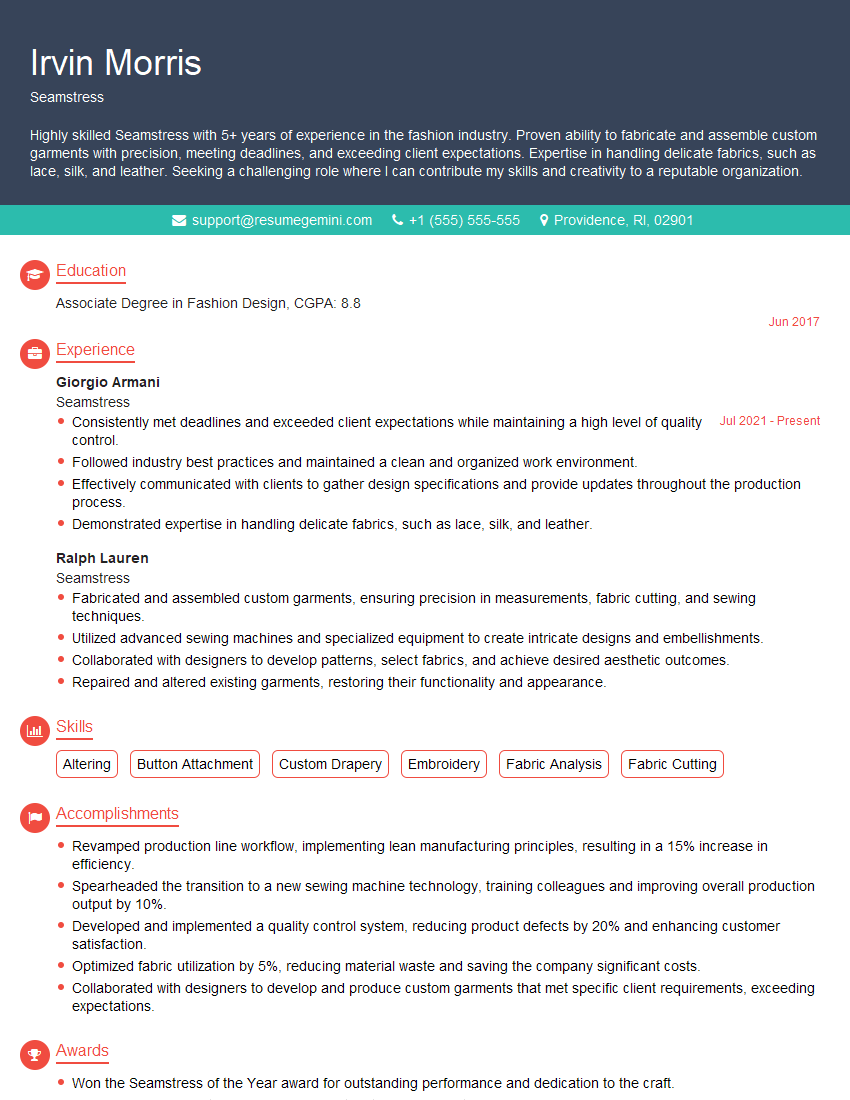
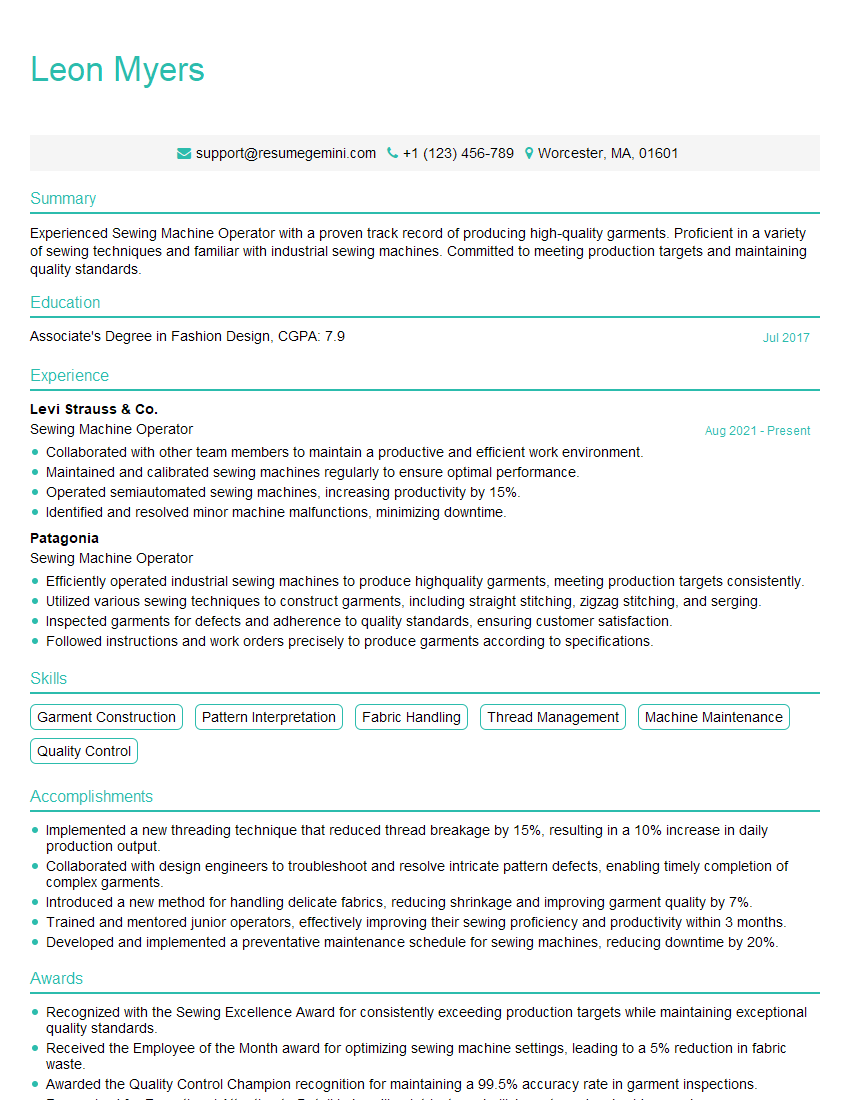
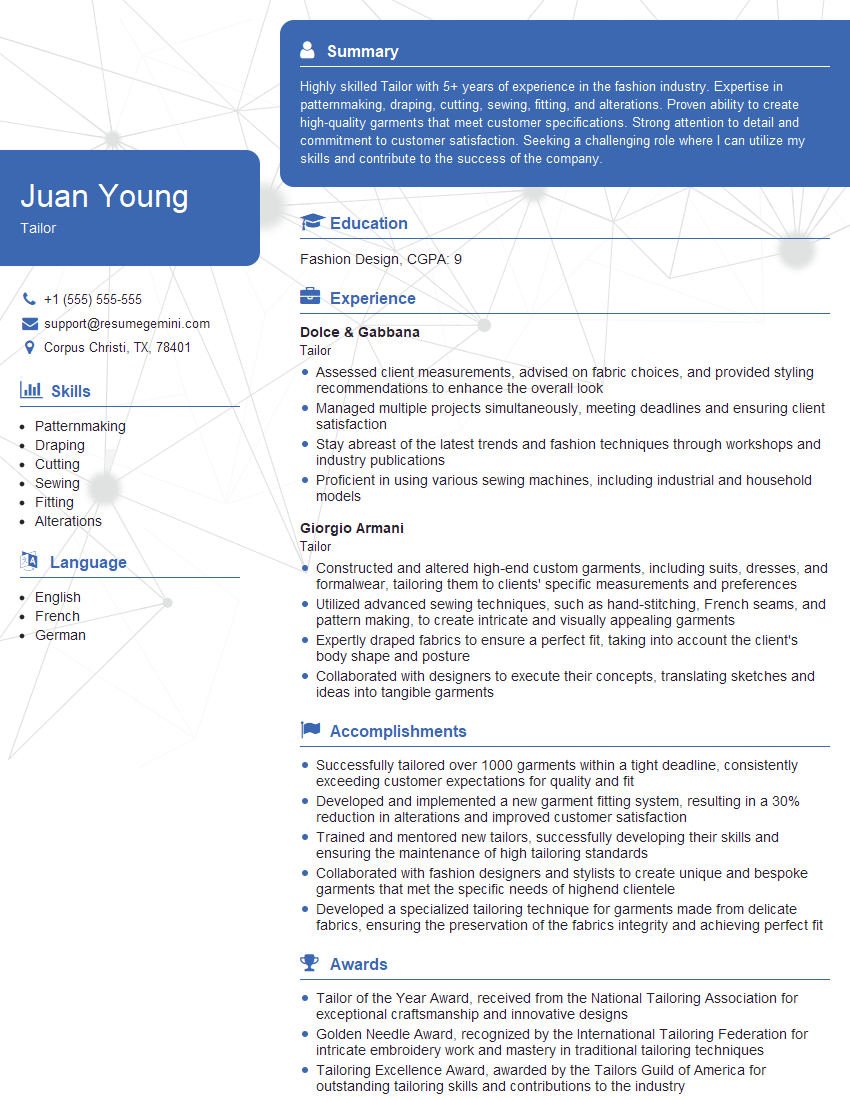
Mastering your knowledge of different sewing machine types is crucial for career advancement in the fashion, textile, and design industries. A strong understanding of these machines demonstrates practical skills and problem-solving abilities highly valued by employers. To significantly boost your job prospects, focus on creating an ATS-friendly resume that highlights your expertise. ResumeGemini is a trusted resource that can help you build a professional and impactful resume. Examples of resumes tailored to showcasing expertise in different types of sewing machines are available to guide you.

Explore more articles
Users Rating of Our Blogs
Share Your Experience
We value your feedback! Please rate our content and share your thoughts (optional).
What Readers Say About Our Blog
Very informative content, great job.
good