Unlock your full potential by mastering the most common Knowledge of Emerging Technologies and Industry Trends interview questions. This blog offers a deep dive into the critical topics, ensuring you’re not only prepared to answer but to excel. With these insights, you’ll approach your interview with clarity and confidence.
Questions Asked in Knowledge of Emerging Technologies and Industry Trends Interview
Q 1. Explain the current state and future potential of Artificial Intelligence (AI).
Artificial Intelligence (AI) is rapidly evolving from a niche technology to a transformative force across industries. Currently, we see AI powering everything from personalized recommendations on streaming services to sophisticated medical diagnoses. Its capabilities are expanding rapidly thanks to advancements in machine learning and deep learning, enabling AI systems to process vast amounts of data and make increasingly complex decisions.
The future potential of AI is immense. We can anticipate significant breakthroughs in areas like drug discovery, personalized medicine, climate change mitigation, and autonomous systems. However, responsible development and ethical considerations will be crucial to harnessing AI’s power for the benefit of humanity. Imagine AI-powered systems predicting and preventing natural disasters, optimizing energy grids for sustainability, or creating new materials with unprecedented properties. These are just glimpses into the transformative potential that lies ahead. The key, however, will be thoughtful implementation and robust regulatory frameworks to mitigate potential risks.
Q 2. Describe the key differences between Machine Learning (ML) and Deep Learning (DL).
Machine Learning (ML) and Deep Learning (DL) are both subsets of AI, but they differ significantly in their approach. ML involves algorithms that learn from data without explicit programming. Think of it like teaching a dog a trick – you show it examples, and it learns the pattern. ML models typically rely on structured data and require feature engineering (hand-picking relevant data points).
Deep Learning, on the other hand, uses artificial neural networks with multiple layers (hence “deep”) to learn complex patterns from unstructured data like images and text. This is similar to how the human brain works, learning intricate relationships through interconnected neurons. DL excels at tasks requiring nuanced understanding, like image recognition and natural language processing. For instance, while an ML model might struggle to identify a cat in a blurry photo, a DL model, with its ability to learn intricate features, is much more likely to succeed. In essence, DL can be seen as a more advanced and powerful form of ML, capable of handling more complex problems and larger datasets.
Q 3. What are the major security risks associated with blockchain technology?
Blockchain technology, while revolutionary, presents several significant security risks. One major concern is the 51% attack, where a malicious actor gains control of more than half the network’s computing power, allowing them to manipulate transactions and potentially reverse them.
Another risk lies in smart contract vulnerabilities. Errors in the code of smart contracts, which automate transactions, can be exploited by hackers leading to significant financial losses. For example, a flaw in a smart contract could allow someone to steal funds from a decentralized application (dApp). Furthermore, private key compromise remains a major threat. If a user’s private key, which is essentially their password to their cryptocurrency wallet, is stolen, their funds are at risk. Finally, quantum computing poses a future threat as sufficiently powerful quantum computers could potentially break current cryptographic algorithms used to secure blockchain networks.
Q 4. Discuss the potential impact of the metaverse on various industries.
The metaverse, a persistent, shared, 3D virtual world, has the potential to revolutionize numerous industries. In gaming, it will offer immersive and interactive experiences beyond current capabilities. Retail can leverage the metaverse to create virtual stores and offer interactive shopping experiences, increasing engagement and sales. Education can benefit from immersive learning environments, allowing students to experience historical events or conduct virtual experiments.
Healthcare can utilize the metaverse for remote consultations, surgical simulations, and therapeutic interventions. Real estate could see virtual property sales and virtual tours becoming commonplace. Even manufacturing can benefit from virtual prototyping and training simulations. However, the successful integration of the metaverse requires addressing challenges like accessibility, affordability, and interoperability between different platforms. The potential is enormous, but realizing it will require careful planning and collaboration across industries.
Q 5. How is Extended Reality (XR) transforming the healthcare sector?
Extended Reality (XR), encompassing Virtual Reality (VR), Augmented Reality (AR), and Mixed Reality (MR), is transforming healthcare in several ways. VR is used in surgical planning and training, allowing surgeons to practice complex procedures in a risk-free environment. It’s also used for pain management and rehabilitation, offering immersive distractions for patients. AR overlays digital information onto the real world, assisting surgeons during procedures by providing real-time data and anatomical overlays.
MR combines elements of VR and AR, creating a more seamless blend of the real and virtual worlds. For instance, MR could enable remote medical consultations where a doctor can virtually examine a patient and interact with their medical records in real-time. XR technologies are also used in medical education, allowing students to interact with virtual patients and practice clinical skills in a safe and controlled environment. The overall impact of XR is enhancing medical training, improving patient care, and increasing the efficiency of healthcare delivery.
Q 6. Explain the concept of the Internet of Things (IoT) and its security challenges.
The Internet of Things (IoT) refers to the network of physical objects embedded with sensors, software, and other technologies that connect and exchange data over the internet. Think of smart homes, wearable fitness trackers, and connected cars – these are all examples of IoT devices. The ability of these devices to communicate and share data offers significant benefits, enabling automation, improved efficiency, and data-driven insights.
However, the widespread adoption of IoT also introduces significant security challenges. The sheer number of interconnected devices creates a large attack surface, making it difficult to secure the entire network. Many IoT devices lack robust security features, making them vulnerable to hacking and malware. Data breaches can compromise sensitive personal information, and compromised devices can be used to launch denial-of-service attacks or other malicious activities. Ensuring the security of IoT networks requires a multi-layered approach, including secure device design, strong authentication mechanisms, and robust data encryption.
Q 7. What are the ethical considerations surrounding the use of AI in decision-making?
The use of AI in decision-making raises several crucial ethical considerations. One major concern is bias. AI systems are trained on data, and if that data reflects existing societal biases, the AI system will perpetuate and even amplify those biases, leading to unfair or discriminatory outcomes. For example, an AI system used in loan applications might unfairly discriminate against certain demographics if the training data reflects historical biases in lending practices.
Another concern is transparency and explainability. Many AI systems, especially deep learning models, are “black boxes,” making it difficult to understand how they arrive at their decisions. This lack of transparency can make it challenging to identify and correct errors or biases. Accountability is also a key issue. When an AI system makes a mistake with significant consequences, determining who is responsible – the developers, the users, or the AI itself – can be difficult. Finally, privacy is a major concern. AI systems often rely on large amounts of personal data, raising concerns about the potential for misuse or unauthorized access. Addressing these ethical concerns requires a combination of technical solutions, responsible development practices, and clear regulatory frameworks.
Q 8. Describe the current applications and limitations of Quantum Computing.
Quantum computing harnesses the principles of quantum mechanics to solve complex problems beyond the capabilities of classical computers. It leverages phenomena like superposition and entanglement to perform computations in a fundamentally different way.
Current Applications: While still in its nascent stages, quantum computing shows promise in several areas:
- Drug discovery and materials science: Simulating molecular interactions to design new drugs and materials.
- Financial modeling: Optimizing investment portfolios and managing risk more effectively.
- Cryptography: Breaking current encryption methods and developing new, quantum-resistant algorithms.
- Optimization problems: Solving complex logistical and scheduling problems more efficiently.
Limitations: Quantum computers face significant hurdles:
- Qubit stability: Maintaining the delicate quantum states of qubits (quantum bits) is extremely challenging due to noise and decoherence.
- Scalability: Building large-scale, fault-tolerant quantum computers is incredibly difficult and expensive.
- Algorithm development: Creating quantum algorithms that offer a significant speedup over classical algorithms requires specialized expertise.
- Error correction: Quantum computers are prone to errors; developing robust error correction techniques is crucial.
Think of it like this: classical computers are like cars – reliable, widely available, and suitable for most tasks. Quantum computers are like experimental spacecraft – incredibly powerful for specific missions, but still in development and requiring specialized infrastructure and expertise.
Q 9. How is Big Data analytics being used to improve business decision-making?
Big data analytics uses advanced techniques to extract insights from massive datasets. This allows businesses to make more informed and data-driven decisions, moving beyond gut feeling and intuition.
Improving Business Decision-Making:
- Targeted marketing: Analyzing customer behavior to personalize marketing campaigns and increase conversion rates. For example, a retailer might use purchase history and browsing data to recommend relevant products to individual customers.
- Risk management: Identifying potential risks and opportunities by analyzing market trends and financial data. Banks might use big data to detect fraudulent transactions or predict loan defaults.
- Supply chain optimization: Improving efficiency and reducing costs by analyzing supply chain data to optimize inventory levels and logistics.
- Product development: Gathering customer feedback and market research to inform product design and development. A tech company might analyze user reviews to identify areas for improvement in their software.
- Predictive maintenance: Using sensor data to predict equipment failures and schedule maintenance proactively, minimizing downtime.
In essence, big data analytics empowers businesses to understand their customers better, optimize their operations, and make more accurate predictions about the future.
Q 10. What are the advantages and disadvantages of cloud computing compared to on-premise solutions?
Cloud computing and on-premise solutions represent two distinct approaches to IT infrastructure management. Cloud computing involves renting IT resources (servers, storage, software) from a third-party provider, while on-premise solutions involve owning and managing your own IT infrastructure within your own facilities.
Advantages of Cloud Computing:
- Scalability and flexibility: Easily scale resources up or down based on demand.
- Cost-effectiveness: Pay only for what you use, avoiding upfront capital expenditures.
- Accessibility: Access resources from anywhere with an internet connection.
- Increased agility: Deploy and update applications faster.
Disadvantages of Cloud Computing:
- Vendor lock-in: Dependence on a specific cloud provider can make it difficult to switch.
- Security concerns: Relying on a third party to manage security can raise concerns.
- Internet dependency: Requires a reliable internet connection.
- Compliance issues: Meeting specific regulatory requirements can be challenging.
Advantages of On-Premise Solutions:
- Greater control: You have complete control over your data and infrastructure.
- Enhanced security: You manage security directly, potentially offering greater control.
- Compliance compliance: Easier to meet specific regulatory requirements.
Disadvantages of On-Premise Solutions:
- High upfront costs: Requires significant capital investment in hardware and software.
- Limited scalability: Scaling resources can be slow and expensive.
- Higher maintenance costs: Requires dedicated IT staff to manage the infrastructure.
The best choice depends on your specific needs, budget, and risk tolerance. Many businesses adopt a hybrid approach, combining cloud and on-premise solutions to leverage the benefits of both.
Q 11. Explain the role of DevOps in accelerating software development.
DevOps is a set of practices and cultural philosophies that automates and integrates the processes between software development and IT operations teams. Its goal is to shorten the systems development life cycle and provide continuous delivery with high software quality.
Accelerating Software Development:
- Continuous Integration/Continuous Delivery (CI/CD): Automates the build, test, and deployment process, enabling frequent releases of new features and bug fixes.
- Automation: Automates repetitive tasks such as infrastructure provisioning, testing, and deployment, freeing up developers to focus on coding.
- Collaboration and communication: Fosters collaboration between development and operations teams, breaking down silos and improving communication.
- Infrastructure as Code (IaC): Manages and provisions infrastructure through code, enabling consistent and repeatable deployments.
- Monitoring and feedback: Provides continuous monitoring of applications and infrastructure, enabling rapid identification and resolution of issues.
Imagine building a house. Traditional methods (without DevOps) are like building one brick at a time, with separate teams for the foundation, walls, and roof. DevOps is like using prefabricated modules, assembling them quickly and efficiently, with everyone working together seamlessly.
Q 12. What are some emerging trends in cybersecurity that businesses need to address?
The cybersecurity landscape is constantly evolving, presenting new challenges for businesses. Several emerging trends demand attention:
- Rise of sophisticated cyberattacks: Attacks are becoming more sophisticated, using AI and automation to target vulnerabilities more effectively.
- Increased use of cloud computing: The shift to cloud computing introduces new security challenges, requiring robust cloud security strategies.
- Internet of Things (IoT) security: The proliferation of IoT devices creates a vast attack surface, requiring comprehensive security measures for these devices.
- Supply chain attacks: Attackers are targeting software supply chains to compromise multiple organizations simultaneously.
- Ransomware attacks: Ransomware attacks are becoming increasingly prevalent and damaging, targeting businesses of all sizes.
- AI-powered attacks: AI is being used to create more effective phishing attacks and other forms of social engineering.
- Quantum computing threats: The development of quantum computers poses a threat to current encryption methods, requiring the development of quantum-resistant cryptography.
Businesses need to adopt a proactive and layered security approach, including strong passwords, multi-factor authentication, regular security audits, employee training, and incident response planning.
Q 13. Discuss the impact of automation on the workforce and the skills gap it creates.
Automation is transforming the workforce, creating both opportunities and challenges. While it increases efficiency and productivity, it also displaces workers in certain roles and requires upskilling or reskilling of the workforce.
Impact on the Workforce:
- Job displacement: Automation eliminates repetitive and manual tasks, leading to job losses in certain sectors.
- Increased productivity: Automation increases efficiency and output, leading to higher productivity.
- New job creation: Automation creates new job roles in areas such as AI development, data science, and automation engineering.
- Skills gap: The demand for workers with digital skills and expertise in automation technologies is growing rapidly, creating a significant skills gap.
Addressing the Skills Gap:
- Investing in education and training: Governments and businesses must invest in education and training programs to equip workers with the skills needed for the future workforce.
- Lifelong learning: Workers must embrace lifelong learning and continuously acquire new skills to adapt to technological changes.
- Reskilling and upskilling initiatives: Businesses should invest in reskilling and upskilling initiatives to help their employees adapt to the changing job market.
Think of it as the industrial revolution, where machines replaced manual labor. While some jobs were lost, new industries and job opportunities emerged. The key is to adapt and acquire the skills needed for the new economy.
Q 14. How is 5G technology impacting various industries?
5G technology, with its significantly faster speeds, lower latency, and greater capacity, is revolutionizing various industries:
- Manufacturing: Enables real-time monitoring and control of industrial processes, improving efficiency and reducing downtime. Think of robotic arms precisely coordinated in a factory.
- Healthcare: Facilitates remote surgery, telemedicine, and the transmission of large medical images, improving access to healthcare in remote areas.
- Transportation: Supports autonomous vehicles, smart traffic management systems, and enhanced transportation safety.
- Energy: Enables smart grids, improving energy efficiency and distribution.
- Entertainment: Enables high-quality streaming of video and other media, enhancing the entertainment experience.
- Agriculture: Supports precision farming through real-time monitoring of crop conditions and automated irrigation systems.
5G is like upgrading from a dial-up modem to fiber optic internet – a fundamental shift in connectivity that unleashes new possibilities across industries.
Q 15. What are the key challenges in implementing successful digital transformation initiatives?
Digital transformation, while promising increased efficiency and profitability, faces significant hurdles. Successfully navigating this journey requires a multifaceted approach, addressing challenges across people, processes, and technology.
Resistance to Change: Employees accustomed to established workflows may resist new technologies and processes. Effective change management strategies, including training and communication, are crucial. For example, a company implementing a new CRM system needs to invest in comprehensive training for its sales team to ensure adoption and avoid frustration.
Lack of Clear Strategy and Vision: A successful transformation needs a well-defined roadmap with clear goals, metrics, and accountability. Without this, initiatives can become disorganized and fail to deliver expected results. Think of it like building a house – without a blueprint, the construction is likely to be flawed and inefficient.
Data Integration Challenges: Consolidating data from disparate sources can be complex and time-consuming. Legacy systems often lack interoperability, creating data silos that hinder decision-making. A phased approach, starting with integrating the most critical systems, can mitigate this challenge.
Security Risks: The increased reliance on technology exposes organizations to greater cyber threats. Robust security measures, including data encryption, access control, and regular security audits, are essential.
Skills Gap: The implementation and management of new technologies require specialized skills. Bridging this skills gap through training, recruitment, and upskilling programs is vital for success. Companies often overlook the need for upskilling existing employees, leading to frustration and ultimately project failure.
Lack of Budget and Resources: Digital transformation is an investment that requires significant financial and human resources. Proper budgeting and resource allocation are essential to ensure the initiative’s viability.
Career Expert Tips:
- Ace those interviews! Prepare effectively by reviewing the Top 50 Most Common Interview Questions on ResumeGemini.
- Navigate your job search with confidence! Explore a wide range of Career Tips on ResumeGemini. Learn about common challenges and recommendations to overcome them.
- Craft the perfect resume! Master the Art of Resume Writing with ResumeGemini’s guide. Showcase your unique qualifications and achievements effectively.
- Don’t miss out on holiday savings! Build your dream resume with ResumeGemini’s ATS optimized templates.
Q 16. Describe the different types of blockchain and their respective applications.
Blockchain technology, best known for its role in cryptocurrencies, offers much more. Different types of blockchain cater to various applications, each with unique characteristics.
Public Blockchains: These are permissionless, meaning anyone can participate. Transactions are verified by a distributed network of nodes, ensuring transparency and security. Bitcoin and Ethereum are prime examples. Their decentralized nature makes them suitable for applications requiring high transparency and trust, such as cryptocurrency and decentralized finance (DeFi).
Private Blockchains: These are permissioned, meaning access and participation are controlled by a specific entity or group. This offers greater control and privacy compared to public blockchains. Supply chain management is a good example; a company can use a private blockchain to track its products without revealing sensitive information to the public.
Consortium Blockchains: A hybrid model where multiple organizations collaborate and jointly govern the blockchain network. This offers a balance between the transparency of public blockchains and the control of private blockchains. This model works well in industries with collaborative ecosystems, such as healthcare, where multiple hospitals might share patient data securely.
Hybrid Blockchains: Combine features of both public and private blockchains. Certain parts of the network may be public, while others are private, offering flexibility and adaptability. For example, a company could use a hybrid blockchain to manage its internal supply chain privately while making certain parts of the transaction history available to its customers.
Q 17. What are the ethical implications of using facial recognition technology?
Facial recognition technology, while offering benefits in areas like security and law enforcement, presents significant ethical concerns.
Bias and Discrimination: Algorithms trained on biased datasets can lead to inaccurate and discriminatory outcomes, disproportionately affecting certain demographics. For instance, systems might misidentify individuals with darker skin tones more frequently than those with lighter skin tones.
Privacy Violations: The collection and storage of facial data raise significant privacy concerns. Mass surveillance capabilities could infringe on individuals’ rights to anonymity and freedom from unwarranted monitoring. Imagine the potential for misuse if this data falls into the wrong hands.
Lack of Transparency and Accountability: The lack of transparency in how these systems operate makes it difficult to understand and challenge their decisions. Without clear accountability mechanisms, individuals have little recourse if they are unfairly targeted or misidentified.
Potential for Misuse: The technology could be misused for oppressive purposes, such as tracking political dissidents or suppressing minority groups.
Consent and Informed Decision-Making: Issues arise when individuals are not adequately informed about the collection and use of their facial data, hindering their ability to give meaningful consent.
Addressing these ethical concerns requires a multi-pronged approach, including developing more robust and unbiased algorithms, implementing strong data protection measures, and establishing clear legal frameworks that regulate the use of facial recognition technology.
Q 18. Explain the concept of edge computing and its benefits.
Edge computing shifts processing power closer to the source of data, away from centralized cloud servers. Instead of sending all data to the cloud for processing, edge devices (like smartphones, IoT sensors, or industrial robots) perform computations locally.
Reduced Latency: Processing data at the edge significantly reduces latency, which is crucial for real-time applications like autonomous vehicles or industrial automation. Imagine the difference between a self-driving car reacting to an obstacle instantly versus after a delay caused by sending data to the cloud.
Improved Bandwidth Efficiency: Processing only necessary data locally reduces the amount of data that needs to be transmitted to the cloud, thus conserving bandwidth.
Enhanced Security: Keeping sensitive data on the edge minimizes the risk of data breaches during transmission. This is particularly important in industries where data security is paramount, such as healthcare or finance.
Increased Reliability: Edge computing improves system reliability by reducing dependency on a central cloud server. If the cloud connection is lost, edge devices can still function autonomously.
Support for IoT Devices: Edge computing is vital for supporting the massive growth of Internet of Things (IoT) devices, which often operate in remote locations with limited bandwidth.
Q 19. How can businesses leverage data analytics to gain a competitive advantage?
Data analytics empowers businesses to extract valuable insights from their data, enabling them to gain a significant competitive advantage.
Improved Decision-Making: Data analytics provides data-driven insights that can inform strategic decisions, leading to better outcomes. For example, analyzing customer purchase history can help a retailer tailor its marketing campaigns for better conversion rates.
Enhanced Operational Efficiency: By identifying bottlenecks and inefficiencies, data analytics can help optimize operational processes, reducing costs and improving productivity. A manufacturing company can use data analytics to identify production inefficiencies and optimize its supply chain.
Personalized Customer Experiences: Analyzing customer data allows businesses to personalize their offerings, enhancing customer satisfaction and loyalty. Think of Netflix’s recommendation system, which provides personalized movie suggestions based on user viewing history.
Competitive Intelligence: Analyzing market trends and competitor activity helps businesses stay ahead of the curve. By understanding the competitive landscape, companies can make informed strategic decisions and identify new opportunities.
Predictive Modeling: Data analytics allows businesses to build predictive models that forecast future trends, enabling proactive decision-making. For example, a financial institution can use predictive modeling to assess credit risk and prevent defaults.
Q 20. What are some emerging trends in the field of biotechnology?
Biotechnology is experiencing rapid advancements across various areas:
CRISPR-Cas9 Gene Editing: This precise gene-editing technology holds immense potential for treating genetic diseases, developing new therapies, and even enhancing agricultural crops. While still under development, its applications are constantly expanding.
Personalized Medicine: Tailoring medical treatments to individual patients based on their genetic makeup and other factors is transforming healthcare. This allows for more effective and targeted therapies with fewer side effects.
Synthetic Biology: This field aims to design and build new biological systems with specific functions, opening up possibilities for producing new medicines, biofuels, and materials. For example, engineering microorganisms to produce sustainable biofuels.
Artificial Intelligence in Drug Discovery: AI is accelerating the process of drug discovery and development by analyzing vast datasets to identify promising drug candidates and predict their effectiveness. This significantly reduces the time and cost associated with traditional drug development.
Cell and Gene Therapies: These innovative therapies are revolutionizing the treatment of various diseases, including cancer and genetic disorders. Examples include CAR T-cell therapy and gene replacement therapies.
Q 21. Discuss the impact of sustainable technologies on reducing carbon emissions.
Sustainable technologies play a critical role in mitigating climate change by reducing carbon emissions across various sectors.
Renewable Energy Sources: Solar, wind, hydro, and geothermal energy are replacing fossil fuels, reducing greenhouse gas emissions from electricity generation. The widespread adoption of renewable energy is essential to decarbonizing the energy sector.
Energy Efficiency Improvements: Technologies like smart grids, energy-efficient appliances, and building design improvements reduce energy consumption and, consequently, emissions. This is about using energy more efficiently, requiring less generation overall.
Carbon Capture and Storage: These technologies capture CO2 emissions from power plants and industrial facilities and store them underground, preventing their release into the atmosphere. While still under development, this technology holds considerable potential.
Electric Vehicles: The transition to electric vehicles is reducing transportation emissions, especially in urban areas. Charging infrastructure development is crucial to facilitate widespread adoption.
Sustainable Agriculture: Practices like precision agriculture, improved crop varieties, and reduced reliance on chemical fertilizers can minimize emissions from agriculture. Precision agriculture uses technology to optimize resource use and minimize waste.
Sustainable Materials and Manufacturing: Developing and implementing sustainable materials and manufacturing processes reduces emissions associated with material production and waste. For example, using recycled materials in construction.
The collective impact of these technologies, coupled with policy changes and behavioral shifts, is crucial for achieving meaningful reductions in carbon emissions and addressing the climate crisis.
Q 22. Explain the concept of Web 3.0 and its implications for the internet.
Web 3.0, often described as the ‘semantic web,’ represents a paradigm shift from the current internet (Web 2.0). It’s characterized by decentralization, leveraging blockchain technology and artificial intelligence to create a more user-centric, transparent, and secure online experience. Unlike Web 2.0, where large corporations control most data, Web 3.0 aims to empower users with greater ownership and control over their digital identities and assets.
Implications for the internet:
- Decentralization: Power shifts from centralized platforms to distributed networks, reducing reliance on intermediaries and potentially mitigating censorship.
- Increased User Control: Users have more control over their data and digital identities through technologies like decentralized identifiers (DIDs).
- Enhanced Security: Blockchain’s cryptographic security enhances data integrity and reduces vulnerabilities to hacking and data breaches.
- New Business Models: The rise of decentralized applications (dApps) and the metaverse opens up innovative business models based on user participation and tokenized rewards.
- Semantic Web: Machines will better understand and process information, enabling more intelligent search engines and automated processes.
Example: Imagine a decentralized social media platform where users own their content and data, and are rewarded for participation. This contrasts sharply with current platforms where companies control and monetize user data.
Q 23. How is AI being used to personalize customer experiences?
AI is revolutionizing customer experience personalization by enabling businesses to tailor their offerings, communications, and services to individual customer preferences. This is accomplished through the analysis of vast amounts of customer data, including purchase history, browsing behavior, demographic information, and social media interactions.
Methods of Personalization:
- Recommendation Systems: AI algorithms analyze customer data to suggest products or services relevant to their interests (e.g., Netflix movie recommendations).
- Targeted Advertising: AI optimizes ad delivery, ensuring that the right message reaches the right customer at the right time (e.g., targeted ads on social media platforms).
- Chatbots and Virtual Assistants: AI-powered chatbots provide personalized customer support, answering questions and resolving issues efficiently (e.g., customer service chatbots on websites).
- Personalized Content: AI curates and delivers content tailored to individual user preferences (e.g., news feeds that adjust based on user’s reading history).
- Dynamic Pricing: AI adjusts pricing based on factors such as customer behavior and market conditions.
Example: An e-commerce store might use AI to recommend products based on a customer’s past purchases and browsing history, increasing the likelihood of a sale. A bank might utilize AI to offer personalized financial advice based on a customer’s financial situation.
Q 24. What are the potential risks and benefits of using autonomous vehicles?
Autonomous vehicles, or self-driving cars, present both immense potential benefits and significant risks.
Benefits:
- Improved Safety: AI-powered driving systems can potentially reduce human error, a major contributor to road accidents.
- Increased Efficiency: Optimized routing and traffic flow can reduce congestion and travel times.
- Enhanced Accessibility: Self-driving cars could offer mobility solutions for people with disabilities or those who cannot drive.
- Reduced Emissions: Optimized driving patterns can potentially lead to lower fuel consumption and reduced emissions.
Risks:
- Safety Concerns: Despite advancements, AI systems can still make mistakes, leading to accidents. Ensuring the reliability and safety of autonomous vehicles is crucial.
- Ethical Dilemmas: Programming AI systems to make ethical decisions in unavoidable accident scenarios presents complex challenges.
- Cybersecurity Vulnerabilities: Autonomous vehicles are susceptible to hacking, which could lead to dangerous situations.
- Job Displacement: Widespread adoption could displace professional drivers.
- Legal and Regulatory Issues: The legal framework for autonomous vehicles is still evolving, creating uncertainty.
Example: The potential for autonomous delivery trucks to reduce transportation costs and emissions is substantial, but concerns about accidents and job displacement need to be addressed.
Q 25. Discuss the impact of social media analytics on marketing strategies.
Social media analytics provide invaluable insights into consumer behavior, preferences, and trends, significantly impacting marketing strategies. By analyzing data from platforms like Facebook, Twitter, Instagram, and others, marketers can gain a deep understanding of their target audience and optimize their campaigns.
Impact on Marketing Strategies:
- Targeted Advertising: Identify specific demographics, interests, and behaviors to target advertising effectively.
- Brand Monitoring: Track brand mentions, sentiment analysis, and customer feedback to understand brand perception and address concerns.
- Campaign Optimization: Analyze campaign performance in real-time to make data-driven adjustments and improve ROI.
- Content Strategy: Determine popular content formats, topics, and times to optimize engagement.
- Competitive Analysis: Monitor competitor activities, understand their strategies, and identify opportunities.
Example: A clothing brand might analyze social media data to understand customer preferences for specific clothing styles and colors, enabling them to tailor their product offerings and marketing campaigns accordingly.
Q 26. What are some emerging trends in the field of renewable energy?
The renewable energy sector is experiencing rapid growth and innovation. Several key trends are shaping the future of this industry:
- Increased Efficiency of Solar and Wind Power: Advancements in technology are continuously improving the efficiency and cost-effectiveness of solar panels and wind turbines.
- Energy Storage Solutions: Development of advanced battery technologies and other energy storage systems is crucial for addressing the intermittency of solar and wind power.
- Smart Grids: Intelligent grids use advanced sensors and data analytics to optimize energy distribution and integrate renewable energy sources more effectively.
- Offshore Wind Power: Exploiting the vast potential of offshore wind farms is becoming increasingly important.
- Green Hydrogen: Hydrogen produced from renewable sources is emerging as a potential solution for decarbonizing various sectors, including transportation and industry.
- Integration of Renewable Energy into Existing Infrastructure: Retrofitting existing buildings and infrastructure to incorporate renewable energy sources is gaining traction.
Example: The growing adoption of solar panels on rooftops and the development of large-scale solar farms are indicative of the increasing use of solar power. The increasing investment in offshore wind farms reflects the push to harness more renewable energy sources.
Q 27. How can businesses use predictive analytics to improve their operations?
Predictive analytics uses statistical techniques and machine learning algorithms to analyze historical data and identify patterns that can predict future outcomes. Businesses can leverage this to significantly improve operations across various functions.
Improving Operations with Predictive Analytics:
- Supply Chain Optimization: Predicting demand fluctuations helps optimize inventory levels, reducing storage costs and preventing stockouts.
- Customer Relationship Management (CRM): Predicting customer churn can allow proactive interventions to retain valuable customers.
- Risk Management: Identifying potential risks like fraud or equipment failures allows for timely mitigation strategies.
- Resource Allocation: Optimizing resource allocation, such as staffing or budget distribution, based on predicted needs.
- Maintenance and Preventative Measures: Predicting equipment failures allows for scheduled maintenance, minimizing downtime and repair costs.
Example: A retail company can use predictive analytics to forecast sales based on historical data, weather patterns, and marketing campaigns, enabling them to optimize inventory and staffing levels effectively.
Q 28. What are the challenges and opportunities of working with open-source technologies?
Open-source technologies, characterized by publicly available source code, offer both significant advantages and challenges for businesses.
Opportunities:
- Cost Savings: Open-source software (OSS) often eliminates licensing fees, reducing costs.
- Flexibility and Customization: Businesses can modify and tailor open-source software to their specific needs.
- Community Support: Large and active communities provide support, troubleshooting, and collaborative development.
- Transparency and Security: Open source code enables scrutiny and collaboration on security improvements.
- Innovation: Open-source projects foster innovation and accelerate development cycles.
Challenges:
- Support and Maintenance: While communities offer support, dedicated support might not be readily available.
- Security Risks: Open source code can be scrutinized by malicious actors, potentially identifying vulnerabilities.
- Integration Complexity: Integrating OSS with existing systems can be challenging.
- Lack of Vendor Lock-in: While an advantage in some aspects, switching to a different solution might require significant effort.
- Legal and Licensing Issues: Understanding and complying with various open-source licenses is crucial.
Example: Many companies use Linux, an open-source operating system, for their servers, benefiting from cost savings and flexibility. However, they must consider the challenges of maintaining and securing the system.
Key Topics to Learn for Knowledge of Emerging Technologies and Industry Trends Interview
- Artificial Intelligence (AI) and Machine Learning (ML): Understand the core concepts of AI and ML, including different learning paradigms (supervised, unsupervised, reinforcement learning), common algorithms, and their applications in various industries (e.g., healthcare, finance, manufacturing).
- Big Data and Analytics: Explore the challenges and opportunities presented by big data, including data storage, processing, and analysis techniques. Learn about data visualization tools and how insights derived from data analysis can drive business decisions.
- Cloud Computing: Familiarize yourself with major cloud providers (AWS, Azure, GCP), different cloud service models (IaaS, PaaS, SaaS), and their benefits and drawbacks. Understand security and scalability aspects of cloud-based solutions.
- Cybersecurity: Grasp the evolving landscape of cybersecurity threats and best practices for protecting data and systems. This includes understanding concepts like threat modeling, vulnerability management, and incident response.
- Internet of Things (IoT): Learn about the architecture and applications of IoT devices and systems, including data acquisition, communication protocols, and security considerations. Understand the potential impact on various sectors.
- Blockchain Technology: Explore the fundamentals of blockchain technology, including distributed ledger technology, consensus mechanisms, and its applications beyond cryptocurrencies (e.g., supply chain management, digital identity).
- Automation and Robotics: Understand the role of automation and robotics in improving efficiency and productivity across industries. Consider the impact on the workforce and the ethical implications.
- Industry 4.0 and Digital Transformation: Grasp the broader trends driving digital transformation across industries and the strategies organizations employ to adapt and thrive in this evolving environment.
- Ethical Considerations in Tech: Discuss the ethical implications of emerging technologies, including bias in AI, data privacy, and responsible innovation.
- Problem-Solving Approach: Practice approaching technology-related problems systematically, using a structured approach to identify issues, propose solutions, and evaluate their effectiveness.
Next Steps
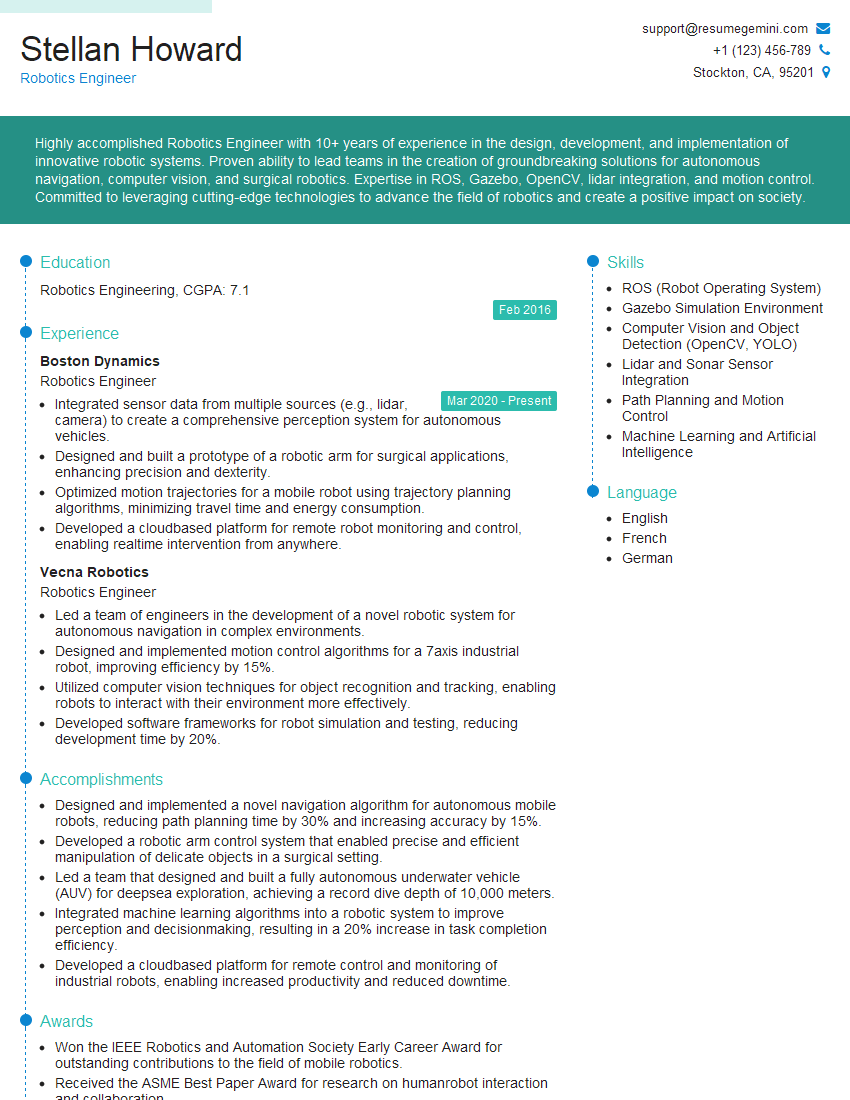
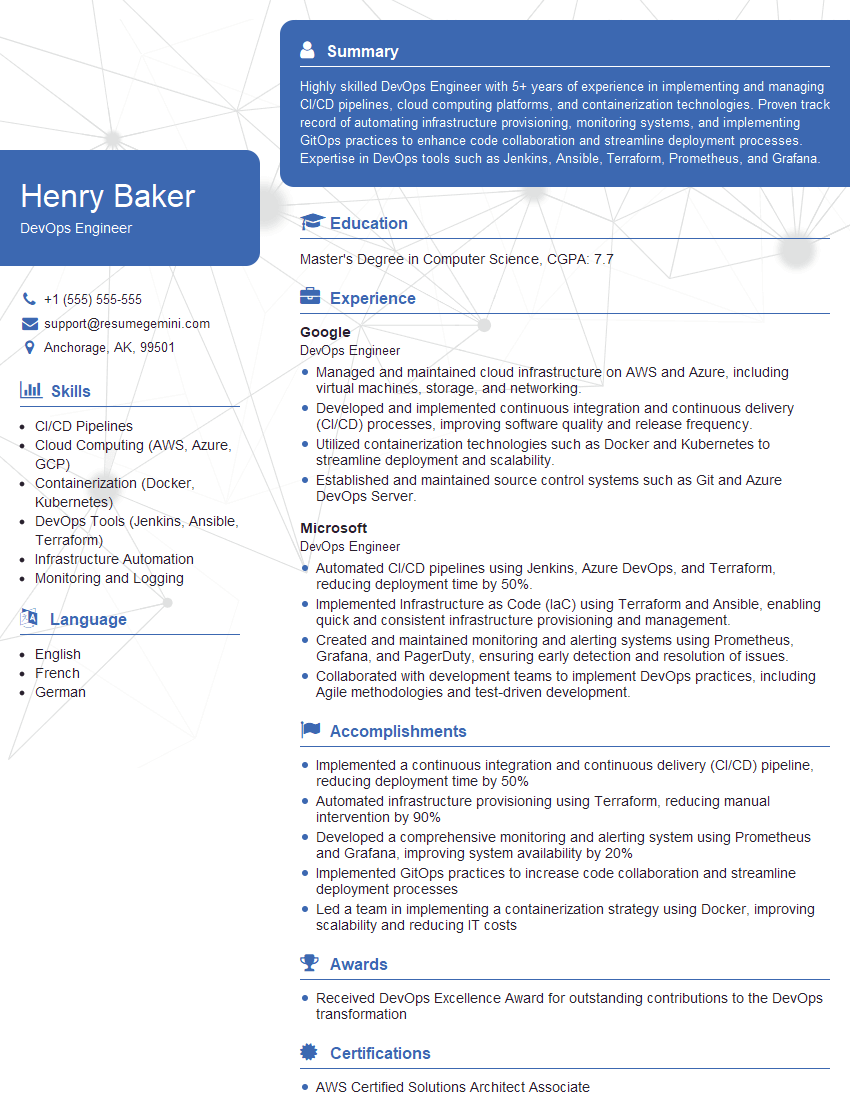
Mastering Knowledge of Emerging Technologies and Industry Trends is crucial for career advancement in today’s rapidly changing landscape. It demonstrates your adaptability, forward-thinking approach, and ability to contribute meaningfully to innovative projects. Building an ATS-friendly resume is essential for increasing your visibility to recruiters. ResumeGemini is a trusted resource that can help you create a professional and impactful resume tailored to highlight your skills and experience in these critical areas. Examples of resumes tailored to Knowledge of Emerging Technologies and Industry Trends are available to help you get started.
Explore more articles
Users Rating of Our Blogs
Share Your Experience
We value your feedback! Please rate our content and share your thoughts (optional).
What Readers Say About Our Blog
Very informative content, great job.
good