Unlock your full potential by mastering the most common Knowledge of environmental impact assessments interview questions. This blog offers a deep dive into the critical topics, ensuring you’re not only prepared to answer but to excel. With these insights, you’ll approach your interview with clarity and confidence.
Questions Asked in Knowledge of environmental impact assessments Interview
Q 1. Describe the key stages of an Environmental Impact Assessment (EIA) process.
The Environmental Impact Assessment (EIA) process is a systematic procedure to identify, predict, evaluate, and mitigate the biophysical, social, and other relevant effects of development proposals prior to major decisions being taken and commitments made. It’s like a pre-flight check for a large project, ensuring potential problems are addressed before takeoff.
- Screening: Determining whether a project requires a full EIA or a simpler assessment. This involves checking against thresholds and criteria set by legislation.
- Scoping: Defining the key issues and impacts to be addressed in the EIA. This involves consultation with stakeholders and identifying the significant environmental aspects.
- Impact Assessment: Identifying and predicting potential environmental impacts, both positive and negative. This often involves using specialized modeling software and techniques.
- Mitigation and Impact Management: Developing measures to avoid, reduce, or compensate for significant adverse impacts. This could involve changes to the project design, implementation of best practices, or creation of offsetting programs.
- Reporting: Preparing an EIA report documenting the findings of the assessment and the proposed mitigation measures. This report is crucial for decision-making.
- Review: The EIA report is reviewed by relevant authorities and stakeholders to ensure it’s comprehensive and addresses all significant issues. This stage can lead to revisions or adjustments.
- Decision-Making: Based on the review and the EIA findings, authorities decide whether to approve, modify, or reject the proposed project.
- Monitoring: Following project implementation, monitoring is conducted to verify the effectiveness of mitigation measures and identify any unforeseen impacts.
For example, constructing a new highway would trigger an EIA, investigating impacts on air quality, noise pollution, water resources, and habitat fragmentation.
Q 2. Explain the difference between a Strategic Environmental Assessment (SEA) and an EIA.
While both Strategic Environmental Assessment (SEA) and Environmental Impact Assessment (EIA) aim to integrate environmental considerations into decision-making, they differ significantly in scope and application. Think of SEA as the ‘big picture’ and EIA as focusing on the individual ‘project’.
- SEA examines the potential environmental effects of plans, programs, and policies (like regional development plans or national transport strategies) at an early stage in the policy cycle, enabling informed decision-making on broader policy issues. It’s proactive and prevents potentially negative impacts from arising in the first place.
- EIA focuses on the potential environmental effects of individual projects (like a specific factory or a new road) and is conducted as part of the project approval process. It’s reactive, assessing the environmental impacts of a pre-defined project.
For example, an SEA might assess a national energy policy’s environmental implications across multiple sectors. In contrast, an EIA would focus on the environmental effects of a specific wind farm proposed under that policy.
Q 3. What are the main environmental impacts typically considered in an EIA?
EIAs typically consider a wide range of environmental impacts, encompassing:
- Air Quality: Emissions of pollutants (e.g., particulate matter, greenhouse gases) and their effects on human health and ecosystems.
- Water Quality: Impacts on surface and groundwater quality from pollution (e.g., industrial effluents, agricultural runoff).
- Noise and Vibration: Impact of noise and vibration on human health and wildlife.
- Biodiversity and Habitat: Effects on flora and fauna, including habitat loss, fragmentation, and species extinction.
- Soil: Soil erosion, contamination, and loss of fertility.
- Landscape and Visual Impacts: Changes to the visual character of the landscape.
- Climate Change: Greenhouse gas emissions and the contribution to climate change.
- Waste Management: Generation, handling, and disposal of waste materials.
- Socio-economic Impacts: Impacts on human communities, including employment, health, and displacement.
The specific impacts considered will vary depending on the nature and location of the project.
Q 4. How do you identify and assess significant environmental impacts?
Identifying and assessing significant environmental impacts requires a multi-step process incorporating both qualitative and quantitative methods.
- Baseline Data Collection: Gathering data on the existing environmental conditions before the project begins. This provides a reference point for comparison.
- Impact Prediction: Using models and expert judgment to predict the magnitude, duration, and spatial extent of potential impacts.
- Significance Assessment: Determining the importance of each impact using various criteria, including magnitude, duration, spatial extent, and reversibility. This frequently involves comparing predicted impacts with legislative thresholds or environmental quality standards.
- Impact Matrix and Screening: Utilizing a matrix to systematically identify and assess potential interactions between project activities and environmental components. This is a structured way to visualize and organize the impact analysis.
- Qualitative and Quantitative Methods: Employing both qualitative (e.g., expert opinion, stakeholder consultation) and quantitative (e.g., mathematical models, statistical analysis) methods to assess impacts.
For example, if a proposed development leads to a significant increase in greenhouse gas emissions exceeding a national standard, this would be considered a significant negative impact.
Q 5. What are the key environmental legislation and regulations relevant to EIAs?
Environmental legislation and regulations governing EIAs vary by country and jurisdiction but generally follow similar principles. Key legislation commonly includes:
- National Environmental Policy Act (NEPA) (USA): A foundational law in the US requiring federal agencies to assess the environmental impacts of their actions.
- Environmental Impact Assessment Directive (EU): The cornerstone of EIA regulations within the European Union.
- Various national and regional laws: Many countries have their own specific legislation guiding EIA procedures, including guidelines on scope, methodologies, and public participation.
These laws often specify which types of projects require EIAs, the information to be included in the EIA reports, and the process for review and decision-making. Knowing the specific legal context is crucial for conducting a compliant and effective EIA.
Q 6. Explain your experience using different EIA methodologies.
Throughout my career, I have utilized a variety of EIA methodologies, adapting my approach to suit the specific context of each project. Some common methodologies include:
- Checklists: Simple and straightforward methods for identifying potential impacts by comparing project activities against pre-defined lists of environmental parameters.
- Matrices: More sophisticated methods visually representing the interactions between project activities and environmental receptors. Leopold Matrix is a classic example.
- Network diagrams: Visualizing causal relationships between project activities and impacts, showing the complex chain of effects.
- Overlay mapping: Combining different spatial data layers (e.g., habitat maps, pollution sources) to identify areas of high environmental sensitivity.
- Modeling: Using specialized software to predict the magnitude and extent of impacts, particularly for air and water quality, noise and ecological impacts.
In one project involving a hydroelectric dam, we used hydrological modeling to predict changes in river flow and water quality downstream. For another project relating to a new industrial facility, we employed air dispersion modeling to assess potential impacts on air quality in the surrounding area. The choice of methodology depends heavily on factors such as project scale, potential environmental sensitivities, and available resources.
Q 7. How do you incorporate stakeholder engagement in the EIA process?
Stakeholder engagement is fundamental to a successful EIA. It ensures that the assessment considers diverse perspectives and leads to more informed and acceptable outcomes.
- Early and Ongoing Engagement: Involving stakeholders from the outset of the EIA process, not just during the consultation phase.
- Identifying Key Stakeholders: Identifying all relevant groups, including local communities, government agencies, NGOs, indigenous groups, and project proponents.
- Effective Communication: Using clear and accessible language to communicate complex information to diverse audiences; utilizing a variety of communication channels including workshops, public forums, and online platforms.
- Transparency and Access to Information: Ensuring that all stakeholders have access to relevant information and opportunities to contribute.
- Addressing Concerns: Taking stakeholder feedback seriously and integrating their input into the assessment process.
- Conflict Resolution: Employing effective mechanisms to address disagreements and conflicts among stakeholders.
For example, in a recent project, we organized a series of community meetings and online surveys to gather input on the potential impacts of a proposed wind farm on local residents. This allowed us to incorporate their concerns into the EIA, leading to modifications in the project design to minimize visual and noise impacts and maximize community benefits.
Q 8. How do you handle conflicts of interest during an EIA?
Handling conflicts of interest is paramount in maintaining the integrity of an Environmental Impact Assessment (EIA). It’s about ensuring objectivity and avoiding bias that could compromise the assessment’s findings. My approach involves several key steps. Firstly, I declare any potential conflicts of interest upfront, even those that might seem minor. This transparency is crucial. Secondly, I implement robust conflict-of-interest management procedures outlined by the relevant professional bodies and legal frameworks. This could involve recusal from specific tasks or the entire EIA process if the conflict cannot be effectively managed. For instance, if I have a prior business relationship with a project proponent, I would disclose this and likely withdraw from the project. Thirdly, I maintain meticulous documentation of all declarations and mitigation strategies. This ensures complete traceability and accountability in case of future scrutiny. This process is not just about avoiding legal trouble; it’s about ensuring the EIA remains credible and provides reliable information to decision-makers.
Q 9. Describe your experience in conducting environmental baseline studies.
Environmental baseline studies are the foundation of any robust EIA. My experience includes conducting numerous baseline studies across diverse ecosystems, from coastal wetlands to mountainous regions. This involves a multi-faceted approach. First, we conduct thorough literature reviews, examining existing data on the environment to establish a historical context. Then, field surveys are conducted to collect primary data – this might involve water quality testing, air quality monitoring, biodiversity surveys (plant, animal, and microbial), and soil analysis. The specifics depend on the project and its potential impacts. For example, during a baseline study for a proposed highway project, we sampled water and soil at various locations along the proposed route to assess baseline conditions. We also conducted detailed ecological surveys to identify protected species and sensitive habitats. Data analysis follows, using statistical methods to interpret the findings and identify patterns and trends. Finally, a comprehensive baseline report is prepared, presenting the findings clearly and concisely, using maps, graphs, and tables to illustrate the key environmental characteristics of the area.
Q 10. Explain how you use GIS and other spatial data in EIAs.
Geographic Information Systems (GIS) are indispensable tools in modern EIAs. They provide a powerful platform for visualizing, analyzing, and integrating spatial data. I routinely use GIS software, such as ArcGIS, to map environmental features, project boundaries, and potential impact zones. For example, we use GIS to overlay maps of sensitive habitats, like endangered species’ breeding grounds, with the project’s footprint to identify areas of potential conflict. We also utilize spatial analysis tools to model the potential spread of pollutants from a proposed industrial facility or predict changes in habitat connectivity due to a road development. Furthermore, spatial data from other sources, like remote sensing imagery (satellite and aerial photography) and digital elevation models, are incorporated to create a comprehensive spatial understanding of the environment. This allows for a more accurate and detailed assessment of potential impacts and aids in identifying mitigation strategies. The result is a more robust and defensible EIA.
Q 11. How do you mitigate identified environmental impacts?
Mitigation of identified environmental impacts is a crucial part of the EIA process. It’s about finding ways to reduce or eliminate the negative consequences of a project on the environment. My approach is based on a hierarchy of mitigation measures, starting with avoidance – avoiding impacts altogether by altering project design or location. If avoidance is not feasible, we explore minimization – reducing the scale or intensity of impacts. For instance, if a road needs to cross a wetland, we would design it to minimize the area impacted. Next, we consider remediation – repairing or restoring damaged ecosystems. For example, if habitat is lost, we might create a new habitat elsewhere. Finally, compensation – creating ecological benefits elsewhere to offset unavoidable losses – is employed as a last resort. Each mitigation measure is carefully evaluated for its effectiveness, feasibility, and cost-effectiveness. The chosen mitigation measures are incorporated into the EIA report and the project’s environmental management plan. We carefully consider the social and economic impacts, too. For example, a mitigation strategy that is environmentally sound but results in significant economic hardship for a local community will require careful reconsideration and potentially alternative solutions.
Q 12. How do you evaluate the effectiveness of mitigation measures?
Evaluating the effectiveness of mitigation measures is an ongoing process, not just a one-time assessment. We use a combination of methods, including monitoring programs, modelling, and comparative analyses. Monitoring programs involve collecting data before, during, and after the project to track environmental indicators. For example, to assess the effectiveness of wetland mitigation, we would monitor water quality, vegetation growth, and amphibian populations. Modelling, using software like GIS, can simulate the impacts of mitigation measures and predict their long-term effectiveness. Comparative analyses involve comparing sites with and without mitigation measures to determine the degree of improvement. Finally, we conduct post-project evaluations to assess the long-term success of the measures implemented. This approach ensures that mitigation strategies remain effective and are appropriately adapted over time, contributing to a more sustainable project outcome.
Q 13. What are the key components of an EIA report?
A comprehensive EIA report is a complex document that provides a detailed evaluation of the environmental impacts of a proposed project. Key components include:
- Executive Summary: A concise overview of the project, its potential impacts, and the mitigation strategies.
- Project Description: A detailed account of the project’s purpose, location, design, and construction phases.
- Baseline Environmental Conditions: A description of the pre-project environmental conditions.
- Impact Assessment: An analysis of the potential environmental impacts of the project, including both direct and indirect effects.
- Mitigation Measures: A detailed outline of the proposed mitigation strategies.
- Monitoring Plan: A program to monitor the effectiveness of mitigation measures.
- Public Consultation: A summary of the public consultation process and feedback received.
- Conclusions and Recommendations: The overall findings of the assessment and recommendations for project approval or modification.
Q 14. How do you ensure the quality and accuracy of EIA data?
Ensuring the quality and accuracy of EIA data is crucial for the credibility of the entire process. This involves a multi-pronged approach. Firstly, we use standardized methods and protocols for data collection, adhering to international best practices and relevant legislation. Secondly, data quality control is implemented at every stage, from field data collection to data analysis and reporting. This involves rigorous checks and validation processes. Thirdly, we use appropriate quality assurance measures such as double-checking measurements, calibrating equipment regularly, and maintaining detailed chain of custody records for samples. Fourthly, peer review is integral to the process. Independent experts review the data, methodology, and conclusions to identify potential biases or errors before finalizing the report. This ensures transparency and accountability. Finally, we clearly document all data sources, methodologies, and uncertainties associated with the data. This transparency allows for greater scrutiny and builds confidence in the EIA’s conclusions. These methods contribute to producing a scientifically sound and trustworthy EIA.
Q 15. How do you handle uncertainties and data gaps in an EIA?
Uncertainties and data gaps are inherent in Environmental Impact Assessments (EIAs) due to the complex nature of ecosystems and the limitations of our understanding. Handling them effectively involves a multi-pronged approach.
Qualitative Assessments: When quantitative data is scarce, we rely on expert judgment, literature reviews, and analogous case studies to make informed qualitative assessments of potential impacts. For instance, if precise data on a rare bird species’ population within a project area is lacking, we might consult ornithological experts and extrapolate from similar habitats.
Sensitivity Analysis: We use modeling techniques like Monte Carlo simulations to assess how sensitive our predictions are to variations in uncertain parameters. This helps identify the key uncertainties that significantly impact the overall results and prioritize areas needing further investigation. For example, in a hydrological model predicting changes in river flow, we might vary rainfall inputs to determine the model’s sensitivity to these variations.
Scenario Planning: Developing different scenarios – best-case, worst-case, and most likely scenarios – allows us to evaluate the range of potential impacts under different conditions. This prepares stakeholders for a spectrum of possible outcomes and informs robust mitigation strategies. In a wind farm EIA, scenarios could include variations in wind speed, bird migration patterns, and technological advancements.
Adaptive Management: We design EIAs to incorporate monitoring and adaptive management plans. This ensures that the project’s impacts are continuously monitored, and the mitigation measures are adjusted as needed based on new data and feedback. For instance, regular surveys of fish populations after dam construction can inform adjustments to downstream flow regimes.
Transparency is key. We clearly document all uncertainties and data gaps in the EIA report, explaining the methods used to address them and acknowledging the limitations of the analysis.
Career Expert Tips:
- Ace those interviews! Prepare effectively by reviewing the Top 50 Most Common Interview Questions on ResumeGemini.
- Navigate your job search with confidence! Explore a wide range of Career Tips on ResumeGemini. Learn about common challenges and recommendations to overcome them.
- Craft the perfect resume! Master the Art of Resume Writing with ResumeGemini’s guide. Showcase your unique qualifications and achievements effectively.
- Don’t miss out on holiday savings! Build your dream resume with ResumeGemini’s ATS optimized templates.
Q 16. Explain your experience with environmental modelling and prediction techniques.
Environmental modeling and prediction are crucial in EIAs. My experience spans a range of techniques, including hydrological modeling (using software like HEC-HMS), air quality dispersion modeling (using AERMOD), and habitat suitability modeling (using Maxent). I’ve used these tools to predict the impacts of various projects, such as:
Hydrological modeling to assess the impact of a dam on downstream water flow and quality.
Air quality dispersion modeling to predict the impact of industrial emissions on ambient air quality.
Habitat suitability modeling to assess the potential impacts of infrastructure development on endangered species.
Beyond software, I have experience with statistical analysis and spatial data handling using GIS (Geographic Information Systems). I can integrate data from diverse sources, validate model outputs, and critically evaluate the limitations of different techniques, tailoring my approach to the specific project and its associated uncertainties.
Q 17. How do you communicate complex environmental information to non-technical audiences?
Communicating complex environmental information effectively to non-technical audiences requires clear, concise, and engaging communication. I use a combination of techniques:
Visual aids: Charts, graphs, maps, and infographics are very powerful for conveying complex data in an easily digestible format. For example, a simple bar chart showing projected changes in water quality can be more effective than a lengthy technical report.
Analogies and metaphors: Relating technical concepts to everyday experiences makes them easier to grasp. For example, I might explain the concept of carbon sequestration using the analogy of a sponge absorbing water.
Storytelling: Weaving environmental issues into narratives makes them more relatable and memorable. A story about a local community affected by pollution can be much more persuasive than a data-heavy report.
Interactive sessions and workshops: These provide opportunities for direct engagement and Q&A sessions, addressing concerns and building trust.
Plain language summaries: I always produce a summary that avoids technical jargon and presents the key findings in accessible language.
The goal is to empower stakeholders with the knowledge to participate meaningfully in the decision-making process, regardless of their technical expertise.
Q 18. Describe a situation where you had to resolve a challenging environmental issue during an EIA.
During an EIA for a proposed highway expansion, we encountered a significant challenge related to potential impacts on a sensitive wetland ecosystem. Initial assessments predicted substantial habitat loss. However, the highway authority was reluctant to significantly alter the project design. To resolve this, we:
Conducted detailed ecological surveys: We engaged specialist ecologists to conduct more thorough surveys to identify critical habitats and species within the wetland.
Explored mitigation options: We collaborated with landscape architects and engineers to explore alternative routing options and mitigation measures like wetland creation and habitat restoration in other locations.
Developed a compensatory mitigation plan: We developed a robust plan to ensure that any habitat loss was compensated for through habitat creation or restoration elsewhere, exceeding the amount of habitat loss.
Engaged stakeholders: We communicated our findings and proposed solutions transparently to the highway authority, environmental groups, and local communities, facilitating a collaborative decision-making process.
This collaborative approach ultimately led to a revised project design that minimized the impact on the wetland ecosystem while still meeting the project’s objectives. The key was proactive engagement, thorough data collection, and a willingness to explore and implement creative mitigation solutions.
Q 19. What are your strengths and weaknesses in conducting EIAs?
My strengths lie in my ability to synthesize complex information, communicate effectively with diverse audiences, and manage projects efficiently. I’m proficient in various modeling techniques and possess a strong understanding of environmental regulations. I am also adept at working collaboratively and building consensus among stakeholders with potentially conflicting interests.
One area for improvement is developing even greater expertise in specific niche areas of environmental science, such as advanced statistical modeling techniques for uncertainty analysis. I am actively working on this through continuing professional development.
Q 20. How do you stay up-to-date with changes in environmental regulations and best practices?
Staying up-to-date with changes in environmental regulations and best practices is crucial. I utilize several methods:
Professional memberships: Active membership in organizations like the Institute of Environmental Management and Assessment (IEMA) provides access to updates, publications, and networking opportunities.
Journals and publications: I regularly review relevant scientific journals, policy reports, and industry publications to stay informed about new research and best practices.
Conferences and workshops: Attending relevant conferences and workshops helps me connect with experts and learn about new advancements in the field.
Online resources: I use online databases and resources like government environmental agencies’ websites and international organizations’ reports to access updates on regulations and guidance.
Continuing professional development (CPD): I actively engage in CPD activities, such as specialized training courses, to expand my knowledge and skills.
This multi-faceted approach ensures I am always aware of the latest advancements and regulatory changes, which allows me to incorporate the most current and relevant information into my EIAs.
Q 21. How do you manage your time and workload during an EIA project?
Managing time and workload effectively during an EIA project requires meticulous planning and organization. My approach involves:
Detailed project planning: I create a detailed work plan with clear timelines and milestones, breaking down the project into smaller, manageable tasks.
Task prioritization: I prioritize tasks based on their importance and urgency, ensuring that critical deadlines are met.
Effective communication: Open and consistent communication with the project team and stakeholders is essential to ensure everyone is on the same page and to address potential issues promptly.
Use of project management tools: I utilize project management software to track progress, manage deadlines, and allocate resources effectively.
Regular progress reviews: I conduct regular progress reviews to identify any potential delays or challenges and adjust the plan accordingly.
Delegation: I delegate tasks appropriately to team members based on their skills and expertise, fostering efficient teamwork.
By combining meticulous planning with proactive problem-solving, I can successfully manage the demanding timelines and complex tasks associated with EIA projects.
Q 22. What software and tools are you proficient in using for EIA?
My proficiency in EIA software and tools is extensive. I’m highly skilled in using geographic information systems (GIS) software such as ArcGIS and QGIS for spatial data analysis, mapping environmental impacts, and visualizing project footprints. I also have considerable experience with environmental modeling software like Visual MODFLOW for groundwater modeling and Air Dispersion Modeling software such as AERMOD for air quality assessments. Furthermore, I’m adept at using various data management and statistical analysis tools, including R and Python, for processing large datasets and performing quantitative risk assessments. Finally, I’m proficient with specialized EIA software packages designed for specific impact categories, such as noise modeling software and habitat suitability modeling tools.
For instance, in a recent project involving a proposed highway expansion, I used ArcGIS to overlay sensitive ecological areas with the project’s potential impact zones. This allowed us to quickly identify potential conflicts and incorporate mitigation measures during the design phase. In another project concerning a new industrial facility, I employed AERMOD to model the dispersion of air pollutants and ensure the project complied with air quality regulations.
Q 23. Describe your experience in working with interdisciplinary teams on EIAs.
Collaboration is fundamental to successful EIAs. I’ve consistently worked within diverse interdisciplinary teams, comprising biologists, geologists, hydrologists, engineers, social scientists, and economists. My role often involves facilitating communication and consensus-building between specialists, ensuring that all perspectives are considered and integrated into a comprehensive assessment. I utilize a collaborative approach, encouraging open dialogue, shared decision-making, and the constructive resolution of disagreements.
For example, in an EIA for a large-scale wind farm project, I worked with ornithologists to assess potential impacts on avian populations, engineers to determine noise levels, and social scientists to evaluate the project’s social and economic impacts on local communities. Through regular meetings, shared data platforms, and transparent communication, we successfully integrated all findings into a unified EIA report that addressed all significant concerns.
Q 24. How do you ensure the sustainability of your EIA recommendations?
Ensuring the sustainability of EIA recommendations requires a holistic approach that considers the long-term environmental, social, and economic consequences of a project. This involves incorporating principles of sustainable development into every stage of the EIA process. I focus on recommending mitigation measures that are not only effective in reducing environmental impacts but also feasible, affordable, and adaptable to changing conditions.
For instance, rather than simply suggesting the relocation of a habitat, I might explore strategies for habitat restoration or enhancement as a more sustainable and ecologically beneficial approach. Similarly, I’d prioritize renewable energy sources over fossil fuels in proposing energy solutions, and advocate for water-efficient technologies in industrial processes to promote long-term resource management.
Regular monitoring and adaptive management strategies are also critical. My recommendations often include specific plans for post-project monitoring to track the effectiveness of mitigation measures and to allow for necessary adjustments as new information becomes available.
Q 25. How do you handle criticism or conflicting opinions during an EIA project?
Handling criticism and conflicting opinions is an essential part of the EIA process. I approach disagreements constructively, fostering an environment of open discussion and respect for differing viewpoints. I believe that diverse perspectives enrich the EIA process and lead to more robust and reliable conclusions. My strategy involves active listening, clearly articulating the rationale behind my assessments, and seeking common ground through collaborative problem-solving.
I utilize a structured approach to resolving conflicts, which may include facilitating workshops or meetings, inviting independent experts to mediate, or employing formal dispute resolution processes if necessary. The goal is always to reach a well-informed consensus that reflects a balanced consideration of all perspectives and ensures the EIA is credible and defensible.
Q 26. How do you prioritize different environmental impacts during an EIA?
Prioritizing environmental impacts is a crucial step in EIA. It involves a structured approach that considers both the magnitude and significance of potential impacts. I utilize several methodologies, including matrix-based approaches that evaluate the likelihood, duration, and severity of various impacts. I also incorporate weighting systems to reflect the relative importance of different environmental values based on legal requirements, stakeholder concerns, and scientific understanding.
For example, an endangered species habitat would likely receive a higher priority than a less significant impact, such as minor changes to water quality. Furthermore, I often apply a precautionary principle, prioritizing the mitigation of impacts with potentially irreversible consequences, even if the likelihood of occurrence is low.
The prioritization process is transparent and well-documented, ensuring that decisions are justifiable and defensible.
Q 27. Describe your understanding of cumulative impacts assessment.
Cumulative impacts assessment (CIA) is a crucial aspect of EIAs. It involves evaluating the combined effects of a proposed project with the impacts of past, present, and future actions on the environment. Ignoring cumulative impacts can lead to inaccurate assessments and ineffective mitigation strategies. My approach to CIA is systematic and integrates various data sources, including historical data, existing development plans, and projections of future activities. I employ spatial analysis techniques using GIS to map and visualize the cumulative effects of multiple projects and activities within a specific geographic area.
For example, in assessing the cumulative impact of multiple proposed housing developments on a watershed, I would analyze the combined effects of increased runoff, altered drainage patterns, and changes in land use on water quality and quantity. This would involve reviewing past land use changes, evaluating the impact of the current proposals, and forecasting the potential effects of future developments.
Q 28. What is your approach to conducting a cost-benefit analysis of environmental mitigation options?
Cost-benefit analysis (CBA) is a critical tool for evaluating environmental mitigation options. My approach involves a thorough assessment of the costs and benefits of each option, considering both monetary and non-monetary factors. I utilize established CBA methodologies, ensuring transparency and rigorous data analysis. The process involves identifying all relevant costs, including design, implementation, maintenance, and monitoring, alongside the benefits, such as reduced environmental damage, improved ecosystem services, and enhanced human health. I often incorporate a range of valuation techniques to quantify both tangible and intangible benefits, such as the use of contingent valuation or travel cost methods to estimate the recreational value of a restored wetland.
The results of the CBA are presented clearly and transparently, allowing stakeholders to make informed decisions about the most cost-effective and environmentally sound mitigation options. I always ensure that the analysis considers the uncertainty and potential risks associated with both costs and benefits, providing a robust and defensible assessment.
Key Topics to Learn for Knowledge of Environmental Impact Assessments Interview
- Environmental Impact Assessment (EIA) Process: Understand the stages involved in conducting an EIA, from scoping and baseline studies to impact prediction, mitigation, and monitoring. Consider the variations in process depending on project scale and regulatory context.
- Environmental Legislation and Regulations: Familiarize yourself with key environmental laws and regulations relevant to EIAs in your region or area of expertise. Understand how these regulations influence the EIA process and the types of impacts considered.
- Impact Prediction and Assessment Methods: Gain proficiency in various methods for predicting and assessing environmental impacts, including quantitative and qualitative techniques. Be prepared to discuss the strengths and limitations of different approaches.
- Mitigation and Management Strategies: Develop a strong understanding of designing and implementing effective mitigation measures to minimize negative environmental impacts. Be ready to discuss examples of successful mitigation strategies.
- Environmental Impact Statement (EIS) Preparation and Review: Learn how to effectively communicate findings and recommendations in a clear and concise EIS. Understand the review process and how to respond to comments and critiques.
- Stakeholder Engagement and Communication: Discuss the importance of effectively engaging with stakeholders throughout the EIA process. Be prepared to explain strategies for building consensus and addressing concerns.
- Environmental Monitoring and Evaluation: Understand the importance of post-project environmental monitoring to assess the effectiveness of mitigation measures and identify any unforeseen impacts.
- Specific Environmental Impacts: Develop expertise in assessing the impacts of projects on various environmental components, such as air quality, water resources, biodiversity, and climate change. Be prepared to discuss case studies.
- Cumulative Impact Assessment: Understand how to assess the combined effects of multiple projects on the environment.
- Life Cycle Assessment (LCA): Gain familiarity with the principles and application of LCA in evaluating the environmental impacts of a project throughout its entire life cycle.
Next Steps
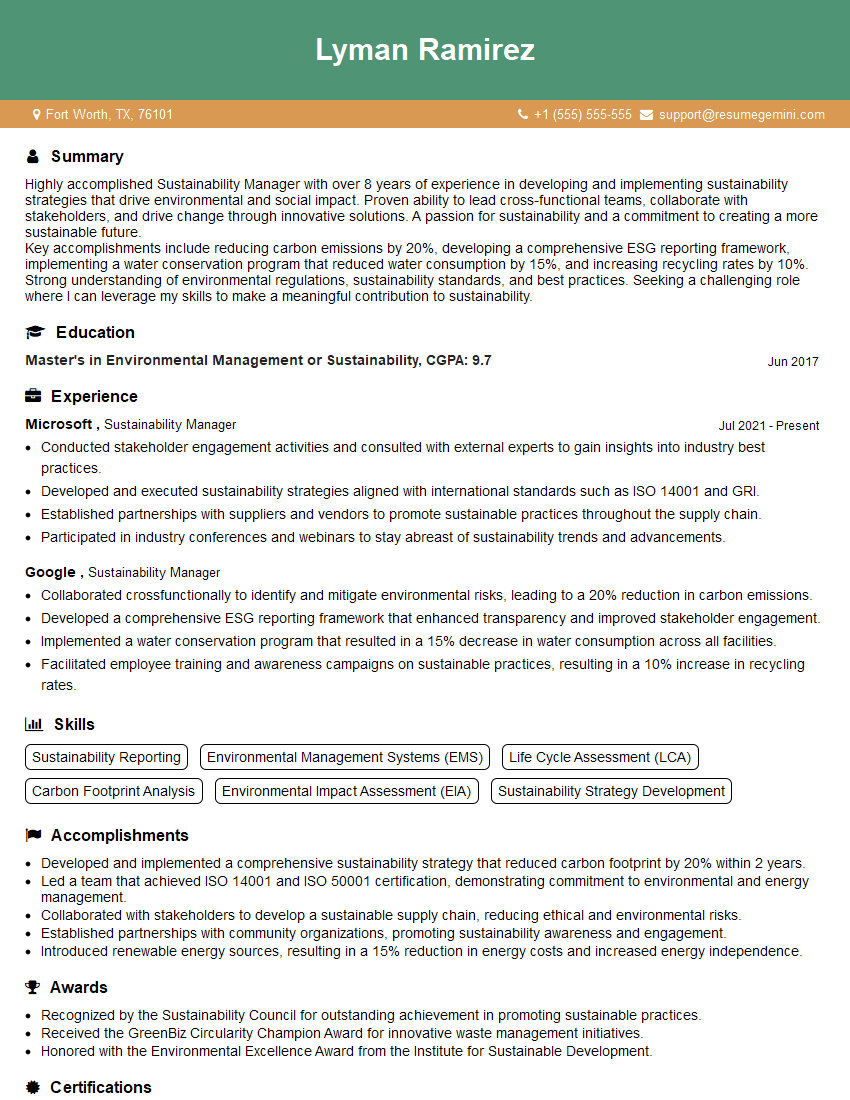
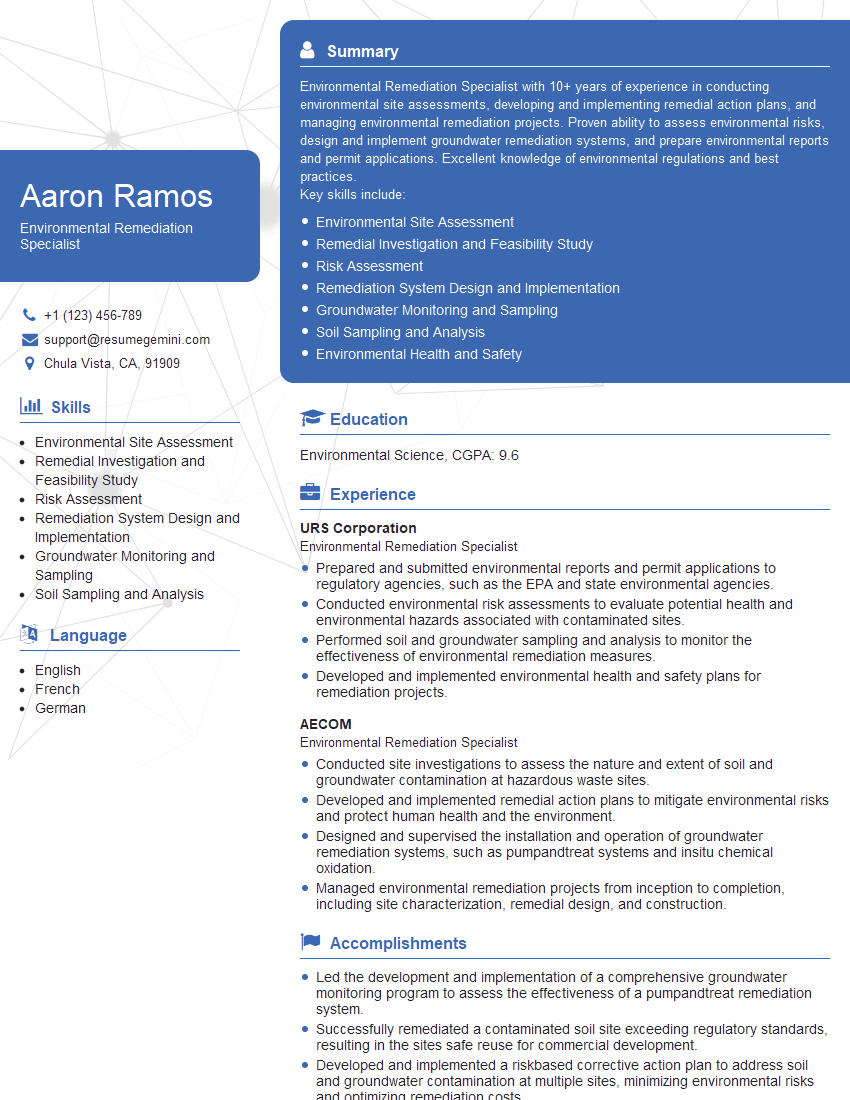
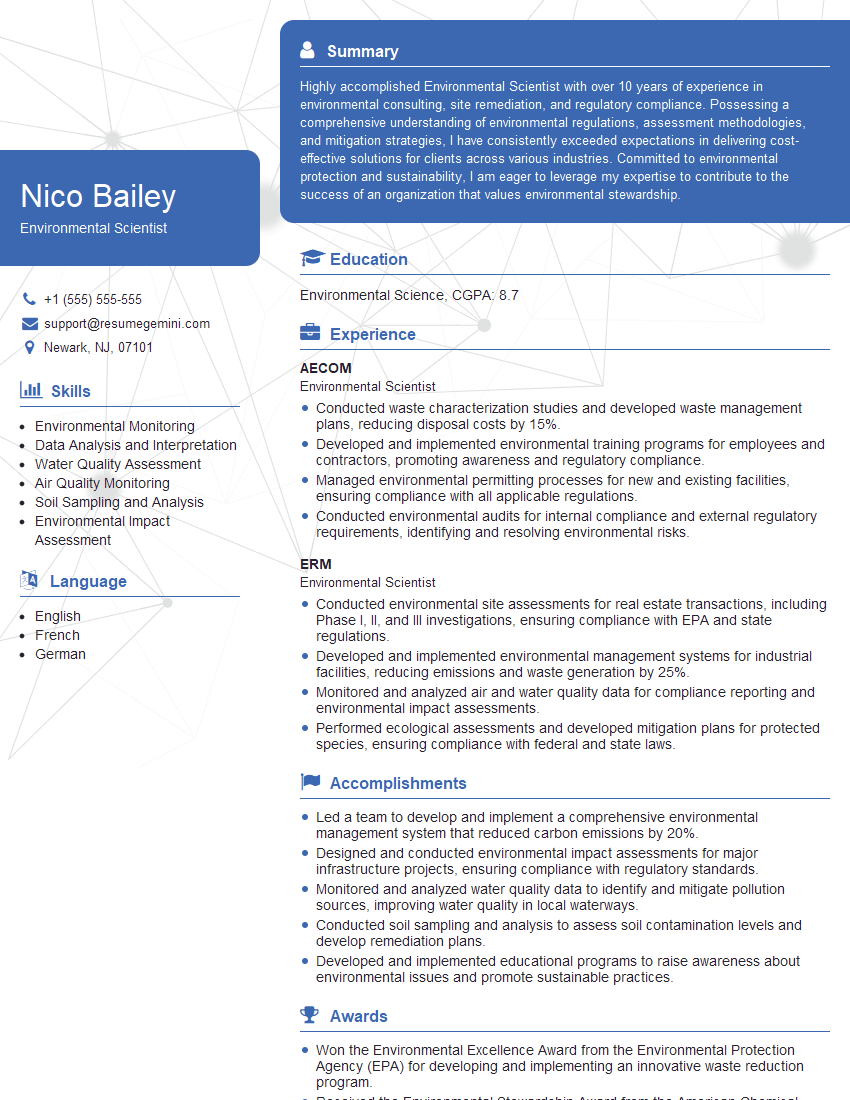
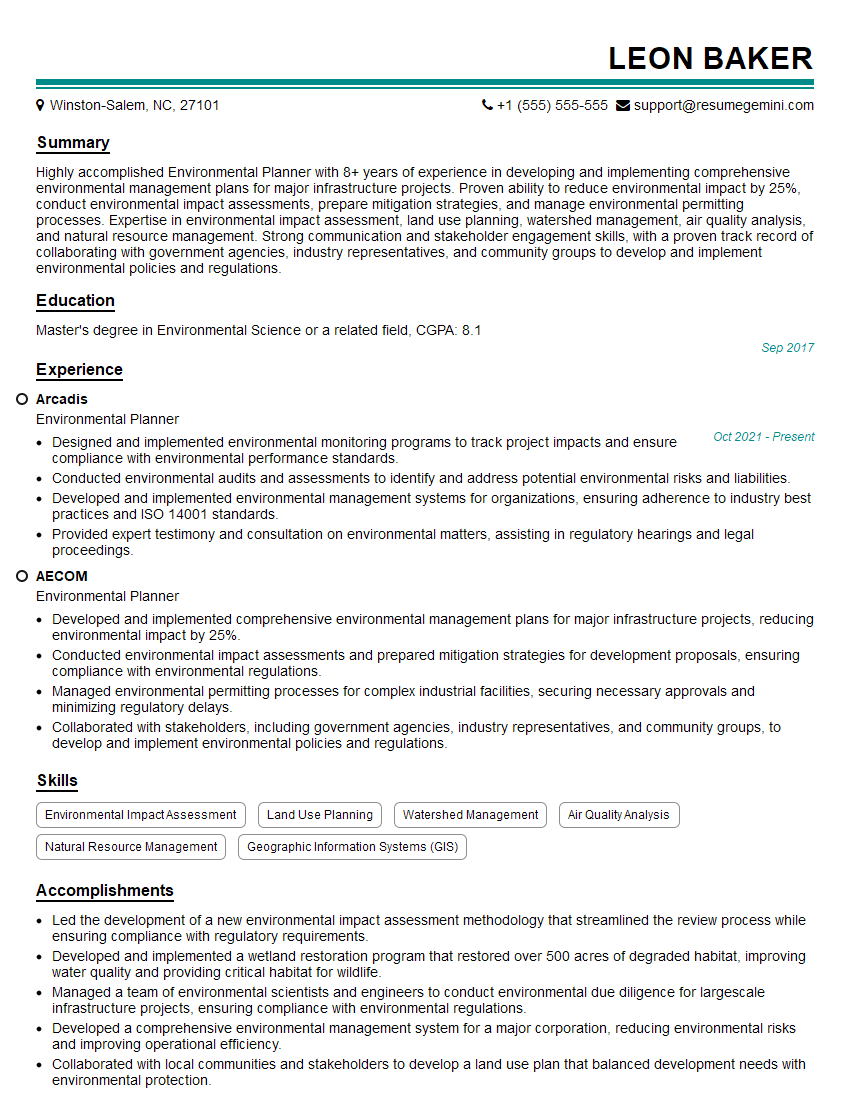
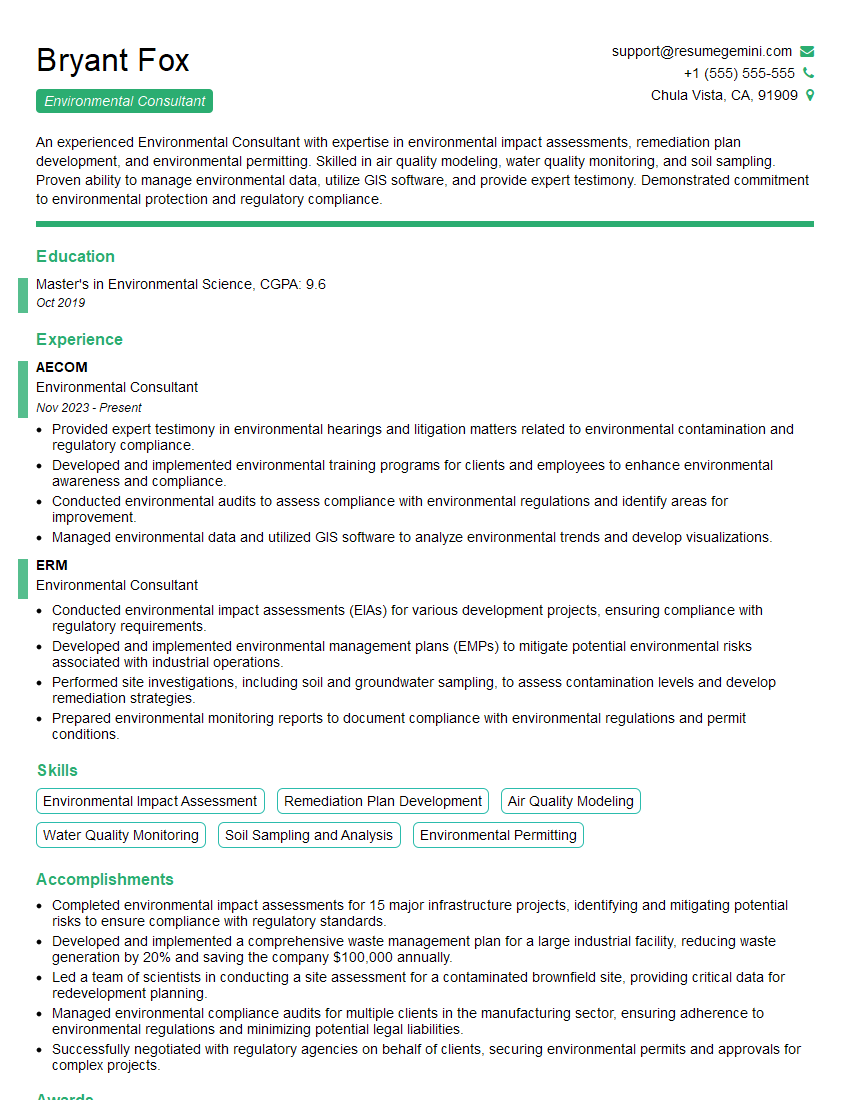
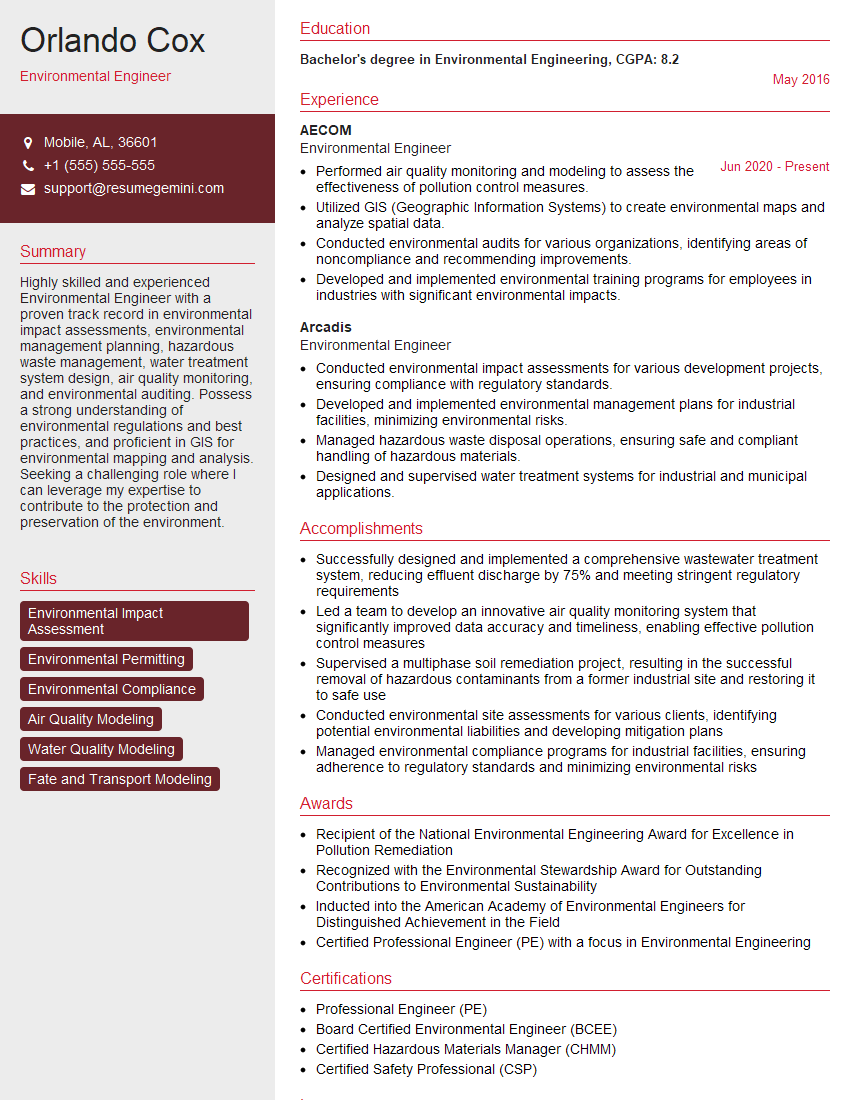
Mastering Knowledge of Environmental Impact Assessments is crucial for career advancement in environmental consulting, regulatory agencies, and sustainable development sectors. A strong understanding of EIA principles and methodologies significantly enhances your professional value. To maximize your job prospects, focus on creating an ATS-friendly resume that effectively highlights your skills and experience. ResumeGemini is a trusted resource that can help you build a professional resume tailored to the specific requirements of your target jobs. Examples of resumes tailored to Environmental Impact Assessment roles are available to help guide you.

Explore more articles
Users Rating of Our Blogs
Share Your Experience
We value your feedback! Please rate our content and share your thoughts (optional).
What Readers Say About Our Blog
Very informative content, great job.
good