Unlock your full potential by mastering the most common Knowledge of environmental regulations and sustainability practices interview questions. This blog offers a deep dive into the critical topics, ensuring you’re not only prepared to answer but to excel. With these insights, you’ll approach your interview with clarity and confidence.
Questions Asked in Knowledge of environmental regulations and sustainability practices Interview
Q 1. Explain the key differences between ISO 14001 and ISO 9001.
ISO 14001 and ISO 9001 are both internationally recognized standards that help organizations improve their management systems, but they focus on different aspects. ISO 9001 is a quality management system standard, concentrating on consistently meeting customer requirements and enhancing customer satisfaction. Think of it as ensuring you’re making a product *correctly* and to the specified quality. ISO 14001, on the other hand, is an environmental management system standard, focusing on minimizing the environmental impact of an organization’s operations. This means doing things *responsibly* and minimizing environmental harm.
- ISO 9001 (Quality): Focuses on processes, product quality, customer satisfaction, and continuous improvement. Compliance demonstrates a commitment to providing consistent, high-quality products or services.
- ISO 14001 (Environmental): Focuses on environmental performance, legal compliance, pollution prevention, and continual improvement of environmental management. Compliance shows a commitment to minimizing environmental impact.
A company might have both certifications. Imagine a manufacturing company that wants to produce high-quality products (ISO 9001) while minimizing waste and pollution during production (ISO 14001). They’d strive for excellence in both areas.
Q 2. Describe your experience with Environmental Impact Assessments (EIAs).
I have extensive experience conducting and reviewing Environmental Impact Assessments (EIAs). EIAs are crucial for evaluating the potential environmental consequences of proposed projects, like building a new highway or constructing a power plant. My experience encompasses all phases, from scoping and baseline data collection to impact prediction, mitigation planning, and finally, the preparation of the EIA report.
For example, I worked on an EIA for a proposed wind farm. This involved analyzing the potential impacts on bird populations, noise pollution in nearby communities, and the visual impact on the landscape. We used specialized software to model wind patterns and bird flight paths to accurately predict potential impacts. Based on our findings, we developed mitigation measures, such as adjusting turbine placement to minimize bird collisions and implementing noise reduction technologies.
My experience also includes working with regulatory agencies to ensure the EIA met all legal requirements and addressing public concerns through community consultations. A key aspect was ensuring the EIA was transparent, credible, and scientifically rigorous.
Q 3. How familiar are you with the Clean Air Act and its amendments?
I am very familiar with the Clean Air Act (CAA) and its subsequent amendments in the United States. The CAA is a landmark environmental law designed to control air pollution on a national level. I understand its key provisions, including National Ambient Air Quality Standards (NAAQS) for criteria pollutants like ozone and particulate matter, and the requirements for permitting major stationary sources of pollution.
The amendments, such as the 1990 Clean Air Act Amendments, significantly expanded the scope of the CAA, addressing issues like acid rain, ozone depletion, and toxic air pollutants. I’m well-versed in the complexities of Title V permitting for major sources, the requirements for state implementation plans (SIPs), and the enforcement mechanisms used by the Environmental Protection Agency (EPA).
For instance, I’ve assisted companies in obtaining Title V permits, ensuring compliance with emission limits and reporting requirements. This involved understanding the specific pollutant emission characteristics of their operations and selecting appropriate control technologies to meet regulatory limits. Knowing the CAA inside and out is essential for ensuring environmental compliance and minimizing potential penalties.
Q 4. What is your experience with lifecycle assessment (LCA) methodologies?
I have significant experience with lifecycle assessment (LCA) methodologies. LCA is a systematic process that evaluates the environmental impacts associated with all stages of a product’s life, from raw material extraction to disposal. This involves quantifying the inputs and outputs of energy, materials, and emissions throughout the product’s lifecycle.
I’ve utilized various LCA software packages, such as SimaPro and Gabi, to conduct LCAs for a range of products, including packaging materials, electronic devices, and food products. This involves defining the system boundaries, collecting data on material flows and emissions, and then using impact assessment methods to evaluate the environmental consequences.
For example, I conducted an LCA for a new type of biodegradable plastic. This involved comparing its environmental performance to traditional petroleum-based plastics, considering factors like greenhouse gas emissions, water use, and waste generation. The results informed the design and production decisions, leading to a more sustainable product.
Q 5. How would you handle a situation where a company is not complying with environmental regulations?
Handling non-compliance with environmental regulations requires a systematic and proactive approach. My first step would involve a thorough investigation to understand the nature and extent of the non-compliance. This involves reviewing permits, monitoring data, and conducting site visits to identify the root causes of the problem.
Then, I would work collaboratively with the company to develop a Corrective Action Plan (CAP). This plan would outline specific actions to bring the company into compliance, including implementing improved environmental controls, enhancing training programs for employees, and improving monitoring procedures. The CAP should include timelines, responsibilities, and measurable objectives.
I would also engage with relevant regulatory agencies to inform them of the non-compliance situation and the steps being taken to rectify it. Open communication and cooperation with regulators are crucial to mitigate potential penalties and ensure future compliance. Transparency and a commitment to rectifying the issue are key.
Q 6. Explain the concept of corporate social responsibility (CSR) and its relation to sustainability.
Corporate Social Responsibility (CSR) refers to a company’s commitment to operating ethically and sustainably, considering its impact on society and the environment. Sustainability, on the other hand, is the ability to meet the needs of the present without compromising the ability of future generations to meet their own needs.
CSR and sustainability are intrinsically linked. A company demonstrating strong CSR practices will inherently be more sustainable. CSR initiatives can range from reducing carbon emissions and improving waste management to promoting ethical sourcing, fair labor practices, and community involvement. These actions directly contribute to environmental and social sustainability.
For example, a company that implements a robust CSR program might invest in renewable energy, reduce its water consumption, and support local communities through charitable donations and partnerships. These actions benefit not only the company’s reputation and brand image but also contribute to a more sustainable future.
Q 7. Describe your experience with environmental auditing procedures.
I have extensive experience conducting environmental audits, both internal and external. These audits assess a company’s compliance with environmental regulations, its environmental management system effectiveness, and its overall environmental performance. My approach involves a thorough review of relevant documents, site visits, interviews with personnel, and sampling and analysis where necessary.
The audit process typically includes defining the scope and objectives, developing a checklist based on applicable regulations and standards (like ISO 14001), conducting the audit, documenting findings, and preparing an audit report. The report identifies areas of compliance, non-compliance, and opportunities for improvement, with recommendations for corrective actions.
For instance, I conducted an environmental audit for a manufacturing facility, which identified several areas for improvement, including inadequate waste management practices and insufficient training for employees on environmental procedures. This resulted in a detailed report outlining specific recommendations to address the identified issues, enhancing their environmental performance and compliance.
Q 8. What are the key components of a successful environmental management system (EMS)?
A successful Environmental Management System (EMS) is a framework that allows organizations to systematically manage their environmental impacts. Think of it as a roadmap for sustainability. It’s not a one-size-fits-all solution, but rather a tailored approach based on the specific organization and its context.
- Environmental Policy: A formal statement committing the organization to environmental protection and improvement. This sets the tone and direction.
- Planning: This involves identifying significant environmental aspects (activities that can have an impact) and associated impacts, setting objectives and targets (e.g., reduce water consumption by 15%), and developing programs to achieve these goals. Think of this as creating the detailed route plan for your sustainability journey.
- Implementation and Operation: This stage involves putting the plan into action. This includes training employees, implementing procedures, and providing the necessary resources. This is the actual driving on your sustainability roadmap.
- Monitoring and Measurement: Regularly tracking key environmental performance indicators (KPIs) to gauge progress against targets. This is like using your GPS to ensure you are staying on track.
- Review and Improvement: Periodically reviewing the effectiveness of the EMS and making adjustments as needed. This ensures you are continuously refining your route and staying adaptable to changing circumstances.
For example, a manufacturing company might implement an EMS to track and reduce its wastewater discharge, while a hospitality business might focus on reducing energy consumption and waste generation.
Q 9. How do you prioritize environmental projects with competing budgets and timelines?
Prioritizing environmental projects with limited resources requires a structured approach. Imagine you have a limited budget to improve your house – you’d prioritize the most urgent and impactful repairs first.
- Materiality Assessment: Identify the projects with the greatest environmental impact and align them with the organization’s strategic goals. This ensures you’re tackling the most significant issues.
- Risk Assessment: Evaluate the potential environmental, financial, and reputational risks associated with each project. This helps in mitigating potential downsides.
- Cost-Benefit Analysis: Assess the cost-effectiveness of each project, considering both the immediate and long-term benefits. This helps justify the allocation of scarce resources.
- Stakeholder Engagement: Engage stakeholders (employees, customers, regulators) to gain insights and perspectives. This collaborative approach ensures project buy-in and relevance.
- Prioritization Matrix: Develop a matrix (e.g., using a weighted scoring system) to rank projects based on impact, risk, and cost-effectiveness. This provides a transparent framework for decision-making.
For instance, a project to reduce greenhouse gas emissions might be prioritized over a less impactful project focused on improving recycling rates, even if both are desirable.
Q 10. Explain your understanding of carbon offsets and their limitations.
Carbon offsets are projects that reduce greenhouse gas emissions elsewhere to compensate for emissions generated elsewhere. Think of it as balancing the scales – if you can’t reduce emissions from one activity, you can fund another that removes them from the atmosphere. Common examples include reforestation projects and renewable energy investments.
However, carbon offsets have limitations:
- Additionality: It’s crucial to ensure that the offset project wouldn’t have happened without the carbon financing. Otherwise, it’s just claiming credit for something that would have occurred anyway.
- Permanence: Offsets must have long-term benefits; a forest planted today might be destroyed by fire tomorrow, negating the carbon sequestration benefit.
- Measurement and Verification: Accurate measurement and verification of emission reductions are crucial but challenging. This uncertainty can undermine the credibility of carbon offset programs.
- Potential for Greenwashing: Organizations might use offsets to avoid more direct emission reduction strategies, which can present a misleading image of environmental responsibility.
Ultimately, carbon offsets should be seen as a supplementary tool rather than a primary means of addressing climate change. Reducing direct emissions should always be the primary focus.
Q 11. What are your thoughts on the circular economy model and its practical applications?
The circular economy model aims to minimize waste and maximize the use of resources by keeping materials in use for as long as possible. Instead of a linear ‘take-make-dispose’ model, it embraces a cyclical approach of ‘reduce, reuse, recycle, recover’.
Practical applications include:
- Product Design for Durability and Recyclability: Designing products with longer lifespans and easier disassembly and recycling.
- Waste Prevention and Reduction: Implementing strategies to minimize waste generation at the source.
- Reuse and Repair: Extending the lifespan of products through reuse, repair, and refurbishment.
- Recycling and Material Recovery: Developing efficient systems for recovering and reusing materials from waste streams.
- Industrial Symbiosis: Creating partnerships between industries where the waste of one becomes the raw material for another. For example, a power plant might use the waste heat from its operations to heat nearby greenhouses.
For example, a clothing company might switch from virgin cotton to recycled materials, offer repair services, and implement a take-back program for used clothing.
Q 12. How familiar are you with greenhouse gas (GHG) emission accounting and reporting standards?
I am very familiar with GHG emission accounting and reporting standards, primarily the Greenhouse Gas Protocol, which is the most widely used framework. It provides comprehensive guidance on measuring, monitoring, and reporting GHG emissions. Understanding these standards is essential for accurate and reliable carbon footprint assessments.
The Protocol covers three scopes:
- Scope 1: Direct emissions from owned or controlled sources (e.g., emissions from company vehicles).
- Scope 2: Indirect emissions from the generation of purchased energy (e.g., electricity consumption).
- Scope 3: All other indirect emissions in a company’s value chain (e.g., emissions from transportation of goods, use of sold products).
Different standards exist for various sectors and reporting frameworks like the Carbon Disclosure Project (CDP) and the Task Force on Climate-related Financial Disclosures (TCFD) often build upon the Greenhouse Gas Protocol. Accurate reporting is vital for transparency and accountability in corporate sustainability efforts.
Q 13. What is your experience with waste reduction and recycling programs?
My experience with waste reduction and recycling programs is extensive. I’ve worked on designing and implementing programs in various contexts, ranging from small businesses to large industrial facilities. A successful waste management program requires a multi-pronged approach.
- Waste Audits: Conducting thorough waste audits to determine the types and quantities of waste generated, identifying opportunities for waste reduction and improving recycling rates. This gives you a clear picture of the starting point.
- Employee Training and Engagement: Educating employees about waste reduction strategies, proper sorting techniques, and the importance of recycling. This ensures buy-in and participation.
- Waste Segregation and Collection Systems: Providing clear labeling and easily accessible collection points for different waste streams. This makes recycling simple and effective.
- Recycling Partnerships: Establishing partnerships with local recycling facilities to ensure proper processing and disposal of recyclable materials. This ensures that your recycling efforts are actually effective.
- Waste-to-Energy Programs: Exploring opportunities to recover energy from non-recyclable waste. This is a valuable option for dealing with non-recyclable waste.
For instance, I helped a manufacturing facility reduce its landfill waste by 40% by implementing a comprehensive waste reduction program, including improvements to their recycling systems and employee training on waste reduction techniques. The result was a significant cost saving and improved environmental performance.
Q 14. Describe your understanding of environmental risk assessment and management.
Environmental risk assessment and management is a systematic process for identifying, analyzing, and evaluating environmental hazards and their potential impacts. It’s like performing a health check on your environmental operations.
The process typically involves:
- Hazard Identification: Identifying potential environmental hazards (e.g., air pollution, water contamination, soil degradation).
- Risk Characterization: Assessing the likelihood and severity of these hazards causing negative impacts (e.g., human health issues, ecosystem damage).
- Risk Evaluation: Weighing the risks against the organization’s risk tolerance. This involves considering the potential consequences and the likelihood of each scenario.
- Risk Management: Implementing strategies to mitigate or eliminate the identified risks. This might involve preventative measures, emergency response plans, or insurance coverage.
- Monitoring and Review: Regularly monitoring the effectiveness of risk management strategies and adjusting them as needed.
For example, a chemical plant would conduct an environmental risk assessment to identify potential hazards associated with chemical spills, air emissions, or wastewater discharges. This would inform the development of risk mitigation plans, including emergency response protocols and pollution prevention strategies.
Q 15. How do you stay current with evolving environmental regulations and best practices?
Staying current in the dynamic field of environmental regulations and best practices requires a multi-pronged approach. It’s not a one-time effort, but a continuous process of learning and adaptation.
- Subscription to professional journals and newsletters: Publications like Environmental Science & Technology and specialized newsletters from organizations like the EPA provide up-to-date information on regulatory changes and emerging best practices.
- Membership in professional organizations: Joining organizations like the Society of Environmental Toxicology and Chemistry (SETAC) or the Association of Environmental Professionals (AEP) grants access to conferences, webinars, and networking opportunities with leading experts.
- Monitoring government websites and regulatory updates: Regularly checking websites of relevant government agencies (e.g., EPA in the US, Environment Agency in the UK) is crucial to stay informed about new rules, guidance documents, and policy changes.
- Attending industry conferences and workshops: These events offer invaluable opportunities to learn about the latest advancements, network with peers, and hear from leading authorities on environmental matters.
- Utilizing online resources and databases: Platforms offering access to environmental databases, legal information, and scientific publications (like Westlaw or LexisNexis) are indispensable tools for staying informed.
For instance, I recently learned about the updated California regulations on greenhouse gas emissions from attending a SETAC conference and subsequently reviewed the updated regulations on the California Air Resources Board website. This proactive approach ensures I’m always working with the most current and accurate information.
Career Expert Tips:
- Ace those interviews! Prepare effectively by reviewing the Top 50 Most Common Interview Questions on ResumeGemini.
- Navigate your job search with confidence! Explore a wide range of Career Tips on ResumeGemini. Learn about common challenges and recommendations to overcome them.
- Craft the perfect resume! Master the Art of Resume Writing with ResumeGemini’s guide. Showcase your unique qualifications and achievements effectively.
- Don’t miss out on holiday savings! Build your dream resume with ResumeGemini’s ATS optimized templates.
Q 16. What is your experience with environmental permitting and licensing?
My experience with environmental permitting and licensing spans over [Number] years, encompassing a wide range of projects across various industries. I’ve been directly involved in the entire lifecycle, from initial assessment and application preparation to navigating the review process and securing the final permits.
This includes working with permits such as:
- National Pollutant Discharge Elimination System (NPDES) permits: For discharging wastewater into waterways.
- Air quality permits: For emissions from industrial processes.
- Solid waste permits: For handling and disposing of hazardous and non-hazardous waste.
- State and local permits: Specific to the geographic location of the project.
I understand the intricate details involved in preparing comprehensive applications, gathering necessary data (e.g., emission inventories, water quality monitoring data), responding to agency comments, and addressing potential compliance issues. I’m adept at identifying potential permit challenges early in the process to streamline the timeline and minimize delays. For example, in a recent project, I successfully secured a streamlined permitting process by proactively engaging with the regulatory agency and providing them with all the necessary information well in advance of the official application deadline. This avoided potential delays and helped the project stay on schedule.
Q 17. How familiar are you with the concept of Extended Producer Responsibility (EPR)?
Extended Producer Responsibility (EPR) is a policy approach where producers are held responsible for the entire lifecycle of their products, including end-of-life management. It shifts the onus of managing waste from governments and taxpayers to the companies that create the products in the first place.
My understanding of EPR includes its various applications, such as:
- Design for recyclability and reuse: Encouraging producers to design products that are easier to recycle or reuse, reducing waste.
- Take-back programs: Establishing systems for collecting and recycling end-of-life products.
- Funding for recycling infrastructure: Producers contribute financially to support the development and improvement of recycling facilities.
I’ve worked on projects involving EPR implementation, including conducting life cycle assessments to evaluate the environmental impact of products and designing take-back programs. For instance, I helped a company develop a take-back program for electronic waste, incorporating best practices to ensure efficient collection, responsible recycling, and compliance with relevant EPR regulations. The program resulted in a significant increase in recycling rates and a reduction in electronic waste in landfills.
Q 18. Describe a time you had to explain complex environmental regulations to a non-technical audience.
I once had to explain the complexities of the Clean Water Act to a group of construction workers who were preparing for a large-scale project near a sensitive wetland area. The technical aspects of the Act, including discharge permits and water quality standards, were challenging to grasp for a non-technical audience.
My strategy was to use clear and simple language, avoiding jargon. I used relatable analogies, like comparing a wetland to a vital organ in the body, and explained how pollution could harm its health, just as it would harm a human body. I also employed visual aids, including maps and diagrams of the project site and the wetland area, to show the potential impact of the project. Furthermore, I walked through a simplified step-by-step process of how the regulations impact their work and showed them example of successful mitigation strategies. By the end of the session, they had a much clearer understanding of the regulations and their responsibilities, demonstrating their commitment to compliance by incorporating the environmental guidelines into their construction plans.
Q 19. What are your strategies for engaging employees in sustainability initiatives?
Engaging employees in sustainability initiatives requires a multi-faceted approach that goes beyond simply issuing directives. It’s about fostering a culture of environmental responsibility where employees feel ownership and actively contribute to the company’s sustainability goals.
- Clear communication and education: Regularly communicating the company’s sustainability goals, progress, and individual roles helps employees understand the importance of their involvement.
- Incentives and recognition programs: Rewards and recognition for contributions to sustainability initiatives can significantly boost employee engagement.
- Employee participation and feedback mechanisms: Establishing channels for employees to share ideas and participate in decision-making fosters a sense of ownership and commitment.
- Leadership involvement and role modeling: Visible support from top management and leaders actively participating in sustainability activities sets a strong example for employees.
- Sustainability training and development opportunities: Providing employees with training and resources to enhance their understanding of sustainability concepts and practices.
For example, in a previous role, we established a company-wide sustainability committee comprised of employees from various departments. This committee played a significant role in identifying sustainability initiatives, developing implementation plans, and monitoring progress. The active involvement of these employees led to a significant increase in participation and a more successful overall outcome.
Q 20. How would you measure the success of a sustainability program?
Measuring the success of a sustainability program requires a comprehensive approach, employing both quantitative and qualitative metrics to assess its impact across various dimensions.
- Environmental impact indicators: Tracking metrics such as reduced greenhouse gas emissions, decreased energy consumption, improved water efficiency, and waste reduction.
- Economic benefits: Assessing cost savings from reduced resource consumption, improved operational efficiency, and new revenue streams generated from sustainable products or services.
- Social impact indicators: Measuring improvements in employee engagement, community relations, and brand reputation.
- Compliance indicators: Monitoring adherence to environmental regulations and company policies.
- Stakeholder satisfaction: Assessing the satisfaction of customers, employees, investors, and other stakeholders.
A balanced scorecard approach is often used, combining these diverse indicators to provide a holistic view of the program’s success. Regular reporting and review mechanisms are crucial for identifying areas of improvement and making data-driven adjustments to the program.
For example, tracking the reduction in carbon footprint, alongside employee feedback on their participation in the program and improvements in customer satisfaction related to the company’s sustainable products, can offer a comprehensive evaluation of the sustainability program’s success.
Q 21. What is your experience with environmental data analysis and reporting?
My experience with environmental data analysis and reporting is extensive. I’m proficient in using various statistical software packages (like R or SAS) and environmental data management systems to analyze and interpret complex datasets. I’m adept at:
- Data collection and validation: Ensuring data quality through proper sampling techniques, quality control checks, and data validation procedures.
- Statistical analysis: Performing statistical analyses (e.g., trend analysis, correlation analysis, regression analysis) to identify patterns, trends, and relationships in environmental data.
- Data visualization: Creating clear and effective data visualizations (e.g., charts, graphs, maps) to communicate environmental data effectively.
- Reporting and communication: Preparing comprehensive environmental reports that meet regulatory requirements and communicate complex information clearly and concisely to various audiences.
In a previous project, I used R to analyze air quality data from multiple monitoring stations, identifying pollution hotspots and informing the development of targeted mitigation strategies. The resulting report, with clear visualizations and conclusions, was crucial in securing funding for air quality improvement projects. My experience encompasses various data types, including water quality data, waste generation data, greenhouse gas emissions data, and biodiversity data. I am also familiar with relevant reporting standards and guidelines, like ISO 14001 and GRI.
Q 22. How familiar are you with different renewable energy technologies?
My familiarity with renewable energy technologies is extensive. I have practical experience and in-depth knowledge across various sectors. This includes solar photovoltaic (PV) systems, where I understand the intricacies of panel efficiency, energy storage solutions, and grid integration. I’m also well-versed in wind energy, encompassing both onshore and offshore wind farms, including the environmental impact assessments and the technological advancements in turbine design and energy yield optimization. Beyond these, I’m knowledgeable about hydropower, geothermal energy, and biomass energy, understanding their respective advantages, limitations, and environmental considerations. For instance, I’ve worked on a project assessing the feasibility of a small-scale hydropower plant, meticulously evaluating its potential impact on downstream aquatic ecosystems.
- Solar PV: I understand different panel types (monocrystalline, polycrystalline, thin-film), their energy conversion efficiency, and the role of inverters in grid connectivity.
- Wind Energy: I’m familiar with different turbine designs (horizontal-axis, vertical-axis), their energy output capacities based on wind speed and turbine size, and the environmental considerations like bird and bat mortality.
- Hydropower: My expertise extends to assessing the environmental impact on river ecosystems, including fish migration and water flow regulation.
Q 23. Describe your experience in developing and implementing environmental policies.
Throughout my career, I’ve been actively involved in developing and implementing environmental policies, both within organizations and as a consultant. For example, I spearheaded the development of a comprehensive environmental management system (EMS) for a manufacturing facility, aligning it with ISO 14001 standards. This involved conducting thorough environmental impact assessments (EIAs), identifying areas for improvement, developing specific reduction targets for emissions and waste, and establishing robust monitoring and reporting mechanisms. The implementation phase included training staff on new procedures, procuring necessary equipment, and actively tracking progress against the set targets. The result was a significant reduction in the company’s carbon footprint and waste generation, leading to cost savings and enhanced corporate reputation. In another project, I worked with a local government to develop a sustainable urban planning policy focused on promoting green spaces, improving public transportation, and reducing energy consumption in buildings.
Q 24. How do you identify and mitigate environmental risks in a project?
Identifying and mitigating environmental risks in a project requires a systematic approach. It starts with a thorough risk assessment, identifying potential environmental impacts at each stage of the project lifecycle. This involves considering factors like air and water pollution, soil contamination, biodiversity loss, greenhouse gas emissions, and waste generation. Tools like checklists, HAZOP (Hazard and Operability) studies, and life-cycle assessments (LCAs) are employed. Once risks are identified, a mitigation plan is developed, incorporating measures to prevent or reduce the likelihood and severity of negative impacts. This might involve implementing best management practices (BMPs), employing pollution control technologies, establishing environmental monitoring programs, and developing contingency plans for unexpected events. For example, in a construction project, I’d assess the risk of soil erosion, implementing measures such as silt fences and erosion control blankets. For a manufacturing facility, I’d focus on minimizing waste through improved process efficiency and recycling programs.
Q 25. What software or tools are you familiar with for managing environmental data?
I’m proficient in several software and tools for managing environmental data. My experience includes using Geographic Information Systems (GIS) software such as ArcGIS for spatial analysis of environmental data, creating maps illustrating pollution plumes or habitat distribution. I’m also comfortable using environmental data management systems (EDMS) like EPA’s Envirofacts database for accessing and analyzing publicly available environmental data. Furthermore, I’m skilled in using statistical software like R and SPSS for data analysis, generating reports, and visualizing trends in environmental indicators. I frequently use spreadsheet software (Excel) for data entry, organization, and basic statistical analysis. For example, I used ArcGIS to map the distribution of endangered species in a specific region, informing conservation efforts. Similarly, I have used R to analyze air quality data to identify pollution hotspots and their sources.
Q 26. How would you approach conflict resolution in a team regarding environmental compliance?
Conflict resolution in a team regarding environmental compliance requires a collaborative and communicative approach. I believe in fostering a respectful environment where everyone feels comfortable expressing concerns. My strategy starts by actively listening to all perspectives, ensuring everyone feels heard and understood. I then focus on identifying the root cause of the conflict, separating the issue from the personalities involved. This might involve clarifying expectations, resolving misunderstandings about regulations, or addressing resource constraints. Once the root cause is identified, I work with the team to develop a mutually agreeable solution that satisfies both environmental compliance requirements and project goals. This may involve compromising, negotiating, or mediating between opposing viewpoints. A key element is to document the agreement reached and ensure follow-up to monitor its effectiveness. For instance, if a disagreement arose over the implementation of a new waste management system, I’d facilitate a discussion to understand the reasons behind the objections, address concerns about costs or feasibility, and collaboratively design a solution that aligns with both environmental regulations and operational needs.
Q 27. What are your thoughts on the role of technology in achieving sustainability goals?
Technology plays a crucial role in achieving sustainability goals. It offers innovative solutions for monitoring environmental conditions, improving resource efficiency, and developing clean technologies. For instance, remote sensing technologies, using satellites and drones, provide valuable data for monitoring deforestation, pollution levels, and the health of ecosystems. Artificial intelligence (AI) and machine learning (ML) are being utilized to optimize energy consumption in buildings, improve waste management systems, and predict environmental risks. The Internet of Things (IoT) allows for real-time monitoring of environmental parameters, enabling proactive responses to potential threats. Blockchain technology can enhance traceability and transparency in supply chains, ensuring responsible sourcing of materials. However, the ethical and societal implications of these technologies must be carefully considered. The adoption of sustainable technology requires investment in infrastructure, education, and policy support to ensure equitable access and benefits.
Q 28. Describe your understanding of environmental justice principles.
Environmental justice principles recognize that environmental risks and benefits are not distributed equally across all communities. Disadvantaged communities often bear a disproportionate burden of pollution and environmental hazards, lacking access to clean air, water, and healthy environments. Understanding and addressing these inequities is crucial for ensuring environmental sustainability. This involves promoting policies that ensure equitable access to environmental resources and protection from environmental hazards, regardless of race, ethnicity, income level, or other socioeconomic factors. For example, locating hazardous waste facilities away from residential areas, particularly those with vulnerable populations, is a key aspect of environmental justice. Similarly, promoting policies that encourage the development of renewable energy infrastructure in underserved communities can help improve access to clean and affordable energy while creating local jobs. Environmental justice demands a commitment to equity and fairness in environmental decision-making processes, ensuring all voices are heard and considered.
Key Topics to Learn for Knowledge of Environmental Regulations and Sustainability Practices Interview
- Environmental Legislation & Compliance: Understanding key national and international environmental laws (e.g., Clean Air Act, Clean Water Act, ISO 14001) and their practical implications for businesses. This includes knowing how to ensure compliance and manage potential risks.
- Sustainability Reporting & Frameworks: Familiarity with GRI, SASB, and other sustainability reporting standards. Knowing how to collect, analyze, and present environmental performance data effectively.
- Environmental Impact Assessment (EIA): Understanding the process of conducting EIAs, including identifying potential environmental impacts, developing mitigation strategies, and assessing their effectiveness.
- Life Cycle Assessment (LCA): Applying LCA principles to evaluate the environmental impacts of products and services throughout their entire life cycle, from raw material extraction to disposal.
- Waste Management & Pollution Control: Knowledge of various waste management techniques (e.g., recycling, composting, waste-to-energy) and pollution control technologies (e.g., air scrubbers, wastewater treatment).
- Renewable Energy & Energy Efficiency: Understanding various renewable energy sources (solar, wind, hydro) and strategies for improving energy efficiency in buildings and industrial processes.
- Climate Change Mitigation & Adaptation: Knowledge of greenhouse gas emissions reduction strategies and adaptation measures to cope with the impacts of climate change.
- Circular Economy Principles: Understanding and applying the principles of the circular economy, focusing on reducing waste, reusing materials, and regenerating natural systems.
- Stakeholder Engagement & Communication: Effectively communicating environmental issues and sustainability initiatives to diverse stakeholders, including internal teams, customers, and regulators.
- Problem-Solving & Decision-Making: Applying your knowledge to analyze complex environmental challenges, propose solutions, and make informed decisions based on available data and best practices.
Next Steps
Mastering knowledge of environmental regulations and sustainability practices is crucial for a successful and impactful career in today’s environmentally conscious world. It opens doors to diverse and rewarding roles within various industries. To maximize your job prospects, create an ATS-friendly resume that highlights your skills and experience effectively. ResumeGemini is a trusted resource that can help you build a professional and compelling resume. Examples of resumes tailored to showcasing expertise in environmental regulations and sustainability practices are available to further guide your preparation.
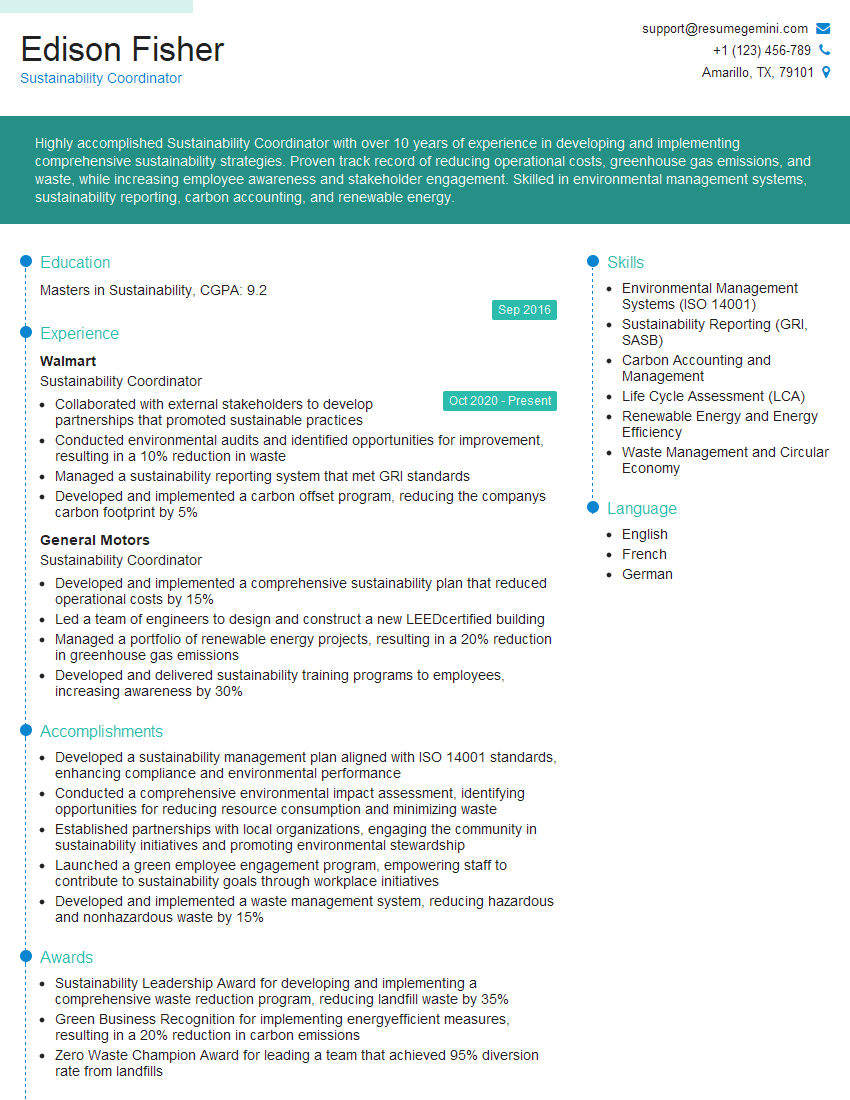
Sustainability Coordinator Resume Sample
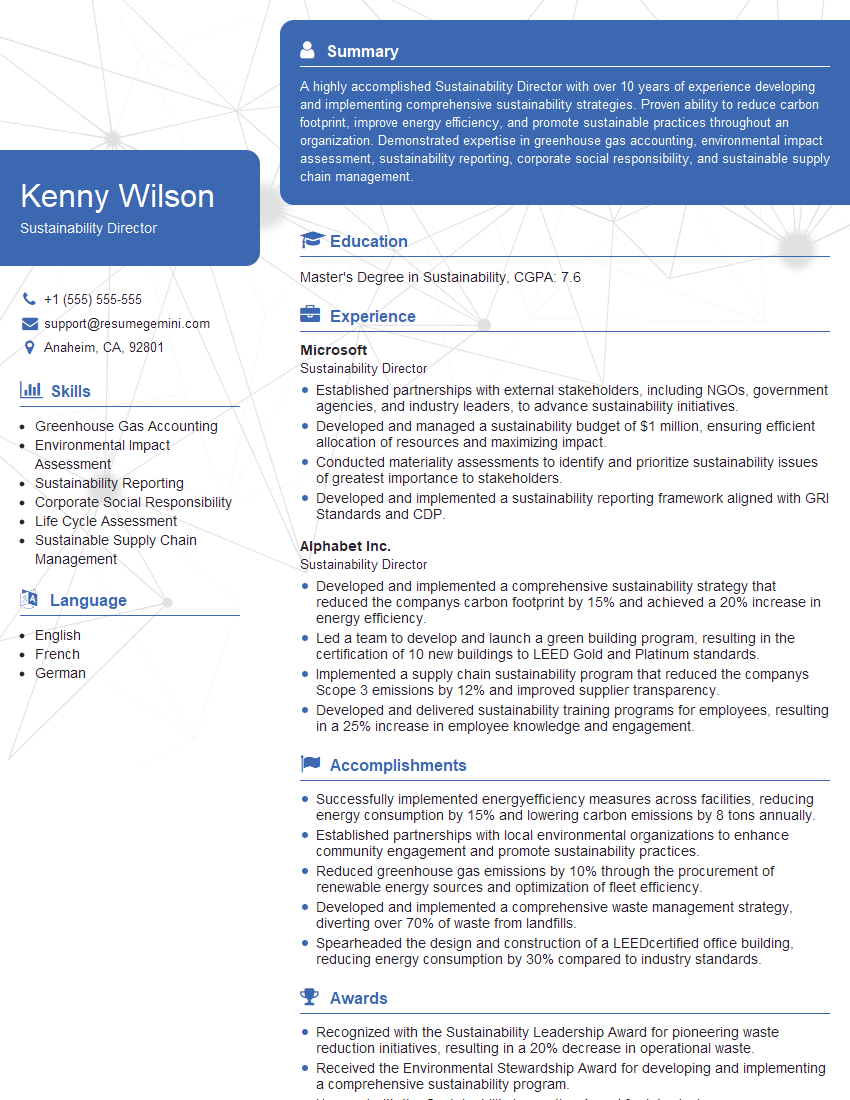
Sustainability Director Resume Sample
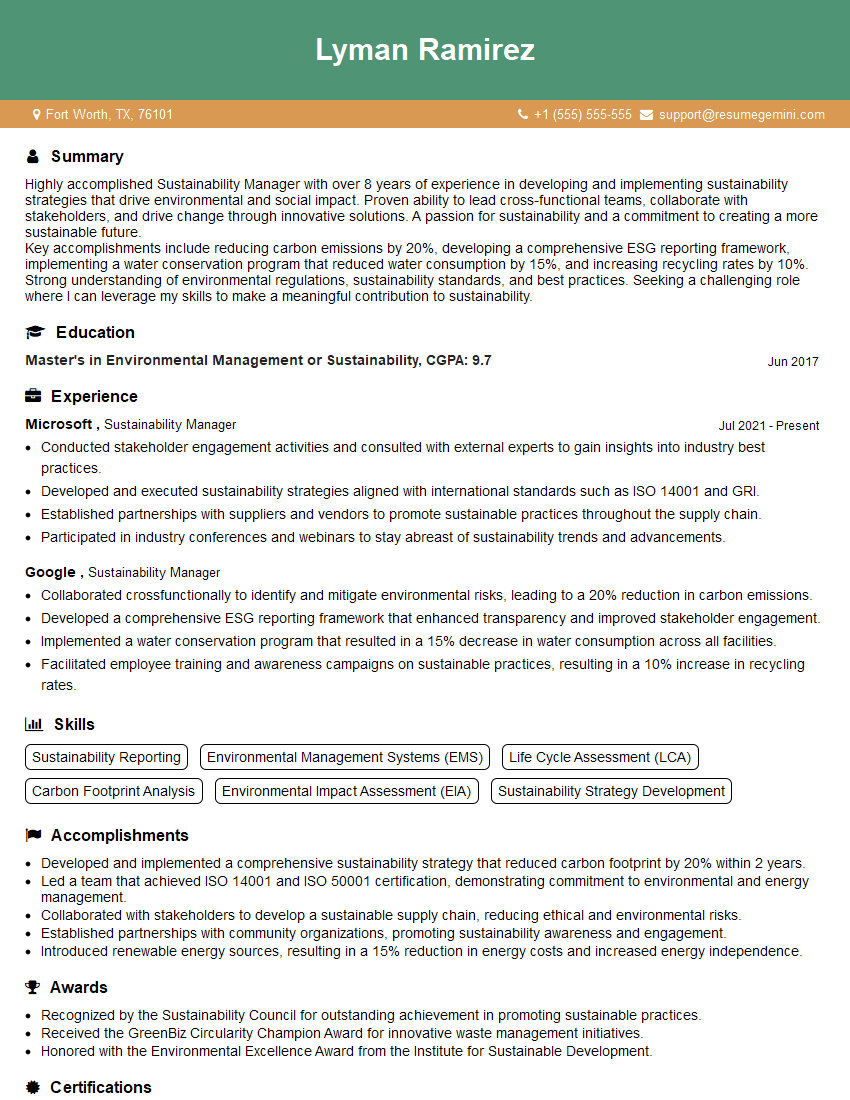
Sustainability Manager Resume Sample
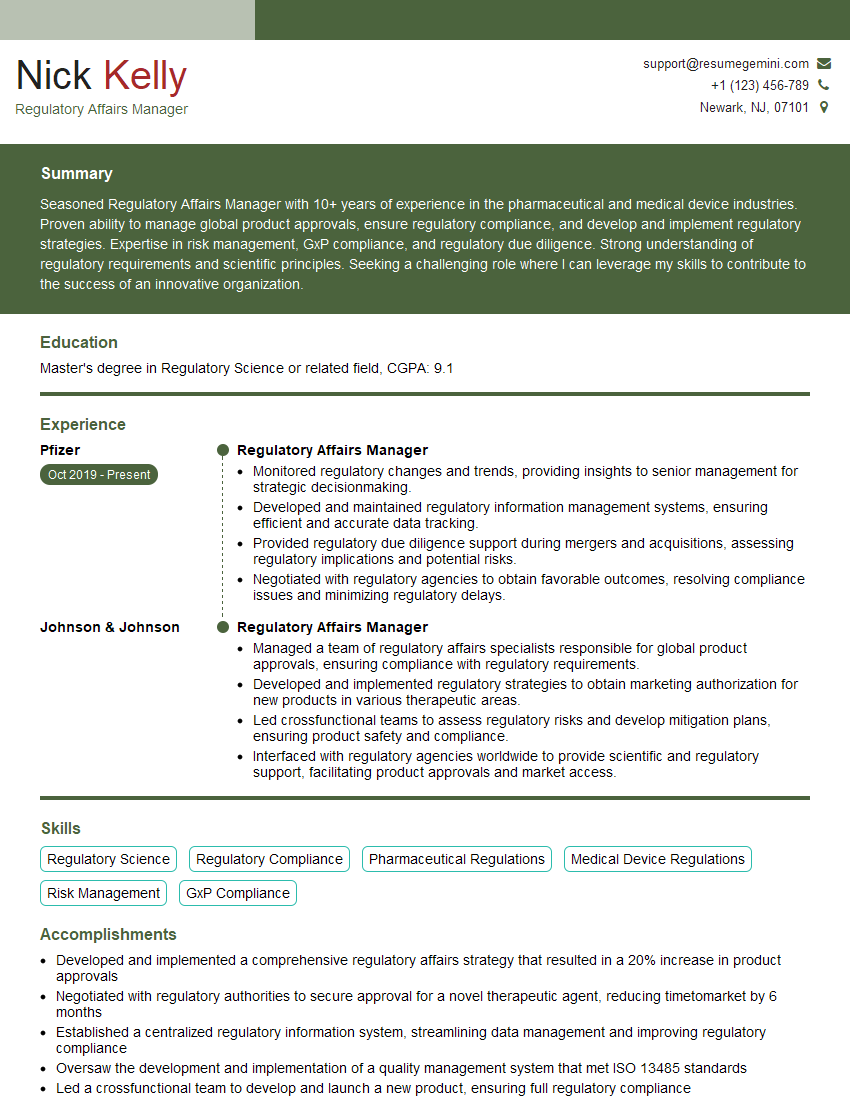
Regulatory Affairs Manager Resume Sample
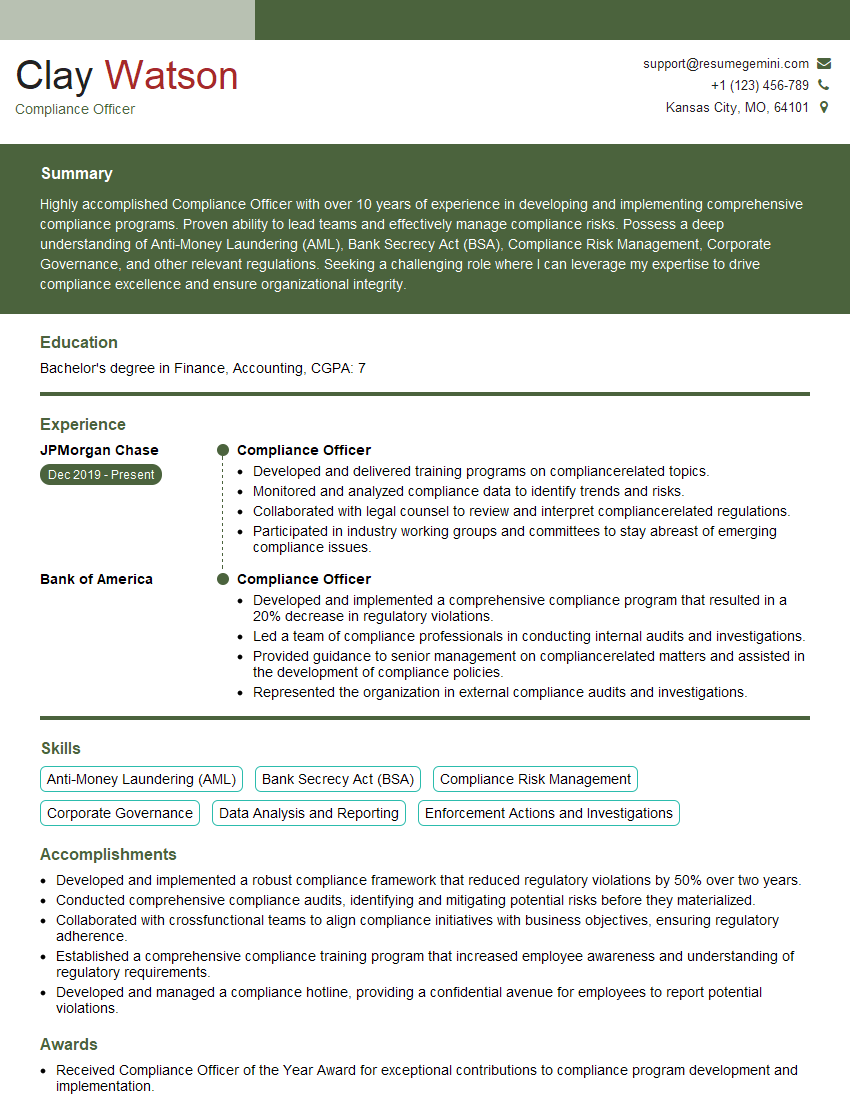
Compliance Officer Resume Sample
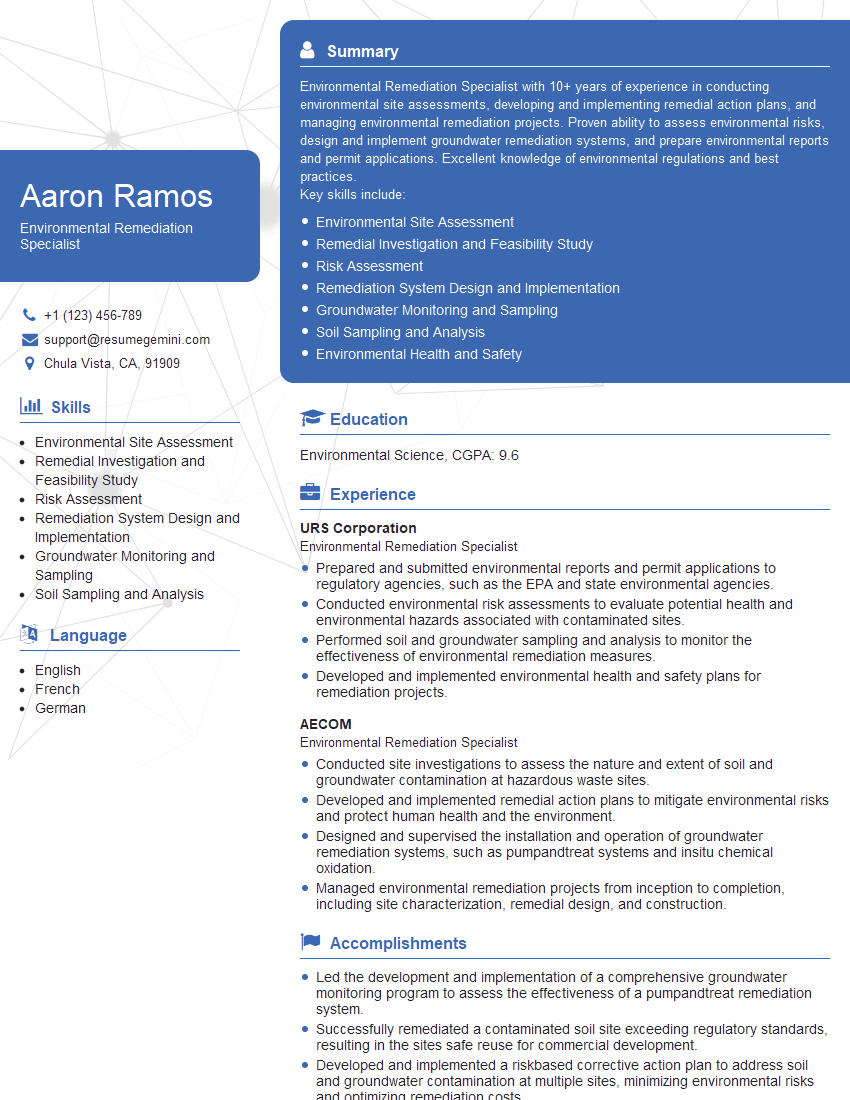
Environmental Remediation Specialist Resume Sample
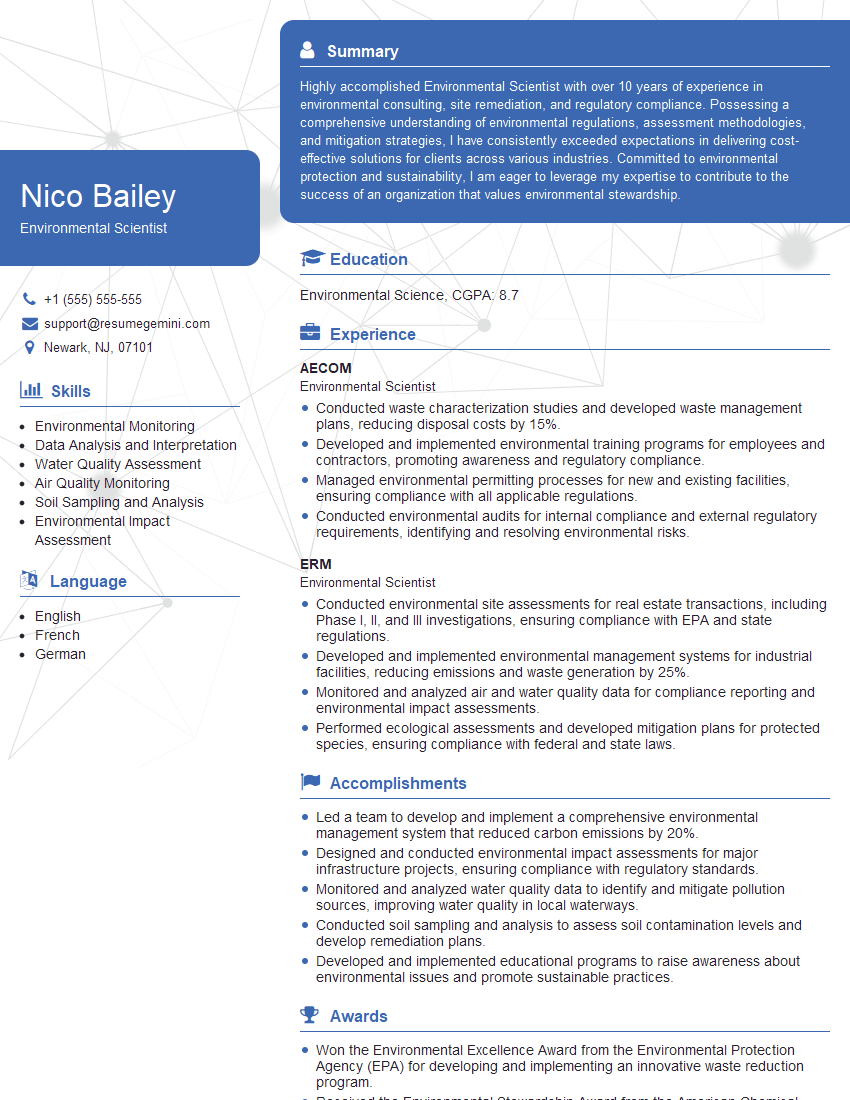
Environmental Scientist Resume Sample
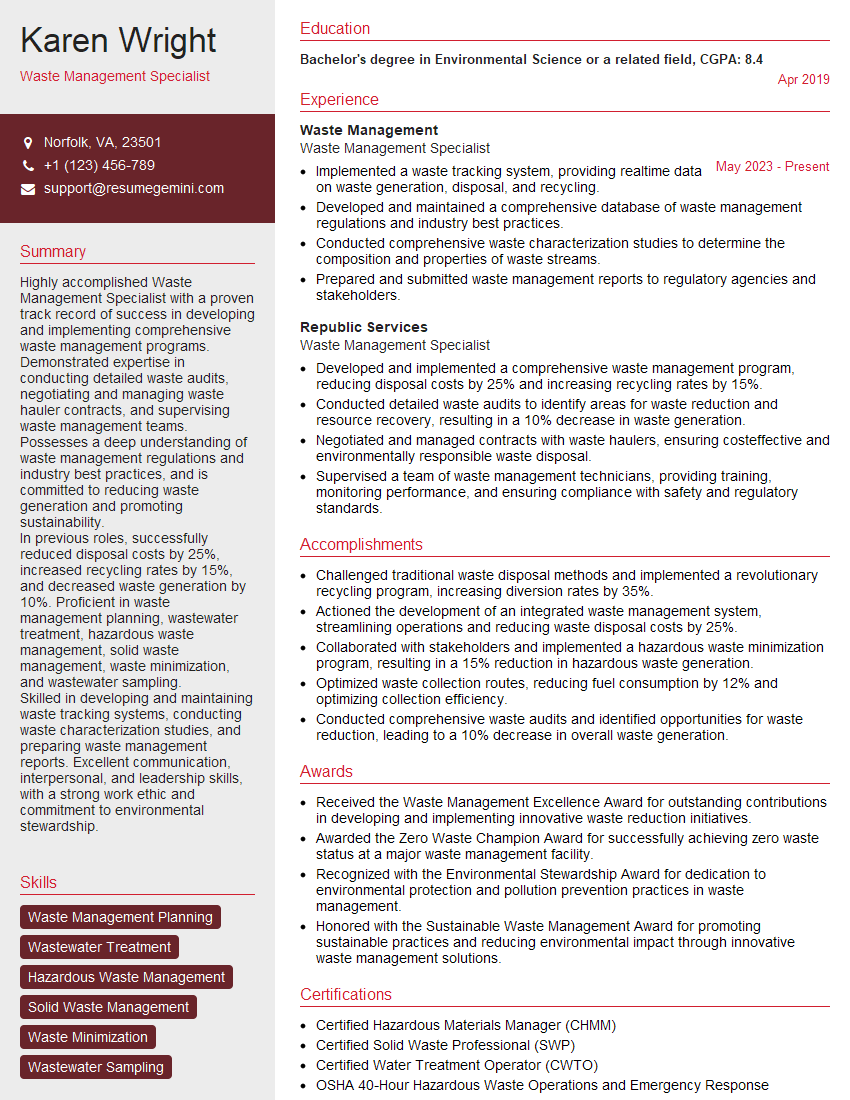
Waste Management Specialist Resume Sample
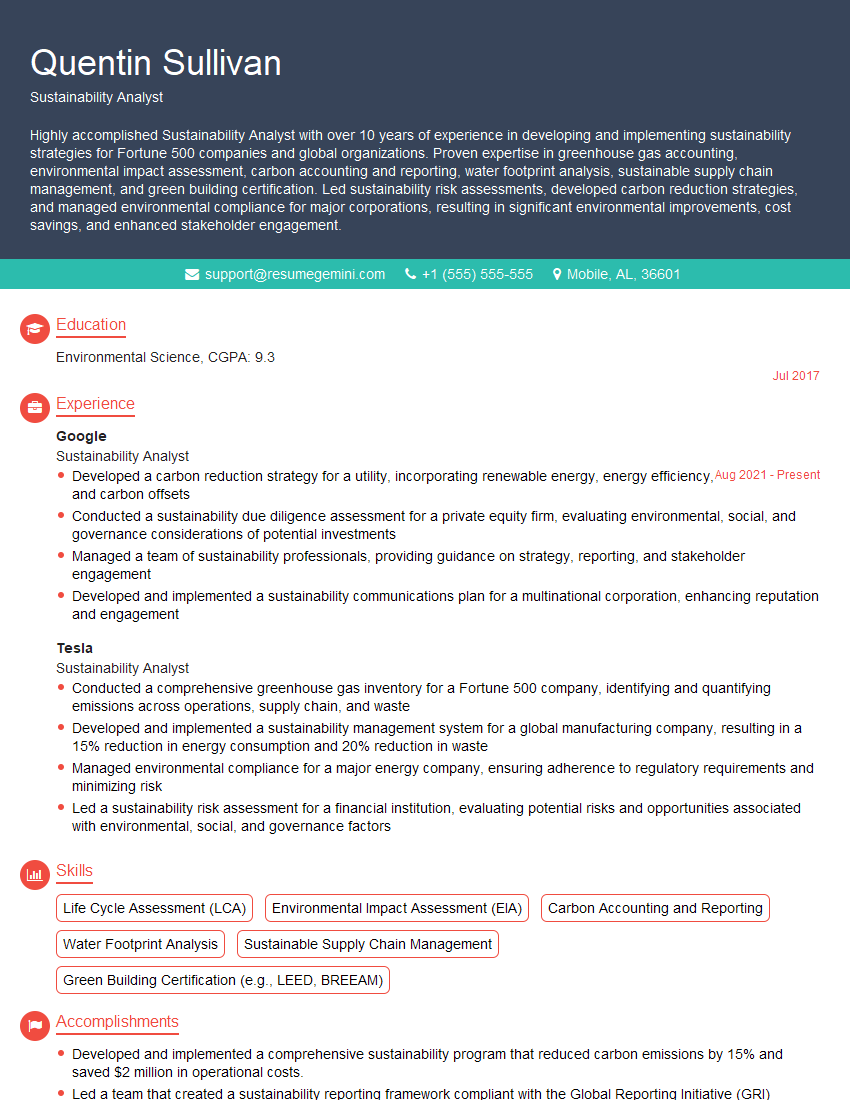
Sustainability Analyst Resume Sample
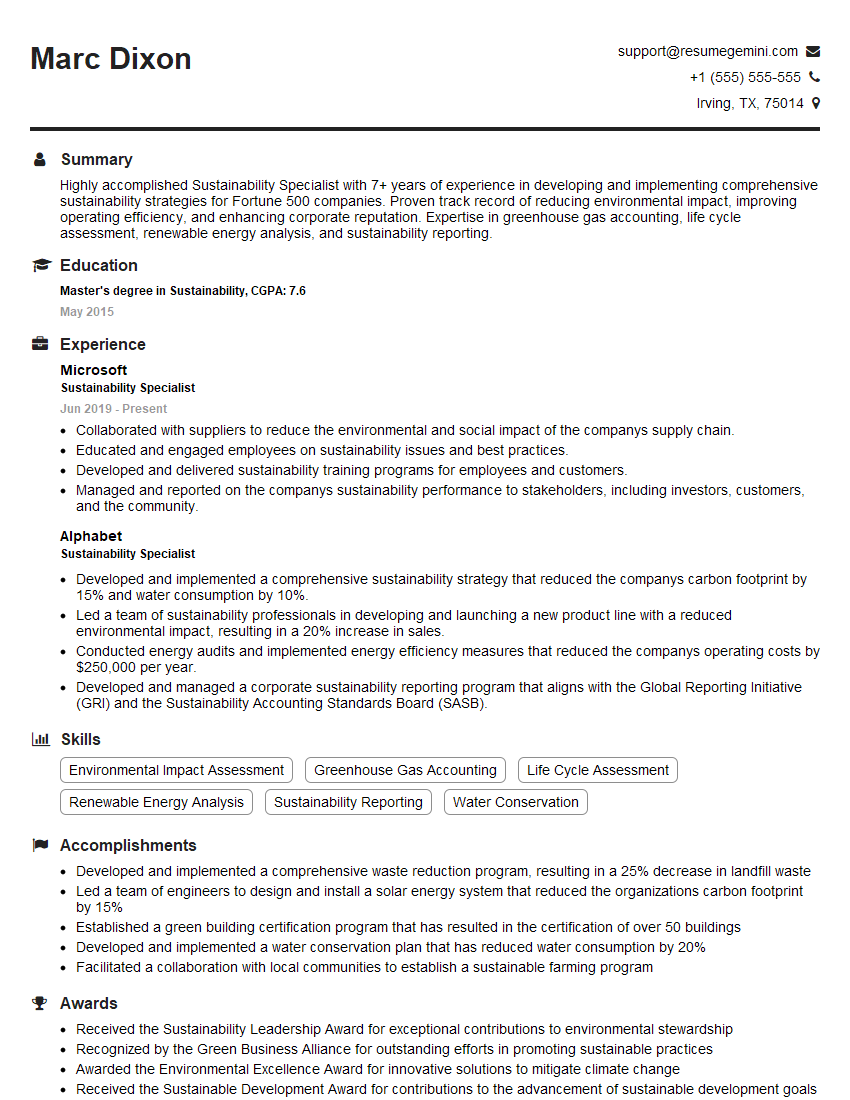
Sustainability Specialist Resume Sample
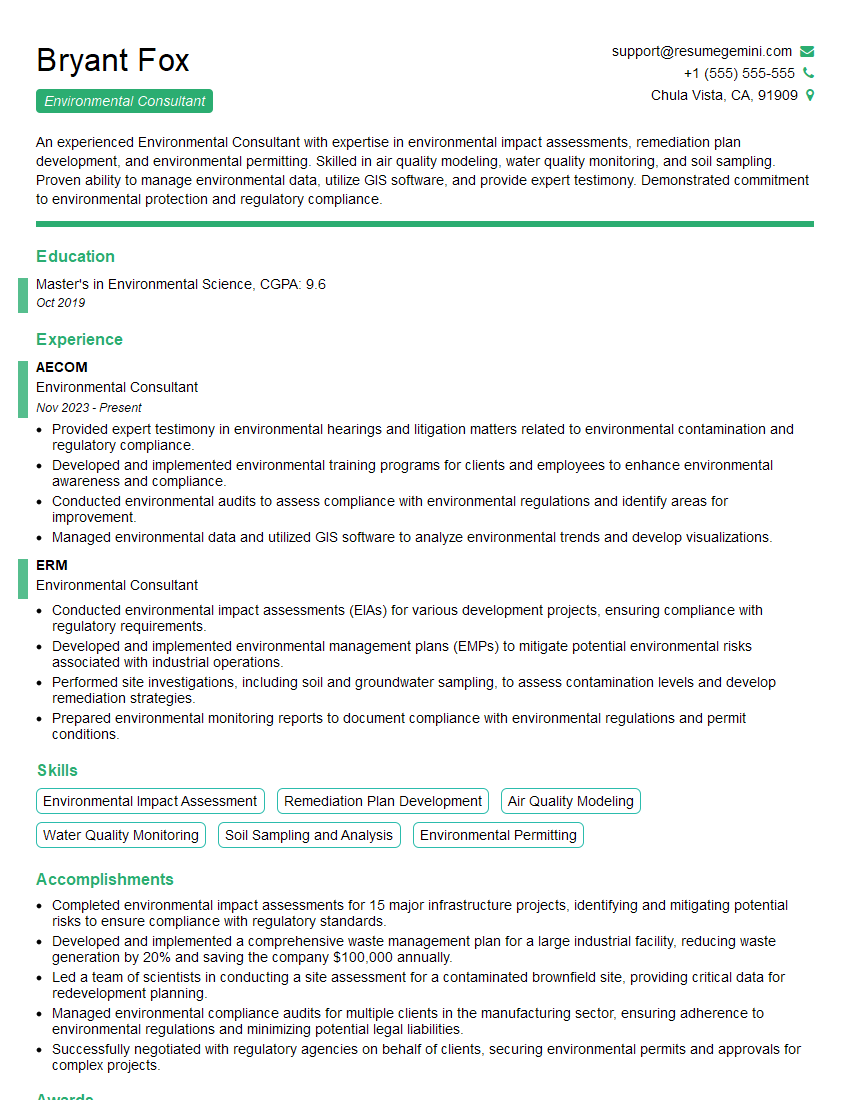
Environmental Consultant Resume Sample
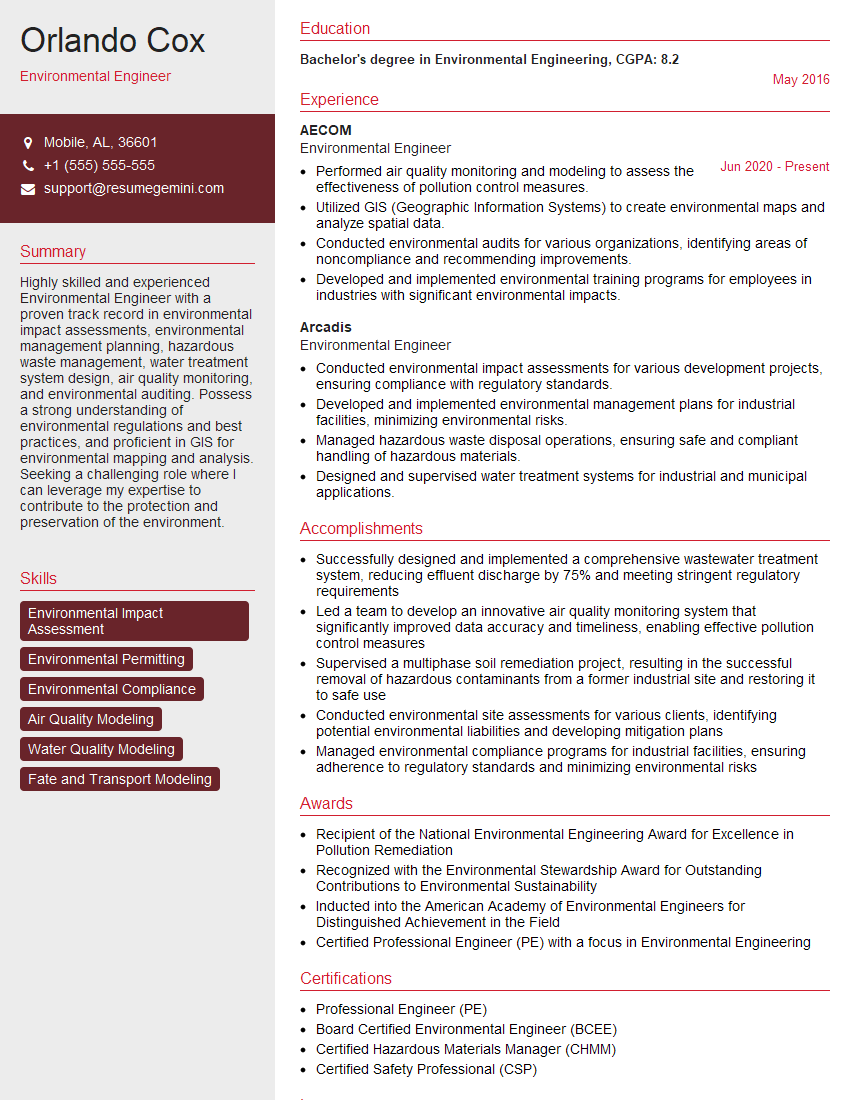
Environmental Engineer Resume Sample
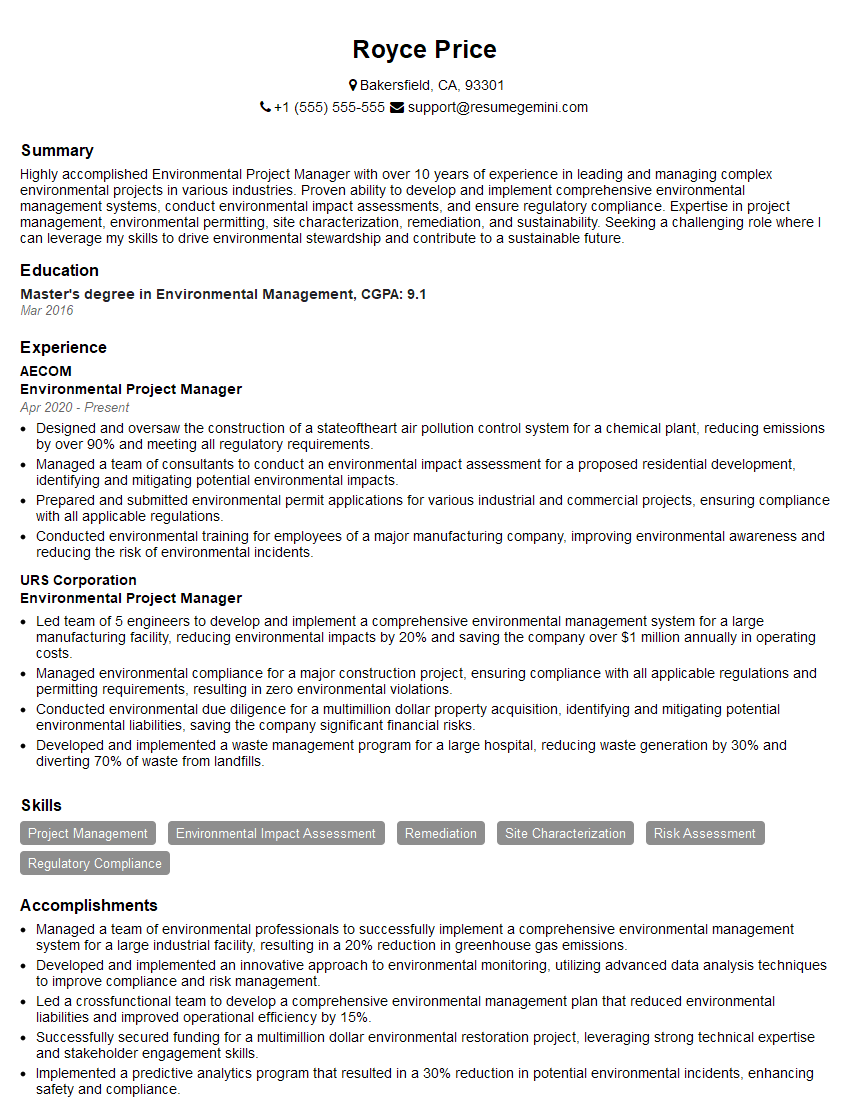
Environmental Project Manager Resume Sample
- Sustainability Coordinator
- Sustainability Director
- Sustainability Manager
- Regulatory Affairs Manager
- Compliance Officer
- Environmental Remediation Specialist
- Environmental Scientist
- Waste Management Specialist
- Sustainability Analyst
- Sustainability Specialist
- Environmental Consultant
- Environmental Engineer
- Environmental Project Manager
Explore more articles
Users Rating of Our Blogs
Share Your Experience
We value your feedback! Please rate our content and share your thoughts (optional).
What Readers Say About Our Blog
Very informative content, great job.
good