Are you ready to stand out in your next interview? Understanding and preparing for Knowledge of Fabrics interview questions is a game-changer. In this blog, we’ve compiled key questions and expert advice to help you showcase your skills with confidence and precision. Let’s get started on your journey to acing the interview.
Questions Asked in Knowledge of Fabrics Interview
Q 1. Explain the difference between woven and knitted fabrics.
Woven and knitted fabrics differ fundamentally in their construction methods, leading to distinct properties. Woven fabrics are created by interlacing two sets of yarns at right angles – the warp (lengthwise) and weft (crosswise). Think of a traditional basket weave; this same principle applies to fabrics like cotton shirting or denim. Knitted fabrics, on the other hand, are formed by interlocking loops of a single yarn. Imagine making a chain with yarn; this looping creates a flexible, stretchy structure, like in sweaters or socks.
- Woven Fabrics: Stronger, less stretchy, tend to drape better, generally more durable, crisper hand-feel.
- Knitted Fabrics: Stretchy, more comfortable against the skin, can pill easily (depending on the yarn), softer hand-feel, more likely to sag.
A simple analogy: Imagine a sturdy brick wall (woven) versus a flexible chain-link fence (knitted). Both serve a purpose, but their structures and properties are vastly different.
Q 2. Describe the properties of cotton, silk, wool, and polyester fabrics.
Let’s explore the properties of four common fabrics:
- Cotton: A natural fiber known for its softness, breathability, and absorbency. It’s relatively inexpensive and widely used in clothing and home textiles. However, it can wrinkle easily and shrink after washing.
- Silk: A luxurious natural fiber prized for its smoothness, luster, and drape. It’s very delicate, requiring careful handling. Silk is highly breathable and temperature regulating, making it ideal for warmer climates.
- Wool: Another natural fiber, wool is known for its warmth, softness, and moisture-wicking properties. It’s naturally wrinkle-resistant and durable but can be sensitive to moths and require special cleaning.
- Polyester: A synthetic fiber that is durable, wrinkle-resistant, and relatively inexpensive. It’s often used in blends to add strength and wrinkle resistance to other fabrics. However, it is not as breathable as natural fibers and can feel less comfortable against the skin.
Each fiber has its own unique characteristics, making them suitable for different garments and applications. For example, cotton is ideal for t-shirts due to its breathability, while wool is preferred for coats due to its warmth.
Q 3. What are the common fabric finishes and their effects?
Fabric finishes are treatments applied to enhance the fabric’s properties. Common finishes include:
- Mercerization: A treatment for cotton that improves its luster, strength, and dye affinity.
- Calendering: A mechanical process that smooths and flattens the fabric, giving it a smoother surface.
- Sanforizing: A pre-shrinking process to minimize shrinkage after washing.
- Water-repellent finishes: Coatings that make the fabric resistant to water, often used in outerwear.
- Flame-retardant finishes: Treatments to reduce the fabric’s flammability, crucial for safety in certain applications.
These finishes significantly impact the final product. For instance, mercerized cotton is much more luxurious than untreated cotton, while a water-repellent finish is essential for a raincoat.
Q 4. How do different dyeing methods impact fabric properties?
Different dyeing methods affect fabric properties in various ways. For example:
- Reactive dyeing: This method produces vibrant, long-lasting colors that are highly resistant to fading. However, it can sometimes weaken the fabric.
- Direct dyeing: A simpler method suitable for cellulosic fibers (like cotton). Colors are generally less vibrant and less wash-fast than reactive dyes.
- Vat dyeing: Used for producing deep, rich colors, particularly on cotton. It’s known for its exceptional colorfastness.
The choice of dye method depends on the fiber type, desired colorfastness, and the overall cost considerations. A high-end garment might utilize reactive dyeing for vibrant colors, while a less expensive item may use direct dyeing for a more economical approach.
Q 5. Explain the concept of fabric drape and its importance in garment design.
Fabric drape refers to the way a fabric hangs and falls. It’s determined by factors like fiber type, yarn structure, fabric construction (woven or knitted), and finishing processes. A fabric with good drape will flow gracefully, while a stiff fabric will hang less smoothly.
Drape is crucial in garment design because it significantly impacts the garment’s silhouette and overall aesthetic. A flowing drape is perfect for evening gowns, while a crisper drape is suitable for tailored suits. Understanding fabric drape helps designers choose the right fabric for a specific garment style and design intent.
Consider the difference between a flowing silk gown and a structured denim jacket – the drape dictates the overall look and feel of each garment.
Q 6. What are the various types of yarn structures and their applications?
Yarn structures influence the fabric’s final properties. Common yarn structures include:
- Single yarns: Simple, single strands of fiber.
- Ply yarns: Two or more single yarns twisted together for increased strength and durability.
- Core-spun yarns: A core of one fiber type (often synthetic) is wrapped with another fiber (often natural) for improved properties (e.g., strength and softness).
- Slub yarns: Yarns with intentional thick and thin areas, creating texture and visual interest.
These structural variations are crucial. For example, a tightly twisted ply yarn will create a stronger and more durable fabric, suitable for workwear, while a slub yarn might be used for a more textured, casual garment.
Q 7. Discuss the different types of fabric weight and their uses.
Fabric weight, measured in ounces per square yard (oz/sq yd) or grams per square meter (gsm), significantly impacts its application. Categories include:
- Lightweight fabrics (under 4 oz/sq yd): Often sheer and used for summer clothing, linings, or delicate garments.
- Medium-weight fabrics (4-6 oz/sq yd): Versatile and used for blouses, shirts, and dresses.
- Heavyweight fabrics (over 6 oz/sq yd): Durable and used for coats, jackets, and upholstery.
The weight directly affects the drape and the garment’s intended use. A lightweight fabric will drape softly, while a heavyweight fabric will feel substantial and warm. Choosing the right weight is essential for creating garments that are both functional and aesthetically pleasing.
Q 8. How do you identify fabric flaws or defects?
Identifying fabric flaws requires a keen eye and a systematic approach. We look for deviations from the expected quality in terms of appearance, texture, and construction.
- Visual Inspection: This is the first step, involving careful examination for imperfections like holes, broken yarns, slubs (thickened areas in the yarn), misprints, inconsistencies in color or weave, and stains.
- Texture Analysis: Feeling the fabric helps detect irregularities such as uneven thickness, stiffness, or softness. A rough or scratchy texture might indicate a problem with the spinning or weaving process.
- Construction Evaluation: We assess the weave structure, checking for loose or missing threads, incorrect stitch density, and uneven seams. This often involves using magnifying glasses for closer inspection.
- Instrumental Testing: For more precise analysis, we utilize instruments like fabric strength testers, which measure tensile strength and tear resistance. Microscopy can also reveal defects invisible to the naked eye.
For example, a noticeable pilling (small balls of fiber) on a supposedly high-quality knit fabric would be a significant defect. Similarly, a consistent slippage in a woven fabric reveals a problem with the yarn twist or the weaving tension.
Q 9. Describe the process of fabric testing and quality control.
Fabric testing and quality control is a multi-stage process ensuring consistent quality throughout the production chain. It starts from the raw materials and continues through the manufacturing process and final product inspection.
- Raw Material Testing: This involves evaluating the quality of fibers (length, strength, fineness) and yarns (twist, evenness). Tests like fiber length measurement and yarn strength testing are crucial.
- In-Process Testing: At each stage of manufacturing (e.g., weaving, dyeing, finishing), samples are tested to ensure compliance with specifications. This may include tests for shrinkage, colorfastness, and dimensional stability.
- Finished Fabric Testing: This involves a comprehensive evaluation of the final fabric, including checks for flaws, strength, weight, and drape. Advanced techniques like abrasion resistance and pilling tests assess durability.
- Quality Control Checks: Regular checks throughout the process ensure consistent quality and adherence to standards. This often involves visual inspection, statistical process control (SPC) methods to monitor variation and the use of checklists and documented procedures.
For instance, a fabric intended for outerwear needs to undergo rigorous testing for water resistance and tear strength. A delicate silk fabric, on the other hand, would have tests focusing on its drape, softness, and resistance to damage from handling.
Q 10. Explain the importance of fabric sourcing and sustainability.
Fabric sourcing and sustainability are paramount in today’s ethical and environmentally conscious world. Responsible sourcing considers the environmental and social impacts across the entire supply chain.
- Ethical Sourcing: This involves ensuring fair labor practices, safe working conditions, and reasonable wages for workers throughout the production process. Certifications such as Fair Trade or GOTS (Global Organic Textile Standard) can help guarantee ethical production.
- Environmental Sustainability: This focuses on minimizing the environmental footprint of fabric production. This includes using sustainable fibers (organic cotton, recycled materials), reducing water and energy consumption, minimizing waste generation, and employing environmentally friendly dyeing and finishing processes.
- Traceability: Knowing the origin of materials and the journey of the fabric from raw material to finished product allows for better oversight and accountability in terms of both ethical and environmental practices.
For example, choosing organic cotton reduces pesticide use and protects biodiversity. Utilizing recycled polyester reduces reliance on petroleum-based resources and decreases plastic waste. The responsible use of water, energy, and chemicals are all part of this sustainable sourcing approach.
Q 11. What are the common fabric blends and their advantages?
Fabric blends combine different fibers to achieve a desirable balance of properties. This often results in a fabric superior to what a single fiber could offer.
- Cotton/Polyester: This blend combines the softness and breathability of cotton with the durability and wrinkle resistance of polyester. It is widely used in shirts, trousers, and other everyday garments.
- Linen/Cotton: This blend offers the crispness and strength of linen with the softness and absorbency of cotton, creating a luxurious fabric for high-end clothing and bedding.
- Wool/Polyester: Combining the warmth and natural insulation of wool with the durability and wrinkle resistance of polyester results in a fabric ideal for suits, coats, and other outerwear.
- Silk/Spandex: The luxurious feel of silk is enhanced by the stretch and recovery of spandex, creating comfortable and shape-retaining garments.
The advantages vary depending on the blend and the fibers involved, but common benefits include improved durability, wrinkle resistance, enhanced drape, greater comfort, and cost effectiveness.
Q 12. How do fabric composition and construction affect garment performance?
Fabric composition and construction significantly influence garment performance, impacting factors such as drape, durability, comfort, and overall appearance.
- Fiber Type: Natural fibers like cotton and wool offer breathability and softness, while synthetics such as polyester and nylon provide durability and wrinkle resistance. Different fibers have different properties regarding strength, elasticity, and moisture absorption.
- Yarn Structure: The way fibers are spun into yarns impacts the fabric’s texture and strength. A tightly spun yarn produces a denser fabric, increasing durability and warmth but potentially reducing breathability.
- Weave/Knit Structure: The arrangement of yarns in the fabric – woven, knit, or non-woven – determines its drape, stretch, and overall aesthetic. Woven fabrics tend to be more durable and structured, while knit fabrics are often more stretchy and flexible.
- Finishing Processes: Treatments such as mercerization, sanforizing, and dyeing can alter the fabric’s characteristics, improving its properties like luster, shrinkage resistance, and colorfastness.
For instance, a tightly woven cotton canvas is ideal for durable bags, whereas a loosely knit cotton jersey is suitable for comfortable t-shirts. The choice of fabric directly impacts the functionality and aesthetics of the final garment.
Q 13. Discuss the challenges in working with delicate fabrics.
Delicate fabrics, such as silk, lace, and chiffon, present unique challenges due to their fine structure and susceptibility to damage.
- Fragility: These fabrics tear easily, requiring careful handling during cutting, sewing, and laundering.
- Sensitivity to Chemicals: Harsh detergents, bleaches, and dyes can damage delicate fabrics. Specialized cleaning agents are often necessary.
- Difficulty in Processing: Specialized equipment and techniques are often required during manufacturing to avoid damaging the fabric.
- Maintenance Challenges: Delicate fabrics often require hand washing or dry cleaning, adding to the cost and complexity of garment care.
For example, when sewing with silk, using a fine needle and slow stitch speed is crucial to avoid snags and tears. Properly pressing silk also requires a low temperature to prevent scorching. The use of appropriate tools and techniques is crucial when dealing with these challenging materials.
Q 14. Explain the concept of fabric shrinkage and how to control it.
Fabric shrinkage is the reduction in size that occurs when fabric is exposed to moisture or heat. It’s caused by the relaxation of fibers after manufacturing.
- Causes: Shrinkage is primarily due to the relaxation of tension in the fibers during manufacturing and the subsequent response of the fibers to moisture and heat.
- Types of Shrinkage: There’s relaxation shrinkage (occurs during the first wash) and progressive shrinkage (occurs gradually over time with repeated washings).
- Controlling Shrinkage: Pre-shrinking techniques such as sanforizing (a mechanical process) or heat-setting during manufacturing minimize shrinkage. Choosing fabrics that have undergone pre-shrinking treatment is also crucial.
- Washing Instructions: Following the washing instructions on the garment care label is essential to minimizing shrinkage. Hand washing or gentle machine washing in cold water may be necessary for certain fabrics.
For instance, a cotton shirt may shrink noticeably after its first wash if it hasn’t undergone a pre-shrinkage treatment. Following washing instructions, such as washing in cold water and air-drying, can help to minimize the extent of shrinkage. Sanforized fabrics are designed to minimize shrinkage, ensuring more consistent sizing.
Q 15. How do you choose the right fabric for a specific garment?
Choosing the right fabric for a garment is a crucial step in the design process. It involves considering various factors to ensure the final product meets the desired aesthetic, functional, and durability requirements. Think of it like choosing the right ingredients for a recipe – each fabric has unique properties that influence the outcome.
- Garment Purpose: Is it a summer dress, a winter coat, or athletic wear? This dictates the need for breathability, warmth, or moisture-wicking properties.
- Target Audience: Who will wear this garment? Children’s clothing requires durable, easy-to-clean fabrics, while formal wear might demand luxurious, delicate ones.
- Aesthetic Requirements: What look and feel are you aiming for? A flowing chiffon creates a different impression than a structured linen.
- Budget: Fabric costs vary significantly. Silk is inherently more expensive than cotton.
- Care Instructions: How easy should the garment be to clean and maintain? Some fabrics require special care, influencing the final consumer experience.
For example, designing a summer dress, you might choose lightweight cotton for breathability and comfort, whereas a winter coat would necessitate a heavier wool or a synthetic blend for warmth. A performance athletic shirt would benefit from a moisture-wicking fabric like polyester or nylon.
Career Expert Tips:
- Ace those interviews! Prepare effectively by reviewing the Top 50 Most Common Interview Questions on ResumeGemini.
- Navigate your job search with confidence! Explore a wide range of Career Tips on ResumeGemini. Learn about common challenges and recommendations to overcome them.
- Craft the perfect resume! Master the Art of Resume Writing with ResumeGemini’s guide. Showcase your unique qualifications and achievements effectively.
- Don’t miss out on holiday savings! Build your dream resume with ResumeGemini’s ATS optimized templates.
Q 16. What are the different types of fabric prints and their techniques?
Fabric printing techniques are diverse, each offering unique aesthetic and functional characteristics. They can be broadly classified into direct and indirect methods.
- Direct Printing: The design is directly applied onto the fabric. Examples include:
- Screen Printing: A stencil is used to transfer ink onto the fabric, allowing for bold, vibrant designs and excellent durability. It is cost-effective for large-scale production.
- Digital Printing: Inkjet technology prints designs directly, enabling intricate details, photorealistic images, and on-demand printing. It is excellent for smaller quantities and customized designs.
- Indirect Printing: The design is first printed on a separate material (like paper) and then transferred to the fabric. Examples include:
- Block Printing: Hand-carved blocks are used to stamp designs onto the fabric, creating a unique, handcrafted look. It is suitable for small-scale production and intricate motifs.
- Heat Transfer Printing: A design is printed on special paper and then transferred to the fabric using heat and pressure. It’s efficient for reproducing complex designs and offers a good colorfastness.
Choosing the right technique depends on factors like design complexity, production volume, budget, and desired finish. For instance, a bespoke designer might choose hand-block printing for a unique, artisanal touch, while mass-market clothing brands often utilize screen or digital printing for efficiency.
Q 17. Describe the latest trends in fabric technology and innovation.
The fabric industry is constantly evolving, driven by sustainability concerns and technological advancements. Here are some key trends:
- Sustainable Fabrics: Increased focus on eco-friendly materials like organic cotton, recycled polyester, and innovative plant-based alternatives (e.g., Tencel, hemp).
- Smart Fabrics: Incorporating technology into fabrics to enhance functionality, for example, fabrics that monitor vital signs, change color with temperature, or offer self-cleaning properties.
- Bio-based Fabrics: Utilizing biotechnology to develop fabrics from renewable resources and reduce reliance on petroleum-based materials.
- 3D-Knitting Technology: Allows for complex designs and customized garment creation with minimal waste.
- Recycled and Upcycled Fabrics: Transforming waste into new fabric materials contributes to reducing textile waste and promotes circular economy principles.
These advancements are reshaping the industry, pushing it towards more environmentally conscious and technologically advanced products.
Q 18. How do you assess the cost-effectiveness of different fabrics?
Assessing the cost-effectiveness of fabrics is a multifaceted process that considers several factors beyond the initial price per yard.
- Fabric Cost: The raw material cost is an obvious factor. Natural fibers (silk, wool) tend to be more expensive than synthetic ones (polyester, nylon).
- Production Costs: The manufacturing process, including dyeing, finishing, and printing, significantly affects the overall cost.
- Durability: A more durable fabric might have a higher initial cost but will last longer, reducing replacement costs in the long run.
- Maintenance Costs: Fabrics requiring specialized cleaning or ironing add to the lifecycle cost.
- Waste Generation: The amount of fabric waste during production impacts cost-effectiveness. Efficient cutting and manufacturing processes minimize waste.
A detailed cost analysis considering all these aspects is crucial for making informed decisions. For example, while a high-quality organic cotton might seem expensive upfront, its durability and eco-friendly nature could make it more cost-effective in the long term compared to a cheaper, less durable synthetic alternative that may need frequent replacement.
Q 19. Explain the relationship between fabric structure and its durability.
The structure of a fabric directly impacts its durability. It’s the way the yarns are interwoven or knitted that determines its strength, resilience, and resistance to wear and tear.
- Weave Structure: Plain weave fabrics (like cotton shirting) are relatively simple and less durable than twill weaves (like denim), which have a diagonal pattern providing greater strength.
- Knit Structure: Knit fabrics (like jersey) are generally more stretchy and less resistant to abrasion than woven fabrics. Different knit structures (e.g., single jersey, double jersey) exhibit varying levels of durability.
- Yarn Type and Fiber Content: Stronger fibers (like nylon or polyester) result in more durable fabrics compared to weaker fibers (like rayon). The thickness and twist of the yarns also contribute to fabric strength.
- Fabric Density: A tightly woven or knitted fabric is generally more durable than a loosely constructed one.
Understanding these relationships helps designers select appropriate fabrics for specific garment applications. For instance, a tightly woven canvas is ideal for a durable handbag, whereas a loosely knit cotton is suitable for a lightweight summer top.
Q 20. What are the environmental considerations in fabric production?
Environmental considerations are paramount in fabric production, encompassing the entire lifecycle – from raw material sourcing to end-of-life disposal. The industry’s environmental impact is substantial due to:
- Water Pollution: Dyeing and finishing processes can release harmful chemicals into water bodies.
- Energy Consumption: Fabric production is energy-intensive, contributing to greenhouse gas emissions.
- Waste Generation: Textile waste from manufacturing and discarded garments pollutes landfills.
- Chemical Usage: Many fabrics are treated with chemicals that can have negative health and environmental consequences.
- Land Use: Cotton cultivation requires significant land resources and can lead to deforestation.
Sustainable practices like using eco-friendly dyes, reducing water consumption, employing renewable energy, and promoting recycling and upcycling are crucial to mitigate the environmental impact of fabric production. The rise of certifications like GOTS (Global Organic Textile Standard) helps ensure ethical and sustainable practices.
Q 21. Describe the different methods of fabric care and maintenance.
Fabric care and maintenance vary significantly depending on the fiber content, weave structure, and finish of the fabric. Proper care prolongs the garment’s lifespan and maintains its appearance.
- Washing: Different fabrics require specific washing temperatures and methods. Delicate fabrics like silk and wool need hand-washing or gentle machine cycles in cold water. Durable fabrics like cotton and linen can withstand more robust washing.
- Drying: Air-drying is gentler on most fabrics than machine drying, which can cause shrinkage or damage. Some fabrics require flat drying to prevent stretching or distortion.
- Ironing: Ironing temperature should be adjusted according to the fabric type. High heat can scorch delicate fabrics.
- Storage: Proper storage prevents damage from light, moisture, and pests. Storing garments on hangers or in breathable containers helps maintain their shape and quality.
- Stain Removal: Addressing stains promptly prevents permanent damage. Specific stain removal techniques should be used depending on the stain and fabric type.
Always check the care label instructions before cleaning a garment to avoid damaging it. Following these guidelines helps keep your clothes looking their best for longer.
Q 22. How do you handle fabric complaints from customers?
Handling fabric complaints requires a systematic approach focusing on understanding the issue, verifying the claim, and offering a resolution. First, I listen empathetically to the customer, documenting their complaint precisely. This includes details about the fabric’s performance, its use, and any specific defects. Next, I carefully examine the fabric itself, comparing it to quality standards and production specifications. If the complaint is valid – for example, a significant flaw like a hole or uneven dye – I work to determine the root cause. Was it a manufacturing defect, damage during shipping, or perhaps misuse by the customer? This investigation may involve analyzing the fabric construction, inspecting production records, and potentially testing the fabric’s properties in our lab. Finally, I offer a fair and appropriate solution, which could involve a repair, replacement, refund, or store credit, depending on the nature of the problem and our company’s return policy. Transparency and clear communication are key throughout this process to maintain customer satisfaction.
For example, I once dealt with a complaint about color fading in a linen tablecloth. After examining the fabric, I discovered that the customer had repeatedly washed it in hot water and used harsh detergents, contrary to the care instructions. While the fabric was not inherently flawed, I explained the impact of improper care and offered advice on correct washing procedures. In this case, a replacement wasn’t necessary, but educating the customer prevented future issues.
Q 23. Explain the impact of different finishes on the flammability of fabrics.
Different fabric finishes significantly influence flammability. Finishes can either increase or decrease a fabric’s tendency to ignite and burn. Flame-retardant finishes are applied to enhance fire safety. These finishes often contain chemicals that interrupt the combustion process, slowing the spread of flames or making the fabric self-extinguishing. Common flame-retardant finishes include those based on phosphorus, halogen, or nitrogen compounds. Conversely, some finishes, particularly those that add oils or waxes to improve water resistance or softness, can actually increase flammability. These finishes can act as fuel, adding to the intensity of a fire. The type and concentration of the finishing agent are critical factors. For instance, a finish aimed at improving wrinkle resistance might not inherently affect flammability, but if it contains flammable components, it could become a hazard. Proper testing and certification are crucial to ensure that finished fabrics meet safety standards.
Q 24. Describe the differences between natural and synthetic fibers.
Natural and synthetic fibers differ significantly in their origin, properties, and environmental impact. Natural fibers, such as cotton, wool, silk, and linen, are derived from plants or animals. They are biodegradable and often possess unique characteristics that make them desirable for clothing and other applications. For example, cotton is breathable and absorbent, while wool is naturally warm and moisture-wicking. However, natural fibers can be more susceptible to damage from insects, mildew, and shrinking. Synthetic fibers, on the other hand, are manufactured from petrochemicals. Examples include polyester, nylon, acrylic, and rayon. Synthetic fibers are generally more durable, wrinkle-resistant, and less prone to shrinking than natural fibers, and they often require less care. However, they are not biodegradable and can contribute to environmental pollution. They also often lack the breathability and softness of natural fibers. The choice between natural and synthetic fibers involves weighing the advantages and disadvantages for a particular application.
Q 25. What are the key factors to consider when selecting fabric for outdoor apparel?
Selecting fabric for outdoor apparel requires careful consideration of several key factors. First and foremost is durability; the fabric needs to withstand exposure to the elements, including sun, rain, wind, and abrasion. Water resistance or waterproofing is crucial to protect the wearer from the elements. Breathability is also important to prevent overheating and allow moisture vapor to escape, promoting comfort during activity. UV protection is essential to shield the skin from harmful solar radiation. Finally, weight and comfort must also be considered, balancing the need for protection with ease of movement and wearer comfort. For example, a lightweight, breathable, and water-resistant nylon ripstop fabric might be ideal for a hiking jacket, while a heavier-duty, waterproof fabric might be preferred for a rain parka. Specific features like wind resistance and tear strength are also important based on the intended use.
Q 26. How do you determine the appropriate fabric for a specific application (e.g., upholstery, bedding)?
Choosing the right fabric for a specific application like upholstery or bedding depends on evaluating several criteria. For upholstery, durability and abrasion resistance are paramount. The fabric must withstand repeated rubbing and wear. Stain resistance and ease of cleaning are also essential considerations. The fabric’s strength and weight are important for supporting the user’s weight and providing comfort. For bedding, softness and comfort are key factors. Breathability is crucial for temperature regulation and sleep quality. Moisture wicking can be advantageous for managing sweat and enhancing comfort. Durability, while less critical than in upholstery, is still important to ensure long-lasting use. For example, heavy-duty polyester blends might be chosen for upholstery in high-traffic areas, while a soft cotton percale or a blend of cotton and silk might be selected for bedding.
Q 27. Describe your experience with fabric CAD software.
I have extensive experience using fabric CAD software, specifically [Mention specific software names, e.g., Lectra, OptiTex]. My expertise includes creating and modifying fabric designs, simulating draping and garment construction, and generating production patterns. I am proficient in using the software to experiment with different weaves, prints, and textures, optimizing designs for both aesthetics and manufacturing efficiency. For example, I used [Software name] to design a new fabric pattern for a client’s outdoor clothing line, using simulations to ensure optimal drape and resistance to water and wind. The software allowed me to refine the design quickly and efficiently, reducing development time and material waste. My skills also extend to managing the software’s database of fabric properties and utilizing its simulation tools for predicting fabric performance under various conditions.
Q 28. Explain the process of developing a new fabric for a specific application.
Developing a new fabric is an iterative process that begins with clearly defining the application’s requirements. This includes specifying the desired properties like strength, drape, colorfastness, breathability, and water resistance. Next, we select the fiber types and blend ratios that are most likely to meet the specifications. Experimental weaving or knitting samples are produced to test the fabric’s properties. These samples are evaluated using physical testing methods, such as tensile strength, abrasion resistance, and colorfastness tests. Based on the results, the fiber blend and construction are modified as needed. This iterative process of prototyping, testing, and refinement continues until the desired properties are achieved. Finally, the fabric undergoes full-scale production trials to ensure that the manufacturing process is scalable and that the fabric maintains its quality consistently. For example, developing a new performance fabric for sportswear might involve multiple rounds of testing and refinement to ensure optimal moisture-wicking, breathability, and durability.
Key Topics to Learn for Your Knowledge of Fabrics Interview
- Fiber Properties: Understanding natural (cotton, wool, silk, linen) and synthetic (polyester, nylon, acrylic) fibers; their characteristics (strength, durability, drape, absorbency), and appropriate end uses.
- Fabric Construction: Knowledge of different weave structures (plain, twill, satin), knit structures (jersey, rib), and their impact on fabric hand, appearance, and performance. Practical application: Analyzing a fabric sample to identify its construction.
- Fabric Finishes: Understanding various finishing techniques (e.g., mercerization, dyeing, printing, water-repellent treatments) and their effects on fabric properties. Problem-solving: Troubleshooting issues related to fabric finishing.
- Fabric Testing & Quality Control: Familiarization with common fabric testing methods (e.g., tensile strength, abrasion resistance, colorfastness) and their importance in ensuring quality. Practical application: Interpreting test results and identifying potential quality defects.
- Fabric Selection & Application: Matching fabrics to specific end-uses based on their properties and performance characteristics. Problem-solving: Choosing the right fabric for a particular garment or product considering factors like cost, durability, and aesthetics.
- Sustainability & Ethical Sourcing: Understanding the environmental and social impact of fabric production and the importance of sustainable and ethical sourcing practices. Practical application: Identifying eco-friendly fabrics and production methods.
- Global Textile Market Trends: Staying updated on current trends in fabric innovation, technology, and consumer demand. This demonstrates your proactive approach to learning.
Next Steps
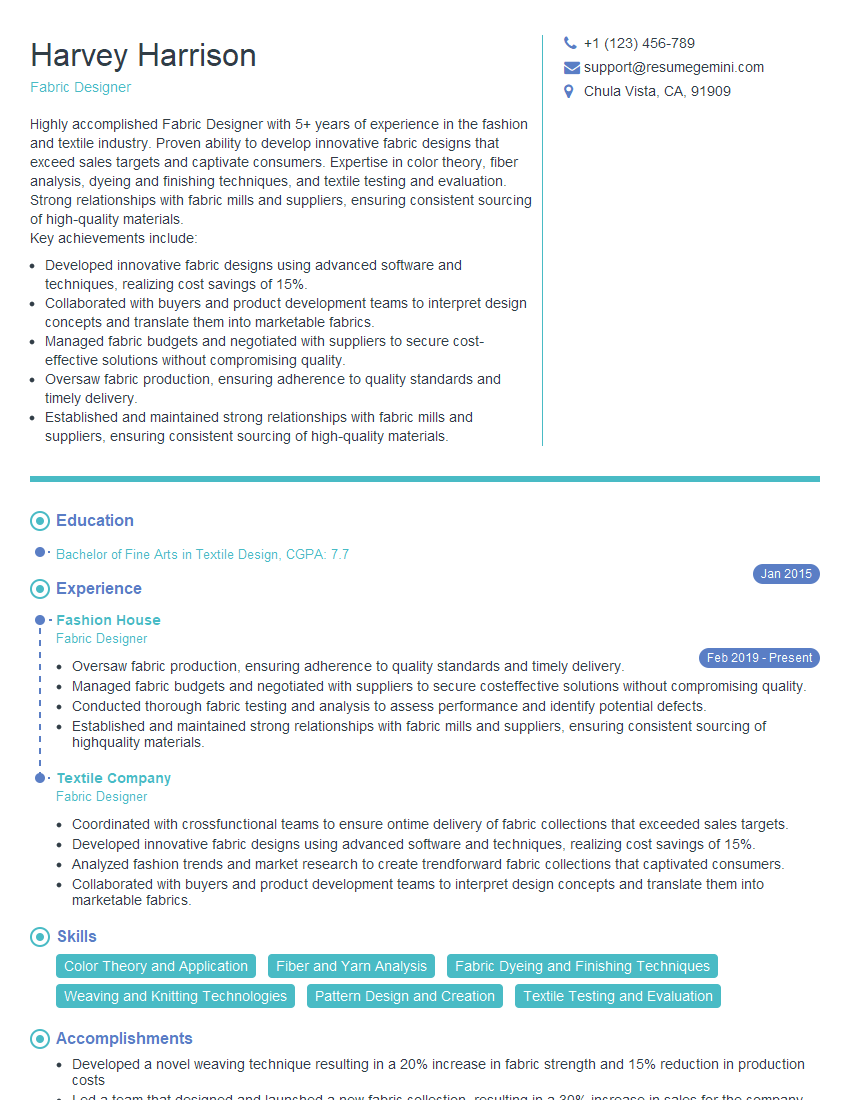
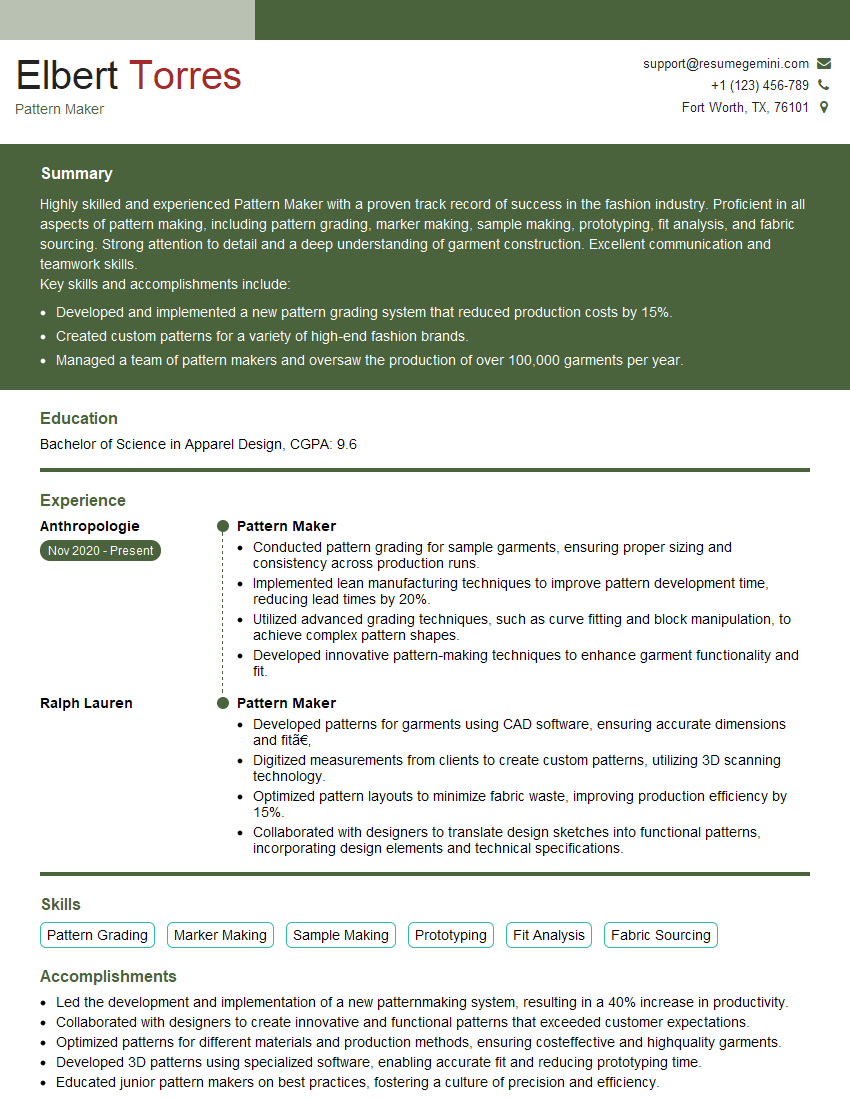
Mastering your knowledge of fabrics is crucial for career advancement in the textile industry, opening doors to exciting opportunities in design, production, quality control, and more. An ATS-friendly resume is your key to unlocking these opportunities. Make sure your resume clearly showcases your expertise and experience. Use ResumeGemini to create a professional, impactful resume that highlights your skills effectively. ResumeGemini provides examples of resumes tailored to roles requiring Knowledge of Fabrics, helping you present yourself in the best possible light. Invest the time to build a strong resume – it’s your first impression and a critical step toward landing your dream job.





Explore more articles
Users Rating of Our Blogs
Share Your Experience
We value your feedback! Please rate our content and share your thoughts (optional).
What Readers Say About Our Blog
Very informative content, great job.
good