Feeling uncertain about what to expect in your upcoming interview? We’ve got you covered! This blog highlights the most important Knowledge of Fish Products interview questions and provides actionable advice to help you stand out as the ideal candidate. Let’s pave the way for your success.
Questions Asked in Knowledge of Fish Products Interview
Q 1. Explain the process of fish filleting.
Fish filleting is the process of removing the edible flesh from the bones and skin of a fish. It’s a crucial step in preparing fish for various culinary applications and is often done by skilled professionals. The process generally involves several steps, depending on the type of fish and desired outcome.
- Cleaning: The fish is first thoroughly cleaned, removing scales, guts, and fins. Think of it like preparing a vegetable—you wouldn’t cook a potato with its dirt and peel still on!
- Positioning: The fish is then placed on a filleting board, often with its belly facing up. The angle and stability are crucial to making clean cuts.
- Initial Cut: A sharp knife is used to make an incision along the backbone, starting just behind the head and continuing to the tail. The blade should stay close to the bones to maximize flesh yield. This is where experience and a steady hand are key; a single slip can ruin the fillet.
- Separating the Fillet: Using the blade, the fillet is carefully separated from the bone, making sure to keep the blade as parallel to the bone as possible. You’re basically ‘hugging’ the bone with your knife.
- Removing Pin Bones: Many fish have smaller bones, called pin bones, embedded in the fillet. These are carefully removed using tweezers or small, precise knife work. Think of it as a tiny surgery!
- Second Fillet: The same process is repeated on the opposite side of the backbone to yield the second fillet.
- Trimming: Finally, any remaining skin or excess fat is trimmed from the fillets.
Different fish require slightly different techniques; a thicker fish like a salmon will require more attention to ensure you remove all bones effectively compared to a thinner fish like a sole. The goal is always to produce clean, uniform fillets with maximum yield and minimal waste.
Q 2. Describe different methods of fish preservation.
Fish preservation methods aim to extend the shelf life of fish and prevent spoilage by inhibiting microbial growth and slowing down enzymatic reactions. The most common methods include:
- Chilled Storage: This involves storing fish at low temperatures (0-4°C) to slow bacterial growth. It’s the most common method for short-term preservation, ideal for fish sold in retail settings.
- Freezing: Freezing fish at temperatures below -18°C effectively stops enzymatic activity and microbial growth. This method allows for longer-term preservation, suitable for both commercial and home use. Proper freezing techniques, including quick freezing, are crucial to maintain quality.
- Curing: This involves using salt or other curing agents to draw out moisture and inhibit microbial growth. Think of salted cod or gravlax – classic examples of cured fish.
- Smoking: This method combines dehydration with the antimicrobial effects of smoke. It’s a traditional preservation technique that adds flavor and extends shelf life. The smoke also contributes to the characteristic aroma and color.
- Canning: This involves sealing fish in airtight containers after thermal processing to eliminate microorganisms and prevent spoilage. It’s a method that offers long-term preservation and protection from environmental factors.
- Drying/Dehydration: This involves removing moisture from the fish through air drying or mechanical methods, which significantly inhibits microbial growth. Dried fish such as stockfish are an example.
The choice of preservation method depends on factors like the type of fish, intended shelf life, and target market. For instance, delicate fish like tuna are often frozen quickly to retain quality, while more robust fish like cod can withstand curing methods.
Q 3. What are the key quality indicators for fresh fish?
The quality of fresh fish is paramount. Several key indicators help assess freshness:
- Appearance: Fresh fish should have bright, clear eyes, moist gills (bright red in most species), and firm flesh that springs back when pressed. The scales should be intact and shiny. Think of it like assessing the ‘vital signs’ of the fish.
- Smell: Fresh fish should have a mild, pleasant, slightly sweet odor – or at most, the slight smell of the sea. An ammoniacal or sour smell indicates spoilage.
- Texture: The flesh should be firm and elastic, not mushy or flabby. A quick press with your finger should leave a small indentation that quickly recovers.
- Color: The color varies depending on the fish species, but it should be bright and consistent. Fading, dullness, or discoloration can be an indicator of age.
- Temperature: Fresh fish should be chilled, maintained between 0-4°C. This is fundamental to slowing down spoilage.
It’s important to note that these indicators should be evaluated holistically. One single factor may not be definitive, but when combined, they provide a comprehensive assessment of the fish’s freshness.
Q 4. How do you identify different types of fish?
Identifying fish requires a multi-faceted approach, combining visual observation, knowledge of morphology, and sometimes even genetic testing. Several key features aid in identification:
- Body Shape: Different fish species exhibit distinct body shapes – elongated, compressed, or fusiform (torpedo-shaped). Knowing the typical shape of common species helps in identification.
- Fins and Fin Placement: The number, size, and location of fins are crucial characteristics. For example, dorsal fins can be single or multiple, continuous or separated.
- Coloration and Markings: Color patterns, stripes, spots, or other markings are species-specific and are essential for identification. Consider how the scales are colored and arranged on the body.
- Scale Type: Scales can vary in type and size, further aiding in fish identification. Some fish have no scales at all, such as eels.
- Mouth Shape and Position: The position and shape of the mouth are also important clues, indicating feeding habits and habitat preference.
- Gill Rakers: The gill rakers – bony structures inside the gill cavity – can help identify fish, though typically requires a closer look.
Advanced techniques, such as DNA barcoding, provide definitive identification, particularly for species that are difficult to distinguish visually. Field guides and online resources like fishbase.org are valuable aids for identification.
Q 5. What are the common spoilage microorganisms in fish?
Several microorganisms contribute to fish spoilage. These primarily include:
- Pseudomonas spp.: These are psychrotrophic bacteria, meaning they thrive at low temperatures. They are responsible for significant spoilage, leading to off-flavors and odors.
- Shewanella spp.: These bacteria also grow at low temperatures and produce hydrogen sulfide, contributing to a characteristic ‘rotten egg’ smell.
- Photobacterium phosphoreum: This bacterium causes bioluminescence in decaying fish. While not directly harmful, its presence is a clear indication of spoilage.
- Moraxella spp.: Another psychrotrophic bacterium that contributes to spoilage, producing unpleasant odors.
- Yeasts and Molds: Fungi (yeasts and molds) can grow on the surface of fish, particularly under less-than-ideal storage conditions.
The growth of these microorganisms is strongly influenced by factors such as temperature, water activity, and pH. Maintaining low temperatures, appropriate handling, and rapid processing are all crucial to minimizing their growth and preserving fish quality.
Q 6. Explain the concept of HACCP in fish processing.
Hazard Analysis and Critical Control Points (HACCP) is a systematic preventative approach to food safety. In fish processing, it’s a crucial framework for identifying and controlling biological, chemical, and physical hazards that can compromise the safety and quality of the final product.
A HACCP plan for fish processing typically involves these steps:
- Hazard Analysis: Identifying potential hazards at each stage of the process, from raw material handling to distribution.
- Critical Control Point (CCP) Identification: Determining steps in the process where control is essential to prevent or eliminate identified hazards. Examples include chilling, cooking temperatures, and sanitation procedures.
- Critical Limits Establishment: Setting specific measurable limits for each CCP. For example, the temperature of cooked fish must reach a certain point to kill pathogens.
- Monitoring Procedures: Defining methods to monitor CCPs and ensure they are consistently within critical limits. This might involve regular temperature checks or visual inspections.
- Corrective Actions: Establishing procedures to follow when a critical limit is not met. This could involve rejecting a batch of fish or adjusting the processing parameters.
- Record Keeping: Maintaining comprehensive records to document the HACCP plan, monitoring procedures, and corrective actions.
- Verification Procedures: Implementing systems to ensure the HACCP plan is effective and is followed consistently. This includes regular audits and staff training.
HACCP is essential for ensuring the safety and quality of fish products. By implementing a well-designed HACCP plan, fish processing facilities can significantly reduce the risks of foodborne illness and maintain consumer trust.
Q 7. Describe various fish processing techniques (e.g., smoking, canning).
Fish processing encompasses a range of techniques to transform raw fish into various products. Some prominent methods include:
- Smoking: This traditional method involves exposing fish to smoke, typically from hardwood, to add flavor and preserve the product. Different smoking methods exist, including hot smoking (which cooks the fish) and cold smoking (which primarily preserves and flavors).
- Canning: This involves heat-treating fish in sealed containers to kill microorganisms and create a shelf-stable product. The process involves pre-treatment, filling, sealing, and sterilization under high pressure and temperature.
- Salting/Curing: This involves using salt to draw out moisture and inhibit microbial growth. It’s a method used to produce a wide array of products, including salted cod, marinated fish, and gravlax (cured salmon).
- Freezing: Quick freezing is a vital preservation method, rapidly reducing the temperature to minimize ice crystal formation and maintain quality. Blast freezing and plate freezing are common techniques.
- Drying/Dehydration: This involves removing moisture to inhibit microbial growth. It’s used to produce products like stockfish, dried cod, and other dried fish.
- Filleting and Portioning: These techniques prepare fish for various culinary applications. It includes removing bones, skinning, and portioning into convenient sizes for retail or foodservice.
- Surimi Processing: This involves separating fish muscle tissue into a paste-like substance that’s used to make various products, including imitation crab meat and other seafood analogs.
Each technique requires specific expertise and equipment. The choice of technique depends on the type of fish, desired product characteristics, and target market. For example, delicate fish like salmon might be best suited to freezing or smoking, while heartier fish like cod can be cured or canned.
Q 8. What are the legal regulations surrounding fish handling and processing?
Legal regulations surrounding fish handling and processing are complex and vary significantly by country and even region. They aim to ensure food safety, protect public health, and promote fair trade practices. Generally, these regulations cover several key areas:
- Hygiene and sanitation: These rules dictate standards for cleanliness in fishing vessels, processing plants, and storage facilities. This includes things like proper temperature control, waste disposal, and employee hygiene practices. Failure to comply often results in product recalls or plant closures.
- Traceability: Regulations frequently require detailed record-keeping to trace fish from capture to the consumer. This helps track potential contamination sources and aids in managing fishing quotas and preventing illegal fishing. Think of it like a fish’s ‘passport’ detailing its journey.
- Labeling and packaging: Specific rules govern how fish products are labeled, including species identification, origin, catch method, and any added ingredients. Mislabeling can lead to significant fines and reputational damage for companies.
- Catch limits and quotas: Many jurisdictions impose quotas on specific fish species to prevent overfishing and protect fish stocks. These quotas are scientifically determined and often subject to regular review and adjustment.
- Bycatch regulations: Regulations aim to minimize the unintentional capture of non-target species (bycatch). This often involves restrictions on gear types or fishing areas and mandates for bycatch reduction strategies.
For example, the European Union has a comprehensive set of regulations covering all aspects of fish handling and processing, often stricter than those in many other parts of the world. Non-compliance can result in significant penalties. Understanding these regulations is crucial for any business operating in the fish industry, requiring constant updates to stay compliant.
Q 9. How do you assess the freshness of fish?
Assessing fish freshness is crucial for both quality and safety. Several indicators help determine whether fish is still suitable for consumption:
- Appearance: Fresh fish should have bright, clear eyes; moist, shiny scales (if present); and firm, elastic flesh that springs back when pressed gently. Dull eyes, slimy skin, and flesh that is soft or easily indented are signs of spoilage.
- Smell: Fresh fish has a mild, slightly sweet, or even slightly sea-like odor. A strong ammonia-like smell is a clear indicator of spoilage and should be avoided.
- Gills: The gills of fresh fish should be bright red and moist. Brown or gray gills suggest the fish is no longer fresh.
- Texture: Firmness is key. If the flesh feels soft or mushy, it’s likely spoiled. This applies whether you are buying whole fish, fillets, or steaks.
- Temperature: Fish should be kept consistently cold throughout the supply chain. Purchasing fish from reputable retailers who maintain proper cold storage temperatures is crucial.
Imagine buying a peach – you’d check its firmness and smell. The same principle applies to fish; a quick examination can save you from purchasing spoiled fish.
Q 10. What are the nutritional benefits and risks associated with consuming different types of fish?
Different types of fish offer varied nutritional benefits and risks. The nutritional profile is influenced by the species, diet, and environment.
- Benefits: Many fish are excellent sources of high-quality protein, omega-3 fatty acids (EPA and DHA), vitamin D, and various minerals like iodine and selenium. Omega-3s are particularly beneficial for heart health, brain function, and reducing inflammation. Fatty fish like salmon, mackerel, and tuna are especially rich in omega-3s.
- Risks: Some fish can contain high levels of mercury, particularly larger predatory fish like swordfish and king mackerel. Mercury consumption can be harmful to neurological development, especially in pregnant women and young children. Certain fish may also contain other contaminants like PCBs (polychlorinated biphenyls) from environmental pollution. Shellfish allergies are also quite common.
It’s important to consume a variety of fish to obtain a balanced intake of nutrients while minimizing exposure to potential contaminants. Government agencies often publish advisories on fish consumption, particularly regarding mercury levels. For example, pregnant women are advised to limit their consumption of high-mercury fish.
Q 11. Describe the different types of fishing gear and their environmental impact.
Various fishing gears are employed, each with distinct environmental impacts:
- Gillnets: These nets are passively set in the water and entangle fish by their gills. While effective, they often result in significant bycatch, including endangered species, seabirds, and marine mammals. They can also damage sensitive habitats.
- Trawls: These are large nets dragged along the seabed or through the water column, capable of catching large quantities of fish. However, they cause considerable damage to seafloor habitats, destroying coral reefs and other ecosystems. Bycatch is also a significant problem.
- Longlines: Long lines with baited hooks are set over long distances. While less damaging to seafloor habitats than trawls, longlines can still result in bycatch, particularly of seabirds and turtles.
- Purse seines: These nets surround schools of fish and then are closed at the bottom to capture them. While often more selective than trawls, they can still lead to bycatch if not carefully managed.
- Pole and line fishing: This traditional method uses individual lines with baited hooks. It’s considered the most selective fishing method with the lowest bycatch, making it a more sustainable option.
The environmental impact of fishing gear is a complex issue. Sustainable fishing practices aim to mitigate these impacts by using more selective gears, employing bycatch reduction devices, and protecting critical habitats.
Q 12. Explain sustainable fishing practices.
Sustainable fishing practices focus on maintaining healthy fish populations and marine ecosystems for future generations. Key elements include:
- Scientific stock assessment: Regularly monitoring fish populations to determine their size and health and setting appropriate catch limits based on scientific data.
- Selective fishing gear: Using gear that minimizes bycatch and avoids damage to habitats. This could involve modifications to existing gear or employing alternative fishing methods.
- Marine protected areas: Establishing protected areas where fishing is restricted or prohibited to allow fish stocks to recover and ecosystems to thrive.
- Catch reporting and traceability: Implementing systems to track catches and ensure compliance with regulations. Traceability also aids in combatting illegal fishing.
- Ecosystem-based management: Considering the entire ecosystem, including all interacting species and habitats, when managing fisheries. This holistic approach considers the interconnectedness of the marine environment.
- Reducing bycatch: Implementing techniques to reduce the accidental capture of non-target species, such as using modified nets or fishing at different times of day.
Think of it as responsible farming for the sea – careful planning and management ensure both the health of the stock and long-term profitability.
Q 13. What are the challenges in managing fish stocks?
Managing fish stocks presents many challenges:
- Overfishing: The most significant challenge is the excessive removal of fish from the ocean faster than they can reproduce. This can lead to population collapses and ecosystem disruption.
- Illegal, unreported, and unregulated (IUU) fishing: Fishing activities that violate national or international regulations pose a significant threat to fish stocks and undermine sustainable management efforts.
- Climate change: Changes in ocean temperature, currents, and acidity are impacting fish distribution, abundance, and reproductive success, making stock management more difficult.
- Habitat destruction: Damage to coastal and marine habitats, such as coral reefs and seagrass beds, reduces the capacity of these environments to support fish populations.
- Data limitations: Accurate data on fish populations and fishing activities are crucial for effective management. However, obtaining reliable data can be challenging, especially in areas with limited monitoring capacity.
- Enforcement challenges: Ensuring compliance with fishing regulations requires effective monitoring and enforcement, which can be difficult to achieve across vast ocean areas.
International cooperation is vital to overcome these challenges. Effective management requires collaborative efforts between governments, scientists, and the fishing industry to implement sustainable practices and combat illegal fishing.
Q 14. Discuss the role of aquaculture in meeting global seafood demand.
Aquaculture, or fish farming, plays an increasingly crucial role in meeting global seafood demand. While it offers potential benefits, it also presents environmental and social challenges:
- Increased production: Aquaculture provides a significant portion of the seafood consumed globally, reducing the pressure on wild fish stocks. This is particularly important as global populations grow and demand for seafood increases.
- Economic benefits: It supports livelihoods and economic growth in many coastal communities. It creates jobs in farming, processing, and distribution.
- Environmental concerns: Intensive aquaculture can have negative environmental impacts, including pollution from feed and waste, habitat destruction, disease outbreaks, and escape of farmed fish into the wild. Some aquaculture practices also use large amounts of water and energy.
- Social issues: The expansion of aquaculture can sometimes lead to conflicts over land and water resources, as well as displacement of local communities.
Sustainable aquaculture practices aim to minimize these negative impacts. This includes responsible siting of farms, use of environmentally friendly feeds, improved waste management, and careful monitoring for disease. The key is to integrate best practices to ensure environmental, social, and economic sustainability.
Q 15. What are the key factors affecting fish prices?
Fish prices are a complex interplay of several factors, much like the ebb and flow of the tide itself. Supply and demand are fundamental; a smaller catch due to poor weather or overfishing will naturally drive prices up, while a bumper harvest will lower them. Location plays a crucial role; transportation costs significantly impact the final price, making fish from remote areas more expensive. The type of fish is also a major determinant. Rare or highly sought-after species, like bluefin tuna, command premium prices compared to more readily available options. Processing costs, including labor, energy, and packaging, contribute to the final price. Finally, global economic conditions and market trends can influence consumer demand and thus affect prices. For instance, during economic downturns, demand for luxury seafood may decrease, leading to lower prices.
Think of it like this: a rare, delicate fish caught far out at sea, requiring specialized handling and transportation, will naturally be more expensive than a commonly caught fish from a nearby lake. Understanding this interconnectedness is critical for effective price forecasting and strategic decision-making within the fish industry.
Career Expert Tips:
- Ace those interviews! Prepare effectively by reviewing the Top 50 Most Common Interview Questions on ResumeGemini.
- Navigate your job search with confidence! Explore a wide range of Career Tips on ResumeGemini. Learn about common challenges and recommendations to overcome them.
- Craft the perfect resume! Master the Art of Resume Writing with ResumeGemini’s guide. Showcase your unique qualifications and achievements effectively.
- Don’t miss out on holiday savings! Build your dream resume with ResumeGemini’s ATS optimized templates.
Q 16. How do you manage inventory in a fish processing plant?
Managing inventory in a fish processing plant requires precision and a keen understanding of perishability. First and foremost, we use a sophisticated First-In, First-Out (FIFO) system. This ensures that the oldest fish are processed first, minimizing the risk of spoilage. We implement rigorous temperature monitoring throughout the storage and processing stages, using sensors and alarms to immediately detect any deviation from optimal conditions. Detailed inventory tracking software provides real-time visibility into stock levels, allowing us to anticipate demand and adjust procurement accordingly. Regular quality checks are essential to identify and remove any substandard fish before they enter the processing line. Waste management is also critical; we carefully track and record disposal to minimize losses and maintain hygiene. Finally, efficient communication between procurement, processing, and storage teams ensures smooth inventory flow. Think of it as a well-orchestrated symphony where each section plays its part to ensure the whole production flows seamlessly.
Q 17. Explain the importance of traceability in the seafood supply chain.
Traceability in the seafood supply chain is paramount for food safety and consumer confidence. It’s the ability to track a fish from its origin – the fishing vessel or farm – all the way to the consumer’s plate. This involves detailed record-keeping at every stage, including catching location, date, fishing method, processing plant, and distribution channels. This information empowers consumers to make informed choices, while allowing regulatory bodies to quickly identify and address any contamination outbreaks or instances of illegal fishing. Effective traceability systems often rely on technology such as blockchain, RFID tags, and barcode scanning. For example, a barcode on a package of salmon can be scanned to reveal its origin, processing details, and even the specific vessel that caught it. This transparency builds trust and enhances accountability within the entire supply chain.
Imagine a situation where a batch of contaminated fish is discovered. With robust traceability, it’s easy to identify the source, recall the affected products, and prevent further harm. Without it, the consequences could be far-reaching and devastating.
Q 18. How do you ensure food safety in fish processing?
Ensuring food safety in fish processing involves a multifaceted approach, adhering strictly to HACCP (Hazard Analysis and Critical Control Points) principles. This starts with selecting fresh, high-quality fish and maintaining the cold chain throughout the entire process – from catching to packaging. Hygiene is paramount; stringent cleaning and sanitizing protocols must be followed at all processing stages. Proper handling and temperature control are crucial in preventing the growth of harmful bacteria. Regular staff training on hygiene procedures is also essential. We conduct frequent quality control checks at various stages, using microbiological testing to ensure that the final product meets stringent safety standards. Finally, meticulous record-keeping documents all the steps taken to ensure traceability and accountability. This stringent approach is not just about preventing illness; it’s about protecting our reputation and earning consumer trust.
Q 19. Describe different methods of fish packaging and their benefits.
Fish packaging methods are selected based on factors such as the type of fish, its intended shelf life, and transportation conditions. Common methods include Modified Atmosphere Packaging (MAP), where the air inside the package is replaced with a protective gas mixture to extend shelf life. Vacuum packaging removes air to prevent oxidation and spoilage. Ice glazing or freezing preserves freshness during transportation. Retortable pouches are used for shelf-stable, ready-to-eat products. Sustainable packaging materials, such as recycled plastics or biodegradable options, are increasingly preferred to minimize environmental impact. Each method has its advantages; MAP extends shelf life, vacuum packaging prevents oxidation, and freezing allows for long-term storage, while sustainable packaging reflects a commitment to environmental responsibility.
Q 20. What are common fish diseases and their treatments?
Fish, like any living organism, are susceptible to various diseases. Bacterial infections, such as vibriosis and furunculosis, are common. Viral diseases, including infectious hematopoietic necrosis virus (IHNV) and viral hemorrhagic septicemia virus (VHSv), can have devastating effects on fish populations. Parasitic infestations, such as sea lice and Ichthyophthirius multifiliis (Ich), are also prevalent. Treatment options vary depending on the disease and its severity. Antibiotics are sometimes used to treat bacterial infections, but their use is carefully regulated to prevent antibiotic resistance. Parasite treatments may involve medications or improving water quality to weaken the parasites. Preventive measures, such as maintaining good water quality, appropriate stocking densities, and biosecurity measures, are crucial in minimizing disease outbreaks. Early detection and prompt treatment are essential to prevent widespread infection and economic losses.
Q 21. Explain the different types of fish farming systems.
Fish farming systems can be broadly categorized into extensive, intensive, and semi-intensive systems. Extensive systems mimic natural environments, with low stocking densities and minimal intervention. This approach is sustainable but produces lower yields. Intensive systems, on the other hand, involve high stocking densities in controlled environments, maximizing production but increasing the risk of disease outbreaks and environmental impact. Semi-intensive systems represent a middle ground, combining elements of both approaches. Cage culture, a common intensive method, involves raising fish in submerged cages in lakes or oceans. Recirculating aquaculture systems (RAS) are intensive systems that recycle water, minimizing water usage and environmental impact. Pond aquaculture is a more extensive approach, utilizing natural or man-made ponds. The choice of system depends on factors like species, available resources, environmental considerations, and economic viability. Sustainable aquaculture practices are increasingly crucial to address concerns about environmental sustainability and resource management.
Q 22. How do you handle fish waste and by-products?
Responsible fish waste and by-product management is crucial for environmental sustainability and economic efficiency. It involves a multi-pronged approach focusing on minimizing waste, maximizing resource utilization, and ensuring safe disposal.
Minimizing Waste: Careful processing techniques, precise filleting, and efficient utilization of all parts of the fish can significantly reduce waste. For example, using heads and bones for stock or fishmeal instead of discarding them.
By-Product Utilization: Fish waste, including heads, bones, skin, and viscera, are rich in valuable components. These can be processed into various products such as fishmeal (used as animal feed), fish oil (rich in Omega-3 fatty acids), collagen (for cosmetics and pharmaceuticals), and fertilizer. Innovative approaches, like enzymatic hydrolysis, are increasingly being used to extract high-value components from by-products.
Safe Disposal: Any remaining waste that cannot be processed should be disposed of responsibly, adhering to all environmental regulations. This might involve composting, anaerobic digestion, or controlled landfilling, depending on local regulations and waste composition. Improper disposal can lead to pollution of water bodies and soil.
For instance, a large-scale processing plant might implement a closed-loop system where water used in processing is recycled, and waste is channeled into a biorefinery to produce various value-added products. This not only minimizes environmental impact but also improves profitability.
Q 23. What are the different types of fish oils and their uses?
Fish oils are extracted from various fish tissues and are classified based on their source and processing methods. They are prized for their high concentration of Omega-3 fatty acids, particularly EPA (eicosapentaenoic acid) and DHA (docosahexaenoic acid), crucial for human health.
Menhaden Oil: Derived from menhaden fish, it’s often used as a dietary supplement and in animal feed due to its high Omega-3 content and relatively lower cost.
Salmon Oil: Extracted from salmon, it’s known for its superior flavor and is frequently used in human dietary supplements, infant formulas, and functional foods.
Anchovy Oil: Extracted from anchovies, it is another source of Omega-3 fatty acids, and its applications are similar to menhaden oil.
Cod Liver Oil: Historically significant, it contains Omega-3s, Vitamins A and D. However, due to concerns about vitamin A toxicity, its use is now more targeted.
The uses of fish oil extend beyond dietary supplements. They are also used in pharmaceuticals, cosmetics, and animal feed, demonstrating their diverse applications.
Q 24. Explain the role of quality control in maintaining the integrity of fish products.
Quality control in the fish industry is paramount, ensuring food safety and maintaining consumer trust. It’s a multifaceted process that begins at the fishing stage and continues throughout processing, distribution, and retail.
Harvesting and Handling: Proper handling immediately after catch, including rapid chilling and storage, is essential to prevent spoilage and microbial growth. Methods like ice slurry or refrigerated sea water are used to maintain freshness.
Processing: Stringent hygiene standards must be maintained throughout processing, from filleting to packaging. Regular checks for temperature, microbial contamination, and physical hazards are vital.
Storage and Transportation: Cold chain maintenance throughout storage and transportation is critical to retain product quality. Regular monitoring of temperatures is necessary to ensure the cold chain is not broken.
Testing and Analysis: Regular testing for chemical contaminants (heavy metals, pesticides), microbiological contaminants (bacteria, parasites), and physical contaminants (bones, foreign materials) is crucial to ensure product safety and comply with food safety standards.
Traceability: Effective traceability systems allow for the tracking of fish from the point of origin to the consumer, enabling rapid identification and recall of potentially unsafe products.
Failure in any of these stages can result in product spoilage, foodborne illnesses, and significant financial losses for businesses. Investing in robust quality control measures is therefore an investment in protecting consumer health and brand reputation.
Q 25. Describe various fish marketing strategies.
Effective fish marketing strategies leverage various channels to reach target consumers and highlight the benefits of consuming fish. It requires a nuanced understanding of consumer preferences and market trends.
Branding and Storytelling: Developing a strong brand identity that emphasizes freshness, sustainability, and quality helps differentiate products in a competitive market. Stories about sustainable fishing practices or the origin of the fish can resonate with consumers.
Direct-to-Consumer Sales: Online platforms, farmers’ markets, and community-supported fisheries (CSFs) provide direct access to consumers, fostering stronger relationships and transparency.
Retail Partnerships: Collaboration with supermarkets and specialty stores allows for wider distribution and access to a broader customer base. Placement in prominent locations within the store can enhance visibility.
Marketing Campaigns: Targeted advertising campaigns, utilizing social media, print media, and digital marketing, can create awareness and promote specific products or benefits of fish consumption (e.g., omega-3 benefits).
Sustainability Certification: Obtaining certifications like the Marine Stewardship Council (MSC) label demonstrates commitment to sustainable fishing practices, appealing to environmentally conscious consumers.
For example, a small-scale fishery might focus on direct-to-consumer sales through its website and farmers’ markets, emphasizing the story of their family business and sustainable fishing methods. A larger company might utilize a multi-channel approach, including retail partnerships and targeted marketing campaigns.
Q 26. How do you deal with customer complaints regarding fish quality?
Handling customer complaints regarding fish quality requires a professional and empathetic approach, prioritizing customer satisfaction and issue resolution. A systematic process is essential.
Gather Information: Begin by obtaining detailed information about the complaint – specifics regarding the product (type, purchase date, location), the nature of the issue (spoilage, off-flavor, foreign material), and any supporting evidence (photos, receipts).
Investigate the Complaint: Conduct a thorough investigation to determine the root cause of the problem. This may involve reviewing internal quality control records, contacting suppliers, or conducting laboratory analysis.
Offer a Resolution: Depending on the findings of the investigation, offer a suitable resolution to the customer. This could involve a refund, replacement, or a discount on future purchases. Transparency is key.
Maintain Professionalism: Throughout the process, maintain a professional and courteous attitude. Emphasize the importance of the customer’s feedback and take ownership of resolving the situation.
Learn from the Experience: Use the complaint as an opportunity to improve quality control processes and prevent similar issues from occurring in the future.
For instance, if a customer complains about spoiled fish, a prompt investigation might reveal a temperature control failure during transportation. Addressing this issue prevents further complaints and strengthens consumer confidence.
Q 27. What are the emerging trends in the seafood industry?
The seafood industry is undergoing significant transformation driven by several emerging trends.
Increased Demand for Sustainable Seafood: Consumers are increasingly demanding sustainably sourced seafood, prompting greater focus on certifications and responsible fishing practices.
Growth of Aquaculture: Aquaculture is expanding to meet the growing demand for seafood, but challenges remain in ensuring its sustainability and minimizing its environmental impact. New technologies and improved farming practices are being developed.
Plant-Based Seafood Alternatives: Plant-based alternatives are emerging as sustainable options for consumers looking for protein sources. Technological advancements continue to enhance their taste and texture, making them increasingly attractive.
Technological Advancements: Technological innovations in processing, preservation, and traceability are improving efficiency, product quality, and food safety. Examples include improved freezing technologies and blockchain-based traceability systems.
Focus on Value-Added Products: The industry is shifting towards producing value-added products like ready-to-eat meals and pre-packaged portions, catering to busy lifestyles and convenience demands.
These trends highlight the need for the industry to adapt to evolving consumer preferences, prioritize sustainability, and embrace technological advancements to maintain its competitiveness and meet the future demands for seafood.
Q 28. Discuss the impact of climate change on fish populations.
Climate change poses significant threats to fish populations and the wider marine ecosystem. The effects are complex and multifaceted.
Ocean Warming: Rising ocean temperatures alter fish distribution, forcing species to migrate to cooler waters or affecting their reproductive cycles. This can lead to shifts in species composition and disrupt marine food webs.
Ocean Acidification: Increased absorption of CO2 by the oceans leads to acidification, harming shellfish and other organisms with calcium carbonate shells, impacting the entire marine food chain.
Sea Level Rise: Sea level rise inundates coastal habitats crucial for many fish species, reducing their breeding grounds and nursery areas.
Changes in Ocean Currents and Upwelling: Shifts in ocean currents and upwelling patterns affect nutrient availability and distribution, impacting fish populations and their food sources.
Extreme Weather Events: Increased frequency and intensity of storms and other extreme weather events cause habitat destruction and mortality of fish.
These impacts have far-reaching consequences, affecting fish stocks, fisheries productivity, and the livelihoods of millions of people who depend on them. Mitigation and adaptation strategies are needed to address the challenges posed by climate change and ensure the long-term sustainability of fish populations.
Key Topics to Learn for Knowledge of Fish Products Interview
- Fish Species Identification and Characteristics: Understanding different fish species, their habitats, and distinguishing features (e.g., morphology, anatomy). Practical application: Accurate species identification for quality control and sustainable sourcing.
- Fish Processing and Handling: Familiarization with various processing techniques (e.g., freezing, canning, smoking, filleting) and their impact on fish quality and safety. Practical application: Optimizing processing methods for maximum shelf life and nutritional value.
- Fish Quality and Safety: Knowledge of spoilage mechanisms, microbiological hazards, and quality control measures (e.g., HACCP principles). Practical application: Ensuring product safety and preventing foodborne illnesses.
- Fish Nutrition and Health Benefits: Understanding the nutritional composition of different fish species (e.g., Omega-3 fatty acids, protein content) and their health benefits. Practical application: Communicating the nutritional value of fish products to consumers.
- Market Trends and Consumer Preferences: Awareness of current trends in the fish industry, consumer demand, and emerging markets. Practical application: Adapting product offerings and marketing strategies to meet changing consumer needs.
- Sustainability and Ethical Sourcing: Understanding sustainable fishing practices, certification schemes (e.g., MSC), and ethical considerations in the fish supply chain. Practical application: Contributing to environmentally responsible and socially conscious business practices.
- Regulations and Compliance: Familiarity with relevant food safety regulations, labeling requirements, and traceability systems. Practical application: Ensuring compliance with industry standards and avoiding legal issues.
Next Steps
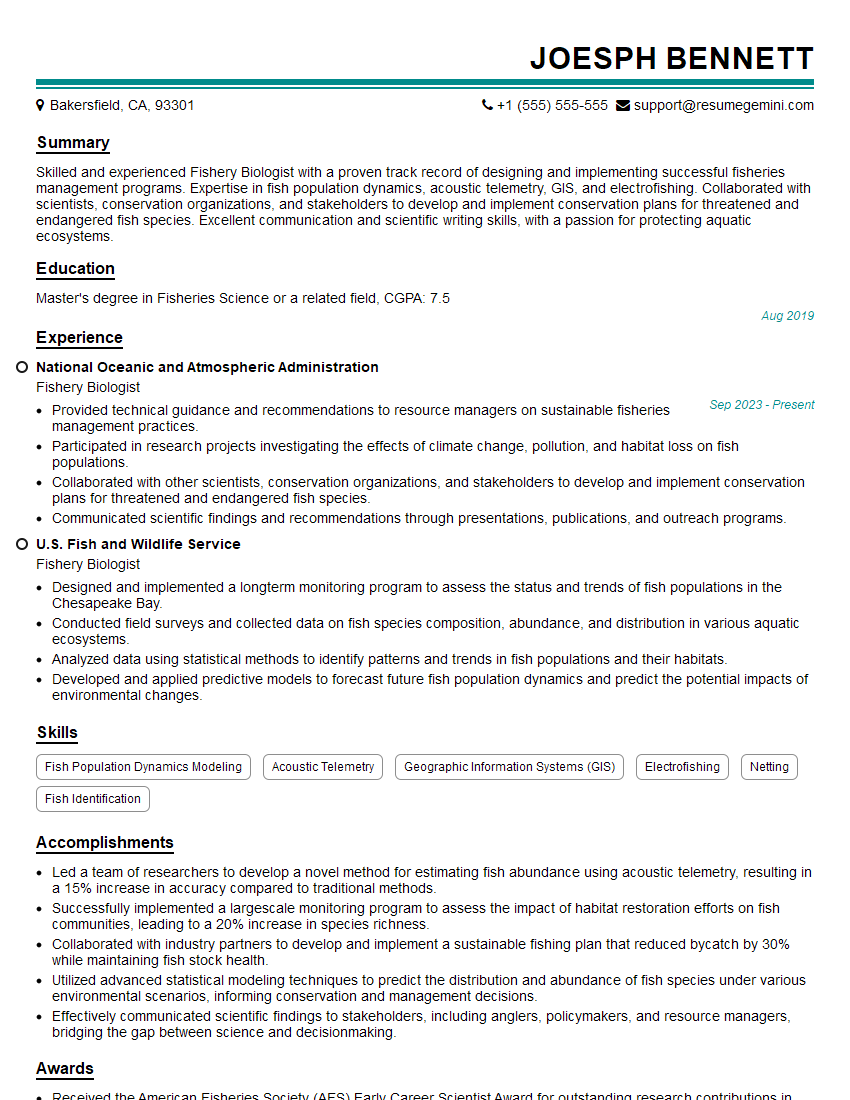
Mastering knowledge of fish products is crucial for career advancement in this dynamic industry. A strong understanding of these topics demonstrates expertise and commitment, making you a highly competitive candidate. To further enhance your job prospects, create an ATS-friendly resume that highlights your skills and experience effectively. ResumeGemini is a trusted resource that can help you build a professional and impactful resume. Examples of resumes tailored to the Knowledge of Fish Products field are available to guide you. Invest time in crafting a compelling resume – it’s your first impression with potential employers.
Explore more articles
Users Rating of Our Blogs
Share Your Experience
We value your feedback! Please rate our content and share your thoughts (optional).
What Readers Say About Our Blog
Very informative content, great job.
good