Are you ready to stand out in your next interview? Understanding and preparing for Knowledge of food safety and sanitation procedures interview questions is a game-changer. In this blog, we’ve compiled key questions and expert advice to help you showcase your skills with confidence and precision. Let’s get started on your journey to acing the interview.
Questions Asked in Knowledge of food safety and sanitation procedures Interview
Q 1. Describe the seven principles of HACCP.
The seven principles of Hazard Analysis and Critical Control Points (HACCP) are a systematic preventative approach to food safety from biological, chemical, and physical hazards in production processes. They provide a framework for identifying and controlling these hazards to ensure the safety and quality of food products.
- Principle 1: Conduct a hazard analysis. Identify potential biological, chemical, and physical hazards that could occur at each step in the production process. Think about things like bacterial contamination from raw meat, pesticide residues on produce, or broken glass in a jar of sauce.
- Principle 2: Determine the critical control points (CCPs). These are steps in the process where control can be applied to prevent or eliminate a food safety hazard or reduce it to an acceptable level. For example, cooking temperature is a CCP for many meat products.
- Principle 3: Establish critical limits. Define measurable parameters at each CCP. This could be a temperature, time, pH level, or other quantifiable measure that indicates whether the control is working effectively. For example, a critical limit might be an internal temperature of 165°F (74°C) for cooked poultry.
- Principle 4: Establish monitoring procedures. This involves regularly checking each CCP to ensure that the critical limits are being met. This might involve using thermometers, timers, and checklists.
- Principle 5: Establish corrective actions. This outlines what to do if monitoring reveals that a critical limit has not been met. For instance, if the poultry hasn’t reached the correct temperature, it may need to be recooked.
- Principle 6: Establish verification procedures. This ensures that the HACCP system is working as intended. This could involve regular audits, employee training, or equipment calibration checks.
- Principle 7: Establish record-keeping and documentation procedures. Maintaining thorough and accurate records of all HACCP procedures is crucial for traceability and accountability. This helps demonstrate compliance and aids in identifying trends or issues.
Q 2. Explain the importance of proper handwashing in food safety.
Proper handwashing is paramount in preventing the spread of foodborne illnesses. Hands can easily transfer bacteria, viruses, and parasites from various sources – from raw meat to contaminated surfaces – to food, leading to contamination. Think of your hands as potential vectors of illness.
Effective handwashing involves wetting hands with warm water, applying soap, rubbing hands vigorously for at least 20 seconds (the time it takes to sing ‘Happy Birthday’ twice), rinsing thoroughly, and drying with a clean towel or air dryer. This simple act significantly reduces the risk of cross-contamination and prevents the spread of harmful pathogens.
For example, a chef failing to wash their hands after handling raw chicken and then preparing a salad risks transferring Salmonella or Campylobacter to the salad, potentially causing food poisoning in consumers. Regular and thorough handwashing is a cornerstone of good food safety practices.
Q 3. What are the critical control points (CCPs) in your area of expertise?
Critical Control Points (CCPs) vary significantly depending on the type of food and the production process. In a restaurant setting, some common CCPs include:
- Cooking temperature: Ensuring food is cooked to the correct internal temperature to kill harmful bacteria (e.g., poultry to 165°F/74°C).
- Cooling time and temperature: Rapidly cooling cooked food to prevent bacterial growth (e.g., from 135°F/57°C to 41°F/5°C within four hours).
- Holding temperature: Maintaining hot food at or above 135°F/57°C and cold food at or below 41°F/5°C to prevent bacterial multiplication.
- Handwashing: Proper handwashing procedures are essential throughout the food preparation process.
- Supplier verification: Ensuring that ingredients are sourced from reputable suppliers who maintain proper food safety standards.
- Cleaning and sanitizing: Regularly cleaning and sanitizing equipment and surfaces to prevent the growth of microorganisms.
In a food processing plant, additional CCPs might involve aspects of ingredient receiving, packaging, and preservation methods.
Q 4. How do you identify and address potential foodborne hazards?
Identifying and addressing potential foodborne hazards requires a multi-faceted approach. It begins with a thorough understanding of the food production process and potential points of contamination. This often involves a hazard analysis, as outlined in HACCP principles.
Identifying Hazards: This involves considering biological hazards (bacteria, viruses, parasites), chemical hazards (pesticides, cleaning chemicals), and physical hazards (glass, metal fragments). Methods include reviewing past incidents, supplier information, and conducting regular inspections. For instance, observing improper food storage practices could indicate a potential hazard.
Addressing Hazards: Once hazards are identified, control measures are implemented at the CCPs. These measures might include proper cooking temperatures, effective cleaning and sanitizing, maintaining temperature control during storage and transport, and implementing employee training programs in proper food handling and hygiene practices. The effectiveness of these control measures is then monitored regularly and any corrective actions are taken immediately.
Q 5. What is the temperature danger zone for food?
The temperature danger zone for food is the range of temperatures (41°F/5°C to 135°F/57°C) in which bacteria multiply rapidly. This temperature range represents ideal conditions for the growth of many harmful microorganisms, increasing the risk of foodborne illness. Food should not be left in this temperature zone for more than two hours.
Imagine this zone as a breeding ground for bacteria. If food sits at room temperature for extended periods, bacteria can quickly multiply to dangerous levels, even if the food initially looked and smelled fine. Keeping food out of this danger zone is critical to ensuring its safety.
Q 6. Explain the difference between sanitizing and cleaning.
Cleaning and sanitizing are distinct but related steps in maintaining food safety. Cleaning removes visible soil, food debris, and other impurities from surfaces. Sanitizing reduces the number of microorganisms to safe levels. They work together to minimize the risk of bacterial contamination.
Think of it like this: cleaning is like washing dishes to remove food particles, while sanitizing is like using a disinfectant to kill any remaining bacteria. You can’t effectively sanitize a dirty surface.
Cleaning: This involves scrubbing surfaces with hot, soapy water to remove food residue. Appropriate cleaning agents and techniques are used depending on the surface being cleaned.
Sanitizing: After cleaning, sanitizing is performed using approved methods, such as chemical sanitizers (chlorine solutions, iodine solutions) or heat sanitization (hot water). The method and concentration of the sanitizer must follow guidelines to be effective.
Q 7. What are the proper procedures for storing food?
Proper food storage is essential for maintaining food quality and preventing bacterial growth. The principles focus on temperature control, FIFO (First-In, First-Out) rotation, and preventing cross-contamination.
- Temperature Control: Cold food must be stored at or below 41°F/5°C, while hot food must be kept at or above 135°F/57°C. Properly functioning refrigerators and freezers are vital.
- FIFO (First-In, First-Out): Older food should be used before newer food to minimize the risk of spoilage. This prevents food from sitting for excessive periods.
- Cross-Contamination Prevention: Raw meats should be stored separately from ready-to-eat foods to prevent contamination. Use separate cutting boards and utensils for raw and cooked foods. Proper packaging helps prevent leakage and cross-contamination.
- Storage Containers: Food should be stored in appropriate containers to prevent moisture loss and contamination.
Imagine a scenario where raw chicken is stored above ready-to-eat vegetables. The potential for dripping juices to contaminate the vegetables and cause illness is significant. Proper storage is crucial to preventing such events.
Q 8. How do you prevent cross-contamination?
Cross-contamination occurs when harmful bacteria or other pathogens transfer from one surface or food to another. Preventing it is crucial for food safety. My approach involves a multi-pronged strategy focusing on separation, sanitation, and hygiene.
- Spatial Separation: Raw meats, poultry, and seafood should be stored separately from ready-to-eat foods. Imagine your refrigerator: raw chicken on the bottom shelf, fruits and vegetables on the top. This prevents dripping juices from contaminating other items.
- Dedicated Utensils and Equipment: Using separate cutting boards, knives, and utensils for raw and cooked foods eliminates the risk of cross-contamination. Color-coded cutting boards are a great visual aid. For instance, a red board for raw meat and a blue board for vegetables.
- Thorough Cleaning and Sanitizing: All surfaces, utensils, and equipment must be thoroughly cleaned and sanitized after each use, especially after contact with raw food. This involves washing with hot, soapy water followed by sanitizing with a food-grade sanitizer, ensuring all visible residue is removed.
- Hand Hygiene: Frequent and thorough handwashing is paramount. Hands should be washed for at least 20 seconds with soap and warm water before, during, and after food preparation.
In my previous role, we implemented a strict color-coded system for cutting boards and utensils, leading to a significant reduction in reported cases of foodborne illness.
Q 9. What are your methods for ensuring proper food handling?
Proper food handling encompasses a series of practices designed to minimize the risk of contamination and ensure food safety. These practices are integral to preventing foodborne illnesses.
- Temperature Control: Maintaining proper temperatures throughout the food handling process is vital. Hot foods should be kept at 135°F (57°C) or above, while cold foods should be kept at 41°F (5°C) or below. This prevents the growth of harmful bacteria.
- First-In, First-Out (FIFO): Using the FIFO method for inventory ensures that older products are used before newer ones, preventing spoilage and reducing waste.
- Personal Hygiene: Employees should maintain high personal hygiene standards, including wearing clean uniforms, hair restraints, and washing hands frequently. Avoid touching your face or hair while handling food.
- Preventing Contamination: Preventing cross-contamination is a key element; following the guidelines in the previous answer.
- Supplier Relations: A robust food safety program also involves strong relationships with suppliers, ensuring they meet the standards set by the food safety management system.
I’ve successfully implemented and managed food handling procedures in a high-volume catering environment, reducing food waste and maintaining consistent food safety standards.
Q 10. Describe your experience with pest control in a food facility.
Pest control is a critical aspect of food safety. A comprehensive pest control program is necessary to prevent pest infestation and contamination of food and surfaces.
- Preventative Measures: Regular cleaning and maintenance are key. This includes sealing cracks and crevices, storing food in airtight containers, and promptly cleaning up spills. Think of it like creating a fortress to keep pests out.
- Monitoring: Regularly checking for signs of pests, such as droppings, gnaw marks, or insects themselves, is crucial for early detection.
- Professional Pest Control: Employing a licensed pest control company for regular inspections and treatments is essential, ensuring the use of safe and effective methods.
- Documentation: Maintain detailed records of pest control activities, including inspections, treatments, and any pest sightings. This allows for tracking and improving the effectiveness of the program.
In my previous role, I oversaw the implementation of a comprehensive pest control program, reducing pest activity by 80% within six months through a combination of preventative measures and professional pest control services.
Q 11. What is your understanding of food allergens and how to manage them?
Food allergens are proteins found in certain foods that can trigger an allergic reaction in susceptible individuals. These reactions can range from mild to life-threatening. Managing food allergens requires meticulous attention to detail.
- Accurate Ingredient Labeling: Clearly labeling all food products with a full list of ingredients, including potential allergens, is essential. This allows consumers to make informed choices.
- Preventing Cross-Contamination: Avoiding cross-contamination between allergenic and non-allergenic foods is critical, employing dedicated equipment and preventing contact.
- Employee Training: Thorough employee training on allergen awareness and safe handling practices is paramount. Employees need to understand the risks and how to prevent contamination.
- Allergen Control Programs: Implementing a robust allergen control program helps in identifying and controlling allergen sources throughout the entire food production process, from receiving ingredients to serving the final product.
In a previous role, we established a comprehensive allergen management program that involved detailed training for all staff, strict ingredient segregation, and a robust cleaning and sanitation protocol to prevent cross-contamination, resulting in zero allergen-related incidents.
Q 12. Explain the importance of proper waste disposal in a food environment.
Proper waste disposal in a food environment is essential for preventing pest infestations, controlling odors, and maintaining hygiene. Improper waste disposal can lead to health hazards and attract pests that can contaminate food.
- Designated Containers: Using appropriately sized and clearly labeled containers for different types of waste—such as food scraps, packaging, and hazardous materials—is vital for segregation and efficient disposal.
- Regular Emptying: Regular and frequent emptying of waste containers prevents overflowing and unpleasant odors. This also discourages pest attraction.
- Proper Storage: Storing waste containers in designated areas away from food preparation areas and keeping them tightly sealed prevents spills and odors from spreading.
- Compliance with Regulations: Following all local, state, and federal regulations regarding waste disposal is crucial to prevent environmental contamination and potential legal repercussions.
In my experience, having a well-organized waste management system leads not only to a cleaner and safer food preparation environment, but it also simplifies cleaning and reduces the chance of pest infestation. We implemented a system of color-coded bins, making waste sorting intuitive and easy.
Q 13. How do you maintain accurate food temperature records?
Maintaining accurate food temperature records is crucial for ensuring food safety and demonstrating compliance with regulations. These records can be used to trace back potential sources of foodborne illness outbreaks.
- Use of Thermometers: Using calibrated thermometers to monitor food temperatures during all stages of handling—receiving, storage, preparation, and service—is paramount.
- Regular Monitoring: Taking temperature readings at regular intervals, and noting them down precisely, is vital to ensure consistent food safety.
- Record-Keeping System: Implement a clear and organized record-keeping system, whether manual or digital, to accurately document all temperature readings, the time they were taken, and the location. This could involve a dedicated logbook or software.
- Review and Analysis: Regularly reviewing temperature records helps to identify potential issues and areas for improvement in food handling practices.
In my previous role, we used a digital temperature monitoring system that automatically logged temperature readings and generated reports, making record-keeping efficient and readily available for audits.
Q 14. Describe your experience with food safety audits and inspections.
Food safety audits and inspections are essential for evaluating a facility’s adherence to food safety standards. These audits can be internal, conducted by the facility itself, or external, conducted by regulatory bodies.
- Preparation: Thorough preparation is key for a successful audit. This includes ensuring all documentation is up-to-date, equipment is properly maintained, and staff is well-trained on food safety procedures.
- Compliance: Maintaining a high level of compliance with all relevant food safety regulations and standards is critical for a positive audit outcome.
- Corrective Actions: Having a system for addressing any identified non-conformances or deficiencies is important to ensure prompt corrective action is taken.
- Documentation: Meticulous record-keeping of all inspection findings, corrective actions, and follow-up activities is necessary for demonstrating continuous improvement.
I have extensive experience in preparing for and undergoing both internal and external food safety audits. I’ve successfully managed several audits, using the findings to enhance our food safety management system. The key is to proactively address potential issues before they become problems.
Q 15. What is your familiarity with relevant food safety regulations (e.g., FDA, USDA)?
My familiarity with food safety regulations is extensive. I have a thorough understanding of the FDA’s Food Code, which provides a baseline for food safety practices across the United States, and I’m well-versed in the specific regulations issued by the USDA, particularly concerning meat, poultry, and egg products. This includes knowledge of Hazard Analysis and Critical Control Points (HACCP) principles, which are fundamental to preventing foodborne illnesses. I’m also familiar with state and local regulations, recognizing that they can often be stricter than federal standards. For example, I understand the requirements for temperature monitoring, employee health, and facility sanitation that vary across jurisdictions. Keeping up-to-date with these evolving regulations is crucial for maintaining the highest standards of food safety.
Career Expert Tips:
- Ace those interviews! Prepare effectively by reviewing the Top 50 Most Common Interview Questions on ResumeGemini.
- Navigate your job search with confidence! Explore a wide range of Career Tips on ResumeGemini. Learn about common challenges and recommendations to overcome them.
- Craft the perfect resume! Master the Art of Resume Writing with ResumeGemini’s guide. Showcase your unique qualifications and achievements effectively.
- Don’t miss out on holiday savings! Build your dream resume with ResumeGemini’s ATS optimized templates.
Q 16. How would you handle a foodborne illness outbreak?
Handling a foodborne illness outbreak requires a rapid and coordinated response. The first step is to immediately isolate potentially contaminated food and cease further service of that food item. Next, we must identify the source of the outbreak through meticulous record-keeping (including supplier information, batch numbers, and preparation details) and potentially through collaboration with public health officials. This involves thorough interviews with affected individuals to pinpoint common links. Simultaneously, we must notify relevant health authorities – in most cases, the local health department – and fully cooperate with their investigation. This includes providing complete access to records and allowing for inspections and sample collection. We would implement enhanced cleaning and sanitization procedures, focusing on areas identified as potential sources of contamination. Finally, a comprehensive review of our food handling procedures would be undertaken to prevent future outbreaks. Transparency and prompt communication are vital throughout this process.
Q 17. What is your experience with personal protective equipment (PPE) in food handling?
Personal Protective Equipment (PPE) is critical in maintaining food safety. My experience includes the consistent use of appropriate PPE, tailored to the specific task. This commonly involves hand gloves, which must be changed frequently, especially when switching between handling raw and cooked food. Hairnets or other head coverings are essential to prevent hair contamination. In some cases, aprons or protective clothing might be necessary to prevent contamination from spills or splashes. For tasks involving chemical cleaning agents, appropriate gloves and eye protection are non-negotiable. For example, during a deep cleaning of a meat slicer, I’d wear nitrile gloves, an apron, and safety glasses. Regular inspection and replacement of damaged PPE are also part of the routine to ensure its effectiveness.
Q 18. Explain the importance of employee training in food safety.
Employee training in food safety is paramount for preventing foodborne illnesses and maintaining a safe working environment. Comprehensive training should cover all aspects of food handling, including proper handwashing techniques, safe temperature control, preventing cross-contamination, and the importance of personal hygiene. It’s crucial to emphasize the potential consequences of improper food handling, including legal repercussions and the risks to public health. We utilize a combination of classroom instruction, hands-on demonstrations, and regular quizzes to ensure understanding and retention. Documentation of training is essential, ensuring compliance and offering a clear record for audits. Regular refresher training keeps employees updated on best practices and changes in regulations. This investment in employee training ultimately translates into a safer workplace and products and protects both the business and its consumers.
Q 19. Describe your methods for monitoring and controlling food temperatures.
Monitoring and controlling food temperatures are achieved through a multi-pronged approach. We use calibrated thermometers to check temperatures at critical control points (CCPs) throughout the food handling process, particularly during receiving, storage, cooking, and serving. These temperatures are meticulously recorded using temperature logs, ensuring traceability and accountability. For cold storage, we employ refrigerators and freezers with accurate temperature control and alarms that alert us to any deviations. We adhere to the FDA Food Code guidelines for safe temperature ranges. For hot holding, we utilize appropriate equipment with temperature maintaining capabilities. Deviations from these temperature guidelines trigger immediate corrective actions, such as discarding affected food. A visual inspection of food quality alongside temperature checks help to further detect potential spoilage.
Q 20. What are the best practices for cleaning and sanitizing food equipment?
Cleaning and sanitizing food equipment is a multi-step process crucial for preventing cross-contamination and ensuring food safety. First, all food residue must be removed from equipment surfaces using appropriate detergents and water. This often involves pre-soaking heavily soiled items. Then, the surfaces are thoroughly rinsed with clean water. The next crucial step is sanitization, typically using a solution of approved sanitizer at the correct concentration and contact time. This effectively kills harmful microorganisms. Finally, the equipment must be allowed to air dry. We use a color-coded system for cleaning cloths and utensils to prevent cross-contamination. For example, red for raw meat, green for vegetables, etc. Detailed cleaning schedules are created and followed meticulously, ensuring consistent sanitation across all equipment.
Q 21. How do you ensure the effectiveness of your sanitation program?
The effectiveness of our sanitation program is ensured through several key measures. We regularly monitor and record cleaning and sanitizing activities. We perform regular equipment inspections for cleanliness and proper functioning. We conduct routine swab tests to confirm the effectiveness of our sanitizing procedures and check for microbial contamination. We have a documented and detailed sanitation plan that outlines procedures, responsibilities, and frequencies of cleaning. This is reviewed and updated regularly. Employee training reinforces proper cleaning and sanitizing techniques. Regular audits and inspections (both internal and external) help identify any areas for improvement. Addressing any deficiencies identified during audits, and continuously improving the sanitation program based on data and feedback are critical to maintaining efficacy.
Q 22. How would you address employee non-compliance with food safety protocols?
Addressing employee non-compliance with food safety protocols requires a multi-pronged approach focusing on prevention, education, and corrective action. It starts with a strong foundation of clear, well-defined protocols, readily accessible to all staff. These protocols should be explained thoroughly during initial training and reinforced through regular refresher courses and on-the-job observation.
For minor infractions, a verbal warning coupled with retraining might suffice. However, for repeated or serious violations, progressive discipline is essential. This might involve written warnings, temporary suspension, or ultimately, termination, depending on the severity and recurrence of the non-compliance. Documentation of all incidents, corrective actions, and employee responses is critical.
Imagine a scenario where an employee consistently fails to wash their hands properly. First, we’d provide additional training focusing on handwashing techniques, including the importance of proper duration and using soap. If the behavior continues, a written warning would be issued, and perhaps further observation would be implemented. Persistent disregard would lead to more severe consequences. The key is consistency and fairness in applying the disciplinary process.
- Prevention: Clear protocols, adequate training, readily available sanitation supplies.
- Education: Regular refresher courses, on-the-job coaching, easily accessible training materials.
- Corrective Action: Verbal warnings, written warnings, suspension, termination (depending on severity and recurrence).
- Documentation: Detailed records of all incidents, training, and disciplinary actions.
Q 23. What is your experience with food safety software or documentation systems?
My experience with food safety software and documentation systems is extensive. I’ve worked with several systems, from simple spreadsheet-based solutions to sophisticated HACCP (Hazard Analysis and Critical Control Points) software packages. These systems are crucial for tracking key metrics, managing inventory, documenting temperature logs, and maintaining compliance records. I’m proficient in using software to track employee training, schedule inspections, and generate reports required for audits.
For example, in my previous role, we utilized a system that integrated temperature monitoring probes directly into our software, automatically logging readings and alerting us to any deviations outside of safety parameters. This real-time monitoring greatly improved our ability to react swiftly to potential hazards. I’m also comfortable using software that generates traceability reports, allowing us to rapidly identify the source of any contamination should an incident occur. This is especially vital for larger operations with complex supply chains.
Q 24. Explain your understanding of different food preservation techniques.
Food preservation techniques aim to extend the shelf life of food and prevent spoilage by inhibiting microbial growth and enzymatic activity. There are several key methods, each with its own advantages and disadvantages:
- High-Temperature Methods: These include canning, pasteurization, and sterilization. High temperatures kill microorganisms, thus preventing spoilage. Canning, for example, involves heating food to a high temperature in sealed containers to eliminate microorganisms and create a vacuum seal.
- Low-Temperature Methods: Refrigeration and freezing slow down microbial growth, extending shelf life significantly. Refrigeration is suitable for short-term preservation, while freezing allows for longer storage.
- Water Removal Methods: Dehydration, drying, and smoking reduce water activity, inhibiting microbial growth. These methods are effective for extending the shelf life of fruits, vegetables, and meats.
- Chemical Preservation: Methods such as salting, sugaring, smoking, and pickling utilize chemicals that inhibit microbial growth and enzymatic activity. Salt, for instance, draws water out of microorganisms, preventing their growth.
- Other Methods: Fermentations (e.g., sauerkraut, yogurt) utilize beneficial microorganisms to produce acids that inhibit the growth of spoilage organisms. Irradiation uses ionizing radiation to kill microorganisms, and modified atmosphere packaging (MAP) alters the gaseous environment to inhibit spoilage.
The choice of preservation method depends on the type of food, desired shelf life, and cost considerations.
Q 25. Describe your approach to identifying and mitigating food spoilage risks.
Identifying and mitigating food spoilage risks requires a proactive and systematic approach. It begins with a thorough understanding of the factors that contribute to spoilage, such as temperature abuse, improper storage, cross-contamination, and inadequate sanitation. A robust HACCP (Hazard Analysis and Critical Control Points) plan is essential for identifying potential hazards at each stage of the food production process, from receiving ingredients to serving the final product.
My approach involves implementing a comprehensive monitoring system including regular temperature checks, visual inspections for signs of spoilage (such as mold growth, off-odors, or changes in texture), and adherence to strict first-in, first-out (FIFO) inventory rotation policies. Proper sanitation protocols, including regular cleaning and disinfection of equipment and surfaces, are critical in preventing cross-contamination and bacterial growth. Additionally, staff training on recognizing and addressing potential spoilage risks is crucial. For instance, a regular review of temperature logs helps identify consistent issues with refrigeration, allowing prompt corrective actions, such as equipment repair or staff retraining.
Q 26. How do you ensure the safety and quality of incoming ingredients?
Ensuring the safety and quality of incoming ingredients is paramount. This involves a multi-step process beginning with careful supplier selection. We prioritize suppliers with strong reputations for food safety and quality control, verifying their compliance with relevant regulations. Upon arrival, all ingredients are visually inspected for signs of damage, spoilage, or contamination. Temperature checks are conducted, ensuring that temperature-sensitive items have been maintained at appropriate levels throughout transportation.
We utilize a robust system of documentation, recording supplier information, delivery dates, and inspection results. If any discrepancies are detected, the shipment is rejected and the supplier is notified. Furthermore, we routinely conduct random testing of incoming ingredients to verify their quality and safety. For example, we may test for the presence of pathogens or check for pesticide residues, depending on the type of ingredient. This proactive approach minimizes the risk of incorporating unsafe or low-quality ingredients into our production process.
Q 27. What is your experience with investigating and resolving food safety incidents?
Investigating and resolving food safety incidents requires a swift and thorough response. My approach involves immediately isolating the affected product, preventing further contamination and protecting consumer health. We then initiate a comprehensive investigation, identifying the root cause of the incident, which often involves reviewing production records, temperature logs, supplier information, and staff interactions. This may involve collecting samples for laboratory testing to pinpoint the source of contamination or spoilage.
Once the root cause is identified, we implement corrective actions to prevent recurrence. This may involve retraining staff, improving sanitation procedures, changing suppliers, or upgrading equipment. We maintain detailed records of the entire investigation process, including findings, corrective actions, and follow-up measures. Depending on the severity of the incident, we may also need to cooperate with regulatory agencies and initiate a product recall. For example, if a case of salmonellosis is traced back to our establishment, we would need to coordinate with public health officials, trace all possibly affected products, and conduct a full recall, along with thorough remediation of our facility.
Q 28. How do you stay updated on changes in food safety regulations and best practices?
Staying updated on changes in food safety regulations and best practices is crucial for maintaining compliance and protecting public health. I utilize a multi-faceted approach to stay informed, including regular attendance at industry conferences and workshops, active participation in professional organizations such as the International Association for Food Protection (IAFP), and consistent review of relevant publications and regulatory updates from agencies like the FDA and USDA.
I also subscribe to industry newsletters and journals, which provide insights into emerging trends and best practices. Regular online searches for relevant updates, coupled with attending webinars and online courses, help me to stay abreast of the latest advancements in food safety technology and management techniques. This continuous learning ensures that our food safety program remains current and effective, reflecting the latest scientific knowledge and regulatory requirements.
Key Topics to Learn for Food Safety and Sanitation Procedures Interviews
- Hazard Analysis and Critical Control Points (HACCP): Understand the principles of HACCP, including identifying potential hazards, establishing critical control points, and implementing monitoring procedures. Consider practical applications like developing a HACCP plan for a specific food production process.
- Foodborne Illness Prevention: Learn about common foodborne pathogens (e.g., Salmonella, E. coli), their sources, and methods of prevention. Think about how to apply this knowledge to safe food handling, storage, and preparation practices in different food service settings.
- Sanitation and Hygiene Practices: Master proper handwashing techniques, cleaning and sanitizing procedures for equipment and surfaces, and pest control methods. Consider how to implement these practices to meet regulatory standards and maintain a hygienic food preparation environment.
- Personal Hygiene and Employee Training: Understand the importance of employee hygiene, including proper attire, handwashing, and illness reporting. Explore how effective training programs contribute to a safe food handling environment.
- Food Storage and Temperature Control: Learn about safe temperature ranges for different types of food, proper refrigeration techniques, and the dangers of temperature abuse. Consider scenarios requiring problem-solving, such as addressing a power outage and maintaining food safety.
- Food Allergens and Cross-Contamination: Understand the management of food allergens and how to prevent cross-contamination during food preparation and service. Think about practical strategies for managing allergens in a busy kitchen environment.
- Regulatory Compliance: Familiarize yourself with relevant food safety regulations and standards (e.g., FDA, USDA guidelines). Consider how to ensure compliance in a food service operation.
Next Steps
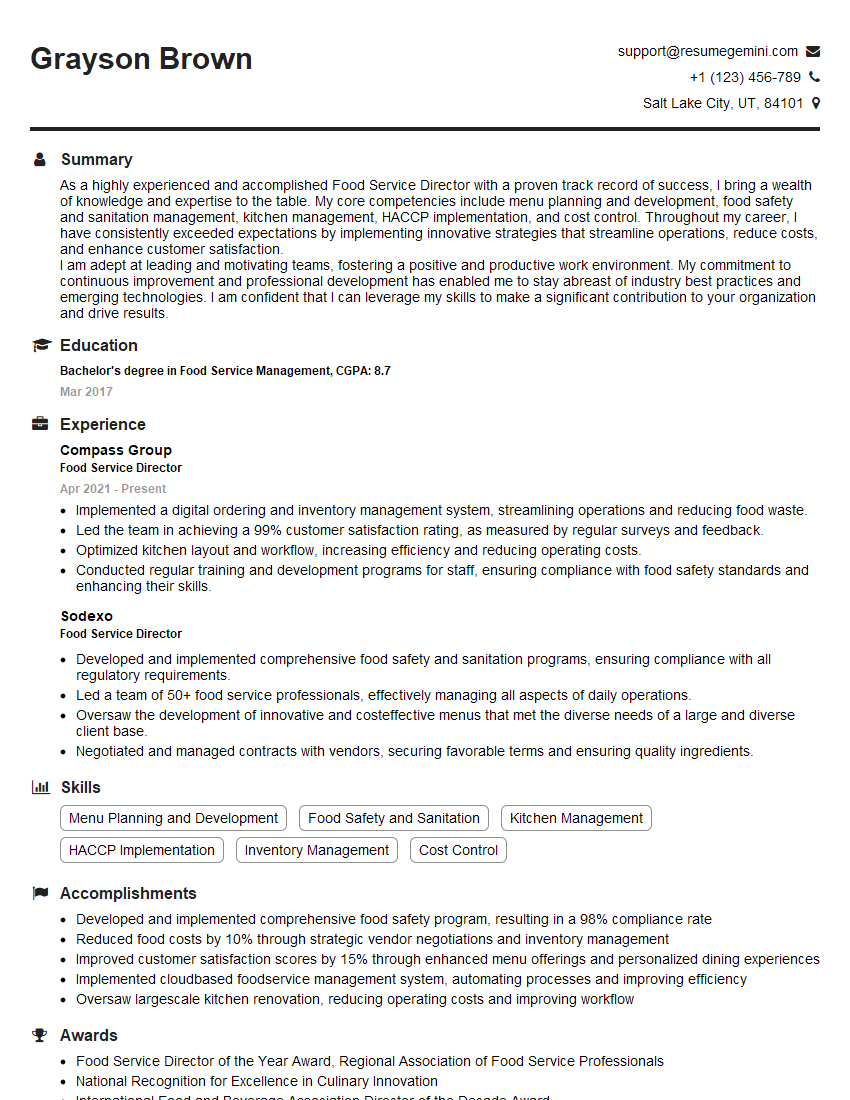
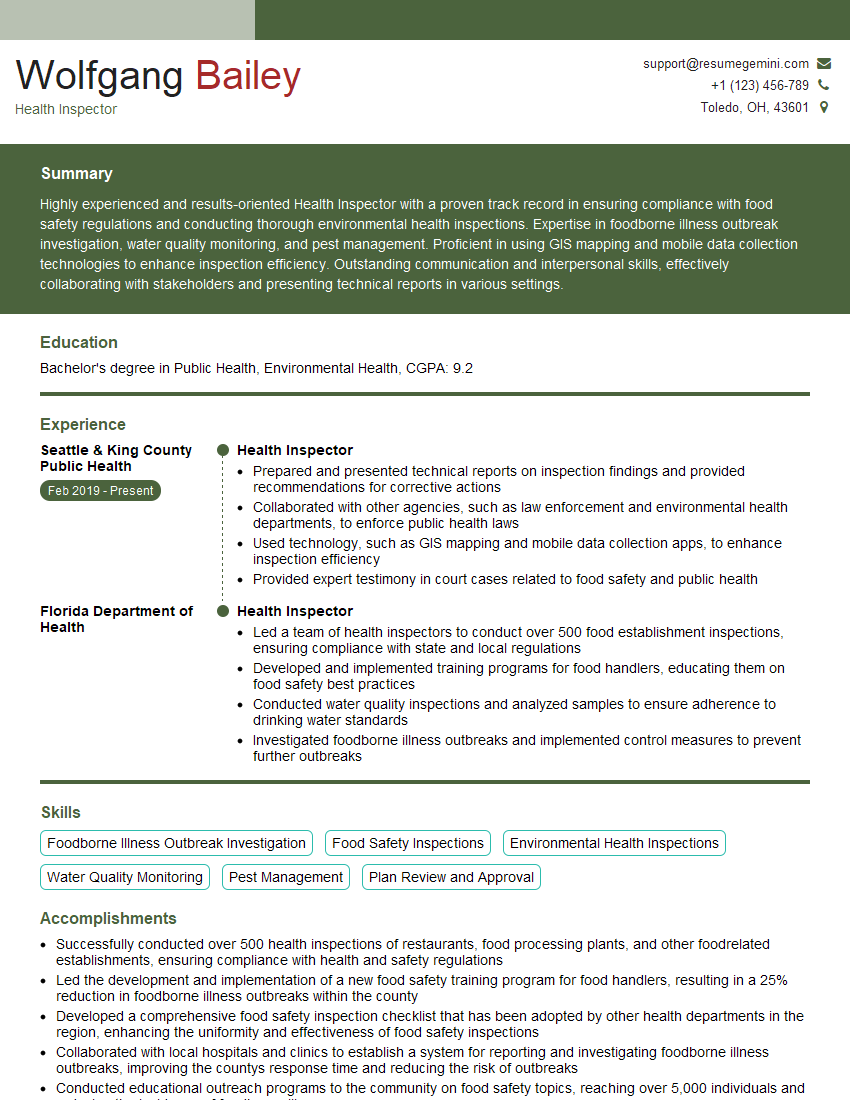
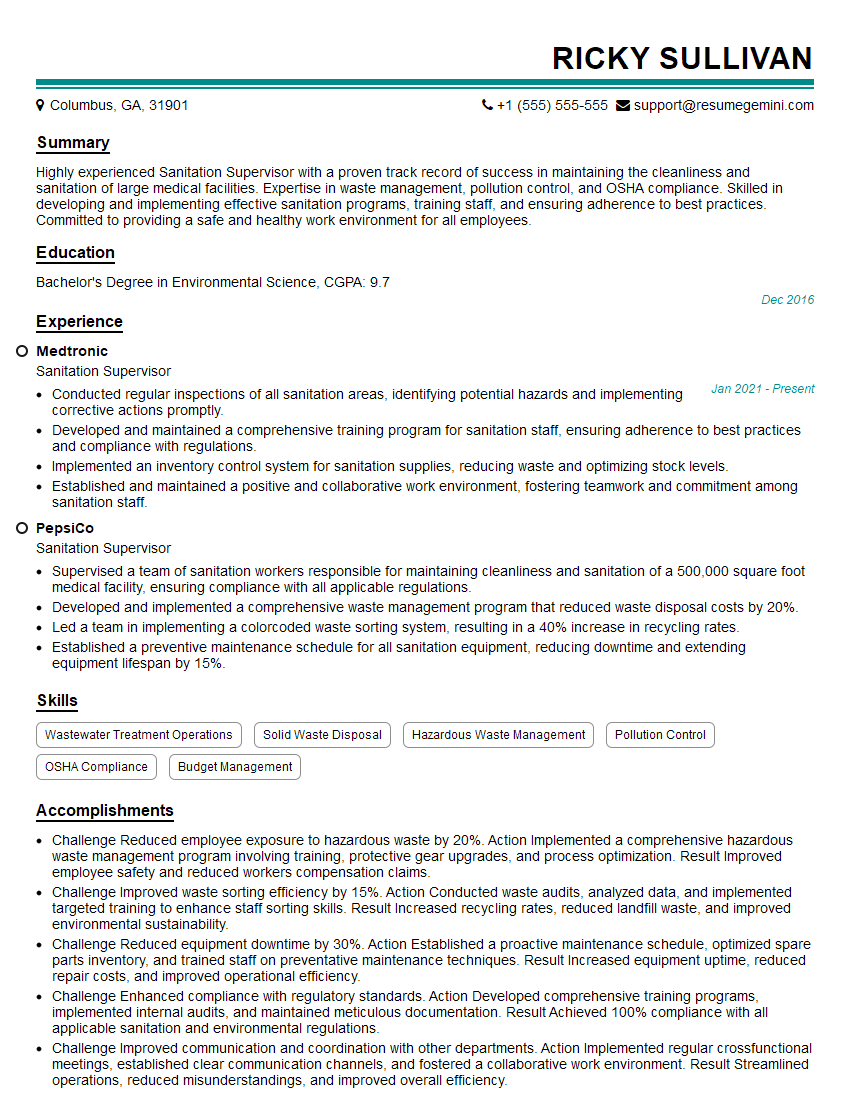
Mastering food safety and sanitation procedures is crucial for career advancement in the food industry. A strong understanding of these concepts demonstrates your commitment to safety, quality, and regulatory compliance, making you a highly desirable candidate. To significantly improve your job prospects, create an ATS-friendly resume that highlights your skills and experience effectively. ResumeGemini is a trusted resource that can help you build a professional and impactful resume tailored to your specific experience. Examples of resumes tailored to showcasing expertise in food safety and sanitation procedures are available to guide you.
Explore more articles
Users Rating of Our Blogs
Share Your Experience
We value your feedback! Please rate our content and share your thoughts (optional).
What Readers Say About Our Blog
Very informative content, great job.
good