The right preparation can turn an interview into an opportunity to showcase your expertise. This guide to Knowledge of Forklift Safety Standards interview questions is your ultimate resource, providing key insights and tips to help you ace your responses and stand out as a top candidate.
Questions Asked in Knowledge of Forklift Safety Standards Interview
Q 1. What are the different classes of forklifts and their applications?
Forklifts are categorized into classes based on their power source and intended application. Understanding these classes is crucial for selecting the right machine for the job and ensuring safe operation.
- Class I: Electric Forklifts: These are powered by batteries and are commonly used indoors due to their quiet operation and lack of emissions. They are ideal for warehouses, distribution centers, and manufacturing facilities where noise and fumes are a concern. Think of them as the workhorses of indoor material handling.
- Class II: Pneumatic Tire Forklifts (Gasoline, LPG, or Diesel): These are powered by internal combustion engines and are better suited for outdoor applications or rough terrains. Their robust construction and powerful engines make them capable of handling heavier loads and navigating challenging environments. Imagine using these on construction sites or in lumber yards.
- Class III: Electric Hand Trucks and Pallet Jacks: These are smaller, manually operated devices used for short-distance material handling. They are perfect for moving lighter loads within a confined space, like a retail store’s stockroom.
- Class IV: Cushion Tire Forklifts (Electric or Internal Combustion): These forklifts have solid rubber tires and are best suited for smooth, indoor surfaces. They are more maneuverable than pneumatic tire forklifts but lack the ruggedness for outdoor use.
- Class V: Internal Combustion Forklifts (Diesel or LPG): This category often encompasses heavier-duty forklifts for outdoor or industrial applications, offering a good balance of power and maneuverability.
Choosing the wrong class for the task can lead to inefficiencies, damage to equipment or property, and most importantly, safety hazards. Always assess the work environment and load requirements before selecting a forklift.
Q 2. Describe the pre-operational inspection checklist for a forklift.
A thorough pre-operational inspection is paramount to preventing accidents. Think of it as a crucial health check for your forklift before each use. Here’s a checklist:
- Tires: Check tire pressure, tread depth, and for any damage or wear.
- Lights and Signals: Ensure all lights (headlights, brake lights, turn signals) are functioning correctly.
- Brakes: Test the effectiveness of the service and parking brakes.
- Steering: Check for smooth and responsive steering.
- Horn: Verify the horn is working.
- Fluid Levels: Inspect engine oil, hydraulic fluid, coolant, and battery levels (if applicable).
- Mast and Forks: Look for any damage, leaks, or misalignment in the mast and forks.
- Safety Devices: Ensure seatbelt is in good condition, and all safety devices like the horn, lights, and seatbelt are functioning correctly.
- Leaks: Check for any fuel, hydraulic fluid, or other leaks.
- Overall Condition: Look for any signs of damage, loose parts, or anything that seems unusual.
Documenting your inspection is a best practice; many companies use checklists for this purpose. A well-maintained forklift is a safe forklift.
Q 3. Explain the proper procedures for loading and unloading cargo using a forklift.
Loading and unloading cargo safely requires a methodical approach. Here’s how to do it:
- Approach Slowly: Approach the load slowly and position the forklift so the forks are aligned with the load.
- Engage Forks: Engage the forks carefully, ensuring they are fully under the load’s center of gravity.
- Lift Smoothly: Raise the load slowly and smoothly, keeping it balanced.
- Transport Carefully: Move the load to its destination, maintaining a steady and controlled speed.
- Lower Gently: Lower the load carefully onto its designated spot, avoiding sudden movements.
- Disengage Forks: Disengage the forks only after the load is completely settled.
- Maintain Visibility: Always maintain good visibility of the surrounding area and potential obstacles during loading and unloading.
- Proper Load Placement: Ensure the load is securely and appropriately positioned on the forks, following proper weight distribution guidelines. An uneven load is a dangerous load.
- Use Spotters: When visibility is limited or the environment is challenging, use spotters to guide you.
Remember, haste makes waste – and accidents. Prioritize safety over speed in all loading and unloading operations.
Q 4. What are the load capacity limits and how are they determined?
Load capacity limits are crucial for safe operation. Exceeding these limits can lead to equipment damage, injury, or even death. The load capacity is determined by several factors:
- Forklift Type: Different forklifts have different capacities depending on their design and build.
- Fork Length: Longer forks will reduce the load capacity.
- Load Center: The distance of the load’s center of gravity from the front of the forks significantly impacts capacity. A load further forward reduces the capacity.
- Mast Tilt: Tilting the mast forward or backward also impacts the capacity.
- Ground Conditions: Uneven or soft ground reduces the effective capacity.
The manufacturer’s data plate on the forklift clearly states the maximum load capacity under various conditions. Never exceed this rating. It is essential to always consult the manufacturer’s specifications and understand the impact of the factors mentioned above on the load capacity.
Q 5. How do you ensure the stability of the forklift while operating?
Maintaining stability while operating a forklift is essential. Several factors contribute to stability:
- Load Center: Keeping the load’s center of gravity as close to the mast as possible is vital for stability. Think of it like balancing a pencil – the closer the weight is to the center, the more stable it is.
- Speed: Avoid sudden acceleration, braking, or turning, especially when carrying a load. Smooth operation is key.
- Terrain: Always be aware of the terrain. Avoid driving over uneven surfaces or inclines steeper than the forklift’s specified limits. Avoid driving over uneven surfaces or inclines steeper than the forklift’s specified limits.
- Load Weight Distribution: Ensure even weight distribution across both forks to prevent tipping.
- Proper Lifting Techniques: Lift gradually, avoiding sudden movements.
- Avoid Obstructions: Maintain awareness of obstacles and keep a safe distance to prevent collisions that could compromise stability.
Remember, a stable forklift operation significantly reduces the risk of accidents and ensures the safety of the operator and those nearby.
Q 6. What are the safety regulations regarding forklift operation in confined spaces?
Operating forklifts in confined spaces poses unique challenges, necessitating extra caution. Key safety regulations include:
- Reduced Speed: Maintaining very low speeds is critical. Sudden movements can easily cause collisions in tight spaces.
- Improved Visibility: Enhanced awareness of surroundings is paramount. Use spotters when needed to ensure a clear path.
- Trained Personnel: Only trained and experienced operators should handle forklifts in such environments.
- Appropriate Equipment: Use forklifts designed for confined spaces whenever possible. Smaller, more maneuverable models are often preferred.
- Clear Pathways: Ensure clear pathways free from obstructions to prevent collisions.
- Warning Systems: Utilize audible warning devices to alert pedestrians and other workers.
Remember, confined spaces present a significantly higher risk of accidents. Taking extra precautions is not just recommended – it’s essential.
Q 7. Explain the procedures for operating a forklift on inclines and declines.
Operating a forklift on inclines and declines demands a cautious approach. Here are the key procedures:
- Gradual Approach: Approach inclines and declines slowly and gradually, avoiding sudden movements.
- Facing Uphill: When going uphill, always face uphill. This provides better control and stability.
- Facing Downhill: When going downhill, face downhill to maintain control. However, use caution as this is inherently more dangerous.
- Load Positioning: Keep the load as close to the forklift as possible to maintain stability. Remember, a forward-leaning load can greatly reduce the ability to recover from a loss of balance.
- Speed Control: Maintain a low speed, and avoid sudden braking or acceleration.
- Avoid Sharp Turns: Sharp turns on inclines or declines can easily lead to rollovers or loss of control.
- Surface Conditions: Ensure the surface is firm and stable before proceeding. Avoid slippery or uneven surfaces.
- Load Capacity: Be aware that incline operation reduces your load capacity. Consult the forklift’s specifications for these limits. The incline makes stability much more precarious, so your effective load capacity is significantly reduced.
Never attempt to operate a forklift on inclines or declines exceeding its rated capabilities. Safety should always come first.
Q 8. How do you handle different types of loads (pallets, drums, etc.)?
Handling different types of loads safely requires understanding the load’s center of gravity and using the appropriate attachments. For pallets, ensure they are stable and evenly loaded before lifting. Never lift a damaged pallet. The forks should be fully inserted under the pallet, ensuring even weight distribution to avoid tipping. For drums, use a drum clamp or other specialized attachment designed to securely grasp the drum, preventing it from rolling or falling. Always check the drum’s weight and ensure it’s within the forklift’s lifting capacity. Remember to keep the load low and close to the mast to maintain stability. Think of it like carrying a heavy box – you wouldn’t hold it far out from your body, would you? The same principle applies to forklifts.
Example: When lifting a pallet of bricks, I would carefully position the forks ensuring even weight distribution to prevent the pallet from tilting. For a stack of drums, I would utilize the appropriate drum clamp and ensure it’s securely fastened before lifting.
Q 9. What are the emergency procedures if a forklift malfunctions?
Emergency procedures for forklift malfunctions depend on the nature of the malfunction. If the engine stalls or the hydraulics fail, immediately turn off the ignition and engage the parking brake. If you encounter a steering or brake malfunction, carefully bring the forklift to a complete stop, avoiding any sudden movements. Never attempt to repair a malfunctioning forklift yourself. Instead, alert your supervisor or maintenance personnel. Use the appropriate warning devices – lights or horns – to alert others of your situation and position. Keep others away from the malfunctioning equipment until it’s been assessed by a qualified technician.
Example: If my brakes suddenly fail, I would slowly and carefully steer the forklift towards an open, safe area, using the surrounding environment (such as building walls or obstacles) to gradually decrease the speed before completely coming to a stop. I would then immediately inform my supervisor about the issue and await further instructions.
Q 10. What are your responsibilities regarding forklift maintenance?
My responsibilities regarding forklift maintenance extend beyond just daily pre-operational checks. I regularly inspect the forklift for any damage, leaks, or unusual noises. I report any issues immediately to my supervisor. I am also responsible for correctly securing the forklift when not in use. This includes ensuring it’s parked on level ground, the parking brake is engaged, and the forks are lowered to the ground. Furthermore, I understand the importance of attending any scheduled maintenance sessions and ensuring any necessary repairs are done by qualified personnel. It’s crucial to remember that preventative maintenance is key in ensuring both personal safety and efficient operation.
Example: During my daily pre-shift check, I noticed a small oil leak. I immediately reported this to my supervisor, and the forklift was taken out of service until the leak was repaired.
Q 11. Describe the proper procedures for refueling a forklift.
Refueling a forklift requires careful adherence to safety procedures. First, turn off the forklift completely and ensure the engine is cool. Never refuel while the engine is running. Position the forklift in a well-ventilated area, away from any ignition sources or flammable materials. Use only the appropriate type of fuel specified for your forklift. Carefully remove the fuel cap and slowly insert the fuel nozzle into the tank. Avoid overfilling. After refueling, securely tighten the fuel cap and check the surrounding area for any spills. If any spill occurs, promptly clean it up using the correct absorbent materials and report the incident to your supervisor. Safety glasses and gloves are strongly recommended during this entire process.
Example: Before refueling, I always ensure the forklift is parked on a level surface away from any potential ignition sources, like the charging station or other equipment. I carefully add fuel slowly, ensuring I don’t overfill the tank, and then meticulously wipe away any spillage.
Q 12. Explain the importance of using seat belts and other safety devices.
Seat belts and other safety devices are critical for forklift operation. The seat belt prevents ejection from the forklift during sudden stops or accidents. This dramatically reduces the risk of serious injury or death. Other safety devices, such as back-up alarms, horn, and lights, are equally important as they help prevent collisions with pedestrians or other equipment and increases visibility. The use of safety devices is not merely a formality, it’s a life-saving commitment.
Example: I always wear my seatbelt, even when traveling short distances. This simple precaution can significantly decrease the risk of a serious accident.
Q 13. What are the common causes of forklift accidents and how can they be prevented?
Common causes of forklift accidents include speeding, inadequate training, unsafe loading practices, poor visibility, and lack of maintenance. Speeding reduces reaction time and increases the risk of losing control. Inadequate training results in operators not understanding proper operating procedures, causing potentially dangerous situations. Unsafe loading practices, such as overloading or improper load securing, can cause the forklift to tip over. Poor visibility, particularly in congested areas, leads to collisions with pedestrians and other equipment. Neglecting proper maintenance increases the probability of mechanical failure, resulting in accidents. To prevent these accidents, comprehensive training, regular maintenance, strict adherence to speed limits, safe loading techniques, and improved visibility are essential.
Example: An operator exceeding the speed limit might lose control, resulting in a collision. Proper training would reinforce the importance of maintaining appropriate speeds and adhering to safety procedures.
Q 14. How do you communicate with pedestrians and other forklift operators in a warehouse environment?
Effective communication with pedestrians and other forklift operators is crucial for safety. I use visual cues such as hand signals, horn, and flashing lights to indicate my intentions and movements. Before entering a congested area, I always slow down and sound the horn to alert pedestrians. I maintain a safe distance from other forklifts and prioritize visibility. I also make sure I’m fully aware of my surroundings and the potential presence of other workers before commencing any operation. Communication is always a two-way street; I actively look for signs of pedestrians’ awareness or other drivers’ movements to ensure smooth and safe maneuvering.
Example: Before making a turn in a busy warehouse, I always slow down, sound the horn, and use my directional signals to warn others of my intentions.
Q 15. Describe the appropriate use of forklift horns and lights.
Forklift horns and lights are crucial safety devices, preventing accidents by alerting others to your presence and intentions. The horn should be used whenever visibility is limited, such as around corners or in congested areas. Think of it like a car horn – a quick beep to signal your approach, or a longer blast to indicate a more serious situation. Lights, including headlights, taillights, and rotating beacons, should be used at all times, especially in low-light conditions or during inclement weather. This ensures you are clearly visible to pedestrians and other forklift operators. For example, imagine backing up a forklift in a busy warehouse: using both the horn and the reversing lights dramatically reduces the risk of a collision.
- Horn Usage: Before making turns, approaching intersections, entering or exiting aisles, and whenever visibility is compromised.
- Light Usage: Continuously during operation, regardless of the time of day or lighting conditions.
Career Expert Tips:
- Ace those interviews! Prepare effectively by reviewing the Top 50 Most Common Interview Questions on ResumeGemini.
- Navigate your job search with confidence! Explore a wide range of Career Tips on ResumeGemini. Learn about common challenges and recommendations to overcome them.
- Craft the perfect resume! Master the Art of Resume Writing with ResumeGemini’s guide. Showcase your unique qualifications and achievements effectively.
- Don’t miss out on holiday savings! Build your dream resume with ResumeGemini’s ATS optimized templates.
Q 16. What are the rules for operating forklifts near racking systems?
Operating forklifts near racking systems requires extra caution. The primary rule is to maintain a safe distance to avoid damaging the racking or causing it to collapse. Never drive under a raised load, as it could shift and fall. Always check the stability of the racking before placing or retrieving loads. Slow down and proceed cautiously when navigating aisles, especially narrow ones. When approaching a rack, assess the stability of the load on the forks to avoid any potential tipping hazards. For example, if a rack is slightly damaged or looks unstable, immediately report it to your supervisor and do not operate a forklift in that immediate area until it has been checked and fixed.
- Maintain Distance: Avoid hitting racks with the forks or body of the forklift.
- Never Under Raised Loads: This is a critical safety precaution.
- Assess Rack Stability: Check for any signs of damage or instability.
- Slow and Cautious Navigation: Adapt your speed to the conditions.
Q 17. What actions should be taken if you witness an unsafe forklift operation?
Witnessing unsafe forklift operation demands immediate action. First, ensure your own safety. Then, depending on the severity, intervene directly if you can safely do so (e.g., by alerting the operator). If direct intervention isn’t safe, immediately report the incident to your supervisor or safety officer. Provide detailed information, including the time, location, the operator’s identification if possible, and a description of the unsafe action. For example, if you see an operator driving too fast around a corner, you should warn them if possible. If not, immediately report to your supervisor. Following established reporting procedures is essential to prevent future accidents.
- Ensure Your Safety: Prioritize your own well-being.
- Intervene Safely (if possible): Alert the operator of their unsafe behavior.
- Report the Incident: Provide a detailed account of what you witnessed.
Q 18. Explain the importance of proper training in forklift operation.
Proper training is the cornerstone of safe forklift operation. It equips operators with the knowledge and skills needed to handle forklifts safely and efficiently. Training covers pre-operation checks, safe operating procedures, load stability, maneuvering techniques, hazard identification, and emergency procedures. It’s not just about knowing how to operate the machine; it’s about understanding the potential risks and how to mitigate them. Think of it as learning to drive a car – you wouldn’t want someone operating a car without proper training or a driver’s license. Similarly, operating a forklift requires thorough training to ensure the safety of the operator and everyone around them.
- Pre-operation Checks: Mastering the routine checks to identify mechanical issues.
- Safe Operating Procedures: Knowing how to handle the forklift in various situations.
- Load Stability: Understanding the physics of load weight distribution and its impact on stability.
- Maneuvering Techniques: Learning how to safely navigate tight spaces and turns.
- Hazard Identification: Spotting potential hazards and taking preventive measures.
- Emergency Procedures: Knowing how to react during emergencies.
Q 19. How do you identify and report forklift-related hazards?
Identifying and reporting forklift-related hazards is a crucial aspect of maintaining a safe workplace. Regular inspections are key. Look for damaged equipment (forklifts, racks, flooring), damaged or missing safety devices (lights, horns, guards), obstructed aisles, and poor lighting. Use a standardized reporting system, which might involve filling out incident reports or using a dedicated app. Document the location, the nature of the hazard, and any potential risks. If you discover a significant hazard, immediately isolate the area and report it to management. For example, a cracked floor near an aisle needs to be immediately reported to prevent a forklift from falling through and causing an injury.
- Regular Inspections: Look for mechanical issues, damaged equipment, and potential hazards.
- Standardized Reporting: Use designated forms or apps to report hazards.
- Documentation: Record all relevant details about the hazard.
- Immediate Action (Severe Hazards): Isolate the area and notify the relevant authorities.
Q 20. What are the different types of forklift attachments and their safe use?
Various attachments enhance forklift versatility, but their safe use requires specific training. Common attachments include clamps (for handling materials like lumber or paper), side-shifters (for precise load placement), and forks (for pallets). Each attachment has specific operating procedures and weight limits. Using an attachment beyond its rated capacity can lead to instability and accidents. For example, using a clamp designed for light materials on a heavy load could cause the attachment to fail. Training should include proper attachment installation, operation, and limitations. It’s crucial that operators are trained on every attachment they are expected to use. Only trained personnel should attach and detach these items.
- Clamps: For handling various materials like lumber or paper rolls.
- Side-Shifters: For precise placement of loads.
- Forks: Standard attachment for pallet handling.
- Specific Training: Required for each attachment.
- Weight Limits: Adhere to manufacturer-specified weight capacities.
Q 21. How do you handle spills or leaks near your forklift?
Spills or leaks near your forklift pose significant hazards, potentially causing slips, falls, and equipment damage. The first step is to assess the type and amount of the spill. If it’s a hazardous material, follow your company’s emergency response plan. If it’s a non-hazardous substance, use appropriate absorbent materials to contain and clean it up. Never operate the forklift in or near the spill until it’s properly cleaned and the area is declared safe. Ensure adequate ventilation if the spill involves volatile substances. For example, if you notice an oil leak from your forklift, you should immediately report it and prevent anyone from walking or driving over it until it is safely cleaned. Remember, safety is always the top priority.
- Assess the Spill: Identify the material and its potential hazards.
- Follow Emergency Procedures (Hazardous Materials): Adhere to company protocol.
- Clean Up (Non-Hazardous): Use appropriate absorbent materials and methods.
- Prevent Access: Keep the area clear until it’s cleaned and safe.
- Ventilation: Ensure proper ventilation if necessary.
Q 22. What is the procedure for operating forklifts in different weather conditions?
Operating forklifts in varying weather conditions requires extra caution and adjustments to ensure safety. Reduced visibility is the primary concern.
- Rain or Snow: Reduced visibility necessitates driving slower, increasing following distance, and using the headlights and fog lights (if equipped). The increased risk of skidding requires extra care in turning and braking. Loads should be secured more tightly to prevent shifting.
- Ice or Snow: Operating a forklift on icy or snowy surfaces is extremely dangerous and should be avoided whenever possible. If unavoidable, extremely slow speeds are mandatory. Consider using tire chains (if permissible and properly fitted) and be prepared for significant loss of traction.
- Extreme Heat: Prolonged exposure to high temperatures can lead to operator fatigue and equipment malfunction. Frequent breaks and hydration are critical. Regular checks of tire pressure and fluid levels are also important.
- Strong Winds: High winds can affect stability, especially when carrying a load. Avoid operating in excessively windy conditions if possible. If operation is unavoidable, operate with extreme caution and reduce speed significantly.
In all adverse weather, prioritizing safety means potentially delaying tasks until conditions improve. Remember, a safe arrival is better than a quick accident.
Q 23. What are the OSHA regulations for forklift operation that you are aware of?
OSHA (Occupational Safety and Health Administration) regulations regarding forklift operation are extensive and cover many aspects. Key regulations include:
- Operator Training and Certification: OSHA mandates that all forklift operators receive adequate training and certification, covering safe operating procedures, pre-operational checks, and hazard recognition.
- Pre-operational Inspection: Before each use, operators must perform a thorough inspection of the forklift, checking tires, brakes, lights, horn, mast, and load-handling attachments for any damage or defects.
- Safe Operating Procedures: Operators must follow established procedures, including maintaining a safe speed, avoiding jerky movements, and ensuring the load is properly secured and within the forklift’s capacity.
- Load Capacity and Stability: Operators must never exceed the forklift’s rated load capacity and must ensure the load is evenly distributed and stable. They need to be aware of the center of gravity and its impact on stability.
- Personal Protective Equipment (PPE): Operators must wear appropriate PPE, such as safety shoes, hard hats, and high-visibility clothing.
- Workplace Conditions: Employers must ensure the workplace is free from hazards that could affect forklift operation, such as obstructions, uneven surfaces, and poor lighting.
These are just a few highlights. A full understanding of all relevant OSHA regulations is crucial for safe forklift operation. Regular review of OSHA publications and company safety manuals is essential.
Q 24. How do you maintain your forklift operating certification?
Maintaining my forklift operating certification involves ongoing training and adherence to safety regulations. The specific requirements vary depending on the certifying agency and jurisdiction but generally involve:
- Refresher Training: Periodic refresher courses are typically required to maintain certification, often annually or every three years. These courses reinforce safe operating practices and address any changes in regulations or technology.
- Continuing Education: Staying updated on industry best practices and new safety technologies is crucial. This can include attending workshops, reading industry publications, and participating in company safety training programs.
- Performance Reviews: Regular performance reviews and evaluations by supervisors can help identify areas for improvement in operating skills and safety awareness.
- Accident-Free Record: Maintaining a clean accident record demonstrates safe operating practices. Any incident, no matter how minor, should be reported and thoroughly investigated to prevent recurrence.
Continuous learning and proactive safety measures are vital for maintaining a valid and effective certification.
Q 25. Describe a time you had to deal with a forklift-related emergency.
During a busy shift, I witnessed a forklift operator attempting to navigate a tight corner with a load that was improperly secured. The load shifted, causing the forklift to tip slightly. Fortunately, it didn’t completely overturn, but it could have easily resulted in a serious accident.
My immediate response was to signal the operator to stop and ensure the load was properly secured. I then assisted in righting the forklift and reported the incident to my supervisor. We conducted a thorough investigation to determine the cause of the near-miss and implemented additional training on load securing procedures for all operators.
Q 26. Explain how you would respond to a forklift accident.
Responding to a forklift accident requires a systematic approach prioritizing safety and minimizing further harm. The steps I would take are:
- Ensure Safety: The first priority is to secure the area, ensuring the scene is safe for both the injured and emergency responders. Shut down the forklift if possible and prevent access to the area.
- Provide First Aid: If anyone is injured, provide immediate first aid if qualified, otherwise wait for paramedics. Do not move the injured unless absolutely necessary for safety.
- Contact Emergency Services: Immediately call emergency medical services and the company safety officer. Provide concise and clear information on the accident location, injuries, and the situation.
- Preserve the Scene: Prevent any changes to the accident scene, including moving the forklift or load. This is critical for the investigation.
- Report the Incident: Complete a thorough accident report, documenting all details of the incident, including the time, location, involved personnel, and witnesses. Include any contributing factors.
- Investigate the Cause: Cooperate fully with the investigation to determine the root cause of the accident and implement corrective actions to prevent similar incidents.
A swift, organized response is paramount in minimizing the consequences of a forklift accident.
Q 27. How would you address an unsafe behavior by a fellow forklift operator?
Addressing unsafe behavior by a fellow forklift operator requires a tactful and constructive approach. I would:
- Direct and Private Conversation: I would approach the operator privately and express my concerns in a non-confrontational manner. I would clearly explain the specific unsafe behavior observed and its potential consequences.
- Focus on Safety, Not Blame: I would focus on the safety aspect of the behavior rather than placing blame. The goal is to improve safety, not reprimand.
- Suggest Solutions: I would offer suggestions or solutions for improving safety practices. This could involve reviewing safe operating procedures, offering to practice together, or suggesting additional training.
- Report Persistent Issues: If the unsafe behavior continues despite my intervention, I would report it to my supervisor. This ensures appropriate action is taken and prevents serious incidents.
- Lead by Example: Maintaining consistent safe operating practices myself helps to encourage safe behavior in others.
Open communication and a collaborative approach are key to addressing unsafe behaviors constructively and improving overall workplace safety.
Key Topics to Learn for a Forklift Safety Standards Interview
- Forklift Operation Basics: Understanding pre-operational checks, safe starting and stopping procedures, load handling techniques, and maneuvering in various environments.
- Load Stability and Capacity: Calculating load weight and distribution, recognizing unstable loads, and understanding the impact of load center on forklift stability. Practical application: Analyzing scenarios to identify potential load instability and propose safe handling solutions.
- Workplace Safety Procedures: Following traffic patterns, pedestrian safety protocols, communication methods with co-workers, and emergency response procedures. Practical application: Describing your approach to maintaining a safe work environment while operating a forklift.
- Forklift Maintenance and Inspection: Regularly inspecting the forklift for mechanical issues, understanding basic maintenance requirements, and reporting defects promptly. Practical application: Explaining how you would identify and address a potential mechanical problem.
- Regulations and Compliance: Familiarity with OSHA (or relevant regional) regulations pertaining to forklift operation and safety, including PPE requirements and training certifications. Practical application: Discussing your understanding of the legal requirements surrounding forklift operation and how you ensure compliance.
- Accident Prevention and Response: Identifying potential hazards, understanding the causes of common forklift accidents, and implementing preventative measures. Practical application: Describing your role in accident prevention and your actions in the event of an accident.
- Refueling and Battery Handling (where applicable): Safe procedures for refueling propane or diesel forklifts or changing/charging batteries, emphasizing fire prevention and safety protocols.
Next Steps
Mastering forklift safety standards is crucial for career advancement in logistics, warehousing, and manufacturing. A strong understanding of these principles demonstrates your commitment to safety and efficiency, making you a valuable asset to any team. To significantly improve your job prospects, create an ATS-friendly resume that highlights your skills and experience effectively. ResumeGemini is a trusted resource that can help you build a professional and impactful resume. We provide examples of resumes tailored to showcase expertise in Knowledge of Forklift Safety Standards, helping you present your qualifications compellingly to potential employers.
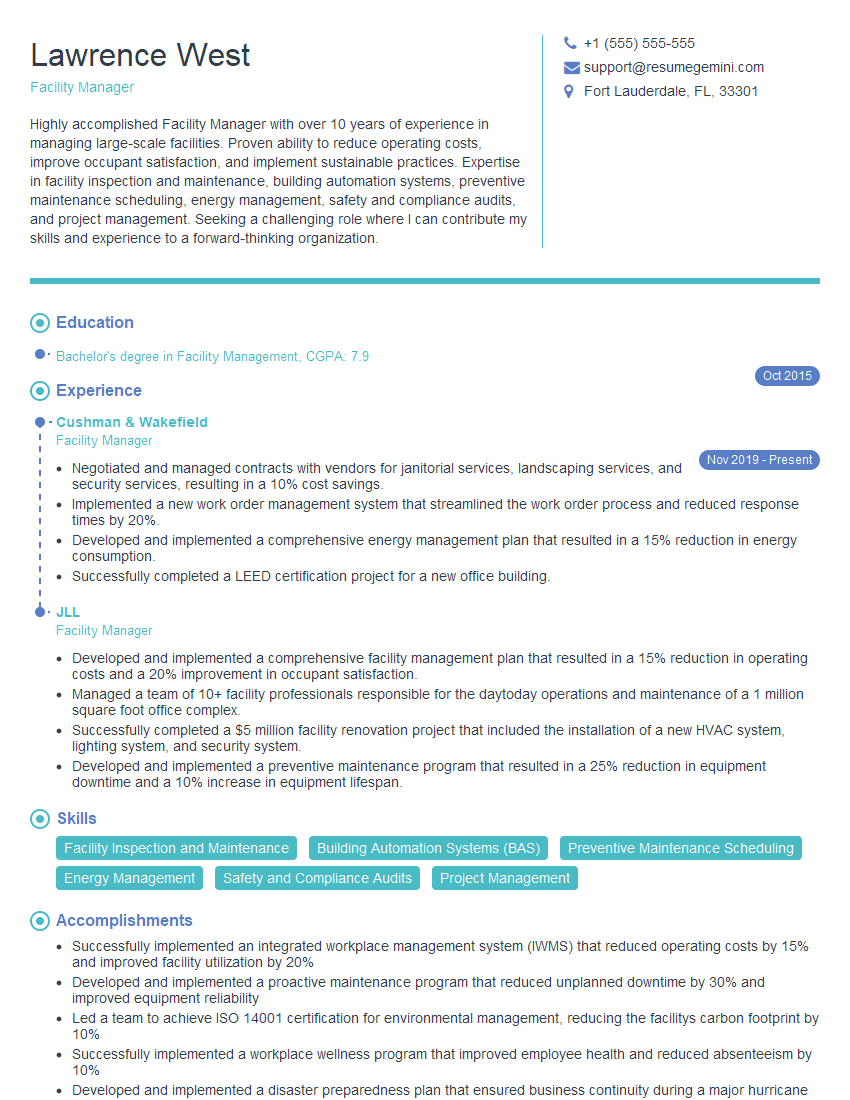
Facility Manager Resume Sample

Operations Manager Resume Sample
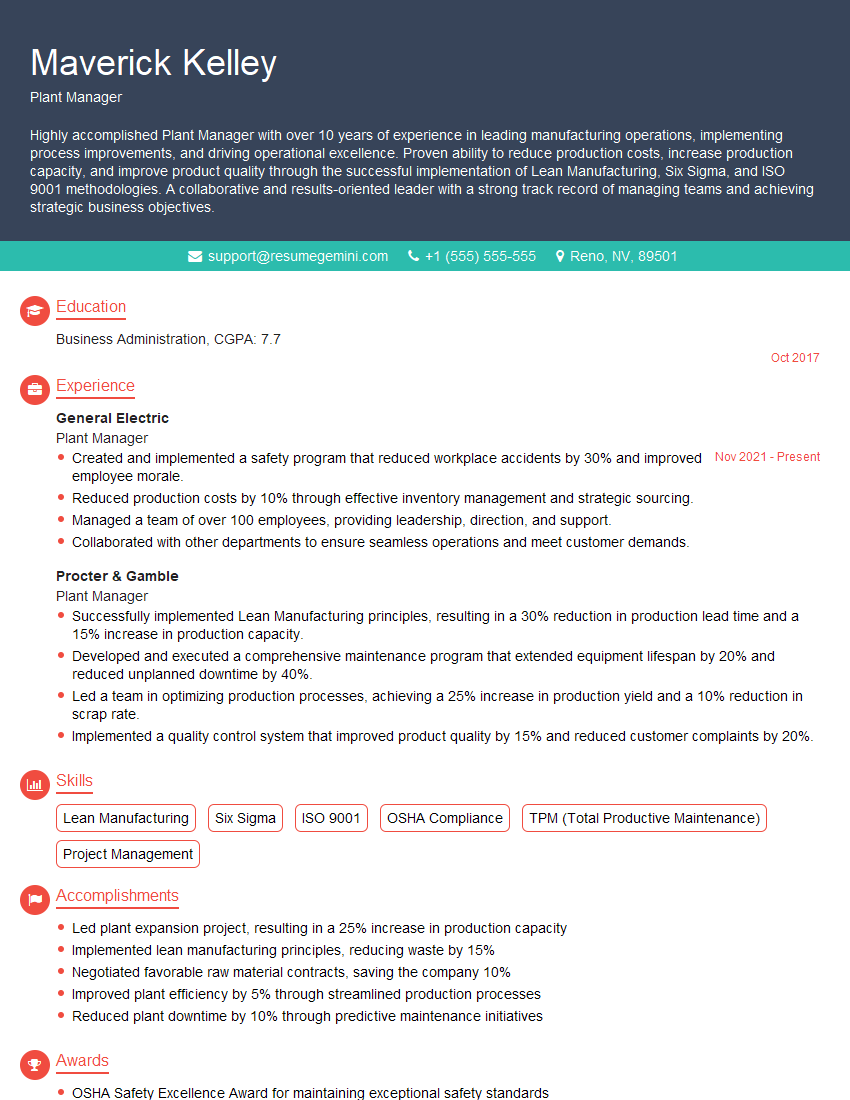
Plant Manager Resume Sample

Maintenance Manager Resume Sample

Production Supervisor Resume Sample

Supply Chain Manager Resume Sample
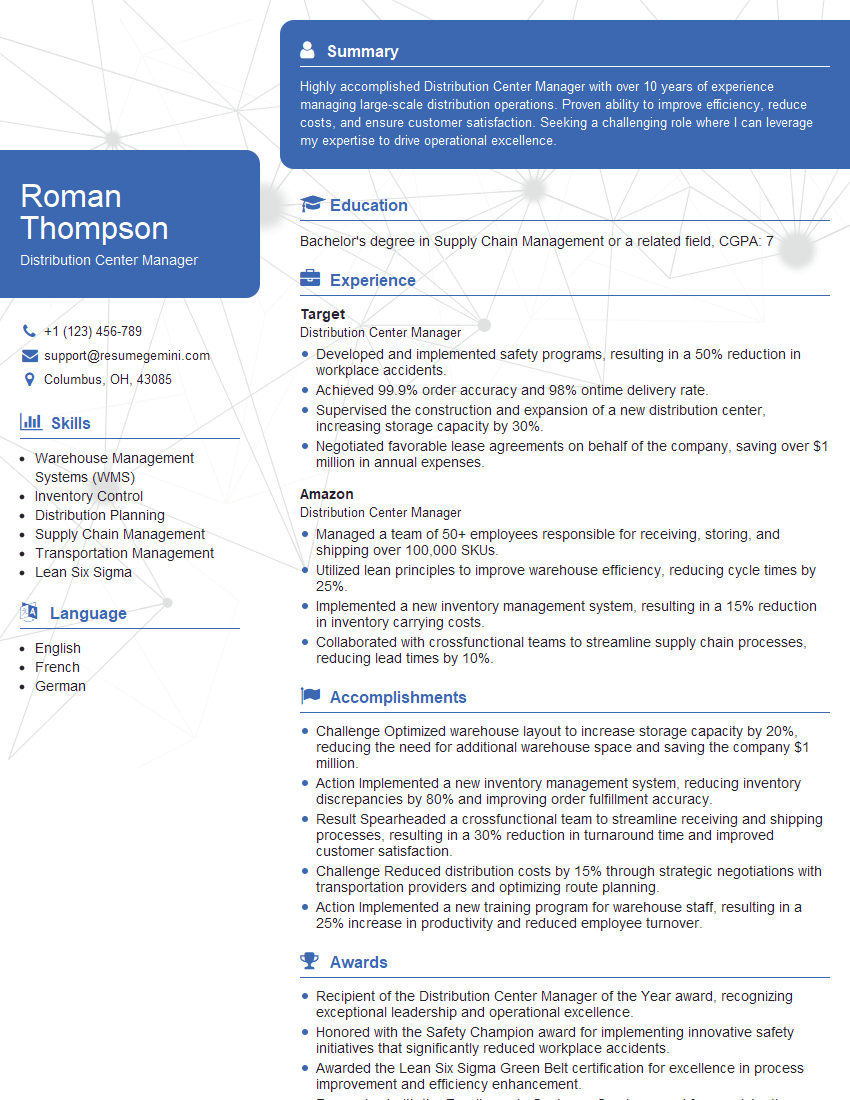
Distribution Center Manager Resume Sample

Logistics Manager Resume Sample

Warehouse Manager Resume Sample
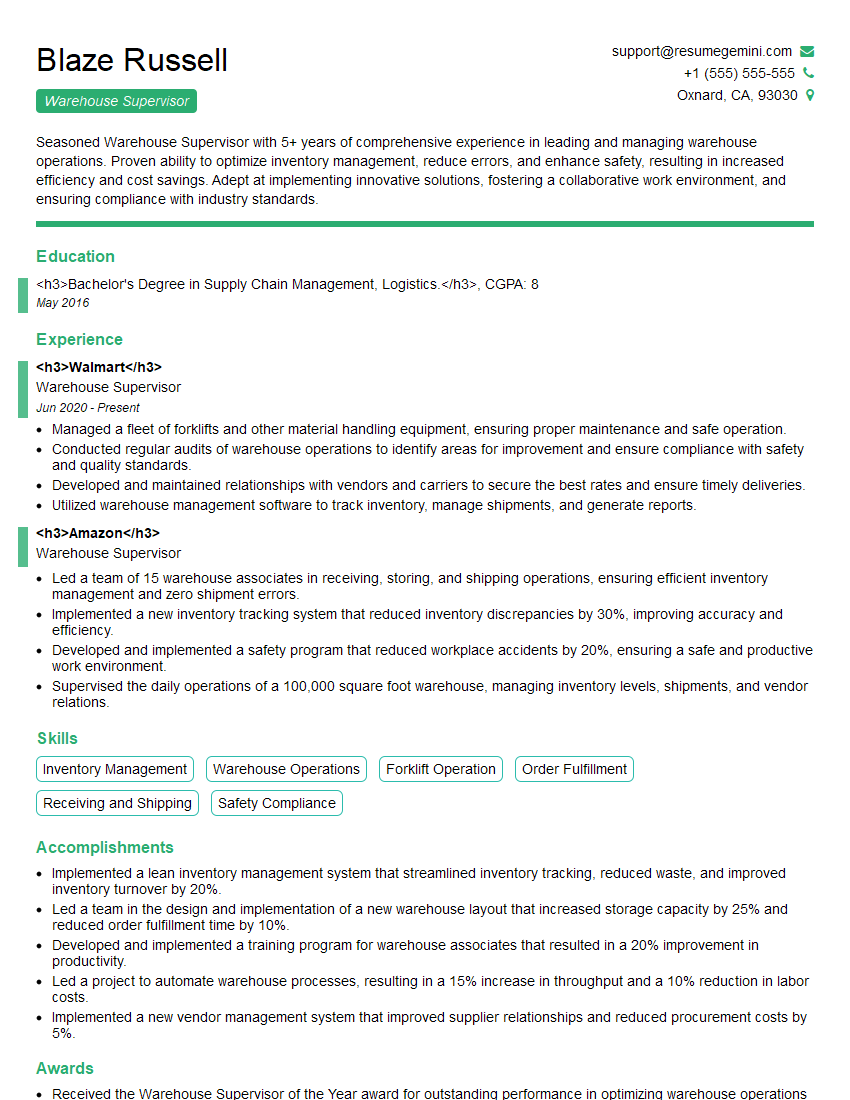
Warehouse Supervisor Resume Sample
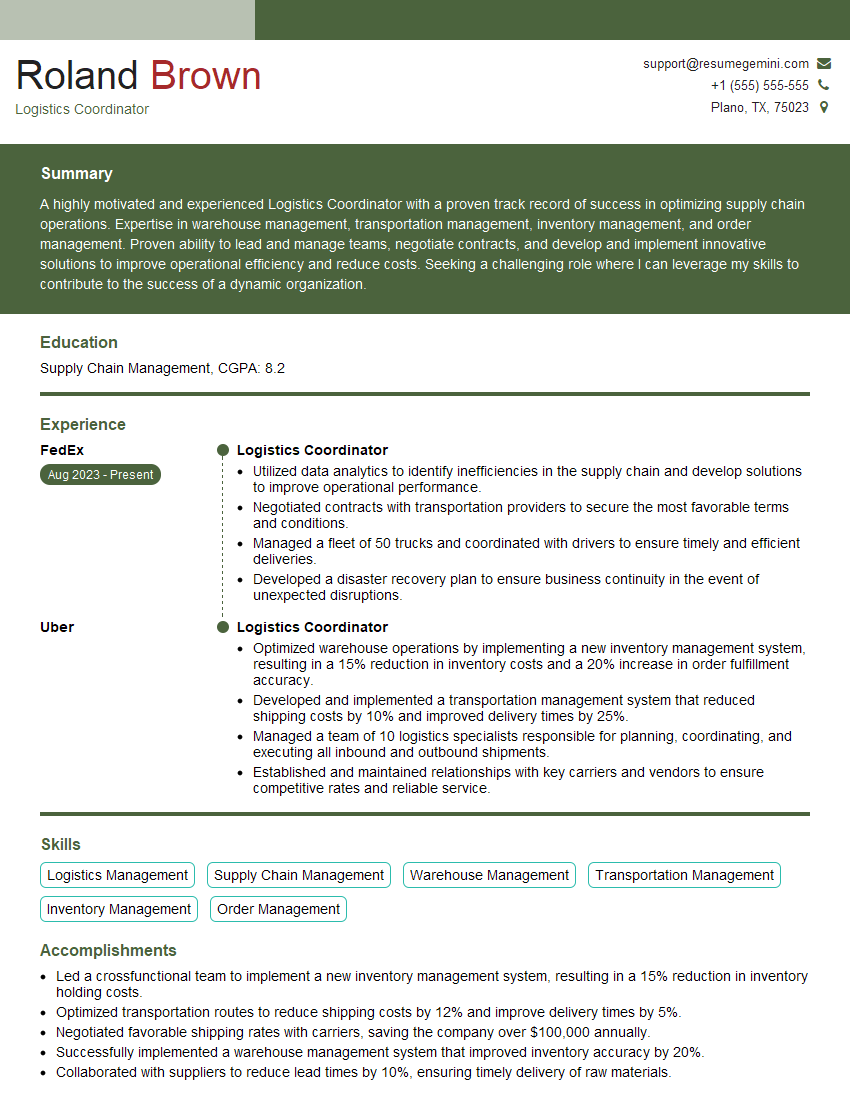
Logistics Coordinator Resume Sample
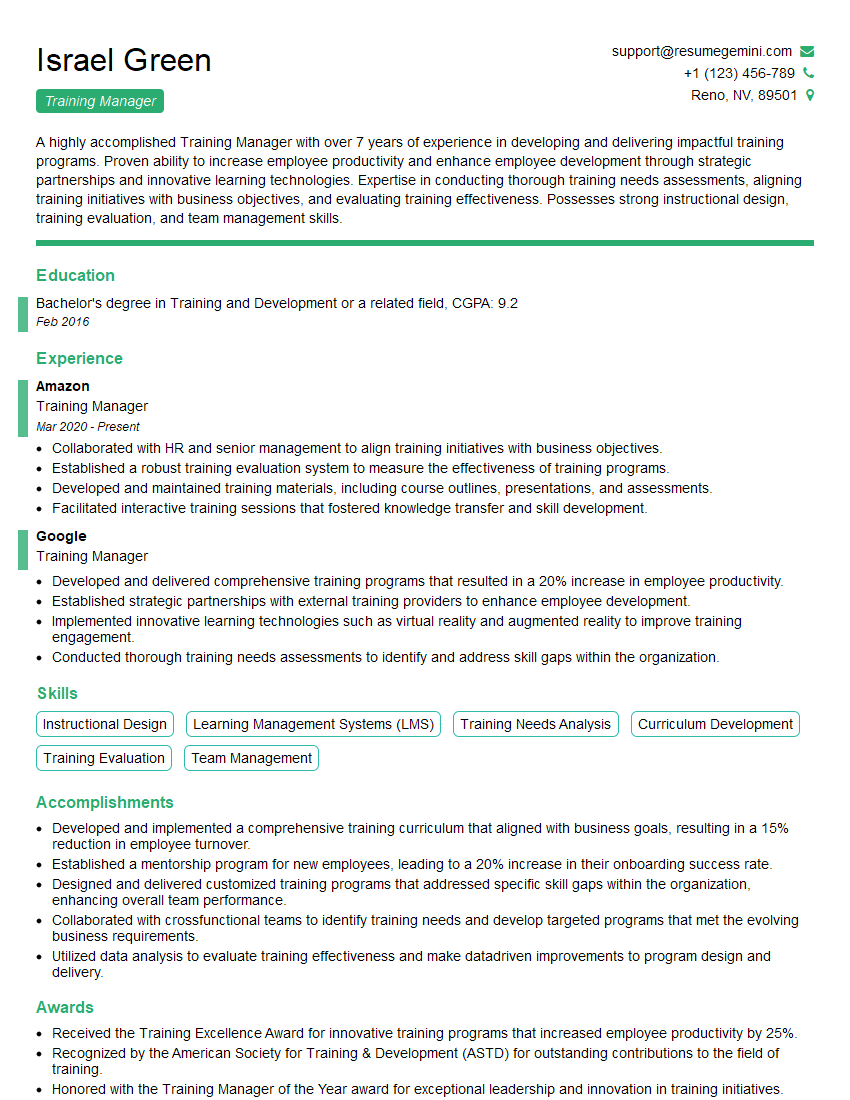
Training Manager Resume Sample

Compliance Officer Resume Sample

Health and Safety Manager Resume Sample
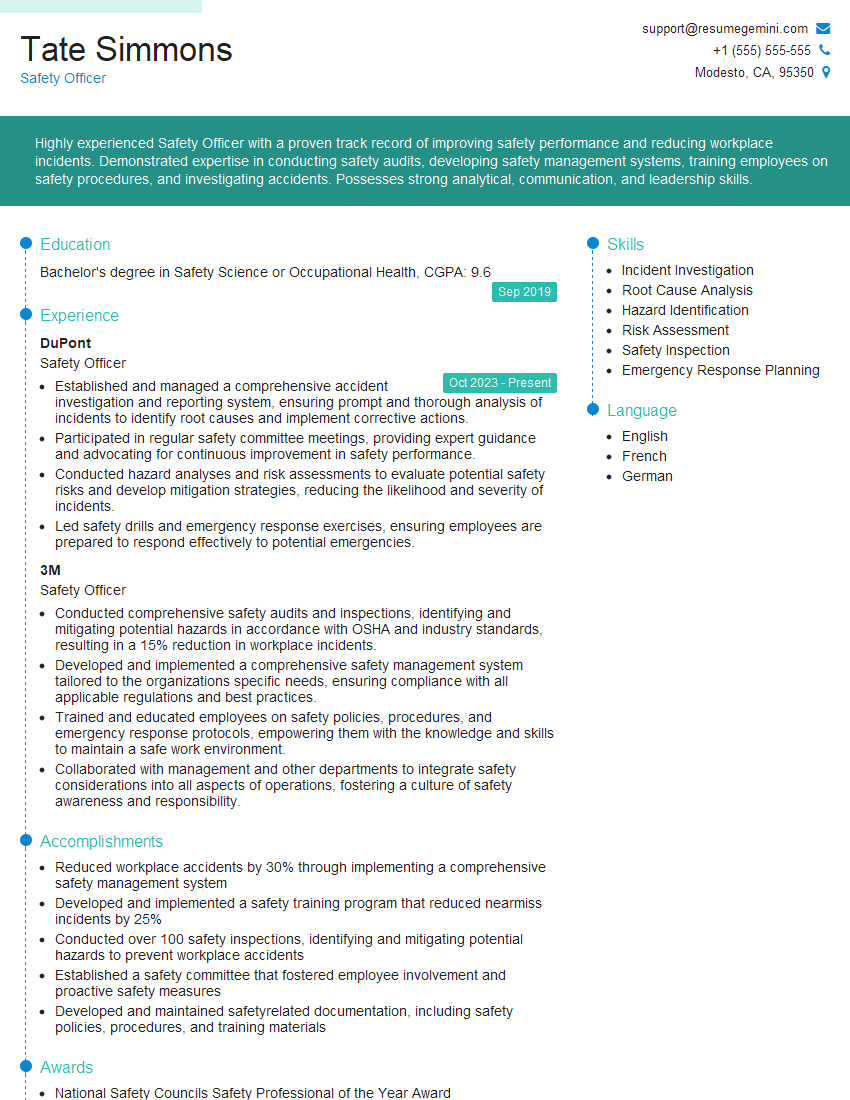
Safety Officer Resume Sample
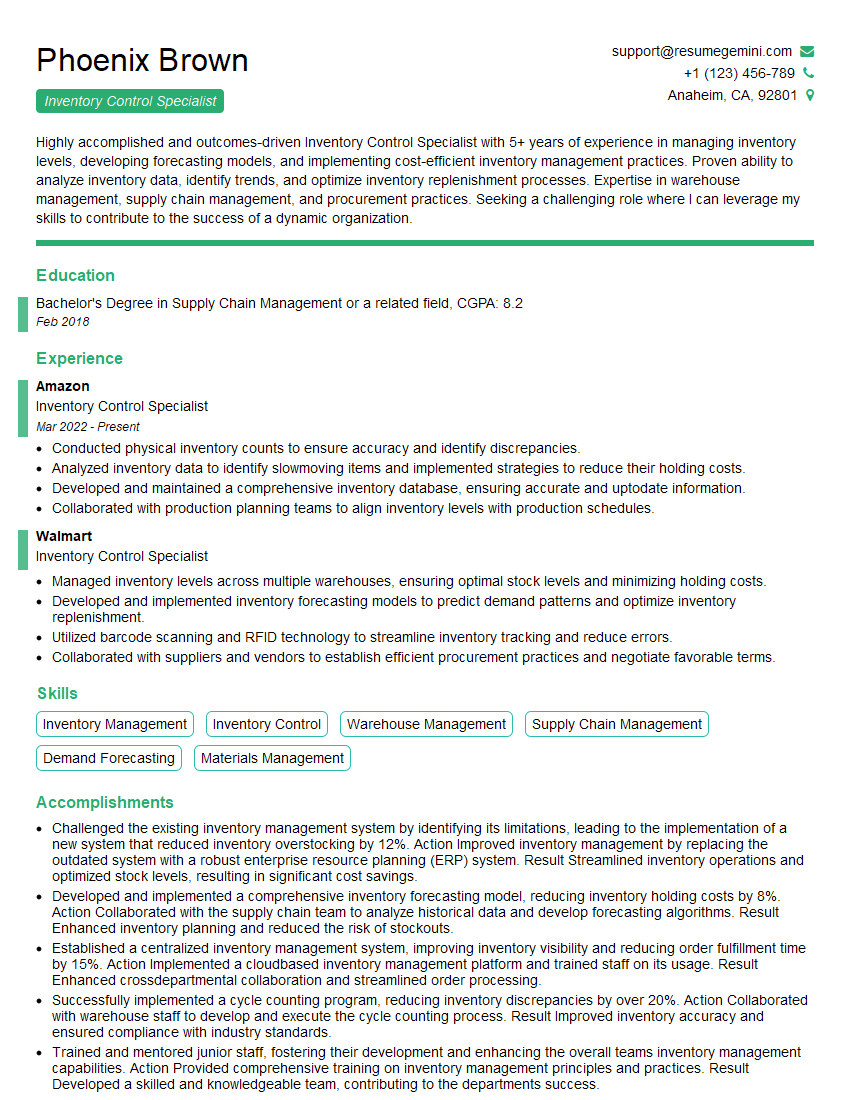
Inventory Control Specialist Resume Sample

Shipping and Receiving Supervisor Resume Sample
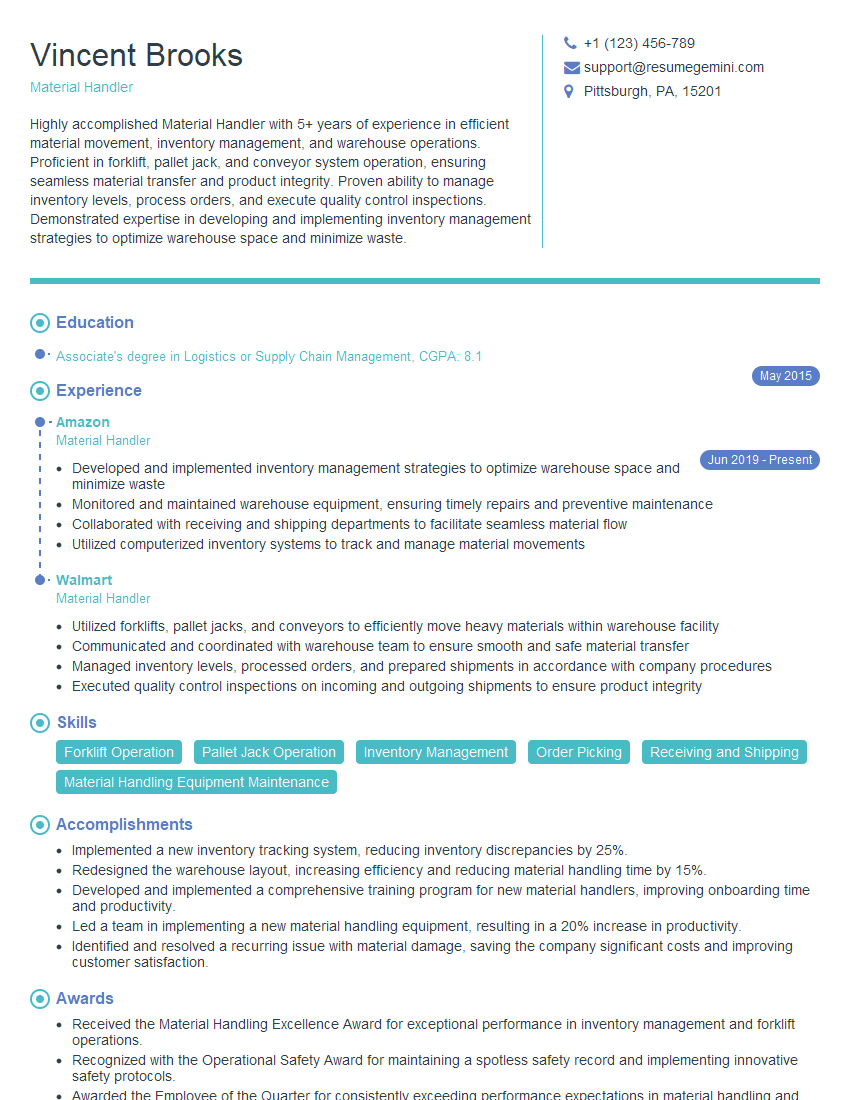
Material Handler Resume Sample

Heavy Equipment Operator Resume Sample
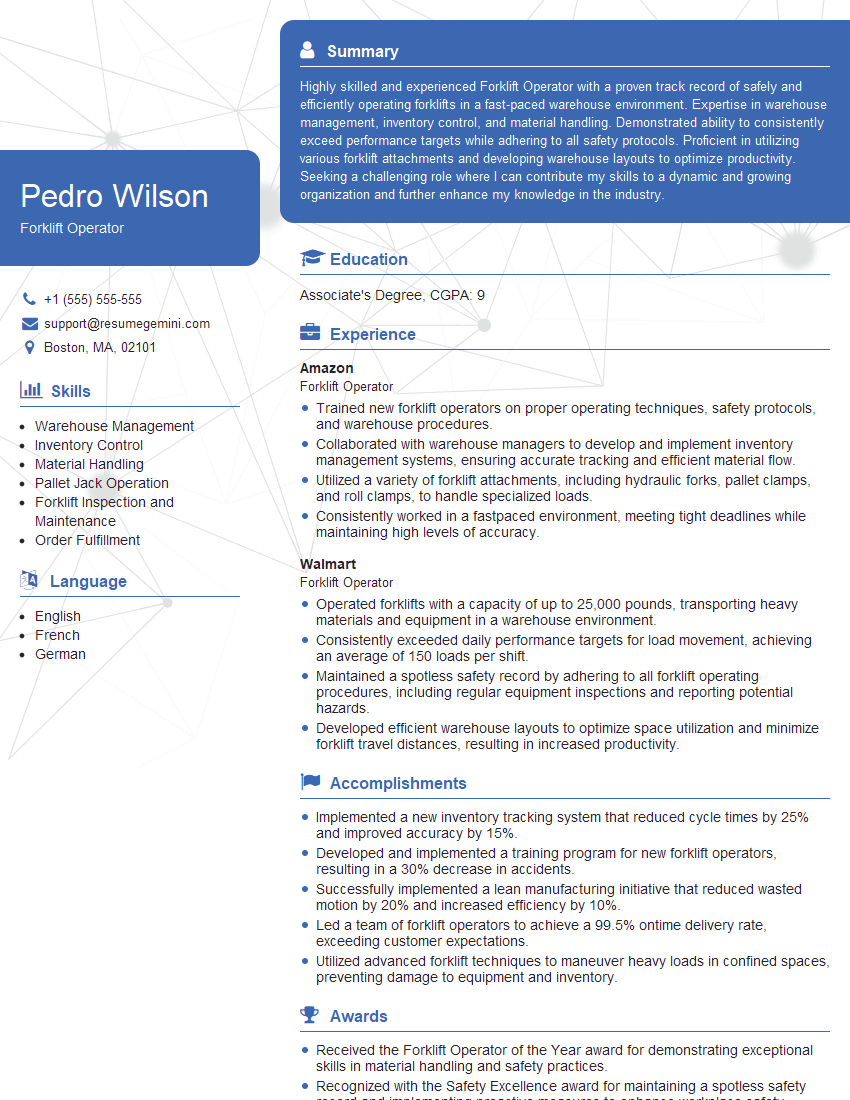
Forklift Operator Resume Sample
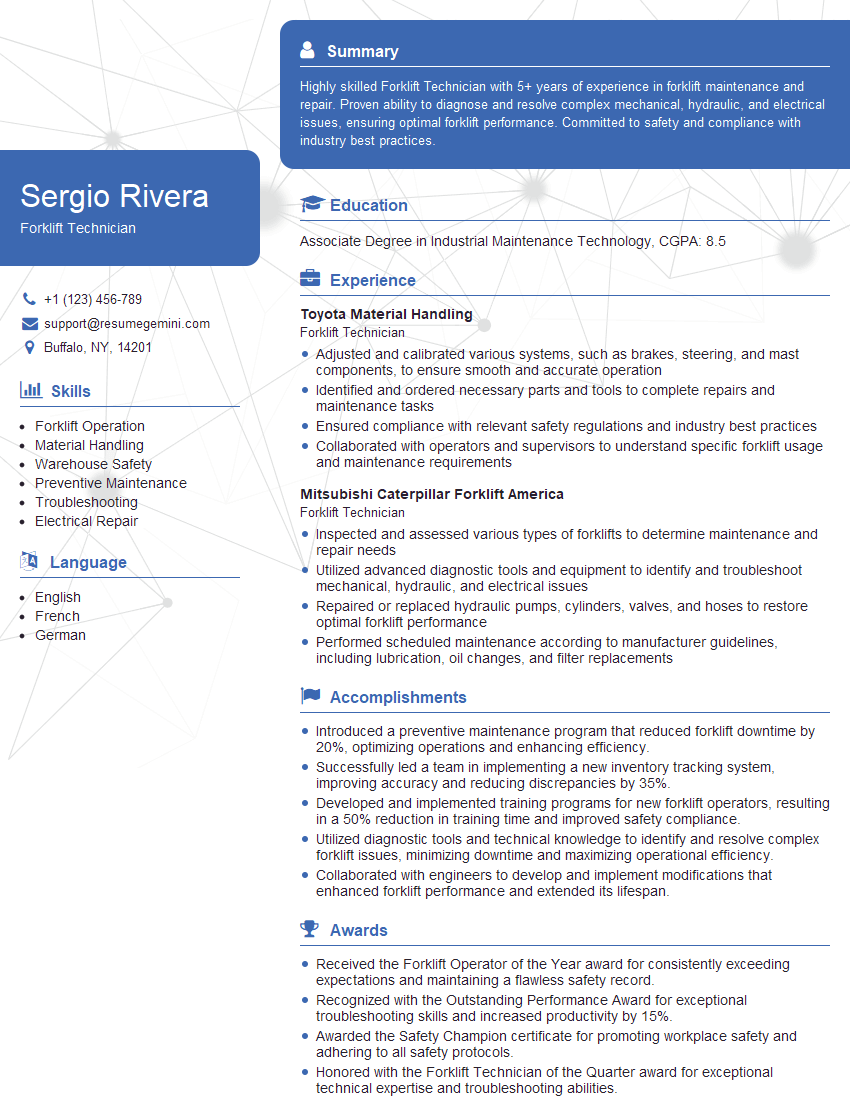
Forklift Technician Resume Sample

Yard Supervisor Resume Sample
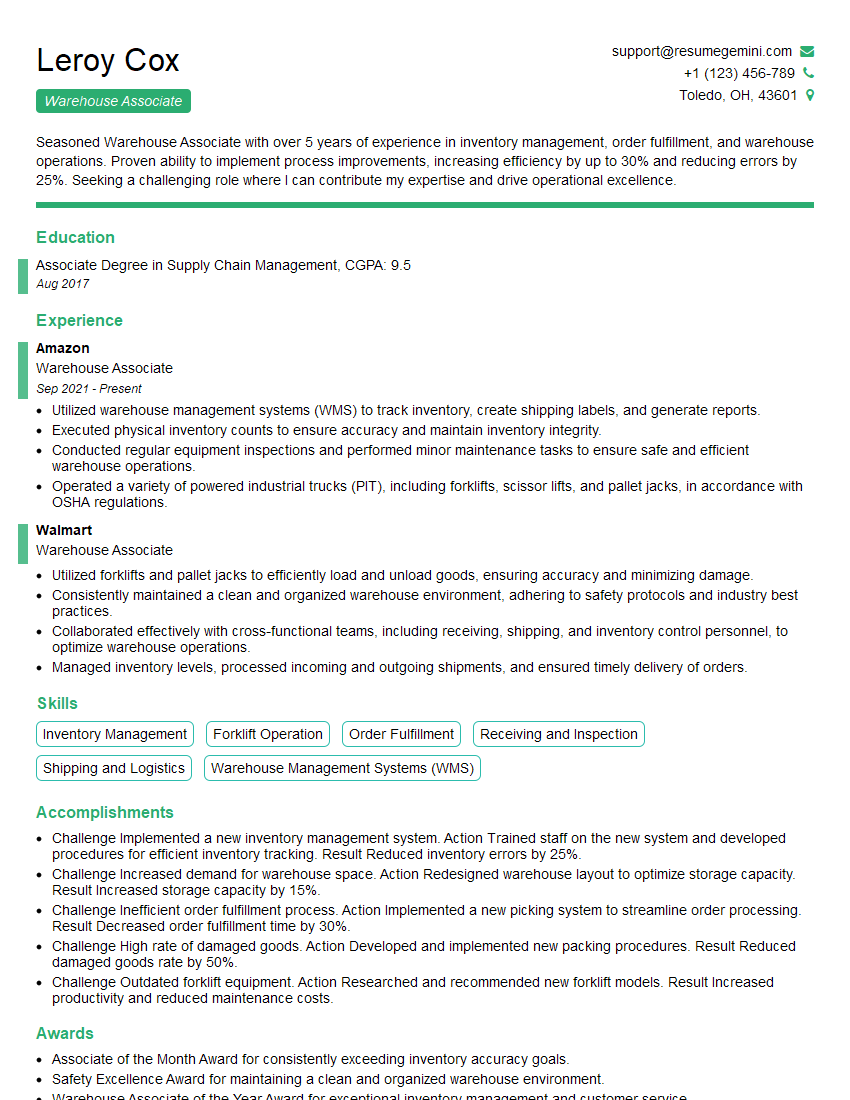
Warehouse Associate Resume Sample
- Facility Manager
- Operations Manager
- Plant Manager
- Maintenance Manager
- Production Supervisor
- Supply Chain Manager
- Distribution Center Manager
- Logistics Manager
- Warehouse Manager
- Warehouse Supervisor
- Logistics Coordinator
- Training Manager
- Compliance Officer
- Health and Safety Manager
- Safety Officer
- Inventory Control Specialist
- Shipping and Receiving Supervisor
- Material Handler
- Heavy Equipment Operator
- Forklift Operator
- Forklift Technician
- Yard Supervisor
- Warehouse Associate
Explore more articles
Users Rating of Our Blogs
Share Your Experience
We value your feedback! Please rate our content and share your thoughts (optional).
What Readers Say About Our Blog
Very informative content, great job.
good