Interviews are opportunities to demonstrate your expertise, and this guide is here to help you shine. Explore the essential Knowledge of Garment Pressing Techniques interview questions that employers frequently ask, paired with strategies for crafting responses that set you apart from the competition.
Questions Asked in Knowledge of Garment Pressing Techniques Interview
Q 1. What types of pressing equipment are you familiar with?
My experience encompasses a wide range of pressing equipment, from basic household irons to industrial-grade machines. I’m proficient with various types, including:
- Steam Irons: These are versatile and commonly used for everyday pressing, offering adjustable temperature and steam settings.
- Dry Irons: Primarily for delicate fabrics or when steam isn’t desired, these irons rely solely on heat for smoothing.
- Professional Steam Presses: These powerful machines offer a consistent, even pressure across a larger surface area, ideal for high-volume pressing and achieving a professional finish. I’ve worked extensively with brands like Jiffy and Vacuums.
- Vacuum Presses: These advanced systems combine steam and vacuum suction to remove wrinkles and create a crisp, flat finish, particularly beneficial for heavy fabrics and complex garments.
- Sleeve and Collar Presses: Specialized tools designed for perfectly pressing curved surfaces like sleeves and collars, ensuring sharp creases and a flawless fit.
My familiarity extends to understanding the nuances of each type, from maintaining water levels and cleaning to adjusting pressure and temperature settings for optimal results.
Q 2. Describe your experience with different pressing techniques (e.g., steam pressing, dry pressing, blocking).
My pressing technique repertoire is extensive, encompassing various methods tailored to different fabric types and garment styles.
- Steam Pressing: This is my go-to method for most fabrics. I strategically direct steam to penetrate fibers, relaxing wrinkles and creating smooth surfaces. For example, using a burst of steam to release stubborn wrinkles on a linen shirt, then carefully pressing to set the shape.
- Dry Pressing: I employ this technique for delicate fabrics prone to scorching, like silk or wool, using lower temperatures and lighter pressure. For instance, I might use a pressing cloth between the iron and a silk scarf to prevent shine.
- Blocking: This technique involves using specialized blocks or forms to shape and mold garments during pressing. I use blocking frequently for hats, collars, and other structured pieces, ensuring a precise and consistent shape.
- Pressing Cloths: I always use pressing cloths for delicate fabrics. They protect the fabric from direct heat and also prevent the iron from sticking.
The choice of technique depends on fabric type, garment style, and desired finish. I constantly assess the situation to select the most appropriate and effective approach.
Q 3. How do you identify and address common pressing problems (e.g., scorching, wrinkles, shine)?
Identifying and addressing pressing problems requires a keen eye and understanding of fabric behavior.
- Scorching: This usually results from using too high a temperature or insufficient pressing cloth. The solution is to lower the heat setting and always use a pressing cloth for sensitive materials. In extreme cases, a scorching mark may require professional repair.
- Wrinkles: Persistent wrinkles suggest improper pressing technique or insufficient steam. I tackle these by adjusting the iron’s temperature and steam settings and carefully pressing in the direction of the fabric grain.
- Shine: Shine is usually caused by excessive pressure or heat on fabrics like silk or synthetics. The fix is to use a lower temperature, less pressure, and a pressing cloth, and press from the wrong side whenever possible.
Experience allows me to troubleshoot these problems swiftly and effectively, ensuring high-quality results.
Q 4. What fabrics require special pressing considerations, and why?
Several fabrics necessitate special considerations during pressing due to their unique properties.
- Silk and Satin: These delicate fabrics require low temperatures and minimal pressure to avoid shine or damage. I always use a pressing cloth and a light touch.
- Wool and Cashmere: These natural fibers are susceptible to shrinkage and scorching. I usually press these from the wrong side using a press cloth and low to medium heat.
- Linen: Linen’s tendency to wrinkle demands careful steam pressing to eliminate creases and set the fabric’s drape.
- Leather: Leather requires specialized techniques and tools to avoid damage. I usually use a low temperature and a soft cloth or even a specialized leather pressing tool.
Understanding each fabric’s sensitivity to heat and moisture is vital for preventing damage and achieving a perfect press.
Q 5. Explain the importance of proper temperature and pressure control during pressing.
Precise temperature and pressure control are paramount for successful garment pressing.
Temperature: Setting the correct temperature depends entirely on the fabric type. Using too high a temperature will scorch delicate fabrics, while too low a temperature won’t remove wrinkles effectively. I always check the fabric’s care label and adjust accordingly.
Pressure: Applying even pressure prevents uneven pressing and potential damage. Excessive pressure can lead to shine or distortion, especially on delicate fabrics. I adjust pressure according to the fabric weight and desired finish; a heavier fabric might require more pressure than a lightweight one.
Mastering both ensures that the garment retains its shape and that the finish is pristine.
Q 6. How do you maintain and clean pressing equipment?
Regular maintenance and cleaning are crucial for extending the life and performance of pressing equipment.
- Steam Irons: I regularly clean the iron’s soleplate with a damp cloth to remove residue. I also empty the water reservoir after each use and descale the iron periodically to prevent mineral buildup.
- Steam Presses: Cleaning involves wiping the pressing surface, emptying the water tank, and checking for any blockages in the steam vents. Descaling is even more crucial with these machines.
- Pressing Boards: I regularly clean the cover of the pressing board to remove any residue from the fabrics. I also check the padding for any damage or flattening, which would require changing the board cover.
Preventative maintenance keeps the equipment in optimal condition and ensures long-term effectiveness.
Q 7. Describe your experience with different types of pressing boards and forms.
My experience includes using a variety of pressing boards and forms tailored to specific garment parts and styles.
- Standard Pressing Boards: These are the workhorses for most pressing tasks. I select the appropriate size and padding to suit the garment.
- Sleeve Boards: These cylindrical forms facilitate pressing sleeves smoothly and evenly.
- Tailor’s Ham: A padded, curved form that is especially useful for pressing curved areas like collars, lapels, and darts.
- Blocking Forms: These specialized forms are used for hats, jackets, and other garments requiring structured shapes, ensuring consistent and precise molding.
Selecting the appropriate board or form is crucial for achieving professional-looking results and maintaining the structural integrity of the garment.
Q 8. How do you ensure consistent pressing quality across different garments?
Maintaining consistent pressing quality across various garments hinges on understanding fabric properties and adapting pressing techniques accordingly. It’s not a one-size-fits-all approach.
- Fabric Knowledge: I always start by identifying the fabric type (cotton, silk, linen, etc.) and its weight. Different fabrics react differently to heat and pressure. Linen, for instance, needs a higher temperature than silk, which is very delicate.
- Temperature Control: My pressing equipment (irons and pressing machines) has adjustable temperature settings. I meticulously set the temperature based on the fabric’s requirements, consulting manufacturer recommendations when necessary. Using a press cloth is crucial for delicate fabrics to prevent scorching.
- Pressure and Time: I adjust the pressure applied and the duration of contact with the iron or press. Heavier fabrics require more pressure and time than lighter ones. Over-pressing can cause shiny spots, so controlled, deliberate actions are key.
- Cleanliness: A clean iron is essential. A dirty iron can leave residue on the garment. I regularly clean my equipment and ensure there’s no starch build-up.
- Consistent Technique: I have established a standardized workflow that I consistently follow for various garment types. This includes proper placement of the garment on the pressing surface (avoiding wrinkles and overlaps) and smooth, even movements of the iron.
For example, pressing a crisp cotton shirt requires a higher temperature and more pressure than pressing a delicate silk blouse. By understanding these nuances, I can achieve consistent professional results.
Q 9. What are the safety precautions you take while operating pressing equipment?
Safety is paramount when operating pressing equipment. Several precautions are routinely followed:
- Proper Training: I’ve received comprehensive training on the safe operation of all pressing equipment, including irons, steam generators, and pressing machines.
- Equipment Inspection: Before each use, I carefully inspect all equipment for any damage, frayed cords, or leaks. Damaged equipment is immediately reported and taken out of service.
- Steam Handling: When using steam, I ensure adequate ventilation to avoid burns from hot steam. I also keep a safe distance to prevent accidental burns.
- Heat Protection: I always use heat-resistant gloves and protective mats to prevent burns or accidental contact with hot surfaces. I never leave hot equipment unattended.
- Cord Management: Cords are kept away from water and tripping hazards to prevent electric shocks or accidents.
- Ergonomics: I maintain a proper posture while working to avoid strain and fatigue. Long periods of pressing can lead to physical discomfort if not approached correctly. Regular breaks are essential.
Following these safety protocols isn’t just a best practice; it’s crucial to prevent injuries and ensure a safe working environment.
Q 10. How do you handle delicate fabrics during pressing?
Handling delicate fabrics requires extra care and attention to detail. My approach involves:
- Lower Temperature: I always use a lower iron temperature than what’s recommended for more robust fabrics. It is usually best to start on a low setting and work your way up, avoiding any direct heat application.
- Press Cloth: A press cloth (a thin cotton or muslin fabric) is always used between the iron and the delicate fabric to prevent scorching and shine. It acts as a barrier, distributing the heat evenly.
- Light Pressure: I use light pressure and avoid harsh movements. Heavy pressure or aggressive ironing can damage the delicate fibers.
- Steam Control: I usually use less steam or no steam at all for certain fabrics. Excess moisture can cause wrinkles or damage sensitive materials.
- Testing: Before pressing the entire garment, I always test a small, inconspicuous area to ensure the temperature and pressure are appropriate for that specific fabric.
For example, when pressing silk, I use a low temperature, a press cloth, and minimal steam to avoid any risk of damage.
Q 11. What is your experience with different types of interfacing and their pressing requirements?
My experience with interfacing is extensive. Different interfacings have unique pressing requirements depending on their composition (fusible, sew-in, woven, non-woven) and weight.
- Fusible Interfacing: Requires a hot iron and consistent pressure for proper bonding to the base fabric. Following the manufacturer’s instructions for temperature and pressing time is critical to avoid burning or inadequate adhesion. Different types of fusible interfacing will vary in pressing temperature. I always test a scrap before the final piece.
- Sew-in Interfacing: Doesn’t require ironing after application. Sew-in interfacing provides support without the use of any adhesives.
- Woven Interfacing: Typically more stable and less prone to shrinkage or distortion than non-woven varieties. They hold their shape better and require minimal pressing.
- Non-woven Interfacing: Often more flexible, pressing requirements vary widely depending on the material. Careful monitoring to avoid distortion is critical.
Understanding these differences ensures the interfacing bonds correctly and contributes to the final garment’s structural integrity and overall finish.
Q 12. Explain the process of pressing a shirt, including collar, cuffs and placket.
Pressing a shirt involves a systematic approach to achieve a crisp, professional finish.
- Body: First, I press the shirt body, working from the center outwards, smoothing out wrinkles and seams. A sleeve board can be used to efficiently press the body area.
- Sleeves: Each sleeve is pressed individually, starting from the shoulder seam and working down towards the cuff. The sleeve is typically pressed in the flat to maintain the desired shape.
- Collar: The collar is pressed carefully, ensuring the points are sharp and crisp. This often involves using a tailor’s ham to shape the collar properly.
- Cuffs: Similar to collars, cuffs require careful pressing to maintain a crisp, clean edge. I usually use a specialized cuff board to get a crisp finish.
- Placket: The placket is pressed flat, ensuring the buttons and buttonholes lie flat. This requires smooth pressure and care so as not to leave any marks or damage the delicate fabric of the button area.
- Yoke: This is the shoulder area of the shirt and usually requires careful pressing to avoid creating creases.
Throughout the process, I use a press cloth for delicate fabrics and adjust the temperature and pressure according to the shirt’s fabric composition.
Q 13. How do you press trousers to achieve a crisp crease?
Achieving a crisp crease in trousers requires precision and the right tools.
- Preparation: The trousers should be fully assembled and neatly pressed before creating the crease.
- Crease Board/Pressing Ham: A crease board or pressing ham is essential for shaping the crease. This helps to create a consistent and sharp fold.
- Positioning: The trousers are carefully positioned on the board, ensuring the legs are aligned and the crease line is straight.
- Pressing: The iron is used with consistent pressure and even strokes, focusing on the crease line. Multiple repetitions are sometimes required to achieve a deep, lasting crease.
- Steam: Moderate steam is helpful to create the crisp fold, but avoid excess moisture which could lead to warping or other issues.
- Cooling: Allowing the trousers to cool completely while maintaining the shape helps to set the crease permanently.
The whole process requires attention to detail; a perfectly pressed crease enhances the overall appearance of the trousers.
Q 14. What are your methods for pressing seams and darts effectively?
Pressing seams and darts effectively is about creating a smooth, flat surface that enhances the garment’s shape.
- Seam Pressing: Open seams are pressed open, using the point of the iron to work the seam allowance flat. Closed seams are pressed to one side, usually depending on the type of seam.
- Dart Pressing: Darts are pressed towards the center, carefully smoothing out any wrinkles. I ensure that the dart points meet to create a clean finish.
- Press Cloth: A press cloth is used, especially on fabrics prone to shine or damage.
- Clapper: A clapper (a flat, wooden block) can be used to set the seams and darts, creating a sharper, more defined result.
- Iron Direction: I always press in the direction of the fabric’s grain to avoid stretching or distortion.
Correct seam and dart pressing is essential for the structural integrity and the drape of the finished garment.
Q 15. Describe your troubleshooting process when a pressing problem arises.
Troubleshooting pressing problems involves a systematic approach. I begin by identifying the issue: is it uneven pressing, shiny marks, scorch marks, wrinkles that won’t come out, or something else? Once the problem is defined, I systematically investigate potential causes.
- Check the iron’s temperature and steam settings: Incorrect heat can lead to scorching or ineffective wrinkle removal. For instance, delicate silks require low heat and steam, while heavy cottons might need high heat and a burst of steam.
- Examine the pressing surface and equipment: A dirty pressing surface (like a burnt ironing board cover) or a malfunctioning iron can cause problems. I regularly clean my equipment and check for any blockages. A dull pressing surface can leave a dull mark.
- Assess the fabric type: Different fabrics react differently to heat and pressure. For example, linen tends to crease easily and requires careful, well-timed pressing; synthetic blends can melt under high heat.
- Review pressing techniques: Issues like shiny marks often result from too much pressure or incorrect movement. For example, pressing with a back-and-forth motion rather than lifting and pressing from each direction.
- Consider the garment construction: Seams, interfacings, and intricate details demand specific techniques. I might need to use a tailor’s ham or sleeve roll for curved areas.
By systematically checking these points, I can usually pinpoint the cause and adjust my approach accordingly. I keep detailed notes on problems and solutions to prevent repeating mistakes. For example, I once had a recurring problem with shiny marks on polyester blouses. After investigation, I realised it was due to using too much steam and too much pressure. Switching to a lower steam setting and using a pressing cloth solved the issue permanently.
Career Expert Tips:
- Ace those interviews! Prepare effectively by reviewing the Top 50 Most Common Interview Questions on ResumeGemini.
- Navigate your job search with confidence! Explore a wide range of Career Tips on ResumeGemini. Learn about common challenges and recommendations to overcome them.
- Craft the perfect resume! Master the Art of Resume Writing with ResumeGemini’s guide. Showcase your unique qualifications and achievements effectively.
- Don’t miss out on holiday savings! Build your dream resume with ResumeGemini’s ATS optimized templates.
Q 16. How do you measure the success of your pressing work?
The success of my pressing work is measured by several key factors:
- Garment Appearance: The finished garment should be smooth, crisp, and free of wrinkles, shiny spots, or scorch marks. The overall look must meet the required standards of the garment.
- Fabric Integrity: The pressing process shouldn’t damage the fabric in any way. This means avoiding scorching, melting, or stretching the material.
- Structural Correctness: Pressing should enhance the garment’s shape and structure, ensuring all seams lie flat and details such as collars and cuffs are sharp.
- Efficiency: I evaluate my pressing speed and effectiveness to maintain productivity within the given timeframe.
- Client/Supervisor Feedback: Positive feedback from clients or supervisors confirms that the pressing meets their expectations. It is important to also address any constructive criticisms.
A successful pressing job is more than just wrinkle removal; it contributes to the overall quality and presentation of the finished garment. I aim for consistently high standards that result in a garment that appears professionally finished.
Q 17. What is your knowledge of different types of pressing irons?
My knowledge of pressing irons spans various types, each suited to different tasks and production scales.
- Household Irons: These are versatile but limited for large-scale production. Their size and power are insufficient for high-volume needs.
- Industrial Irons: These are heavier, more powerful, and often feature adjustable temperature and steam controls. Professional-grade industrial irons may have an integrated boiler for consistent steam output. They’re essential for bulk pressing.
- Vacuum Pressing Machines: These machines utilize vacuum pressure to smooth fabrics and remove wrinkles. They are particularly useful for delicate fabrics, minimizing the risk of damage. This is common in dry cleaning and professional alterations.
- Sleeve and Collar Rollers: These specialized tools are designed for shaping and pressing curved garment sections, resulting in a precise, tailored finish. These rolls are used for cuffs and collars.
- Pressing Machines (e.g., buck press, sleeve press): These are industrial-scale equipment used for efficient and consistent pressing of various garment sections. The buck press is for full garment pressing.
Understanding the capabilities and limitations of each iron type is crucial for selecting the right tool for the job. I’ve had experience with all of the types mentioned above, ranging from basic household models to sophisticated industrial presses.
Q 18. How do you handle urgent pressing demands in a high-volume production environment?
Handling urgent pressing demands in a high-volume environment requires efficient organization and prioritization. My strategy involves:
- Prioritization: Identifying urgent orders based on deadlines and importance. This often involves reviewing the production schedule and communication with supervisors.
- Optimized Workflow: Streamlining the pressing process to minimize wasted time. This can include pre-sorting garments by fabric type and pressing technique.
- Teamwork: Collaborating with colleagues to share workloads and ensure timely completion of all orders. This might involve splitting up high-volume batches.
- Equipment Management: Ensuring all equipment is functioning optimally to avoid delays. Regular maintenance and troubleshooting are crucial.
- Adaptability: Adjusting techniques and prioritizing tasks as needed to respond effectively to changing demands and unexpected issues. Sometimes this will mean that we need to adjust the pressing techniques to maintain speed.
I’ve worked in several high-pressure production environments, and mastering these strategies has enabled me to consistently deliver high-quality results even under tight deadlines. For instance, during peak seasons, we often had massive backlogs. A well-structured work flow, aided by good communication and teamwork, helped us consistently meet deadlines.
Q 19. Explain your experience with industrial-scale pressing equipment.
My experience with industrial-scale pressing equipment is extensive. I’ve worked with various types of industrial irons, buck presses, and automated pressing systems.
- Buck Presses: I’m proficient in operating buck presses, understanding their pressure and temperature controls, and adjusting settings for different fabrics. I know how to ensure even pressure across the garment to avoid creases or marks. I’ve used them for pressing large quantities of shirts, pants, and other items.
- Industrial Irons: I’m skilled in using industrial irons of varying sizes and power outputs, understanding the importance of maintaining consistent steam flow and heat. This includes routine maintenance and recognizing signs of malfunctions.
- Automated Pressing Systems: I’ve worked with automated systems designed to streamline the pressing process in large-scale manufacturing. Understanding the operating procedures and safety protocols for these sophisticated machines is crucial.
I’m adept at identifying and resolving equipment malfunctions quickly, minimizing downtime, and maintaining consistent productivity. This experience provides me with a broad understanding of the industrial pressing process and the technology behind it.
Q 20. Describe your understanding of different fabric finishes and their impact on pressing.
Different fabric finishes significantly impact pressing techniques. Understanding these finishes is essential for achieving optimal results and preventing damage.
- Cotton: Natural cotton requires a moderate temperature and the right amount of steam. Too much heat can lead to scorching. This varies widely in blends and weaves.
- Linen: Linen is prone to creasing and requires careful pressing, often using a pressing cloth to avoid shine. The technique is about moving quickly and effectively.
- Silk: Delicate silk needs low heat and minimal pressure, ideally using a pressing cloth. Steam is needed for most silks.
- Wool: Wool requires low-to-moderate heat and gentle pressing. Pressing on the wrong side is also common for wool to prevent damage.
- Synthetic Fabrics (Polyester, Nylon): Synthetic fabrics can melt under high heat and may require a lower temperature and no steam. Often a pressing cloth is needed.
- Finished Fabrics (e.g., water-resistant, wrinkle-resistant): These finishes influence how the fabric reacts to heat and moisture. The garment label should be closely consulted.
Ignoring these differences can lead to irreversible damage to the garment. I always check fabric content labels before beginning to press. My experience has taught me the sensitivity of different materials and their need for specific treatment to avoid damage and obtain optimal results.
Q 21. How do you adapt your pressing techniques to different garment styles and constructions?
Adapting pressing techniques to different garment styles and constructions is crucial for achieving professional results.
- Simple Garments (e.g., T-shirts): These typically require straightforward pressing, focusing on smoothing wrinkles and ensuring the seams are flat. This is usually a very quick process.
- Complex Garments (e.g., suits, dresses): These necessitate more intricate techniques, employing tools such as tailor’s hams, sleeve boards, and pressing cloths to press curves and details precisely. This is about precise placement and movement.
- Seams: Pressing seams open or to one side, depending on the garment construction, is essential for a clean finish. The appropriate pressure and temperature is also important.
- Interfacings: Interfacings require careful pressing to avoid creating visible impressions or damage to the fabric. Knowing the interfacing type is crucial.
- Pleats and Gathers: These details need precise pressing to maintain their shape and form. Techniques may vary according to the type of pleat.
My experience working with diverse garment types has equipped me with the adaptability and skill to adjust my techniques based on the garment’s construction and style. I’ve pressed everything from simple cotton t-shirts to intricate wedding gowns, always focusing on detail and precision.
Q 22. How do you maintain quality control in a fast-paced production environment?
Maintaining quality control in a fast-paced production environment requires a proactive and systematic approach. It’s not just about speed, but about consistent, high-quality results. Think of it like a well-oiled machine – each part needs to function perfectly for the final product to be excellent.
- Regular Checks: Implementing frequent quality checks throughout the pressing process is crucial. This might involve spot checks every hour, or a full inspection of a batch after completion. The frequency depends on the complexity of the garments and the experience level of the pressers.
- Clear Standards: Establishing clear, documented pressing standards is paramount. These standards should include details like steam pressure, temperature settings for different fabrics, and specific techniques for handling various garment types (e.g., pleats, darts). Everyone should understand the benchmark of quality.
- Training and Feedback: Ongoing training for pressers, coupled with constructive feedback, is essential for improvement. Regular retraining on new techniques and refreshers on established ones maintain consistency.
- Equipment Maintenance: Regular maintenance of pressing equipment, including irons, steam generators, and pressing boards, is critical. A malfunctioning iron can lead to inconsistent results and potential damage to garments.
- Defect Tracking: Tracking defects and their causes allows for identifying areas needing improvement. By analyzing recurring issues, we can adjust processes or provide further training to prevent future defects.
For example, in a previous role, we implemented a color-coded system for quality checks – green for perfect, yellow for minor corrections needed, and red for rejects. This system improved communication and made identifying problem areas much quicker.
Q 23. What are your experience with pressing specialty items (e.g., leather, suede)?
Pressing specialty items like leather and suede requires a delicate touch and specialized techniques. You can’t treat them like cotton or silk; their delicate nature demands careful handling and understanding their unique properties. Think of it as working with fine art – each piece requires a unique approach.
- Lower Temperatures: Leather and suede require significantly lower temperatures than other fabrics to prevent scorching or damage. Always use a pressing cloth, and test the temperature on an inconspicuous area first.
- Pressing Cloths: A pressing cloth is essential to prevent direct contact between the iron and the material. Different fabrics (like silk or cotton) may be used depending on the leather or suede type to prevent shine or marking.
- Steam Control: High levels of steam can damage leather, causing water stains or warping. Gentle steam or even dry pressing might be necessary.
- Specific Techniques: Different types of leather and suede (e.g., full-grain, suede, nubuck) may require slightly different techniques. For example, suede needs to be brushed after pressing to restore its texture.
I have extensive experience working with a variety of leather and suede garments, from jackets and coats to bags and gloves. I always prioritize fabric preservation by carefully assessing the material type before selecting my equipment and techniques.
Q 24. How do you handle pressing garments with embellishments (e.g., beads, sequins)?
Handling garments with embellishments like beads and sequins demands extra caution and specialized techniques to prevent damage. Imagine pressing a delicate painting – you wouldn’t use a heavy hand!
- Protective Measures: Using a pressing cloth is crucial to protect the embellishments from heat damage. A thick cloth will help to cushion the beads and sequins.
- Low Pressure: Avoid applying excessive pressure, which can crush or dislodge the embellishments. A light touch is key.
- Steam Control: Excessive steam can weaken the adhesive holding the embellishments in place, so it’s important to use minimal steam, or even press dry in some cases.
- Careful Placement: Be mindful of the garment’s structure when positioning it on the pressing board. Avoid applying direct pressure on the embellished areas.
- Alternative Methods: For delicate or heavily embellished areas, consider using a tailor’s ham or a sleeve board for more targeted, lower-pressure pressing.
In my experience, I’ve successfully pressed numerous garments with intricate beading and sequin work by carefully adjusting my technique to each garment’s unique needs. Prevention is always better than cure – taking precautions upfront minimizes the risk of damaging the embellishments.
Q 25. What is your knowledge of different types of steam and their impact on pressing?
Different types of steam significantly impact the pressing process. The steam type, pressure, and temperature directly affect the outcome – a dull, lifeless garment versus a crisp, professional finish. Think of steam as an invisible tool shaping the fabric.
- Low-Pressure Steam: Ideal for delicate fabrics like silk and chiffon, as it provides gentle moisture without causing wrinkles or damage.
- High-Pressure Steam: Suitable for heavier fabrics like cotton and linen, which require more moisture penetration to remove wrinkles and create crisp folds. High-pressure steam penetrates deeper, resulting in better wrinkle removal and shaping.
- Dry Steam: Useful for pressing certain fabrics without adding moisture. It prevents unwanted shine or water marks.
- Superheated Steam: A high temperature, high pressure steam used for professional-grade results. It penetrates deeply and requires less pressing time, resulting in less stress on the garment.
Understanding the nuances of different steam types is critical in tailoring the pressing process to the specific fabric. Using inappropriate steam can lead to damage or subpar results, such as watermarks, scorching or excessive shine.
Q 26. Explain the importance of proper garment handling before and after pressing.
Proper garment handling before and after pressing is crucial for preserving the quality and integrity of the garment. Think of it as pre and post-operative care for a piece of clothing – this meticulous attention is what guarantees a lasting outcome.
- Pre-Pressing: Inspect the garment for stains, wrinkles, or any potential issues before pressing. Check pockets for any items that could be damaged by heat. Pre-treat stains or wrinkles according to the fabric type. If necessary, pre-clean the garment.
- During Pressing: Use appropriate pressing tools and techniques based on the fabric type and garment construction. Handle the garment with care to avoid stretching or damaging delicate areas. Pay attention to details like seams, pleats, and darts.
- Post-Pressing: Allow the garment to cool completely before handling to prevent wrinkles from reforming. Hang or fold the garment properly to maintain its shape and prevent creases.
For instance, failing to inspect for stains before pressing could lead to setting the stain and ruining the garment. Similarly, improper folding after pressing might introduce new wrinkles.
Q 27. Describe your experience working with pressing instructions and technical specifications.
I have extensive experience interpreting and adhering to pressing instructions and technical specifications. These documents are the blueprints for achieving the desired outcome, and understanding them is essential for maintaining consistency and quality. They’re like a recipe for a perfect press.
- Understanding Symbols: Proficiency in reading and interpreting fabric care symbols is essential to selecting appropriate pressing temperatures and techniques.
- Detailed Instructions: I am able to follow detailed written or diagrammatic instructions, including specific techniques for handling different garment details (e.g., collars, cuffs, pleats).
- Technical Specifications: I am familiar with various technical specifications, including steam pressure settings, temperature ranges, and the types of pressing equipment needed for various fabrics and garments.
- Adaptability: I’m able to adapt to different instruction formats and terminology based on the source and brand requirements.
In a previous role, I worked with complex technical specifications from high-end fashion houses, requiring precise temperature and steam control for unique fabric blends. Accurate interpretation of these instructions is key to meeting their high standards.
Q 28. How do you stay updated with the latest garment pressing techniques and technologies?
Staying updated in the ever-evolving world of garment pressing requires continuous learning and engagement with industry trends. It’s like staying ahead of the curve in any field – continuous learning is key.
- Industry Publications: I regularly read trade publications and journals focusing on apparel manufacturing and garment care to stay informed about new techniques and technologies.
- Workshops and Seminars: Attending industry workshops and seminars provides practical, hands-on experience with new equipment and techniques.
- Online Resources: I leverage online resources, such as professional websites and forums, to access updated information and engage with other professionals in the field.
- Manufacturer Training: Direct training from equipment manufacturers is invaluable for understanding the optimal use of pressing technologies.
- Networking: Networking with other professionals at industry events and through online communities facilitates the exchange of knowledge and insights.
For example, I recently attended a seminar on the use of new laser pressing technology, which allows for faster and more precise pressing with minimal risk of fabric damage. This continuous learning ensures my skills remain current and relevant.
Key Topics to Learn for Knowledge of Garment Pressing Techniques Interview
- Understanding Fabric Types and Their Pressing Requirements: Knowing how different fabrics (cotton, silk, linen, synthetics) react to heat and pressure is crucial for achieving a professional finish. This includes understanding potential damage risks associated with various fabrics and temperatures.
- Mastering Pressing Equipment: Become familiar with the operation and maintenance of various pressing equipment, including steam irons, pressing machines (e.g., sleeve boards, pressing tables), and specialized tools. Be prepared to discuss safety procedures and troubleshooting common equipment malfunctions.
- Pressing Techniques for Different Garments: Demonstrate your knowledge of specific pressing techniques for various garments, such as shirts, trousers, jackets, and dresses. This includes understanding the importance of correct seam pressing, pleat creation, and wrinkle removal.
- Quality Control and Finishing: Discuss methods for inspecting garments for pressing defects and ensuring a high-quality, consistent finish. This includes understanding how to identify and correct common pressing errors.
- Health and Safety Procedures: Showcase your understanding of safe handling of hot equipment, proper ventilation, and workplace safety protocols related to garment pressing.
- Troubleshooting and Problem-Solving: Be prepared to discuss how you would approach common pressing problems, such as scorch marks, uneven pressing, or stubborn wrinkles. This demonstrates your practical experience and problem-solving skills.
- Understanding Pressing Terminology and Industry Standards: Familiarity with industry-specific terminology and the standards for high-quality garment pressing is essential. This demonstrates your professional knowledge and commitment to quality.
Next Steps
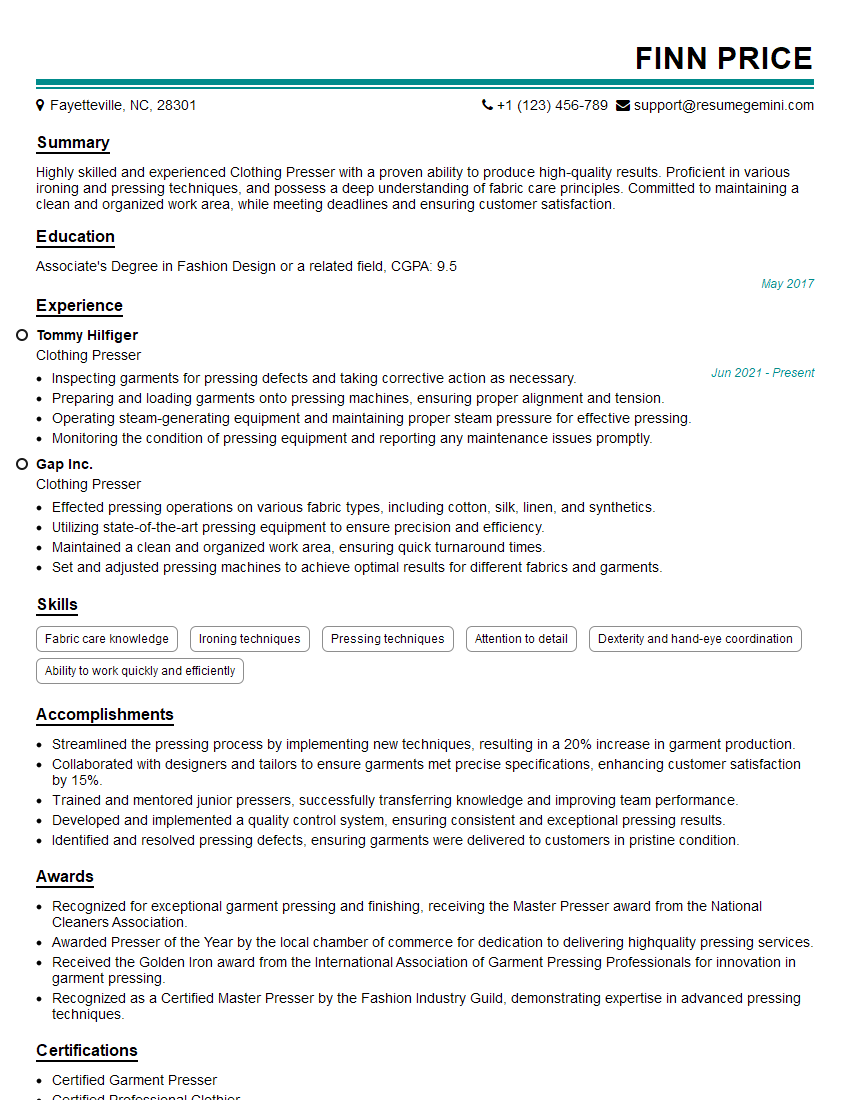
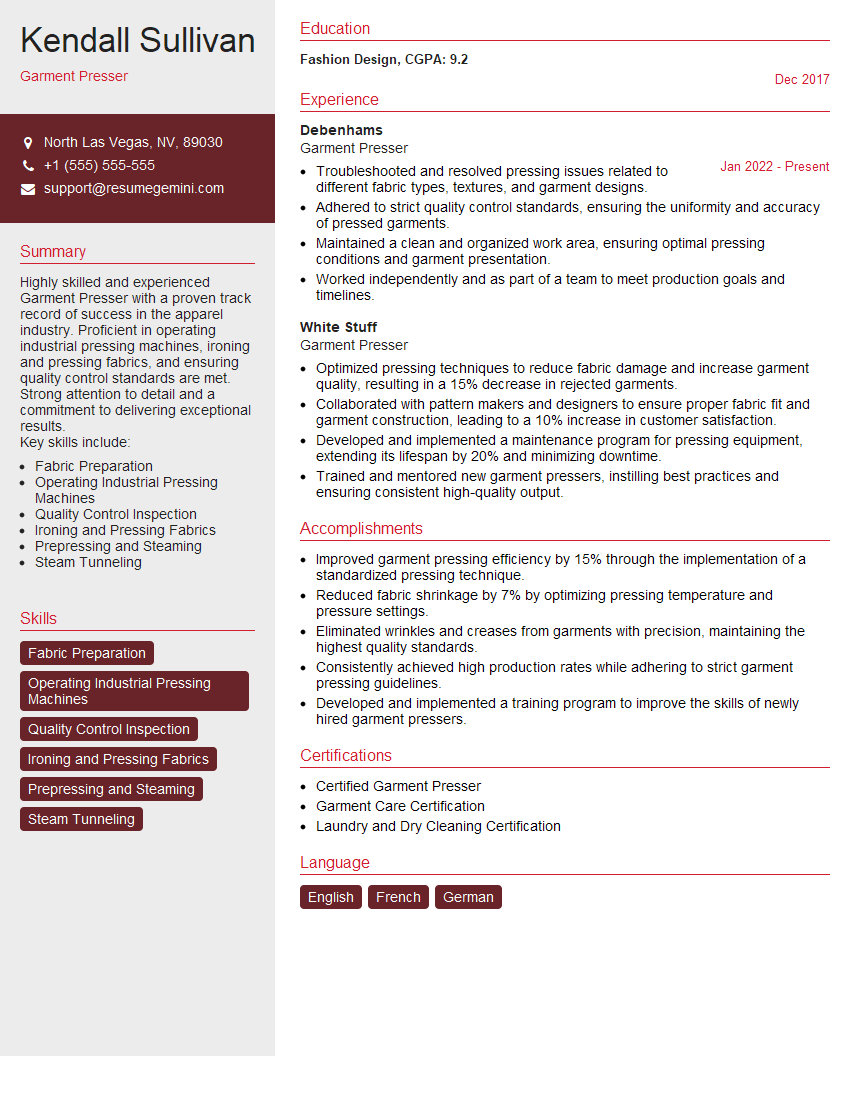
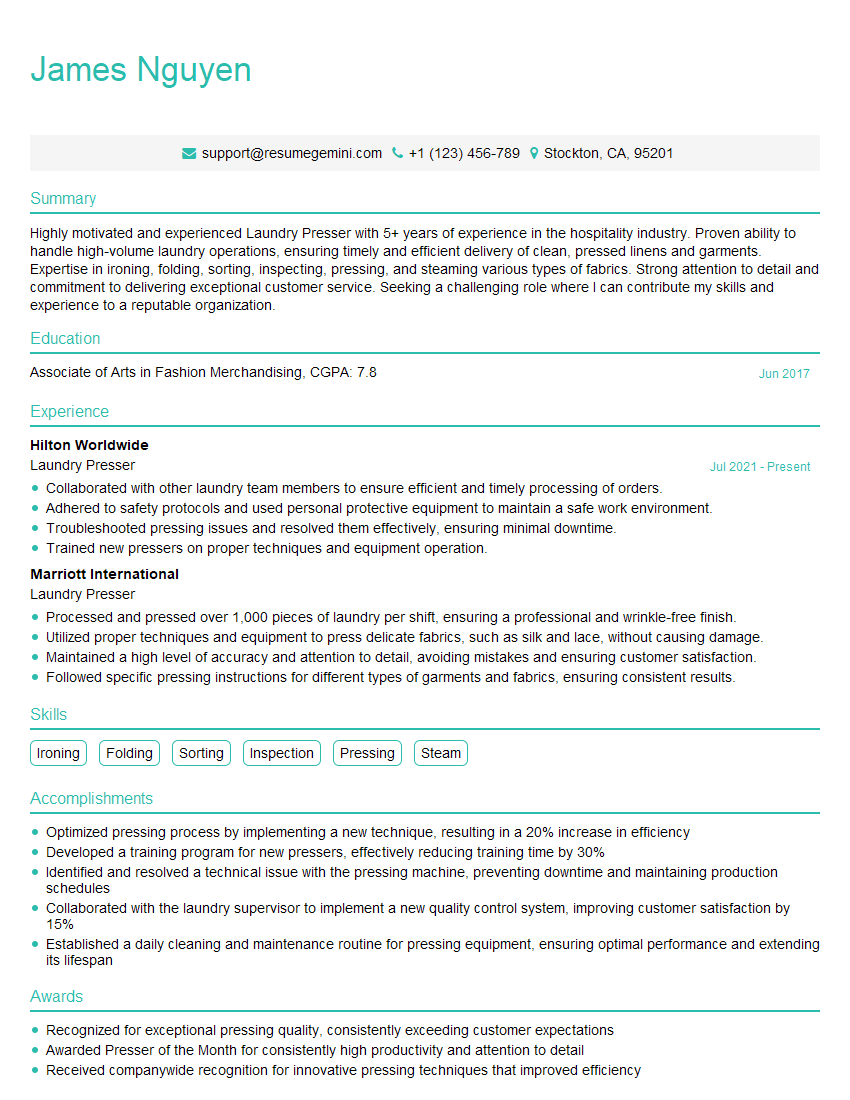
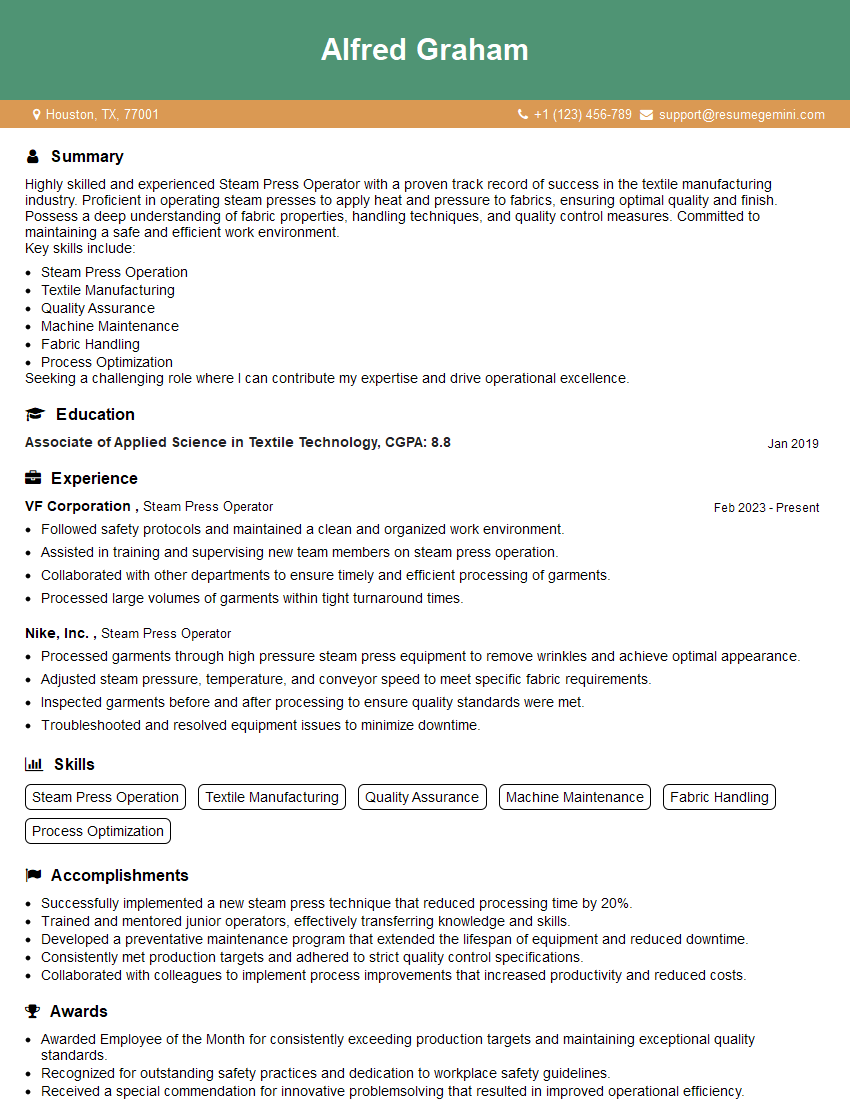
Mastering garment pressing techniques is vital for career advancement in the fashion and textile industries. A strong understanding of these techniques will significantly improve your employability and open doors to more challenging and rewarding roles. To maximize your job prospects, create an ATS-friendly resume that highlights your skills and experience effectively. ResumeGemini is a trusted resource to help you build a professional and impactful resume. Examples of resumes tailored to showcasing expertise in Knowledge of Garment Pressing Techniques are available to guide you. Invest time in crafting a strong resume – it’s your first impression with potential employers.

Explore more articles
Users Rating of Our Blogs
Share Your Experience
We value your feedback! Please rate our content and share your thoughts (optional).
What Readers Say About Our Blog
good