Interviews are more than just a Q&A session—they’re a chance to prove your worth. This blog dives into essential Knowledge of Honey Production interview questions and expert tips to help you align your answers with what hiring managers are looking for. Start preparing to shine!
Questions Asked in Knowledge of Honey Production Interview
Q 1. Describe the different types of honey bee colonies.
Honey bee colonies are fundamentally structured around a single queen, but the colony’s overall health and productivity can vary significantly based on factors like genetics, nutrition, and disease prevalence. There isn’t a rigid classification of ‘types’ as such, but we can describe colonies by their characteristics and functionality.
Strong Colonies: These are characterized by a large population of bees, ample brood (developing young), abundant stores of honey and pollen, and a healthy, actively laying queen. These colonies are productive and resilient.
Weak Colonies: These have a smaller population, limited brood, low honey and pollen reserves, and may have a poorly performing or absent queen. They are more vulnerable to disease, pests, and environmental stressors.
Swarmed Colonies: A colony that has swarmed has lost a significant portion of its population, including the old queen, leaving behind a smaller, potentially weaker colony. This reduces immediate honey production.
Queenless Colonies: The absence of a queen disrupts the colony’s organization and functionality. Workers may begin laying eggs (resulting in drones, or male bees only), and the colony will eventually weaken and potentially perish if a new queen isn’t introduced.
Understanding the state of a colony – its strength, productivity, and queen status – is crucial for effective beekeeping management.
Q 2. Explain the process of honey extraction from honeycombs.
Honey extraction is a multi-step process that requires careful handling to avoid damaging the comb or upsetting the bees. The process generally involves:
Uncapping: The beeswax cappings sealing the honey cells are removed using an uncapping knife (heated for easier work) or a machine uncapper. This exposes the honey within.
Extraction: The honeycombs are placed in an extractor, a centrifuge that spins the frames, forcing the honey out of the cells. Radial extractors spin the frames horizontally, while tangential extractors spin them vertically.
Filtering: The extracted honey is filtered to remove any beeswax particles, bee parts, or other debris.
Decanting/Bottling: The filtered honey is allowed to settle, then bottled.
It’s important to note that the combs should be handled gently to maintain their integrity, enabling the bees to reuse them for subsequent honey storage.
Q 3. What are the key factors influencing honey yield?
Honey yield is a complex interaction of various factors, many of which are interconnected. Key influencing factors include:
Forage availability: The abundance and diversity of nectar and pollen sources in the surrounding environment directly impacts the bees’ ability to gather resources.
Weather conditions: Rainfall, temperature, and sunshine significantly influence nectar production by flowering plants. Extended periods of rain or extreme heat can severely limit honey production.
Colony strength and health: A strong, healthy colony with a prolific queen will naturally produce more honey than a weak or diseased colony.
Beekeeping practices: Proper hive management, including swarm prevention, disease control, and providing supplemental feeding when necessary, contributes to optimal honey yield.
Bee genetics: Some bee strains are naturally more productive than others, exhibiting higher honey-gathering capabilities.
Optimizing honey yield requires a holistic approach considering all these elements.
Q 4. How do you identify and treat common honey bee diseases?
Identifying and treating honey bee diseases requires a keen eye and a systematic approach. Common diseases include:
American Foulbrood (AFB): A bacterial disease causing a foul-smelling, ropy brood. Diagnosis involves the ‘ropey’ test and microscopic examination. Treatment involves burning infected colonies and strict hygiene protocols. Prevention focuses on strong colonies and resistant stock.
European Foulbrood (EFB): Another bacterial disease, typically less severe than AFB, presenting with a darker, discolored brood. Treatment includes antibiotics (oxytetracycline), but strong colonies can often recover without intervention. Hygiene and resistant bees are key to prevention.
Varroosis: Caused by the Varroa destructor mite, which weakens bees and transmits viruses. Diagnosis involves visual inspection for mites on bees and brood. Treatment uses various miticides (chemicals), organic acids (formic, oxalic), or integrated pest management strategies.
Accurate diagnosis is crucial for effective treatment. If unsure, consulting with a beekeeping expert or a veterinary diagnostician is essential.
Q 5. Detail the process of queen bee rearing and introduction.
Queen rearing involves creating new queens from existing larvae or eggs. This is crucial for colony multiplication, replacement of failing queens, and maintaining genetic diversity. The process involves:
Preparing queen cells: This usually involves grafting larvae into artificial queen cups or creating queen cells naturally using techniques such as the Miller method or the Doolittle method.
Providing nurse bees: Cells are placed in a colony of nurse bees to ensure proper feeding and development of the queen larvae.
Mating the virgin queen: Once the queen cells are capped, they are moved to a nuc (a smaller colony), allowing the queen to emerge and mate with drones.
Introducing the new queen: The new queen is introduced to her new colony, often using a queen cage to allow the colony time to adjust to her presence. Improper introduction can lead to queen rejection.
Success hinges on meticulous attention to detail and understanding of bee behavior.
Q 6. What are the different types of beekeeping equipment and their uses?
Beekeeping demands specific equipment to manage hives effectively and safely. Key equipment includes:
Hive bodies and supers: These boxes form the structure of the beehive, providing space for brood rearing and honey storage.
Frames and foundation: Frames provide structure within the hive for comb building. Foundation sheets (usually beeswax) are embedded in frames to guide the bees’ construction.
Protective gear: This includes suits, veils, and gloves to protect beekeepers from stings.
Smoker: Used to calm bees during hive inspections.
Hive tool: A multipurpose tool used for prying apart hive components and manipulating frames.
Honey extractor: A centrifuge used to extract honey from honeycombs.
Uncapping knife/machine: Used to remove the wax cappings sealing the honey cells.
The specific equipment needs may vary based on the scale and style of beekeeping operation.
Q 7. Explain the importance of hive maintenance and record-keeping.
Hive maintenance and record-keeping are cornerstones of successful beekeeping. Regular hive inspections allow for early detection of problems, such as disease, pests, or queen issues. Detailed record-keeping helps track colony performance, treatment history, and honey yields. This allows beekeepers to:
Monitor colony health: Regular checks can reveal signs of disease, queen issues, or insufficient food stores, enabling timely intervention.
Optimize honey production: Tracking honey yields helps beekeepers understand the impact of various factors, such as forage availability and management practices, leading to improved strategies.
Track treatments and medications: Maintaining a detailed record of treatments helps track efficacy and avoid potential drug resistance issues.
Improve beekeeping skills: Analyzing records over time enhances understanding of colony dynamics, allowing for adjustments in management practices.
Effective record-keeping, combined with diligent hive maintenance, is crucial for long-term success in beekeeping.
Q 8. Describe different methods of pollination management.
Pollination management is crucial for honey production and overall ecosystem health. It involves strategies to ensure bees have access to abundant and diverse floral resources. This can be achieved through several methods:
Providing supplemental feeding: During times of pollen or nectar dearth (shortage), beekeepers can provide supplemental feed, such as sugar syrup or pollen substitutes. This helps maintain colony strength and prevents starvation, indirectly supporting pollination efforts.
Strategic hive placement: Positioning hives near diverse flowering plants is critical. Consider the bloom cycles of different plants to maximize foraging opportunities throughout the year. For example, placing hives near an orchard during fruit blossom and later relocating them to wildflower meadows.
Creating bee-friendly habitats: Planting diverse wildflowers and reducing pesticide use in the surrounding environment significantly boosts bee populations and pollination success. A diverse array of plant species ensures a continuous supply of pollen and nectar for longer durations.
Managed pollination services: Beekeepers often rent out their hives to farmers for commercial pollination of crops like almonds, apples, and blueberries. This is a vital service as it increases crop yields and ensures food security.
Protecting existing habitats: Preserving natural habitats, such as meadows and forests, is paramount. These areas provide crucial foraging grounds for bees and enhance biodiversity.
Q 9. How do you assess the health and productivity of a bee colony?
Assessing bee colony health and productivity involves a multifaceted approach. We look for several key indicators:
Population size and brood pattern: A strong colony will have a large population of bees and a healthy brood pattern (the area where the queen lays eggs). A patchy or irregular brood pattern can suggest disease or queen issues.
Honey stores: Ample honey stores indicate a productive colony that has successfully gathered sufficient resources for winter survival.
Queen health and activity: The queen is crucial. Her health and egg-laying capacity directly impact colony strength. Regularly checking for a healthy, active queen is essential.
Disease and pest presence: Regular inspections for signs of pests (like Varroa mites) and diseases (like American foulbrood) are vital. Early detection is key for effective treatment and prevention of colony collapse.
Foraging activity: Observing the activity levels of foragers (bees bringing pollen and nectar back to the hive) gives a good indication of the colony’s productivity and the quality of the surrounding foraging environment.
Using a combination of these assessments, beekeepers can determine the overall health and productivity of a colony, make informed management decisions, and intervene when necessary.
Q 10. What are the challenges of sustainable beekeeping practices?
Sustainable beekeeping faces numerous challenges:
Pesticide use: Pesticides, especially neonicotinoids, are highly toxic to bees and can decimate entire colonies. Finding alternative pest management strategies is crucial for sustainable beekeeping.
Habitat loss and fragmentation: The destruction of natural habitats due to urbanization and intensive agriculture reduces the foraging range and resources available for bees.
Climate change: Changing weather patterns and increased frequency of extreme weather events directly impact bee health, foraging behavior, and honey production.
Bee diseases and pests: Varroa mites, American foulbrood, and other diseases pose significant threats to bee health. Sustainable beekeeping requires effective and environmentally friendly methods of pest and disease control.
Economic viability: Balancing the costs of sustainable practices with the economic realities of honey production can be a significant challenge for beekeepers.
Sustainable beekeeping requires a holistic approach that addresses these challenges, prioritizing the long-term health of bee populations and the environment.
Q 11. Explain the process of honey bottling and packaging.
Honey bottling and packaging involves several steps:
Honey extraction: Honey is extracted from honeycombs using an extractor, a centrifuge that spins the frames, forcing the honey out.
Filtering and straining: The extracted honey is filtered to remove any beeswax, pollen, or other debris.
Heating (optional): Some beekeepers gently heat the honey to reduce viscosity and improve filtering. However, excessive heating can damage the honey’s quality.
Bottling: The filtered honey is carefully bottled using automated or manual filling equipment.
Labeling: Each bottle is labeled with information such as the honey’s origin, variety, and weight.
Packaging: Bottles are often packed in cartons or boxes for shipping and sale.
The entire process must maintain strict hygiene standards to prevent contamination and ensure the honey’s quality and safety.
Q 12. How do you ensure the quality and safety of your honey product?
Ensuring honey quality and safety involves several steps starting from the hive to the consumer:
Hive hygiene and disease management: Regular hive inspections help detect and treat diseases and pests, preventing contamination of honey.
Careful harvesting and processing: Maintaining hygiene during honey extraction, filtering, and bottling is crucial.
Testing for purity and contaminants: Regular testing ensures the honey is free from harmful substances, such as pesticides or heavy metals.
Proper storage and handling: Honey should be stored in a cool, dry place, away from strong odors and direct sunlight.
Compliance with food safety regulations: Beekeepers must adhere to relevant food safety regulations and guidelines to ensure their honey meets the required standards.
By adhering to these practices, we guarantee a high-quality, safe product that consumers can trust.
Q 13. What are the common pests and predators of honey bees and their control measures?
Honey bees face various pests and predators:
Varroa mites: These external parasites weaken bees and transmit viruses. Control methods include oxalic acid treatment, formic acid treatment, and drone brood removal.
Small hive beetles: These beetles damage combs and contaminate honey. Control involves trapping and using diatomaceous earth.
Wax moths: Their larvae feed on beeswax, causing damage to combs. Maintaining strong colonies and good hive hygiene helps prevent infestations. Freezing combs can also kill larvae.
Predators: Skunks, bears, and birds can prey on bees. Electric fencing, hive stands with barriers, and appropriate hive placement can deter predators.
Integrated pest management (IPM) strategies, which combine various techniques, are essential for sustainable pest control in beekeeping, minimizing the use of chemicals.
Q 14. Discuss the role of honey bees in pollination and ecosystem health.
Honey bees play a vital role in pollination, which is essential for the reproduction of a vast number of plants, including many of our food crops. They are responsible for pollinating approximately one-third of the food we consume.
Their role extends beyond food production. They are keystone species in many ecosystems, contributing significantly to plant diversity and overall ecosystem health. When bee populations decline, it affects the entire food web, impacting other animals and plants that rely on the plants bees pollinate. This has cascading effects on biodiversity and ecosystem stability. Healthy bee populations are essential for maintaining healthy and resilient ecosystems.
Q 15. What are the different types of honey and their characteristics?
Honey’s diverse flavors and characteristics are largely determined by the floral sources bees utilize. Think of it like wine – the terroir (environment) greatly impacts the final product. Here are some examples:
- Clover Honey: Light in color, mild and sweet, with a delicate flavor. It’s a popular all-purpose honey.
- Wildflower Honey: A complex blend reflecting the variety of flowers visited. Expect a more robust flavor profile, with notes that can range from floral to subtly spicy, depending on the region and season.
- Buckwheat Honey: Dark brown to almost black, with a strong, distinctive flavor that some describe as earthy or slightly bitter. It has a higher mineral content than many other honeys.
- Manuka Honey (from New Zealand): Famous for its unique antimicrobial properties, linked to its high concentration of methylglyoxal (MGO). It’s typically dark amber in color with a strong, slightly pungent taste.
- Orange Blossom Honey: Light amber in color, with a bright, citrusy flavor that is wonderfully fragrant.
These are just a few examples; countless variations exist based on geographical location and bee foraging patterns. The color, aroma, and taste profile of honey are key indicators of its origin and floral source.
Career Expert Tips:
- Ace those interviews! Prepare effectively by reviewing the Top 50 Most Common Interview Questions on ResumeGemini.
- Navigate your job search with confidence! Explore a wide range of Career Tips on ResumeGemini. Learn about common challenges and recommendations to overcome them.
- Craft the perfect resume! Master the Art of Resume Writing with ResumeGemini’s guide. Showcase your unique qualifications and achievements effectively.
- Don’t miss out on holiday savings! Build your dream resume with ResumeGemini’s ATS optimized templates.
Q 16. Describe the legal and regulatory aspects of honey production.
Honey production is subject to various legal and regulatory frameworks, ensuring consumer safety and fair trade practices. These regulations vary by country and region, but common themes include:
- Food Safety Regulations: These dictate standards for hygiene, processing, labeling, and preventing adulteration. For example, honey must meet specific purity standards, free from added sugars or other contaminants.
- Labeling Requirements: Labels must accurately reflect the honey’s origin (e.g., ‘California Wildflower Honey’), type, and net weight. Any added ingredients must be clearly stated.
- Import/Export Regulations: International trade in honey is governed by rules concerning tariffs, sanitary and phytosanitary measures (to prevent the spread of pests and diseases), and origin verification.
- Beekeeping Licensing: Some jurisdictions require beekeepers to obtain licenses or permits to operate apiaries, ensuring proper registration and monitoring of bee populations.
Non-compliance can lead to penalties, including fines and product seizure. Keeping up-to-date with the latest regulations is crucial for any honey producer. Often, regional beekeeping associations offer guidance and resources on compliance.
Q 17. How do you market and sell your honey products?
Marketing and selling honey involves a multi-faceted approach, combining direct sales with broader market access. My strategy incorporates:
- Direct Sales: Selling honey at farmers’ markets and directly to consumers through our website or on-site sales offers a premium experience, allowing direct interaction with customers and building brand loyalty. This allows for premium pricing and building personal relationships.
- Wholesale Partnerships: Collaborating with local grocery stores, restaurants, and health food shops increases brand exposure and reach a wider audience. This provides consistent larger scale sales.
- Online Sales: E-commerce platforms (like Etsy or our own website) provide access to a global market, expanding our customer base beyond our geographical area.
- Branding & Storytelling: Highlighting the unique characteristics of our honey (floral source, production methods) and the story behind our beekeeping practice adds value and resonates with customers who appreciate quality and transparency. This can help premium pricing.
- Value-Added Products: Expanding our offerings to include beeswax candles, honey-infused skincare products, or honey-based culinary items diversifies income streams and adds value to our brand.
Effective marketing also involves utilizing social media platforms to share information about our beekeeping practices, honey varieties, and upcoming events. It’s all about building a connection with the consumer and fostering trust in our product.
Q 18. What are your strategies for managing risks associated with beekeeping?
Risk management in beekeeping is paramount for both the bees’ health and the business’s sustainability. My approach includes:
- Pest and Disease Control: Implementing a proactive approach to monitor and control varroa mites, tracheal mites, and other pests and diseases using integrated pest management (IPM) strategies is key. This involves regular hive inspections, careful application of treatments (when necessary), and maintaining strong, healthy colonies.
- Weather Monitoring: Keeping a close eye on weather conditions (droughts, extreme temperatures) allows for timely adjustments in hive management, potentially preventing significant losses.
- Queen Management: Maintaining a healthy queen is crucial. Regular inspections ensure the queen is laying effectively and replacing weak queens proactively minimizes colony collapse risks.
- Insurance: Having appropriate insurance coverage protects against unforeseen events like theft, vandalism, or unexpected losses due to disease outbreaks.
- Diversification: Maintaining multiple apiary locations helps mitigate risks associated with localized environmental events (like pesticide exposure) or disease outbreaks.
Regular hive inspections are a cornerstone of risk management, allowing early detection of any issues before they escalate into major problems.
Q 19. Describe your experience with different hive types and their management.
My experience encompasses various hive types, each with its own advantages and management requirements. I’ve worked with:
- Langstroth Hives: The most common type in North America, characterized by their movable frames that make inspections and honey extraction easier. Their modular design allows for scalability, and the standardized equipment is readily available. Management involves regular inspections for disease, honey harvesting, and queen health checks.
- Top Bar Hives: These natural, simpler hives have a single long bar at the top, and the bees build their comb downwards. They require less maintenance but are more challenging for honey extraction and disease management. Observation skills are crucial here.
- Warre Hives: Vertical, natural-cell hives that emphasize minimal human intervention. They mimic the natural nesting habits of bees more closely. Management involves less intervention but requires a thorough understanding of bee behavior and swarm prevention.
The choice of hive type depends on personal preferences, climate, management skills, and desired level of intervention. Each type requires a slightly different approach to honey harvesting, disease control, and overall hive management.
Q 20. What are the environmental factors that affect honey bee populations?
Several environmental factors significantly impact honeybee populations. These include:
- Pesticide Exposure: Exposure to neonicotinoid and other pesticides weakens bee immune systems, reducing their ability to fight off diseases. This is a major threat globally.
- Habitat Loss: The decline in wildflower meadows and other diverse foraging habitats limits the bees’ access to pollen and nectar, leading to malnutrition and reduced colony strength.
- Climate Change: Changes in temperature and rainfall patterns can disrupt flowering cycles, impact bee brood development, and increase the incidence of certain diseases.
- Disease and Pests: Varroa mites, tracheal mites, and other diseases weaken or kill colonies, significantly affecting population sizes.
- Monoculture Farming: Large-scale farming with limited plant diversity provides bees with less varied food sources, making colonies more vulnerable to disease and malnutrition.
Addressing these environmental factors requires a multi-pronged approach involving sustainable agricultural practices, habitat restoration, and the development of more bee-friendly pesticides.
Q 21. How do you monitor and control varroa mites in your apiaries?
Varroa mites are a significant threat to honeybee health. My control strategies are multifaceted and utilize an Integrated Pest Management (IPM) approach:
- Regular Monitoring: I conduct regular hive inspections to assess mite infestation levels using sticky boards or alcohol washes. Early detection is crucial.
- Natural Control Methods: I utilize drone brood removal and screened bottom boards to help reduce mite populations naturally.
- Chemical Treatments (when necessary): If mite levels exceed thresholds, I use approved miticides judiciously, following label instructions carefully. This involves rotating miticides to avoid resistance development.
- Breeding for Resistance: I focus on maintaining strong, healthy colonies that show a degree of natural resistance to varroa mites. This is a long-term strategy but pays off in the long run.
- Good Apiary Hygiene: Maintaining clean and well-organized apiaries minimizes the risk of mite spread between colonies.
The goal of varroa control is not complete eradication, but rather keeping mite populations below economically damaging thresholds. A well-planned integrated approach is far more effective and sustainable than relying solely on chemical treatments.
Q 22. Describe your experience with different honey extraction methods.
Honey extraction involves carefully removing honey from honeycombs while minimizing damage to the combs and ensuring honey quality. I’ve extensive experience with two primary methods: crush-and-strain and centrifugal extraction.
Crush-and-strain is a simpler, more traditional method. Honeycombs are crushed, and the honey is separated from the wax and bee debris through straining using various mesh sizes. This method is suitable for smaller operations or hobbyists, and for dark, thick honeys. However, it results in lower honey yields and can be labor-intensive. Imagine squeezing a sponge – you get most of the liquid out, but some will always remain trapped.
Centrifugal extraction, which I primarily use, is a more efficient and scalable method. Honeycombs are placed in a centrifuge, a spinning drum, that throws the honey outward, leaving the wax combs intact for reuse. This yields more honey and produces a cleaner, higher-quality product. The process involves carefully uncapping the honeycombs first, then placing frames within the extractor. The speed and duration of spinning can be adjusted depending on honey viscosity.
I’ve also experimented with variations of these methods, such as using different mesh sizes for straining or adopting specialized uncapping equipment to increase efficiency. Selecting the right method depends on factors like the scale of the operation, the type of honey, available resources, and desired quality.
Q 23. What is your knowledge of honey grading and classification?
Honey grading and classification are crucial for ensuring consistent quality and fair pricing. Grading systems vary by region, but generally consider factors like color, flavor, aroma, and the presence of impurities. The United States uses a color grading system based on a Pfund scale, while other countries may incorporate more sensory assessments.
For instance, a lighter-colored honey generally commands a higher price than a darker one, although darker honeys often have distinct flavors and are valued by some consumers. I frequently use the Pfund scale and a color comparator to standardize my honey grading. Beyond color, I also assess the honey’s clarity – the presence of suspended particles can influence the grade. Finally, aroma and flavor profiles are subjective, but important factors impacting the final classification and marketability of the honey. For example, a honey with a strong floral aroma might be categorized differently than one with a more subtle, earthy tone.
Q 24. Explain the process of creating and managing a beekeeping budget.
Creating a beekeeping budget requires careful consideration of all costs associated with maintaining hives and producing honey. I approach this by breaking down expenses into categories:
- Start-up Costs: This includes purchasing bees, hives, protective gear, and initial tools. This can be a significant investment initially.
- Recurring Costs: These are ongoing expenses like feed supplements (particularly crucial in periods of nectar scarcity), hive maintenance (repairing or replacing damaged components), medications for disease prevention, and fuel for transportation.
- Labor Costs: If employing help, this section would include wages and benefits. For a sole proprietor, this might be represented by a fair wage for time spent. For a larger operation, the labor costs are significantly increased and need precise planning.
- Marketing and Sales: This encompasses costs for packaging, labeling, advertising, and potentially attending farmers markets or wholesale distribution fees.
I use spreadsheet software to track expenses, monitor income, and project profitability. Regularly reviewing and adjusting the budget is essential, accounting for seasonal variations and unforeseen expenses. For example, an unexpectedly harsh winter might necessitate additional feeding costs, highlighting the importance of having a budget with some reserve for contingencies.
Q 25. How do you maintain accurate records of your beekeeping operations?
Maintaining accurate records is vital for efficient beekeeping and for legal and tax purposes. I use a combination of digital and physical record-keeping:
- Hive Records: For each hive, I track the date of installation, colony strength, queen status, honey yield, treatments administered (against diseases or parasites), and any observations regarding colony health or behavior. I maintain these records in a bound notebook and digitally in a spreadsheet, often using photographs to visually record hive conditions.
- Financial Records: Detailed records of all expenses (purchases, maintenance, etc.) and income (honey sales, etc.) are kept, facilitating tax preparation and business planning. I use accounting software for managing financial data.
- Inventory Management: I track inventory levels of honey, beeswax, and other beekeeping supplies to ensure adequate stock and facilitate efficient ordering.
This detailed record-keeping allows me to analyze trends, identify areas for improvement, and make informed decisions regarding colony management, resource allocation, and business strategies. For instance, tracking honey yields over time helps me identify high-performing hives and assess the effectiveness of different management practices.
Q 26. Discuss your experience with different methods of wintering bee colonies.
Wintering bee colonies successfully requires safeguarding them from harsh weather conditions and ensuring adequate food reserves. I use a variety of methods depending on my climate and the colony’s strength:
- Insulation: Providing insulation to hives is critical to maintain internal temperature and conserve energy. This could involve wrapping hives in tarps or using insulated hive covers. The goal is to mitigate temperature fluctuations and reduce energy expenditure by the bees to stay warm.
- Supplemental Feeding: In areas with short nectar flows, winter feeding is essential to ensure sufficient honey stores for the colony to survive. I use sugar syrup or specialized bee candy to supplement honey stores.
- Windbreaks: Protecting hives from strong winds helps to maintain temperature stability and reduces stress on the colony. I often place hives near windbreaks or build simple wind barriers.
- Varroa Mite Management: Varroa mites are a significant threat during winter, so treating for mites before winter sets in is crucial. I use oxalic acid treatment, but ensure careful adherence to safety guidelines and relevant regulations.
The best wintering strategy is tailored to the local climate and specific conditions. For example, colonies in colder climates will require more robust insulation and potentially larger sugar syrup reserves compared to colonies in milder climates.
Q 27. What are the ethical considerations in honey bee management?
Ethical considerations in honey bee management are paramount. They extend beyond simply producing honey; it’s about ensuring the well-being of the bees and the environment.
- Minimizing Stress on Bees: Gentle handling, avoiding unnecessary inspections, and implementing stress-reducing practices are crucial. Rough handling can damage the bees and reduce honey production.
- Sustainable Practices: Avoiding harmful pesticides and chemicals near hives, using sustainable beekeeping methods, and minimizing the environmental impact of the operation. I avoid using harmful pesticides and always consider the surrounding environment when placing hives.
- Responsible Queen Management: Ethical queen rearing practices that prioritize the health and genetic diversity of the colony. Over-reliance on specific queen lines can decrease resilience.
- Transparency and Traceability: Being transparent with consumers about honey sourcing, production methods, and any treatments used. Knowing where your honey comes from and how it was produced allows for better informed consumer choices.
Ethical beekeeping is not just good for the bees, it’s good for business. Consumers are increasingly concerned about the ethical sourcing of their food, and beekeeping is no exception. A commitment to ethical practices builds trust and fosters a positive image for the beekeeper and the honey produced.
Q 28. How do you identify and address potential issues related to honey bee foraging?
Honey bee foraging is affected by various factors, and identifying and addressing issues is crucial for optimal honey production.
- Nectar and Pollen Availability: Monitoring the availability of nectar and pollen sources throughout the year is critical. If these resources are scarce, supplementary feeding may be necessary. I regularly assess the local flora to ensure adequate resources for my bees.
- Pesticide Exposure: Pesticides can severely harm bee colonies. Identifying pesticide sources near apiaries and working with farmers and landowners to implement bee-friendly pesticide management strategies is essential. This includes advocating for responsible pesticide use and educating local farmers.
- Disease and Pests: Regular inspections help in early detection of diseases and pests, allowing for timely intervention to prevent widespread damage. I keep a close eye for signs of diseases and pests, using appropriate treatments when necessary.
- Competition for Resources: Competition from other beekeepers or wild bee colonies for limited resources can impact foraging efficiency. Strategic placement of hives and effective communication with other beekeepers can mitigate this issue.
Addressing these issues requires proactive monitoring, local knowledge, and collaboration. For instance, building a relationship with neighboring farmers can help protect hives from pesticide exposure. Regular hive inspections are like a doctor’s visit for your bees; early detection is key to preventing major issues.
Key Topics to Learn for Knowledge of Honey Production Interview
- Bee Biology and Behavior: Understanding honeybee life cycles, colony structure, and communication methods is crucial. Consider the practical application of this knowledge in hive management and disease prevention.
- Apiculture Techniques: Mastering hive construction, swarm prevention, queen rearing, and various honey extraction methods. Be prepared to discuss the challenges and solutions related to these practices.
- Honey Processing and Quality Control: Familiarize yourself with honey extraction, filtration, grading, and storage techniques. Understanding honey quality parameters and potential contaminants is essential.
- Honeybee Health and Disease Management: Learn about common honeybee diseases, pests, and parasites, and the various methods used for their control and prevention. Be ready to discuss integrated pest management strategies.
- Sustainable Apiculture Practices: Understanding environmentally friendly beekeeping techniques, including responsible land management and the use of sustainable materials.
- Honey Marketing and Sales: Develop an understanding of honey markets, consumer preferences, and effective marketing strategies for honey and honey-related products.
- Regulations and Legalities: Be aware of relevant regulations and certifications related to honey production and sales in your region.
- Apiary Equipment and Technology: Familiarity with various tools and technologies used in modern beekeeping, from hive tools to honey extractors and monitoring systems.
Next Steps
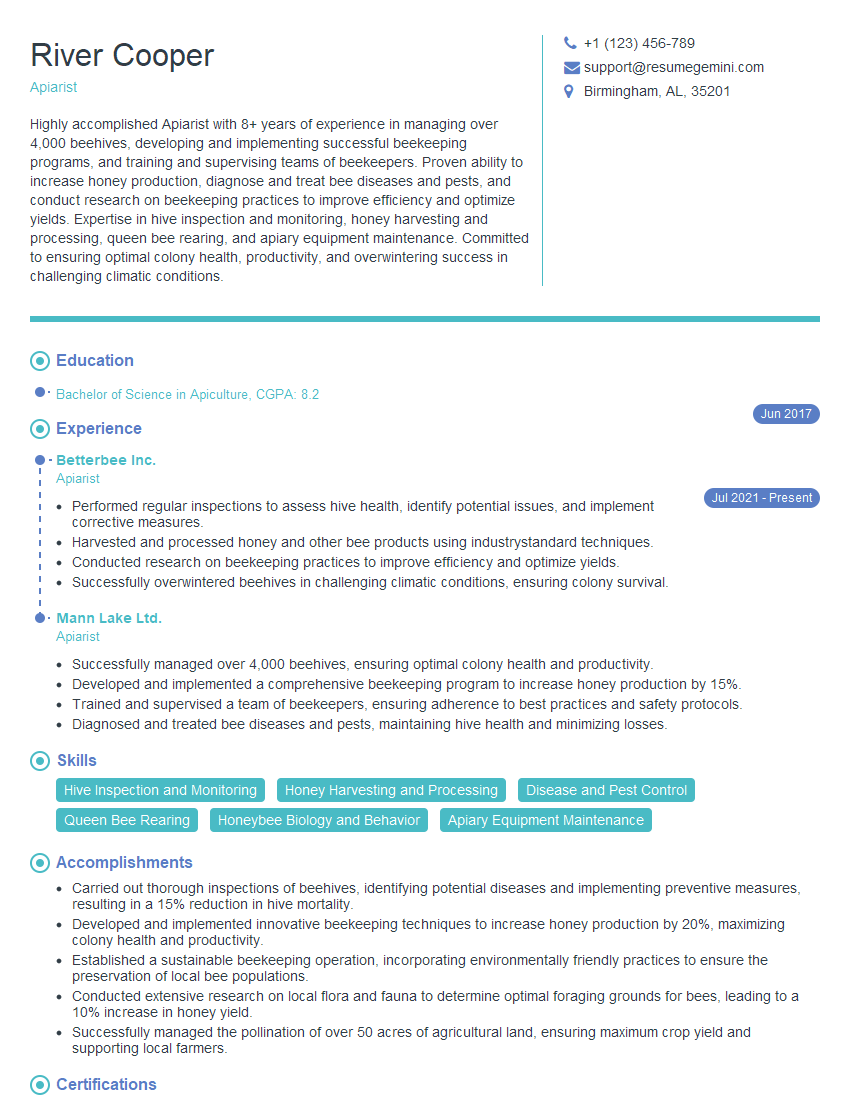
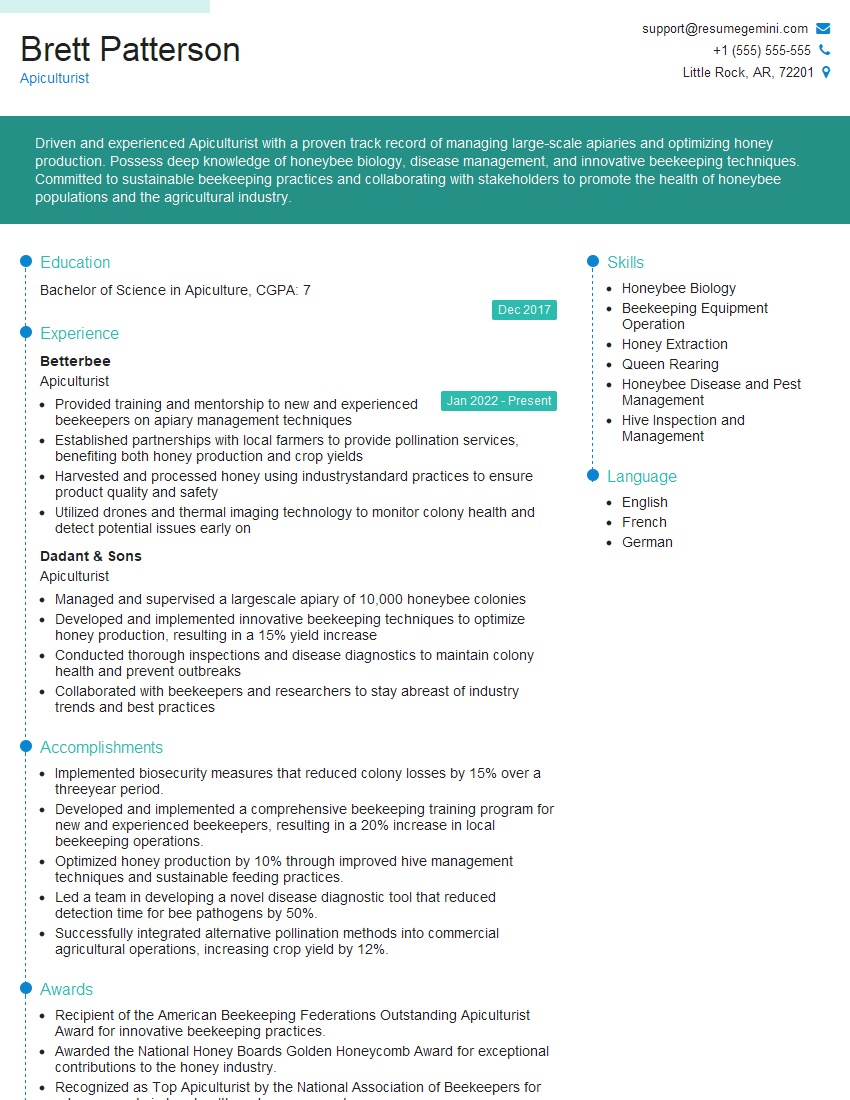
Mastering the knowledge of honey production opens doors to exciting career opportunities in a growing industry. From beekeeping operations to research and development, your expertise will be highly valued. To maximize your job prospects, it’s crucial to create a strong, ATS-friendly resume that showcases your skills and experience effectively. ResumeGemini is a trusted resource that can help you build a professional resume that stands out. We offer examples of resumes tailored to Knowledge of Honey Production to guide you in creating a compelling application. Take the next step toward your dream career today!
Explore more articles
Users Rating of Our Blogs
Share Your Experience
We value your feedback! Please rate our content and share your thoughts (optional).
What Readers Say About Our Blog
Very informative content, great job.
good