Every successful interview starts with knowing what to expect. In this blog, we’ll take you through the top Knowledge of Inventory Management Concepts interview questions, breaking them down with expert tips to help you deliver impactful answers. Step into your next interview fully prepared and ready to succeed.
Questions Asked in Knowledge of Inventory Management Concepts Interview
Q 1. Explain the difference between FIFO and LIFO inventory valuation methods.
FIFO (First-In, First-Out) and LIFO (Last-In, First-Out) are two common methods for valuing inventory. They impact how the cost of goods sold (COGS) and ending inventory are calculated, ultimately affecting a company’s financial statements.
FIFO: Imagine a bakery. The first loaf of bread you bake is the first one you sell. FIFO assumes that the oldest inventory items are sold first. This means the cost of goods sold reflects the cost of the oldest items, and the ending inventory reflects the cost of the newest items.
LIFO: Now, imagine a lumber yard. They might sell the most recently delivered lumber first, perhaps because it’s easier to access. LIFO assumes the most recently purchased items are sold first. The cost of goods sold reflects the cost of the newest items, and the ending inventory reflects the cost of the oldest items.
Key Differences: During periods of inflation, FIFO results in a lower COGS and higher net income because older, cheaper inventory is used to calculate COGS. Conversely, LIFO results in a higher COGS and lower net income. The choice between FIFO and LIFO significantly affects tax liability and financial reporting; LIFO is not permitted under IFRS (International Financial Reporting Standards).
- FIFO: Lower COGS, higher net income (during inflation), simpler to understand and track.
- LIFO: Higher COGS, lower net income (during inflation), better matches current costs with revenues.
Q 2. Describe your experience with inventory tracking software.
I have extensive experience using various inventory tracking software, including NetSuite, SAP, and Fishbowl Inventory. My experience spans from implementing and configuring these systems to training users and optimizing processes for accuracy and efficiency. For example, in a previous role, I implemented NetSuite to replace a manual spreadsheet-based system. This resulted in a significant reduction in inventory discrepancies and improved real-time visibility of stock levels. The software’s features, such as automated stock alerts and barcode scanning integration, significantly streamlined our processes. I’m proficient in using these systems to generate reports on inventory turnover, slow-moving items, and potential stockouts, enabling data-driven decision-making.
Beyond the software itself, my experience includes integrating these systems with other enterprise resource planning (ERP) systems to ensure seamless data flow. I understand the importance of data integrity and regularly perform system audits to maintain data accuracy and identify potential issues.
Q 3. How do you calculate inventory turnover ratio, and what does it indicate?
The inventory turnover ratio measures how efficiently a company sells its inventory during a specific period. A higher ratio generally indicates strong sales and efficient inventory management, while a lower ratio might suggest slow-moving inventory or overstocking.
The formula is:
Inventory Turnover Ratio = Cost of Goods Sold / Average InventoryCost of Goods Sold (COGS): The direct cost of producing goods sold by a company. This includes raw materials, direct labor, and manufacturing overhead.
Average Inventory: The average value of inventory held during the period. This is calculated by adding the beginning and ending inventory values and dividing by two: (Beginning Inventory + Ending Inventory) / 2
Example: If a company has a COGS of $100,000 and an average inventory of $20,000, its inventory turnover ratio is 5 (100,000 / 20,000). This suggests the company sells its entire inventory five times a year.
Interpretation: The interpretation of the ratio depends on the industry. A high turnover might indicate strong sales but also the risk of stockouts. A low turnover might indicate weak sales or excess inventory, leading to storage costs and potential obsolescence.
Q 4. What are the common causes of inventory discrepancies and how do you address them?
Inventory discrepancies occur when the recorded inventory levels don’t match the physical count. Several factors contribute to these discrepancies:
- Data entry errors: Incorrectly recording quantities received, sold, or transferred.
- Theft or pilferage: Unauthorized removal of inventory.
- Damage or spoilage: Items becoming unusable.
- Poor inventory tracking: Lack of barcoding or accurate scanning.
- Obsolescence: Items becoming outdated or irrelevant.
Addressing Discrepancies: A systematic approach is crucial. I would follow these steps:
- Conduct a physical inventory count: A thorough count of all items on hand.
- Reconcile the physical count with the inventory records: Identify variances.
- Investigate the root causes: Determine why the discrepancies occurred.
- Implement corrective actions: Address the issues (e.g., improve data entry procedures, enhance security measures, improve training).
- Regularly monitor and audit inventory: Prevent future discrepancies.
For example, if we find a significant discrepancy in a particular area, I might review security footage or interview staff to pinpoint the source of the problem. Implementing cycle counting—a method of counting a small portion of inventory regularly—can help catch discrepancies early.
Q 5. Explain the concept of safety stock and its importance.
Safety stock is the extra inventory a company holds to buffer against unexpected demand surges, supply chain disruptions, or lead time variations. It acts as a cushion, ensuring that you can meet customer demand even when things don’t go according to plan. Think of it as insurance for your inventory.
Importance: Safety stock prevents stockouts, which can lead to lost sales, unhappy customers, and damage to your reputation. While carrying safety stock adds to holding costs (storage, insurance, obsolescence risk), the cost of stockouts often outweighs these costs.
Determining Safety Stock Level: Several factors influence the optimal safety stock level, including:
- Demand variability: How much demand fluctuates.
- Lead time variability: How much the time to receive new stock varies.
- Service level: The desired probability of meeting demand.
Statistical models, such as those using standard deviation of lead time demand, are often used to calculate appropriate safety stock levels. The more variable demand or lead time, the higher the safety stock required to maintain a desired service level.
Q 6. How do you manage obsolete or slow-moving inventory?
Managing obsolete or slow-moving inventory requires a proactive approach. These items tie up capital and occupy valuable storage space. My strategies include:
- Identify slow-moving items: Regularly analyze inventory turnover rates to pinpoint items that haven’t sold in a given period.
- Price reductions and promotions: Offer discounts or run sales to stimulate demand.
- Repackaging or repositioning: If possible, repackage the items or find new markets for them.
- Liquidation or disposal: Sell slow-moving inventory to liquidators or dispose of them responsibly if necessary (consider environmental impact). This might involve donating items to charity.
- Return to supplier: Explore return options if possible.
- Improved forecasting and planning: Analyze past sales data to improve demand forecasting and prevent future accumulation of slow-moving items.
For example, I once managed a situation where a technological advancement rendered a significant portion of our inventory obsolete. We partnered with a liquidation company to sell the items at a reduced price, minimizing our losses. This also helped free up valuable warehouse space.
Q 7. What are some key performance indicators (KPIs) you use to monitor inventory performance?
Several key performance indicators (KPIs) are essential for monitoring inventory performance. These metrics provide insights into efficiency, profitability, and risk:
- Inventory Turnover Ratio: As discussed earlier, measures how efficiently inventory is sold.
- Days Inventory Outstanding (DIO): Indicates the number of days it takes to sell inventory (365 / Inventory Turnover Ratio).
- Gross Profit Margin: Measures the profitability of sales after deducting the cost of goods sold.
- Inventory Holding Cost: Includes storage, insurance, and obsolescence costs.
- Stockout Rate: The percentage of times demand cannot be met due to lack of stock.
- Fill Rate: The percentage of customer orders fulfilled from available stock.
- Inventory Accuracy: The percentage of time the recorded inventory matches the physical count.
By tracking these KPIs, I can identify areas for improvement and make data-driven decisions to optimize inventory management. Regularly reviewing these KPIs allows for early detection of issues, preventing larger problems down the line.
Q 8. Describe your experience with ABC analysis in inventory management.
ABC analysis is a crucial inventory management technique that categorizes inventory items based on their consumption value. It helps prioritize management efforts by focusing on the most valuable items. The analysis typically divides items into three categories: A, B, and C.
- A-items: These are high-value items representing a small percentage (e.g., 20%) of total inventory items but accounting for a large percentage (e.g., 80%) of the total inventory value. These require tight control, frequent monitoring, and accurate forecasting.
- B-items: These are medium-value items, representing a moderate percentage of both the number of items and their overall value. They require moderate control and monitoring.
- C-items: These are low-value items representing a large percentage (e.g., 80%) of the total number of items but accounting for a small percentage (e.g., 20%) of the total inventory value. These generally require less rigorous control and monitoring.
In my previous role at a manufacturing company, we implemented ABC analysis to optimize our inventory control. By focusing on A-items (our key raw materials), we significantly reduced stockouts of critical components and improved overall production efficiency. We achieved this by implementing stricter monitoring, more frequent ordering, and improved forecasting techniques for A-items. For C-items, we simplified our ordering process, reducing administrative overhead.
Q 9. How do you handle inventory shortages?
Handling inventory shortages requires a multi-faceted approach focusing on both immediate remediation and long-term prevention. The immediate response involves identifying the cause of the shortage (e.g., inaccurate demand forecasting, supplier delays, production issues). We then explore solutions like expediting orders from existing suppliers, sourcing from alternative suppliers, or using existing safety stock (if available).
For long-term prevention, I focus on improving demand forecasting accuracy, strengthening supplier relationships to mitigate disruptions, and optimizing safety stock levels. This often involves collaboration with the procurement and production teams. For example, if a shortage is due to inaccurate demand forecasting, I’d work with the sales team to refine forecasting methodologies and incorporate factors previously overlooked. If supplier delays are the issue, I’d focus on diversifying our supply base and negotiating stronger service level agreements.
Q 10. Explain the importance of accurate inventory data.
Accurate inventory data is the cornerstone of effective inventory management. Without it, decisions are based on guesswork, leading to potential problems like stockouts, overstocking, obsolescence, and ultimately, financial losses. Accurate data enables businesses to make informed decisions across several key areas:
- Demand Forecasting: Accurate inventory levels are crucial for developing reliable demand forecasts, helping determine optimal order quantities and minimize waste.
- Cost Control: Knowing the precise quantity and value of inventory allows for accurate cost accounting and identification of potential areas of waste or inefficiency.
- Production Planning: Accurate inventory data ensures that production schedules are realistic and that sufficient materials are available to meet production demands.
- Financial Reporting: Precise inventory data is critical for accurate financial reporting, ensuring compliance and avoiding discrepancies.
Imagine a retail store lacking accurate inventory data. They might display an item as ‘in stock’ when it’s actually sold out, leading to frustrated customers and lost sales. Conversely, overstocking due to inaccurate data leads to increased storage costs, potential obsolescence, and reduced profitability.
Q 11. How do you forecast inventory demand?
Inventory demand forecasting is a crucial aspect of inventory management, aiming to predict future demand based on historical data, market trends, and other relevant factors. Several methods are used:
- Time Series Analysis: This method analyzes historical sales data to identify patterns and trends, using techniques like moving averages, exponential smoothing, or ARIMA models to project future demand.
- Causal Forecasting: This approach identifies factors influencing demand (e.g., seasonality, promotions, economic conditions) and uses statistical models (like regression analysis) to predict future demand based on these factors.
- Qualitative Forecasting: This involves incorporating expert opinions, market research, and sales forecasts to supplement quantitative data, particularly useful when historical data is limited or unreliable.
In practice, a combination of these methods is often used. For example, I might use time series analysis to establish a baseline forecast, then adjust it based on insights from market research or anticipated promotional activities. Regularly reviewing and refining the forecasting model based on actual sales data is crucial for maintaining accuracy.
Q 12. Describe your experience with cycle counting.
Cycle counting is a process of regularly counting a small portion of inventory items rather than conducting a complete physical inventory count. This helps maintain the accuracy of inventory records throughout the year. The frequency of counting depends on the ABC analysis classification; A-items are counted more frequently than C-items. Cycle counting allows for the prompt identification and correction of discrepancies between physical inventory and recorded inventory, minimizing the impact of errors.
In a previous role, we implemented a cycle counting system that significantly improved inventory accuracy. We scheduled regular counts for A-items, with less frequent counts for B and C items. The system was integrated into our inventory management software, which automatically flagged discrepancies for investigation and correction. This system reduced the time and resources spent on annual physical inventory counts while ensuring the accuracy of our inventory data throughout the year. It also helped us identify potential issues like theft or damage much earlier.
Q 13. What is the economic order quantity (EOQ) model, and when is it appropriate to use it?
The Economic Order Quantity (EOQ) model is an inventory management technique that determines the optimal order quantity to minimize the total inventory costs. These costs include ordering costs (costs associated with placing an order) and holding costs (costs of storing inventory). The EOQ formula balances these costs to find the order quantity that minimizes their sum.
The formula is typically represented as:
EOQ = √[(2DS)/H]Where:
- D = Annual demand
- S = Ordering cost per order
- H = Holding cost per unit per year
The EOQ model is most appropriate when demand is relatively constant, lead times are consistent, and unit costs are stable. It’s less effective in situations with fluctuating demand, long lead times, or significant discounts for bulk purchases. Even then, it serves as a useful starting point for determining order quantities.
Q 14. Explain your understanding of the bullwhip effect in supply chains.
The bullwhip effect is a phenomenon in supply chains where demand variability increases as you move upstream in the supply chain. A small change in consumer demand can lead to amplified fluctuations in orders placed by retailers to wholesalers, wholesalers to manufacturers, and so on. This results in inefficiencies like excessive inventory, stockouts, lost sales, and increased costs throughout the supply chain.
Several factors contribute to the bullwhip effect:
- Demand Forecasting Errors: Inaccurate demand forecasts lead to over- or under-ordering at each stage of the supply chain.
- Order Batching: To reduce ordering costs, companies often place large, infrequent orders, amplifying demand variability.
- Price Fluctuations: Price discounts or promotions can lead to retailers stockpiling inventory, further amplifying demand fluctuations upstream.
- Lead Time: Long lead times can exacerbate the bullwhip effect as companies over-order to compensate for potential delays.
Mitigating the bullwhip effect involves strategies like improving demand forecasting accuracy, reducing lead times, implementing collaborative planning, forecasting, and replenishment (CPFR) systems, and using vendor-managed inventory (VMI) programs to better coordinate inventory management across the supply chain.
Q 15. How do you maintain inventory accuracy?
Maintaining inventory accuracy is crucial for efficient operations and profitability. It involves a multi-pronged approach focusing on minimizing discrepancies between physical inventory and recorded inventory. This is achieved through a combination of robust processes and technology.
- Regular Cycle Counting: Instead of a full annual inventory count, we conduct frequent, smaller counts of specific sections or item types. This allows for quicker identification and correction of errors, minimizing disruption. For example, we might count all items from aisle 3 on Mondays, and aisle 4 on Tuesdays.
- Barcode or RFID Scanning: Utilizing barcode or RFID scanning during receiving, putaway, picking, and shipping processes significantly reduces human error and speeds up the process. The system automatically updates the inventory database in real-time.
- Inventory Management System (IMS): A robust IMS is the backbone of accurate inventory. It should integrate with all aspects of the inventory process, providing real-time visibility and reporting capabilities. We utilize systems with features such as automated alerts for low stock levels, discrepancies, and potential overstocking.
- Staff Training: Thorough training of all staff involved in inventory handling is paramount. This includes proper procedures for receiving, storing, picking, and returning items, along with using scanning technology effectively. Regular refresher courses ensure best practices are maintained.
- Regular Audits and Reconciliation: Periodic audits comparing the physical inventory with system records pinpoint areas requiring improvement. This data-driven approach helps identify and eliminate recurring problems.
By implementing these measures, we ensure a high degree of accuracy, minimizing stockouts, reducing waste, and optimizing operational efficiency.
Career Expert Tips:
- Ace those interviews! Prepare effectively by reviewing the Top 50 Most Common Interview Questions on ResumeGemini.
- Navigate your job search with confidence! Explore a wide range of Career Tips on ResumeGemini. Learn about common challenges and recommendations to overcome them.
- Craft the perfect resume! Master the Art of Resume Writing with ResumeGemini’s guide. Showcase your unique qualifications and achievements effectively.
- Don’t miss out on holiday savings! Build your dream resume with ResumeGemini’s ATS optimized templates.
Q 16. What is your experience with just-in-time (JIT) inventory systems?
Just-in-Time (JIT) inventory systems aim to minimize inventory holding costs by receiving materials only when needed for production. My experience with JIT involves implementing and managing such a system for a manufacturing client. We focused on building strong relationships with suppliers, establishing reliable delivery schedules, and utilizing advanced forecasting techniques.
The challenges of JIT include the need for highly efficient production processes and very reliable supply chains. Any disruptions, such as supplier delays or unexpected demand spikes, can significantly impact production. Therefore, it necessitates robust contingency planning and real-time monitoring of inventory and supply chain performance. We employed Kanban systems to manage the flow of materials between production stages, ensuring a smooth and efficient process. Accurate demand forecasting was critical to success.
Successfully implementing JIT delivered substantial benefits, including a significant reduction in warehousing costs, minimized waste from obsolescence, and improved cash flow. However, it requires dedicated management and continuous improvement efforts to overcome inherent vulnerabilities.
Q 17. Describe a time you had to solve a challenging inventory-related problem.
In a previous role, we experienced a significant discrepancy between our inventory records and physical count. This resulted in inaccurate sales forecasts and near stockouts of a key product during peak season. This was a major challenge because it threatened to significantly impact sales and customer satisfaction.
To solve this, we first implemented a comprehensive inventory audit, meticulously checking each item against our system records. We found several errors, including incorrect data entry, damaged goods not properly recorded as such, and misplacement of inventory. We then implemented a series of improvements:
- Improved Data Entry Procedures: We introduced double-checking mechanisms for all inventory transactions and provided additional training to staff.
- Enhanced Inventory Tracking System: We upgraded to a more advanced inventory management system with better error-checking capabilities and real-time tracking.
- Regular Cycle Counts: We transitioned from annual physical inventory counts to frequent cycle counts to identify and correct discrepancies promptly.
- Improved Warehouse Organization: We reorganized the warehouse to improve visibility and accessibility of inventory.
These changes significantly improved inventory accuracy, allowing us to prevent future stockouts and improve forecasting accuracy. The experience highlighted the critical need for robust processes, technology, and employee training in maintaining inventory control.
Q 18. How do you prioritize inventory replenishment?
Prioritizing inventory replenishment requires a strategic approach balancing various factors. We use a multi-criteria decision-making process to determine which items need replenishment first.
- Demand Forecasting: Predicting future demand for each item based on historical data, seasonality, and market trends is paramount. Items with high and fluctuating demand take precedence.
- Lead Time: The time it takes to receive an order from a supplier is a critical factor. Items with longer lead times require earlier replenishment to avoid stockouts.
- Stock Levels: We maintain pre-defined safety stock levels for each item to account for unexpected demand or delays. Replenishment is prioritized for items approaching or below these levels.
- Item Value: Higher-value items require more attention and quicker replenishment to minimize potential losses from stockouts.
- Perishability or Obsolescence: Items with short shelf lives or susceptibility to obsolescence are given higher priority.
By considering these factors, we create a prioritized replenishment plan ensuring that critical items are always available while minimizing holding costs for less critical items. We use software that automates much of this process, generating automatic purchase orders based on predefined rules and thresholds.
Q 19. What are the benefits and drawbacks of using a centralized versus decentralized inventory management system?
Centralized versus decentralized inventory management involves different approaches to controlling and managing inventory across a business. Both have advantages and disadvantages.
Centralized Inventory Management: In a centralized system, all inventory control and decision-making reside in a single location. This approach offers benefits such as:
- Better Control and Visibility: Provides a single point of control, improving oversight of inventory levels across all locations.
- Economies of Scale: Enables bulk purchasing and reduced transportation costs.
- Standardized Processes: Ensures consistent procedures and policies are applied across the organization.
However, it can lead to:
- Reduced Responsiveness: Local needs might not be addressed effectively due to centralized decision-making.
- Increased Transportation Costs and Delays: Shipping items across long distances can be expensive and slow.
Decentralized Inventory Management: This approach delegates inventory control to individual locations or departments. It provides:
- Improved Responsiveness: Decisions are made closer to the point of demand, leading to faster response to local market conditions.
- Reduced Transportation Costs and Delays: Items are procured and stored closer to their point of use.
But it can lead to:
- Inconsistent Practices: Variations in inventory management methods may occur across different locations.
- Higher Overall Costs: Eliminates economies of scale, increasing overall costs of purchasing, storage and administration.
- Lack of Visibility: Comprehensive overview of inventory across all locations is more challenging.
The optimal choice depends on factors like the organization’s size, product types, geographical distribution, and customer service requirements.
Q 20. How do you manage inventory across multiple locations?
Managing inventory across multiple locations requires a robust system capable of tracking and coordinating inventory levels in real-time. We use a centralized inventory management system linked to individual location databases. This system provides a consolidated view of all inventory, irrespective of location.
Key elements include:
- Real-time Inventory Tracking: The system automatically updates inventory levels across all locations as items are received, shipped, or used. This ensures accuracy in reporting and prevents stockouts.
- Demand Forecasting at the Local Level: Local demand forecasts, considering regional differences and customer preferences, are integrated into the overall system to optimize inventory deployment.
- Transfer Orders and Stock Allocation: The system facilitates efficient transfers of inventory between locations to optimize stock levels and minimize storage costs. We use algorithms to determine optimal stock allocation across locations.
- Centralized Reporting and Analytics: The system provides a centralized dashboard with comprehensive reports, analyzing inventory levels, turnover rates, and other key metrics across all locations. This enables strategic decision-making.
This integrated approach ensures efficient inventory management across multiple locations, maximizing service levels while minimizing storage and transportation costs.
Q 21. What is your experience with RFID or barcode technology in inventory management?
I have extensive experience utilizing both RFID and barcode technologies for inventory management. Barcodes are a mature technology providing accurate item identification, enabling automated tracking through scanning. RFID offers a more advanced solution, enhancing efficiency and accuracy. While barcodes require line-of-sight scanning, RFID tags can be read remotely, enabling tracking of multiple items simultaneously.
Barcodes: We’ve successfully used barcodes for years in warehouse operations, integrating them with our inventory management system to automate receiving, putaway, picking, and shipping. They’re cost-effective and easy to implement but require direct scanning, limiting real-time visibility of inventory movements.
RFID: In recent projects, we implemented RFID technology for high-value items or items prone to loss or theft. RFID’s capability for real-time tracking provided improved inventory accuracy, reduced shrinkage, and increased operational efficiency, particularly in high-volume environments. However, RFID technology has higher implementation costs and requires specific infrastructure upgrades.
The choice between barcode and RFID depends on factors such as budget, inventory volume, item value, desired accuracy levels, and the need for real-time tracking capabilities. We often use both technologies complementarily, leveraging the cost-effectiveness of barcodes for high-volume items while employing RFID for items requiring higher security and real-time visibility.
Q 22. Explain the importance of inventory control in reducing costs.
Effective inventory control is crucial for minimizing costs across various aspects of a business. Think of it like this: poor inventory management is like having a leaky bucket – you constantly refill it, losing valuable resources in the process. By implementing a robust inventory control system, you can significantly reduce costs in several ways:
Reduced Storage Costs: Efficient inventory management helps optimize stock levels, minimizing the need for large warehouses and reducing associated rental or maintenance expenses. Imagine having less excess inventory cluttering your warehouse, freeing up space and money.
Minimized Waste and Obsolescence: Proper tracking and forecasting prevent spoilage, damage, and obsolescence of goods. This is especially critical for perishable items or products with short shelf lives. A well-managed system can alert you to expiring stock, allowing you to implement discounts or other strategies to move that stock before it becomes worthless.
Lower Ordering Costs: Accurate inventory data allows for optimized ordering, reducing the frequency of placing small, expensive orders. Instead of constantly making small, rushed purchases, a well-planned system ensures you only order what you need, when you need it.
Improved Cash Flow: By reducing excess inventory, businesses free up capital that can be reinvested into other areas of the business. This improves profitability, allowing for growth.
Reduced Labor Costs: Automated inventory systems minimize the time spent manually tracking and counting stock. Investing in technology can save significant labor costs over time.
Q 23. How do you ensure compliance with inventory regulations?
Compliance with inventory regulations varies depending on the industry and location. However, the core principles remain consistent: accuracy, traceability, and proper documentation. Here’s how I ensure compliance:
Understanding Applicable Regulations: Thorough research into relevant laws, including those related to food safety (like FDA regulations), hazardous materials (like OSHA guidelines), or industry-specific standards, is paramount. Knowing the rules is the first step to following them.
Accurate Inventory Records: Maintaining detailed and auditable records of every item, including its origin, date of receipt, expiration date (if applicable), and location, is critical. This ensures traceability across the entire supply chain.
Regular Audits and Inspections: Performing regular stock counts, comparing physical inventory with records, and conducting periodic internal audits help identify discrepancies and ensure compliance. This acts like a health check for your inventory system, identifying potential problems early.
Proper Labeling and Handling: Ensuring items are correctly labeled with pertinent information, such as expiration dates, hazardous material indicators, or batch numbers, helps prevent errors and maintain compliance. Proper handling prevents damage and maintains product quality.
Employee Training: Training staff on proper inventory procedures, regulatory requirements, and the importance of accuracy is crucial for maintaining compliance.
Q 24. How do you integrate inventory management with other business processes?
Inventory management doesn’t exist in a vacuum; it’s deeply intertwined with other business processes. Successful integration creates a synergistic effect, enhancing overall efficiency. Here’s how I approach integration:
Sales and Order Fulfillment: Real-time inventory data informs sales forecasts and order fulfillment. This ensures accurate order confirmation, prevents overselling, and optimizes delivery times. It allows us to immediately see if we have enough stock to fulfill an order.
Purchasing and Procurement: Inventory levels trigger automated purchase orders, preventing stockouts and ensuring timely replenishment. This seamless integration ensures a constant flow of goods.
Production Planning (for manufacturing): For manufacturing businesses, inventory data is critical for production planning, ensuring that enough raw materials are available and that finished goods are produced according to demand. Understanding stock levels helps prevent production delays.
Financial Accounting: Inventory data directly impacts financial statements. Accurate inventory valuation is crucial for accurate cost of goods sold calculations and financial reporting. Accurate inventory is the foundation of reliable financial reporting.
Customer Relationship Management (CRM): Integrating inventory data with CRM systems allows for proactive communication with customers regarding order status and potential delays. It increases customer satisfaction and builds trust.
Q 25. What software or tools are you proficient in for inventory management?
I’m proficient in several inventory management software and tools, including:
SAP ERP: A comprehensive enterprise resource planning system with robust inventory management capabilities. I have extensive experience in configuring and utilizing SAP’s inventory modules.
Oracle NetSuite: Another powerful ERP solution offering strong inventory tracking, forecasting, and reporting features. I’m comfortable navigating its interface and utilizing its advanced functionalities.
Microsoft Dynamics 365: A versatile ERP system that caters to various business sizes. I’m skilled in utilizing its inventory management features for both small and medium-sized enterprises.
Fishbowl Inventory: A user-friendly solution particularly well-suited for small to medium-sized businesses. I’m adept at utilizing its features for efficient inventory tracking and order management.
Spreadsheet Software (Excel, Google Sheets): Although not dedicated inventory management systems, I’m proficient in using spreadsheets to create basic inventory tracking systems, especially for smaller businesses with less complex needs.
Beyond specific software, I’m also skilled in utilizing barcode scanners, RFID technology, and other inventory tracking hardware to optimize data accuracy and efficiency.
Q 26. How do you handle returns and damaged goods?
Handling returns and damaged goods requires a systematic approach to minimize losses and maintain accurate inventory records. Here’s my process:
Inspection and Categorization: Upon receipt, all returned or damaged goods undergo thorough inspection to determine their condition and reason for return. They’re categorized as reusable, repairable, or scrap.
Documentation: Detailed records of each return, including the reason, quantity, condition, and disposition (e.g., restocked, repaired, discarded), are meticulously maintained. Clear documentation is essential for tracking and analysis.
Disposition and Processing: Depending on the condition, goods are either restocked after inspection, sent for repair, or discarded according to company policy and environmental regulations. Scrap disposal procedures are followed strictly.
Inventory Adjustment: The inventory system is updated to reflect the changes resulting from returns and disposal. This ensures the accuracy of inventory records.
Analysis and Improvement: Data on returns and damage rates is analyzed to identify trends and implement preventive measures. This is crucial for improving product quality and reducing losses.
Q 27. Explain your understanding of inventory shrinkage and how to minimize it.
Inventory shrinkage refers to the unexplained loss of inventory due to theft, damage, obsolescence, or errors. It’s like a slow leak in your business’s financial health. Minimizing it requires a multi-pronged approach:
Improved Physical Security: Implementing robust security measures, such as surveillance systems, access controls, and secure storage areas, helps deter theft. A visible security presence can act as a significant deterrent.
Regular Cycle Counting and Stocktakes: Frequent cycle counts, involving the verification of a small portion of the inventory regularly, help detect discrepancies early on. Annual stocktakes provide a comprehensive inventory assessment.
Effective Inventory Management System: Utilizing a robust inventory management system with features like real-time tracking, automated alerts, and detailed reporting helps identify potential shrinkage before it becomes a major issue. Technology is a powerful tool for preventing shrinkage.
Employee Training and Accountability: Training employees on proper inventory handling procedures and establishing clear accountability for inventory discrepancies helps foster responsibility and reduce losses. A well-trained workforce is less likely to contribute to shrinkage.
Supplier Relationship Management: Maintaining strong relationships with suppliers to ensure consistent quality and timely delivery helps reduce losses due to damaged goods or stockouts. A good supply chain is crucial.
Q 28. How would you improve the efficiency of an existing inventory management system?
Improving the efficiency of an existing inventory management system involves a structured approach that focuses on identifying bottlenecks and implementing targeted solutions. Here’s my strategy:
Process Mapping and Analysis: Begin by mapping out the current inventory management processes to identify inefficiencies, bottlenecks, and areas for improvement. This allows us to pinpoint specific areas needing attention.
Technology Upgrade/Implementation: Consider upgrading to more advanced inventory management software or implementing new technologies, such as RFID or barcode scanners, to enhance accuracy and automate tasks. Technology is key to efficiency.
Data Optimization and Cleansing: Cleanse and improve the accuracy of existing inventory data to ensure that all records are accurate and up-to-date. Accurate data is the foundation of an efficient system.
Forecasting and Demand Planning Improvements: Refine forecasting methods and demand planning techniques to minimize excess inventory and prevent stockouts. This leads to significant cost savings.
Staff Training and Empowerment: Train employees on the use of new technologies and processes to ensure they can effectively use the improved system. Empowering employees is crucial for long-term success.
Performance Monitoring and Continuous Improvement: Establish key performance indicators (KPIs) to monitor the system’s effectiveness and continuously refine processes. Ongoing monitoring ensures the system remains efficient.
Key Topics to Learn for Knowledge of Inventory Management Concepts Interview
- Inventory Control Methods: Understanding different inventory control systems like FIFO, LIFO, and weighted average cost, and their implications on financial statements and business decisions. Consider the practical application of selecting the most appropriate method for specific inventory types.
- Demand Forecasting and Planning: Exploring techniques for predicting future demand, including qualitative and quantitative methods. Discuss how accurate forecasting impacts inventory levels and minimizes stockouts or overstocking. Practical application includes explaining how you would handle unexpected surges in demand.
- Inventory Optimization Techniques: Learning about techniques like Economic Order Quantity (EOQ) and safety stock calculations. Illustrate how these concepts help minimize holding costs while ensuring sufficient stock availability. Explore real-world scenarios where these techniques are applied.
- Inventory Management Software and Systems: Familiarize yourself with common inventory management software and ERP systems. Discuss your experience with data entry, reporting, and analysis within such systems. Be prepared to discuss the advantages and disadvantages of different systems.
- Inventory Accuracy and Cycle Counting: Understanding the importance of accurate inventory data and the methods used to maintain it. Explain the process of cycle counting and its role in minimizing discrepancies. Highlight practical experience in implementing and improving inventory accuracy processes.
- Supply Chain Management Integration: Discuss the relationship between inventory management and the broader supply chain. Explain how effective inventory management contributes to overall supply chain efficiency and responsiveness. Consider discussing your experience with supplier relationships and procurement processes.
Next Steps
Mastering inventory management concepts is crucial for career advancement in logistics, supply chain, and operations roles. A strong understanding of these principles demonstrates your ability to optimize processes, reduce costs, and improve overall business performance. To maximize your job prospects, create an ATS-friendly resume that highlights your relevant skills and experience. ResumeGemini is a trusted resource to help you build a professional and impactful resume that showcases your expertise. Examples of resumes tailored to Knowledge of Inventory Management Concepts are available to help guide your resume creation process.

Operations Manager Resume Sample
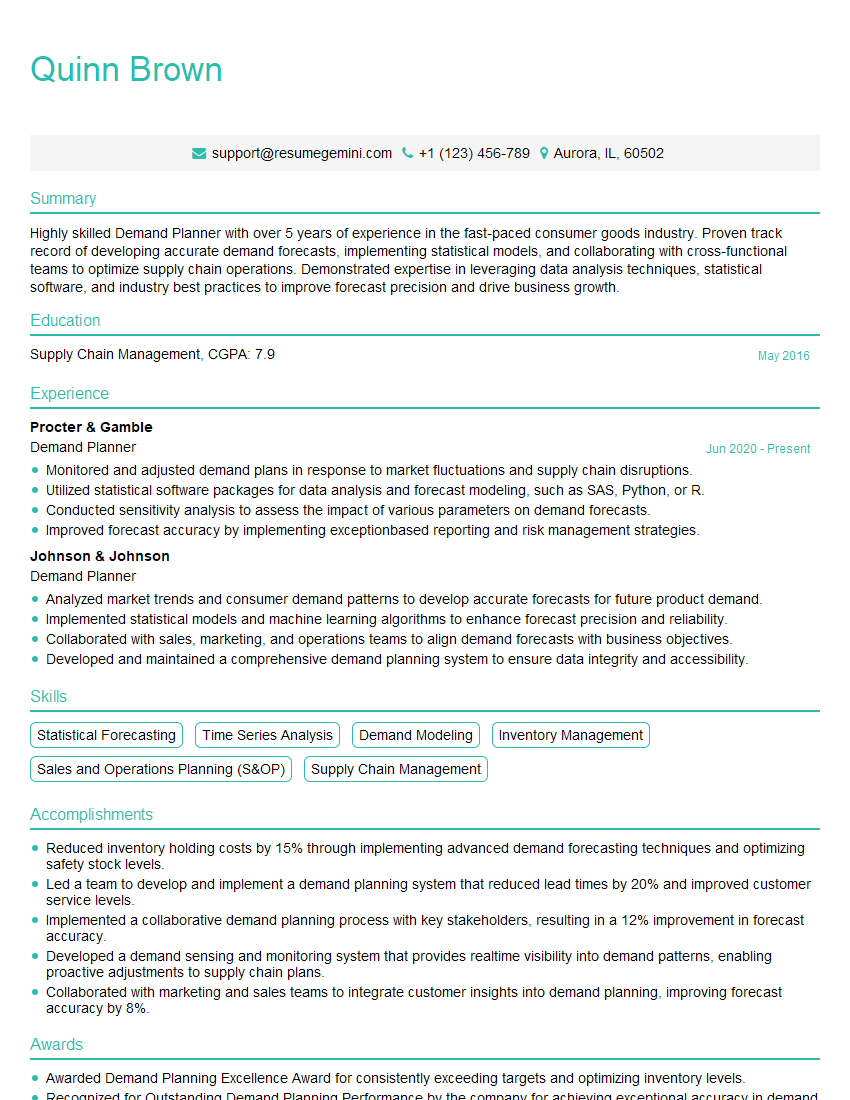
Demand Planner Resume Sample
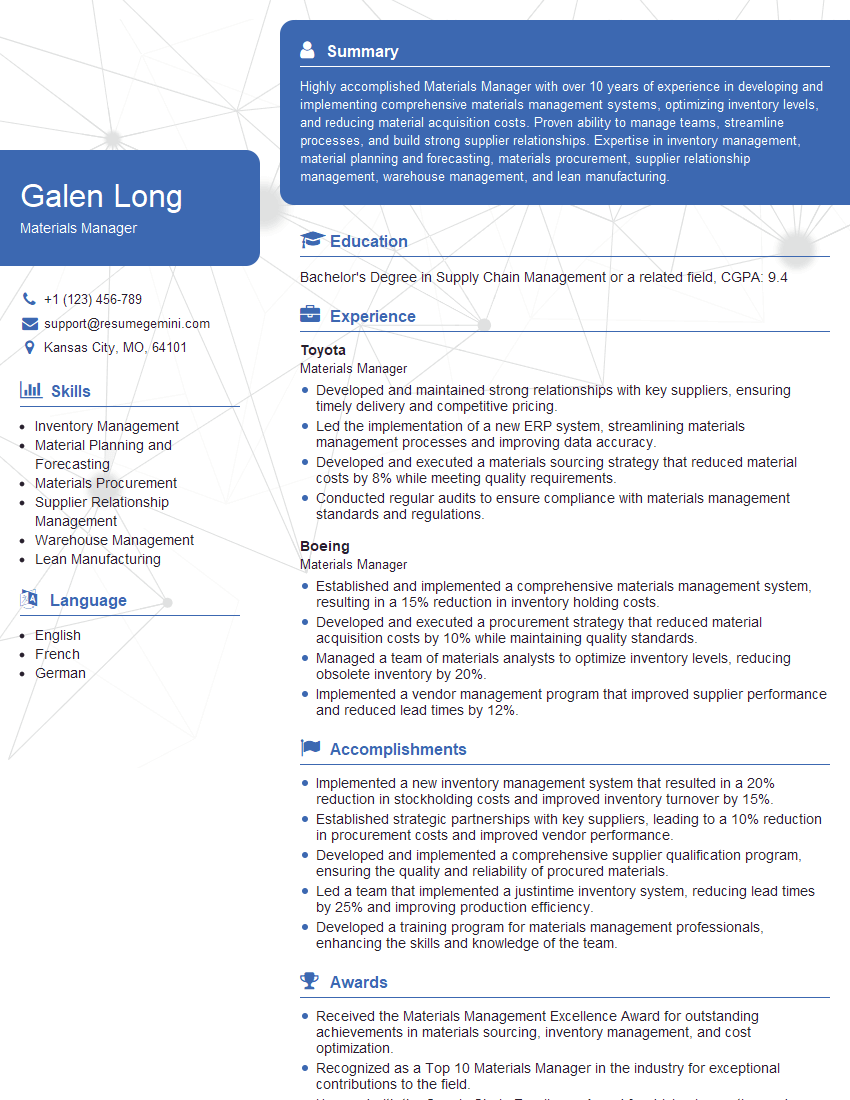
Materials Manager Resume Sample
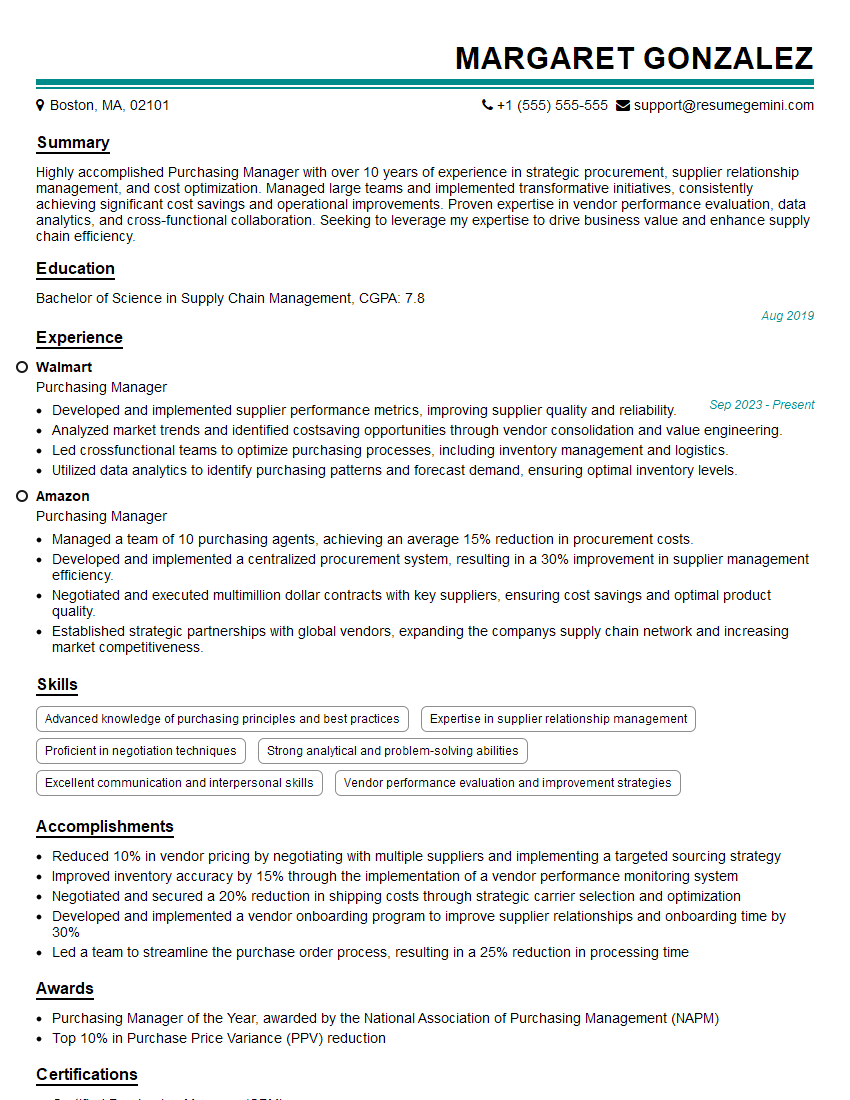
Purchasing Manager Resume Sample
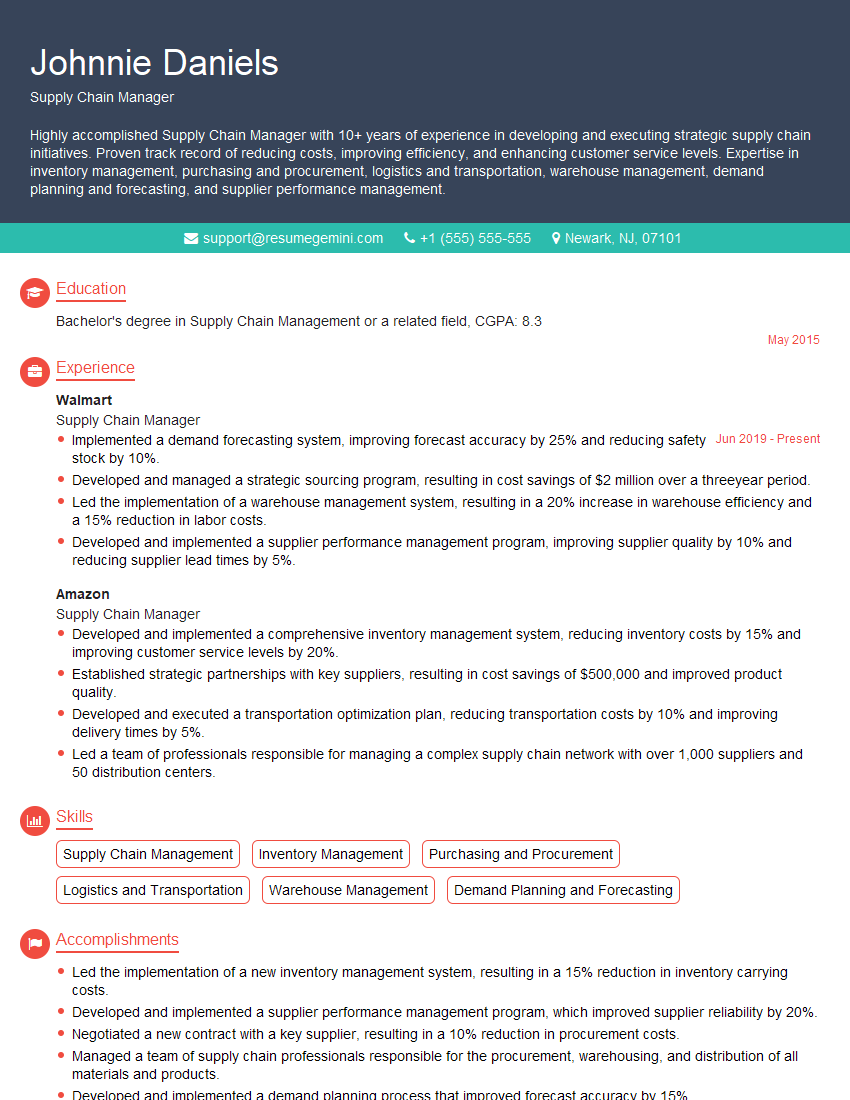
Supply Chain Manager Resume Sample
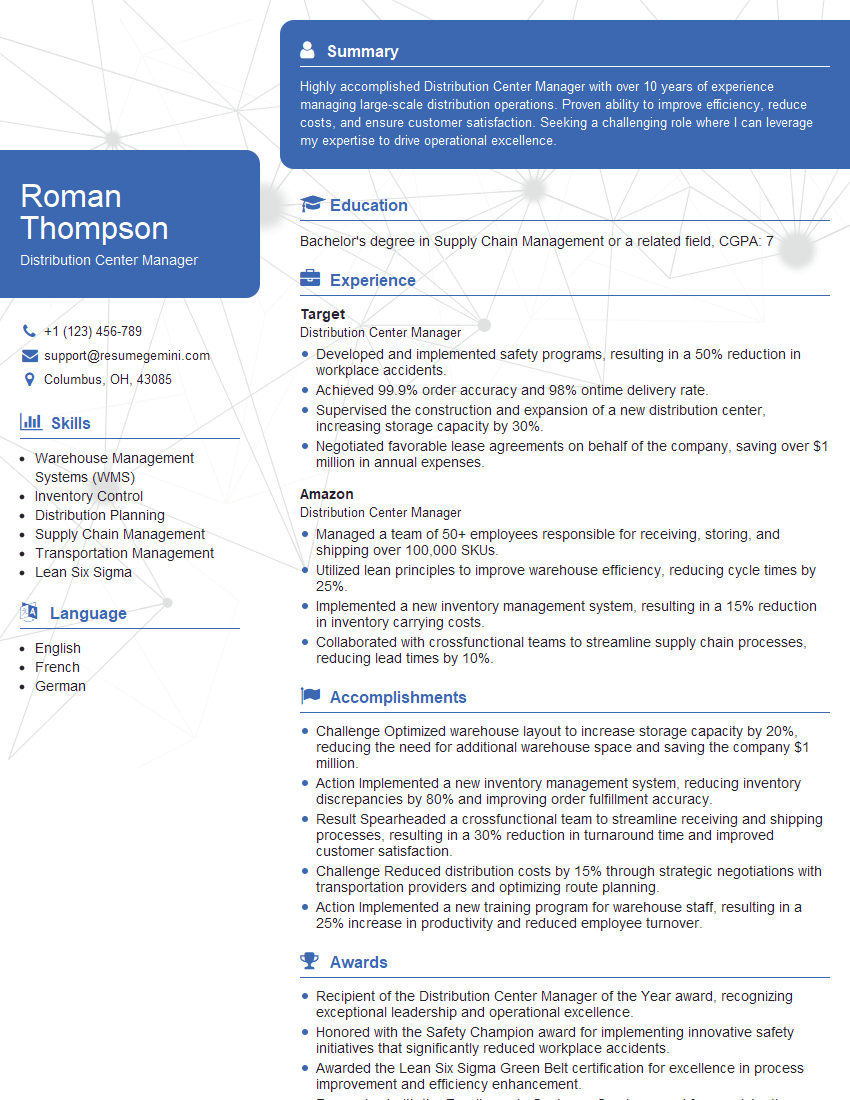
Distribution Center Manager Resume Sample
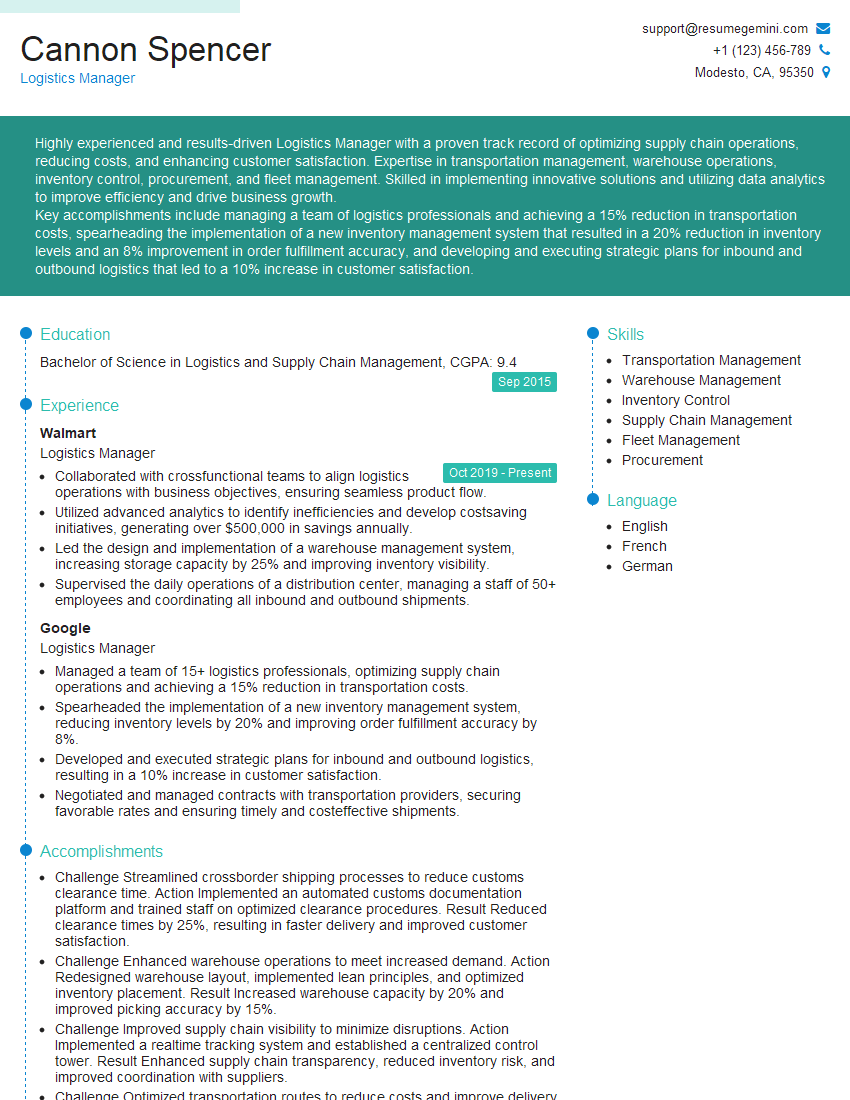
Logistics Manager Resume Sample
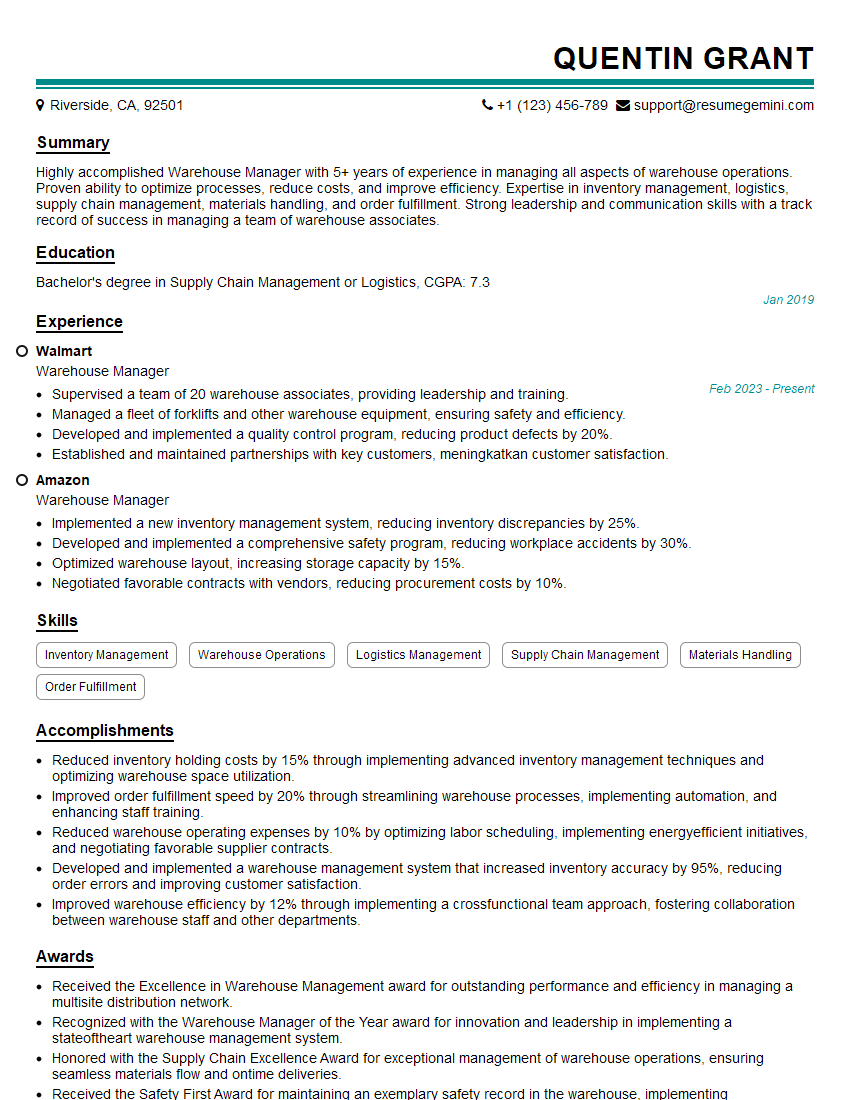
Warehouse Manager Resume Sample
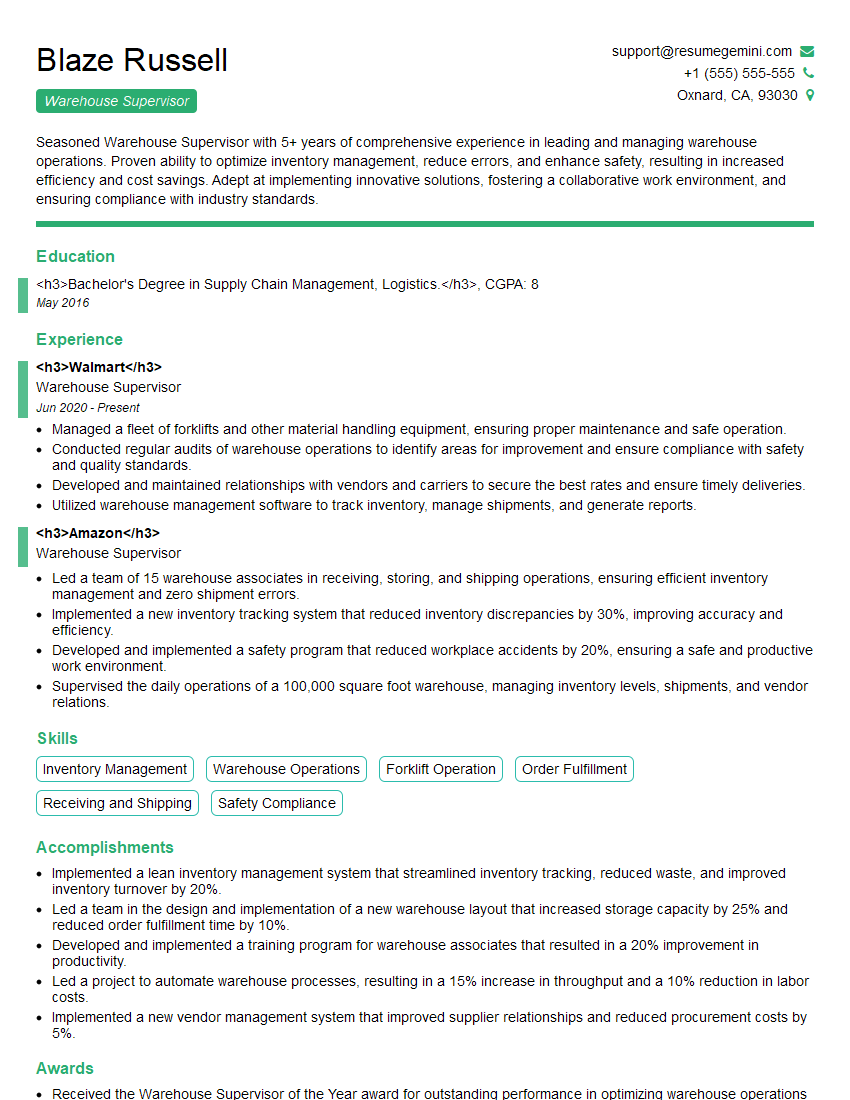
Warehouse Supervisor Resume Sample
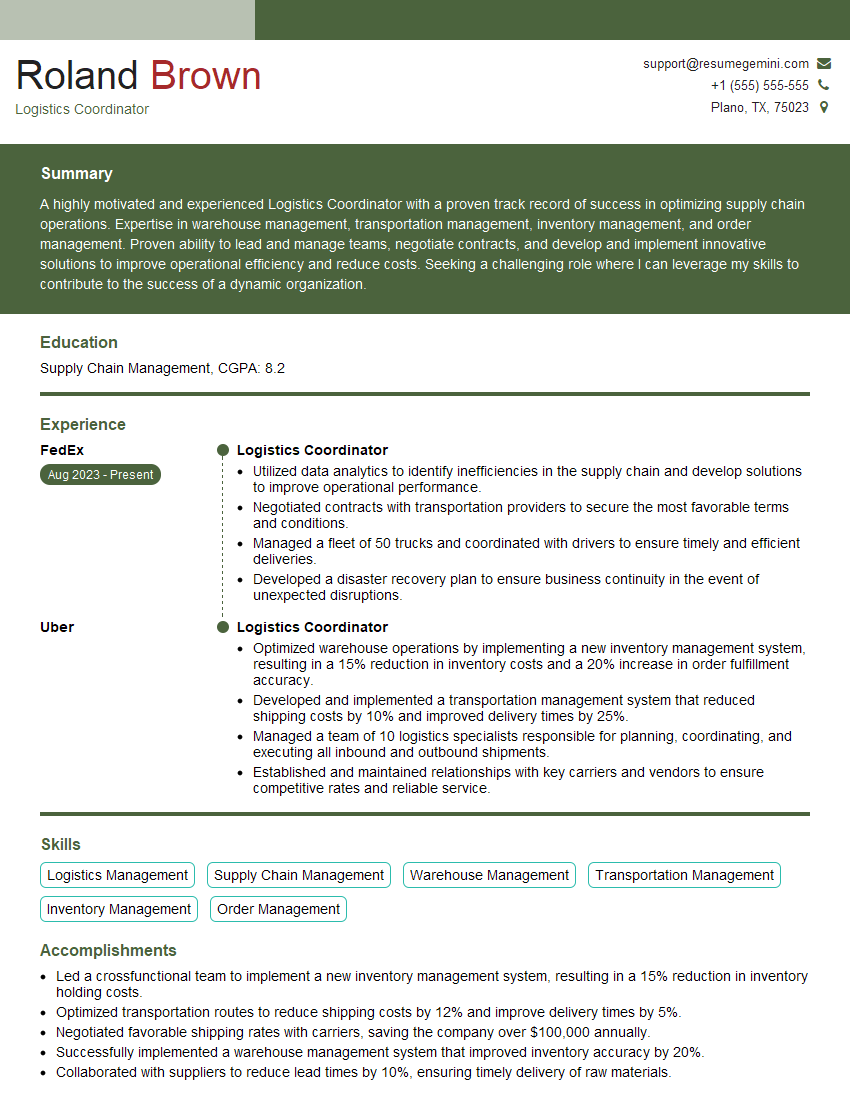
Logistics Coordinator Resume Sample
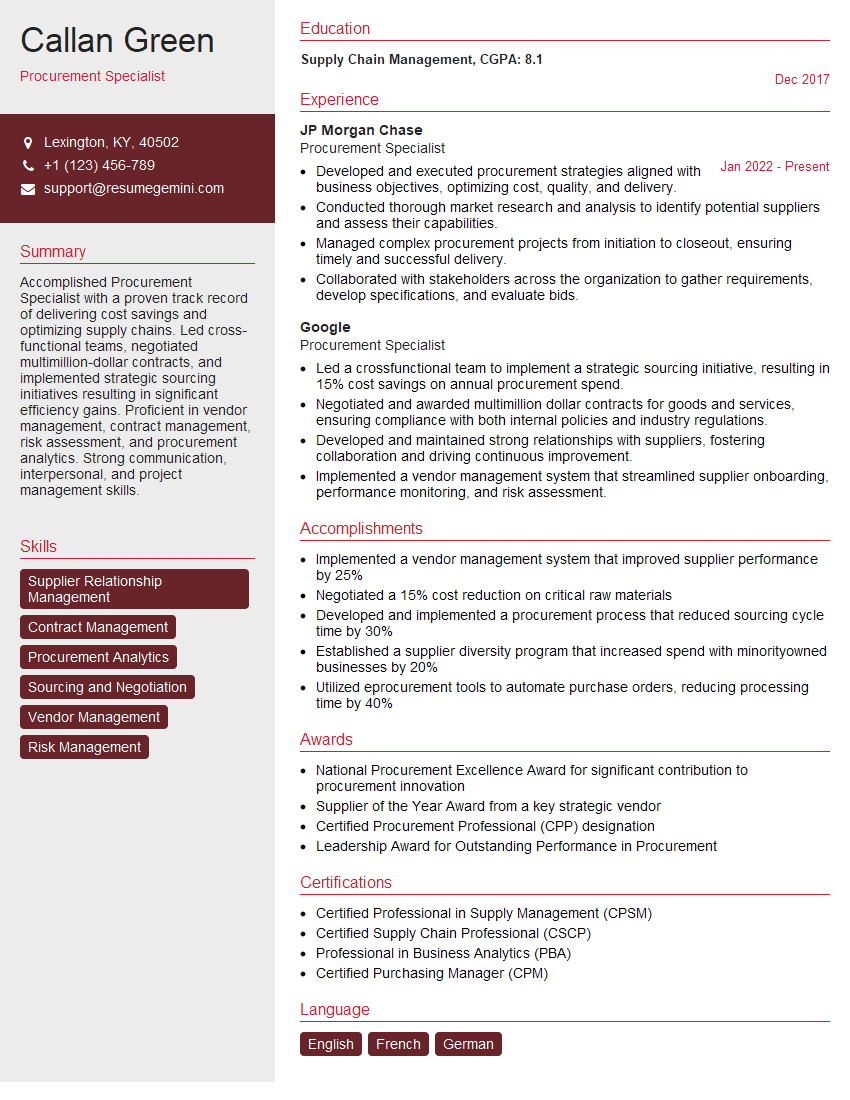
Procurement Specialist Resume Sample
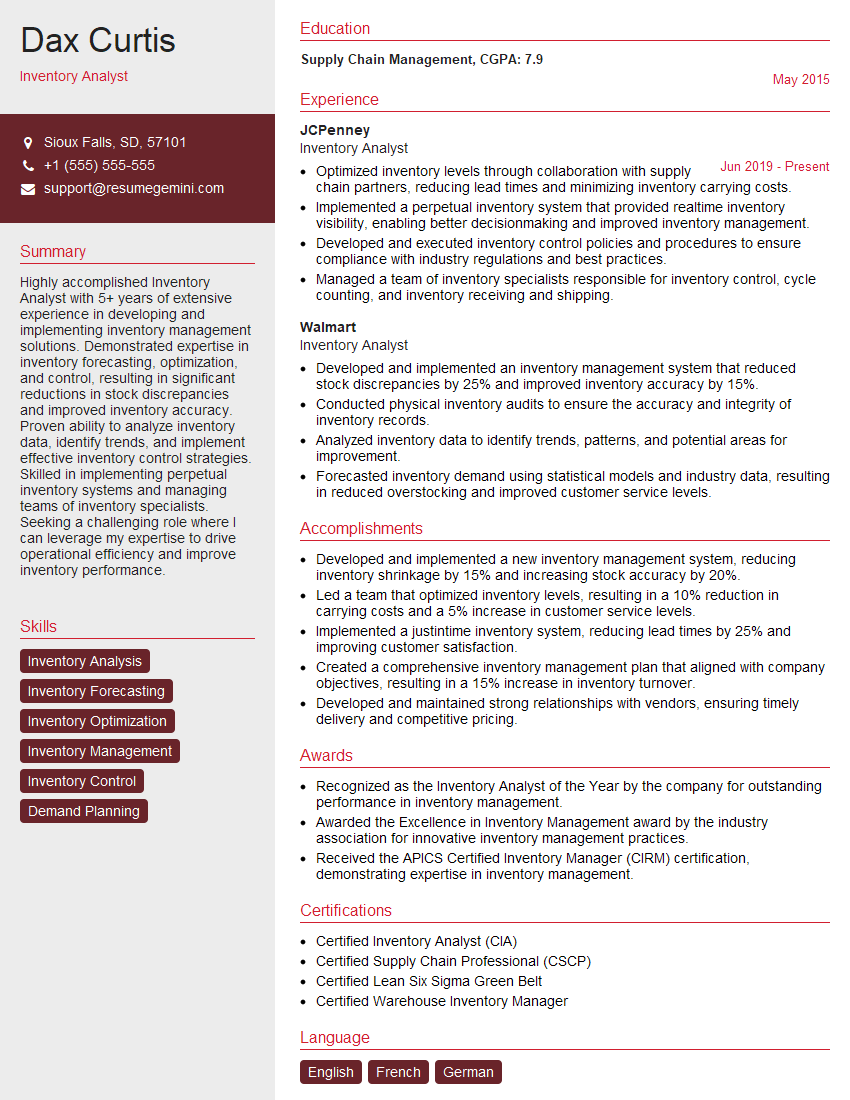
Inventory Analyst Resume Sample
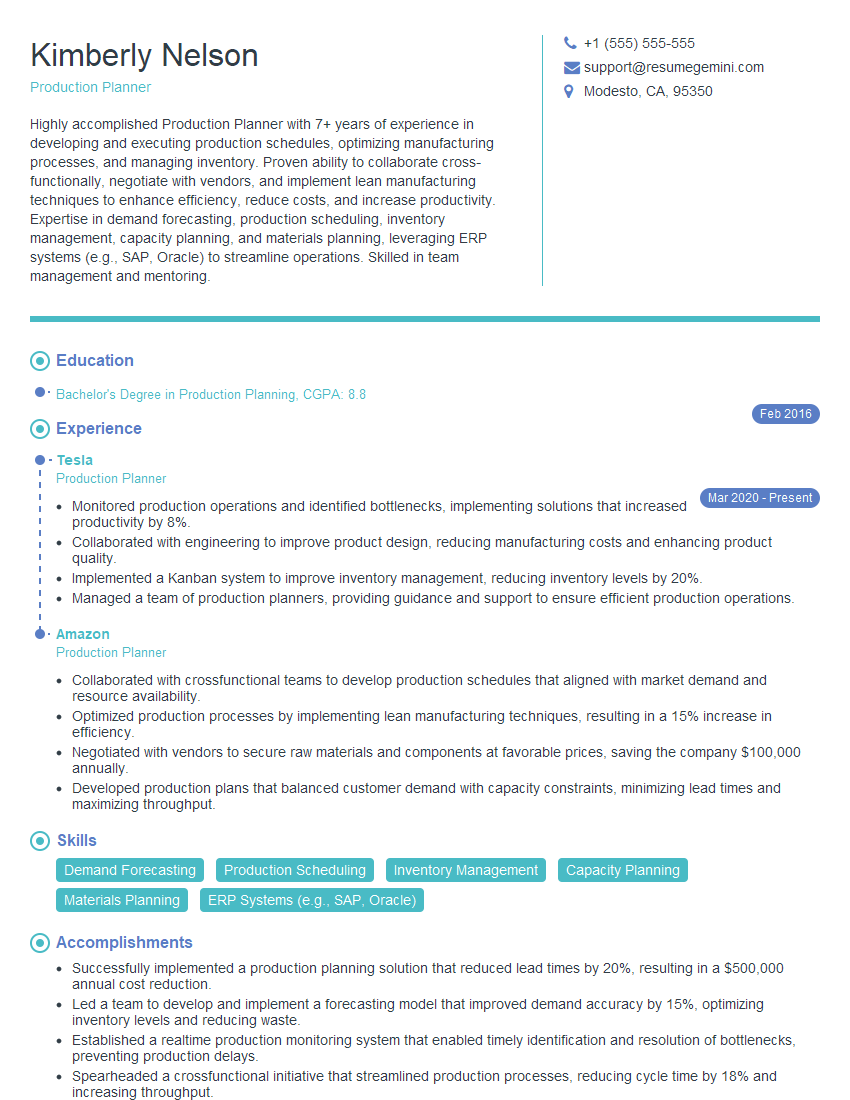
Production Planner Resume Sample

Inventory Manager Resume Sample
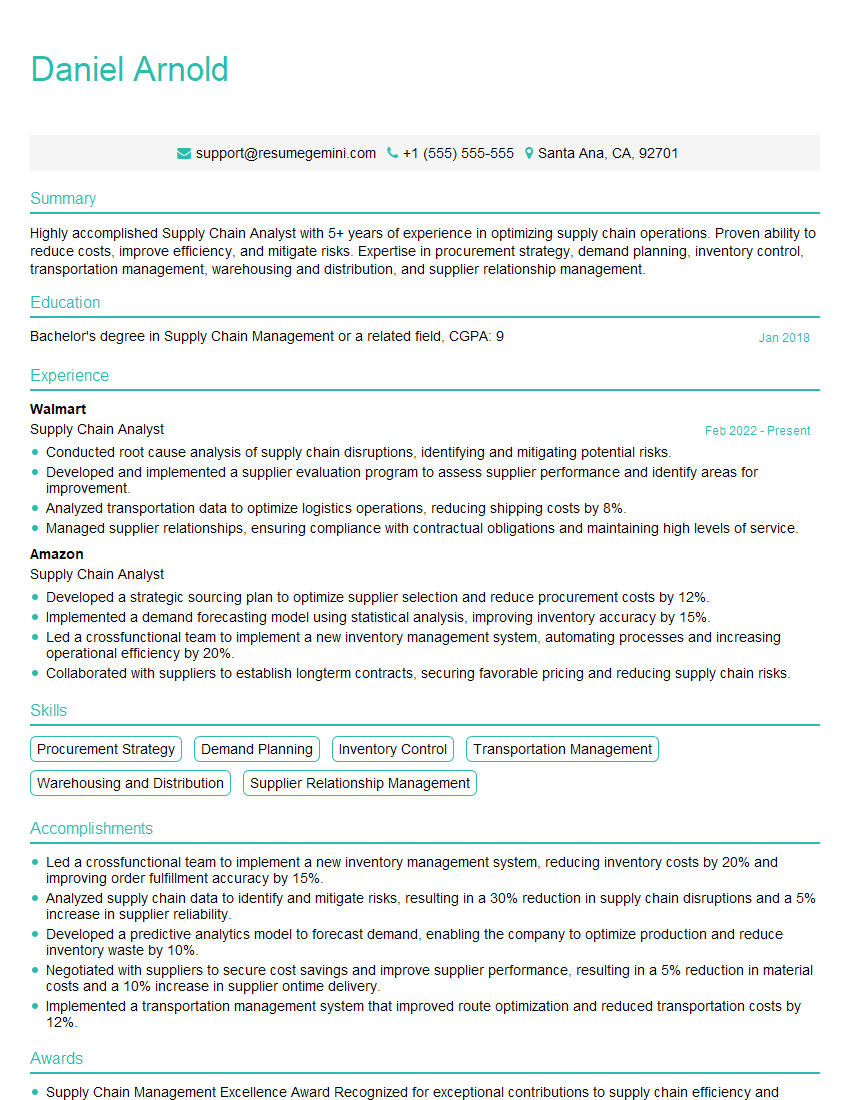
Supply Chain Analyst Resume Sample
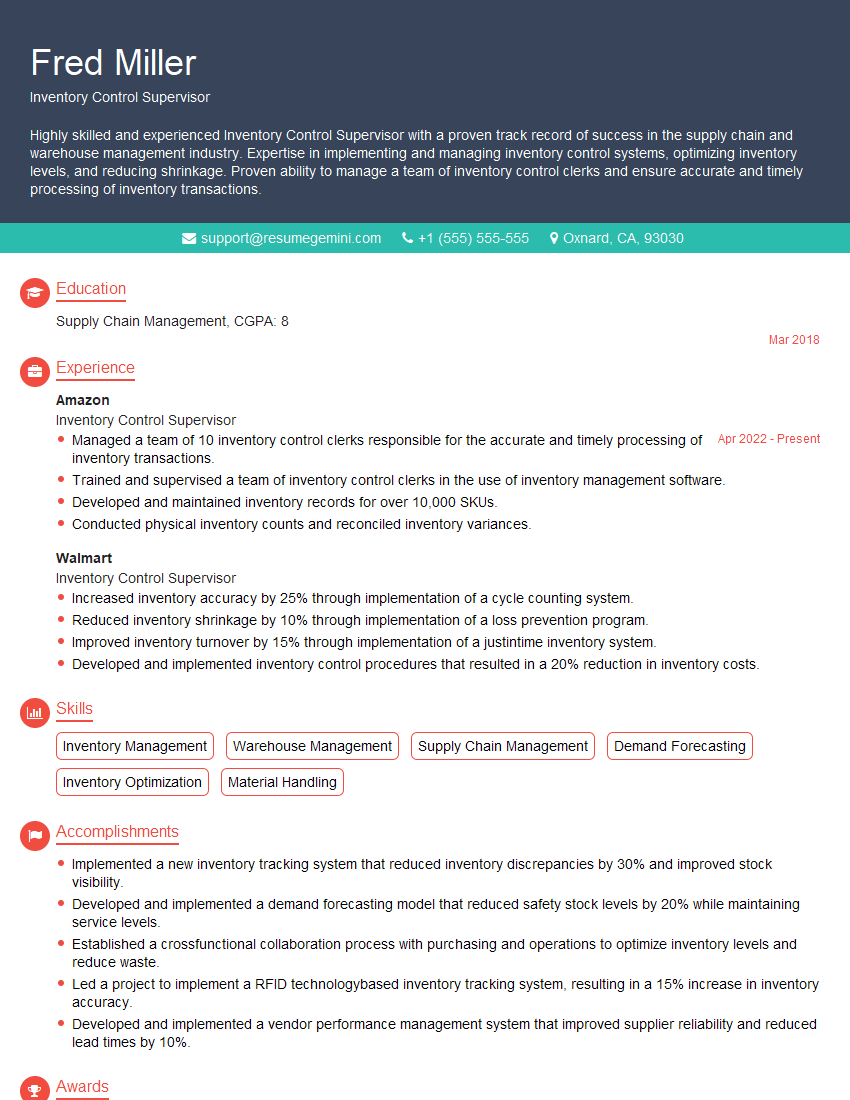
Inventory Control Supervisor Resume Sample
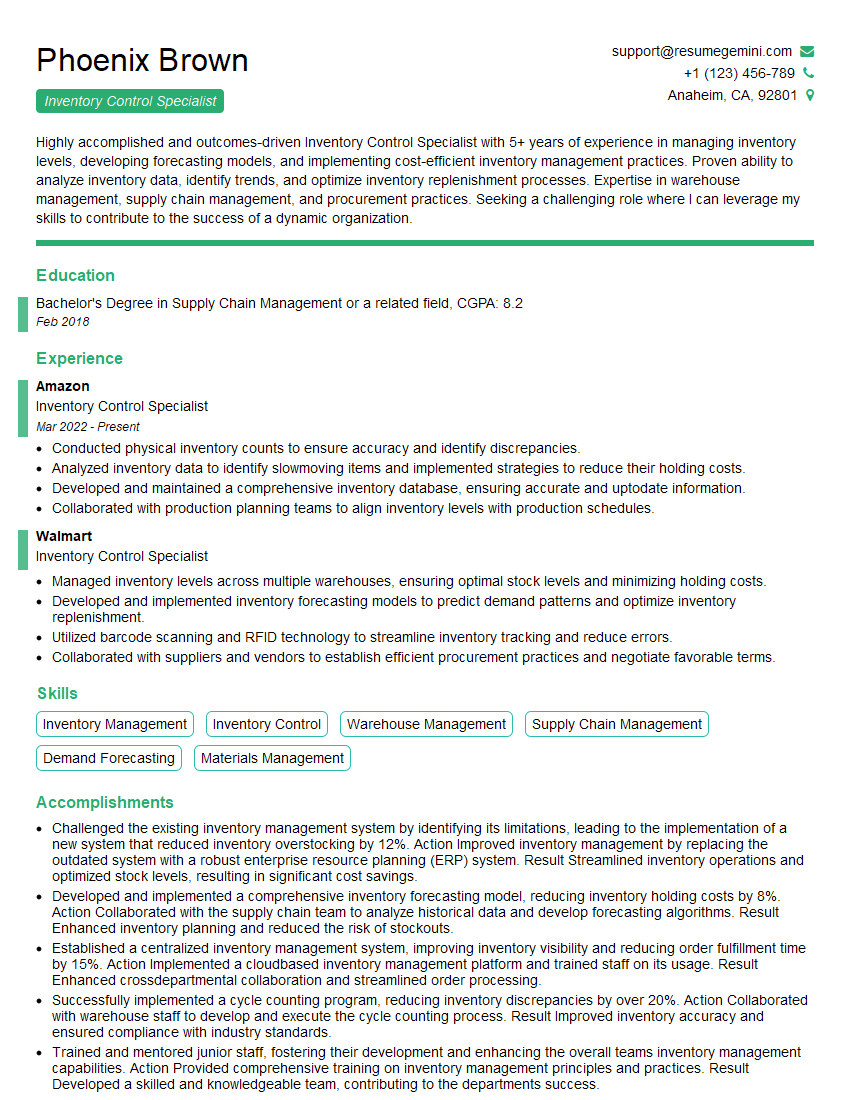
Inventory Control Specialist Resume Sample
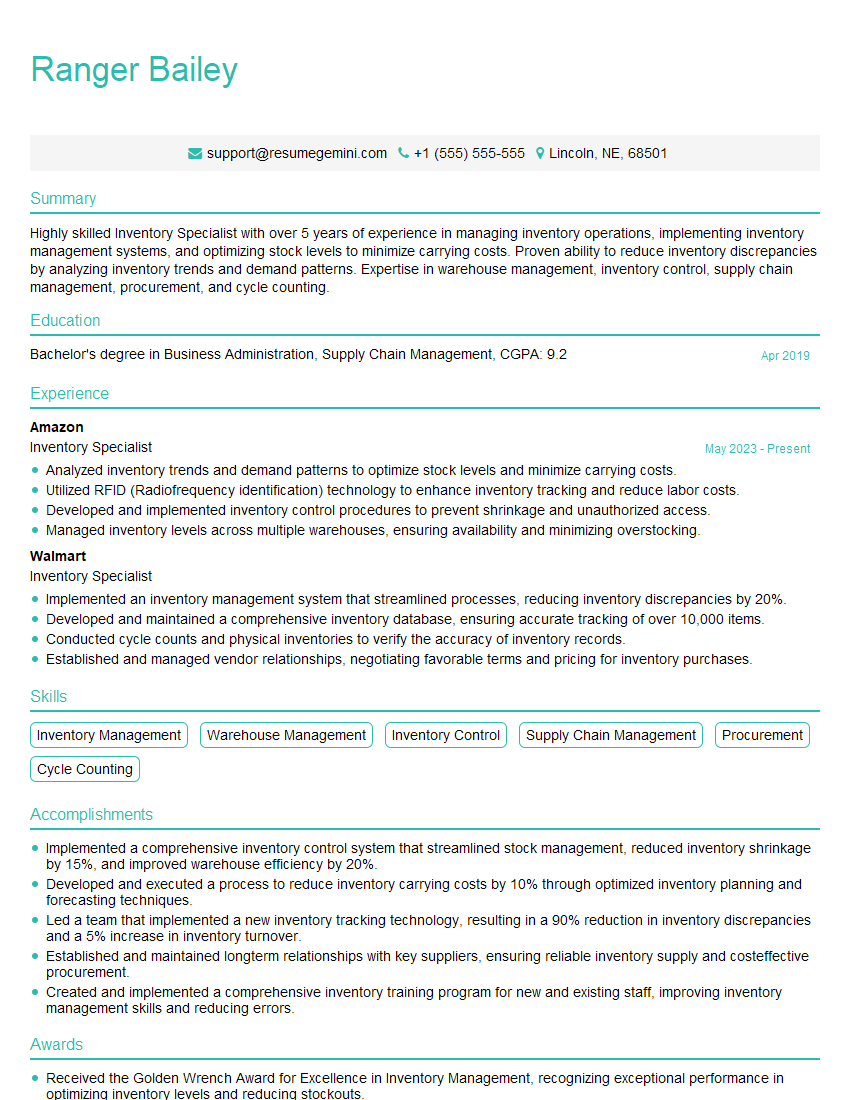
Inventory Specialist Resume Sample
- Operations Manager
- Demand Planner
- Materials Manager
- Purchasing Manager
- Supply Chain Manager
- Distribution Center Manager
- Logistics Manager
- Warehouse Manager
- Warehouse Supervisor
- Logistics Coordinator
- Procurement Specialist
- Inventory Analyst
- Production Planner
- Inventory Manager
- Supply Chain Analyst
- Inventory Control Supervisor
- Inventory Control Specialist
- Inventory Specialist
Explore more articles
Users Rating of Our Blogs
Share Your Experience
We value your feedback! Please rate our content and share your thoughts (optional).
What Readers Say About Our Blog
Very informative content, great job.
good